Marseille and Provence in 7 days: the complete itinerary
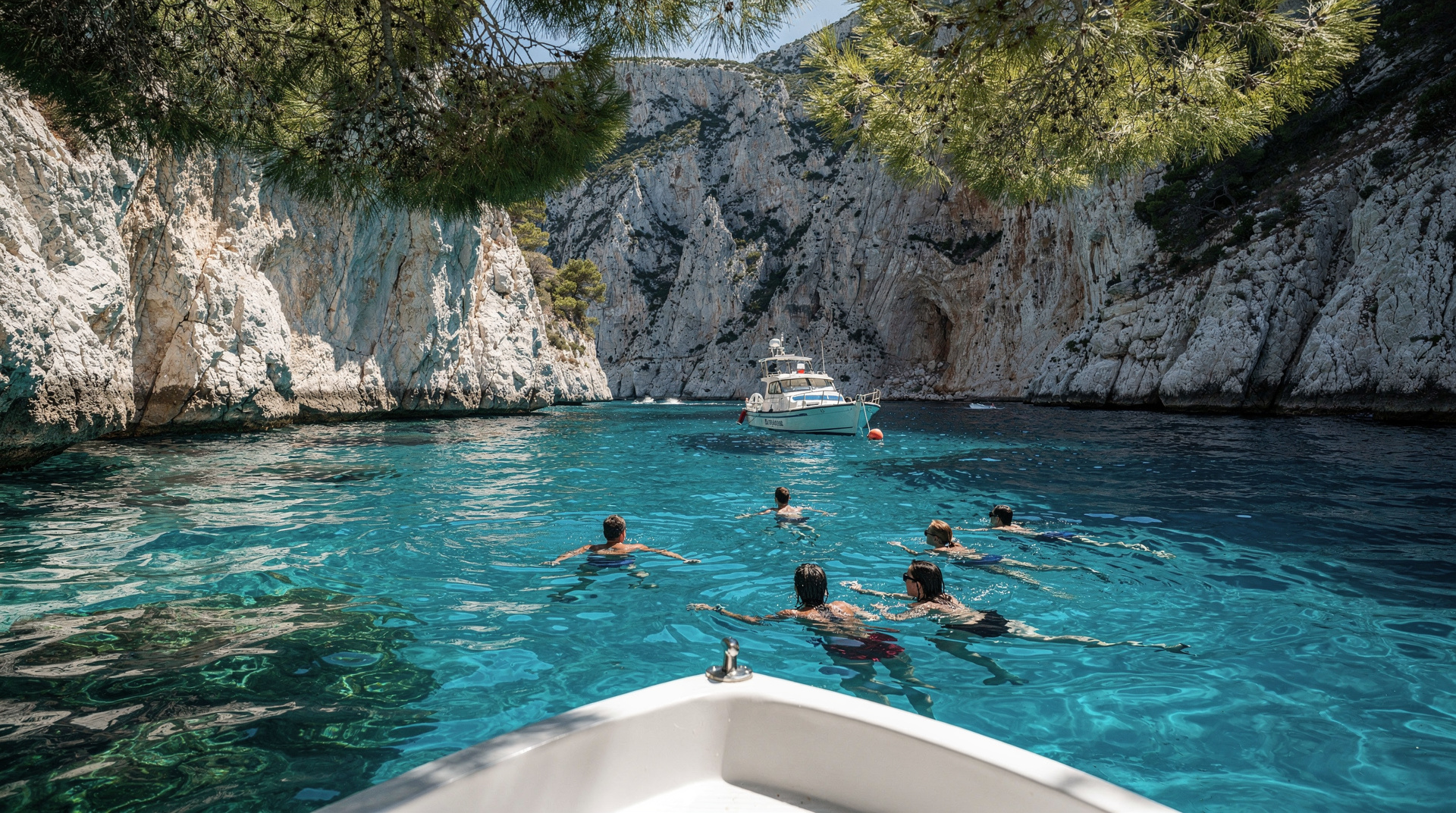
Marseille: iconic Calanques boat tour with swimming
Duration: 3-4.5 hours
Seven days through Marseille and Provence is the version that makes sense of everything. With a week, you can spend proper time in Marseille before leaving it for the surrounding region; you can see the Calanques without rushing; you can drive the Luberon on your own schedule; and you can reach Avignon and Arles — the Roman and Van Gogh poles of Provence — without compressing them into a frenetic day trip.
This itinerary uses Marseille as the base for Days 1–3 (car-free), then picks up a car for Days 4–7 to cover the wider Provence circuit. The route is designed to avoid backtracking: Marseille → coast → Aix → Luberon → (Valensole if season) → Avignon → Arles → back to Marseille, or onward to another departure city.
Season note: This itinerary is excellent in April–June and September–October. In July–August, summer heat and Calanques fire closures shift the balance toward boat access; the Luberon perched villages are very crowded; lavender is peak but so are tourist numbers. The timing guide gives the honest month-by-month breakdown.
| At a glance | |
|---|---|
| Where | Marseille (Days 1–3), Luberon, Valensole, Avignon and Arles (Days 4–7) |
| Cost | Roughly 2,000–3,200 EUR for two, excluding flights, once car rental and 6 nights of accommodation are added up |
| Time needed | 7 days; car needed from Day 4 onward |
| Getting there | Marseille-Provence Airport or Gare Saint-Charles (TGV from Paris around 3h15) |
| Best time | May–June or September for the best balance of open Calanques trails and manageable crowds; mid-June to mid-July if lavender at Valensole and Sénanque is the priority |
If seven days feels like more than you need, the 5-day version covers the same core without Avignon, Arles, and Valensole.
Day 1: Marseille arrival and Vieux-Port
Arrival and orientation (arrival–19:00)
Arriving at Marseille Provence Airport (MRS): Navette Express bus to Gare Saint-Charles (30 minutes, 10 EUR) or TER from Vitrolles-Aéroport (30 minutes). See the airport transport guide. Check in to central accommodation near the Vieux-Port or within metro reach.
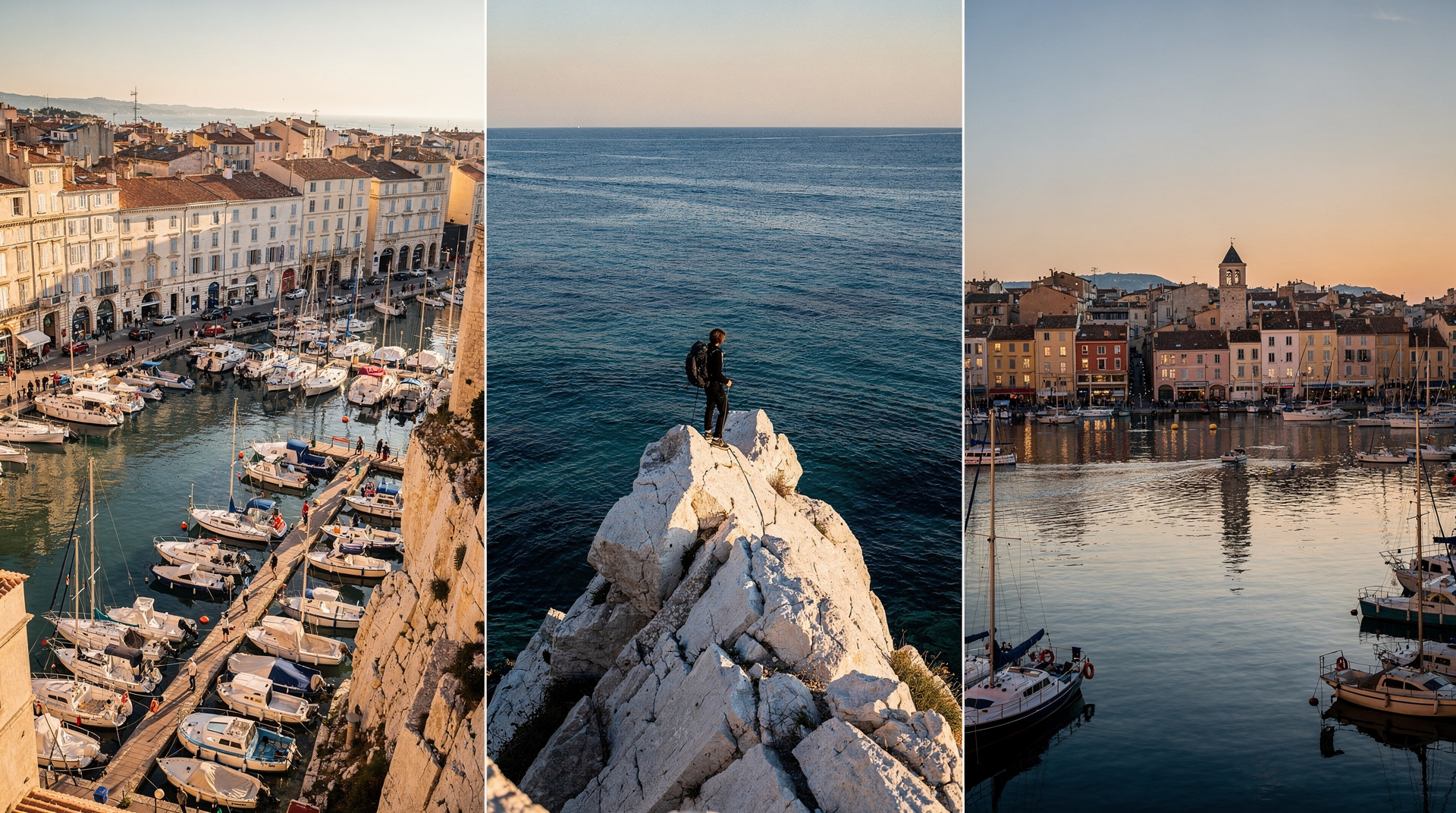
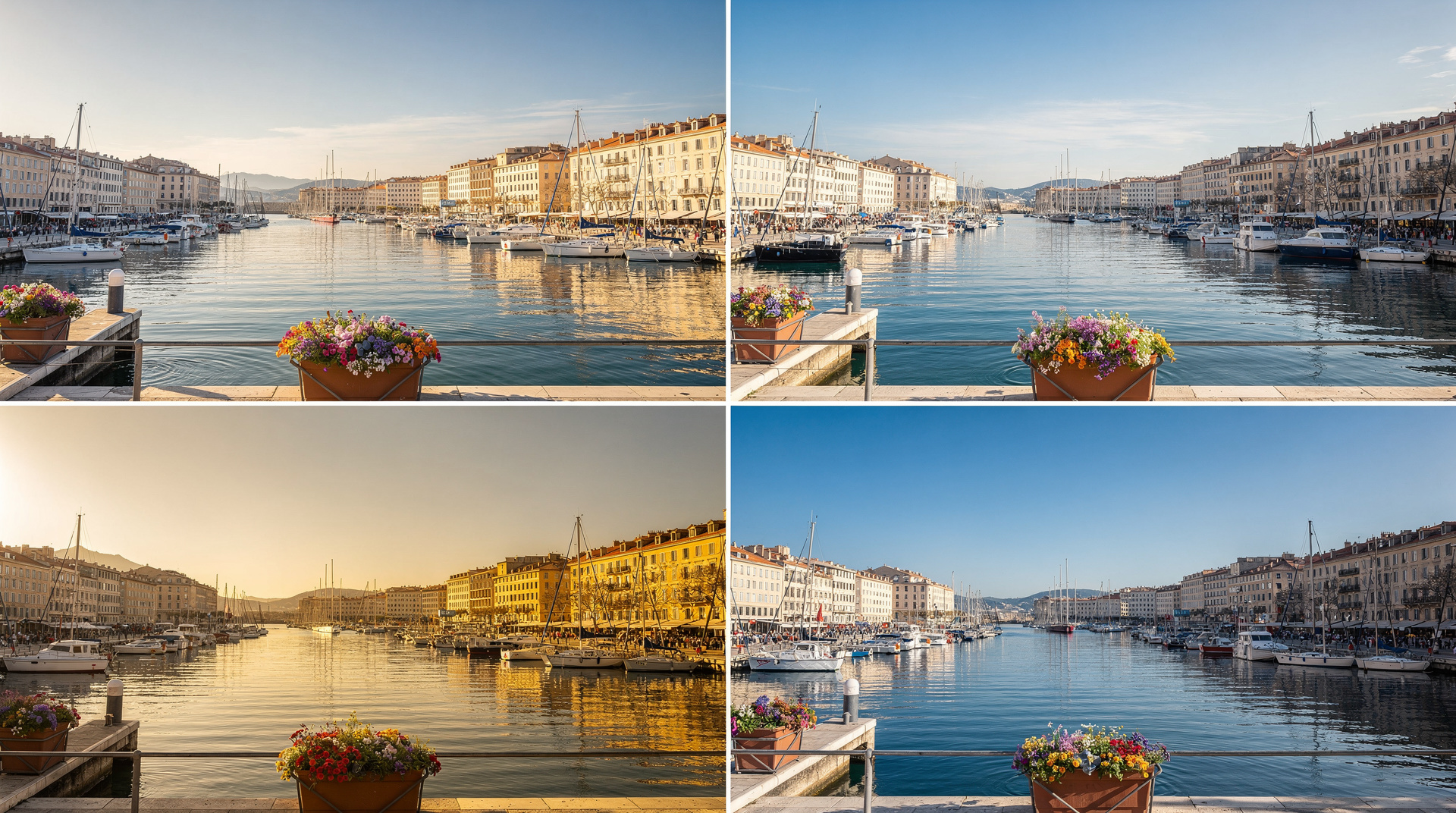
Afternoon: walk the Vieux-Port north quai to MuCEM and Fort Saint-Jean (free). The fort terraces with harbour views and the footbridge between the fort and MuCEM set the visual tone for the trip. Allow 45–60 minutes.
Evening in the Vieux-Port area — a first pastis, then dinner. The south quai (Cours Estienne d’Orves) has reliable mid-range options. Budget 30–45 EUR for two.
Day 2: Marseille city in full
Full day: Le Panier, Notre-Dame de la Garde, Corniche (8:00–22:00)
Fish market at the Quai des Belges (before 9:30, free). Walk the north quai to MuCEM. Full Le Panier exploration: Vieille Charité (free courtyard, small museums if interested), street art lanes, Place des Moulins. 90 minutes minimum.
Lunch after Le Panier, then petit train to Notre-Dame de la Garde — the 154-metre basilica with the city’s best panorama (12–15 EUR round trip). Essential orientation before leaving Marseille for the wider Provence.
Late afternoon: bus 83 south to the Corniche Kennedy and Vallon des Auffes. The tiny fishing cove below the Corniche promenade is one of those places that makes Marseille feel like it has secrets still. Continue to the Prado beaches for an afternoon swim in season.
Evening: Cours Julien for dinner — the most authentically Marseillais neighbourhood, with independent restaurants and wine bars at fair prices (25–40 EUR per person).
Day 3: Calanques and Cassis
Morning: Calanques boat tour (8:30–12:30)
Half-day boat tour from the Vieux-Port departing 8:30. 3–4.5 hours, 4–6 calanques with swimming stops. This is the essential Calanques National Park experience and worth the time. Check the fire risk guide — boat access is not restricted by fire closures, making this the reliable summer option.
Return to Vieux-Port by 12:30–13:00.
Afternoon: TER to Cassis (14:00–19:00)
Quick lunch near the Vieux-Port. TER from Gare Saint-Charles to Cassis (22 minutes, 7 EUR). Marcouline shuttle to port. Afternoon in Cassis: port walk, glass of AOC Cassis white wine on the quai, short path to Port-Miou (1.5 km, flat, 20 minutes each way). This is a taste of Cassis rather than a full day — sufficient to understand what makes it different from Marseille.
Return TER to Marseille for dinner.
Day 4: Aix-en-Provence and Luberon (car day begins)
Morning: TER to Aix, pick up car (9:00–13:00)
TER from Gare Saint-Charles to Aix-en-Provence Centre (35–45 minutes). Morning in Aix-en-Provence: Cours Mirabeau, market if Tuesday/Thursday/Saturday, the Atelier Cézanne studio (45 minutes, 7.50 EUR). Collect rental car from Aix city centre in late morning. Alternatively, rent the car from Marseille and drive to Aix (35–40 minutes by A51).
Afternoon: into the Luberon (13:30–18:30)
Drive north from Aix on the D96/D543 through Pertuis into the Luberon.
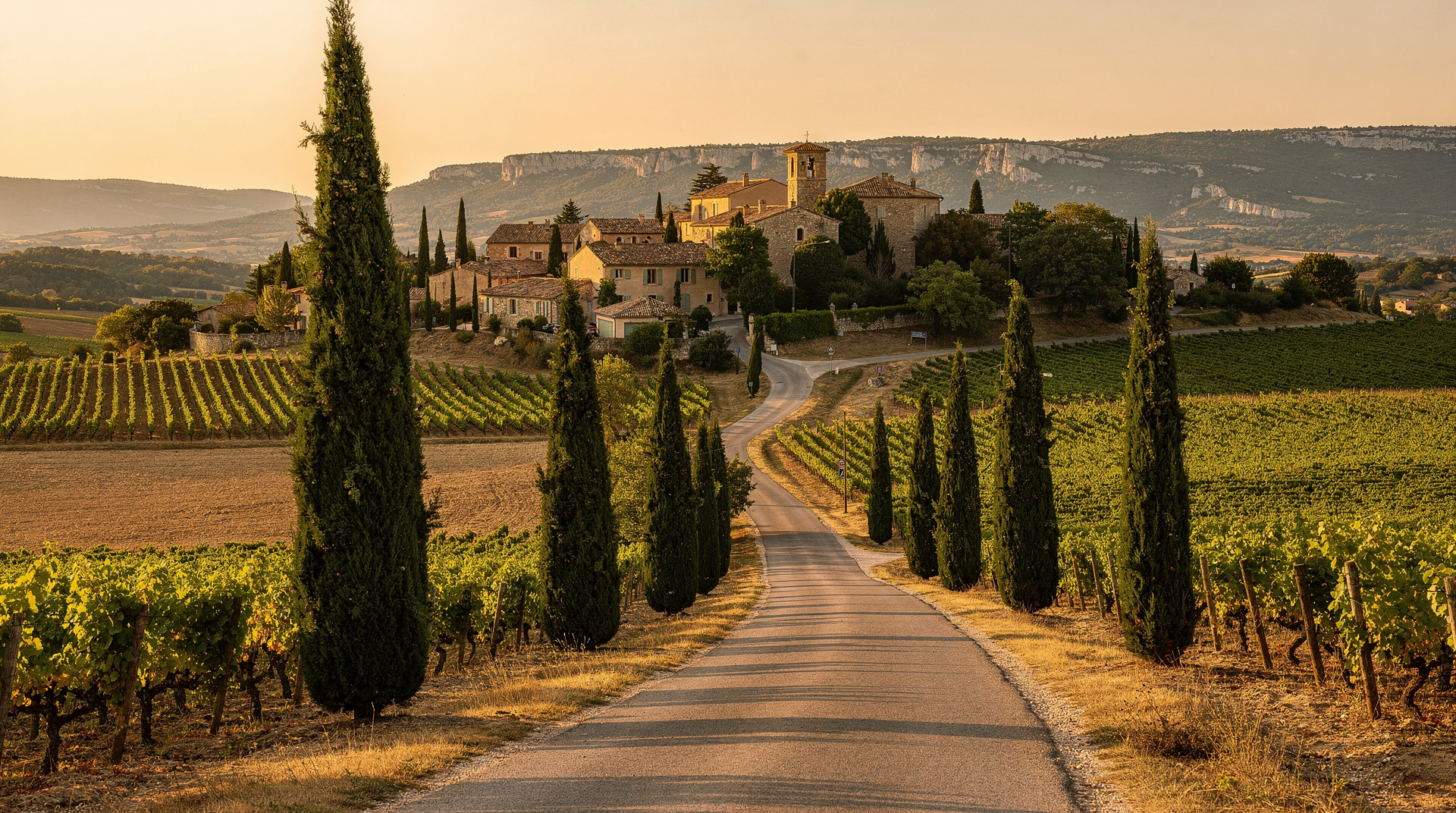
Lourmarin (1 hour from Aix): the most gracious of the southern Luberon villages, with a château (8–10 EUR) and a good main street for a late lunch or afternoon break. The writer Albert Camus lived here and is buried in the village cemetery.
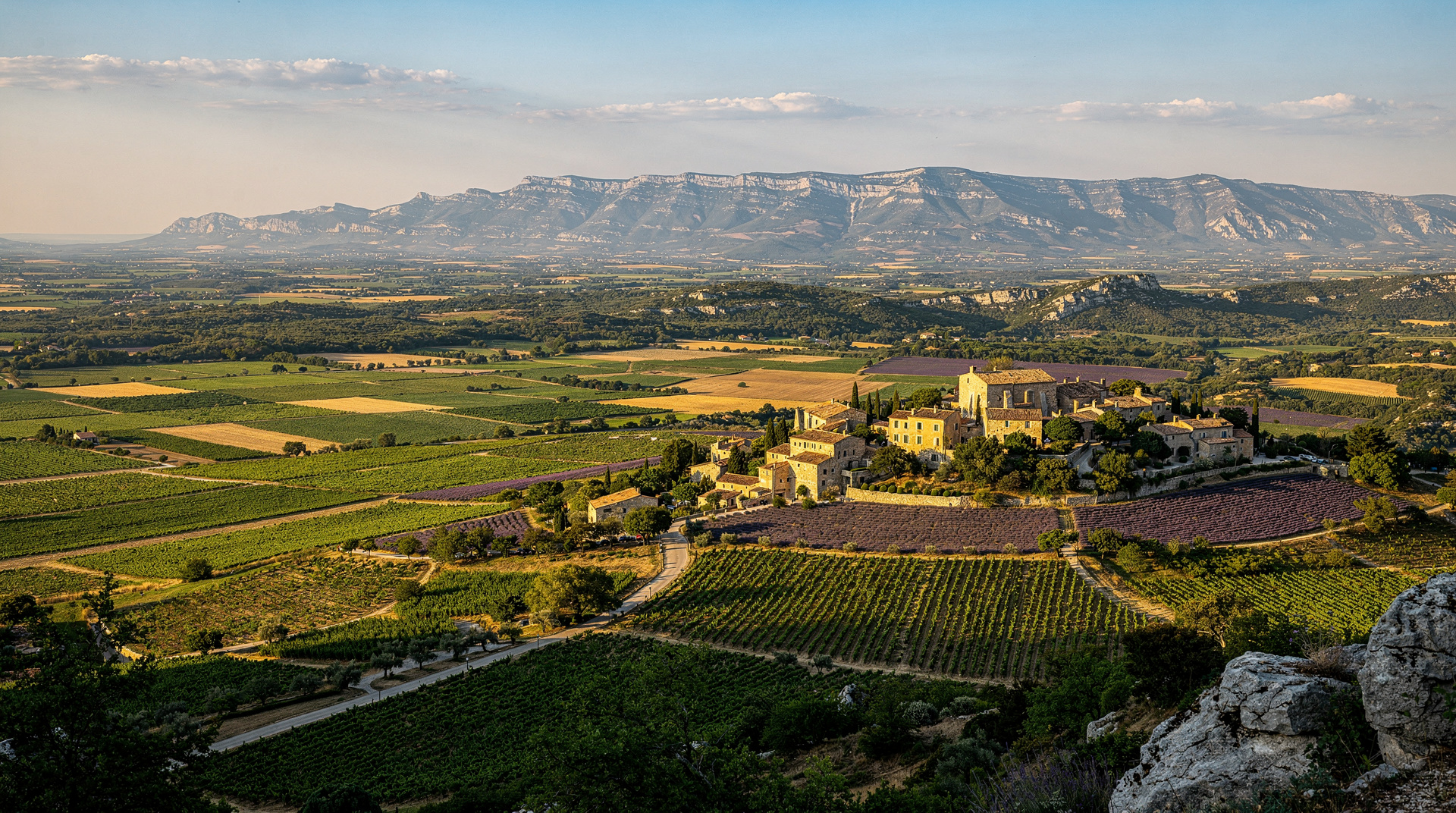
Bonnieux (25 minutes from Lourmarin): the steep perched village with the valley view from the top church terrace. The bakery in the village square is well-regarded. Panorama from the high church: the entire Luberon valley with Lacoste and Ménerbes visible on opposite slopes.
Overnight: Bonnieux, Ménerbes, or Lacoste. Book well ahead in July–August.
Day 5: Gordes, Roussillon, and Valensole (seasonal)
Morning: Gordes and Sénanque (9:00–12:30)
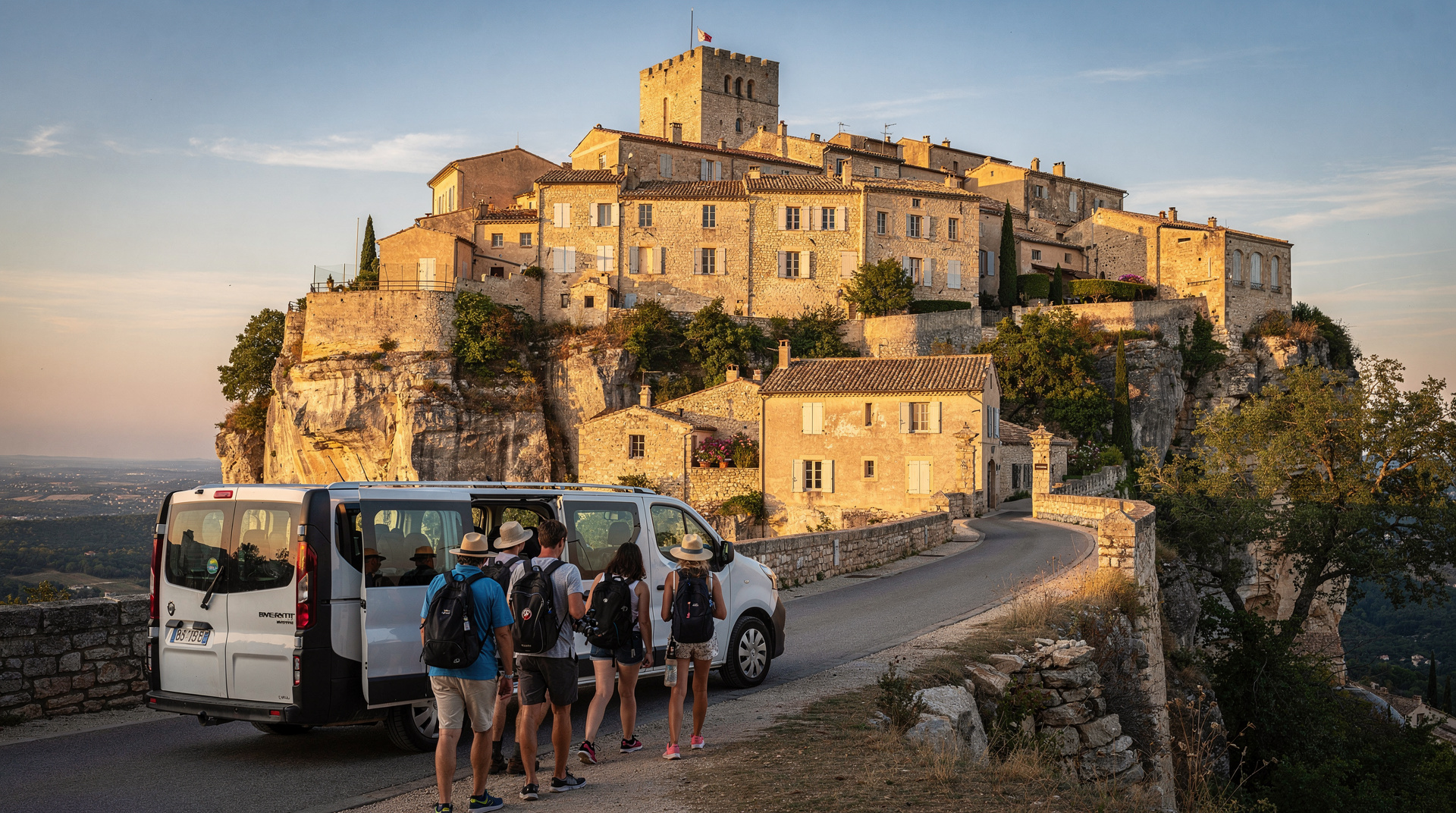
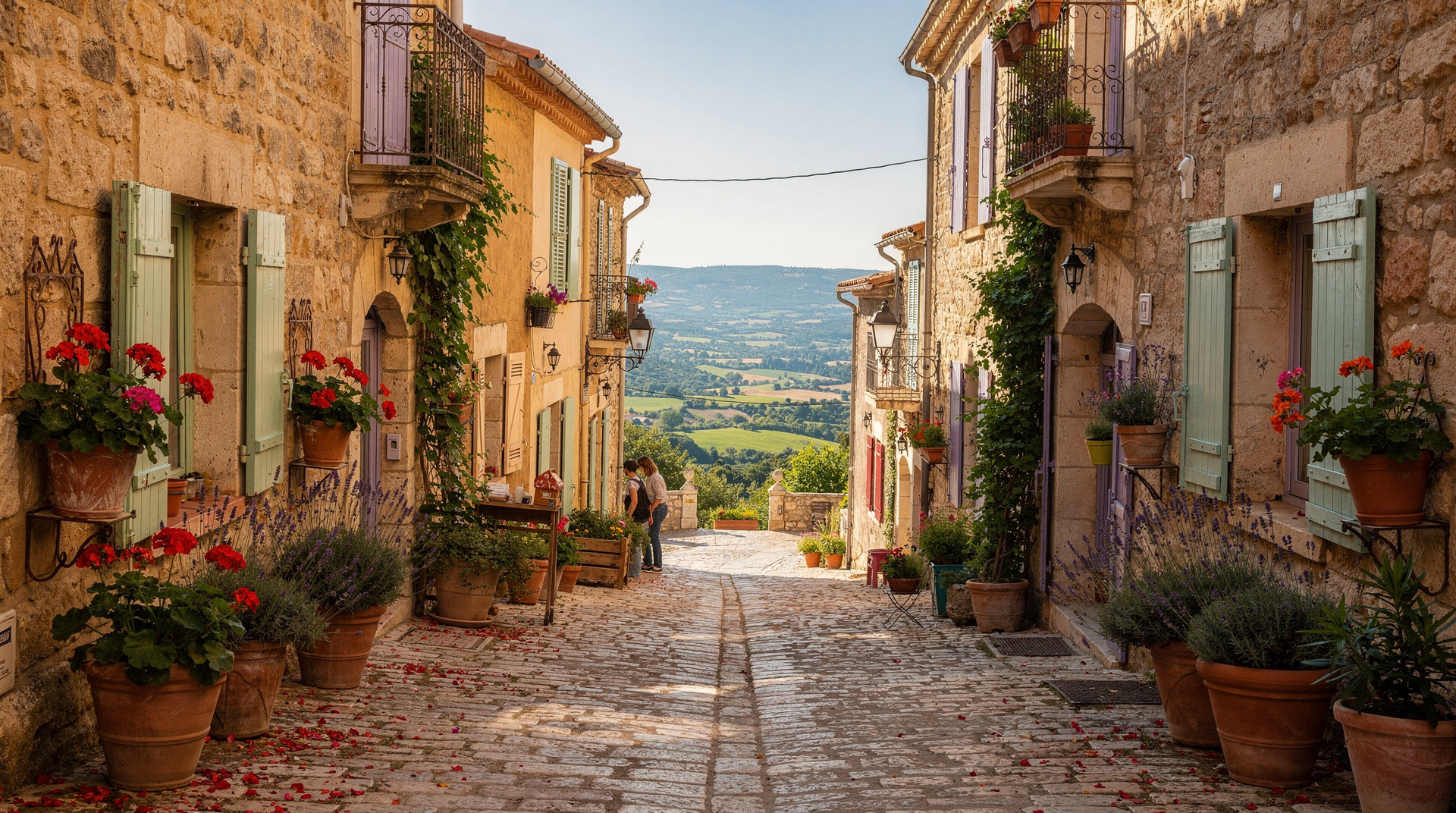
Gordes (30 minutes from Bonnieux via D900): the most famous Luberon village, rising on a rock face in the most stereotypically Provence way imaginable. Arrive before 9:30 to beat tour groups. Walk the lane network at the top of the village; visit the château with its contemporary art (7 EUR). View from the approach road (D15 from Cavaillon) is the essential photograph.
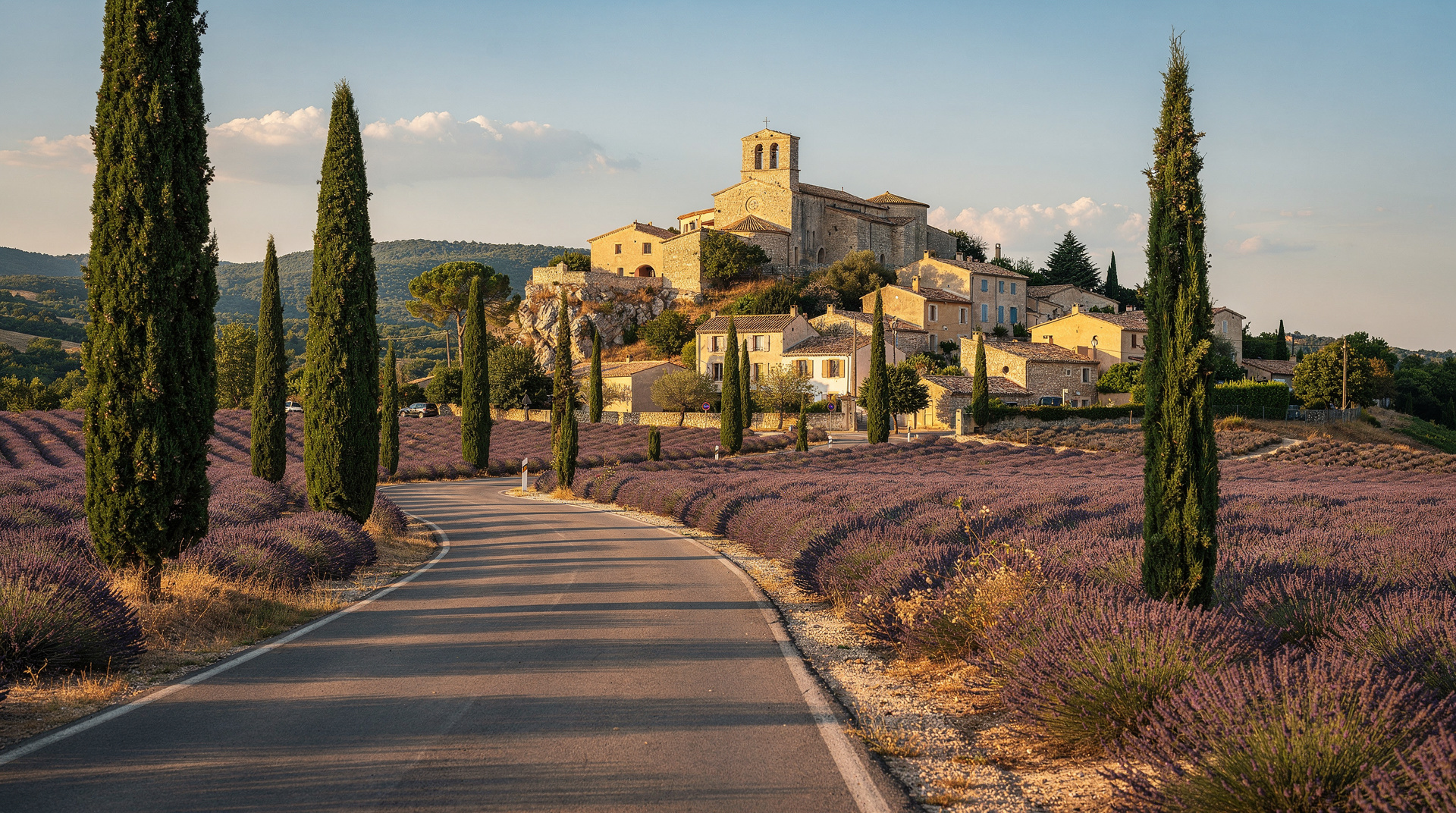
Abbaye de Sénanque (4 km north of Gordes, D177): a 12th-century Cistercian abbey surrounded by lavender (peak mid-June to mid-July). In the height of lavender season, the scene of the abbey against purple rows and blue sky is the Provence image made real. Outside lavender season: a beautiful, serene medieval building.
Mid-morning: Roussillon (11:00–14:00)
Roussillon (20 minutes east of Gordes): the ochre village. The Sentier des Ocres (8 EUR, 30–45 minutes) walks through the ochre quarry landscape — formations of deep red, orange, and yellow mineral pigment that give the village its extraordinary colour. Book a terrace lunch in Roussillon (20–30 EUR per person).
Afternoon: Valensole lavender (mid-June to mid-July only) or Avignon
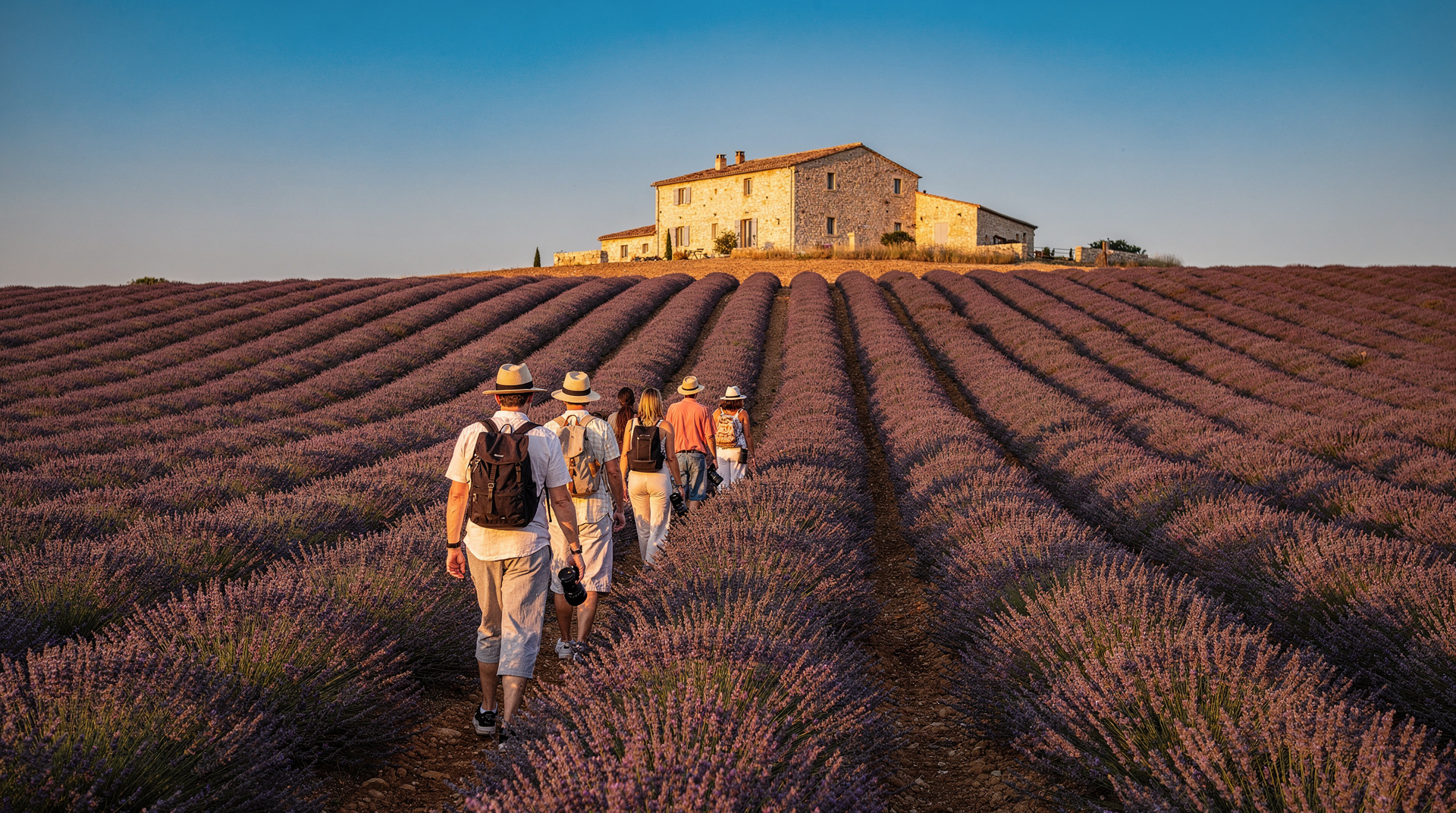
If visiting mid-June to mid-July: Drive from Roussillon northeast to Valensole (1.5 hours, D4 north from Manosque). The Valensole plateau is the largest lavender-growing area in France — rows of purple stretching to the horizon under a wide Provençal sky. Peak is the first two weeks of July. The town of Valensole itself has limited visitor facilities but the surrounding fields and farms are the point.
Drive from Valensole to Avignon (1.5 hours via A51/A7). Check in to Avignon accommodation.
Outside lavender season: Drive directly from Roussillon to Avignon (1.5 hours via D100/A7). Avignon by afternoon allows a first walk through the ramparts and Palais des Papes exterior before dinner.
Avignon evening: The old city within the medieval ramparts is one of the finest preserved in France. Dinner options ranging from wine bars to excellent Provençal restaurants. Budget 35–55 EUR per person for dinner.
Day 6: Avignon and Arles
Morning: Avignon (9:00–13:00)
Avignon deserves a morning:
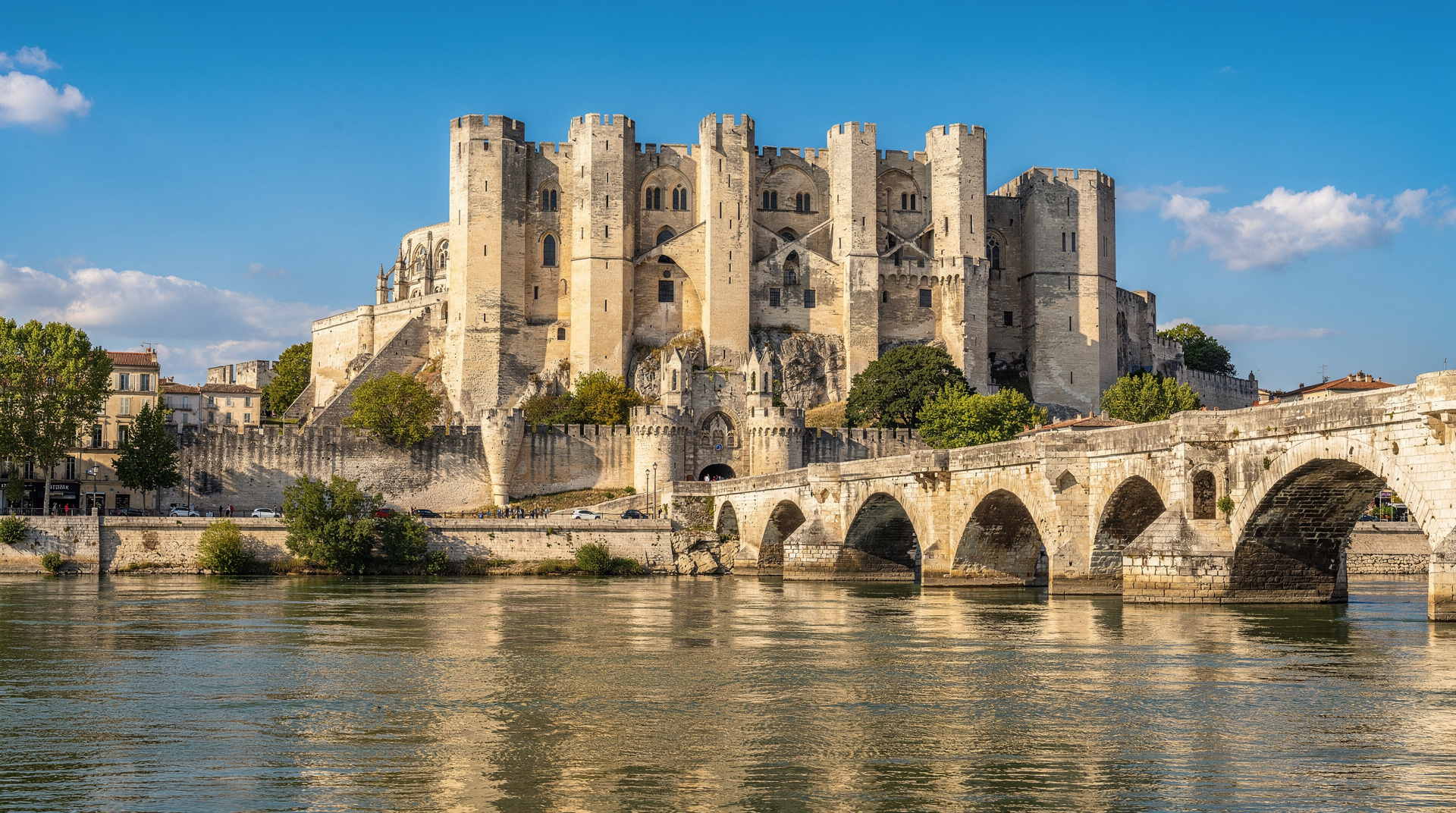
- Palais des Papes — the largest Gothic palace in Europe, built by the Avignon popes in the 14th century. Entry approximately 12–15 EUR; allow 1.5–2 hours. The interior is stripped but the scale is extraordinary.
- Pont d’Avignon (Pont Saint-Bénézet) — the famous bridge that reaches into the Rhône river (not across it — it was never completed). Entry approximately 5 EUR, or simply view it from the quai below for free.
- The ramparts on foot take 40–50 minutes to circumnavigate.
Lunch in Avignon: the Les Halles covered market (open Tuesday–Sunday morning) for a standalone lunch or market exploration before heading to Arles.
Afternoon: Arles (14:00–18:30)
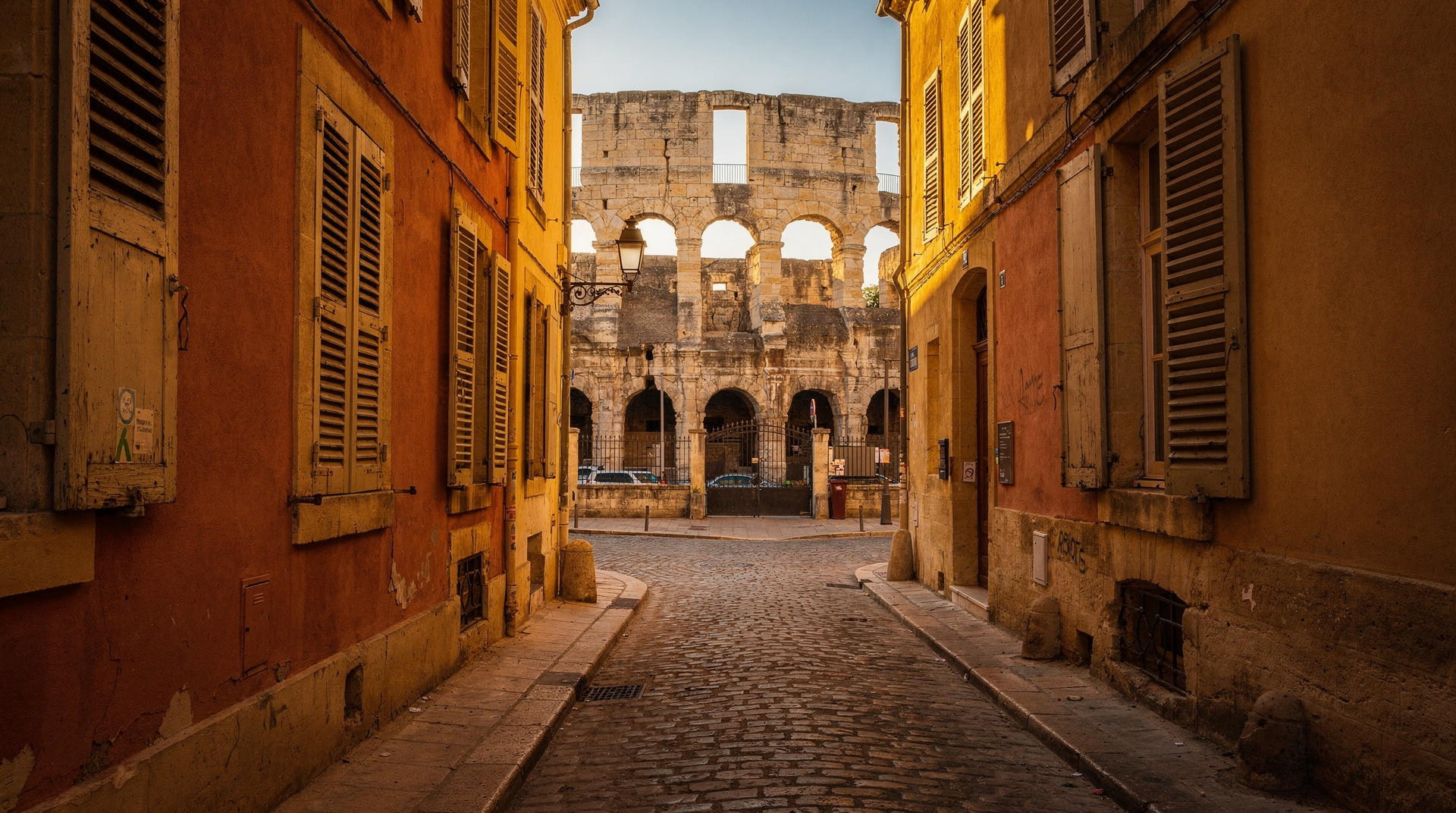
Drive from Avignon to Arles (1 hour via A9/N113 south). Arles is a compact Roman and medieval city on the Rhône — the arena, the theatres, and the Van Gogh trail are all concentrated in a small walkable area.
Key sites in Arles:
- Arènes d’Arles — a Roman arena still in use for bullfights and concerts, almost as complete as the one at Nîmes. Entry approximately 9 EUR.
- Van Gogh trail — Van Gogh lived in Arles in 1888–1889, painting 300 works here. Walk the circuit with the numbered interpretation panels pointing to the spots he painted. The Yellow House was bombed in WWII, but several subjects are unchanged.
- Fondation Vincent van Gogh — the contemporary gallery (entry approximately 12 EUR) has Van Gogh works alongside responses from contemporary artists.
Evening dinner in Arles — a smaller city than Avignon, with fewer options but good ones on the Place du Forum and surrounding streets. Budget 35–50 EUR per person.
Overnight: Arles (or drive back to Marseille in the evening — approximately 1 hour via A54/A7).
Day 7: Return to Marseille
Morning: Arles or camargue detour (9:00–12:00)
Option A — Direct return: Drive Arles → Marseille via A54/A7 (1 hour). Use the morning for final city exploration or airport logistics.
Option B — Camargue flavour: From Arles, drive south 30 minutes to the edge of the Camargue — the vast wetland delta at the mouth of the Rhône, known for wild white horses, pink flamingos, and vast reedy landscapes. A drive along the D36 south toward Saintes-Maries-de-la-Mer gives the visual essence of the Camargue in 2 hours without requiring the full day trip. Return north via D570 to Arles, then A54 to Marseille.
Return to Marseille: Allow minimum 2 hours before any departure for car return and transit to airport or station. If departing from Marseille Provence Airport, the route from Arles via A54/A7 takes approximately 1.5 hours in normal traffic. Add a buffer.
What to book in advance
- Calanques boat tour (Day 3) — book 1–2 weeks ahead in summer.
- Car rental (Days 4–7) — book from Marseille or Aix. Return options at Marseille city or airport. Book 2–4 weeks ahead in summer peak.
- Luberon accommodation (Night 4) — book 4–6 weeks ahead in summer.
- Avignon accommodation (Night 5–6) — book 2–4 weeks ahead.
- Palais des Papes — timed entry bookable at avignon.com.
- Fire risk check for Calanques Day 3 via calanques-parcnational.fr (boat is fine regardless).
- TER trains for Days 3–4 — no reservation required.
Variations
Without a car (full car-free version): Replace Days 4–7 with guided day tours from Marseille (Luberon villages, Avignon, Arles all have organised departures). You lose flexibility but gain the simplicity of no car logistics. See the car-free 4-day itinerary for the train-only version of this region.
Lavender focus (mid-June to mid-July): Add Valensole on Day 5 as described above. Gordes and Sénanque in lavender season are transformed — the Abbaye de Sénanque with purple rows is the image people come to Provence for. Plan and book 6–8 weeks ahead for accommodation during peak lavender season.
Road trip version: The 7-day Provence road trip itinerary is the car-oriented version of this region, starting at Aix rather than Marseille and optimising the route for driving pleasure rather than city time.
Frequently asked questions about this 7-day Provence itinerary
Do I really need a car for this itinerary?
For Days 1–3 (Marseille, Calanques by boat, Cassis): no car needed. For Days 4–7 (Luberon, Gordes, Roussillon, Valensole, Avignon, Arles): a car is effectively required for the Luberon. Avignon and Arles are reachable by train from Marseille, so Days 6–7 could be done by TGV/TER. The critical car dependency is the Luberon villages on Days 4–5 — there is no viable public transport alternative. See the car-in-Provence guide.
When is the best time for this 7-day itinerary?
May and June (before peak summer crowds, before fire closures peak, lavender starting mid-June). September is excellent (sea still warm, crowds dropping, open Calanques trails). July–August is possible but hot, crowded, and Calanques hiking is mostly closed. April works well for Marseille and the Luberon but Valensole has no lavender yet.
How do I handle the Calanques fire closure risk?
Book a boat tour for Day 3 regardless of fire risk — boat access to the Calanques is never restricted by fire closures. If you also want to hike, check calanques-parcnational.fr the evening before (status posted after 18:00). See the complete fire closure guide.
Is Valensole lavender worth the detour?
In peak season (first two weeks of July), yes without question — the scale of the plateau is genuinely impressive and unlike any other landscape in Provence. Outside mid-June to mid-July, the fields are green or harvested and the detour is not justified. Check the lavender forecast in our lavender season guide before committing to the Valensole detour.
Can I do Avignon and Arles in one day?
Yes, but it is a long one. Avignon morning (3–4 hours: Palais des Papes, Pont d’Avignon), drive to Arles after lunch (1 hour), afternoon in Arles (3 hours: arena, Van Gogh trail). This is the Day 6 plan above. It works if you start Avignon by 9:00 and reach Arles by 14:00.
Should I sleep in Arles or drive back to Marseille on Night 6?
Sleeping in Arles is the more relaxed choice — it removes a 1-hour evening drive after a long day and gives Day 7 a gentler start, with the option of the Camargue detour before heading back. Driving back to Marseille on Night 6 only makes sense if your Day 7 departure is early or if you specifically want to spend the final night back in the city near the Vieux-Port.
Day-by-day summary
| Day | Focus | Car needed |
|---|---|---|
| Day 1 | Arrival, Vieux-Port orientation | No |
| Day 2 | Marseille city: Le Panier, Notre-Dame de la Garde, Corniche | No |
| Day 3 | Calanques boat tour, Cassis by TER | No |
| Day 4 | Aix-en-Provence, drive into the Luberon (Lourmarin, Bonnieux) | Yes |
| Day 5 | Gordes, Sénanque, Roussillon, Valensole (seasonal) or Avignon | Yes |
| Day 6 | Avignon (Palais des Papes), Arles (arena, Van Gogh trail) | Yes |
| Day 7 | Return to Marseille, optional Camargue detour | Yes |
Top experiences
Bookable activities with verified prices and instant confirmation on GetYourGuide.