Valensole plateau
Valensole plateau: Provence's lavender capital, peak colour 3 weeks in late June–July.
From Marseille: Valensole lavender full-day tour
Duration: 9 hours
Quick facts
- From Marseille
- ~1 h 30 to 1 h 45 by car via A51 and D4/D8
- From Aix-en-Provence
- ~1 h 15 by car
- Peak bloom window
- Late June to mid-July; first week of July typically peak for commercial lavandin
- Lavandin vs lavender
- Valensole fields are predominantly lavandin (hybrid, taller, later bloom)
- Harvest
- Mid-July to early August for lavandin; harvested by mechanical combine
The plateau that delivers the postcard
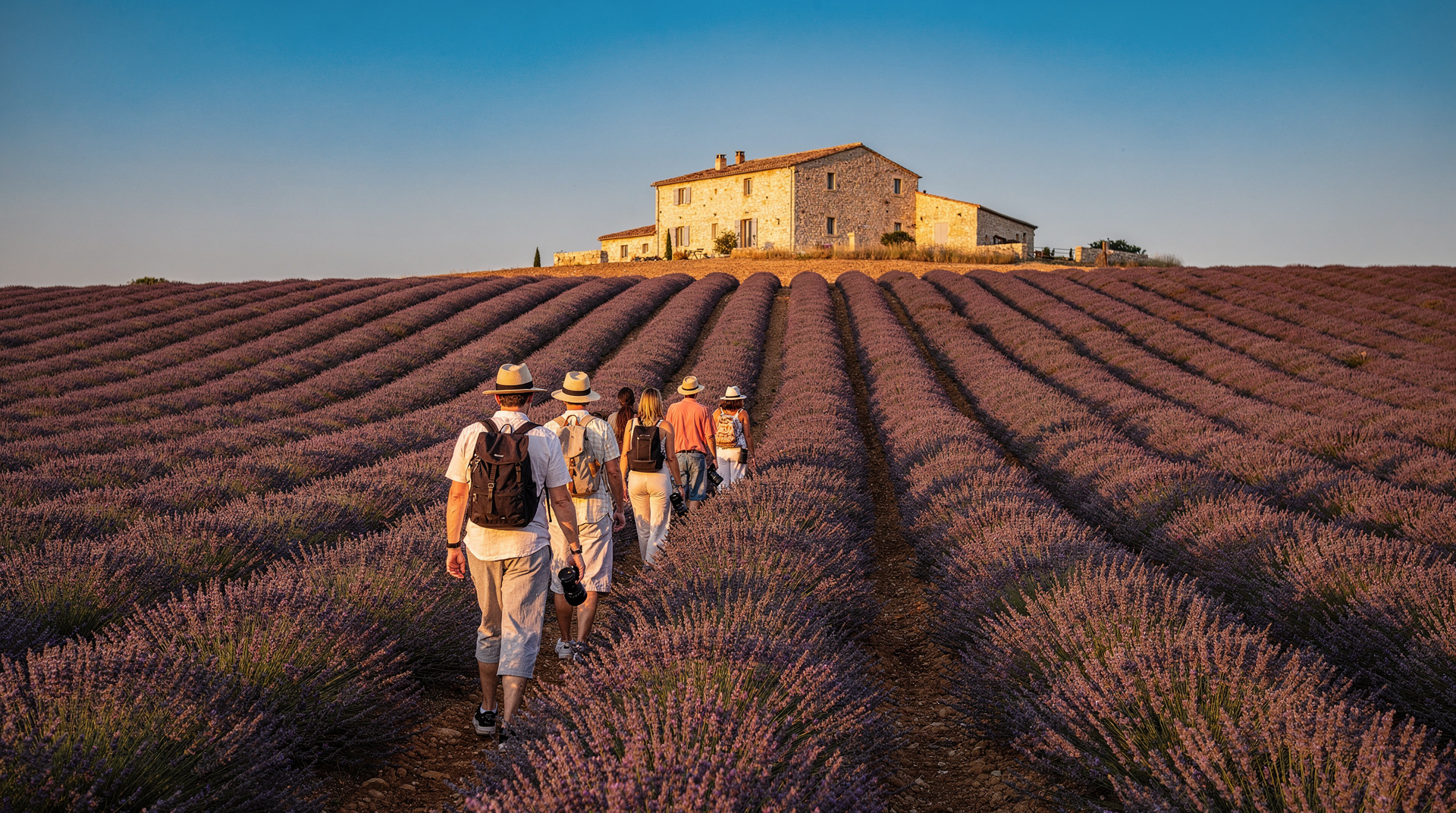
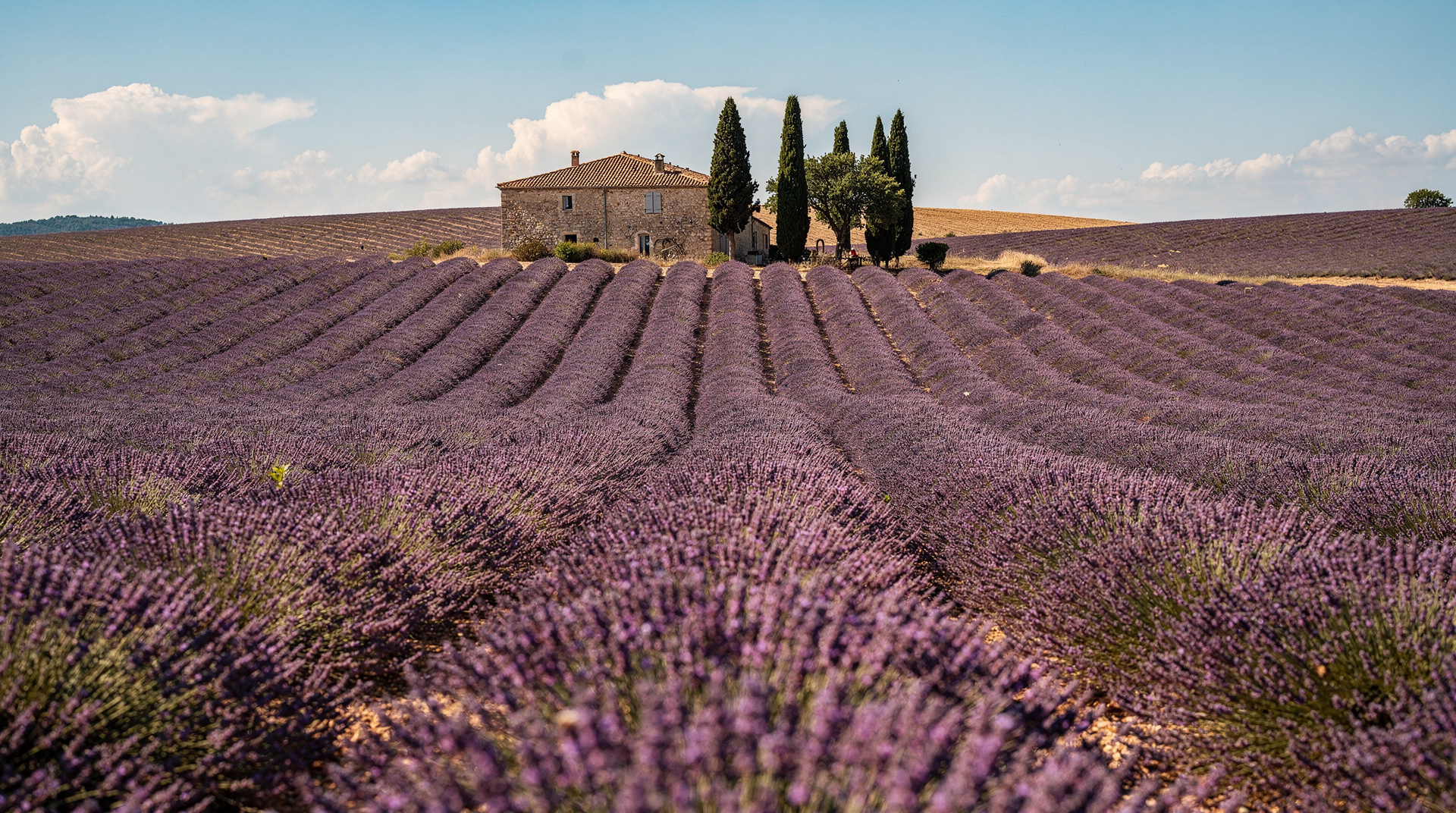
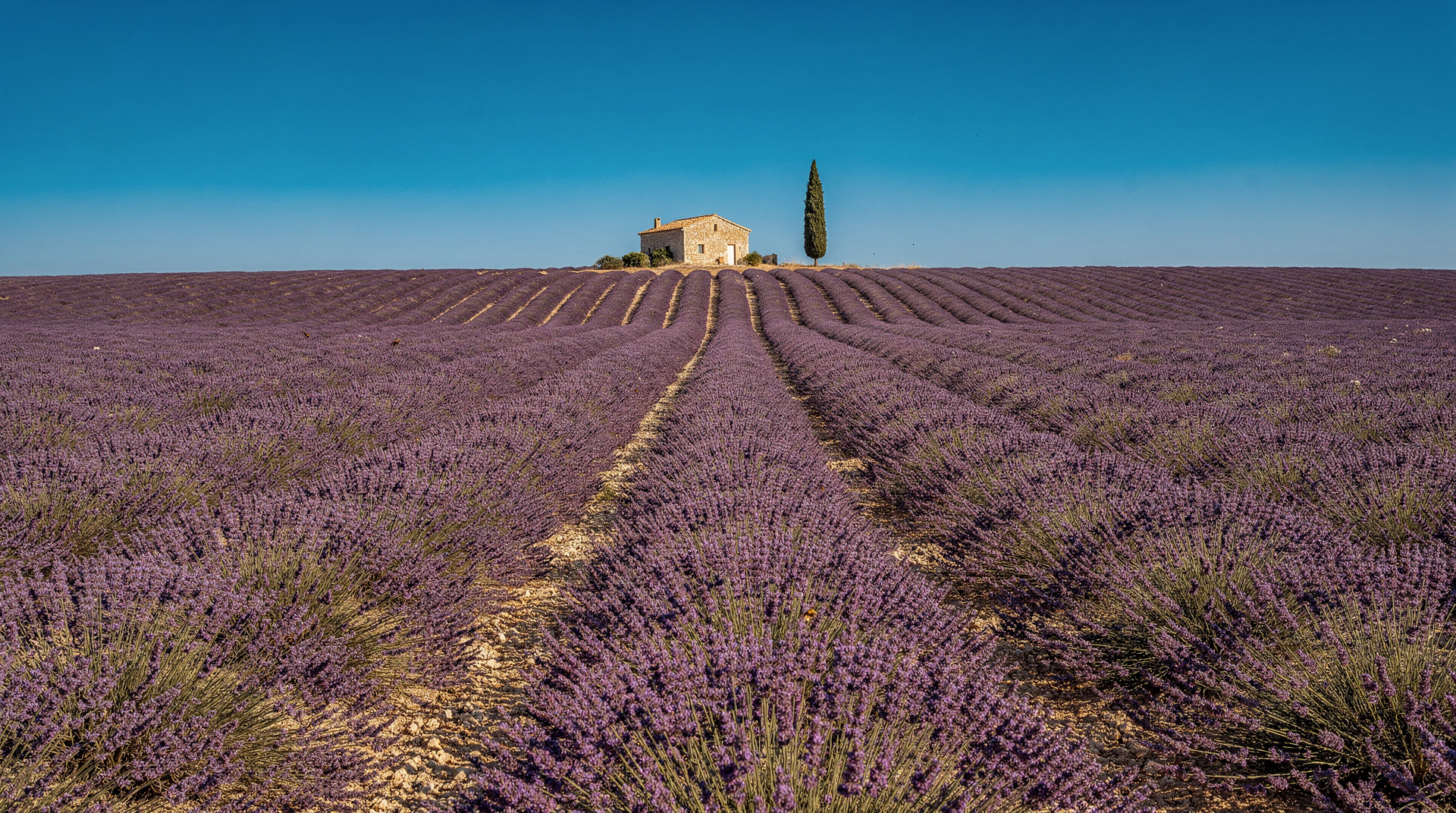
The Plateau de Valensole is not subtle. At peak colour in late June and early July, the view from any of the ridge roads south of the village stretches to the horizon in bands of purple-blue, broken by the grey-green of almond and olive trees and the pale limestone edges of the surrounding hills. It is the largest expanse of lavender cultivation in Europe, and when it is blooming, the photograph almost takes itself.
The challenge is that this window is short — roughly three weeks of peak colour — and the first week of July in particular concentrates crowds, heat, and logistics problems at a scale that surprises first-time visitors. This guide is about visiting Valensole honestly: when to go, what you are actually seeing, how to behave in someone’s working farm, and what alternatives exist.
| At a glance | |
|---|---|
| Where | Plateau de Valensole, roughly 1 h 30 from Marseille or 1 h 15 from Aix-en-Provence by car |
| Cost | Free to view from roadside viewpoints; farm workshops and distillery visits typically €5–15; organised full-day tours around €70–120 |
| Time needed | Half a day for the plateau alone; a full day combined with Moustiers-Sainte-Marie |
| Getting there | Car (own or rental) or an organised tour from Marseille/Aix — no public bus serves the plateau |
| Best time | Late June to mid-July for peak bloom; go early morning or evening to avoid midday heat and crowds |
Lavandin vs true lavender: the distinction that matters
Most visitors arrive expecting “lavender” and are looking at “lavandin.” The distinction matters for understanding bloom timing and what the landscape actually is.
True lavender (Lavandula angustifolia) grows at higher altitudes (above 600 metres), blooms slightly earlier (mid-June to early July), and produces the most prized essential oil — the “fine lavender” used in high-end perfumery and pharmaceuticals. The area around Sault (at 760 metres) and the slopes of Mont Ventoux grow predominantly true lavender.
Lavandin (Lavandula x intermedia) is a hybrid between true lavender and spike lavender. It grows at lower altitudes, blooms slightly later (late June to mid-July), produces much higher essential oil yield but of lower perfume quality, and is the dominant crop across the Valensole Plateau and most commercial Provençal cultivation. It accounts for roughly 90% of Provence lavender production.
The visual difference: lavandin plants are taller (40–60 cm versus 30–40 cm for true lavender), with a slightly greyer-purple colour when not fully open, shifting to blue-violet at peak. The famous Sénanque abbey field, by contrast, is planted with true lavender.
For the visitor: The Valensole fields are lavandin. Peak colour typically runs from approximately June 20 to July 15 for the commercial fields, with the first two weeks of July being the most reliable peak window. Year-to-year variation of one to two weeks is common depending on the season’s warmth and precipitation.
Bloom timing 2026
Based on historical patterns and 2026 seasonal data, the expected peak for Valensole lavandin in 2026 is:
- First colour visible: Around June 15–18
- Good colour for photography: June 20 onward
- Peak saturation: Late June to July 10
- Harvest begins: Mid-July (fields are cut mechanically; once harvested, the bloom is gone)
These are estimates — specific rows or fields may peak earlier or later depending on their exact elevation, sun exposure, and variety. The north-facing fields tend to bloom later than south-facing ones.
The Sault alternative: If you miss the Valensole window or want to extend the lavender season, the area around Sault (Vaucluse, about 45 km north of Gordes) grows true lavender at higher elevation and blooms later — often into the first week of August. Less dramatic in scale than Valensole, but genuinely beautiful and less crowded.
Valensole month by month
| Month | Field colour | Crowds | Notes |
|---|---|---|---|
| May | Green, no colour yet | Low | Not worth a lavender-specific trip; combine with Luberon villages instead |
| Mid-June | First colour appearing | Moderate | Good early window, less reliable colour but far fewer people |
| Late June–early July | Peak saturation | Very high | The classic postcard window; arrive at sunrise to beat both heat and crowds |
| Mid-July | Harvest begins | High, thinning | Fields cut progressively; check farm status day by day |
| August onward | Bare, cut fields | Low | Skip the plateau; consider Sault for late-season lavender instead |
The ethics of photographing in lavender fields
This is worth stating directly because social media has made it a real problem. The lavender fields of Valensole are working farms. The plants are cultivated commercially for essential oil production. Walking into a field to photograph yourself surrounded by lavender — or any person walking between the rows — damages the plants, compacts the soil, and constitutes trespassing on private agricultural land.
The established approach: photograph from the road edges or designated viewpoints. Several of the better-known viewpoints near Valensole village have pull-offs and footpaths along the field edges that allow close photography without entering the crop. Some farmers put up rope barriers and signs for this reason; others have simply stopped growing lavender near roads because the visitor intrusion made it not worthwhile.
If you want the immersive field experience legitimately: some farms offer guided access, lavender-cutting workshops, and distillery visits during the bloom period. Several operate near Riez and Puimoisson. These cost a modest fee and allow genuine participation in the harvest culture rather than unauthorised trespassing.
The villages of the Valensole plateau
Valensole village: The main town on the plateau, with a shaded central square and several shops selling lavender products. The village itself is pleasant rather than spectacular — the point of coming here is the plateau landscape, not the village. A small lavender cooperative has a shop and distillery demonstrations.
Riez: A quieter town 12 km west of Valensole with Roman-era baptistery ruins (some of the best-preserved early Christian architecture in Provence) and a Saturday morning market. The combination of Riez’s market and the Valensole landscape makes a good day structure.
Puimoisson: A village on a secondary plateau north of Valensole with lavender fields and the Ferme du Bois l’Abbé — one of the accessible farms where visitors can attend distillation demonstrations during harvest.
Moustiers-Sainte-Marie: The famous faïence pottery village 20 km north of Valensole, at the entrance to the Gorges du Verdon. Not a lavender destination itself but a logical combination with a Valensole day for those coming from Aix or Marseille.
Getting to Valensole
By car from Marseille: Take the A51 north toward Aix-en-Provence, then the D96 east toward Manosque, and the D4/D6 south toward Valensole. Total around 1 h 30 to 1 h 45 depending on exact starting point. This is not a short drive — factor in the distance when planning.
By car from Aix-en-Provence: About 1 h 15 via the D96 east, A51 toward Manosque, and D4 south to Valensole. The route passes through Manosque, which is worth a stop if you have time.
By organised tour from Marseille or Aix: The best option for those without a car during bloom season. Full-day tours from Marseille typically also include Moustiers-Sainte-Marie and may route through the Luberon. From Aix, half-day tours to the lavender fields run specifically during the bloom window — more efficient if your Aix timing aligns.
Without a car: Not practical independently. There is no public bus to the Valensole plateau from any nearby city.
The lavender tour experience
Full-day organised tours from Marseille (around 9 hours) during the bloom period typically cover:
- Valensole plateau landscape and viewpoints
- A stop at a lavender farm for distillation demonstration
- Moustiers-Sainte-Marie for lunch and pottery
- Sometimes a Gorges du Verdon viewpoint
Half-day tours from Aix (around 3.5 hours) concentrate specifically on the fields and a farm visit without the Verdon extension.
The tours handle driving and parking, which matters: road-side pullouts near the best Valensole viewpoints fill rapidly by 8:00–9:00 on peak-bloom days.
Practical planning
Time your day: The lavender fields photograph best in the morning (golden light on the east-facing slopes) or the evening (warm light on the west-facing fields). The midday hours from 11:00–15:00 are the harshest light and the hottest — not the best time for either photography or walking on an exposed plateau.
What to bring: Sunscreen, hat, water (at least 2 litres per person in July), insect repellent for the evening. The plateau is fully exposed; shade is scarce.
Purchase lavender products at source: Essential oils, sachets, and soaps bought directly from farm shops (coopératives) at Valensole or Riez cost significantly less than the same products sold in tourist shops in Gordes or Aix, and the provenance is more traceable.
For the full lavender planning guide — including the Sault alternative, the Sénanque abbey timing, and the combined Luberon + lavender day route — see our lavender fields day trip guide and lavender season guide. For the broader regional context, see the Luberon guide. For Valensole as part of a Verdon day, see the Aix guide for logistics.
Beyond lavender: what else the plateau offers
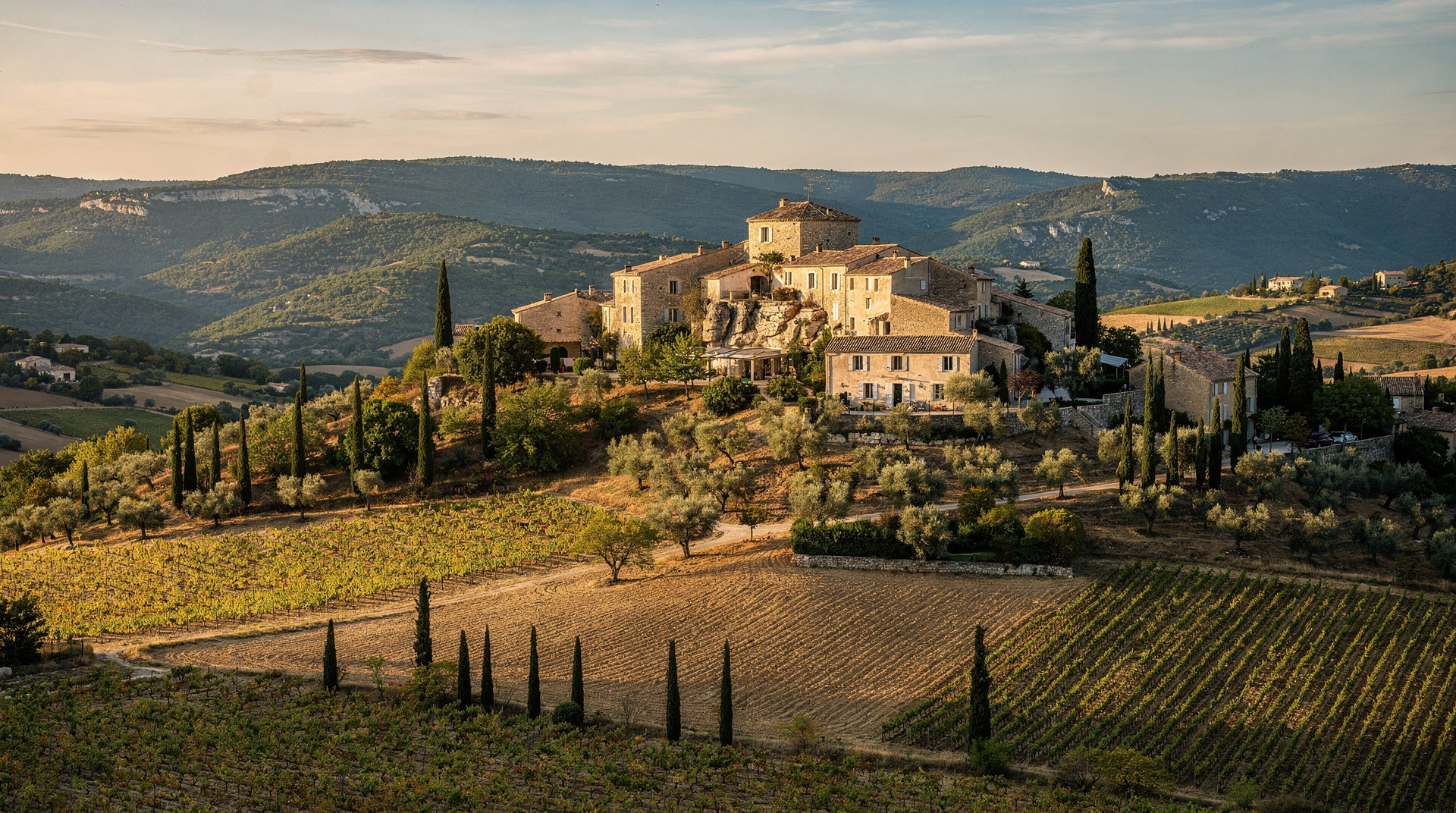
Lavender is the reason most people come, but the plateau also grows almond trees (blooming pale pink in February, well before lavender season) and holds a genuine beekeeping tradition — several producers around Valensole and Riez sell lavender honey directly, often alongside the essential oils and sachets in the same farm shops.
If you visit outside the June–July window, the almond blossom in late February is a lesser-known but photogenic alternative, and the rolling wheat-and-olive landscape is quietly attractive year-round even without colour. For those extending the trip toward the Verdon, the drive from Valensole toward Moustiers-Sainte-Marie and the Gorges du Verdon rewards an extra half day with some of the most dramatic canyon scenery in Provence.
Fitting Valensole into a wider Provence trip
Valensole works best as one chosen day inside a longer stay rather than the whole reason for a trip. If you are still deciding how much time Provence deserves, the day trips from Marseille overview puts the plateau next to the other options so you can weigh the drive against what you get in return. Travellers building a summer route around the bloom will find the Provence lavender route itinerary a useful frame, and the Provence road trip itinerary shows how a Valensole morning can sit inside a longer drive.
The car question comes up for almost everyone, and the guide to whether you need a car in Provence explains the trade-off between driving yourself and joining a tour. If you would rather stay near the coast and still reach the fields, our Marseille and Provence itinerary leaves room for a lavender day without turning the whole stay into a road trip.
For a first-hand account of a season spent chasing colour, the lavender season diary is a good companion read, and it is a candid reminder of how much the timing matters. Once the plateau is done, the Verdon Gorge is the natural next stop for anyone continuing toward the canyon, while the Luberon villages day trip suits those who would rather trade open landscape for hilltop villages.
Frequently asked questions about Valensole
When exactly should I visit Valensole for the best lavender colour?
Aim for the last week of June through the first ten days of July for the most reliable peak colour, though this shifts by a week or two depending on the season’s weather. Check recent bloom reports close to your travel dates rather than relying on a fixed calendar date, since a hot spring can push the peak earlier and a cool one can delay it.
Can I walk into the lavender fields for photos?
No. The fields are working farms cultivated for essential oil production, and walking into rows damages the plants and constitutes trespassing. Photograph from road edges, designated viewpoints, or through a paid farm workshop that explicitly permits access.
Top experiences
Bookable activities with verified prices and instant confirmation on GetYourGuide.