Gordes
Gordes is Provence's most photographed village — limestone hilltop, Renaissance château, Sénanque abbey. Lavender blooms for two weeks.
Gordes, Roussillon & ochre trail with Fontaine de Vaucluse
Quick facts
- From Marseille
- ~1 h 15 by car via A51 and D973; no direct public transport
- From Aix-en-Provence
- ~50 min by car via Cavaillon
- Sénanque lavender bloom
- Approximately late June to early July — roughly 10–14 days total
- Gordes market
- Tuesday morning, Place du Château
- Parking
- Nightmare in July–August; arrive before 9:00 or use outer car parks
The village that became the image
Gordes exists at the intersection of genuine architectural beauty and overwhelming visitor pressure, and understanding both sides of that equation is what makes a visit actually work.
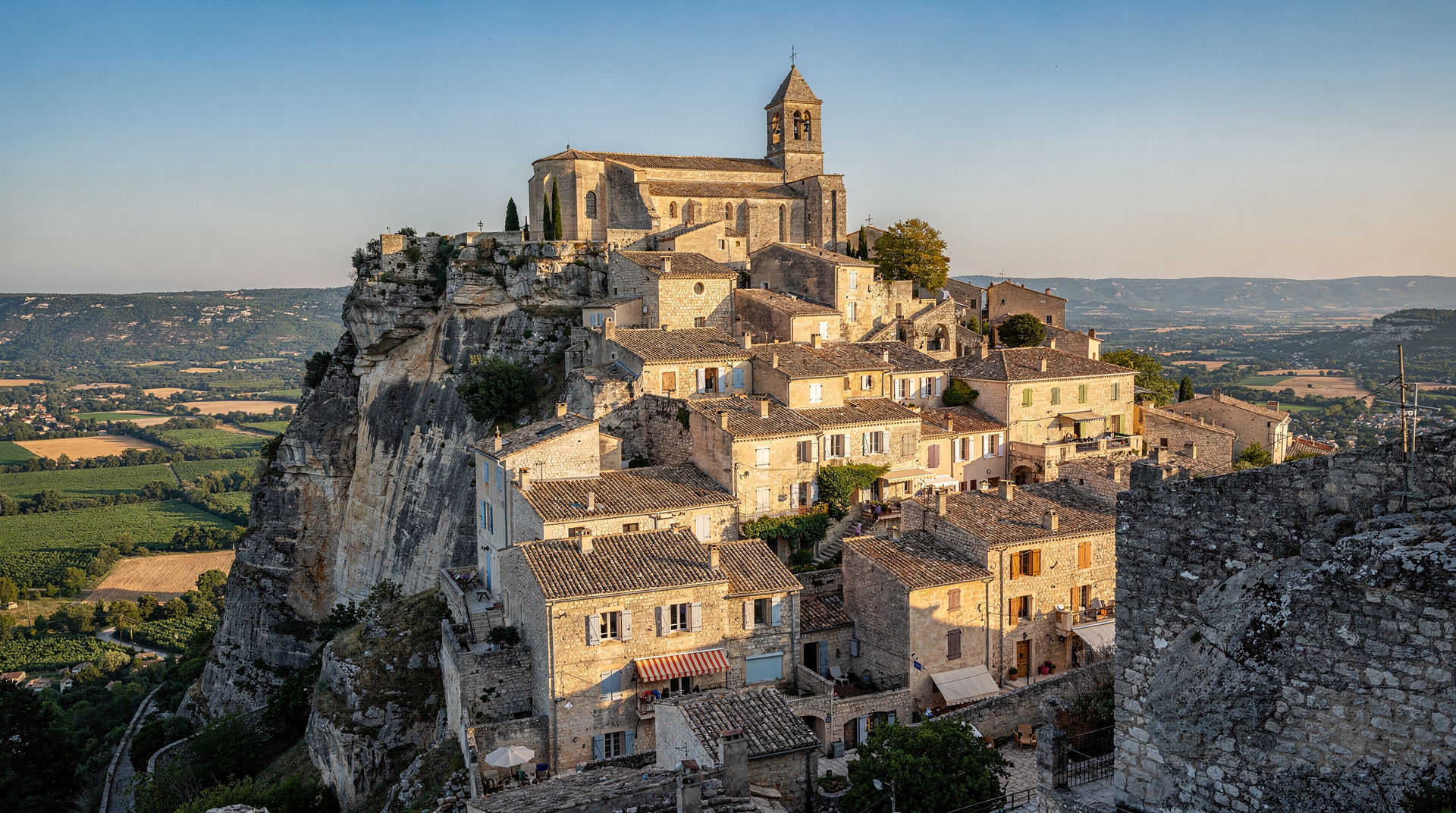
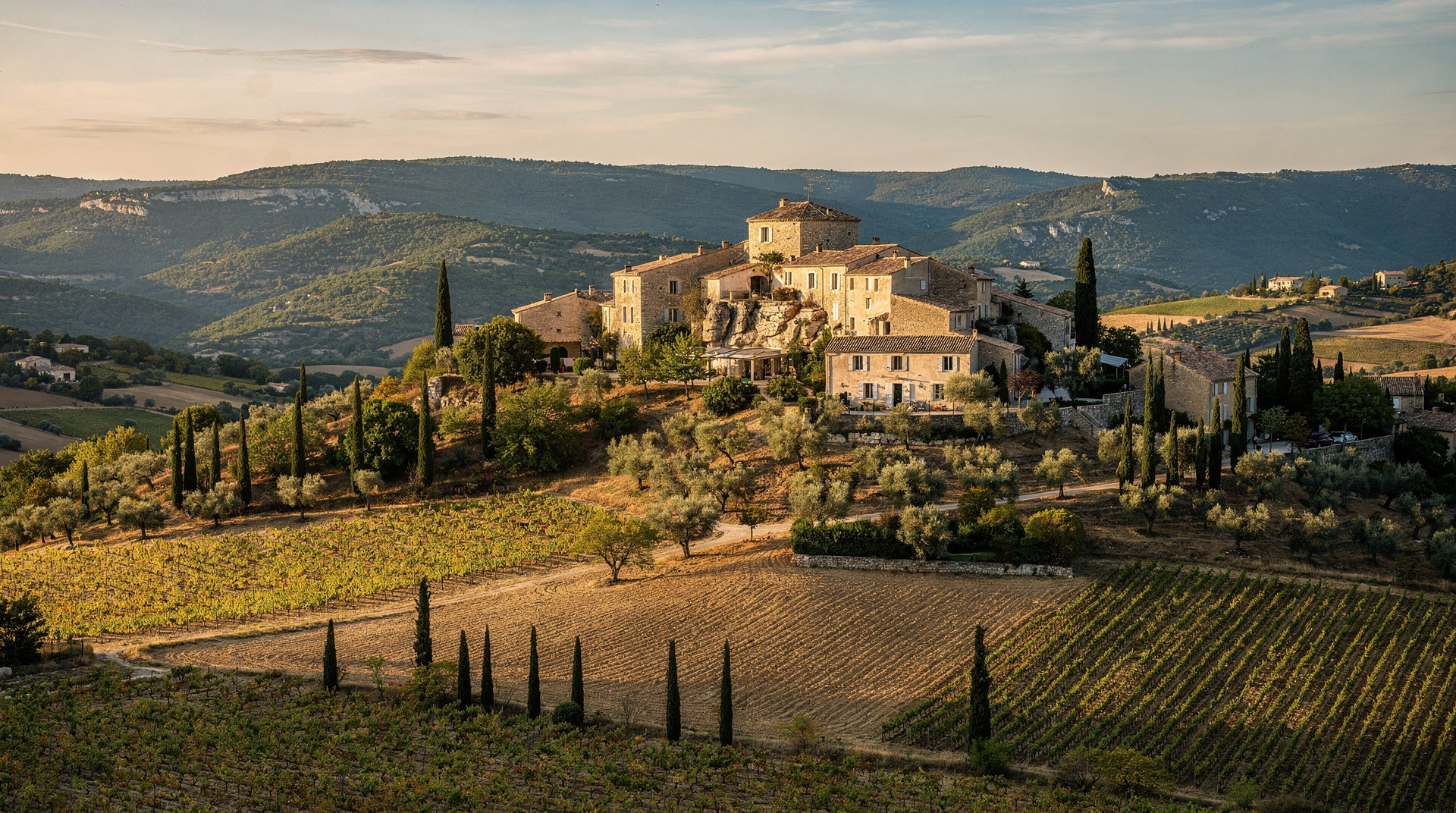
The architecture is real. The village cascades down a south-facing limestone escarpment in tiers of honey-coloured stone — houses built into the rock, walls that have stood since the medieval period, a 16th-century Renaissance château at the summit that dominates the silhouette from every approach. The view from the main plateau south across the Luberon valley is one of the defining Provençal landscapes.
The pressure is also real. Gordes is consistently listed among the most beautiful villages in France, has approximately 2000 residents, and receives hundreds of thousands of visitors per year. On a Saturday in July, the road down from the plateau becomes a one-way traffic jam, the car parks fill before 10:00, and the village square is shoulder-to-shoulder with tour groups. This is not a secret — it is the consequence of being Gordes.
The solution is timing, not avoidance.
At a glance
| Where | Luberon hills, northern Provence, ~1 h 15 from Marseille |
| Cost | Free to walk the village; Sénanque abbey around €8–9; Village des Bories around €7–8 |
| Time needed | Half a day for the village; a full day combined with Roussillon or Sénanque |
| Getting there | Car only — no direct public transport from Marseille or Aix |
| Best time | Weekday mornings, April–June or September–October |
When to go — and when not to
Best: Tuesday morning from late May to early June. The village market fills the Place du Château from 8:00 to 13:00 with local producers, the village is at its most alive, and the summer crowd has not yet arrived at scale. A Tuesday in May at Gordes is the experience that justifies the reputation.
Also good: Any weekday morning in April, May, September, or October. Arrive by 9:00 and you have the village largely to yourself. By 11:00 the coach parties begin; by 12:30 the car parks fill.
Difficult: Weekends from mid-June through August. The parking situation at Sénanque during lavender bloom (late June to early July) is described by visitors as “a nightmare” with regularity. Outer car parks have been added but the road to the abbey is a single lane that clogs in both directions when volume peaks.
Not recommended: Saturday or Sunday in July or the first week of August.
Sénanque abbey and the lavender question
The Cistercian abbey of Notre-Dame de Sénanque, visible from above Gordes as a cluster of honey-coloured buildings at the bottom of a narrow valley with lavender in the foreground, is the single most reproduced image of Provence. It appears on postcards, guidebook covers, airline magazines, and hotel lobby artwork worldwide.
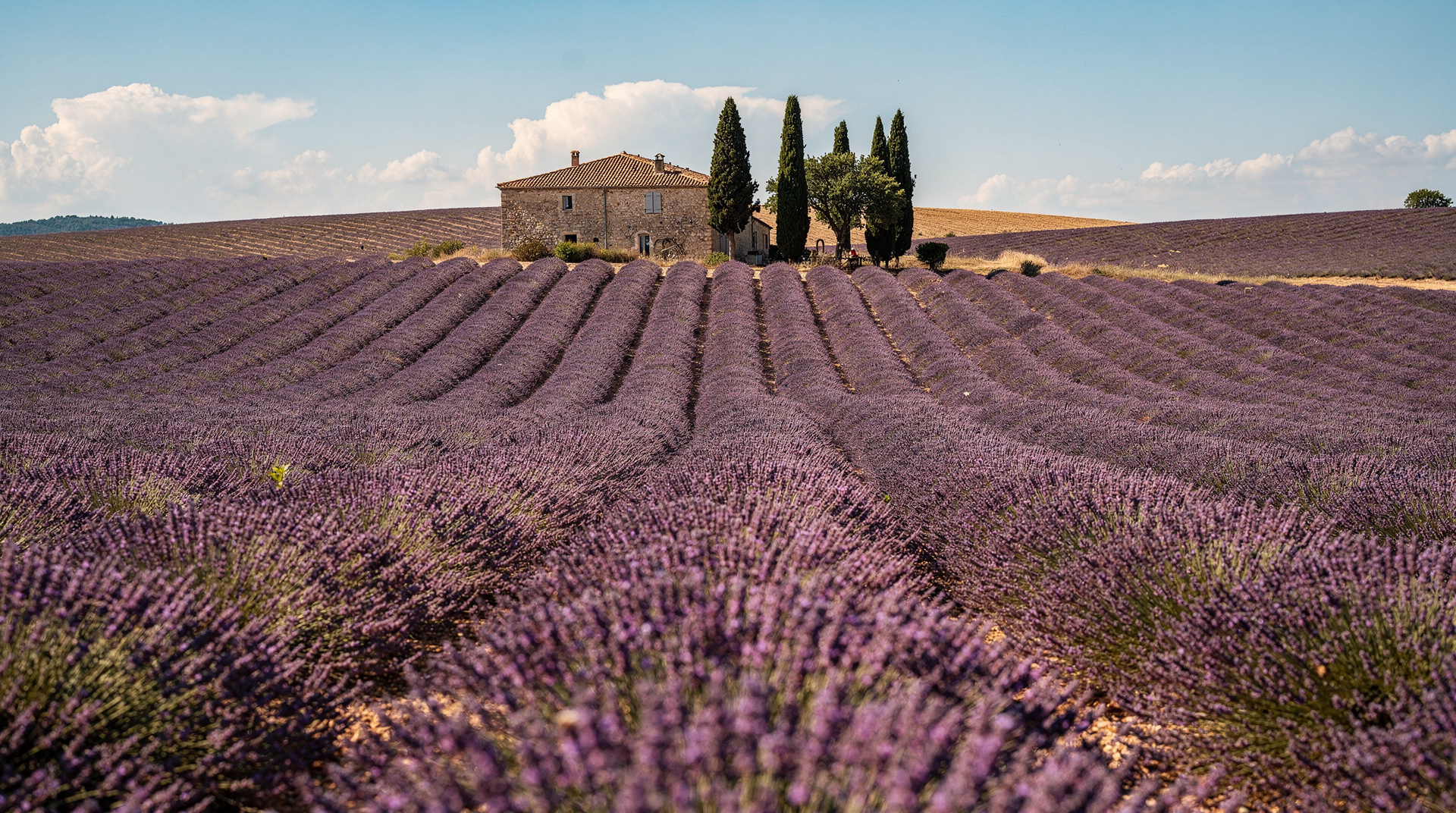
The reality behind the image requires one specific fact: the lavender bloom at Sénanque lasts approximately 10 to 14 days. The abbey’s lavender field is small (monastic, not commercial), and the peak colour — the saturated purple-blue that the photograph requires — exists in this window, typically in the last week of June and first week of July, with year-to-year variation depending on the season’s temperatures.
Before this window, the plants may be partially in bud; after it, the lavender is harvested or fading. Visitors who arrive in August expecting the postcard discover that the field is largely grey-green stubble.
For the photograph: You need to be in the right week, at the right time of day (early morning light from the road above), and ideally on a weekday. The good news is that Sénanque’s valley position means the light on the abbey is excellent from first light until around 10:00 in summer.
Visiting the abbey itself: The Cistercian monks still live and work at Sénanque. The abbey is open to visitors from Monday to Saturday 10:00–17:15, and Sunday afternoon from 13:45. Guided visits are available; the monastery shop sells lavender products and local honey produced by the monks. The interior — a 12th-century Romanesque nave, chapter house, and cloister — is worth the visit regardless of lavender timing.
The village: what to see
The château: The Renaissance château of Gordes (now the village town hall after various uses) dominates the Place du Genty Pantaly. Its facade dates to 1525 and shows the transition between medieval fortification and Renaissance palace. The interior is occasionally open for temporary exhibitions; the main value for most visitors is the building’s role in the village skyline rather than what is inside.
The village streets: The lanes below the château ramble downhill in tight curves. The architecture is consistently excellent — stone walls, arched doorways, occasional medieval windows. There are better-preserved examples of traditional Provençal construction here than in most of the other famous villages. The lower section of the village, away from the main viewpoint area, is the part that actually feels inhabited.
Les Bories: About 2 km south of the village, a collection of traditional dry-stone hut-shelters (bories) has been preserved and opened as an open-air museum. These round-roofed stone structures were built without mortar using local limestone, a technique that persisted in the Luberon into the 18th century. The Village des Bories site contains several dozen examples in various states. Entry around 7–8 EUR; worth an hour if you have time after the village.
Getting to Gordes
By car from Marseille: Take the A51 north toward Aix-en-Provence, then either the A7/A9 toward Avignon or the more scenic D973 via Pertuis and Cavaillon. Total around 1 h 15 to 1 h 30 depending on traffic.
By car from Aix-en-Provence: About 50 minutes via the D73, D22, and D2 through the Luberon. Faster via the A7/N7 toward Cavaillon (50 minutes on faster roads).
By organised tour: Day tours from Marseille or Aix that include Gordes typically also cover Roussillon and sometimes Sénanque. These handle the parking problem and usually include a local guide.
No public transport: There is no bus from any nearby town to Gordes.
Combining Gordes with other villages
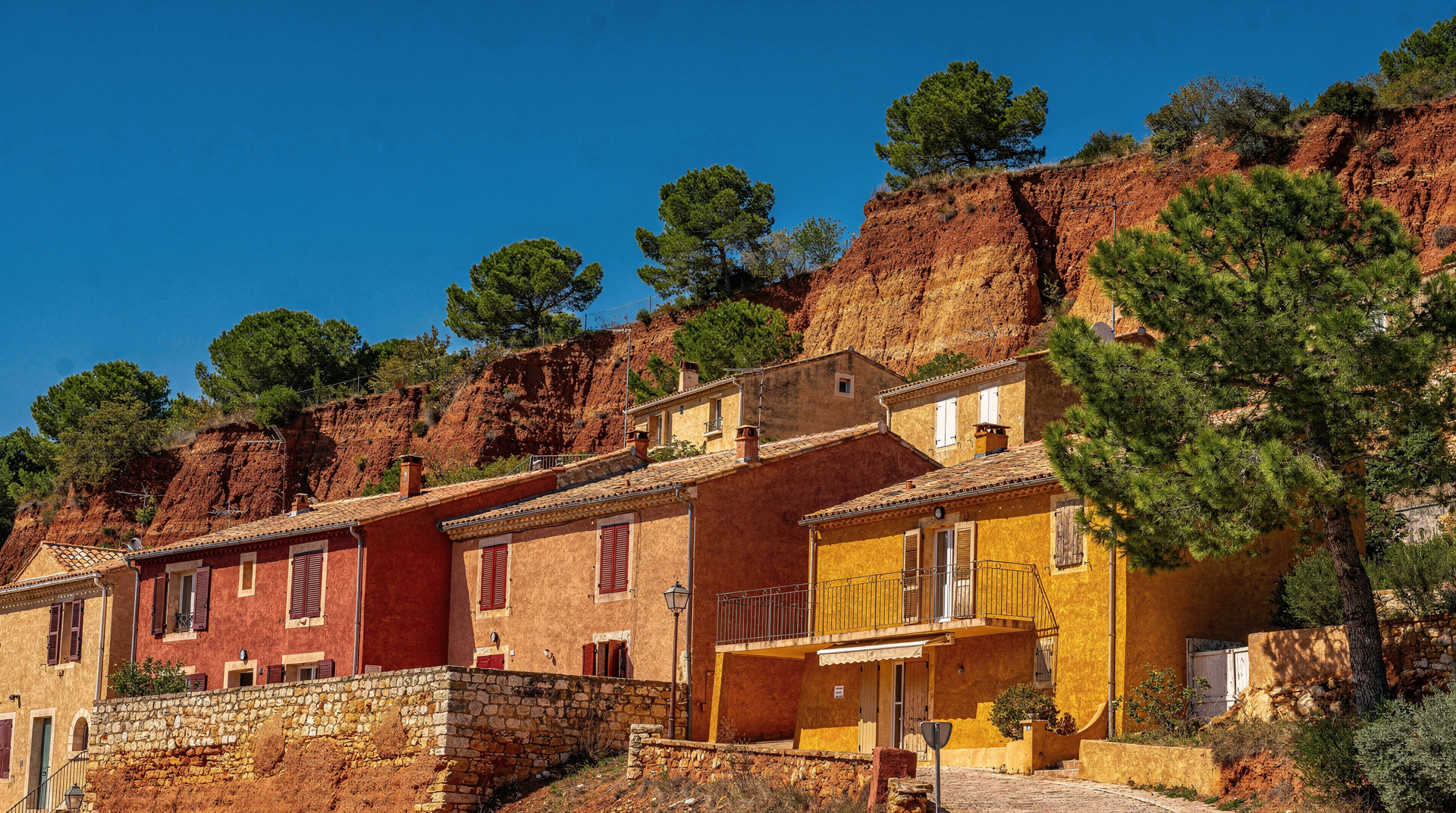
Gordes + Roussillon: The most common combination. Roussillon is 10 km east of Gordes on the D2. Two hours in each, plus lunch in between, makes a satisfying day. Roussillon’s Sentier des Ocres trail adds 30–60 minutes but is worth the time. See the Roussillon guide.
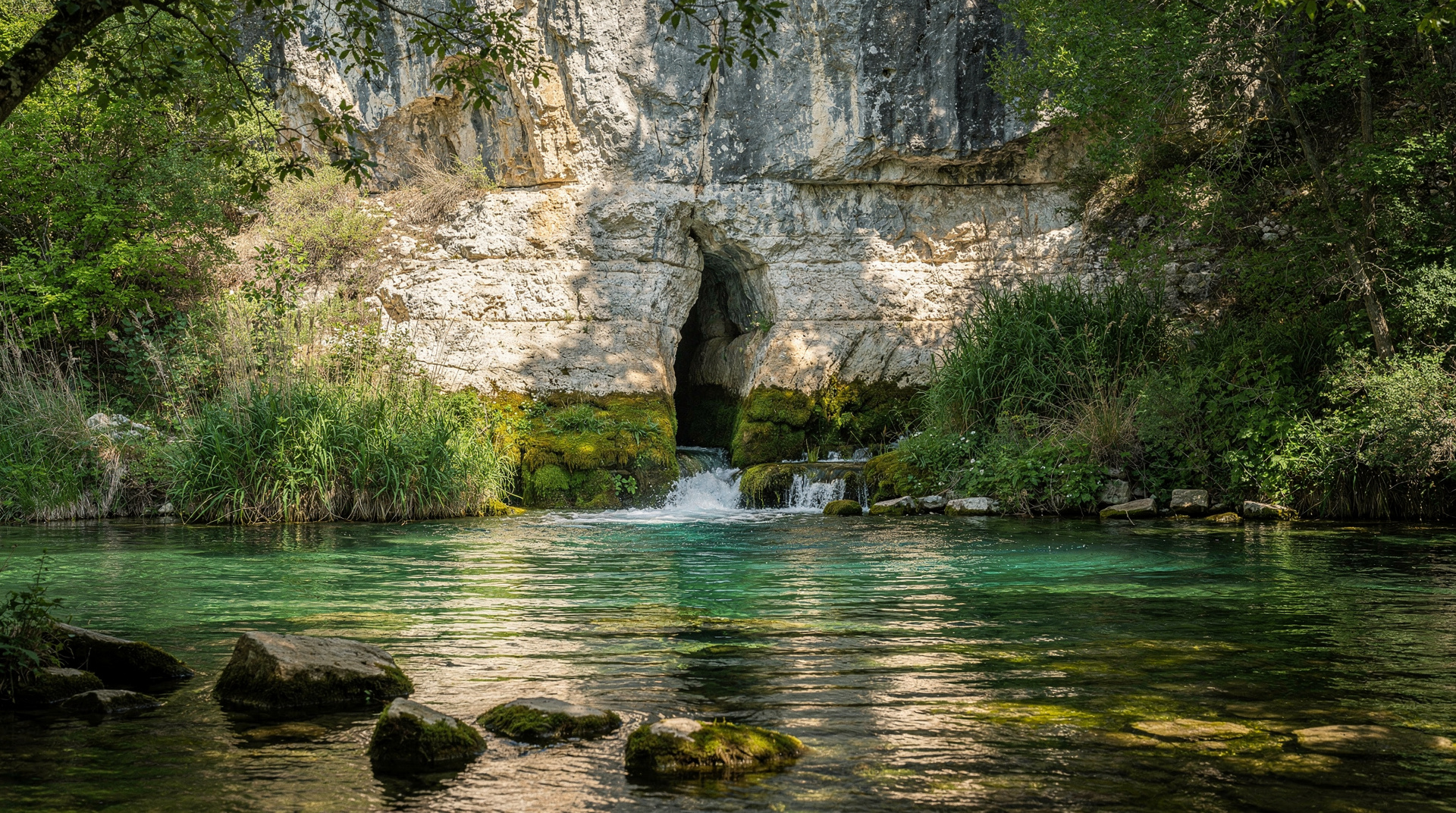
Gordes + Sénanque + Fontaine-de-Vaucluse: A northern Luberon loop. Sénanque is 3 km north of Gordes; Fontaine-de-Vaucluse is 20 km northeast. This combination makes most sense in spring when the Sorgue spring is at its fullest. See the Fontaine-de-Vaucluse guide.
Gordes as part of a Luberon day: See the Luberon guide for a full-day itinerary covering multiple villages including both the north (Gordes, Roussillon) and south (Lourmarin, Ménerbes).
Practical notes
Parking in summer: The large car park below the village fills early. Outer overflow car parks are signed from the D15. A shuttle bus (petit train) sometimes operates between the outer parks and the village in peak season; confirm before relying on it. Walking from the outer car parks to the village centre is 10–15 minutes.
Eating in Gordes: Several restaurants on the village square and in the streets below. Terrace prices are high in summer. The Tuesday market provides an alternative — boulangeries and traiteur stalls sell prepared food for a picnic at lower cost.
The light: If you are driving to photograph the village, the afternoon light hits the south-facing limestone in warm tones — good from around 15:00 onward. Morning light suits Sénanque (facing east from the access road above). Plan accordingly rather than arriving mid-morning when the light is flat and the crowds peak.
For lavender beyond the Sénanque window, see the Valensole guide for the commercial lavender plateau that runs mid-June to mid-July. For the broader Luberon context and market calendar, see the Luberon overview.
Gordes vs the other Luberon hilltop villages
Gordes is the most famous, but it is not automatically the best fit for every visitor. Here is how it compares with its closest rivals.
| Village | Character | Crowds | Best for |
|---|---|---|---|
| Gordes | Grand hilltop silhouette, château, closest to Sénanque | Highest in the Luberon | The classic postcard view and the abbey |
| Roussillon | Ochre-red houses, Sentier des Ocres trail | High but slightly less than Gordes | Colour and a short walking trail |
| Ménerbes | Smaller, quieter, literary/artistic reputation | Low | A slower, less touristy village visit |
| Lourmarin | Southern Luberon, lively market town, château | Moderate | Combining a village visit with a proper lunch |
See the full Luberon guide for how to sequence several of these in one day.
Where to stay if you want more than a drive-through
Gordes itself has a handful of high-end hotels built into the hillside, priced well above the regional average — this is one of the more expensive corners of Provence to sleep in. Most visitors on a Marseille- or Aix-based trip treat Gordes as a day trip rather than a base, staying instead in Aix-en-Provence or a Luberon village with lower prices, then driving up for the morning light. If you do want to sleep in the Luberon, aim for a village a little further from the main circuit — quieter at night and usually better value.
Planning Gordes around a Marseille or Aix base
Gordes rewards a little preparation more than most villages, because the things that go wrong are almost all logistical: arriving too late, choosing the wrong week for the abbey, or trying to fit too many stops into one day. If you are building a longer trip, the Marseille and Provence 5-day itinerary and the Provence road trip itinerary both show where a Luberon day fits without rushing.
Decide first whether you want the car or a tour. Driving gives you control over the early start that makes Gordes pleasant, and the do you need a car in Provence guide explains when that freedom is worth the parking stress. If you would rather not drive, the Luberon villages day trip guide covers how organised days are usually structured.
Then think about the season. Spring and early autumn give the best balance of light, calm and comfortable walking, and the best time to visit Marseille guide helps you match your dates to the weather you can expect. If lavender is the reason you are coming, read the lavender season in Provence guide before booking anything, because the Sénanque window is short and unforgiving.
Making a full day of it
A good Gordes day has a rhythm: village early, a long unhurried lunch while the crowds peak, then a second stop in the softer afternoon light. Pairing it with Roussillon works because the two villages feel so different, one pale limestone and the other ochre. For a more relaxed pace, add Fontaine-de-Vaucluse on a separate day rather than squeezing everything into one.
If you have more time in the region, the wider Luberon is worth exploring slowly, and a quieter village such as Ménerbes or Lourmarin makes a good counterpoint to Gordes. Travellers who like wine can fold a tasting into the same trip using the Provence wine routes guide, and the Provence rosé explained guide is useful if you want to know what to order with lunch.
Finally, give yourself permission to leave early. Once the village has filled up and the light has flattened, there is little shame in heading for a shaded terrace or the road back. The best memories of Gordes tend to come from the first hour, not the last.
Frequently asked questions about Gordes
Is Gordes worth visiting if you can’t be there for the lavender bloom? Yes. The lavender window at Sénanque is only 10–14 days, so most visitors never see it in bloom, and the village itself — the château, the stone lanes, the Luberon views — is worth the trip independently. Pair it with the lavender fields day trip guide if timing the bloom matters to your trip.
Can you visit Gordes without a car? Not practically. There is no direct bus or train service to Gordes from Marseille or Aix-en-Provence, and the surrounding villages are similarly car-dependent. An organised day tour or a rental car are the only realistic options — see the do you need a car in Provence guide for the wider picture.
Top experiences
Bookable activities with verified prices and instant confirmation on GetYourGuide.