Avignon
Avignon travel guide — Palais des Papes, Pont d'Avignon, the medieval ramparts, and an honest verdict on this day trip from Marseille.
Avignon: city walking tour with Popes' Palace entry
Duration: 3 hours
Quick facts
- Distance from Marseille
- ~1 h by TGV (Avignon TGV station then shuttle or taxi); ~1 h 30 by car
- Palais des Papes entry
- EUR 12 adult, EUR 10 reduced; open 9:00–19:00 in high season
- Pont d'Avignon
- Combined ticket with palace EUR 14.50
- Best approach
- Train from Marseille Saint-Charles; TGV to Avignon TGV or slower TER to Avignon Centre
- Days needed
- 1 day (tight); 2 days ideal for city + wine country
The city that was once the centre of Christendom
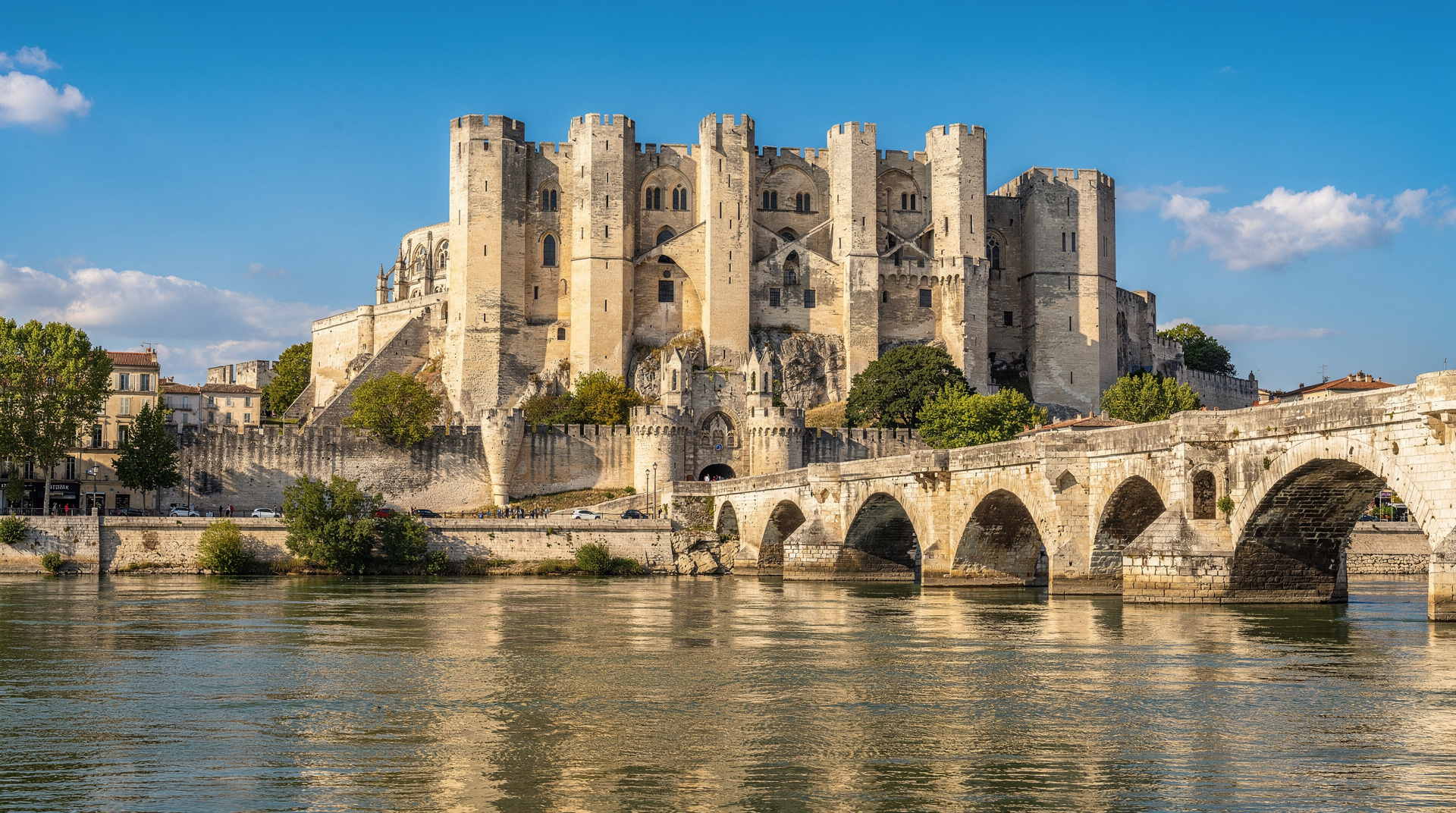
Between 1309 and 1377, Avignon was the seat of the papacy. Seven popes reigned here in succession, transforming a Provençal market town into the administrative and spiritual capital of the Catholic world. The palace they built — the Palais des Papes — is the largest Gothic building in Europe. It still dominates the city skyline today with the same implacable bulk, its towers rising 50 metres above the narrow lanes of the old town.
That history is not ancient background noise in Avignon. It is the city. The ramparts that ring the old town were built to papal order in the 14th century and remain almost entirely intact — 4.3 kilometres of stone wall enclosing a compressed medieval city full of restaurants, the famous festival grounds, the cathedral, and the streets that existed when Petrarch walked them.
Avignon is a genuine historical city with its own cultural life, not a theme park preserved in aspic. It has the Avignon Festival every July (one of the world’s largest performing arts festivals), a working university, and a food and wine scene tied to the Rhône Valley that extends far beyond the tourist zone. But for most day visitors from Marseille, the focus is the Palais des Papes and the Pont d’Avignon — and an honest assessment of how much you can see in a day.
Getting to Avignon from Marseille
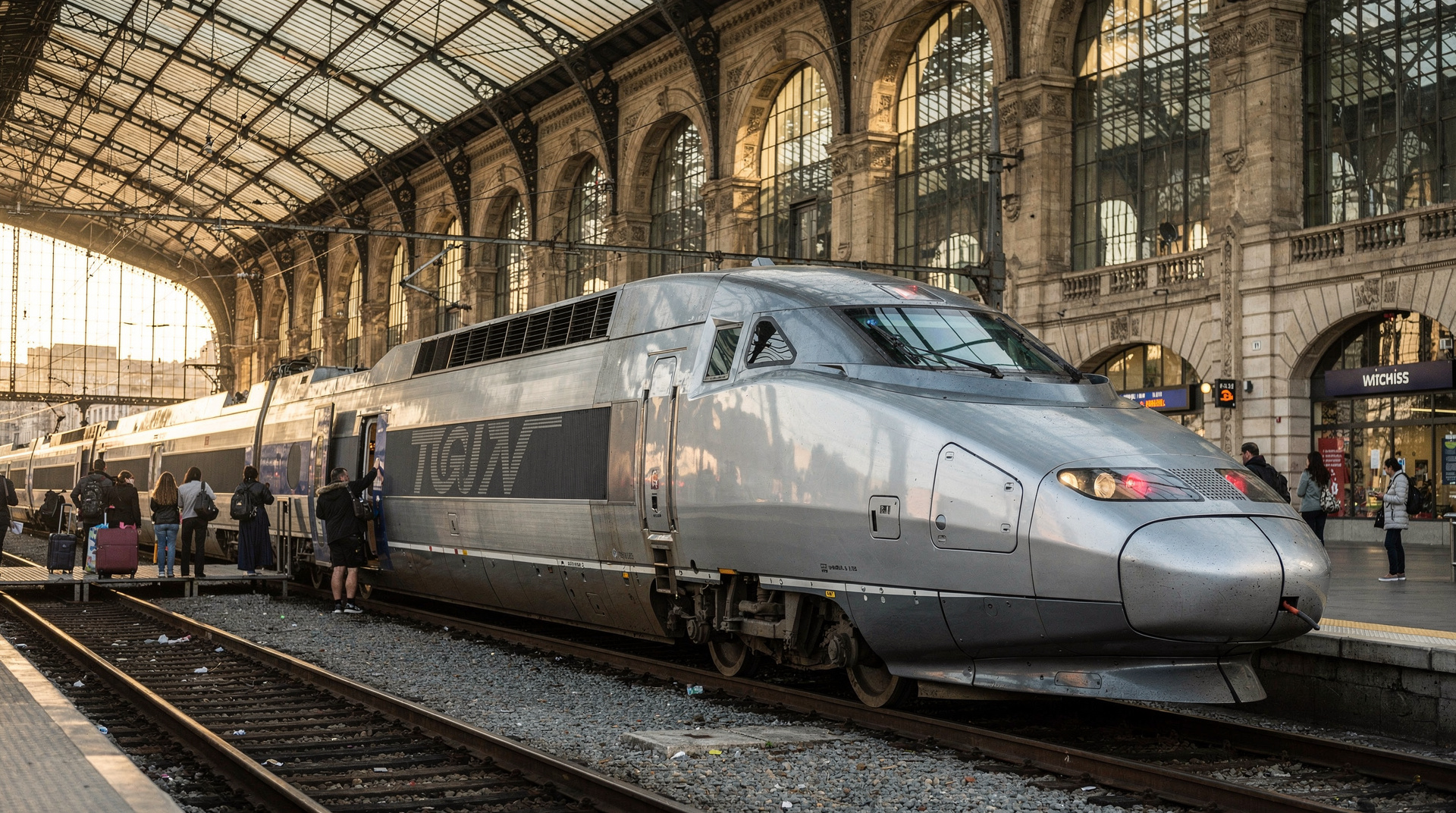
By TGV: The fastest route is TGV from Marseille Saint-Charles to Avignon TGV station. Journey time is approximately 35 minutes. The TGV station is about 3 km south of the city centre — you need a shuttle bus or taxi into town (the shuttle runs every 20–30 minutes, around EUR 1.60; a taxi costs EUR 15–20). Plan 1 hour door to door from Marseille station to the Palais des Papes.
By TER: The slower TER regional train runs to Avignon Centre station, which sits just outside the medieval ramparts and is a 10-minute walk from the Palais des Papes. Journey time is around 1 hour 15 to 1 hour 30 depending on the service. More convenient arrival point; fewer frequency options than the TGV.
By car: Around 1 hour 30 via the A7 autoroute. Parking inside the ramparts is limited and expensive. The main car parks are outside the walls near the TGV station; a free shuttle connects them to the Palais des Papes.
The train (either option) is strongly preferred. Arriving by TER to Avignon Centre puts you inside walking distance of everything.
For a fuller comparison of the options, see our Marseille to Avignon transport guide. If you are still deciding whether you need a car for the wider region, do you need a car in Provence answers it in detail, and the Marseille Saint-Charles starting point is covered in our main city guide.
The Palais des Papes: what to expect
The palace is genuinely impressive. It is not the gilded baroque interior that some visitors expect from a papal building — it was stripped bare during the French Revolution, used as a barracks for decades, and much of the decoration was lost. What remains is the Gothic architecture itself: vast vaulted halls, soaring stone walls, and a scale that makes clear why contemporaries described it as the most powerful building in Christendom.
The papal apartments in the New Palace retain fragments of fresco — hunting scenes and oak-leaf motifs commissioned by Pope Clement VI, who had more refined tastes than his predecessors. The Chambre du Cerf (Stag Room) has the most complete frescoes and is the most rewarding interior space.
Visiting in 2026:
- Open daily. High season (March to November) 9:00 to 19:00, last admission 18:00. Off-season (November to March) 10:00 to 17:00.
- Ticket prices: Palace only EUR 12 adult, EUR 10 reduced, free under 18. Combined Palace + Pont d’Avignon ticket EUR 14.50.
- An audio guide is included with all tickets, covering the history of each room in multiple languages. This is worth using — the rooms make more sense with the context.
- Book in advance for peak summer months; queues at the ticket desk can be long in July–August.
- Allow 1.5 to 2 hours for a thorough visit. A rushed visit takes 1 hour.
The Pont Saint-Bénézet — the Pont d’Avignon of the famous song — is the medieval bridge that once crossed the Rhône but now ends abruptly in the middle of the river. Of its original 22 arches, four remain. The view from the bridge back to the palace and the city ramparts is the best photograph in Avignon. It is a small site that takes 30 minutes to see; the combined ticket with the palace is the logical way to include it. On the bridge itself, look for the small Romanesque chapel of Saint-Nicolas, which was a toll chapel on the bridge in the 14th century.
The old town: intra-muros vs outside the walls
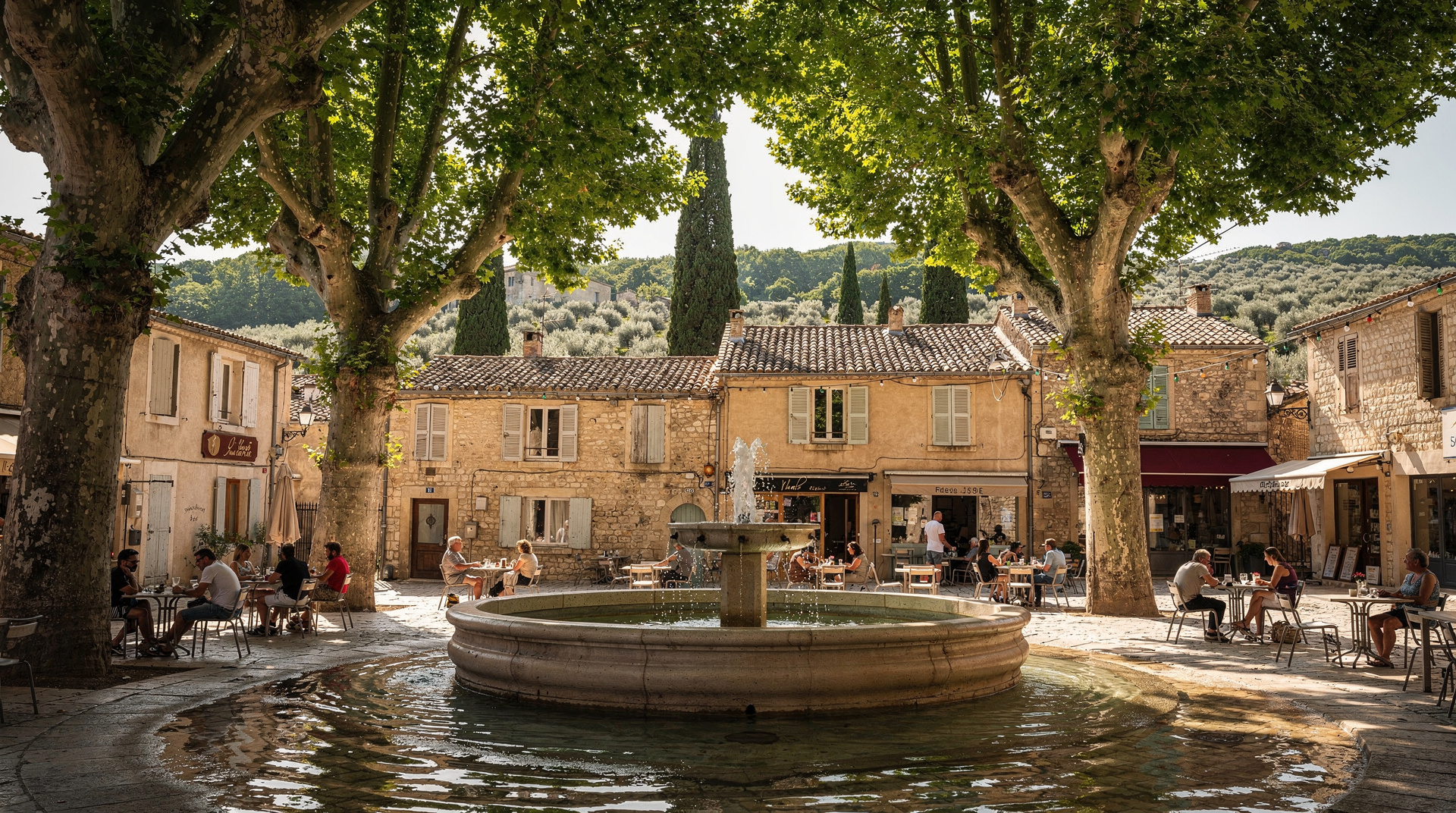
Avignon’s old town is compact and walkable. The main commercial axis runs from the Place de l’Horloge (the central square with its neo-Gothic town hall and the Festival theatre) up toward the palace. Rue de la République connects the Avignon Centre station to the square — it is the main tourist artery, lined with chain shops and cafés, and not where you should spend time.
What rewards walking time:
The area between the palace and the Rocher des Doms gardens above is quiet and genuinely medieval. The Rocher des Doms park sits on the rock above the palace and offers views across the Rhône to Villeneuve-lès-Avignon. Worth 20 minutes.
The streets east of Place de l’Horloge — Rue Joseph-Vernet, Rue du Vieux-Sextier — have better restaurants, the city’s museums, and the Rue des Teinturiers, a quiet canal street with waterwheel remains and independent shops. This is where you eat.
The Musée du Petit Palais, at the top of the square facing the Palais des Papes, contains one of the finest collections of 13th–16th century Italian painting in France outside Paris — including a painting once attributed to Botticelli and works by the Florentine schools. Entry is inexpensive; it is almost always uncrowded. If you have two hours in Avignon beyond the main palace, this is where to use one of them.
Outside the walls: Avignon’s outer neighbourhoods are not tourist territory. The bus and tram connections to the TGV station are smooth. If you are continuing to Villeneuve-lès-Avignon across the Rhône — the medieval town built by the French kings to face the papal city — the walk over the modern bridge takes 15 minutes and the Tour Philippe-le-Bel is worth the climb for the view back to Avignon.
Day trip from Marseille: honest verdict
Avignon in a day from Marseille is entirely doable but it is tight. The realistic schedule:
- 09:30 arrive at Avignon (TGV) or 10:00 (TER from Marseille)
- 10:00–12:00 Palais des Papes with audio guide
- 12:00–13:00 Pont d’Avignon, Rocher des Doms
- 13:00–14:30 lunch (Rue des Teinturiers area)
- 14:30–16:30 Petit Palais museum or old town walking
- 17:00–18:00 train back
That is a full day and it works. What you cannot fit is wine country: Châteauneuf-du-Pape is 18 km north of Avignon, reachable by tour or taxi. Adding it means cutting either the Palais des Papes or the afternoon walk. See our Avignon day trip guide for a full timing breakdown.
The case for staying overnight: Avignon at dusk and after dinner is a different city. The Palais des Papes is illuminated. The squares are used by locals rather than tourists. The restaurant scene around Rue des Teinturiers is at its best in the evening. If you have two days and want to combine the city with Châteauneuf-du-Pape wine tastings the next morning, an overnight stay in Avignon is genuinely worthwhile.
Avignon as a base for northern Provence
Avignon’s geographic position makes it an excellent base for the wider region — more so than Marseille for certain day trips:
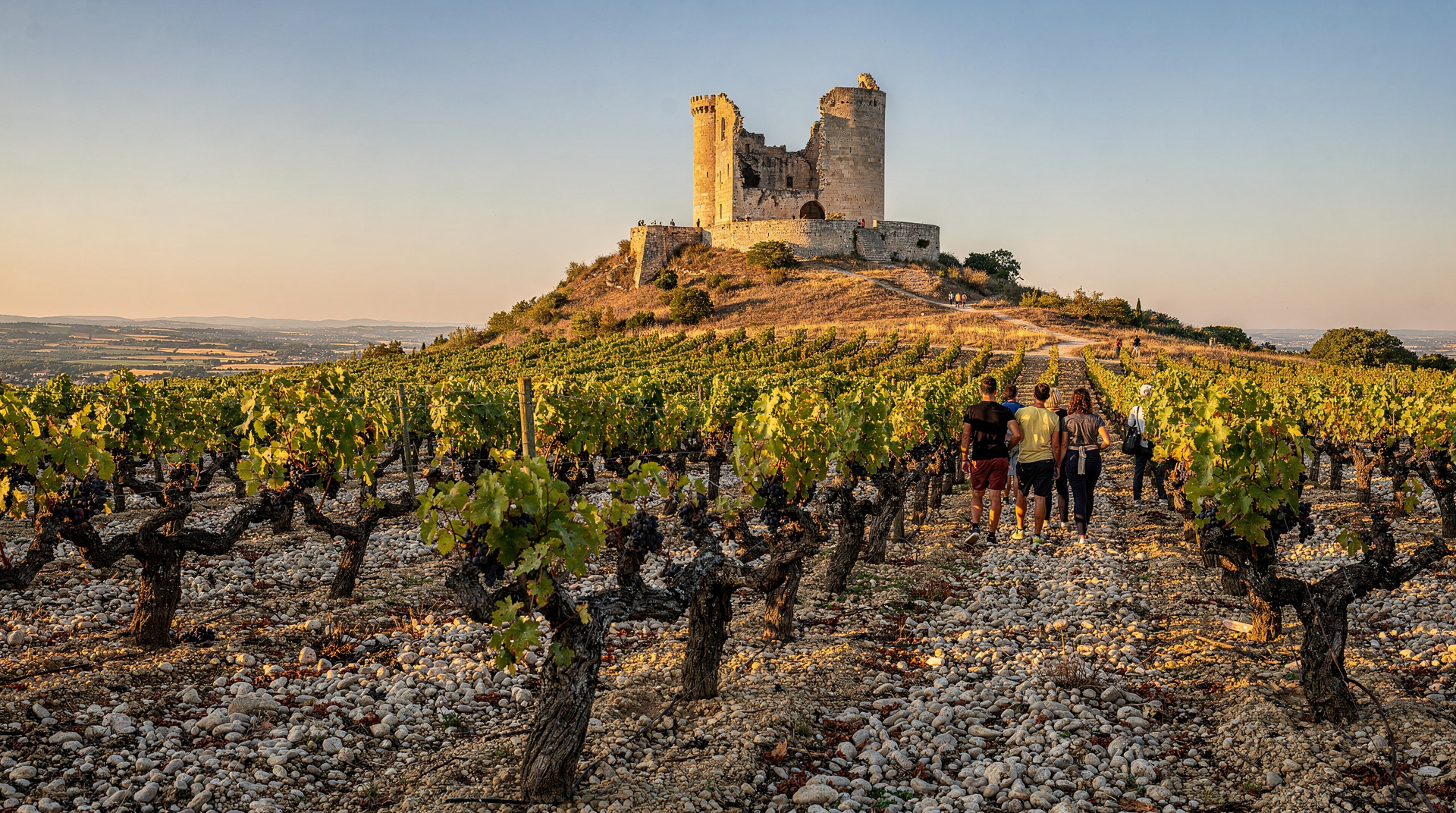
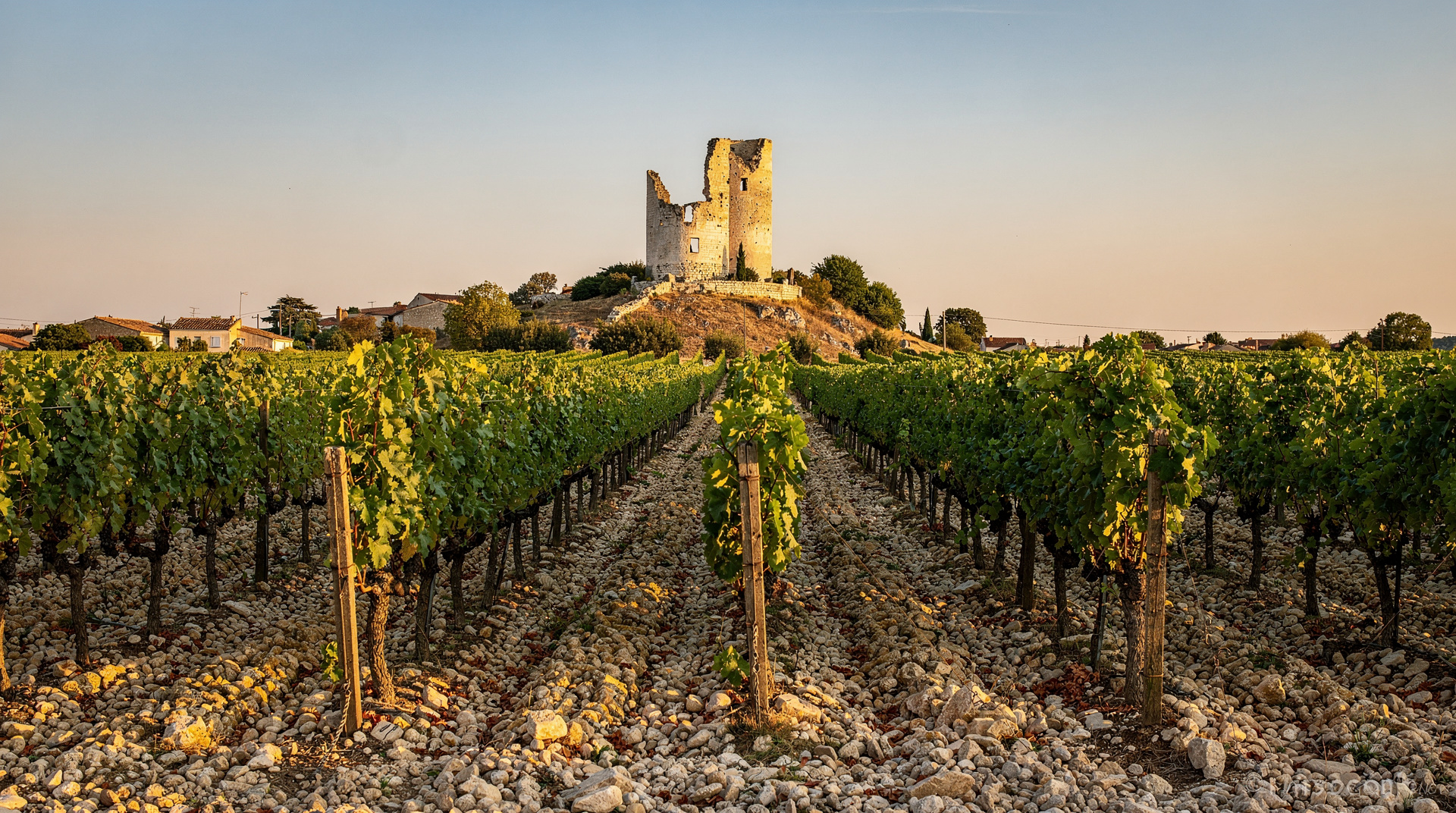
- Châteauneuf-du-Pape: 25 minutes by car, 20 minutes by tour. The wine village and its ruined castle.
- Les Baux-de-Provence and Saint-Rémy: 30–45 minutes by car; combined half-day tours operate from Avignon.
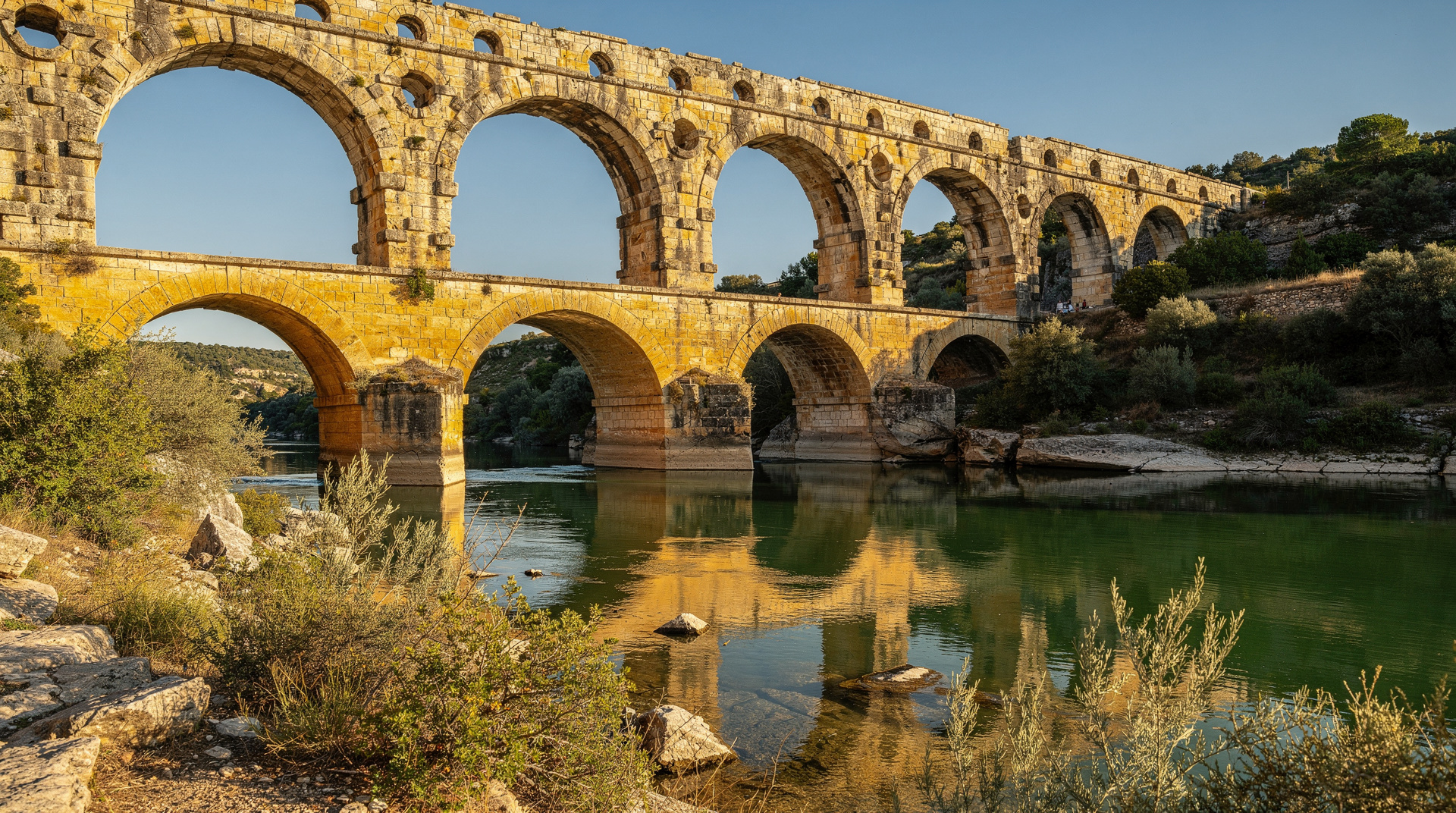
- Pont du Gard: 25 minutes east by car. See our Pont du Gard guide.
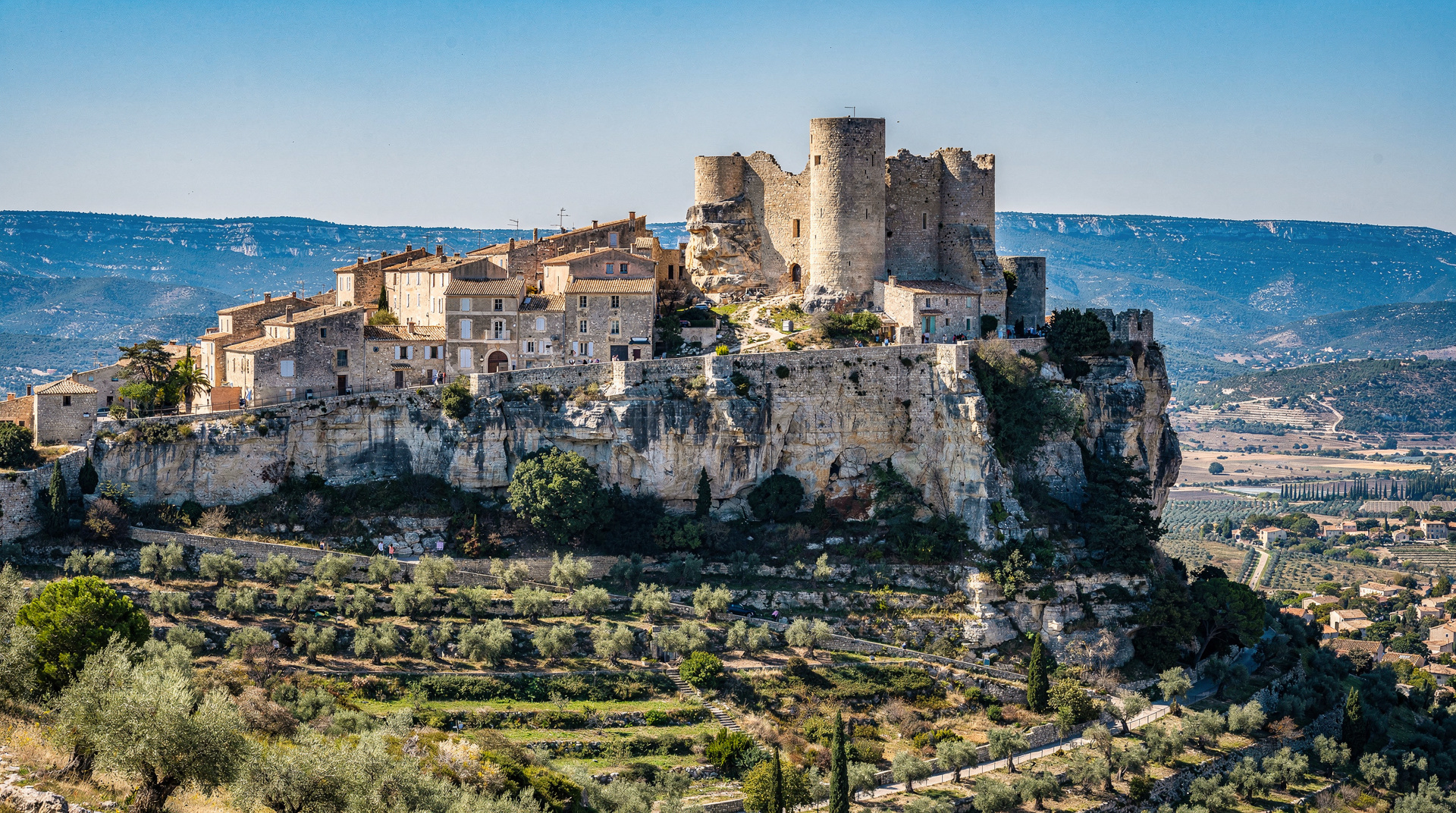
- Luberon villages (Gordes, Roussillon): 45–60 minutes by car.
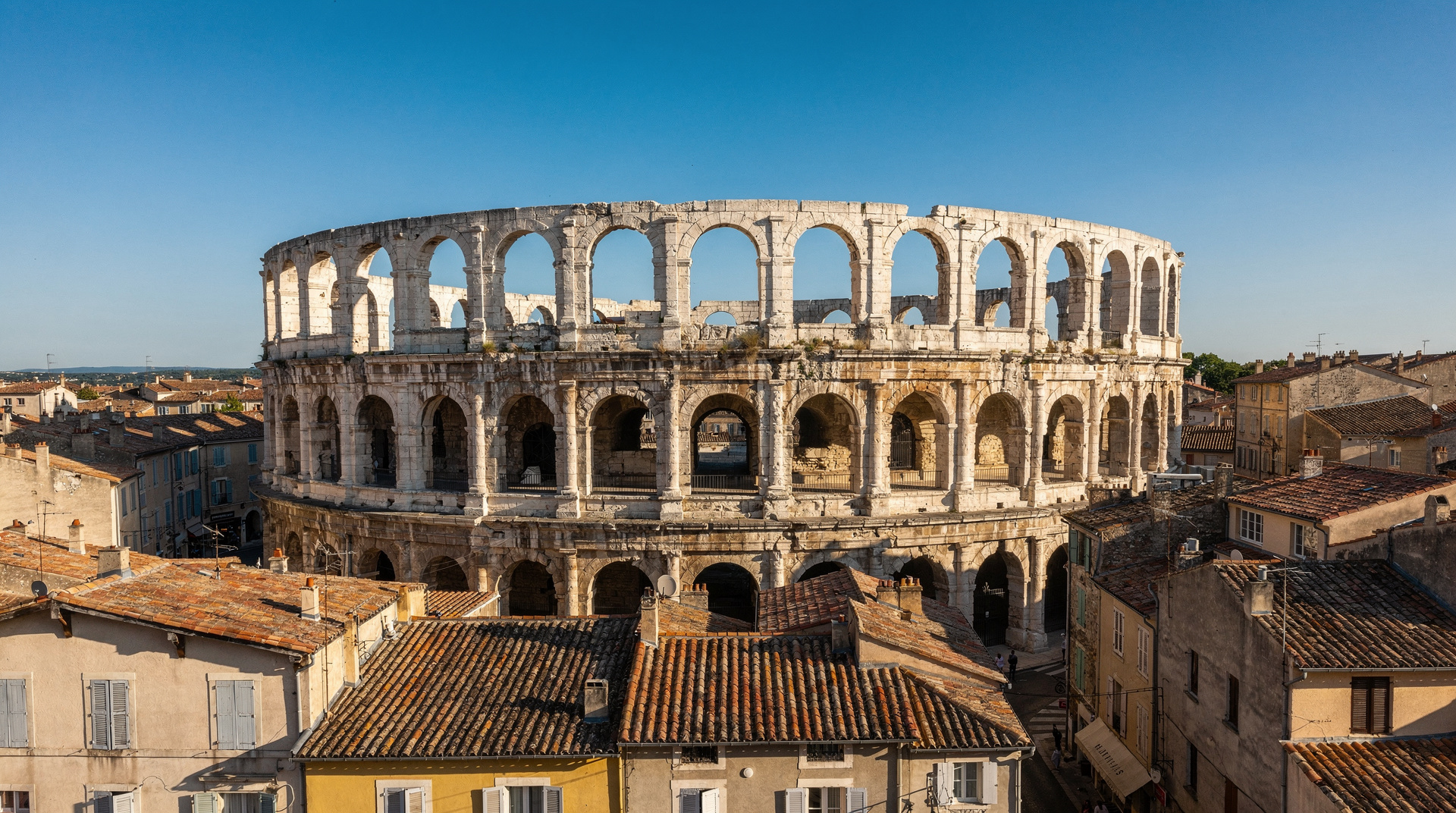
- Arles: 35 minutes by car or direct train. See our Arles guide.
- Orange (Roman theatre): 30 minutes north by TER train — one of the best-preserved Roman theatres in the world, often overlooked.
Two more places fit naturally into the same loop: Les Baux-de-Provence and Saint-Rémy-de-Provence, which our Les Baux and Saint-Rémy day trip guide covers together. For the villages of the Luberon, the Luberon destination page and the Luberon villages day trip help you choose which ones to prioritise.
From Marseille, all of these require either a long drive or a change in Avignon anyway. If you are planning multiple Provence destinations over several days, basing yourself in Avignon for two nights and visiting Marseille as a day trip (rather than the reverse) is often the smarter itinerary.
The Avignon Festival
The Festival d’Avignon runs every July — typically the first three weeks of the month. It is one of the world’s largest and oldest performing arts festivals, drawing over 150,000 visitors for the official programme plus the “Off” festival (several hundred independent productions in every available space in the city). The atmosphere during festival period is extraordinary: the streets are covered in flyers, performers work the squares, and the palace courtyard becomes one of the largest outdoor performance spaces in Europe.
The practical reality for general visitors: July in Avignon without festival reservations is challenging. Hotels are booked months in advance. Restaurants are crowded. Transport from Marseille is busier. The Palais des Papes itself remains accessible, but queues are longer. The festival is worth planning around specifically — it is not something you stumble into enjoyably without preparation.
Where to eat in Avignon
If food is a reason for your trip, it helps to know the regional repertoire before you sit down: our Provençal cuisine explained guide and the Marseille markets guide give useful context for what you will see on menus and market stalls here.
The tourist trap density around Place de l’Horloge and the Rue de la République is high — menus in multiple languages, pre-packaged “Provençal” presentations, and prices that reflect location rather than quality.
The Rue des Teinturiers (the canal street east of centre) is where the better restaurants operate: smaller, owner-run, focused on seasonal Provençal produce. Lunch here is the best-value sit-down meal in Avignon.
Les Halles market (Place Pie, open Tuesday to Sunday mornings until 13:00) is the serious food market — local cheese, charcuterie, Rhône wines by the glass, and prepared food to eat at the counter. On Saturday mornings the market expands with regional producers; this is one of the best markets in Provence.
Avignon restaurants do not name-check here — the scene changes and honest recommendations go out of date. The principle is: Rue des Teinturiers and adjacent streets for dinner; Les Halles for a real market lunch; anything on the Place de l’Horloge terrace only if convenience is the sole criterion.
Frequently asked questions about Avignon
Is the Palais des Papes worth visiting?
Yes, for anyone with an interest in medieval history or Gothic architecture. It is the largest Gothic palace in Europe and the primary reason Avignon exists as a major travel destination. Allow at least 1.5 hours with the audio guide. The Chambre du Cerf frescoes alone justify the entry price.
How far is Avignon from Marseille?
Approximately 1 hour by TGV (Marseille to Avignon TGV station), then 15–20 minutes to the city centre by shuttle or taxi. By TER regional train to Avignon Centre: around 1 hour 15. By car: around 1 hour 30 via the A7 autoroute.
What is the Pont d’Avignon, and is it worth visiting?
The Pont Saint-Bénézet — the bridge of the famous song “Sur le Pont d’Avignon” — is a 12th-century bridge that originally crossed the Rhône but now ends midway. Four of its original 22 arches survive. The view back to the city from the bridge is excellent. The combined ticket (EUR 14.50) with the palace is the rational way to see it. Alone, the bridge is 30 minutes; combined, it adds well to a morning visit.
Can I visit Châteauneuf-du-Pape from Avignon in a half-day?
Yes, easily. Châteauneuf-du-Pape is 18 km north of Avignon — a 25-minute drive or guided half-day tour (3–4 hours). You visit the ruined castle, taste wines at estates in the village, and return to Avignon for lunch. This works well as a morning excursion before an afternoon in the city. See our Châteauneuf-du-Pape guide for what to expect at the domaines.
When is the best time to visit Avignon?
April to June and September to October — pleasant temperatures, fewer crowds than July–August, and the wine country at its most photogenic. Avoid Avignon in July unless you have festival tickets and hotel bookings made months in advance. The Avignon Festival transforms the city in a way that makes it either the best week to be there or an overwhelming logistical challenge, depending on your preparation.
Is Avignon easy to visit without a car?
Yes. The train from Marseille is fast and reliable. Within Avignon, everything in the old town is walkable from Avignon Centre station (10 minutes to the Palais des Papes). For day trips from Avignon itself to Châteauneuf, Les Baux, or Pont du Gard, a guided tour or taxi is the practical option without a car — public transport connections to these villages are limited.
Walking the ramparts
The ramparts encircling the old town are one of Avignon’s overlooked pleasures. Built in the 14th century under Pope Innocent VI, they run 4.3 kilometres in a circuit and are punctuated by 39 towers and 7 gates. Unlike many medieval walls elsewhere in France, Avignon’s ramparts were never demolished in the 19th-century urban modernisation drives — they survive essentially as built.
The exterior walkway is accessible in certain sections, but the ramparts are best appreciated from within the moat road that circles the old town. Walking the complete outer circuit takes about 1 hour at a leisurely pace. The towers — the Tour des Chiens, the Tour Saint-Roch, the tour at the Porte de la Ligne — each have their own history; the most detailed section is the stretch along the northern edge facing the Rhône, where the walls rise directly from the rock above the riverbank.
The Porte du Rocher, built into the rock cliff at the river’s edge, is the most dramatically situated gate — a narrow passage that once controlled access to the papal city from the bridge side.
The Rhône and its banks
The Rhône shapes Avignon’s geography. The river defines the western edge of the city and separates it from Villeneuve-lès-Avignon, the French royal city built across the water to watch over the papal enclave. The Île de la Barthelasse, a long river island between the two shores, is now a park — popular for cycling and picnics, accessible by a shuttle ferry from the Place du Palais quayside.
River cruise: A 1-hour scenic Rhône cruise departs from the quai below the Palais des Papes, passing the Pont Saint-Bénézet, the Île de la Barthelasse, and the bridges of the two shores. This is a pleasant complement to the palace visit and gives a perspective on Avignon’s relationship with the river that the land-side view does not.
Villeneuve-lès-Avignon: The village across the river is worth the 15-minute walk via the modern bridge. The Tour Philippe-le-Bel (built by the French king to assert sovereignty across from the papal city) rises at the Villeneuve end of the old bridge; the Chartreuse du Val-de-Bénédiction — the largest Carthusian monastery in France, now a cultural centre — is in the village. The rooftop view from the Tour Philippe-le-Bel back to Avignon and the Palais des Papes is one of the best in the region.
Practical information for visiting Avignon
Building Avignon into a longer trip: If you are combining several stops, the Marseille and Provence 5-day itinerary and the Provence road trip itinerary show how Avignon can slot in alongside the rest of the region. For wine-minded travellers, the Côtes du Rhône from Marseille guide is a good companion to the Châteauneuf-du-Pape visit.
Getting around within the city: Avignon’s old town is fully walkable. The Place de l’Horloge to the Palais des Papes is 5 minutes. The Palais des Papes to the Pont Saint-Bénézet is 3 minutes. The Rocher des Doms park to the Musée du Petit Palais is 2 minutes. A car is unnecessary inside the ramparts and a logistical inconvenience.
Best areas to stay: The old town (intra-muros) is the most convenient, with hotels at various price points from budget rooms in converted medieval buildings to the boutique hotels around Rue du Roi René. Outside the walls near the TGV station is practical but adds the shuttle journey.
Avignon’s restaurants: The Saturday morning market at Les Halles (Place Pie, Tuesday–Sunday until 13:00) is a consistent destination regardless of your other plans. The Rue des Teinturiers area for lunch or dinner. Avoid the Place de l’Horloge terrace cafés except for a deliberate coffee stop — they charge for the view.
Shopping: Avignon’s old town has boutiques in the medieval streets focusing on Provençal food products (tapenade, olive oil, navettes, calissons), artisan work, and local wine. The Rhône valley wine shops around the Vinadea Avignon outlet carry the full range of Côtes du Rhône, Châteauneuf-du-Pape, Gigondas, and Vacqueyras appellations.
Top experiences
Bookable activities with verified prices and instant confirmation on GetYourGuide.