Arles
Arles travel guide — the Roman amphitheatre, Van Gogh's footsteps, the Fondation, ancient theatre, and honest day-trip advice from Marseille.
Arles: walking tour in Vincent Van Gogh's footsteps
Duration: 2-3 hours
Quick facts
- Distance from Marseille
- ~1 h by train (TER or TGV); ~1 h by car
- Amphitheatre entry
- EUR 11 adult, EUR 9 reduced; open 9:00–19:00 May–September
- Van Gogh Foundation
- EUR 10 adult; open Tue–Sun 10:00–18:00, daily Jul–Aug
- Best combination
- Arles morning + Camargue afternoon (or vice versa)
Smaller than the guide books suggest
Arles surprises visitors in one consistent way: it is smaller than expected. The old town fits inside a 15-minute walk. The Roman monuments, the Van Gogh sites, and the Fondation Vincent van Gogh Arles are all reachable on foot within that radius. This compactness is an asset — you can cover Arles’s essential character without transport, queuing strategy, or exhaustion.
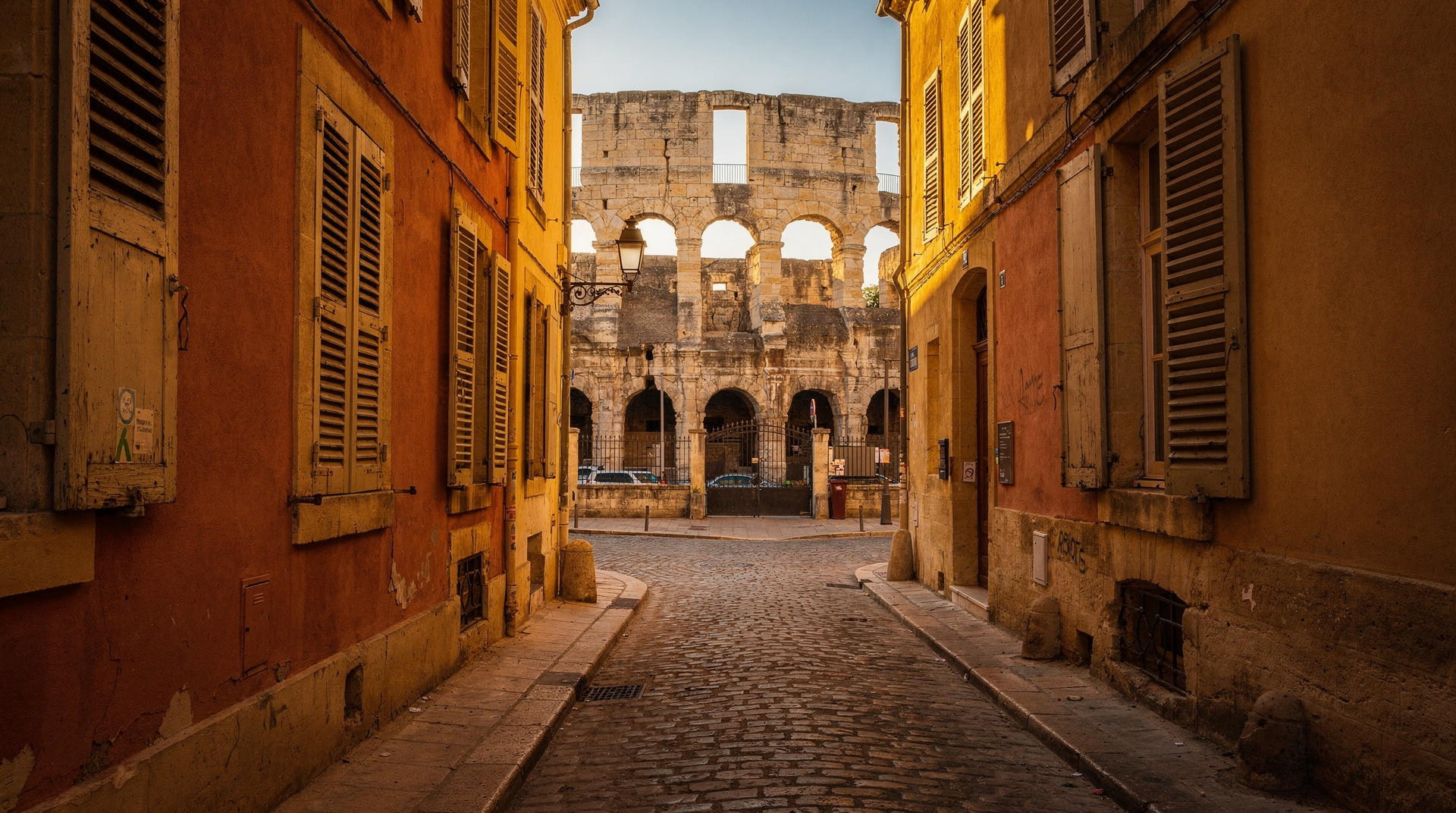
What Arles does in that compact space is remarkable. It is a UNESCO World Heritage Site for its Roman monuments, one of the most significant Van Gogh locations anywhere in the world, and since the Luma Arles arts campus opened in 2021, a genuine presence in contemporary culture. The old quarter — a knot of Roman and medieval streets around the amphitheatre — has the disorderly energy of a working Provençal city, not the curated prettiness of a tourist village.
From Marseille it is roughly an hour by train. It makes an excellent day trip, or a natural first stop when heading into the Camargue.
| At a glance | |
|---|---|
| Where | Rhone valley town, gateway to the Camargue, about 1 hour from Marseille |
| Cost | Around EUR 11 for the amphitheatre, EUR 16–18 for the combined monuments pass, EUR 10 for the Van Gogh Foundation |
| Time needed | One full day for the monuments, Van Gogh trail, and market or Fondation |
| Getting there | TER or TGV train from Marseille Saint-Charles (around 1 hour), or car via A7/A54 |
| Best time | April to June and September to October; Saturday for the market, avoid Féria weekends if you want the amphitheatre open |
Getting there from Marseille
By train: TER regional trains from Marseille Saint-Charles run regularly to Arles, journey time around 55 minutes to 1 hour 10. Direct services run approximately hourly; some require a change. The station is a 10-minute walk from the amphitheatre. This is by far the most practical way to visit without a car.
By car: Around 1 hour via the A7 and A54 autoroutes. Parking on the outskirts of the old town is possible; the centre is partly pedestrianised. The train avoids parking complications entirely.
Arles also functions as the gateway to the Camargue — if you intend to combine both, a car gives flexibility, but organised Camargue tours depart from Arles directly.
The Roman amphitheatre (Arènes d’Arles)
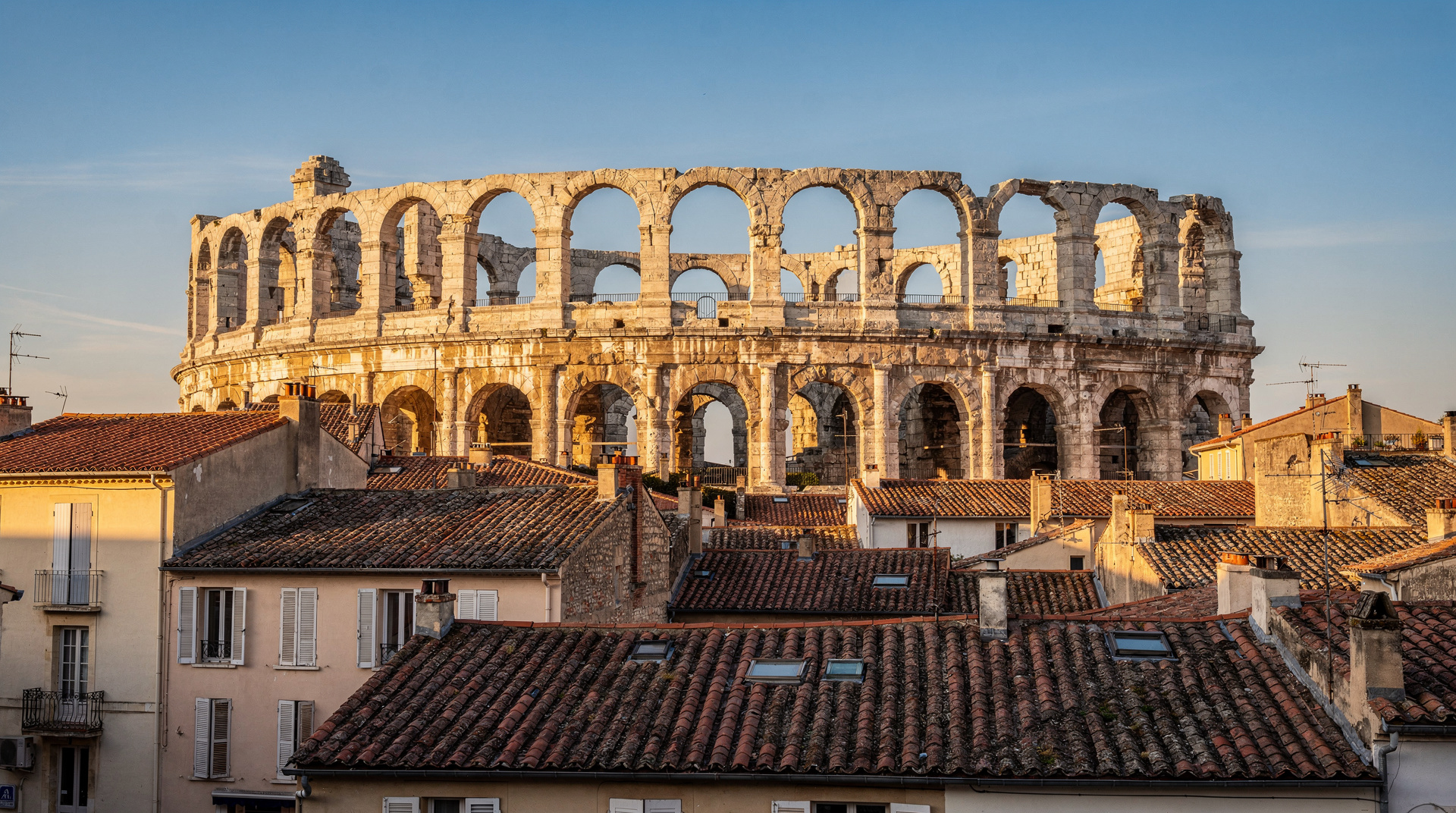
The amphitheatre dates from around 90 CE and seated 20,000 spectators. It is the largest Roman building in Provence and one of the best-preserved in the world — not least because it was inhabited through the Middle Ages, when houses, a church, and a small town were built inside and on its tiers before its excavation in the 19th century. The towers you see at the top of the outer wall are medieval additions.
It remains a functioning venue: bullfights (the Féria d’Arles, typically April and May) and concerts use the amphitheatre for live events. During performances, visitor access is restricted or closed — check the Arles tourism site before planning your visit if your dates coincide with the Féria.
Visiting in 2026:
- Open daily. March–April and October: 9:00–18:00. May–September: 9:00–19:00. November–February: 10:30–16:30.
- Entry EUR 11 adult, EUR 9 reduced. Children under 18 free.
- A combined pass (EUR 16–18) covers the amphitheatre, the ancient theatre, and other Arles monuments — worth buying if you plan to visit more than two sites.
Climb to the upper tiers for the panorama of the old city and the Rhône plain. The view is one of the best free bonuses of visiting the monument.
The ancient theatre (Théâtre Antique)
The Roman theatre was built slightly earlier than the amphitheatre, around 30–20 BCE. Far less survives — only two columns of the original stage wall remain standing, with the column drums and fragments scattered at their bases. But the setting is evocative and the stones are genuine, dating from the reign of Augustus.
The theatre now hosts the Costume Festival (Fête du Costume) in July, when traditional Arlésienne dress is paraded through the city. Outside of performance periods, the ruin is a quiet counterpoint to the amphitheatre’s scale — worth 30 minutes.
The cryptoporticus
Beneath the Place du Forum lies one of the most unusual Roman monuments in France: a double U-shaped underground gallery that supported the foundations of the ancient forum. The cryptoporticus was built in the 1st century BCE and runs for approximately 100 metres beneath the square. The interior is cool, dimly lit, and genuinely atmospheric — unlike the polished presentation of most Roman sites. Entry is included in the combined monuments pass.
Van Gogh in Arles: the full picture
Vincent Van Gogh arrived in Arles in February 1888 and stayed for 15 months, producing around 300 paintings and 200 drawings during that period — among the most productive 15 months any painter has ever had. The works he created here include The Yellow Room, The Starry Night Over the Rhône, the Sunflowers series, the Bedroom in Arles, and dozens of paintings of the Arles landscape and people.
Van Gogh did not experience Arles as a tourist. He rented the “Yellow House” on the Place Lamartine (destroyed in a 1944 Allied bombing), worked in the surrounding fields and the city’s streets, and hospitalised himself at the Hôtel-Dieu after the episode in December 1888 that ended with him cutting part of his ear. He left Arles voluntarily in May 1889 for the asylum at Saint-Paul-de-Mausole in Saint-Rémy-de-Provence.
The Van Gogh trail: The city has installed “Van Gogh panels” — photographs and reproductions — at the locations where specific paintings were made, placed where the painter stood. The trail covers about 15–20 sites within a 20-minute walk from the amphitheatre. The Fondation Vincent van Gogh Arles publishes a free trail map; this is the most useful way to connect the panels to the actual works.
Fondation Vincent van Gogh Arles: The foundation, housed in a beautifully converted 18th-century mansion (the Hôtel Léautaud de Donines), does not hold a permanent Van Gogh collection — his paintings are in Amsterdam, Paris, and New York. Instead, it runs exhibitions exploring Van Gogh’s influence on subsequent art and how contemporary artists respond to his work. This context-over-collection approach makes it genuinely interesting rather than a hollow homage.
Open Tuesday to Sunday 10:00–18:00; daily in July–August (until 19:00). Entry EUR 10 adult, EUR 8 reduced, EUR 3 student. Closed Mondays except in summer.
The Fondation Luma Arles
The Luma Arles arts campus opened in 2021 and has already changed the character of the city’s south end. The centrepiece is the Frank Gehry–designed tower — a crumpled stainless-steel form rising 56 metres near the railway station — which functions as exhibition space, archive, and cultural event venue. The surrounding park and buildings of the converted Parc des Ateliers (a former SNCF railway workshop) host residencies, exhibitions, and the Rencontres de la Photographie (Arles Photography Festival, July–September).
The Luma campus is free to access the park and public spaces; exhibitions inside the tower have variable entry fees. Even from the outside, the Gehry building is worth the 15-minute walk from the old town for anyone interested in contemporary architecture.
Arles market and the town character
The Saturday market on the Boulevard des Lices is one of the largest street markets in Provence — produce, clothes, santons, leather goods, and the full social life of the surrounding Camargue and Alpilles farming communities. Arriving in Arles on a Saturday morning to catch the market before the monuments is the ideal approach.
The Place du Forum is the social heart of the city — the café terrace that appears in Van Gogh’s “Café Terrace at Night” (it is still a café, though now with Van Gogh branding) is here. The square is animated in the evenings and comfortable for an aperitif before the return train.
Day trip verdict from Marseille
Arles in a day from Marseille works well. The monuments are concentrated, the Van Gogh trail is walkable, and the market or Fondation fills any gap. A realistic day:
- 09:30 arrive by train
- 10:00–11:30 Amphitheatre (climb to the upper tiers)
- 11:30–12:00 Ancient theatre and cryptoporticus
- 12:00–13:30 Lunch near Place du Forum, market on Saturdays
- 13:30–15:30 Van Gogh trail on foot, Fondation Vincent van Gogh
- 15:30–16:30 Luma campus if time allows
- 17:00 return train
Combining Arles with the Camargue in a single day is possible but requires either a car or an organised tour. Arles in the morning + Saintes-Maries-de-la-Mer or a Camargue safari in the afternoon is the most popular combination. See our Arles day trip guide for timing options.
Where to eat in Arles
The restaurant zone around Place du Forum and the Boulevard des Lices is the tourist circuit. Quality is uneven. The better guidance:
Market food (Saturday): The Lices market has cheese, charcuterie, olives, and prepared food stalls — the most honest lunch in the city on a Saturday morning, eaten at a plastic table in the market.
Arlésien cuisine: The city has its own food tradition centred on Camargue rice and black bull (taureau), tellines (tiny saltwater clams from the Camargue delta), and the full Provençal pantry of garlic, olives, and herbes. Look for restaurants mentioning “taureau de Camargue” or “tellines” on the menu — these are genuinely local rather than generic Provençal.
Streets to check: The lanes around Rue de la Liberté and around the Place de la Major tend to have smaller, owner-operated restaurants less visible to the main tourist flows.
Frequently asked questions about Arles
Is Arles worth visiting as a day trip from Marseille?
Yes, clearly. The Roman amphitheatre alone is extraordinary — one of the best-preserved in the world and still in active use. The Van Gogh trail adds a layer of cultural depth that no other city in France can match in quite the same way, and the city’s own character (market culture, Camargue roots, contemporary art presence) rewards exploration beyond the monuments. One day is enough to cover the essential triangle.
Do Van Gogh’s actual paintings exist in Arles?
No. Van Gogh’s works from the Arles period are held at the Van Gogh Museum in Amsterdam, the Musée d’Orsay in Paris, the Metropolitan Museum in New York, and other major collections. The Fondation Vincent van Gogh Arles has thematic and contextual exhibitions, not original works. The experience of standing where he painted, with panel reproductions showing the original canvases, is the primary connection — and it is a compelling one.
How do I combine Arles with the Camargue?
By car: the drive from Arles to Saintes-Maries-de-la-Mer takes about 40 minutes. Spend the morning in Arles and the afternoon in the Camargue (Pont de Gau bird reserve, Saintes-Maries, or a safari). Return to Marseille via the A54/A7. By organised tour: 4x4 Camargue safari tours depart from Arles directly. See our Camargue guide and Camargue day trip guide.
How far is Arles from Aix-en-Provence?
Arles and Aix-en-Provence are not directly connected by a fast train — the practical route is via Marseille or Avignon, making a same-day combination impractical. Most visitors treat them as separate day trips from Marseille rather than linking them together. See our Aix-en-Provence guide for that day trip separately.
What is the Féria d’Arles?
The Féria is a bullfighting festival held in Arles typically in late April (Easter weekend) and in September. During the Féria, the amphitheatre hosts corridas (traditional bullfighting) and other events — visitor access to the monument is restricted or closed during performances. The festival period brings a completely different energy to the city and is worth witnessing even without attending the events themselves. Check dates carefully before planning.
Practical information for Arles
Getting around: Arles is compact. Every site mentioned in this guide is within a 15-minute walk of the amphitheatre. No transport within the city is needed.
Arles combined monuments pass: The city manages its ancient monuments through a single ticketing system. A combined pass (typically EUR 16–18) covers the amphitheatre, the ancient theatre, the cryptoporticus, and other managed sites. If you plan to visit three or more monuments, the pass is clearly better value than individual tickets.
Luma Arles: The Luma campus (the Frank Gehry tower and surrounding exhibition spaces) has variable programming and ticketing. Check the Luma website before your visit — major exhibitions sell out in advance. The Rencontres de la Photographie (Arles Photography Festival) runs July through September, with exhibitions across the Luma campus and throughout the city. This is one of the most important photography festivals in the world and transforms Arles dramatically in summer.
When not to visit: The Féria periods (Easter weekend and mid-September). The amphitheatre closes to visitors for performances; the town fills with tens of thousands of visitors; hotels and restaurants are booked solid. The atmosphere is extraordinary if you want to experience it, but it is not a comfortable casual day trip environment.
Saturday market logistics: The Saturday market on the Boulevard des Lices starts at around 08:00 and runs until approximately 13:00. The best produce is sold by 10:00. If your train from Marseille arrives at 09:30, you will catch the market at its busiest and most complete. Combining a Saturday arrival with the amphitheatre visit after the market wraps up is the optimal sequence.
Arles and photography: The city has been central to French photography culture since the first Rencontres d’Arles festival in 1970. The Luma Arles campus has made this presence permanent. If photography is your primary interest, July–September at the Rencontres period is the compelling time to visit — but plan well in advance.
Arles as a Provence base
Arles’s position at the junction of the Rhône valley, the Alpilles, and the Camargue makes it a strategic base for several days of regional exploration without a car:
- Camargue: Tour operators depart from Arles for Saintes-Maries and the delta.
- Les Baux and Saint-Rémy: 20–30 km east on day tours.
- Avignon: 35 minutes by direct train.
- Nîmes: 30 minutes by TER train.
The train connections and the range of organised day tours from Arles make it one of the best bases in Provence for carless visitors wanting to cover multiple destinations.
The Arlésienne and local identity
Arles has a distinct local identity that resists absorption into the generic “Provençal” marketing category. The Arlésienne costume — the embroidered bodice and shawl worn by women for the Féria and the Fête du Costume — is one of the most elaborate regional dress traditions in France, with a specific vocabulary of colour and embroidery that encodes social and marital status. The Musée Arlaten, currently undergoing extensive renovation and expected to reopen in the coming years, is the most important museum of Arlesian culture in existence.
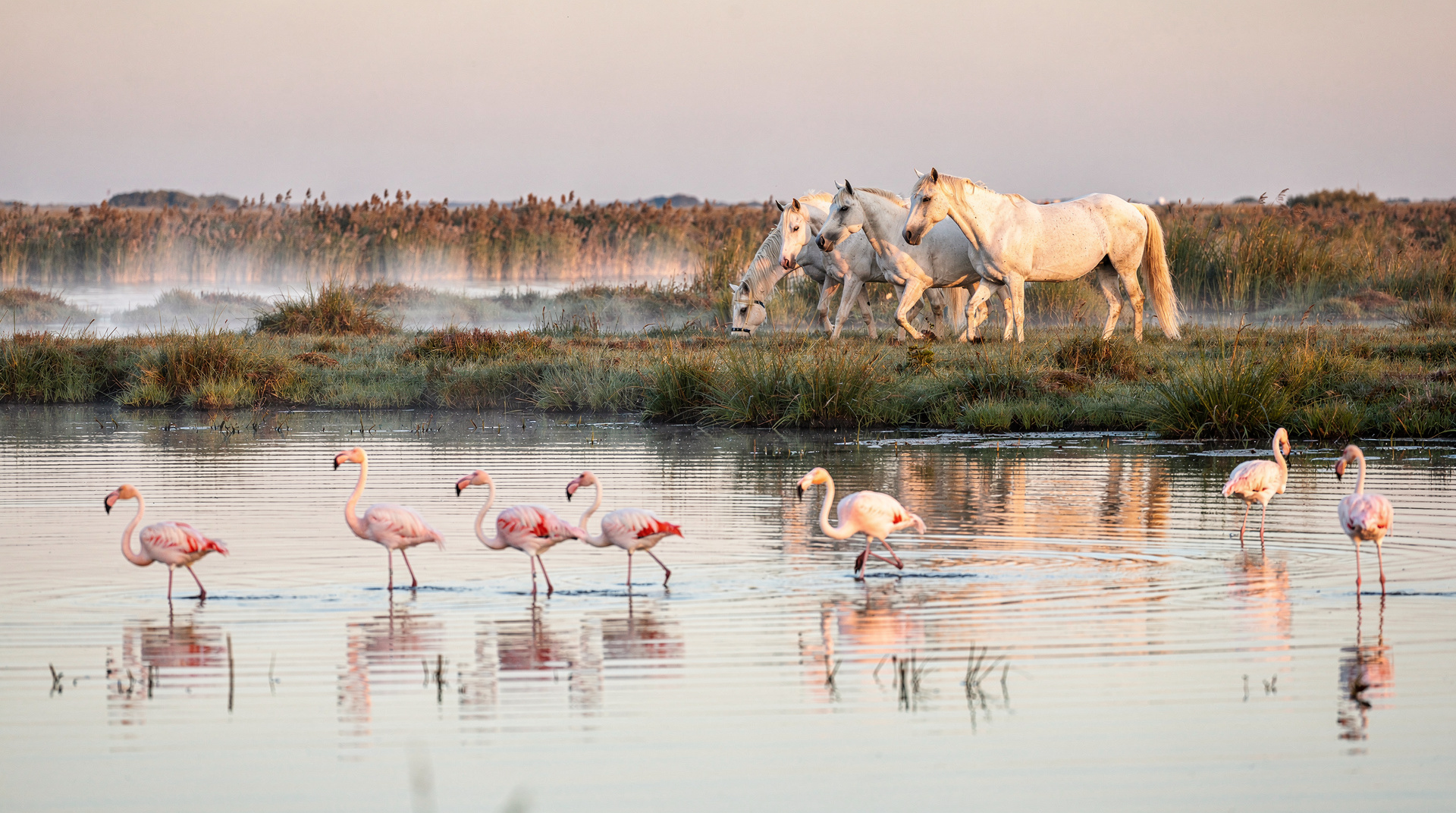
The Gardian tradition: The Camargue cowboys (gardians) who tend the black bulls and white horses of the delta have their own brotherhood based in Arles — the Confrérie des Gardians, with its own saint’s day celebration each May. The connection between Arles and the Camargue is not merely geographical; the city has functioned as the commercial and cultural capital of the delta for 2,000 years.
Arles language: The Arlesian dialect of Occitan was the language of the troubadours and remained in daily use in the city into the 20th century. The poet Frédéric Mistral, who won the Nobel Prize in Literature in 1904 for his Provençal-language work, was born 15 km from Arles and is the city’s most celebrated literary connection after Van Gogh.
Vincent Van Gogh’s 15 months: a closer look
Van Gogh arrived in Arles in February 1888 having read extensively about Japanese printmaking and convinced that Provence would offer the equivalent quality of light. He painted 300 works in 15 months — a rate of roughly one painting every 38 hours of waking life. He was manic, productive, and increasingly unwell.
The episode of December 1888 — the argument with Gauguin, the self-inflicted wound, the hospitalization — is often reduced to its most dramatic element. The longer context is more interesting: Van Gogh managed himself into the Hôtel-Dieu hospital voluntarily after the incident, was attended by Dr. Felix Rey, and continued writing lucid letters to his brother Theo throughout his hospitalization. He was not incapacitated. He returned to his studio. The paintings he made in February and March 1889, after the episode, include some of the most controlled and technically accomplished works of the Arles period.
He left Arles in May 1889 for Saint-Paul-de-Mausole in Saint-Rémy-de-Provence — not expelled, but choosing the structure of the asylum over the disorder of independent living. He had painted Arles into something permanent; the city had shaped his final and most fertile period.
For a deeper dive into the Roman ruins specifically, see our Arles Roman monuments guide, and for the full Van Gogh pilgrimage across the city, our Van Gogh in Arles guide.
Top experiences
Bookable activities with verified prices and instant confirmation on GetYourGuide.