Vallon des Auffes, Marseille
Vallon des Auffes is a tiny fishing harbour under a stone arch on the Corniche — Marseille's most photogenic corner and a top address for bouillabaisse.
Marseille: walking food tour with tastings
Quick facts
- Location
- On the Corniche, 1.5 km south of the Vieux-Port
- Getting there
- Walk 20 min from Vieux-Port along the coast; bus 83
- Atmosphere
- Tiny fishing harbour, 20–30 boats, 3–4 restaurants
- Best for
- Bouillabaisse, photography, golden hour, aperitif
The harbour that time pretended to forget
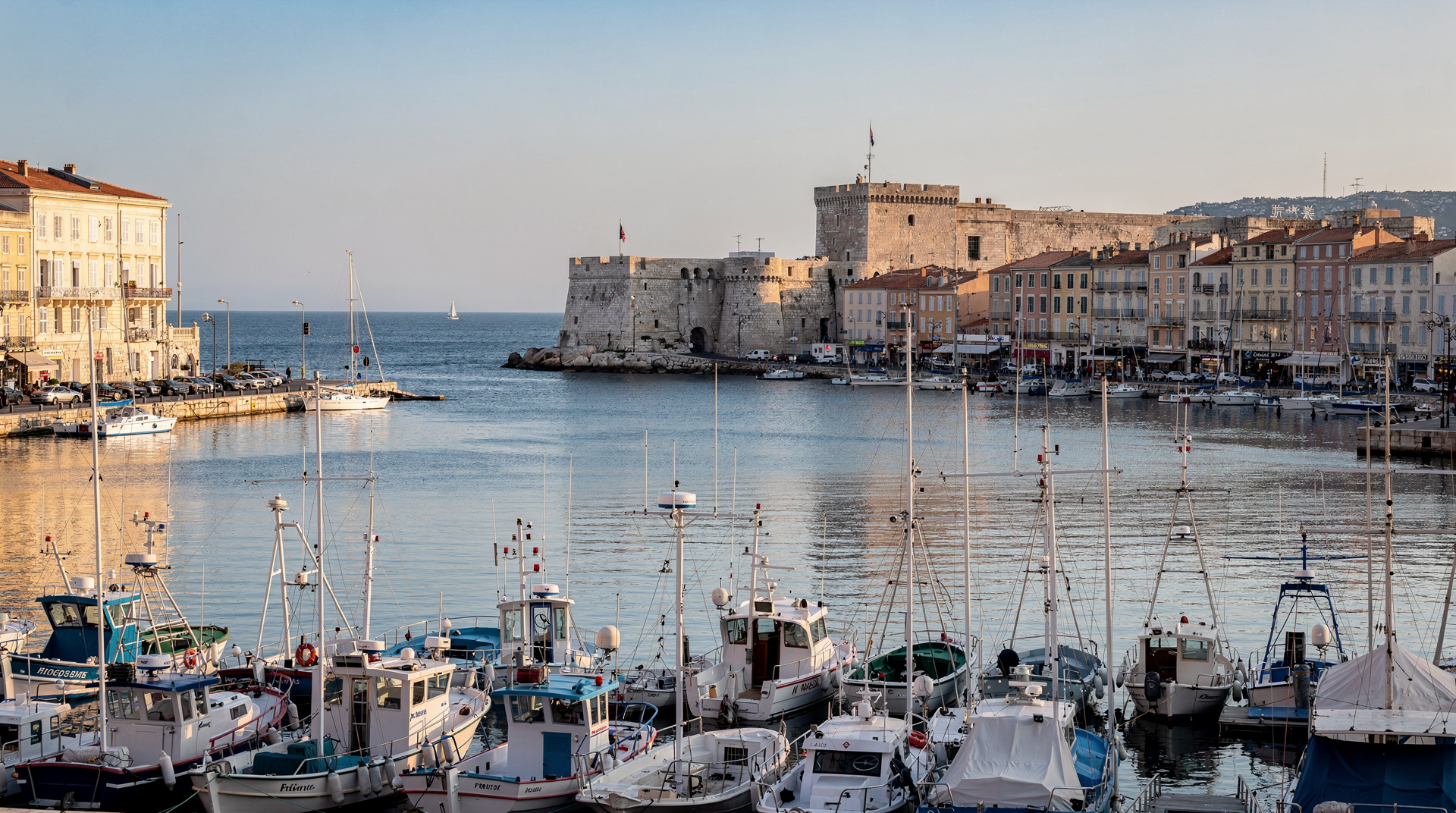
Vallon des Auffes is improbably small. A stone viaduct carries the Corniche road overhead. Below it, tucked into a rocky inlet perhaps 80 metres across, sit 20 to 30 painted wooden boats, three or four restaurants, a cluster of traditional houses, and a scene that has been photographed more than almost any other spot in Marseille. The name comes from the word “auffes” — the esparto grass that was once worked here into rope for the fishing fleet.
It occupies one of the last sections of coast in Marseille that looks the way it might have looked 100 years ago, which is precisely why it photographs so well and why people return here for lunch and dinner in proportions that do not match its size.
| At a glance | |
|---|---|
| Where | On the Corniche, about 1.5 km south of the Vieux-Port |
| Cost | Free to visit and photograph; a meal runs from around €25–40 at lunch to €55–80 per person for bouillabaisse |
| Time needed | 30 minutes to 1 hour for a photo stop; 1.5–2 hours for a meal |
| Getting there | 20-minute walk from the Vieux-Port along the Corniche, or bus 83 |
| Best time | Golden hour (roughly an hour before sunset) for photography, or lunch to avoid the dinner reservation squeeze |
Getting here
From the Vieux-Port, walk south along the waterfront past the Palais du Pharo and Fort Saint-Nicolas, then continue along the Corniche (pedestrian path on the seaward side). The walk takes about 20 minutes and is straightforward. You descend a few steps under the viaduct to reach the harbour level.
Bus 83 from the Vieux-Port runs along the Corniche and stops near the Vallon. The bus is fine for return if you have eaten and do not want to walk uphill.
What you are actually seeing
The harbour is a working inlet — the boats are real, the fishermen real, the morning routines real. The restaurants wrap around the harbour edge, with terrace tables that in the evenings have a direct view across the water to the opposite wall of the inlet and the viaduct above. The light at golden hour — when the western sun catches the hulls of the boats and the pale stone of the walls — is extraordinary.
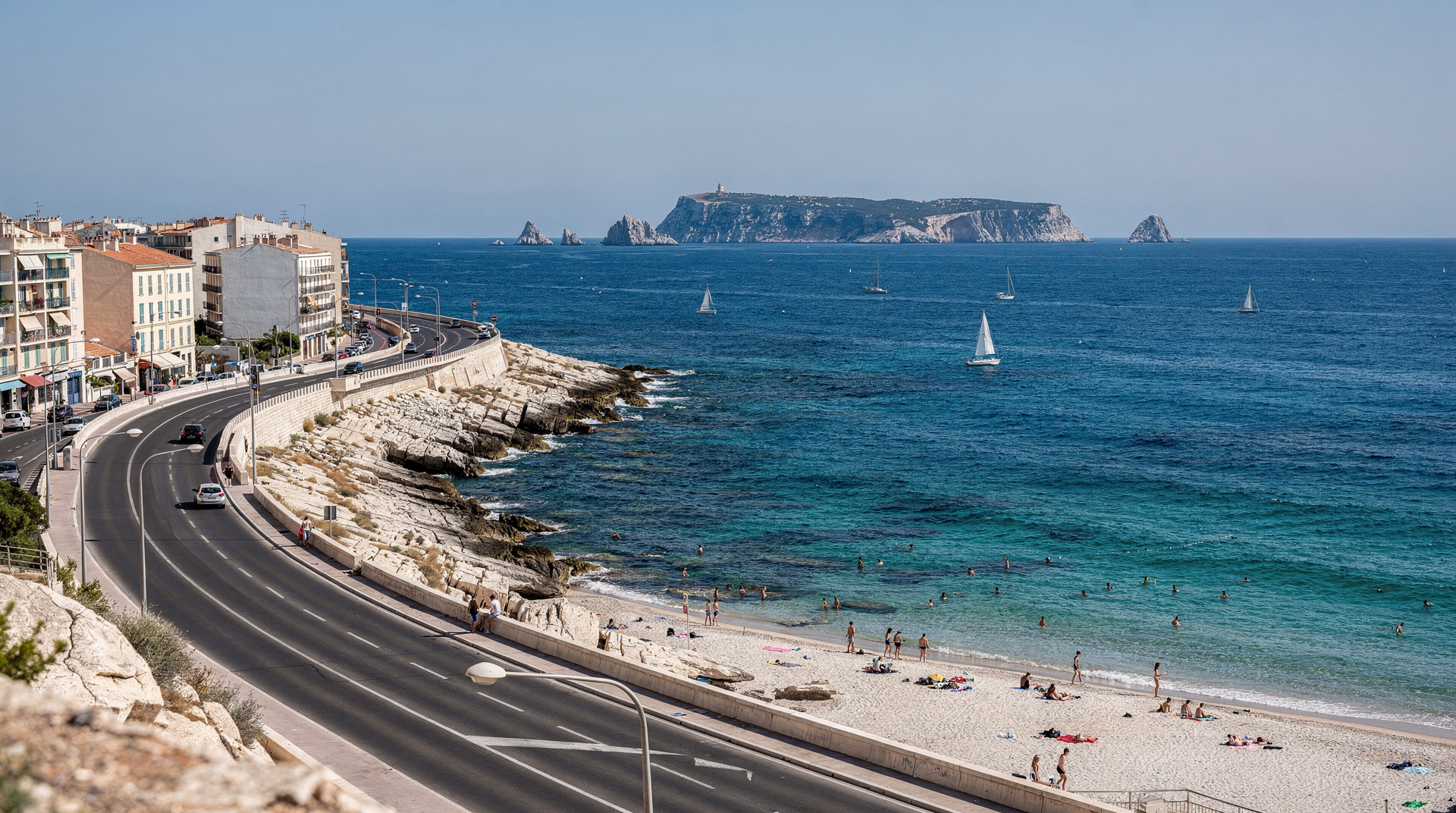
There is no beach at Vallon des Auffes, and no swimming. Rocks and access ladders allow entry to the water near the harbour mouth but the sea here is primarily for watching from the restaurant terrace.
Bouillabaisse: the honest assessment
Several of the restaurants here serve bouillabaisse, and this is where the honest caveat matters. Vallon des Auffes has a deserved reputation for authentic bouillabaisse — but the prices reflect that: 55–80 EUR per person is standard for a proper two-course service with rouille, croutons, and a good rascasse-based broth.
This is not tourist-trap pricing. This is what a genuine bouillabaisse from the charte actually costs when made properly. The rockfish — rascasse, grondin, Saint-Pierre, galinette — are expensive, require skilled preparation, and produce a broth that takes hours to develop correctly. At the right restaurant here, it is worth the price. At a cheaper version anywhere in Marseille, it almost certainly is not.
If you want bouillabaisse and the budget is flexible, this is one of the canonical locations to eat it. If budget is the constraint, order something else at lunch — the menu items outside the bouillabaisse at these restaurants are often very good and more accessibly priced.
For a full breakdown of where to eat bouillabaisse in Marseille and what to expect, see our bouillabaisse guide.
Beyond bouillabaisse
The restaurants at Vallon des Auffes are not one-dish operations. Grilled fish, sea urchin (oursins) in season from October to April, bourrida (another Provençal fish stew, less famous and often better value than bouillabaisse), and seafood platters are all available. Lunch is often better value than dinner at the same tables — the set menus at lunch typically offer two or three courses at 25–40 EUR.
Reservations are essential for dinner, especially from May through September.
Golden hour and photography
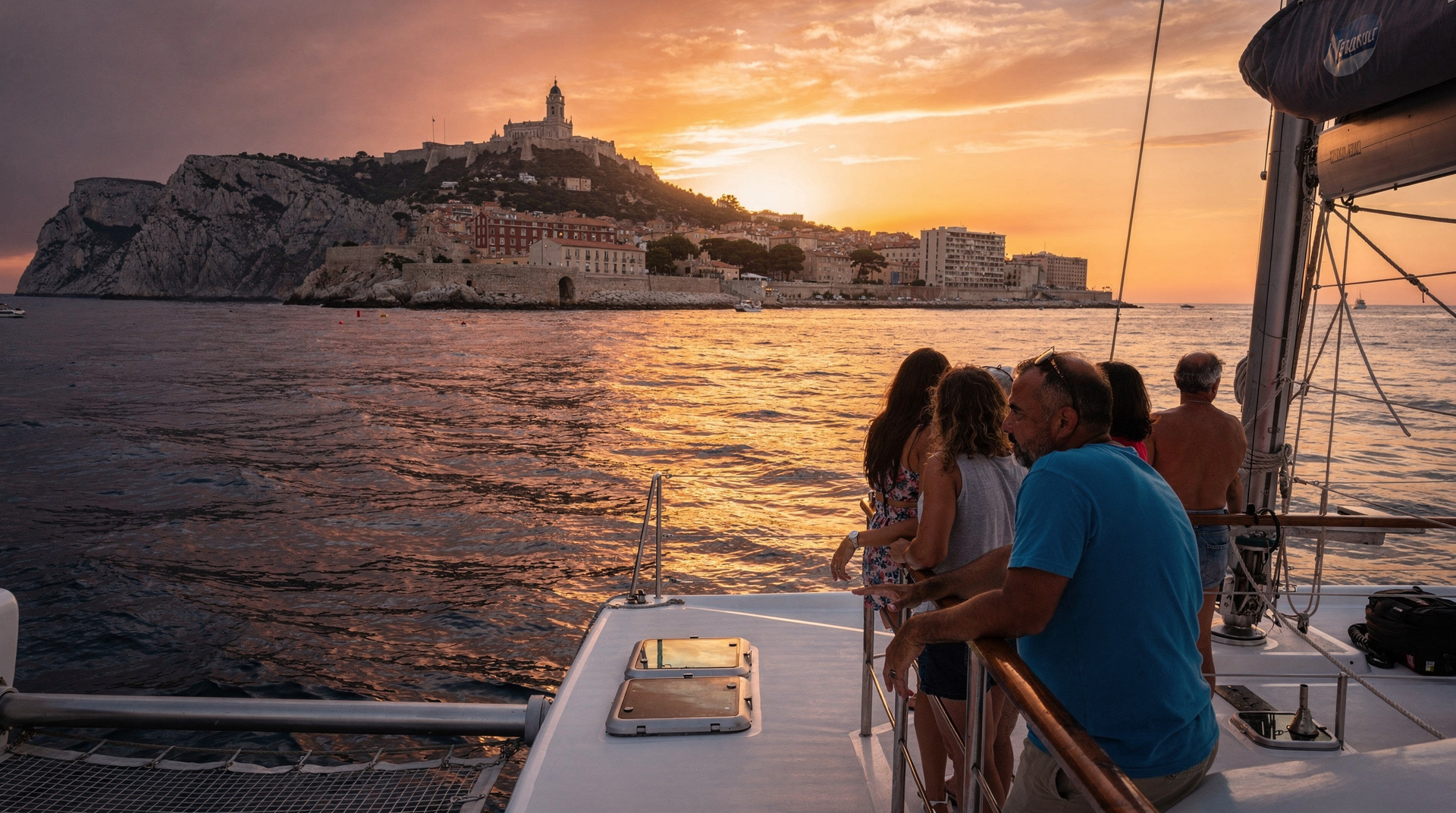
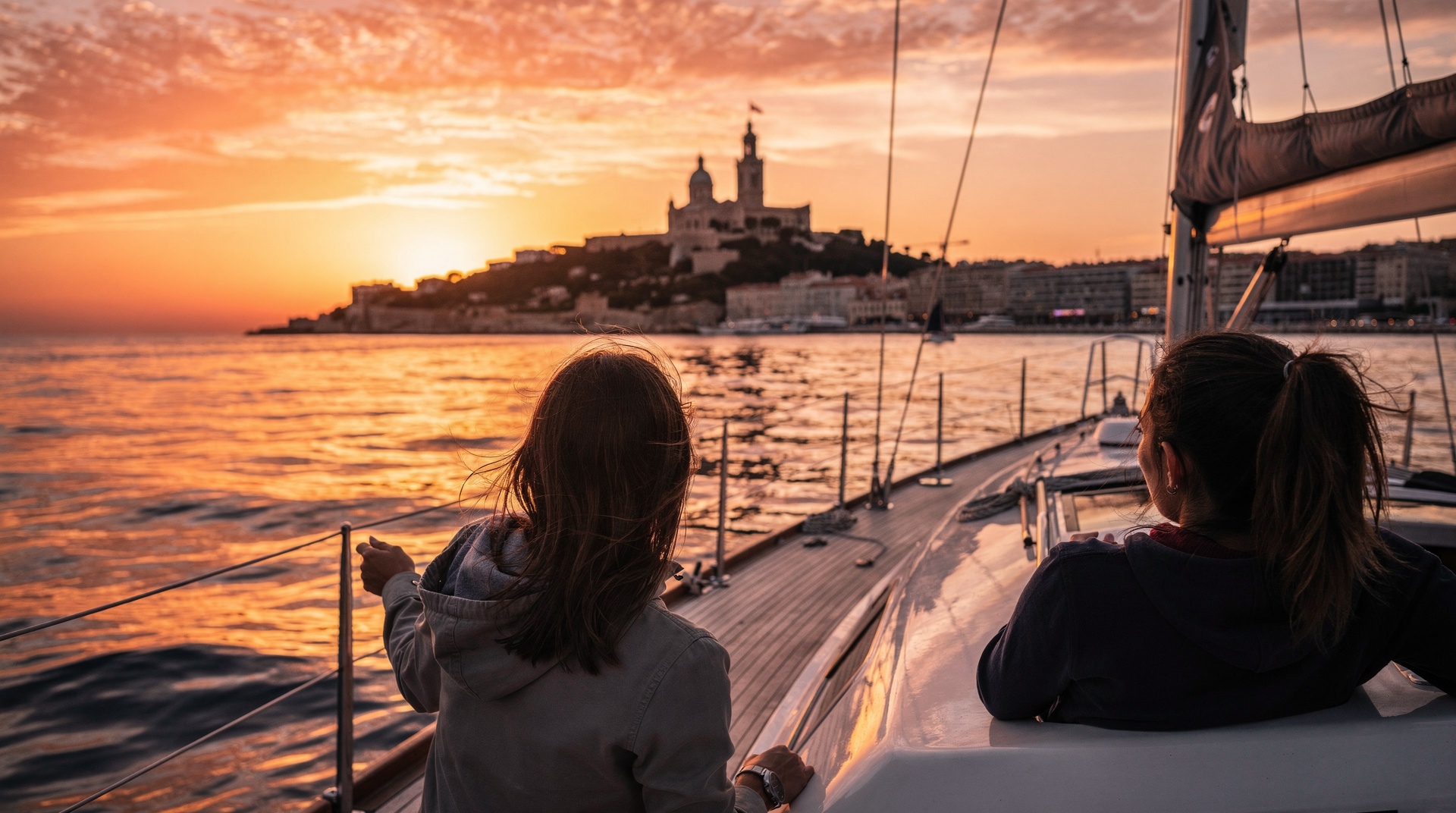
The Vallon des Auffes is at its visual best in the hour before sunset — roughly 18:30 to 20:00 from May through August, earlier in other months. The light catches the hulls of the boats from the west, turns the stone warm, and creates reflections in the still water of the harbour. This is when most of the memorable photographs of the spot are taken.
If you are not eating here, arriving at golden hour to spend 30–40 minutes photographing the harbour before walking back along the Corniche toward the Vieux-Port is a legitimate and entirely rewarding use of late afternoon time.
A quick history note
The name Vallon des Auffes comes from “auffes,” the local word for the esparto grass once harvested and worked into rope and fishing nets here — a trade that sustained the small community for generations before tourism arrived. The stone viaduct overhead was built for the Corniche Kennedy road in the early 20th century, and its arch framing the harbour below is a large part of why the spot photographs so distinctively; very few other points on the Marseille coast combine a working harbour with this kind of dramatic overhead structure. The fishing tradition is not fully vestigial either — some of the boats still go out for small daily catches, sold informally or used directly by the harbourside restaurants.
How to pace a visit
The harbour rewards slowness more than effort. Arrive a little before you are hungry, walk down under the viaduct, and take a lap of the quay before you sit anywhere. Look at the boats, the nets drying, the doorways of the small houses. Then choose a terrace. Visitors who go straight to the first table they see often miss the quieter corners at the far edge of the inlet, where the view back across the water is the best on the site.
If you are building a wider day around the coast, the Marseille in one day plan places the Corniche at the right point in the day, and the Marseille in two days version gives you the room to linger here over a long lunch instead of rushing through. Couples planning something slower will find the harbour fits naturally into the romantic weekend itinerary.
Choosing a table
The restaurants share the same view but not the same atmosphere. Some are casual, with simple plates and a quick turnover; others are dressier and built around the long bouillabaisse service. Decide before you arrive which kind of meal you want, because walking in and asking for a quick bite at a table set for a long tasting service never ends well for anyone. For a wider look at where the city eats well, the best restaurants in Marseille guide and the seafood guide help you compare this harbour with other options.
A few practical habits help:
- Ask about the fish of the day rather than defaulting to the menu printed at the door.
- If you want a terrace table at sunset, say so when you book, since the best seats at that hour are the first to go.
- Order a glass of local rosé to start; the Provence rosé explained guide covers what to look for.
- If the aperitif is the point, the pastis guide explains the ritual you will see at the neighbouring tables.
The Corniche as a walking day
Many visitors treat the Vallon as a stop, but it makes more sense as the middle of a coastal walk. From the Vieux-Port, the path along the water is easy, flat enough for most people, and rich in views. The Vieux-Port area guide covers the starting point, and the Corniche and Prado guide describes what lies further south. If your plan includes a swim after lunch, the best beaches in Marseille page will help you pick where to go next.
Those who prefer to avoid the walk can use public transport, and the getting around Marseille guide explains how the bus network fits together with the metro and tram. Take care with bags in crowded places on the way; the pickpocket zones page sets out where to stay alert without turning the day anxious.
Why locals still come here
Marseille residents do not treat the Vallon as a museum piece. They come for a Sunday lunch, an evening drink, or simply to sit by the water after work. That ordinary use is what keeps the place alive and is worth observing: the conversations between neighbours, the boats being tended, the way a table of regulars is greeted by name. It is the same spirit you find in the lanes of Le Panier and in the more honest corners of the city described in our Marseille for first-timers guide.
If you want a longer read about the mood of the place at sunset, our blog post on sunset at Vallon des Auffes captures it in the first person. For the wider region and where this harbour sits in the city, the Marseille neighborhoods guide is the best map in words.
Seasons at the harbour
The character of the place changes through the year. In the warm months the terraces are full, the light lingers late, and reservations matter. Outside that season the harbour is quieter, the boats are more visible, and a table is easier to find, though the atmosphere is calmer and some visitors prefer it that way. The best time to visit Marseille guide places the harbour in the context of the whole year, and the pages on Marseille in summer and Marseille in winter describe what to expect on either side.
Wind and weather can change a visit quickly. A grey day takes away the glow that makes the photographs, but it leaves the harbour moody and nearly empty, which suits some people better than a postcard sky. If the weather turns, the Marseille museums guide offers an indoor fallback for the rest of the day.
Nearby stops worth combining
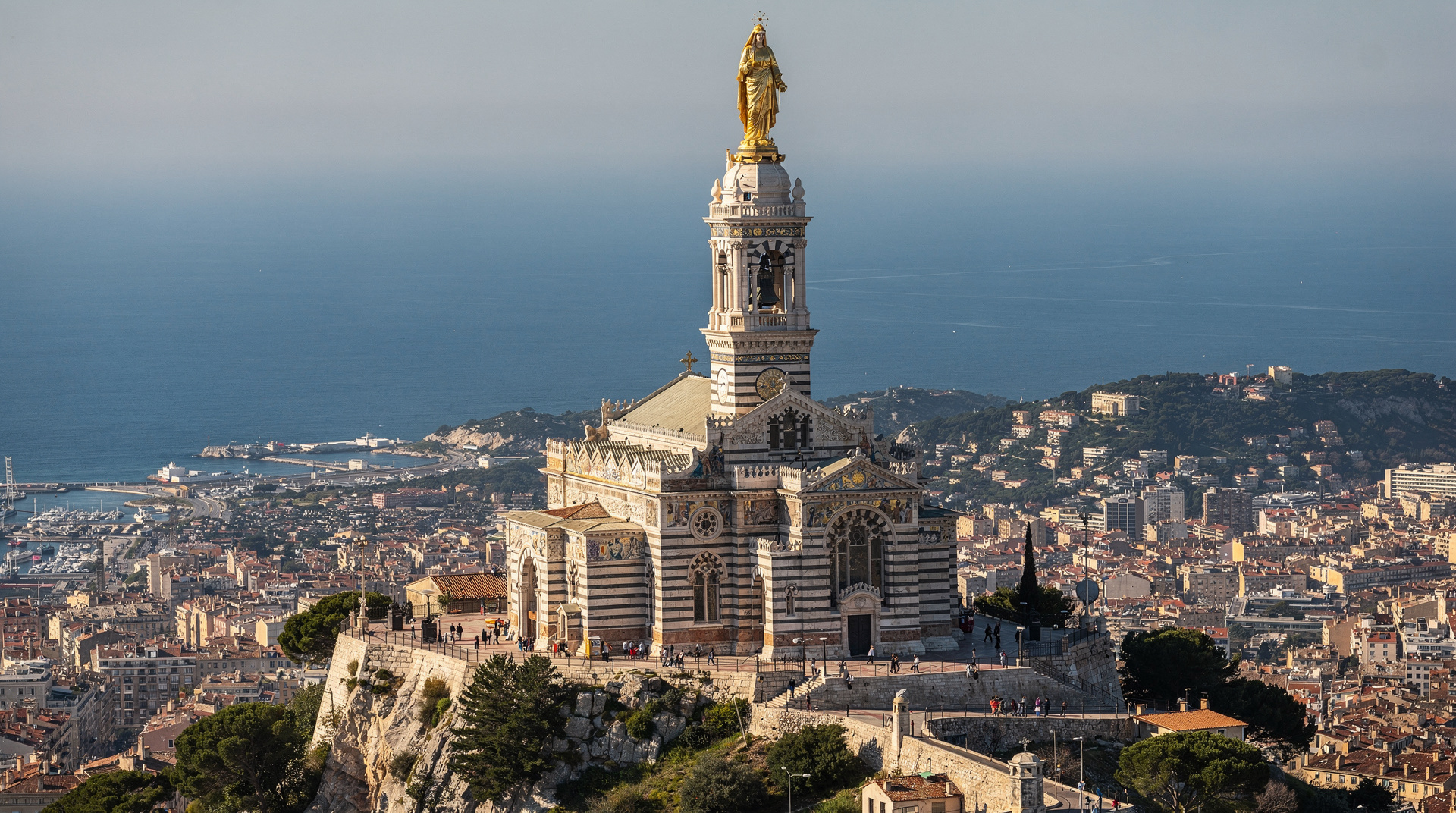
Vallon des Auffes works best as part of a longer Corniche walk rather than a standalone destination given how quickly it can be seen. Heading north toward the city, the walk passes close to the Notre-Dame de la Garde hillside (a worthwhile detour inland for the panoramic view) before reaching the Vieux-Port and Le Panier. Heading south, the Corniche continues toward the Prado beaches, roughly another 20–25 minutes on foot. For a broader sense of how this fits into a full Marseille day, see the main Marseille guide.
Connecting Vallon des Auffes to the Corniche
The Vallon is a natural waypoint on the Corniche walk between the Vieux-Port and the Prado beaches. The sequence — Vieux-Port fish market in the morning, Le Panier, then Corniche walk in the afternoon stopping at Vallon des Auffes for a drink or late lunch before continuing to the Prado — makes for an excellent Marseille full day without needing any transport.
See also our Corniche and Prado beaches guide for the full coastal walking route.
Frequently asked questions about Vallon des Auffes
Is Vallon des Auffes worth visiting if I’m not eating there?
Yes. The harbour itself, especially at golden hour, is one of the most photogenic spots in Marseille and costs nothing to visit. Even a 20–30 minute stop while walking the Corniche is worthwhile.
Can I swim at Vallon des Auffes?
Not really. There’s no sand beach, and while rocks and access ladders allow some entry near the harbour mouth, this isn’t a swimming destination. For a proper swim, continue along the Corniche to the Prado beaches.
Top experiences
Bookable activities with verified prices and instant confirmation on GetYourGuide.