Luberon
The Luberon: hilltop villages, lavender, ochre cliffs, market towns. A car is not optional. Honest logistics for Gordes, Roussillon, Lourmarin, and beyond.
From Marseille: the most beautiful villages of the Luberon
Duration: 8 hours
Quick facts
- From Marseille
- ~1 h 15 to Gordes by car; ~1 h to Lourmarin; train to Pertuis then car
- Car required
- Yes — villages are not connected by public transport
- Lavender season
- Valensole: mid-June to mid-July (see Valensole guide)
- Market highlights
- Gordes (Tue), Roussillon (Thu), Lourmarin (Fri), Apt (Sat)
- North vs south
- North Luberon: Gordes, Sénanque, Roussillon. South: Lourmarin, Ménerbes, Ansouis
The region that earns the Provence cliché
| At a glance | |
|---|---|
| Where | Vaucluse département, ~1 h to 1 h 15 from Marseille |
| Cost | Village entry is free; individual sights (Sénanque, châteaux) EUR 8–12 |
| Time needed | 1 full day minimum; 2 days recommended |
| Getting there | Car essential, or an organised day tour from Marseille/Aix |
| Best time | April–June and September–October; late June for lavender |
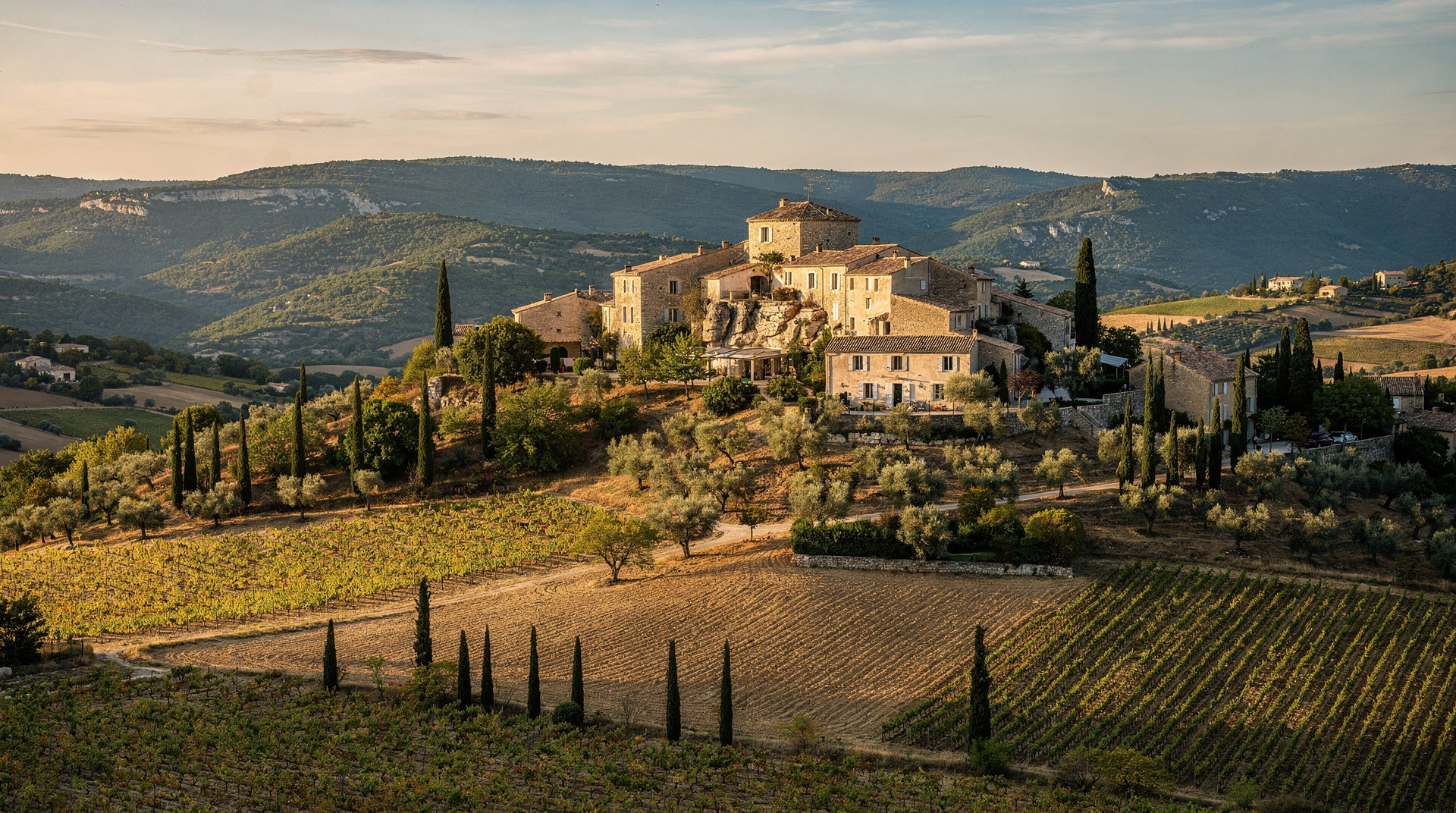
The word “Provence” does a lot of work in tourism marketing, covering everything from the industrial suburbs of Marseille to anonymous motorway service areas. The Luberon is where the word actually earns its meaning: a regional natural park of about 185,000 hectares in the Vaucluse département, straddling an east-west limestone massif, with hilltop villages, lavender fields, ochre cliffs, truffle forests, and market towns that have been doing what they do for centuries without particularly caring whether you approve.
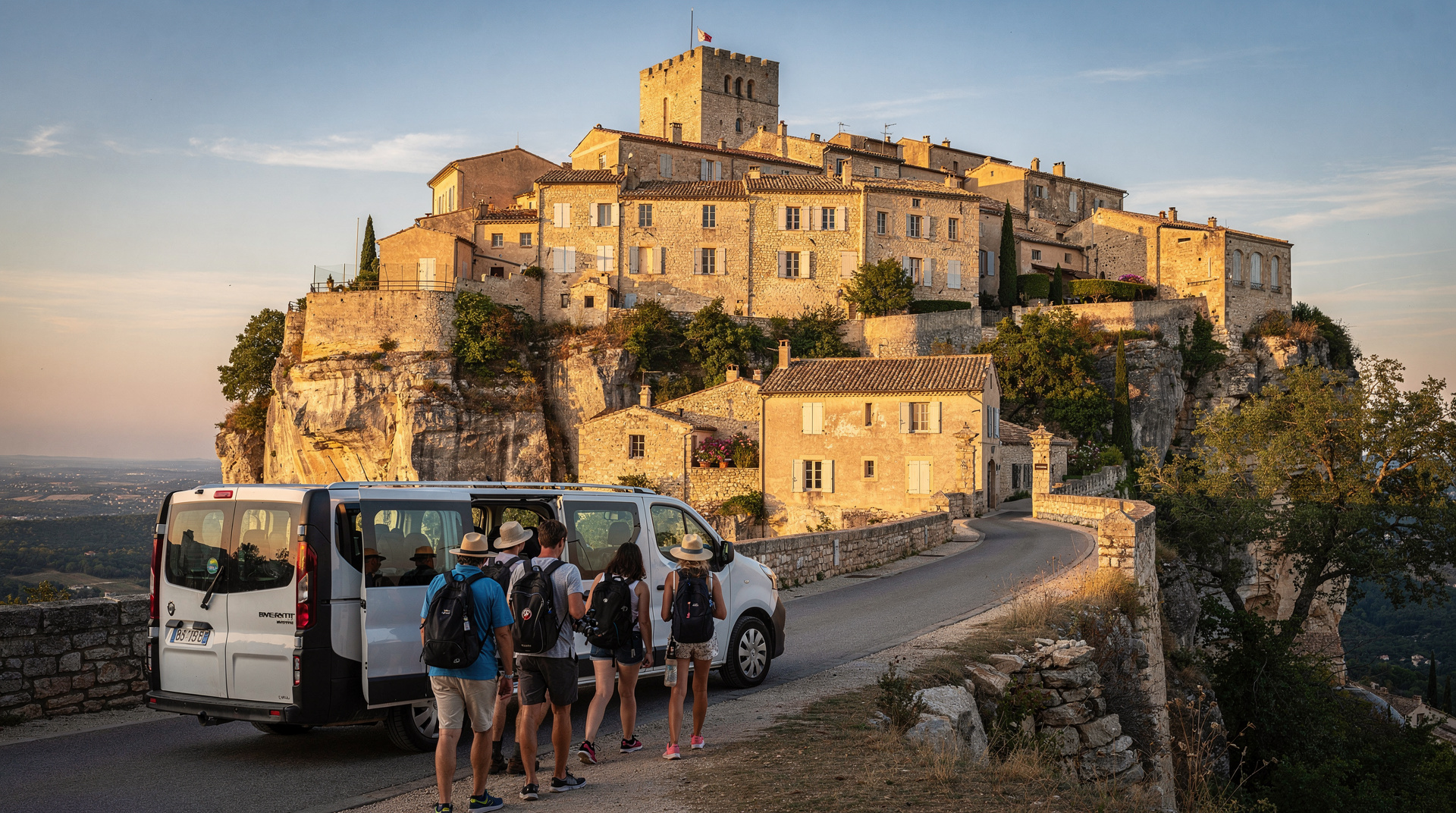
This is also a region that requires a car to experience properly. The villages are perched on hills connected by narrow departmental roads. No bus service links Gordes to Roussillon to Lourmarin. If you are planning this trip without a vehicle, you need an organised day tour — and ideally one that does not try to squeeze five villages into eight hours, because that is a logistics exercise, not a visit.
North vs south Luberon
The Luberon massif has a distinct character on each side.
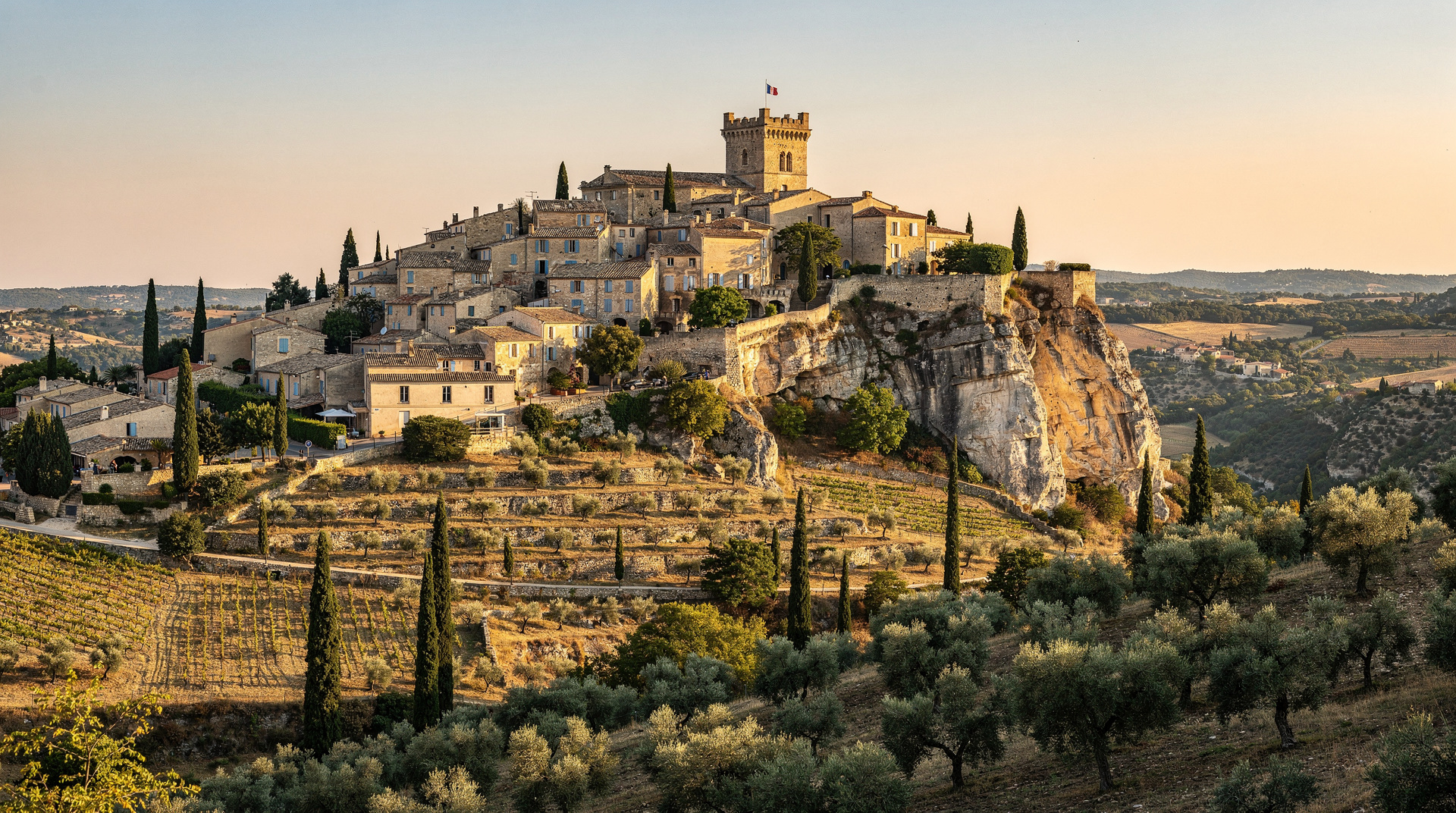
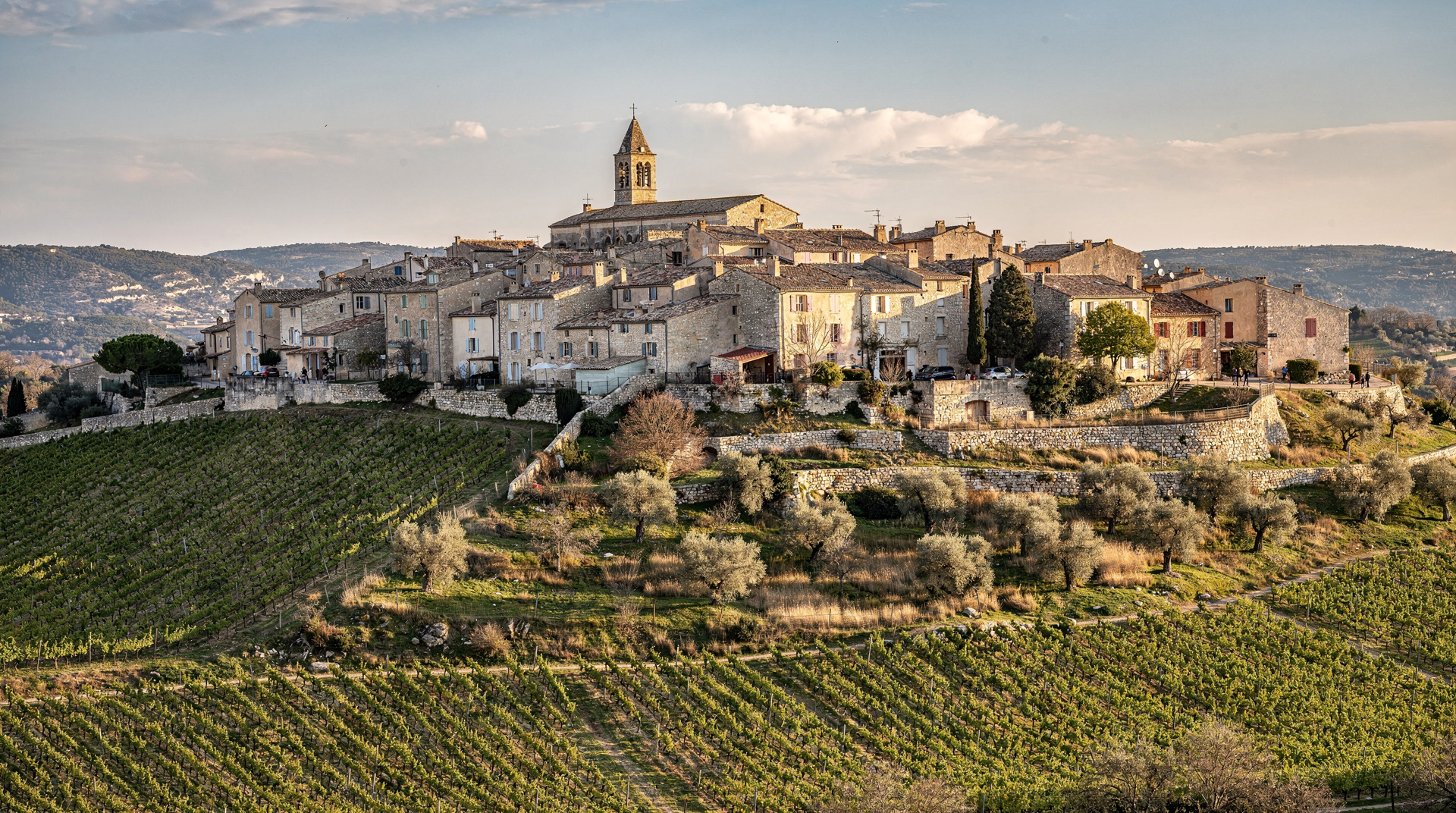
North Luberon: The most famous and most visited section. Gordes sits at the western end of the Monts de Vaucluse facing the Luberon massif across the Coulon valley; Roussillon stands on its ochre plateau 10 km east; the abbey of Sénanque lies in a valley below Gordes. This is the “postcard Provence” landscape — the one on the magazine covers. It is genuinely beautiful and genuinely crowded in summer.
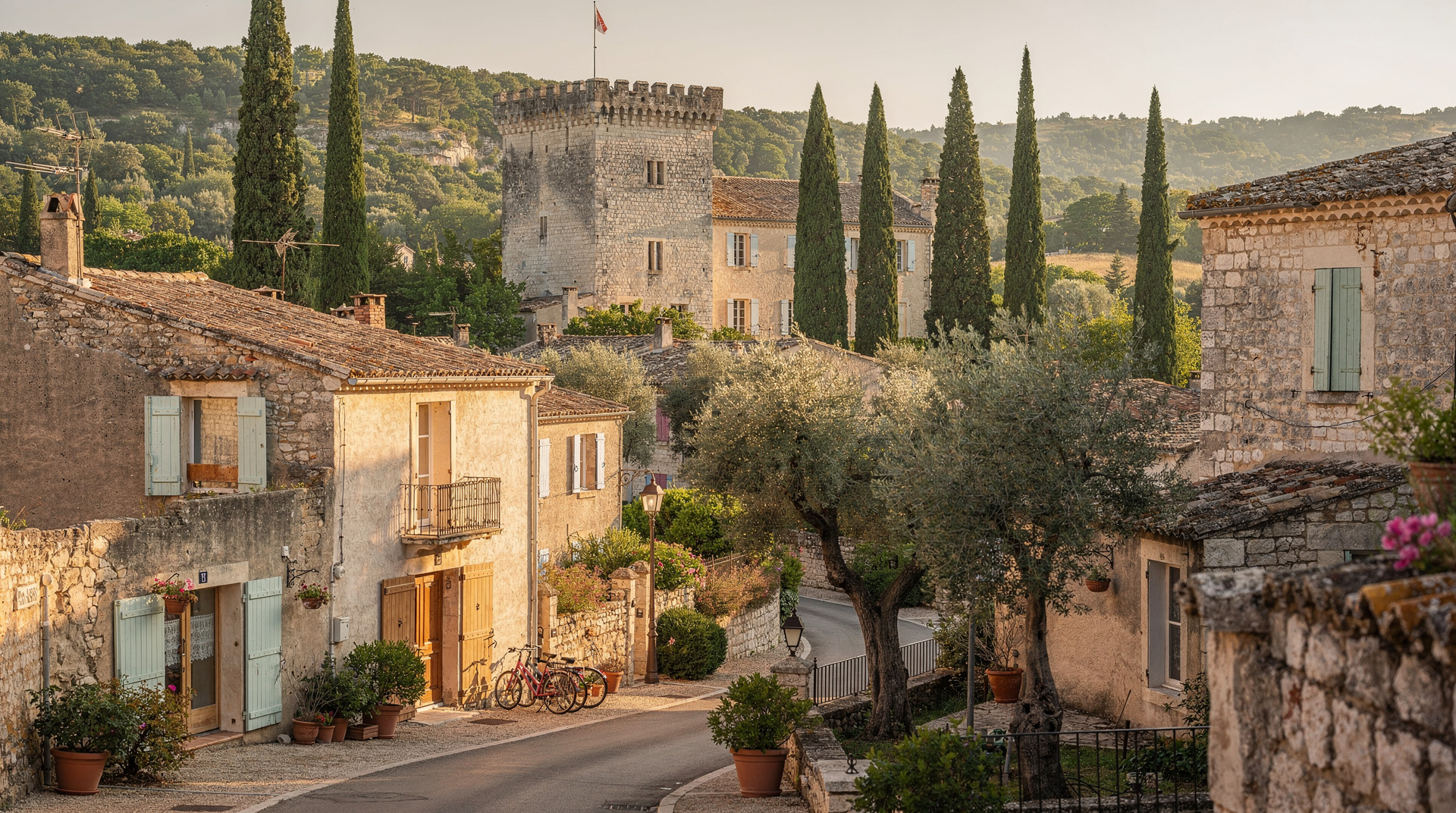
South Luberon: A different character — more intimate, less photographed, more residential. Lourmarin in the south Luberon has a Renaissance château, a Friday market, and an Albert Camus connection. Ménerbes sits on its ridge made famous by Peter Mayle’s writing. Ansouis and Cucuron are quieter alternatives that retain their working-village character. The south side is where most day-tour groups don’t reach, which is part of the appeal.
The Luberon ridge itself: Between the two sides, the massif rises to about 1125 metres at the Mourre Nègre summit. The GR97 long-distance trail runs the length of the ridge — serious hiking for those with time and the right footwear.
The villages: an honest evaluation
Gordes
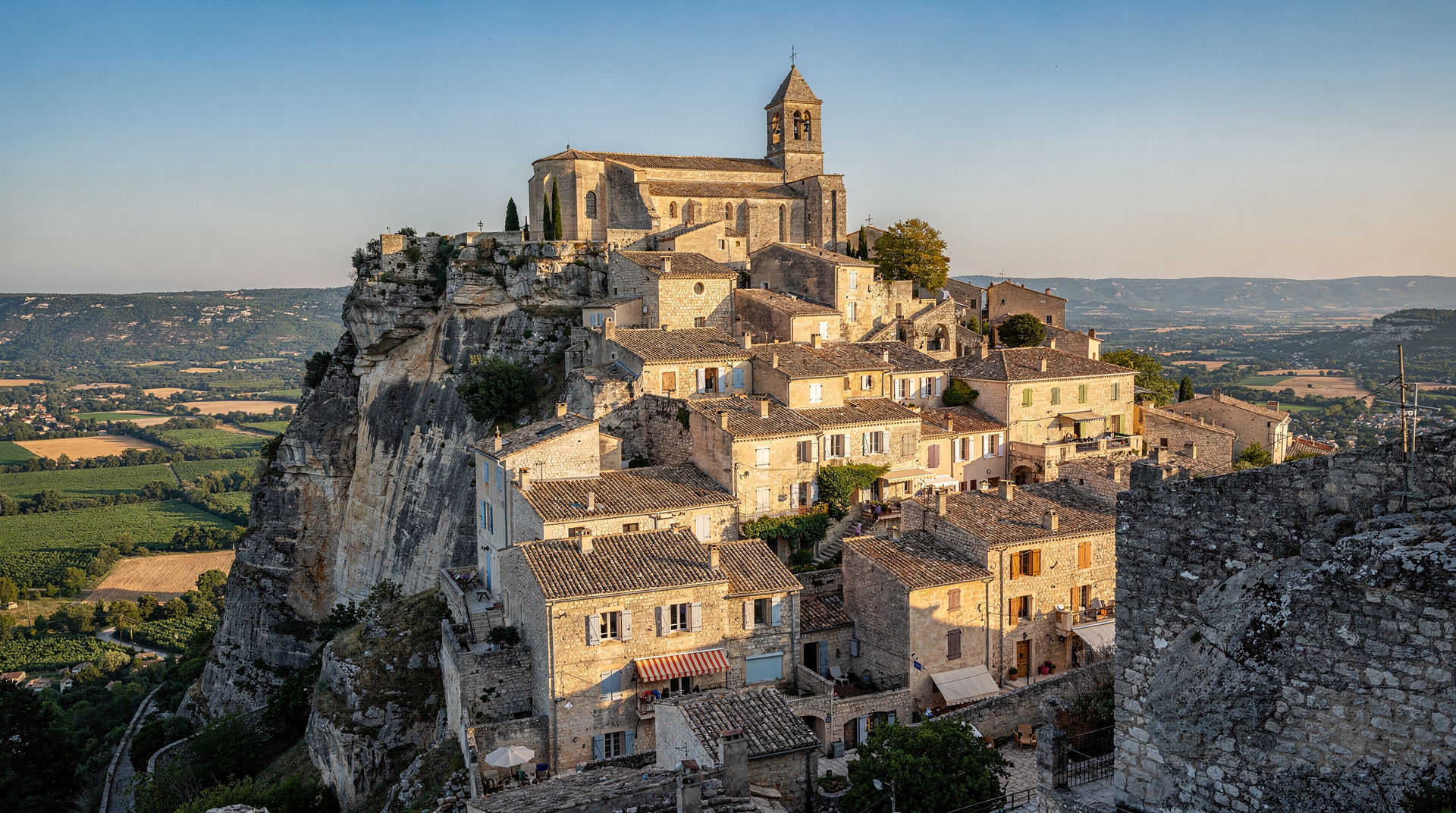
Gordes is the most famous Luberon village and earns its reputation architecturally. The limestone village tumbles down a hillside in tiers, with the Renaissance château at the top and dry-stone bories (traditional stone huts) scattered across the landscape below. The setting is genuinely dramatic.
The honesty: in July and August, Gordes is overwhelmed by visitor numbers that its narrow streets were not built for. Parking becomes a serious problem by 10:00. Tour buses disgorge groups at the main viewpoint. The village itself — about 2000 residents — functions as a backdrop rather than a community during peak season.
Go in May or September, on a Tuesday (market day), arrive before 9:00, and Gordes is extraordinary. See the full Gordes guide for timing specifics.
Roussillon
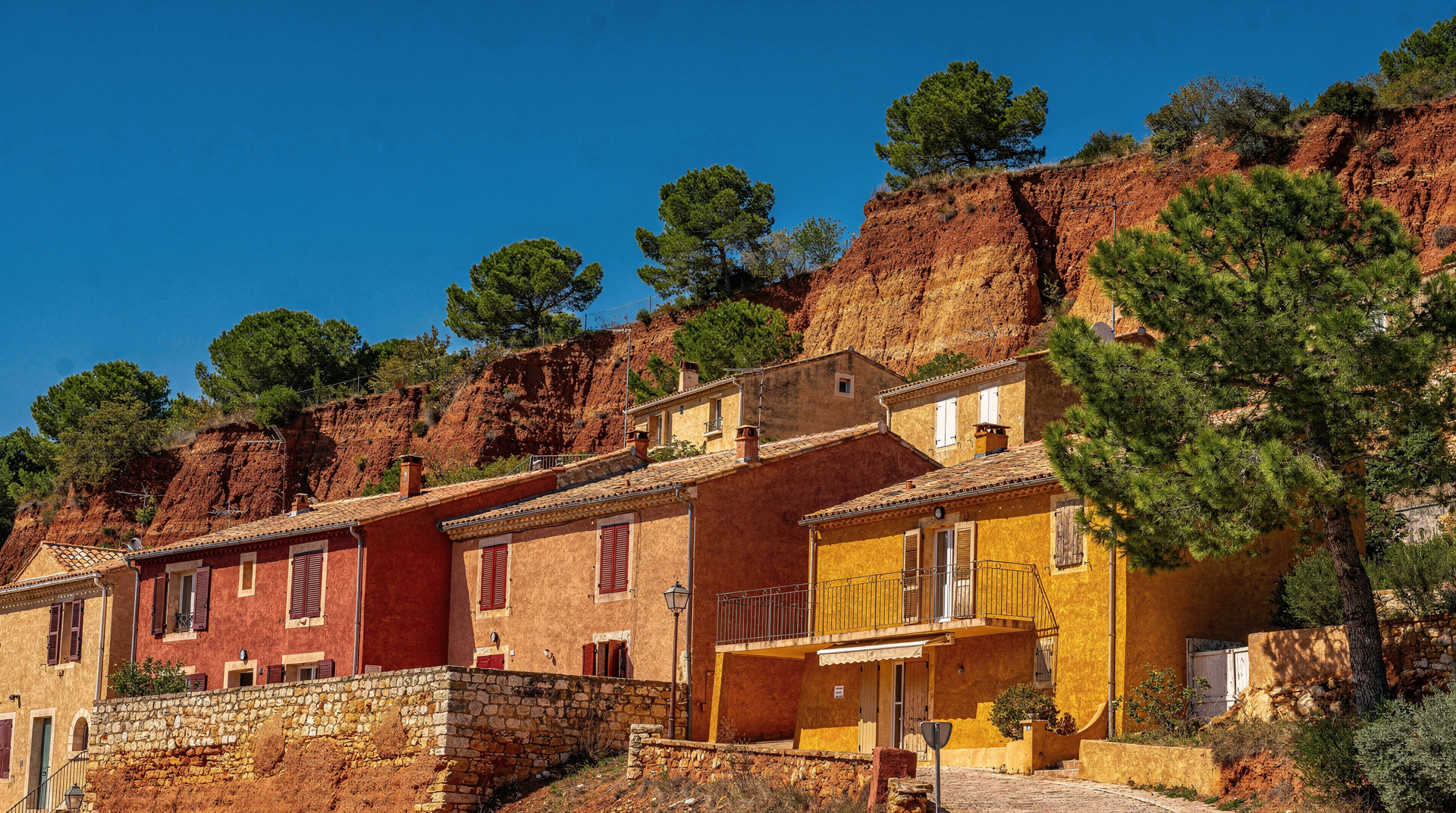
The ochre village is unique in Provence — built entirely from locally quarried ochre-pigmented limestone, in colours ranging from pale yellow to deep terracotta red. The Sentier des Ocres trail south of the village leads through former mining terrain where the ochre formations are exposed: gullies, pinnacles, and colour gradients that look simultaneously natural and theatrical.
Roussillon has a Thursday market and the Conservatoire des Ocres nearby. It is smaller than Gordes and slightly less overwhelmed in summer, but still busy at peak. The ochre architecture makes it visually unlike anywhere else in the region. See the Roussillon guide for the trail and colour detail.
Lourmarin
The most comfortable of the Luberon villages for actual visiting — a proper town rather than a hilltop show-piece, with a Friday market that serves local residents as well as visitors, a 15th/16th-century château that is one of the finest in the region, and Albert Camus’s grave in the cemetery at the village edge. The gastronomy is better here than in Gordes or Roussillon — more restaurants, more variety, more locals eating. See the Lourmarin guide.
Ménerbes
Peter Mayle bought a house just outside Ménerbes in 1987 and made the village internationally famous with A Year in Provence. The Maison de la Truffe et du Vin in the village centre covers both local obsessions — truffles from the Luberon forests and wines from the 45+ estates of the Luberon AOC. Ménerbes sits on a ridge and is more dramatic than photogenic; it rewards a slower walk through its lanes rather than a viewpoint dash. See the Ménerbes guide.
Apt
The capital of the Luberon — a proper working town rather than a pretty village — is worth knowing about primarily for its Saturday market, the largest in the region with up to 300 stalls and a genuine mix of local agriculture and artisan producers. The town itself is not particularly pretty; the market is excellent. If you are in the Luberon on a Saturday, route your morning through Apt before heading to the villages.
Market calendar
| Day | Market | Location |
|---|---|---|
| Tuesday | Morning market | Gordes |
| Thursday | Morning market | Roussillon, Ansouis |
| Friday | Morning market | Lourmarin |
| Saturday | Main regional market | Apt (up to 300 stalls) |
| First Sunday | Morning market | L’Isle-sur-la-Sorgue (until March 2026) then Ansouis |
The Luberon markets are genuinely useful as anchors for a day trip — build your route around the village whose market day aligns with your visit date, and the logistics become more natural.
Lavender in the Luberon context
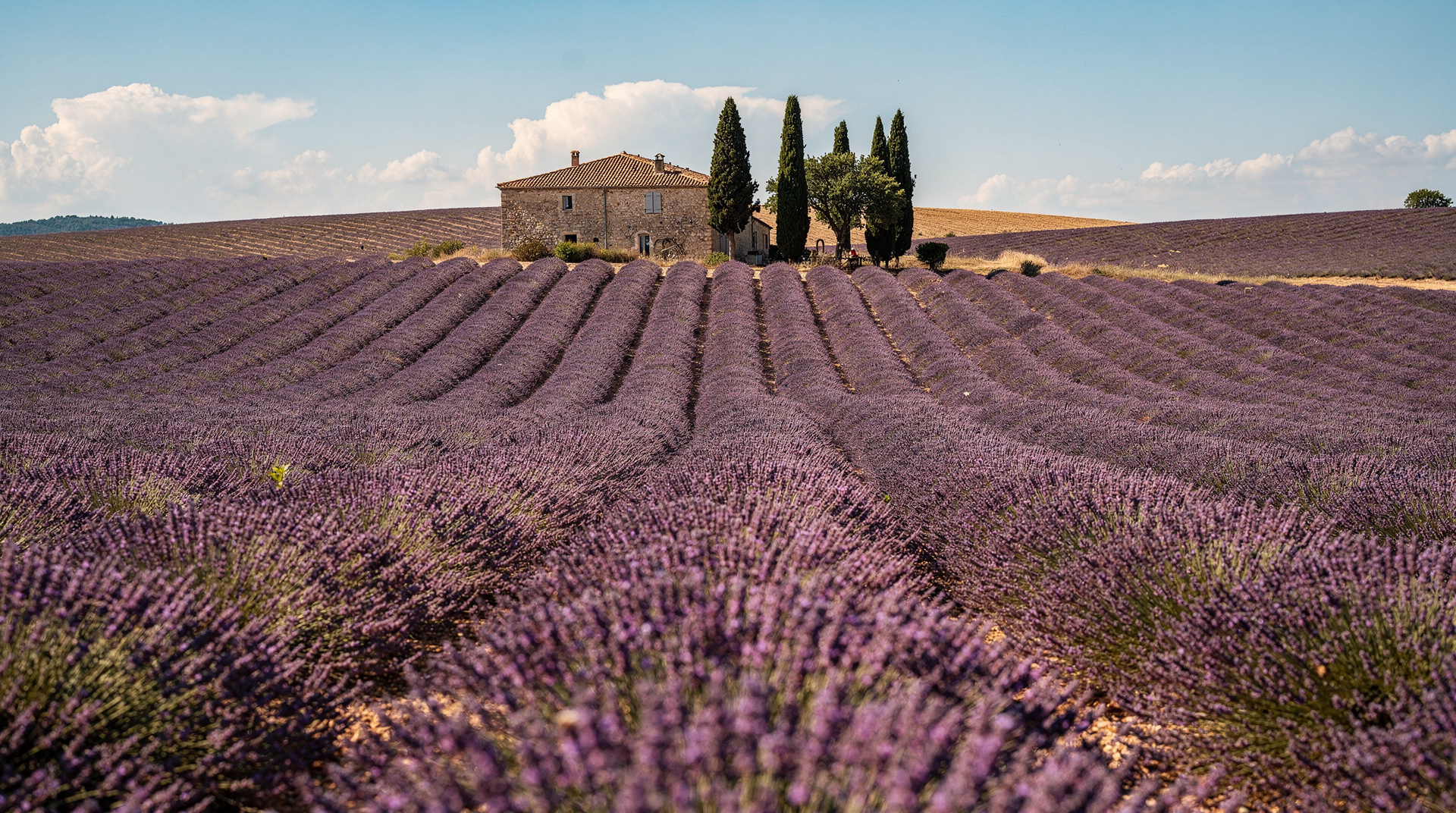
The lavender fields most closely associated with the Luberon postcard image are actually at the border of Vaucluse and Alpes-de-Haute-Provence. The abbey of Sénanque below Gordes has lavender in its courtyard garden — the photograph that appears on every Provence brochure — but this is a small monastic field, not a commercial production landscape.
For the serious lavender plateau experience, you need the Valensole plateau (~90 minutes from Gordes by car), or the area around Sault further north in the Vaucluse (at higher elevation, bloomng later — into August). The Luberon itself has scattered lavender fields but is not the primary lavender destination.
The combined Luberon + lavender day tour from Marseille is a genuinely long day (8+ hours) that tries to include both — it works best in the last week of June or first week of July when timing aligns with peak bloom. Outside those dates, prioritise one or the other.
Ochre territory: Roussillon and the Sentier des Ocres
The ochre geology of the Luberon runs east from Roussillon through Rustrel (where the Colorado Provençal formation is a separate paid-entry ochre landscape, more remote but wilder than Roussillon’s trail). The Conservatoire des Ocres at Roussillon explains the extraction and pigment-production history with exhibits and workshops. The combination of the Sentier des Ocres trail and the Conservatoire is the most complete ochre experience in the region and requires about 2–3 hours total. See the Roussillon guide for practical detail.
Getting to the Luberon from Marseille
By car: From Marseille, take the A51 north toward Aix-en-Provence, then the A8 and D973 toward Pertuis and Lourmarin (south Luberon: ~1 hour), or continue north via Cavaillon toward Gordes (north Luberon: ~1 h 15). The D36 and D2 connect the main villages once you are in the area.
By organised tour: Several operators run full-day Luberon tours from Marseille covering 3–4 villages with transport included. These solve the car-hire question but limit flexibility — you visit what the tour visits, in the order the tour visits. Useful if you do not want to drive, not ideal if you want to spend three hours in one village.
By train: The TER to Pertuis connects to the south Luberon (Lourmarin is a 15-minute taxi or bike ride from Pertuis), but the north Luberon villages are not reachable by public transport from any station. For car-free access, an organised tour is the only realistic option for Gordes and Roussillon.
How many villages can you see in a day?
Honestly: two or three done well, or four to five done superficially. The drive times between Luberon villages are short (15–30 minutes), but parking, walking into the village, the time you actually want to spend there, and lunch add up faster than maps suggest.
A well-organised day from Marseille with a car:
- Morning (9:00): Lourmarin market and château
- Late morning (11:30): Ménerbes — village walk and truffle museum
- Lunch (13:00): Bonnieux (between Ménerbes and Gordes, with a good restaurant selection)
- Afternoon (15:00): Roussillon — Sentier des Ocres trail
- Late afternoon (17:30): Gordes viewpoint before the evening light fades
That is five stops in one day and covers both the north and south Luberon. It is efficient and leaves no room for delay. Two days covers the same ground with room to linger.
For the full planning picture, see the Luberon villages day trip guide and the car-in-Provence guide. For lavender timing, see Valensole. For the Luberon from Aix as a base, see Aix-en-Provence.
Truffles and wine beyond the villages
Two agricultural traditions run underneath the postcard village image and reward slower exploration. Truffle season runs roughly from November to March, with the black winter truffle (Tuber melanosporum) traded at small local markets around Ménerbes, Apt, and Carpentras — the Maison de la Truffe et du Vin in Ménerbes covers this year-round through tastings and exhibits even outside the harvest window.
Wine-wise, the Luberon AOC covers over 40 estates producing reds, whites, and rosés from the limestone slopes; quality is consistently good without the price premium of Châteauneuf-du-Pape. Several domaines around Lourmarin and Bonnieux welcome walk-in tastings, and combining a Luberon village day with a stop at one is a natural extension covered in our Provence wine routes guide.
Combining the Luberon with other Provence day trips
The Luberon pairs most naturally with Aix-en-Provence as a base — the south Luberon villages are 40 minutes to an hour from Aix, closer than from Marseille. Travellers assembling a longer Provence itinerary often combine a Luberon day with Avignon to the north or a lavender detour to Valensole in late June or early July. For a multi-day plan that strings these together without excessive driving, see the 7-day Provence road trip itinerary.
Frequently asked questions about the Luberon
Do you need a car for the Luberon?
Yes. The Luberon villages are not connected by public transport, and distances between them are too long and hilly for cycling without considerable fitness and time. The realistic car-free option is an organised group day tour from Marseille or Aix-en-Provence, or a private driver.
What is the best village in the Luberon?
Gordes for the most dramatic architecture and setting; Roussillon for the ochre uniqueness; Lourmarin for the most comfortable experience and the best eating. For a first visit, Gordes and Roussillon is the canonical combination.
What is the best time to visit the Luberon?
Late April to June and mid-September to October. Spring has wildflowers, green landscapes, and open markets. Early autumn has harvest season (grapes, olives, truffles from November) and much lighter crowds than summer. July and August are beautiful but peak-busy and hot; Gordes and Roussillon can feel overwhelmed on summer weekends.
Is the Luberon worth a day trip from Marseille?
Yes, with reasonable expectations. It is a long day — Gordes is 1 h 15 from Marseille by car. Two hours each way plus a rushed visit is not the way to experience this region. If you have only one day, the south Luberon (Lourmarin, Ménerbes, Bonnieux) is closer to Marseille (about 1 hour to Lourmarin) and less crowded.
Top experiences
Bookable activities with verified prices and instant confirmation on GetYourGuide.