Lavender season in Provence: when and where to go in 2026
From Marseille: lavender tour to Sault, Roussillon & Gordes
Duration: 9 hours
When does lavender bloom in Provence in 2026?
Valensole (lavandin): peak late June to mid-July, first week of July typically best. Sault (true lavender, higher altitude): mid-July to mid-August, reliable before the August 15 festival. Sénanque Abbey: mid-June to early July. After mid-July at Valensole, harvest begins and the visual effect declines rapidly.
At a glance
| Where | Valensole, Sault, Sénanque Abbey (Gordes), Luberon hills — 1h15 to 2h from Marseille |
| Cost | Free to view from roadsides; Sénanque access via paid navette in season |
| Time needed | A single location fits a half-day; combining two locations needs a full day |
| Getting there | Car essential for all locations; Sénanque adds a shuttle from Gordes in summer |
| Best time | Late June-mid July for Valensole/Luberon; mid-July-mid-August for Sault |
Understanding what you are looking at before you go
The single most useful piece of information for anyone planning a Provence lavender trip is this: what you will see in most fields is lavandin, not true lavender. The distinction matters because lavandin and true lavender have different bloom windows, different growth altitudes, different visual characters, and different roles in the Provençal economy.
Getting this distinction right prevents the two most common mistakes: arriving at Valensole in August (mostly harvested) or at Sault in late June (barely started).
Lavandin vs true lavender: the essential guide
True lavender (Lavandula angustifolia, also called “fine lavender” or “lavande fine”)
- Grows above 600-800 metres altitude
- Blooms earlier: mid-June to early July at moderate altitude, mid-July at high altitude (Sault)
- Colour: deep blue-violet
- Yield of essential oil: low but extremely high quality — used in haute parfumerie and high-end cosmetics
- Where grown: Pays de Sault (Mont Ventoux slopes), some Luberon fields at altitude, Sénanque Abbey field
Lavandin (Lavandula x intermedia)
- A hybrid, grown below 600 metres
- Blooms later: late June to mid-July at Valensole altitude
- Colour: slightly paler, more grey-blue before fully open, blue-violet at peak
- Yield: much higher than true lavender, but lower perfume quality
- Where grown: the entire Valensole plateau, most of the commercial fields of Provence
- Accounts for approximately 90% of Provence lavender production by volume
Visual difference: At peak bloom, the difference in colour is subtle. Lavandin plants are taller (40-60 cm vs 30-40 cm) and have a slightly different structure. From 100 metres away at peak colour, they look similar to a camera. The distinction matters more for bloom timing than for photography.
Valensole: the scale destination
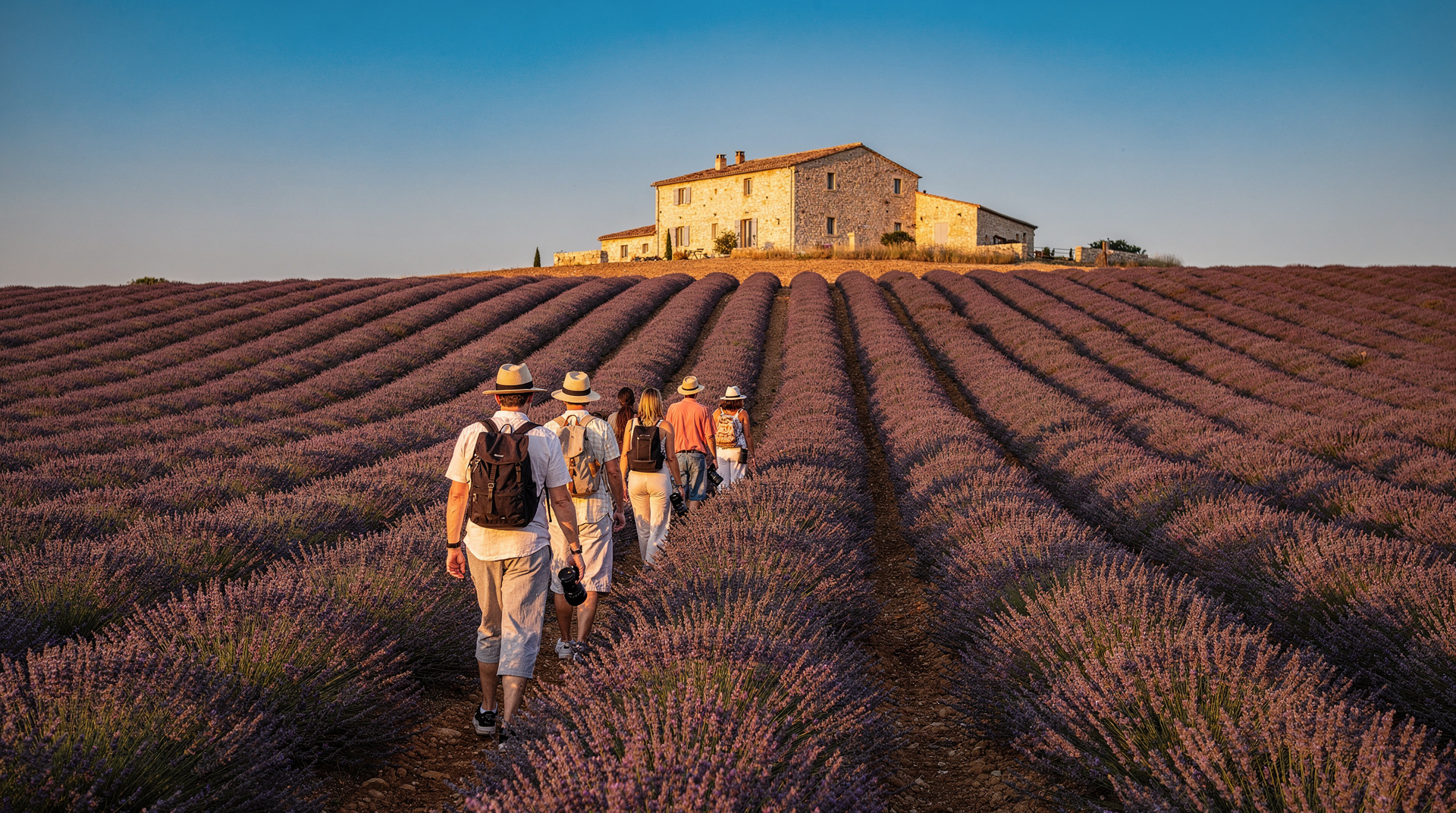
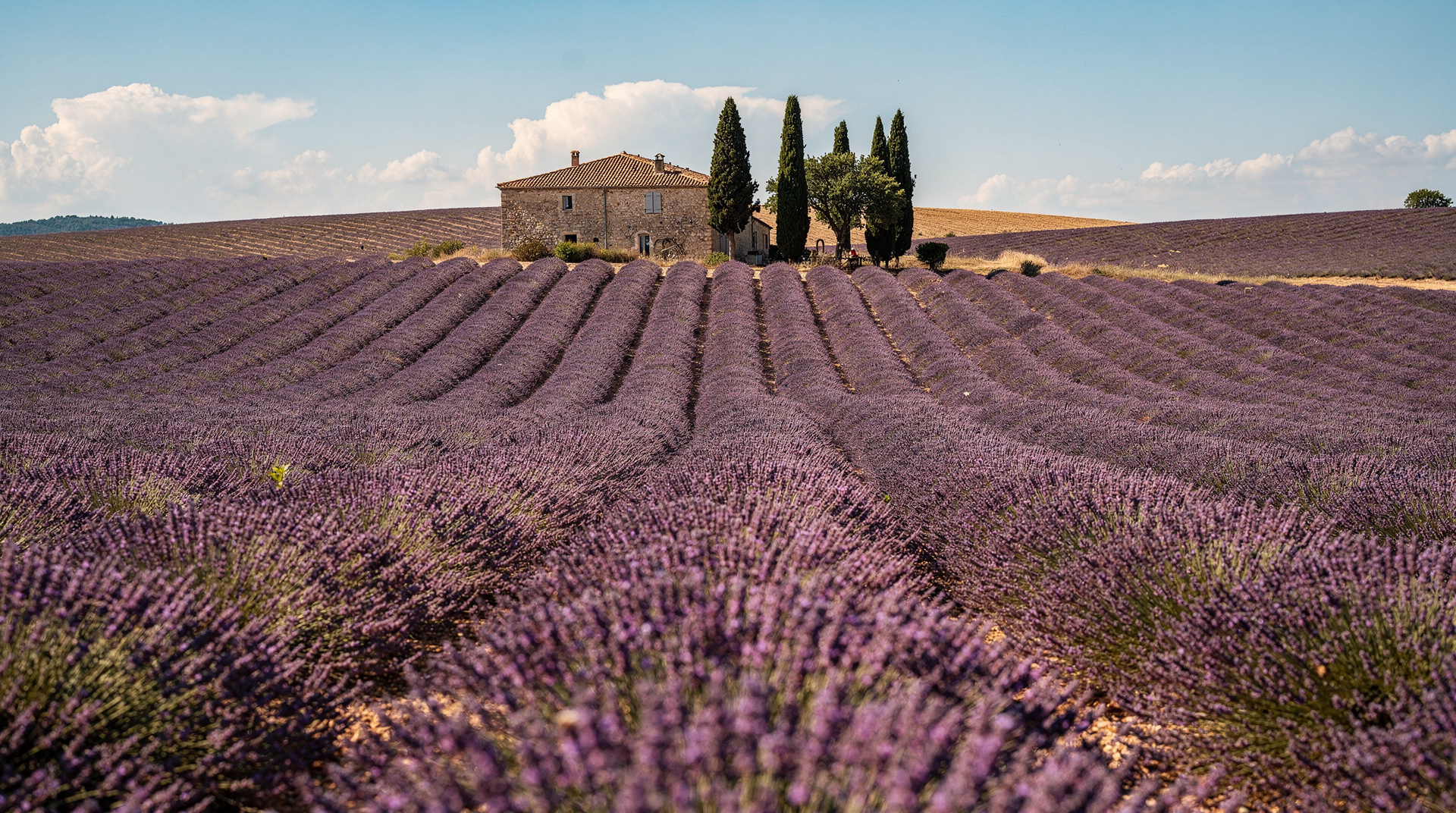
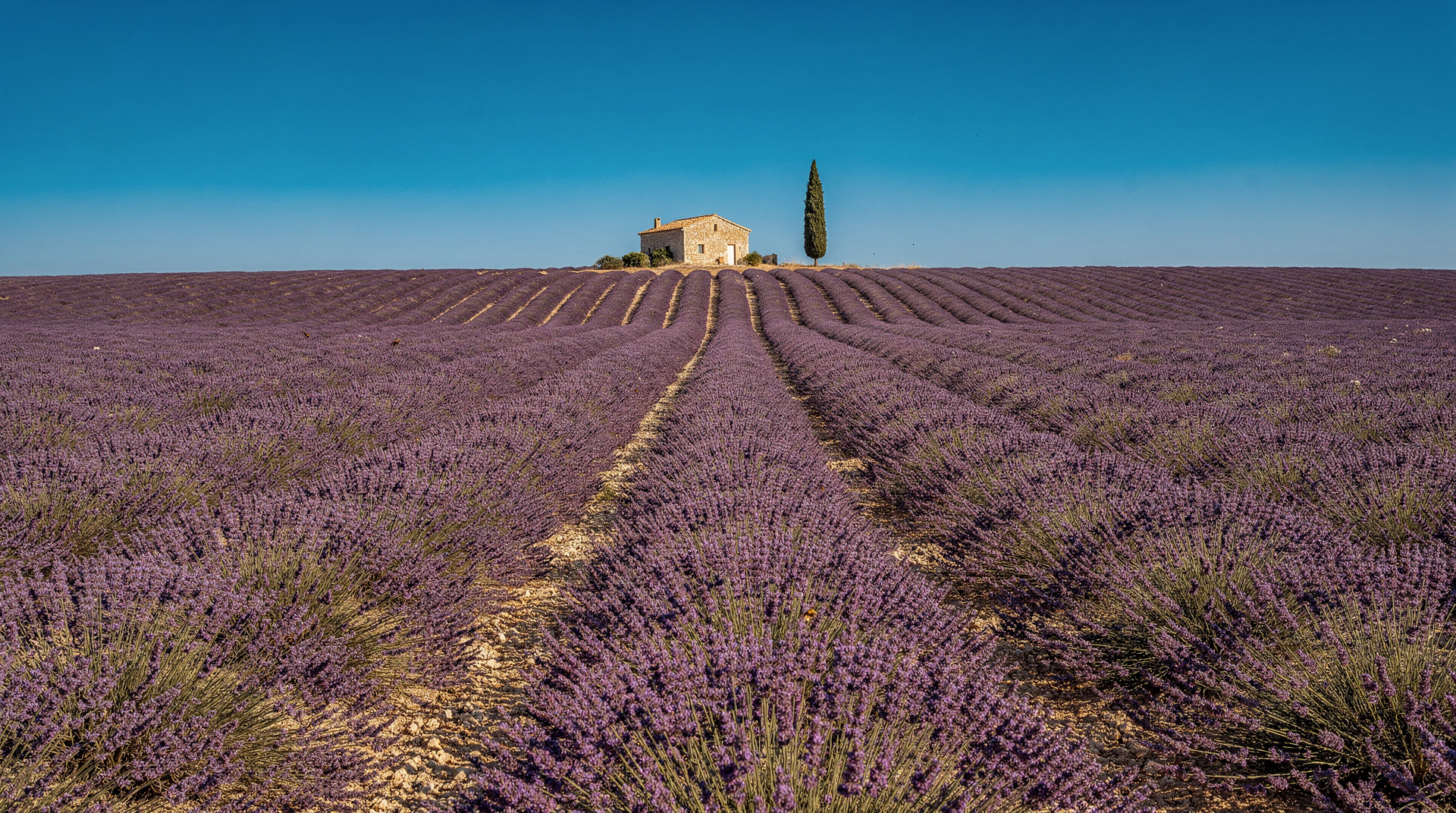
The Plateau de Valensole is the largest continuous lavender (lavandin) cultivation in France — thousands of hectares of fields spreading from the village of Valensole southeast across a broad limestone plateau between the Durance river and the Verdon foothills.
2026 bloom calendar for Valensole
June 1-14: Fields green and growing. Not worth the drive unless you want to see the pre-bloom landscape.
June 15-25: First colour appears at lower altitudes. Perhaps 20-40% of fields showing purple. Early visitors may prefer this slightly less crowded window.
June 25 - July 10: Building to peak. By late June most fields are visibly purple; by July 1 the best are at full colour. This is the prime window.
July 1-15 (typical peak): Maximum colour across the plateau. The first week of July is typically the single best week — before harvesting begins, all fields open. This is also the most crowded and most logistically challenging week: roads fill, roadside verges fill with photographers at dawn.
Third Sunday of July (~July 19, 2026): Valensole Lavender Festival. By this date, early-blooming fields are being harvested.
July 15-31: Harvest begins progressively. Some fields already cut by mid-July. The visual effect deteriorates week by week.
August: Most Valensole fields are harvested stubble. Not worth the drive for the lavender.
Check real-time status: routes-lavande.com maintains a weekly bloom-stage map during the season. Check this in the 7-10 days before your visit.
Getting to Valensole from Marseille
1h30 to 1h45 by car via the A51 north toward Manosque. No public transport. See our Valensole day trip guide for full logistics.
Sault and the Pays de Sault: the altitude alternative
The Pays de Sault is the other major lavender production area, centred on the town of Sault (760 m altitude) on the northeastern slopes of Mont Ventoux. This region grows primarily true lavender — the rarer, more valuable variety — and the high altitude means a significantly later and longer bloom.
2026 bloom calendar for Sault
Late June - early July: True lavender at Sault altitude beginning to open. About 2-3 weeks behind Valensole in timing.
July 10-August 15: The main bloom window for the Sault true lavender fields. Fields are at their most photogenic in the week before the harvest.
August 15: The Fête de la Lavande in Sault — a harvest festival on the Assumption holiday. By tradition, the local farmers do not cut their fields until after the festival (maintaining the bloom for tourism is part of the deal). This date is the most reliable guarantee of open fields in August.
After August 15: Harvesting begins. By the end of August most Sault fields are cut.
Why Sault matters for July-August travellers
If your trip falls in late July or August and you want to see open lavender, Sault is effectively the only reliable destination. Valensole will be mostly harvested. The Sault fields, because of altitude, remain in bloom significantly longer. This is the correct destination for anyone visiting in the August window.
Distance from Marseille: Approximately 2 hours by car (A51 north toward Manosque, then D4 northeast toward Forcalquier, then D950 east to Sault). Longer than Valensole, but the only real option for August.
Sénanque Abbey: the iconic small field
The Abbaye de Sénanque, 3 km north of Gordes in a narrow valley, has one of the most replicated images in all of Provence photography: a small lavender field in front of the grey stone Romanesque church, monks still in residence, the valley walls rising on either side. The field is planted with true lavender — earlier-blooming, deeper blue than lavandin.
Sénanque bloom calendar
Mid-June to early July: Prime window for the Sénanque field. True lavender blooms before Valensole lavandin, making Sénanque a good destination in late June when Valensole is still building.
Access: From July 2026, the road to the abbey is restricted to cars in summer. A navette (shuttle bus) from a car park near Gordes carries visitors down to the abbey. Follow signs for “navette Sénanque” from Gordes. Allow extra time for this logistics step.
Photography timing: The field runs east-west; morning light (before 9:00) illuminates the church façade directly. Afternoon light comes from behind the church. Best golden-hour photography is early morning.
The Luberon lavender: smaller scale, beautiful context
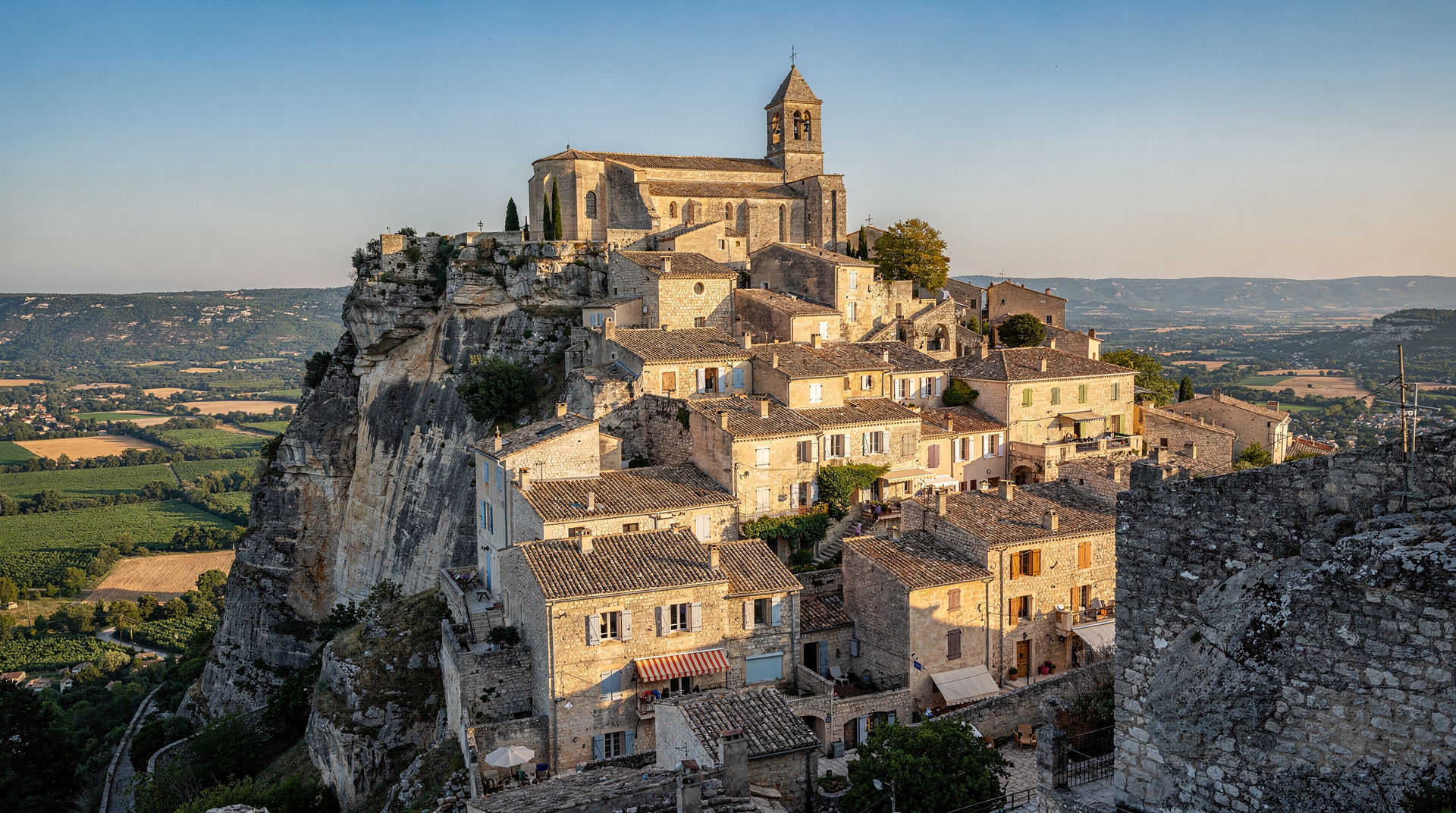
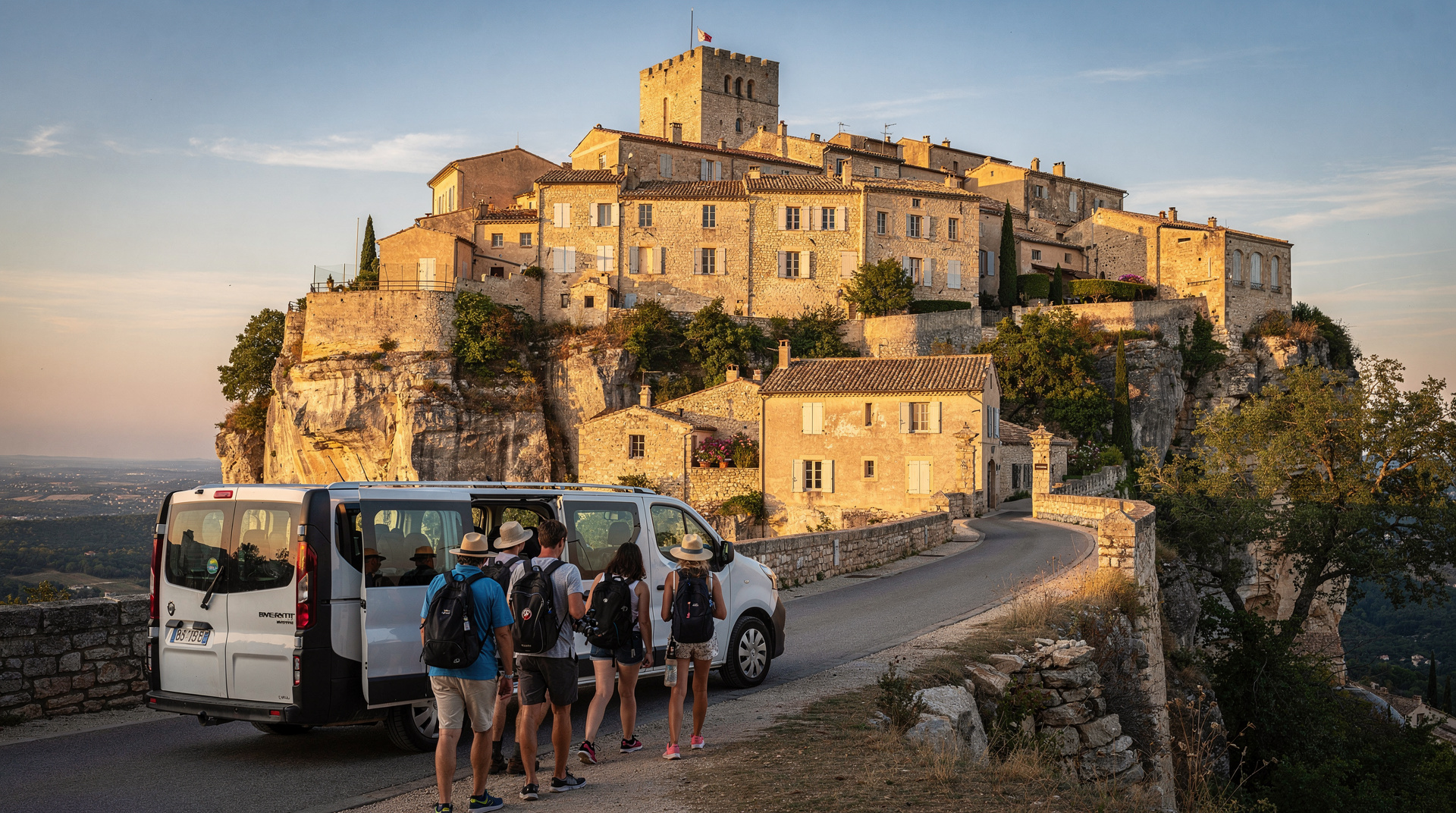
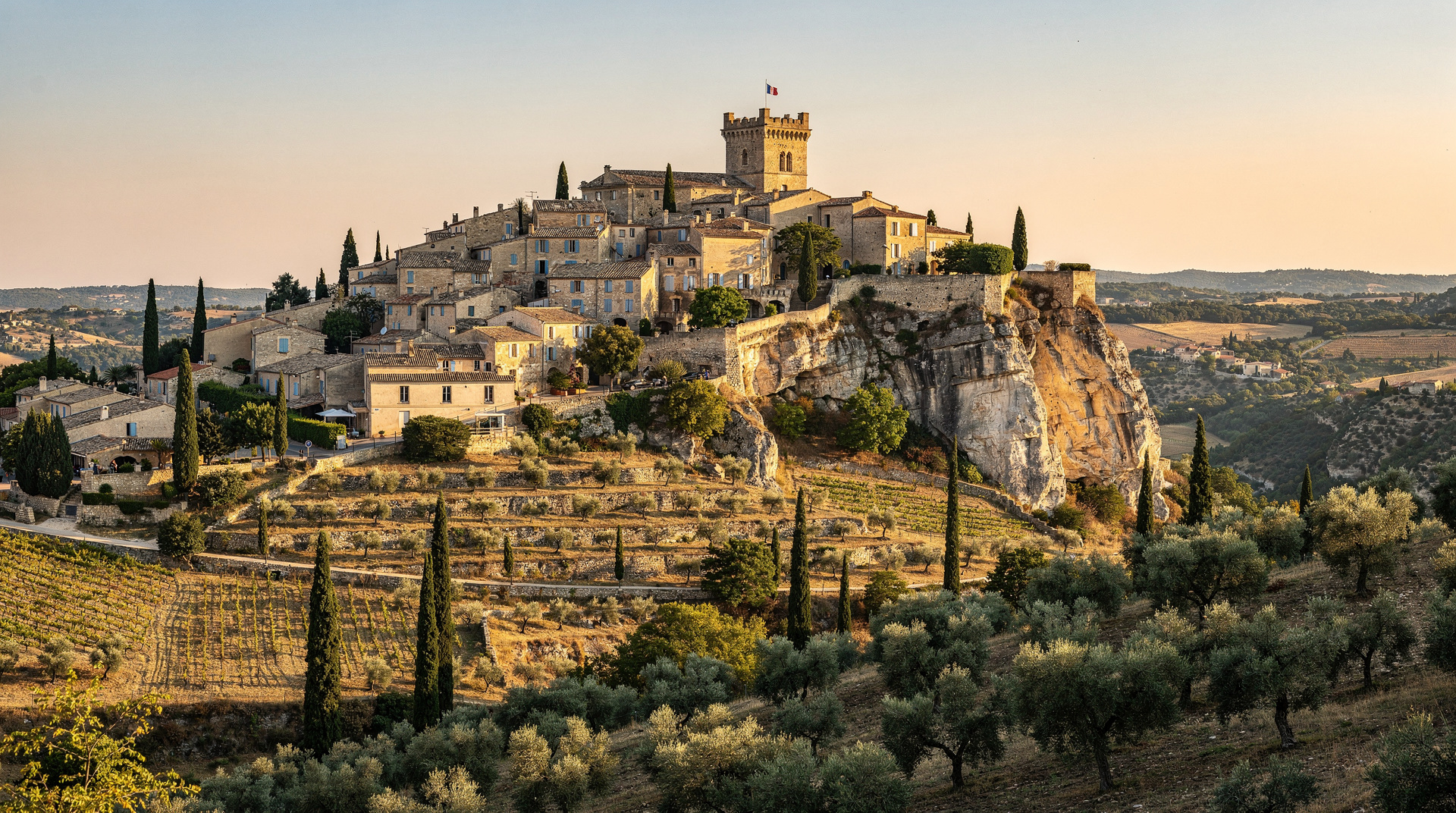
Several fields in the Luberon hills — particularly around Bonnieux, near Gordes, and on the plateau above Roussillon — grow lavandin at altitude (400-500 m), blooming slightly later than the Valensole lowlands. These fields are smaller scale than Valensole but benefit from extraordinary village backdrops and the ochre landscape of the Luberon.
Best Luberon lavender timing: Late June to mid-July, roughly aligned with the upper end of the Valensole window.
See our Luberon villages guide for logistics and village combinations.
Distillery visits
When distillation happens
Lavandin distillation at Valensole happens in August, after harvest — not during the bloom. If you want to see an operating still (the copper alembic distilling the cut plants), visit in August when the visual bloom is gone but the industrial harvest process is in full operation.
What to see in season
During the bloom (June-July), distilleries and farms offer:
- Guided farm tours explaining lavandin cultivation and harvesting
- Direct sales of essential oil from previous harvests
- Honey (lavender honey from beehives kept in the fields), soap, and cosmetics
- Some farms have fields visitors can walk to the edge of (with permission)
Riez (15 km east of Valensole): a small medieval town with several producers offering direct sales year-round.
Puimoisson (on the plateau, 20 km east of Valensole): a quieter village than Valensole itself, with its own fields and a more relaxed visitor experience.
The harvest and what it does to the visual
The harvest timing is the most critical factor for planning. Lavandin is harvested by mechanical combine — a machine that runs along the rows cutting the plants at 15-20 cm height. After harvest, the field goes from purple to grey-brown overnight. There is no recovery visible until the following spring.
Important: The harvest is not uniform. Farmers harvest field by field as they ripen and as they have equipment available. This means you can be in a valley where one field is being harvested while the adjacent field is still in peak bloom. The patchwork effect in mid-July — some fields cut, some still open — is itself a photogenic reality of the working landscape.
After about July 20 at Valensole, the balance tips: more fields cut than open. This is when to go to Sault instead.
Photography advice
Best light: The 90 minutes after sunrise and 90 minutes before sunset. Morning light gives warm gold on the purple; afternoon light creates long shadows between the rows. Midday is flat and bleaching.
Best angles: Low angle from field edge, including foreground of flowers and sky. The almond and oak trees growing in rows through some fields provide vertical structure. Roads crossing through the fields allow driving slowly to find the best compositions.
The rule on entering fields: Do not. Photograph from the verges, road edges, and any designated visitor areas. See our day trip guide for full ethics guidance.
Camera settings: Lavender purple tends to shift toward magenta in warm light and toward blue in shade. A slight saturation reduction in post-processing often gives more accurate colour than the in-camera default.
Complete bloom calendar summary
| Location | Crop type | Peak window | Altitude | Distance from Marseille |
|---|---|---|---|---|
| Valensole plateau | Lavandin | Late June - July 15 | 500-600 m | 1h30 car |
| Sénanque Abbey | True lavender | Mid-June - early July | 250 m | 1h30 car (via Gordes) |
| Luberon hills | Lavandin/mixed | Late June - mid-July | 400-500 m | 1h15 car |
| Pays de Sault | True lavender | Mid-July - August 15 | 760 m+ | 2h car |
| Puimoisson | Lavandin | Late June - mid-July | 600 m | 1h45 car |
For the Valensole day trip logistics from Marseille, see our lavender fields day trip guide. For the best time to visit Marseille overall, see our seasonal planning guide.
Building a multi-location lavender trip
If you want to see more than one type of lavender landscape in a single trip, sequencing matters. A common pattern: start with Sénanque and the Luberon in mid-to-late June (true lavender at Sénanque blooms earliest), move to Valensole for the first two weeks of July (the plateau’s peak), then finish with Sault in late July if your trip extends that far (true lavender’s altitude keeps it blooming into August). Our Provence lavender route itinerary lays out a full multi-day version of this loop with driving times and overnight suggestions.
For village and wine detours that pair naturally with the Luberon lavender fields, see our Luberon villages day trip guide and our Gordes destination guide. If you are weighing whether a dedicated lavender trip is worth the logistics compared to a more general Provence day out, our lavender season diary gives an honest first-person account of one bloom-window gamble.
Frequently asked questions about Lavender season in Provence
Do I need to choose between Valensole and Sault, or can I see both? You can see both if your trip spans at least a week and includes late June through mid-July — early in that window, Valensole is near peak; by the second half, Sault is coming into bloom. Visiting both on the same day is not realistic given the roughly 2-hour drive between them; plan them as separate day trips a few days apart.
Is Provence lavender worth visiting if I can only go outside the June-August window? Not for the classic purple-field photograph — outside the bloom window, the fields are either green and growing or brown stubble, and there is no substitute experience. If your dates are fixed outside June-August, redirect that day toward the Calanques, the Luberon villages, or Arles/Avignon instead, and treat lavender as a reason to return in season.
What to see instead of lavender
If your dates land outside any bloom window, the Provence villages and landscapes that surround the lavender regions remain fully worthwhile year-round: Gordes and the Luberon hill villages, the Roman monuments at Arles, and the Sunday market and Roman theatre at Avignon are not seasonal in the way lavender is.
Top experiences
Bookable activities with verified prices and instant confirmation on GetYourGuide.