Roussillon
Roussillon is built from ochre limestone in colours from pale lemon to deep terracotta.
Gordes, Roussillon & ochre trail with Fontaine de Vaucluse
Quick facts
- From Gordes
- 10 km east on the D2; 15 min by car
- From Marseille
- ~1 h 20 by car via A51 and D973
- Sentier des Ocres
- Short loop 35 min, long loop 55 min; entry ~3.50 EUR adults
- Market
- Thursday morning on the village square
- Conservatoire des Ocres
- Open daily; workshops available year-round (book ahead)
At a glance
| Where | Northern Luberon, 10 km east of Gordes, around 1 h 20 from Marseille |
| Cost | Sentier des Ocres around EUR 3.50; Conservatoire workshops around EUR 25–40 |
| Time needed | 2–3 hours (trail plus village); half a day with the Conservatoire |
| Getting there | Car needed — no rail access; day tours from Marseille pair it with Gordes |
| Best time | April–June and September–October; afternoon light for the ochre trail |
The village built from its own geology
Roussillon sits on one of the largest deposits of ochre in the world — a geological formation stretching across several kilometres of the Luberon that provided the raw material for Europe’s paint industry from the 18th century until the 1930s. The village was built from the same material, which is why its facades run through a spectrum from pale cream-yellow to vivid terracotta-orange-red that no other village in France replicates.
This is not a painted effect or a restoration decision — the ochre is the limestone. The quarrying that shaped the landscape south of the village also provided the building material for the houses above. When the light hits the village in the afternoon, the colour shifts continuously. Photographs from Roussillon taken an hour apart look like they were taken in different places.
It helps to arrive with the right expectations. Roussillon is not a place of big monuments or a checklist of sights; it is a place where the setting itself is the attraction. You come for the colour, you walk through it, and you leave with a better sense of why Provence has been painted and photographed for so long. That makes it a very good companion to the more architectural stops on a Luberon day, such as Gordes, and a welcome change of pace if you have spent the previous days in the city. If you are building a longer trip, the Marseille and Provence itinerary shows where a village like this fits between coast and countryside.
The ochre geology: what you are looking at
Ochre is a mixture of iron oxide (goethite and haematite) with clay and sand. The iron oxide provides the colour range — the more oxidised the iron, the deeper the red; partially oxidised gives the yellow-to-orange range. The Luberon formation was deposited in a shallow Cretaceous sea and is unusual in having a very pure ochre layer close to the surface, which made it commercially viable to extract.
The Roussillon quarries were active from around 1780 to the 1930s, when synthetic pigments made natural ochre economically uncompetitive. At peak production in the early 20th century, the Luberon was producing around 40,000 tonnes of ochre per year, accounting for the majority of the world’s naturally produced ochre pigment.
The pigment that gave the warm orange-yellow tone to 19th-century walls across Europe and North America very often came from this hillside.
The Sentier des Ocres
The ochre trail begins at the southern edge of the village on the D105 road. Two loops are marked: the short circuit (approximately 35 minutes, 1 km) and the long circuit (approximately 55 minutes, 1.5 km). Both enter the former quarry terrain where the ochre formations — gullies, pinnacles, and exposed cliff faces in the full colour range — are at their most dramatic.
Entry: Around 3.50 EUR for adults; free for children under 10. The entry point has a small orientation exhibition.
Practical notes:
- Do not wear light-coloured clothing or shoes. The ochre stains — the pigment that coloured Victorian paint is perfectly capable of colouring your trainers. It is washable with some effort, but prevention is easier.
- The trail has approximately 350 steps and is not suitable for strollers or visitors with significant mobility limitations.
- The path closes during adverse weather (heavy rain makes the clay-ochre surface slippery and damages the formations). Open year-round otherwise.
- Best light for photography: late afternoon from 15:00 onward, when the sun hits the south-facing ochre walls.
The long circuit is worth the extra 20 minutes. The additional section goes deeper into the quarry and reveals the ochre pinnacles that give the trail its strongest visual moments — formations that resemble a miniature Bryce Canyon in terracotta and yellow.
The Conservatoire des Ocres
The Conservatoire des Ocres et de la Couleur occupies the former Mathieu factory (the last major ochre production facility in the Luberon, closed in 1958) about 1 km south of the village on the D104. This is where the industrial ochre extraction machinery is preserved and explained, and where the pigment’s journey from raw rock to paint and plaster is demonstrated.
The Conservatoire offers daily visits to the factory site and runs workshops throughout the year — sessions in natural pigment grinding, fresco painting technique, and Provençal decorative methods. Workshops range from 1.5 to 3 hours and require advance booking; prices start around 25–40 EUR per person depending on the session type.
The combination of the Sentier des Ocres trail (geology in landscape) and the Conservatoire (geology in production) is the most complete ochre experience in the Luberon. Allow 3 hours total for both.
The village itself
Beyond the ochre, Roussillon is a small Provençal village with the amenities of a small Provençal village: a few restaurants, several galleries selling art (landscapes of the ochre countryside, inevitably), and a Thursday morning market on the central square. The village is classified as one of the Most Beautiful Villages of France.
The architecture is the same ochre stone as the trail formations, but processed into coherent buildings — the effect of an entire village built from the same geological deposit is striking from any approach road. The best view of the village from outside is from the D149 approach from the south.
Eating in Roussillon: Several restaurants on and around the main square. Thursday market day is the best time to visit for lunch — the market covers local food producers, and the terraces fill with a mix of locals and visitors. Budget 15–25 EUR for a simple lunch; the restaurant terraces with village views charge more.
Combining Roussillon with other Luberon villages
With Gordes: The most natural combination — 15 minutes apart by car on the D2. Gordes in the morning (market day is Tuesday in Gordes; plan accordingly), Roussillon in the afternoon for the ochre trail in good afternoon light. See the Gordes guide.
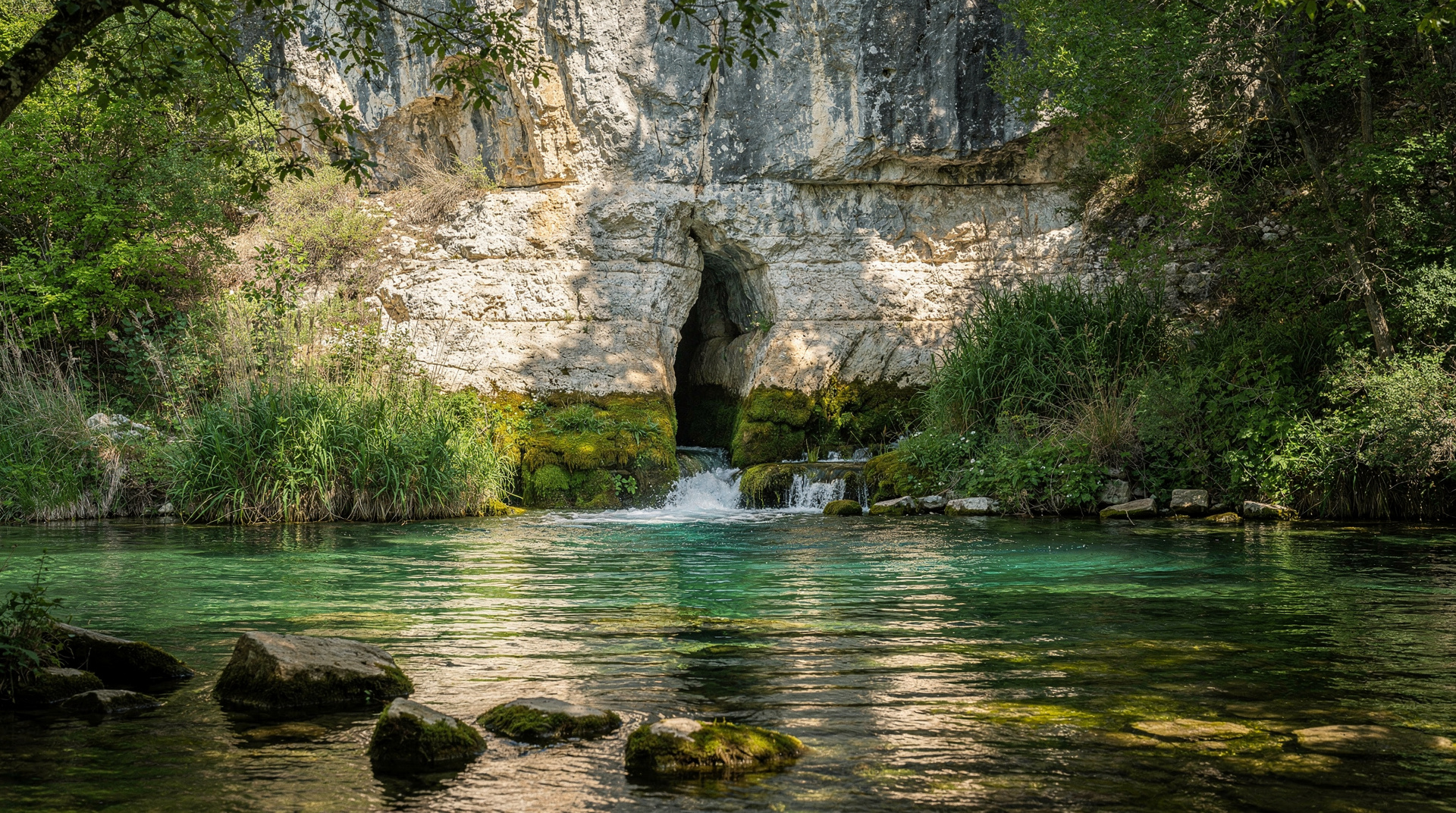
With Fontaine-de-Vaucluse: Fontaine-de-Vaucluse is 20 km northwest of Roussillon on the D4. A half-day loop from Roussillon to the Sorgue spring and back covers both in 4–5 hours by car. See the Fontaine-de-Vaucluse guide.
As part of a full Luberon day: The Luberon guide covers the optimal day routing including both north Luberon (Gordes, Roussillon, Sénanque) and south Luberon (Lourmarin, Ménerbes) villages.
From Marseille: Roussillon is the furthest of the commonly visited Luberon villages from Marseille — about 1 h 20 to 1 h 30 by car. Day tours from Marseille that include Roussillon typically bundle it with Gordes and sometimes Fontaine-de-Vaucluse or Sénanque.
A slow walk through the village streets
Most visitors go straight to the trail and treat the village as an afterthought, which is a mistake. The streets climb gently around the central square, and the colour changes from one lane to the next: a pale yellow wall gives way to a rust-red doorway, then to a pink-orange facade with green shutters. The shutters, doors and window frames are painted in contrasting tones, so the stone seems to glow against them. Give yourself time to wander without a plan, look up at the rooflines, and take the small side passages rather than only the main street.
The viewpoint at the top of the village looks out over the surrounding hills and across the ochre cliffs. It is a good place to understand the landscape before you walk into it, and a good place to return to at the end of the day when the light turns warm. Galleries and small shops line the lanes, and the pigments sold in them make a more original souvenir than the usual postcard. If you enjoy a market atmosphere, the Marseille markets guide and the Provence markets we love give a sense of what to look for in the region’s weekly markets.
Planning the visit around light, season and crowds
The best time to see Roussillon depends on what you want from it. Spring and early autumn give comfortable walking weather and softer crowds, which suits the trail. Summer brings heat that reflects off the pale ground, so early morning or late afternoon is more pleasant, and the lack of shade means you should plan your timing carefully. In winter the village is quiet and the colours still work, though some businesses are closed and the trail may shut in bad weather.
If you are staying on the coast, remember that this is a full day out rather than a quick detour. The day trips from Marseille guide helps you weigh Roussillon against other options, and the Luberon villages day trip lays out how the northern villages fit together. If you are travelling without a car, the do you need a car in Provence guide explains the trade-offs honestly before you commit to an itinerary. Travellers who time their trip for the purple fields can read the lavender season in Provence guide, since Roussillon pairs naturally with the lavender country further north.
Before you go: a short checklist
- Wear old shoes and dark or practical clothing, because the pigment gets everywhere.
- Bring water and a hat, particularly in summer, since the trail has little shade.
- Decide in advance whether you want the Conservatoire workshop, and book it before you arrive.
- Plan your photography around the afternoon light, and keep the village streets for the morning.
- Leave room in the day for a lunch stop on the square rather than rushing back to the car.
For wider planning, the best time to visit Marseille guide covers seasons for the whole region, and the Provence road trip itinerary shows how a day here can sit inside a longer drive through the countryside.
Practical notes
Parking: Several car parks on the approach roads to the village. Parking fills in peak season (July–August) by mid-morning. The Sentier des Ocres has its own car park at the trail entry point, separate from the village centre parking.
Opening hours: The Sentier des Ocres is open year-round (subject to weather). The Conservatoire opens daily but hours vary by season — check the official website. The Thursday market runs 8:00–13:00.
Crowds: Roussillon is less visited than Gordes and less overwhelmed on summer weekends, though it is still busy in July. The ochre trail itself has a maximum capacity management system; at peak times you may wait briefly at the entry.
Photography: The afternoon light (from around 14:00–15:00 onward) on the ochre formation walls is the best shooting window. Morning light suits the village street photography. Overcast light actually works well for the trail — the ochre colours are saturated without harsh shadows on overcast days.
For the lavender day trip guide, which covers the area further north toward Sault (higher elevation, blooming into August), and the full Luberon market calendar, see the Luberon overview.
Roussillon vs Gordes: which to prioritise
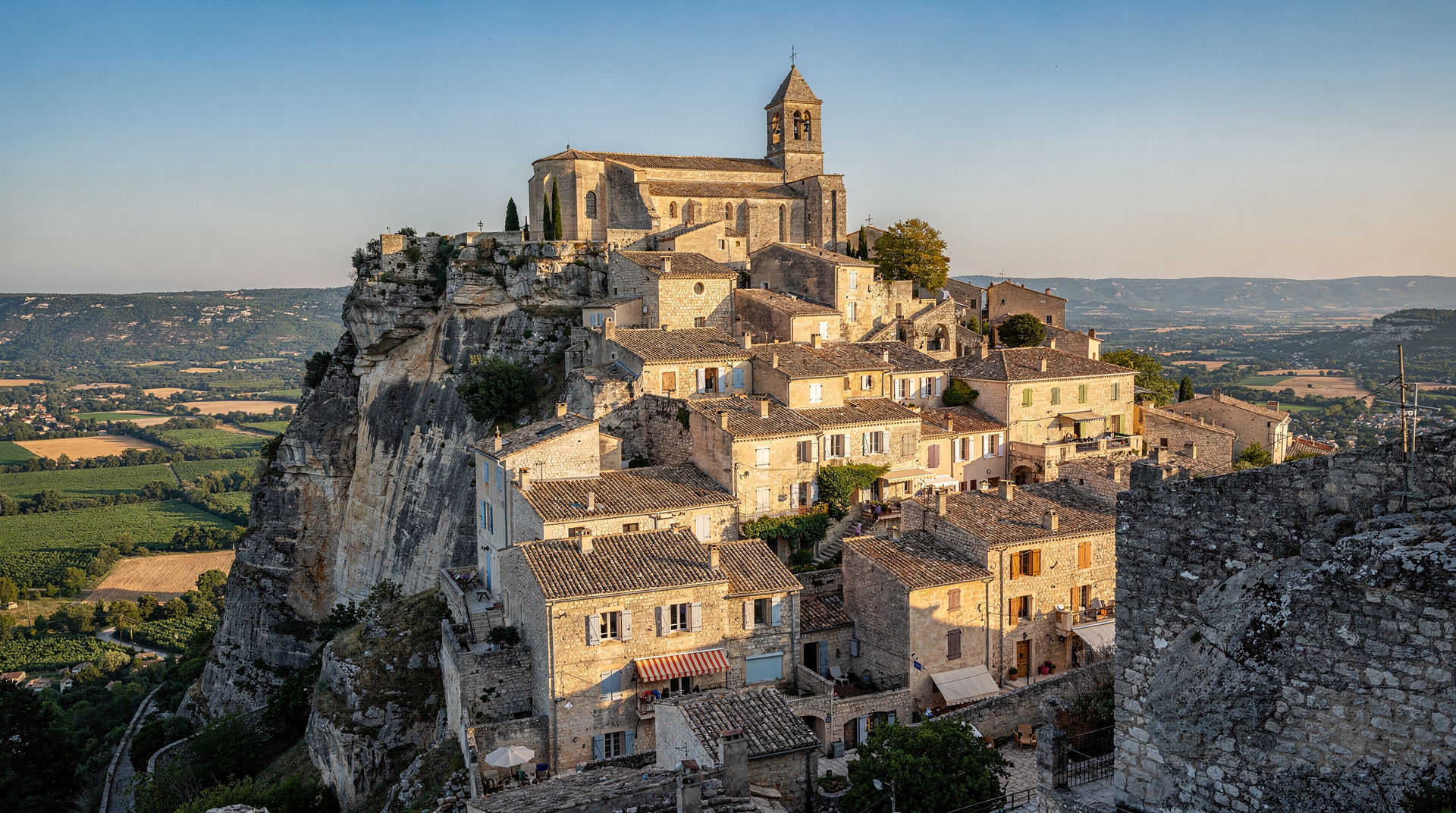
Visitors with limited time in the Luberon often have to choose. Gordes is the more photographed village — a dramatic hilltop silhouette best seen from a distance — while Roussillon rewards a slower, closer visit built around the ochre trail and its unique colour palette. If you can only do one, Gordes suits photographers who want the classic postcard shot without walking the trail; Roussillon suits anyone who wants an active hour or two on foot and a more unusual landscape. Most visitors with a full day do both, since they are only 15 minutes apart — see our Gordes guide for the comparison from the other side.
Who Roussillon suits best
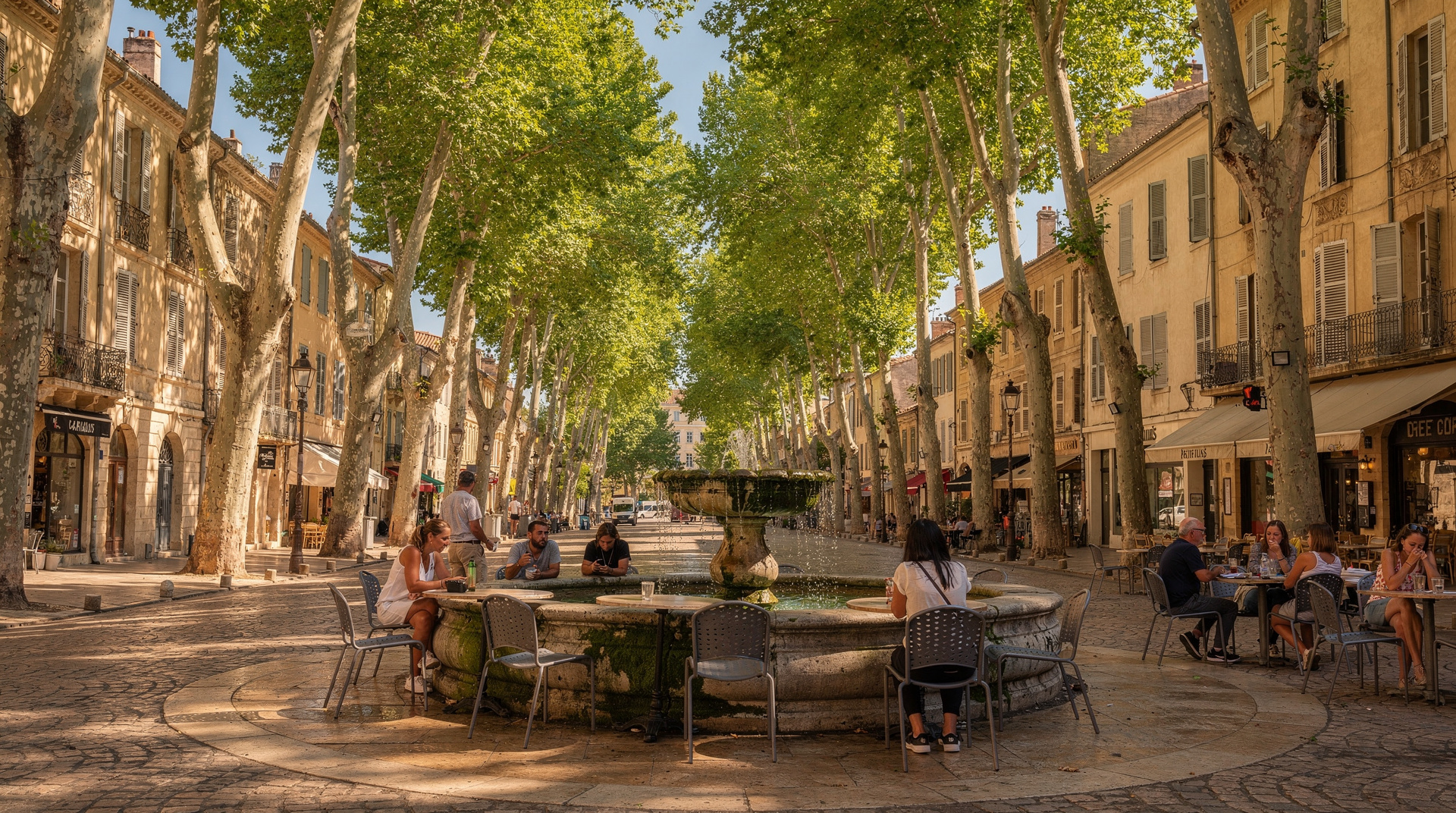
Roussillon works especially well for travellers who like a place with a clear story. The ochre is easy to understand at a glance, and the trail, the Conservatoire and the village each explain a different part of it: the geology, the industry and the everyday life built on top. Families enjoy the colours and the chance to get a little dirty, photographers enjoy the changing light, and slower travellers enjoy a village where the main activity is walking and looking. Anyone who prefers lively nightlife or a long list of museums will find it quiet, and that is part of its appeal. If you want a broader comparison of nearby options, the Aix-en-Provence day trip offers a very different, more urban kind of Provençal day.
Frequently asked questions about Roussillon
Is the Sentier des Ocres suitable for young children? Yes for the short circuit, which is flat enough for most children over about 5, though the roughly 350 steps rule out strollers. The long circuit involves more uneven ground. Wear old shoes regardless of age — the ochre stains fabric and rubber alike.
How much time should I budget for Roussillon if I’m also visiting Gordes? Around 2–3 hours for Roussillon (village plus the short ochre trail loop) pairs well with a similar block for Gordes in a single day. Adding the Conservatoire des Ocres workshop pushes Roussillon alone toward half a day.
Top experiences
Bookable activities with verified prices and instant confirmation on GetYourGuide.