Cassis
Cassis is the essential base for the Calanques — colourful port village, France's tallest coastal cliff, AOC white wine, and three calanques on foot.
Cassis: Calanques National Park sea-kayaking tour
Duration: 3-7 hours
Quick facts
- Distance from Marseille
- 35 min by train (TER); 30 min by car
- Cap Canaille height
- ~400 m — tallest coastal cliff in France
- AOC Cassis wine
- One of France's oldest AOCs (1936); 12 domaines, ~1M bottles/year
- Three Calanques hike
- Port-Miou, Port-Pin, En-Vau — 4–5 h round trip
- Cassis port
- Small marina with restaurants; no car access in high summer
The village that earns its reputation
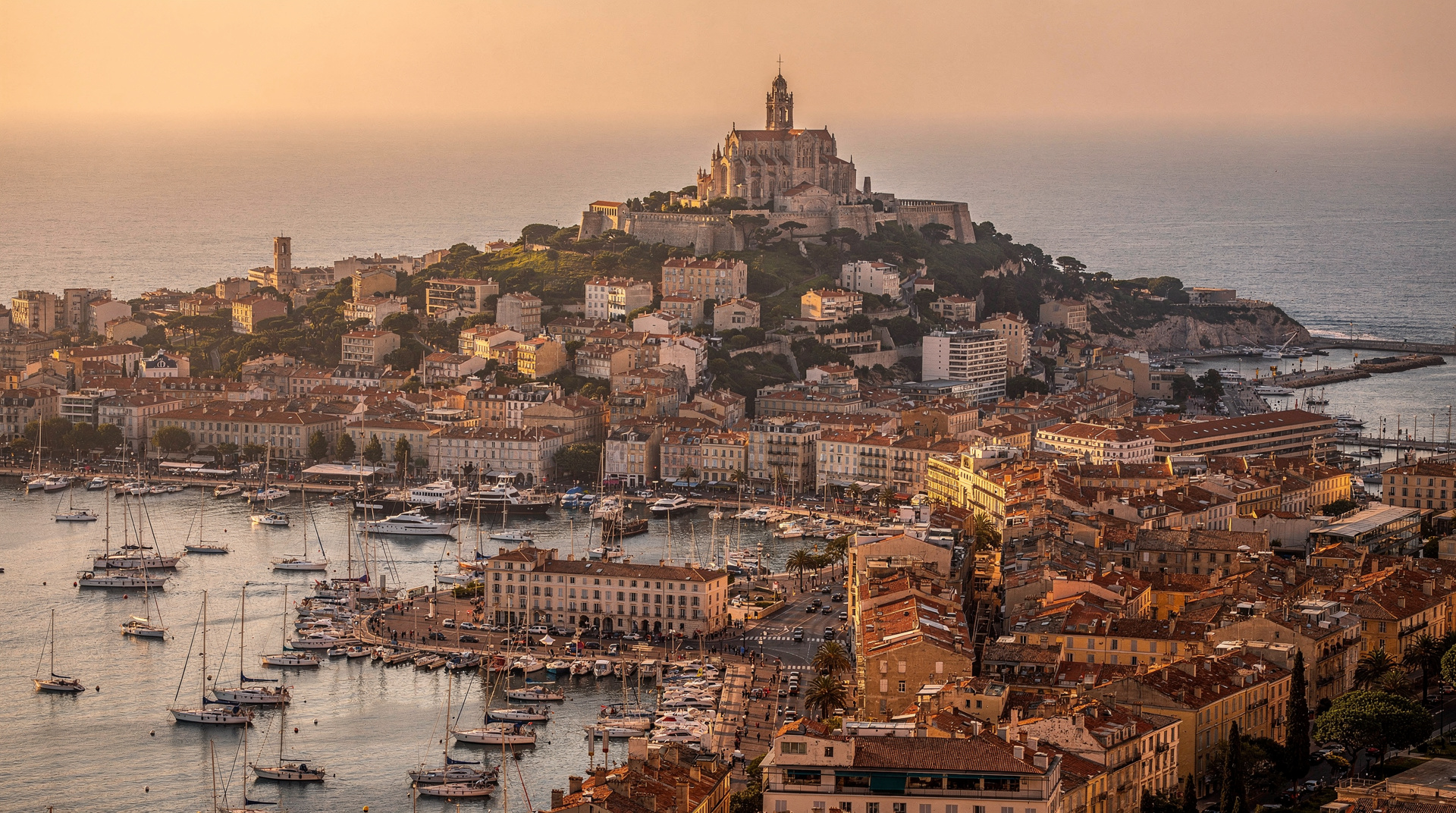
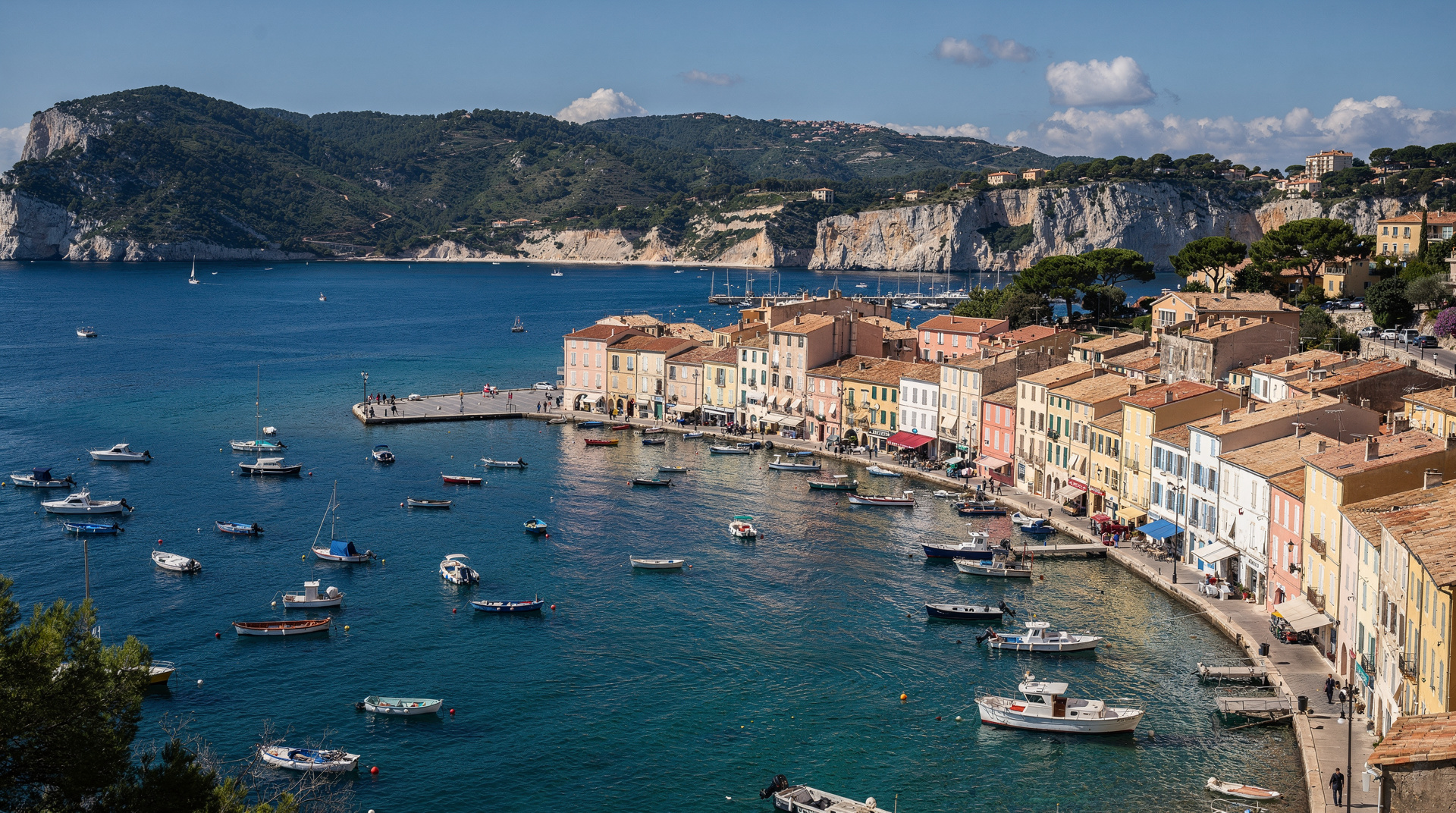
Cassis is small — fewer than 10,000 residents — and its reputation as one of the most beautiful seaside villages in France rests on a combination of geography and restraint. A compact port with colourful facades and fishing boats. A backdrop of white limestone cliffs that frame the village on three sides. At the eastern headland, Cap Canaille rises nearly 400 metres in a sheer face of orange-red rock — the tallest coastal cliff in France. And immediately west, the beginning of the Calanques National Park and three calanques accessible on foot from the village.
Cassis is not undiscovered. In July and August it is genuinely crowded — parking is restricted by the municipality, the port restaurants are full, and the three-calanques hike has queues at the trailhead. But in May, June, September, and October it functions as the genuinely pleasant Provençal seaside village it actually is: quiet mornings, lunch with a glass of the local white wine, an afternoon paddle or walk into the calanques, and an evening aperitif watching the boats.
At a glance
| Where | Calanques coast, ~20 km east of Marseille |
| Cost | Village free to walk; kayak tours around 55-90 EUR; wine tastings around 5-15 EUR |
| Time needed | 1 full day, or overnight for a second day on the Route des Crêtes |
| Getting there | TER train from Marseille Saint-Charles, around 35 minutes |
| Best time | May-June and September-October |
Getting here from Marseille
By train: The TER from Marseille Saint-Charles to Gare de Cassis takes around 35 minutes. The station is about 3 km from the village port (not walkable with luggage; taxis and occasional local buses connect). Frequency varies — check the SNCF schedule for the day. From the Cassis station a taxi to the port costs around 8–12 EUR.
By car: About 30 minutes via the A50 autoroute east from Marseille. In July–August, the village restricts car access; you park in an outer car park and take a shuttle bus into the centre. Arrive before 9:00 or after 18:00 to avoid the parking situation. Out of peak season, parking is easier around the port.
By organised day tour: Multiple operators run combined Cassis + Calanques day trips from Marseille. These handle transport and typically include time at the Calanques by boat. See the day trip options above.
The port and village
Cassis’s port is a working marina and a terrace restaurant circuit simultaneously. The quai runs along the harbour edge with restaurants on one side and boats on the other — small fishing vessels alongside pleasure boats, with the limestone escarpment visible at the back of the valley.
The village proper climbs the hill above the port in tight lanes typical of Provençal coastal towns. The castle above (Château de Cassis, private property) has watched over the valley since the 14th century. The central square (Place Baragnon) is where you find the café terraces and the Wednesday and Friday morning market.
In summer, the port fills quickly after 10:00. The most enjoyable time to be in the village itself is early morning or evening.
The three Calanques hike from Cassis
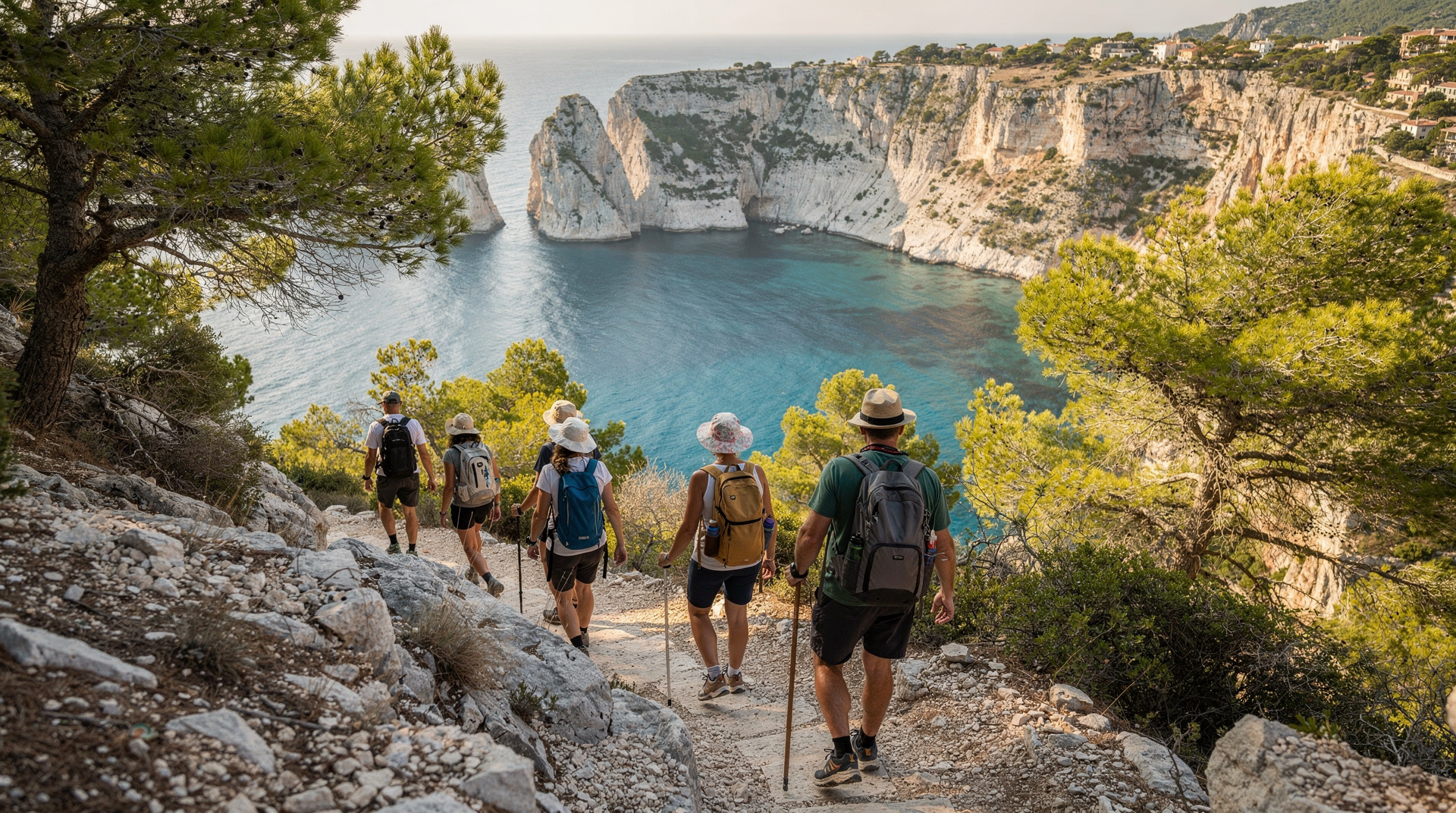
The classic walk from Cassis visits three calanques in sequence: Port-Miou, Port-Pin, and En-Vau. This is accessible from the eastern edge of the village on foot, which is the key advantage of Cassis over approaching the Calanques from Marseille.
Port-Miou is the first and largest — a long navigable inlet used as a marina. Boats are moored along both sides. Less dramatic visually than the others, but the immediate transition from village to national park scenery is striking. About 15 minutes from the trailhead.
Port-Pin is the second calanque and the most family-friendly — a broader pebble beach framed by pines, with calm, clear water and enough space to spread out without crowding. About 45 minutes from Port-Miou along the coastal trail. This is the best swimming stop if you are limiting the hike to two calanques.
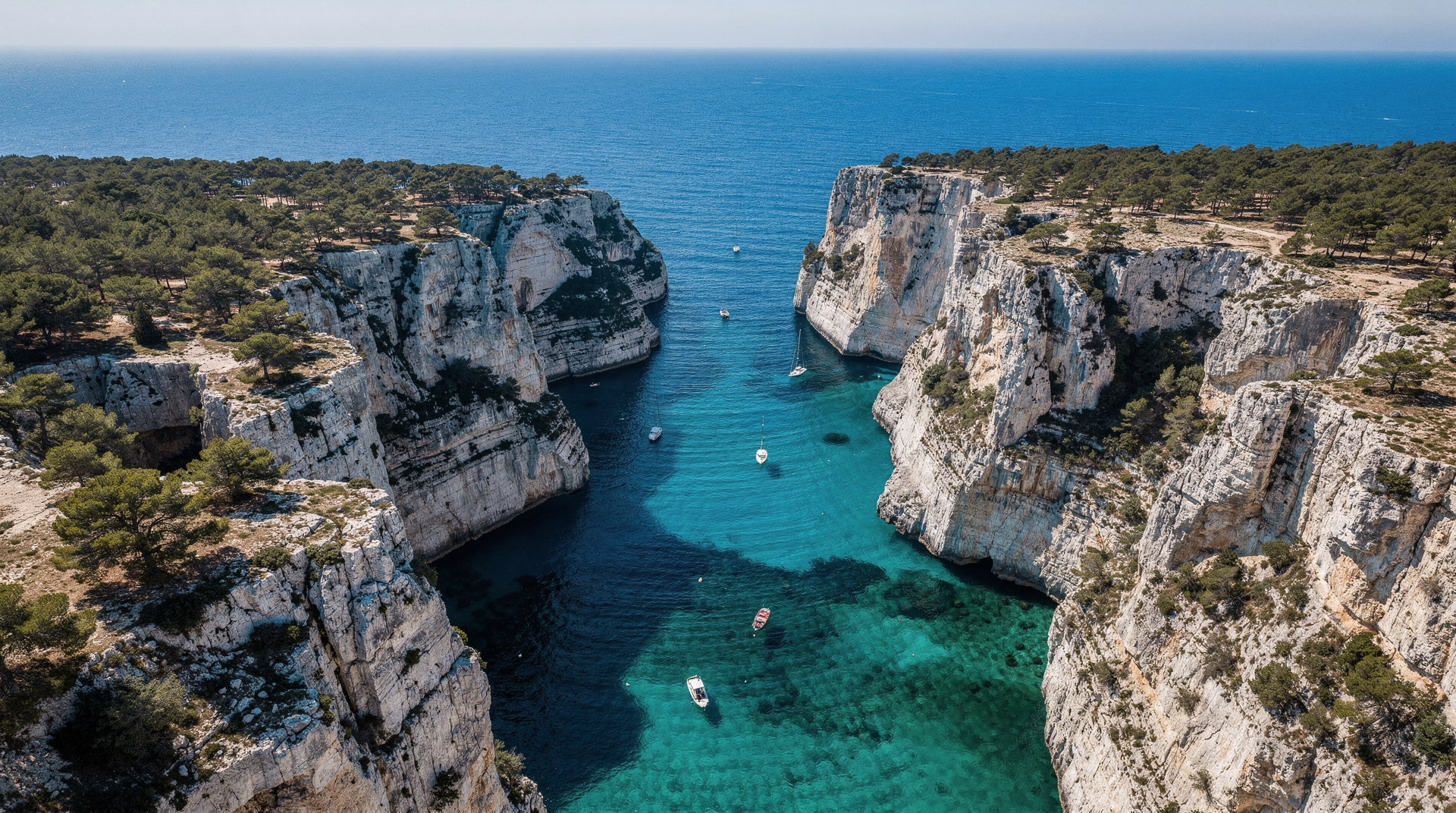
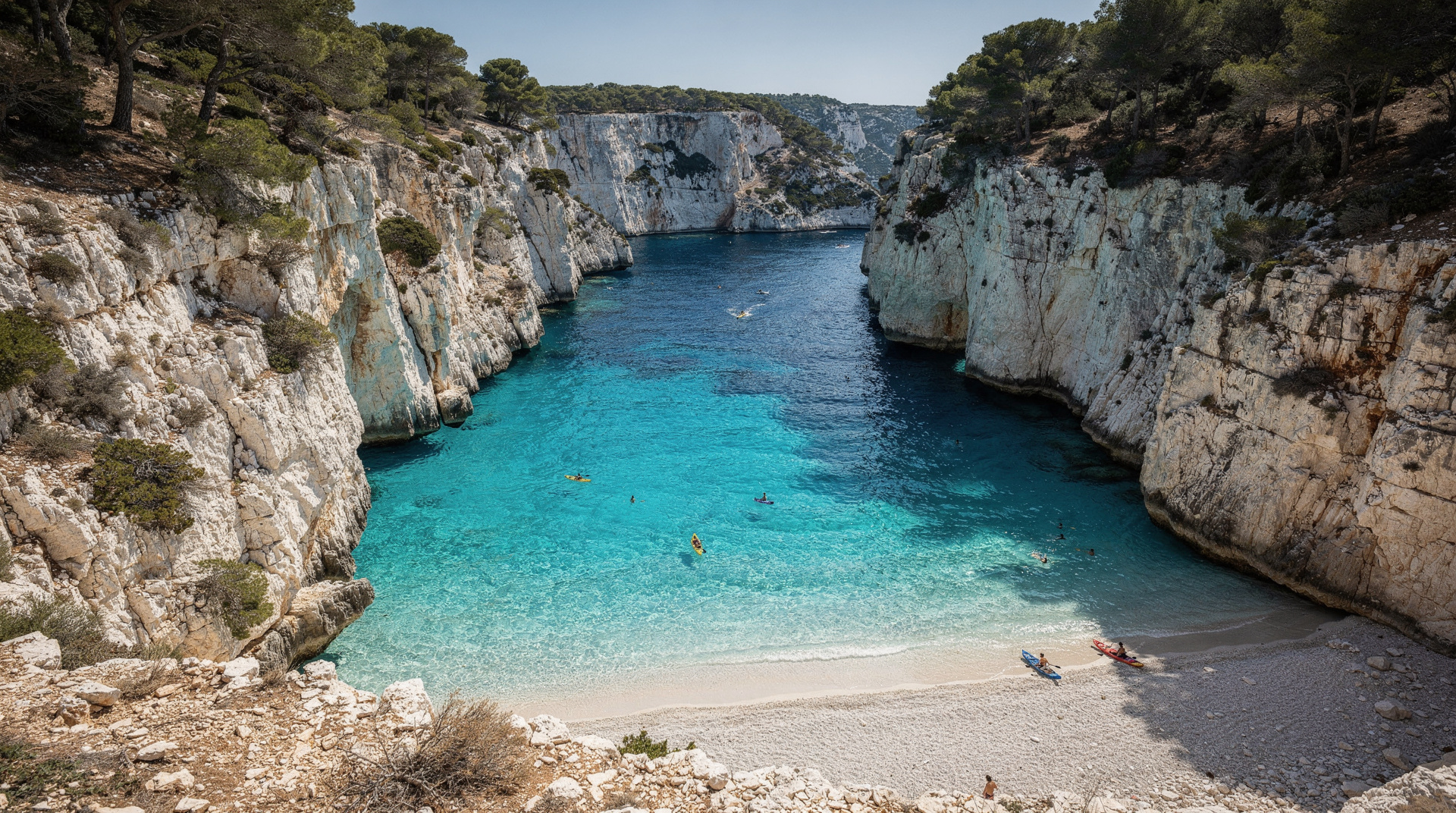
En-Vau is the destination for most walkers — a narrow slot between vertical white cliffs, with an emerald-green cove at the bottom accessible after a steep final descent. The scale of the cliff walls from the waterline is what no photograph quite captures. Allow 4–5 hours total from Cassis and back for the full three-calanque loop.
Practical notes: Take at least 1.5 litres of water per person. The trail is rocky and mostly without shade. Start early (before 9:00 in summer) to avoid both heat and the worst of the mid-morning crowds at the trailheads. The descent to En-Vau is steep and requires reasonable fitness and proper footwear.
Sea kayaking to En-Vau
Paddling from Cassis to En-Vau by sea kayak is the other way to experience the three calanques — and arguably the better one for those with the paddling stamina. The route hugs the limestone coastline, passes Port-Miou and Port-Pin from the water, and arrives at En-Vau from the sea — the most dramatic approach.
Guided tours depart from the Cassis beach area. Half-day trips cover two or three calanques; full-day tours reach En-Vau and may include Port-Pin. Prices start around 55–90 EUR for guided tours. No prior kayaking experience is required for most guided tours.
Cap Canaille: France’s tallest coastal cliff
The eastern headland of Cassis is Cap Canaille — a wall of orange-red rock that rises approximately 400 metres from the sea. It is the tallest coastal cliff in continental France (some sources cite 394 metres precisely). The panoramic viewpoint at the top of the Route des Crêtes offers one of the most dramatic views in Provence: west across the Calanques to Marseille, east along the coast toward La Ciotat, and north across the Provence interior.
By car: The Route des Crêtes loops from Cassis over the cap and down to La Ciotat. Allow 45 minutes for the drive and stops; the viewpoint car park at the summit is free.
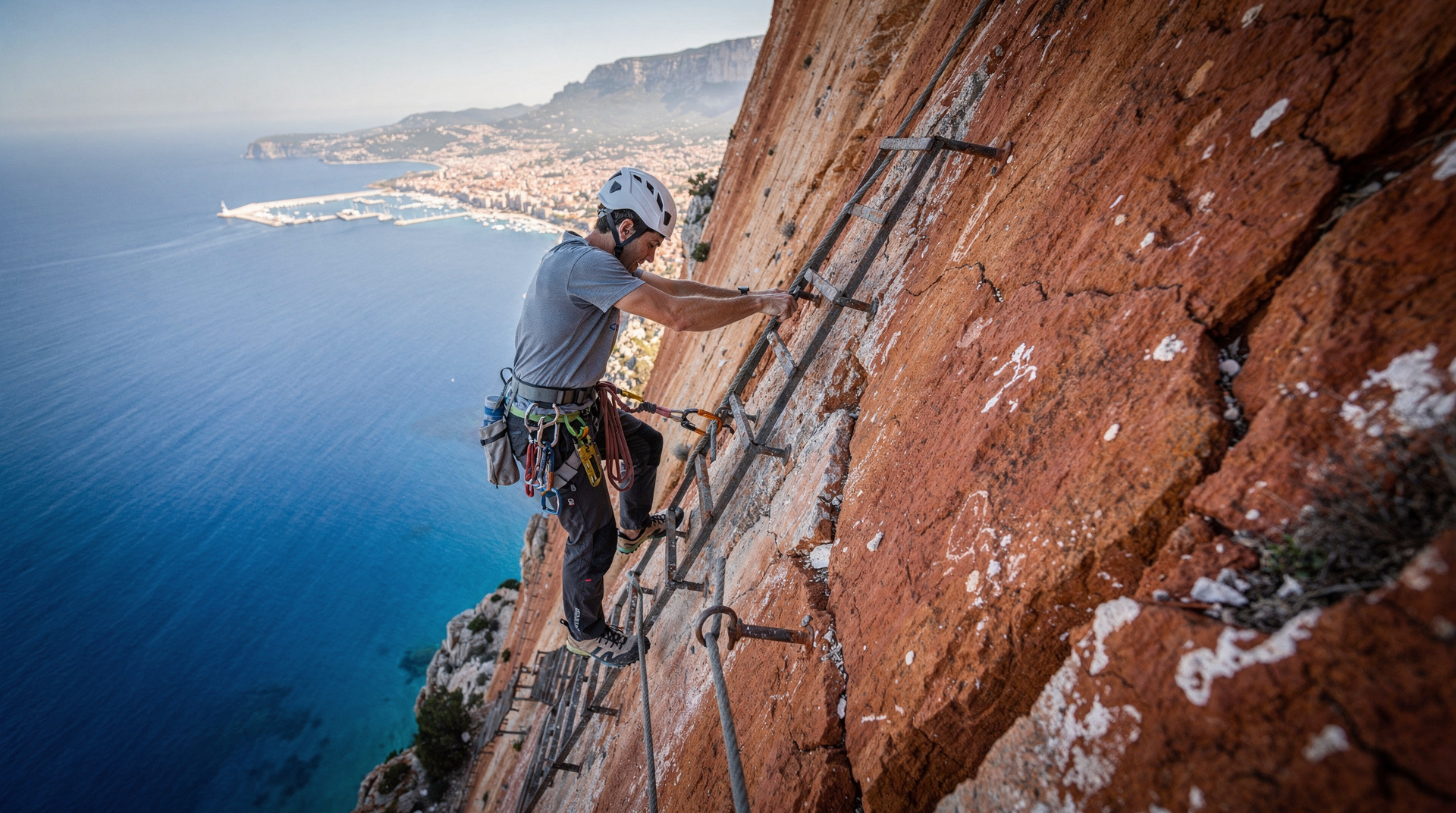
Via ferrata: The via ferrata du Cap Canaille is one of the better-known via ferrata routes in southern France — a multi-pitch route ascending the limestone cliff face with fixed iron rungs and cables, finishing near the summit. The experience requires no prior climbing experience but reasonable fitness and a head for heights. Guided half-day and full-day sessions are available.
AOC Cassis wine
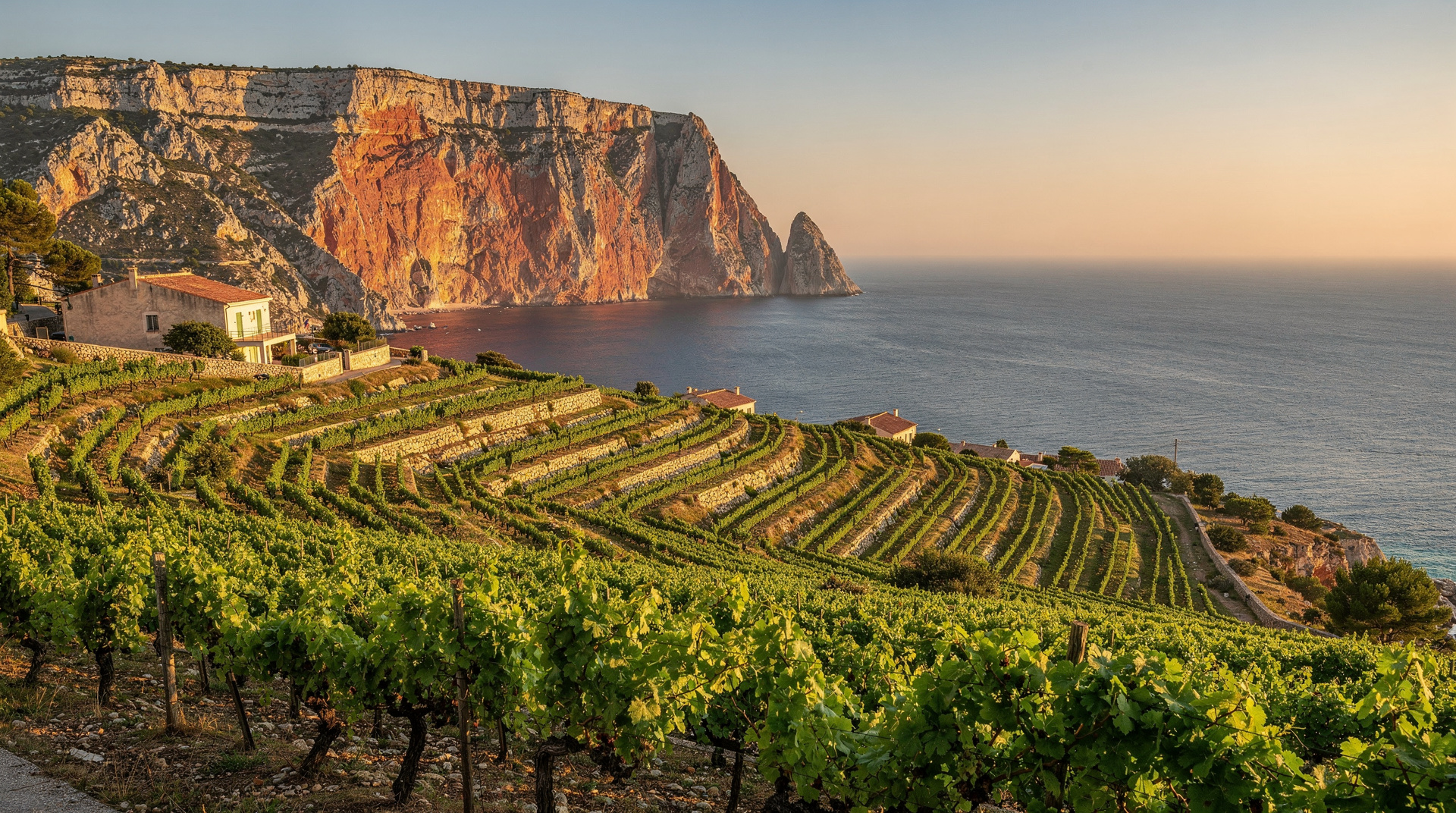
Cassis has one of France’s oldest wine appellations — its AOC status dates to 1936, among the very first in France, at the same time as Sauternes and Châteauneuf-du-Pape. The appellation covers just 210 hectares across 12 domaines (wine estates), producing around one million bottles per year — a genuinely small production. Most of it never leaves France, which is part of why Cassis wine is not well known internationally despite its quality.
Whites dominate: 67% of production is white (primarily Marsanne, Clairette, and Ugni Blanc), with rosé at 30% and red at just 3%. The whites are dry, aromatic, and slightly mineral — classically described as pairing with bouillabaisse and Mediterranean fish, which is a lazy cliché that happens to be accurate.
Visiting the domaines: Several estates are open for tastings, either at the cave (wine cellar) or the vineyards above the village. The electric buggy tour visits the vineyards with tastings included — a more interesting way to cover the wine geography than walking between crowded tasting rooms in summer.
The annual wine festival, Cassis Fête son Vin, celebrates its 90th anniversary in 2026 and takes place on the Esplanade Aristide Briand in the village with local domaines pouring direct. Date is typically early September.
Where to eat in Cassis
The port restaurants are variable — some are excellent, some exist to capture tourist traffic. The key guidance: look for menus that emphasise local fish and the wines of the Cassis appellation rather than generic pizza-and-pasta options.
Sea urchins (oursins): In season from October to April, several restaurants serve them fresh — opened at the table, eaten with bread and lemon. This is a genuinely Cassis-specific experience at a reasonable price.
Bouillabaisse: Available at several port restaurants; prices are typically 45–65 EUR at decent establishments. Cassis produces slightly different versions from Marseille’s charte version — ask whether the preparation follows the traditional protocol before ordering.
Budget lunch: The boulangeries and smaller places one street back from the port charge 12–18 EUR for a plat du jour with a glass of local rosé — significantly less than the terrace restaurant prices and often better quality.
Combining Cassis with a wider itinerary
Day trip from Marseille: Cassis alone (village + Port-Miou walk or kayak) fits comfortably into a day from Marseille without rushing. Adding the Route des Crêtes and a wine tasting fills a second day perfectly — making an overnight worthwhile in spring or autumn.
Cassis + La Ciotat: The two towns are 8 km apart on the Route des Crêtes. La Ciotat is quieter, less visited, and has its own Calanques access — a logical combination if you have two days on this stretch of coast.
For the full Calanques picture — including summer access rules and Sugiton reservations — see the Calanques National Park guide. For the hiking approach in detail, see our hiking the Calanques guide and the En-Vau hike guide.
Cassis beaches
The town has a small main beach at the foot of the port — narrow, sometimes busy, with clear water and lifeguards in summer. It is a pleasant place to swim after lunch before or instead of a calanque hike, particularly if you arrive on a day when the trails are closed due to fire risk. The beach at Bestouan, a 10-minute walk from the port in the opposite direction (west), is wider and sometimes slightly less crowded.
For serious beach time, the calanques themselves — Port-Pin in particular — are better than anything in the village. The pebble beach at Port-Pin is sheltered, the water colour is exceptional, and on a weekday in May or September it is uncrowded. The trade-off is the 1.5-hour walk from the village to get there.
Cassis as an overnight base
If you are spending more than one day on this stretch of coast, Cassis makes a comfortable overnight stop. There are several hotels ranging from small Provençal guesthouses to a few larger establishments on the village edge.
What a second day adds: The Route des Crêtes and Cap Canaille viewpoint (one hour by car or taxi for the scenic route), which you cannot do properly on a day trip from Marseille without sacrificing time in the village or at the calanques. A morning kayak to En-Vau with time to swim and explore, followed by lunch at the port. A wine tasting at one of the domaines in the afternoon.
Staying vs day-tripping: As a day trip, Cassis works best if you go by train and focus on one activity: either the three-calanques hike or a kayak session, not both. Staying overnight allows you to arrive the previous evening, have dinner at the port in the quieter evening atmosphere, and start the calanques early before the day-tripper buses arrive.
Practical information for Cassis
Summer car restrictions: From approximately late June through August, vehicles are prohibited from entering the village centre during the day. Shuttle buses run from the outer car parks to the port. If you drive, arrive before 9:00 or after 19:00. The train avoids this issue entirely.
Hiking fire closures: Cassis-side calanque trails (Port-Miou, Port-Pin, En-Vau) are subject to the same fire-risk closure protocols as the Marseille-side trails. Kayak access from the sea remains available regardless of trail status.
Calanques swimming: Rocky entry at all three calanques. Water shoes or fins are strongly recommended. The drop-off from the rocks at En-Vau is immediate and deep — comfortable for strong swimmers, less so for those nervous about open water.
Eating in Cassis: Most port restaurants open at 12:00 for lunch. Reservations are advisable for dinner from May through September. Several close on Mondays. The food market runs Wednesday and Friday mornings at Place Baragnon.
Wine purchases: Several domaines ship internationally. AOC Cassis blanc is the souvenir that actually represents the place — a bottle of the appellation’s white, made from Marsanne and Clairette grown above these limestone cliffs, is better than any manufactured souvenir. Expect 15–30 EUR per bottle from the estates. The annual wine festival, Cassis Fête son Vin, celebrates its 90th anniversary in 2026 — typically held on the Esplanade Aristide Briand in early September, with local domaines pouring direct. Worth timing a visit around if you are in the region in early autumn.
Cassis vs Bandol: Wine drinkers often combine a Cassis visit with Bandol, the next appellation east (10 km). Bandol produces rich, age-worthy red wines based on Mourvèdre — a very different character from Cassis blanc. The route between the two towns via La Ciotat and the coastal road is one of the better short wine drives in Provence. See our Cassis wine guide and Bandol wine guide for more detail.
Cassis vs Cassis-only day tours
Because Cassis sits so close to both Marseille and La Ciotat, many visitors default to a bundled boat tour that “does the Calanques” without setting foot in the village itself. This misses the point. The village atmosphere, the port lunch, and the wine tastings are not incidental extras — they are half of what makes Cassis worthwhile compared to a purely scenic Calanques boat trip from Marseille.
If time allows only one visit to this stretch of coast, basing it in Cassis rather than joining a Marseille-departure boat tour gets you both the village and walking access to Port-Miou and Port-Pin, which a boat-only itinerary skips entirely. For a structured comparison of the two approaches, see our Cassis vs Marseille Calanques boat guide.
Frequently asked questions about Cassis
Is Cassis worth visiting as a day trip from Marseille?
Yes, strongly. The combination of the village, the beginning of the Calanques, Cap Canaille, and the AOC wine makes Cassis one of the best day trips in southern France. 35 minutes by train from Marseille. At minimum, walk to Port-Miou, have lunch with a glass of Cassis blanc, and take the bus or taxi to the Cap Canaille viewpoint.
How do I get from Cassis to the Calanques without a car?
The trail to Port-Miou starts from the eastern edge of the village — walk 15 minutes from the port along the Rue des Calanques. From Port-Miou continue on foot to Port-Pin (30 min more) and En-Vau (1 h more). No transport needed. Alternatively, kayak tours depart from the beach near the port.
What is the difference between the Calanques from Marseille and from Cassis?
From Marseille, boats reach Sormiou, Sugiton, and Morgiou (Marseille-side calanques). From Cassis, you can walk or kayak to Port-Miou, Port-Pin, and En-Vau (Cassis-side calanques, arguably more dramatic). En-Vau is generally considered the most spectacular individual calanque in the park. See our Cassis vs Marseille Calanques comparison.
When is the best time to visit Cassis?
May–June and September–October are ideal — pleasant temperatures, open hiking trails, calmer seas for kayaking, and the wine harvest in autumn. July–August is beautiful but crowded; car restrictions apply and the three-calanques hike has its highest visitor numbers.
Do I need to book the three-calanques hike in advance?
No booking is required for the hike itself — it is open access on foot, unlike Sugiton on the Marseille side which can require a summer reservation. The only planning needed is timing your start early enough to beat the heat and crowds, and checking the fire-risk status of the trails on the day. Kayak tours and dinner reservations at the port do benefit from booking ahead in high season.
Top experiences
Bookable activities with verified prices and instant confirmation on GetYourGuide.