Calanques National Park
Complete guide to the Calanques — boat vs hiking vs kayak, summer fire closures, Sugiton reservation, best calanques, and honest access advice.
Marseille: iconic Calanques boat tour with swimming
Duration: 3-4.5 hours
Quick facts
- Status
- National Park, created 2012
- Length
- 20 km of coastline from Marseille to Cassis
- Summer hiking
- Most trails closed July–August due to fire risk; Sugiton requires reservation June–Sept
- Sugiton reservation
- Free, opens 11 June 2026 at 9:00 CET, up to 3 days ahead
- Boat access
- Available year-round from Marseille Vieux-Port
Twenty kilometres of white limestone and turquoise water
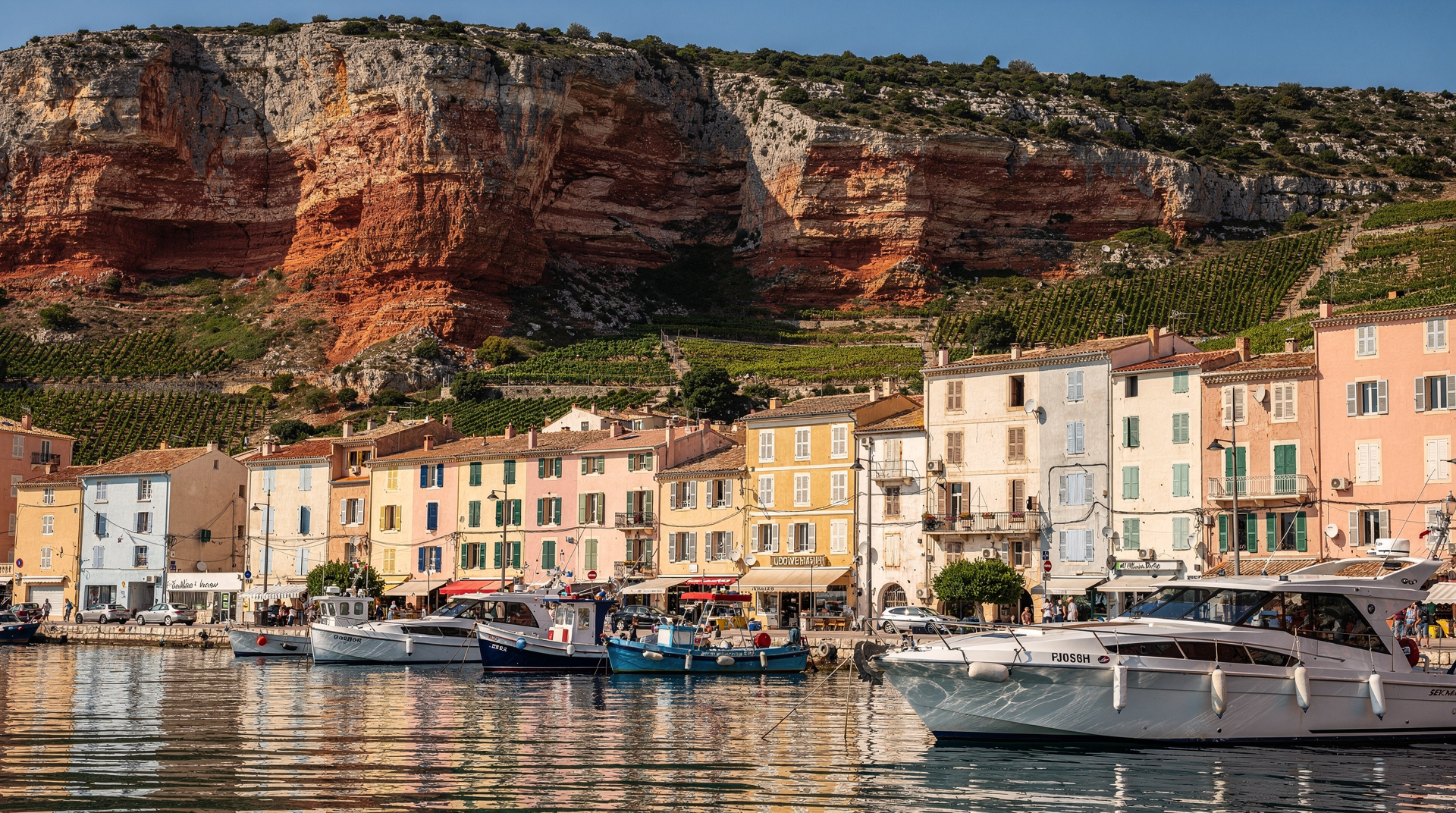
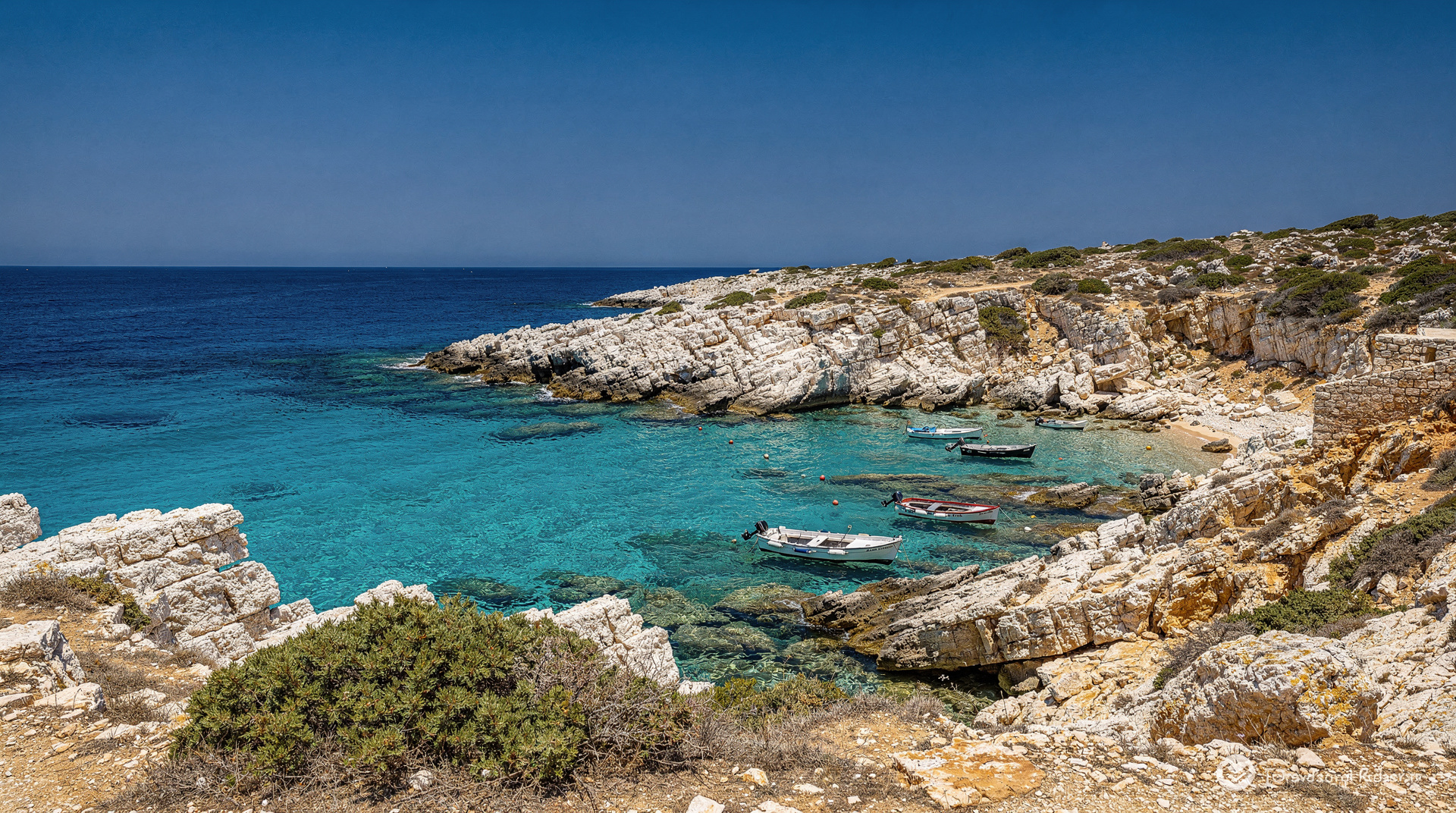
The Calanques are geological features unique to this corner of the Mediterranean — narrow fjord-like inlets cut into the limestone massif by a river system that existed before the last sea-level rise. When the Mediterranean refilled, it drowned the river mouths, leaving a coastline of sheer white cliffs dropping vertically into water that is, in full sunlight, an improbable shade of turquoise.
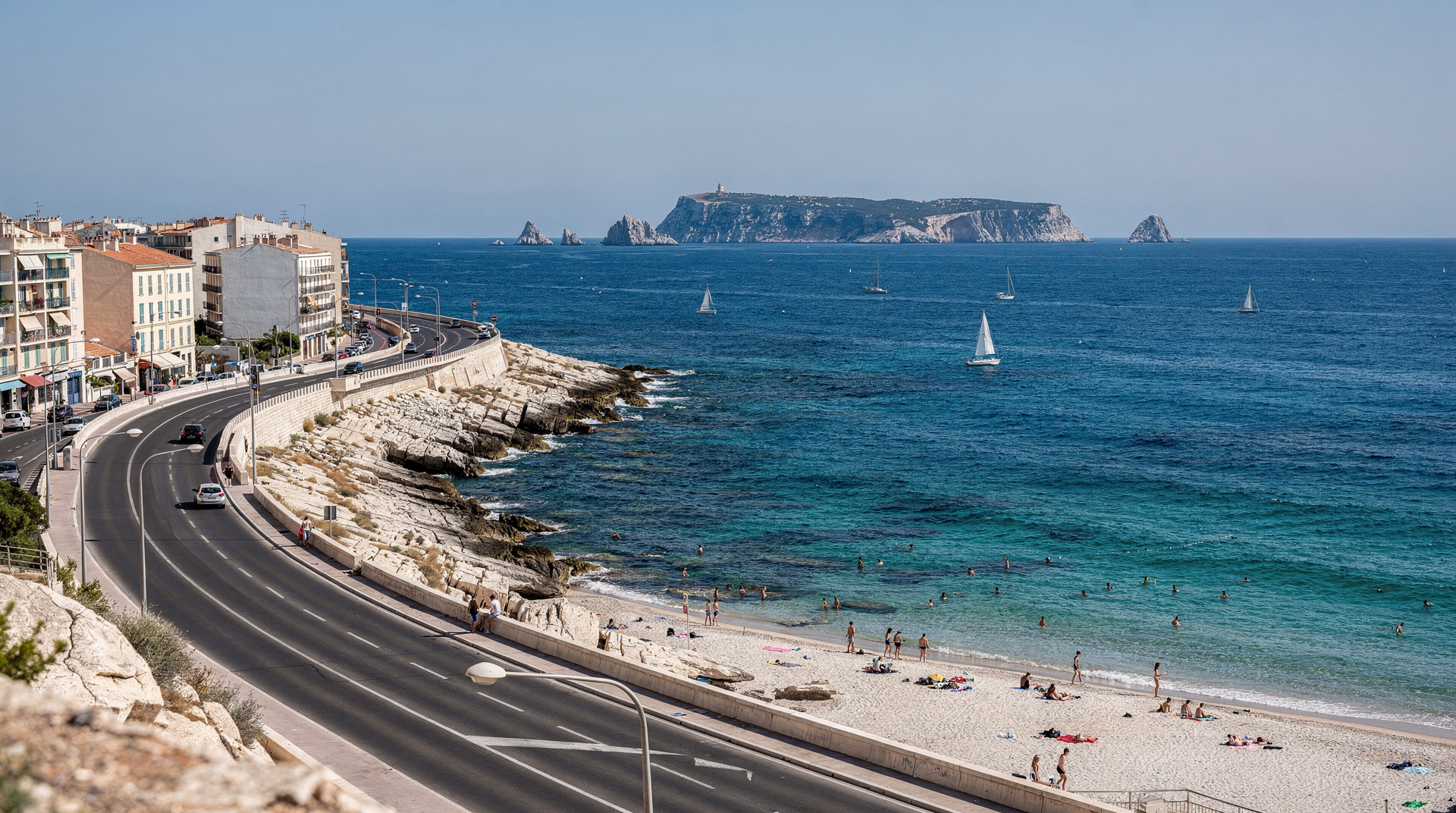
The Parc National des Calanques, created in 2012, covers 20 kilometres of coastline between the southern edge of Marseille and the port of Cassis, plus a marine reserve extending into the sea. It is one of the only national parks in the world to include both urban land (the southern arrondissements of Marseille) and a wild maritime zone. The walking trails on the land side, the sea kayak routes offshore, and the snorkelling in the reserve are the reasons most visitors come. Understanding which access method works when — particularly in summer — is the single most useful thing this guide can give you.
The access reality: summer changes everything
Spring (April–June) and autumn (mid-September–October): The ideal periods. Most hiking trails are open, temperatures are comfortable for walking (20–28°C), the sea is warm enough to swim by late May, and crowds are below peak level. The Calanques experience is most complete in these months — you can combine hiking with swimming at the calanque and return on your own schedule.
Summer (July–August): Fire risk causes the closure of most hiking trails for the entire period. The national park and the Bouches-du-Rhône prefecture typically announce trail closures in early July; by mid-July essentially all walking access to the massif interior is restricted. Fire risk decisions are made daily by the fire department, and even where trails are technically open they may close on any given day with short notice.
In summer, the calanques are most practically accessed by boat or kayak — you arrive from the sea, which is always accessible. This is not a second-best option. The boat tour experience — approaching the calanques from the water, seeing the cliffs from below, swimming in the coves — is genuinely different from the hiking experience and in some ways more immediately dramatic.
Winter (November–March): Trails are usually open, crowds are minimal, and the scenery is striking, particularly in low winter light. Sea temperature is cold for swimming (12–15°C). Some boat tour operators reduce frequency or suspend certain routes.
Calanque de Sugiton: the Marseille-side essential
Sugiton is the closest major calanque accessible from the Marseille side and the one most visited. The trail begins at the Luminy university campus (end of bus line 21 from Castellane métro) and descends to the calanque in about 45 minutes. The inlet is narrower than Sormiou or En-Vau but the water is spectacular — a deep pool of turquoise between white limestone walls.
Reservation system (June–September): Access to Sugiton requires a free advance reservation from the park website (calanques-parcnational.fr). In 2026, reservations open on 11 June at 9:00 CET and can be made up to 3 days in advance. Fire-related closures cancel reservations without carryover — check park announcements on the day of your visit.
From July through August, trail access to Sugiton is often suspended entirely under fire risk protocols. Even with a reservation, confirm access status on the morning of your visit via the park website.
If Sugiton is your first choice, our Sugiton calanque hike guide walks through the route in more detail, and calanques from Luminy covers the trailhead end of the trip. When the trails are shut, avoiding crowds in the Calanques is worth reading before you commit to a date.
Calanque de Sormiou: the widest calanque
Sormiou is broader than Sugiton and has a small seasonal beach restaurant at the waterline — one of the few places you can eat with your feet in the sand at a calanque. Access is by car (restricted to residents in summer) or by e-bike from Marseille (a genuine adventure: the road down to Sormiou is steep and rough). The Cosquer Cave replica at the Villa Méditerranée in Marseille gives context on the Paleolithic cave paintings found underwater at Sormiou’s sea level in 1991, one of the most significant prehistoric sites in France.
Calanque de Morgiou: less visited, more intimate
Between Sormiou and Sugiton, Morgiou is smaller and sees fewer visitors. The approach on foot is longer than Sugiton (allow 1.5–2 hours from the road head). The calanque has a tiny hamlet with a few houses and a seasonal restaurant. The walk-in level of effort filters out a significant portion of the day-tripper crowd.
For more on this side of the park, see the Sormiou and Morgiou area guide and the Sormiou calanque hike. Further along the coast, Les Goudes is the village at the edge of the park on the Marseille side.
Calanques En-Vau and Port-Pin: the Cassis-side showpieces
En-Vau is the most dramatic calanque in the park — a narrow slot between vertical white cliffs, with a small pebble beach at the bottom accessible only by sea or a steep 2-hour descent from the Col de la Gardiole above Cassis. The sea approach by kayak from Cassis gives you En-Vau from the most dramatic angle.
Port-Pin sits between En-Vau and Port-Miou (the large navigable calanque immediately east of Cassis). It is broader and calmer, with a good pebble beach and clear water — easier to reach by kayak and less vertiginous than En-Vau. Often overlooked in favour of its more famous neighbour, it rewards those who reach it.
The En-Vau and Port-Pin destination page and the En-Vau calanque hike go deeper on both coves, while kayaking the Calanques explains how the sea approach works.
The three access methods: honest comparison
Boat tour from Marseille Vieux-Port
Best for: Non-hikers, families, summer visitors (July–August), anyone who wants to swim in multiple calanques in one session.
How it works: Organised boat tours depart the Vieux-Port and spend 3–4.5 hours at sea, typically stopping at 2–4 calanques for swimming. You are not in control of timing or which calanques you visit — the operator decides based on conditions and park regulations.
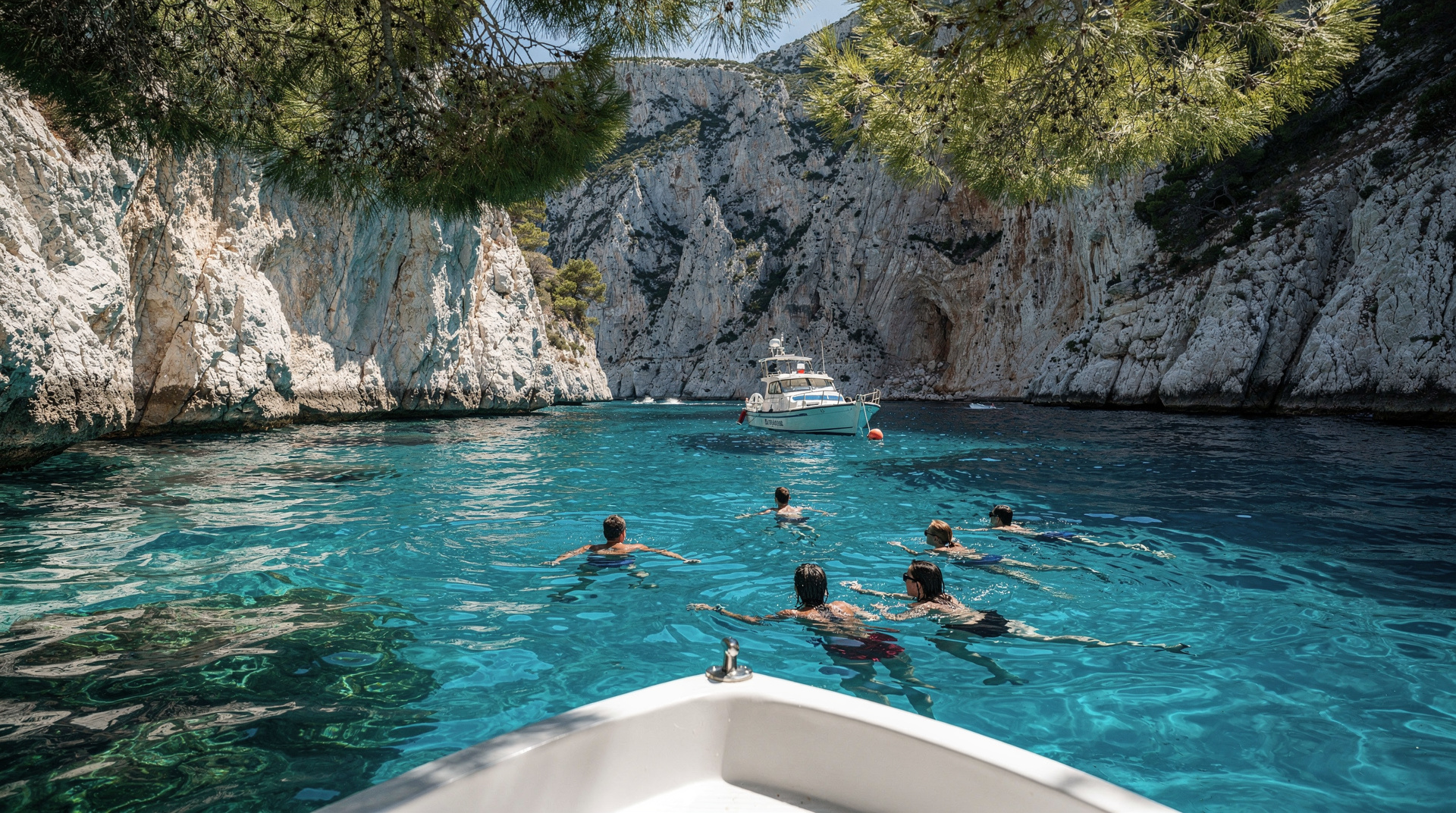
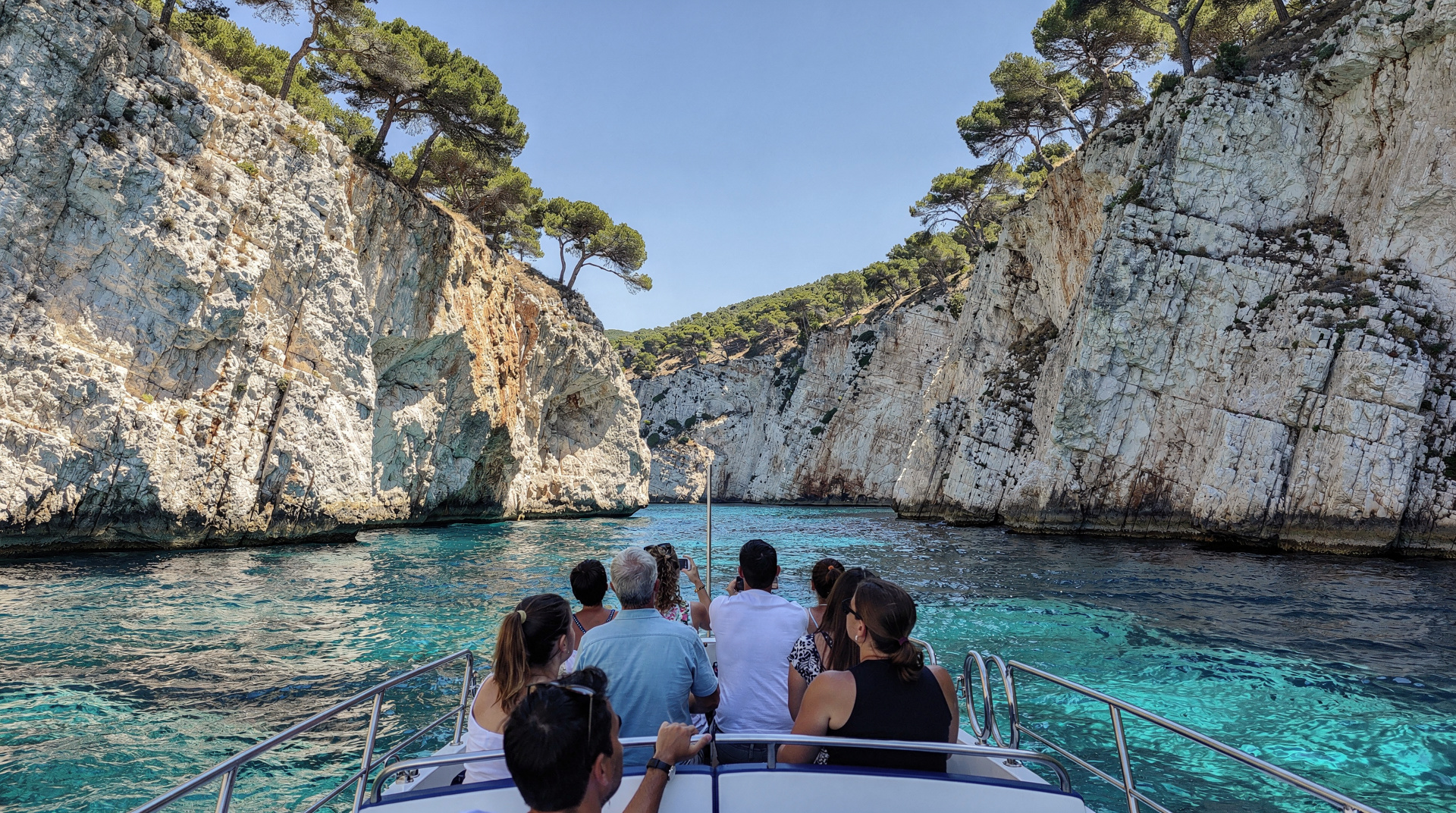
The experience: Arriving at a calanque by boat — watching the white cliffs rise above you as you enter the narrow inlet — is genuinely impressive. The boat anchors offshore, you jump or ladder into the water, and swim in the cove. Water quality in the marine reserve is excellent, visibility is typically 10–15 metres, and sea urchins, fish, and occasional octopus are common.
Limitations: You cannot hike anywhere during a boat tour. You are on the operator’s schedule. On peak summer days the calanques have many boats anchored simultaneously.
Cost: Typically 60–95 EUR per person depending on duration and whether lunch is included.
Hiking from Marseille or Cassis
Best for: Active visitors, spring and autumn travel, those who want solitude and the full landscape experience.
How it works: Trails from Luminy (Marseille side) reach Sugiton and Morgiou. Trails from Cassis reach Port-Miou, Port-Pin, and En-Vau. The GR98 long-distance path connects the two ends. Hiking takes 3–6 hours for a typical calanque-and-return outing.
The experience: The massif is dramatically beautiful — white limestone, Mediterranean scrub (garrigue), the smell of rosemary and pine resin, and views that extend in every direction. The descent to any calanque always reveals a colour shift in the water that does not look real until you are swimming in it.
Summer limitations: Trails close July–August. Sugiton requires free reservation June–September. Check status daily during shoulder seasons.
Cost: Free other than transport to the trailhead.
Sea kayak
Best for: Active visitors who want to access multiple calanques at their own pace, including En-Vau and Port-Pin which are difficult to reach otherwise.
How it works: Guided kayak tours depart from Marseille or Cassis and paddle along the coastline into the calanques. Trips run 3–7 hours. No hiking required; access is from the sea regardless of fire risk.
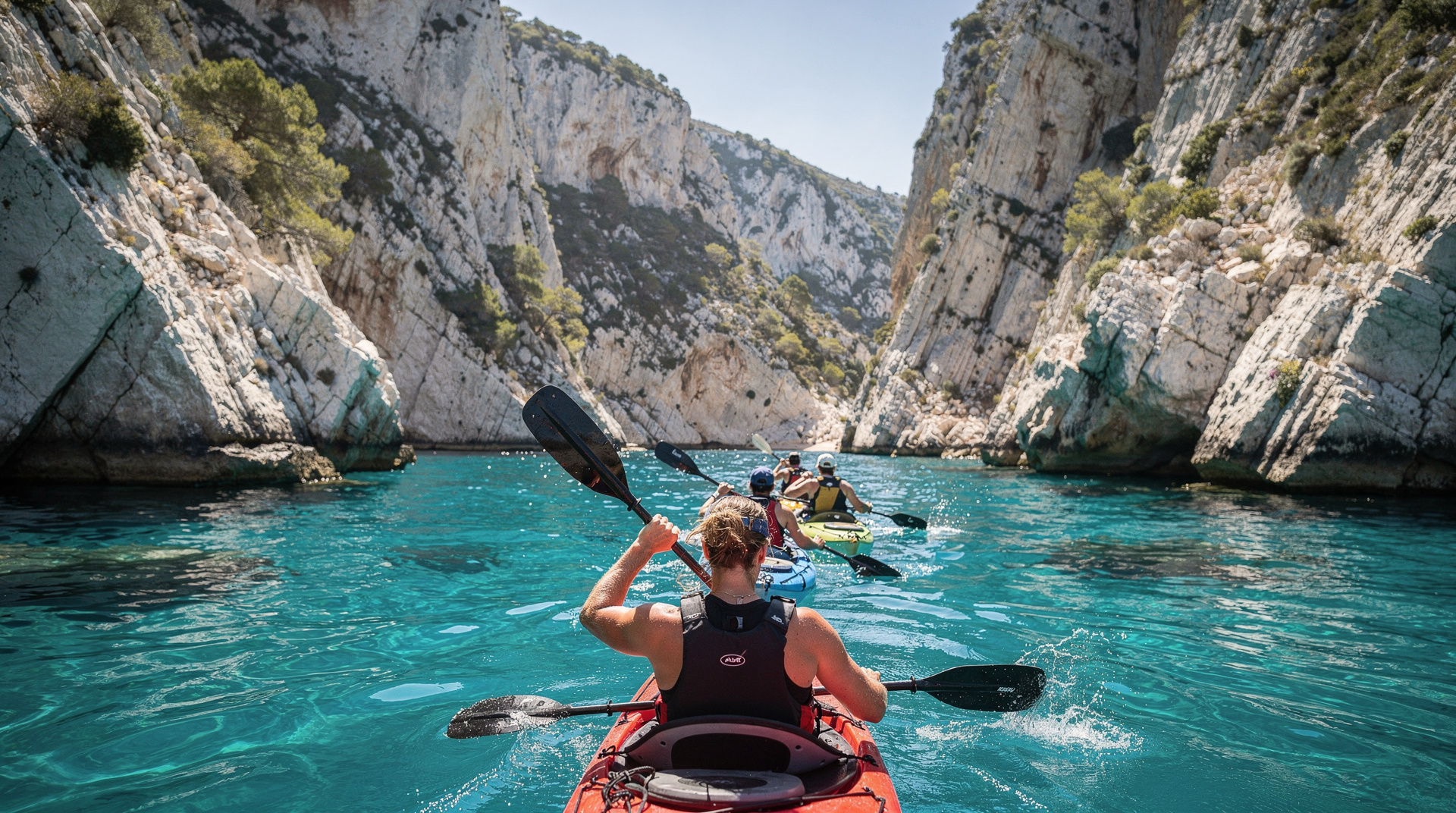
The experience: Paddling into a calanque from the water gives you both the sea-level perspective (boat tours) and the freedom to linger, explore small secondary inlets, and swim in coves that tour boats cannot reach. Kayaking alongside the limestone cliffs is physically engaging and consistently beautiful.
Cost: 55–90 EUR for guided tours; lower for independent rental with prior experience.
Which calanque should I visit?
| Calanque | Access | Best by | Time from Marseille |
|---|---|---|---|
| Sugiton | Luminy trailhead | Hiking (spring/autumn) or boat | 45 min walk + bus to Luminy |
| Sormiou | Road (restricted in summer) | E-bike or guided hike | 1 h 30 total |
| Morgiou | Long hike | Hiking (serious walkers) | 2 h from road head |
| En-Vau | Sea only or 2 h hike from Cassis | Kayak from Cassis | From Cassis: 1.5 h paddle |
| Port-Pin | Sea or hike from Cassis | Kayak or hike | From Cassis: 1 h paddle |
| Port-Miou | Directly east of Cassis | Short walk from Cassis | 15 min from Cassis |
Practical information
Park website: calanques-parcnational.fr — the authoritative source for access rules, reservation opening dates, and daily closure announcements.
Water: Bring more than you think you need for hiking. The terrain is exposed limestone with no water sources.
Shoes: Proper hiking footwear is essential — the trails are rocky and uneven, sometimes wet from spray. Flip-flops are inadequate.
Snorkelling: A mask and fins transform any swimming stop. The underwater landscape of the marine reserve — sea grass, rocks, sea urchins, octopus, grouper, bream — is worth seeing. Equipment rentals are available from tour operators.
Jellyfish: Occasional in July–August. Not a major risk most years, but check with locals on the day.
For detailed guidance on specific hikes, see our hiking the Calanques guide. For boat tour options and comparisons, see our Calanques boat tour guide. For the summer access rules in full, see our summer access rules guide.
If you are still deciding between the sea and the trail, Calanques boat vs hike sets the two side by side, and best Calanques hikes by difficulty helps you pick a route that matches your legs. Planning around the calendar? Visiting the Calanques by season covers each time of year.
The marine environment
The Calanques National Park includes a significant marine reserve — an area where fishing is restricted and underwater ecosystems are protected. The result is water quality and marine biodiversity that significantly exceeds what you find on most developed Mediterranean coasts.
Water clarity: On a calm day, visibility in the calanques typically reaches 10–15 metres. The limestone rock and absence of river runoff keep the water exceptionally clear. In summer the surface layer warms to 24–26°C; deeper zones remain cooler.
Marine life: Sea urchins are abundant on the rocky bottom — wear fins or water shoes when entering from rocks, as a sea urchin spine in your foot is unpleasant. Octopus are common, particularly in shaded rocky overhangs. Bream, sea bass, mullet, and garfish are regularly seen. Occasional grouper in the deeper shadowed areas. The seagrass meadows (Posidonia) that cover the sandy sections between rock outcrops are a protected habitat and an indicator of clean water.
Scuba diving: The Calanques are a certified diving destination with multiple operators based at Marseille and Cassis. Sites range from rocky reef dives to deeper open-water sites, with wrecks accessible for experienced divers. The marine reserve’s clearer waters and richer fish populations make this one of the better dive destinations on the French Mediterranean coast.
For the water side in more detail, see snorkeling near Marseille and scuba diving in Marseille.
The ecology of the massif
The limestone massif above the calanques is a garrigue ecosystem — scrubby Mediterranean vegetation adapted to shallow rocky soil, intense summer heat, and drought. The dominant plants are rosemary, lavender, thyme, kermes oak, and pines (predominantly Aleppo pine). The scent on a warm spring morning — rosemary and pine resin, with the salt air underneath — is one of the distinguishing sensory experiences of the Calanques.
Birds: Bonelli’s eagle breeds in the massif. Peregrine falcon and short-toed eagle are present. The cliffs are nesting sites for blue rock thrush, Alpine swift, and rock dove. Shearwaters are visible offshore.
Fire ecology: The summer fire closure is not arbitrary bureaucracy — it is the consequence of the massif’s actual fire history. Major fires have burned thousands of hectares in the Calanques since the post-war period. The Aleppo pine forest regenerates after fire, but the ecosystem takes decades to recover, and the risk to the limestone landscape and marine buffer zone is genuine. The closures are a rational response to a real and recurrent risk.
Getting to the Calanques from Marseille without a car
By boat tour: No car needed. Tours depart the Vieux-Port.
To Sugiton on foot/bus: Bus 21 from Castellane métro station to the Luminy terminus (end of line, about 30 minutes). From Luminy, 45-minute walk to Sugiton. Total from city centre: about 1.5 hours. Reservation required June–September (free, via park website).
To Sormiou by e-bike: The guided e-bike tour from Marseille is the most practical car-free access to Sormiou. The descent to the calanque by bike is steep and rough; the guided format handles the logistics.
To Cassis-side calanques: TER train from Saint-Charles to Cassis station (35 min), taxi or bus to the village (3 km), then walk to Port-Miou trailhead (15 min). Access to Port-Pin and En-Vau continues on foot from there. See the Cassis guide for full detail.
Planning checklist for the Calanques
Before you go, verify:
- Date: Is it July or August? If so, plan for boat or kayak access only
- Sugiton: Do you need a reservation? (June–September, yes)
- Fire closure: Check the park website (calanques-parcnational.fr) on the morning of your visit
- Water: At least 1.5 litres per person for hiking
- Footwear: Hiking shoes for trails; water shoes or fins for rocky swimming entries
- Weather: Check wind forecast — the mistral changes sea conditions rapidly
Frequently asked questions about the Calanques National Park
Can I visit the Calanques in July and August?
Yes — but by boat or kayak, not on foot. Most hiking trails are closed July–August due to fire risk. Boat tours from the Marseille Vieux-Port operate year-round and are the standard summer access method. They reach the calanques in 30–45 minutes and allow swimming. Sugiton, when occasionally open, requires a free advance reservation.
How do I book the free Sugiton reservation?
Go to calanques-parcnational.fr. In 2026, the booking system opens on 11 June at 9:00 CET. You can reserve up to 3 days ahead; reservations can be made until 18:00 the day before your visit. If a fire-risk closure is announced, all reservations for that day are cancelled. Always check the park website on the morning of your planned visit.
What is the best calanque to visit?
It depends on your transport and time. For a first visit by boat, the operator handles this. For hiking in spring, Sugiton from Luminy is the most accessible from Marseille — 45 minutes of walking. For kayak from Cassis, En-Vau is the most dramatic. For a short walk from Cassis village, Port-Miou is immediate and still beautiful. See our full which calanque to visit guide.
How long does a boat tour to the Calanques take?
Most standard boat tours from the Marseille Vieux-Port are 3 to 4.5 hours return, typically visiting 2–4 calanques. Full-day tours with lunch and wine run 6–7 hours. The distance from the Vieux-Port to the closest calanques is roughly 30–45 minutes at sea.
Is swimming in the Calanques safe?
Generally yes. The water is clear and the sea floor is visible. There are no lifeguards at the calanques. The risks are the sea state (waves can be rough in the mistral wind — check forecasts), sea urchins on rocky entries (use fins or water shoes), and occasionally jellyfish in late summer. Never swim out of sight of your boat or group.
Do I need a guide to hike the Calanques?
No, but a guide helps. The trails are not always well-marked, the terrain in summer is extremely dry, and the navigation between calanques can be confusing on multi-calanque loops. A guided hike is the most efficient way to see the most on your first visit, and the ecological context the guide provides genuinely adds to the experience.
Can families with children visit the Calanques?
Yes, with appropriate planning. Boat tours are the most child-friendly option — no hiking, no distance, just a boat ride and swimming in sheltered coves. For hiking families, the walk from Luminy to Sugiton (45 minutes, rocky but not technical) is manageable for children aged 8 and above with proper footwear and water. Avoid all hiking in July–August with young children.
Top experiences
Bookable activities with verified prices and instant confirmation on GetYourGuide.