Marseille in three days: the ideal first-timer's itinerary
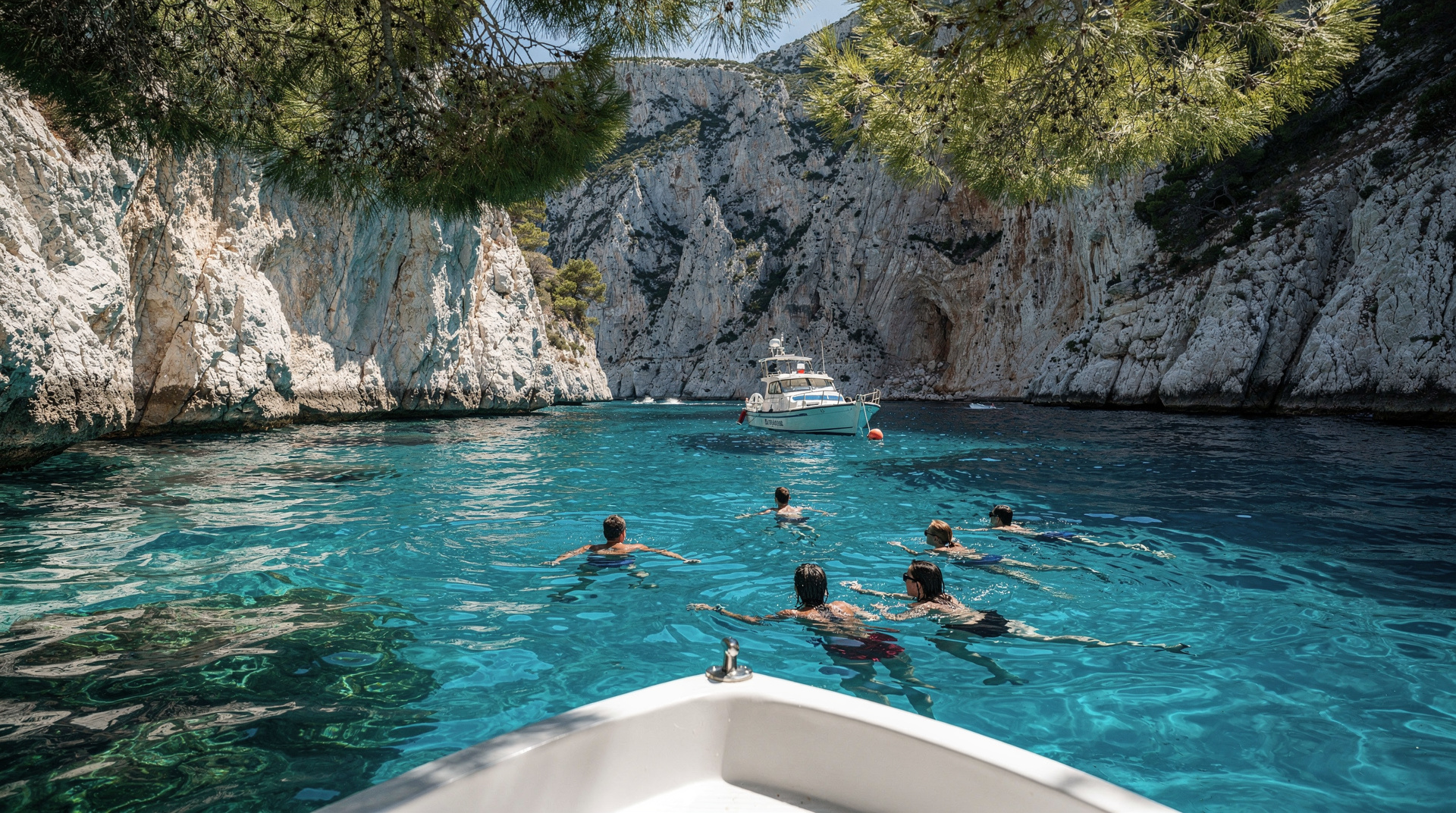
Marseille: iconic Calanques boat tour with swimming
Duration: 3-4.5 hours
Three days in Marseille is the honest minimum for a visit that makes sense. Two days gets you the city and the Calanques; three days adds Cassis — and suddenly you understand the full context of what makes this coastline remarkable. Marseille from the Vieux-Port, the Calanques from a boat or on foot, Cassis from the quai with a glass of local white wine: these three perspectives together form a complete picture.
This itinerary is designed for first-time visitors with no car. All three days are fully doable by public transport and boat. The one logistic that requires advance attention is the Calanques access system — read the summer access rules guide before Day 2, especially if you are visiting between June 1 and September 30.
Book Day 2’s Calanques tour before you leave home. Morning boat departures in summer sell out a week or more ahead.
| At a glance | |
|---|---|
| Where | Marseille city (Day 1), Calanques National Park (Day 2), Cassis (Day 3) |
| Cost (2 people, mid-range) | around 700–1,100 EUR for three days, excluding flights (see FAQ below for the full breakdown) |
| Time needed | 3 full days minimum; this is the honest floor for a visit that includes the coastline |
| Getting there / around | no car — on foot and petit train in the city, bus 21/22/23 or boat for the Calanques, TER for Cassis (22 min) |
| Best time | May–June or September–October for reliable Calanques trail access; book Day 2 well ahead in July–August regardless of plan |
Day 1: Marseille on foot
Morning: Vieux-Port to Le Panier (8:00–12:30)
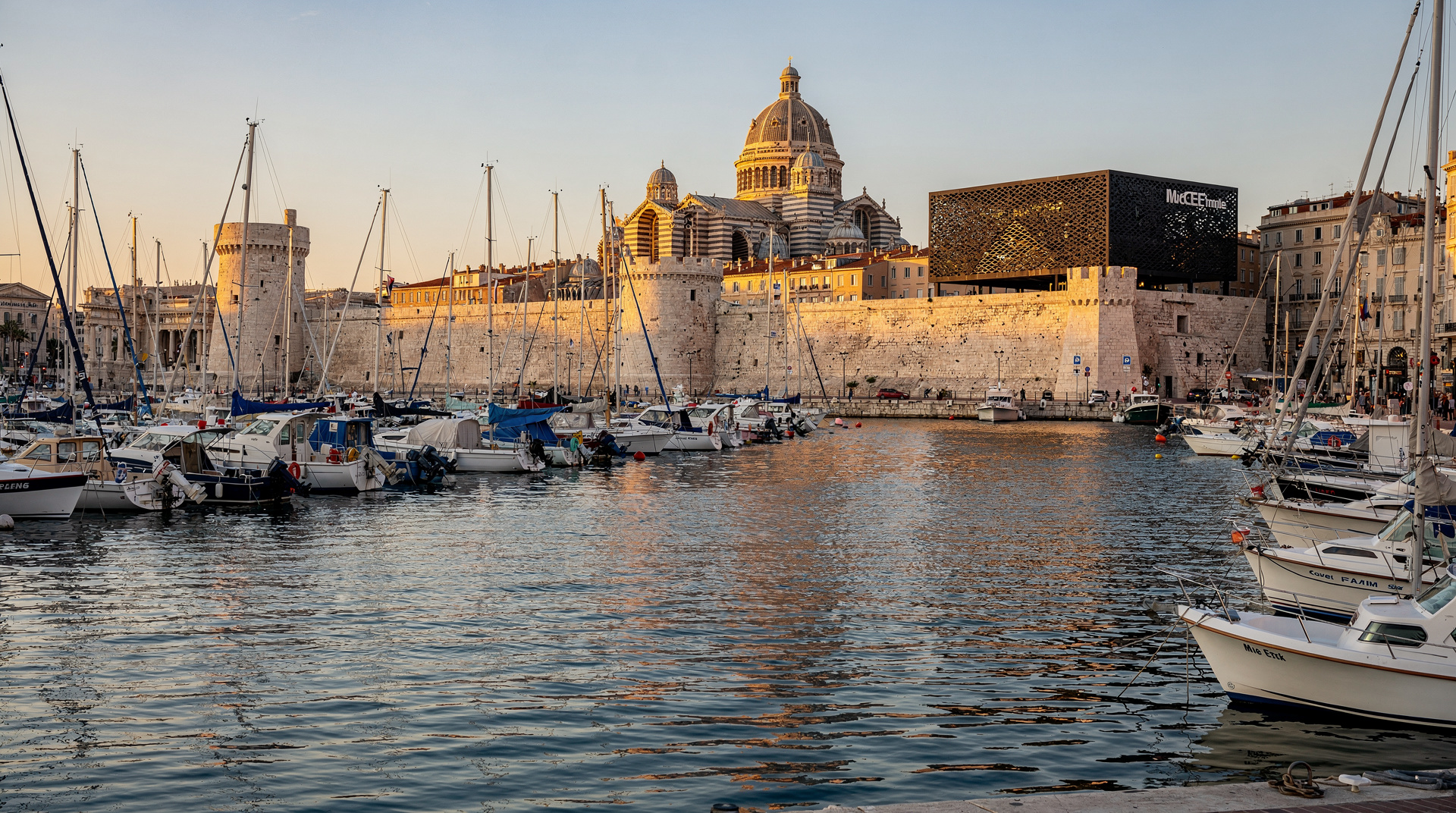
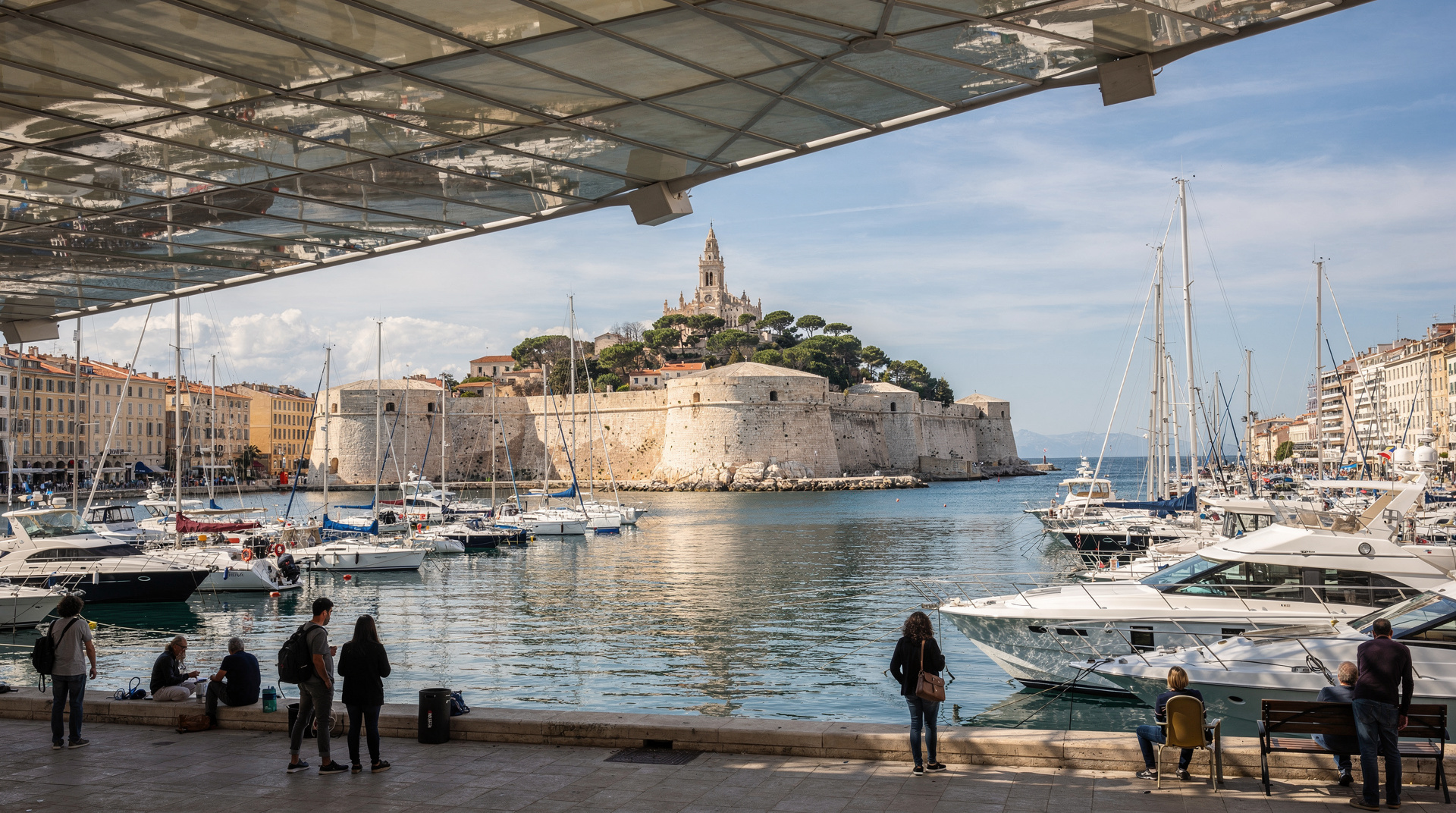
Start at the Vieux-Port fish market by 8:30 — the working harbour at its most alive, with fishermen selling overnight catch from boats and market tables. From the Quai des Belges, walk the full length of the north quai toward Fort Saint-Jean and MuCEM. Pause at the Ombrière (Norman Foster’s polished steel canopy) for the reflective light on the water.
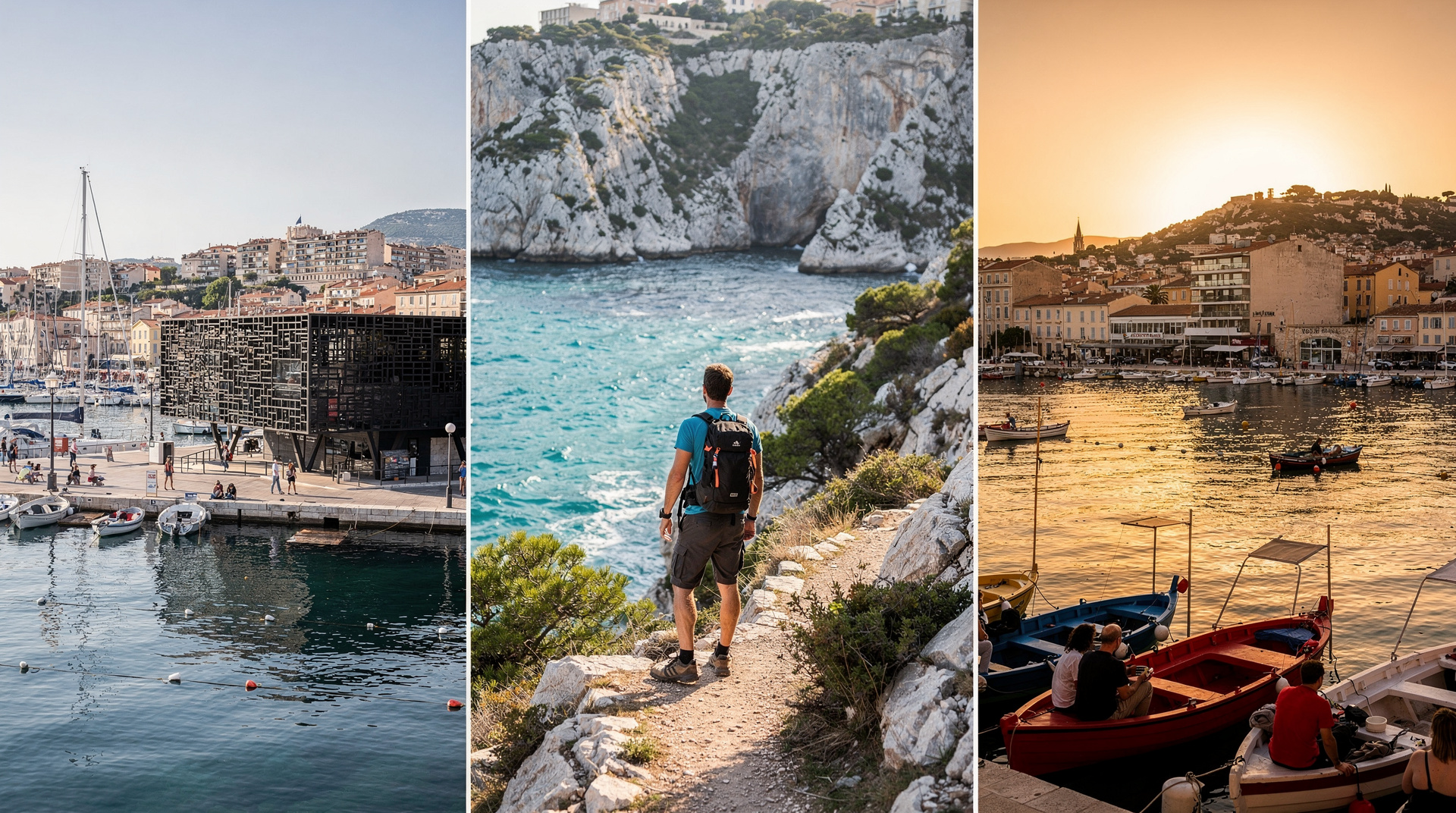
MuCEM (Musée des Civilisations de l’Europe et de la Méditerranée) deserves at least 45 minutes: the lattice-work concrete exterior and suspended footbridge to Fort Saint-Jean are free. Walk the fort’s terraces for harbour-entrance views. The interior exhibitions take an additional 1.5 hours and cost around 11 EUR — worth it on a culturally focused day, optional otherwise.
By 10:00–10:30, walk north into Le Panier. Allow 90 minutes minimum:
- Vieille Charité: 17th-century baroque hospice with an oval chapel at its centre. Free courtyard, modest entry to the small museums inside.
- Rue du Panier and adjacent lanes: narrow, hilly, packed with street art, artisan shops, and moments of unexpected calm.
- Place des Moulins: the high point of the neighbourhood, quiet views north.
Descend back toward the Vieux-Port via the Montée des Accoules staircase.
Afternoon: Notre-Dame de la Garde and Cours Julien (14:00–19:00)
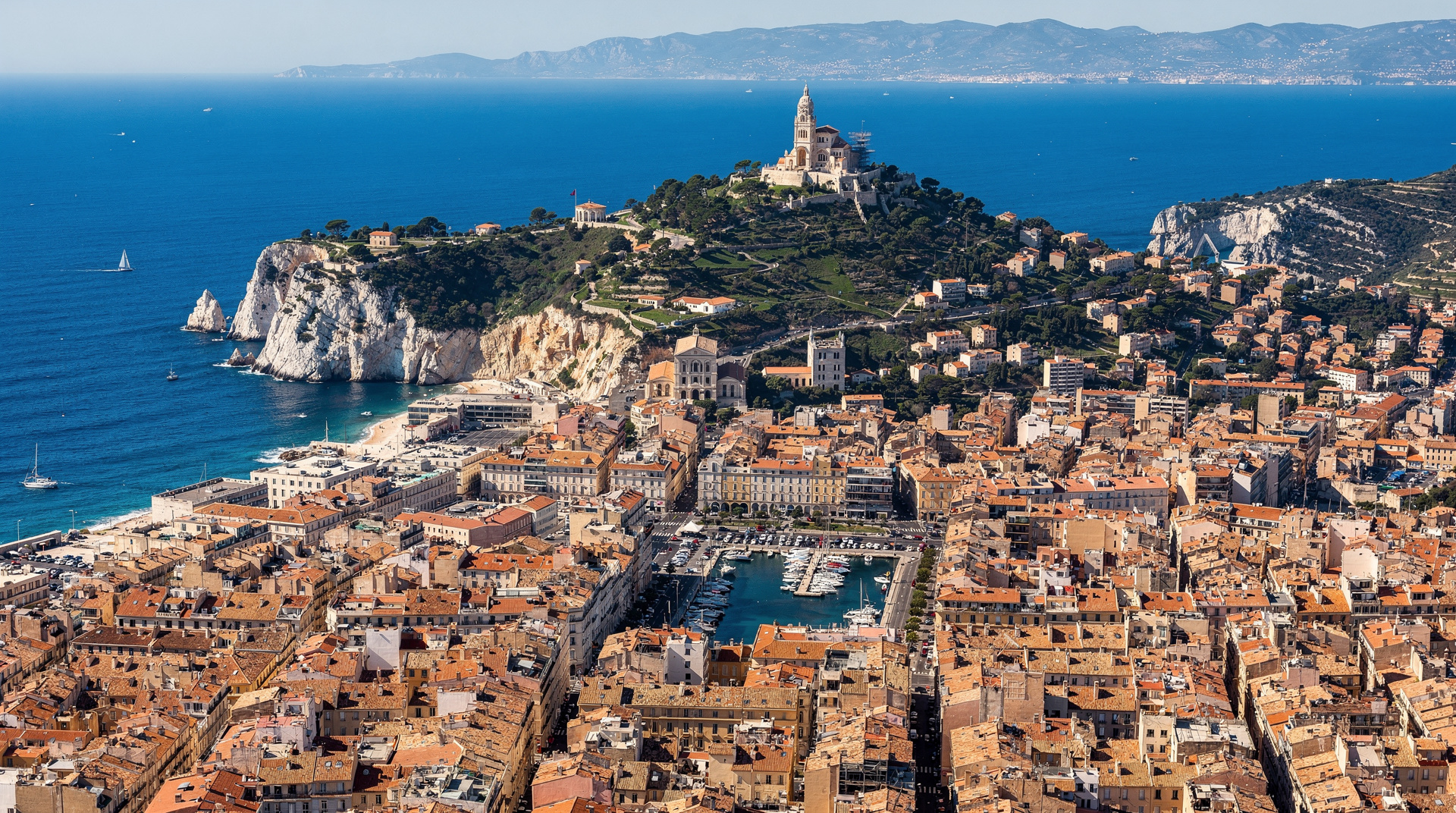
After lunch (see the note on restaurants in Le Panier vs one block back for better value), take the tourist petit train from the Vieux-Port to Notre-Dame de la Garde (12–15 EUR round trip, departures every 30–40 minutes). The basilica at 154 metres is the highest point in Marseille and the best panoramic viewpoint — the Calanques massif southeast, the Frioul Islands offshore, the full city below. Allow 40 minutes at the top. The votive offerings inside the lower basilica — model ships, paintings, plaques from sailors and fishermen — are genuinely moving.
Return to the Vieux-Port and walk east toward Cours Julien (15 minutes on foot, or metro L1 to Noailles then 5 minutes). This is Marseille’s bohemian neighbourhood — street art, independent cafes, natural wine bars, record shops, and terraces. It is the best place in the city to have a pre-dinner drink and feel the local rhythm rather than the tourist overlay. Evening restaurants here are good and less expensive than the waterfront.
Evening: dinner in Cours Julien or Noailles (19:30–21:30)
The streets immediately east of Cours Julien have the best concentration of quality independent restaurants in the city centre at fair prices. Expect 25–40 EUR per person for dinner with wine. Noailles (5 minutes south) is good for North African food — proper couscous and tagine at 15–20 EUR per person.
Day 2: Calanques — full day on the water or on foot
The decision: boat or hike?
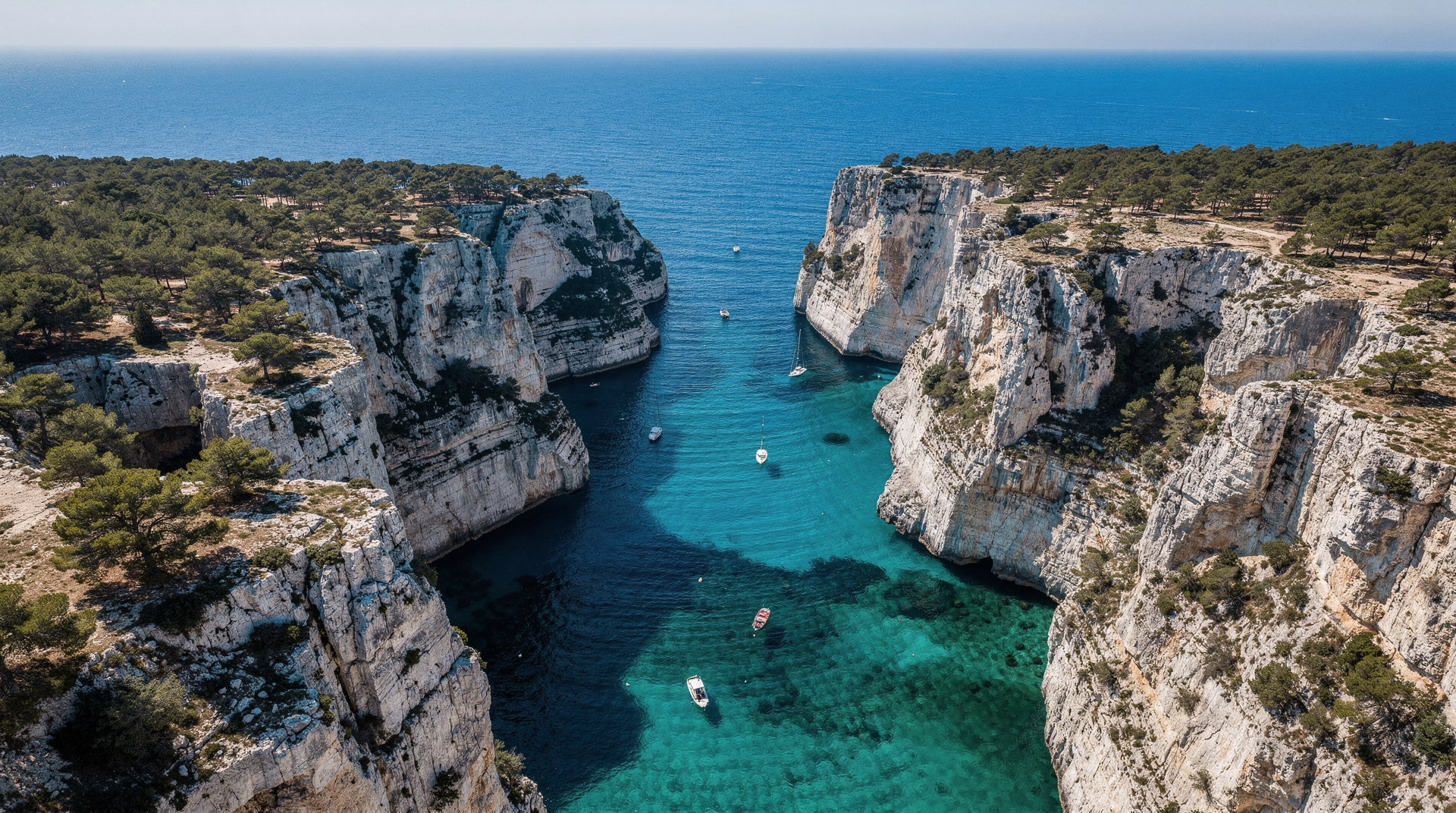
The Calanques National Park can be visited by boat, on foot, or by kayak — and the right choice depends on your season, fitness, and what the fire risk says the morning of your visit.
Hiking (spring, autumn, early winter): The best introduction to the Calanques on foot is the trail from Luminy trailhead to Sugiton (2.5 km each way, 45 minutes of relatively easy walking) or to Morgiou (5 km each way, more demanding). Bus 21 from the Rond-Point du Prado metro stop reaches the Luminy trailhead — allow 45 minutes from the Vieux-Port. If visiting between June 27 and August 30, Sugiton requires a free advance reservation via calanques-parcnational.fr (opens 3 days ahead at 09:00). Check fire risk status at calanques-parcnational.fr the evening before.
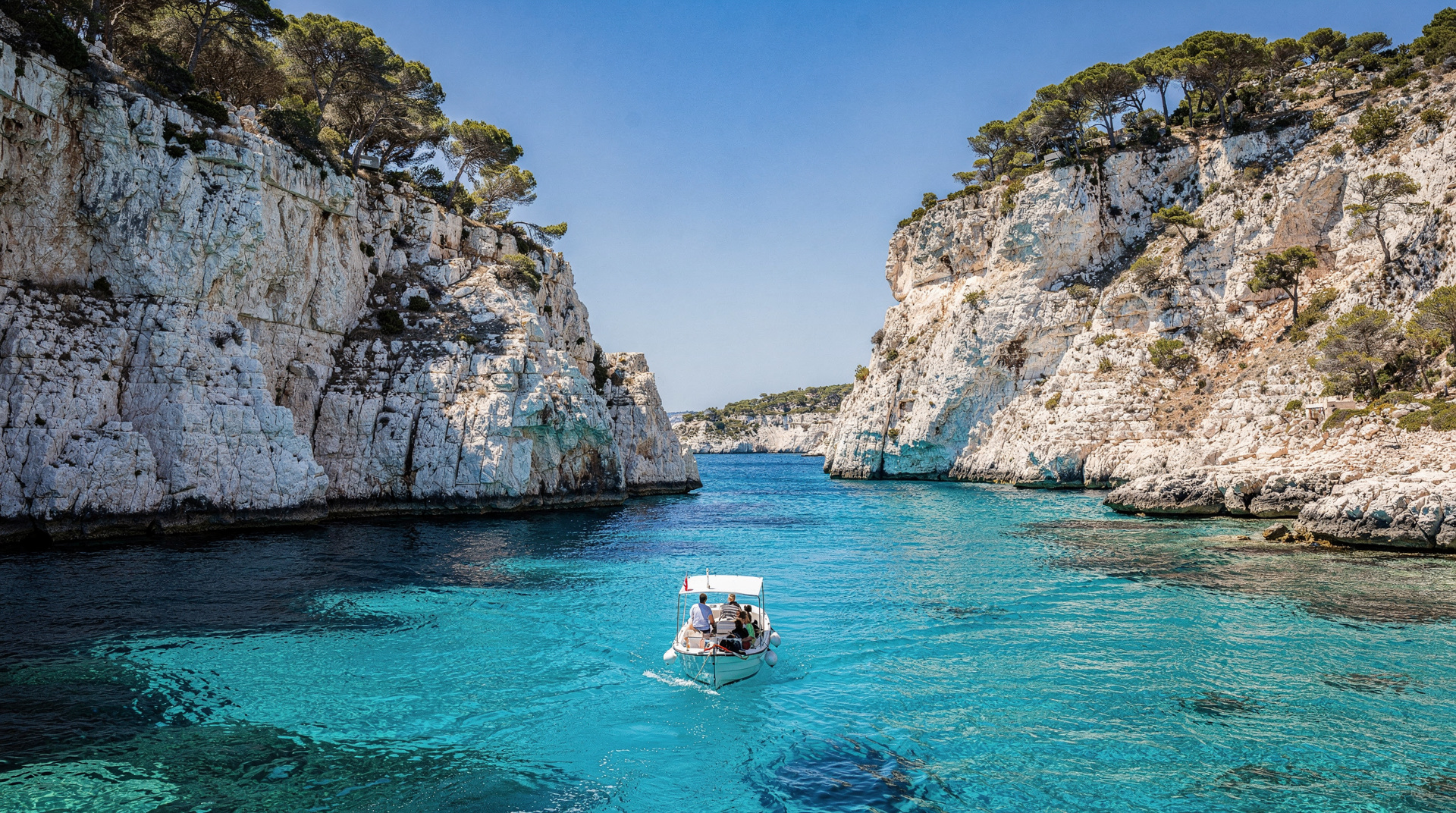
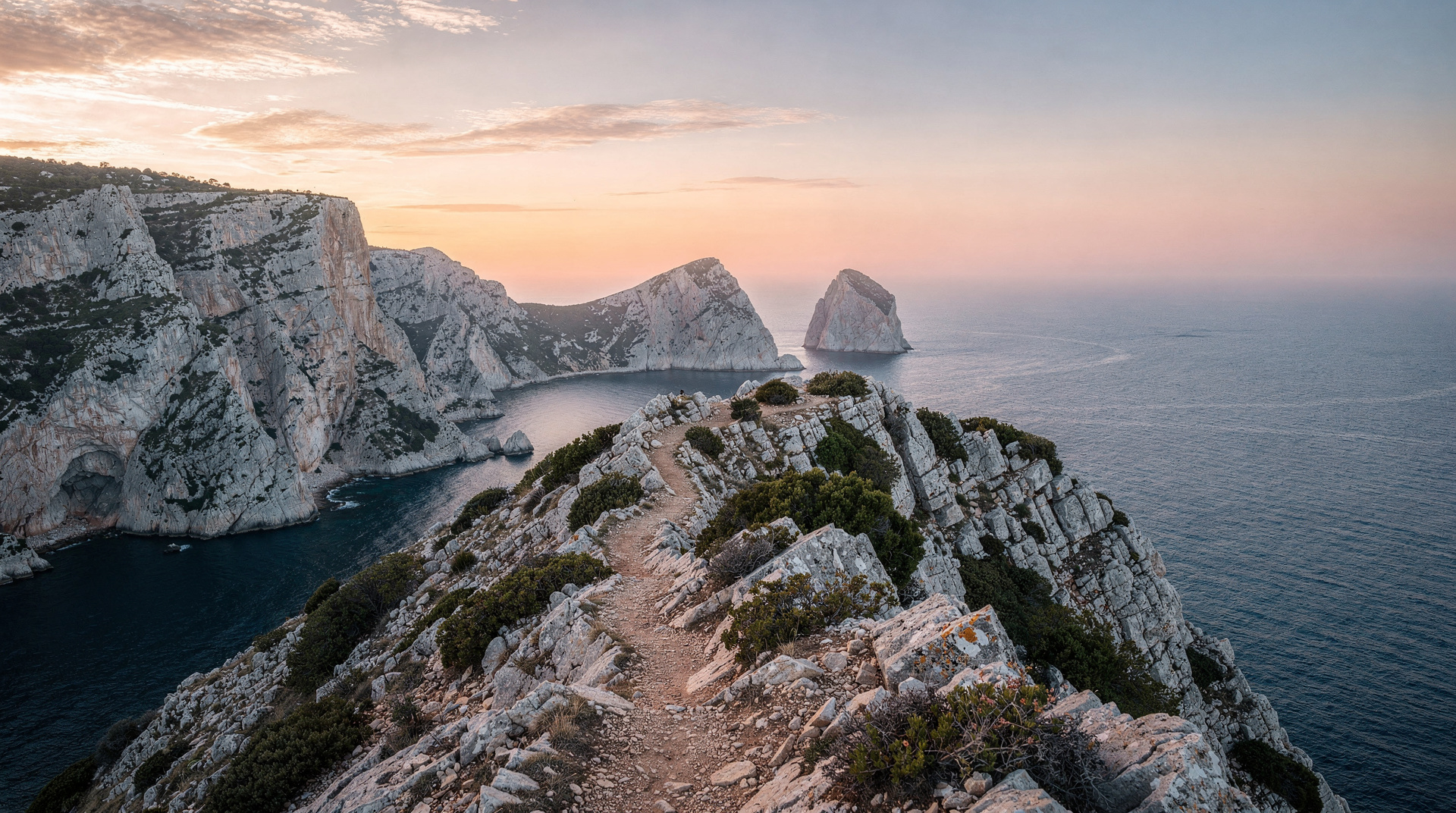
Boat tour (all seasons, especially summer): A half-day boat tour from the Vieux-Port (3–4.5 hours) takes you past 4–6 calanques with stops for swimming in the turquoise water. Morning departures (8:00–9:00) have the best light and the calmest sea. The view of the Calanques from the water — white limestone cliffs rising directly from the sea — is different from the hiker’s view and equally compelling. Boat access is never closed by fire risk rules, making this the safe choice for summer visits.
Sea kayaking: A guided kayak half-day tour from the Vieux-Port or from Cassis reaches corners that motorboats cannot. Requires reasonable fitness and comfort on the water. See kayaking the Calanques for operators.
Afternoon: add a Calanques hike (if on a boat morning)
After a morning boat tour returning around 12:30, the afternoon has time for a short hike from the Goudes village at the far southern edge of Marseille. Bus 20 from Castellane metro stop (via David Mazenod) reaches Les Goudes — a former fishing village at the end of the road, 11 km south of the city centre. From Les Goudes, a flat coastal trail follows the rocky shore east toward the Calanques. This is more atmosphere than activity — the feel of being at the very edge of the city, with the sea below and the Calanques massif ahead.
Return by bus (last bus varies by season — check RTM timetables) to the Vieux-Port for early evening.
Evening: rest and good food (19:30–21:30)
After a physically active day, dinner near the Vieux-Port or on Cours Estienne d’Orves (the large square on the south quai side) is convenient. Seafood is the obvious choice after a Calanques day. Budget 30–45 EUR per person.
Day 3: Cassis day trip
Getting there: TER from Gare Saint-Charles (9:30 departure)
Cassis is 22 km east of Marseille and 22 minutes by TER train from Gare Saint-Charles. Trains run approximately hourly. The Cassis station is 3 km from the port — take the Marcouline shuttle bus (Ligne M1, about 10 minutes, 1–2 EUR) or walk downhill in 30 minutes. Take the 9:30 departure to arrive in Cassis around 10:15, giving you the majority of the day.
Morning in Cassis: port and boat tour (10:15–13:00)
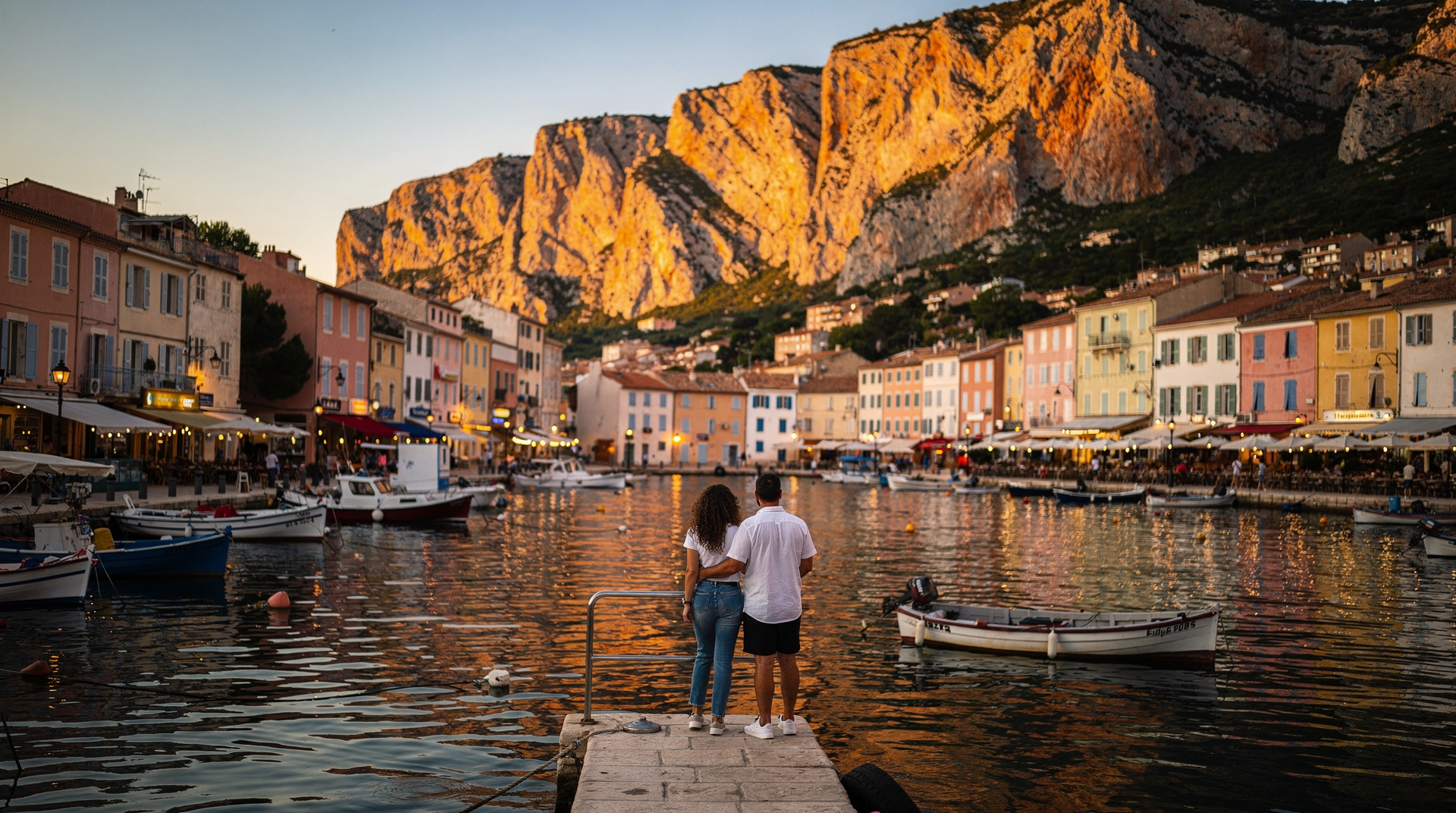
Cassis is a small port village of about 8,000 residents, backed by white limestone cliffs including Cap Canaille — at approximately 400 m, the tallest coastal cliff in France. The port itself is genuinely beautiful: colourful fishing boats, restaurant terraces on the quai, a 15th-century château visible on the cliff above.
From the port, take a Calanques boat tour from Cassis — the Cassis operators cover the three most spectacular calanques on the eastern side of the national park (En-Vau, Port-Pin, Port-Miou) that are harder to reach from Marseille’s side. The 1-hour tour covers the three calanques without stopping; the 2-hour tour includes a swim stop at En-Vau. Take the 2-hour version — En-Vau’s turquoise inlet surrounded by vertical white cliffs is one of the finest small coves in Mediterranean France.
Afternoon: Cassis town and Cap Canaille (13:00–17:30)
After the boat tour, have lunch on or near the port — fresh grilled fish, moules-frites, or a plate of Cassis oysters. A glass of AOC Cassis white wine is mandatory: the appellation produces whites from Marsanne, Clairette, and Ugni Blanc grapes that pair perfectly with local seafood. Budget 20–30 EUR for lunch with a glass.
The afternoon in Cassis divides by interest:
Wine: The Cassis AOC is tiny — only 9 wineries — but produces some of Provence’s most distinctive whites and rosés. Several domaines are within reach of the port by taxi or bicycle. The electric buggy winery tour (see tour links below) is an easy way to visit 2–3 domaines.
Walking: The coastal path toward Port-Miou (the closest calanque, 1.5 km from the port, accessible on foot without fire-risk closures applying to this path) is a good afternoon walk with views back over the port and Cap Canaille.
Cap Canaille viewpoint: The dramatic cliff viewpoint is 20 minutes by car or taxi from the port. Without a car, the best view of Cap Canaille is from the boat or from the beach west of the port. A taxi from the port to the viewpoint and back costs approximately 25–30 EUR and is worth it on a clear day.
Return to Marseille: 17:30–18:00
TER trains from Cassis to Gare Saint-Charles run approximately hourly. Last useful train for early evening dinner in Marseille departs around 17:30–18:00. Check timetables at voyages-sncf.com or the SNCF Connect app.
Evening: final dinner in Marseille (19:30–21:00)
On a final night, this is the moment for bouillabaisse — Marseille’s signature dish — if budget allows (40–60 EUR per person at a Charte bouillabaisse restaurant). Alternatively, a sunset pastis at the Vieux-Port followed by dinner at Vallon des Auffes (the tiny cove below the Corniche, accessible by bus 83 from the Vieux-Port) is a quietly perfect way to end.
What to book in advance
- Calanques boat tour (Day 2) — book this first, 1–2 weeks ahead in summer, 2–3 days in shoulder season. Choose a morning 8:00–9:00 departure.
- Sugiton reservation (if hiking June 27–August 30) — free, via calanques-parcnational.fr, opens 3 days before visit at 09:00.
- Cassis boat tour — book online or on arrival at the port. In July–August, popular operators fill up by mid-morning. Booking the evening before avoids disappointment.
- Check the fire risk status for Day 2 the evening before, and have a boat-tour backup ready if hiking is closed.
- TER train Cassis — no reservation required for regional trains, but check timetables at sncf-connect.com in advance.
Variations
For active travellers: Swap Day 3 Cassis for a guided hike from Cassis to the Calanques — the path from the port to En-Vau and back is a full-day moderate hike with exceptional scenery. See Calanques hiking trails guide.
Without interest in Cassis: Use Day 3 for Aix-en-Provence instead — 35–45 minutes by TER train, excellent for art, markets, and fountained streets. See the Marseille, Aix and Cassis itinerary for the best combination.
In summer (July–August): Day 2 should default to a boat tour, not a hike. Trails are likely closed 60–70% of days in high summer. The boat tour is the reliable option. Start as early as possible (8:00 departure) to be on the water before peak heat.
With more time: Add a fourth day for Aix-en-Provence — see the car-free four-day itinerary for the natural extension.
How the three days build on each other
The sequencing in this itinerary is deliberate, not arbitrary. Day 1 establishes the city — its scale, its port history, its neighbourhoods — so that Day 2’s Calanques and Day 3’s Cassis have context: you understand what a working Mediterranean port city looks like before seeing the wild coastline it sits beside. Doing the Calanques or Cassis first, before the city, tends to make Marseille itself feel like an afterthought by comparison, which undersells a genuinely rich city.
If time is tight and one day has to flex, Day 1’s afternoon (Notre-Dame de la Garde and Cours Julien) is the most compressible — the basilica visit can be shortened to 20 minutes at the top instead of 40, and Cours Julien can be swapped for a shorter pre-dinner stop nearer the Vieux-Port. Day 2 and Day 3 are both weather- and season-dependent and should not be the days you compress.
Budget breakdown by category
| Category | Approximate cost (2 people, 3 days) |
|---|---|
| Accommodation | 360–600 EUR (120–200 EUR/night) |
| Calanques boat or hike tour (Day 2) | 80–180 EUR for two |
| Cassis boat tour (Day 3) | 30–40 EUR for two |
| Trains (TER Cassis + petit train + local transport) | 40–60 EUR for two |
| Meals (3 days) | 240–360 EUR for two |
| Total (excluding flights) | approximately 750–1,240 EUR for two |
Frequently asked questions about this 3-day Marseille itinerary
Is Cassis better than the Calanques from Marseille?
They are complementary, not competing. The Calanques from the Marseille side (Sormiou, Morgiou, Sugiton) are wilder and less accessible, which is their appeal. The calanques from the Cassis side (En-Vau, Port-Pin, Port-Miou) are more dramatic and easier to reach by boat. Doing both — Marseille-side on Day 2, Cassis-side on Day 3 — gives a complete picture.
Can I hike to the Calanques in summer?
It depends on the daily fire risk colour code, published at 18:00 for the following day. In July–August, orange or red days (when trails are closed) are common. Check calanques-parcnational.fr the evening before Day 2. If the code is orange or red, take a boat tour instead — the water access is never restricted by fire closures. See the full summer access guide.
How much does this three-day itinerary cost?
A realistic mid-range budget for two people: accommodation 120–200 EUR/night, Calanques boat tour 40–90 EUR per person, Cassis boat tour 15–20 EUR per person, train Marseille–Cassis approximately 7 EUR per person each way. Meals budget 80–120 EUR/day for two. Total excluding flights: approximately 700–1,100 EUR for two for three days.
Is the petit train to Notre-Dame de la Garde worth it?
Yes, on a one-to-three-day visit. The hill is steep — 154 metres — and in summer heat the walk up is genuinely exhausting. The petit train does it in 20 minutes. The round trip ticket includes 20 minutes at the top, which is the minimum useful time. If you prefer walking, the path via the Boulevard de la Corderie and the steps from the Rue Fort du Sanctuaire takes 35–45 minutes.
What is AOC Cassis wine and why does everyone mention it?
AOC Cassis is one of the smallest wine appellations in France — covering only about 210 hectares around the village. It produces white and rosé wines from local grape varieties including Marsanne, Clairette, and Grenache Blanc. The whites are crisp, mineral, and slightly aromatic — locally paired with the regional bouillabaisse tradition. Being able to drink a glass of Cassis white in the village of Cassis, 100 metres from the vineyards, is a small but genuinely satisfying travel experience.
Do I need to book TER trains from Marseille to Cassis?
No. TER regional trains in France do not require reservations — you can buy a ticket at the station or via the SNCF Connect app. Journey time is approximately 22 minutes, fare around 7 EUR each way. Trains run approximately once per hour. The station in Cassis is 3 km from the port — take the Marcouline shuttle bus (Ligne M1) which connects the station to the village in about 10 minutes.
Is three days enough to add a day trip to Aix-en-Provence too?
Not comfortably alongside this itinerary — Aix deserves its own half-day at minimum, and squeezing it into an already full three days means cutting either the Calanques or Cassis, which are the itinerary’s strongest elements. Travellers who want both should add a fourth day, as noted in the Variations section above, using the car-free four-day itinerary as a guide.
What should I do if the Calanques boat tour is fully booked?
Check for an alternative morning slot on a different operator, or consider the guided hike option instead (weather and fire-risk permitting) — Bus 21 to the Luminy trailhead requires no advance booking outside the Sugiton reservation window. As a last resort, the Cassis boat tour on Day 3 can be extended to 2 hours to partially cover what Day 2 would have delivered, though it reaches a different set of calanques.
Top experiences
Bookable activities with verified prices and instant confirmation on GetYourGuide.