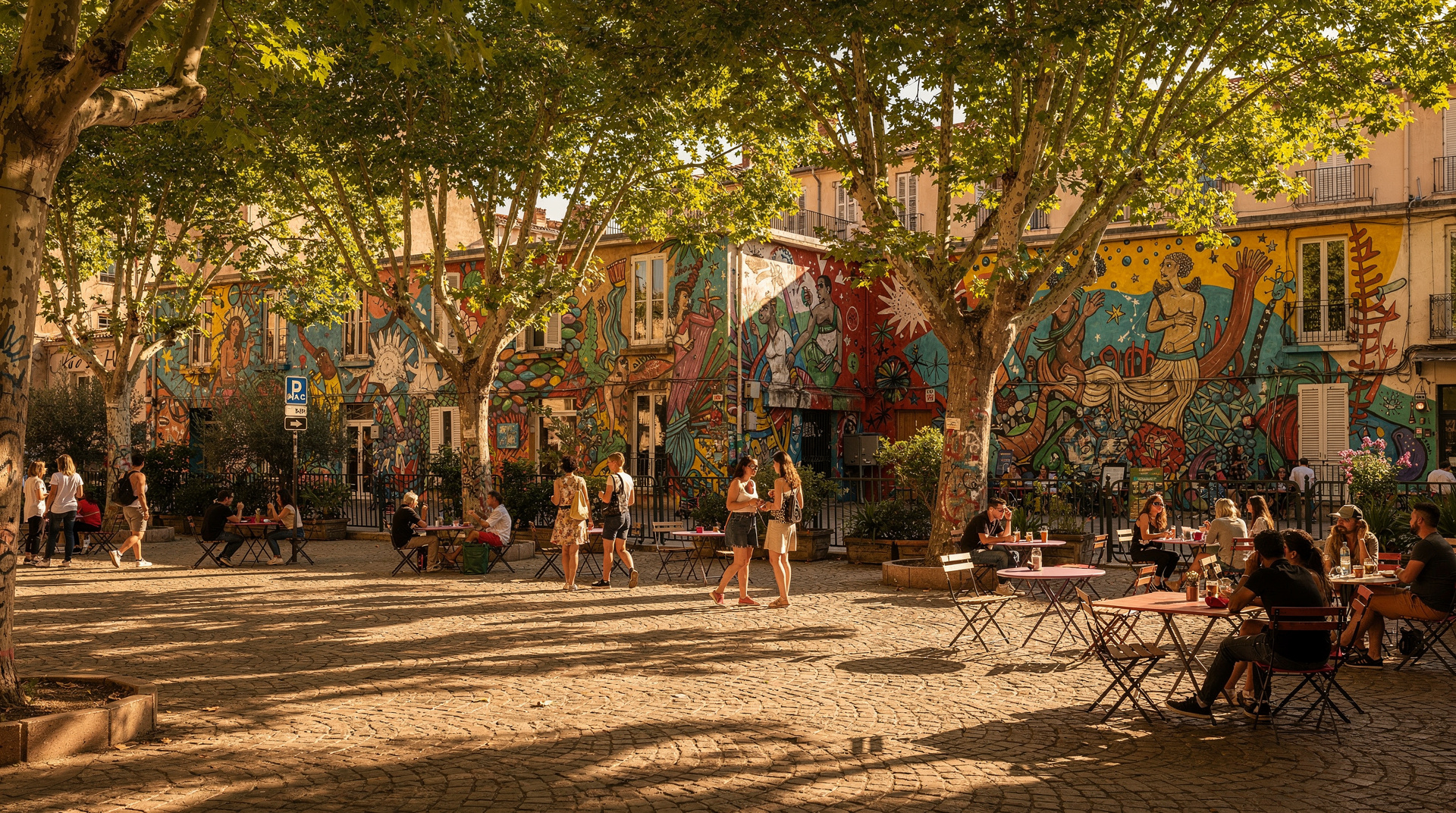
Le Panier, Marseille
Le Panier is Marseille's oldest district — steep lanes, the Vieille Charité, soap workshops, street art, and the best photography in the city.
Marseille: Le Panier district 2-hour guided walking tour
Duration: 2 hours
Quick facts
- Location
- North of the Vieux-Port, 2nd arrondissement
- Time needed
- 2 to 3 hours including Vieille Charité
- Access
- On foot from Vieux-Port (10 min uphill)
- Vieille Charité
- Museum complex; entry varies by exhibition
- Best approach
- Morning; combine with MuCEM and Vieux-Port
Marseille before Marseille was Marseille
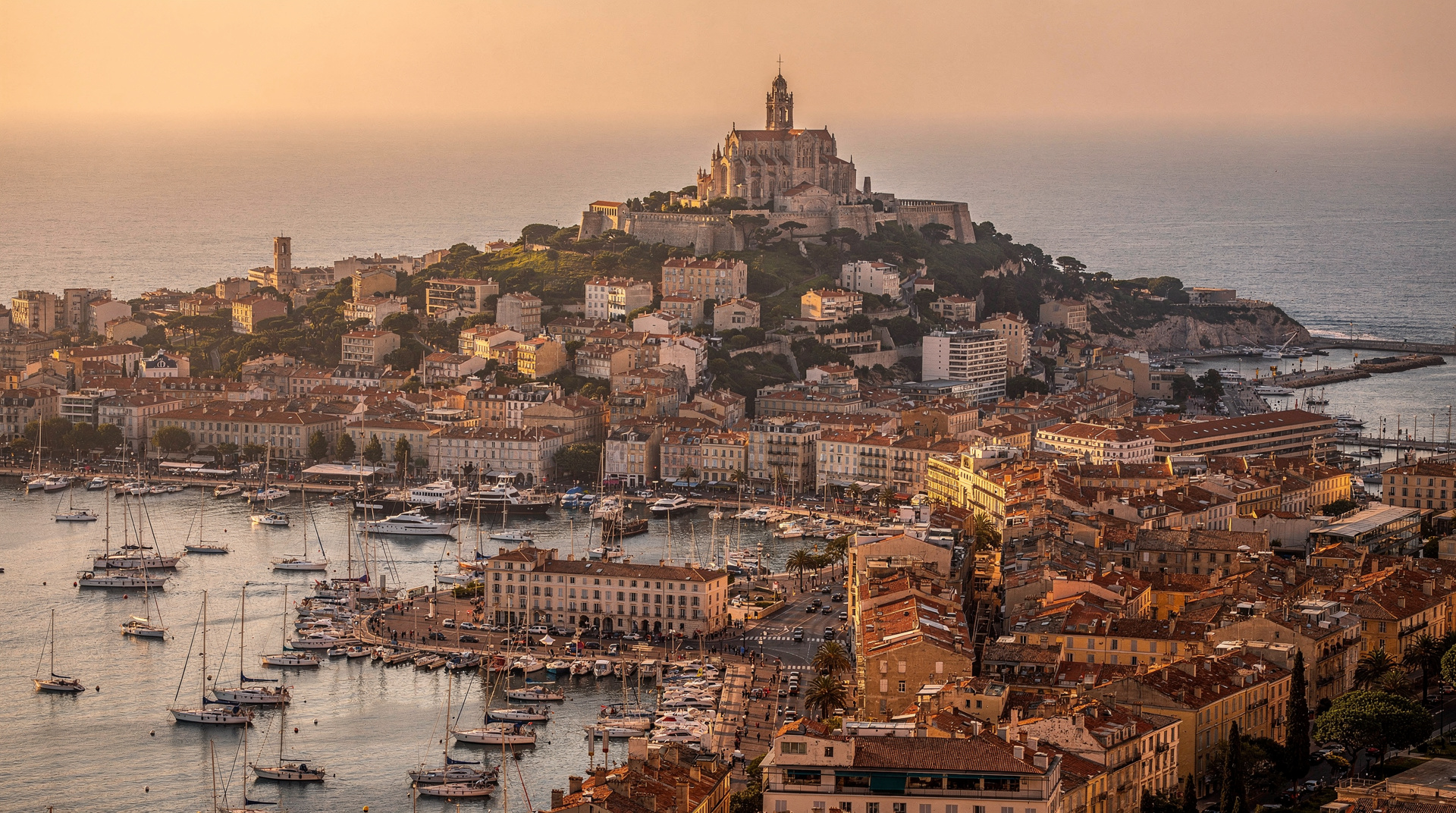
Le Panier sits on the hill where Phocaean Greeks first settled in 600 BCE. For more than two millennia this hillside above the harbour has been continuously inhabited — first as a Greek colonial quarter, then Roman, medieval, Genoese, Corsican, Italian, North African, and now a carefully maintained maze of lanes that is neither gentrified nor derelict, but somewhere authentically in between.
The name comes from a tavern called “Le Logis du Panier” that stood here in the 17th century, but the character of the quarter predates that by centuries. During the Second World War, the German occupation dynamited much of the lower portion of Le Panier — the streets nearest the Vieux-Port — to create a “security zone.” What you walk through today is the surviving upper section and rebuilt lower streets, which is why some blocks feel newer than others.
At a glance
| Where | North of the Vieux-Port, 2nd arrondissement, 10 minutes uphill on foot |
| Cost | Free to walk the streets; Vieille Charité courtyard free, exhibitions ticketed; soap workshop around €25–40 |
| Time needed | 2–3 hours including the Vieille Charité |
| Getting there | On foot from Vieux-Port, or via the MuCEM footbridge to Fort Saint-Jean |
| Best time | Morning for photography and quiet lanes; late afternoon for atmosphere |
Getting there from the Vieux-Port
From the Quai du Port (north shore of the Vieux-Port), walk toward the Fort Saint-Jean and take any of the lanes leading uphill. The Montée des Accoules, the Grande Rue, and the Rue du Refuge are all reasonable entry points. Give yourself 10 minutes of uphill walking and you are inside the neighbourhood.
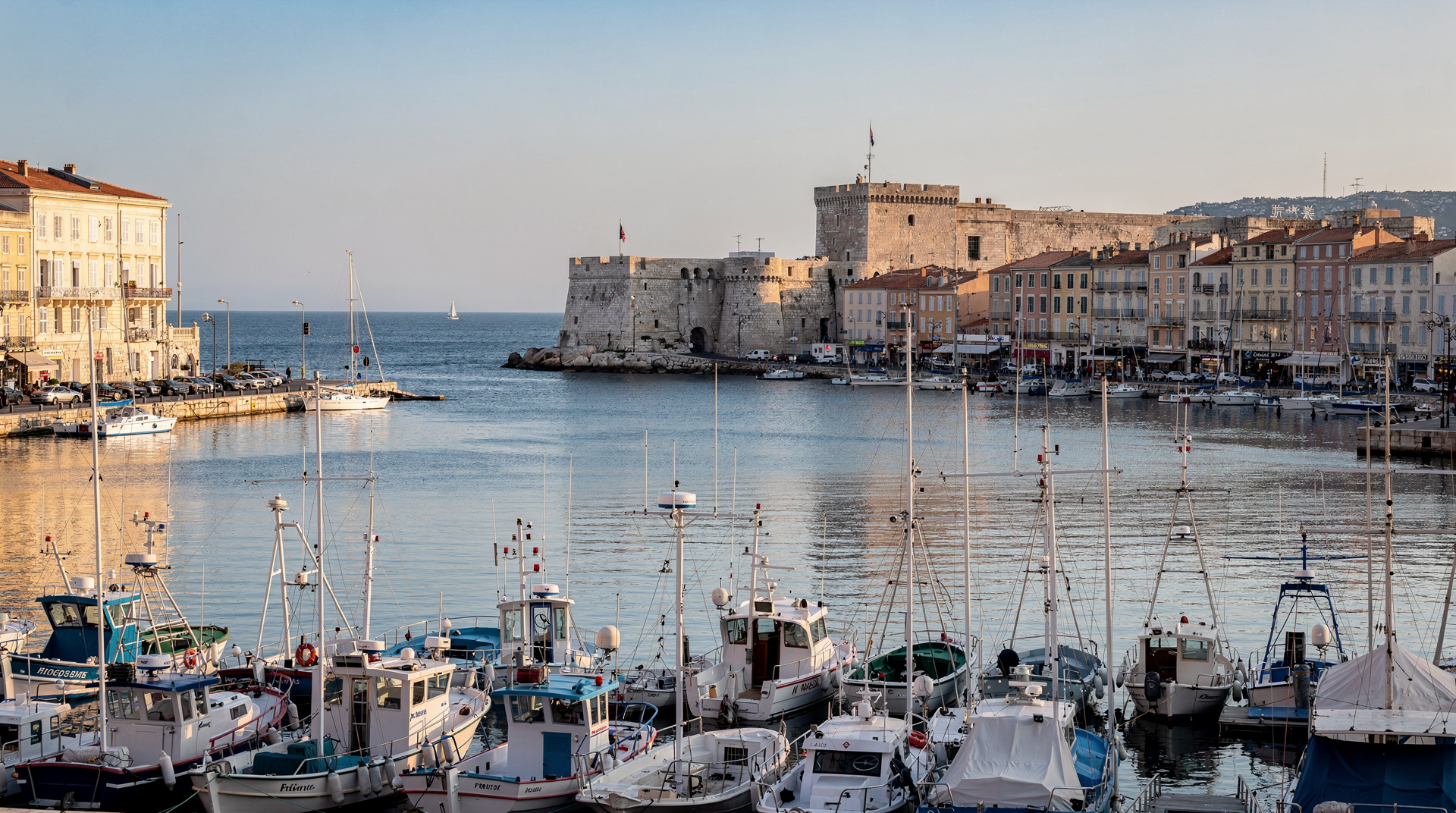
Coming from the MuCEM side (Fort Saint-Jean), the footbridge across to the fort leads directly to the lower entrance of Le Panier — this is the smoothest approach from the museum.
The Vieille Charité
The neighbourhood’s architectural centrepiece is the Vieille Charité — a vast 17th-century hospice built by architect Pierre Puget on the orders of Louis XIV. The brief was to house Marseille’s growing population of beggars and homeless people (known as “gueux”), removing them from the streets. Puget responded with something extraordinary: three storeys of arcaded galleries in pink Cassis stone surrounding a courtyard, with a small oval chapel topped by an elliptical dome at the centre.
Today the complex is a museum and cultural venue. It hosts the Musée d’Archéologie Méditerranéenne and the Musée des Arts Africains, Océaniens et Amérindiens, as well as temporary exhibitions. The courtyard is free to enter during opening hours. The galleries around the courtyard are worth looking at even before you decide whether to pay for the exhibitions inside.
The streets: what you are actually looking at
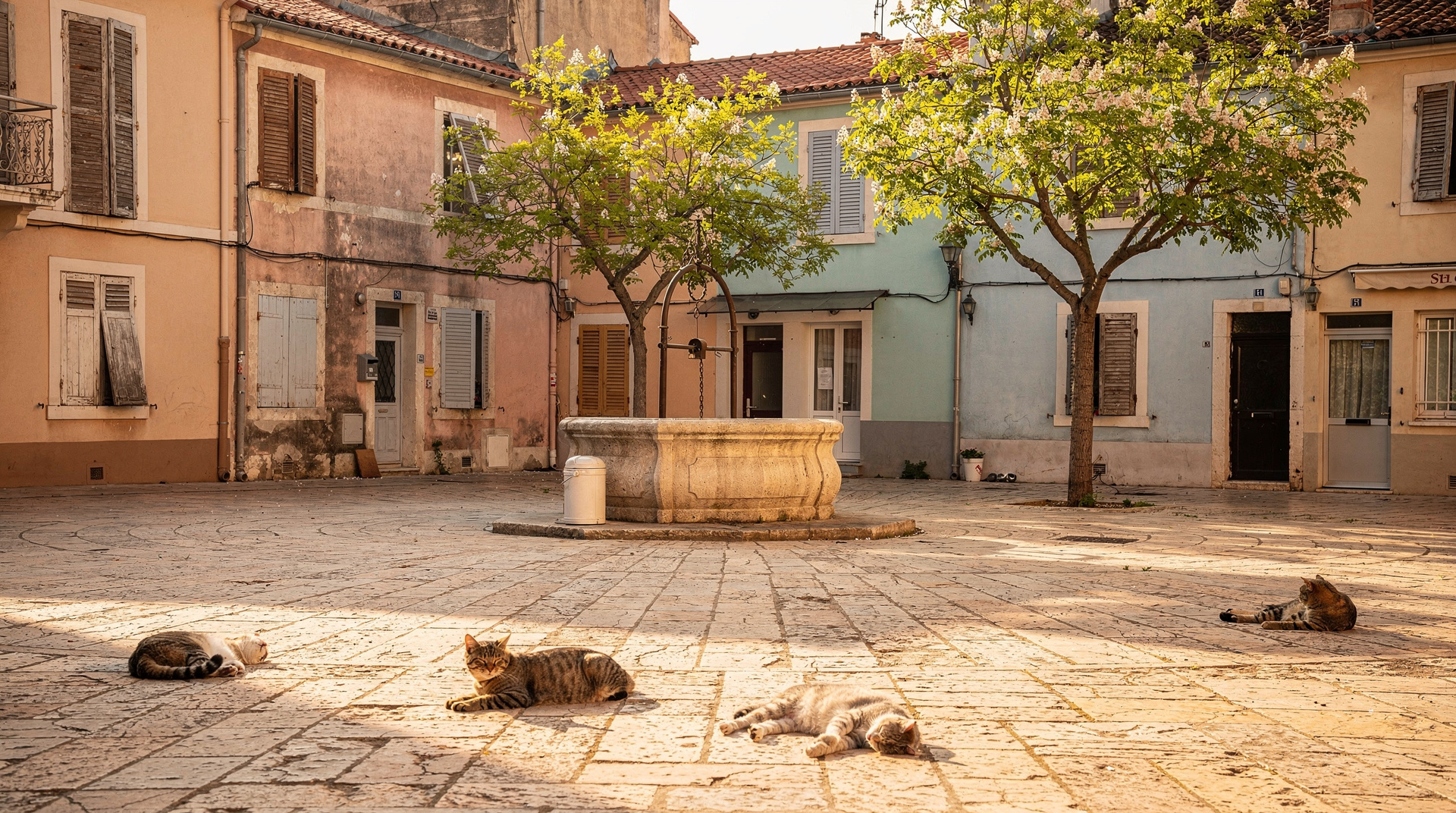
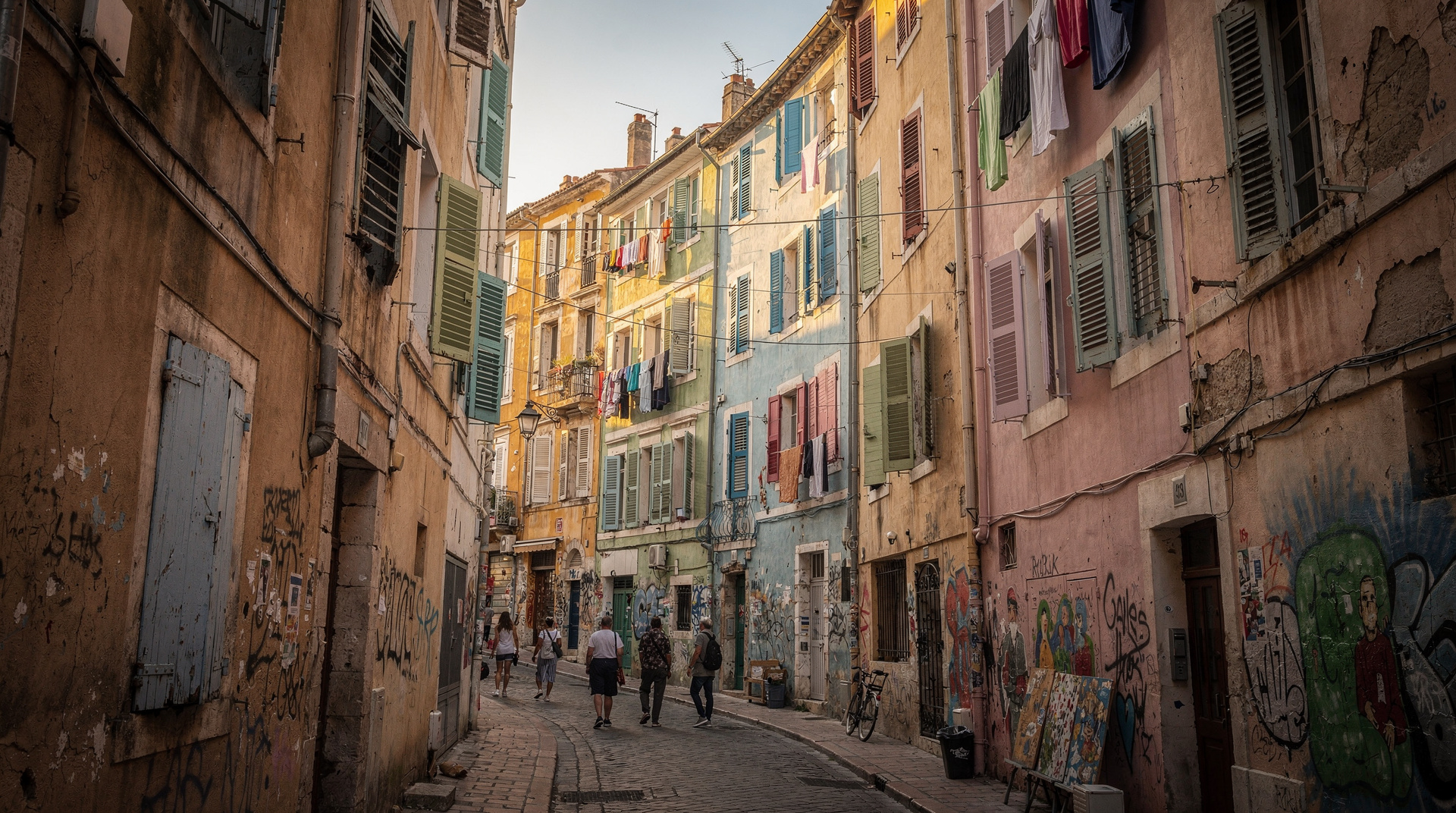
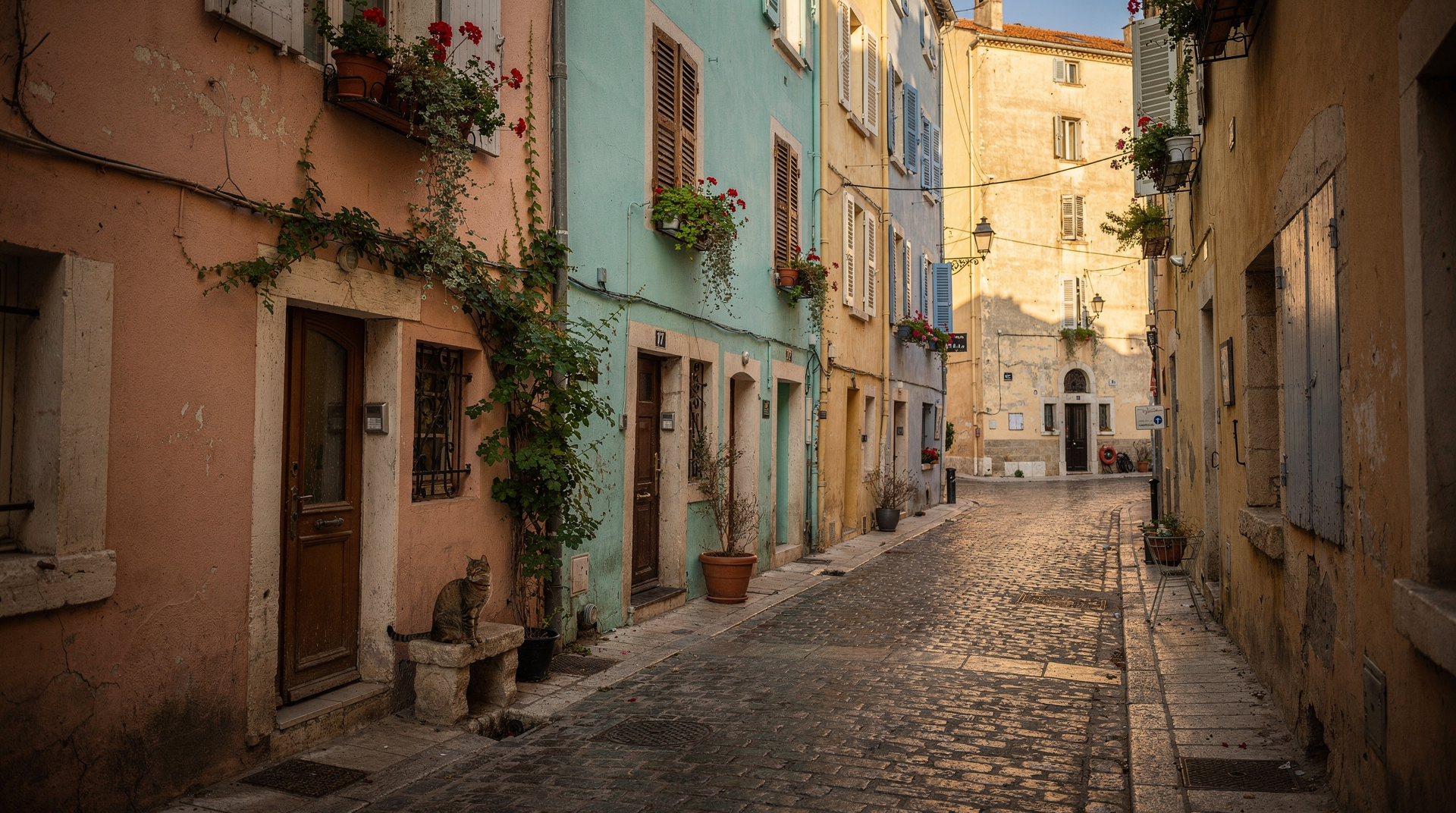
Le Panier is not organised for visitors — it is a lived neighbourhood that visitors happen to move through. The streets are narrow enough that two people walking side by side touch both walls. Staircases connect levels. Bougainvillea drapes over doorways. Laundry crosses from window to window across lanes too tight for anything but pedestrians.
The photography opportunities are consistent throughout — but the morning light from the east works well in the upper lanes, and the late afternoon sun warms the southern-facing walls with something close to gold.
Rue du Panier is the main pedestrian spine. Place des Moulins at the top of the hill was once the site of windmills and is now a quiet square with a good view. Rue Caisserie and Rue des Petites Maries connect lower Le Panier to the Quai du Port.
Street art in Le Panier
Le Panier is one of the original street art districts of Marseille. Large-scale murals cover end walls — some institutional, some unauthorised, most of them skilled. The concentration is not as dense as Cours Julien (where the murals are larger and more systematically curated), but the setting — pastel plaster walls, Mediterranean light, narrow lanes — makes the art here feel more embedded.
For the full street art picture, the Cours Julien quarter south of the centre is a better destination. But Le Panier has genuine examples worth seeking out, particularly around the Place du Refuge and the upper Rue du Panier.
Savon de Marseille: the soap workshop
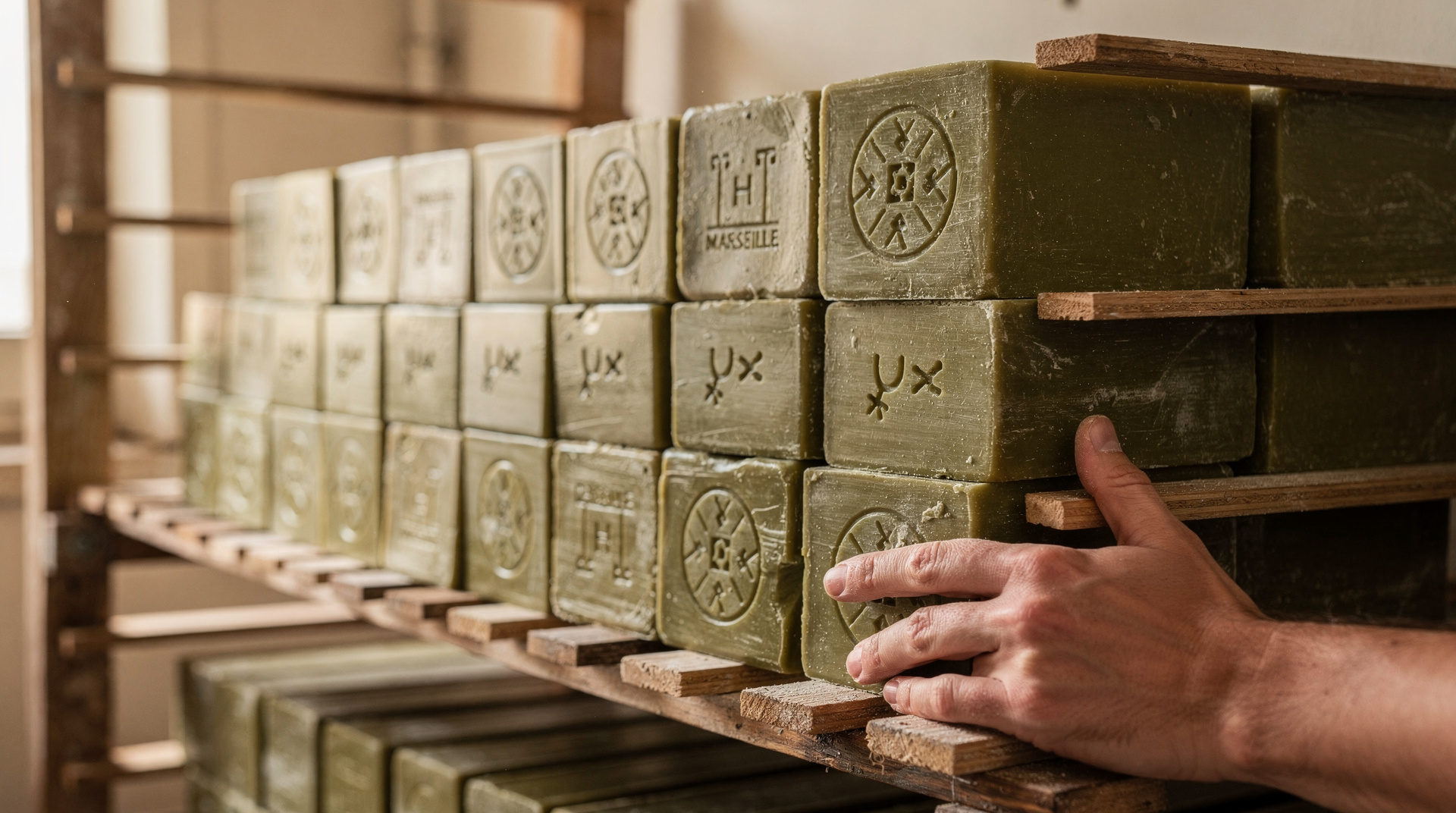
The Marseille soap tradition is linked to the city’s olive oil trade and was codified by royal decree in 1688 — only soaps made in the Marseille region using 72% vegetable oil could carry the name. The industry peaked in the 19th century with dozens of factories (savonneries) operating along the waterfront.
The MuSaMa soap museum and workshop is located in Le Panier and offers a genuine introduction to the craft — the history, the production process, and a workshop component where you can make a bar of traditional savon de Marseille. It is one of the better souvenir experiences in the city, combining something informative with something tangible.
For shopping, be selective. Marseille soap is sold everywhere, including many shops that sell mass-produced products from elsewhere with Marseille-style packaging. Look for soaps cut from large blocks (not wrapped individually) and check the label for the 72% huile végétale (vegetable oil) content.
Eating and drinking in Le Panier
The quarter has a handful of small cafés and restaurants. Prices are generally moderate. The best options for lunch are the small places tucked into the lanes rather than the terrace restaurants facing the main tourist routes near the Quai du Port entry.
In the evenings Le Panier becomes quieter — most residents and the restaurant action move down to the Vieux-Port or across to Cours Julien. The neighbourhood is pleasant for an early evening walk and aperitif, but not a nightlife destination.
What a guided walk adds
The layers of Le Panier — Roman foundations beneath a Genoese house beneath a 17th-century charity — are easier to read with a guide who knows what to look for. The difference between a building’s date of construction and its current use tells you the history of Marseille’s successive waves of immigration and reinvention. A guided walking tour of 2 hours covers this architecture, the street art, the soap history, and the wartime destruction with context that independent wandering cannot replicate. See the tour options above.
Combining Le Panier with the rest of the Vieux-Port area
A logical half-day sequence:
- Arrive at Vieux-Port métro station at 8:30 — walk to the fish market (Quai des Belges) for 30 minutes
- Head north uphill into Le Panier via Montée des Accoules — explore the lanes for 1.5 hours, including Vieille Charité
- Exit Le Panier at the Fort Saint-Jean side and visit MuCEM (entry from the fort footbridge)
- Lunch at Cours Estienne-d’Orves (south side of Vieux-Port, 5 min ferry ride)
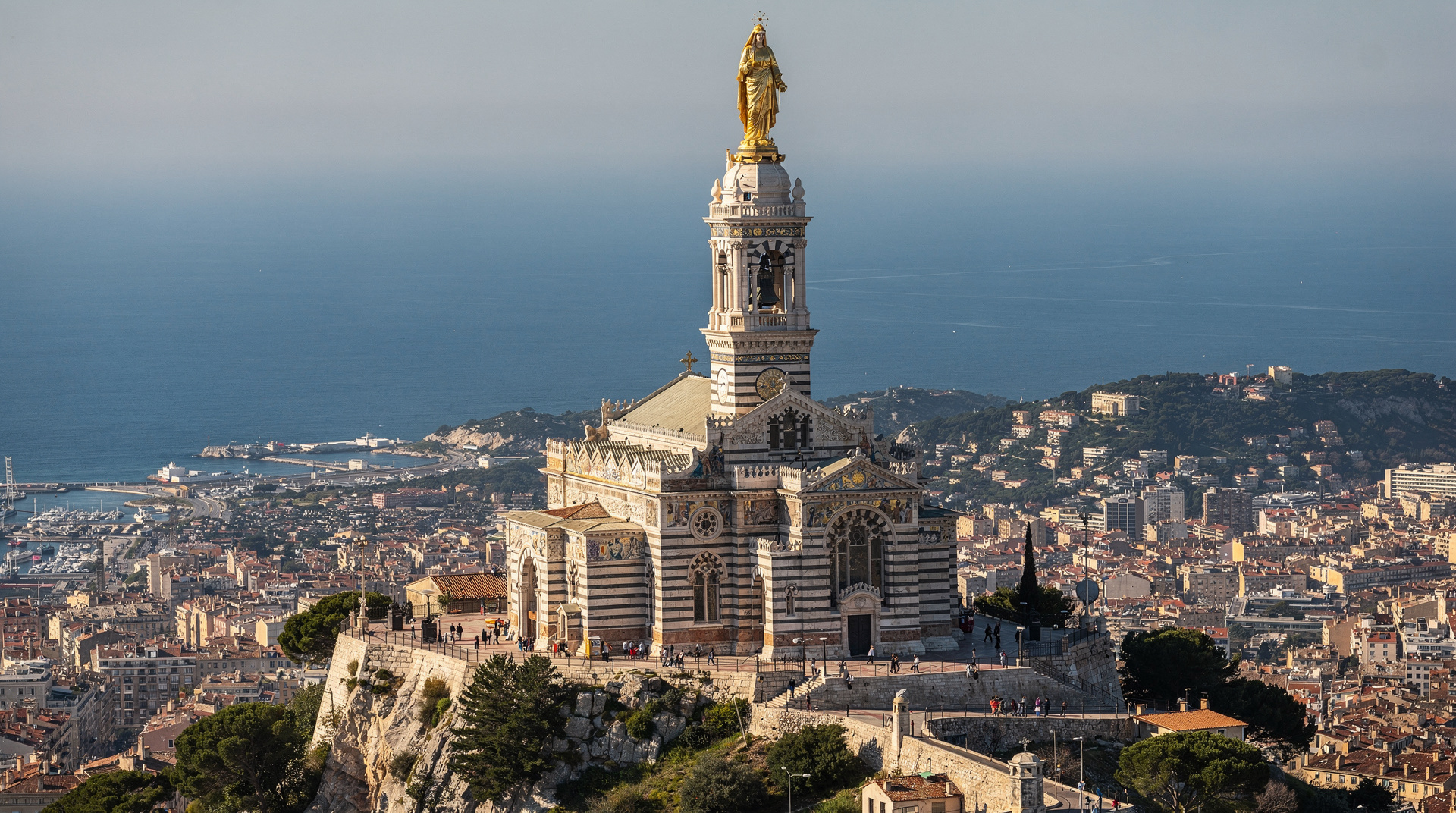
This takes a full morning and works best from around 8:30 to 13:30. Link it to an afternoon at Notre-Dame de la Garde or the Corniche for a complete Marseille first day.
For context on the wider Marseille neighbourhood picture, see our Marseille neighbourhoods guide and the where to stay guide if you are considering Le Panier as a base.
Practical tips for Le Panier
Timing: The neighbourhood is at its best before 11:00 and after 17:00. Midday in summer brings tour groups through the main lanes and reduces the atmosphere significantly.
Footwear: The streets are steep and the paving stones uneven — many sections are old cobblestone or bare limestone rock. Comfortable shoes with grip are advisable.
Heat: Le Panier’s narrow lanes provide shade, but the stairways and open spaces between buildings can be hot in July and August. Water is available at public fountains throughout the quarter.
Security: Le Panier is safe during the day and pleasant in the early evening. The streets below (closest to the Quai du Port) are somewhat quieter at night. Standard urban common sense applies.
Photography permissions: Most of the quarter is public space; photographing buildings, lanes, and street art is fine. Photographing private courtyards or residents without asking is not.
The border between Le Panier and the Joliette district
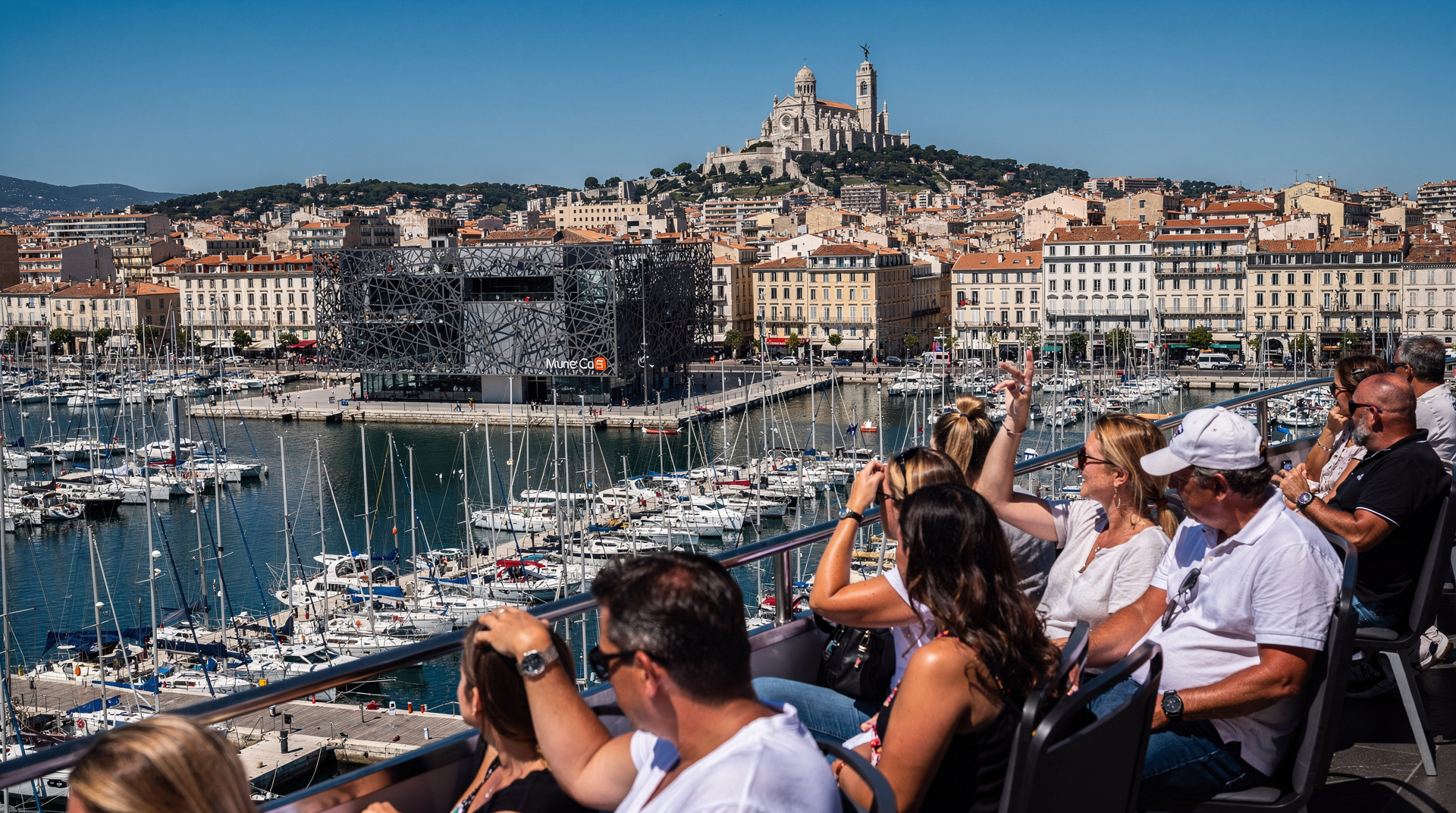
To the northwest of Le Panier, where the hill descends toward the sea, the neighbourhood transitions into the regenerated Joliette district — the new waterfront development that includes the Les Terrasses du Port shopping centre, the Mucem, and several cultural venues. The contrast between the narrow medieval lanes of Le Panier and the broad esplanades of the J4 development below is one of the more visually striking transitions in the city.
The walk from the highest point of Le Panier down through the quarter and out onto the J4 esplanade toward MuCEM takes about 20 minutes and covers approximately 2 kilometres of the most architecturally varied urban space in Marseille — from 17th-century stone hospice to 21st-century concrete museum, with everything in between.
Le Panier as a place to stay
Several small hotels and chambres d’hôtes are located in Le Panier, occupying converted buildings in the lanes. The advantages: quiet mornings, immediate access to the neighbourhood’s atmosphere, and proximity to the Vieux-Port on foot. The disadvantages: limited restaurant options in the evening (the action moves down to the Vieux-Port), steep streets with luggage, and limited parking. For most first-time visitors, the Vieux-Port area is a more practical base; Le Panier is better as a neighbourhood to visit than to sleep in unless you specifically want an immersive experience.
Le Panier vs Marseille’s other historic quarters
| Quarter | Character | Time needed | Best for |
|---|---|---|---|
| Le Panier | Oldest streets, artsy lanes, Vieille Charité | 2–3 hours | Photography, history, street art |
| Cours Julien | Bohemian, dense street art, bars and cafés | 2 hours | Nightlife, mural density |
| Vieux-Port | Working harbour, fish market, restaurants | 1–2 hours | Orientation, first stop in the city |
Museums in and around the Vieille Charité
Beyond the courtyard itself, the Musée d’Archéologie Méditerranéenne holds one of France’s better regional collections of Egyptian, Greek, and Etruscan artefacts, and the Musée des Arts Africains, Océaniens et Amérindiens covers colonial-era collections from France’s former territories. Both are ticketed separately from general entry and typically combine into a single museum pass; check current pricing on-site, as it varies by exhibition. For the wider museum landscape in the city, see the Marseille museums guide.
Frequently asked questions about Le Panier, Marseille
Is Le Panier safe to walk around, including at night? Yes during the day and in the early evening. Like most old-town quarters, the streets closest to the Quai du Port are quieter after dark; ordinary urban caution applies rather than any specific concern. See the is Marseille safe guide for the citywide picture.
Can you do Le Panier as a self-guided walk, or is a tour worth it? Both work. Self-guided is fine for photography and atmosphere; a guided walk (2 hours) adds the historical layering — Roman, Genoese, wartime demolition — that is easy to miss walking alone. See the tour options listed on this page.
Top experiences
Bookable activities with verified prices and instant confirmation on GetYourGuide.