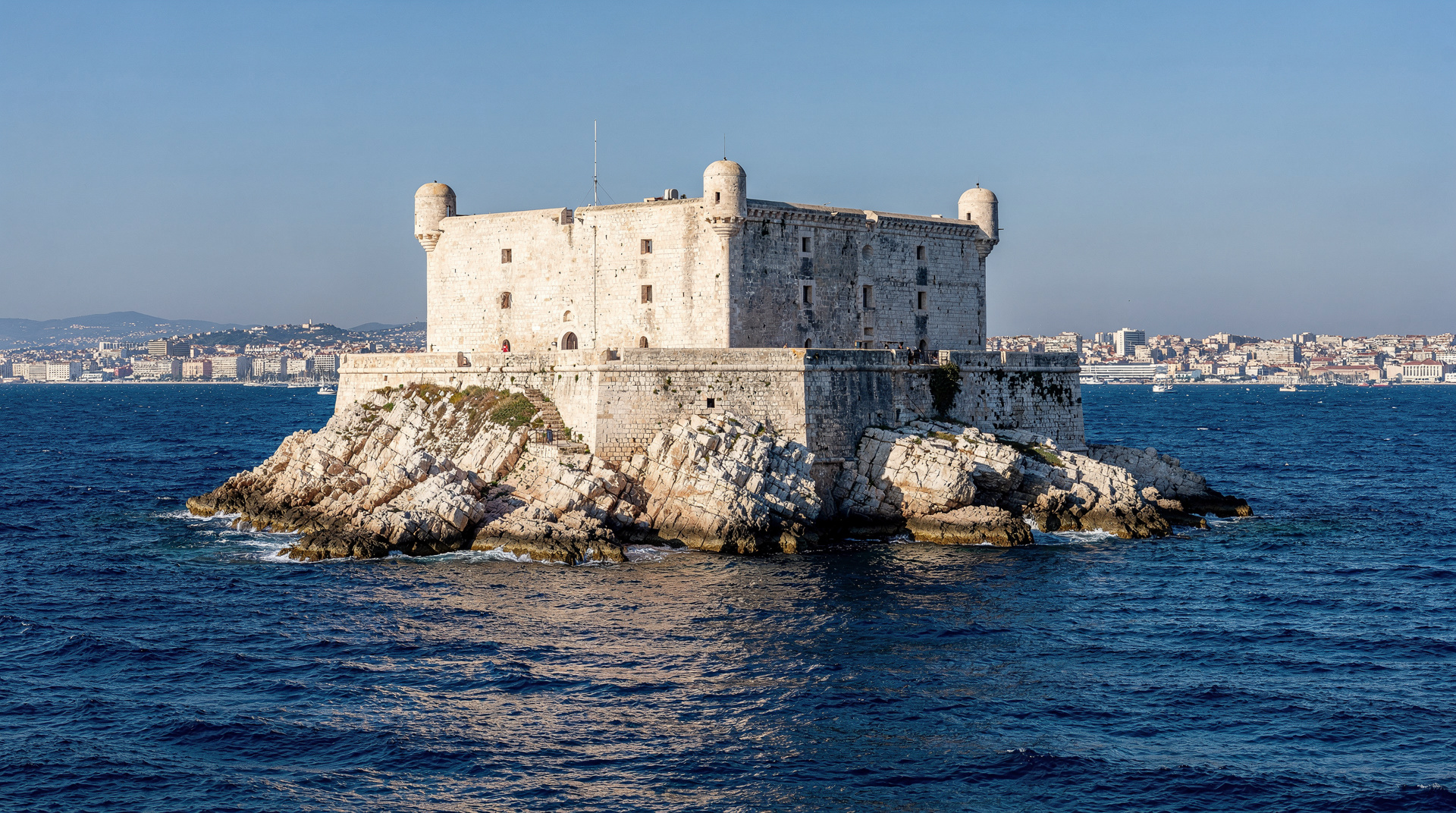
Vieux-Port, Marseille
The Old Port of Marseille: fish market, Forts Saint-Jean and Saint-Nicolas, the free cross-harbour ferry, and what to do in 2 hours.
Marseille: history and heritage of the Old Port boat tour
Quick facts
- Location
- Centre of Marseille, 1st arrondissement
- Time needed
- 2 to 3 hours on foot; longer if you sit
- Fish market hours
- Daily, roughly 8:00 to 12:00
- Cross-harbour ferry
- Free, runs continuously
- Nearest métro
- Vieux-Port (M1)
The harbour that made Marseille
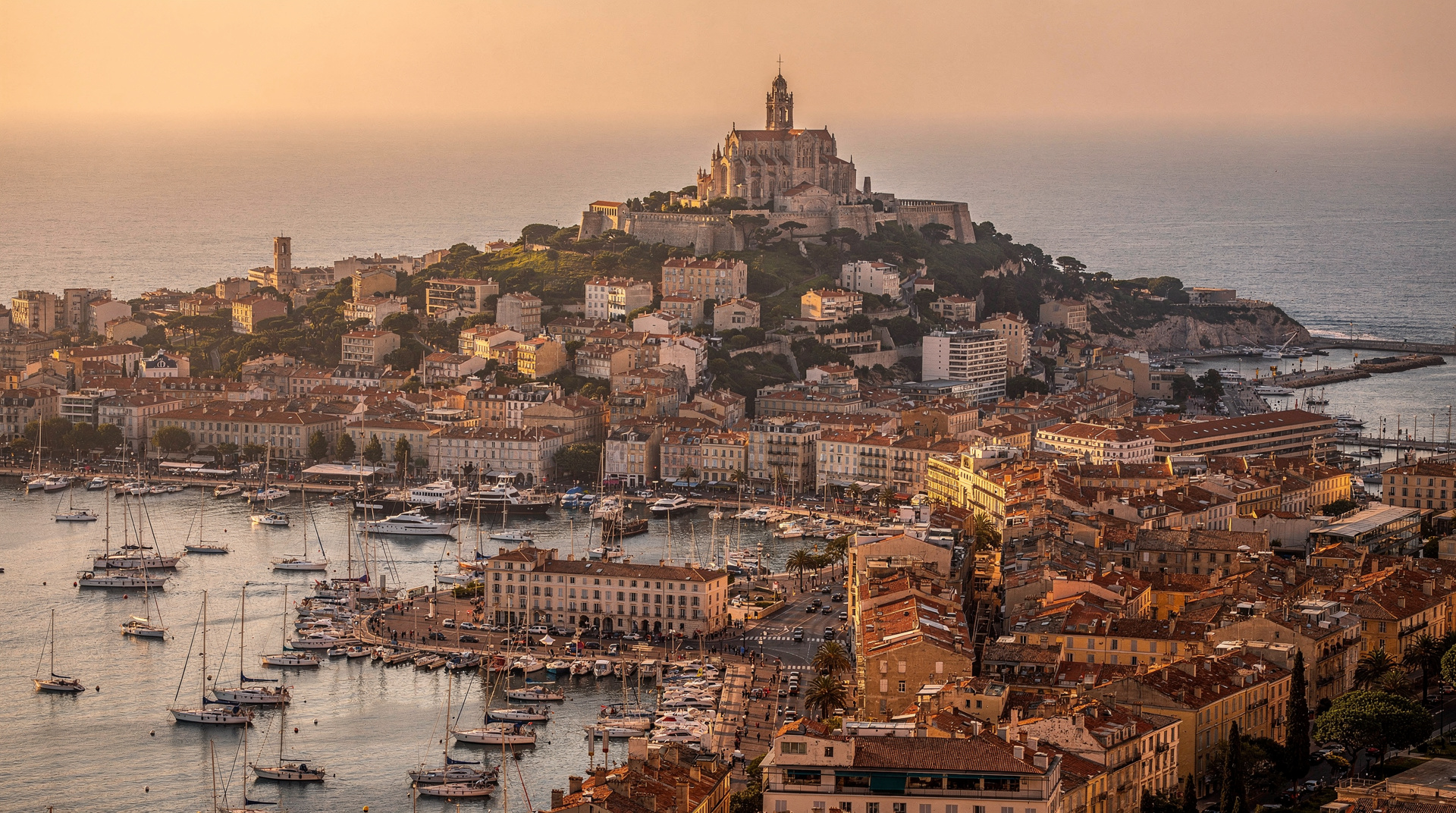
The Vieux-Port is not a monument to visit — it is the working heart of the city that happens to be beautiful. Greeks from Phocaea moored here in 600 BCE and called the place Massalia. The Romans deepened the harbour. The medieval city built its fortifications around it. Today, around 3,000 pleasure boats still moor here, and the fish market at the eastern quai runs every morning it has run for centuries.
| At a glance | |
|---|---|
| Where | Centre of Marseille, between Le Panier and the Corniche, 1st arrondissement |
| Cost | Free to walk the quais, cross by ferry, and visit the Fort Saint-Jean terraces; boat tours and MuCEM entry are paid |
| Time needed | 2–3 hours for the full quai circuit; a half day if you add MuCEM or a boat departure |
| Getting there | Vieux-Port métro station (M1), one stop from Gare Saint-Charles |
| Best time | Early morning for the fish market; late afternoon to sunset for the light on the water |
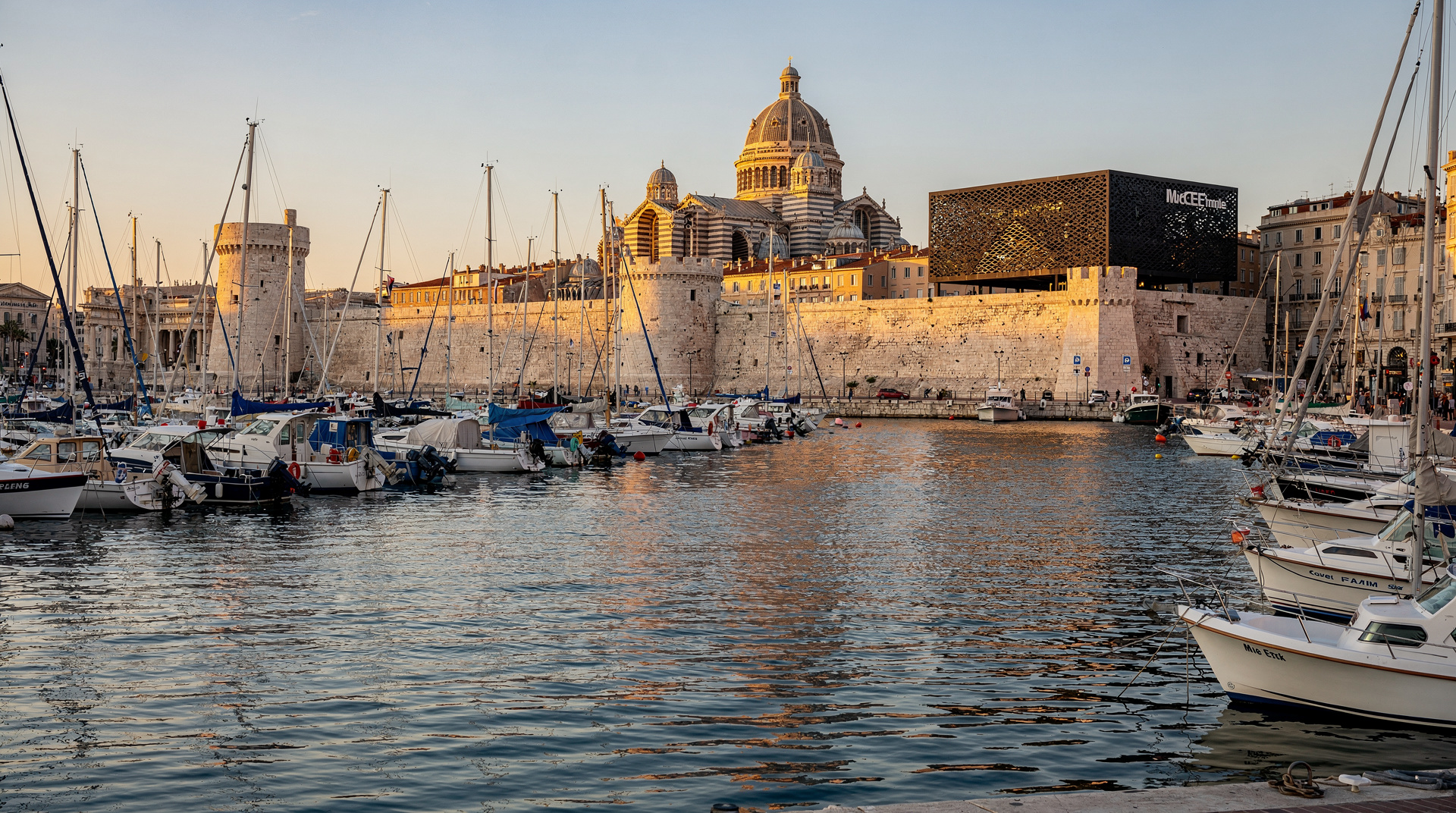
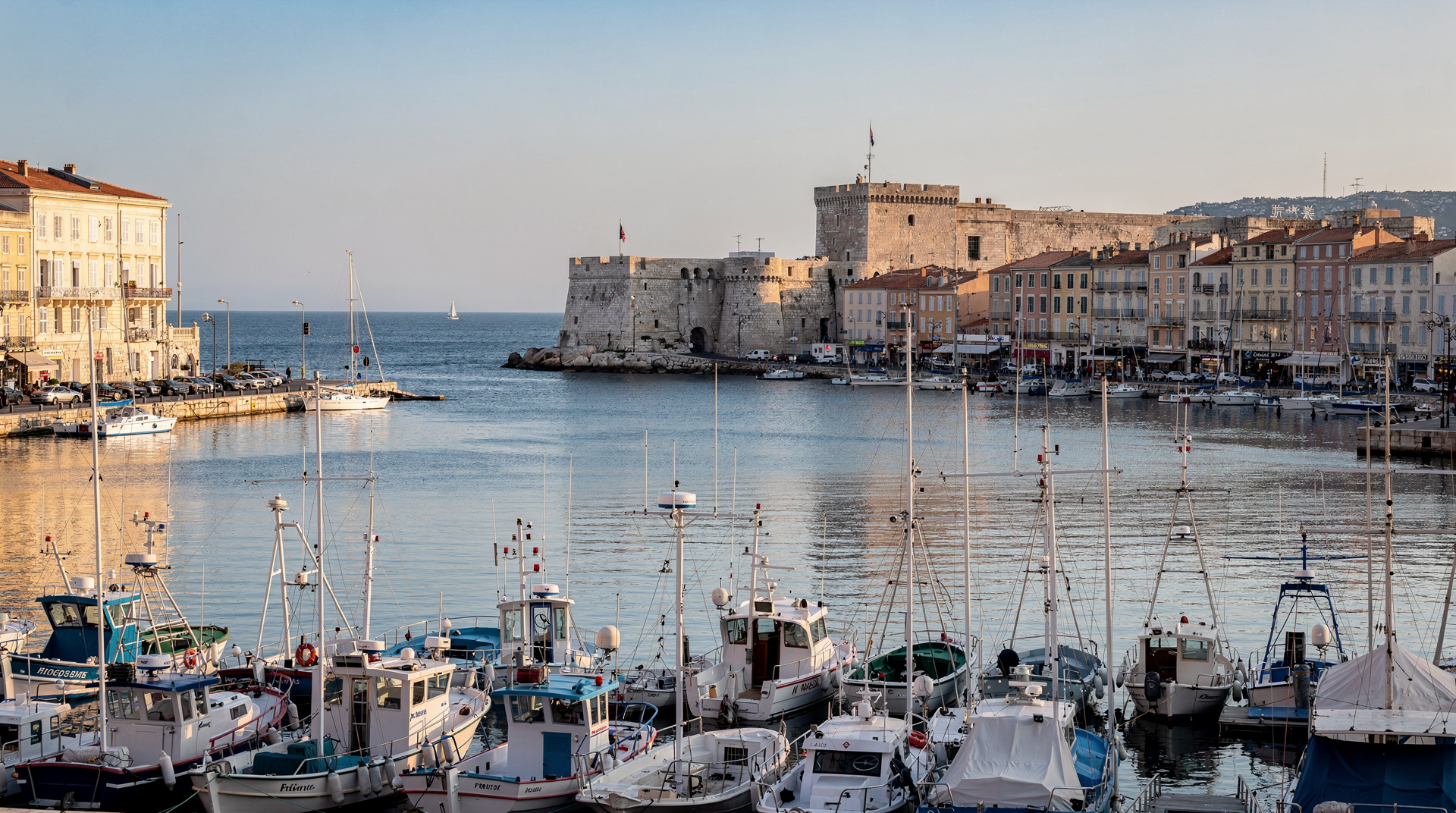
The long rectangular basin — roughly 1 km from the open sea to the Quai des Belges at the far end — is framed on its south shore by the Palais du Pharo and on its north by the rising hill of Le Panier. At the harbour mouth stand two fortresses facing each other across 300 metres of water, the remnants of the city’s defensive architecture and still among the most dramatic entries to any Mediterranean port.
Fort Saint-Jean and Fort Saint-Nicolas
The two forts are not symmetrical, and their histories differ.
Fort Saint-Jean was built on the northern headland in 1660 on the orders of Louis XIV, partly to control entry to the harbour and partly — it has to be said — to keep the notoriously independent Marseillais under royal authority. In 2013, it was integrated into the MuCEM complex, with a suspended footbridge linking the fort’s ramparts to the museum. The fort itself is free to explore during MuCEM opening hours. The view from the ramparts back toward the Vieux-Port is one of the best in the city.
Fort Saint-Nicolas stands on the southern headland. It is under restoration and not fully open to visitors, but its silhouette against the water — particularly at golden hour — is striking. The Palais du Pharo behind it (now a congress centre, built by Napoleon III for his wife Eugénie) sits on a promontory that gives another excellent panoramic view over the harbour mouth.
The fish market
Every morning from around 8:00 until noon, fishermen who have been out since before dawn sell their catch directly at the Quai des Belges, the eastern end of the Vieux-Port. This is not a decorative market for tourists — it is a real transaction, and the range of species varies completely with the day’s catch. Red mullet, sea bass, sea bream, octopus, sea urchins in season, and occasionally the bony rockfish used in proper bouillabaisse.
Arrive before 9:00 if you want to buy. After 10:00 the best items are gone. The market draws genuine crowds around the fish-sellers, which is also the key pickpocket hotspot in Marseille — hold bags across your body.
You do not need to buy to appreciate the market. Standing at the edge for twenty minutes watching the negotiations and the fish is an entirely legitimate morning activity.
The Ombrière
The giant reflective steel canopy at the Quai des Belges — designed by Norman Foster and installed in 2013 — is either loved or derided, depending on who you ask. It functions as a mirror: the city reflects on its underside, upside down, in a strange and rather beautiful way. It has become a reliable photography spot and a meeting point. The old fish auction hall (the criée) once stood on this spot.
The cross-harbour ferry
The navette du Vieux-Port is a free cross-harbour ferry running from the Quai des Belges on the north side to the Quai de Rive Neuve on the south. The trip takes about 5 minutes and runs continuously throughout the day and into the evening. It is the most sensible way to cross the harbour without walking the full perimeter, and one of the few genuinely free pleasures in the city. Tourists routinely miss it; locals use it constantly.
Walking the quais
A full circuit of the Vieux-Port — from Quai des Belges along the north quai (Quai du Port) to Fort Saint-Jean, across the footbridge into MuCEM, back along the south quai (Quai de Rive Neuve) past the marina, and returning on the cross-harbour ferry — takes about 90 minutes at a relaxed pace. This is one of the better short urban walks in France.
Quai du Port (north side) is more utilitarian — bars, some restaurants, the embarkation points for ferries to the Frioul Islands and Château d’If, and the entry to Le Panier uphill to the right.
Quai de Rive Neuve (south side) has more restaurants, the Théâtre National de la Criée (built in the old fish auction buildings), and the climbing approach to Notre-Dame de la Garde up through the Endoume neighbourhood.
Sunset at the Vieux-Port
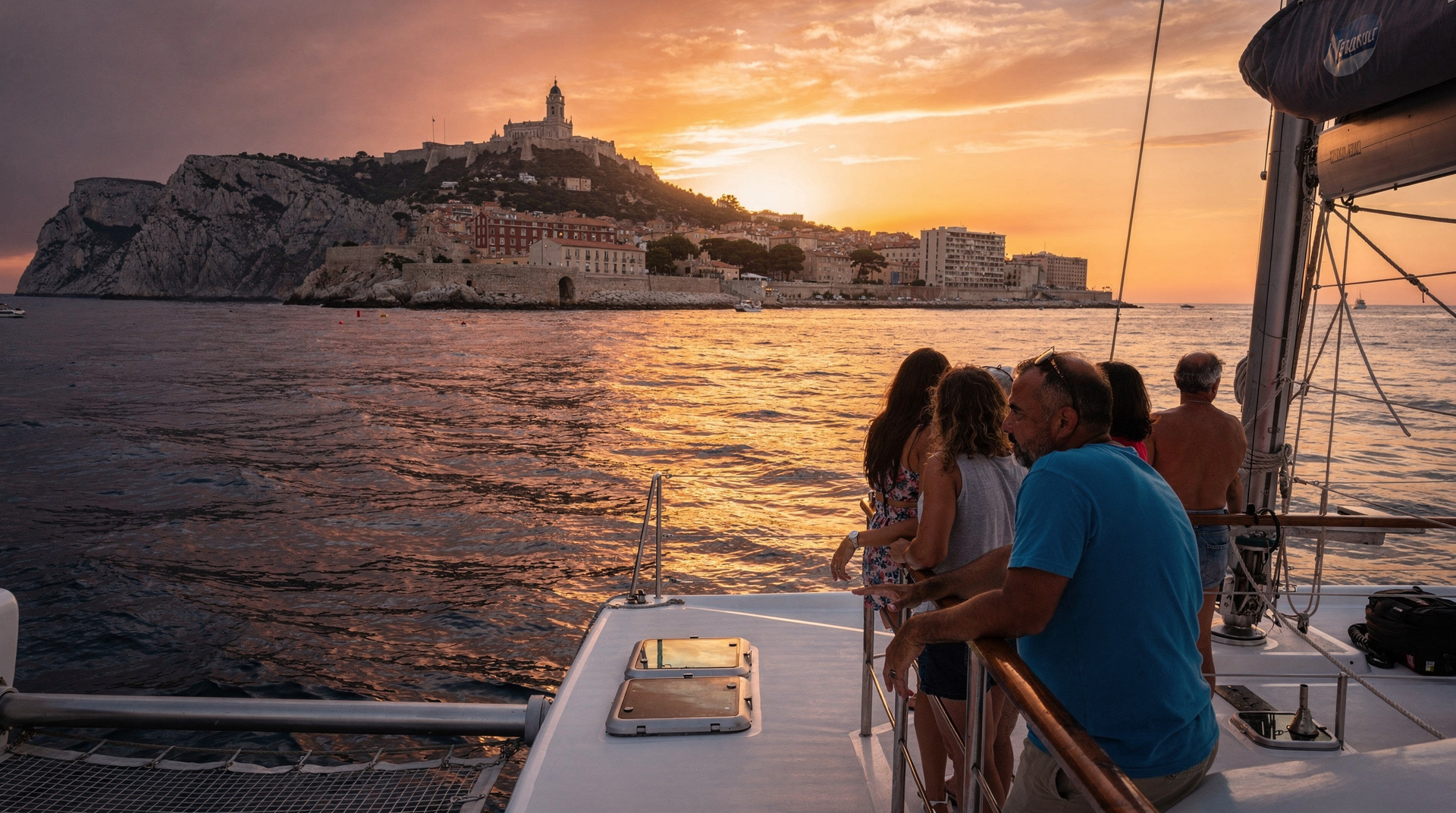
In late afternoon from about May to September, the western-facing harbour entrance catches the setting sun. The light on the water — and on the white stone of the two forts — is exceptional from roughly an hour before sunset. The bars and restaurants along Quai de Rive Neuve fill up at this point. A glass of pastis or a local rosé, facing west toward the sea, is arguably the canonical Marseille experience.
Several sunset catamaran cruises depart the Vieux-Port in the late afternoon and spend 1.5–2 hours on the bay as the light changes. This is a good option for first-time visitors who want to see the city from the water without committing to a full Calanques day trip.
Boat tours departing the Vieux-Port
The Vieux-Port is the departure point for most organised boat activity in the region:
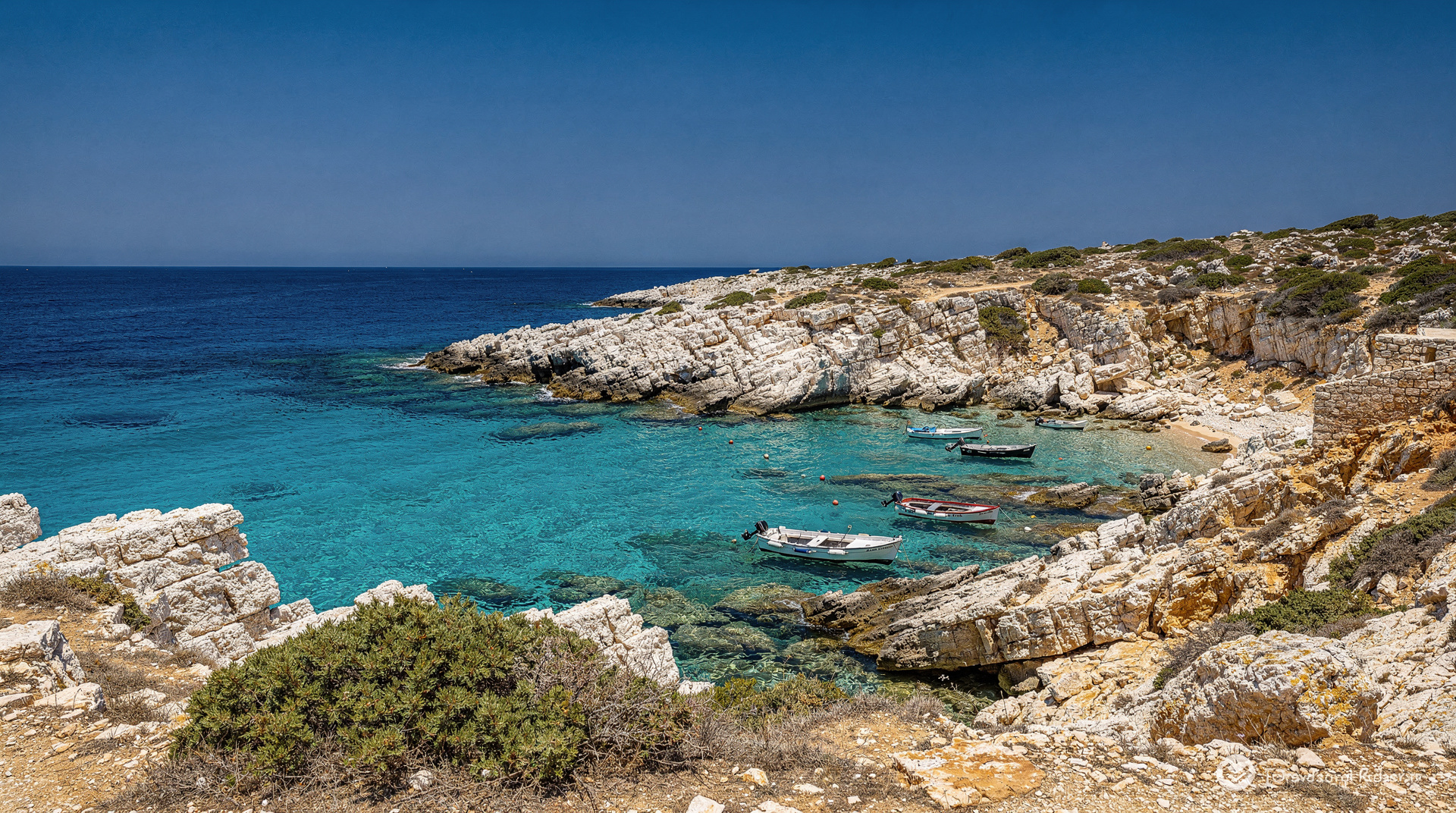
- Frioul Islands (25–30 minutes, regular ferry from Quai du Port)
- Château d’If (15–20 minutes, ferry from Quai du Port)
- Calanques boat tours (3–4.5 hours return, multiple operators at Quai du Port)
- Sunset cruises (1.5–2 hours, various operators)
For the Frioul and Château d’If public ferries, tickets are purchased at the kiosk near the ferry landing on Quai du Port; ferry tickets are around 11 EUR return for Château d’If, around 14 EUR for Frioul Islands. These are public ferry prices; guided tour boats are priced differently.
What to eat around the Vieux-Port
The tourist-facing restaurants on the north quai are expensive and mediocre on average. Exceptions exist — but the smart move is to walk one or two streets back from the waterfront.
The streets between Quai de Rive Neuve and the Cours Estienne-d’Orves square (200 metres south of the harbour) contain several excellent addresses. The square itself is lively and has reasonable options for breakfast and lunch.
For bouillabaisse, do not choose based on location — choose based on the Charte de la Bouillabaisse membership. See our complete bouillabaisse guide for verified restaurants.
Getting to the Vieux-Port
The Vieux-Port métro station (M1 line, purple) deposits you directly at the Quai des Belges. From Gare Saint-Charles, one stop on M1 brings you here in under 5 minutes (or a 15-minute walk downhill). From Cours Julien, it is a 10-minute walk. The hop-on hop-off bus stops at the Vieux-Port.
The MuCEM from the Vieux-Port
One of the best things you can do from the Vieux-Port without paying anything is to walk to the MuCEM. Cross the Quai du Port to the Fort Saint-Jean end, cross the footbridge into the fort, and the MuCEM is directly below you via a second bridge. The exterior terraces and gardens of MuCEM — the rooftop walkways, the vertical garden, the esplanade below — are free to access during museum opening hours (Wednesday to Monday, 10:00–18:00). The building itself, the view back across the Vieux-Port, and the connection between the 17th-century fort and the 21st-century museum are worth the 20-minute walk from the fish market end.
If you decide to enter the museum (entry 11 EUR), the current exhibitions at MuCEM cover the civilisations and history of the Mediterranean world — an appropriate choice for a museum at the historic gateway between France and the sea.
Photography spots at the Vieux-Port
The Vieux-Port is one of the most photographed urban harbours in France. The best positions:
Eastern end (Quai des Belges): Looking west toward the harbour mouth with the two forts in the background. Best in the morning when the light comes from the east. The Ombrière canopy gives an unusual reflected image of the port, upside-down in its steel surface.
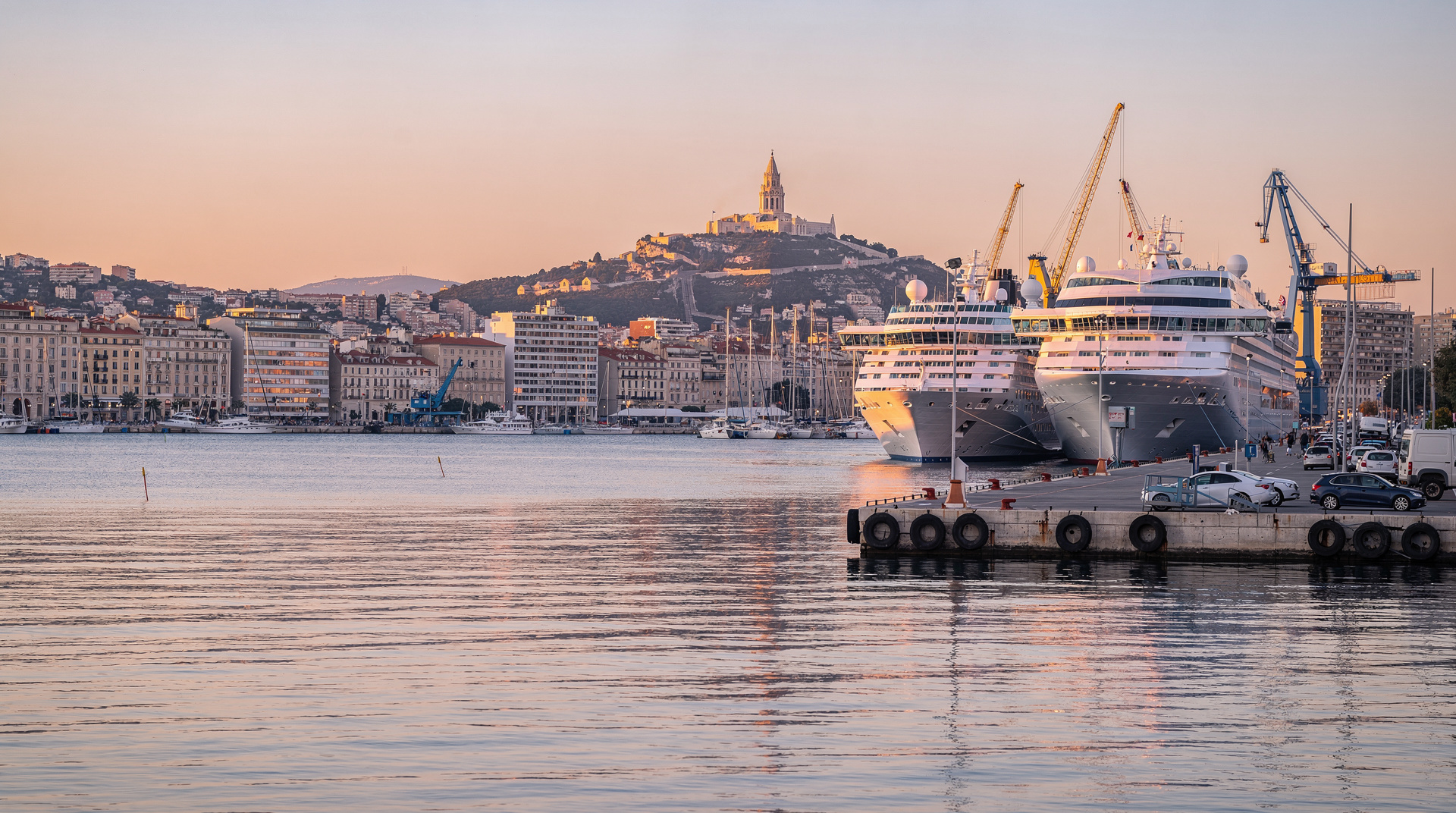
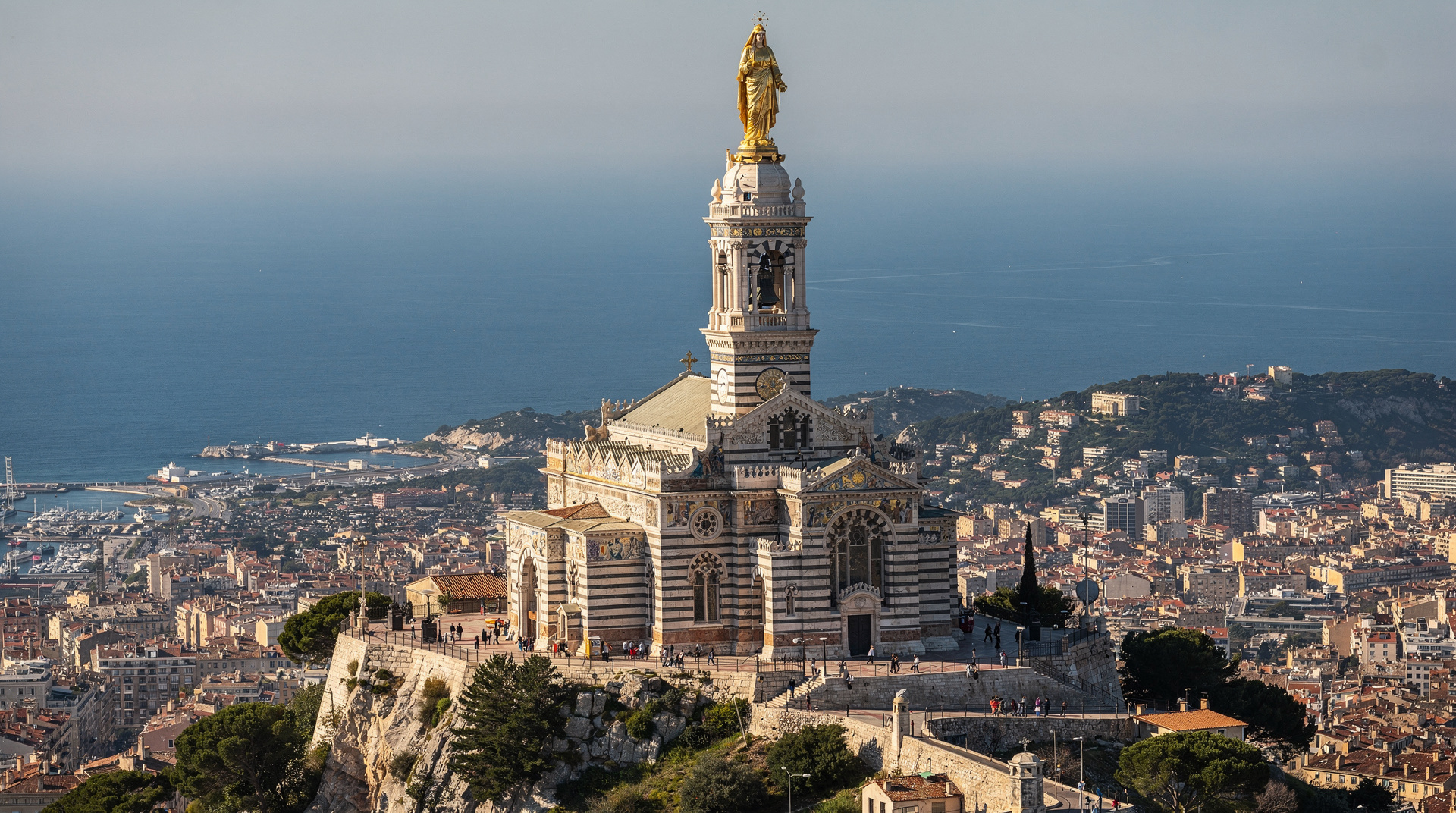
Fort Saint-Jean end: Looking back east across the full length of the harbour toward the city, with Notre-Dame de la Garde visible on its hill in the background. Late afternoon light from the west is ideal.
Cross-harbour ferry (at water level): Being on the water at harbour level — even for the 5-minute crossing — gives a perspective on the port that changes the sense of scale.
Sunrise: The Vieux-Port at sunrise (before the fish market fills) is very quiet and the early light on the water is unusually flat and beautiful. Few tourists, active fishermen, and the city just beginning to wake.
What the Vieux-Port looked like before
The harbour visible today is the result of near-total reconstruction. Retreating German forces dynamited the historic quarter around the north quai in January 1943, destroying roughly 1,500 buildings and displacing tens of thousands of residents in one of the most brutal urban demolitions of the Second World War in France.
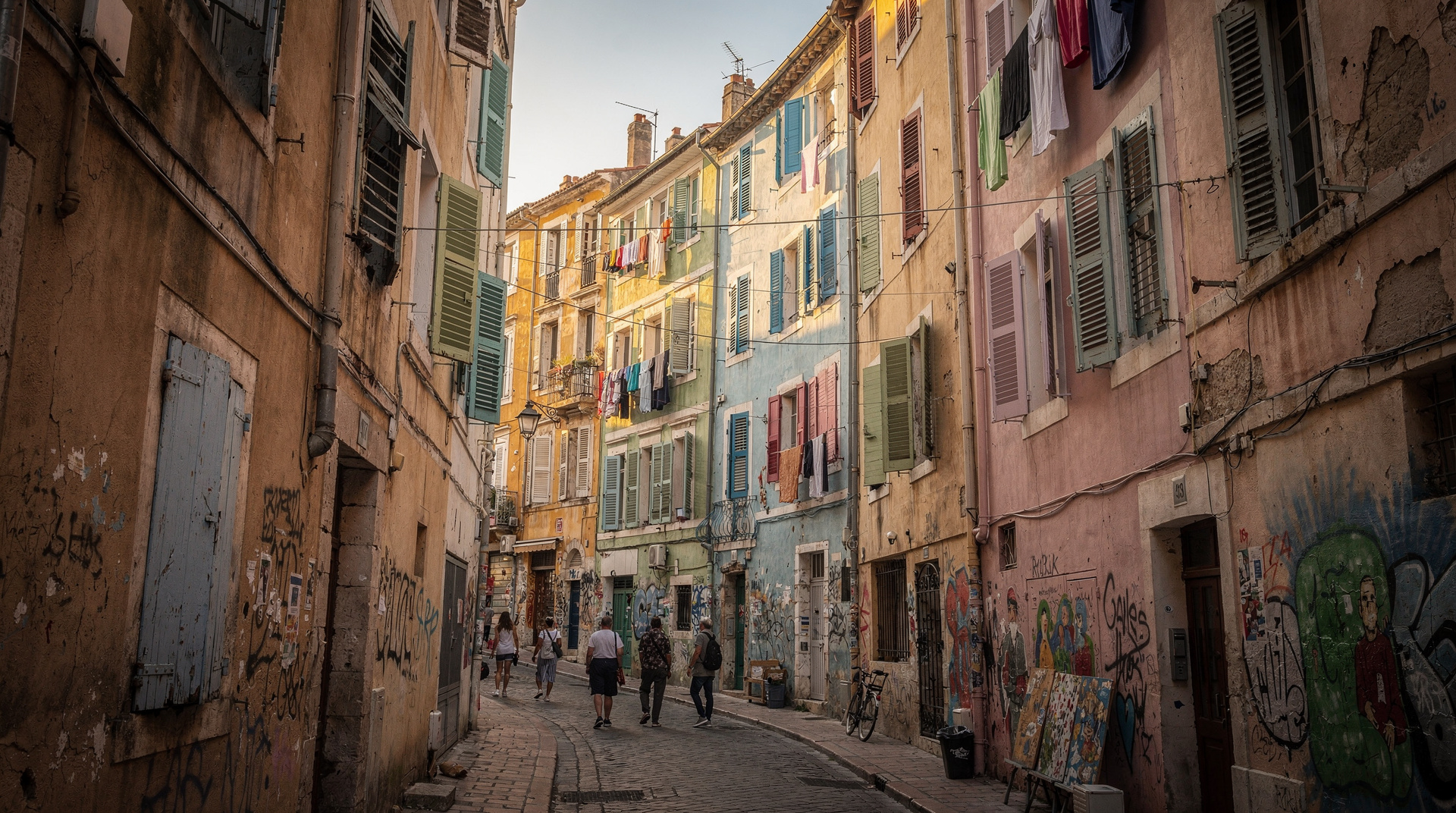
The post-war reconstruction, overseen by architect Fernand Pouillon, rebuilt the Quai du Port in a restrained, uniform limestone-faced style that still defines the harbour’s north edge — elegant but noticeably more regular than the organic, centuries-old lanes of Le Panier just uphill, which escaped the worst of the destruction. Knowing this history changes how the harbour reads: the apparent age of the Vieux-Port is partly genuine (the forts, the basin itself) and partly a careful 1950s reconstruction.
A short list of things easy to miss
Most visitors see the Ombrière, the fish market, and the forts, then move on. A few details reward slower attention: the bronze plaques along Quai du Port marking the tide levels of historic floods; the small chapel of Notre-Dame-des-Accoules visible on the Le Panier hillside above the north quai; and the view back down the harbour from partway up the climb toward Notre-Dame de la Garde, where the full rectangular shape of the basin becomes clear in a way it never does at water level.
Where the Vieux-Port sits in a Marseille visit
The Vieux-Port is the starting point for essentially everything. Boats to the Calanques, Frioul, and Château d’If all leave from here. The main tourist attractions fan out in every direction: Le Panier uphill to the north, Notre-Dame de la Garde and the Corniche to the south, MuCEM to the northwest, and Cours Julien 15 minutes east. It is also where the métro puts you when you arrive from the train station.
The strategic approach for most visits: arrive at the Vieux-Port, orient yourself using the harbour as the reference point, and then move outward. If you have one day, the Vieux-Port is the beginning and end point. If you have more time, it is the axis around which everything else organises.
Connecting from the Vieux-Port
- Le Panier — 10-minute walk uphill from the north quai
- Notre-Dame de la Garde — 40-minute walk uphill or bus 60
- Frioul Islands — 25–30 min by ferry from Quai du Port
- Château d’If — 15–20 min by ferry from Quai du Port
- Ferry guide: Frioul and Château d’If — schedules, tickets, what to see
- Vallon des Auffes — 20-minute coastal walk south along the Corniche
- Marseille for first-timers — how to sequence the Vieux-Port with other city highlights
Top experiences
Bookable activities with verified prices and instant confirmation on GetYourGuide.