Do you need a car in Provence?
From Marseille: the most beautiful villages of the Luberon
Duration: 8 hours
Do you need a car to travel in Provence?
For Marseille, Cassis, Aix-en-Provence, Arles and Avignon: no. Trains and buses cover these well. For Luberon, Valensole lavender, Gorges du Verdon and the Camargue interior: yes, a car is effectively required.
The honest answer first
Provence is not a monolith. The question “do I need a car in Provence?” has a different answer depending on exactly where you want to go. Many visitors over-plan around the assumption that a car is essential, when in fact Marseille, Cassis, Aix-en-Provence, Arles, and Avignon are all efficiently reachable and navigable by train. Others under-plan, assuming trains and buses can do what only a car actually makes possible — and then discover that the Luberon’s perched villages, Valensole’s lavender plateau, and the Gorges du Verdon require wheels.
Here is the honest destination-by-destination breakdown.
If you are still shaping the trip itself, the Marseille and Cassis in 2 days plan and the car-free 4-day itinerary show how far trains alone can take you. For the opposite approach, the Provence road trip in 7 days is built around a rental car.
At a glance
| No car needed | Marseille, Cassis, Aix-en-Provence, Arles, Avignon |
| Car (or guided tour) required | Luberon, Valensole, Verdon Gorge, Camargue |
| Typical rental cost | Around EUR 40-70/day for a compact car, plus tolls |
| Toll cost, return trip | Around EUR 5-15 on major autoroute runs |
| Central Marseille parking | Around EUR 2.50-3.50/hour, EUR 25-35/day |
| Best strategy | Rent only for the specific car-required days, not the whole stay |
Where you do NOT need a car
Marseille
Zero car required. The city has a functional metro, tram, and bus network. Parking in central Marseille costs 2.50–3.50 EUR per hour, and finding a space near the Vieux-Port or Le Panier is genuinely difficult. Within the tourist zone — Vieux-Port, Le Panier, MuCEM, Cours Julien, Notre-Dame de la Garde, Joliette — everything is reachable by public transport or on foot. See our getting around Marseille guide for the full network picture.
The only Marseille-area exception: if you want to drive to the Calanques from the Goudes or Luminy trailheads, you need a car (or the bus, which takes longer). But for city sightseeing: no car needed.
Cassis
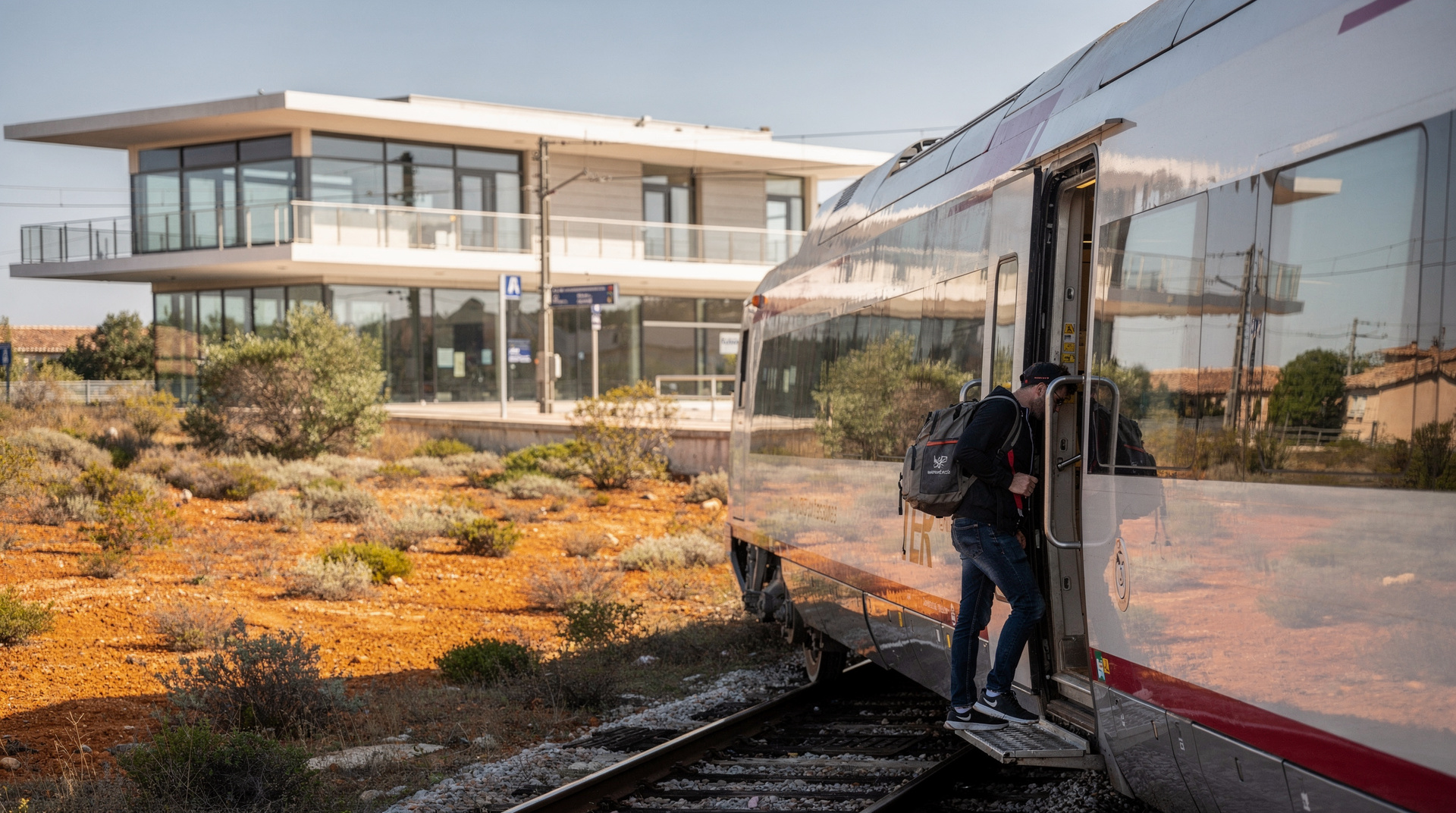
Cassis is 22 kilometres east of Marseille and reachable by TER train in approximately 22 minutes from Gare Saint-Charles. Fares start at around 7 EUR. The train station is about 3 km from the port and town centre, but a local bus shuttle (Ligne M1, the Marcouline line) connects the station to the centre in around 10 minutes.
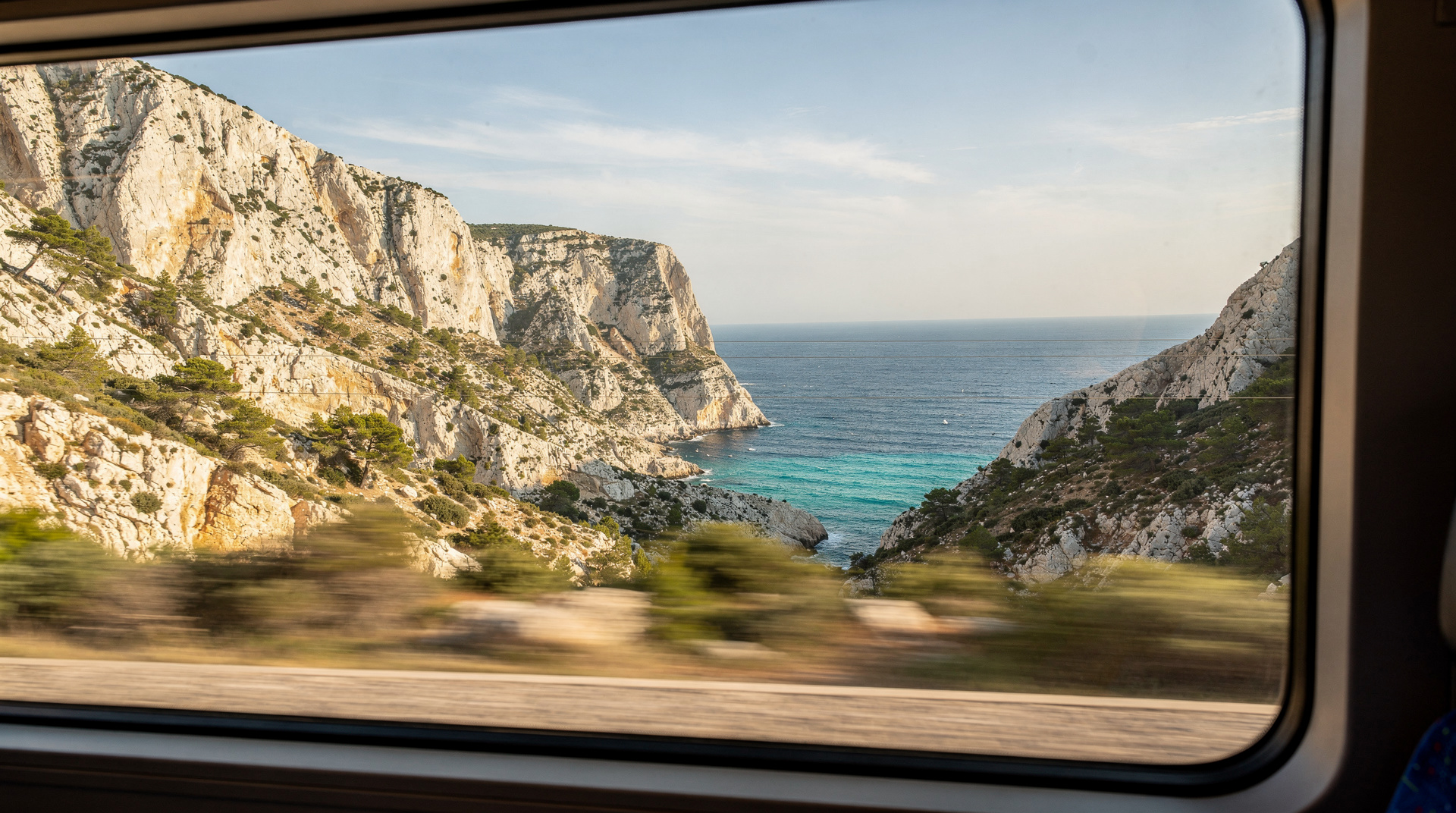
Once in Cassis, everything worth doing is walkable: the port, the beaches, the coastal path toward the Calanques. For the Calanques from Cassis specifically — En-Vau, Port-Pin, Port-Miou — the paths start at the edge of town and require no car.
Car caveat: Cassis is beautiful, which means it is also extremely crowded in summer. If you drive, parking in Cassis in July and August is a serious problem — the town has implemented a shuttle system replacing much of its car parking. Arriving by train avoids this entirely.
For more on the town itself, see the Cassis destination page and our Cassis day trip guide.
Aix-en-Provence
Aix is 30 kilometres north of Marseille, served by TER train roughly every 30 minutes from Gare Saint-Charles. Journey time is approximately 35–45 minutes to the Aix-en-Provence Centre station (note: Aix-en-Provence TGV station is 8 km from the city centre and not useful unless you are connecting directly from Paris by TGV). Fares from Marseille to Aix Centre start at around 7–8 EUR.
Aix-en-Provence itself is a compact, walkable city. The old town around Cours Mirabeau and the market squares is best explored on foot. The city has excellent pedestrian zones and no need for a car once you are there. The Aix-en-Provence day trip guide and the Marseille vs Aix comparison help you decide how much time to give it.
Arles
Arles is approximately 1 hour by TER train from Marseille Gare Saint-Charles, with fares typically 12–17 EUR. The train arrives at Arles station, which is a 10-minute walk from the Roman arena (Amphithéâtre) and the old town.
Everything in Arles that visitors come for — the Roman monuments, the Van Gogh trail, the medieval churches, the Fondation Vincent van Gogh museum — is concentrated in a compact area walkable from the station. Our Arles day trip guide and the Van Gogh in Arles guide lay out a walking route. Organised day tours from Marseille that include Arles are plentiful; see our day trips guide for comparison.
Avignon
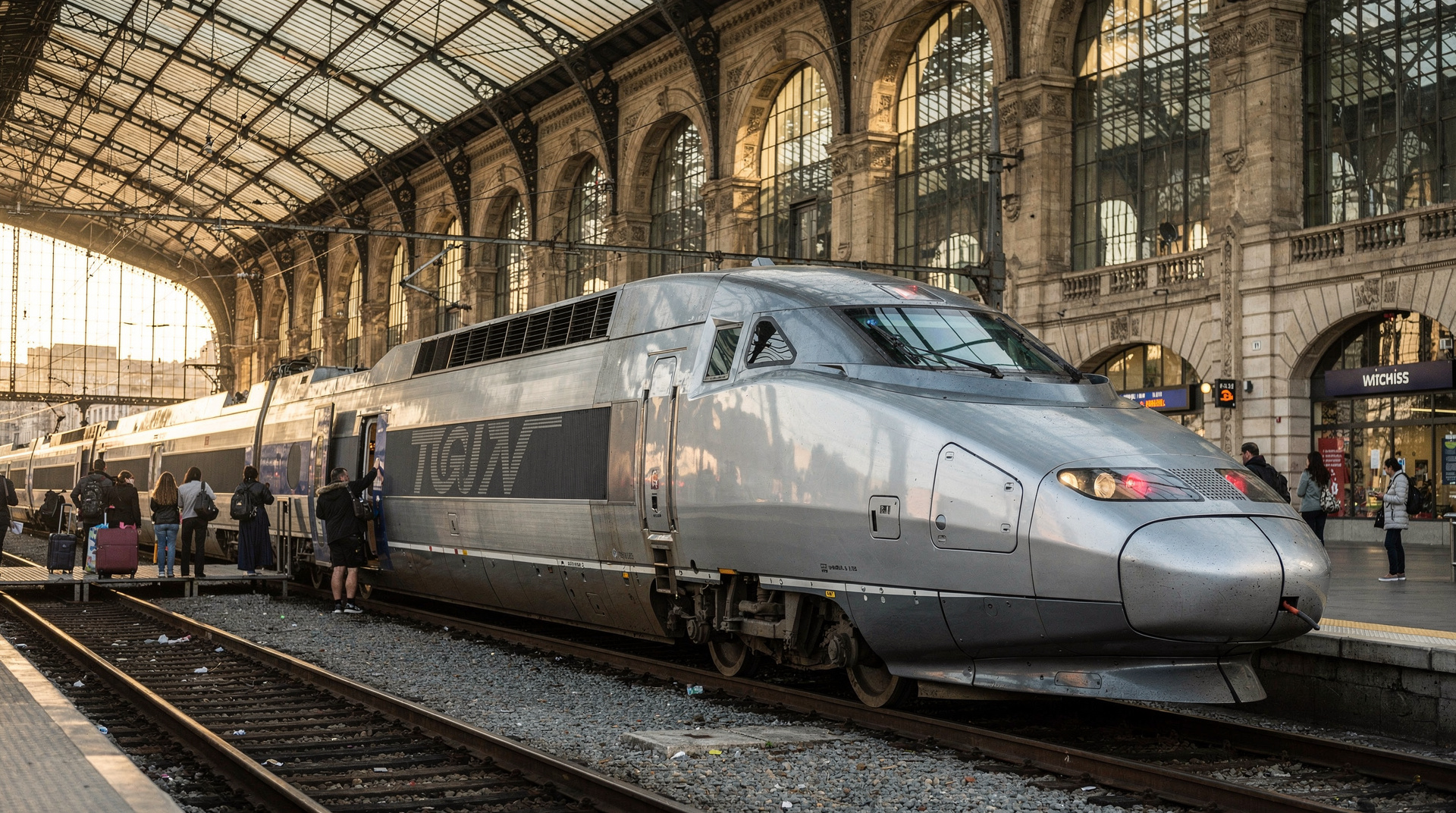
Avignon has two stations. Avignon Centre station is inside the old city walls, an easy walk from the Palais des Papes and the main sights. Avignon TGV station is 4 kilometres outside the ramparts, connected to Avignon Centre by a shuttle bus (approximately 20 minutes, about 2 EUR) or a short taxi. From Marseille by TGV, journey time is approximately 40 minutes (arriving at Avignon TGV). From Marseille by TER, roughly 1 hour (arriving at Avignon Centre).
Book the TGV if speed matters and you need to be back in Marseille for dinner. If you have a full day, the TER to Avignon Centre means you step off the train directly into the city — and at lower cost.
Once in Avignon: no car needed. The Palais des Papes, the Pont d’Avignon, the old town, and the main museums are all within the fortified perimeter and walkable.
Where you DO need a car
Luberon
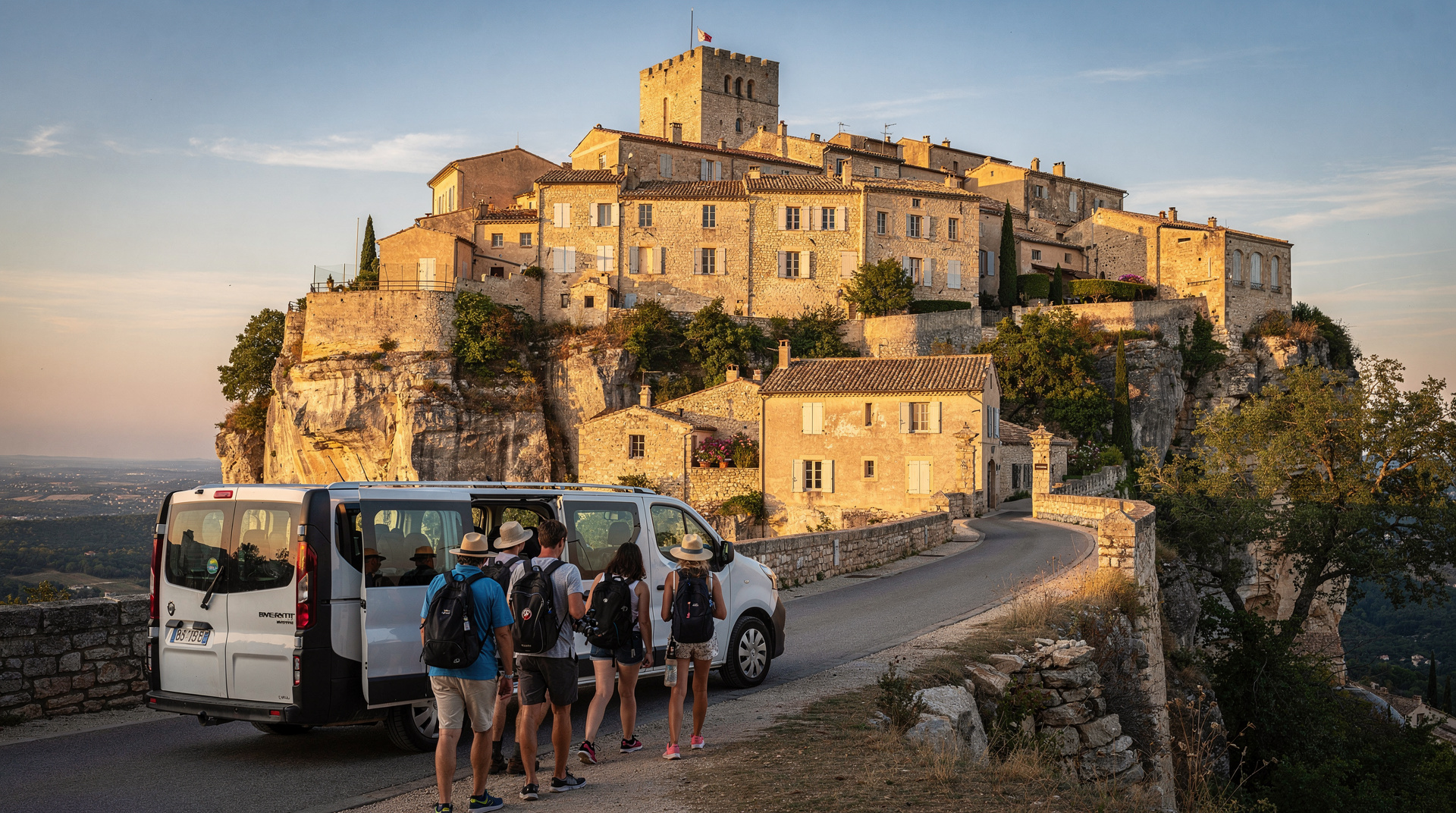
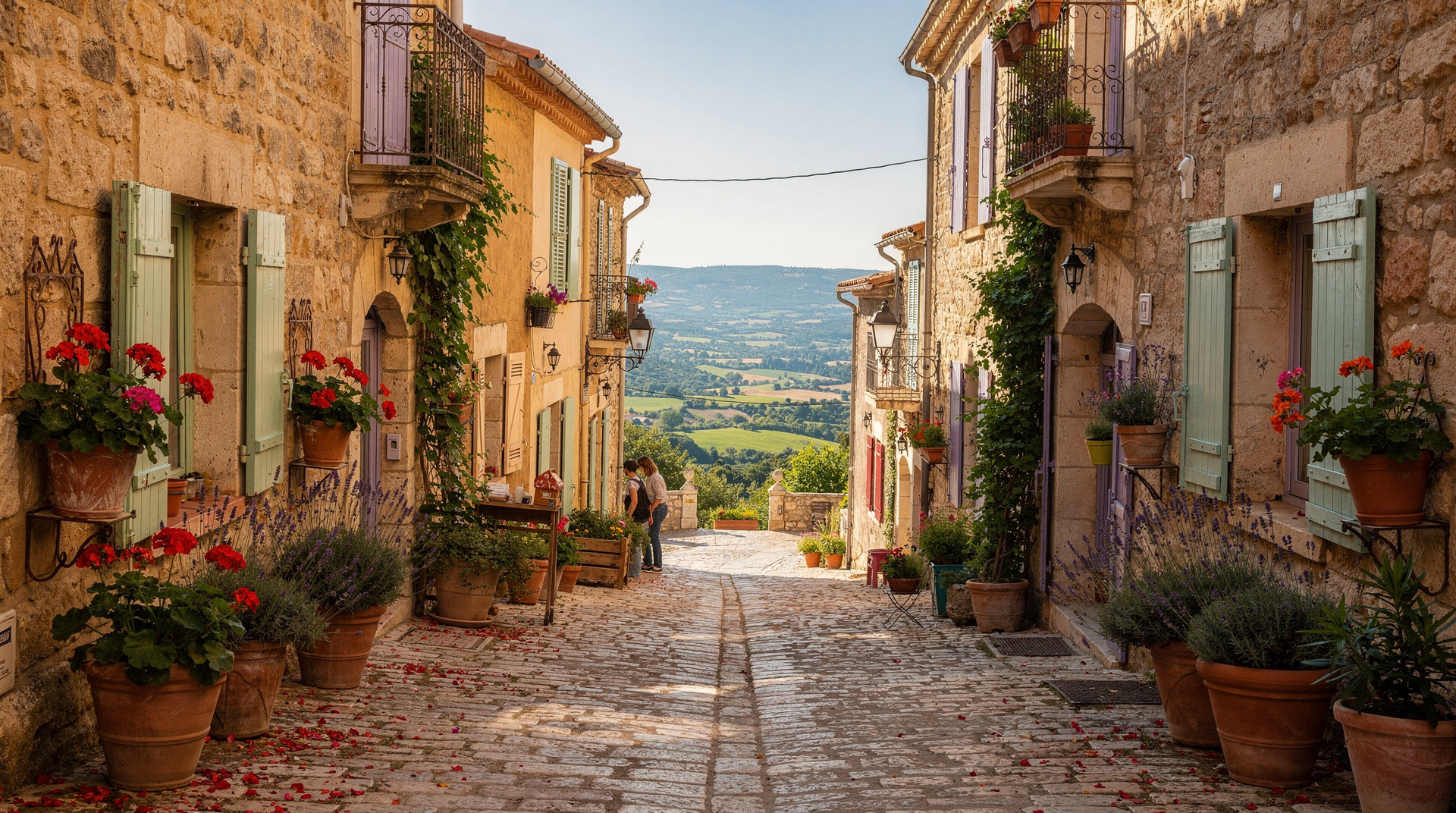
The Luberon massif — the perched villages of Gordes, Roussillon, Bonnieux, Lourmarin, Ménerbes, and their surroundings — is the heart of stereotyped Provence-with-lavender-and-stone-houses imagery. It is also almost entirely inaccessible without a car.
There are no direct public transport links from Marseille to the main Luberon villages. The occasional bus connection exists but is infrequent and leaves you stranded between villages. Gordes, Roussillon, Les Baux-de-Provence — these require a car.
Each village has its own page: Gordes, Roussillon, Lourmarin and the wider Luberon. For a ready-made route, read the Luberon villages day trip guide.
If you want the Luberon without driving, a guided day tour from Marseille is the practical solution. Several operators run full-day Luberon tours that visit 2–3 villages including transport. These do not give you the freedom of self-driving, but they solve the access problem.
Driving distance from Marseille: Gordes is approximately 90 km, about 1 hour 15 minutes. Allow a full day minimum for any Luberon visit.
Valensole and the lavender plateau
The Valensole plateau, where Provence’s most iconic lavender fields grow, is unreachable by public transport in any practical sense. The lavender blooms from roughly mid-June to mid-July — the window is relatively short. During those weeks, guided tours from Marseille and Aix-en-Provence are available. Self-driving is otherwise the only option for independent travellers. Timing and field choice are covered in the lavender fields day trip guide and lavender season in Provence.
From Marseille to Valensole: approximately 120 km, about 1 hour 30 minutes by the A51 autoroute and local roads.
Gorges du Verdon
The Gorges du Verdon — one of the most dramatic canyons in Europe — is 130–150 km northeast of Marseille, in terrain that has no useful public transport. The canyon rim roads (Route des Crêtes and Corniche Sublime) are car roads by definition. Activities within the gorge — kayaking, hiking the Martel trail — require either your own vehicle to reach the trailheads, or an organised tour that provides transport.
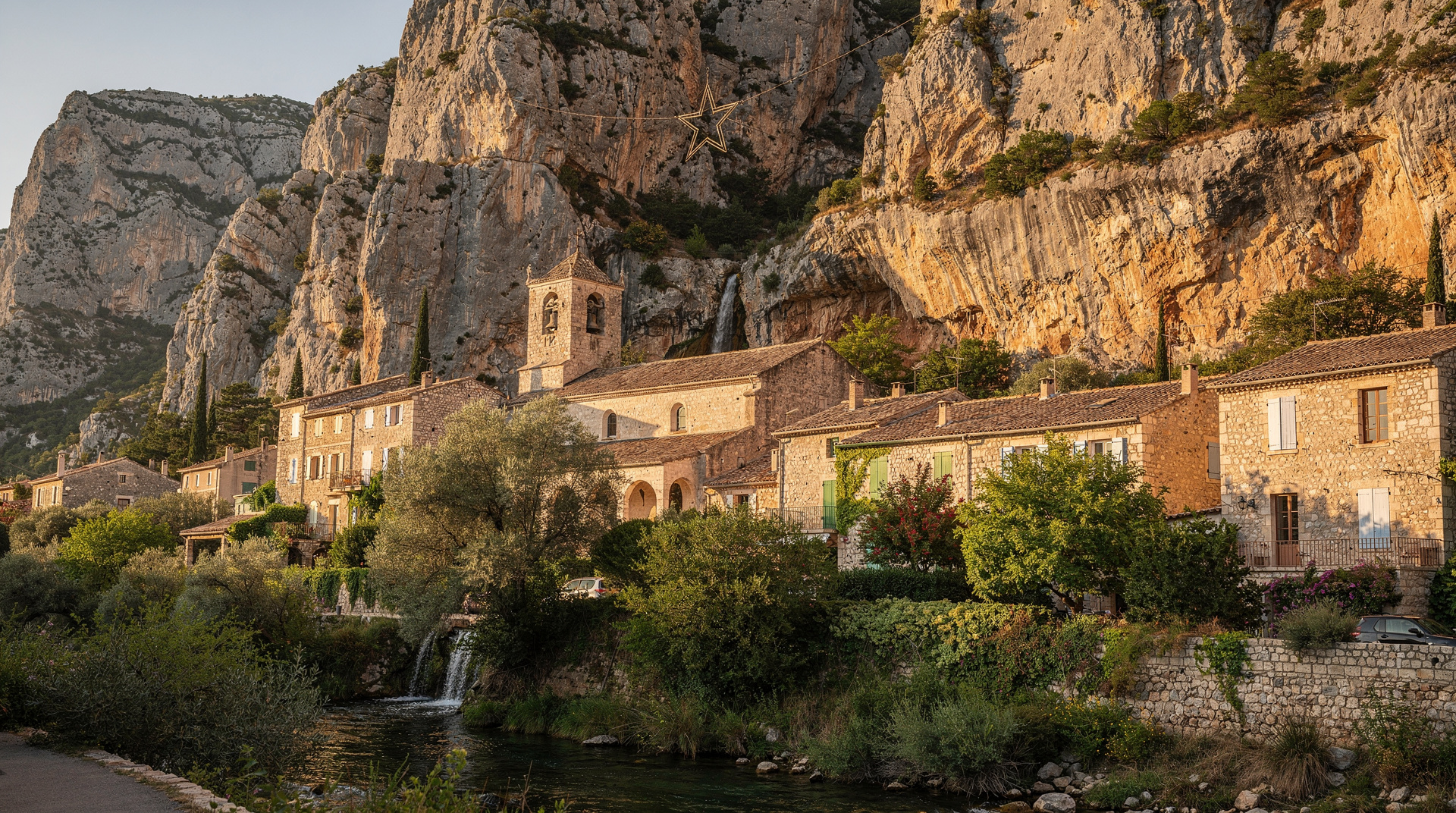
Honest verdict: The Verdon in a single day from Marseille is extremely long — allow 2 hours each way by car, plus time in the gorge. This is genuinely worth a separate overnight stay in Moustiers-Sainte-Marie or Castellane rather than trying to do it as a day trip. See our day trips assessment for the honest timing breakdown.
Camargue
The Camargue — the river delta between Arles and the Mediterranean, with flamingos, white horses, and rice paddies — has no meaningful public transport into its interior. Arles, on its northern edge, is reachable by train from Marseille. But the Camargue itself (Saintes-Maries-de-la-Mer, the Pont de Gau bird park, the salt flats of Aigues-Mortes) requires either a car or a guided tour.
The drive from Marseille to Saintes-Maries-de-la-Mer takes approximately 1 hour 30 minutes. Allow a full day. More on the delta in the Camargue day trip guide and the Camargue destination page.
Comparing the four car-essential destinations
| Destination | Drive time | Best without a car? | Notes |
|---|---|---|---|
| Luberon | ~1h15 | Guided tour | Perched villages, no useful bus links |
| Valensole | ~1h30 | Guided tour (June-July) | Lavender window is short and seasonal |
| Gorges du Verdon | ~2h | Guided tour, or skip | Better as an overnight than a day trip — see the day trips guide |
| Camargue | ~1h30 | Guided tour, or train to Arles then local option | Interior (flamingos, salt flats) is car-only |
Car rental practical tips
If you decide to rent a car, a few Marseille-specific notes:
Where to rent: Major agencies (Europcar, Hertz, Avis, Budget, Enterprise) have desks at Gare Saint-Charles and at the airport (MRS). Renting from the airport avoids driving into central Marseille, but the airport is 30 km north — you add travel time before starting. Gare Saint-Charles rentals allow you to arrive by TGV and pick up a car immediately, then return it before your train home.
Rental timing for day trips: If you only need a car for specific Luberon or Verdon days, renting for those days at the Gare Saint-Charles agency is more practical than renting for your entire Marseille stay.
Driving in Marseille: Do not drive in central Marseille unnecessarily. Traffic is dense and aggressive by French standards, parking is expensive, and the city’s public transport is more efficient. Rent a car for the day trips, not for city navigation.
Motorway tolls: The autoroute system around Marseille is tolled. The A7 north toward Avignon and Lyon, the A50 east toward Cassis and Toulon, and the A51 toward Aix/Luberon all have toll booths. Budget approximately 5–15 EUR per return trip on major autoroute runs. A télépéage tag (Liber-t) from your rental agency speeds up toll payments.
Parking in the Luberon villages: Gordes, Roussillon, and Bonnieux have limited parking, and in summer they fill quickly. Arrive before 10:00 or after 16:00. Some villages have free parking areas further from the centre with shuttle links in summer.
Parking in Cassis: In high summer, Cassis has partially restricted car access, directing arrivals to park-and-ride areas outside town and use shuttles. If you are driving to Cassis specifically, check current restrictions on the official Cassis tourism website before your visit.
Guided tours as a car-free alternative
For destinations that technically require a car, guided day tours from Marseille are a genuine alternative. They are not as flexible as self-driving, but they solve the access problem and include local expertise.
Key operators run tours to:
- Luberon villages (Gordes, Roussillon, Bonnieux) — full day from Marseille
- Valensole lavender (seasonal, June–July)
- Avignon and Côtes du Rhône wine (with winery visits not practical by train)
- Camargue (4x4 safari format from Arles or Saintes-Maries)
These tours typically depart from Gare Saint-Charles or the Vieux-Port area. See our day trips from Marseille guide for the full list with timing and verdicts.
Frequently asked questions about driving in Provence
Can I do the Luberon without a car?
Only via guided tour. Public transport does not reach Gordes, Roussillon, or Bonnieux in any useful way. Day tours from Marseille (departing Gare Saint-Charles) are the practical car-free solution.
Is it safe to drive in Marseille?
Marseille driving is intense — aggressive overtaking, heavy mopeds weaving, endemic double-parking, and a périphérique ring road that can be chaotic at peak hours. It is manageable if you are experienced with city driving. Avoid driving in the centre if you are uncomfortable with this style.
Is parking expensive in Marseille?
Yes. Central car parks near the Vieux-Port charge approximately 2.50–3.50 EUR per hour. A full day in a central car park costs 25–35 EUR. Avoid parking in the street in central Marseille — zone parking is heavily ticketed, and unattended cars in some areas are at elevated theft risk.
Do I need an international driving permit?
EU and UK driving licences are valid in France. Most non-EU licences require an International Driving Permit (IDP). Check with your rental agency before travelling — they may require an IDP for certain nationalities regardless of legal requirements.
How do I get to the Verdon Gorge without a car?
The most practical option is an organised full-day tour from Marseille or Aix-en-Provence, which includes transport and a guided circuit of the canyon rim. Without a tour, the only public-transport-adjacent option is taking a TER train to Manosque (about 1 hour from Marseille) and then relying on taxis — expensive and logistically awkward. The Verdon is one case where a car or organised tour is essentially required. The Verdon Gorge page and the Moustiers-Sainte-Marie page help you plan an overnight base.
What is the best time to drive in Provence?
Spring (April–June) and autumn (mid-September–October) avoid the peak summer crowds and the July–August motorway gridlock around Marseille, Aix, and the Luberon. Lavender season (mid-June to mid-July) brings maximum Luberon/Valensole congestion — arrive at villages before 09:00 to beat the worst of it.
Can I do a mixed trip — some days by train, some with a rental car?
Yes, and for most itineraries this is the smartest approach. Spend your Marseille, Cassis, and Aix days car-free using TER trains, then rent a car for just the two or three days you need for Luberon, Valensole, Verdon, or Camargue. Pick the car up at Gare Saint-Charles the morning you need it and return it the same evening — you avoid paying for parking on the days you don’t use it. See our day trips from Marseille guide for how to sequence a mixed week.
Is a car worth it just for the Calanques?
Not for the Calanques themselves. The Marseille-side calanques (Sormiou, Morgiou, Sugiton) are reached on foot from bus-accessible trailheads or by boat, and the Cassis-side calanques (En-Vau, Port-Pin) are walked from the Cassis train station — see the En-Vau hike guide. A car only becomes useful for the Calanques if you specifically want the Col de la Gardiole trailhead near Marseille, which has very limited parking and no public transport advantage over the Cassis approach anyway.
Top experiences
Bookable activities with verified prices and instant confirmation on GetYourGuide.