Marseille travel guide
Complete guide to Marseille — neighbourhoods, beaches, food scene, Calanques access, safety reality and honest day-trip advice. 2026.
Marseille: MuCEM skip-the-line entry ticket
Quick facts
- Getting there
- TGV from Paris 3 h; Aix TGV then shuttle 40 min; Airport MRS then TER 30 min
- Days needed
- 2 to 4 days (Calanques add 1 extra)
- Budget per day
- EUR 80–150 couple mid-range
- Best time
- April–June and mid-September–October
- Getting around
- Métro M1/M2 + tram + Vieux-Port ferry; car useful for Provence
France’s most misunderstood city
Marseille does not ask for your approval. France’s second-largest city, its oldest, and for a long time its most maligned, it carries a reputation built on newspaper headlines and deliberate neglect by the Parisian establishment. Spend a day here and you will understand why that reputation has almost nothing to do with the actual experience of visiting.
The city was founded by Greek traders from Phocaea around 600 BCE, which makes it older than Paris by several centuries. It has been a trading port, a medieval plague entry point, a 19th-century colonial hub, and a 21st-century cultural experiment — the 2013 European Capital of Culture transformation was real, and the effects are still visible in the MuCEM, the regenerated J4 waterfront, and the gallery scene around Cours Julien. Marseille is not polished. That is precisely why it works.
This guide covers what you actually need to know: how many days, which neighbourhoods, where to eat without getting ripped off, how to reach the Calanques, and how to read the city’s safety reality without anxiety.
| At a glance | |
|---|---|
| Where | Bouches-du-Rhône, Provence, on the Mediterranean coast |
| Cost | Around EUR 80–150/day per couple mid-range; budget travellers can do less outside restaurants |
| Time needed | 2 to 4 days (add a day for a proper Calanques hike) |
| Getting there | TGV Paris ~3 h to Gare Saint-Charles; MRS airport + shuttle/TER ~45–60 min door to door |
| Getting around | Métro M1/M2 + tram + free Vieux-Port ferry; a car is only useful for Provence day trips |
| Best time | April–June and mid-September–October for weather, open trails and lighter crowds |
How many days do you need in Marseille?
Two days covers the essential triangle: Vieux-Port and Le Panier on day one, MuCEM, Notre-Dame de la Garde, and the Corniche on day two. That is a tight but coherent visit.
Three days lets you add a half-day in the Calanques — by boat if it is summer or early autumn, by hiking trail in spring or late September. It also creates space for Cours Julien in the evening, the soap museum, or a longer lunch.
Four days makes sense if you intend to combine Marseille with a night in Cassis, do a proper hike into the Calanques, or use Marseille as a base for a day trip to Aix-en-Provence (~40 min by TER train).
For cruise visitors with 8–10 hours, see our cruise port guide — the port is about 15 minutes from the Vieux-Port by taxi or shuttle.
The neighbourhoods that matter
Vieux-Port and the city centre
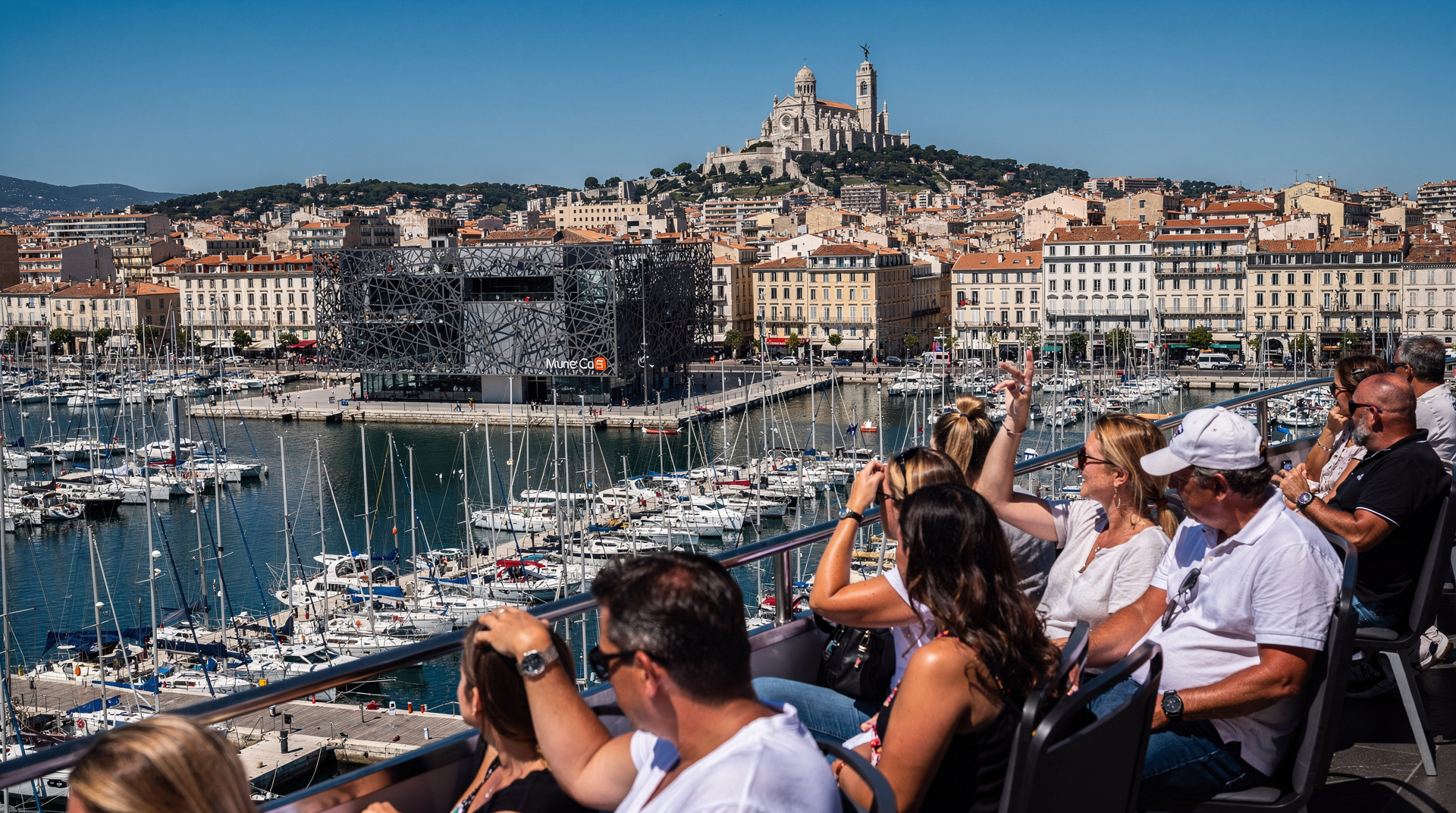
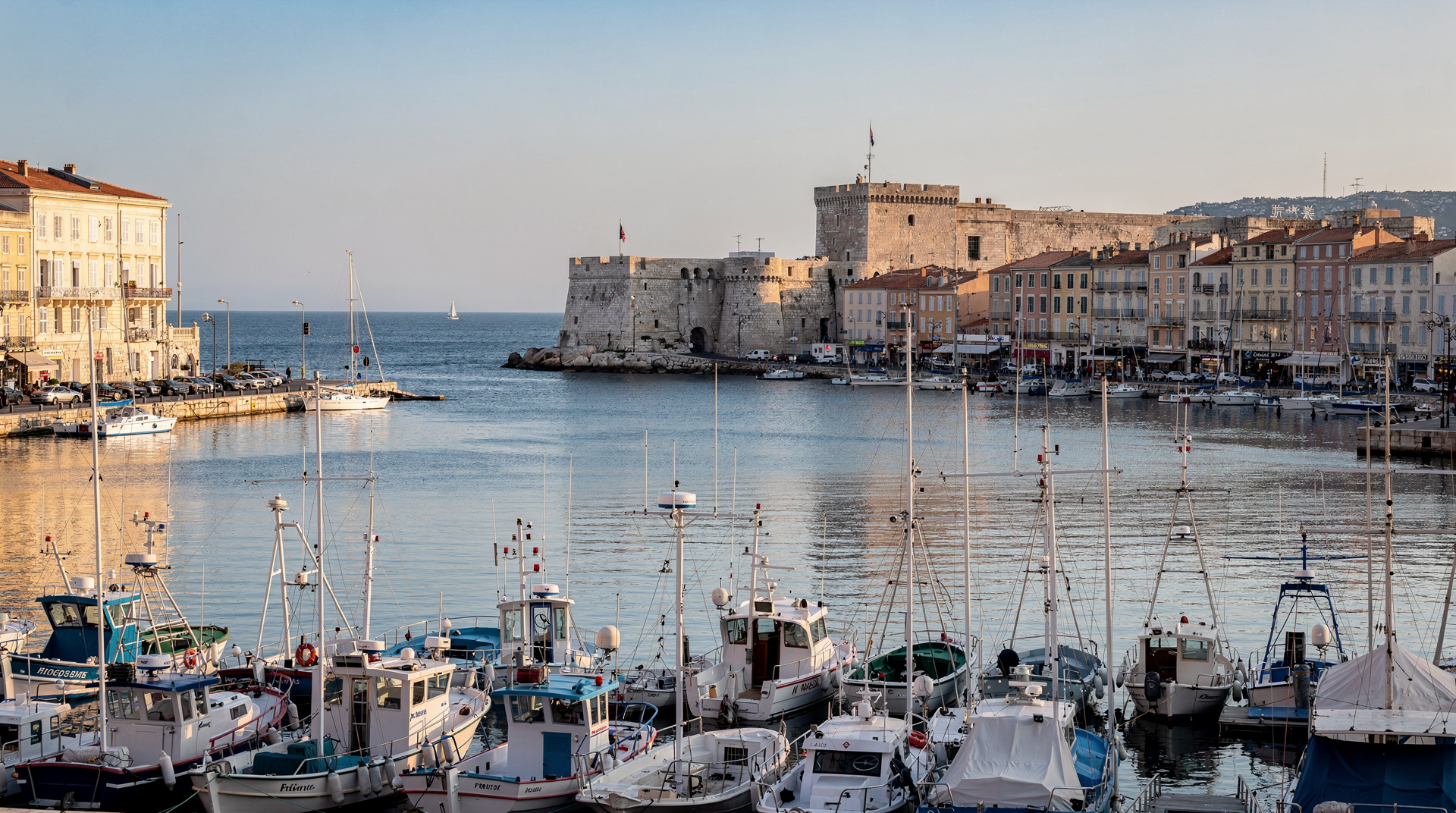
The Vieux-Port is where Marseille begins. The long rectangular harbour is framed at its mouth by Fort Saint-Jean and Fort Saint-Nicolas — two 17th-century fortifications that once controlled access to the port. The fish market at the eastern end (Quai des Belges) runs every morning until around noon; it is worth arriving before 9:00 to see the fishermen selling their overnight catch. Pickpocket awareness is warranted here and at the métro.
The Ombrière, a giant reflective steel canopy by architect Norman Foster, stands at the Quai des Belges end and has become one of the city’s most photographed selfie spots. Whether you find it gorgeous or overdesigned, it marks the spot where the old fish auction hall once stood.
Le Panier
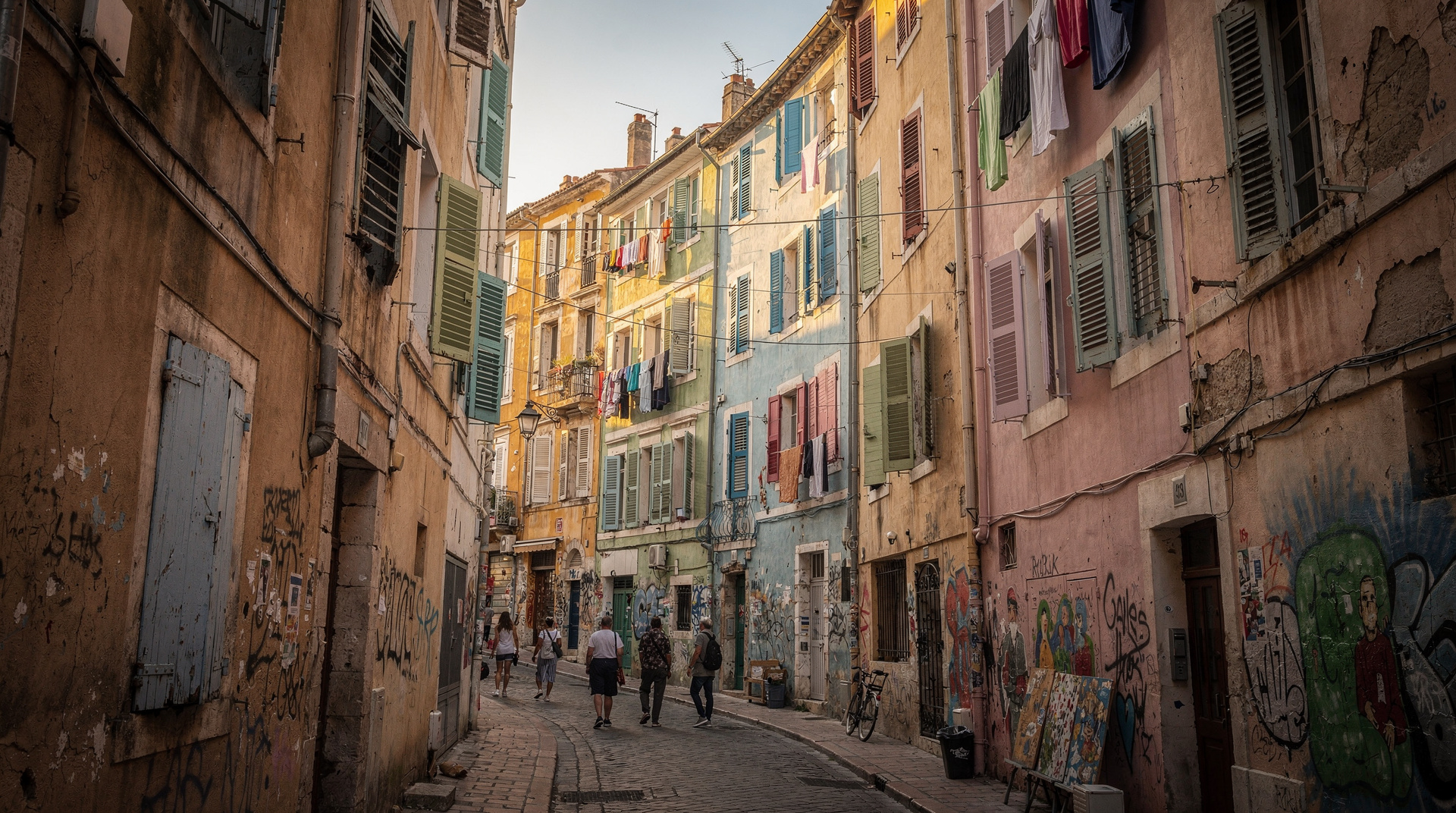
Le Panier sits directly above the northern shore of the Vieux-Port, on a hill where Marseille was first settled. It is the oldest inhabited quarter in the city — a tangle of steep lanes, pastel-coloured buildings, street art, and artisan workshops. The Vieille Charité, a 17th-century hospice with a domed chapel that is now a museum and exhibition space, is the neighbourhood’s architectural anchor.
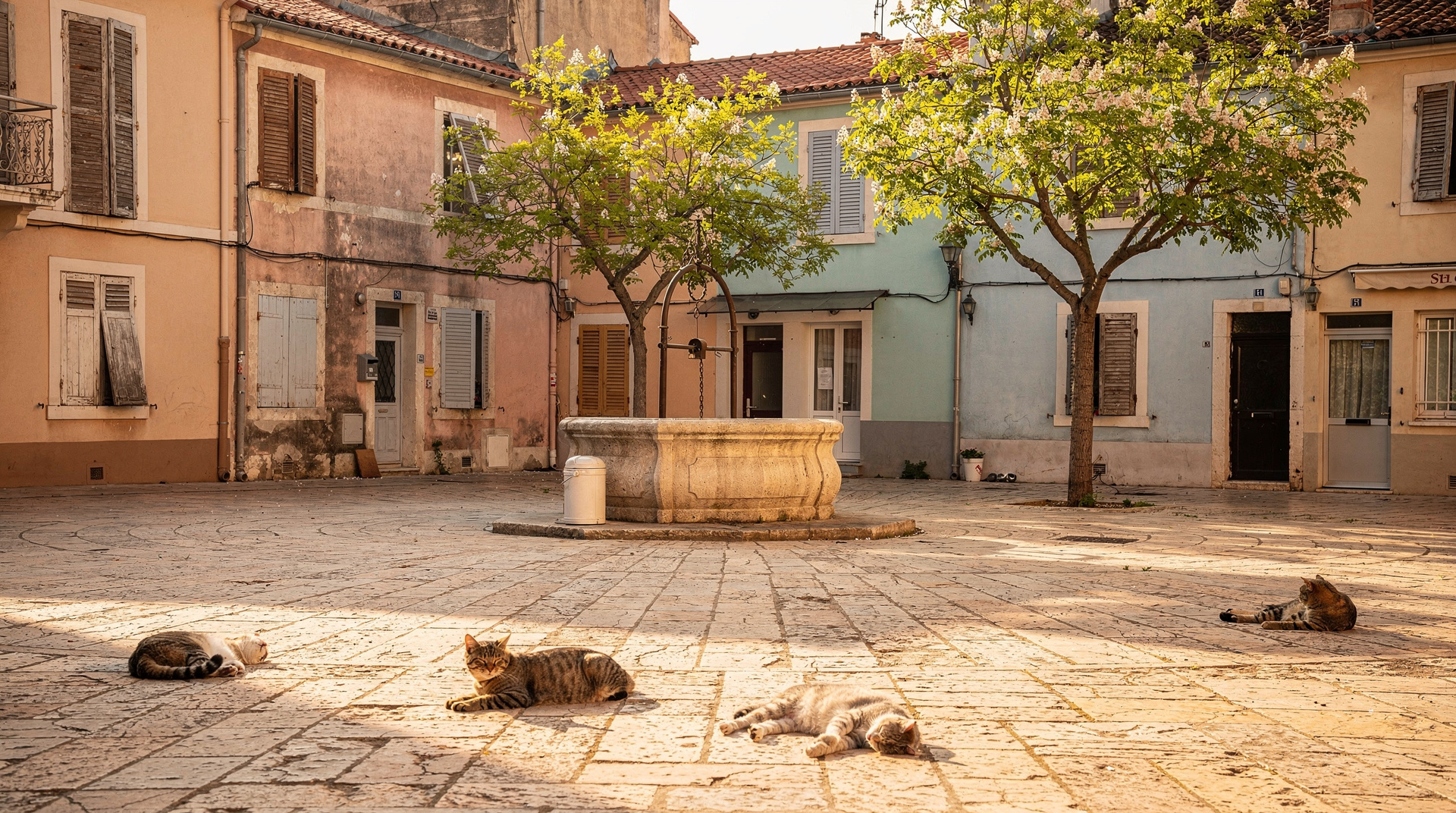
Le Panier is not a tourist theme park: people live here, laundry hangs between windows, and old men play cards in the squares. The best approach is to arrive on foot from the Vieux-Port (10 minutes uphill) in the morning when the light is good and the streets are quieter.
The Joliette and MuCEM quarter
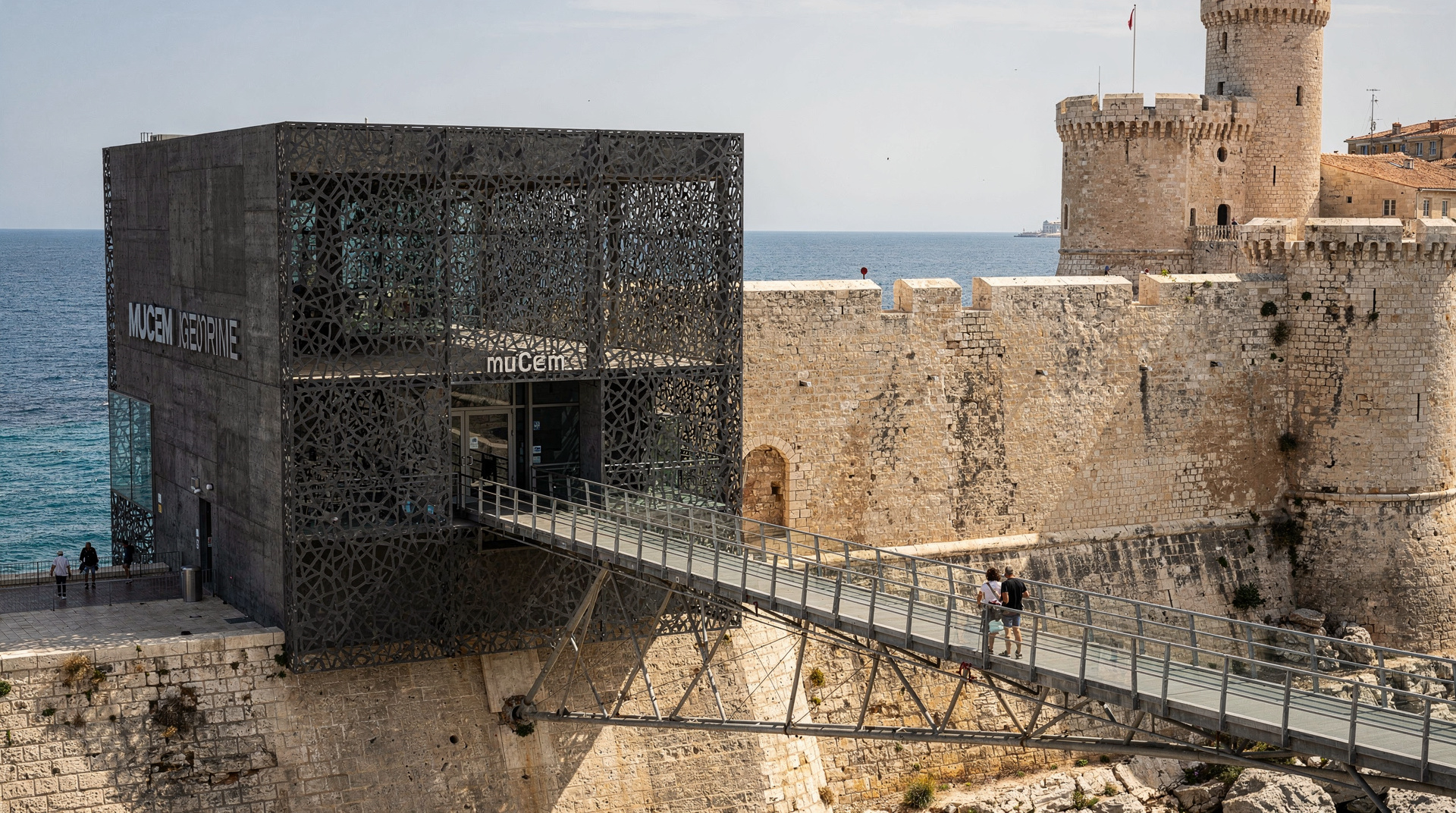
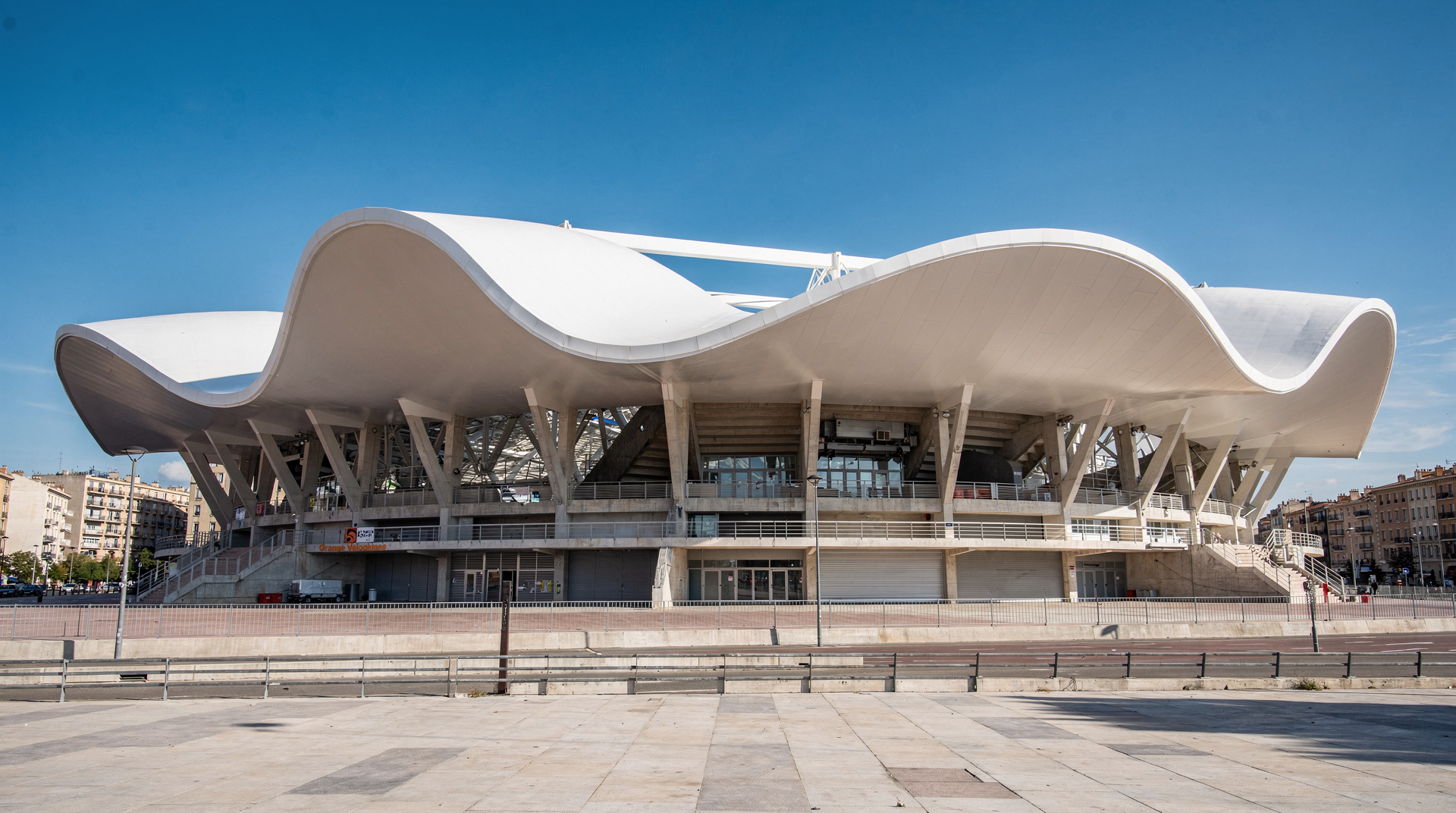
The MuCEM — Musée des Civilisations de l’Europe et de la Méditerranée — opened in 2013 and remains one of the most architecturally striking buildings in France. The structure is wrapped in a laser-cut concrete latticework (the “résille”) that casts shifting shadows across its surface. A suspended footbridge connects it to the restored Fort Saint-Jean next door, making both sites walkable together.
Entry is 11 EUR (reduced 7.50 EUR); free on the first Sunday of each month. The exterior terraces and gardens are free to access daily. The museum is open Wednesday to Monday, 10:00 to 18:00, closed Tuesdays.
Book skip-the-line tickets in advance, especially in summer.
Notre-Dame de la Garde and the southern neighbourhoods
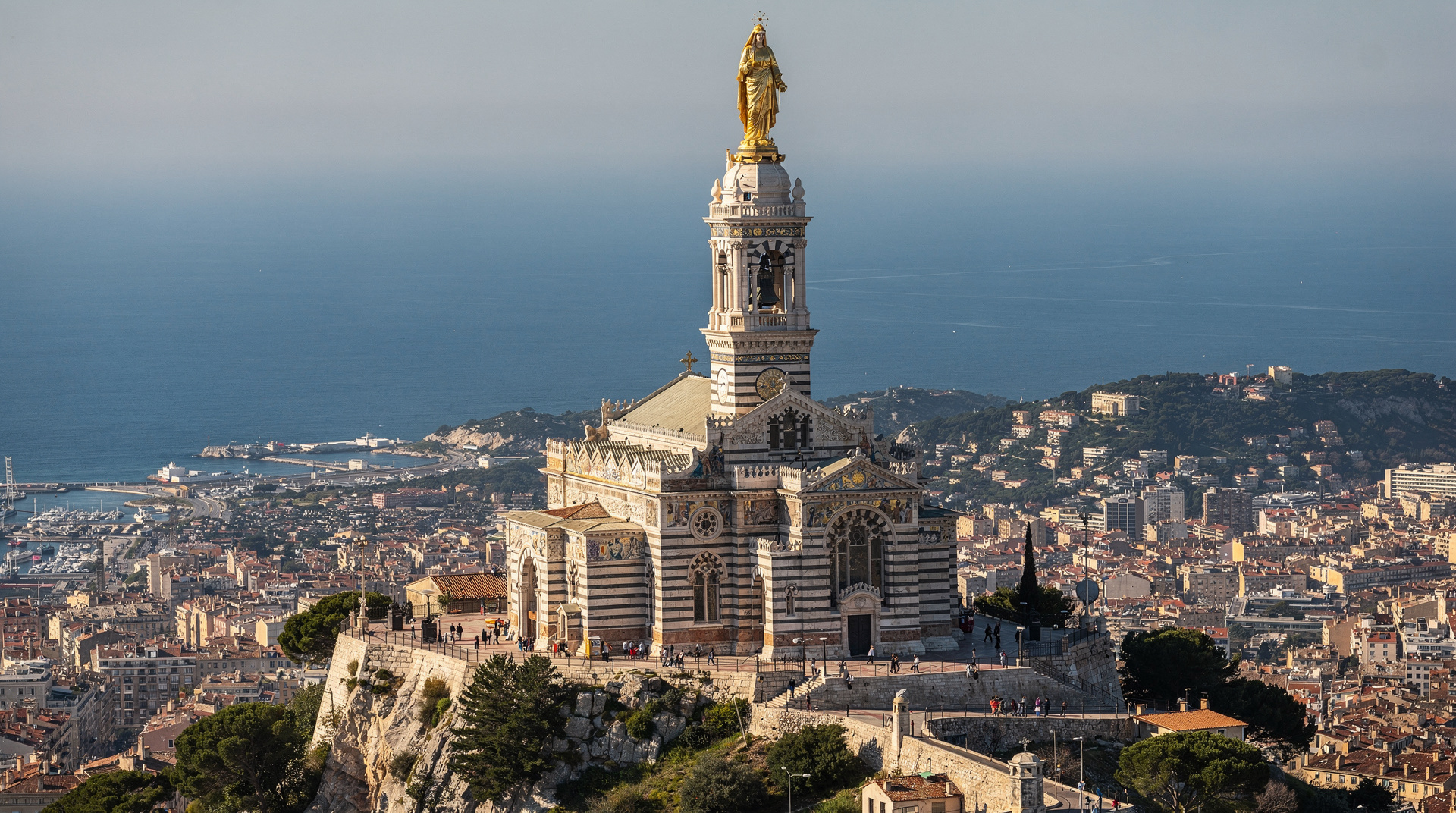
The basilica stands on Marseille’s highest natural point, 162 metres above sea level, and is visible from almost everywhere in the city. From its terrace, the panorama takes in the entire bay of Marseille, the Frioul archipelago, and on clear days the white limestone ridges of the Calanques to the east. The basilica itself is free to visit; it is open daily from 7:00 to 19:00 (until 20:00 in summer). See the full Notre-Dame de la Garde guide.
South of Notre-Dame, the Corniche President John Fitzgerald Kennedy runs along the coastline past the Vallon des Auffes fishing harbour, through the Prado beaches, and out toward Les Goudes. This is where Marseille residents actually swim. See our Corniche and Prado beaches guide.
Cours Julien
Cours Julien is Marseille’s bohemian quarter — street murals covering entire building facades, record shops, vintage clothing, natural wine bars, and the most interesting restaurant scene in the city. It sits between the Réformés neighbourhood and the Noailles market quarter (sometimes called “the belly of Marseille”). In the evening it is where locals actually go out. This is not tourist Marseille.
The food scene: honest assessment
Marseille has a serious food culture built around the sea and the market. The challenge is knowing which versions to seek out.
Bouillabaisse: The city’s most famous dish is also its most exploited. The genuine article — a saffron-scented fisherman’s stew served with rouille, gruyère, and toasted bread in a two-course ritual — costs 50–80 EUR per person at the half-dozen restaurants that hold the Charte de la Bouillabaisse. Cheaper versions sold near the Vieux-Port tourist strip are almost always disappointing. Our bouillabaisse guide names the addresses worth the price. If budget is the constraint, the fish market chowder at the quai is the honest alternative.
Navettes: The dry orange-blossom biscuits from Boulangerie du Four des Navettes on Rue Sainte (in business since 1781) are the city’s canonical edible souvenir. They keep for weeks and travel well.
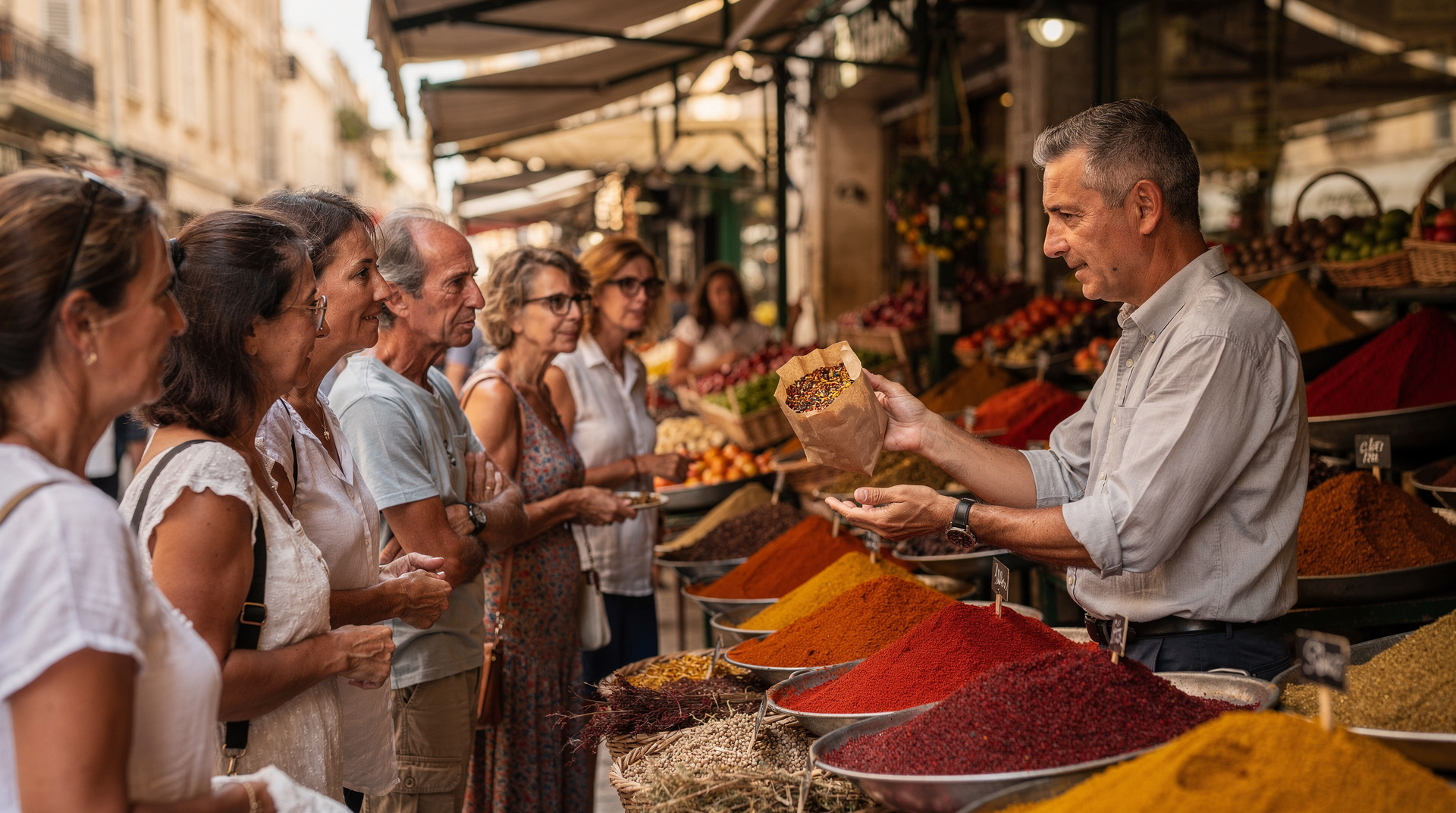
The Noailles market: The stretch around Rue de la Longue and Cours Belsunce is where immigrant communities from North Africa and the Maghreb have built a food culture that is genuinely excellent: pastries, harissa, preserved lemons, and lunch counters that charge 5–8 EUR for a plate that beats anything in the tourist zone.
Cours Julien restaurants: This area has a higher concentration of interesting, owner-operated restaurants per square metre than the rest of Marseille combined. Cuisine tends toward Mediterranean-creative, natural wine, and market-driven menus.
Pastis: The anise-flavoured spirit is Marseille’s drink. Pastis 51 and Ricard both originate from Marseille. Order it with cold water and watch the ritual transform.
Getting around the city
The métro (two lines: M1 east-west, M2 north-south) covers the main tourist corridor from Castellane through Vieux-Port to the Joliette. A single ticket costs around 1.70 EUR; a day pass around 5.50 EUR. The tram network extends to the Joliette and along the coast toward Arenc.
The Vieux-Port ferry (cross-harbour) is free and runs regularly — it connects the north and south quais in 5 minutes and is useful for reaching Le Panier from the Corniche side.
On foot: The Vieux-Port to Le Panier, MuCEM, and Fort Saint-Jean are all walkable in 15–20 minutes from each other. Notre-Dame de la Garde is a 40-minute walk uphill from the Vieux-Port, or reachable by the tourist petit train (departs Vieux-Port), bus 60, or taxi. The petit train is efficient for those who find the hill difficult; budget around 12–15 EUR per adult for the Notre-Dame circuit.
Car: Not needed within the city (parking is expensive and limited). Very useful for Calanques access from Les Goudes or Luminy, and essential for Provence day trips beyond Cassis and Aix.
The Calanques: your options
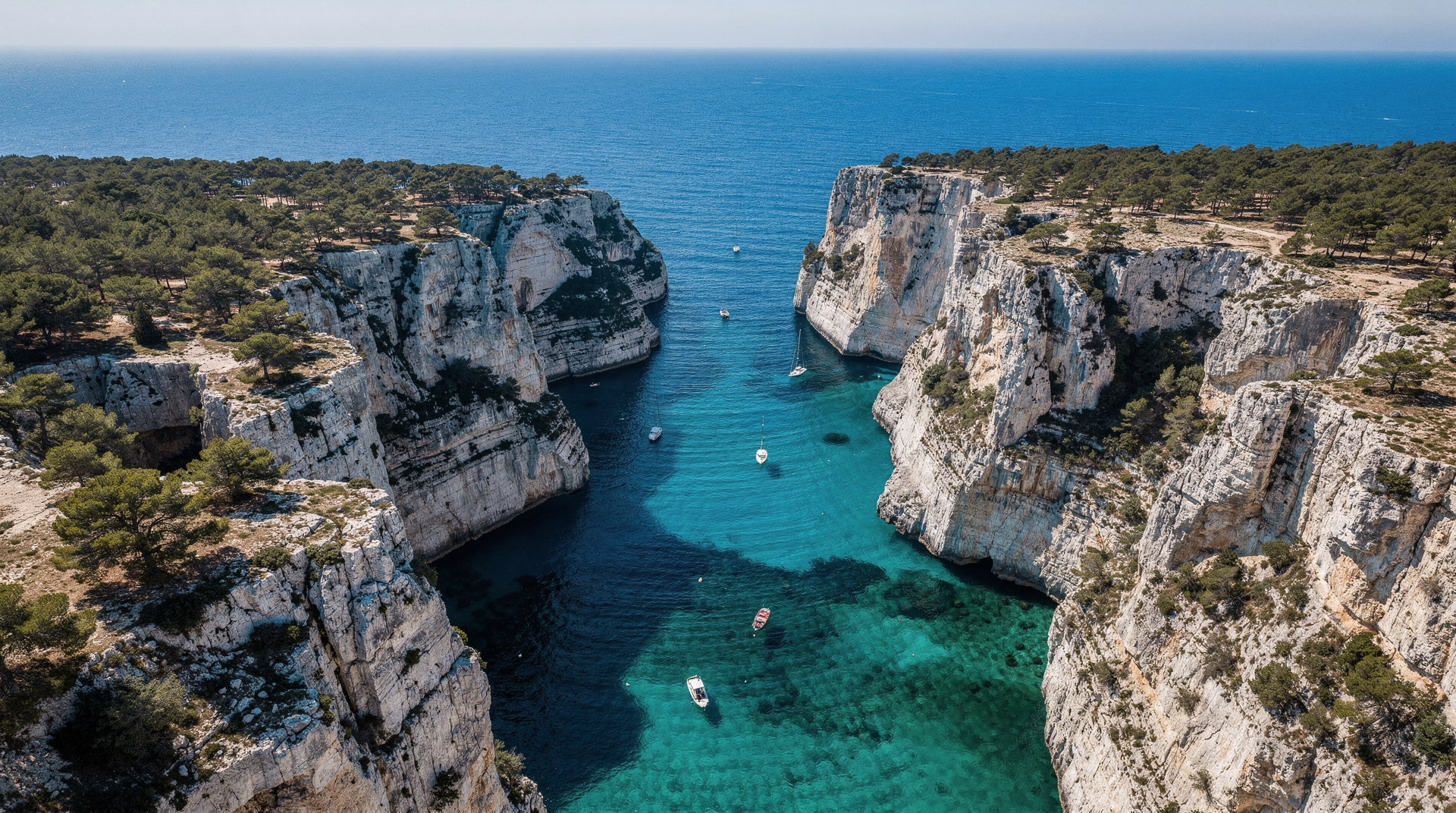
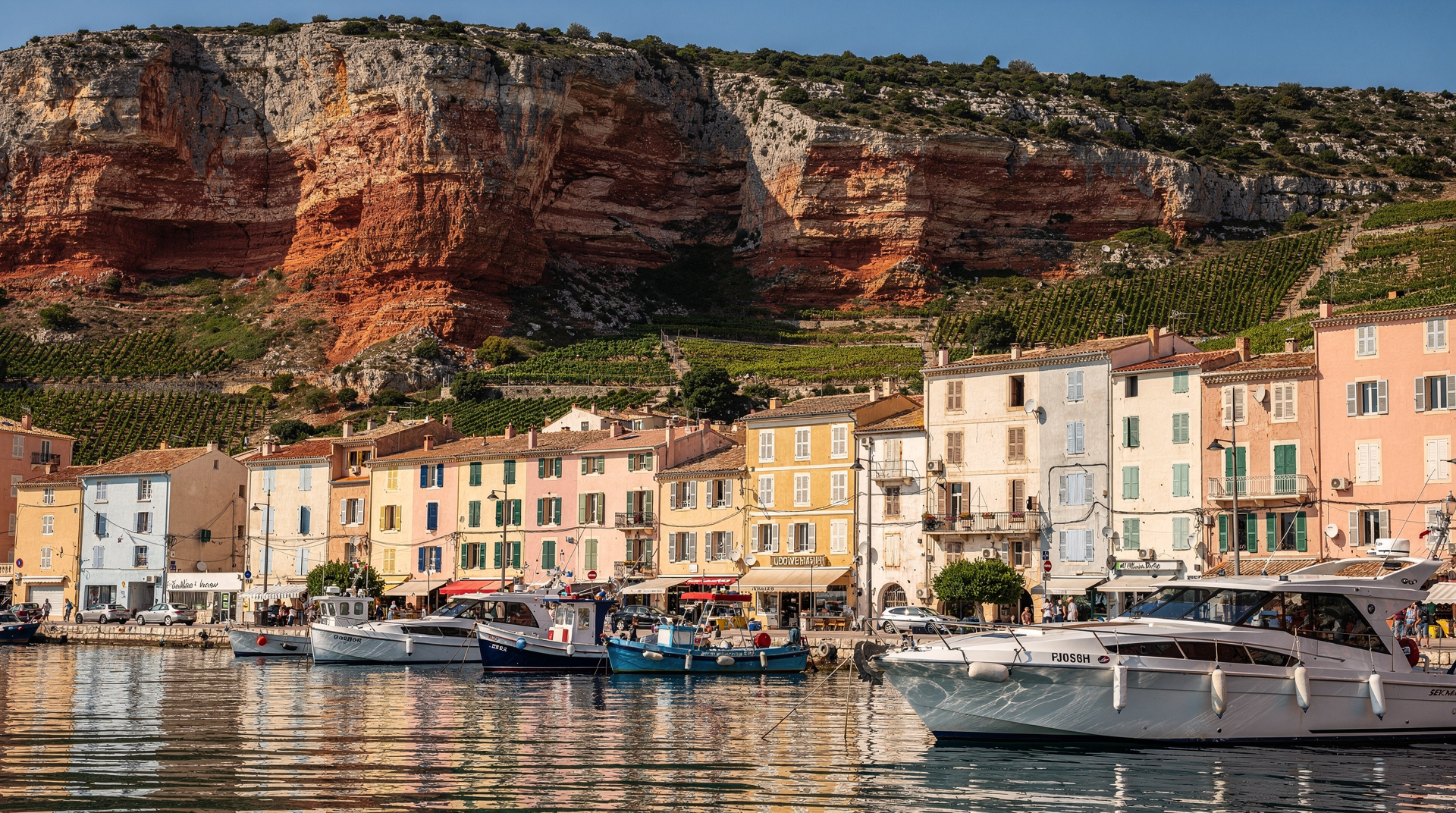
The Calanques National Park begins at the southern edge of Marseille and runs east to Cassis. The limestone fjords with turquoise water are the region’s defining natural spectacle.
Boat: The easiest and safest option in summer. Boats depart the Vieux-Port and reach the closest calanques in 30–45 minutes. No fire-risk concerns, no reservation needed. See our Calanques boat tour guide.
Hiking: Spectacular, but subject to seasonal restrictions. From July through August, most trails are closed due to fire risk. The Sugiton calanque — the closest accessible one from Luminy — requires a free advance reservation from June through September (open on the national park website from 11 June 2026, up to 3 days ahead). See our hiking the Calanques guide for full trail details.
Kayak: The best compromise — you access the calanques from the water without needing boat tour timing, can explore at your own pace, and the experience is quieter than a tour boat.
For a complete comparison of access methods and calanque-by-calanque detail, use our boat vs hiking comparison guide.
Day trips from Marseille
| Destination | Travel time | Verdict |
|---|---|---|
| Cassis | ~35 min (train) | Excellent; one of the best short days in southern France |
| Aix-en-Provence | ~40 min (TER) | Worthwhile; very different energy from Marseille |
| Arles | ~1 h (train) | Good for history and Van Gogh; a long half-day |
| Avignon | ~1 h (TGV) | Doable but rushed; consider staying over |
| Luberon villages | ~1 h 15 (car) | Needs a car; genuinely beautiful, needs 2+ hours |
| Camargue | ~1 h 30 (car) | Long day; best with early start |
| Gorges du Verdon | ~2 h (car) | Too far for a day trip without a car; be honest with yourself |
For detailed timing and verdict on each day trip, see our day trips from Marseille guide.
Safety: the realistic picture
Marseille has a reputation that significantly overstates the risk to tourists. The violence that generates headlines is concentrated in peripheral districts (northern arrondissements) that tourists have no reason to visit. The real risk in tourist areas is pickpocketing.
Pickpocket hotspots: Vieux-Port fish market (morning crowds), Gare Saint-Charles, the métro (especially line M2 at Noailles), and Cours Belsunce market. Use the same habits you would in any busy European city: front pocket or money belt, bag across the body, phone not dangling.
Le Panier is safe during the day and pleasant in the early evening. Most other tourist areas are fine at any reasonable hour.
Driving: Marseille traffic is aggressive by French standards. Motorcycles weave, double-parking is endemic, and the périphérique can be chaotic. Hire a car for day trips, not for city navigation.
The bottom line: Marseille is not dangerous for tourists. It is an assertive, proud city that rewards engagement. Our honest safety guide covers specific situations in more detail.
Getting to Marseille
By train: Gare Saint-Charles is central — within walking distance of the Vieux-Port downhill, and on the métro. TGV from Paris Gare de Lyon takes ~3 hours. From Nice: 2.5 hours. From Lyon: 1 h 40.
By plane: Aéroport Marseille Provence (MRS) is 30 km north. The Navette Aéroport shuttle bus runs to Gare Saint-Charles in around 25–30 minutes (9 EUR); trains also connect (around 5 EUR, slightly longer). Journey total from plane to city: roughly 45–60 minutes door to door.
By car: The A50 and A7 autoroutes funnel into the city. Parking at or near the Vieux-Port starts at around 2.50–3.50 EUR/hour.
Where to stay in Marseille
Around the Vieux-Port is the most convenient base for first-time visitors — central, walkable, and with the most restaurant options.
Le Panier offers atmospheric hotels in converted buildings but limited nightlife and quieter evenings.
Corniche and Prado gives beach access and a more local residential feel, with a 15-minute métro or bus ride to the Vieux-Port.
For hotel recommendations by budget, see our where to stay in Marseille guide.
Frequently asked questions about Marseille
Is Marseille worth visiting?
Yes, genuinely. It is one of the most alive cities in France — unpolished in a way that Lyon and Paris are not, with a Mediterranean food culture, extraordinary coastline access, and real neighbourhood character. It rewards visitors who engage with it rather than treating it as a box to tick.
How many days should I spend in Marseille?
Two days gives you the city highlights. Three days allows you to add the Calanques properly. Four days makes sense if you want to day-trip to Cassis or Aix and explore Marseille at a relaxed pace. See our full how many days in Marseille guide for itinerary options.
What is the best time to visit Marseille?
April to June and mid-September to October. Spring has good weather, open Calanques hiking trails, and manageable crowds. Early autumn has warm sea temperatures ideal for swimming and kayaking, with the summer crush gone. July and August are hot, hiking trails in the Calanques close due to fire risk, and the city is very busy. See our best time to visit guide.
Is the bouillabaisse in Marseille worth it?
The genuine charte bouillabaisse at one of the dedicated restaurants is a serious culinary experience and worth the 55–75 EUR at least once. The cheap versions near the tourist quais are not worth eating. See our honest bouillabaisse guide before spending money on the wrong version.
Can I visit the Calanques from Marseille without a car?
Yes. Boat tours depart the Vieux-Port daily and are the easiest option. For hiking access to Sugiton (closest calanque), bus 21 runs from Castellane métro to the Luminy campus (end of line). From there it is a 45-minute walk to the calanque — but you will need the free Sugiton reservation from June through September.
Do I need to speak French in Marseille?
Less than you might think. English is workable in hotels, restaurants, and major tourist sites. Outside the tourist corridor — market stalls, neighbourhood restaurants, the fish market — basic French phrases go a long way. Marseille residents are more forthcoming than their Parisian counterparts and generally appreciate any effort.
Is Marseille safe at night?
The tourist areas — Vieux-Port, Le Panier, Cours Julien, the Corniche — are generally fine at night for a couple or small group. The usual urban caution applies. Avoid the outer northern districts (13th, 14th, 15th arrondissements) at night unless you know the area. For specific guidance, see our is Marseille safe guide.
What is the best way to get from the airport to Marseille city centre?
The Navette Aéroport (airport shuttle bus) to Gare Saint-Charles runs every 15–20 minutes and costs 9 EUR. Journey time is 25–30 minutes without traffic. The train from the airport station (connected by free shuttle within the airport) is cheaper but less direct. A taxi costs around 45–55 EUR. See our airport-to-city transport guide.
Is Marseille or Nice better for a Provence/Riviera trip?
They serve different trips rather than competing directly. Marseille is a working port city with the Calanques on its doorstep, better suited to travellers who want food culture, hiking and neighbourhood character. Nice leans toward the polished Riviera — Promenade des Anglais, Old Town, easy access to Monaco and Èze. Many travellers combine both, but if choosing one for a Provence-focused trip, Marseille gives easier access to Aix, Cassis, the Luberon and Camargue.
Marseille’s culture and museums
Beyond the Vieux-Port and Le Panier, the city has a museum infrastructure that deserves more than a footnote.
MuCEM: The standout — a 2013-built museum of Mediterranean civilisations wrapped in a concrete latticework, connected to the restored Fort Saint-Jean by a suspended footbridge. Entry 11 EUR (free first Sunday of the month). The building itself is as interesting as the exhibitions.
Musée d’Histoire de Marseille: Located in the shopping centre of the Bourse (which feels surreal), the museum sits atop genuine Roman-era archaeological excavations. The remains of the ancient Greek and Roman port are visible through glass floors. Entry around 6 EUR.
Musée des Beaux-Arts (Palais Longchamp): The 19th-century palace in the Cinq-Avenues neighbourhood was built at the terminus of a Roman-era aqueduct, now a fountain complex. The fine arts collection is solid if not world-class. Worth the tram ride for the Longchamp building itself.
Cité Radieuse (Le Corbusier): The Unité d’Habitation on Boulevard Michelet (8th arrondissement) is one of Le Corbusier’s most influential buildings — a 1952 concrete apartment block designed as a vertical self-contained city, with shops, a hotel, a rooftop terrace, and a running track. The building is still a functioning residential block and is listed as a UNESCO World Heritage Site. The hotel (MAMO) on the roof is accessible for non-guests who book a viewing; the rooftop terrace is occasionally open for events. Reach it by tram T1 or T2 to Michelet-Corbusier. Read our Cité Radieuse guide for visiting details.
Cosquer Cave replica: The Cosquer Cave, discovered by diver Henri Cosquer in 1985, contains Paleolithic paintings and engravings made 27,000 years ago — reachable only via an 175-metre underwater passage from the Calanques sea floor, and not open to the public. The replica at the Villa Méditerranée near MuCEM (La Grotte Cosquer Méditerranée) recreates the cave and its paintings at full scale. Tickets around 15–20 EUR; book well in advance in summer.
Marseille for cruise visitors
The cruise terminal at La Joliette is approximately 15 minutes by taxi from the Vieux-Port. With 8–10 hours ashore, the most logical sequence is:
- Morning (3 hours): Vieux-Port fish market, Le Panier, MuCEM exterior (from the footbridge)
- Midday (1.5 hours): Lunch near the Vieux-Port or Cours Estienne-d’Orves
- Afternoon (2 hours): Notre-Dame de la Garde (petit train up, walk back down) + Corniche
- Evening (1 hour): Aperitif at Vallon des Auffes before returning to port
This covers the essential city without rushing. The Calanques by boat (3–4 hours) can replace the afternoon culture sequence if the priority is nature. A hop-on hop-off bus is the most efficient way to move between the Vieux-Port, Notre-Dame, and the Corniche without hiring a taxi for each leg. See our full cruise port guide for port logistics and optimised itineraries.
Honest observations about Marseille
Every city has its marketing version and its real version. Marseille’s real version is more interesting than most.
It has genuine poverty — some of the highest unemployment and most deprived postcodes in France are in the northern arrondissements. It has also produced one of the most resilient and multicultural urban cultures in Europe, evident in its food, its music, its street art, and in the way the Vieux-Port fish market functions as a genuine daily social institution rather than a heritage display.
The Vieux-Port renovation (2013) cleaned up the south quai and created the Ombrière, but did not displace the fish market or fundamentally change the character of the north quai. Le Panier gentrified slowly but retained its residential character and its working-class Corsican and Italian immigrant heritage under the surface layer of artisan shops. Cours Julien absorbed arts venues without becoming exclusively hipster. The city changes, absorbs the change, and keeps going.
For visitors, the practical implication is this: the Marseille that rewards slow walking and genuine curiosity is everywhere you look. The Marseille that rewards a brisk tourist itinerary of three checkboxes is much thinner.
Combining Marseille with the wider region
Marseille rarely stands alone on an itinerary — most visitors pair it with at least one nearby destination. If you have the time, the Calanques and Cassis extend the coastal side of the trip, while Aix-en-Provence and the Luberon villages give a completely different, inland Provence rhythm within an hour or two by car or train.
Travellers building a longer loop often use Marseille as the arrival/departure point (TGV and MRS airport) and Aix or Cassis as an overnight base for the quieter half of the trip. See our day trips from Marseille guide for a full breakdown of what fits in a day and what needs an overnight.
Top experiences
Bookable activities with verified prices and instant confirmation on GetYourGuide.