Marseille without a car: 4-day car-free Provence itinerary
From Marseille: Cassis & Aix-en-Provence full-day tour
The common assumption about Provence is that a car is essential. The honest answer is that it depends on where you want to go. Marseille, Cassis, Aix-en-Provence, Avignon, and Arles — five genuinely excellent destinations — are all reachable by TER train from Gare Saint-Charles without ever renting a car. This itinerary covers all five in four days, using public transport throughout.
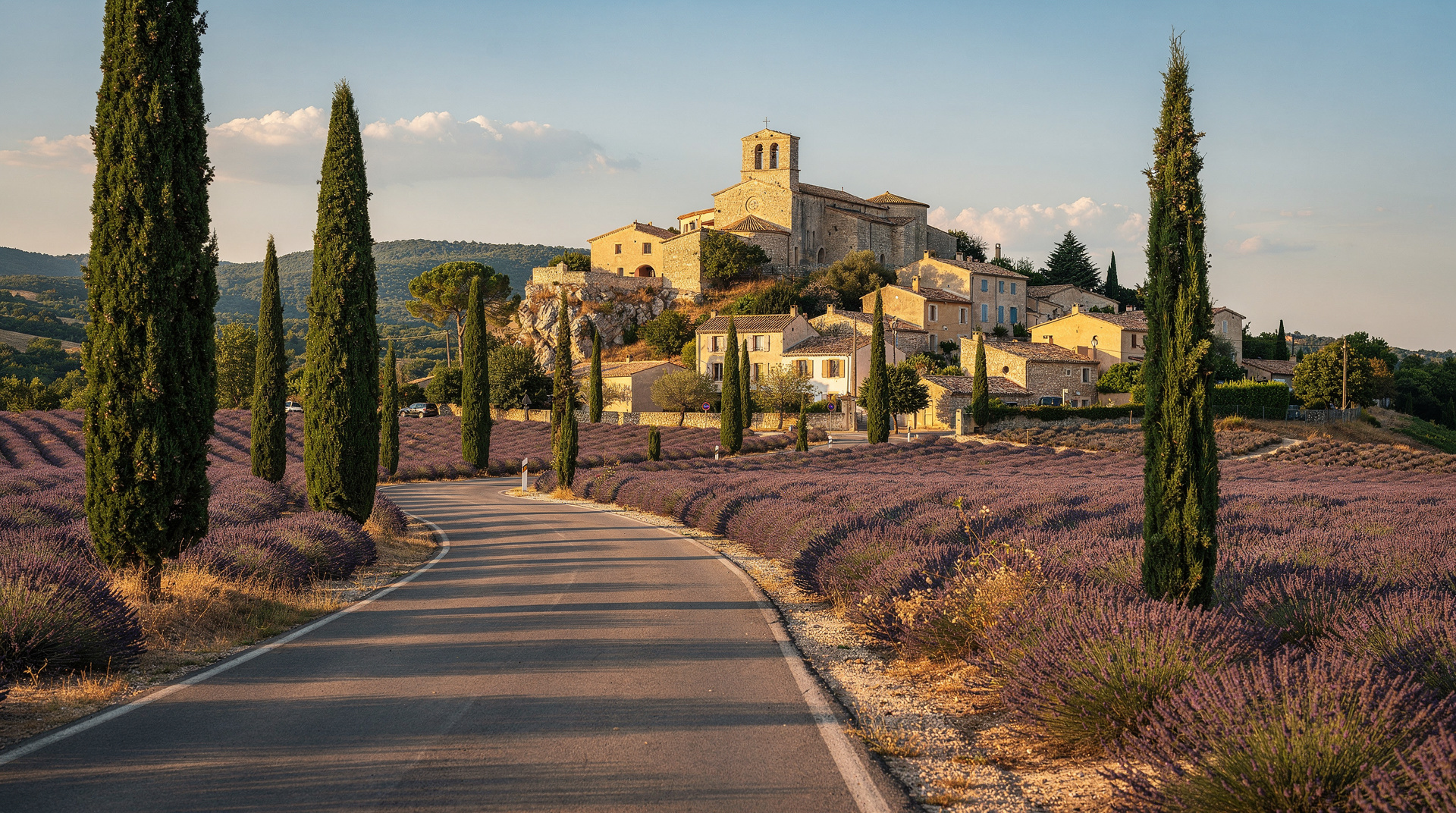
What you cannot do without a car: the Luberon villages (Gordes, Roussillon, Bonnieux), the Valensole lavender plateau, and the Gorges du Verdon. These are real omissions — see the car-in-Provence guide for the honest breakdown. If those destinations are your priority, a car is necessary. If Marseille, its coast, and the historic Rhône cities are the goal, the train covers everything.
Base: all four nights in Marseille. Gare Saint-Charles is 10 minutes by metro from the Vieux-Port and serves as the hub for all day trips.
| Where | Marseille, Cassis, Aix-en-Provence, Avignon, Arles — all by TER train |
| Cost | Around 70–90 EUR/person for all four days’ train connections, plus entry fees |
| Time needed | 4 days, no car needed |
| Getting there | Gare Saint-Charles is the hub; metro line 1 or 2 from central Marseille |
| Best time | May–June or September for comfortable walking heat; July–August is hot but the itinerary still works |
Day 1: Marseille city
Morning: Vieux-Port, Le Panier, MuCEM (8:30–12:30)
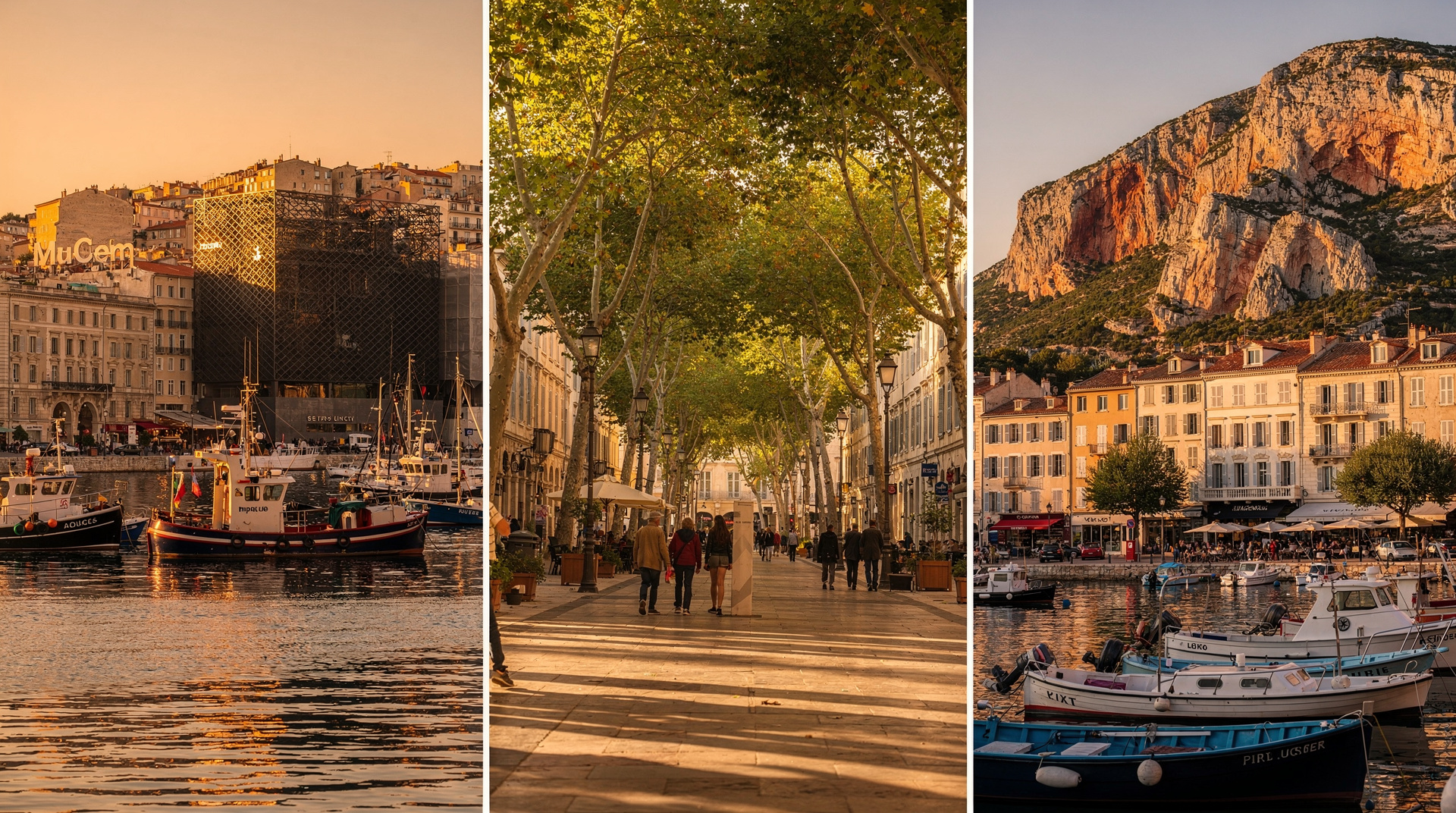
Begin at the fish market on the Vieux-Port Quai des Belges (until approximately 11:00, best before 9:30). Walk the full north quai to MuCEM and Fort Saint-Jean. The footbridge between the fort and MuCEM, and the fort’s open terraces, are free and deliver the finest views of the harbour entrance. Decide whether to enter MuCEM (11 EUR, 1.5 hours) or move on.
Uphill into Le Panier: 90 minutes in the medieval lanes. The Vieille Charité courtyard (free), the street art, the small squares with unexpected views. Descend toward the Vieux-Port by noon.
Afternoon: Notre-Dame de la Garde and Corniche (13:30–19:00)
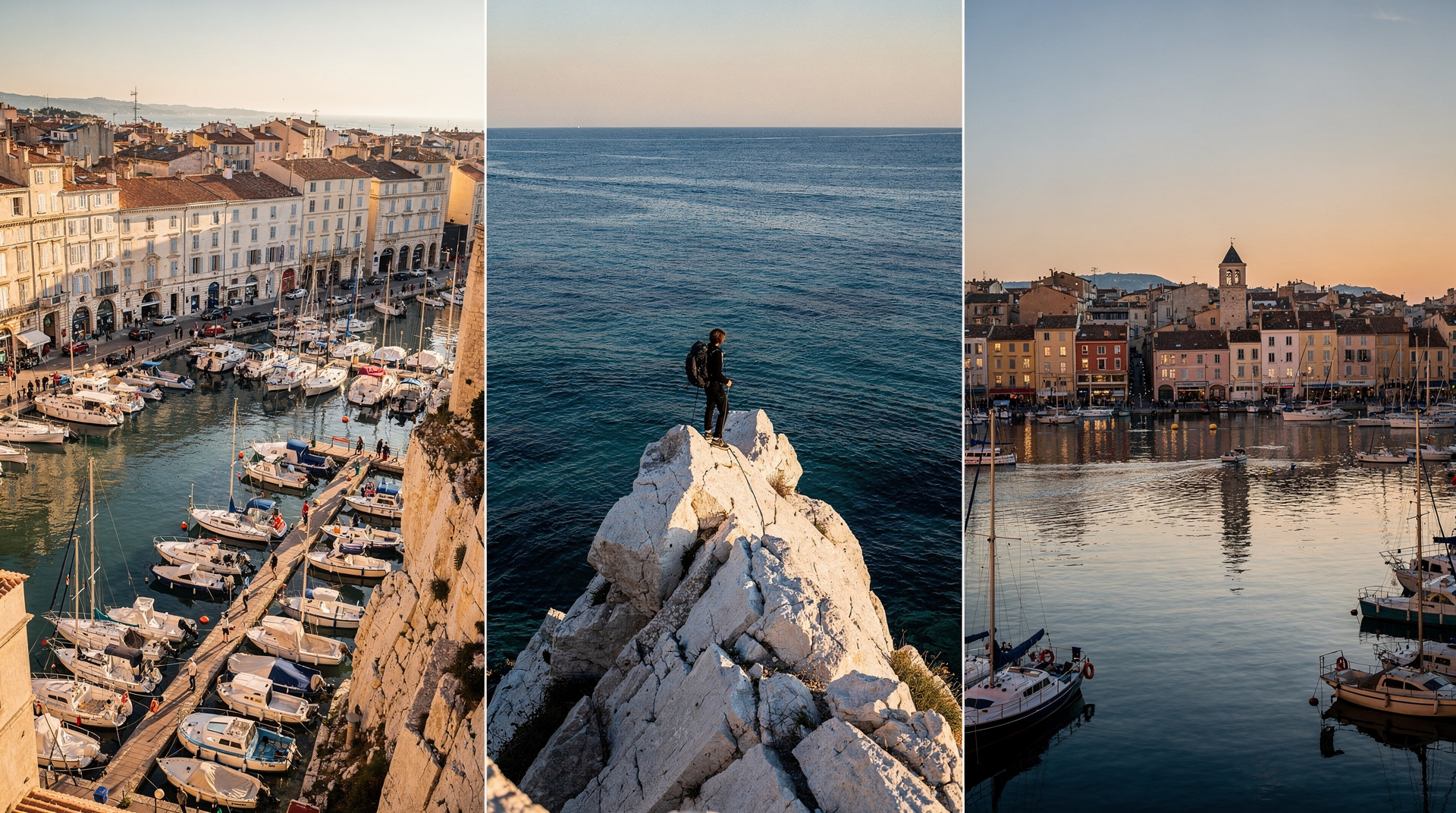
Lunch (Cours Estienne d’Orves or one block behind the south quai for better value). Petit train to Notre-Dame de la Garde from the Vieux-Port (12–15 EUR round trip, 40 minutes at the top, 154-metre panorama). The geography becomes clear from up here: the Calanques massif southeast, the Frioul Islands offshore, the train line to Cassis visible following the coast east.
Bus 83 south along the Corniche Kennedy to Vallon des Auffes (10 minutes). The tiny fishing cove is one of Marseille’s most photogenic spots and one of the least known to day visitors. Continue to Prado beaches for an afternoon swim in season.
Evening in Cours Julien — the most genuinely Marseillais neighbourhood for dinner. Budget 25–40 EUR per person.
Day 2: Calanques and Cassis
Morning: Calanques boat tour (8:30–12:30)
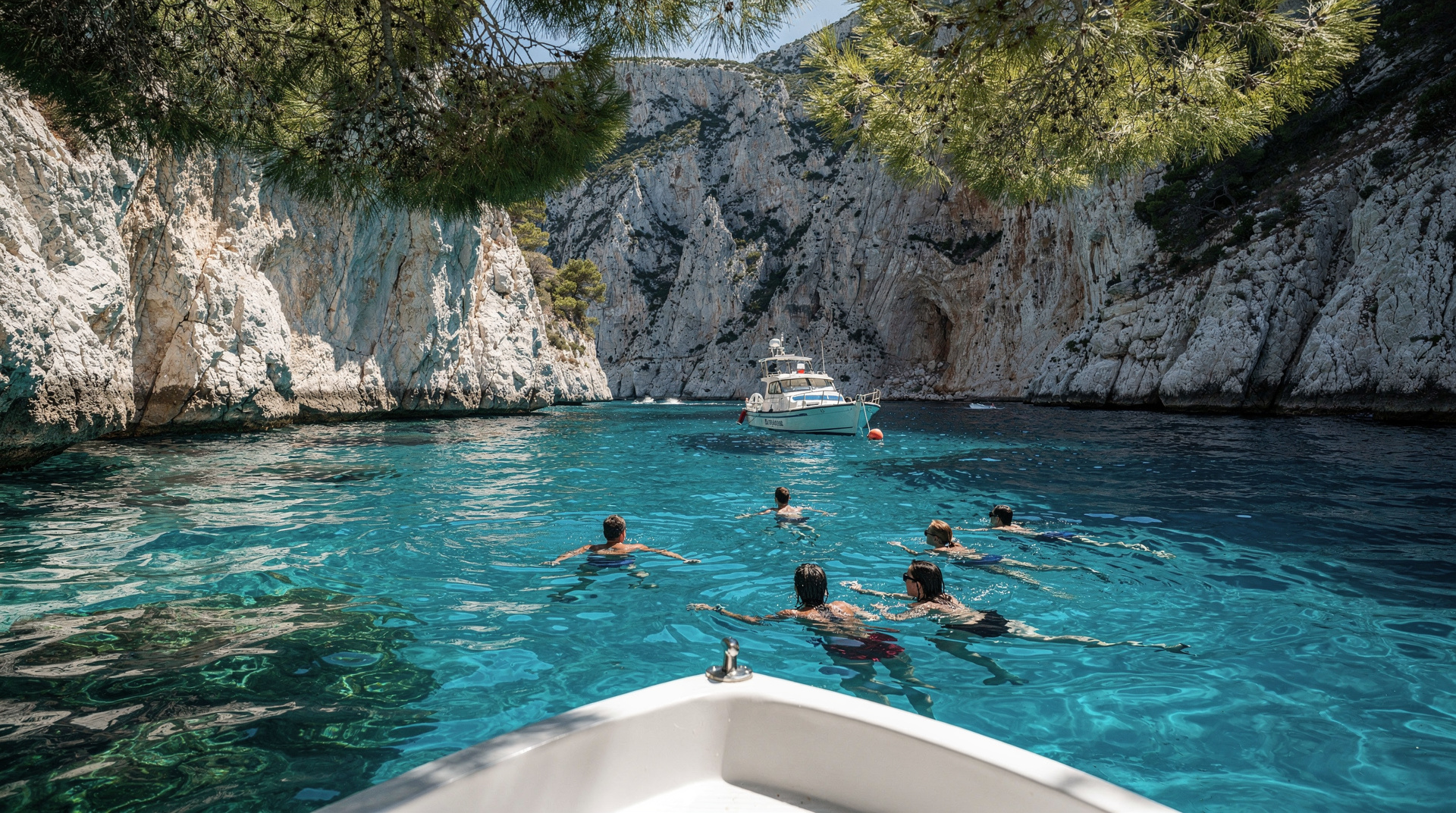
A half-day Calanques boat tour from the Vieux-Port is the right introduction to the Calanques National Park. 3–4.5 hours, swimming stops at 4–6 calanques, morning departure for best light and calm sea. Book in advance — morning slots fill 1–2 weeks ahead in summer.
The fire risk system applies to hiking trails, not boat tours. In summer, boat access is always available. Return by 12:30–13:00.
Afternoon: TER to Cassis (14:00–19:00)
Quick lunch near the Vieux-Port. TER from Gare Saint-Charles to Cassis (22 minutes, 7 EUR). Marcouline shuttle to port. The afternoon in Cassis covers the essential: port walk, Cap Canaille view (from the beach or boat), the coastal path to Port-Miou (1.5 km, flat, 20 minutes), and a glass of AOC Cassis white wine at a port terrace. Return TER to Marseille by 18:30.
Evening dinner in Marseille.
Day 3: Aix-en-Provence
Full day in Aix (9:00–18:00)
TER from Gare Saint-Charles to Aix-en-Provence Centre (35–45 minutes, approximately 7 EUR). Trains approximately every 30 minutes. Note again: Aix TGV station is not useful — always take TER to Aix Centre.
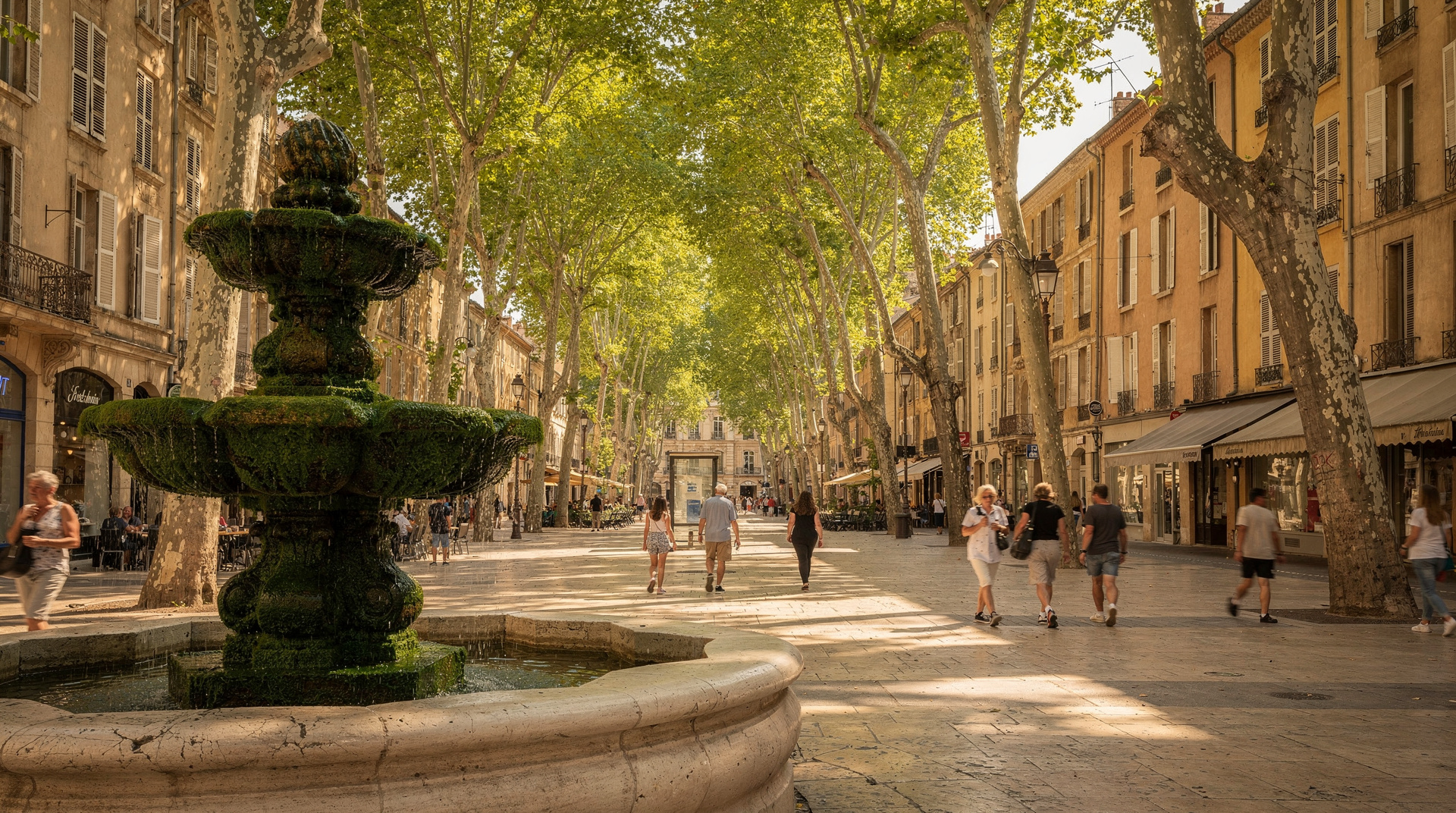
Morning: Market if Tuesday/Thursday/Saturday (Place des Prêcheurs, wrapping up by noon) — the best fresh market within easy train reach of Marseille. Cours Mirabeau: the tree-lined boulevard with its café terraces and fountains. Walk from the Fontaine de la Rotonde at the east end to the Place Forbin at the west — 750 metres of fountains, 17th-century mansions, and outdoor café culture.
Mid-morning: Atelier Cézanne (7.50 EUR, 45 minutes) — the preserved studio north of the city centre. Follow with a walk back south through the Quartier Mazarin: the Fontaine des Quatre Dauphins, the Musée Granet if interested in fine arts (5–8 EUR), the quiet streets south of Cours Mirabeau.
Aix-en-Provence is best experienced slowly — this is not a city that reveals itself to rushed visitors. Allow time on a café terrace for lunch, then wander without agenda.
Afternoon: Calisson tasting at a confiserie (the almond-and-melon confection originating in Aix, available in specialist shops throughout the old town). A Provence wine tasting session (see tour listings) at a wine bar on or near Cours Mirabeau. Or a visit to the Thermes Sextius spa (25–35 EUR per person, above the original Roman thermal spring) for an afternoon of recovery after active Calanques days.
Return TER to Marseille. Evening dinner.
Day 4: Avignon and Arles
Morning: TGV or TER to Avignon (8:30–12:00)
From Marseille Gare Saint-Charles to Avignon:
- By TGV: 35–40 minutes to Avignon TGV station (4 km outside the city walls, shuttle bus or taxi to the centre: approximately 20 minutes, 2 EUR shuttle or 12–15 EUR taxi).
- By TER: approximately 60 minutes to Avignon Centre station (inside the city walls, 5 minutes’ walk from the Palais des Papes). Slower, cheaper (approximately 15 EUR vs 20–30 EUR for TGV), and arrives directly in the old city.
For a day trip: take the TER to Avignon Centre and walk directly to the sights. Take the TGV if speed is the priority for more time on the ground.
Avignon morning:
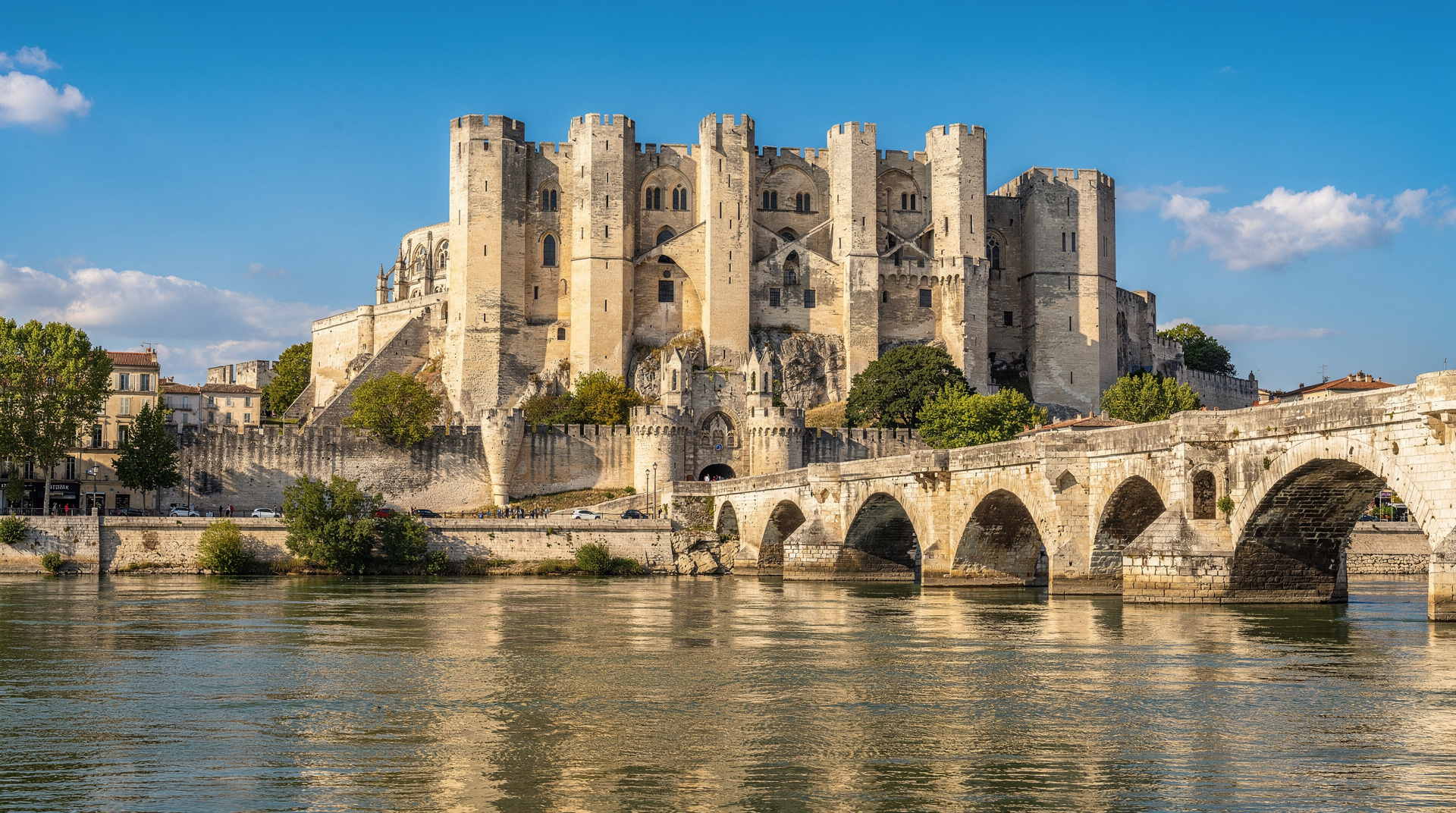
- Palais des Papes (12–15 EUR, 1.5–2 hours) — the largest Gothic palace in Europe, built in the 14th century when the papacy relocated from Rome to Avignon for 67 years. The stripped interior does not prepare visitors for the extraordinary scale of the rooms.
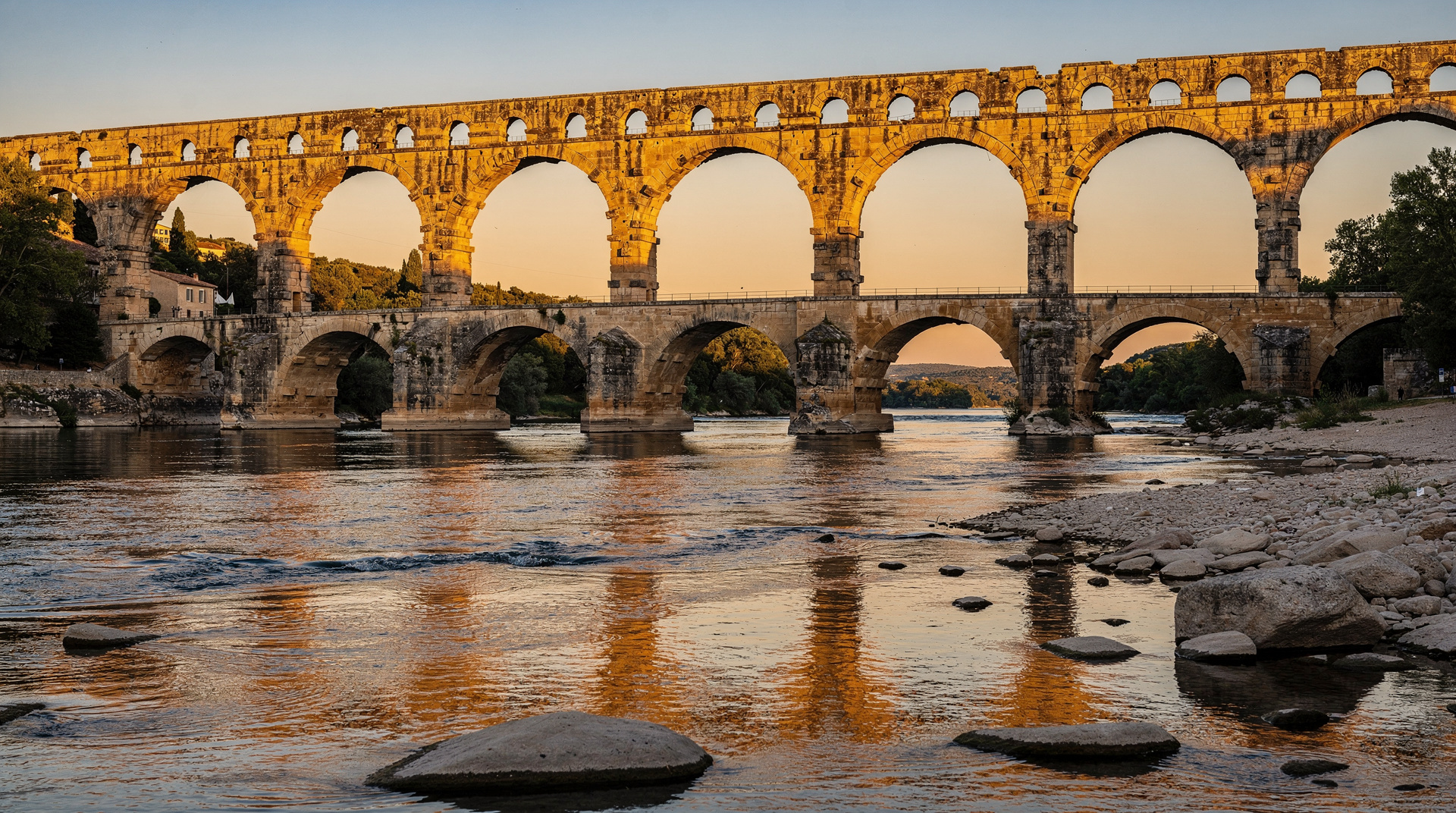
- Pont d’Avignon (5 EUR or view from below for free) — the 12th-century bridge with 4 of the original 22 arches surviving. The nursery rhyme is French.
- Rampart walk (free, 50 minutes for the full circuit).
Afternoon: TER to Arles (13:30–18:00)
Train from Avignon Centre to Arles (20 minutes by TER, approximately 7–8 EUR). Arles station is a 10-minute walk from the Roman arena.
Arles afternoon:
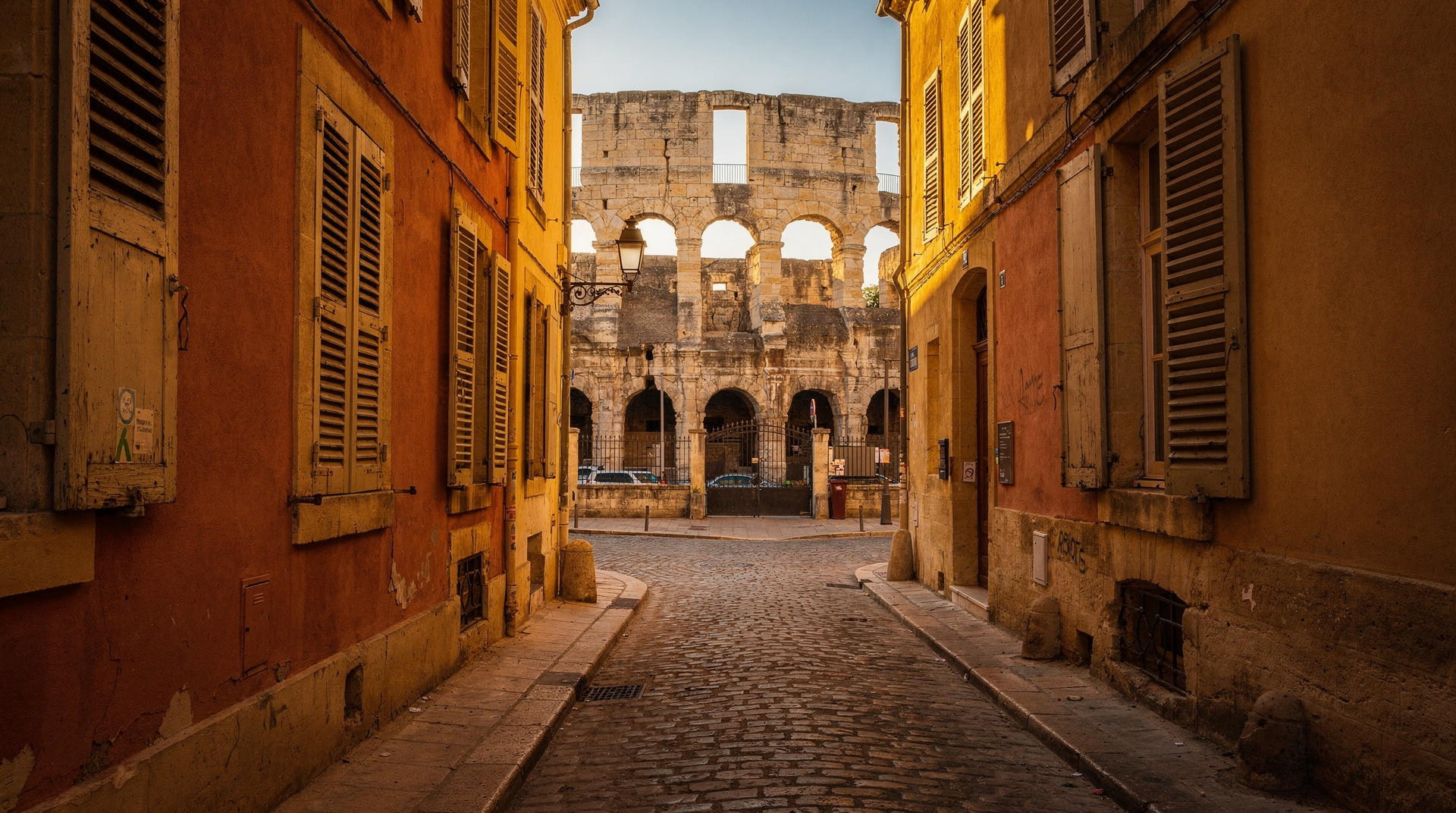
- Arènes d’Arles (9 EUR) — the Roman arena dating to the 1st century AD, still used for bullfights and events. Nearly as complete as the Nîmes arena. Climb to the top tier for views over the city.
- Van Gogh trail — a circuit of numbered interpretation panels at the sites Van Gogh painted during his 15 months in Arles in 1888–1889. The Yellow House was bombed in WWII, but the Place du Forum, the Roman theatre, and the Rhône riverbanks are unchanged. Takes 1–1.5 hours to walk the circuit.
- Fondation Vincent van Gogh (12 EUR) — contemporary gallery with Van Gogh works and artist responses. Allow 1 hour.
Return TER from Arles to Marseille (1 hour, approximately 15 EUR). Arrive back at Gare Saint-Charles by approximately 19:30–20:00. Final evening dinner in Marseille.
What to book in advance
- Calanques boat tour (Day 2 morning) — book 1–2 weeks ahead in summer, 2–3 days in shoulder season.
- Aix Cézanne Atelier (Day 3) — walk-in usually possible; booking at atelier-cezanne.com avoids peak-hour waits.
- TER trains — no reservation required for regional trains; check timetables at sncf-connect.com.
- TGV Marseille–Avignon if choosing the fast option — booking in advance at sncf-connect.com saves money (Prems fares from approximately 10–15 EUR vs 30–40 EUR on day of travel).
- Palais des Papes — timed entry bookable at avignon.com.
- Fire risk check for Calanques Day 2 via calanques-parcnational.fr (boat is not affected by fire closures).
Variations
Add Cassis overnight: Instead of returning to Marseille from Cassis at 18:30 on Day 2, stay one night in Cassis and do the full En-Vau hiking circuit the following morning before returning. The Marseille and Cassis 2-day itinerary has the Cassis overnight version.
Swap Avignon/Arles for more Marseille: If Avignon and Arles are for a different trip, use Day 4 for a deeper Marseille experience: the Calanques again (this time by kayak or on foot if fire risk permits), the Cours Julien neighbourhood by day, or a Marseille food tour. Four days in Marseille and Cassis only is a perfectly coherent choice for coastal and city lovers.
In summer (July–August): The Avignon/Arles day is excellent in summer — these cities handle heat better than the exposed Calanques or the Luberon. Start early in both cities to be in shade and buildings before peak afternoon heat.
Honest warning on Avignon and Arles in one day: It is genuinely tight. The Day 4 plan above works if you start the Avignon morning by 9:00 and reach Arles by 14:00. If either city detains you longer (as Avignon tends to do), Arles becomes a rushed late afternoon. On a subsequent visit, each deserves a full day.
The car-free advantage: what you gain
Travelling without a car in this region is not a compromise — it is a different and often better experience. The TER train network connects these five destinations reliably and at low cost; the journey times are shorter than driving in summer traffic; and arriving by train deposits you directly in the heart of each city rather than at a parking structure on the edge.
Time savings in summer: In July, the parking situation in Cassis is so chaotic that many visitors spend 45–60 minutes finding a space and walking from the parking area to the port. The TER train + Marcouline shuttle takes 32 minutes from Gare Saint-Charles and drops you at the port. In Avignon, the old city is largely pedestrianised and parking outside the ramparts requires a walk anyway. The car-free traveller covers the same distance faster and with less stress.
Cost comparison: Car rental for 4 days in peak summer runs approximately 180–280 EUR for a compact vehicle, plus fuel, parking fees, and toll charges (the A7 and A51 are toll roads). The total car cost for this itinerary is approximately 250–350 EUR. The train alternative for all four days’ connections — Marseille–Cassis–Aix–Avignon–Arles–Marseille — costs approximately 70–90 EUR for two people. The saving is substantial.
What you genuinely miss without a car: The Luberon villages (Gordes, Roussillon, Bonnieux) are the main omission. They are the most photographed part of Provence and require a car — there is no useful public transport workaround. If the Luberon is essential, rent a car for one day only (pick up in Aix on Day 3, return in Aix on Day 4) and use it for a Luberon excursion while keeping the overall itinerary car-free. The car-in-Provence guide has the full cost-benefit breakdown.
TER train network in Provence: practical notes
The SNCF TER (Transport Express Régional) network in Provence is genuinely excellent by European regional rail standards. The key routes for this itinerary:
- Marseille Gare Saint-Charles → Cassis: 22 minutes, approximately 7 EUR, runs approximately once per hour. Note: the Cassis station is 3 km from the port — take the Marcouline shuttle (Ligne M1, 10 minutes, approximately 1–2 EUR) to avoid a hot uphill walk in summer.
- Marseille Saint-Charles → Aix-en-Provence Centre: 35–45 minutes, approximately 7–8 EUR, runs roughly every 30 minutes. Note: avoid Aix-en-Provence TGV station (8 km outside the city, different line) — always take the TER to Aix Centre.
- Marseille Saint-Charles → Avignon Centre: approximately 60 minutes by TER (direct service), approximately 15 EUR. Or TGV to Avignon TGV (35 minutes, 15–35 EUR booked in advance) with a 20-minute shuttle to the city centre.
- Avignon Centre → Arles: approximately 20 minutes, 7–8 EUR, several trains per hour on the main line.
- Arles → Marseille Saint-Charles: approximately 60 minutes, 15 EUR.
Tickets can be purchased at station counters, automatic machines (French and English), or via the SNCF Connect app (Android and iOS). No reservation is required for TER regional trains. TGV tickets require reservation and benefit from advance booking for lower fares.
Gare Saint-Charles (Marseille’s main station) is at the top of the Noailles quarter, accessible by metro (line 1 or 2) and within walking distance of central accommodation. The station has luggage storage (Consigne automatique, approximately 5–8 EUR per bag per day), making it practical to store bags and travel light on day-trip days.
Day-by-day summary
| Day | Destination | Transport |
|---|---|---|
| 1 | Marseille city (Vieux-Port, Le Panier, Notre-Dame de la Garde, Corniche) | On foot, petit train, bus 83 |
| 2 | Calanques boat tour + Cassis | Boat from Vieux-Port, TER |
| 3 | Aix-en-Provence | TER |
| 4 | Avignon + Arles | TER (or TGV to Avignon) |
Making four car-free days work smoothly
The single biggest risk to this itinerary is treating each day trip too casually — TER trains run reliably but not constantly, and missing a return connection from Avignon or Aix means a late arrival back in Marseille. Check the SNCF Connect timetable the evening before each day trip rather than assuming a train “roughly every 30 minutes” will always be there when you want it; frequency drops in the evening and on Sundays. For the Day 4 double-header, treat the Avignon morning as the flexible half and the Arles afternoon as the fixed half — if Avignon runs long, it is easier to shorten the Van Gogh trail in Arles than to rush the Palais des Papes.
If four consecutive train days feels like a lot, the 3-day Marseille itinerary covers Day 1’s content at a gentler pace and can be paired with a single day trip of your choice rather than three.
Frequently asked questions about Marseille without a car
Can you really see Marseille, Cassis, Aix, Avignon, and Arles without a car? Yes — all five are directly reachable by TER train from Gare Saint-Charles, which is what this itinerary is built around. The only real gap is the Luberon villages and the lavender plateau, which have no practical train or bus access.
Is it worth doing Avignon and Arles on the same day, or splitting them? Splitting is better if you have a fifth day to spare, since the combined day is genuinely tight. If four days is the hard limit, the plan above works as long as you keep Avignon to the morning.
Top experiences
Bookable activities with verified prices and instant confirmation on GetYourGuide.