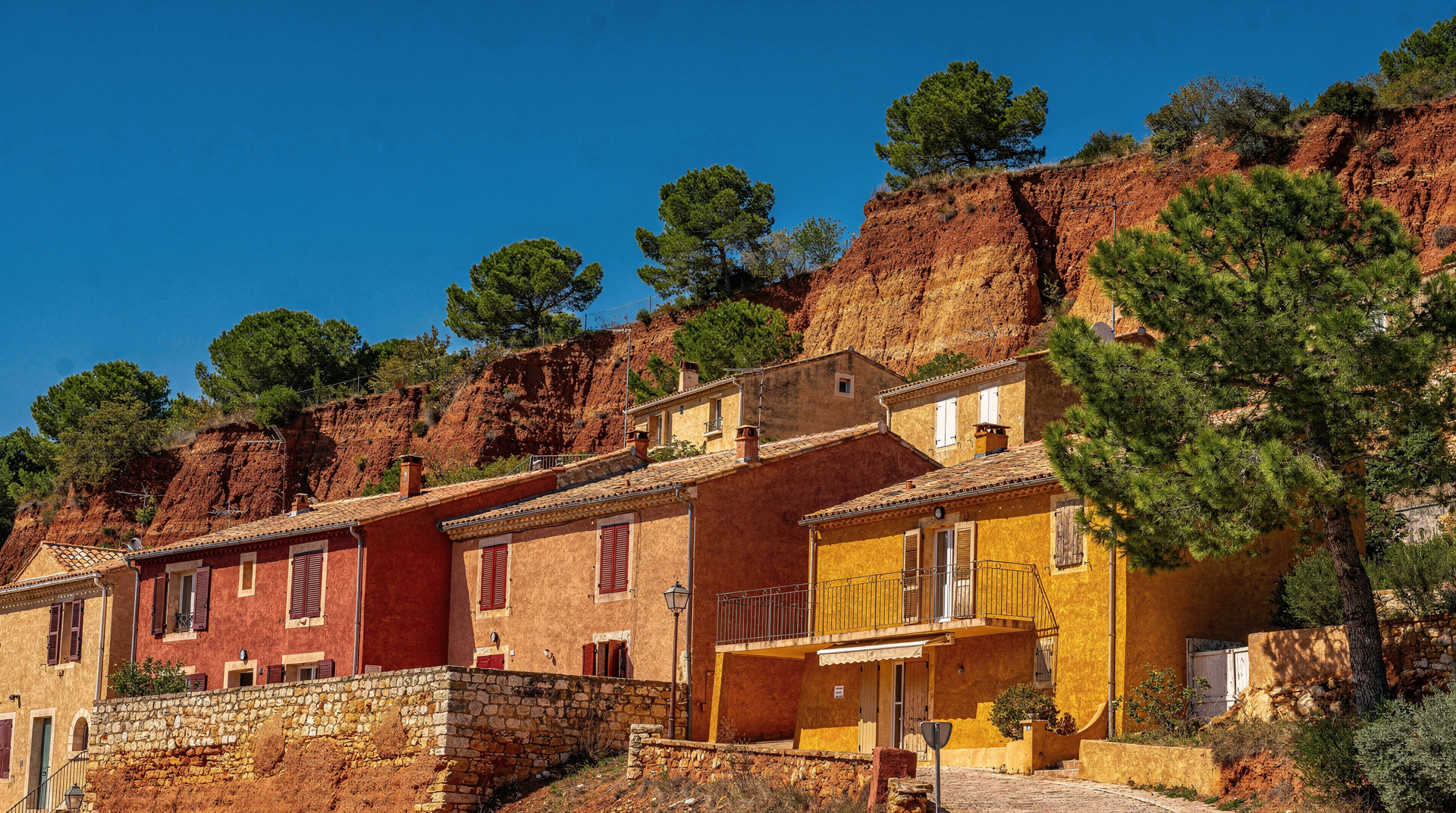
Aix-en-Provence travel guide
Aix-en-Provence: elegant fountains, Cézanne's studios, the best market in Provence, and a very different pace from Marseille. 40 minutes by train.
Aix-en-Provence: electric tourist train, Paul Cézanne route
Quick facts
- From Marseille
- ~40 min by TER train from Saint-Charles; 30 min by car (A51)
- Cézanne's last studio
- Atelier des Lauves — reopened 2025 after major renovation; book ahead
- Market days
- Daily on Place Richelme; Tuesday, Thursday, Saturday on Place de la Madeleine
- Sainte-Victoire
- ~15 min east of Aix by car; Cézanne painted it 80+ times
- No car needed
- All key sites in Aix are walkable; car useful for Luberon or Sainte-Victoire
Marseille’s bourgeois twin
Forty kilometres of autoroute separate Marseille and Aix-en-Provence, and they might as well be different countries. Where Marseille is working-class, multicultural, assertive, and rough at the edges, Aix is refined, academic, and quietly self-satisfied in the manner of university cities that have been beautiful for several centuries. The comparison is not unfavourable to either place — they simply represent different faces of Provence, and visiting both in a single trip is one of the better decisions you can make in southern France.
Aix was the capital of Provence from the 15th century until the Revolution, and the city has not entirely forgotten this. The townhouses along the Cours Mirabeau — 17th and 18th-century mansions with carved stone facades and ornate iron balconies — were built by aristocratic families who wanted their status made visible. The fountains (99 of them, according to local tradition, though the precise count depends on how you define a fountain) were fed by the same Roman aqueduct system that made the city habitable in antiquity.
| At a glance | |
|---|---|
| Where | 40 km north of Marseille, ~40 min by TER train from Saint-Charles |
| Cost | Free to walk the Cours Mirabeau and old town; Cézanne studio around EUR 7.50; cathedral free |
| Time needed | One full day for the essentials; overnight if adding the Luberon or Sainte-Victoire |
| Getting there | TER train to Gare d’Aix-en-Provence (central), or car via A51 (~30 min) |
| Best time | April to June and September to October, for markets and comfortable walking weather |
The Cours Mirabeau
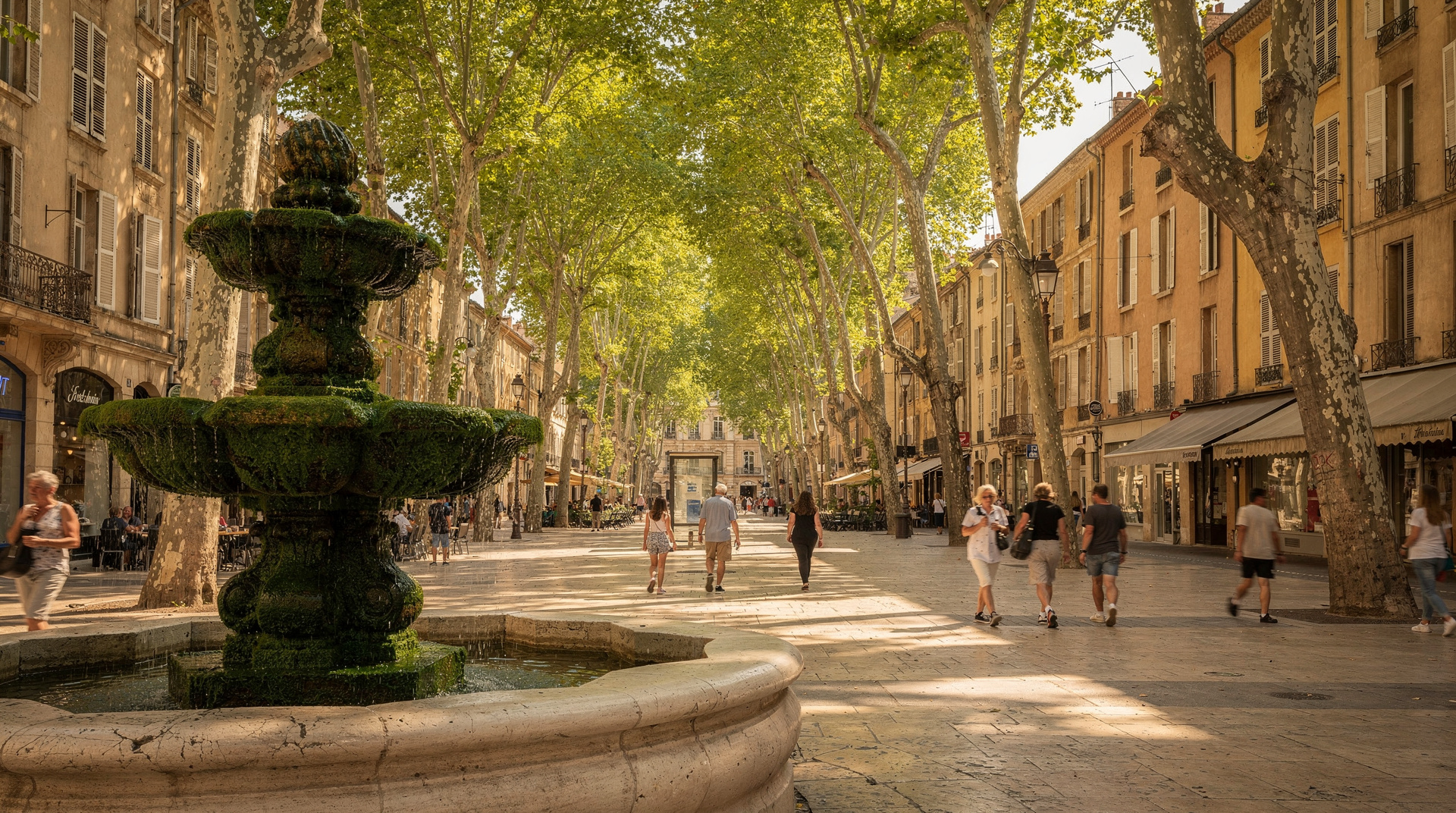
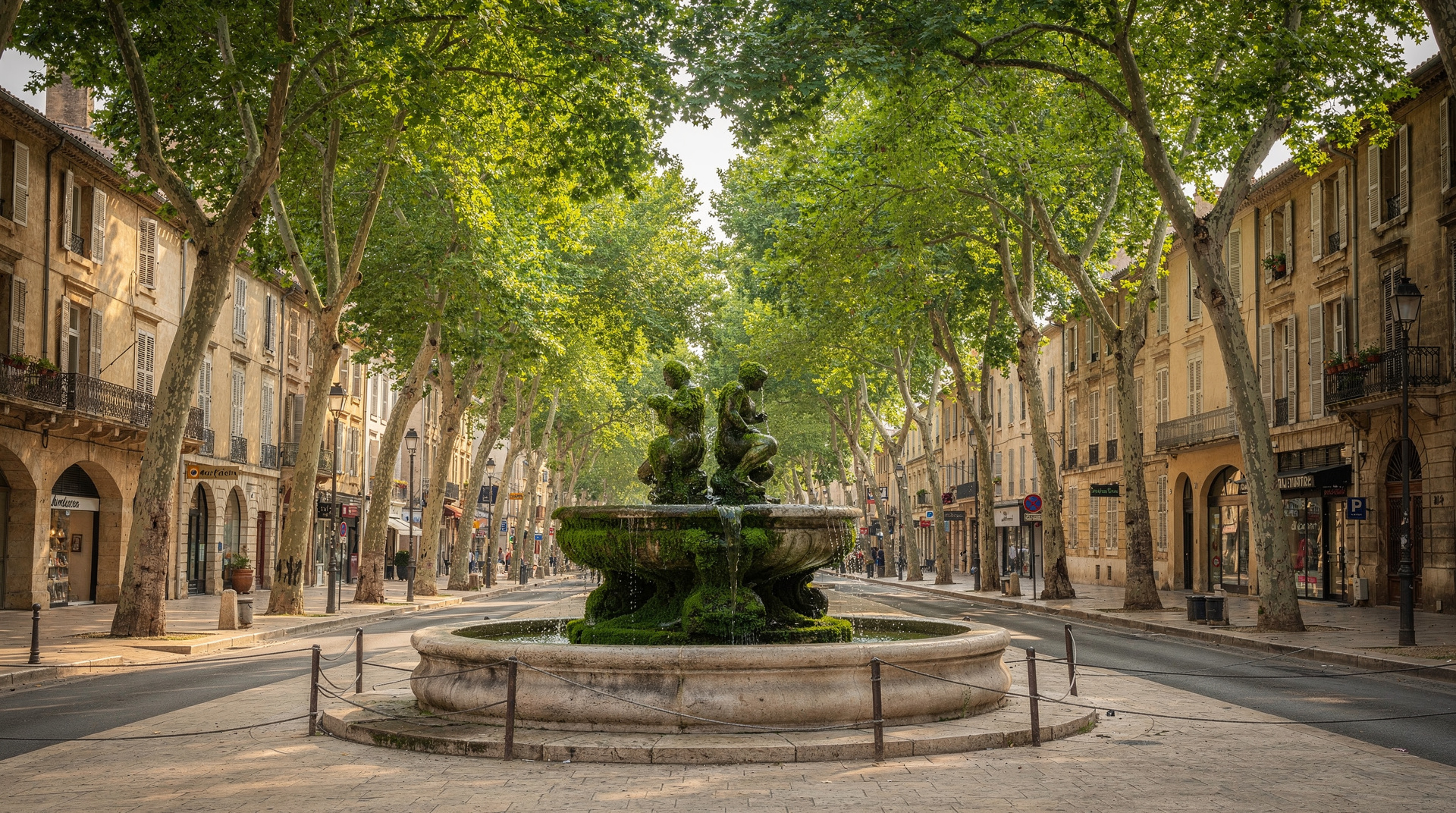
The central boulevard is the appropriate place to begin. Four rows of plane trees create a canopy over the 440-metre length of the Cours, with two distinct sides that have always carried social meaning: the north side (Côté Mirabeau) faces the fountains and the expensive café terraces; the south side is lined with boutiques, banks, and what were historically the town mansions of the old aristocracy.
The fountains along the Cours are worth pausing at individually. The Fontaine de la Rotonde at the western end is the grandest — a 19th-century triple-tiered structure with allegorical figures representing Justice, Agriculture, and the Fine Arts. The Fontaine des Neuf-Canons sits in the middle of the avenue, and the Fontaine d’Eau Chaude (the moss-covered one) draws its water from the same thermal spring that made the Roman settlement here — the water runs at around 34°C year-round and deposits mineral sediment that gives the moss its distinctive texture.
For café culture, the Deux Garçons (Les 2G) on the north side of the Cours is the canonical address — a grand café with a terrace that has been serving writers, painters, and students since 1792. Cézanne and Zola were regulars. The prices reflect the history; go for coffee and not lunch.
Cézanne in Aix-en-Provence
Paul Cézanne was born in Aix in 1839, spent most of his life here, and died here in 1906. The city takes its Cézanne connection seriously, and with justification — no other painter is so inseparably linked to a specific landscape, and Aix and its surroundings are that landscape.
Atelier des Lauves (Cézanne’s last studio)
The studio where Cézanne worked from 1902 until his death is preserved more or less as he left it — brushes, palette, objects that appeared in still lifes (including the sugar bowl and ginger pot that appear repeatedly in his paintings), and his coat and hat. The building is unremarkable; the atmosphere is not. This is where he worked on the final series of Mont Sainte-Victoire paintings that are now in major museums worldwide.
The studio closed for major renovation and reopened in summer 2025 with improved visitor access and a new permanent exhibition. It is the single most important Cézanne site in the world — more intimate than any museum — and deserves more than a perfunctory visit. Open Tuesday to Sunday, 10:00–12:00 and 14:00–17:00 in low season, extended hours in summer. Tickets around 7.50 EUR; book online in advance during July and August.
Les Bibémus quarries
The ochre-red quarries east of Aix, where Cézanne painted extensively in the 1890s, require a pre-booked guided visit. The quarry walls and rock formations appear in dozens of Cézanne canvases — the fractured geometry of the rock is identifiable once you have seen the paintings. Tours run daily in season (check the Cézanne en Provence website for current scheduling); the drive from Aix is about 10 minutes.
Mont Sainte-Victoire
The mountain that obsessed Cézanne — he painted it more than 80 times in the last two decades of his life — rises 1011 metres about 15 km east of Aix. From the Cours Mirabeau on a clear day, you can see its white limestone ridge on the horizon. By car or bike, the Route Cézanne (D17) follows the southern base through the landscape Cézanne walked. The mountain is climbable — the south-face trail via the Croix de Provence is 3–4 hours round trip and well-marked. The view from the top across to Aix and the Luberon is exceptional.
For those who want the artistic connection without the hike, the day trip guide covers a Cézanne walking circuit through Aix itself that visits key sites in the city.
The markets
Aix has the best market infrastructure in Provence — not the most famous (that would be Apt on Saturday), but the most convenient and the most reliably excellent.
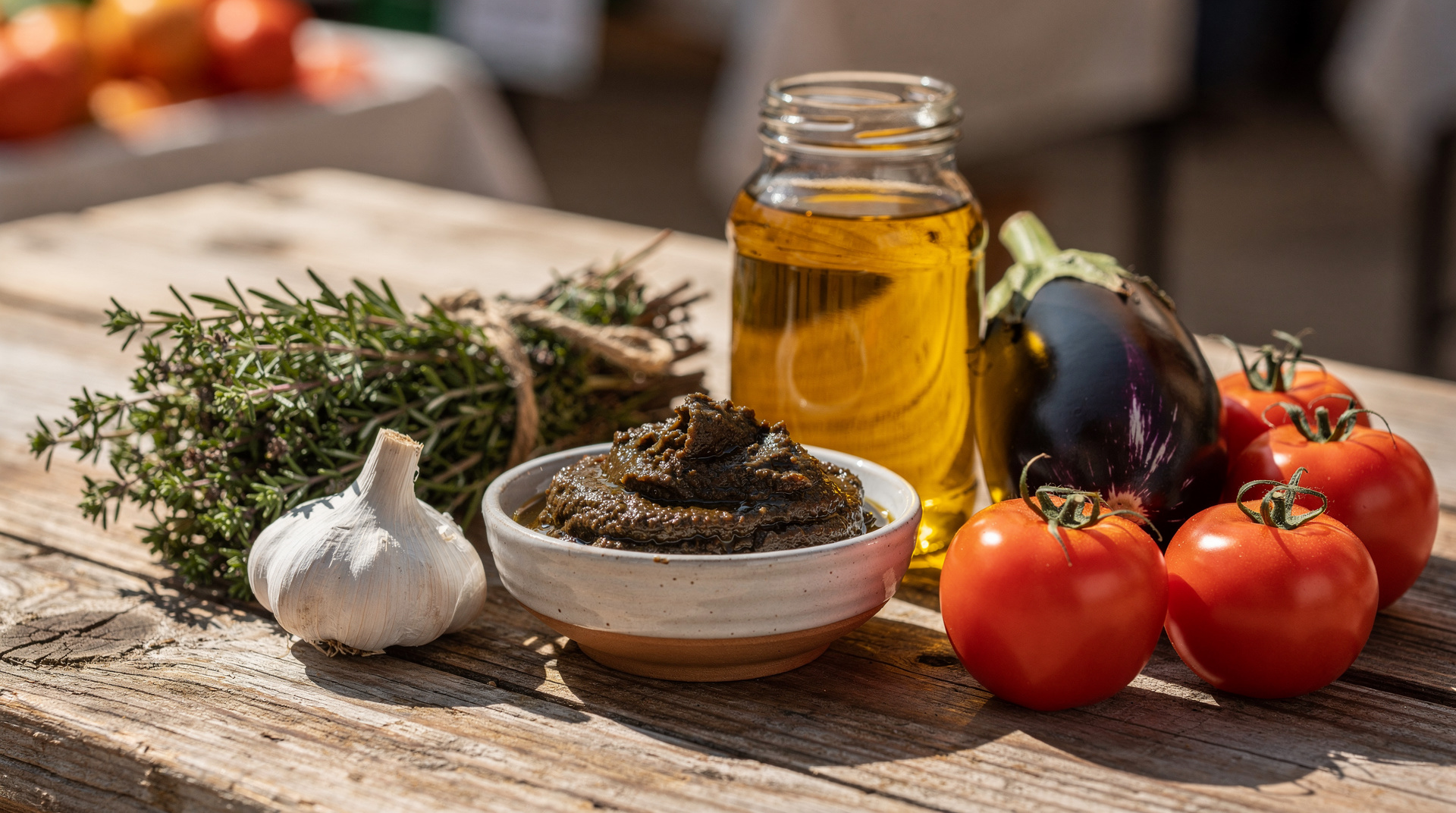
Place Richelme (daily, morning): The covered marketplace just off the Cours Mirabeau, running every morning including Sundays. Vegetables, olives, cheese, charcuterie, honey, herbs, and fruit from local producers. This is where Aix residents shop, not where tourists go to watch other tourists shop. Arrive before 10:00.
Place de la Madeleine (Tuesday, Thursday, Saturday morning): The larger general market with clothing and household goods alongside food. The Saturday edition is the most extensive. Set up by 8:00 and clearing by 13:00.
Flower market (Tuesday, Thursday, Saturday at Place de l’Hôtel de Ville): The cut-flower market operates alongside the food market on the main square. The 16th-century town hall and the octagonal clock tower (Tour de l’Horloge) provide the backdrop.
The Aix day trip guide and the Provence markets guide cover the market calendar in full, including the seasonal specialties (asparagus in spring, truffles in winter at the dedicated Thursday truffle market from November to March).
The old town: walking the grid
The historic centre of Aix is a dense Baroque grid of streets between the Cours Mirabeau and the cathedral. The main axis is Rue d’Italie to Rue Espariat — a 10-minute walk through streets that open into fountained squares and close again into narrow lanes with covered passages.
Cathédrale Saint-Sauveur: Built between the 5th and 17th centuries, incorporating elements from each era in a way that would be disastrous in most buildings but works here. The octagonal baptistery dates to the 4th century; the Nicolas Froment triptych (Burning Bush) in the left nave is one of the masterpieces of 15th-century French painting. Free to enter; guided tours available.
Cours Mirabeau mansions: Several of the 17th-century townhouses on the south side open their courtyard gates intermittently. The Hôtel de Caumont (now a cultural arts centre) has one of the finest interiors in the city — temporary exhibitions run year-round, and the courtyard garden is accessible even when no exhibition is running.
Quartier Mazarin: The southern section of the old town, laid out in 1647 in a formal grid by the Archbishop of Aix (the Cardinal Mazarin’s brother). Less touristed than the area north of the Cours; more residential. The Musée Granet — Aix’s fine arts and archaeology museum — occupies the former Priory of the Knights of Malta in this quarter. The Granet collection includes significant Cézanne pieces and important Provençal works.
Day trip from Marseille vs staying in Aix
Day trip case: The TER train from Marseille Saint-Charles to Aix-en-Provence takes about 40 minutes and runs frequently. The station is a 10-minute walk from the Cours Mirabeau. Everything in Aix that matters for a first visit is walkable within 30 minutes of the centre. A day from Marseille (arriving 9:00, leaving 18:00) comfortably covers the Cours Mirabeau, Place Richelme market, the old town cathedral quarter, the Cézanne studio, and lunch.
Staying in Aix case: An overnight in Aix makes sense if you want to combine the city with the Luberon — Gordes, Roussillon, and Lourmarin are all within 45–60 minutes by car from Aix. It also suits visitors who find the pace of Marseille too intense and prefer a quieter base for Provence exploration. The evening atmosphere in Aix — restaurants around Rue d’Italie, outdoor terraces on the Cours — is better than the day-visit version.
The honest verdict: Aix is an excellent day trip from Marseille. It is also an excellent base for the Luberon if you have a car. It is not a city that needs multiple days to itself; unlike Marseille, it does not reveal surprising layers with extended time. One full day is the correct duration for most visitors.
See our Marseille vs Aix comparison guide for a detailed breakdown by travel style.
Sainte-Victoire and the Cézanne countryside
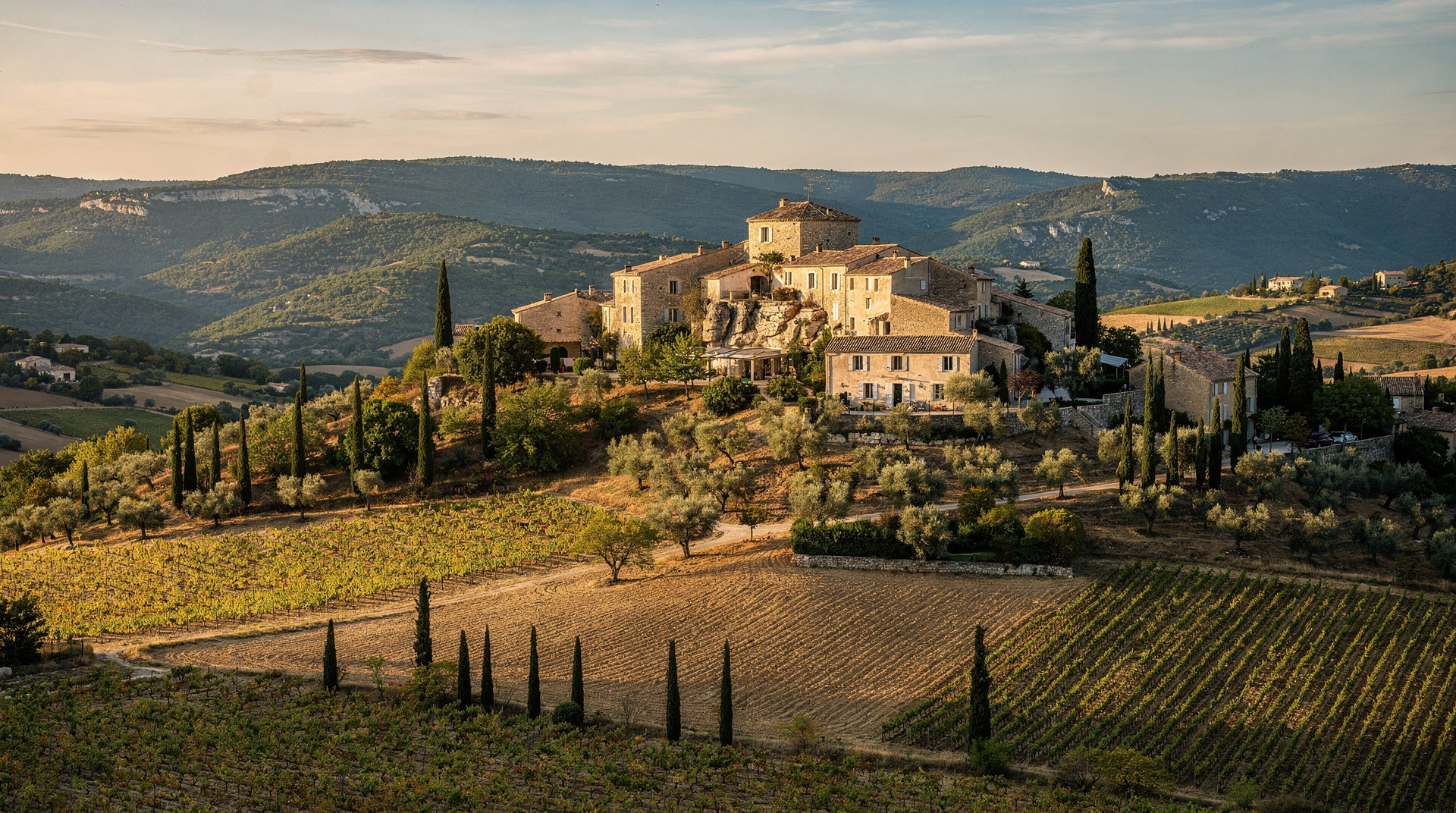
The landscape east of Aix — the Route Cézanne through Le Tholonet, the Bibémus plateau, the Sainte-Victoire ridge — is the most directly Cézanne-themed area in Provence. You do not need to care deeply about painting to find it rewarding: the combination of ochre rock, pine forest, and the white limestone mountain is genuinely beautiful and completely different from the coastal Calanques landscape.
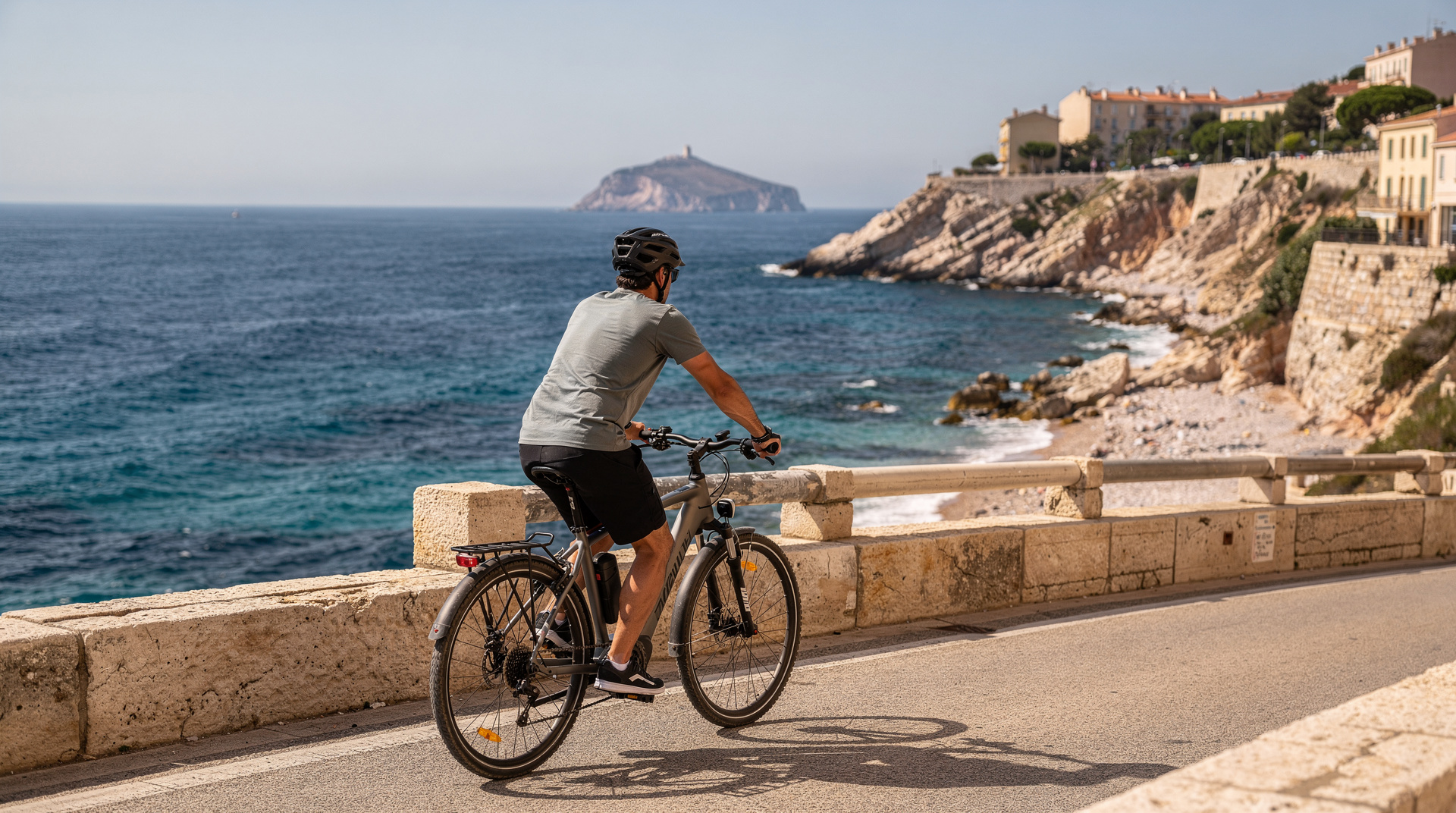
By car or e-bike, a half-day loop from Aix via Le Tholonet, the Bibémus viewpoint, and the foot of Sainte-Victoire covers the main Cézanne geography without requiring the full mountain hike. The Aix day trip guide includes a suggested driving route.
Practical information for Aix
Getting there by train: TER from Marseille Saint-Charles to Aix-en-Provence, 40 minutes, roughly hourly. Note that there are two Aix stations: the main Gare d’Aix-en-Provence (central, walkable) and Aix-en-Provence TGV (out of town, serves high-speed trains from Paris — requires a bus connection to the centre). From Paris by TGV, the journey is about 3 hours to the TGV station.
On foot in the city: All the main sites — Cours Mirabeau, Place Richelme, Cathedral, Cézanne studio — are within a 20-minute walk of each other. The city is compact and pedestrian-friendly. No public transport needed within the centre.
Car for onward Provence: Aix is the natural gateway to the Luberon by car. The A51 north toward Pertuis and then the D973 toward Lourmarin covers the southern Luberon in about 40 minutes. See the Luberon guide for village logistics.
Eating in Aix: The streets immediately south of the Cours Mirabeau (Rue d’Italie, Rue Rifle-Rafle) have a higher concentration of worthwhile restaurants than the Cours itself, where terrace prices reflect location rather than quality. For lunch, the market area at Place Richelme has boulangeries and traiteurs that charge market prices rather than tourist prices.
Wine tasting around Aix
Aix sits at the edge of the Coteaux d’Aix-en-Provence appellation, and a city wine tasting session (30–40 minutes, around EUR 15–25) is an easy addition to a day that already includes the market and old town. For a fuller half-day, the Cézanne countryside wine tour combines estate tastings with the Sainte-Victoire landscape. See our wine tasting near Marseille guide for how Aix compares to Cassis and Bandol on the coast.
Frequently asked questions about Aix-en-Provence
Is Aix-en-Provence worth visiting as a day trip from Marseille?
Yes, strongly. The 40-minute TER train makes it one of the most accessible and rewarding day trips from Marseille. The Cours Mirabeau, the daily market at Place Richelme, the Cézanne studio, and the old town cathedral all fit comfortably into a single day. It is a very different energy from Marseille — quieter, more refined — and that contrast is part of what makes the combination work.
How long do you need in Aix-en-Provence?
One full day covers the main sights at a comfortable pace. An overnight adds time for the Luberon villages or the Sainte-Victoire hike and gives you the evening atmosphere on the Cours. Two full days is generous but not wasted if you add Bibémus, wine tasting in the Aix countryside, or a half-day in Saint-Rémy-de-Provence.
Do you need a car in Aix-en-Provence?
No, for the city itself. Train from Marseille plus walking covers everything. Yes, if you want to reach the Luberon, Sainte-Victoire, or the surrounding wine country — these are not accessible without a car or an organised tour.
When is the best time to visit Aix-en-Provence?
April to June and September to October. The markets are at their best in spring (asparagus, strawberries, early vegetables) and autumn (mushrooms, figs, olive harvest). Summer is busy and hot; the city functions but the café terraces are crowded and the Cézanne studio fills early. Saturday markets year-round are worth timing a visit around.
Where is Cézanne’s atelier in Aix?
The Atelier des Lauves (Cézanne’s last studio) is at 9 avenue Paul Cézanne, about a 15-minute walk north of the Cours Mirabeau. It reopened in summer 2025 after renovation. Open Tuesday to Sunday; check the cezanne-en-provence.com website for current hours and book tickets in advance during peak season.
Is the Cours Mirabeau walkable from the train station?
Yes. From the Gare d’Aix-en-Provence (the main central station, served by TER from Marseille), the Cours Mirabeau is about a 10–15 minute walk south through the city centre. The route is signposted.
Can I combine Aix-en-Provence with a Luberon day trip?
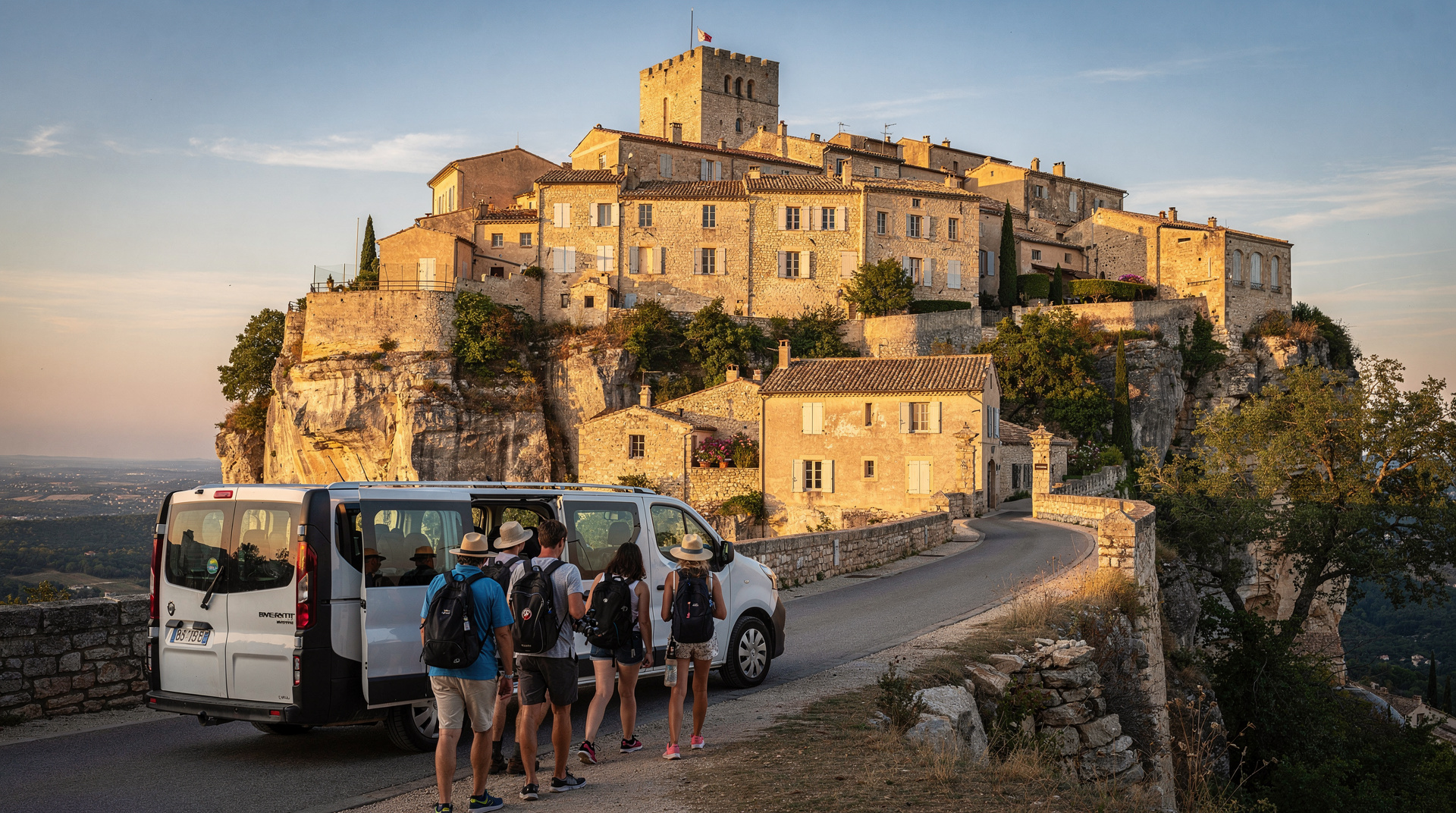
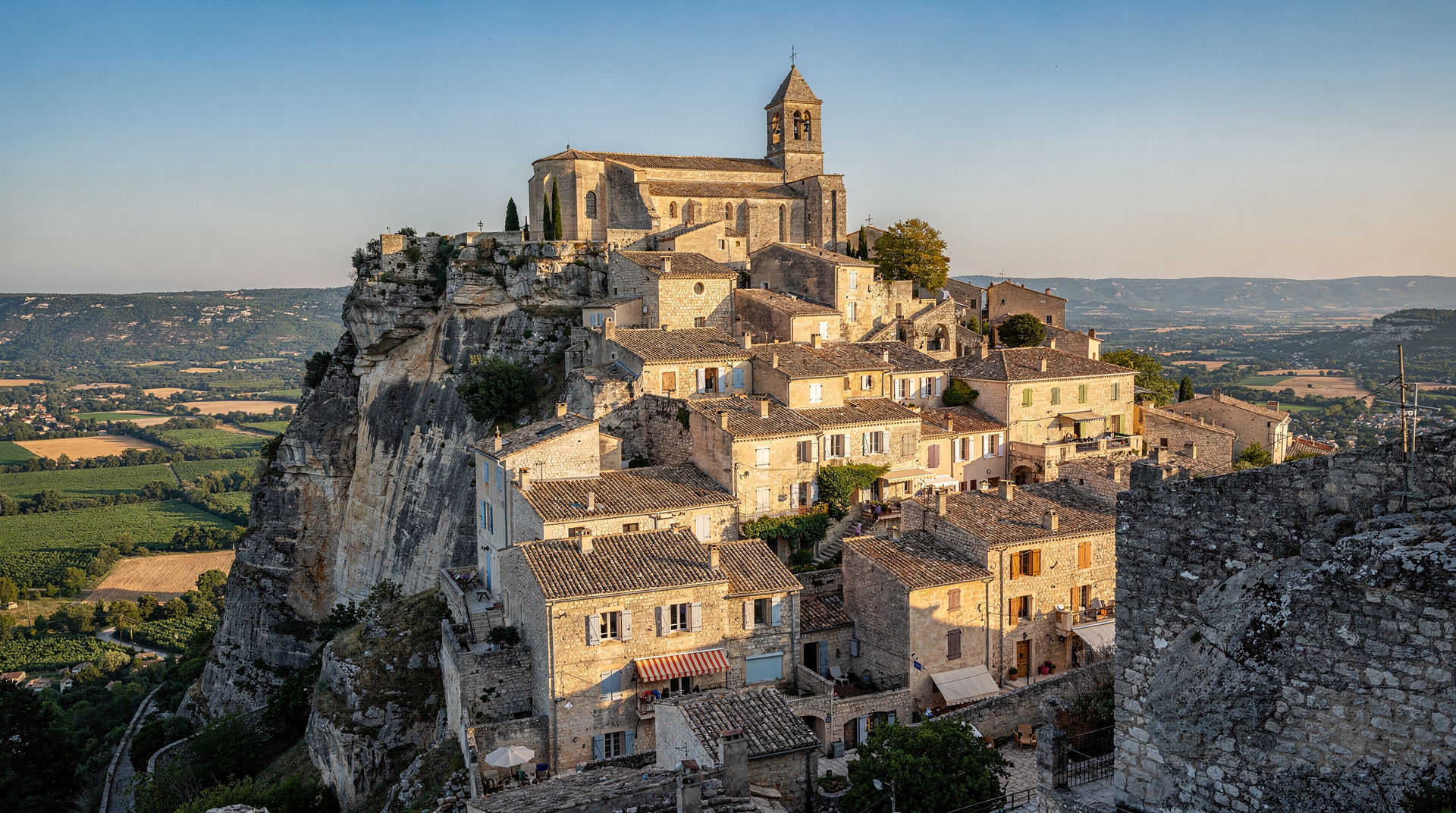
Yes, with a car. Aix is the natural starting point for the Luberon — Gordes and Roussillon are about 50–60 km north on the D73/D2 via Pertuis. An organised day tour from Aix covers the main Luberon villages without requiring your own vehicle. See the Luberon guide for the full picture.
Is Aix-en-Provence or Marseille better as a base?
It depends on priorities. Marseille is the better base for the Calanques, the sea, and a wider range of day trips by train, including Cassis, Aubagne, and Arles. Aix is the better base for the Luberon and a quieter, more compact town feel. Many visitors do both — Marseille as the main base with a day trip to Aix — rather than choosing one exclusively. See the Marseille vs Aix comparison guide for a fuller breakdown.
Can I do wine tasting in Aix-en-Provence?
Yes. A short city wine tasting session (around EUR 15–25 for 30–40 minutes) is available in Aix itself, and the half-day Cézanne countryside wine tour adds estate visits around Sainte-Victoire. See our wine tasting near Marseille guide for how it compares to the coastal Cassis and Bandol options.
Top experiences
Bookable activities with verified prices and instant confirmation on GetYourGuide.