Marseille history: from Phocaean founding to European Capital of Culture
Marseille: Vieux-Port & Le Panier walking tour
How old is Marseille and what is its history?
Marseille was founded around 600 BCE by Greek traders from Phocaea — making it France's oldest city and predating Paris by several centuries. It was a major Roman port, a medieval plague entry point, a 19th-century colonial hub, and became European Capital of Culture in 2013.
The oldest city in France
| Where to see it | Musee d’Histoire de Marseille and Jardin des Vestiges (Centre Bourse), Fort Saint-Jean, Le Panier |
| Cost | Jardin des Vestiges and Fort Saint-Jean grounds are free; the history museum charges around EUR 6-9 for entry |
| Time needed | Around 2-3 hours to see the main historical sites without rushing |
| Best paired with | The MuCEM and the museums guide for the fuller cultural picture |
| Best time | Any season — the sites are mostly indoor or sheltered; mornings are quietest |
Most cities have a founding myth. Marseille has a founding date: approximately 600 BCE, when Greek traders from the Ionian city of Phocaea — on the Aegean coast of what is now Turkey — sailed into the natural harbour at the mouth of the Lacydon river and established the colony of Massalia. The date is established by archaeology (the oldest Greek pottery found in Marseille is precisely dateable) and by ancient written sources.
Paris came later. Lyon came later. The Roman conquest of Gaul came later. When Julius Caesar besieged Massalia in 49 BCE — punishing the city for having backed Pompey in the civil war — he was attacking a settlement that was already 550 years old. When Paris was still a Celtic river settlement, Marseille was already manufacturing pottery, pressing wine, trading with the Ligurians and Celts of the hinterland, and minting its own silver coins bearing a goddess’s head.
Marseille’s pride in this seniority is not merely historical vanity. It explains the city’s persistent sense of its own independence from Paris — cultural, political, temperamental. A city that existed for 600 years before France was a concept has a different relationship to centralised power than a city that grew under that power’s shadow.
Massalia: the Greek city
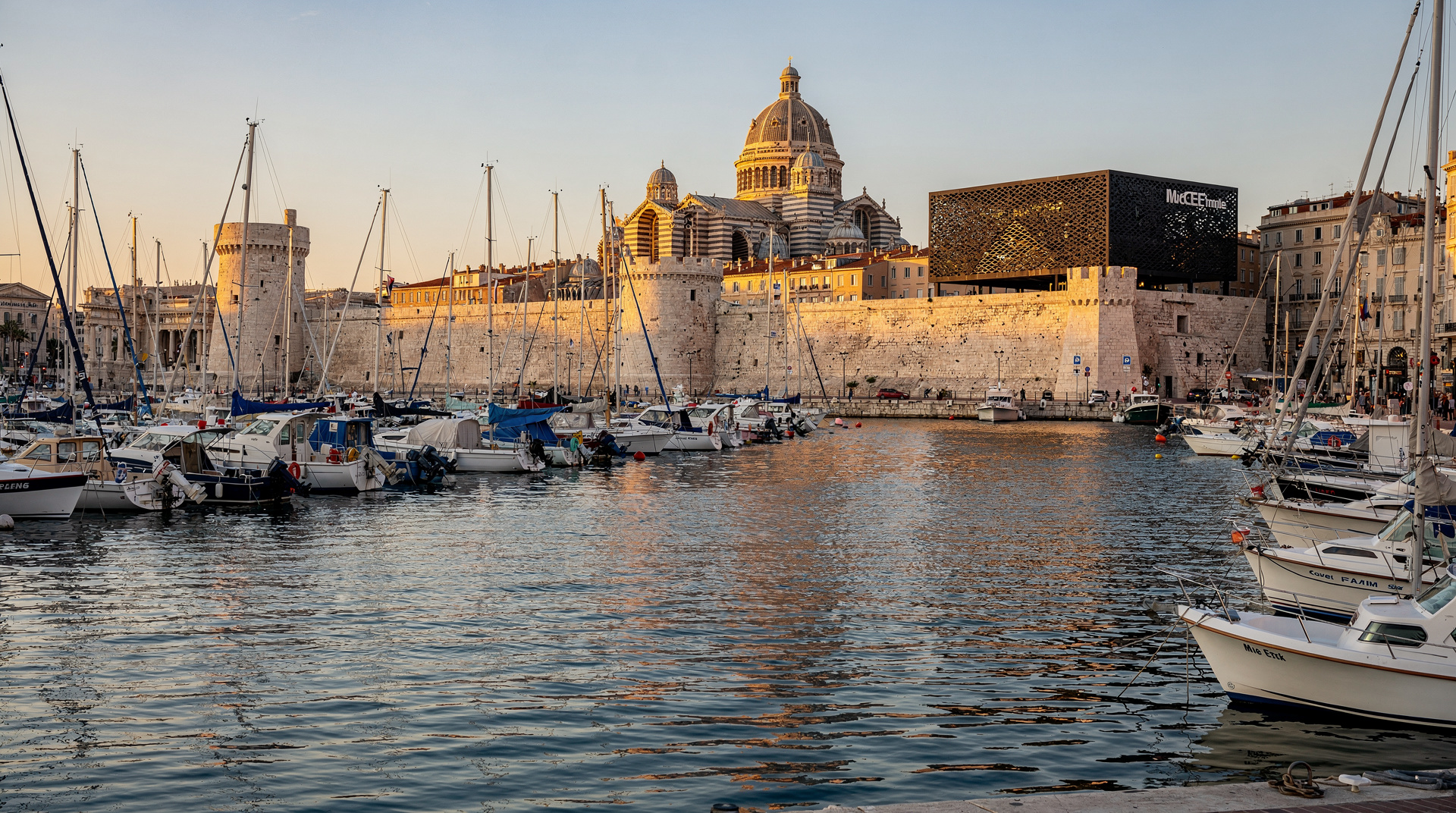
The Phocaean settlement grew rapidly on the north shore of the Lacydon — the long inlet that is now the Vieux-Port. The Greeks built the city on a slope above the harbour with the characteristic Greek urban form: a temple on the highest ground, the agora (public gathering space) below, and the commercial harbour at the water’s edge.
Massalia was not a military colony. It was a trading post that became a city. The Phocaeans brought their religion (the cult of Artemis of Ephesus was central to Massalian identity), their agricultural knowledge (they introduced wine and olive cultivation to Provence and Languedoc), and their material culture (Massalian pottery has been found as far north as the Loire valley).
The city achieved a remarkable degree of political stability for the ancient world. It was governed by an oligarchic council of 600 citizens (the Timouchoi) for centuries, avoided most of the factional civil wars that destroyed other Greek colonies, and maintained commercial and diplomatic relationships with Rome from an early period — relationships that would prove crucial in the 3rd century BCE.
Where to see this history: The Musée d’Histoire de Marseille, embedded in the Centre Bourse shopping centre, sits directly above the excavated remains of the Lacydon harbour. The glass floors reveal dock pilings in their original positions. The museum’s centrepiece is a 3rd-century CE Roman merchant ship recovered intact during the 1967 construction of the shopping centre. See our museums guide for details.
The Roman centuries: Massalia under the Empire
The relationship between Massalia and Rome was complex. During the Punic Wars, Massalia allied with Rome against Carthage — a strategic calculation that kept the city independent while helping decide the fate of the western Mediterranean. The alliance brought commercial privileges; Massalia’s port became a significant entrepôt for Roman trade along the Rhône corridor.
The break came in 49 BCE. Massalia backed Pompey in the Roman civil war. Caesar besieged the city by land and sea. After a six-month siege, Massalia fell, was stripped of its fleet, its territories, and most of its commercial privileges, and was reduced from an independent ally to a subject city.
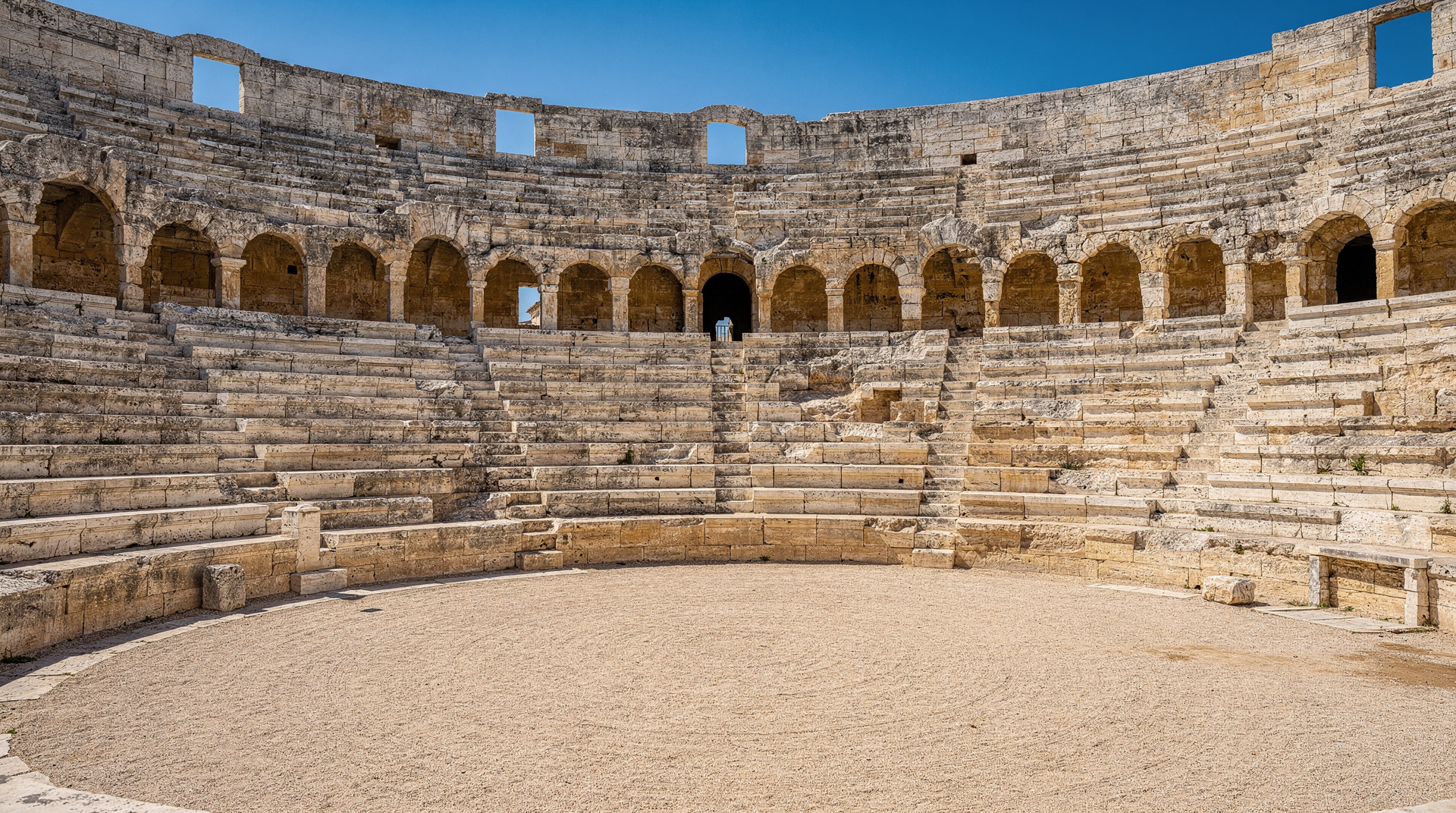
The city survived as a cultural and intellectual centre. Greek continued to be spoken here long after Latin replaced it elsewhere in Roman Gaul. Roman-era Marseille (officially Civitas Massiliensium) produced philosophers, physicians, and the school of rhetoric that educated several Roman emperors’ sons. The physical evidence — Roman warehouses under the Centre Bourse, sections of city walls, the ancient harbour outline still visible in the Vieux-Port’s proportions — is present beneath the modern city if you know where to look.
Medieval Marseille: plague, commerce, and the Crusades
After the Western Roman Empire’s collapse in the 5th century, Marseille passed through Visigothic, Ostrogothic, Byzantine, and Frankish control before being absorbed into the Kingdom of Burgundy and eventually into the County of Provence. Its port function never ceased — the harbour geography that made it attractive to the Phocaeans continued to make it strategically valuable to whoever controlled Provence.
The Crusades brought Marseille back to commercial importance. The port served as a major embarkation point for French Crusaders heading to the Holy Land. The Order of the Knights Hospitallers of Saint John established a headquarters near the Vieux-Port — the beginnings of the religious complex that would eventually become the Cathédrale de la Major.
In 1347, ships from the Crimea docked at Marseille carrying rats and plague-infected fleas. This is believed to have been the entry point of the Black Death into France — the epidemic that killed between one-third and one-half of Europe’s population between 1347 and 1353. The city’s role as an open port made it simultaneously the source of economic vitality and epidemic vulnerability. This pattern repeated: Marseille suffered devastating outbreaks of plague in 1481, 1580, 1630, and most catastrophically in 1720–1722.
The Great Plague of 1720–1722 deserves particular mention. The Grand Saint-Antoine, a merchant ship returning from the eastern Mediterranean, was placed in quarantine off Marseille but its cargo was released early after lobbying by city merchants. The plague that resulted killed approximately 50,000 people in Marseille — roughly half the population — and spread throughout Provence. A 27-kilometre stone wall (the Mur de la Peste) was built across Provence to contain the epidemic; it remains partially visible in the landscape between Cabrières-d’Avignon and Malaucène.
The 17th-century royal port: Louis XIV and the Vieux-Port
Marseille resisted centralisation. In 1423, the city had resisted Aragonese annexation. In 1481, it passed to the French crown through the inheritance of the Count of Provence by King Louis XI — and immediately began its centuries-long argument with Paris about the extent of royal authority over its affairs.
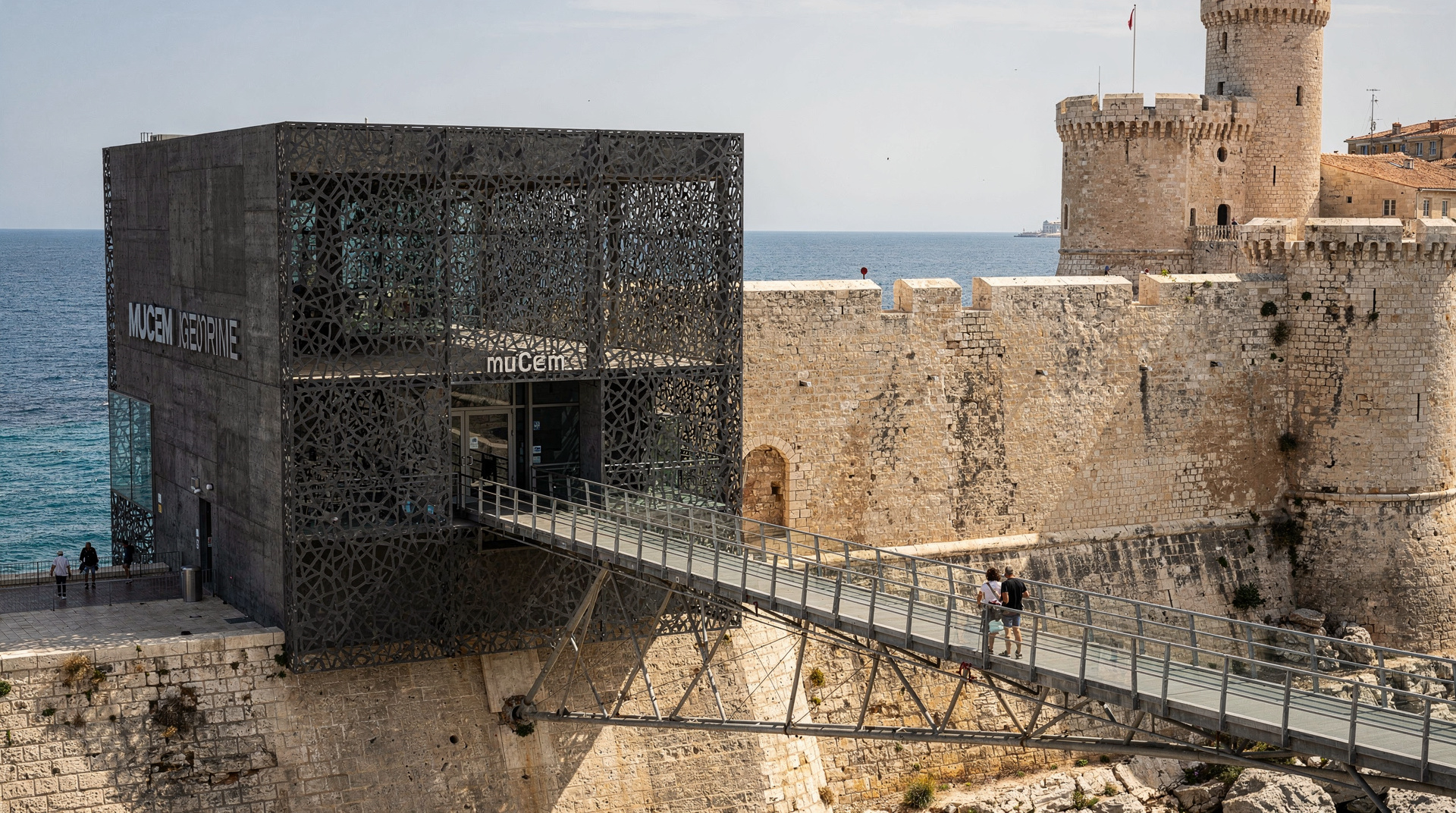
The argument came to a head under Louis XIV. In 1660, the Sun King entered Marseille at the head of an army and ordered the construction of Fort Saint-Nicolas on the south shore of the Vieux-Port — a fortress designed to control the harbour and train its guns on the city as much as on any foreign enemy. Fort Saint-Jean on the north shore was expanded simultaneously. The message was unambiguous: Marseille was now a royal port, not an independent commune.
The fort construction changed the character of the Vieux-Port permanently. The harbour, previously open and commercially anarchic, became regulated, militarised, and connected to the royal ambitions for Mediterranean trade and colonial expansion. The Compagnie du Levant (later the Compagnie de Marseille) received the monopoly on French trade with the Ottoman Empire — making Marseille the gateway to a vast commercial network that would define its next century.
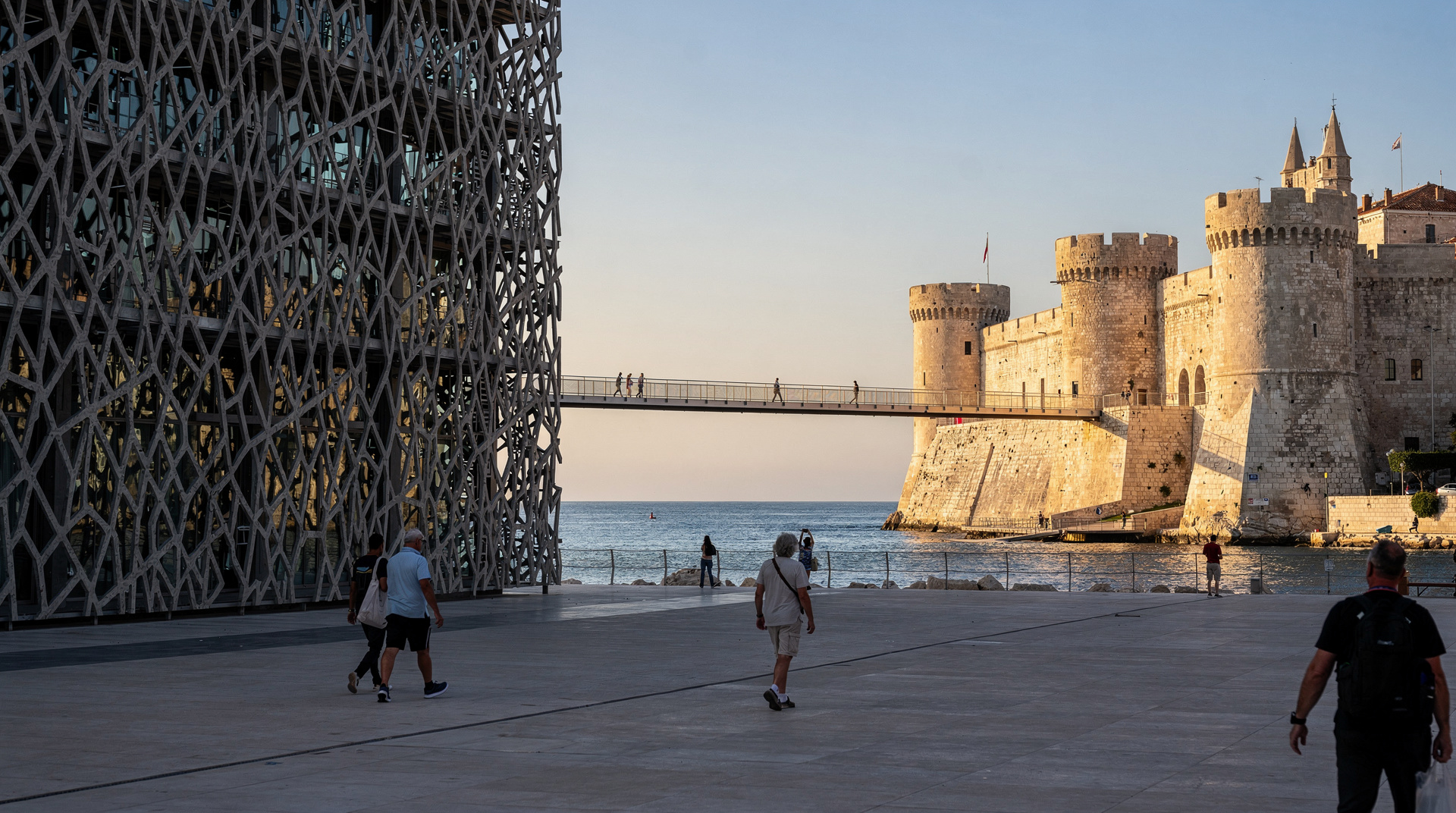
Where to see this: The Fort Saint-Jean, now restored as the free public gardens connected to MuCEM by footbridge, is the most accessible surviving element of Louis XIV’s Marseille. The Vieux-Port itself retains the proportions imposed by the 17th-century reconstruction.
The 19th century: colonial hub and industrial city
The French conquest of Algeria from 1830 transformed Marseille from a significant Mediterranean port into the central hub of a colonial empire. North Africa was closer to Marseille than Paris was; the raw materials of Algeria, Morocco, Tunisia, and eventually sub-Saharan Africa and Indochina passed through the Marseille docks; the manufactured goods of French industry went the other way.
The numbers tell the story: Marseille’s population was around 110,000 in 1801. By 1900 it was over 500,000. The city grew faster in the 19th century than at any other point in its 2,600-year history. New docks were built north and south of the Vieux-Port. The Joliette dock complex (1844) was the largest engineering project in France at the time of its construction. The Palais Longchamp (1869) marked the terminus of the Durance Canal that finally gave the city a secure freshwater supply.
The immigration that would define 20th-century Marseille began in this period. Italian workers arrived first — in such numbers that by the 1890s, a third of Marseille’s population was Italian-born. Armenians followed after 1915, fleeing the genocide. Poles, Corsicans, Spanish, Greeks, and the beginnings of North African migration all arrived through the 19th and early 20th centuries. The city’s multicultural character is not a recent development; it is the structural consequence of its function as a colonial port.
The 20th century: decline, immigration, and reinvention
The decolonisation of Algeria after 1962 produced one of the most dramatic demographic events in French history. More than 800,000 pieds-noirs (French citizens from Algeria) and harkis (Algerian soldiers who had fought for France) were evacuated to metropolitan France within weeks; the vast majority came through Marseille, and a significant proportion remained.
The city’s infrastructure — already strained by rapid 19th-century growth — was overwhelmed. The northern arrondissements developed as improvised housing zones; unemployment rose; public services declined; and the criminal networks that controlled the port and the heroin trade (the French Connection, operative from the 1940s to the 1970s) embedded themselves in the city’s economic margins.
This is the period that generated the headlines. Marseille’s reputation as France’s most dangerous city was built on real events in real places — the gang violence in the Cité Félix Pyat, the waterfront organised crime, the contract killings that occasionally broke into the mainstream press — and it calcified into a caricature that bore decreasing resemblance to the tourist experience of the city.
The reality of 1980s and 1990s Marseille was more complicated. The city that was failing economically and socially was also producing hip-hop music that would define French popular culture for thirty years. It was developing a street art culture in Cours Julien that would become internationally significant. Its food culture — the bouillabaisse tradition, the immigrant cooking of Noailles and the market districts — was deepening rather than degrading. The Olympique de Marseille won the European Cup in 1993, bringing a complicated civic pride to a city that needed it.
2013 and after: the cultural reinvention
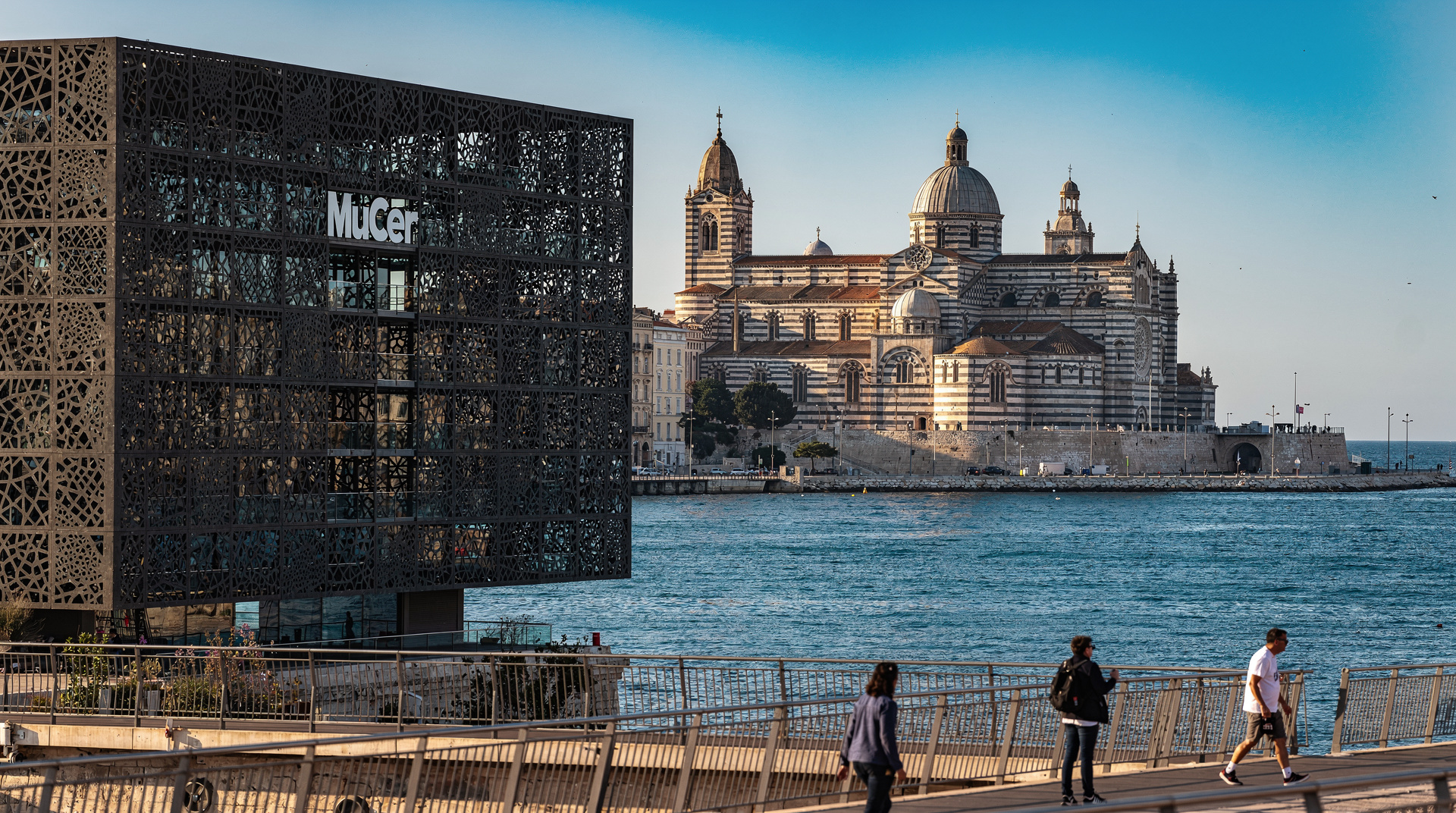
The European Capital of Culture designation for 2013 — shared between Marseille and the wider Provence-Alpes-Côte d’Azur region — was a gamble that mostly worked. The gamble was EUR 660 million, the opening of MuCEM, the renovation of the J4 waterfront, new infrastructure for the FRAC, the construction of the Villa Méditerranée, and a sustained international communication effort positioning Marseille as a cultural destination rather than a gritty port.
The results have been mixed in the way that honest cultural investment tends to be mixed. The physical infrastructure built in 2013 — the MuCEM, the FRAC building, the J4 esplanade — is genuinely excellent and has genuinely changed the experience of visiting Marseille. The underlying social and economic pressures that generate the city’s chronic challenges did not disappear because a museum opened.
What 2013 did accomplish was to create the infrastructure of a cultural destination and, gradually, to change the conversation about what Marseille is. The city receives more culturally motivated tourism now than at any point in its history. The MuCEM alone receives over a million visitors annually. The street art, the food scene, the architecture, and the coastline are now part of a coherent offer that visitors understand how to engage with.
The city today
Marseille in 2026 is France’s second-largest city, its oldest, and arguably its most alive. The social complexity that makes it difficult to govern — the multicultural mix, the income inequality, the persistent presence of criminal networks in certain districts, the fierce independence from Paris — is also what makes it genuinely interesting to visit.
The Le Panier quarter still carries the layering of its 2,600 years of continuous habitation. The Vieux-Port still functions as a working harbour, fish market, and social institution. The MuCEM makes the best institutional argument in France for understanding the Mediterranean as a shared human project rather than a series of national territories. The Cours Julien continues the cultural tradition that cities create when they have cheap space, ambitious people, and something genuine to say.
For the physical evidence of how this history has shaped the built environment, see our Marseille architecture guide. For the museums where you can encounter this history directly, see our museums guide. For the city’s oldest urban layer, see the Le Panier destination guide.
How this history shapes what you’ll actually notice
History guides can feel abstract until you’re standing in the street. A few things become visible once you know the layers underneath them. The tight, angled lanes of Le Panier follow a street pattern that has never been fully rationalised — it is medieval and Renaissance layout sitting on top of the Greek and Roman city, not a planned grid.
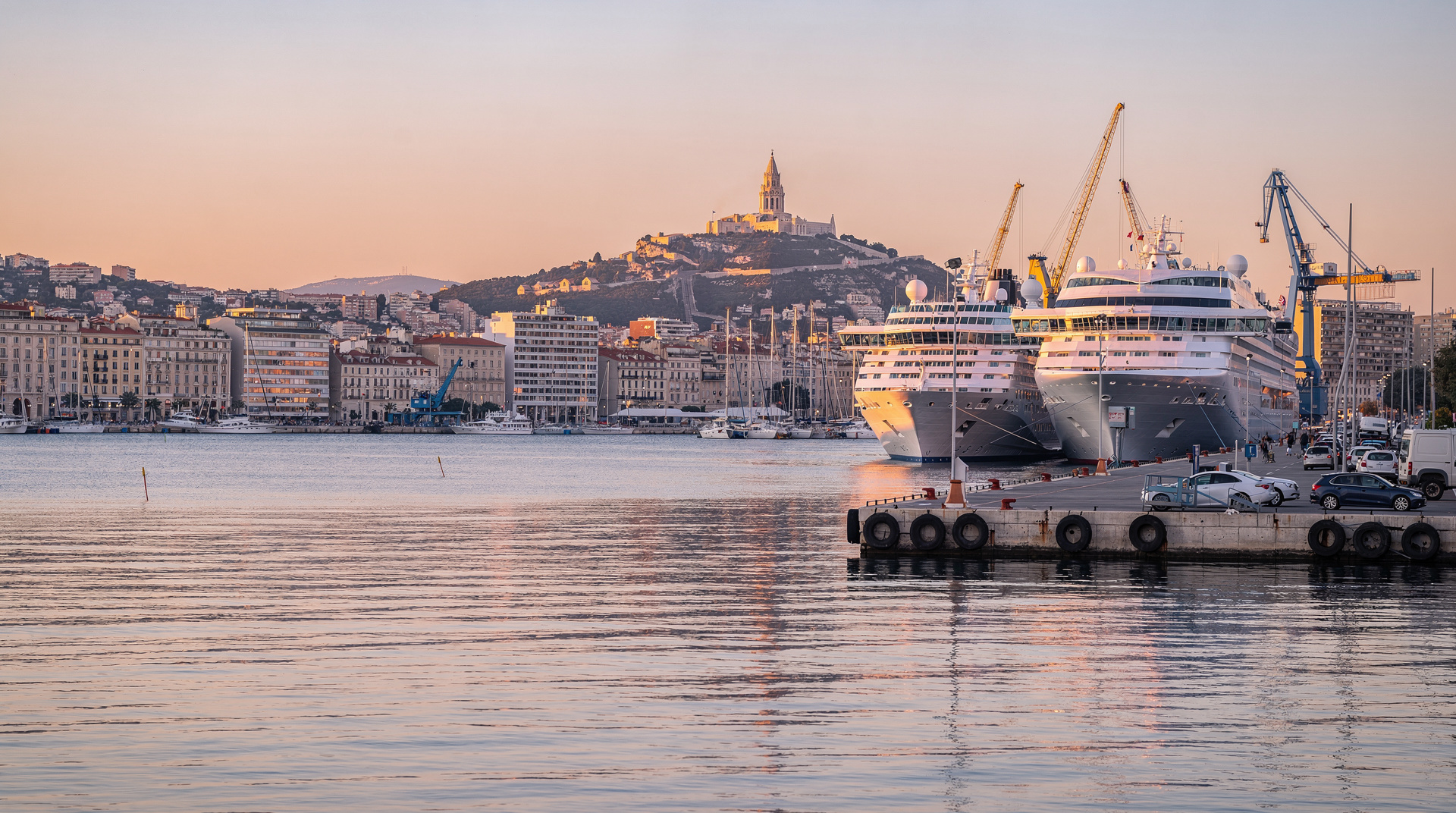
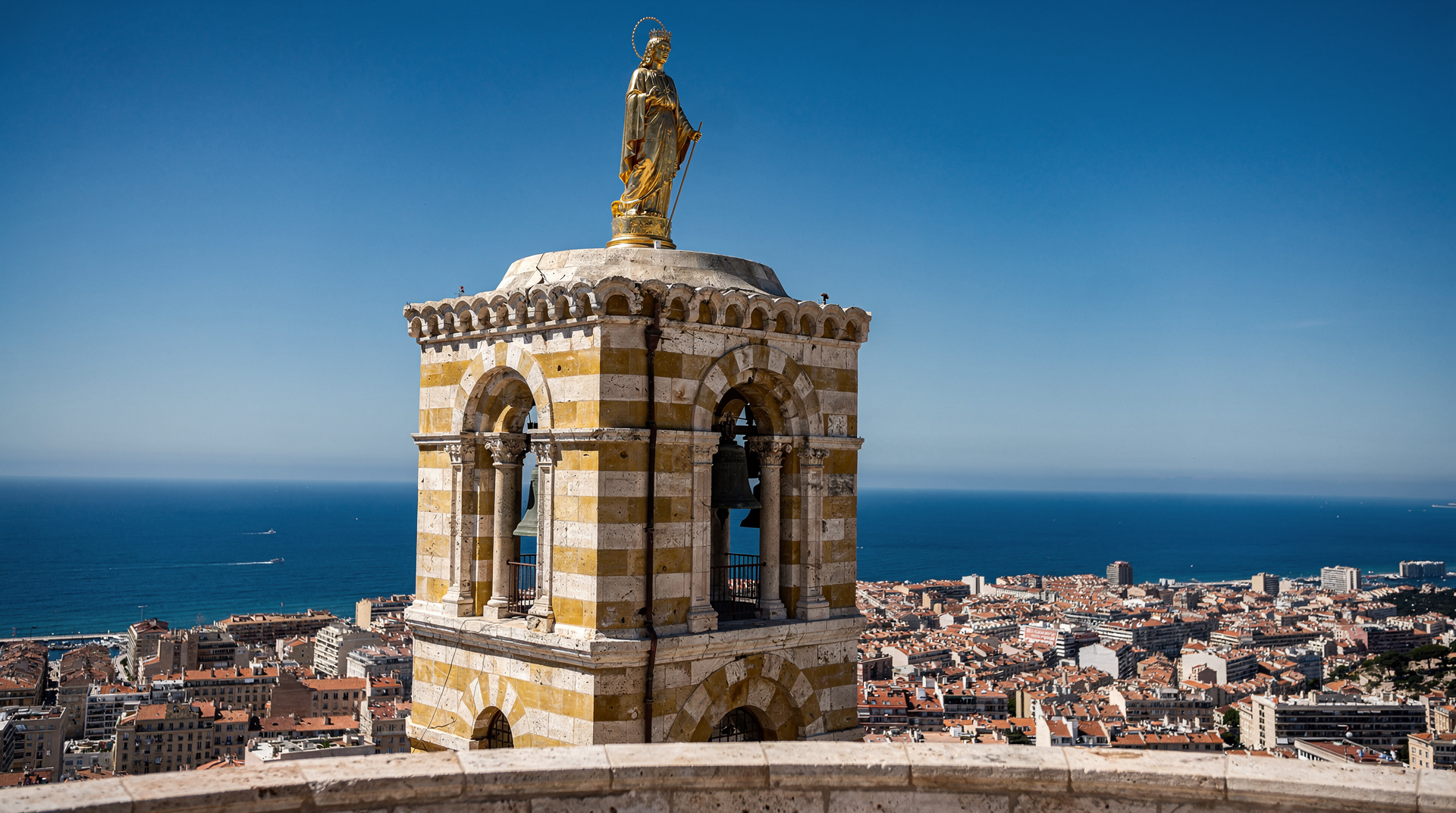
The odd, slightly curved shape of the Vieux-Port quays traces the natural inlet the Phocaeans sailed into 2,600 years ago, later regularised by Louis XIV’s engineers. And the sheer density of church names, saints, and religious foundations in the old city reflects the centuries when Marseille’s port revenue and its religious institutions were tightly intertwined — the Order of the Knights Hospitallers, the plague-era vows, the Notre-Dame de la Garde pilgrimage tradition all sit on top of one another.
A timeline worth keeping in your head
| Period | What happened |
|---|---|
| ~600 BCE | Greek Phocaeans found Massalia at the Lacydon inlet |
| 49 BCE | Caesar besieges and subdues the city after it backs Pompey |
| 1347-1722 | Repeated plague outbreaks enter via the port, including the catastrophic 1720-22 epidemic |
| 1481 | Provence, and Marseille with it, passes to the French crown |
| 1660 | Louis XIV fortifies the Vieux-Port and asserts royal control |
| 1830s onward | Algeria’s conquest turns Marseille into France’s colonial gateway |
| 1962 | Algerian independence brings hundreds of thousands of pieds-noirs and harkis through the port |
| 2013 | European Capital of Culture year; MuCEM and the J4 waterfront open |
For a walking route that strings several of these eras together on foot, see our architecture guide, and for a broader first-time orientation to the city, see our first-timers guide.
Frequently asked questions about Marseille history
When was Marseille founded?
Around 600 BCE, when Greek traders from Phocaea (on the Aegean coast of modern Turkey) established the colony of Massalia at the natural harbour that is now the Vieux-Port. The date is established by archaeology and by ancient written sources including Aristotle and Strabo.Why is Marseille older than Paris?
The Greek colony of Massalia was established around 600 BCE. The earliest evidence of Celtic settlement at Lutetia (later Paris) dates from the 3rd century BCE — at least three centuries later. Marseille has the oldest continuously inhabited urban site in France and holds this claim with characteristic bluntness.What was Marseille's role in the Black Death?
The epidemic that devastated Europe from 1347–1353 is believed to have entered France through the port of Marseille on Genoese ships from the Crimea. Subsequent plague outbreaks struck Marseille repeatedly; the Great Plague of 1720–1722 killed approximately half the city's population of 90,000. The Plague Wall (Mur de la Peste) still exists in Provence, built to contain that epidemic.What happened to Marseille in the 20th century?
The collapse of French colonial Algeria after 1962 brought more than 400,000 pieds-noirs (French settlers) and harkis (Algerian soldiers loyal to France) through Marseille, many of whom settled permanently. The city's population surged, its infrastructure was overstretched, and the following decades brought significant economic decline, corruption, and the criminal networks that generated many of the headlines still defining Marseille's reputation today.What was the 2013 European Capital of Culture year?
Marseille-Provence was designated European Capital of Culture for 2013. The year brought EUR 660 million of investment, the opening of MuCEM, the FRAC, the Villa Méditerranée, and the J4 waterfront regeneration, and a sustained effort to reposition the city internationally. The physical infrastructure built that year remains and continues to shape how visitors experience Marseille.What is the La Marseillaise connection?
The French national anthem — 'La Marseillaise' — was not written in Marseille. It was composed in Strasbourg in April 1792 by Rouget de Lisle as the 'Chant de Guerre pour l'Armée du Rhin.' It received its enduring name because volunteer troops from Marseille sang it as they marched to Paris in the summer of 1792. The Parisians who heard them assumed it was a Marseille song.Is the Marseillaise really from Marseille?
No. 'La Marseillaise' was composed in Strasbourg in April 1792 by Claude Joseph Rouget de Lisle as a marching song for the Army of the Rhine. It gained its name because volunteer troops from Marseille sang it as they marched to Paris that summer. Parisians who heard them assumed it was a southern song. The attribution stuck, and Marseille has embraced it — the city's relationship with the anthem is more possessive than historically accurate.Was Marseille always part of France?
The territory of Provence, including Marseille, passed to the French crown only in 1481, through the inheritance of Count René of Anjou by Louis XI. Even after that date, Marseille retained significant municipal autonomy until Louis XIV's military imposition in 1660. For most of its 2,600-year history, Marseille was a Greek city, a Roman subject city, a medieval commune, and a Provençal port rather than a "French" city in any modern national sense.What is the Canebière?
The Canebière is Marseille's main boulevard, running from the Vieux-Port eastward through the city centre. It was developed in the 17th century and was for a century one of the grandest avenues in France — celebrated enough to generate a French expression: "If Paris had the Canebière, it would be a little Marseille." The street is less grand now, but it remains the functional spine of the centre and the point from which most of the city's neighbourhood geography is understood.Why do Marseillais feel different from other French people?
Because they are different. The city's Greek and Roman heritage, its centuries of Mediterranean trade, its successive waves of Italian, Corsican, Armenian, North African, and West African immigration, and its historic resistance to Parisian centralisation have produced a population that identifies as Marseillais first and French second. The city has its own accent, its own food culture, its own football mythology, and its own relationship to the sea that has no equivalent elsewhere in France. This is not mere regional pride — it is the product of 2,600 years of being a port at the intersection of multiple civilisations.How much of ancient Massalia can you actually see today?
More than most visitors expect, though it takes a little seeking out. The Jardin des Vestiges next to the Musee d'Histoire de Marseille preserves excavated sections of the Greek and Roman port wall and towers in the open air, free to view from the surrounding walkways. The museum itself holds the reconstructed Roman merchant ship and harbour-edge finds. Fragments of the Greek rampart also surface in a few basement and car park excavations around the Bourse area, though these are not always open to casual visitors.Did Marseille have its own currency in antiquity?
Yes. Massalia minted its own silver coinage from around the 5th century BCE, most famously drachms bearing the head of the goddess Artemis on one side and a lion on the other. Massaliote coins circulated widely across southern Gaul and have been found well beyond the city's immediate trading zone, which is itself evidence of how far Massalia's commercial reach extended in the pre-Roman Mediterranean.
Top experiences
Bookable activities with verified prices and instant confirmation on GetYourGuide.