Visiting the Calanques by season: month-by-month guide
Marseille: Calanques National Park guided hike
Duration: 5 hours
When is the best time to visit the Calanques?
April-May for hiking at its best — trails open, wildflowers, mild temperatures, no crowds. September-October for hiking after summer fire closures lift, with warm sea for swimming. June-August for boat tours and swimming — trails often closed by fire risk but the water experience is at its peak.
How the Calanques change through the year
The Calanques National Park is not a static landscape. The same limestone cliffs and turquoise water look and feel radically different in February, in May, in August, and in October. More importantly for planning, what you can do in the Calanques changes dramatically by season — trails open and close, boat services expand and contract, sea temperatures rise and fall, and the character of the experience shifts from solitary winter hiking to packed summer boat tours.
This guide maps every month so you can match your visit to what you actually want to experience.
| At a glance | |
|---|---|
| Where | Calanques National Park, between Marseille and Cassis |
| Cost | Free trail access year-round; boat tours around EUR 30–60; guided kayak tours around EUR 50–90 |
| Time needed | A half-day for a boat tour, a full day for a proper hike or kayak circuit |
| Getting there | Bus to Luminy or Les Baumettes (Marseille side), on foot from Cassis, or by boat from either |
| Best time | April-May for hiking, September-October for hiking plus warm water |
January and February: the winter Calanques
Trail access
All trails open — zero fire risk in winter. This is the best time to have the Calanques hiking trails to yourself.
What you will find
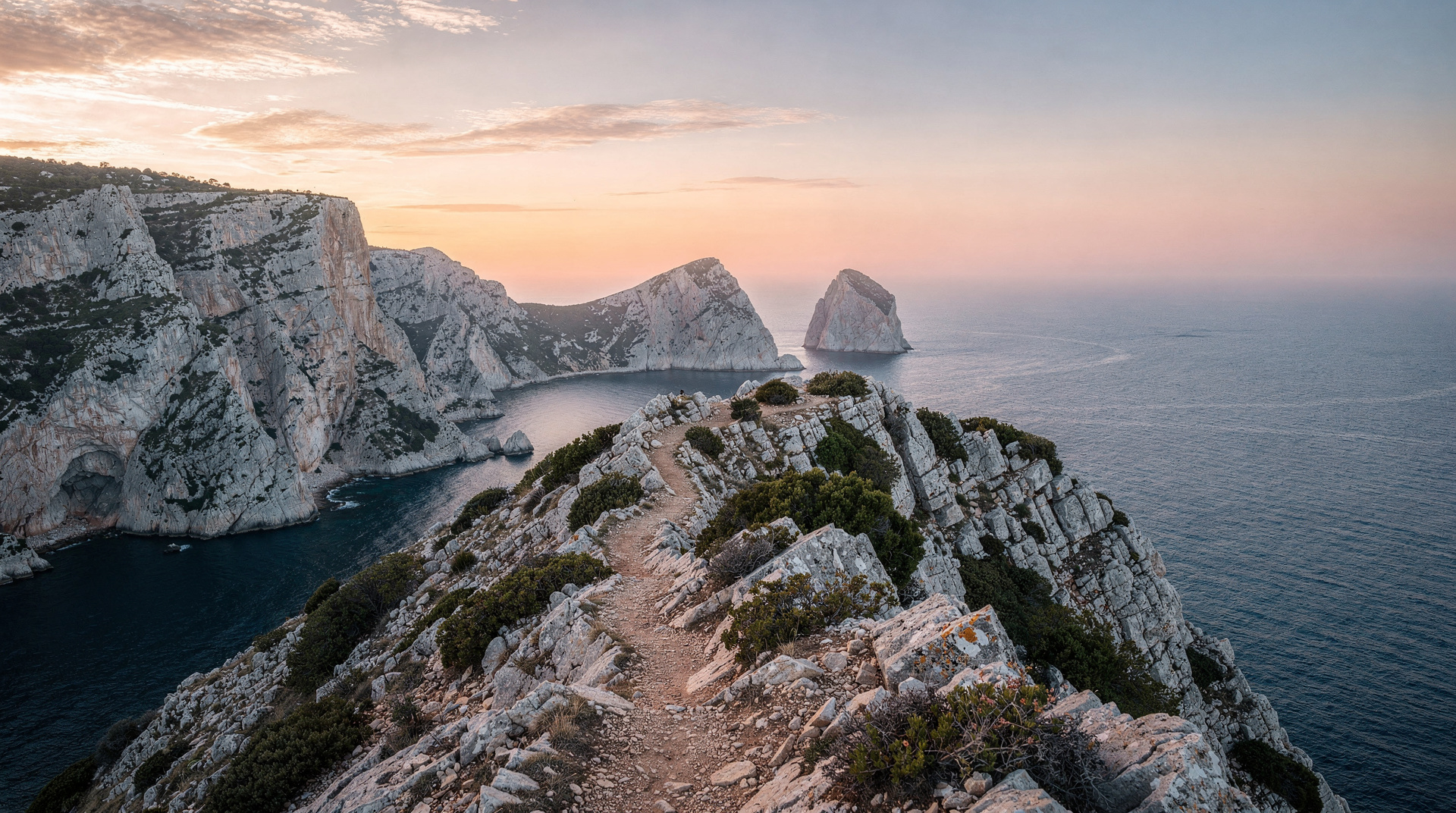
The winter Calanques are otherworldly: white limestone, intensely blue sea, and almost no other people. On clear January days after a mistral, the sky is so intensely blue it seems oversaturated. The garrigue is winter-bare — you can see the rock structure clearly through the sparse vegetation. Wild orchids begin appearing on the plateau in late February.
The sea is cold (around 13°C) and not swimmable by any reasonable standard, but the photography and the hiking are exceptional. Trails that are crowded in summer have no one on them in February.
Boat tours
Services run but with reduced frequency. Most operators maintain a weekend schedule in winter; some run weekday tours depending on demand. Not all tour routes are available — the full-day tours with swimming stops are less common (cold sea means no swimming). A winter boat tour gives you the Calanques silhouettes and cliff views without the swimming element. Check with operators in advance.
Kayak
Possible but for experienced paddlers. Cold water, potential for rough sea conditions, and no other people on the water. Guided winter kayak tours are not typically offered commercially. Independent experienced kayakers do paddle the Calanques in winter.
Photography
Winter light on the Calanques is exceptional — low-angle sun, long shadows on the cliff faces, and the colour contrast between the white limestone, blue sea, and blue sky is at its most intense in winter. No haze, no heat shimmer, no crowds in the frame. The best seasons for landscape photography of the Calanques are winter and early spring.
March: transitioning to spring
Trail access
Open, no fire risk. Spring wildflowers beginning to appear — wild orchids (particularly on the limestone plateau above Marseilleveyre), rosemary and cistus in blossom, wild thyme. The trails smell intensely of the garrigue in March.
What changes
Temperatures warm enough for comfortable hiking (14-17°C average). The mistral is frequent in March — check forecasts before setting out on exposed ridge trails. A mistral on the Calanques ridge is cold and strong; the technical trails are not dangerous but are uncomfortable without a wind layer.
Boat tours
Full weekend schedules resuming. Some operators extend to weekday runs as the season builds.
Kayak
Season starts in earnest in March for guided tours — the sea is calming, temperatures are tolerable, and the Calanques are completely uncrowded. One of the best months for kayaking as a result.
April and May: the hiking peak
Trail access
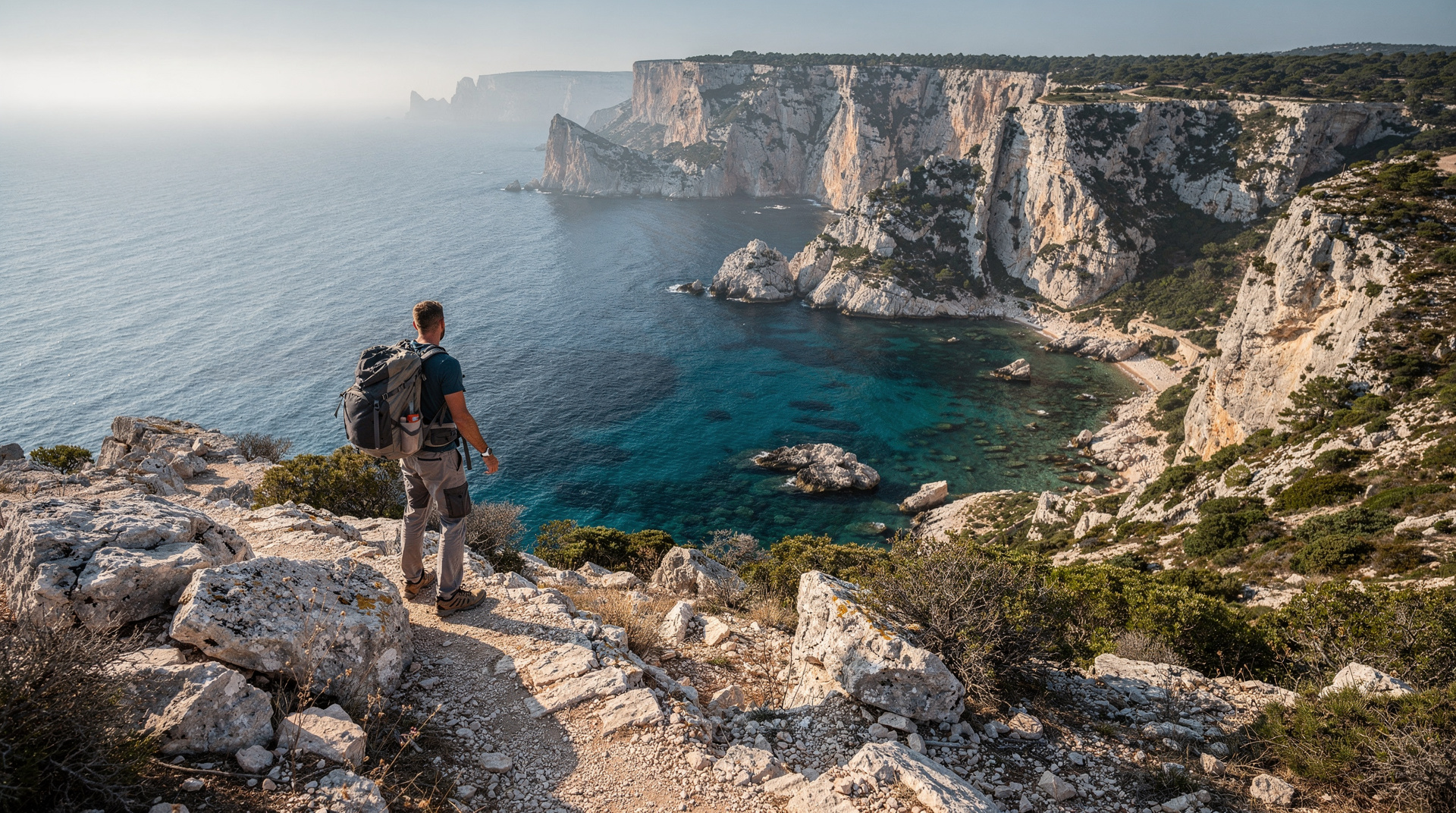
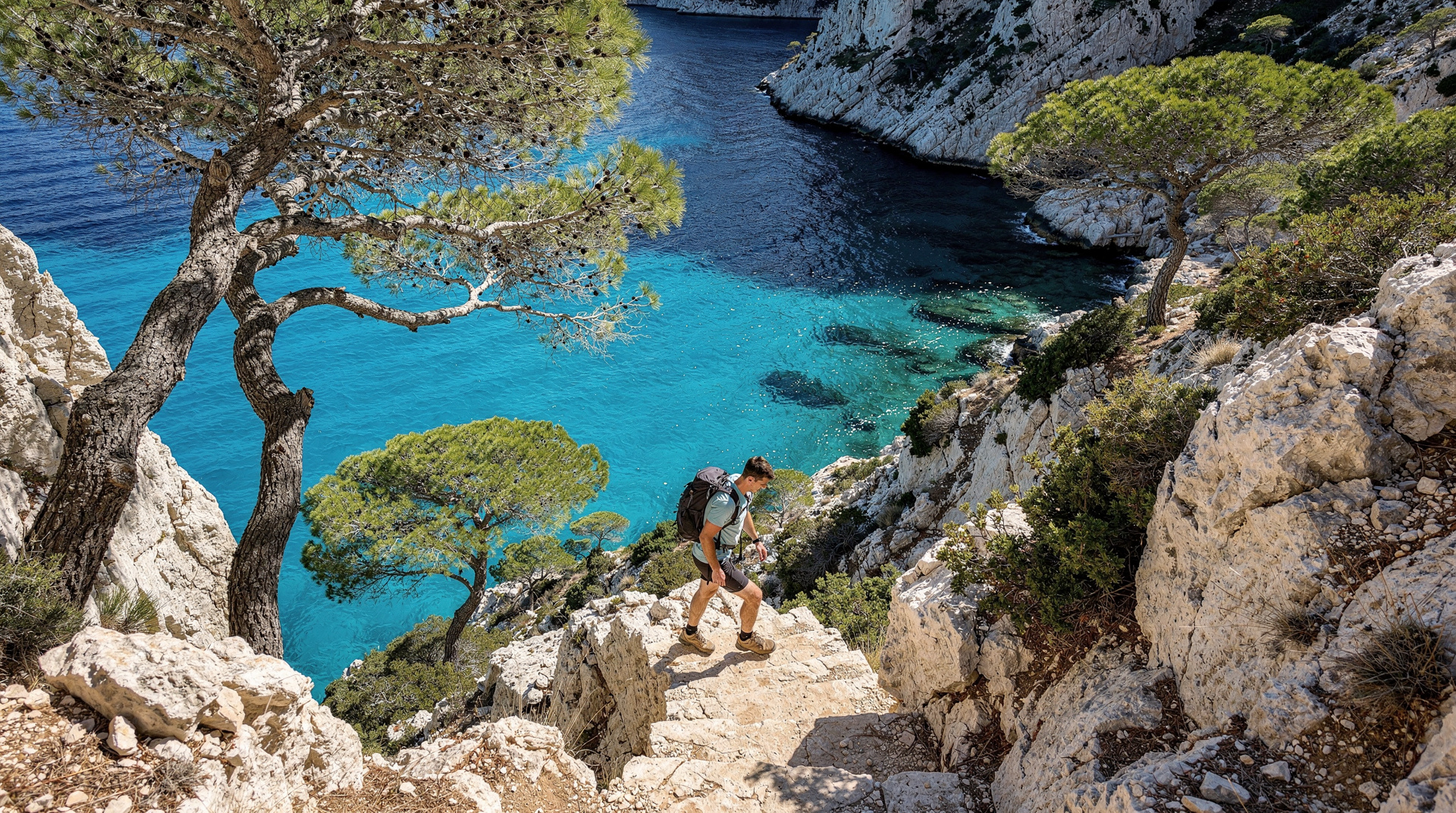
Open and optimal. April-May is the best window for Calanques hiking in the entire year. Temperatures are mild (17-23°C), trails are in good condition after winter rains, wildflowers are at their peak (April particularly), and you have the Calanques to yourself compared to summer.
What each month offers
April: The wildflower peak — the limestone plateau above Marseilleveyre and the GR98 trail between Marseille and Cassis are at their most beautiful. Wild orchids, white cistus, yellow broom, purple rosemary. Spring light on the cliffs. Sea still cold (15-16°C) but the air is perfect for hiking.
May: The last full month of unrestricted hiking (fire season starts June 1). Sea beginning to warm — 17-19°C by late May. Outdoor café culture fully revived in Marseille. The combination of open hiking and beginning sea warmth makes late May particularly versatile.
Boat tours
Full schedules running. Not yet at summer frequency or booking pressure — you can often secure a good morning tour with 3-4 days advance booking in April-May rather than the 1-2 weeks needed in July-August.
Kayak
Excellent. The sea is calm, access is unrestricted, and the Calanques are navigable at their most uncrowded. Both Marseille and Cassis operators run full guided kayak schedules. May is one of the best kayak months of the year — warm enough, calm enough, and no summer crowds in the water.
June: the transition month
Trail access
Mixed — fire season begins June 1. In early June, orange/red days are less frequent than July-August; many days are still green or yellow (trails open). Check calanques-parcnational.fr each evening for the following day’s status.
Sugiton (from June 20, 2026)
Sugiton requires a free online reservation on June 20-21 in 2026, then continuously from June 27 onward. Book at 09:00 CET exactly, 3 days before your visit date.
Sea swimming
Becomes genuinely enjoyable in mid-June (21-22°C sea temperature). Boat tours with swimming stops are at their most comfortable from late June.
Lavender context
Late June sees the first Valensole lavender blooming — a day trip to the plateau in late June combined with a Calanques boat tour from Marseille makes a strong two-day June programme.
July and August: the boat and swim season
Trail access
Mostly closed. In July and August, the fire risk on most days is orange or red — trails closed. This is the realistic summer situation. Plan around it rather than fighting it.
What to do
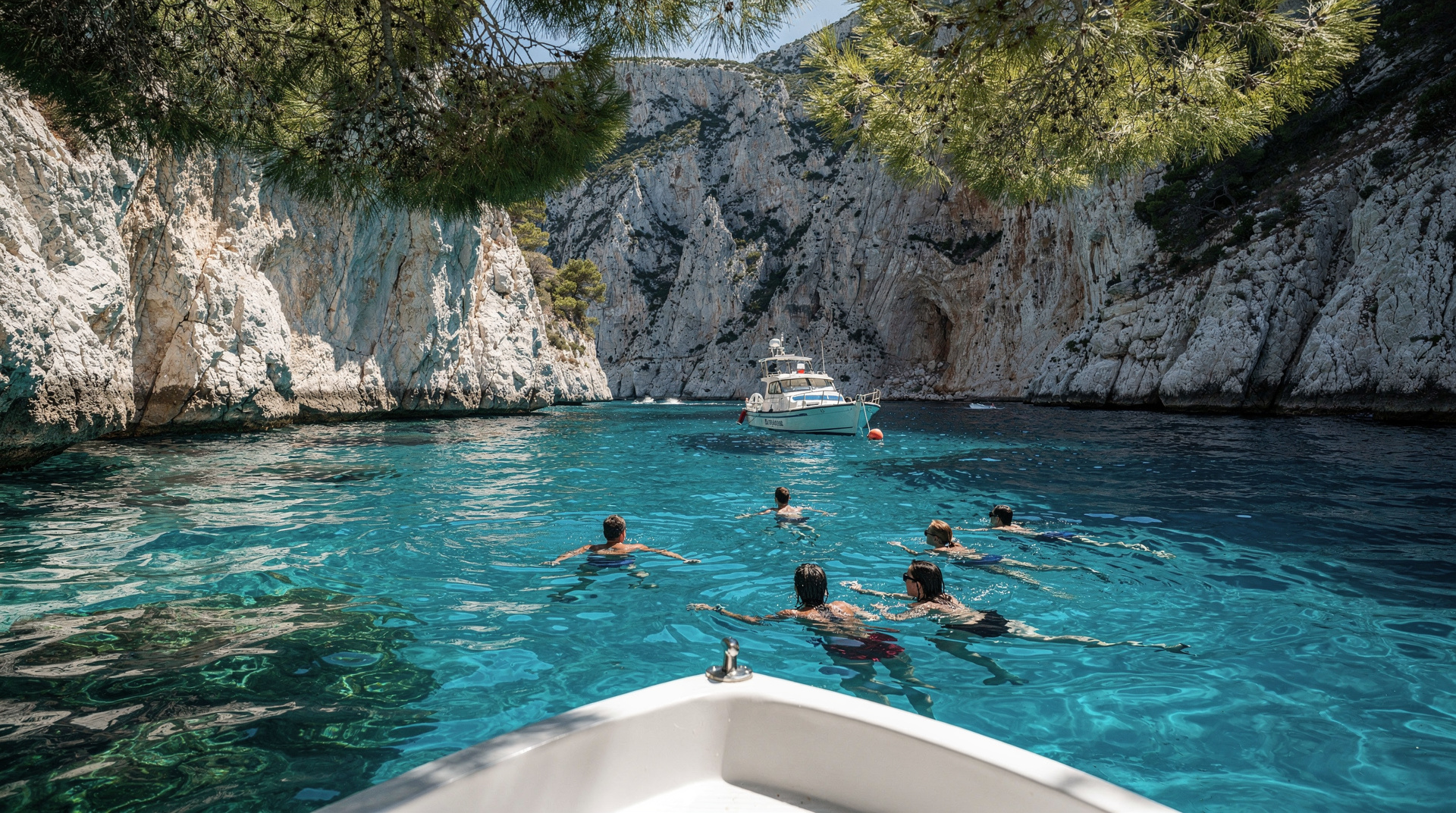
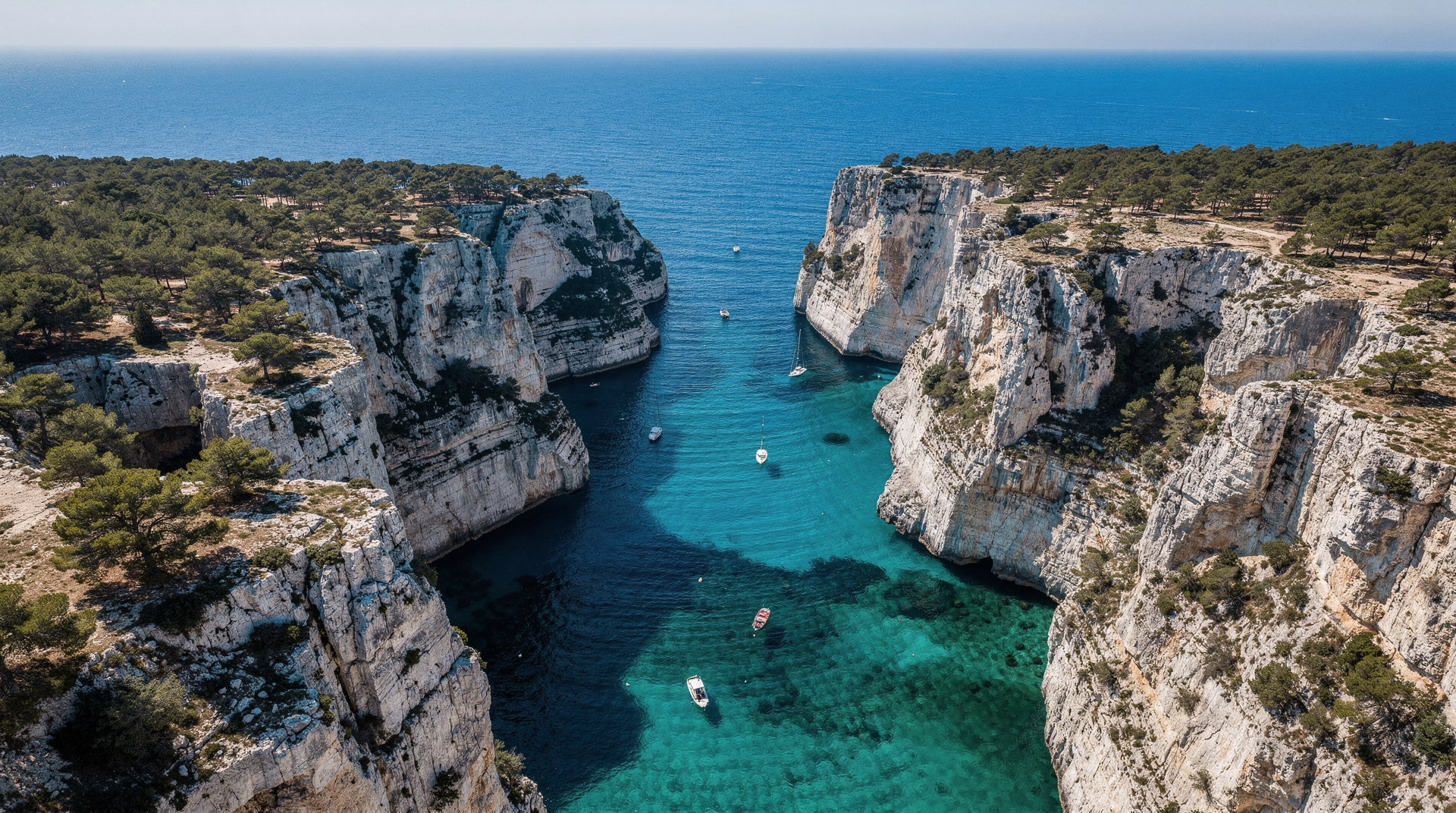
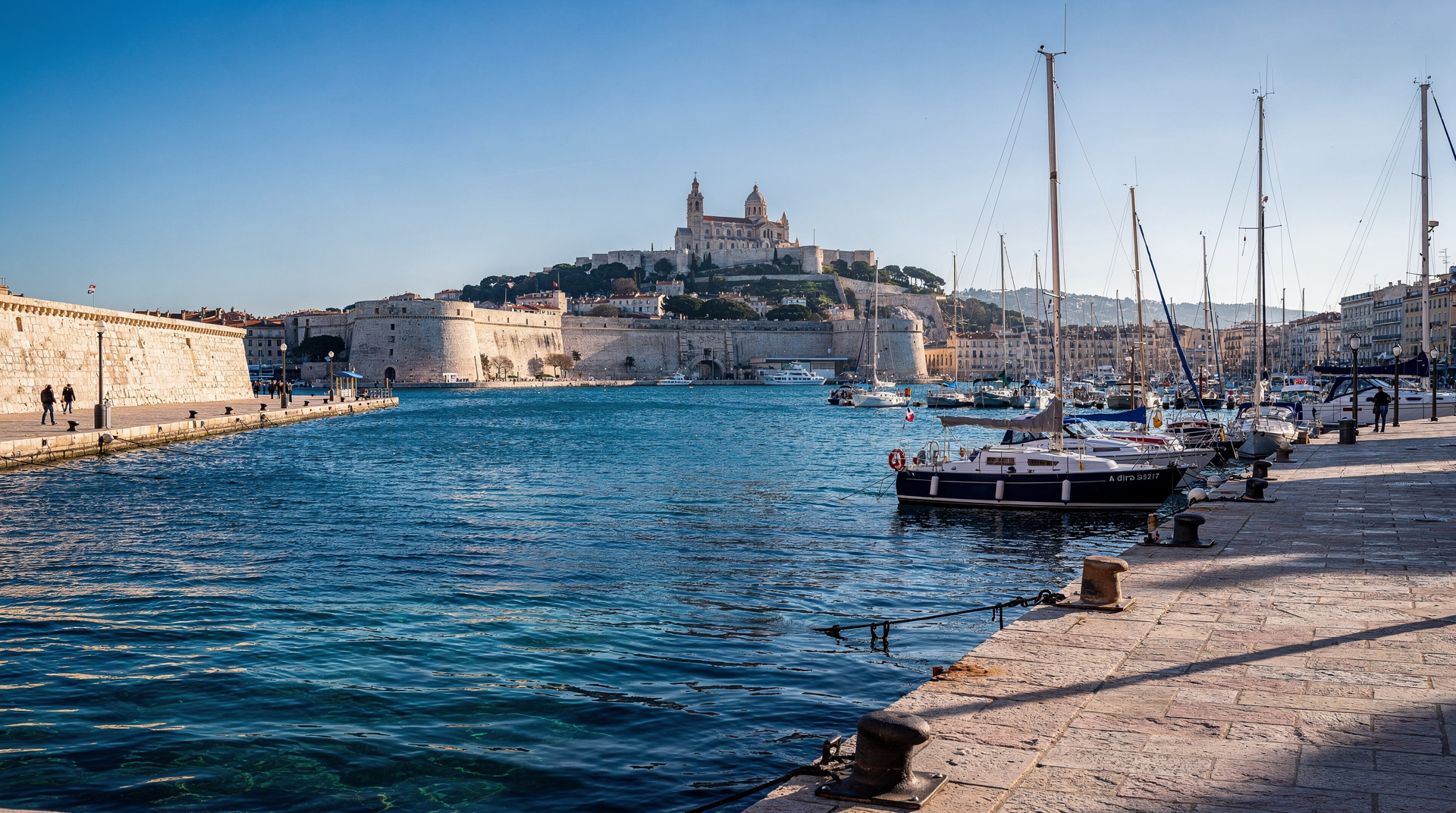
Boat tours from the Vieux-Port — the primary Calanques experience in summer. Morning departures (9:00, 9:30, 10:00) to 3-4 calanques with swimming stops. The approach by sea is spectacular — white limestone cliffs rising above turquoise water, the boat entering the narrow inlets.
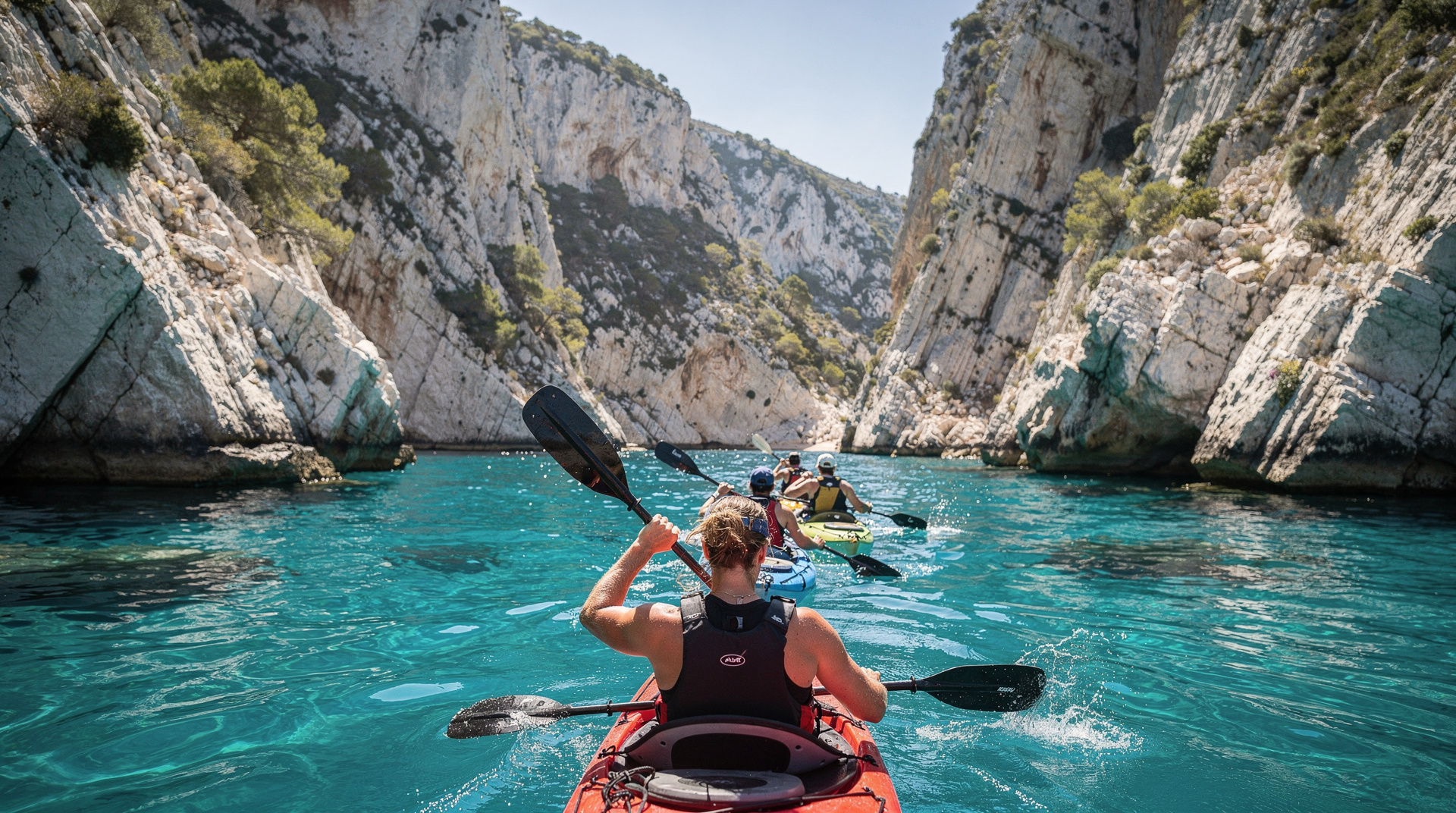
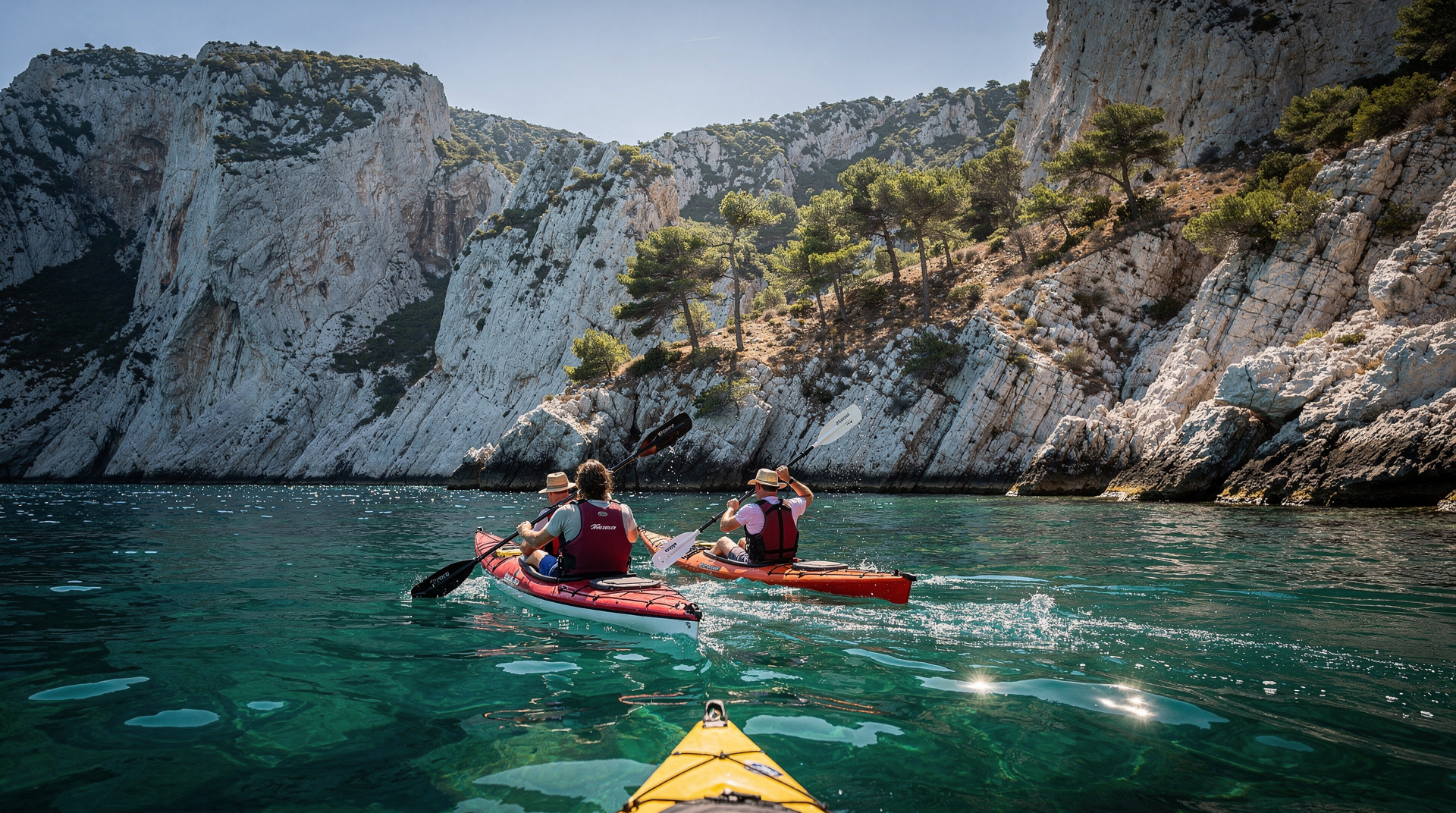
Kayak tours from Cassis or Marseille — accessible regardless of trail closures. Sea kayaking allows you to enter calanques that motorboats cannot reach (En-Vau fully, smaller inlets). Best in early morning before summer heat.
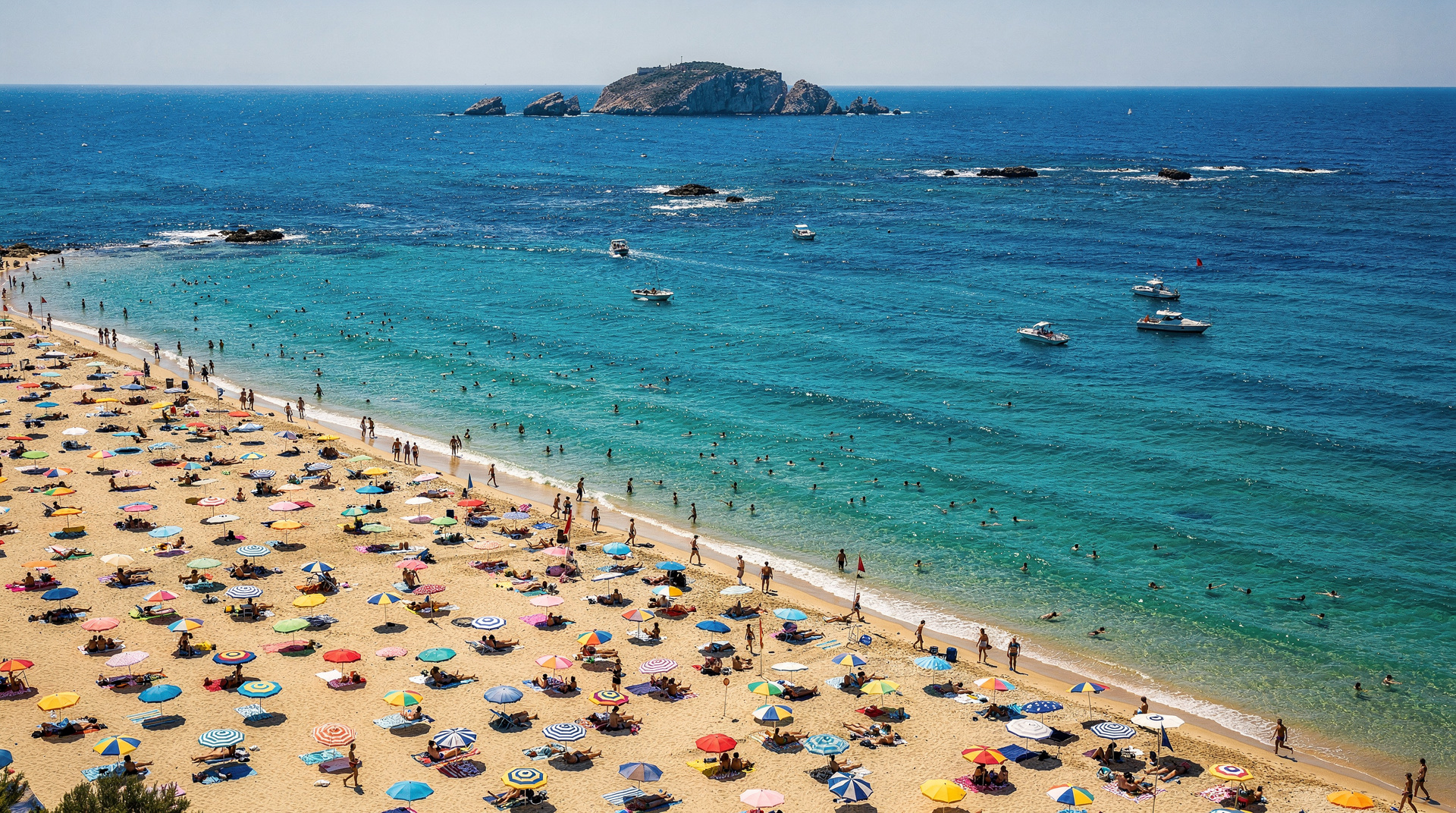
Swimming at the Calanques — the sea is at its warmest (24-26°C in August). Whether approached by boat, kayak, or the few trails that remain open on green/yellow days, the swimming is the peak Calanques experience.
Booking ahead in summer
Boat tours fill 1-2 weeks ahead for July-August morning departures. Book before you arrive. Full-day tours with lunch and wine sell out earliest.
Photography in summer
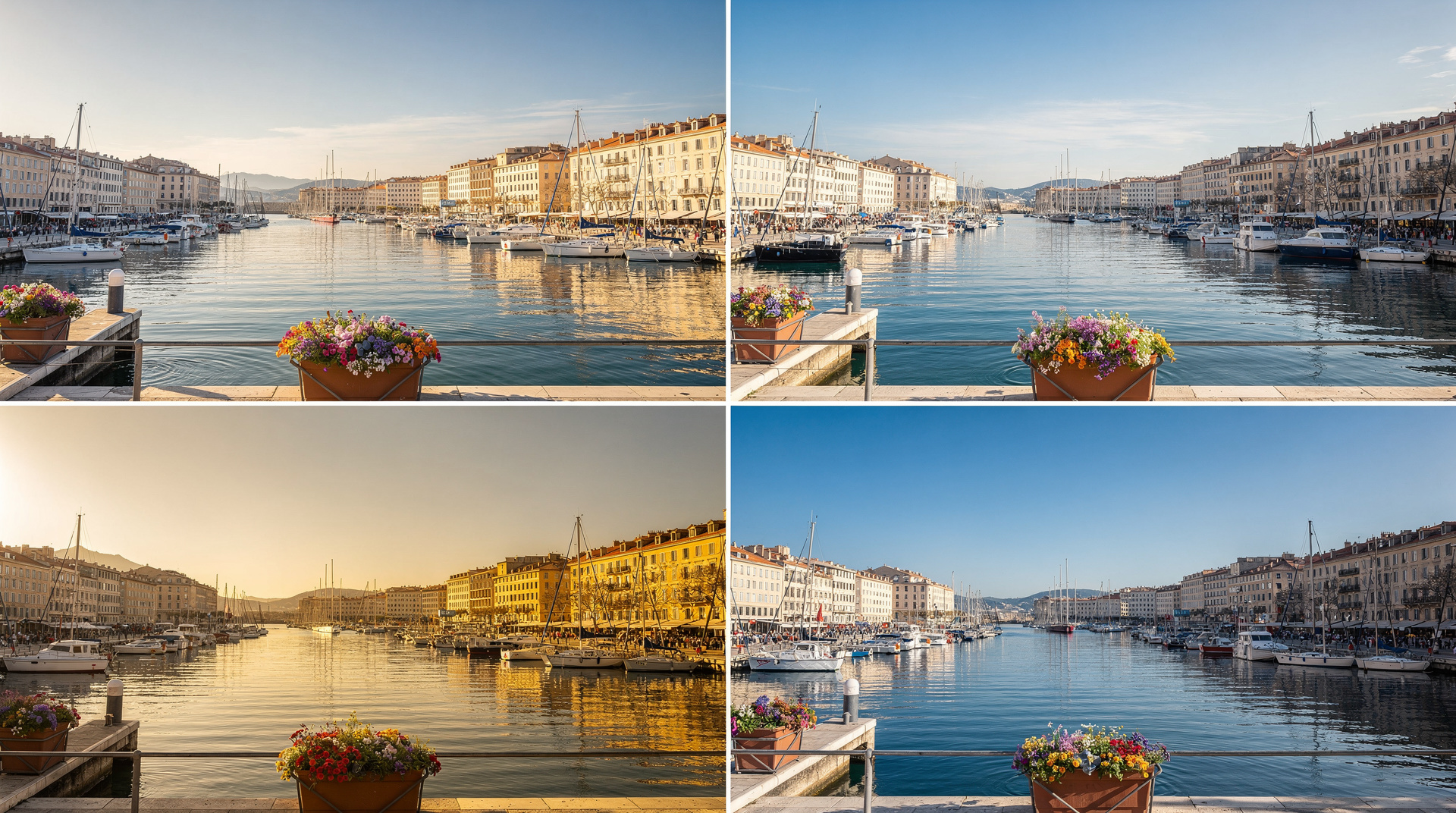
Summer light on the Calanques is harsh at midday — bleaching whites, blown highlights. The best summer photography is in the first 2 hours after sunrise (golden light on the cliff faces) and the last 2 hours before sunset (warm light, long shadows). From a boat in the morning, the light enters the narrow calanques at an angle that illuminates the water brilliantly.
September and October: the autumn return
Trail access
Fire season ends September 30 — on October 1, all trails reopen without restriction. September has a mixed picture: early September is still under fire season (check daily), but it typically has more open-trail days than July-August. The Sugiton reservation applies on specific September weekends (September 5-6 and 12-13 in 2026).
Sea temperature in autumn
September: 23-24°C (still very warm — the best swimming month for combining warm water with manageable air temperature). October: 20-21°C (cooling but still comfortable for swimming through mid-October). November: 16-17°C (cold).
What autumn offers
The combination of open hiking (from October 1) and warm sea (through mid-October) makes early October the single best month for visitors who want both the hiking and swimming Calanques. September from the 15th onward, after the school return, has lower crowds at a similar sea temperature to August.
Boat tours
Full schedules through October. Frequency reduces in November. By December, weekday services are limited.
Kayak season
Typically April-October for guided commercial tours. November is the practical end of the kayak season for most operators, though independent paddlers continue into winter.
November and December: back to winter
Trail access
Open — fire season ended September 30. The trails return to their winter state: open, uncrowded, and beautiful.
Boat tours
Reduced frequency. Weekend-focused schedules; weekday services limited or by arrangement. The swimming element of boat tours is largely gone (sea cools to 14-16°C by December), but viewing tours of the Calanques cliffs continue.
What November offers
The transition from autumn to winter in the Calanques is marked by the return of the full hiking community — walkers who avoided the summer heat. November Calanques: moderate temperatures (16°C average high), occasional rain, the garrigue beginning its winter dormancy. Photography light excellent.
Summary by activity
| Activity | Best season | Possible | Not recommended |
|---|---|---|---|
| Hiking | Apr-May, Oct-Nov | Mar, Jun (variable), Sep (variable) | Jul-Aug (closures) |
| Swimming | Jul-Sep | Jun, Oct | Nov-May |
| Boat tours | Apr-Oct | Nov-Mar (reduced) | Never completely unavailable |
| Sea kayaking | Apr-Oct | Mar, Nov | Dec-Feb (cold and rough) |
| Photography | Oct-May | Jun, Sep-Mar | Jul-Aug midday |
| Solitude | Nov-Mar | Apr, Oct | Jul-Aug |
| Swimming + hiking | Sep-Oct, late May | Jun (both marginal) | Not Jul-Aug (hiking closed) |
For the summer access system detail (4-colour fire closure, Sugiton reservation), see our summer access rules guide. For the best hikes sorted by difficulty level, see our Calanques hiking guide. For boat tour options, see our boat tour guide.
Choosing a season around a specific Calanque
The seasonal picture also depends on which Calanque you have in mind. Sormiou and Sugiton are the two most affected by summer restrictions — Sugiton by the reservation system, Sormiou by the summer road closure to private vehicles. En-Vau is the least season-dependent on foot since it is always a long hike regardless of month, but by boat it is at its best from April through October when swimming stops are viable. If crowds matter more to you than warm water, aim for late September or early October — the trails have reopened, the sea is still around 22-23°C, and the summer crowds have thinned considerably.
Combining seasons with a Marseille trip length
A 3-day trip in April or October can realistically include one full Calanques hiking day and one boat or kayak half-day, since both activities are available. A 3-day trip in July or August is better planned around one boat tour and one early-morning kayak session, since hiking access is unreliable. See our 3-day planning guide for how to slot Calanques time around the rest of a Marseille itinerary, and our Marseille in summer guide for the wider seasonal picture beyond the Calanques themselves.
Frequently asked questions about Visiting the Calanques by season
Is it too hot to hike the Calanques in August?
Usually the question is moot — most trails are closed on orange/red fire-risk days in July and August, which is most days. On the rare green/yellow day, temperatures in the exposed, shadeless terrain regularly exceed 30°C by mid-morning, so an early start (before 8:00) is essential if a trail happens to be open.
What is the single best week to visit for both hiking and swimming?
The first two weeks of October are the strongest combination: trails reopen fully on October 1, the sea is still around 20-21°C, and the summer crowds have largely gone. Late May is the runner-up, with open trails and the sea just beginning to warm.
Top experiences
Bookable activities with verified prices and instant confirmation on GetYourGuide.