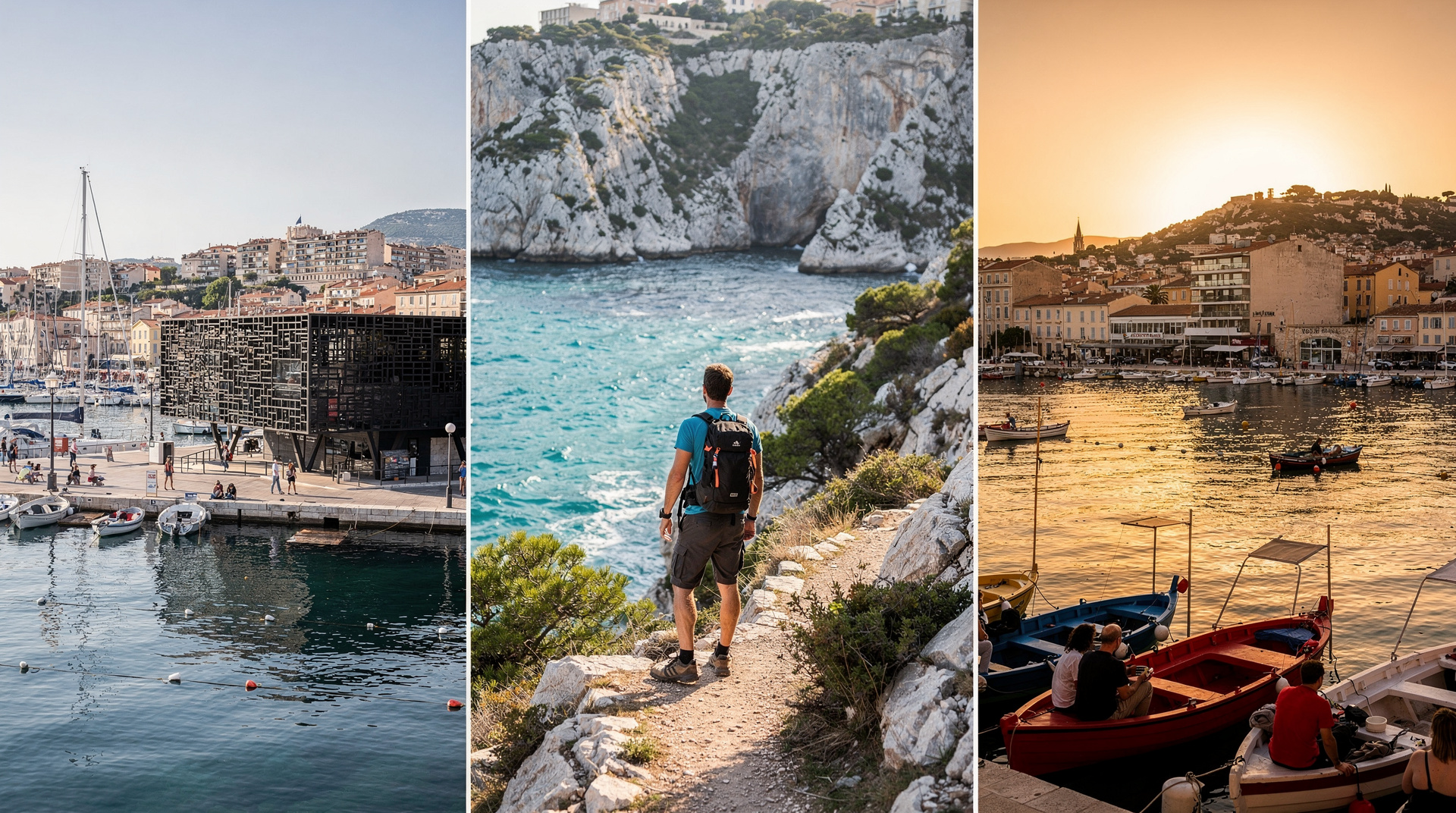
Marseille in summer: July and August reality check
Marseille: iconic Calanques boat tour with swimming
Duration: 3-4.5 hours
Is Marseille good to visit in summer?
Yes, but differently than other seasons. Boat tours to the Calanques work well. Most hiking trails close for fire risk. Expect 30°C+ heat, peak prices, and big crowds. Plan around the conditions, not against them.
Summer in Marseille: the honest picture
| Temperatures | Around 27-31°C average highs, occasional spikes above |
| Sea temperature | Around 22-26°C — warm and swimmable |
| Calanques hiking | Mostly closed for fire risk; boat access stays open |
| Cost | Peak pricing — accommodation typically 30-50% above winter rates |
| Crowds | Highest of the year, especially at the Vieux-Port and MuCEM |
| Best for | Boat tours, beaches, sunset and evening culture |
July and August are Marseille’s busiest and most demanding months. The city does not shut down — far from it. The Vieux-Port, the Calanques, the beaches, and the restaurants are all operating, many at their most vibrant. But the conditions require planning around rather than ignoring.
The fundamental summer reality: hiking trails in the Calanques close for fire risk, temperatures routinely exceed 30°C, accommodation prices peak, and the tourist concentration in the central neighbourhoods is at its highest. Visitors who prepare for this have excellent trips; those who arrive expecting a comfortable hiking holiday in July are regularly disappointed.
The Calanques in summer: what actually happens
This is the most important section for summer visitors. The Calanques National Park imposes access restrictions every summer based on fire risk — this is not bureaucratic caution but a response to the actual fire history of the limestone massif.
What closes: Most walking trails in the Calanques are subject to daily closure decisions by the prefecture based on fire risk level. From June 1 through September 30, the status is announced each morning via the prefecture’s daily map (accessible via the “My Calanques” app or calanques-parcnational.fr). In July and August, most trails are closed most days — this is the norm, not the exception.
Sugiton specifically: The Sugiton calanque — the closest from Marseille’s Luminy campus — requires a free advance reservation from June 27 through August 30, 2026 (and on weekends in June and September). When trails are under fire restrictions, even confirmed reservations are cancelled. Check the park website on the morning of your planned hike.
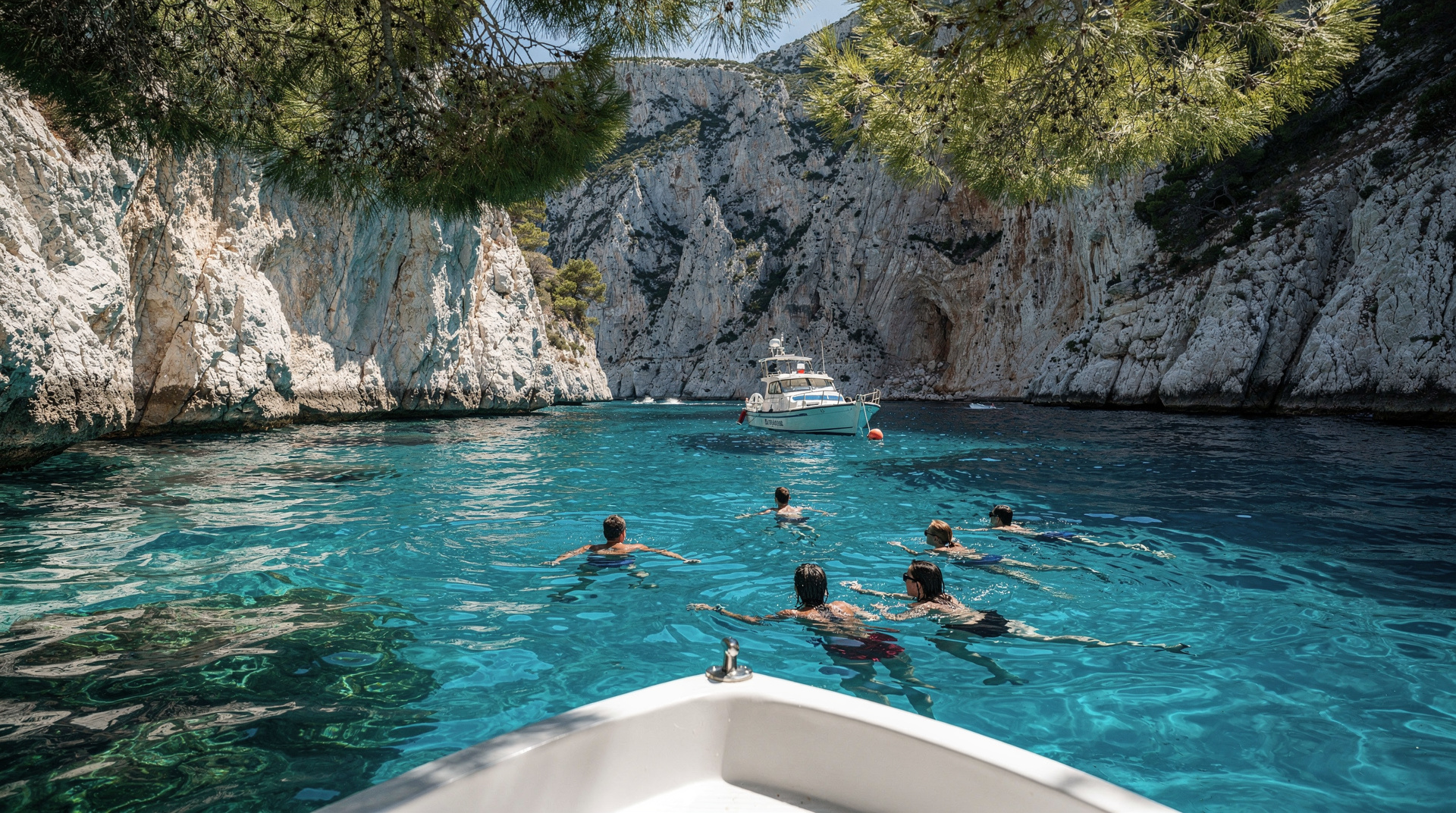
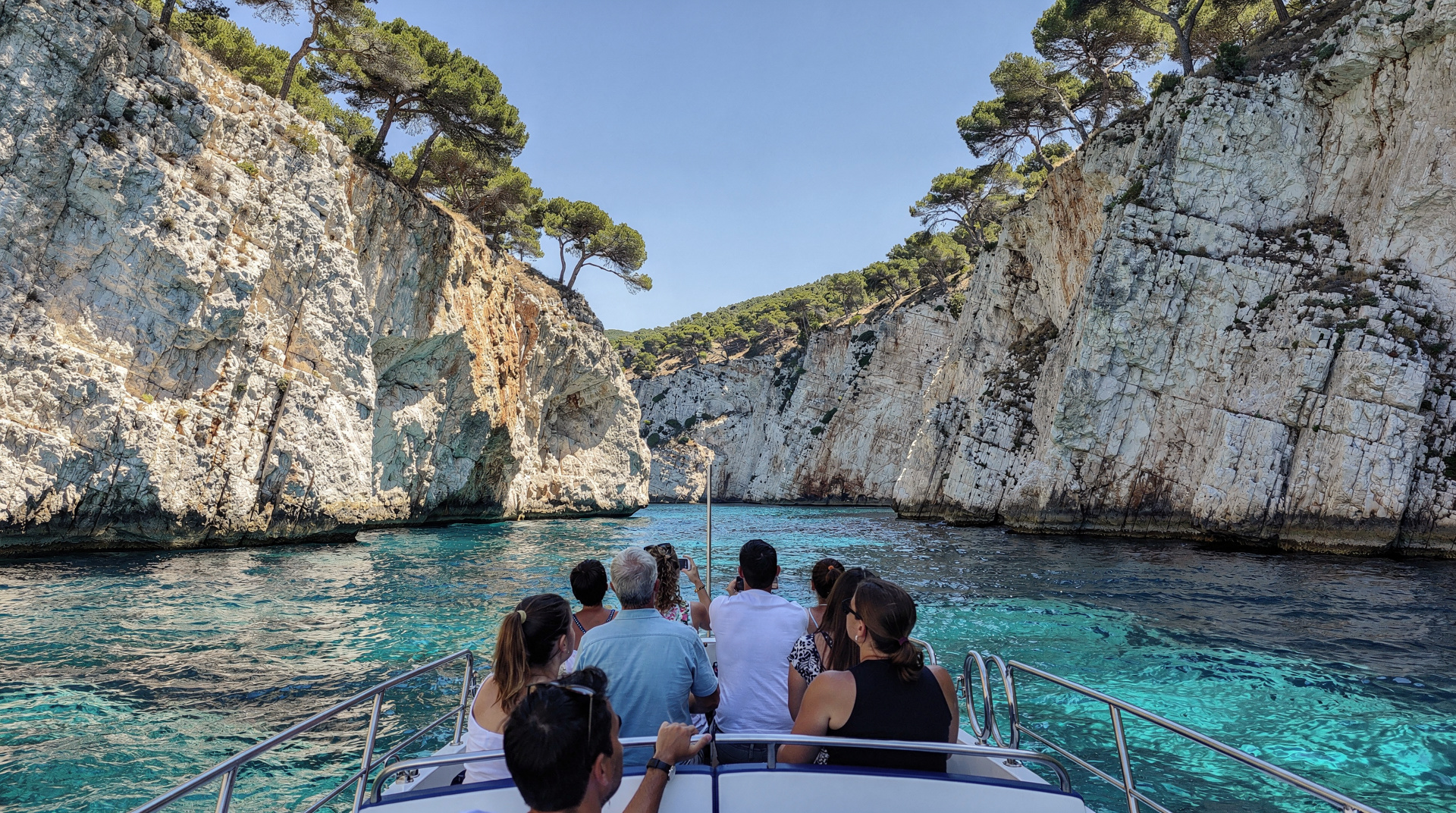
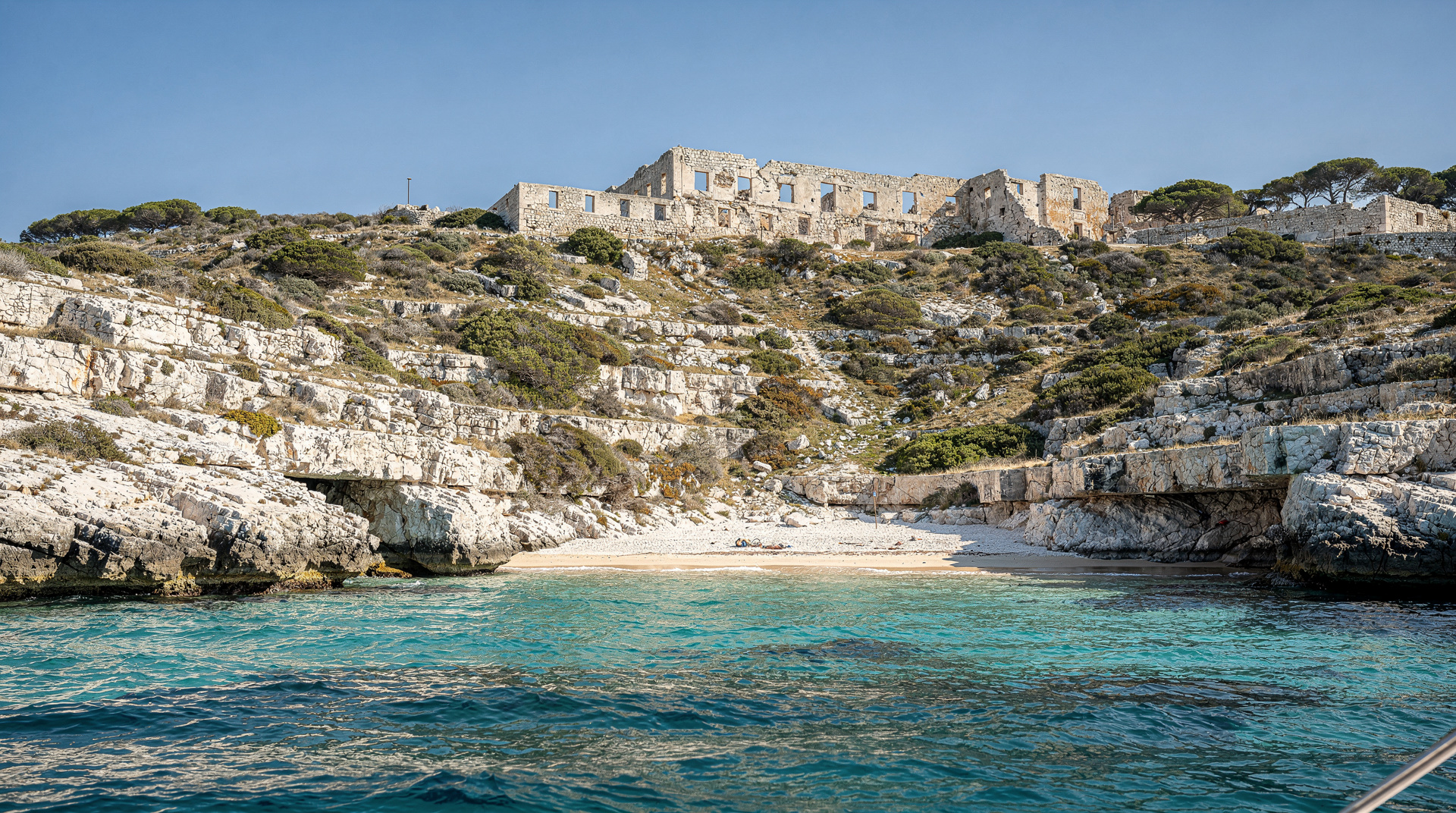
What remains open: Boat access to the Calanques is always available regardless of fire risk — you reach the calanques from the sea, which is unaffected by land-side fire risk decisions. In summer, the boat tour is the standard and overwhelmingly most practical way to visit the Calanques. This is not a consolation prize: approaching the white limestone cliffs from the water and swimming in the turquoise coves is the experience most people remember most.
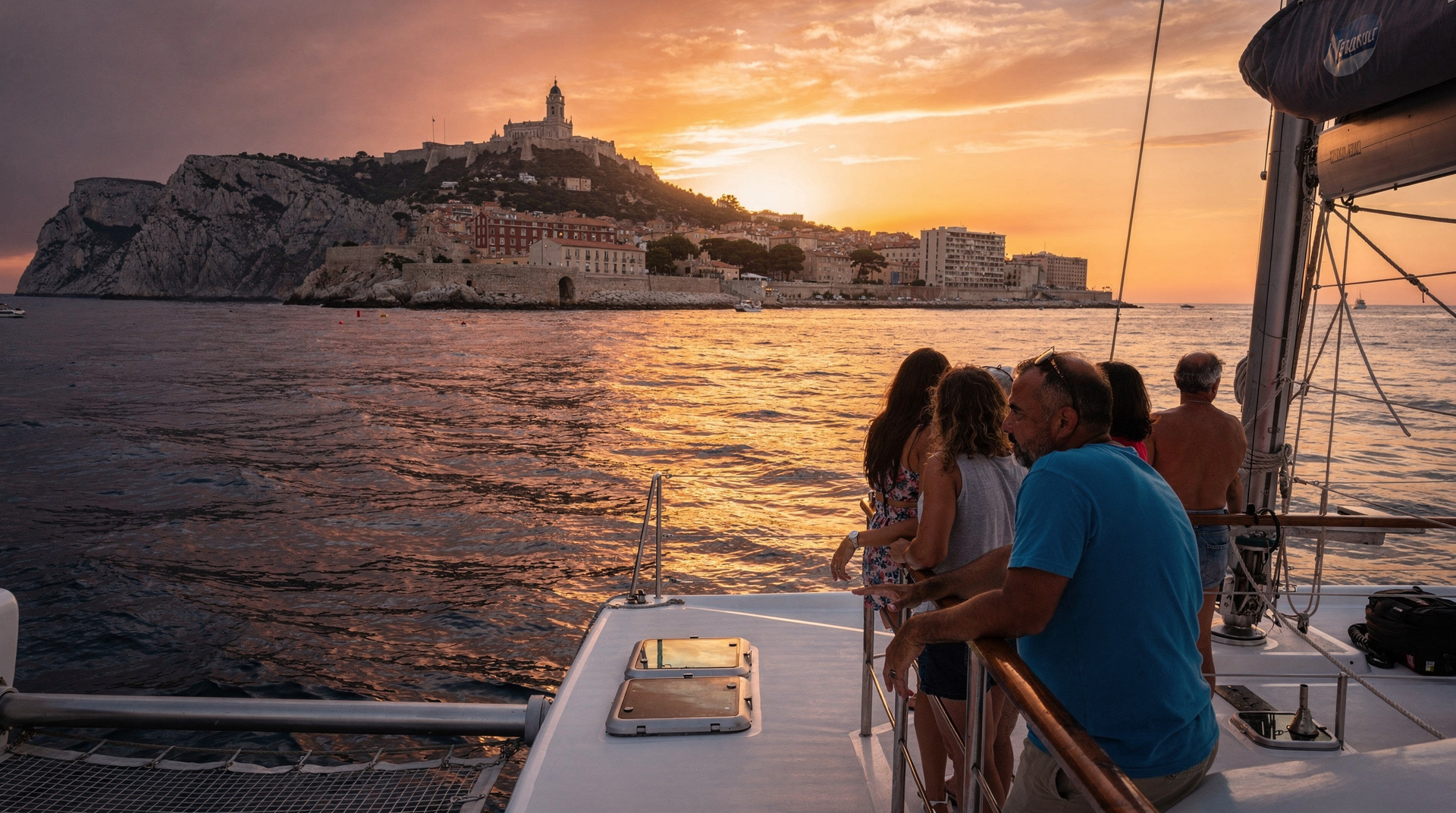
What summer does well: The sea in July–August is at its warmest (24–26°C surface temperature), making swimming genuinely pleasant. The light on the limestone cliffs in summer is dramatic. The full-day boat tours with lunch and wine run well in summer conditions. Sunset catamaran cruises from the Vieux-Port in August are a specific summer experience worth seeking out.
Heat: how bad is it and how to manage it
Marseille in July and August regularly reaches 30–36°C, with occasional spikes above that. The city is on the coast, so sea breeze helps, but the interior streets — particularly Le Panier’s narrow lanes and the Vieux-Port south quai in the afternoon — concentrate heat. The mistral (a strong north-northwest wind) can reduce temperatures dramatically but also makes sea conditions rougher, sometimes cancelling boat tours.
Practical heat management:
Start early. The fish market runs until noon; boat tours typically depart at 9:00–10:00. By arriving at the Vieux-Port by 8:00–8:30, you get the best light, the market in operation, and the first boat departure before the midday heat peaks.
Plan the midday pause. Between 12:00 and 16:00, reduce outdoor activity. This is the time for a long set-menu lunch (air-conditioned restaurants are everywhere near the Vieux-Port), a museum visit, or a return to the hotel for an hour. The Provençal siesta culture has functional logic in summer.
Revive in the late afternoon and evening. Marseille’s evening culture is excellent — aperitif in Cours Julien from 19:00, dinner from 20:00, a walk along the Corniche as the light fades. Summer evenings in Marseille are genuinely one of the great pleasures of visiting.
Hydration: Drink more water than you think you need. Tap water in Marseille is safe. Carry a refillable bottle, especially on any outdoor activity.
Crowds: what to expect and where
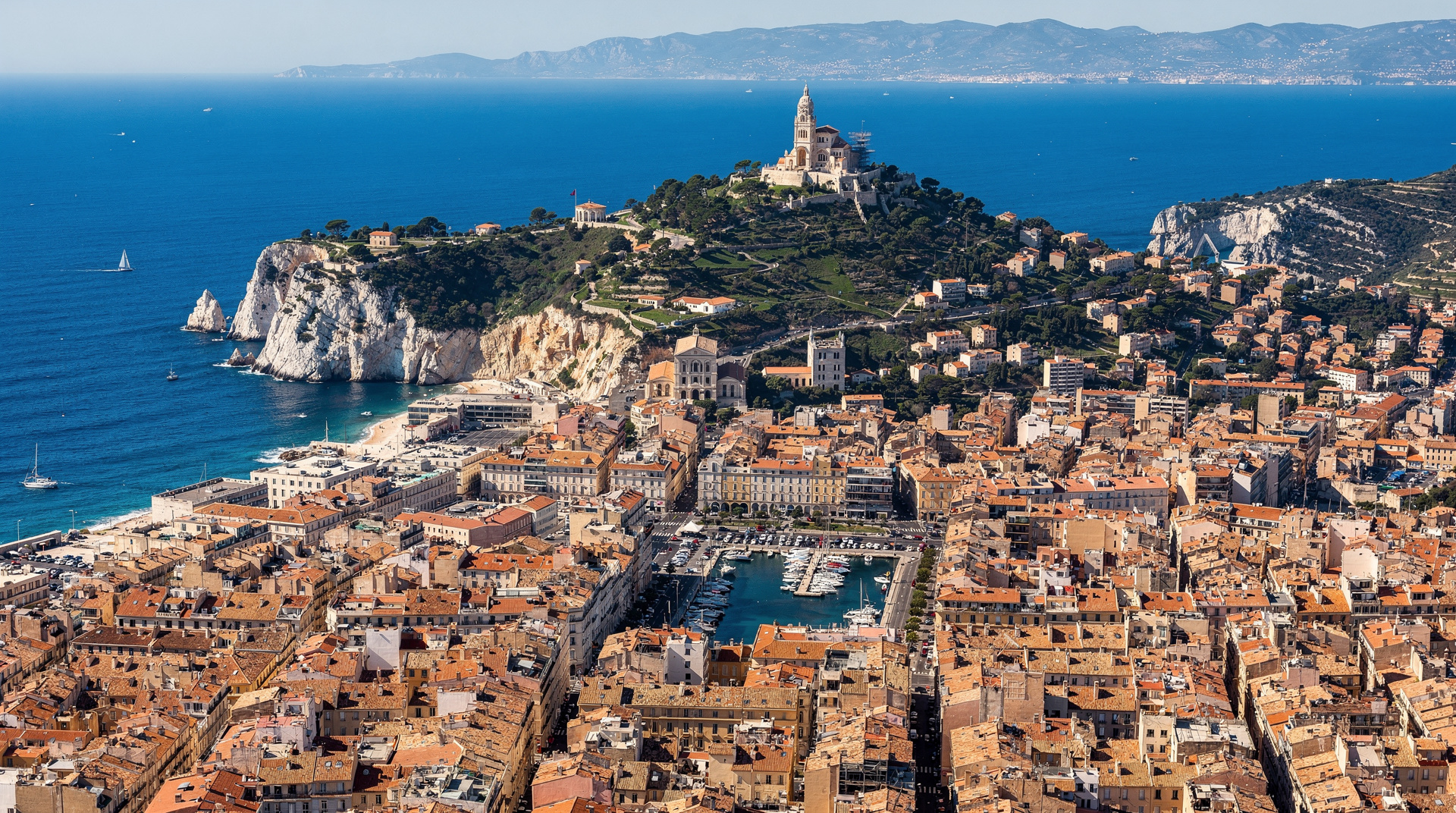
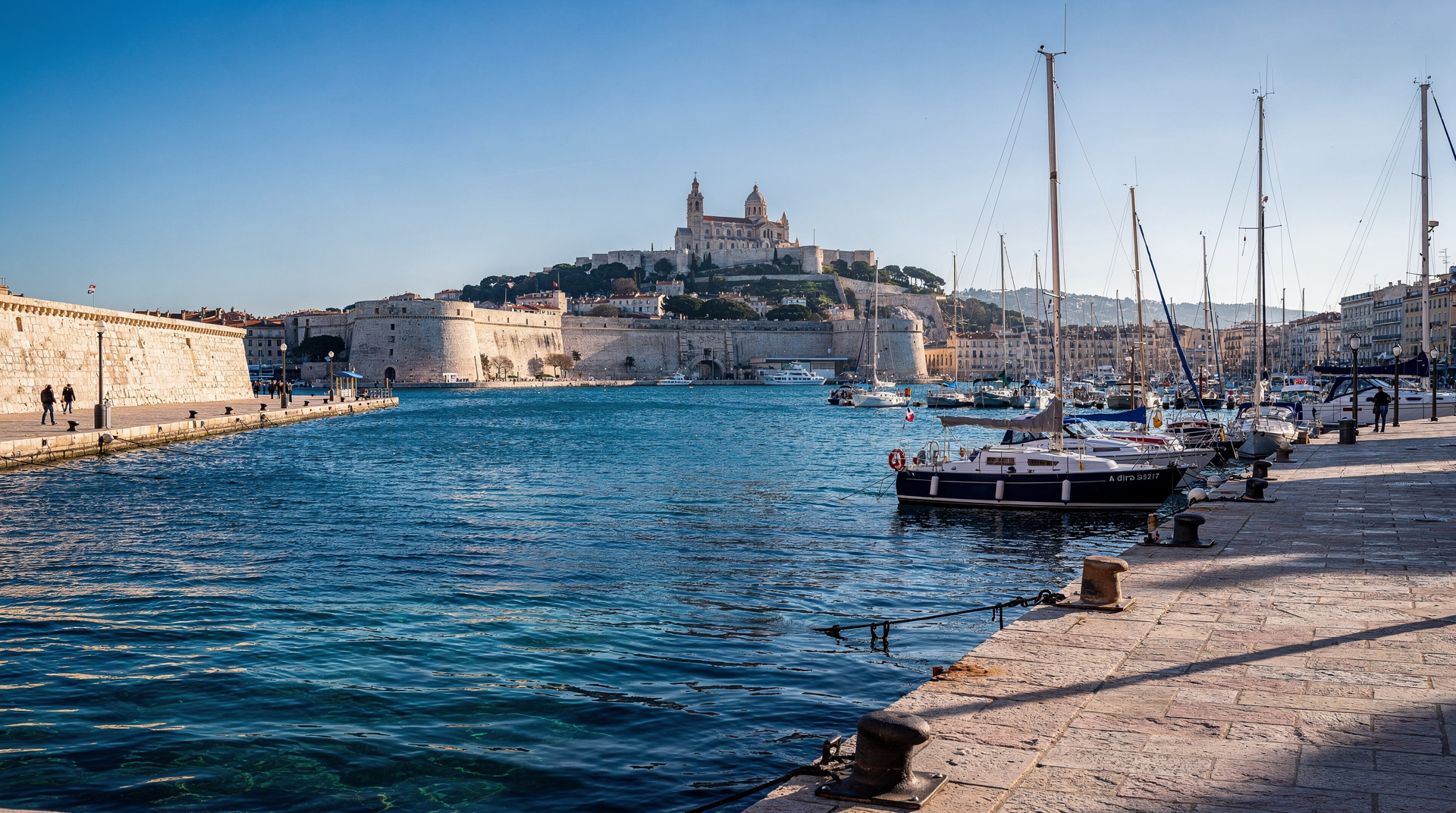
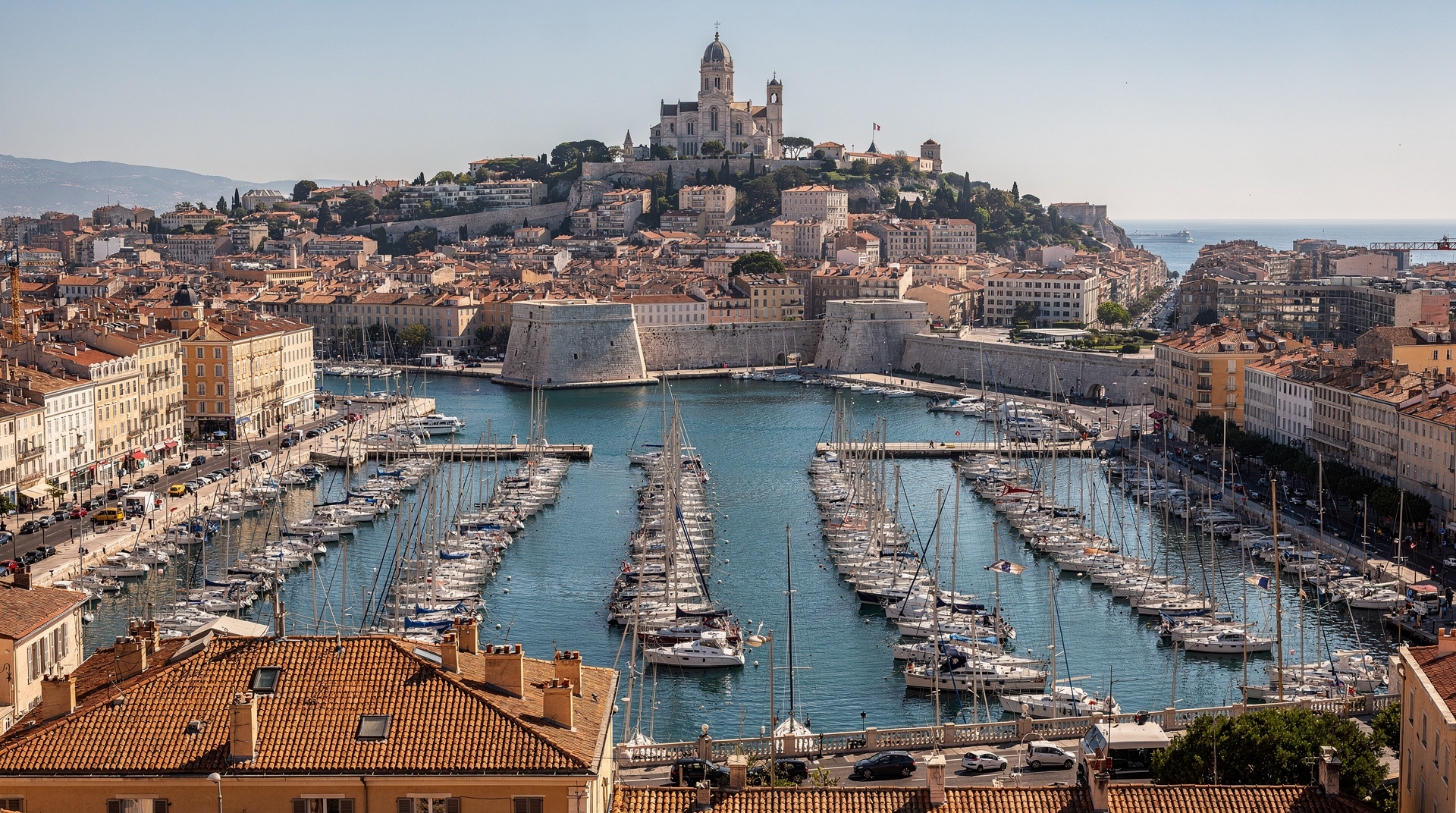
Vieux-Port: The busiest section in summer. The north quai (Quai du Port) is busy but functional. The south quai (Quai de Rive Neuve) is where tourist restaurants and cruise tour groups concentrate. Morning is the most manageable time.
Le Panier: Receives significant tourist foot traffic in summer, but remains more manageable than the Vieux-Port quai. Early morning (8:00–10:00) is the best time — locals going about their day, before the tour group arrivals.
MuCEM: Book skip-the-line tickets in advance for July–August. The museum is popular in summer, and the queues for standard entry can be substantial.
The beaches: The Prado beaches are genuinely very busy in summer — effectively a city beach in full European summer mode, with umbrellas, families, and high density. Catalans beach (closer to the Vieux-Port) is smaller and busier per square metre. If crowded beaches are a concern, the rocky calanque entry points accessible from the Corniche (Malmousque, Vallon des Auffes area) offer swimming with less density.
Boat tours: Book at least 1–2 weeks ahead for summer departures, especially full-day tours. Tour operators limit passenger numbers, and popular morning slots on good-weather days sell out.
What genuinely works well in summer
Sunset experiences. Marseille’s sunsets from the Vieux-Port terrace, from Notre-Dame de la Garde, and from the Corniche are extended and spectacular in summer — the long Mediterranean evenings mean the golden hour lasts well past 20:00. Sunset catamaran cruises are a specific summer highlight that does not exist in the same form in other seasons.
Swimming. The Prado beaches, the rocky entries along the Corniche, and especially the Calanques swimming stops (by boat) are at their best in summer — warm clear water, calm sea (mistral aside), and the full Mediterranean experience.
Calanques by boat. As covered above — boat access works perfectly in summer. A full-day Calanques boat tour with lunch and wine in July is an excellent experience; the Calanques scenery is at its most photogenic in summer light.
Evening culture. Cours Julien’s bars and restaurants, the Vallon des Auffes aperitif scene, and the Corniche evening walk are all genuinely excellent in summer. The city’s social life shifts outdoors and later in the evening — a 21:00 dinner, followed by a walk to 23:00, is normal summer rhythm.
Festivals. July and August bring various festivals to Marseille and the wider region — cinema events, outdoor concerts, the Fiesta des Suds (Marseille’s world music festival, typically October but worth checking current dates). The tourist office website (marseille-tourisme.com) maintains a current events calendar.
What to skip or modify in summer
Midday hiking of any kind. Even the routes that are technically open on a given day should not be attempted between 10:00 and 16:00 in peak summer heat. The exposed limestone terrain has no shade and retains and radiates heat. If hiking is your priority, choose spring or early autumn instead.
Day trips that require a lot of driving. Renting a car for Luberon villages in July–August means driving in intense heat, parking chaos at popular villages, and elevated fuel costs. These day trips are excellent in May–June or September; summer is not the optimal season for them.
The worst of the tourist restaurant strip. The cluster of restaurants along the south quai marketing bouillabaisse to cruise groups are at their most aggressive (and most mediocre) in summer. Walk another five minutes to Cours Estienne-d’Orves or the Cours Julien zone for better quality at similar or lower prices.
Summer logistics
Accommodation: Book 2–3 months ahead for July–August. Prices are at their highest. The best mid-range properties near the Vieux-Port sell out early. If you are flexible on location, Cours Julien and the Prado area offer better value than the immediate Vieux-Port zone in peak season.
Calanques reservation: For any attempt at Sugiton hiking, register via calanques-parcnational.fr. The system opens bookings up to 3 days ahead; access for late July and August weekends is contested. Check the fire risk status on the morning of your visit before leaving.
MuCEM tickets: Book online in advance for July–August. The first Sunday of the month remains free, but the queues are long.
Boat tours: Book via GYG or directly with operators at least a week ahead in summer. Full-day tours in particular sell out.
For how summer costs compare to other seasons, see our trip cost guide. For a full 3-day summer itinerary structured around the heat and conditions, see our 3-day planning guide.
Summer weather numbers
| Month | Average high | Average sea temp | Rain days |
|---|---|---|---|
| June | 27°C | 22°C | ~4 |
| July | 30°C | 24°C | ~2 |
| August | 31°C | 25°C | ~3 |
| September | 27°C | 24°C | ~5 |
The mistral wind (a cold, strong north-northwest wind) can drop temperatures by 5–10°C rapidly and rough up the sea. On mistral days, boat tours may be cancelled or modified. Check weather forecasts specifically for wind conditions before booking same-day boat activities.
For the winter alternative — quieter, cheaper, different — see our Marseille in winter guide. For a full seasonal comparison, see our best time to visit guide.
Summer events worth knowing about
Marseille’s summer cultural calendar runs alongside the tourist peak. Not all of it is relevant to short-stay visitors, but a few events are worth knowing:
Jazz des cinq continents (July): An outdoor jazz festival at the Palais du Pharo, a seaside palace on the cape between the Vieux-Port and MuCEM. The location — terraces above the sea, the Frioul Islands visible on the horizon — is extraordinary. Ticket-based event; programme announced in spring.
Festival Cinéma en Plein Air: Outdoor cinema screenings at various locations through the city in July and August. Free or low-cost; the Parc Borély (south of Prado) hosts some screenings.
La Nuit des Musées: Usually in May but occasionally extends cultural programming into summer with evening museum openings. Worth checking the current year’s programme.
Bastille Day (14 July): Fireworks over the Vieux-Port harbour — one of the most dramatically positioned Bastille Day displays in France, with the fireworks reflecting in the harbour and the two harbour forts framing the show. The quai fills with locals and tourists alike from around 21:00; the fireworks are typically at 23:00.
Local neighbourhood festivals: Marseille’s arrondissements run small neighbourhood festivals through July and August. These are informal, local, and rarely advertised in tourist materials — the tourism office website is the best source for current-year programming.
Planning a summer visit: the essential checklist
Before arriving in summer Marseille:
-
Book your Calanques boat tour. The priority booking. Morning departures at 9:00 sell out weeks ahead in July–August. Do not assume walk-up availability.
-
Book accommodation 2–3 months ahead. The Vieux-Port zone and La Joliette (cruise terminal area) fill earliest. Mid-range hotels within metro distance of the harbour are next.
-
Check the Sugiton reservation. If any hiking is in your plan — even as a backup if the boat tour is cancelled — register via calanques-parcnational.fr from 11 June, up to 3 days ahead of your visit date.
-
Check MuCEM tickets. Skip-the-line is worth the minor surcharge in summer; queues for standard entry can be 30–45 minutes.
-
Download the My Calanques app or bookmark calanques-parcnational.fr — check fire risk status the morning of any planned outdoor Calanques activity.
-
Plan around the heat. Structure days with early-morning outdoor activities, a genuine midday pause, and evening culture. Reversing the northern European instinct to see everything between 10:00 and 18:00 makes summer in Marseille significantly more comfortable.
-
Bring or buy sun cream and a hat on arrival. The Provençal sun at 31°C on an exposed boat deck or limestone path is significantly more intense than most northern European visitors expect.
For the full summer budget picture, see our trip cost guide. For a complete 3-day itinerary that works in summer conditions, see our 3-day planning guide. For first-time visitors trying to understand what summer Marseille involves, start with our first-timers guide.
Where to base yourself for a summer trip
Location matters more in summer than any other season, because heat makes distance and shade worth planning around. The Vieux-Port puts you closest to boat tour departures and the fish market’s early hours, but is also the most crowded and priced zone. Cours Julien is a short walk or metro ride away, quieter, and has the better evening bar and restaurant scene without the cruise-group pricing.
If beach access matters more than city-centre proximity, the Prado area near La Corniche and the Prado beaches puts you closer to swimming but further from the Vieux-Port and Le Panier sights. See our best area to stay guide for a fuller neighbourhood-by-neighbourhood comparison.
Alternatives to the busiest boat tour slots
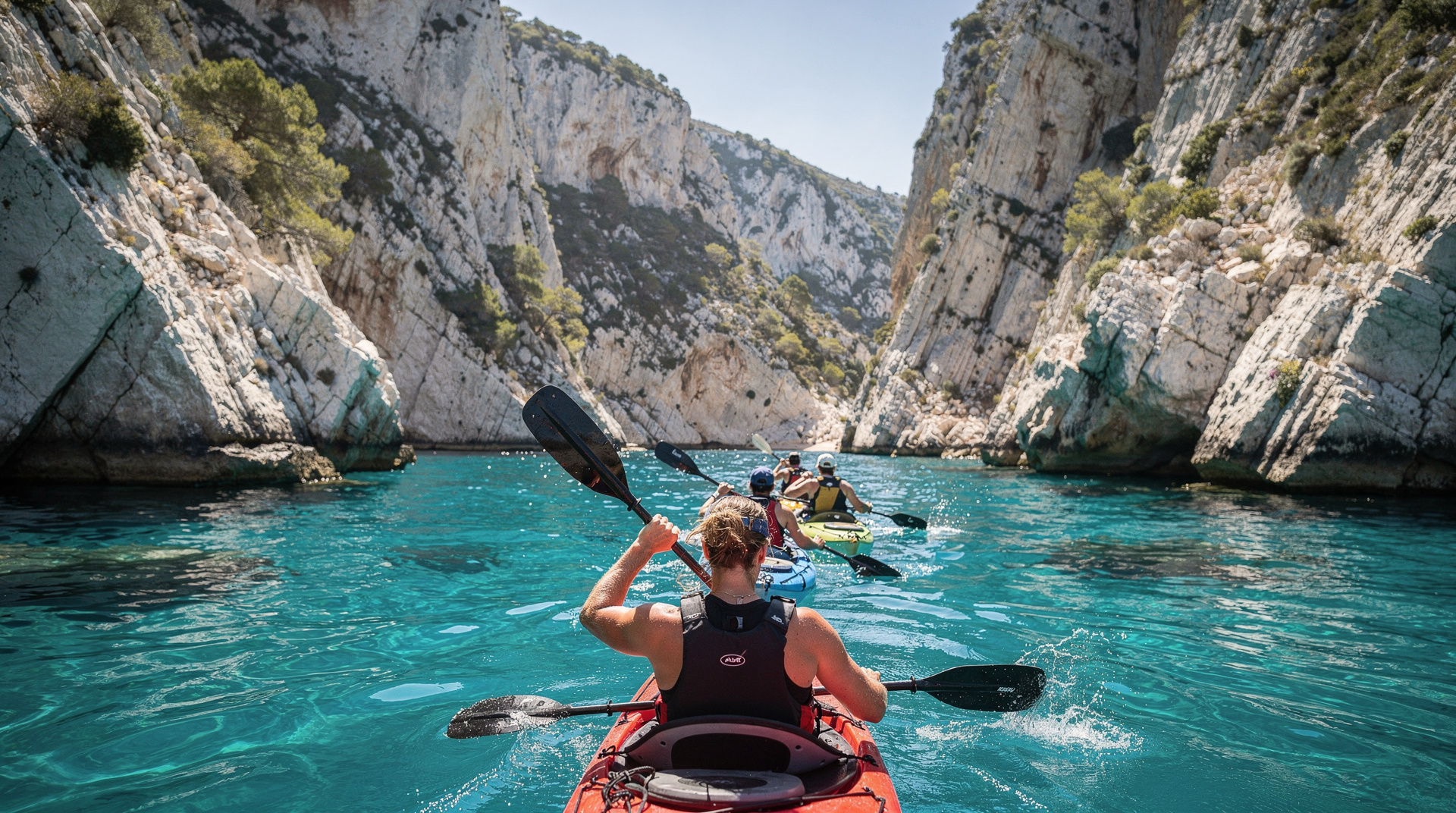
If the 9:00-10:00 Calanques boat departures are sold out, later departures and afternoon slots exist but tend to have more sea traffic and less optimal light. An alternative worth considering is a Frioul Islands ferry trip — the crossing is short, tickets are usually easier to get on short notice, and the islands offer swimming and a genuinely different, quieter Mediterranean feel than the Calanques boat crowds. Sea kayaking tours also run through summer and put small groups on the water rather than a full boat’s worth of passengers.
Top experiences
Bookable activities with verified prices and instant confirmation on GetYourGuide.