Avoiding crowds in the Calanques: timing, alternatives, and honest advice
Marseille: Calanques National Park guided hike
Duration: 5 hours
How do I avoid crowds in the Calanques?
Arrive at the Luminy trailhead by 07:00–07:30 in season. Weekdays over weekends. September and October are the best overall months — the sea is warm, trails are open, crowds are a fraction of summer. Avoid August entirely if you want solitude. The Côte Bleue (Méjean, Ensuès) is the most underused alternative.
The crowd problem is real, and it has gotten worse
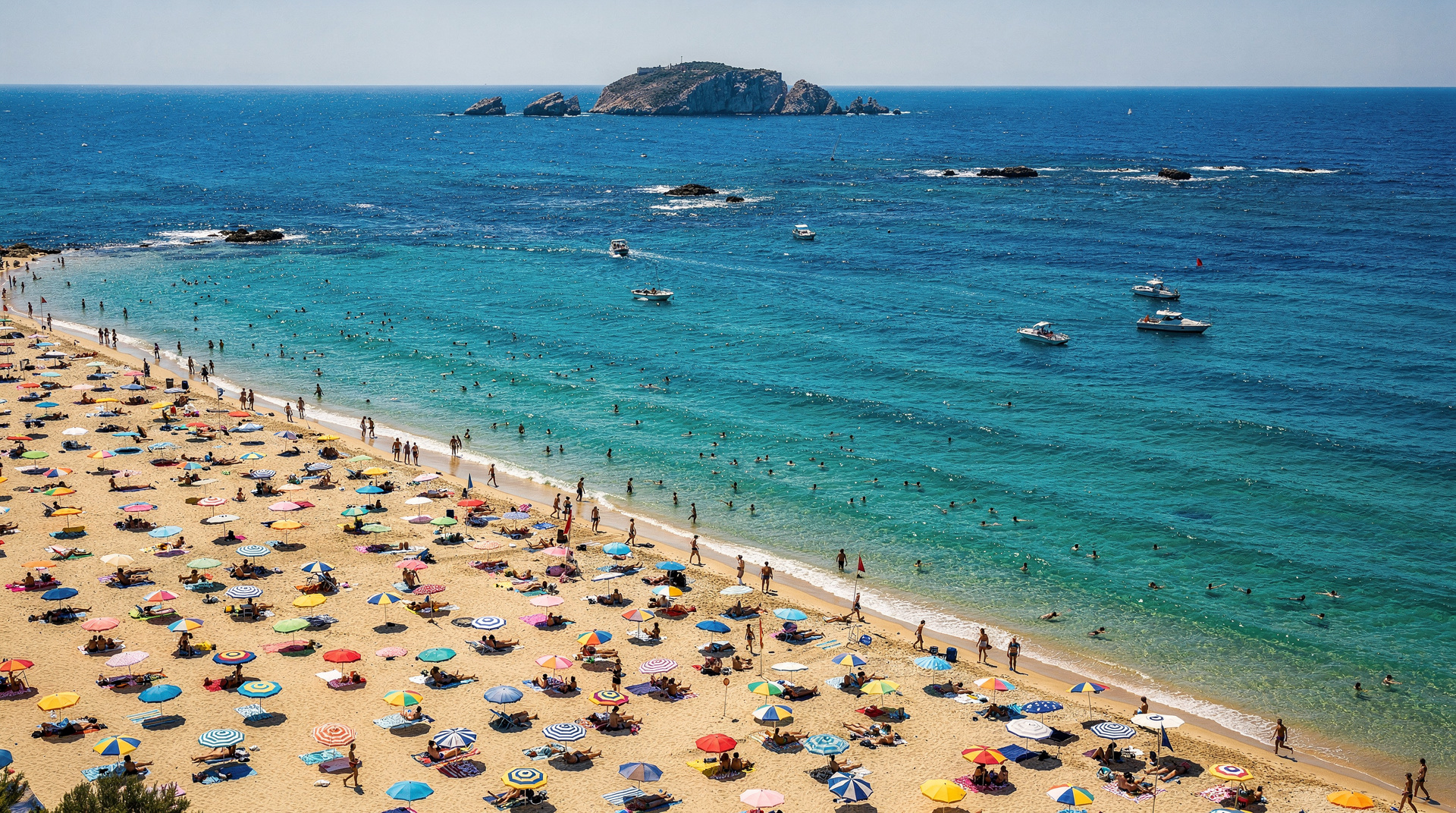
The Calanques National Park receives over two million visitors per year. The majority arrive between June and September. The majority of those arrive on summer weekends. The majority of those arrive between 10:00 and 14:00. If you do not account for this, your Calanques experience will be a traffic jam in sun-drenched limestone — people queuing to swim in a creek where there is no room to swim, people photographing each other photographing the water, no shade and no rescue if something goes wrong.
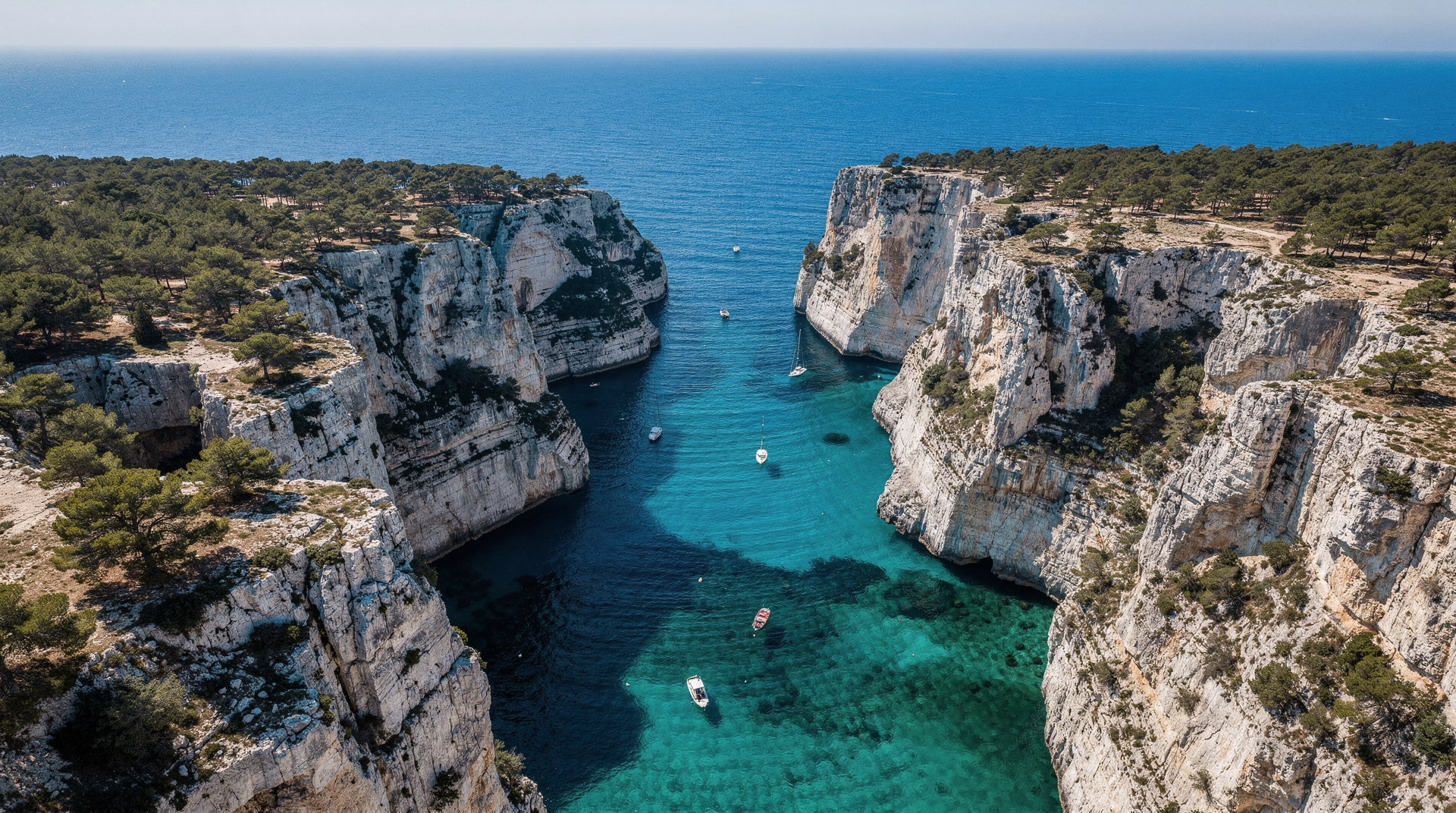
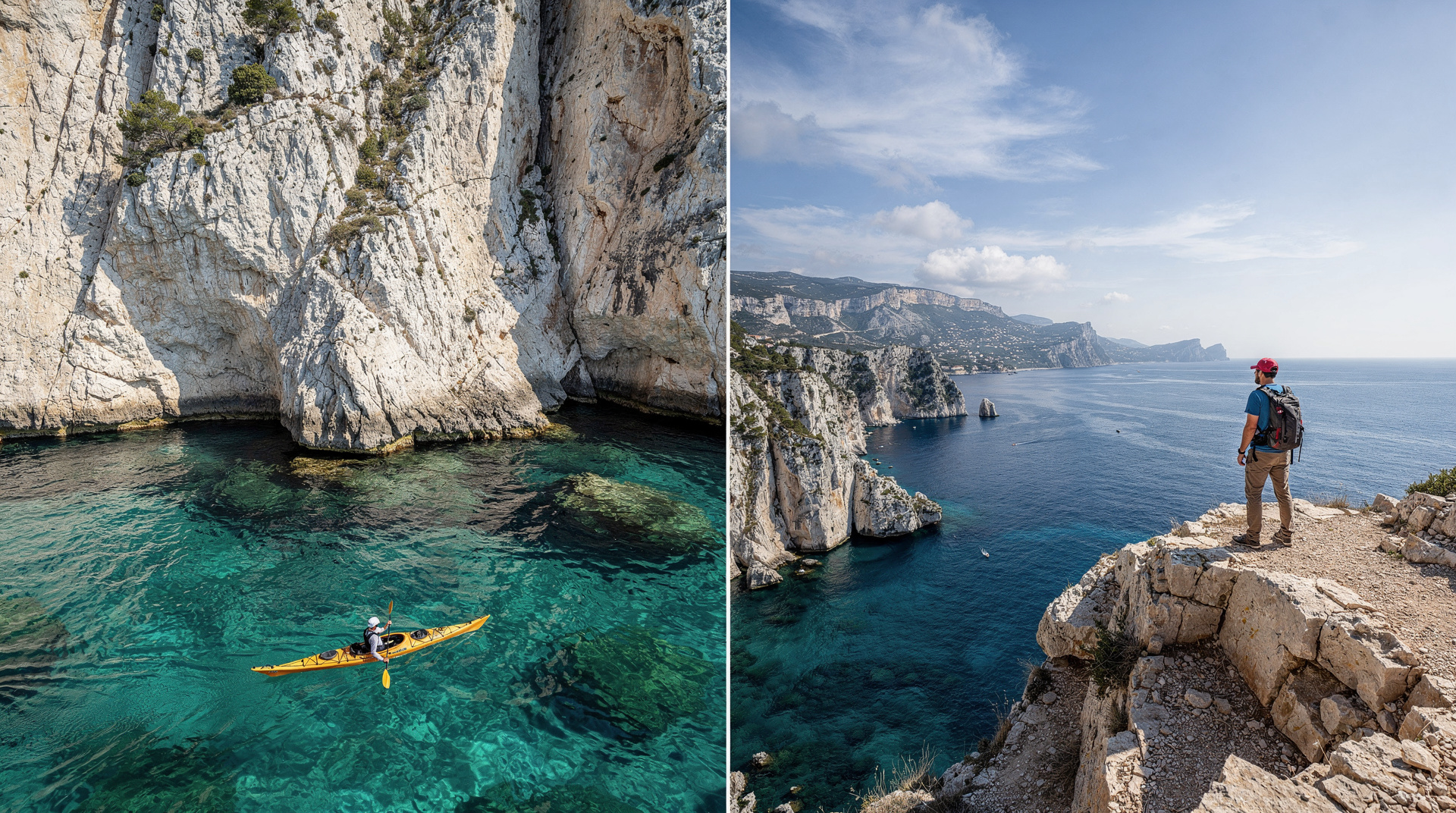
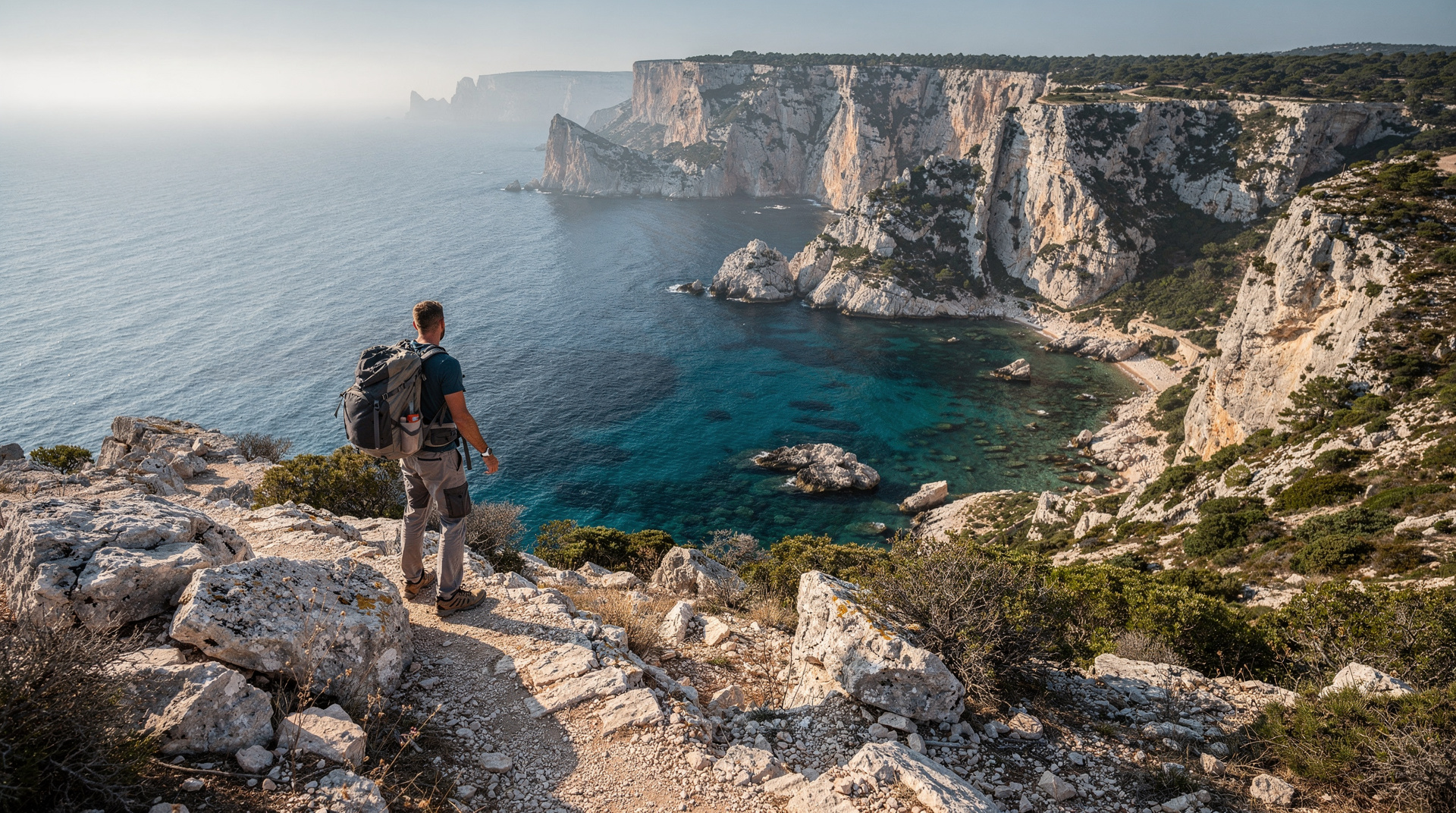
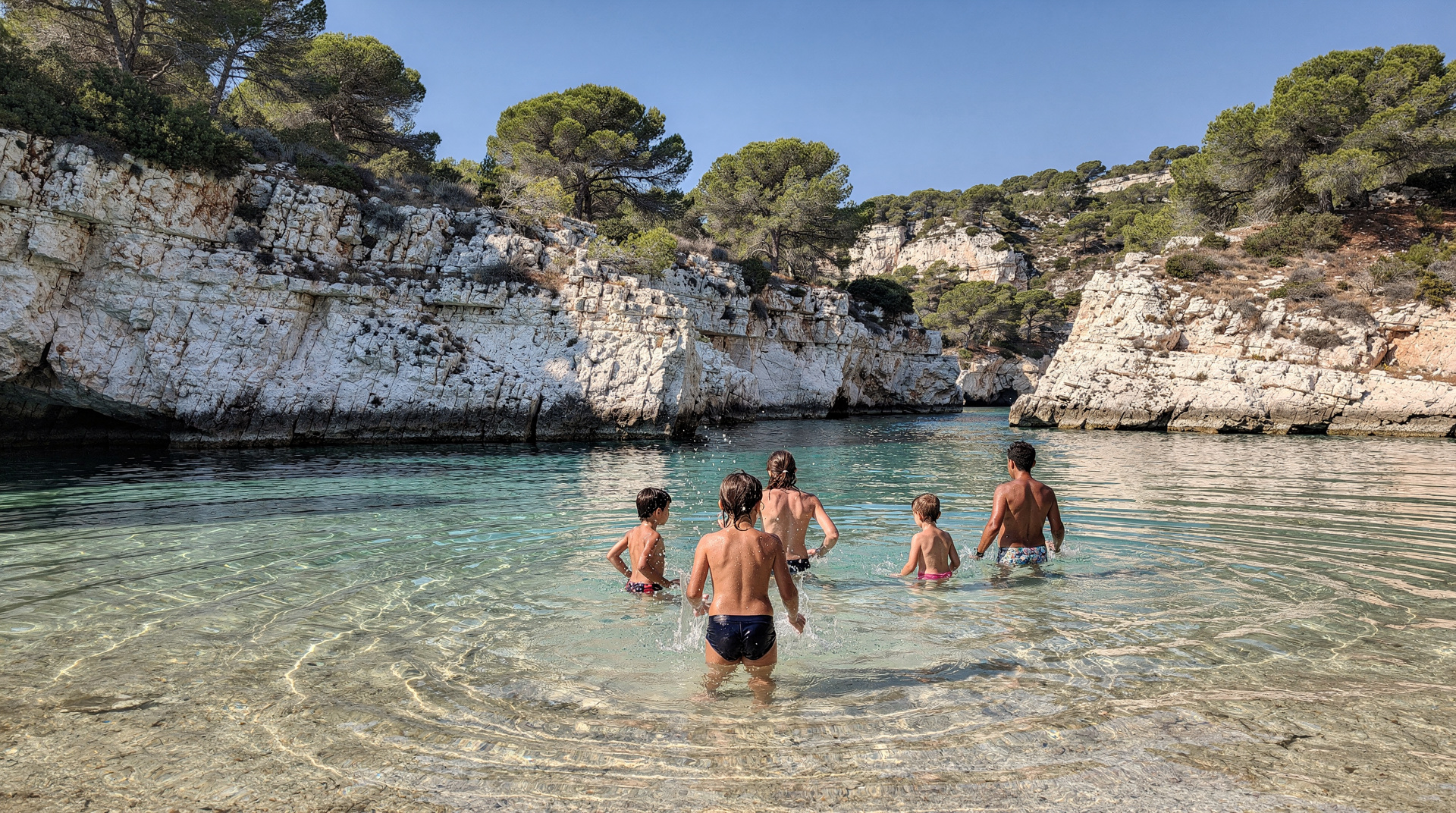
This is not inevitable. The Calanques at 07:00 on a Tuesday in October are quiet in a way that feels almost private. The same creek at 12:00 on a Saturday in August is a festival crowd without the music. The gap between these two experiences is entirely a matter of timing.
This guide tells you how to get the first, not the second.
| At a glance | |
|---|---|
| Where | Massif des Calanques, accessed from Luminy (Marseille side) or Cassis |
| Cost | Free trail access outside the fire-risk period; Sugiton reservation is also free; boat tours run around EUR 30–55 per person |
| Time needed | Half a day minimum for a single Calanque; a full day for the Cassis-side approach to En-Vau |
| Getting there | Bus 21B to Luminy from Rond-Point du Prado metro, or bus/boat from Cassis |
| Best time | Mid-September to late October for the best crowd-to-experience ratio; avoid August midday |
The Sugiton reservation system (2026)
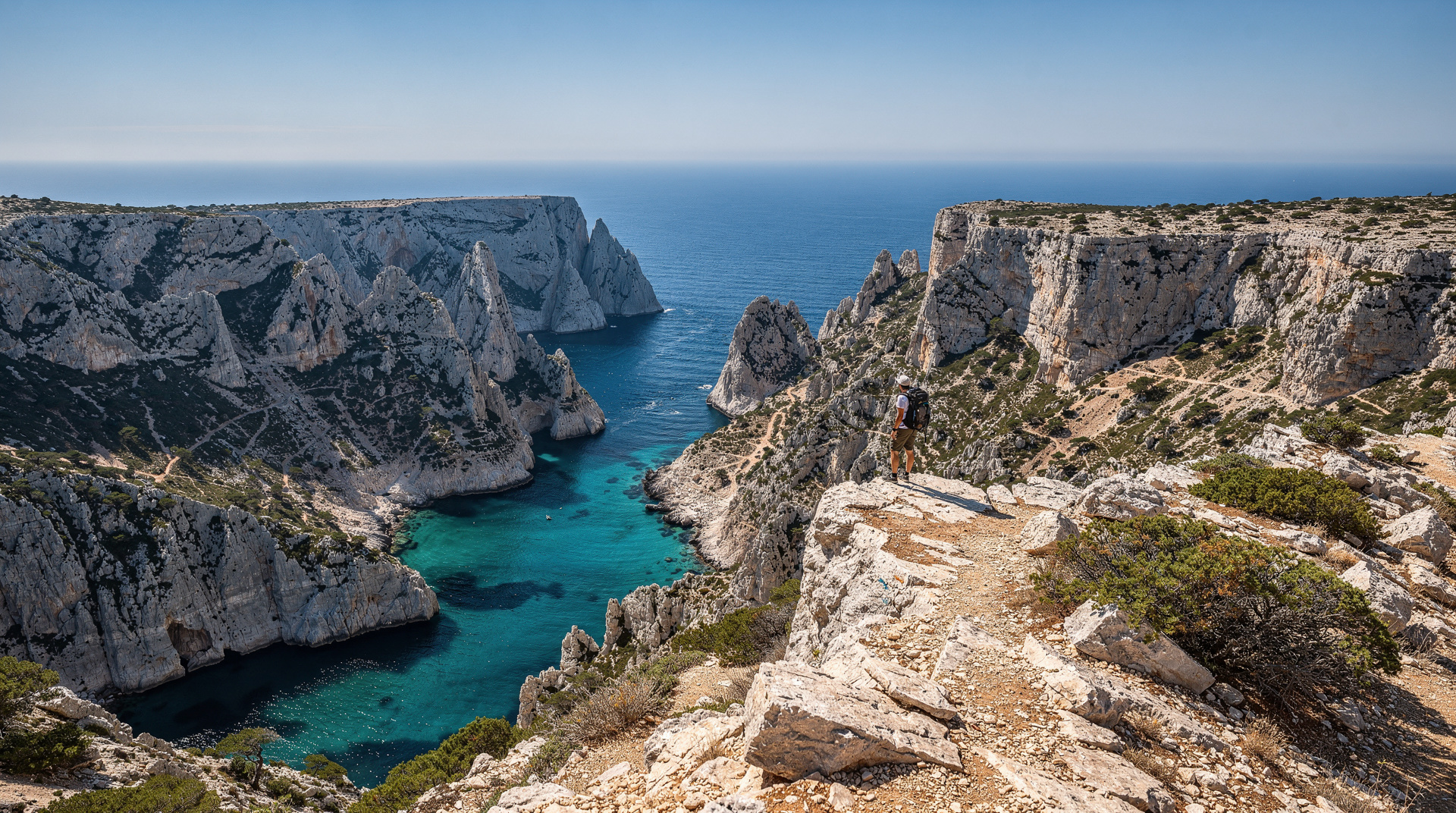
Calanque de Sugiton — accessible in 45 minutes from the Luminy trailhead — is the most visited single Calanque from the city side. The combination of accessibility (no car needed, bus to Luminy), drama (the view from the ridge is the most photographed in the park), and swimmable water made it extremely popular. Too popular.
From 2021, the Calanques National Park introduced a reservation system for Sugiton during peak periods to limit daily visitor numbers. The 2026 reservation window covers selected June dates, then every day from 27 June to 30 August, plus some early September weekends. Outside these windows, no reservation is required.
How to book for 2026: Reservations open online at calanques-parcnational.fr on 11 June 2026 at 09:00 CET. Booking is free. You can book up to 3 days in advance and up to 6pm the day before. Maximum 5 people per booking. The confirmation email includes a QR code that must be shown at the trailhead. If fire-risk closures apply, reservations are cancelled automatically — re-booking is necessary.
The reservation does not guarantee a good experience. A reserved slot on a Saturday at 11:00 in August still puts you at Sugiton when the creek is at capacity. If you must visit during the reservation period, book the earliest available slot — 07:00 or 08:00 — and be at the trailhead on time.
The best month: September and October
The months from mid-September to late October are objectively the best for Calanques hiking in almost every dimension. The Mediterranean sea temperature peaks in late August and remains warm through late October — often 22–24°C — meaning swimming at the Calanques in October is genuinely comfortable. Summer fire-risk closures have ended. The trails are open without reservation. Crowds are a fraction of August.
The light in October is different from summer light: lower angle, longer golden hours, the limestone turning amber rather than bleached white. Many people who have visited the Calanques in both August and October report October as the clearly superior experience.
The practical autumn visit: Train or bus to Cassis, hike the En-Vau approach from Cassis side (2.5 hours), swim in En-Vau’s turquoise water with perhaps three other groups visible. Return to Cassis for a late lunch at the port. This is a realistic description of an October Calanques day.
The second-best window: April to early June
Spring is the second-best season for a different set of reasons. Wildflowers (cistus, aromatic garrigue shrubs, yellow broom) cover the limestone from late March through May. The trails are open without restriction. The sea is cooler — 15–18°C — but swimmable for those who prefer it, and by late May approaching comfortable. Crowds are moderate rather than overwhelming, though the May bank holidays (Feria period and Ascension weekend) and early June school holiday departures create temporary spikes.
What spring does not offer: the warm swimming of summer and autumn. If the swim is the point of the Calanques for you, spring requires either a wetsuit or an acceptance that the water will be bracing.
Daily timing: the early start
On any Calanques visit from May to September, arriving early is the single most powerful crowd-reduction strategy. The trailhead parking at Luminy fills by 08:00–09:00 on busy days. The creek at Sugiton begins to fill from 10:00 onward. By 12:00, on a summer weekend, it is the worst it will be.
The practical early schedule:
- 06:30: breakfast at accommodation
- 07:00: bus 21B from Luminy terminus or arrival by taxi at Luminy
- 07:30–08:15: hike to Sugiton ridge (45 minutes at a moderate pace)
- 08:15–11:00: the creek almost to yourself, swimming and exploring before the crowds arrive
- 11:00: begin return as the day-trippers are arriving
- 12:30: back at Luminy, bus to the city, afternoon free
This schedule is not for everyone, but it produces a Calanques experience that is qualitatively different from a midday arrival.
Weekday vs weekend
On summer weekends (Saturday and Sunday, June through September), trail access is significantly more crowded and parking fills very early. Weekday visits — particularly Monday through Thursday — see a fraction of the weekend traffic. If your schedule allows any flexibility, a Tuesday Calanques hike is meaningfully more peaceful than a Sunday one, even at the same time of day.
The Côte Bleue: the Marseille coast no one visits
The Côte Bleue — the coastal marine reserve stretching from Marseille northwest toward Martigues — is one of the most overlooked alternatives in the Marseille coastal zone. It is not the Calanques in terms of drama: the limestone is less sheer, the water less intensely turquoise, the overall visual impact less photogenic. What it offers is space, quiet, and accessible coastal walking without the crowds.
The Méjean and Ensuès-la-Redonne beaches are accessible by train from Marseille Saint-Charles (the Arles/Avignon direction, stopping at Niolon or Méjean) and have rocky coves, snorkelling in clear water, and an atmosphere that feels genuinely local rather than tourist-organised. On a summer weekend when Sugiton is fully reserved and Sormiou’s road is closed to private cars by 08:00, the Côte Bleue is where locals who know the coastline actually go.
Our Calanques boat tour guide also covers the Côte Bleue marine park boat option — the 4-hour circuit is excellent and reaches zones that are difficult to access on foot.
Cassis-side Calanques: a different crowd profile
The Calanques accessible from Cassis — particularly Port-Miou, Port-Pin, and En-Vau — are visited by a different population and at different hours. Most visitors to the Cassis side arrive by bus from Cassis town, which means the timing spreads more naturally through the morning and afternoon rather than concentrating at the Luminy 09:00–10:00 window.
En-Vau from Cassis side (the long approach via Port-Miou and Port-Pin, approximately 2.5 hours each way) remains the least visited of the major Calanques simply because the hike is long and exposed. If you are capable of the distance and prepared for the heat, arriving at En-Vau from the Cassis side on a summer morning is one of the least-crowded dramatic Calanques experiences available. See our guide to which Calanque to visit for the full comparison.
If you cannot avoid August
August is the worst month to visit the Calanques on foot, full stop. Trails are closed from around 11:00 in high fire-risk conditions. Sugiton has mandatory reservations throughout. The combination of heat, closure risk, and maximum crowds makes it an objectively poor hiking month.
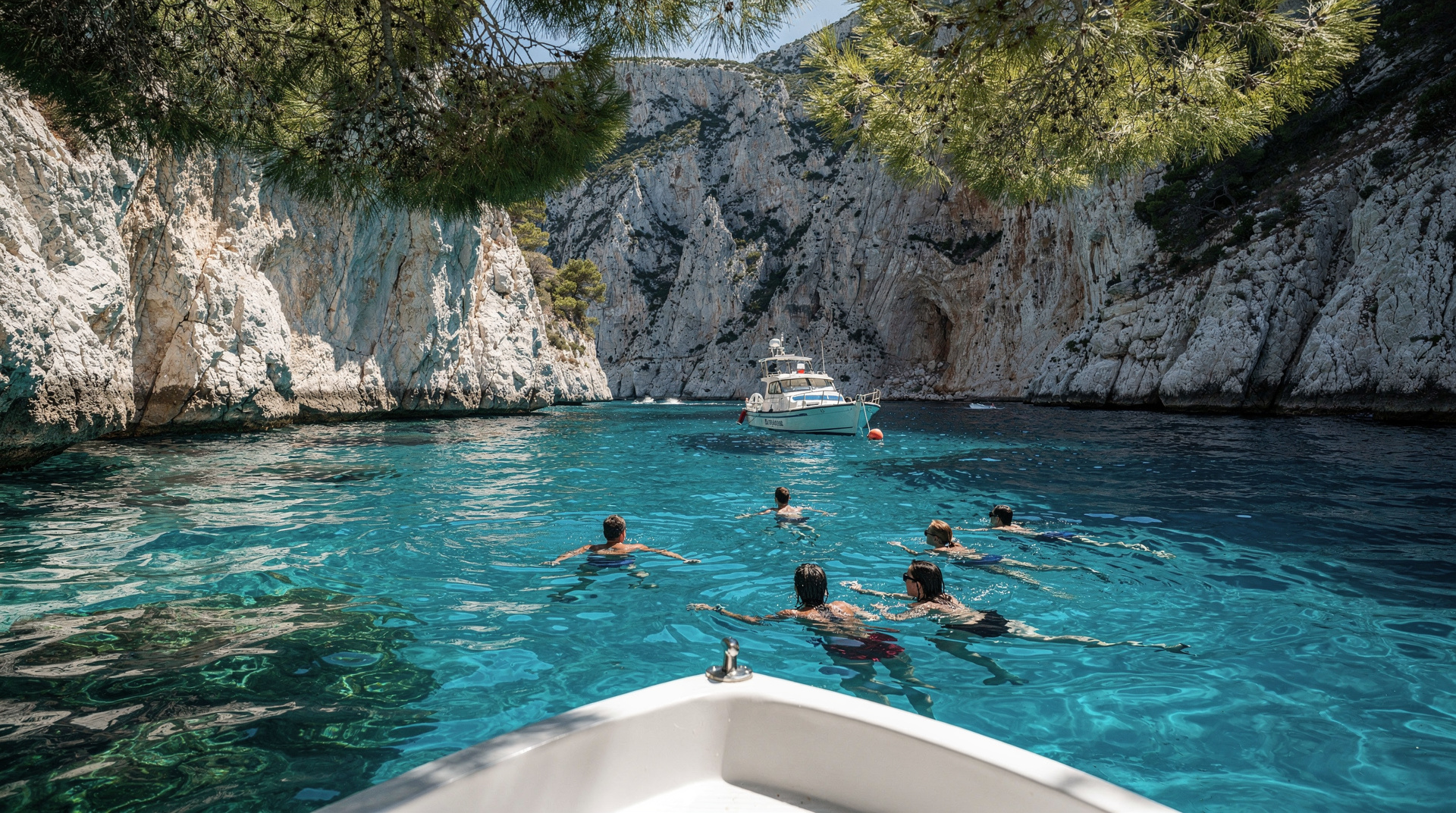
But August has a solution: the boat. When hiking access is restricted, the Calanques are still accessible by boat. A boat tour — 3–4.5 hours, departing from the Vieux-Port in the morning — gives you the visual experience from inside the Calanques without the trail access issue. The swimming stops are in the same creeks you would reach on foot. This is not a compromise; for many people it is actually the better way to see the Calanques. See our boat vs hike comparison for the full argument.
If you are committed to hiking in August: book the Sugiton reservation the moment it opens (11 June at 09:00), choose the earliest slot available, and be at Luminy before 07:30. Accept that you will not be alone.
Practical logistics for early starts
Getting to Luminy early: Bus 21B from the Rond-Point du Prado metro station runs from approximately 06:30 on weekdays (less frequent on weekends — check RTM timetable). A taxi from the Vieux-Port to Luminy costs around EUR 20–25 and is the reliable option for an early departure. Rideshare apps (Uber, Bolt) also work.
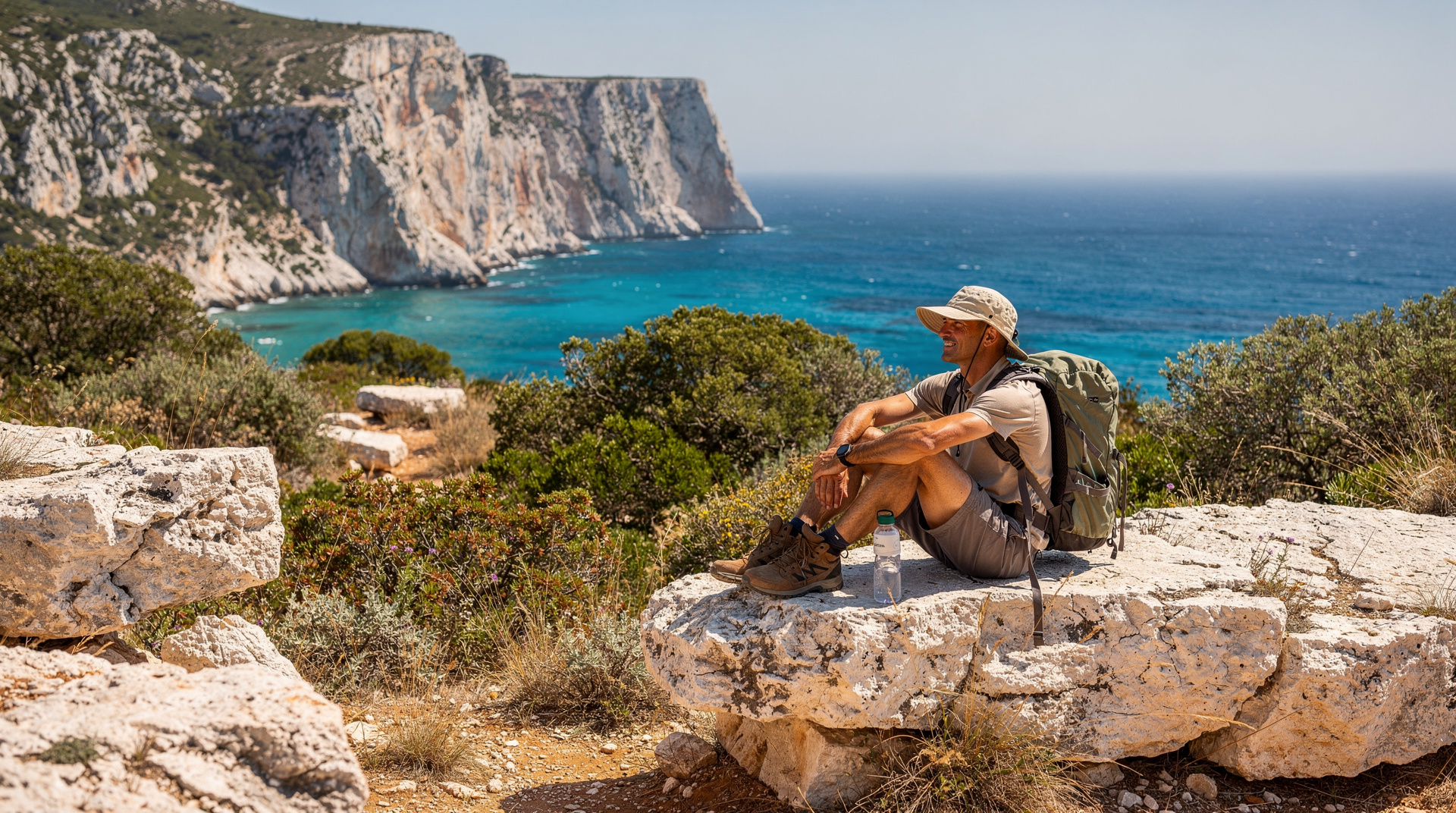
What to bring: Minimum 2 litres of water per person — there is no water on the trails. Snacks for the walk. Sturdy closed shoes (trail runners minimum, hiking boots ideal). Sun cream applied before you leave accommodation — there is no shade on the ridges. A swimsuit and small towel if swimming. The descent to the creek is rocky and steep in some places; sandals are not suitable footwear.
Fire risk closures: During hot, dry, windy conditions (typically July and August, occasionally June and September), the Calanques trails may close entirely. Closures are announced at calanques-parcnational.fr and posted at trailheads. Reservations are cancelled automatically. Check the day before your planned visit during peak season.
The fire-risk closure system
Understanding how trail closures work in the Calanques is essential for any summer visit planning, because a closure can eliminate your hiking plan entirely.
The Préfecture des Bouches-du-Rhône classifies the Massif des Calanques as a fire-risk zone from June 1 to September 30. On days when conditions meet the closure threshold — typically a combination of temperature above 35°C, relative humidity below 30%, and wind above a certain speed — all hiking trails in the Massif des Calanques are closed. Boat access is not affected by these closures.
How closures are announced: The closure decision is made each day by the Préfecture and announced at calanques-parcnational.fr, typically before 08:00 for closures taking effect that day. Closures can apply from the opening of the park or from a specific hour (commonly 11:00 or 13:00 for afternoon closures). Always check the morning of your planned visit during the June–September period.
What happens at the trailhead: Rangers are stationed at the main access points (Luminy, GR98 entry points) during closure periods. Attempting to proceed past a closure is subject to fine. In practice, the closures are enforced and the fines are real.
The boat alternative: A good Calanques boat tour operator will know the fire situation and can tell you whether boat tours are proceeding normally. They invariably are — boat access is independent of the trail closure system.
Season-by-season crowd and swim comparison
| Period | Crowds | Sea temp | Notes |
|---|---|---|---|
| June (early) | Moderate, rising | ~20°C | Reservation window begins for Sugiton on select dates |
| July–August | Very high | 24–26°C | Fire-risk closures possible; Sugiton reservation mandatory |
| Mid-September–October | Low | 18–22°C | Best overall window; reservation ends 30 August |
| November–March | Very low | 13–15°C | Cold for swimming; occasional storm closures |
| April–early June | Low–moderate | 15–18°C | Wildflowers; cool but swimmable by late May |
The off-season advantage in detail
Mid-September through the end of October is consistently the best-value Calanques season in terms of the ratio of experience quality to visitor numbers. Several specific factors combine:
Water temperature: The Mediterranean reaches its maximum stored heat in late August and September, then cools slowly through October. Sea temperature at the Calanques in mid-October is typically 18–20°C — cool by summer standards but entirely swimmable, and noticeably warmer than spring.
Autumn light: The sun angle in October is different from summer — lower, more oblique, turning the white limestone a deeper gold in morning and evening. Photographers who have visited in both July and October consistently prefer October light for the Calanques.
Trail conditions: The limestone terrain dries and re-firms in September after any summer rain. Trail surfaces are at their best — not dusty and loose as in mid-August, and not slippery with recent rain as in November or March.
No Sugiton reservation required: The reservation period ends at 30 August. From September onward, Sugiton is freely accessible by the standard trail from Luminy without any advance booking.
The west-side alternative: Côte Bleue in detail
The Côte Bleue marine reserve west of Marseille deserves more than a passing mention as an alternative. The Calanques du Méjean (around the villages of Carry-le-Rouet and Sausset-les-Pins) and the coast toward Martigues have a character completely different from the Massif des Calanques — flatter landscape, more scrubland, less dramatic limestone — but with the same clear-water coves and considerably fewer visitors.
The train from Marseille Saint-Charles toward Arles stops at Carry-le-Rouet (25 minutes), Sausset-les-Pins (30 minutes), and Niolon (20 minutes). Niolon in particular — a tiny fishing hamlet at the mouth of a small cove — is one of the most peaceful swimming spots accessible by train from Marseille and almost completely unknown to tourists. In summer the sea here is warm, the cove is quiet, and there are no trail closure complications.
For detailed trail information on each Calanque, see our hiking the Calanques guide. For the full seasonal picture, see Marseille in summer. If you’re travelling with children, our kid-friendly Calanques guide covers which coves suit families best regardless of season, and our Calanques hiking safety guide covers heat and terrain precautions that matter most on the early-start schedule above.
Frequently asked questions about Avoiding crowds in the Calanques
Is it worth visiting the Calanques if I can only go in July or August?
Yes, but adjust the plan. Book the Sugiton reservation the moment slots open, arrive before 07:30, or switch to a morning boat tour from the Vieux-Port, which is unaffected by fire-risk trail closures. A midday August hike is the one scenario worth actively avoiding.Do fire-risk closures affect the boat tours as well as the trails?
No. Fire-risk closures apply only to hiking trails in the Massif des Calanques. Boat access from the Vieux-Port or Cassis continues normally even on days when the trails are closed, which is why the boat is the reliable fallback during peak summer heat.
Top experiences
Bookable activities with verified prices and instant confirmation on GetYourGuide.