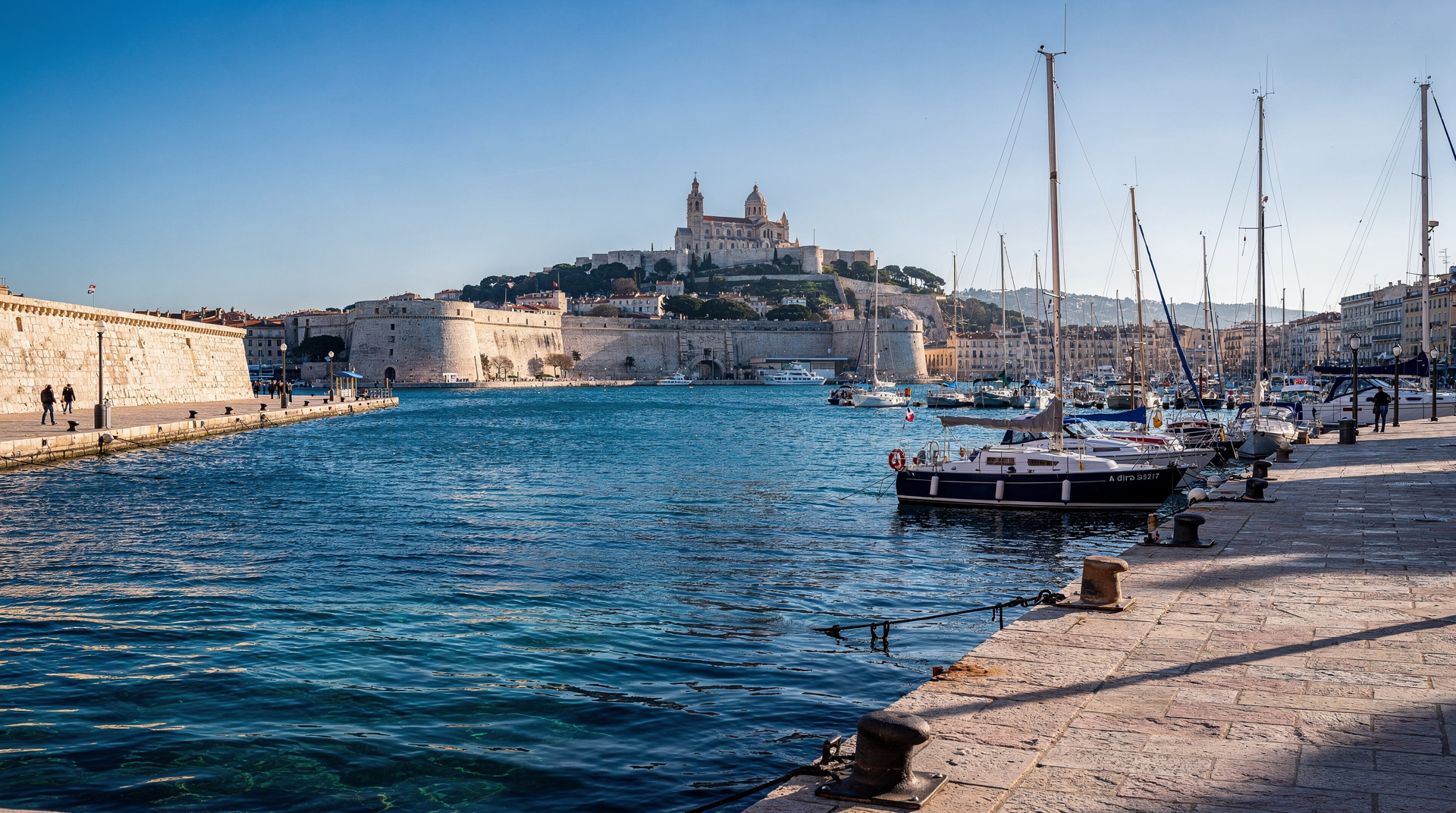
Marseille 3-day itinerary: practical day-by-day planning guide
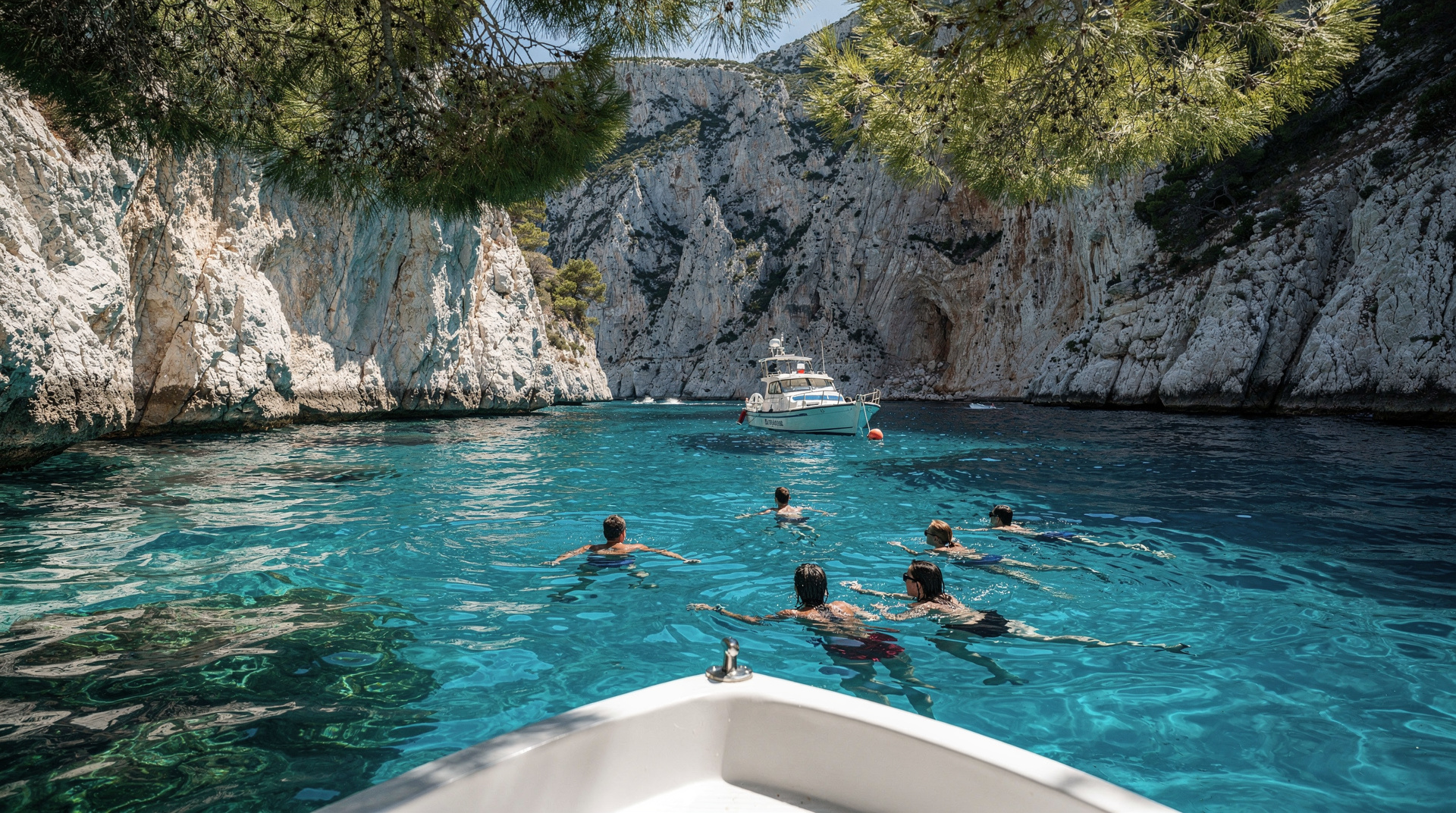
Marseille: iconic Calanques boat tour with swimming
Duration: 3-4.5 hours
What is the best 3-day Marseille itinerary?
Day 1: Vieux-Port, Le Panier, MuCEM, Notre-Dame de la Garde, Cours Julien dinner. Day 2: Calanques full day by boat or hike. Day 3: Cassis day trip or food and culture in the city.
| At a glance | |
|---|---|
| Where | Marseille city centre, plus a Calanques day and a Cassis or city-culture day |
| Cost | Around EUR 100-180 per person/day including meals, tours, and transport (excludes accommodation) |
| Time needed | 3 full days, ideally with an extra half-day buffer for travel days |
| Getting there | Everything covered here is reachable from Marseille on foot, by public transport, or by TER train (Cassis) |
| Best time | Spring or autumn for comfortable hiking and fewer crowds; see seasonal adjustments below |
Before you start: three things to do in advance
Before reading the day-by-day plan, three logistics need handling:
1. Book your Calanques tour. In summer (June–August), the best morning boat departures sell out 1–2 weeks ahead. In shoulder season, a few days is usually enough. Book before you finalise your itinerary so your Day 2 is anchored.
2. Check the Sugiton reservation status (if hiking in June–September). If you are visiting between 27 June and 30 August, and hiking to Sugiton is your plan for Day 2, register via calanques-parcnational.fr as soon as the booking window opens (up to 3 days ahead). Check fire risk status the morning of your hike.
3. Choose your Day 3. The two main options — Cassis day trip or a city food and culture day — have different logistics. Read both options below and decide before you arrive, so you know what (if anything) to pre-book.
Day 1: The city on foot
This day covers the historic core of Marseille — the Vieux-Port, Le Panier, MuCEM, Notre-Dame de la Garde, and Cours Julien for dinner. It is long but manageable, and all connected on foot.
Morning (8:00–12:30)
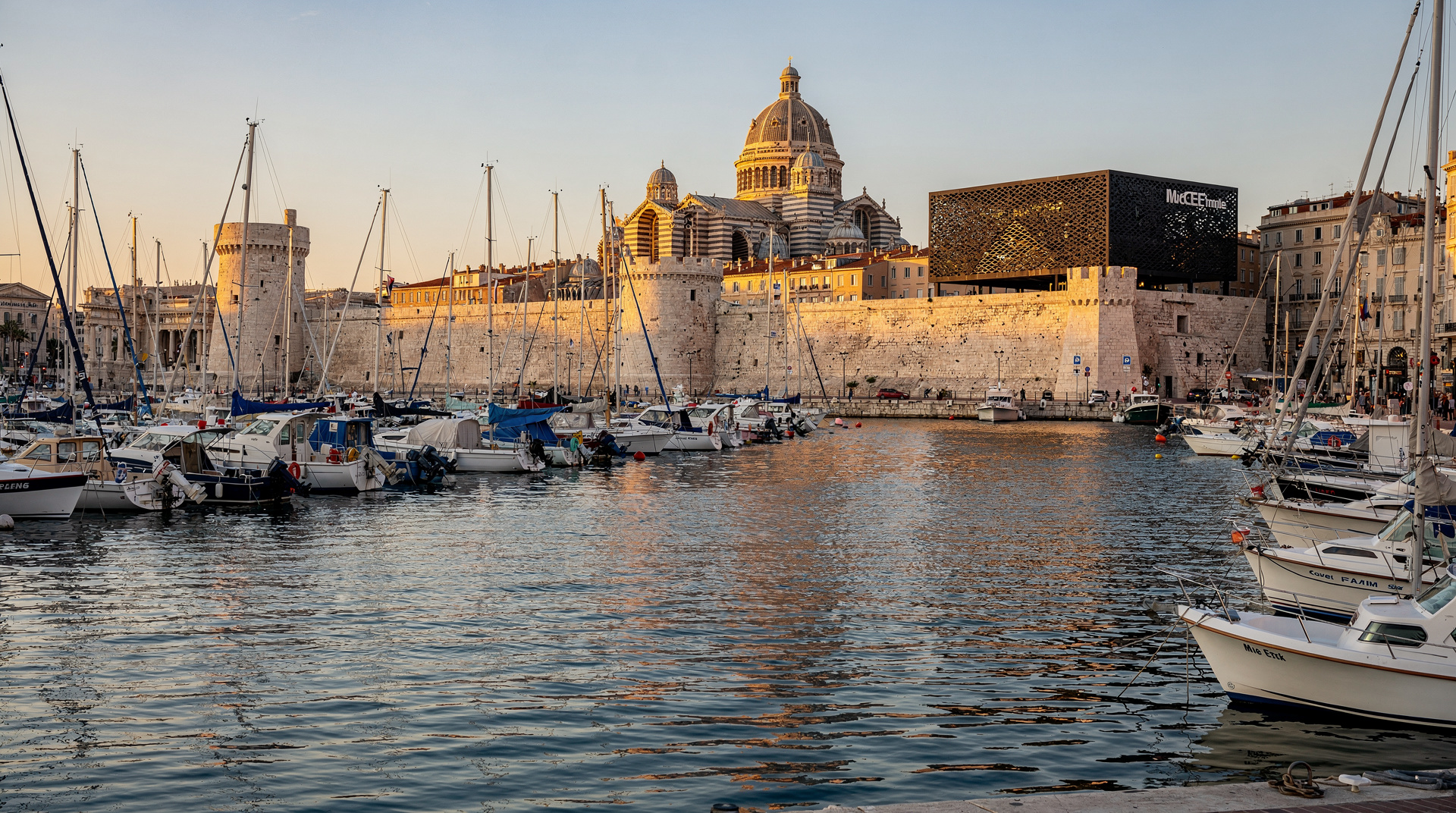
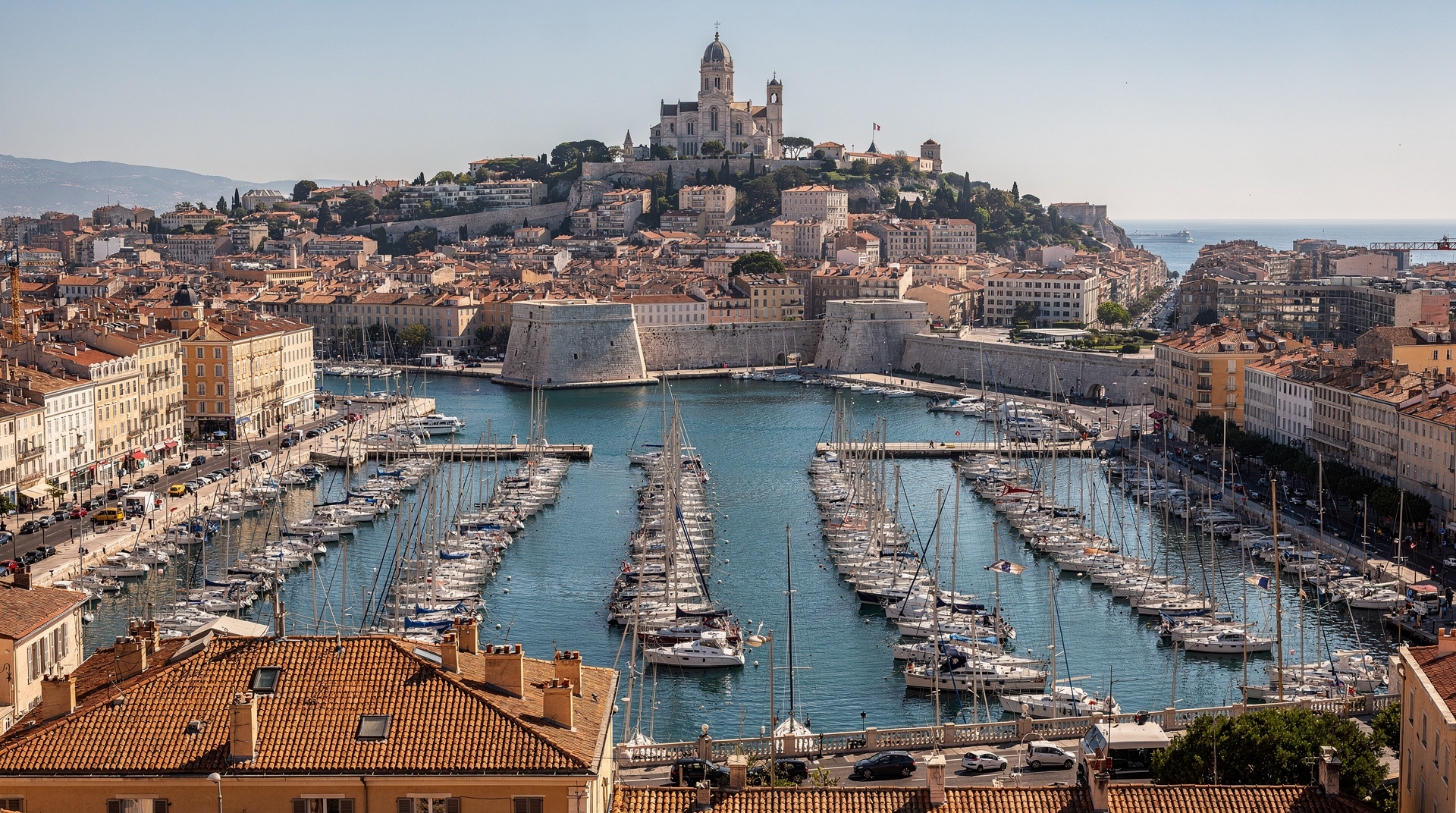
8:00 — Vieux-Port fish market. Start at the Quai des Belges, the eastern end of the harbour. The fish market runs every morning until around 11:00–12:00; arriving by 8:00–8:30 catches it at full activity. Fishermen sell their overnight catch directly from their boats and from tables on the quai. The variety is impressive: sea urchins (oursins), rouget (red mullet), loup de mer (sea bass), dorades, and shellfish from the Étang de Berre. This is free to watch and wander.
8:30 — Walk the north quai. From the fish market, walk the full length of the north quai (Quai du Port) toward Fort Saint-Jean and MuCEM. The walk takes about 15 minutes at a comfortable pace. Stop at the Ombrière — Norman Foster’s giant reflective steel canopy at the Quai des Belges end — which is best in morning light.
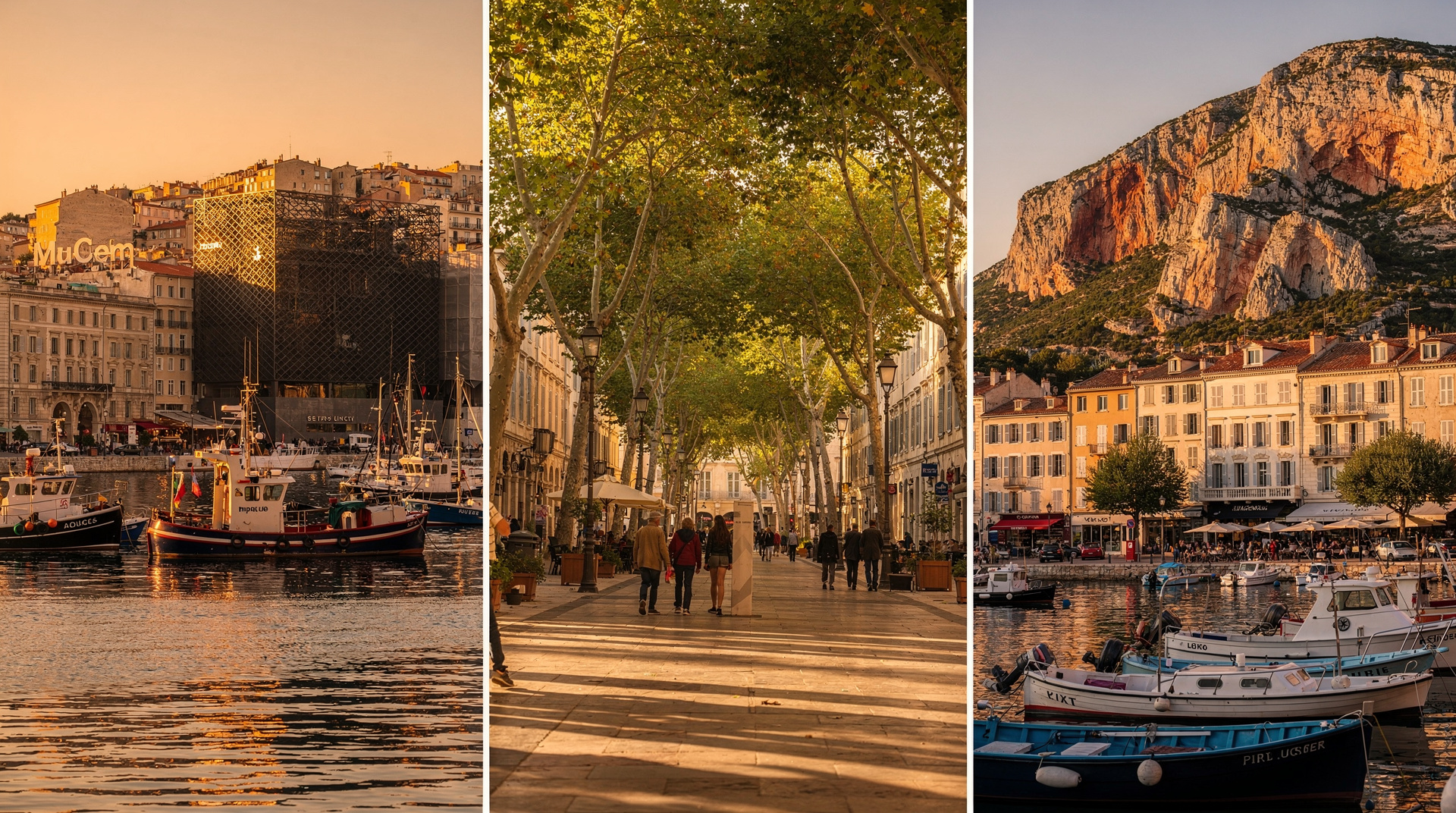
9:00 — MuCEM and Fort Saint-Jean. The exterior terraces, gardens, and the suspended footbridge are free. Spend 30–45 minutes exploring the Fort Saint-Jean gardens and the footbridge before the museum opens at 11:00. If you want to visit the exhibitions inside (9.50 EUR, or included in the City Pass), plan 1–1.5 hours for the museum itself.
10:30 — Le Panier. From MuCEM, walk east and uphill into Le Panier — the oldest neighbourhood in Marseille. The entrance is a short climb from the north quai. The main route goes up Rue du Panier or Grand-Rue, through the tangle of lanes toward the Vieille Charité (17th-century hospice with a domed Baroque chapel, now a museum and exhibition space). Allow 45–60 minutes to wander Le Panier without a rigid agenda.
Walking reality: The Vieux-Port to Le Panier: 10 minutes uphill. Le Panier internal wandering: as long as you like. Le Panier back to the harbour for lunch: 10 minutes downhill.
Midday (12:30–14:00)
Lunch. Two good options:
In Le Panier: Several small restaurants on Rue du Panier and in the place around the Vieille Charité offer set menus at 14–20 EUR for two courses with a glass of wine. Good for a neighbourhood feel.
Cours Estienne-d’Orves: The small square south of the Vieux-Port (5-minute walk from the harbour) has calmer restaurant options than the tourist-heavy quai itself. Less crowded at lunch, better quality, similar prices.
Avoid the restaurant clusters directly on the south quai (Quai de Rive Neuve) at midday in summer — the value-to-quality ratio is poor and the tourist pressure is highest there.
Afternoon (14:00–18:30)
14:00 — Head south toward Notre-Dame de la Garde. From the Vieux-Port, the basilica is 40 minutes uphill on foot (via Rue Sainte and the streets above the Catalans beach) or reachable by bus 60 from the Castellane métro station. The tourist petit train departs the Quai des Belges and takes about 30 minutes including stops (12–15 EUR; useful for those who do not want to climb).
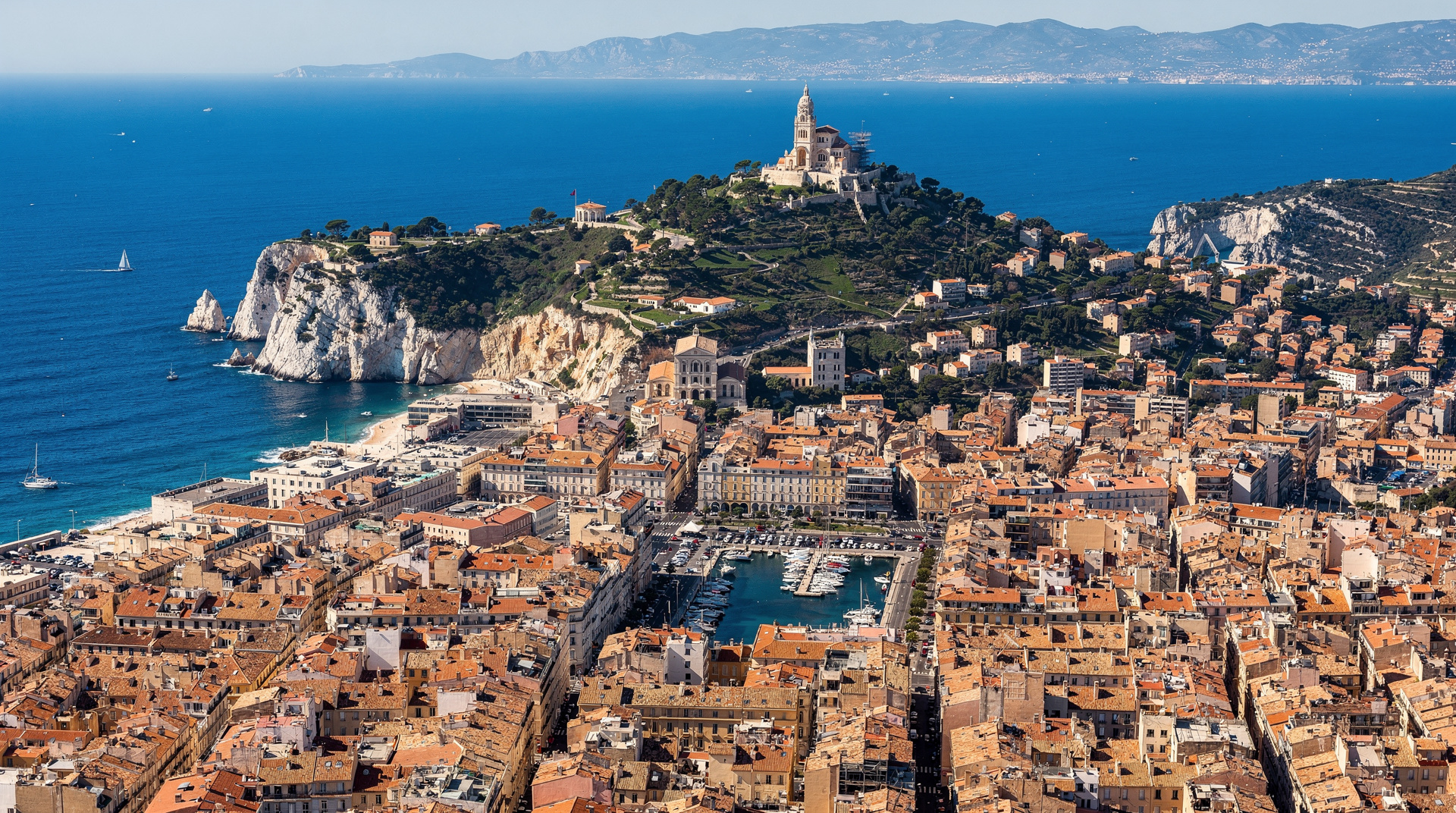
15:00 — Notre-Dame de la Garde. Allow at least 30 minutes at the basilica and its terrace. The panorama takes in the entire bay of Marseille, the Frioul archipelago, Château d’If island, and — on clear days — the white ridges of the Calanques. The basilica interior is free and open daily.
16:00 — Walk down through Endoume. The descent from Notre-Dame toward the Endoume and Malmousque neighbourhood is one of Marseille’s best free experiences — quiet residential streets with views, fishing boats in rocky inlets, the Corniche emerging below. This takes 30–40 minutes at a leisurely pace.
16:30 — Vallon des Auffes. A small fishing harbour tucked beneath the Corniche viaduct — 20 boats, a dozen houses, and an atmosphere that feels separate from the tourist city above. Sit for a coffee or simply observe.
17:30 — Return to the city. Bus or taxi back to the Vieux-Port or directly to Cours Julien.
Evening (19:00 onward)
Cours Julien for dinner. Take the metro two stops from Vieux-Port to Cours Julien (or walk 25 minutes uphill from the harbour). The cours itself — a lively square with terraces, murals, and bar culture — is worth arriving early (19:00) to explore before dinner. The surrounding streets have the highest concentration of interesting, owner-operated restaurants in Marseille.
Budget 25–45 EUR per person for a full dinner with wine. Natural wine bars, small Mediterranean-creative restaurants, and a couple of genuine pizza and pasta spots characterise the area. Book ahead for the best seats, especially in summer.
Day 2: The Calanques
Dedicate this day entirely to the Calanques. Do not try to combine it with significant city sightseeing — the Calanques are a full experience, not a half-day addition.
Option A: Calanques by boat (works in all seasons)
9:00 — Board from the Vieux-Port. Most boat tours depart between 9:00 and 10:00 from the ticket booths on the north quai (Quai des Belges end). The journey to the first calanque takes 30–45 minutes. Standard tours visit 2–4 calanques over 3–4.5 hours and include swimming stops.
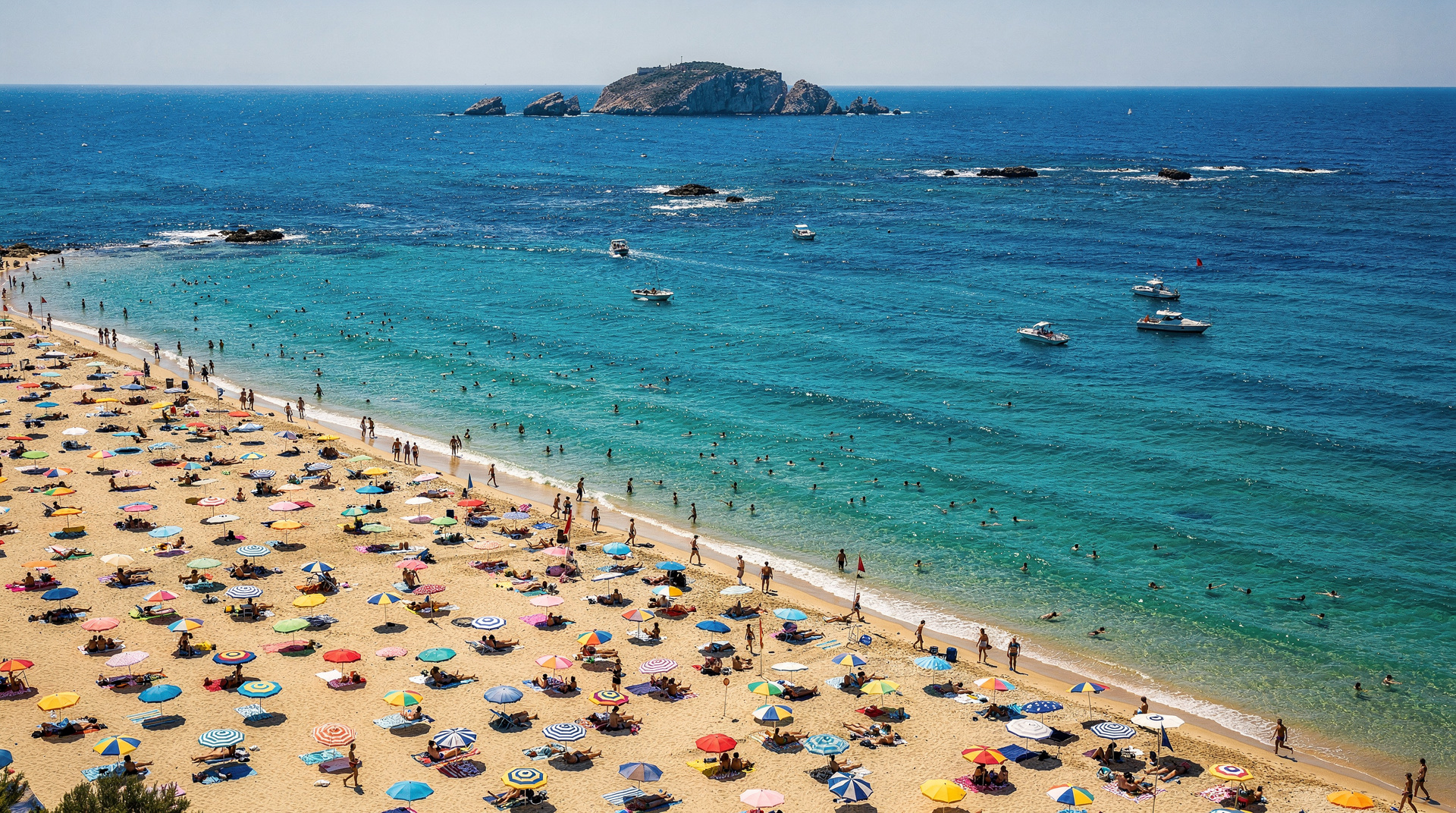
What the boat experience involves: The boat anchors offshore in each calanque; you swim from the boat into the cove. Bring a towel, swimwear, sun protection, water, and snacks. Most boats allow you to stay on deck or swim — no specific swimming ability beyond basic comfort in open water is required.
Return: By 13:30–14:00 for standard tours. Full-day tours with lunch run until 16:00–17:00.
Afternoon: Rest, late lunch, or a gentle walk along the Corniche toward the Prado beaches. After a morning on the water in the sun, most people find a slow afternoon more satisfying than more sightseeing.
Option B: Calanques by hiking trail (spring and autumn only; July–August trails closed)
6:30–7:00 — Early start essential. The hike from Luminy to Sugiton in summer-adjacent seasons requires an early departure to avoid peak heat. Take metro M2 to Rond-Point du Prado, then bus 21 to the Luminy terminus (about 35–40 minutes total from city centre).
8:00–8:30 — Arrive at Luminy. The trailhead is at the edge of the university campus. Follow the marked trail to Sugiton (GR98 or signposted; 45 minutes each way). The path descends steeply in the final section to the calanque.
9:00–10:00 — Sugiton. Swim, rest, take photographs. The inlet is narrow, the water is turquoise, and in spring/autumn the crowds are a fraction of summer boat-tour levels. Bring water, food, and sun protection — no facilities at the calanque.
Return: 45 minutes back to Luminy. Budget a full morning for the round trip including swimming time.
Afternoon (if energy allows): Return to Marseille and visit a second attraction — the Cité Radieuse Le Corbusier (tram T1 or T2 to Michelet-Corbusier), or simply rest for a long dinner in Cours Julien.
Day 3: Two options
Option A: Cassis day trip (recommended)
Cassis is 35 minutes by TER train from Gare Saint-Charles (trains leave roughly every 30–60 minutes). The village is 3 km from Cassis station — most visitors take a taxi or bus from the station, though the walk is manageable.
What a Cassis day includes:
Morning (10:00–13:00): Walk the port (colourful fishing boats, restaurants, the castle above), then either take a guided kayak tour from the port to En-Vau calanque (3–7 hours, book ahead), or walk the Three Calanques trail (Port-Miou, Port-Pin, En-Vau; 4–5 hours return, strenuous but spectacular).
Midday: Lunch in Cassis village — the port-side restaurants are tourist-oriented but decent; the streets behind the port have better options. AOC Cassis white wine is the local choice.
Afternoon (14:00–17:00): If time allows, visit one of the Cassis AOC domaines for a tasting (book ahead). Or take the short trail to Cap Canaille viewpoint (France’s tallest coastal cliff, ~400 m) above the village — 30 minutes each way, dramatic views.
Return: TER to Saint-Charles by 18:00–19:00; dinner in Marseille.
See our Cassis guide for detailed timing and options.
Option B: Marseille food and culture day
If Cassis seems too much after two full days, Day 3 in the city is a genuine alternative.
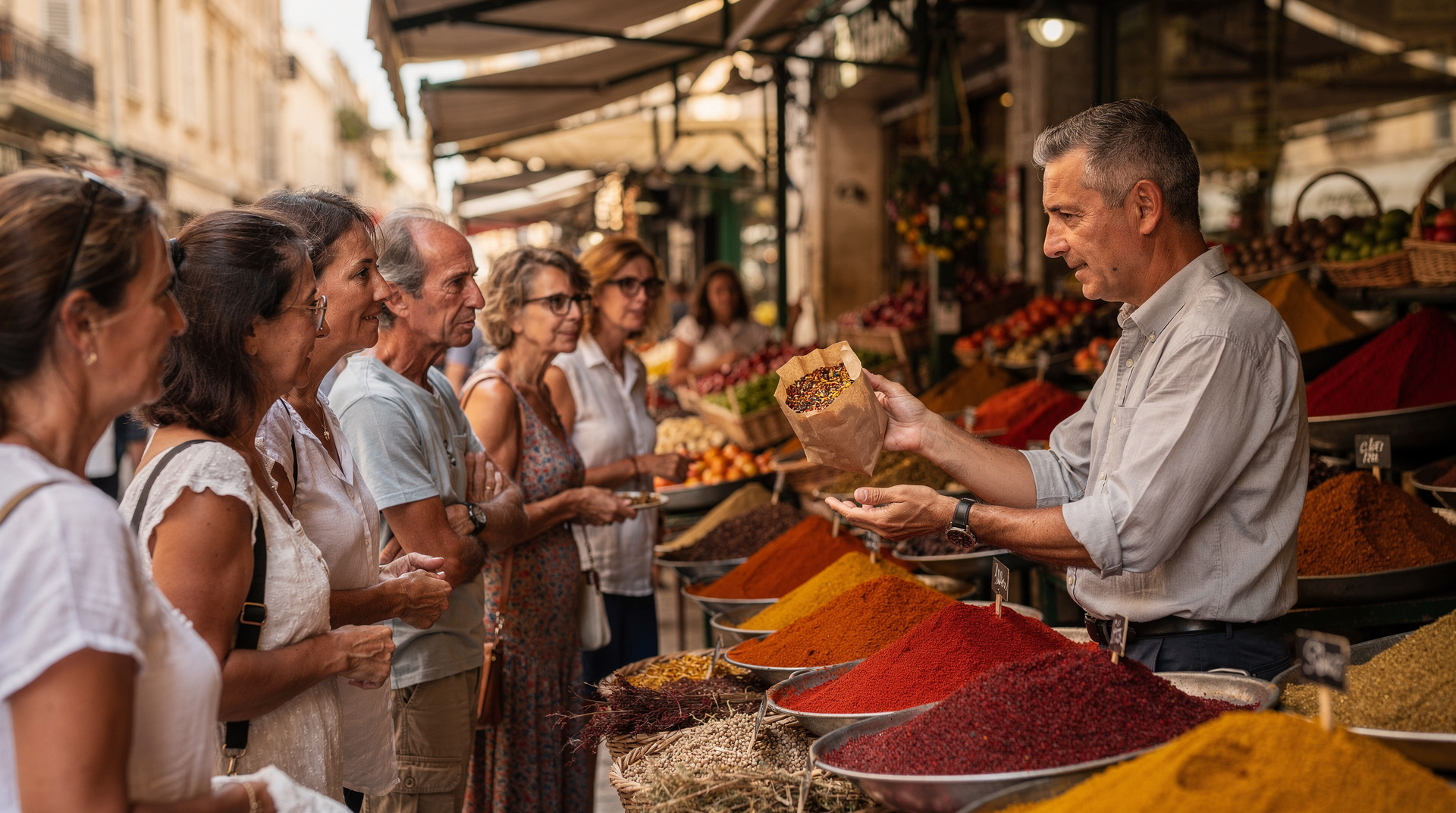
Morning (8:30–12:00): Noailles market walk — the area around Rue Longue-des-Capucins and the Marché des Capucins. This is the best food market experience in Marseille: North African spices, preserved lemons, fresh produce, street pastry counters. Follow with a coffee in the Cours Julien area.
Late morning (10:30): Book a food walking tour if you want guided context — the city’s food tours typically visit the Noailles market, the Vieux-Port fish vendors, and a selection of specialist producers.
Midday (12:30): Bouillabaisse lunch at one of the charte restaurants (book 2–3 days ahead minimum). The genuine charte version is a two-course ritual: broth with rouille and toasted bread first, then the fish. Budget 55–80 EUR per person. This is the definitive Marseille culinary experience. See our bouillabaisse guide for which restaurants to choose.
Afternoon (15:00–18:00): The Cité Radieuse — take tram T1 or T2 to Michelet-Corbusier and visit Le Corbusier’s 1952 Unité d’Habitation. The building is a functioning residential block and a UNESCO World Heritage Site; the hotel-gallery on the roof (MAMO) occasionally allows rooftop access. Allow 1–1.5 hours. Return by tram to the city centre.
Evening: Aperitif at Vallon des Auffes (30-minute walk south from the Vieux-Port along the Corniche, or bus from Castellane), then dinner at any of the Cours Julien restaurants you marked on Day 1.
What to book before you arrive
| Item | When to book | Notes |
|---|---|---|
| Calanques boat tour (Day 2) | 1–2 weeks ahead (summer); few days (other seasons) | Choose morning departure |
| Sugiton hiking reservation | Up to 3 days ahead (June 27–Aug 30) | Via calanques-parcnational.fr |
| Bouillabaisse lunch (Day 3) | 2–3 days ahead minimum | Essential for charte restaurants |
| MuCEM skip-the-line ticket | Day before or day of (summer) | Worth it in July–August |
| Cassis kayak tour | 2–5 days ahead | Book direct with operators |
Walking distances and transport cheat sheet
| Journey | Method | Time |
|---|---|---|
| Vieux-Port to MuCEM | Walk | 15–20 min |
| MuCEM to Le Panier | Walk (uphill) | 10 min |
| Vieux-Port to Notre-Dame de la Garde | Walk (steep) | 40 min |
| Vieux-Port to Cours Julien | Walk (uphill) | 25 min |
| Vieux-Port to Vallon des Auffes | Walk (Corniche) | 25 min |
| City centre to Luminy (Sugiton hike) | Metro + Bus 21 | 40 min |
| Gare Saint-Charles to Cassis | TER train | 35 min |
| Gare Saint-Charles to Aix | TER train | 40 min |
For more duration options — from a 2-day tight visit to a full week’s Provence-based trip — see our how many days in Marseille guide.
Seasonal adjustments to the 3-day plan
The core 3-day structure above works in all seasons, but requires specific adjustments depending on when you visit.
Spring (April–June)
This is the optimal 3-day window. No hiking restrictions (trails open, fire risk minimal), sea warming to swimmable temperatures by late May, accommodation prices below summer peak, and fewer crowds at the Vieux-Port, MuCEM, and Le Panier.
Day 2 adjustment (spring): The hiking option (Option B above) is strongly recommended over the boat tour in April–May — not because the boat is worse, but because the combination of open trails, comfortable temperatures, and no Sugiton reservation pressure makes hiking significantly easier. The Sugiton reservation system starts in late June; in April and May you can simply arrive at the Luminy trailhead and go.
Evening temperature: Spring evenings in Marseille are cool enough to need a layer — pack a light jacket for Cours Julien dinners in April.
Summer (July–August)
Day 2 (summer): The boat tour is effectively mandatory — trails are closed. Book in advance. The morning departure at 9:00 is the most important reservation of your trip.
Day 1 adjustment (summer): Move the Notre-Dame de la Garde visit to late afternoon (16:00) rather than mid-afternoon — the heat at 14:00 on the hilltop is intense. Take the tourist petit train up and walk down through Endoume in the cooler late-afternoon air.
Day 3 (summer): If doing the Cassis option, take the first train from Saint-Charles (check SNCF Connect; first services around 7:00) to arrive in Cassis before the summer heat peaks. The kayak tour in the morning, lunch in Cassis, return by TER in the mid-afternoon.
Evening culture: Summer evenings in Marseille are its greatest strength. The 20:30 dinner in Cours Julien, the sunset from the Vieux-Port, the aperitif at Vallon des Auffes in the long Mediterranean twilight — these are specifically summer pleasures. Do not fill your evenings with additional sightseeing. Use them to sit.
Autumn (mid-September–October)
Arguably the best 3-day window. Sea temperature remains warm enough for swimming (24°C in September) after the summer heat has passed, hiking trails reopen, crowds drop, and accommodation prices fall from their August peak.
Day 2 (autumn): Both hiking and boat tour options work. In late September, the Sugiton reservation system is still active on weekends through mid-September; by early October, it has ended. Check current-year dates on calanques-parcnational.fr.
Winter (November–March)
Day 2 (winter): Hiking is the default — boat tours may have reduced frequency. The winter Sugiton experience (empty trails, winter light, cold but swimmable water for the adventurous) is specific and genuinely excellent. Start by 8:30–9:00 to use the winter daylight efficiently; sunset is around 17:30 in January.
Day 3 (winter): The food-focused Day 3 option works exceptionally well in winter — the bouillabaisse charte restaurants are easier to book (24–48 hours ahead rather than weeks), and the city’s slow winter rhythm makes a long lunch feel genuinely Marseillais.
How to handle rain
Marseille’s Mediterranean climate means rain is usually brief rather than sustained, but it does happen. A wet morning rarely turns into a wet full day.
If Day 1 morning is rainy: Move the Vieux-Port fish market visit to the afternoon (it runs until noon) and start with MuCEM interior — air-conditioned, sheltered, and one of the most interesting museum experiences in southern France. Le Panier walking is fine in light rain (the lanes are atmospheric); hold Notre-Dame for a clearer afternoon or morning.
If Day 2 is rainy: Boat tours may be modified or cancelled in rough weather (check with operators on the morning). If the boat is off, pivot to a city culture day: Musée d’Histoire de Marseille (Roman-era excavations), Cosquer Cave, and the MuCEM galleries. Reschedule the Calanques to Day 3 if the forecast improves.
If Day 3 is rainy: The Cassis day trip is manageable in light rain — the train journey is part of the experience, and Cassis village and the port area are interesting in any weather. Long hikes in rain on slippery limestone are not advisable; adapt to a winery visit or port exploration instead.
For accommodation advice that affects your 3-day base of operations, see our where to stay guide. For full cost planning around this itinerary, see our trip cost guide.
If you have more or less than 3 days
Three days is enough to see Marseille’s core plus one full excursion day, but it’s a brisk pace. With only 2 days, drop Day 3 entirely and treat Cassis or the food day as an optional add-on for a future trip — our Marseille for first-timers guide covers a tighter priority list. With 4+ days, add a second excursion (the Luberon villages or Les Baux and Saint-Rémy) rather than padding extra time into the city itself — Marseille’s core sights are genuinely coverable in a day and a half.
Frequently asked questions about Marseille 3-day itinerary
Is 3 days enough time in Marseille? Yes, for a first visit that includes the city centre and the Calanques — this plan is realistic if followed closely. It doesn’t leave room for a slow pace or spontaneous detours; if that matters more to you than coverage, budget 4-5 days instead.
What’s the biggest scheduling risk in this 3-day plan? The Calanques boat tour booking. Everything else in the plan (walking routes, museum entries, restaurant reservations) can be adjusted on the fly, but a sold-out Day 2 boat departure in summer can force a full reshuffle of the itinerary.
Top experiences
Bookable activities with verified prices and instant confirmation on GetYourGuide.