Calanques boat tour guide: types, routes, durations, and honest advice
Marseille: iconic Calanques boat tour with swimming
Duration: 3-4.5 hours
What is the best Calanques boat tour?
Depends on your priorities. For maximum calanques coverage, a 3–4h tour with swim stops. For quality over quantity, a small zodiac or sailing catamaran. For a full day, the 7h tour with lunch and wine. Most depart from the Vieux-Port. Book in advance in summer.
Why boats are the summer access method
From July through August, the hiking trails that give walking access to the Calanques are closed on most days due to fire risk. The calanques themselves are as beautiful as they are in spring — the water is at its warmest (24–26°C), the light is intense, and the cliff colours are at their most vivid. The boat is not a second-best alternative to hiking. It is the designed summer access method, and it delivers a fundamentally different experience from any walking approach.
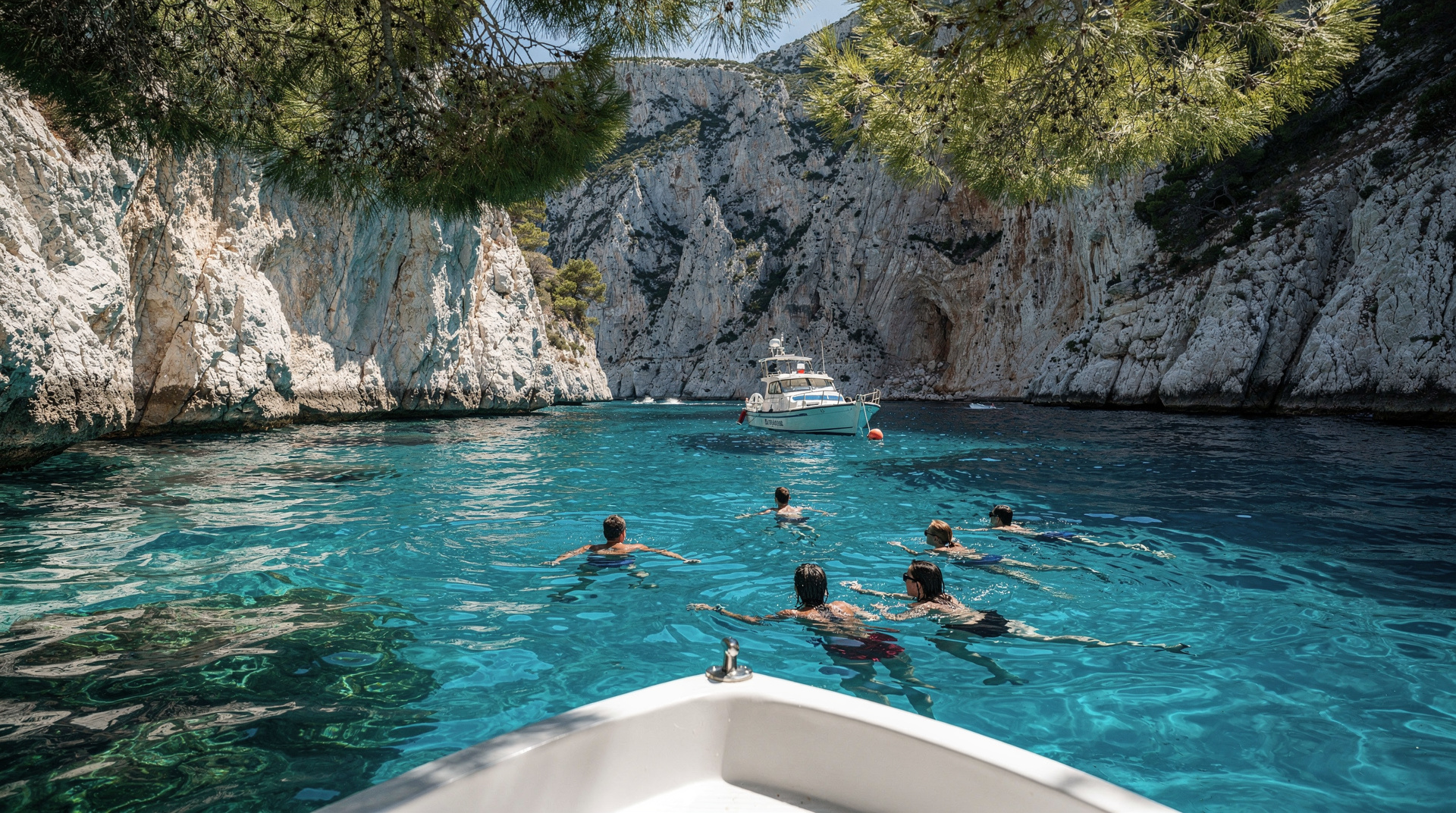
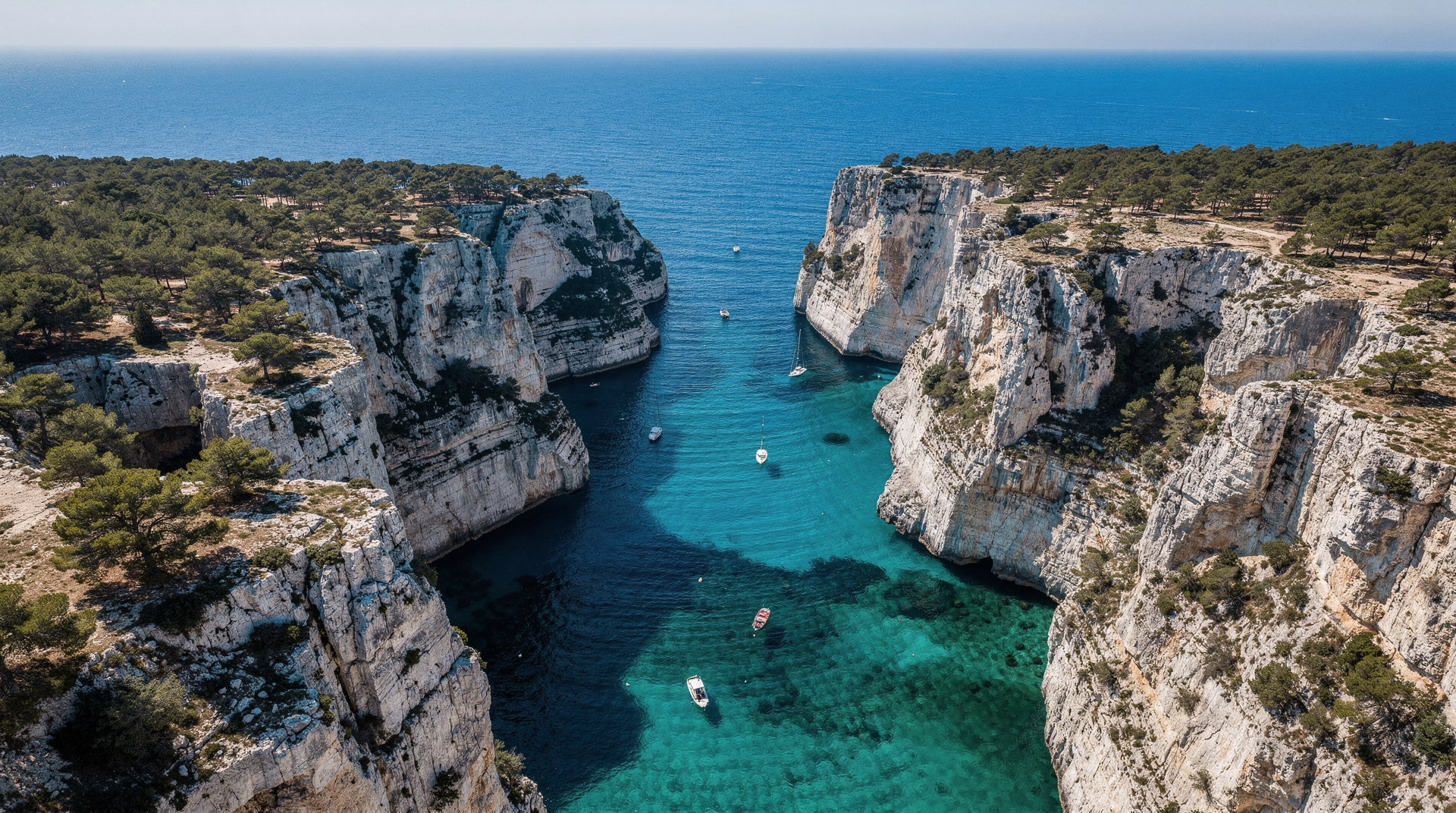
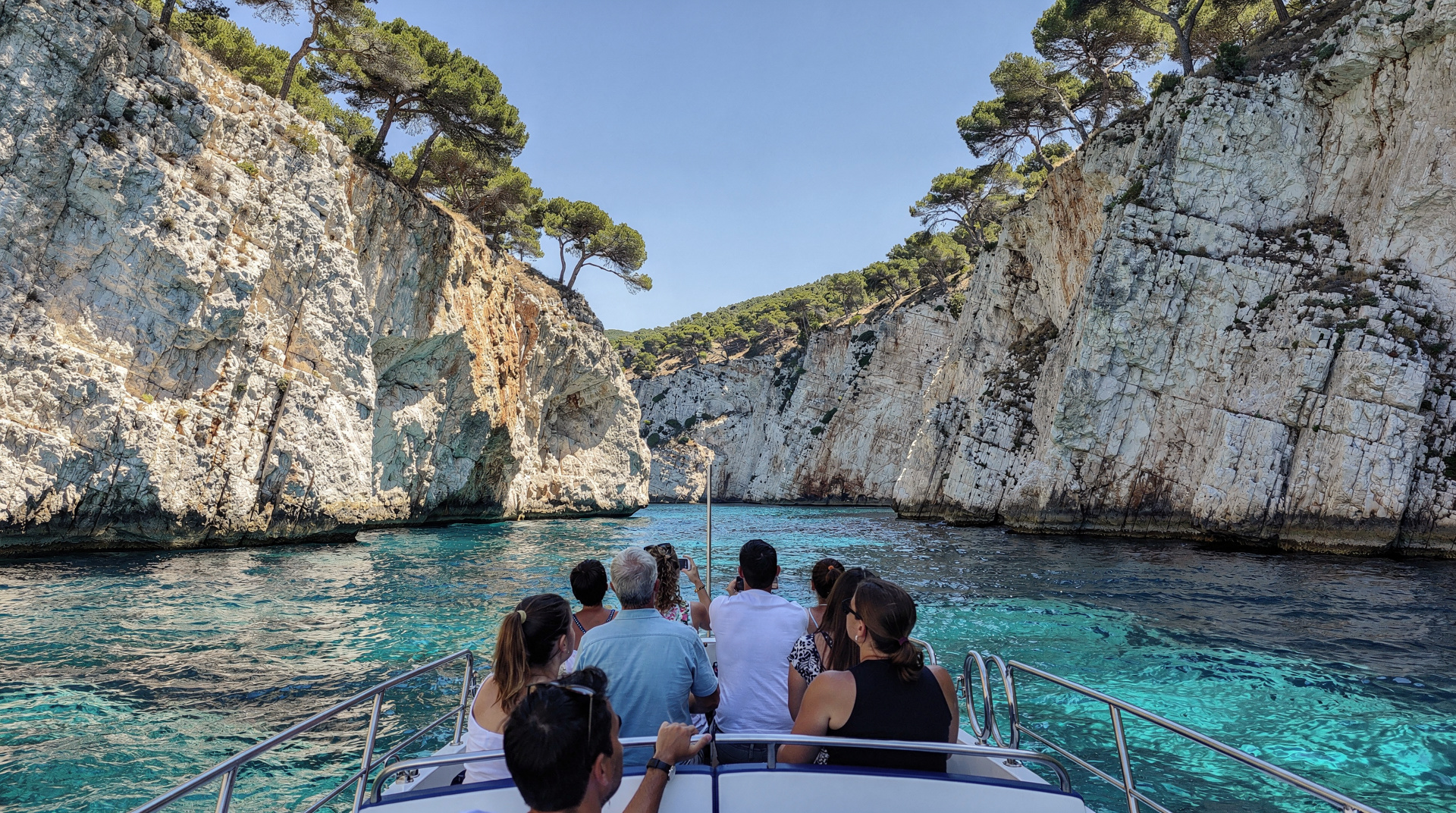
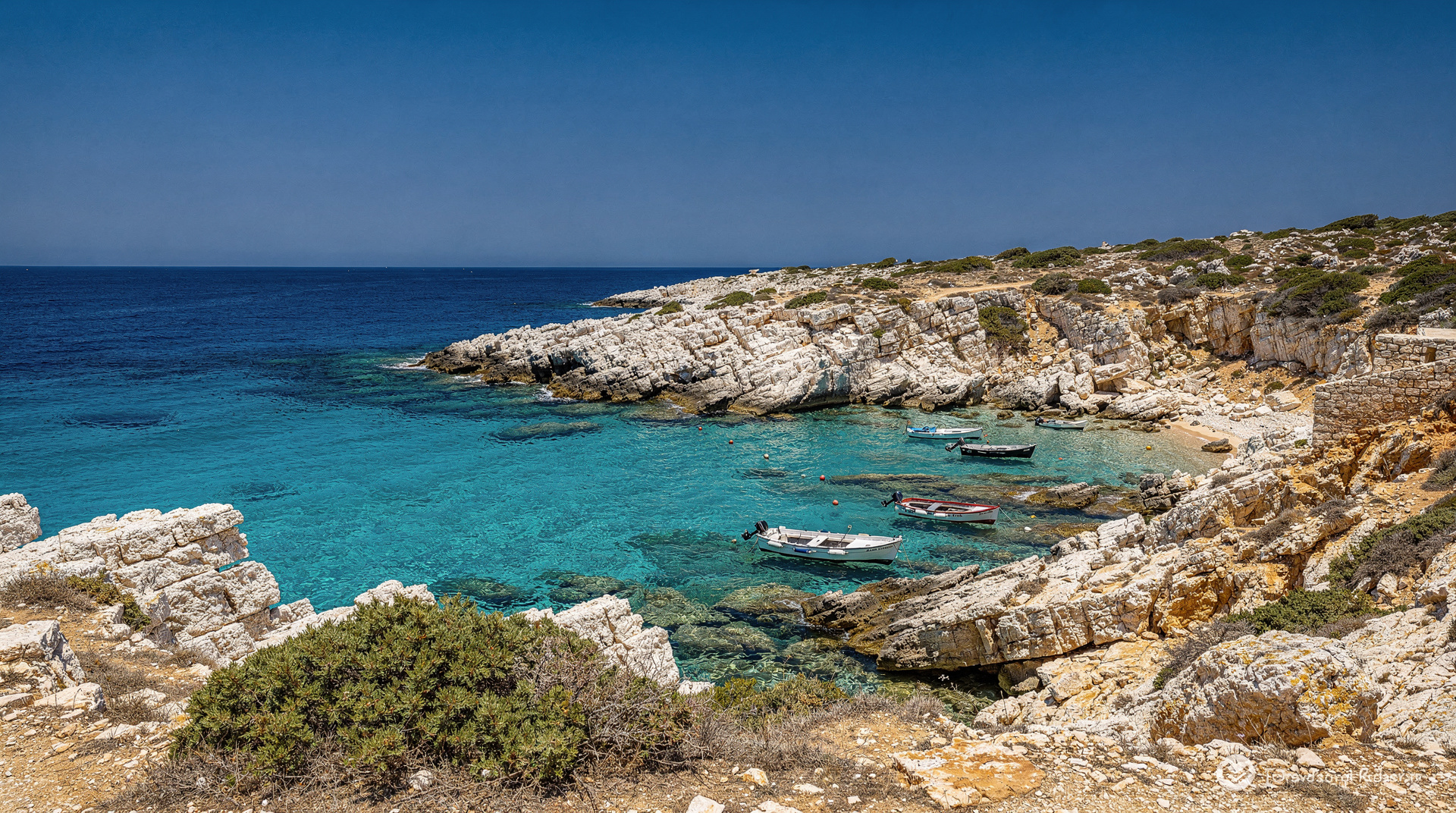
Approaching a calanque from the sea — watching the white limestone walls rise above the boat as you enter a narrow inlet, then jumping into turquoise water in an enclosed cove — is one of the better experiences available in the Mediterranean in summer. The boat gives you what no trail can: the sea-level perspective, the ability to visit multiple calanques in one session, and water access regardless of fire conditions on land.
This guide maps the boat tour market honestly — types of boat, what each delivers, departure points, durations, and the specific things to verify before booking.
| At a glance | |
|---|---|
| Where | Departs mainly from Marseille Vieux-Port; also Cassis, Les Goudes, La Ciotat |
| Cost | Around EUR 35–95 for a standard 2–4.5h tour; EUR 80–130 for a full day with lunch |
| Time needed | 2 hours (short) to 7 hours (full day) |
| Getting there | Book online in advance, especially June–September |
| Best time | Morning departures (around 9:00) for calmer water and fewer boats at anchor |
The boat types: what each gives you
Small zodiacs and motorboats (6–12 passengers)
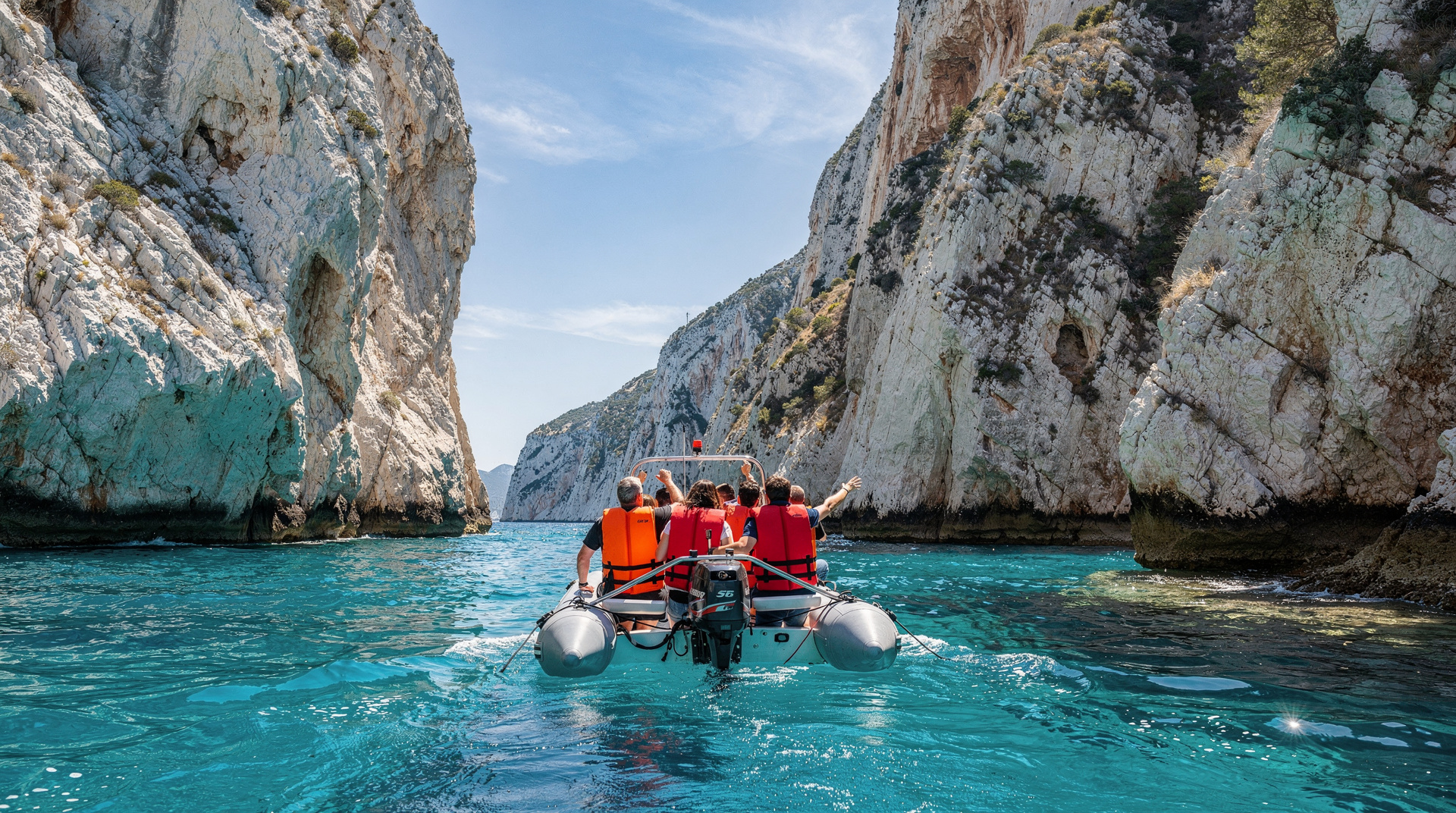
The experience: Fast, manoeuvrable, and close to the water. A zodiac can enter narrow calanques that larger vessels cannot, can anchor close to cliff walls, and allows a more intimate group experience. The approach to En-Vau by zodiac — entering the slot between the cliffs in a small boat — is the most visceral version of that particular landscape.
The limitation: No sun deck, no shade, no food. You sit on the inflatable pontoons for the entire trip. In a 3-hour session, this is fine; in a 7-hour session, it becomes uncomfortable. Zodiacs are also rougher in any chop — sea sickness is more likely in a small fast boat than on a larger vessel.
Best for: Active visitors who want the most direct and unmediated access to the calanques. Those who find large-group boat tours impersonal.
Typical capacity: 6–12 passengers. Private zodiac charters available.
Large catamarans and sailing vessels (20–50+ passengers)
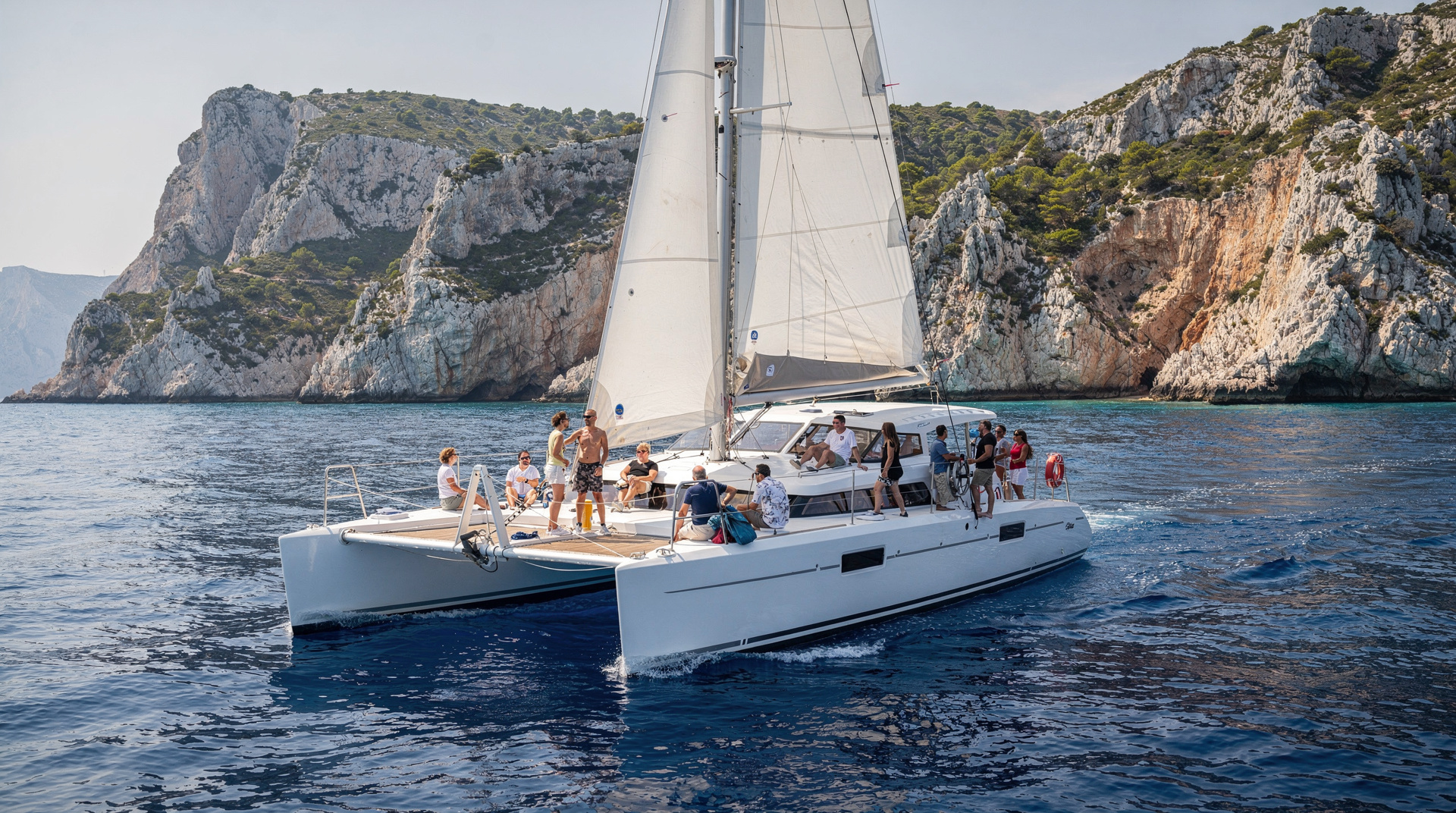
The experience: Stability, sun deck space, and often a bar or snack service. The sailing catamaran version adds the pleasure of being under sail when conditions allow. Swim stops are scheduled and organised — the boat anchors and a swim ladder goes down. You swim in the calanque cove with the boat as your base.
The limitation: Cannot enter the narrowest calanques (En-Vau by catamaran, for example, is typically viewed from outside the inlet rather than inside). The group experience is less intimate. On peak summer days, multiple large boats anchor simultaneously in accessible calanques.
Best for: Families, larger groups, those who prioritise stability and comfort, those with mild sea-sickness concerns.
Typical capacity: 20–50 passengers on commercial tours. Private catamaran charters available.
Electric eco-boats
The experience: Silent, smooth, and genuinely different from motorised alternatives. The absence of engine noise inside a calanque — hearing only the water and birds — changes the atmosphere substantially. Electric boats are slower (capped around 12 knots) which means they cover fewer calanques in the same time.
The limitation: Range limits. Most electric eco-boats cover the three or four closest Marseille-side calanques (Sormiou, Morgiou, Sugiton range). They cannot reasonably reach the Cassis-side calanques (En-Vau, Port-Pin) from Marseille and return on a single charge. Duration is typically 2–3 hours.
Best for: Those prioritising the sensory quality of the experience over quantity of calanques covered. Good for wildlife — the silence allows sea birds and marine life to be observed without disturbing them.
Sailing yachts (private charter)
The experience: The most leisurely and weather-dependent option. A sailing yacht tour can anchor in calanques for extended periods, eat lunch at anchor, swim from the side, and follow a loose itinerary. Highly dependent on wind — a good sailing day is an exceptional experience; in flat calm conditions the yacht motoring between calanques is similar to a motorboat but slower.
Best for: Those on private charter who want a full-day experience with maximum time in the water and no schedule pressure.
Departure points and what each reaches
Marseille Vieux-Port (main hub)
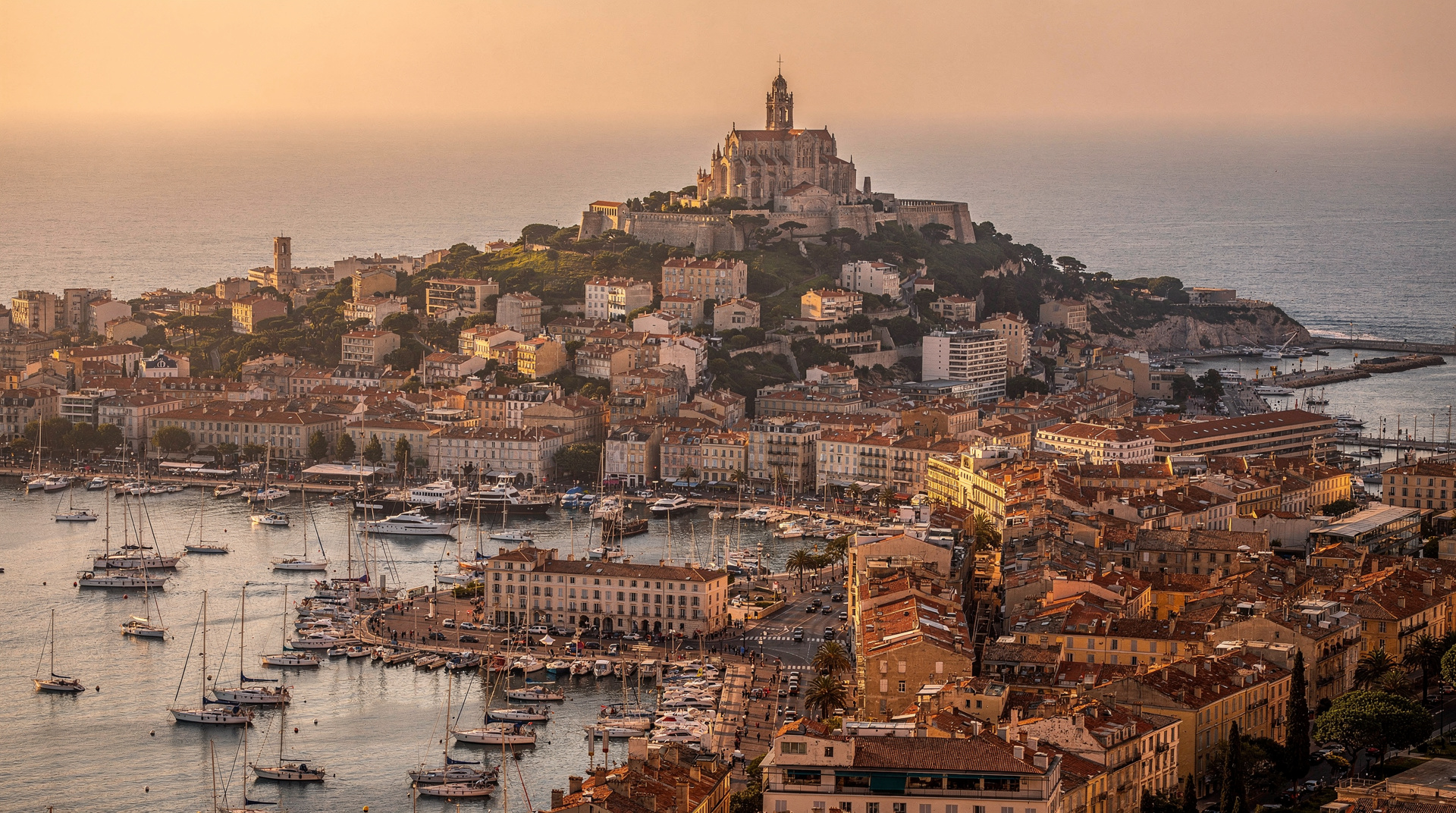
The majority of Calanques boat tours depart from the Vieux-Port — specifically from the Quai du Port (north quai) or the Quai des Belges (east end of the port). This is the most convenient starting point for visitors staying in central Marseille.
Calanques typically reached from the Vieux-Port:
- Sormiou and Morgiou (30–40 min travel each way from the port)
- Sugiton (40–50 min travel each way)
- The Île Maïre and Tiboulen de Maïre (close to the port, often included)
The Cassis-side calanques (En-Vau, Port-Pin) are 60–75 minutes from the Vieux-Port by motorboat — technically reachable on a full-day tour, but rarely included in standard 3–4h departures from Marseille. Operators whose 4h tours claim to reach En-Vau are either spending minimal time there or have fast motorboats.
Travel time from port to first calanque: 30–50 minutes depending on which calanque.
Cassis port
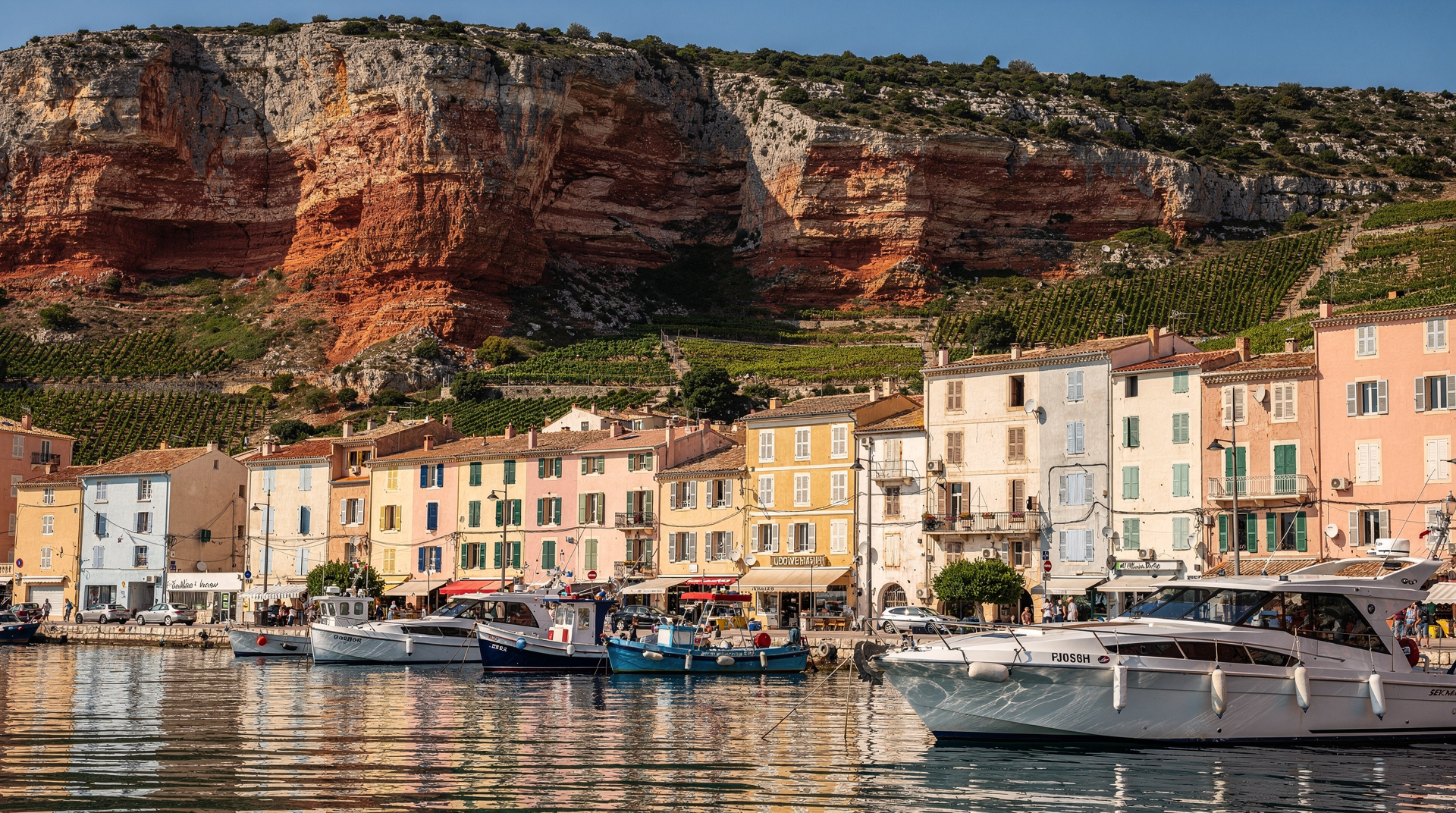
Boats departing from Cassis reach En-Vau, Port-Pin, and Port-Miou within 20–30 minutes. This is the key structural advantage of Cassis departures — you spend more time in the most dramatic calanques and less time transiting. See the Cassis vs Marseille boat guide for a full comparison.
Les Goudes (southern Marseille)
The coastal settlement of Les Goudes, at the southern tip of Marseille, is closer to the Calanques than the Vieux-Port by approximately 20 minutes. Some operators depart or stage from Les Goudes for this reason. Public transport to Les Goudes is limited (Bus 20 from Castellane), so this departure point is mostly used by private charters.
La Ciotat
La Ciotat operators offer their own Calanques boat tours, reaching the eastern section of the park (the Île Verte, calanques near Cap Canaille) that most Marseille and Cassis operators don’t cover. If you are basing from La Ciotat or combining it with Cassis, these tours access a less-visited section of the same park.
Duration guide: what each length gives you
2 hours
The shortest viable Calanques boat tour. Expect to visit 1–2 calanques, brief swim stops at each. Enough to experience the sea approach and swim in turquoise water. Not enough to explore the character of the park in depth or visit the more distant calanques. Best for: cruise ship passengers with 4–5 hours ashore, or those combining the boat tour with other Marseille activities.
Typical calanques reached: Sormiou or Morgiou from Marseille, or Port-Miou area from Cassis.
3–4.5 hours (the standard)
The most popular format and the best value-to-experience ratio for most visitors. Visits 2–4 calanques with swim stops at 2 of them. Enough time in the water to genuinely experience the swimming. Returns to port with energy for the rest of the day.
Typical calanques reached from Marseille: Sormiou, Morgiou, Sugiton — possibly the Île Maïre. Typical calanques reached from Cassis: Port-Miou, Port-Pin, En-Vau entrance.
Price range: Approximately EUR 50–95 per person depending on operator and vessel type.
6–7 hours (full day with lunch or wine)
The complete Calanques boat experience. More time at anchor in each cove, lunch aboard or at a calanque anchorage, and wine tasting. Covers the maximum number of calanques possible in a single day and allows genuine time in the water. Often includes Sugiton, Morgiou, Sormiou, and the more distant Île Maïre.
Price range: Approximately EUR 80–130 per person including lunch and wine.
Best for: Those who want the Calanques as their primary day activity, wine enthusiasts, those who want an unhurried experience.
Boat vs the alternatives at a glance
| Option | Duration | Cost | Fitness needed | Reaches En-Vau/Port-Pin |
|---|---|---|---|---|
| Zodiac from Marseille | 2–4h | Around EUR 40–70 | None | Rarely (too far) |
| Catamaran from Marseille | 3–7h | Around EUR 50–130 | None | Rarely |
| Boat from Cassis | 2–3h | Around EUR 30–50 | None | Yes, easily |
| Guided kayak | 3–7h | Around EUR 45–90 | Moderate–high | Yes |
| Hiking | 2–5h | Free | High | Yes, but steep |
For the fuller trade-off discussion between boat and trail, see our boat vs hike comparison.
Summer scheduling
Boat tours operate year-round from Marseille, but summer scheduling has specific characteristics:
Peak season (June–September): Most operators run multiple daily departures — typically 9:00–9:30 morning tours and sometimes an early afternoon departure. Evening sunset cruises (17:00–19:30) run through summer. Book at least a week in advance for summer weekend departures.
The morning advantage: The 9:00 departure arrives at the calanques before the second wave of boats. By 11:30, the most popular calanques have 10–20 boats anchored simultaneously. The morning tour gets the quieter early-morning window at anchor.
Fire risk and boat tours: When the prefecture declares a red-level fire risk, terrestrial landing at the calanques may be restricted — but the boat tours themselves usually continue, operating as floating viewing tours rather than swim stops. Check with your operator on the morning of departure if conditions are red.
What to bring on a Calanques boat tour
Essential:
- Swimwear (change on the boat)
- Towel
- Sunscreen (reef-safe formulations are better for the marine reserve ecology)
- Hat and sunglasses — you are on the water for 3–7 hours with reflected UV from the sea
- Water (most tours provide some water, but the exposed deck in summer heat requires more)
- Sea-sickness medication if you have any history of motion sickness — some of the passage between calanques can be choppy in mistral conditions
Recommended:
- Fins and a mask — most operators provide snorkelling equipment, but having your own means you can start immediately at the swim stop rather than waiting
- Water shoes for rocky calanque entries — more relevant if you plan to get out on shore
- A dry bag for valuables (phone, wallet)
Not necessary:
- Hiking boots or trail footwear — you will not be on the trails
- Heavy lunch — the boat motion in summer heat makes eating a large meal before swimming uncomfortable
Frequently asked questions about Calanques boat tours
How far is it from the Vieux-Port to the closest calanques?
Approximately 30–40 minutes of travel time at a standard motorboat speed. The Île Maïre, the small rocky island just offshore from Les Goudes, is the closest accessible point — about 20 minutes. Sormiou and Morgiou are typically 35–45 minutes. Sugiton is 45–55 minutes.
Can I visit En-Vau on a boat tour from Marseille?
Technically yes on a full-day tour, but it is uncommon. En-Vau is 65–75 minutes from the Vieux-Port by motorboat, making it a 2+ hour round trip just in transit. Most Marseille operators keep their routes to the Marseille-side calanques. For En-Vau specifically, boat tours from Cassis (20–30 minutes away) are the standard approach.
Are boat tours cancelled in bad weather?
Yes — operators cancel or reschedule if sea conditions exceed safe limits. The mistral wind creates rapid deterioration in sea state; a tour may leave in calm conditions and return in 35 km/h wind. Reputable operators monitor conditions closely and provide advance notice of cancellations. Always check the refund policy before booking.
Is it worth paying more for a smaller group tour?
Generally yes. A zodiac or small sailing boat with 8–12 people can enter narrower calanques, anchor closer to cliff walls, and provide a more natural-feeling experience. The premium (typically EUR 20–40 more per person over a large-catamaran tour) buys meaningfully different access. For the large-catamaran tours, the volume of passengers can feel like a ferry rather than an exploration.
Can I bring children on a Calanques boat tour?
Yes — boat tours are among the most child-friendly Calanques activities. No hiking required, no sun exposure on foot, and the swim stop in the cove is excellent for children who can swim. Most operators accept children aged 3 and above. Check maximum age for swimming distance requirements — at some swim stops, children need to be confident swimmers as the water depth is immediate.
Do I need to book a Calanques boat tour in advance?
Outside peak season (October–April), some operators accept walk-up bookings the morning of departure, especially for the shorter 2-hour tours. From June through September, booking at least a few days ahead is strongly recommended, and a week or more ahead for weekend departures — popular time slots and smaller boats sell out first.
What is the difference between a Calanques boat tour and a Frioul ferry?
The regular ferry to the Frioul islands is public transport — it takes you to the islands and back on a fixed schedule with no commentary, swim stops, or route through the Calanques creeks. A Calanques boat tour is a dedicated excursion that enters the calanques themselves, includes swim stops, and typically comes with commentary. The two serve different purposes and can be combined if you have a full day.
The marine reserve: why the Calanques water is exceptional
Most visitors notice that the water at the Calanques is distinctly clearer than other Mediterranean coastal destinations they have visited. The reason is the national park marine reserve designation, which restricts fishing and protects the seabed in the core zone.
The result is a fish population that is not depleted — grouper, sea bass, bream, and mullet in numbers that are uncommon on the developed Mediterranean coast. The Posidonia seagrass meadows that form the base of the food chain here are protected and healthy. The absence of trawling has preserved the seabed structure. The limestone geology (which doesn’t release fine sediment) keeps the water column clear.
On a calm day, the underwater visibility in the Calanques is typically 10–15 metres — on an exceptional day in calm, clear conditions it can reach 20 metres. For comparison, the Côte d’Azur typically sees 5–8 metres visibility in developed areas. The practical effect: you can see the anchor from the boat surface, track fish at depth, and view the underwater cliff faces in detail. Snorkelling here is meaningfully better than at most Mediterranean alternatives.
The marine boundaries: The marine reserve has different zones with different protection levels. The core reserve (where the most restrictive protections apply) covers the area most visited by boat tours — the water between the cliff faces. Commercial fishing is prohibited within the full national park marine zone. Recreational fishing with line is subject to restrictions (check the park website for current rules).
Reading sea conditions before your departure
The Mediterranean weather pattern in summer produces predictable conditions that experienced boat operators read fluently, and that passengers can learn to interpret:
Mistral: The regional wind that blows from the northwest, accelerating through the Rhône valley and across the Provence interior before hitting the coast. Mistral conditions create rough, choppy seas in the Bay of Marseille — not dangerous for the ferry-scale vessels, but uncomfortable and sometimes prohibitive for smaller boats and zodiac tours. A mistral forecast means checking your operator’s cancellation policy.
Post-mistral: The 24–48 hours after a mistral ends often produce the clearest conditions of the entire season — washed atmosphere, high visibility, calm seas once the residual swell settles. The “beau temps d’après mistral” (beautiful post-mistral weather) is a recognisable Marseille phenomenon. If you have flexibility, a confirmed booking for the day after a mistral ends is often the best possible timing.
Thermal sea breeze: In summer, the temperature differential between land and sea drives a daily afternoon sea breeze — typically building from 14:00 onward and sometimes reaching 15–20 knots by late afternoon. Morning boat tours (09:00 departure) run in the calmest conditions. Afternoon departures face the developing sea breeze. Sunset cruises in July–August must manage this pattern — most operators time their departure to be in sheltered water when the breeze peaks.
The mistral forecast check: Check Météo-France (meteofrance.com) or Windfinder (windfinder.com, which shows wind-specific forecasts for the Marseille bay) the evening before a planned boat tour. A mistral warning (vent fort) means rough conditions. A standard day forecast with light winds means smooth water.
The national park rules that affect boat tours
The Calanques National Park imposes specific rules on boat operators that affect the experience:
Anchoring restrictions: To protect the Posidonia seagrass beds, anchoring is prohibited in many zones within the park. Boats use moorings (buoys installed by the park at designated positions) or anchor in rocky areas where seagrass is absent. This is why boats sometimes anchor further from the calanque beach than passengers might prefer.
Capacity limits: The park limits the number of boats that can be anchored simultaneously in certain calanques. This is why the morning timing advantage is real — operators arriving at popular calanques after the capacity limit is reached may need to move to a secondary anchorage or a different calanque.
Speed restrictions: Speed limits apply within the park boundary. Operators must reduce speed as they enter the park zone — the transition from open bay to park zone is visible when a tour boat slows from transit speed to walking pace as it approaches the coastline.
Landing restrictions: During red fire-risk alerts, landing from boats is prohibited at the terrestrial sections of the calanques. Boats can anchor and swim in the sea, but passengers cannot go ashore on the land. On days when terrestrial access is restricted, reputable operators inform passengers before departure.
Pairing the boat with the rest of your trip
A boat tour works best when it is one part of a wider plan rather than the only thing on the day. If you are still deciding between the sea and the trails, the which calanque to visit guide helps you match each inlet to the kind of day you want, and visiting the Calanques by season explains how access changes through the year.
If swimming is the main draw, the boat tours with swimming guide looks at which formats leave the most time in the water. Travellers who would rather paddle themselves can read about SUP in the Calanques, and those who want to go beneath the surface can look at snorkelling near Marseille.
Crowds are the other thing to plan around. The guide to avoiding crowds in the Calanques pairs well with the morning-departure advice above. If you are travelling with children, kid-friendly Calanques covers what suits younger swimmers, and the Marseille in one day itinerary shows how a shorter boat outing can fit around the rest of the city. For a longer stay, the Marseille and Calanques weekend builds a boat day into a broader plan.
For boat comparison guidance, see the best Calanques boat tours guide. For the Cassis-side boat experience, see Cassis vs Marseille comparison. For sunset cruises, see the sunset cruise guide. For the full Calanques access picture, see the Calanques National Park guide. For summer planning, see Marseille in summer.
Top experiences
Bookable activities with verified prices and instant confirmation on GetYourGuide.