Is Marseille safe? An honest guide for tourists
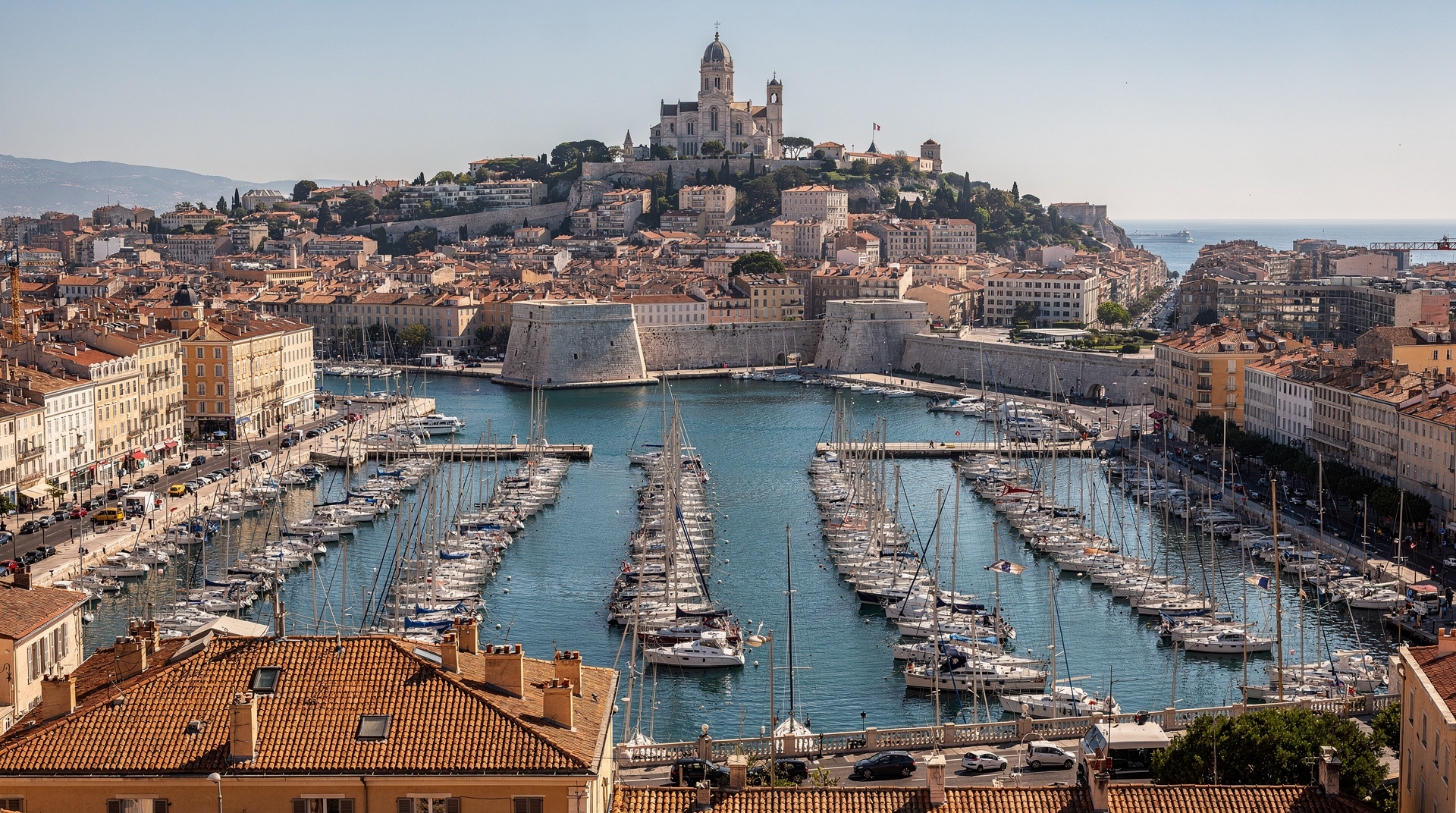
Marseille: Vieux-Port & Le Panier walking tour
Is Marseille safe for tourists?
Yes, for the vast majority of visitors. Violence in Marseille is largely gang-related and geographically concentrated in northern districts tourists never visit. The real tourist risk is pickpocketing in the Vieux-Port, at Saint-Charles station, and on the metro — not violence.
The question everyone asks, and why most answers miss the point
“Is Marseille safe?” is the wrong question, or at least a too-blunt one. The useful questions are: safe for whom, in which neighbourhood, at what time, and against what kind of risk?
At a glance
| Real tourist risk | Petty theft (pickpocketing, bag-snatching), not violence |
| Highest-risk spots | Vieux-Port fish market mornings, Saint-Charles station steps, metro M1/M2 doors, Noailles peak hours |
| Areas to skip entirely | Northern arrondissements (13th–16th) — no tourist interest, best avoided |
| After-dark caution zone | Belsunce–La Canebière corridor, Saint-Charles esplanade after around 23:00 |
| Emergency numbers | 112 (general), 15 (SAMU medical), 17 (police) |
| Practical fix | Zipped/crossbody bag, phone in an internal pocket, standard urban awareness in crowds |
Marseille has a real crime problem. It is not manufactured by tabloid headlines. The city consistently appears near the top of French urban crime statistics, and episodes of serious violence — particularly gang-related shootings in northern residential areas — are a genuine social reality. French media covers these incidents closely, which has created an international reputation that is simultaneously accurate and deeply misleading for the purposes of planning a tourist trip.
Because here is what the statistics and the headlines both obscure: Marseille’s serious violence is almost entirely internal, territorial, and confined to specific northern arrondissements that tourists have no reason to visit and, practically speaking, no way of accidentally wandering into. The 13th, 14th, 15th, and 16th arrondissements are residential working-class and poor suburbs far from the Vieux-Port. They do not contain tourist attractions, they are not on the way to anything, and most visitors spend their entire Marseille trip without ever going near them.
The tourist-facing reality is different: the main risk is pickpocketing, bag-snatching, and petty scams in specific crowded locations. This is worth understanding in detail — but it belongs in a different conversation from “is Marseille dangerous?”.
What the crime statistics actually mean
Numbeo’s crime index for Marseille (around 67 on their scale) positions it as one of the higher-crime cities in Western Europe. This is accurate as a headline figure, but the breakdown matters: crime in Marseille is heavily weighted toward property crime, drug-related offences, and the specific violence associated with organised crime in the drug trade — none of which is meaningfully directed at visitors.
French national police statistics consistently show that tourist-area incidents in Marseille are overwhelmingly theft (vol à la tire) rather than violence. The mugging rate in tourist zones is not materially worse than Lyon, Nice, or the Paris metro. What makes Marseille’s statistics look alarming at the city level is the concentration of serious crime in specific peripheral districts — crime that is real, socially significant, and essentially invisible to the standard tourist visit.
The practical upshot: your safety calculus in Marseille is similar to any large southern European port city. If you exercise standard urban caution — stay aware in crowds, keep valuables secured, avoid unlit streets late at night — you are overwhelmingly likely to have an uneventful trip.
Where tourists actually face risk
The Vieux-Port fish market (morning peak)
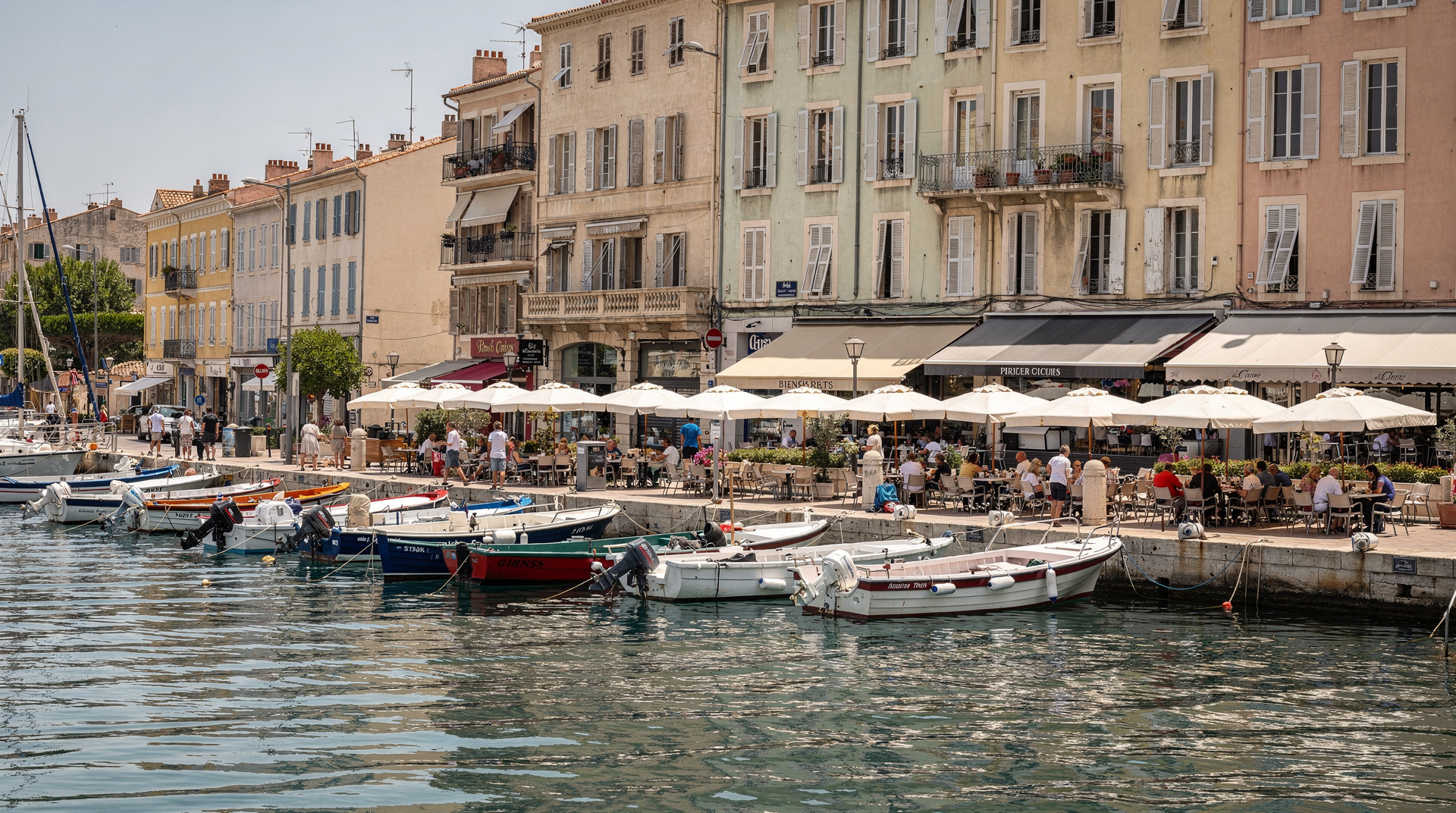
The fish market on the Quai des Belges operates every morning from around 08:00. It draws crowds — genuine early-rising locals buying fish alongside tourists photographing the scene. Where there are dense crowds in a tourist location, there are people working the crowd for wallets and phones.
The specific risk at the fish market: bags left open on a pushchair, phones held loosely while photographing, backpacks with external pockets. The distraction pattern is simple — someone engages you briefly while another person moves behind you. Counter: zip everything, use a crossbody or front-carried bag, keep your phone in an internal pocket while photographing.
Saint-Charles station and the approach steps
The grand staircase descending from Saint-Charles station onto Boulevard d’Athènes is one of Marseille’s most photographed pieces of architecture — and one of its more consistent theft spots. The steps concentrate arriving tourists carrying obvious luggage, often with a phone out for navigation. The approach streets immediately around the station (particularly toward the Belsunce neighbourhood to the south-west) are also an area of concentrated opportunistic crime.
Mitigation: at the station, be alert on the steps, keep luggage between your feet when stationary, and navigate using a downloaded offline map rather than holding your phone openly. The station itself (interior) is normal French rail infrastructure — fine.
Noailles market (peak hours)
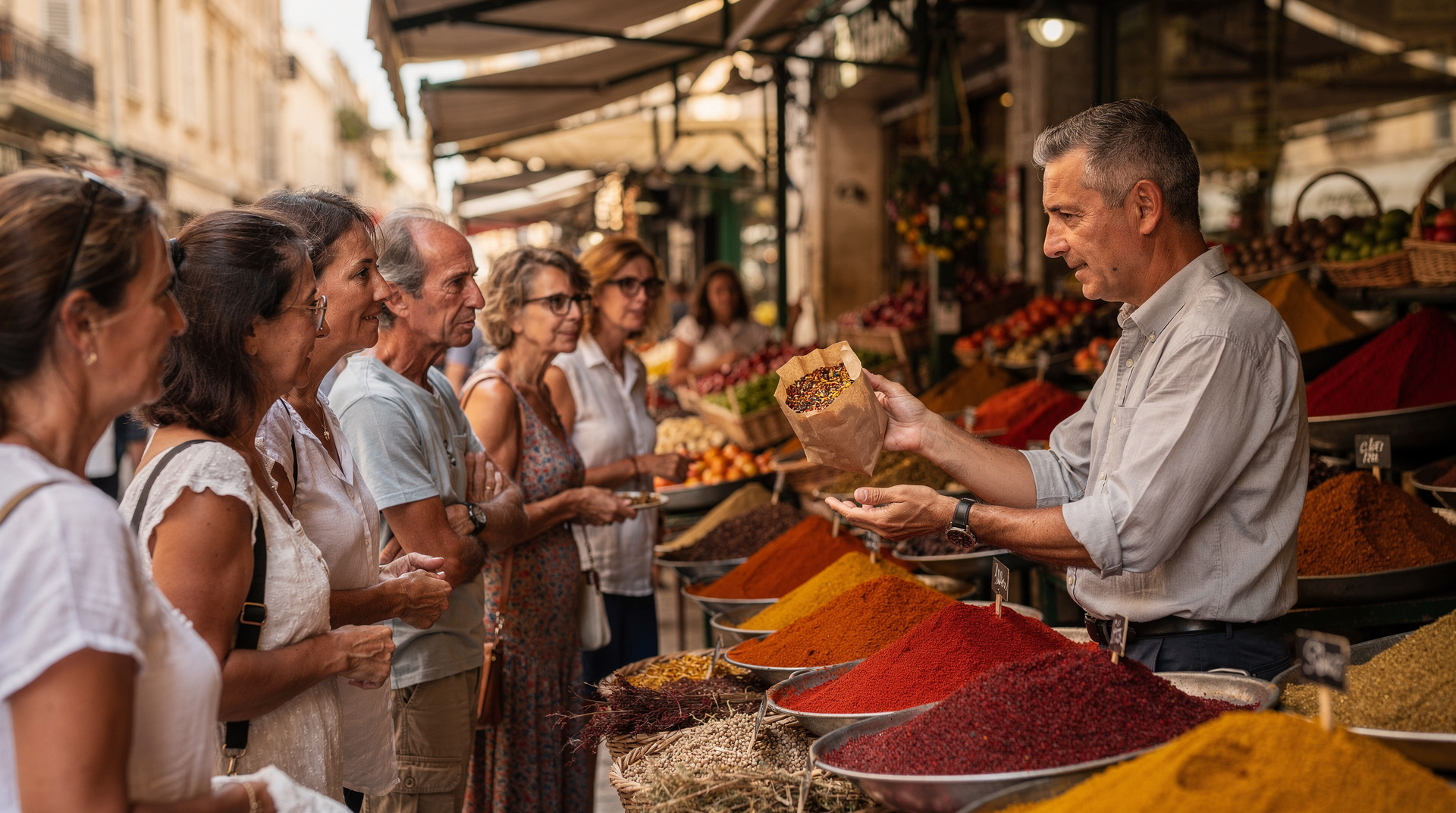
The Noailles market area — centred on Rue d’Aix, Rue Longue des Capucines, and the streets feeding into them — is Marseille’s most chaotic, densely populated market zone. It is also genuinely worth visiting (more on this in our markets guide). At peak morning hours on weekdays and Saturdays, the crowds are dense enough to make pickpocketing straightforward for experienced practitioners. The pattern again: dense crowd, distracted tourist, swift extraction.
Metro M1 and M2 — the door-closing moment
The specific risk on the Marseille metro is at the moment of doors closing at busy stations. A common pattern: one person boards beside you as doors open; when doors begin to close, an item (phone, wallet) is taken and the person exits as the doors close with you still on board. This is not abstract — it is a consistent reported pattern on M1 (Vieux-Port, Noailles, Saint-Charles) and M2 (Joliette, Belsunce–Charles Hamburger). Counter: stand back from doors while the train is loading; put valuables in your front pocket or a zipped internal pocket before entering the metro at all.
OM match days
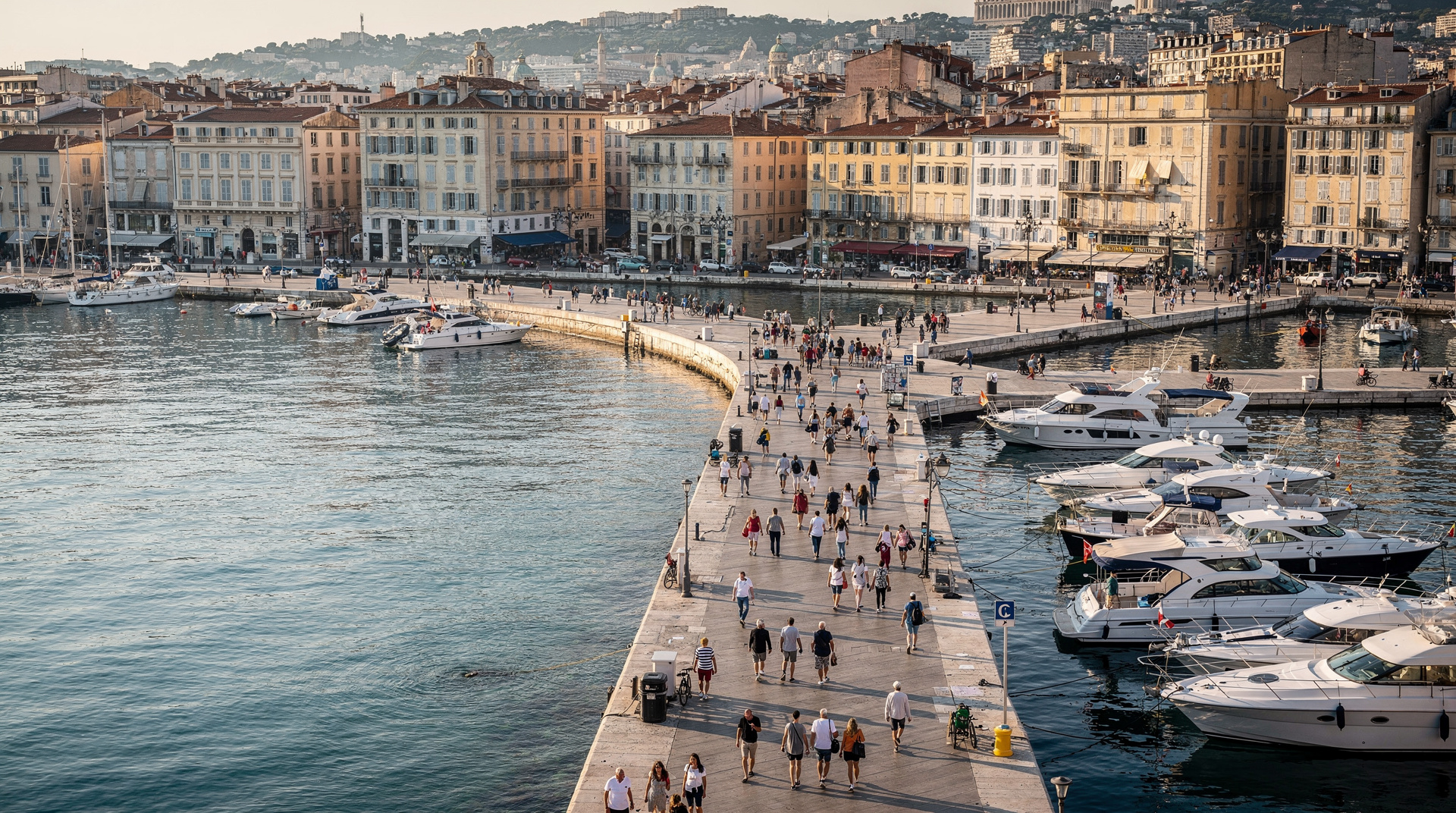
When Olympique de Marseille plays at home — particularly high-stakes matches — the Vieux-Port and the areas around the Stade Vélodrome become very crowded with fans in a state of high emotion. Pickpocketing in these crowds is opportunistic and predictable. If you are in the city on a match day and not attending the match, the Vieux-Port from about 18:00 to 23:00 is busier and rowdier than usual. Not dangerous, but an environment that requires more bag awareness.
Where tourists rarely face elevated risk
Le Panier, during the day, is one of Marseille’s safer feeling neighbourhoods — small streets, local residents, fewer dense-crowd scenarios. The risk is not zero (phones pulled from pockets happen anywhere) but the environment is not a pickpocket hotspot.
The Corniche Kennedy — the coastal road running south from the Vieux-Port toward the Calanques — is a standard walking and cycling zone with low reported tourist crime.
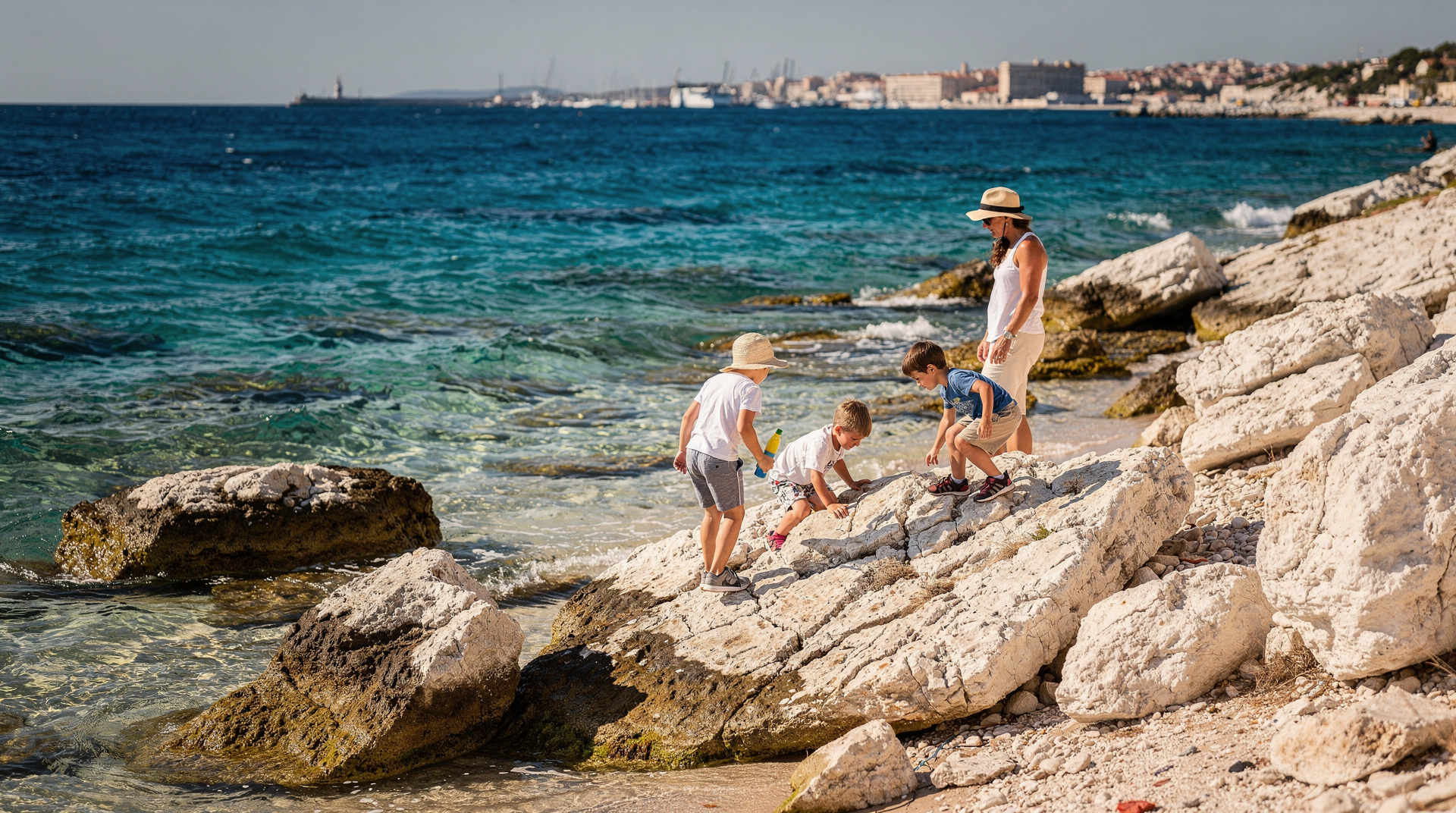
The beach areas (Prado, Catalans) in daylight are no more risky than any French beach. The standard beach precaution applies: do not leave valuables on your towel.
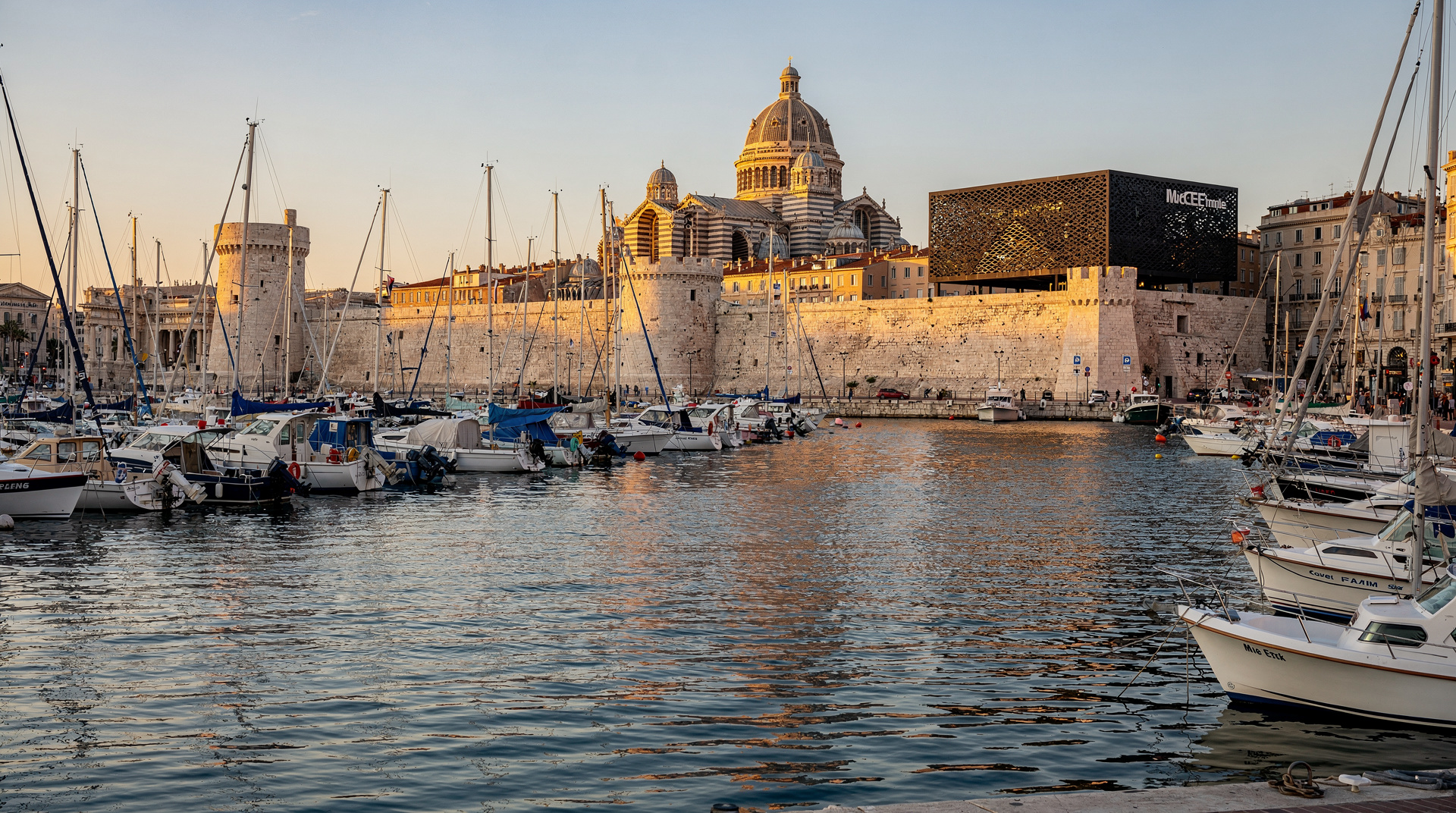
The touristy restaurant strips along the south quai of the Vieux-Port (Quai de Rive Neuve) are crowded but not particularly associated with theft.
What locals actually do — and what that tells you
Marseillais are not a nervous population. They walk at night. They use the metro. They sit on terraces. The behaviour gap between tourists and locals in the city centre is not “locals avoid it” — it is “locals know where they are going and move with purpose.”
The tourist behaviours that create opportunities for theft are mostly not about location but manner: phone in hand at eye level for prolonged periods, backpack on back with external pockets accessible, pausing to consult a paper map in the middle of a crowded street, sitting a bag down at a table and forgetting it.
Adopt local manners: keep your phone pocketed unless actively using it, hold your bag strap or keep it closed, keep valuables in front trouser or internal jacket pockets, and walk as if you know where you are going even if you do not.
Areas to avoid after dark
The Belsunce–La Canebière corridor after 22:00. The streets immediately north and west of La Canebière — roughly the area between Cours Belsunce and Rue Bernard du Bois — are best avoided late at night if you do not know the neighbourhood. Not necessarily dangerous in the sense of threat, but the conditions (poor lighting, less foot traffic, some persistent street-level drug trade) favour not lingering.
The Saint-Charles station esplanade after 23:00. The steps and immediate area become less comfortable late at night, particularly on weekends. Take a taxi or rideshare directly from the station rather than walking into the neighbourhood.
Northern arrondissements as a general principle. The 13th–16th arrondissements should not appear in a tourist itinerary. They are not enriched by tourist visits, and some zones within them carry genuine risk — not because of anything random, but because they are the geography of the specific gang-territory issues that drive Marseille’s headline crime statistics.
How Marseille compares to other French and Mediterranean cities
Tourists arriving from Lyon or Aix-en-Provence often notice Marseille feels rawer immediately; tourists arriving from Naples or Barcelona often say it feels calmer than expected. Both reactions are reasonable. Marseille’s pickpocket density in its hottest spots (the fish market, the station steps) is comparable to Barcelona’s Las Ramblas or Rome’s Termini station area — a genuine risk that thousands of visitors navigate daily without incident by keeping bags closed and staying alert in dense crowds. It is not comparable, in the everyday tourist sense, to cities where violent crime against visitors is a real planning factor. If you have travelled confidently in any large Mediterranean port city, Marseille asks nothing new of you.
Solo travellers, day-trippers based in Aix-en-Provence or Cassis, and families all report the same pattern in practice: the risk is concentrated in a handful of named locations at named times, and evaporates everywhere else, including on the Vieux-Port quays themselves outside the fish-market rush.
A realistic first-morning checklist
- Leave passports and spare cards at the accommodation; carry a photocopy or phone photo instead.
- Wear your bag crossbody, closed, and rotated to the front in the fish market and on the metro.
- Download an offline map before arriving at Saint-Charles station so you are not navigating with your phone raised in the crowd on the steps.
- Keep a mental note of the nearest well-lit main street if you plan to be out around Cours Julien late — most incident reports cluster around quieter side streets, not the main squares.
- If you are travelling with children, see our Marseille with kids guide for family-specific logistics beyond safety.
What to do if something does happen
Report theft at the nearest police station (commissariat). The most central is at 2 Rue Antoine Becker, 1st arrondissement. You will need a written report (main courante) for any insurance claim. The process is bureaucratic but manageable. SAMU (15) and emergency services (112) function normally; there is no elevated response time in tourist areas.
The verdict: a calibrated risk profile
Marseille is a safe tourist destination in the sense that matters: the probability of a visitor suffering violence is extremely low and not materially higher than comparable major French cities. The probability of experiencing a theft attempt — particularly in the Vieux-Port fish market area, on the metro, and around the station — is meaningfully higher than in, say, Aix-en-Provence or Cassis.
Manage this risk with simple security habits (anti-theft bag, front pockets, camera awareness), and Marseille is a rewarding, energetic, interesting city to spend time in. Do not manage it by spending your Marseille trip anxious — anxiety is both unnecessary and counterproductive, because nervous tourists looking lost are better targets than engaged ones walking with purpose.
For the specific geography of pickpocket hot-spots with more tactical detail, see our pickpocket zones guide. For the full honest picture of what to watch out for as a tourist, including non-crime traps like overpriced bouillabaisse and fake savon de Marseille, see our tourist traps guide.
The neighbourhood guide maps the character of each district so you can understand which areas align with your trip. For getting around safely and confidently, our transport guide covers the metro, tram, and bus network in detail.
Frequently asked questions about Is Marseille safe? An honest guide for tourists
Is Marseille dangerous for tourists?
Marseille has one of the higher crime indices among French cities, but visitor-facing crime is overwhelmingly theft rather than violence. Gang-related violence is real but geographically confined to northern arrondissements (13th–16th) that tourists have no reason to visit. Pickpocketing in tourist zones — Vieux-Port fish market, Saint-Charles station steps, Noailles market, metro M1/M2 — is the actual risk to manage.Which areas of Marseille should tourists avoid?
At night: the area around Rue Bernard du Bois (behind Belsunce), parts of the Noailles market streets after shops close, and the Saint-Charles station esplanade after 23:00. At all times: the northern arrondissements (13th, 14th, 15th, 16th) have no tourist interest and elevated risk. The 1st and 2nd arrondissements (Vieux-Port, MuCEM, Le Panier) are busy and policed during the day; go with basic urban awareness.Is it safe to walk alone in Marseille at night?
In the main tourist zones — along the Vieux-Port quais, the Corniche, Cours Julien, and Le Panier by night — walking alone is broadly fine. The risk increases after midnight in the area between La Canebière and the station. Apply standard urban behaviour: stay on lit streets, avoid unlit lanes, keep valuables secure.Is the metro safe in Marseille?
The metro is generally safe but is the most common pickpocket environment in the city. Tactics are predictable: distraction or press-in at the moment doors close. Keep bags zipped and in front of you on metro M1 (Vieux-Port to Saint-Charles) and M2. Peak risk: rush hour and late evening on weekends.Is Marseille safe for solo female travellers?
Yes, with similar caveats to any large French city. Solo women report more street harassment in Marseille than in Lyon or Paris's tourist zones — particularly around Noailles and La Canebière in the evening. The standard mitigation applies: confident pace, headphones as deterrent, well-lit routes. The Vieux-Port, Cours Julien, and Le Panier are comfortable solo female territory by day and in the early evening.Is Marseille safe for families?
Yes. Families in tourist zones face almost no elevated risk compared to other French cities of comparable size. The main family-specific concerns are opportunistic bag theft (pushchair side pockets are easy targets), and children under 10 in the chaotic Noailles market streets at peak hour. See our family guide for practical logistics.Do I need travel insurance for a trip to Marseille?
It is sensible, mainly for theft and medical cover rather than because Marseille is unusually risky. Standard European or worldwide travel insurance that covers theft of personal items, cancellation, and medical costs is enough. Keep a photo of your passport and cards separately in case a bag is stolen.Should first-time visitors be nervous about visiting Marseille?
No, but they should arrive informed rather than either fearful or complacent. Most first-time anxiety about Marseille comes from outdated or exaggerated reputation rather than the actual tourist experience. Basic bag awareness in crowded spots (fish market, station, metro) is the entire practical takeaway — beyond that, a first Marseille trip should feel like any other major French city.
Top experiences
Bookable activities with verified prices and instant confirmation on GetYourGuide.