Where to stay in Marseille: neighbourhood-by-neighbourhood guide
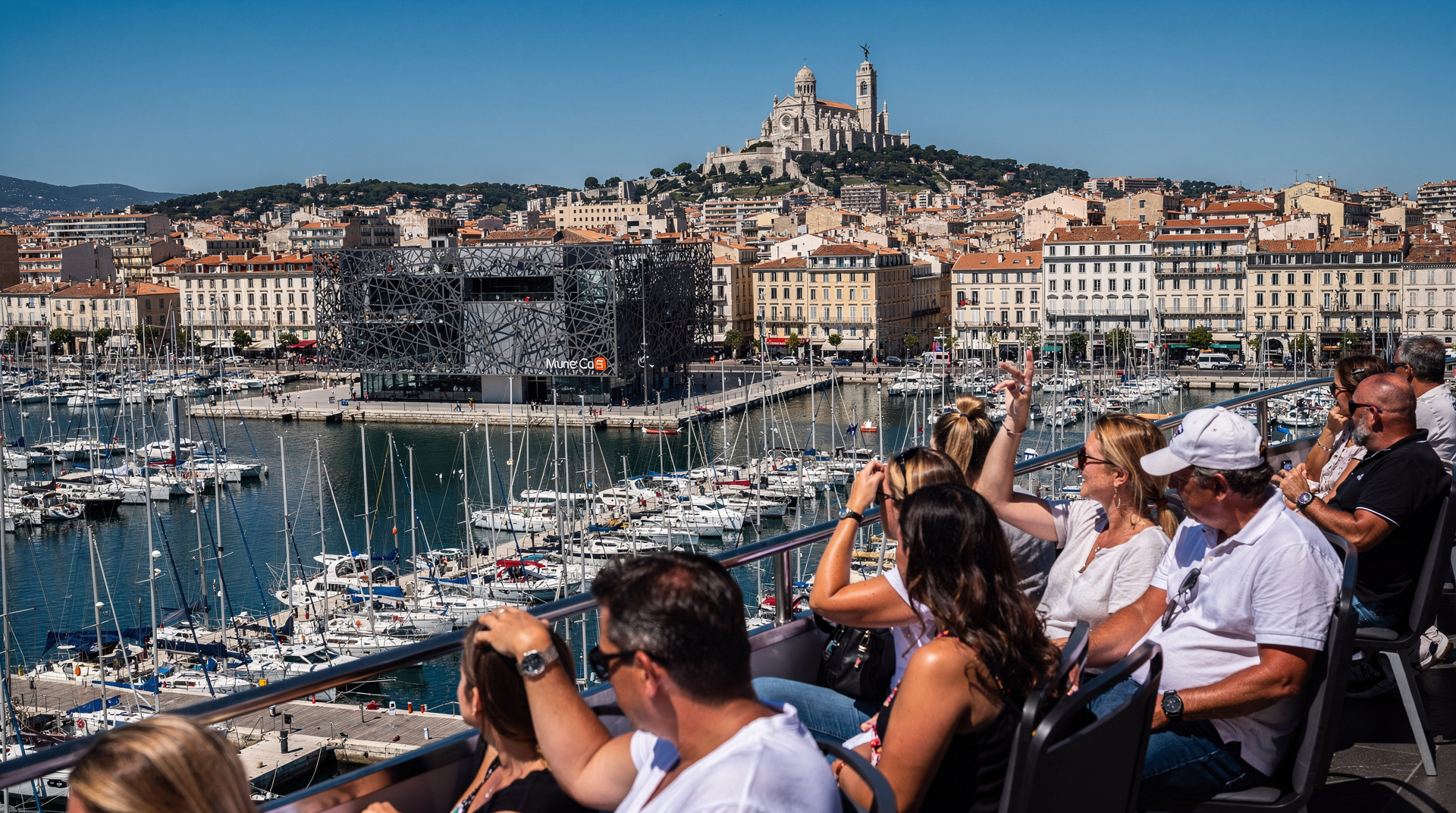
Marseille: city sightseeing hop-on hop-off bus tour
Where should I stay in Marseille?
First-timers: around the Vieux-Port for walkability. Couples wanting atmosphere: Le Panier or Cours Julien. Families: Prado/Corniche for beach access. Budget travellers: Cours Julien or La Joliette.
How Marseille’s geography shapes your stay
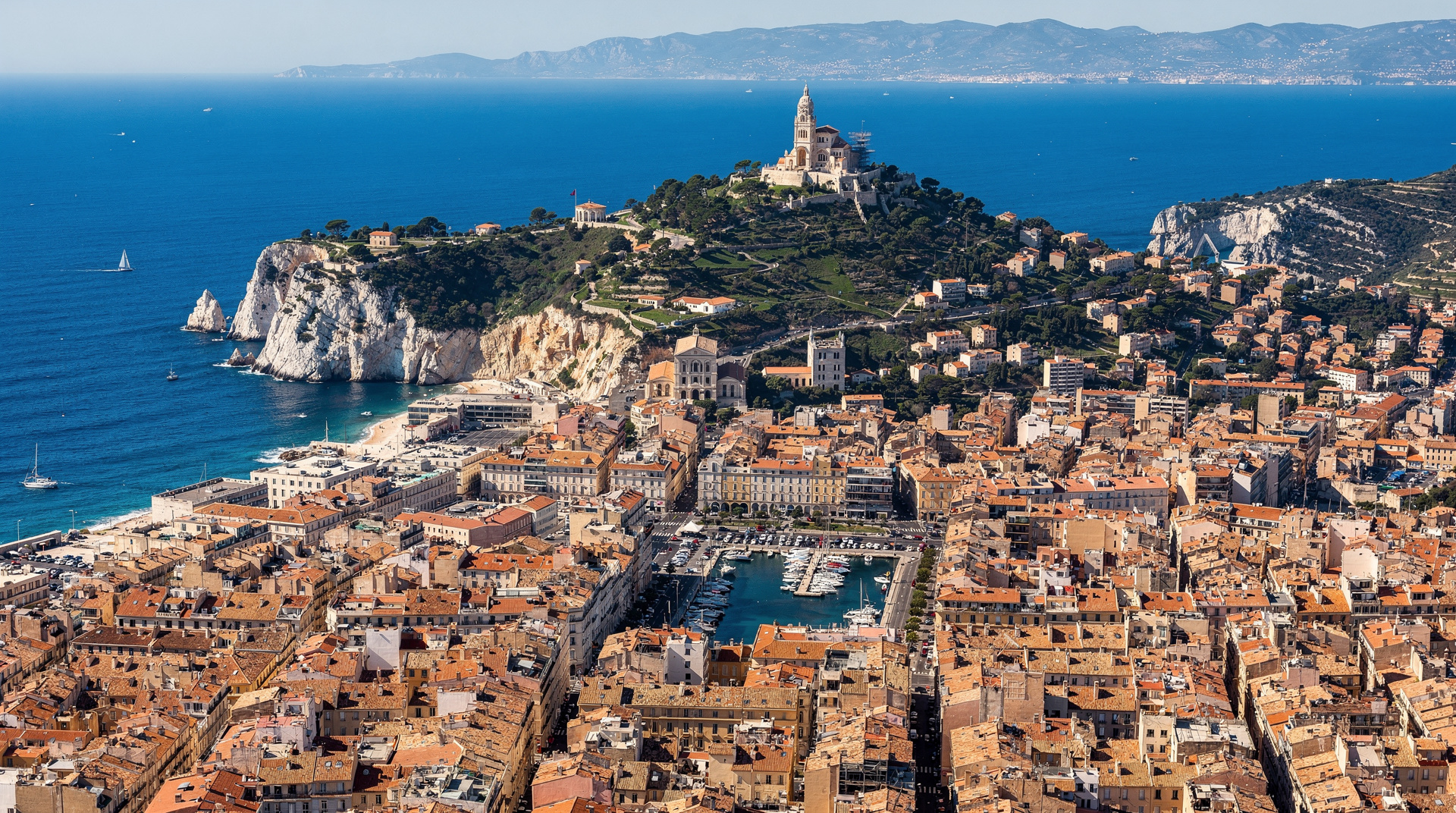
Marseille is not a compact city. The Vieux-Port is at the centre of the tourist map, but the city fans out around it in all directions — Le Panier north, MuCEM and La Joliette northwest, Notre-Dame de la Garde and the Corniche south, Cours Julien and Noailles east, Prado and the beaches further south. Choosing the wrong area means either a lot of walking or a lot of metro rides.
The city’s public transport — metro M1 and M2, trams, and buses — is functional but not comprehensive. The hop-on hop-off bus covers the tourist corridor efficiently. Most visitors end up in areas within walking distance of the Vieux-Port, where the density of restaurants and sights is highest.
This guide gives you an honest picture of each neighbourhood, including the trade-offs that other guides skip.
| At a glance | |
|---|---|
| Where | Choose between Vieux-Port, Le Panier, La Joliette, Cours Julien, or Prado/Corniche |
| Cost | Around EUR 70-350+ per night depending on area and season |
| Time needed | N/A — a planning decision, not a visit |
| Getting there | Metro M1/M2, tram T2/T3, and bus 83 connect most zones to the Vieux-Port |
| Best time to book | 2-3 months ahead for July-August; 1-2 weeks ahead in spring/autumn |
Vieux-Port area: most convenient, least characterful
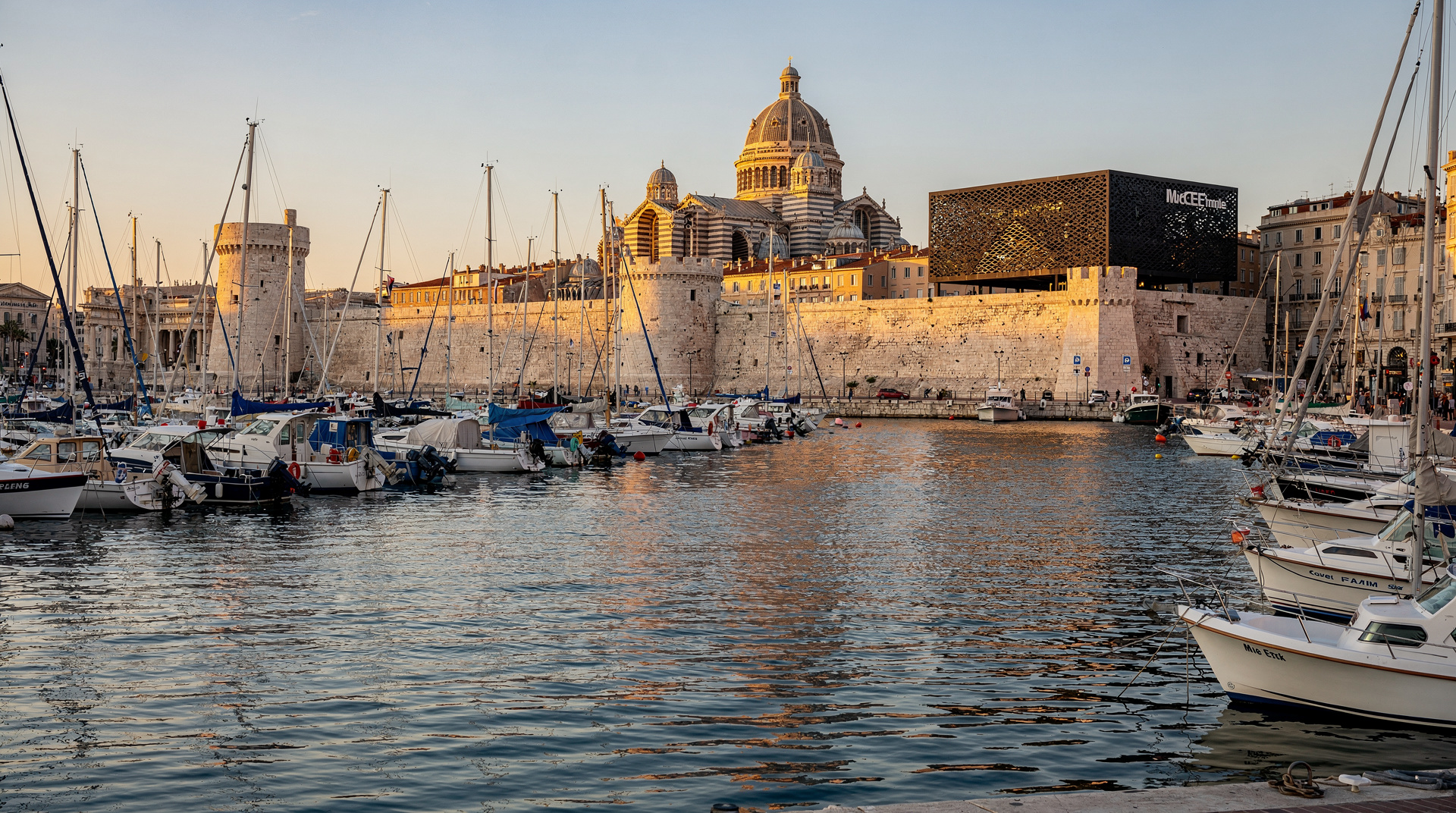
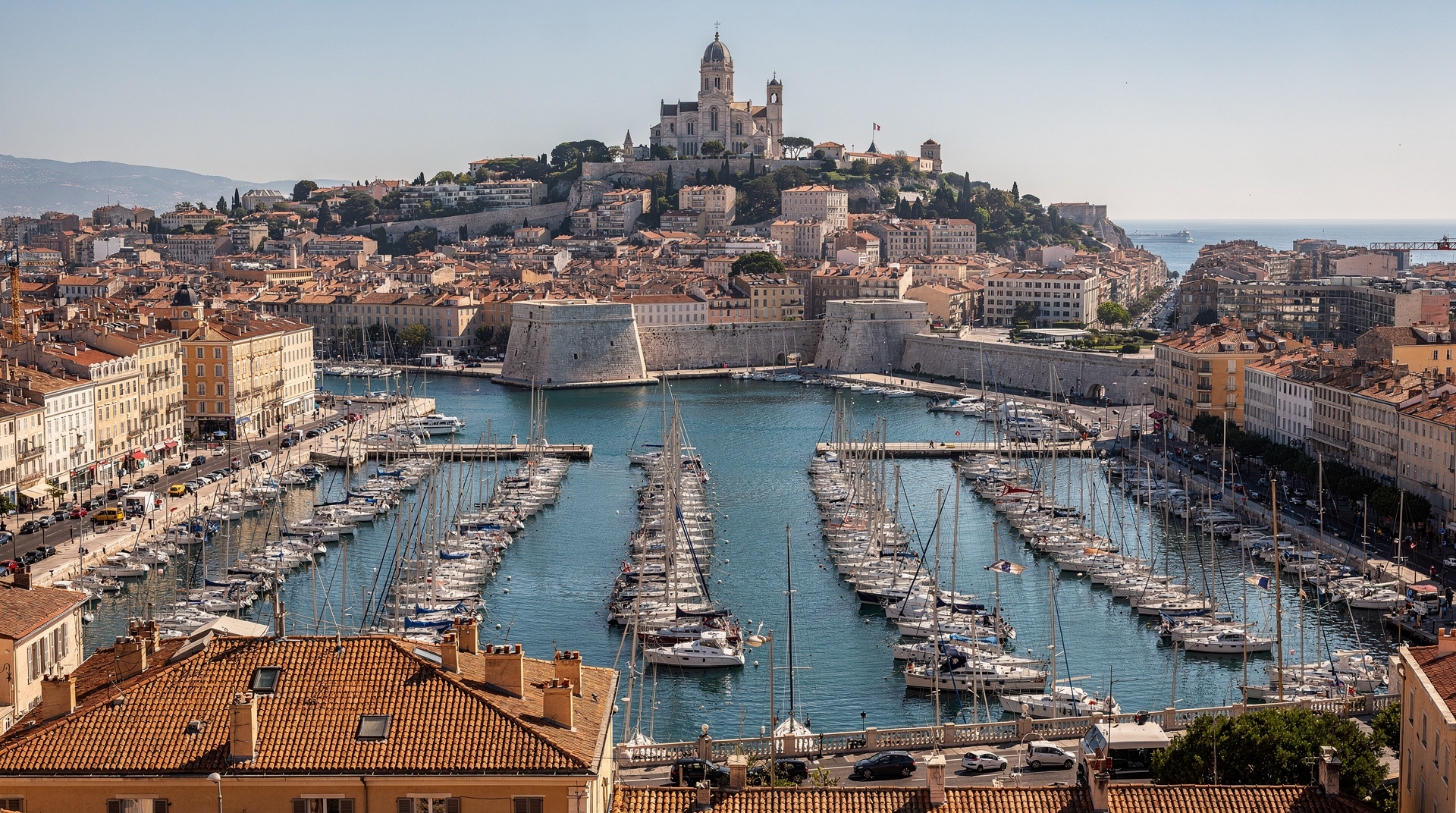
The case for it: You step out of your hotel and you are immediately useful. The fish market is at the end of the street. Le Panier is ten minutes uphill on foot. MuCEM is 15 minutes along the quai. The tourist petit train to Notre-Dame departs from the Quai des Belges, a five-minute walk from virtually any hotel in this zone. Every boat tour to the Calanques departs from the Vieux-Port itself. Transport connections from Gare Saint-Charles (15 minutes by foot or 2 metro stops) are seamless.
The honest trade-offs:
This is the most touristy part of Marseille, and it shows. The south quai (Quai de Rive Neuve) is lined with restaurants competing for tourist business — some are excellent, many are mediocre, and differentiating them requires research. The north quai (Quai du Port) is livelier but noisier. In summer, the Vieux-Port is very busy: street performers, tour operators, cruise groups doing a 90-minute city sprint, Segway tours. It is not an area that rewards sitting at a café and watching local life unfold, because the life on display is largely tourist life.
Noise is a factor. Hotels on the quai itself or on the streets immediately behind it can be noisy until midnight or later in summer. A rear-facing room or a hotel one or two streets back significantly improves the experience.
Price range: Genuinely varies. Budget hotels from around 70–90 EUR per night; solid mid-range (3-star equivalent) at 100–160 EUR; the Sofitel Vieux Port and similar luxury options run 250 EUR and up in peak season.
Best for: First-time visitors with 2–3 days, cruise passengers with a short window, anyone who does not want to think about transport logistics.
Le Panier: atmosphere with trade-offs
The case for it: Le Panier is the oldest neighbourhood in Marseille — a hillside tangle of lanes, pastel facades, street art, artisan workshops, and genuine residential life. Staying here means waking up in a neighbourhood that feels like Marseille rather than a hotel district. The Vieille Charité is around the corner; the Vieux-Port is 10 minutes downhill.
The honest trade-offs:
Le Panier is genuinely hilly — this matters if you have luggage, mobility constraints, or are travelling with a pushchair. Some hotels and rental apartments involve steep lane access that no taxi can reach. Delivery, grocery shops, and pharmacies are thin on the ground compared to the Vieux-Port area.
Nightlife is quiet here by Marseille standards. The neighbourhood genuinely winds down after dinner. Restaurants are fewer — Le Panier has some good options but the density does not match Cours Julien or the Vieux-Port zone.
Safety: Le Panier is fine during the day and early evening. The lanes become emptier after 22:00, which feels slightly different for solo travellers than in busier areas.
Price range: Fewer large hotels here; mostly boutique properties, guesthouses, and rental apartments. Expect 90–140 EUR for a decent double room. Apartments through rental platforms can be good value.
Best for: Couples wanting a more intimate neighbourhood feel; repeat visitors who know the city; slow travellers who do not mind fewer conveniences.
La Joliette and the MuCEM quarter: modern, functional, slightly sterile
La Joliette is the regenerated docklands district north of the Vieux-Port — the area centred on the MuCEM, Les Terrasses du Port shopping complex, and the Euroméditerranée urban renewal zone. It is walking distance from MuCEM (5 minutes) and the Vieux-Port (20 minutes or one tram stop).
The honest trade-offs:
La Joliette has excellent transport links — the tram runs through it, the ferry from the cruise terminal drops passengers here. What it lacks is any real neighbourhood character after business hours. The area around the port authority and the shopping complex is modern and clean, but the restaurants and bars are sparse and often aimed at lunch crowds. Walking back from the Vieux-Port to a hotel here at night is fine but uninspiring.
Best for: Business travellers who need cruise terminal access; visitors who prioritise the MuCEM; anyone who found a genuinely good rate on a hotel here and does not mind the slightly corporate atmosphere.
Cours Julien and Noailles: the local pick
Cours Julien is where Marseille’s creative and culinary scene concentrates — street murals, independent music venues, natural wine bars, the best restaurant-to-quality ratio in the city. The Noailles district immediately below it (sometimes called “the belly of Marseille”) has the city’s most vibrant North African and Maghrebi market culture: spice shops, pastry counters, cheap lunch counters serving food that is genuinely excellent.
The honest trade-offs:
Cours Julien is about 20–25 minutes on foot from the Vieux-Port (uphill on the return) or 2 metro stops from Vieux-Port station. For anyone doing multiple Vieux-Port departures (boat tours, morning fish market), the distance adds up. It is also noisier at night than Le Panier — this is where people actually go out in Marseille, and the bars on the square stay lively until late.
Noailles sits between Cours Julien and the Vieux-Port, around the Marché des Capucins. It is genuinely multicultural and genuinely lively, but the streets around the market warrant the same pickpocket awareness as the Vieux-Port and Gare Saint-Charles. A money belt or zipped bag is sensible rather than paranoid.
Price range: Lower than the Vieux-Port zone — you can find solid 3-star equivalents in the 75–110 EUR range, and some excellent apartment rentals near the cours.
Best for: Repeat visitors who want local life over tourist convenience; food-focused travellers; couples who plan to spend evenings exploring restaurants rather than doing structured sightseeing.
Prado and the Corniche: beach access, residential calm
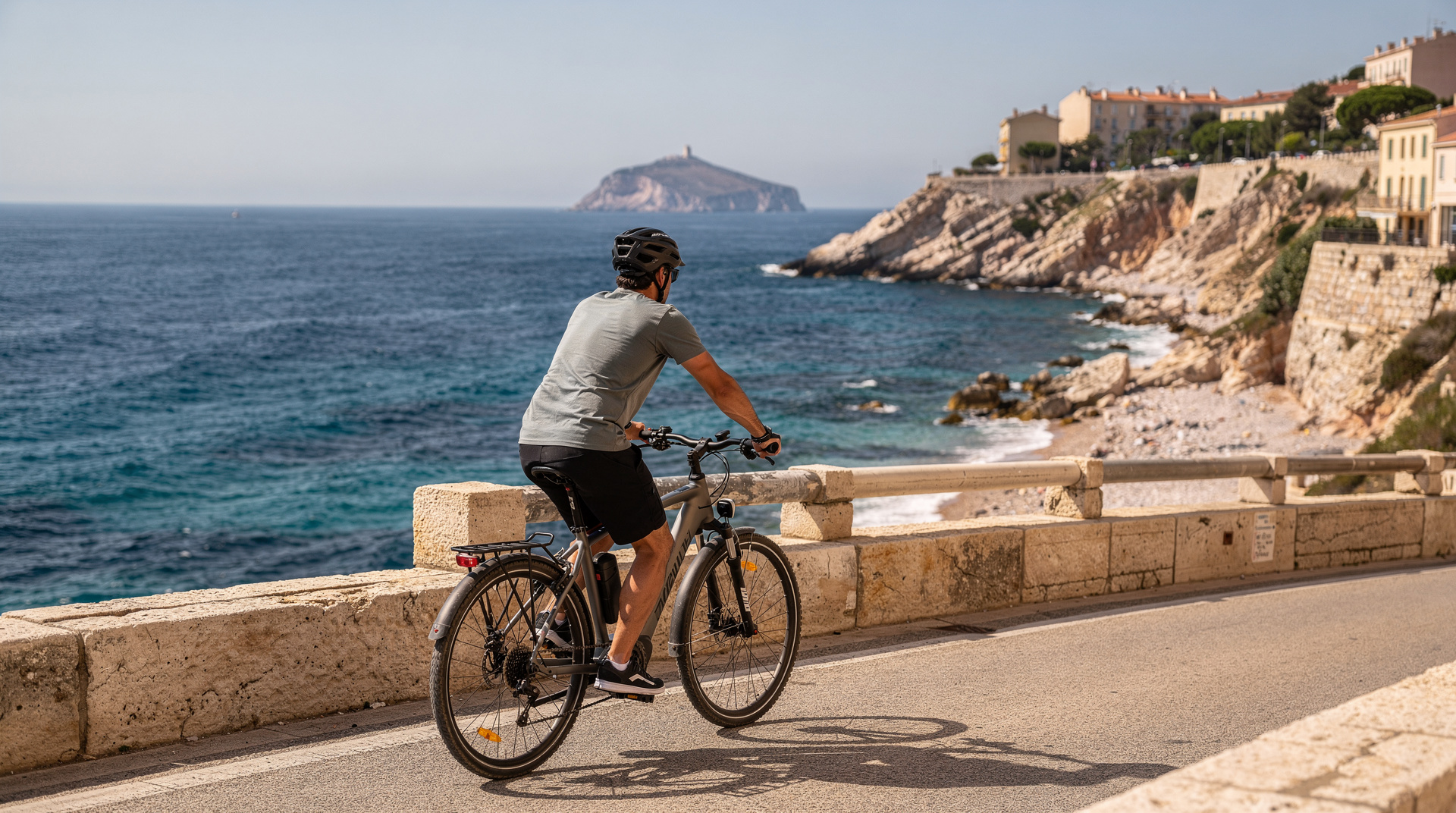
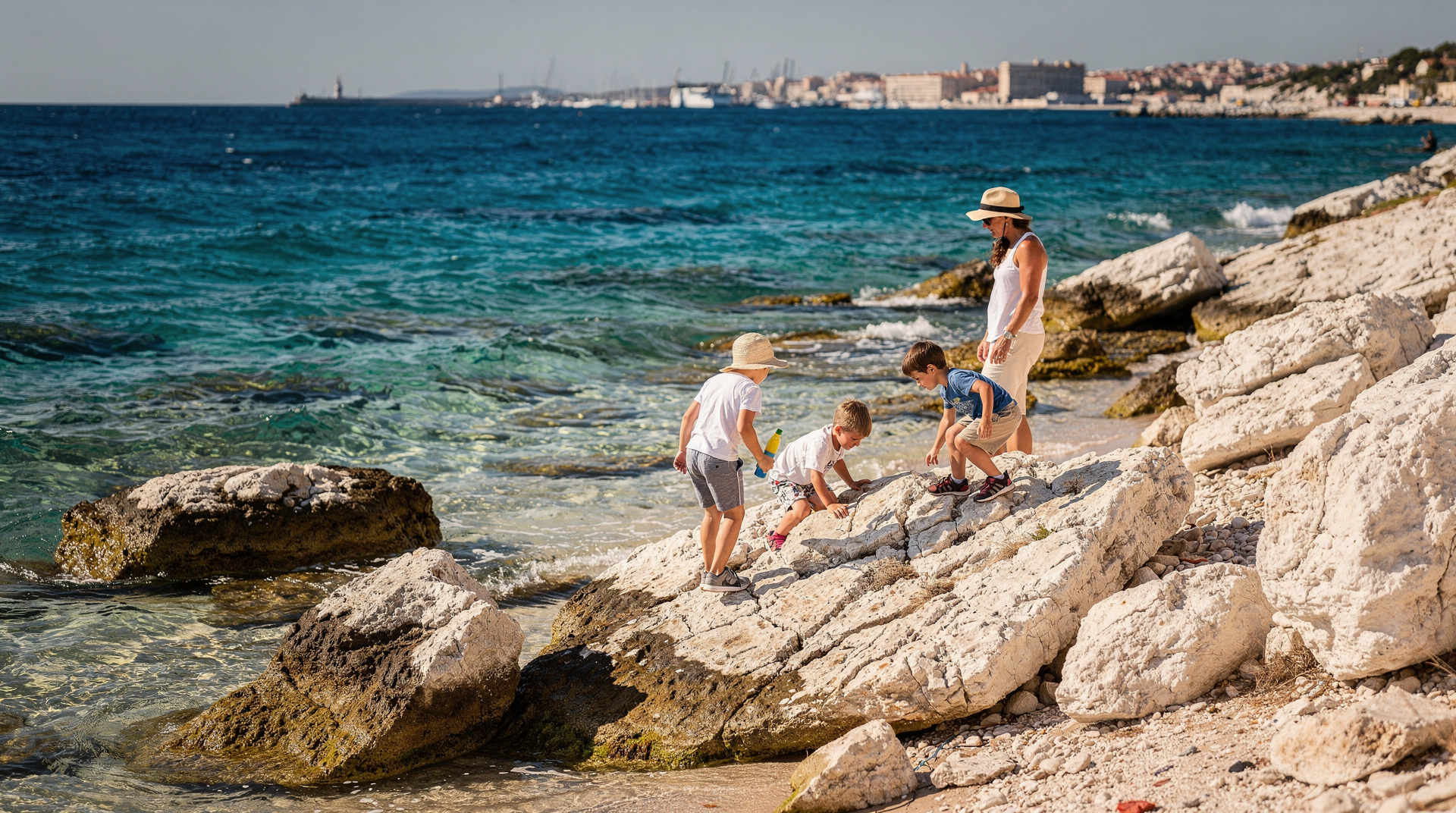
The Prado beaches and the Corniche President Kennedy running south of Notre-Dame de la Garde represent Marseille as a beach city — the stretch of coast where the city’s residents actually swim, cycle, and jog. Staying here gives you direct beach access in the morning and a residential neighbourhood feel that is absent in the tourist centre.
The honest trade-offs:
This is 20 minutes by bus or tram from the Vieux-Port — not far, but far enough that you will not spontaneously wander to Le Panier after dinner. The neighbourhood has good supermarkets, pharmacies, and local restaurants, but the restaurant density is lower than Cours Julien or the Vieux-Port zone. For a trip focused on beach, swimming, and city relaxation rather than cultural sightseeing, this works well.
Best for: Families with children (beach access, more space, quieter streets); anyone whose priority is swimming and beach time with Marseille sightseeing as secondary; summer visitors who want morning beach time before the heat peaks.
Price range: Mixed. Some budget hotels in this zone; also some larger chain hotels with sea views that charge accordingly. Expect 85–180 EUR depending on specific location.
Notre-Dame de la Garde area: elevated and quiet
The area on the southern slopes below Notre-Dame and toward the Endoume neighbourhood is quieter than any of the above — residential, photogenic, with the best views in the city but limited restaurant options and a steep walk in any direction. Some boutique properties exist here.
Best for: Couples wanting quiet and a neighbourhood feel over convenience; anyone with a rental apartment for a week-long stay.
Practical comparison table
| Area | Walkable to Vieux-Port | Character | Nightlife | Families | Budget |
|---|---|---|---|---|---|
| Vieux-Port | Yes (5 min) | Touristy | Moderate | Good | All ranges |
| Le Panier | Yes (10 min up) | Atmospheric | Quiet | Difficult (hills) | Mid |
| La Joliette | Yes (20 min) | Modern | Thin | OK | Mid-high |
| Cours Julien | Metro (2 stops) | Local/creative | Lively | OK | Budget-mid |
| Prado/Corniche | Bus (20 min) | Residential | Quiet | Best option | Mid |
The summer accommodation reality
In July and August, Marseille’s accommodation market runs hot. Hotels near the Vieux-Port and La Joliette (which serves the cruise terminal) see the highest demand. Prices can be 40–60% higher than shoulder season rates. Booking 2–3 months ahead is not paranoia; it is the difference between having options and not having them.
For summer visits, the Prado/Corniche zone sometimes offers better value than the Vieux-Port for equivalent quality — the premium for walking distance to the harbour is highest in peak season, when you will probably be taking boats to the Calanques anyway rather than walking around the harbour constantly.
Winter and off-peak: where the deal is
November to March brings the biggest pricing drops (30–50% below August peaks) and the least crowding. Le Panier boutique properties and Cours Julien apartment rentals offer genuinely good value in winter — the neighbourhood character is intact, the restaurants still open (most do, unlike truly seasonal resorts), and the city is quieter without losing function.
For budget travellers in winter, see our budget guide which has specific figures for accommodation costs by season. For a full cost breakdown by traveller profile, see our Marseille trip cost guide.
Frequently asked questions about where to stay in Marseille
Is it safe to stay in Le Panier?
Yes. Le Panier is safe during the day and early evening for tourists. The lanes are quieter after 22:00, which can feel slightly isolated, but there is no particular risk. Apply standard urban caution — do not leave bags unattended, be aware of your surroundings in narrow lanes at night. The real pickpocket risk in Marseille is at the Vieux-Port fish market and on the metro, not in Le Panier.
Which area is best for families with a pushchair?
The Prado and Corniche area is most practical — flatter streets, beach access, park space, and a residential calm that suits families better than the tourist bustle of the Vieux-Port. Within the Vieux-Port zone, the south quai (Quai de Rive Neuve) and the streets behind it are more manageable than the hilly Le Panier side.
Should I stay in Marseille or Cassis for Calanques access?
Marseille for most people. The boat tours to the Calanques depart the Vieux-Port and are the easiest, most organised access from Marseille. Cassis is the better base if your priority is the eastern calanques (En-Vau, Port-Pin) by kayak or hiking from the Cassis side — and it is a beautiful village. See our Cassis guide for the Cassis perspective.
Is it worth staying near the cruise terminal in La Joliette?
Only if you are arriving or departing by cruise ship and have no flexibility. Otherwise, the Vieux-Port zone is 20 minutes away and offers far more for evening dining and morning sightseeing. La Joliette is functional rather than appealing as an accommodation base for leisure travellers.
How much should I budget for accommodation per night?
Budget: 25–40 EUR in a hostel dorm; 70–100 EUR for a simple private room or budget hotel. Mid-range: 100–180 EUR for a comfortable 3-star equivalent near the Vieux-Port. Upscale: 200–350 EUR for design hotels and 4-star properties. Luxury: 350 EUR and above (Sofitel Vieux Port territory). These ranges are for peak season (June–August); shoulder season rates typically run 30–40% lower.
Is it better to stay near the airport or in the city centre?
The city centre, almost always. Marseille-Provence Airport (Marignane) is about 25 km from the Vieux-Port with no significant hotel cluster of its own — see our airport-to-city guide for transfer options. Staying centrally and taking the airport shuttle or train on arrival day is more practical than basing yourself near Marignane for a city visit.
Which area suits a trip built around the Calanques?
The Vieux-Port zone, since every major boat tour departs from there and the fish-market-to-boat-departure logistics are simplest with a short walk. If your priority leans toward hiking the eastern Calanques (En-Vau, Port-Pin) rather than boat tours, basing yourself in Cassis for part of the trip is worth considering — see our Marseille vs Aix comparison for the equivalent logic applied to a Provence-wide base decision.
Booking timing: when to reserve your accommodation
July and August: Book 2–3 months ahead. The Vieux-Port zone and La Joliette (cruise terminal area) fill earliest. The best mid-range properties go by May for peak summer. Last-minute availability in August often means either full hotels or significantly marked-up prices on remaining rooms.
June and September: Book 3–6 weeks ahead. These months are popular but less frenzied. Good options exist at shorter notice, but the best rooms at the most desirable properties fill early.
Spring (April–May) and autumn (October): 1–2 weeks ahead is usually adequate. This is the period with the best availability-to-quality ratio — good rooms at reasonable prices, without the pressure of peak-season booking.
Winter (November–March): Availability is loose; booking 1 week ahead is generally fine for most properties. The exception is the Christmas–New Year period, which sees domestic French tourism spike. Book 2–3 weeks ahead for December 23–January 2.
What the neighbourhood looks like at night
A detail most accommodation guides omit: each neighbourhood has a distinct character after 22:00, which matters if you are a light sleeper, a solo traveller, or a parent with young children.
Vieux-Port south quai (Quai de Rive Neuve): Bars and restaurants close progressively from midnight onward; the energy drops significantly by 1:00. Some noise from the street. Hotels facing the quai directly can be noisy until 23:00–midnight.
Le Panier: Quiet by 22:00. The lanes are largely residential after dark — calmer than any other tourist-adjacent zone. Feels slightly isolated at 23:00 on foot, which is an atmospheric quality that some visitors love and others find slightly uncomfortable.
Cours Julien: Lively until 1:00–2:00 on weekends. The cours itself and the surrounding streets have bars with outdoor terraces; noise is real if your accommodation is directly adjacent. One or two streets back, significantly quieter.
La Joliette: Commercial-district quiet by 21:00. Very little going on after dinner hours. Peaceful for sleep; silent in a way that makes it feel isolated.
Prado/Corniche: Residential quiet by 22:00. The Corniche itself is occasionally used by late joggers but not noisy. One of the best areas for uninterrupted sleep.
Apartment rental vs hotel
For stays of 3 nights or more, apartment rental in Marseille is worth considering. The advantages: more space, a kitchen for light meals and market purchases, a more residential feel in whichever neighbourhood you choose, and often better value per square metre than hotel rooms in the same area.
The practical trade-offs: no daily housekeeping, no reception for early-morning luggage questions, and the variable quality of platforms like Airbnb means more research is required. In Le Panier and Cours Julien specifically, apartment rentals exist in character properties that no hotel in those neighbourhoods can replicate.
For a full breakdown of what Marseille accommodation costs at each level, and strategies for saving without compromising on experience, see our trip cost guide and our budget guide. For how accommodation choice interacts with your sightseeing plan, see our 3-day planning guide.
Top experiences
Bookable activities with verified prices and instant confirmation on GetYourGuide.