Hidden gems of Marseille: beyond the postcard
Marseille: iconic Calanques boat tour with swimming
Duration: 3-4.5 hours
The city behind the city
Every guide to Marseille covers the Vieux-Port, Le Panier, and MuCEM. These are worth covering — they are good — but they are also the parts of Marseille that have been optimised for visitors. Behind them sits a city of 870,000 people with an inventory of overlooked, weird, and quietly extraordinary places that take more than one or two visits to find. This is what we have accumulated over years of coming back.
| At a glance | |
|---|---|
| Where | Scattered across Marseille, from Les Goudes in the south to Aubagne to the east |
| Cost | Mostly free to explore; museum entries are typically a few euros each |
| Time needed | A full extra day or two beyond the standard highlights, spread across visits |
| Getting there | Bus, tram, TER train, or the Vieux-Port ferry depending on the spot |
| Best time | Weekday mornings for the quietest version of most of these places |
Les Goudes: the village that time forgot
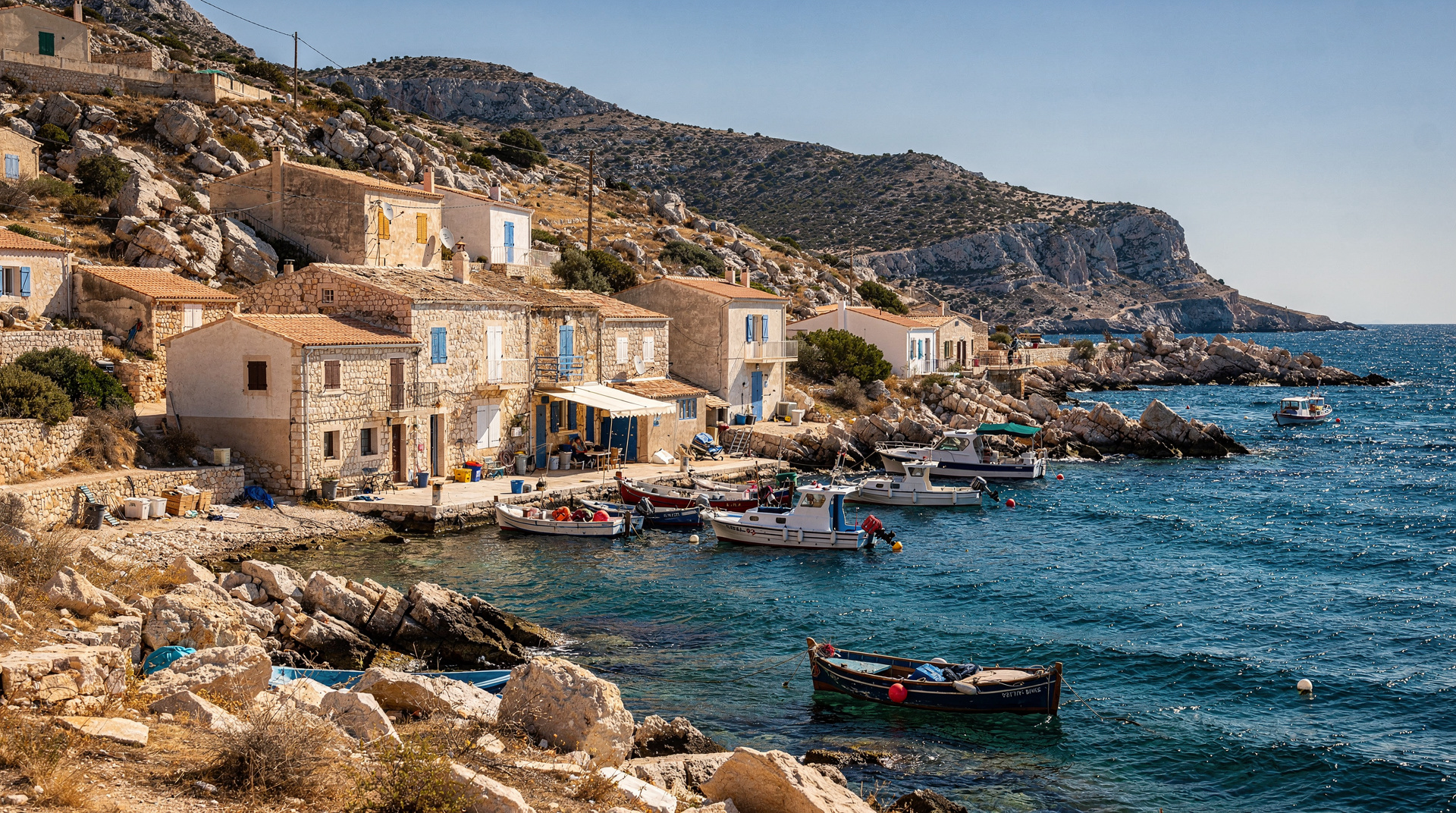
At the very end of the coastal road south of Marseille, past the beaches and the industrial port infrastructure, past the signs telling you that the road is closed to unauthorised vehicles (ignore these in the morning; the restriction is seasonal and daytime-only), sits Les Goudes. It is a fishing village of maybe a few hundred residents, a curved quay with painted wooden boats, a handful of restaurants, and nothing behind it except the beginning of the Calanques.
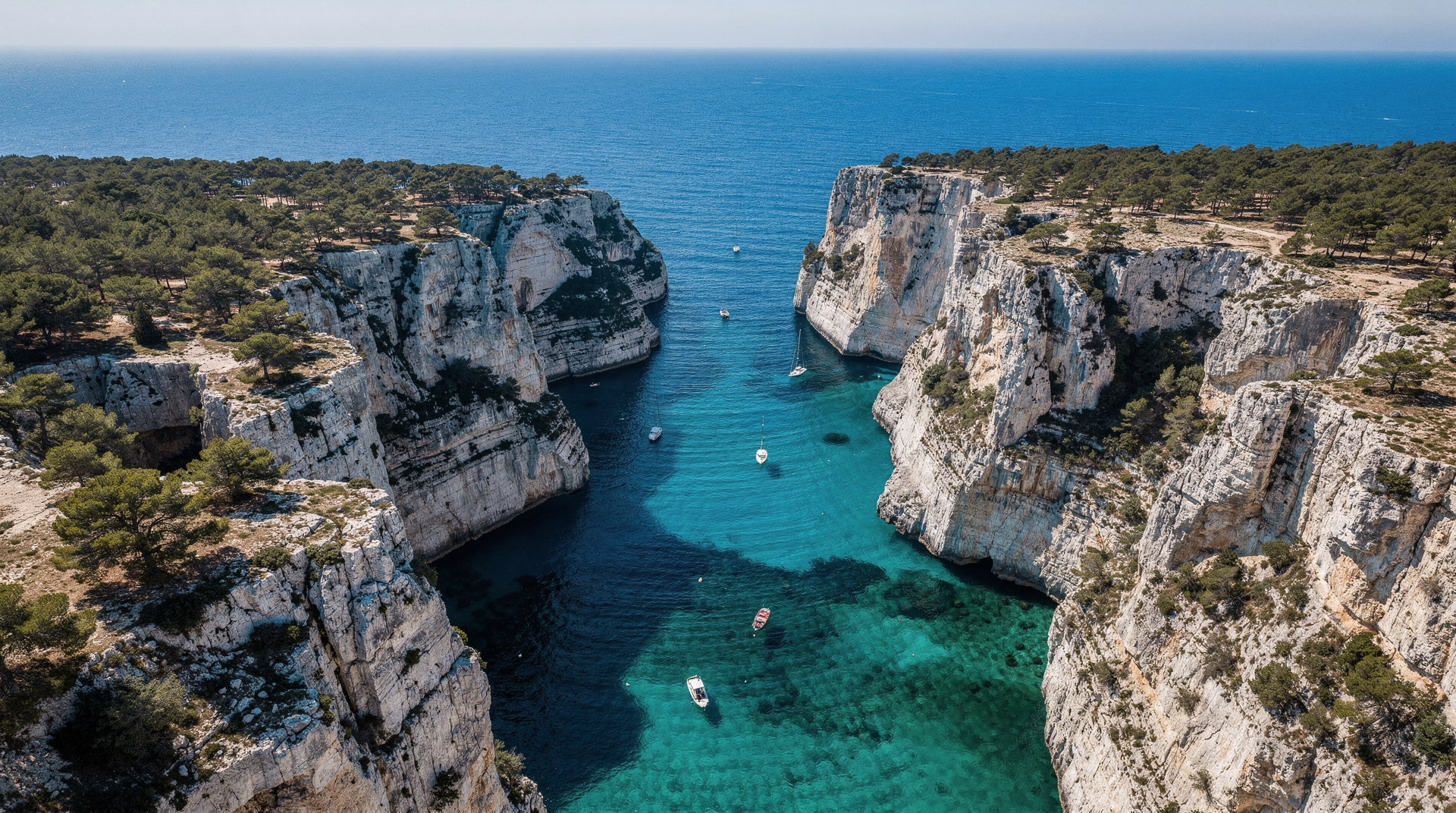
Standing at the end of the quay at Les Goudes, looking southeast toward Cap Croisette, you feel the edge of the world in the way that coastal villages used to before tourism sanitised everything. The rocks are raw limestone, the sun is hard, the path toward Callelongue continues past the village into terrain that is genuinely wild. The restaurants here are not cheap but they are honest — fish caught locally, usually the day before, served with minimum decoration. Reserve in summer.
Getting there is half the adventure: bus 20 from Castellane métro runs the coastal road, but it is slow and doesn’t run as frequently in the evenings. In summer, consider cycling (the route is scenic) or taking the bus one way and a taxi back.
The Musée d’Histoire de Marseille
This is a museum that requires knowing about before you stumble into it. It is located inside a shopping centre — the Centre Bourse, which sounds deeply unpromising — and it sits above the actual ruins of the ancient Greek and Roman city of Massalia, visible through glass floors in the ground-level mall and then more dramatically in the museum proper.
The museum was substantially renovated and expanded, and the archaeological remains below it are legitimate: a section of the Roman dock, the curved hull of a 3rd-century AD merchant ship preserved in situ, amphorae, coins, the foundations of warehouse buildings. You are standing over the bones of a city that predates Paris by several centuries. The context the museum provides around these remains is genuinely good.
Entry is around 6 EUR and the museum is rarely crowded — most tourists walking through the Centre Bourse have no idea it is there. It is directly above the Vieux-Port métro station.
Vallon des Auffes at non-tourist hours
We have a full piece on the Vallon des Auffes, so we will be brief here. The small fishing harbour under the Corniche viaduct is increasingly known as a sunset spot. What it is less known for is its early-morning character: around 7:00, before the day trippers arrive, the fishermen are returning, the cats are working the quayside, and the cafés are beginning their day with locals stopping for coffee. It is a different place at that hour.
Access is through a small tunnel under the Corniche road, or down steep steps from the roadside. The exact location is easy to miss if you are not looking. That is part of its charm.
The Cité Radieuse rooftop
Le Corbusier’s 1952 Unité d’Habitation on Boulevard Michelet is UNESCO World Heritage, but more people know it as a concept than have actually visited. It is a functioning apartment block — 337 units, a school, a hotel, shops — designed as a vertical self-contained city. The rooftop is the thing to seek out: a sculptural concrete landscape with a running track, a paddling pool, and vents and chimneys that rise like modernist monuments.
Access to the rooftop varies; the hotel (MAMO) sometimes allows reservations from non-guests, and the building occasionally hosts open days. The ground-floor commercial level and the public corridors are generally accessible and worth exploring — the interior street (Rue Intérieure) on the third floor is one of the most unusual corridors in European architecture. Take the T1 or T2 tram to Michelet-Corbusier. Our Marseille guide has details on visiting.
The Frioul Islands on a weekday
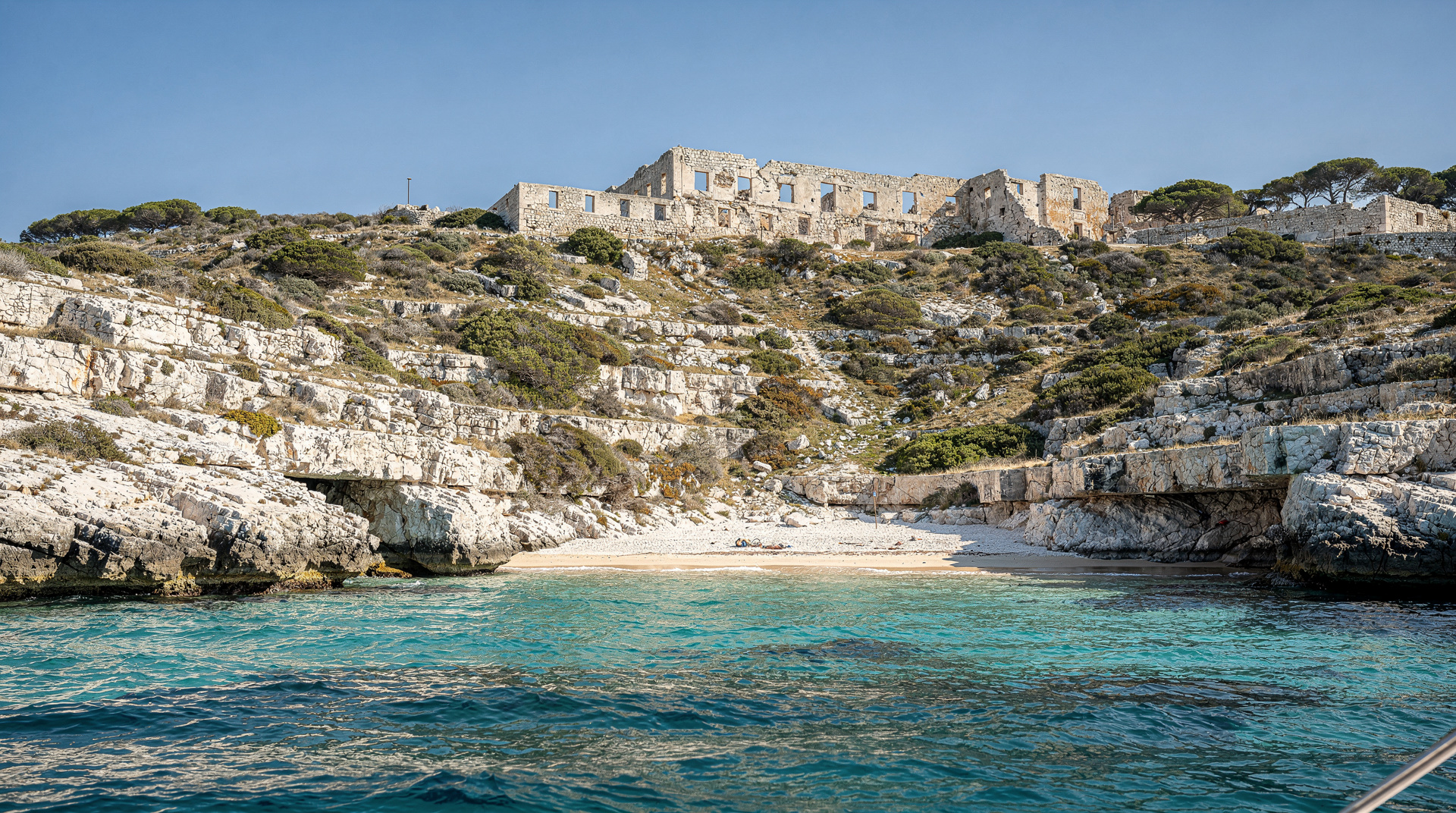
The Frioul archipelago — the four islands visible from the Vieux-Port — is covered by every guide and well-known as the location of Château d’If (the island fortress from The Count of Monte-Cristo). What those guides tend not to mention is that the Frioul islands themselves (Ratonneau and Pomègues) have their own stark beauty: abandoned military hospital ruins, clear swimming coves, and a village of painted houses around the port.
On summer weekends, the Frioul is genuinely busy. On a weekday in June or September, it is close to empty. Take the ferry from the Vieux-Port (runs year-round, more frequently in summer) and spend time on the island rather than just photographing Château d’If from the boat.
The Palais Longchamp and Cinq-Avenues
The Palais Longchamp, in the 4th arrondissement, was built in 1869 as the terminus of a canal that brought fresh water from the Durance river to Marseille — a engineering triumph that the city marked with an architectural flourish of considerable ambition. The central cascade and the two wings housing the natural history museum and the fine arts museum form a composition that is genuinely impressive, made more so by the fact that relatively few tourists find their way here.
The surrounding Cinq-Avenues neighbourhood is residential Marseille at its most relaxed: wide tree-lined streets, local cafés, a market twice a week, and an architectural stock of handsome 19th-century apartment buildings that never became a tourist destination for reasons we cannot entirely explain. The tram stops at Longchamp.
Aubagne and Marcel Pagnol
Twenty minutes east of Marseille by TER train, Aubagne is the birthplace of Marcel Pagnol — the writer and filmmaker who invented cinematic Provence through the Jean de Florette universe and the childhood memories of his Souvenirs d’enfance trilogy. The town’s main public space is lined with santons (painted clay figurines) illustrating his stories.
The literary walk through the Garlaban hills behind Aubagne, following the paths Pagnol described in his books, is one of the most atmospheric half-day excursions in the region — less visited than the Calanques, less crowded than Aix, and deeply rewarding if you have read anything by Pagnol before arriving. See the Aubagne destination guide for details on the walking itinerary.
The Savon de Marseille trail
The traditional 72 percent vegetable-oil soap made in Marseille has been produced in the area since the 17th century and remains one of the city’s most authentic exports — as opposed to lavender sachets made in China. The soap factories (savonneries) in the industrial zone north of the city centre occasionally offer tours or have visitor-accessible boutiques.
We visited one of the working savonneries and watched the enormous copper vats in which the soap mixture is cooked and then cut into blocks. The process is medieval in its basic logic and unchanged in the fundamentals. The soap itself, bought directly from the source, costs a fraction of the boutique price. Our soap workshop story tells that afternoon in full.
Cours Julien market on Wednesday
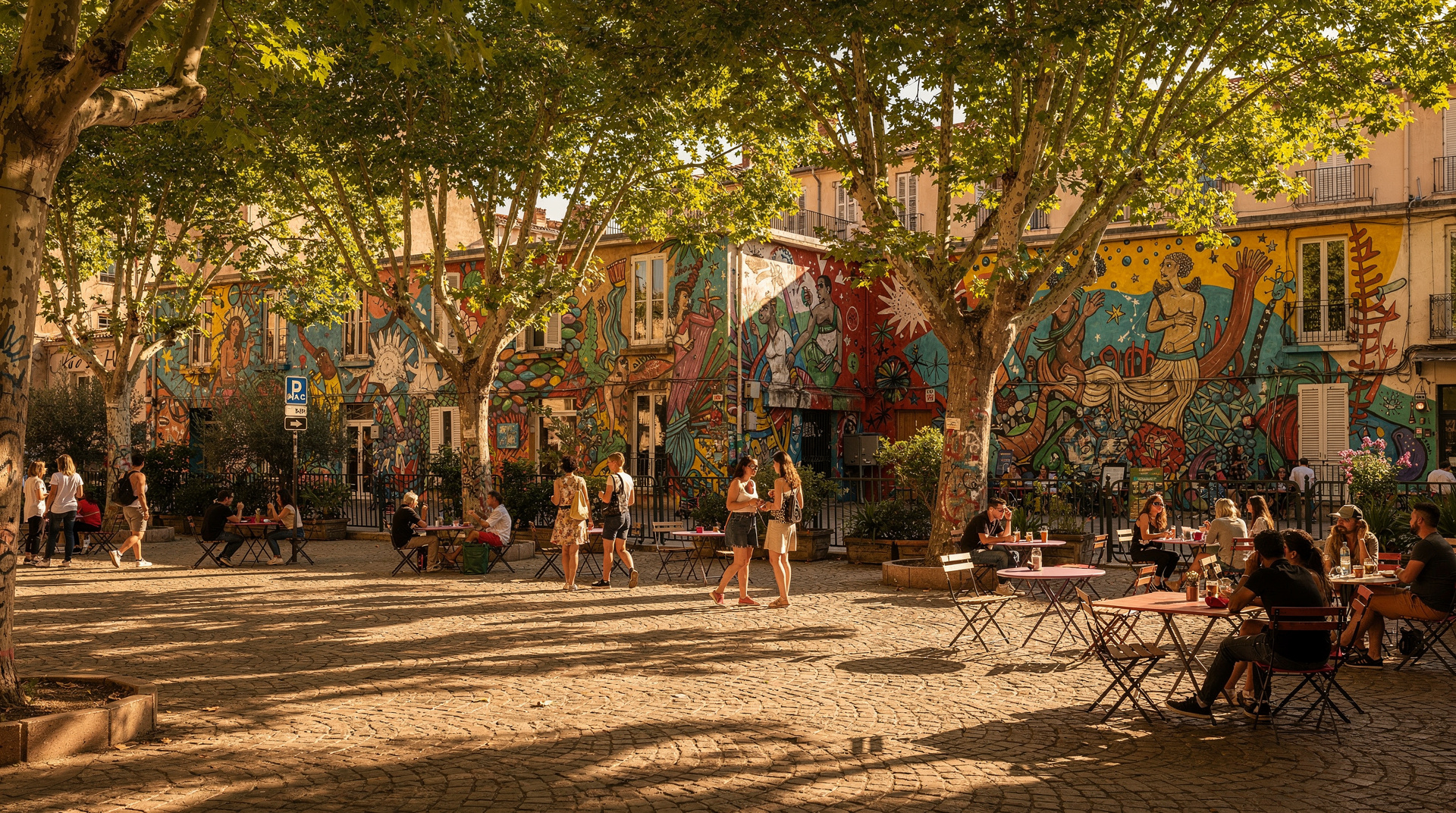
The Cours Julien square hosts a market on Wednesday and Saturday mornings — organic fruit and vegetables, artisan bread, a few antique and vintage clothing stalls, and the neighbourhood’s regular inhabitants all doing their weekly shopping. This is not a tourist market. Prices are city-resident prices. The café seats filling up around the market square from 9:00 onward form one of the most pleasant urban scenes in Marseille.
The neighbourhood around it — the streets leading down toward Castellane and up toward Réformés — repays aimless walking in the evening. The concentration of good restaurants here is higher per square metre than anywhere else in the city.
One thing we have not told you
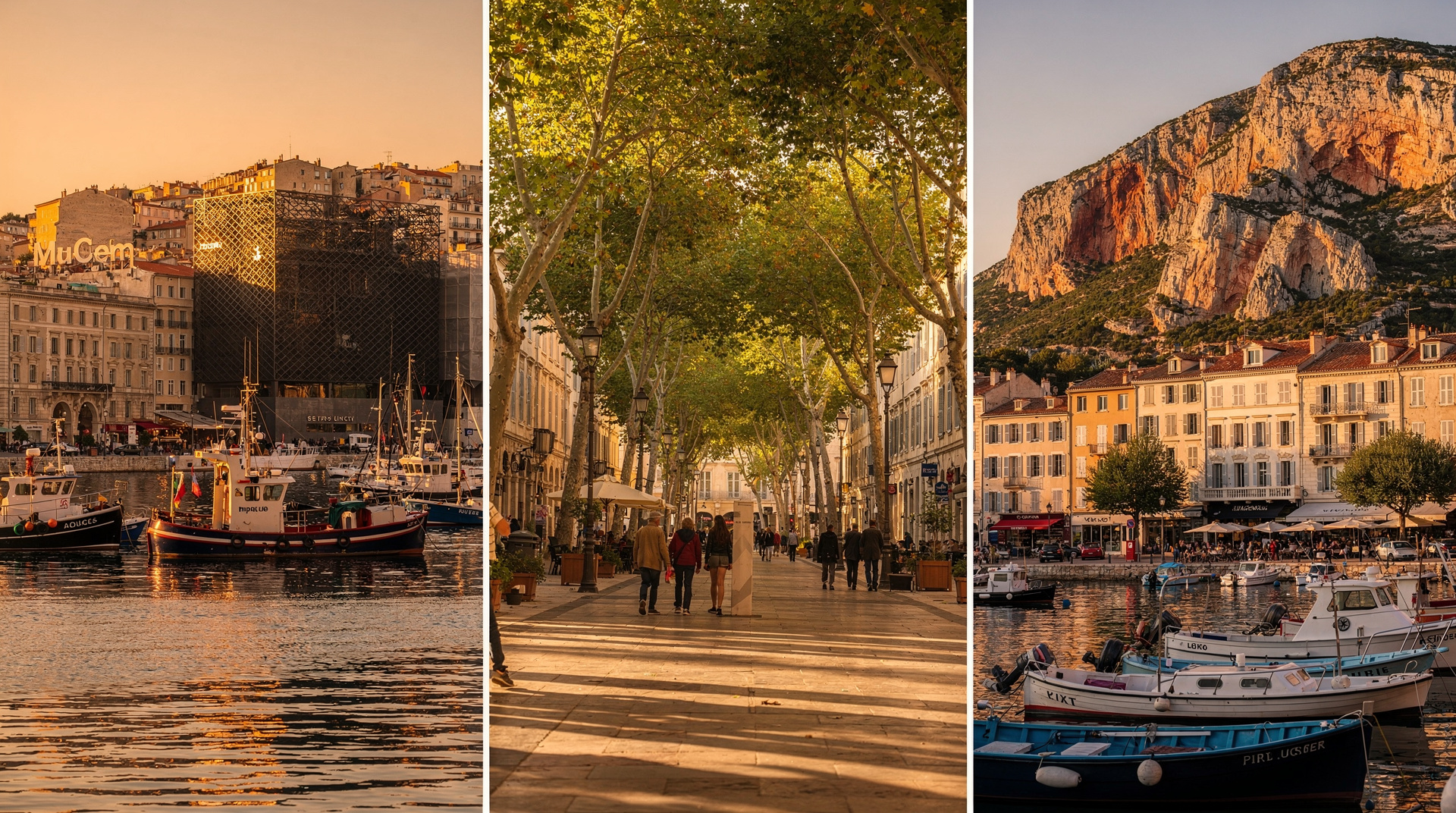
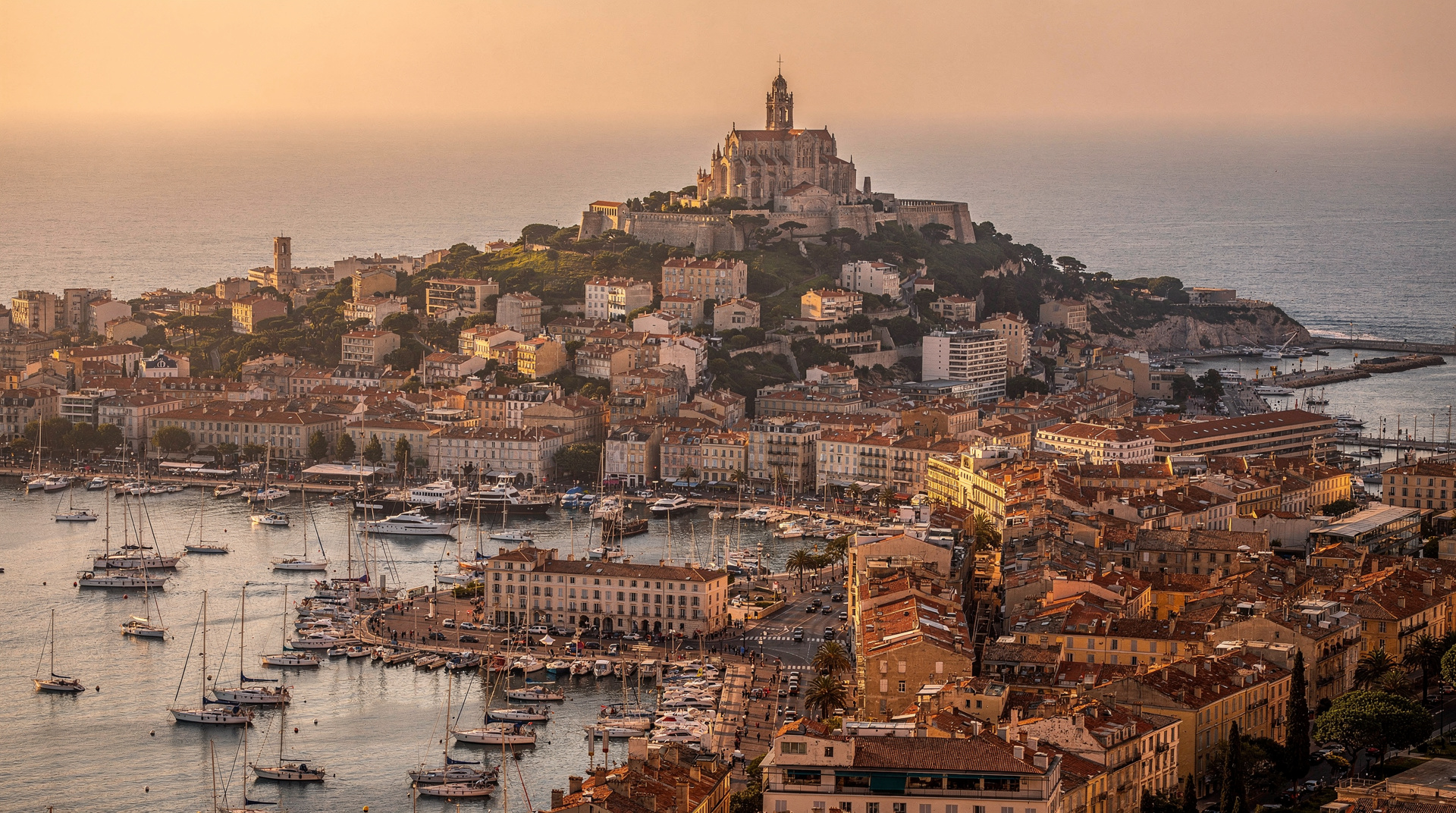
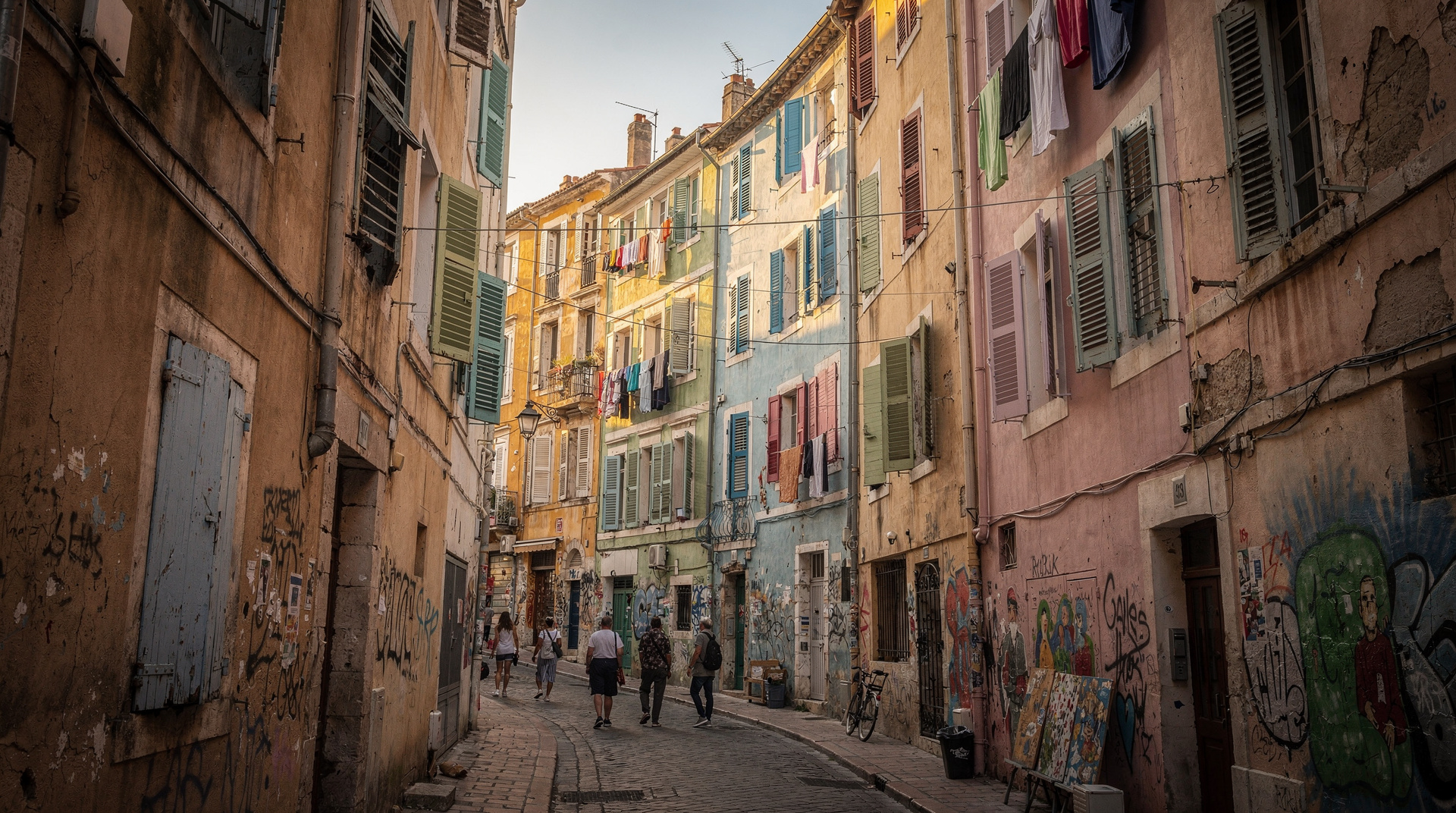
The best thing about Marseille is the thing that cannot be listed: the quality of its light in the late afternoon, especially in September and October, when the air is dry and the sun is low and the limestone of the Calanques and the facades of Le Panier and the hull of a boat in the Vieux-Port all glow with that specific Mediterranean gold that appears in the paintings and that you then spend the rest of your life comparing to other places. Everything else we have listed above is good. That light is the reason.
Hidden gem vs. the postcard version
A quick comparison of what you get at the well-known spots versus their overlooked neighbours or alternate hours.
| Well-known spot | Hidden alternative or timing | Why it’s worth the swap |
|---|---|---|
| Vieux-Port at midday | Vallon des Auffes at 7:00 | Fishermen returning, quiet cafés, none of the midday crowd |
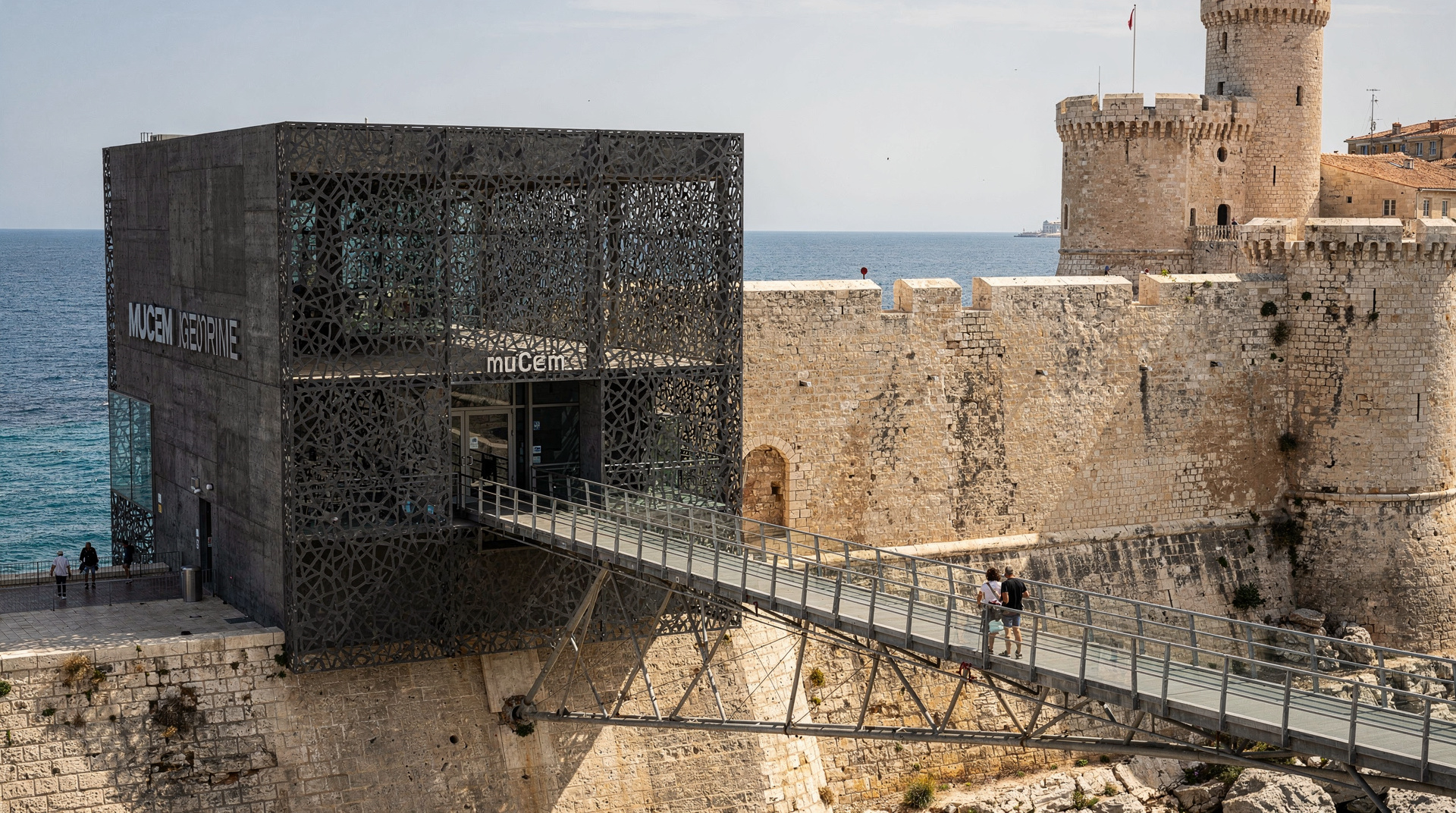
| MuCEM exhibitions | Musée d’Histoire de Marseille above Roman Massalia | Similar depth of history, a fraction of the visitors |
| Château d’If boat photo-stop | Frioul Islands on a weekday | Actual swimming coves and ruins to explore, not just a photo from the deck |
| Le Panier daytime walk | Cours Julien Wednesday market | City-resident prices and a genuine neighbourhood rhythm |
Getting to the harder-to-reach spots
Most of what is on this list is reachable by public transport, but a few need planning. Les Goudes is at the end of bus line 20 from Castellane métro, and the service thins out in the evening — going by bike or planning a taxi back is worth considering in summer. Aubagne is a twenty-minute TER ride east, easy to combine with a half-day walk in the Garlaban hills. The Cité Radieuse is on the T1/T2 tram line and requires no advance planning for the public areas, though rooftop access depends on what MAMO has scheduled.
Frequently asked questions about Hidden gems of Marseille
What is the best hidden gem in Marseille for a first-time visitor with limited time? The Musée d’Histoire de Marseille, right above the Vieux-Port métro station, gives the highest return for the least effort — genuine Roman-era remains a few minutes from the main sights.
Are these hidden spots safe and easy to reach without a car? Yes. All of them are reachable by bus, tram, TER train, or the Vieux-Port ferry; only Les Goudes benefits from planning your return trip in advance given the thinner evening bus service.
For the full practical picture, see our Marseille destination guide. For things to know before your first trip, our 25 things to know list covers the essentials.
Top experiences
Bookable activities with verified prices and instant confirmation on GetYourGuide.