Sunset at the Vallon des Auffes
Marseille: sunset catamaran cruise in the bay
The harbour that the Corniche road almost hides
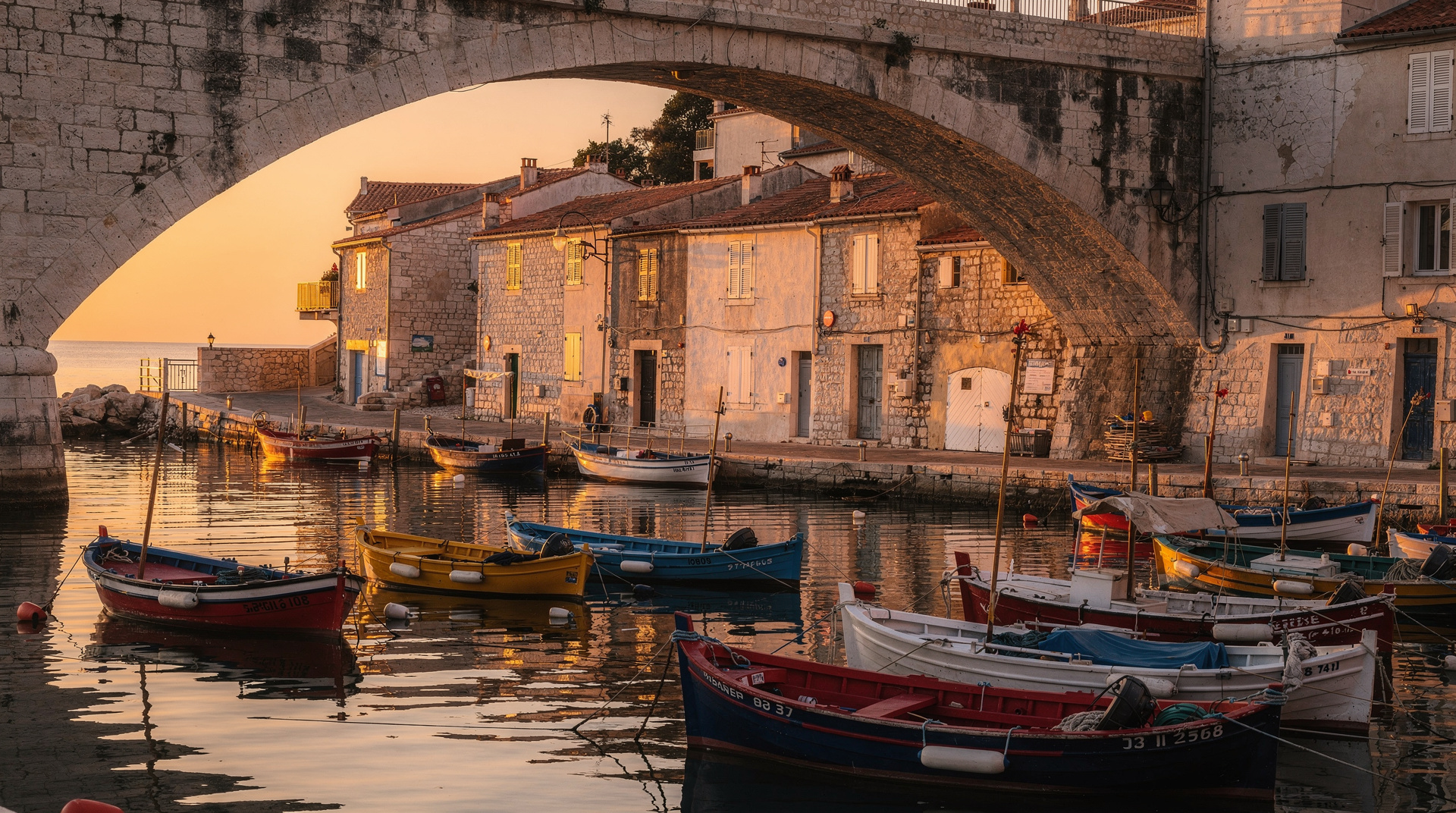
The Vallon des Auffes sits directly under the Viaduc de la Corniche — an arch of stone that carries the coastal road over the small ravine where the harbour lies. If you are driving the Corniche at speed, you will not see it. You will not even know you have passed over it. The entrance is a narrow passage through the rocks at road level, easy to miss, and the descent to the water involves steps that offer no preview of what is below.
This is, we think, why it remains what it is.
| At a glance | |
|---|---|
| Where | Under the Corniche viaduct, between the Vieux-Port and the Prado beaches |
| Cost | Free to visit; a pastis runs around EUR 6–9, dinner around EUR 40–60 per person |
| Time needed | 30 minutes for a look, 1–2 hours for a proper sunset drink |
| Getting there | Tram T2 to Vallon des Auffes, or the no. 83 bus from the Vieux-Port |
| Best time | The hour before sunset, September or October for fewer crowds |
What you find when you go down
A curved quay no more than fifty metres long. A dozen small fishing boats painted the particular Mediterranean colours — deep blue, terracotta, a yellow that seems too bright until the sun catches it. Three or four cabanons: the low, stone fishing huts that line the quay, used for storing nets and gear, built when this harbour was a working fishing community rather than an atmospheric adjunct to the tourist route.
Two or three small restaurants at the water’s edge, open in season. Their terrasses extend to the edge of the quay. In September, they are still busy at 19:00, but with a different quality than July — no queues, no turning tables, the owners beginning to decompress after the summer run.
And the water: a small cove of dark Mediterranean blue, protected from the open sea by the curve of the limestone point. The boats rock gently. The light is gathered here in the late afternoon, concentrated by the walls of the ravine.
Arriving at the right moment
We always arrive at the Vallon des Auffes in the hour before sunset. This is not a rule we imposed deliberately — it evolved from experience, from arriving too late and too early and then finding the timing that produces the specific quality of light we keep returning for.
In late September, the sun sets over the ridge to the southwest, and the last light reaches the harbour floor at a low angle — casting long shadows from the masts of the boats, turning the stone of the cabanons the colour of warm amber, making even the viaduc overhead look less like concrete infrastructure and more like a natural arch.
The smell changes in this hour too. Earlier in the day it is salt water and diesel and the residue of a working harbour. As the evening arrives it becomes something simpler: sea air, whatever is cooking in the restaurants, the faint sweetness of cooling stone.
A pastis here is different from a pastis anywhere else
We order a pastis at the table nearest the water. The ritual is the same everywhere — the small glass of amber, the carafe of cold water, the slow milky transformation as the water falls through — but here, at this table, with the boats a metre away and the light doing what it does, the ritual has additional weight.
We do not hurry the drink. This is one of the better Marseille rules: find a place that has the quality of holding you, and then allow yourself to be held. The Vallon des Auffes is that kind of place. You plan for thirty minutes and find yourself still there ninety minutes later without having noticed the passage.
The context: the Corniche and beyond
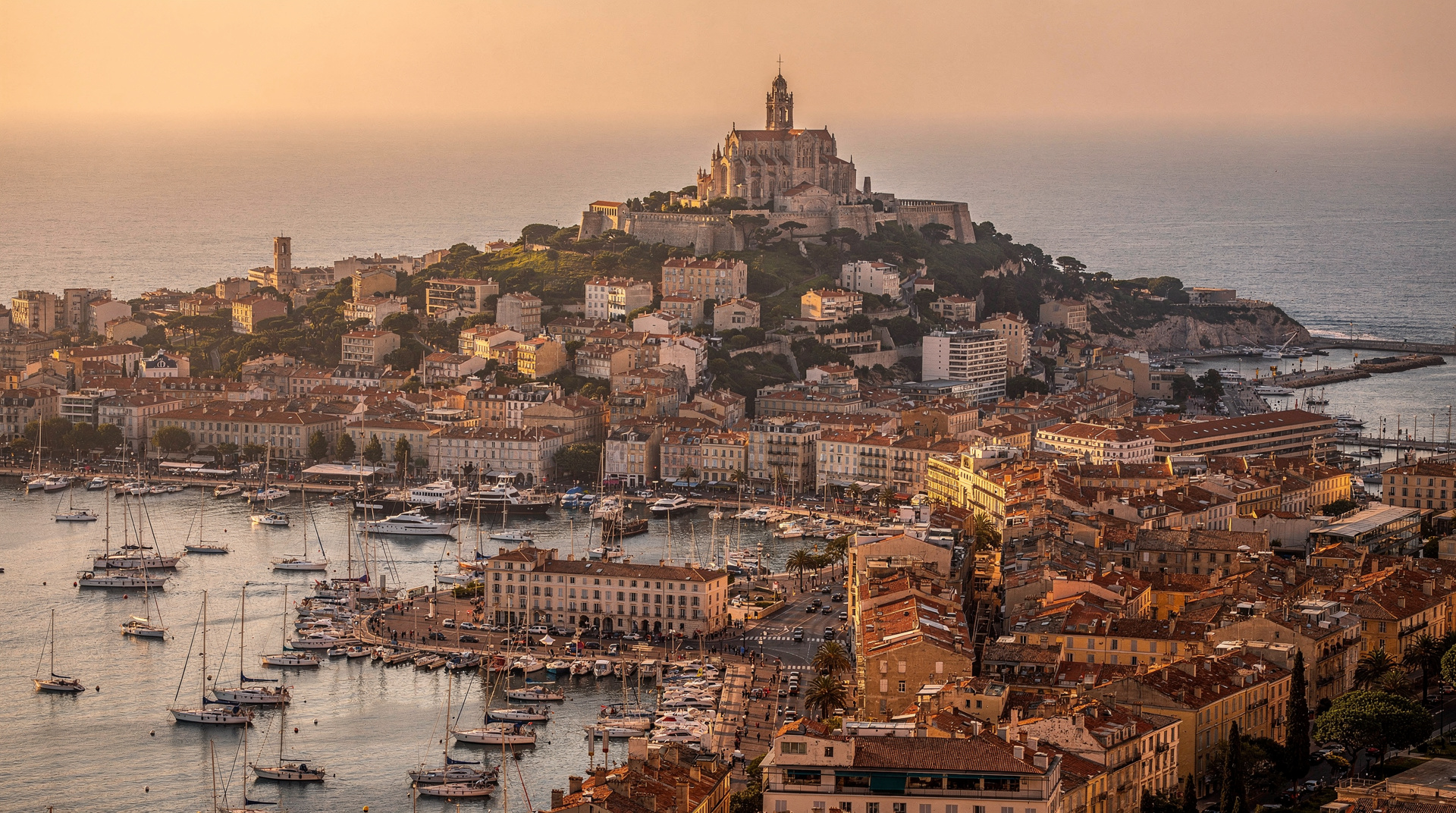
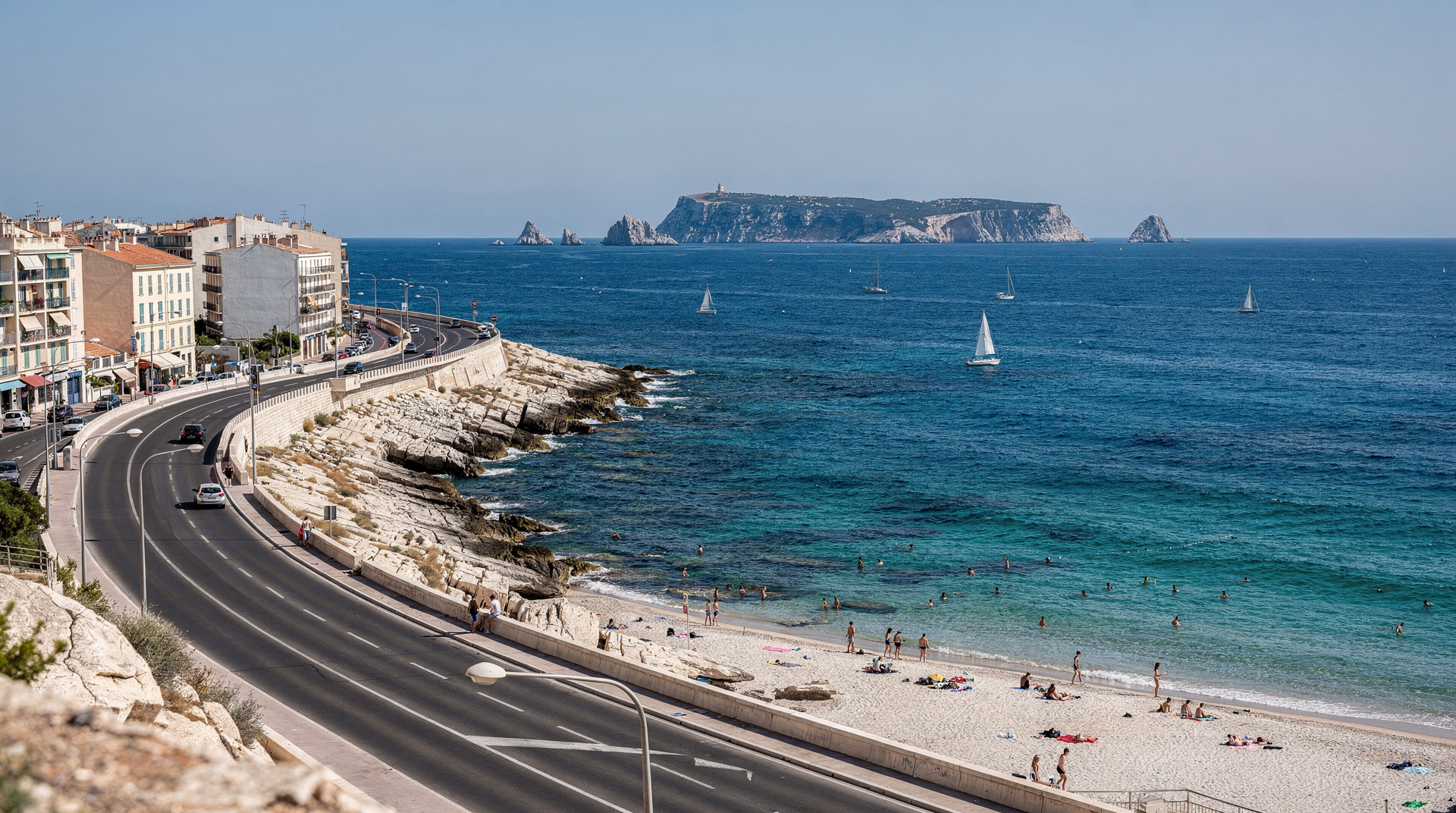
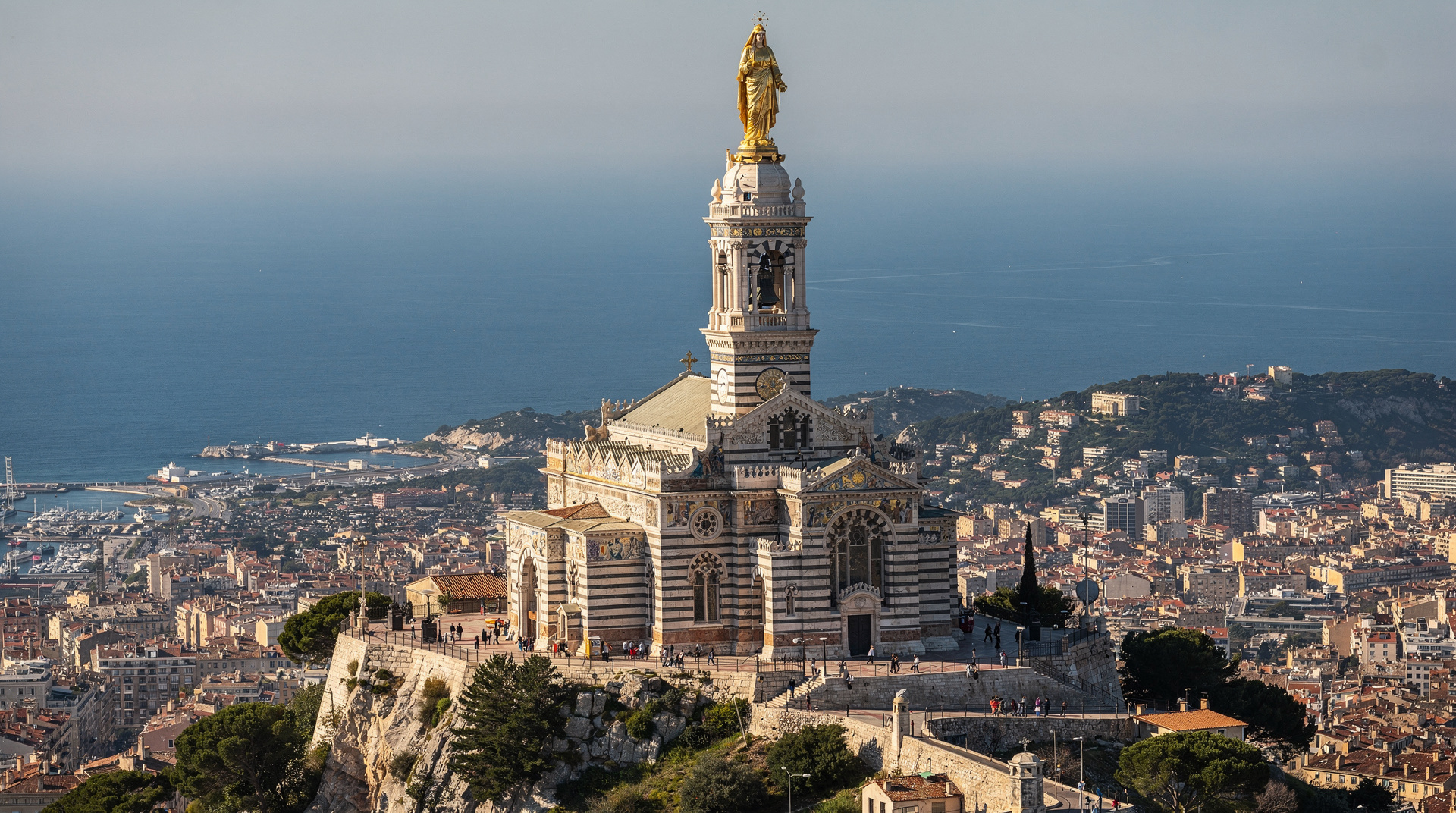
The Vallon des Auffes is one stop on the Corniche route — the coastal road that runs from the Vieux-Port south past the Prado beaches and toward Les Goudes. The full Corniche makes a good half-day walk, including the Vallon, the view back toward the Notre-Dame de la Garde, and the Prado beaches where Marseille residents actually swim. But we have also come specifically for the Vallon and nothing else, arriving from the Vieux-Port by the no. 83 bus, spending two hours, and returning. That is a valid way to experience it.
The tram stops at Vallon des Auffes on the T2 line, which makes it accessible from the Vieux-Port without a car. Five or six minutes by tram, then the steps down.
Pairing it with the rest of the Corniche
The most satisfying version of this evening starts earlier. Walk (or take the T2 partway) from the Vieux-Port along the Corniche, past the view up to Notre-Dame de la Garde, stopping at the Prado beaches for an hour if the weather allows a swim, then arriving at the Vallon des Auffes with the sun already low. This turns a single spot into a half-day arc: sea, beach, harbour, sunset. It is also, for what it is worth, one of the better free afternoons in Marseille — nothing on this route requires a ticket except a coffee or a swim towel.
What makes it worth a separate journey
Most travel writing about the Corniche mentions the Vallon des Auffes as a bullet point — “don’t miss the small fishing harbour under the viaduc.” We wanted to write about it at greater length because bullet-point descriptions miss the thing the Vallon actually offers, which is not a sight but a quality.
Marseille is full of things to see. The MuCEM, Notre-Dame de la Garde, the Vieux-Port, Le Panier — these are substantial, their importance is legible, and they reward the visit they are given. The Vallon des Auffes offers something smaller and more difficult to name: the experience of a city that still contains places that have not been fully absorbed into the tourism economy, that still feel found rather than offered.
It is a small harbour under a road. The boats are real working boats, or some of them are, or at least they were until very recently. The restaurants serve the people who happen to be there, not the crowds that arrive by tour bus. The evening light behaves exactly as it does because of the specific geography of the ravine. None of this is curated.
The restaurant question
The restaurants at the Vallon des Auffes are small and well-regarded, and they serve fish. The menus focus on the catch and the view — which is the correct emphasis for a harbour restaurant. We do not name specific addresses here because the Vallon has a small roster that changes slowly and the relevant question is whether to eat there rather than which table to book.
The practical considerations: prices are higher than equivalent restaurants further from the water, because the location commands a premium and the fish is genuinely good. Reservations in season are essential — the terrasse has perhaps 30–40 covers and the summer evenings fill early. The restaurants are closed on days when the weather makes service on the water-level terrasse impractical; this is rarely a problem in summer but worth noting for shoulder-season visits.
Whether to eat at the Vallon or simply have a drink there is a genuine choice. The quality of sitting at the water with a pastis at golden hour is, in itself, enough. The dinner adds a layer but also adds cost and booking complexity. For a first visit, we usually recommend a drink rather than committing the full evening. For subsequent visits, the dinner makes sense — the setting justifies it.
An honest note
The Vallon des Auffes is not a secret anymore. It appears in guidebooks and on Instagram, and in summer it can be busy enough that the atmospheric quality is partially diluted. We recommend September and October specifically because the crowds have receded and the evening light is still extraordinary. In July, the harbour is pleasant but the quietness that makes it special is compromised by numbers.
Come in the shoulder season. Come at 18:30. Order a pastis. Stay until you are ready to leave, which will be later than you planned.
For the full picture of Marseille’s coastline, the Corniche and Prado beaches guide covers the whole route. The hidden gems piece lists other Marseille spots with a similar quality of being rewarding without being obvious. The full Marseille guide is the starting point for any visit. If you are weighing up sunset spots more broadly, our note on getting around Marseille’s hills touches on nearby viewpoints worth combining with an evening here.
Frequently asked questions about Sunset at the Vallon des Auffes
Is the Vallon des Auffes free to visit?
Yes — the quay, the steps down, and the views of the boats and cabanons cost nothing. You only pay if you sit down for a drink or a meal at one of the harbourside restaurants.
How do I get to the Vallon des Auffes without a car?
Take tram T2 to the Vallon des Auffes stop, then walk down the steps to the water — about five to six minutes from the Vieux-Port. The no. 83 bus also stops nearby along the Corniche.
Top experiences
Bookable activities with verified prices and instant confirmation on GetYourGuide.