Aubagne
Aubagne guide — Marcel Pagnol's birthplace, the Garlaban hills, santonnier workshops, the Foreign Legion museum, and an easy half-day from Marseille.
Aubagne: walking in Marcel Pagnol's footsteps guided walk
Duration: 4-6 hours
Quick facts
- Distance from Marseille
- ~15 min by TER train; ~20 min by car via A50
- Marcel Pagnol birthplace
- Cours Barthélémy; plaque and small museum in the town centre
- Foreign Legion museum
- Tue–Sun 10:00–12:00 and 14:00–18:00; free entry
- Santons
- Multiple workshops open year-round; major market in December
Pagnol’s town
Marcel Pagnol was born in Aubagne in 1895. He grew up here and in the nearby hills above Marseille, spent his summers exploring the Garlaban massif with his father, and drew on this landscape throughout his life as the geography of his imagination. The Marseille trilogy (Marius, Fanny, César), Jean de Florette, Manon des Sources, and his autobiographical writing La Gloire de mon père and Le Château de ma mère are all set in these hills and in the Marseille neighbourhood of his childhood.
Pagnol left Aubagne for Marseille and eventually Paris and Hollywood, but the landscape did not leave him. He is the most celebrated French director of his generation, and his literary and cinematic portrait of Provence — unglamorous, rooted in the ordinary lives of country people and the dialect of the garrigues — remains the most resonant in French culture.
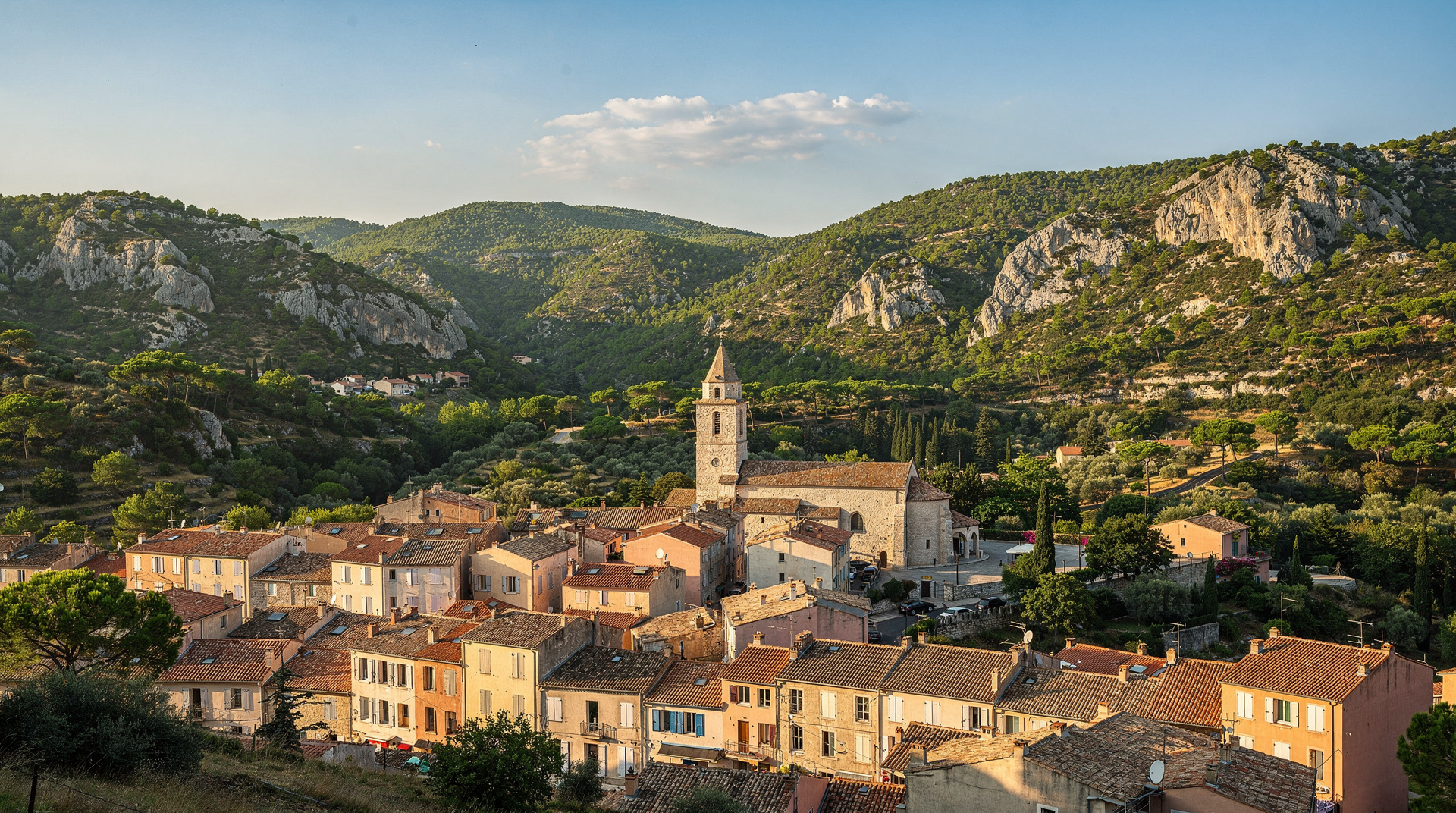
Aubagne claims him with justified pride and occasional excess. The town centre has a Pagnol circuit, a birthplace plaque, a “Petit Monde de Marcel Pagnol” exhibition of animated santons depicting his work, and the landscape he described still exists 5 kilometres east in the Garlaban hills.
| At a glance | |
|---|---|
| Where | 15 minutes east of Marseille by TER train, on the edge of the Garlaban hills |
| Cost | Free entry to the Foreign Legion museum; Pagnol circuit and santonnier workshops are free to walk around; small charge for the Petit Monde exhibition |
| Time needed | Half a day, easily combined with an afternoon in Cassis |
| Getting there | TER train from Marseille Saint-Charles (~15 min) or car via A50 (~20 min) |
| Best time | Year-round; December for the Foire aux Santons Christmas market |
Getting here from Marseille
Aubagne is 15 minutes from Marseille by TER train — one of the easiest half-day excursions from the city. Trains from Marseille Saint-Charles run frequently (every 20–30 minutes). The station is 10 minutes on foot from the town centre.
By car: 20 minutes via the A50 autoroute east from Marseille. Parking is straightforward in the town.
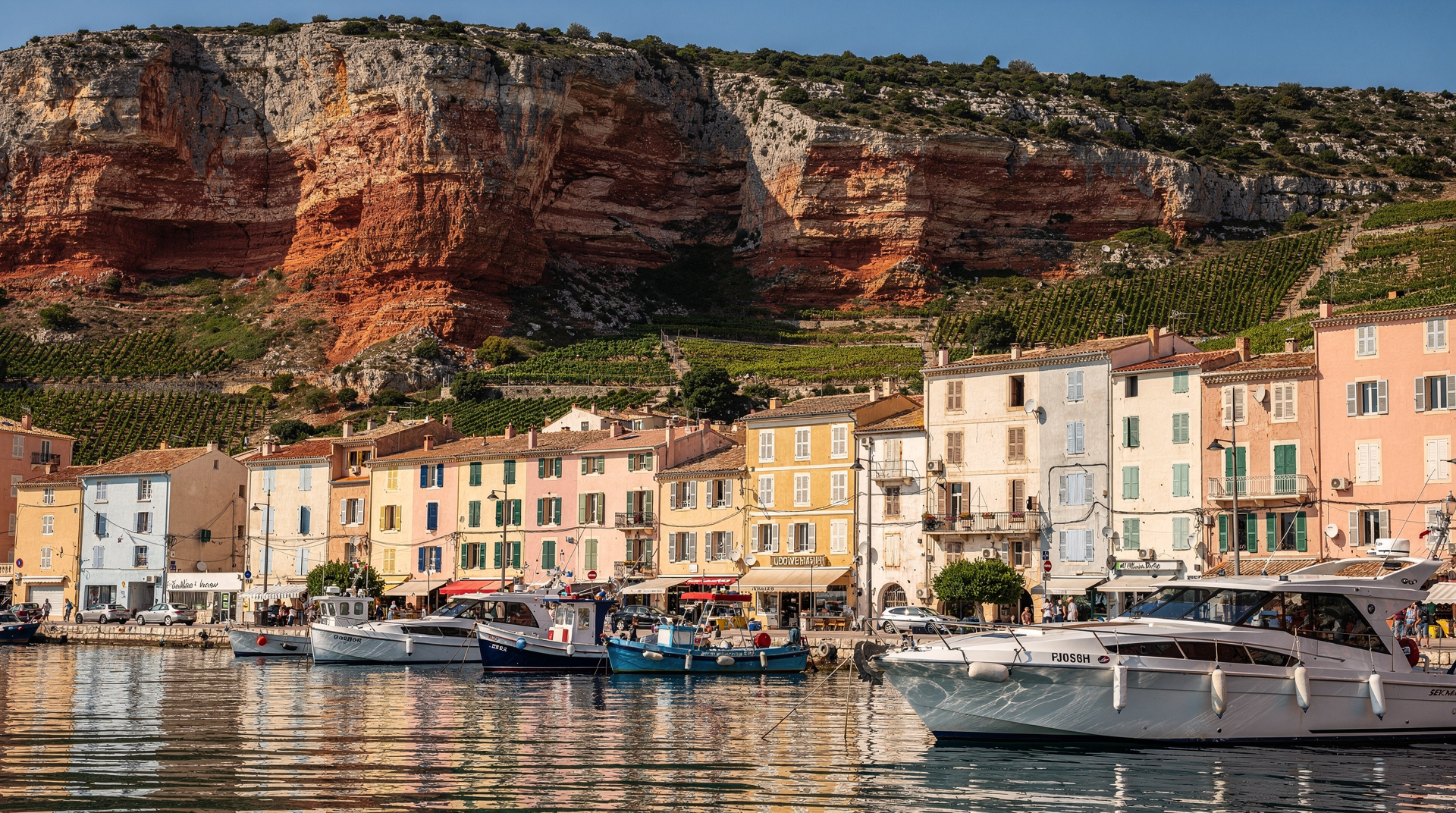
This proximity means Aubagne works as a morning excursion before returning to Marseille for lunch, or combined with a Cassis visit (15 minutes further east by car or train) for a coast and culture half-day.
Marcel Pagnol’s Aubagne
The walking circuit of Pagnol-related sites in the town takes about 1 hour. The main stops:
The birthplace on Cours Barthélémy: A plaque marks the house where Pagnol was born. The street has been partly reorganised into a Pagnol interpretation zone with panels explaining his life and work in French and English.
Le Petit Monde de Marcel Pagnol: A permanent exhibition in the town centre featuring animated santon tableaux depicting scenes from Pagnol’s films and novels, with the local landscapes recreated in miniature. More charming than it sounds — the santons are made by Aubagne craftspeople using traditional methods, and the tableaux are an effective introduction to the Pagnol world for visitors unfamiliar with the films.
The Garlaban hills: The massif visible east of Aubagne — a rocky limestone ridge rising to 714 metres — is “La Bastide Neuve” of La Gloire de mon père and the landscape of Jean de Florette. Marked walking trails from the edge of Aubagne reach the hills in 30–45 minutes. The GR97 and local circuits are signposted; the Aubagne tourist office provides trail maps. This is appropriate for day walkers with proper shoes; not demanding, but not flat.
The guided walking tour in Pagnol’s footsteps (see above) covers both the town circuit and the Garlaban approach, contextualised with readings from the texts and reference to the filming locations.
If you are building a longer stay around the city, the Marseille in one day and Marseille in two days itineraries show how much the centre alone can absorb, which is a useful check before you decide whether Aubagne deserves one of your mornings. Travellers who prefer to leave the car at home will find the practical side covered in our getting around Marseille guide, and the do you need a car in Provence guide explains why a train-based day like this one is so comfortable.
A few practical habits make the half-day smoother. Start early, so the town circuit is behind you before the lunchtime lull, when many small shops and workshops close their doors for a while. Wear shoes that cope with both pavement and a stony path, because even a short approach to the hills changes the surface quickly. Carry water if you intend to walk toward the Garlaban, since the garrigue offers little shade and no obvious place to buy a drink once you leave the edge of town.
The santonnier workshops
Aubagne is the most important santonnier town in Provence — the place where the Christmas crib figurines (santons, from the Provençal santoun, “little saints”) have been made and sold since the late 18th century. The town has more santonnier workshops than any other location in France, and several are open for visits year-round.
What santons are: Hand-painted terracotta figures depicting the characters of the Provençal Nativity scene — not only the biblical figures (Virgin, Joseph, the Three Kings) but the full cast of Provençal village life: the fisherman, the miller, the baker, the blind man, the village drunk. A traditional crèche provençale includes 60–100 santons from all levels of village society.
The workshops: Most Aubagne santonnier workshops welcome visitors to watch the moulding, firing, and hand-painting process. Several are family workshops with three or four generations of the same craft. The quality and character of the painting varies considerably — the best pieces are genuinely fine craft objects; tourist-grade versions are available at all price points.
Christmas market: The Foire aux Santons runs annually in December (typically the last two weekends), when the full range of Aubagne’s santonnier community exhibits and sells from market stalls in the town centre. This is the most important santons market in Provence, drawing collectors and casual buyers from across the region. If your timing coincides, it is one of the most genuinely local Provençal events on the December calendar.
How to shop for santons well: Look at the faces and the hands first. A good santon has a distinct expression and carefully painted clothing, while mass-produced figures tend to look alike from one piece to the next. Ask the maker how the figure was moulded and painted; in a genuine workshop the answer comes readily, and the conversation is often the best part of the visit. Buying one or two characters you actually like, rather than a whole crèche at once, is a sensible way to start, and a small figure travels home easily wrapped in clothing. If you are curious about other local crafts to bring home, our Savon de Marseille shopping guide covers a very different Provençal souvenir, and the Marseille markets guide is useful for browsing regional products more broadly.
The Foreign Legion museum
Since 1962, the French Foreign Legion has been headquartered at Camp de la Demande, on the outskirts of Aubagne. The Museum of the Foreign Legion (Musée du Souvenir de la Légion Étrangère) at the camp entrance is open to the public.
Opening hours: Tuesday to Sunday, 10:00–12:00 and 14:00–18:00. Entry is free.
The collection covers the Legion’s history from its founding in 1831 to the present: uniforms, weapons, paintings, photographs, personal objects, flags, and the memorabilia of campaigns from Algeria to Indochina to the Gulf. The Museum has a serious archival quality — this is not a promotional display but a genuine historical collection maintained by the Legion itself.
The Legion’s presence in Aubagne is visible in the town: Legionnaires in uniform are a common sight, and the Legion Etrangère headquarters building on the Route d’Aubagne is marked with the distinctive grenade insignia. The museum is a 10-minute taxi ride from the town centre (or a 30-minute walk on the D56).
Combining Aubagne with Cassis
Aubagne to Cassis is 15 minutes by TER train (direct), making a half-morning in Aubagne and an afternoon in Cassis (calanques, port lunch, AOC wine) a logical and entirely manageable pairing from Marseille. Leave Marseille at 09:00, arrive in Aubagne, do the Pagnol circuit and a santon workshop, take the 11:30 train to Cassis, spend the afternoon at the calanques or wine tasting, and return to Marseille in the evening.
Reading Pagnol before you go
Aubagne gives far more to a visitor who has opened one of the books beforehand. La Gloire de mon père and Le Château de ma mère are short, warm and easy to read, and they describe the same hills you will look at from the edge of town. If you prefer film, the screen adaptations of Jean de Florette and Manon des Sources carry the same landscape and the same rural world. Even a single chapter on the train from Marseille changes how the circuit feels: the plaque and the panels stop being a list of dates and become the start of a story you already care about.
The Provençal food that fills Pagnol’s pages is also worth a thought at lunchtime. Our Provençal cuisine explained guide and the Marseille food tour guide help you recognise the dishes and sweets you will meet, and the navettes and local sweets guide is a pleasant companion for anyone who likes to end a day out with something sweet.
Making a full day of the region
Because Aubagne asks for so little time, it pairs well with the rest of the area. The Marseille and Cassis in two days itinerary and the Marseille, Aix and Cassis in three days plan both show how to string several short stops together without rushing. For a wider look at what else sits within easy reach, the day trips from Marseille guide compares the options side by side, and the Cassis day trip guide is the natural next read if you plan the pairing described above.
Honest assessment
Aubagne is not a destination that announces itself. The town centre is an ordinary French commercial town with a few historic buildings, the Pagnol circuit, and the workshops. What it offers is a specific kind of cultural pilgrimage — tracing the real geography of one of France’s most beloved literary and cinematic landscapes — and the santonnier craft that nowhere else in Provence concentrates at this density. For Pagnol readers, the hills above Aubagne seen for the first time have the quality of meeting an old friend. For those who have not read the novels, the guided walk provides the context that makes the town more than the sum of its modest parts.
Aubagne alongside other Marseille day trips
Aubagne’s short train ride makes it an easy add-on rather than a destination in its own right for most itineraries. Visitors doing a longer Provence loop from Marseille often place it before or after a bigger day out — a morning in Aubagne followed by an afternoon in Cassis is the classic pairing, but the same half-day logic works ahead of a full day in Arles or Aix-en-Provence on a multi-day trip, since none of the three overlap geographically or thematically.
For wine-interested visitors passing through, the Coteaux Varois appellation is reachable by car from Aubagne in roughly the same time as from Marseille — see our wine tasting near Marseille guide for the full regional picture.
Frequently asked questions about Aubagne
Is Aubagne worth visiting from Marseille?
Yes, as a half-day addition rather than a standalone destination. The Marcel Pagnol circuit, the santonnier workshops, and the free Foreign Legion museum together fill a morning or afternoon well, particularly for visitors already planning a Cassis trip on the same day.
Can I combine Aubagne with Cassis in one day?
Yes, easily. Aubagne to Cassis is about 15 minutes by direct TER train. A common structure is Aubagne in the morning (Pagnol circuit, a santonnier workshop) and Cassis in the afternoon (calanques, port lunch, or wine tasting), returning to Marseille in the evening.
Top experiences
Bookable activities with verified prices and instant confirmation on GetYourGuide.