An afternoon at a Marseille soap workshop
Marseille: MuSaMa soap museum and soap workshop
On the soap you already know
The Savon de Marseille is one of the most recognisable artisan products in France and one of the most counterfeited. The traditional cube — 72 percent vegetable oil (olive, palm, or their combination), sodium hydroxide (lye), water, salt, and nothing else — has been made in the Marseille area since the 17th century, when Louis XIV passed the Edict of Colbert in 1688 regulating its production. The regulation was partly about quality and partly about protecting the Marseille monopoly; that combination of quality control and commercial self-interest is a very Marseillais arrangement.
The soap you buy in a souvenir shop marked “Savon de Marseille” is almost certainly not the traditional article. The 72-percent olive oil cube has been largely displaced by cheaper products using palm oil or synthetic ingredients, labelled with the same name, sold at prices that reflect the lack of genuine craft. The traditional cube is still made, by a small number of savonneries in and around Marseille, but finding it requires knowing what you are looking for.
We went to find it at the source, in August 2019.
| At a glance | |
|---|---|
| Where | Marius Fabre savonnerie, Salon-de-Provence — around 45 minutes north of Marseille |
| Cost | Guided factory tour generally free or low-cost; a genuine 300g cube around EUR 4–5 |
| Time needed | Half a day if driving from Marseille (tour plus travel) |
| Getting there | Car recommended; no direct convenient public transport from central Marseille |
| Best time | Weekday mornings, when tours have traditionally run |
Marius Fabre
The savonnerie we visited was Marius Fabre, which operates from a factory in Salon-de-Provence — about 45 minutes north of Marseille — and has been making traditional Marseille soap using the original process since 1900. The factory is open to visitors; in 2019, tours ran on weekday mornings and included access to the production floor, where the four-step cooking process (saponification, salting, removal to the basin, drying in the mould) takes place in the original manner.
I say Marius Fabre specifically because this is a verifiable, operational savonnerie with a documented history and a product we have used and can vouch for. The traditional factories in the Marseille industrial zone north of the city (there were once over 100 savonneries in the area; now a handful remain) generally do not offer visitor access in the same organised way. Marius Fabre represents the tradition clearly and honestly.
The production floor
The smell reaches you before you enter the production area. It is not unpleasant — somewhere between olive oil and warm linen — and it intensifies as you approach the copper vats. The vats are enormous: industrial in scale, though the process inside them is essentially unchanged from the 17th century. The saponification — the reaction between the oils and the lye that produces soap — takes place over four days of cooking and washing, with seawater used in the traditional process to separate the soap from the glycerine.
Our guide for the morning tour was one of the production staff, not a professional guide, which meant the explanations were technically precise and occasionally required follow-up questions. The process is more interesting than I expected: the four-stage cooking produces different consistencies of soap at different points, and the skill of the maître savonnier is in reading the texture and timing the stages correctly. The traditional process cannot be fully automated because the reading of the soap’s consistency requires human judgment.
The moulds — long rectangular basins on the factory floor — hold the liquid soap as it solidifies into a slab that is then hand-cut into cubes. We watched the cutting, which is done with a grid of wires in a frame pressed through the solidified soap, and were given a cube that had just been cut. It was warm. The smell was very strong. It felt like the beginning of something.
The dried soap
The finished soap needs to dry for four weeks before it is sold. During this period the outer surface acquires the grey-green colour that is characteristic of the authentic product. The interior, when cut, is pale green. A cube of genuine Savon de Marseille, held up to light, is slightly translucent.
The counterfeiting problem is visible when you compare the genuine article with the versions sold in tourist shops. The tourist versions are white or uniformly green, have added fragrance, and have a surface texture that is smooth and consistent in a way that machine-produced soap is. The genuine cube is irregular, the grey-green surface is uneven, and it has no smell beyond the faint organic note of the raw soap.
At the Marius Fabre boutique at the end of the tour, the 300-gram traditional cube was EUR 4–5 in 2019. The tourist shop version in Le Panier or near the Vieux-Port was EUR 8–12 for a cube with additional packaging and branding. The economics explain the counterfeiting.
Why this matters
The Savon de Marseille is one of the few genuinely local artisan products left in a region that has, in many categories, been flooded with versions of Provence made for tourists rather than by Provençal producers. The lavender soap, the calissons, the santons — in each category there are traditional versions made with integrity and mass-produced versions made for the souvenir market.
Buying the traditional soap from a genuine savonnerie is not a romantic act, though it feels like one. It is a practical choice: the soap lasts longer (the high oil content means it is more concentrated), it has no synthetic additives, and the purchase supports the few remaining producers of an article that has been made in this specific region for three centuries.
We came back from Salon-de-Provence with four cubes and a block of liquid soap in a glass bottle. Three years later, we are still working through the last cube. This is, itself, a feature.
What to look for when buying
The identifying characteristics of genuine Savon de Marseille, worth knowing when you encounter it in a boutique or market:
The 72 percent stamp: Traditional Savon de Marseille must contain at least 72 percent fatty acid content from vegetable oil. This is typically stamped directly on the cube. Absence of this stamp is a significant indicator.
The colour: The exterior of an authentic cured cube is grey-green, uneven in shade, with a slightly powdery surface. The interior, if cut, is pale green. White soap is not traditional Savon de Marseille, regardless of what the packaging says.
No added fragrance: The traditional cube has no added perfume. The slight organic smell is the base soap itself. Lavender-scented, rose-scented, or any other fragranced version is not the traditional product — it may be good soap, but it is not what has been made in this region since the 17th century.
Weight: A genuine 300-gram cube has significant density. Cheaper soaps with lower oil concentration feel lighter. This is a difficult characteristic to test in a shop but becomes obvious when you handle both types.
Other traditional Marseille crafts worth the same scrutiny
The soap counterfeiting problem is not unique. Provence’s other signature artisan products — santons (the hand-painted terracotta nativity figures), calissons (the almond-and-candied-melon sweet associated with Aix-en-Provence), and traditional woven fabrics — have all been diluted by mass-produced tourist versions sold under the same names.
The pattern is consistent: a craft with a genuine, centuries-old production method, a handful of remaining producers who still do it properly, and a much larger volume of cheaper imitations sold to visitors who do not know what to look for. If you are interested in this thread beyond soap, our Provence markets piece covers where the genuine artisan stalls tend to cluster versus the tourist-facing ones.
For those who cannot reach Salon-de-Provence
The Marius Fabre boutique in Marseille (on the Rue Francis de Pressensé in the 1st arrondissement) sells the factory production without a tour. The MuSaMa soap museum in Marseille, which also offers a soap workshop experience, is a city-centre alternative for people who want the hands-on version without the Salon-de-Provence drive. See the Marseille guide for the museum details.
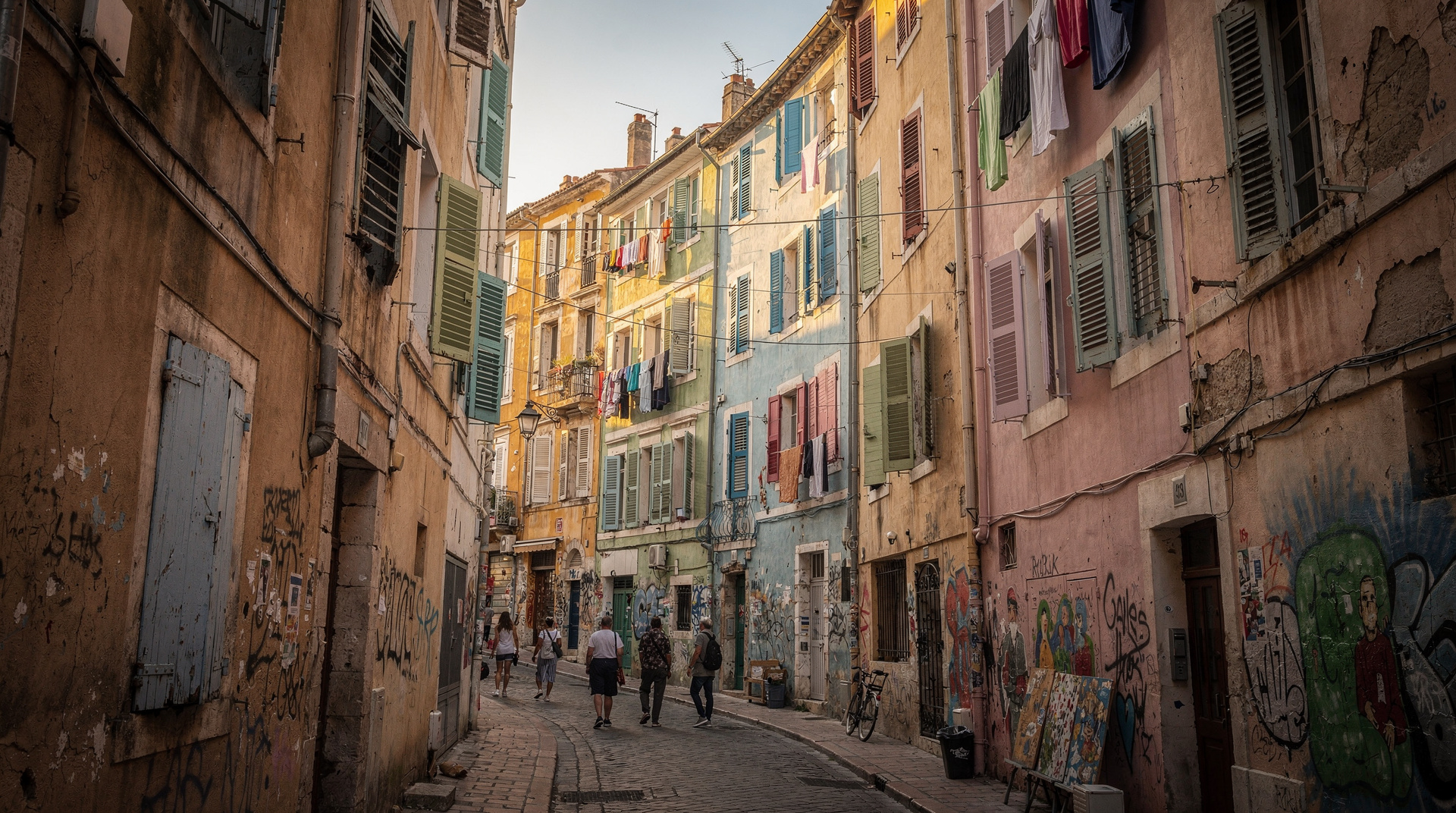
The Le Panier neighbourhood has several soap boutiques. Not all are selling the traditional article, but asking specifically for “72 pour cent” and examining the colour and surface texture will identify the genuine product. The price should not be EUR 12 for a 300-gram cube. If it is, look further.
For more on Marseille’s artisan traditions and local produce, our Provence markets piece covers where to find genuine local products across the region.
Fitting a soap visit into a wider trip
A savonnerie visit works best as one thread in a longer stay rather than a standalone mission. If you are still shaping your plans, our Marseille for first-timers guide and the Marseille in one day itinerary show where a half-day outside the city might fit. The soap story also connects naturally to the city’s past: Marseille’s history explains why a port city became the centre of a trade built on oils, ships and commerce.
If the drive is what holds you back, do you need a car in Provence and getting around Marseille lay out the options honestly. For a day when the weather turns, Marseille on a rainy day is a good companion read, since an indoor craft visit suits that kind of afternoon.
Buying well, wherever you shop
Our guide to buying savon de Marseille goes deeper on the shopping side, and Marseille tourist traps puts the soap problem in context alongside the other things that look local but are not. The same scepticism helps with sweets: navettes and local sweets covers the traditional versions worth seeking out.
For the neighbourhood where many of the boutiques cluster, see the Le Panier guide and our personal piece on why we love Le Panier. For more offbeat stops around the city, hidden gems of Marseille and the Marseille markets guide are the natural next reads. If you plan to browse near the harbour, the Vieux-Port area guide will help you spot which shops to skip.
Aix-en-Provence is another good place to look for traditional products, and our Aix-en-Provence destination page is a starting point for that side trip.
Frequently asked questions about afternoon at a Marseille soap workshop
Can you visit a real Savon de Marseille factory without a car? It is difficult. Marius Fabre is in Salon-de-Provence, around 45 minutes north of the city, and there is no convenient direct public transport route from central Marseille. The MuSaMa soap museum inside Marseille itself, mentioned above, is the practical alternative if you do not have a car.
How do you know if Savon de Marseille is genuine before buying it? Check for the 72 percent fatty-acid stamp, a grey-green and slightly uneven exterior, no added fragrance, and significant weight for the size — all covered in the “what to look for” section above. If a 300-gram cube costs EUR 12 or more in a souvenir shop, treat that as a red flag rather than a sign of quality.
Top experiences
Bookable activities with verified prices and instant confirmation on GetYourGuide.