Marseille in two days: a perfect weekend itinerary for couples
Marseille: iconic Calanques boat tour with swimming
Duration: 3-4.5 hours
Two days is the minimum to feel Marseille properly — one day for the city’s historic core, one day for the Calanques. This combination gives you the harbour and the hills, the medieval streets and the open sea, the urban buzz and the limestone wilderness. It is not a relaxed visit; it is a tight one with high returns. Couples visiting for a first time will leave with a clear sense of why Marseille inspires loyalty in its visitors.
This itinerary requires no car. Both days are entirely manageable by foot, metro, and boat from the Vieux-Port. If you have one additional day to add, see the three-day itinerary for the natural extension.
| At a glance | |
|---|---|
| Where | Vieux-Port area (Day 1) and Calanques National Park (Day 2), Marseille |
| Cost | Around 150–250 EUR per couple per day including the boat tour, meals, and local transport |
| Time needed | 2 full days, no car required |
| Getting there | Marseille-Provence Airport (30 minutes by shuttle bus) or Gare Saint-Charles (TGV from Paris around 3h15) |
| Best time | May–June or September for warm water without peak crowds; July–August is busiest and hottest |
If you are still deciding how many days to give the city, our best time to visit Marseille guide and the one-day itinerary help calibrate expectations before you commit to a full weekend.
Book the Calanques boat tour before anything else — morning departures in peak season sell out a week or more ahead.
Day 1: The city in full
Morning: Vieux-Port and the MuCEM waterfront (8:00–12:30)
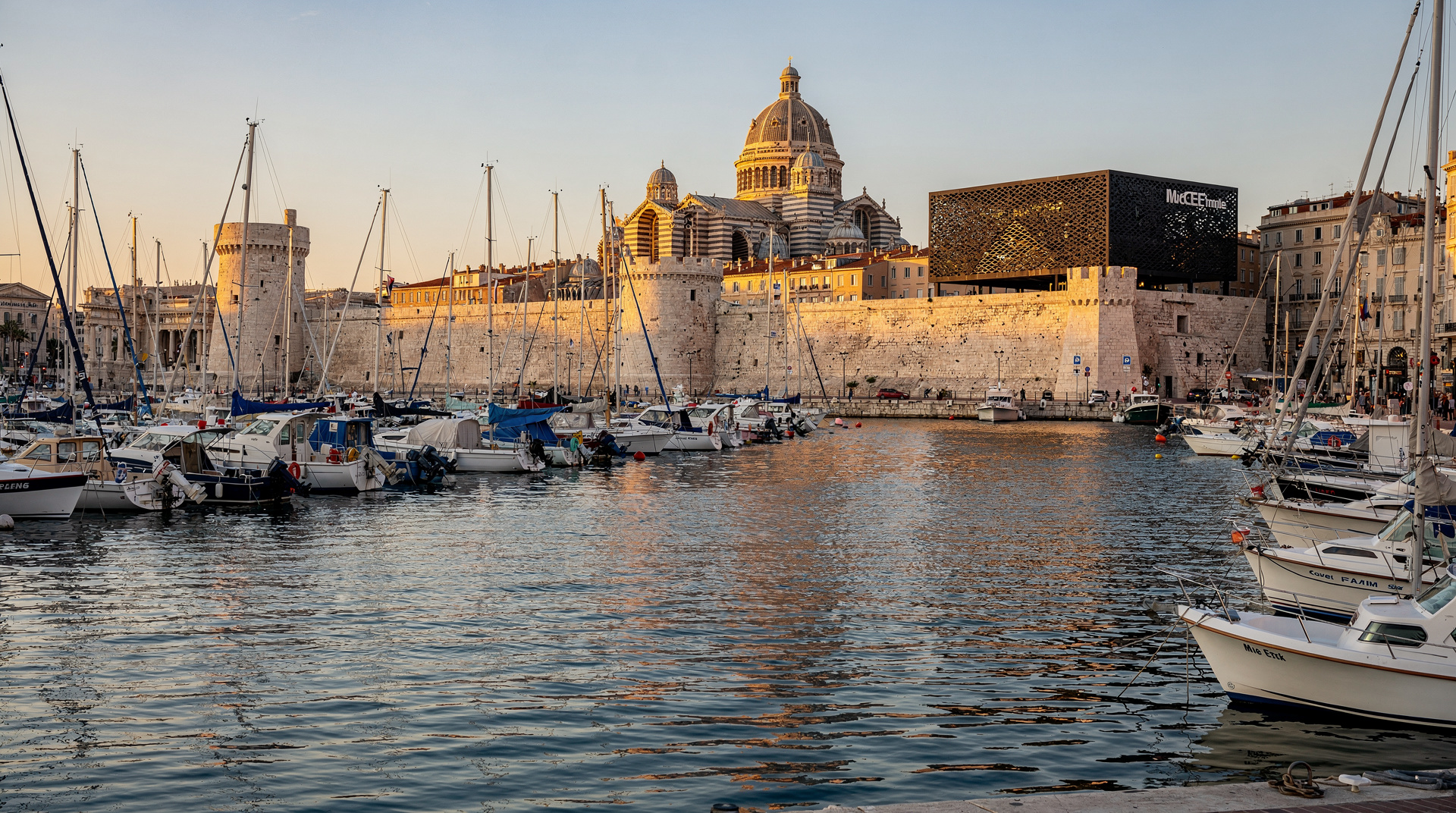
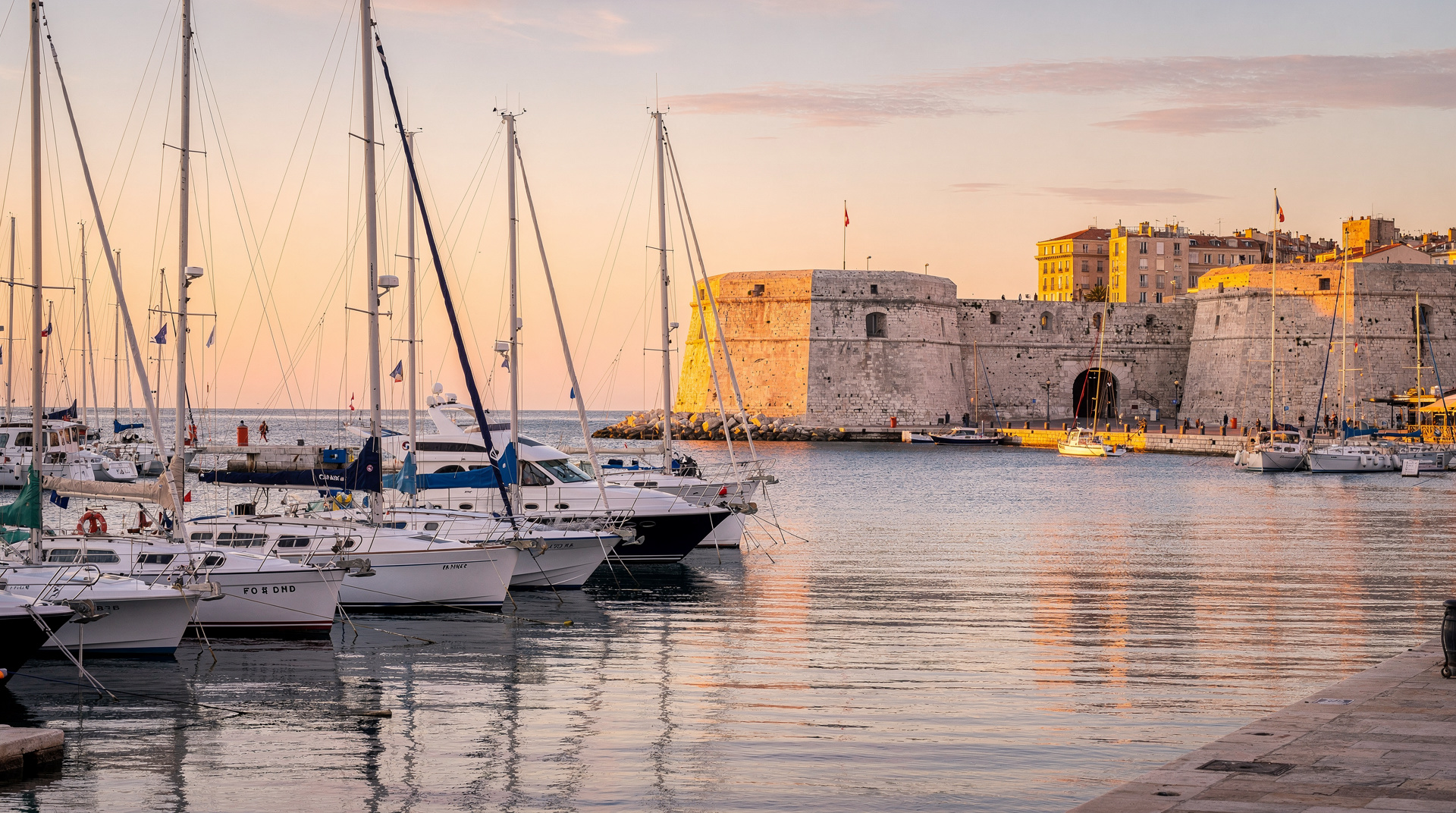
Start at the Quai des Belges at the Vieux-Port for the fish market, which runs every morning until around 11:00. Fishermen sell direct from their boats — sea urchins, red mullet, whole sea bass, shellfish. Arrive by 8:30 to see it at full pace. From the quai, walk west along the north waterfront toward MuCEM, pausing at the Ombrière (Norman Foster’s reflective steel canopy, best in morning light).
MuCEM area: The building itself — a concrete lattice cube connected by a footbridge to the 17th-century Fort Saint-Jean — is one of the finest pieces of architecture in southern France. Walk across the footbridge and explore the fort’s open terraces for views over the harbour entrance and the offshore islands. This costs nothing and takes about 45 minutes at a relaxed pace. Reserve the MuCEM interior exhibitions (approximately 11 EUR) for rainy-day backup or if Mediterranean cultural history is your thing.
From MuCEM, walk back east and turn north into Le Panier.
Le Panier: 10:00–12:30
Le Panier is the oldest part of Marseille — narrow, hilly, Mediterranean in the truest sense. The neighbourhood takes about 90 minutes to explore properly: the baroque courtyard of the Vieille Charité, the street art murals on Rue du Refuge and surrounding lanes, the small squares with olive trees and drying laundry. There is no fixed sequence; wandering is the point.
Exit Le Panier via the steps down toward the south quai (Quai de Rive Neuve) for a change of waterfront perspective.
Lunch: 12:30–14:00
The south quai has good options. For something genuinely local, skip the tourist-facing restaurants right on the waterfront and walk one block inland toward Cours Estienne d’Orves — a broad square lined with café terraces where locals eat alongside tourists. Budget 15–25 EUR per person.
Afternoon: Notre-Dame de la Garde and the Corniche (14:00–19:00)
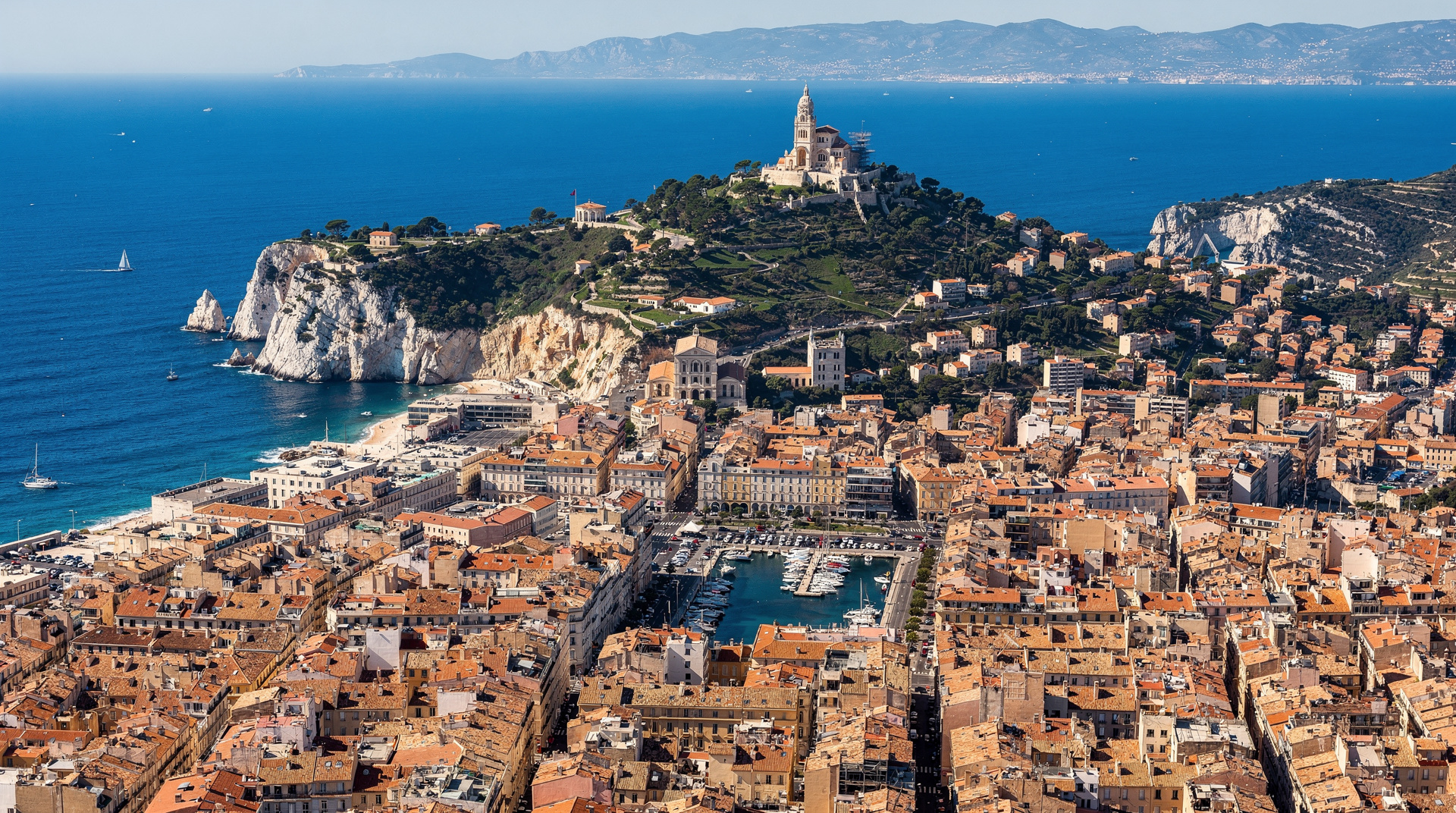
Take the tourist petit train from the Vieux-Port to Notre-Dame de la Garde (round trip 12–15 EUR, departures every 30–40 minutes). The hilltop basilica at 154 metres has the best panorama in the city — the Calanques southeast, the Frioul Islands offshore, the whole Vieux-Port below. Allow 40 minutes at the top. The interior is worth a few minutes: the votive offerings (ex-votos) from sailors fill the lower basilica and are unexpectedly moving.
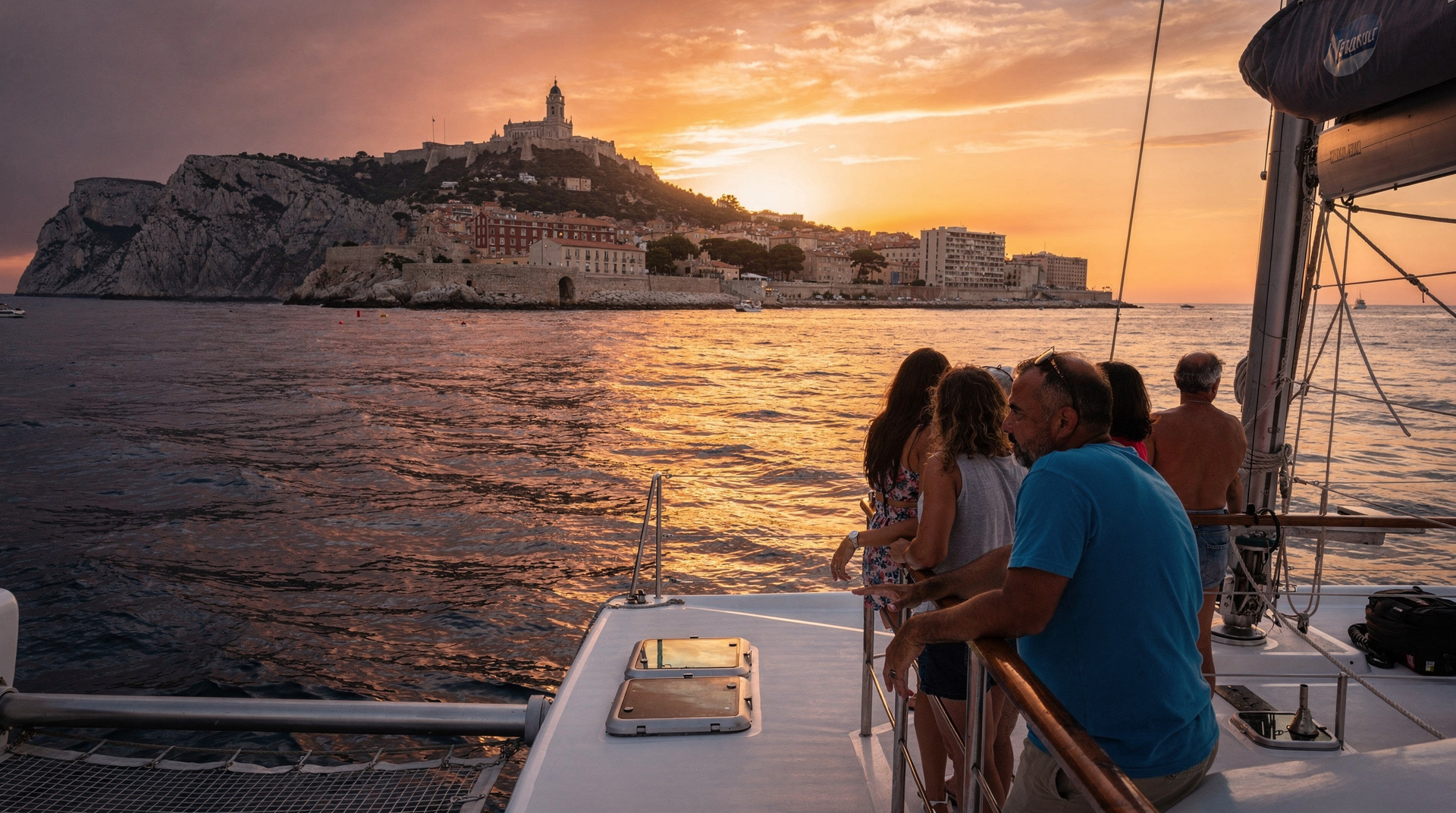
Afternoon alternative (if you prefer water): Skip the hilltop for now and take an afternoon boat tour to the Frioul Islands — 45 minutes from the Vieux-Port, wild limestone islands with turquoise coves and the ruined Château d’If en route. Round trip with island time is about 2–2.5 hours. The Château d’If (inspiration for The Count of Monte Cristo) costs an additional 7–9 EUR to enter.
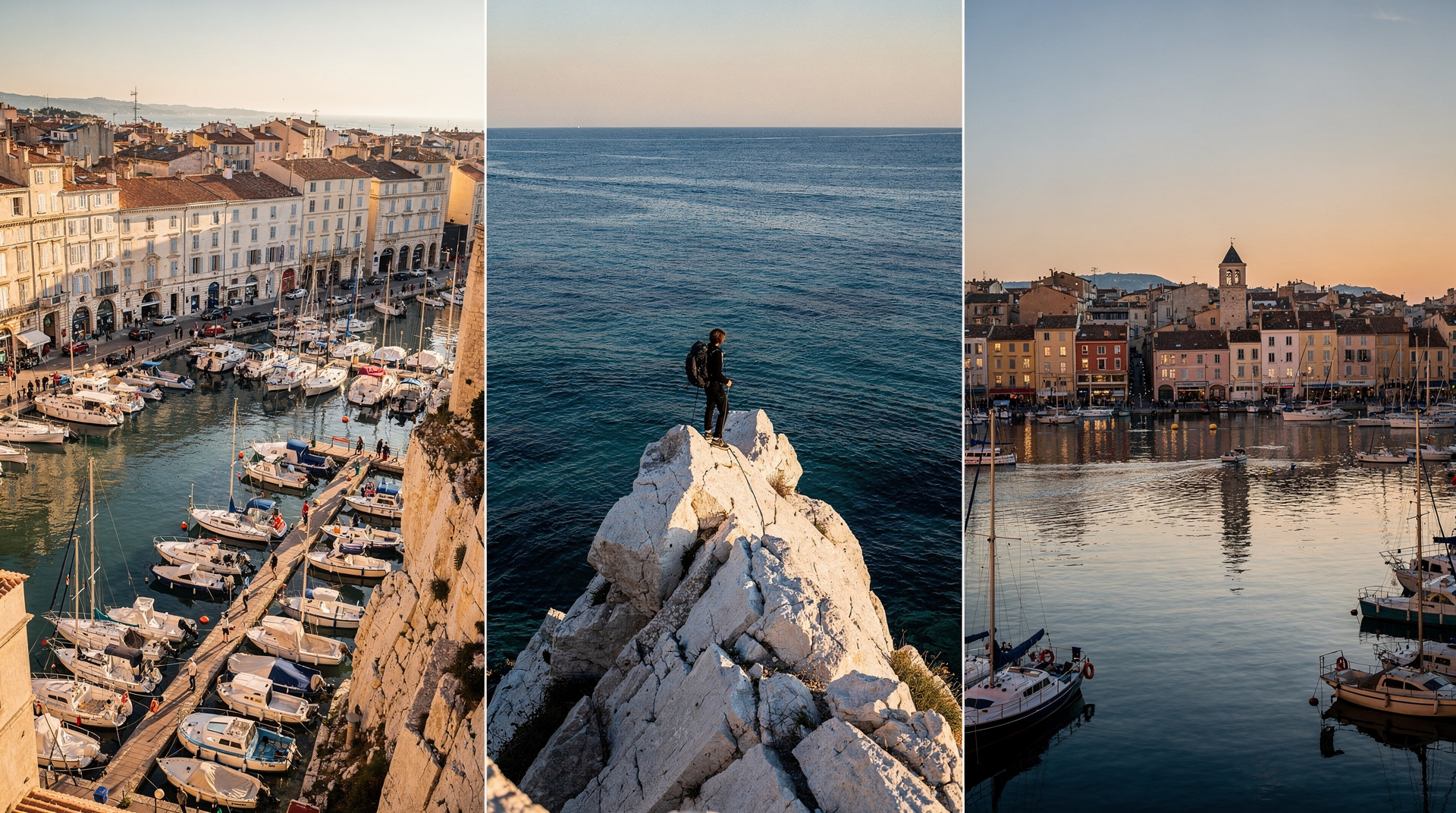
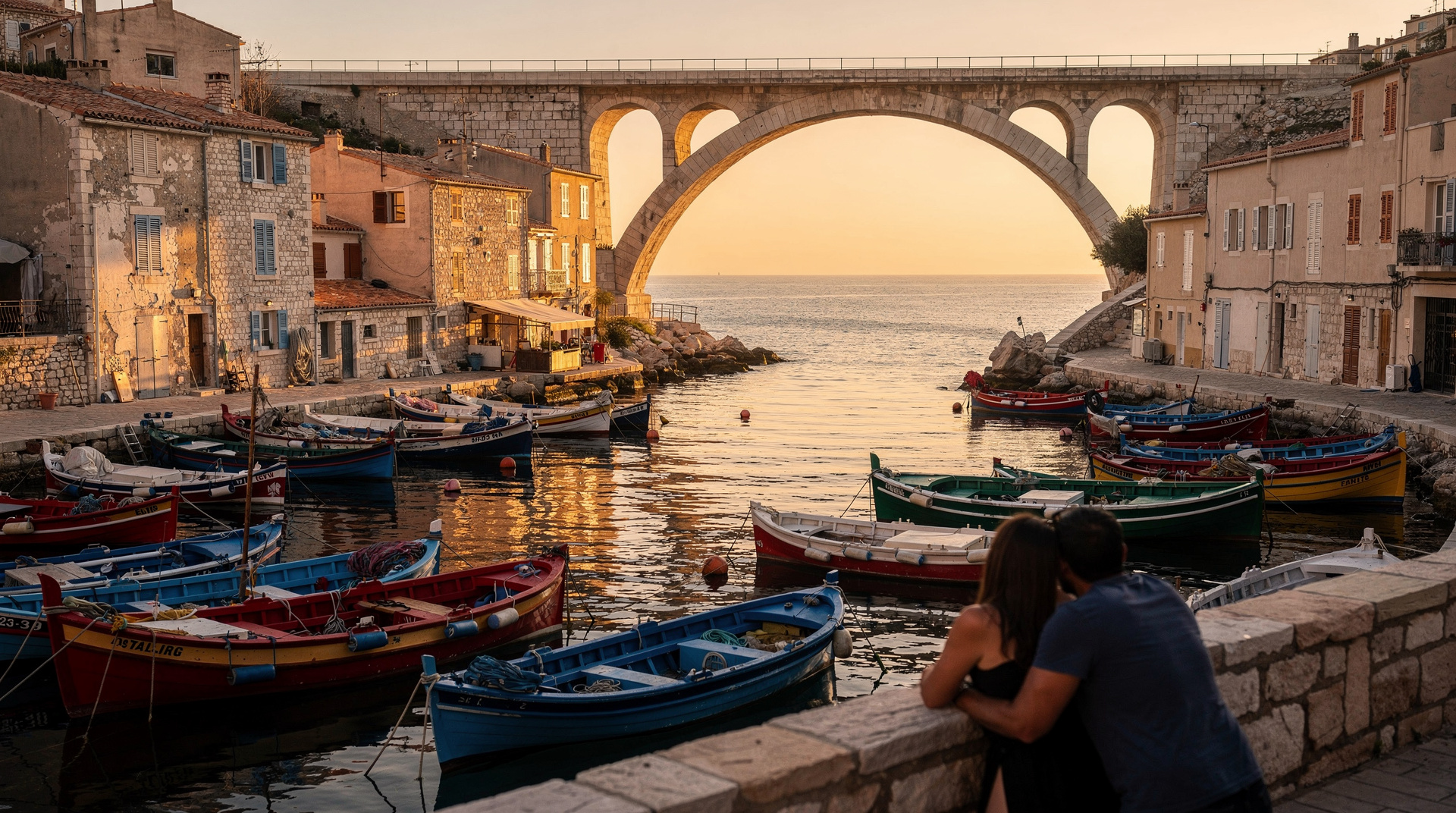
After returning from either the basilica or the islands, walk or take bus 83 south along the Corniche Kennedy toward Vallon des Auffes — a tiny traditional fishing cove set below the Corniche promenade, one of those spots that makes Marseille feel like a secret. The walk from the Vieux-Port to Vallon des Auffes along the Corniche takes about 30 minutes.
Sunset and dinner: 19:00–21:30
Return to the Vieux-Port for sunset — the west end of the harbour (Quai de Rive Neuve) faces the setting sun directly and the light on the water is exceptional on clear evenings. For dinner, Cours Julien (15-minute walk east of the Vieux-Port) is the neighbourhood that feels most like the real city: street art, independent restaurants with open windows, natural wine bars, a younger local crowd. Expect 30–45 EUR per person for a sit-down dinner with wine.
Day 2: The Calanques
Morning: boat tour to the Calanques (8:30 departure)
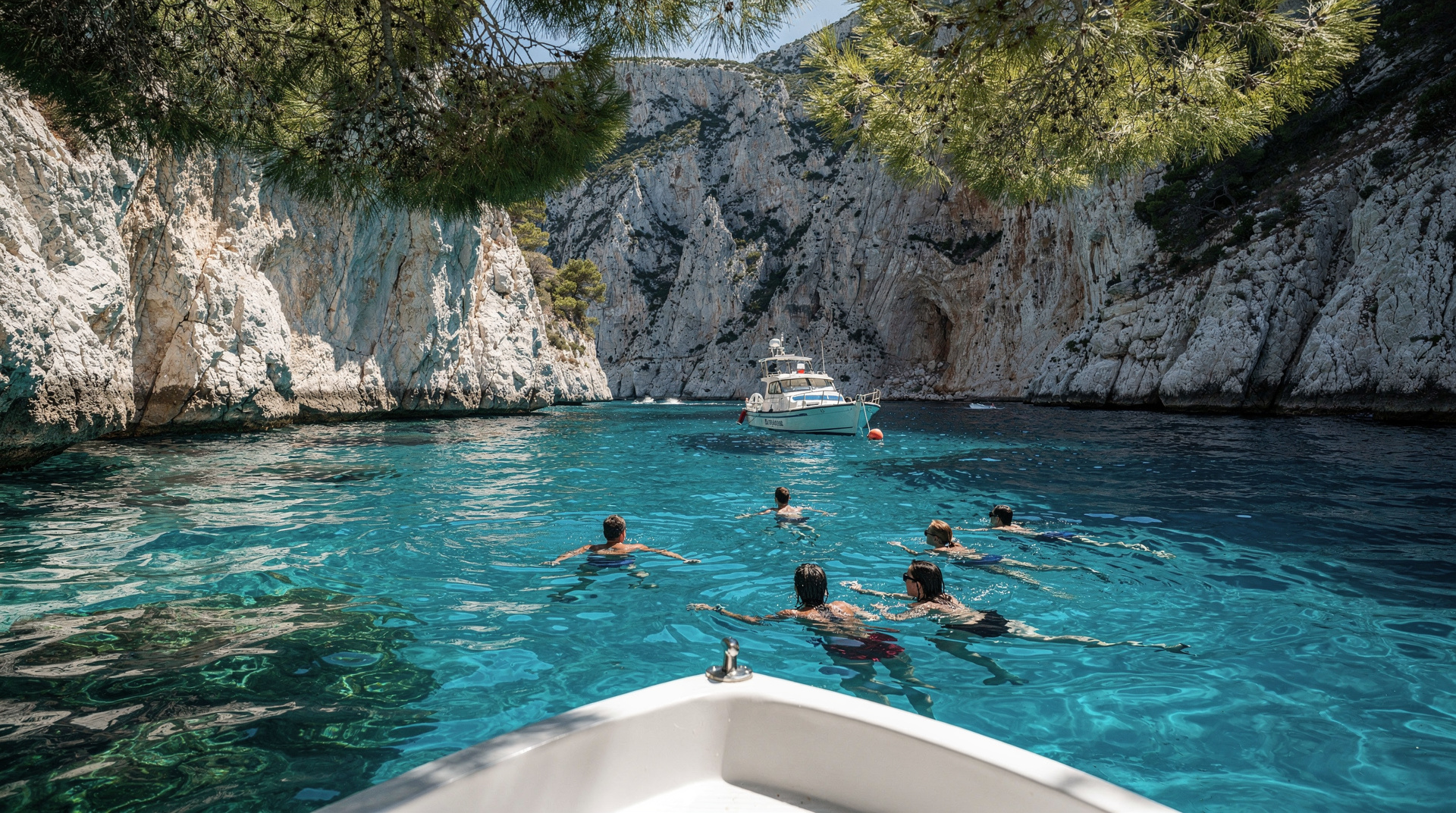
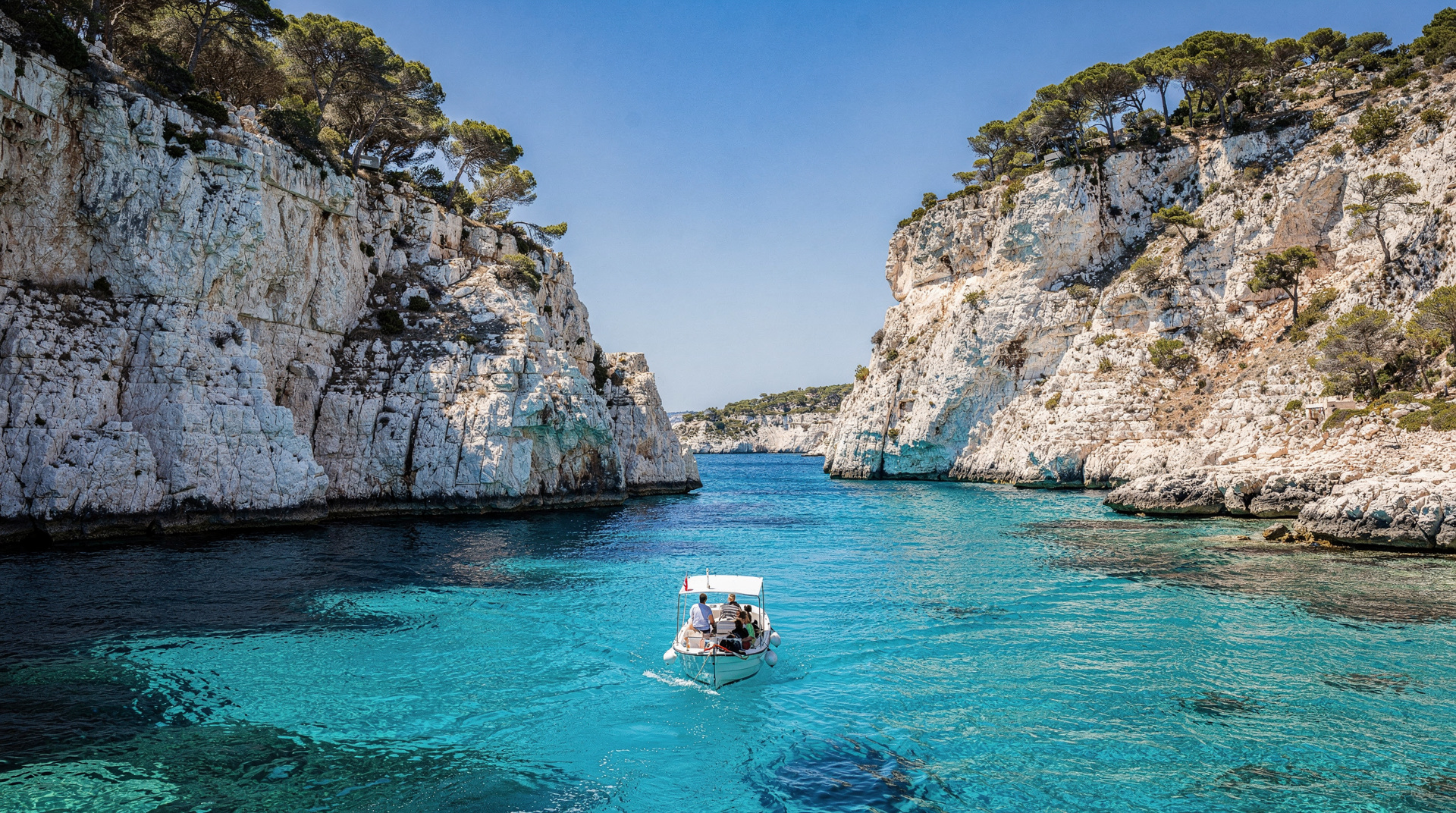
This is the centrepiece of the two-day visit and deserves the entire morning. Calanques boat tours depart from the Vieux-Port — look for operators near the Quai des Belges end. A half-day tour (3–4.5 hours) covers 4–6 calanques including stops for swimming at the clearest limestone inlets. The water inside the Calanques National Park is extraordinary — turquoise to emerald depending on depth and light, enclosed by white limestone cliffs.
What to know before booking:
- Summer access rules apply. From June 1 to September 30, hiking trails in the Calanques may be closed on fire-risk days (orange and red codes). Boat access is not affected. See the summer access guide for the full system.
- Book ahead. Morning departures in July–August sell out 1–2 weeks in advance. Shoulder season (May, June, September) requires a few days’ notice.
- Bring sunscreen, a hat, water, and reef shoes or flip-flops for the swimming stops. The boat provides snorkelling but not all operators supply fins.
Return to the Vieux-Port by approximately 12:30–13:00.
Lunch and afternoon: Noailles, food markets, and a slow afternoon (13:00–18:00)
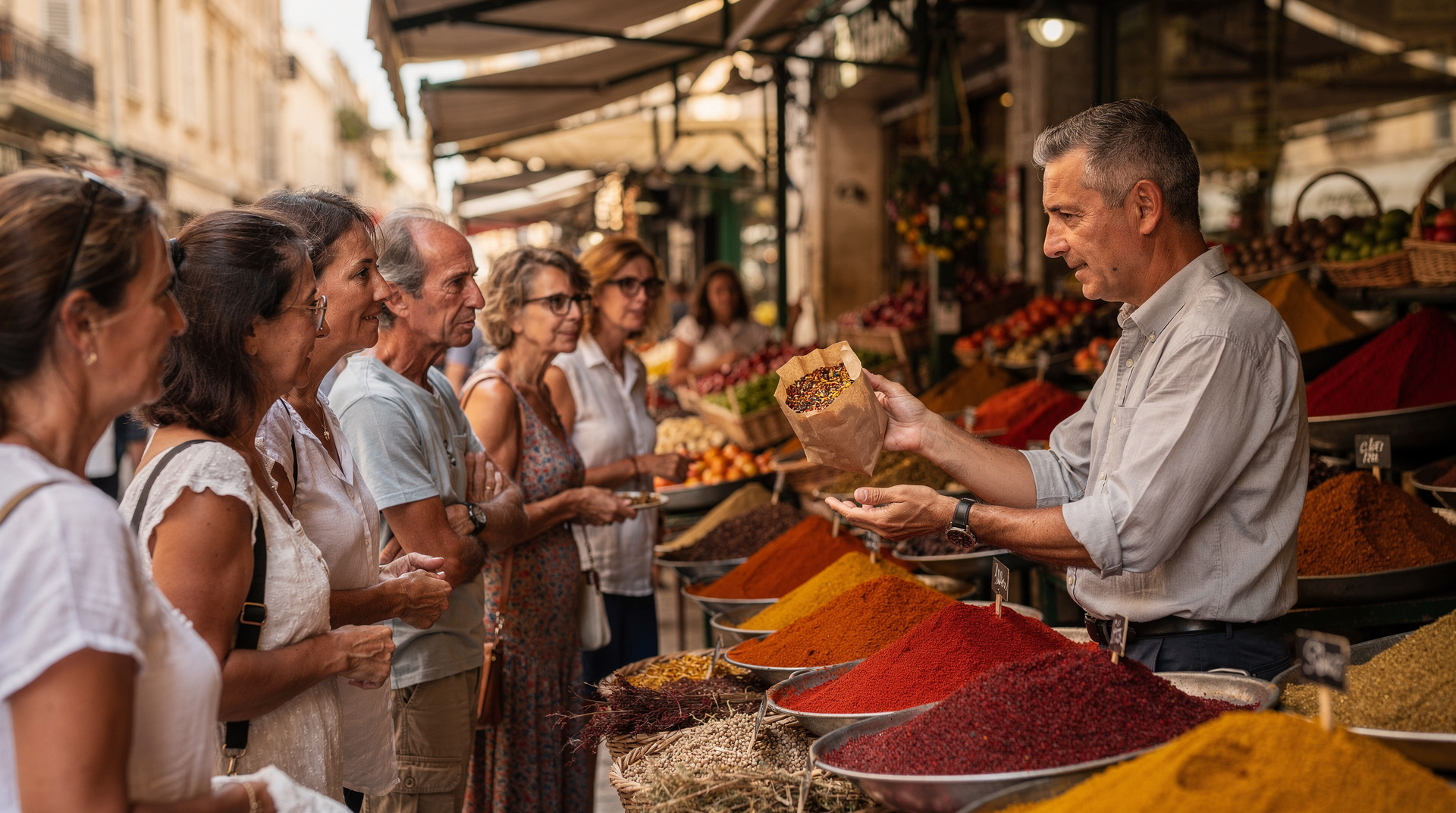
After a morning on the water, the afternoon calls for a gentler pace. Walk from the Vieux-Port east to Noailles — the covered and open-air market quarter that is the most authentically Marseillais neighbourhood in the city centre. The Marché des Capucins (open daily until early afternoon) is a compressed world of North African vegetables, spices, olives, dried fruits, and live poultry. Noailles is also where the city’s Maghrebi and Comorian communities shop — a proper neighbourhood market, not a tourist one.
Have a late lunch in Noailles: street-food options (Tunisian brik, sandwiches with merguez, fresh fruit juices) for under 10 EUR per person, or a sit-down couscous or tagine for 15–20 EUR.
In the afternoon, options split by interest:
Culture: The Musée d’Histoire de Marseille in the Centre Bourse (near the Vieux-Port, 6 EUR) occupies the site of an excavated section of the ancient Greek port — visible through a glass floor. It is a compact and genuinely interesting museum for its scale.
Food and wine: A wine tasting session at one of Marseille’s wine shops, or a pastis discovery experience in the city, makes a good afternoon bookend to the active morning on the water.
Walking: Stroll through Cours Julien in the afternoon when the terraces open and street art is best photographed in afternoon light.
Late afternoon: Prado beaches (optional, 16:00–18:30)
La Corniche and Prado beaches are a 25-minute bus ride (bus 83 from the Vieux-Port, direction Bonnenfant or Plage du Prado). The Prado beaches are free, sandy, and backed by a coastal promenade — genuinely pleasant for an afternoon swim in a way that the rocky city-centre waterfront is not. This works best in June, July, August, and September when the sea is warm.
Evening: dinner and farewell (19:30–21:00)
On a final evening, lean toward something the city does particularly well. Marseille has no dish more representative than bouillabaisse — the saffron-and-rouille fish stew — but it is a significant commitment in cost (40–60 EUR per person at restaurants that do it properly with the Charte bouillabaisse) and requires genuine hunger. If you want it, it is worth doing once; see the food guide for honest recommendations on which restaurants to trust.
For something lighter: the waterfront between the Vieux-Port and the Joliette neighbourhood has oyster and shellfish bars where you can eat at bar height with a glass of local wine for 20–30 EUR per person.
What to book in advance
- Calanques boat tour — book this first, ideally 1–2 weeks ahead in summer. The morning 8:30–9:00 departure gives you the best light and the coolest temperatures for swimming.
- Guided walking tour of Le Panier if you prefer structured context on Day 1 morning — see the first-timers guide for tour comparisons.
- Check the Calanques fire risk status the evening before Day 2. If the colour is orange or red, your boat tour still runs but plan B for hiking is not available.
- If visiting between June 27 and August 30, and hiking Sugiton is tempting after the boat tour, reserve the Sugiton slot via calanques-parcnational.fr up to 3 days ahead (it is free).
Variations
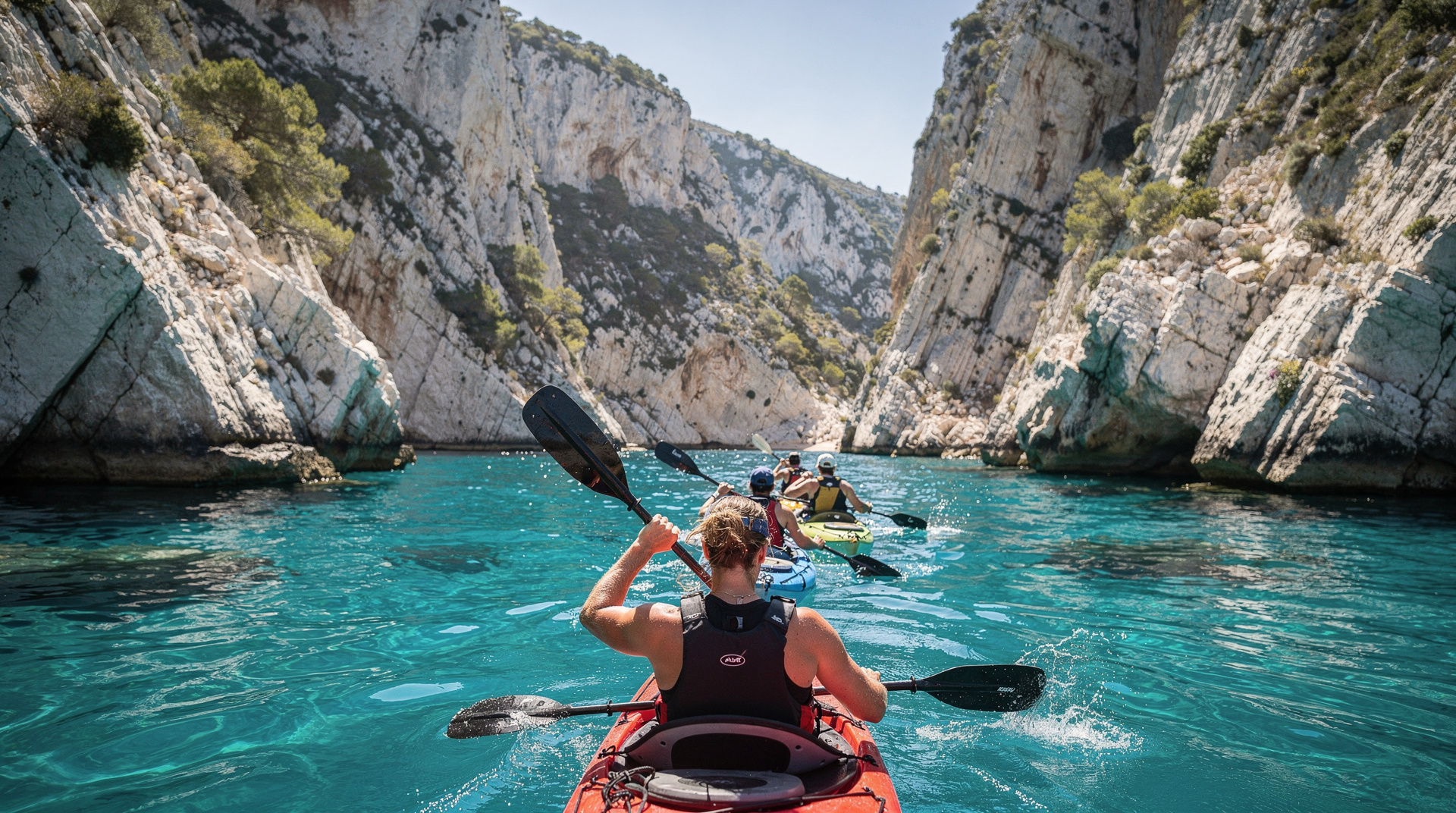
Adventure version: Replace the Calanques boat tour with a sea kayak half-day tour from the Vieux-Port or from Cassis. Kayaking gets you into calanques that motorboats cannot reach and gives a physically active morning. See the Calanques weekend itinerary for a deeper adventure version of this trip.
Rainy Day 2: If the Calanques are called off by weather (rare but possible in autumn or spring), use the day for the city’s museums — MuCEM (2–3 hours, 11 EUR), Musée d’Histoire de Marseille (1.5 hours, 6 EUR), the MAC (contemporary art museum in a repurposed 19th-century slaughterhouse, 6 EUR, 30 minutes by bus 23).
For summer visits (July–August): Calanques hiking trails will likely be closed. The boat tour runs regardless. Start the boat tour as early as possible (8:00–8:30) to be on the water before afternoon heat peaks. Wear serious sun protection — the reflected light on limestone and water is intense.
Extended to three days: Add Cassis as a full third day — 22 minutes by TER train from Gare Saint-Charles. The three-day itinerary walks through the full sequence with an honest comparison of Cassis by train versus a guided Cassis day trip.
Two days in Marseille: practical context
Getting around
Marseille’s public transport network is functional and covers the tourist zone well. The metro has two lines; Line 1 (blue) runs east-west and connects Gare Saint-Charles to the Vieux-Port (one stop, approximately 5 minutes). Line 2 (red) connects the Vieux-Port north to the Joliette/Docks area and south to Rond-Point du Prado for the beaches. A single trip is approximately 2 EUR; a carnet of 10 tickets costs approximately 15 EUR.
Bus 83 is the essential scenic route — it runs south from the Vieux-Port along the Corniche Kennedy to the Prado beaches, passing Vallon des Auffes and offering sea views the entire way. Frequency varies but runs every 15–20 minutes in season. The small harbour ferry crossing between the north and south quais of the Vieux-Port costs 0.50 EUR and runs continuously during the day — a ridiculously good value sea crossing.
Taxis and Uber operate throughout. For Notre-Dame de la Garde, a taxi from the Vieux-Port costs approximately 10–15 EUR. The petit train is 12–15 EUR round trip and includes the hill climb that makes the taxi unnecessary.
Where to stay
For a two-day visit, the best base is within walking distance of the Vieux-Port or one metro stop from it. The 1st arrondissement (Vieux-Port north quai area) and the 6th arrondissement (Cours Julien, Préfecture) offer the best combination of location, atmosphere, and mid-range accommodation value.
Mid-range hotels close to the Vieux-Port cost 90–160 EUR per night for a double in season (July–August peaks). Boutique and design hotels in the 7th arrondissement (south quai, Endoume) cost 140–220 EUR and offer better quality for the price. Staying on the 7th gives easier access to the Corniche and Vallon des Auffes but is slightly further from Le Panier and MuCEM.
Book accommodation 4–6 weeks ahead for July–August. Spring and autumn availability is generally good with 1–2 weeks’ notice.
Marseille vs Paris for a weekend: an honest comparison
Travellers who know Paris well and are visiting Marseille for the first time sometimes arrive with a Paris framework — expecting a city that reveals itself gradually through neighbourhood walking, with excellent cafés at every corner and a frictionless tourist infrastructure. Marseille is different in important ways:
The city is rougher at the edges. The tourist infrastructure — signage, English menus, reliable café hours — is less developed than Paris. Some neighbourhoods that visitors read about online are genuinely less pleasant to walk through than described. The rewards of wandering in Le Panier are real; the rewards of wandering off-track in parts of Belsunce or the 3rd arrondissement are not.
But the things Marseille has that Paris does not: a working harbour with 2,600 years of continuous use, the most dramatic coastline in France accessible by ferry from the city centre, a food culture shaped by Africa and the Levant rather than northern France, and a population that is deeply unlike any other French city. Two days reveals this if the itinerary is focused on the right places.
Packing this itinerary if you also want Cassis
Some couples try to squeeze a Cassis half-day into this two-day plan by cutting the Prado beaches or the Noailles market afternoon short. It is possible but tight: the TER train to Cassis takes 22 minutes each way from Gare Saint-Charles, and by the time you factor in the walk to the calanques from Cassis’s own train station (25–30 minutes, or a shuttle bus in summer), you are looking at a minimum 4-hour round trip.
If Cassis genuinely matters to you, it is worth reading the three-day itinerary instead, which gives Cassis its own dedicated half-day rather than borrowing time from Marseille itself. Couples who try to do both properly in two days tend to end the trip feeling rushed rather than satisfied.
Day-by-day summary
| Day | Focus | Highlights |
|---|---|---|
| Day 1 | The city in full | Vieux-Port fish market, MuCEM & Fort Saint-Jean, Le Panier, Notre-Dame de la Garde, Vallon des Auffes sunset |
| Day 2 | The Calanques | Half-day boat tour with swimming stops, Noailles market lunch, Prado beaches (optional), bouillabaisse or shellfish dinner |
Frequently asked questions about Marseille in two days
Is two days enough time in Marseille?
Two days is enough to get a genuine feel for both the city and the Calanques, provided you follow a focused plan like this one. It is not enough to also add Cassis, Aix, or a museum-heavy afternoon — for that, see the three-day itinerary.
Do I need to rent a car for this itinerary?
No. Everything in this two-day plan — the Vieux-Port, Le Panier, Notre-Dame de la Garde, the Calanques boat tour, and the Prado beaches — is reachable on foot, by metro, by bus 83, or by boat from the Vieux-Port.
Top experiences
Bookable activities with verified prices and instant confirmation on GetYourGuide.