Marseille for first-timers: what to expect, what to skip
Marseille: Vieux-Port & Le Panier walking tour
What do first-time visitors need to know about Marseille?
Marseille is rougher and more alive than the tourist brochures suggest. The real highlights are the Calanques, the Vieux-Port, Le Panier, and MuCEM. Three days is the right minimum.
The gap between reputation and reality
Most people arrive in Marseille with one of two expectations: a romantic Mediterranean port, or a rough French city best experienced quickly and left behind. Both are wrong, and both miss what makes Marseille genuinely interesting.
The romantic version is the cruise-brochure Marseille — turquoise Calanques, warm light on the Vieux-Port, bouillabaisse at a harbour restaurant. This exists, but it is a partial picture. The other version — the one sustained by French newspaper coverage of gang violence in northern districts — is geographically concentrated in areas tourists never visit and has almost nothing to do with the experience of being a visitor here.
The truthful version is that Marseille is France’s oldest city, its most multicultural, and arguably its most complex. It does not perform for tourists the way Aix-en-Provence or Nice do. It requires engagement. First-time visitors who engage with it leave with a strong impression. Those who approach it as a box-ticking exercise often feel confused about why they came.
This guide is for the former group.
| Where | Vieux-Port, Le Panier, MuCEM, Notre-Dame de la Garde, Calanques National Park |
| Cost | Free to wander most neighbourhoods; expect around EUR 14-40 per day for food, plus EUR 30-90 for a Calanques boat tour |
| Time needed | Three days is the honest minimum; two focuses only on the city, skipping the Calanques |
| Getting there | Marseille Provence Airport (Marignane) or TGV to Gare Saint-Charles; central sights are walkable or a short metro/bus ride apart |
| Best time to come as a first-timer | April-June or mid-September-October |
What makes Marseille different from other French cities
It is a working port. The Vieux-Port is not a decorative harbour — it is a functioning fishing port where fishermen sell their catch every morning on the Quai des Belges. The industrial port to the northwest is one of the largest in the Mediterranean. The ferry to the Frioul Islands carries actual commuters as well as tourists. The sea is not scenery here; it is the city’s organizing principle.
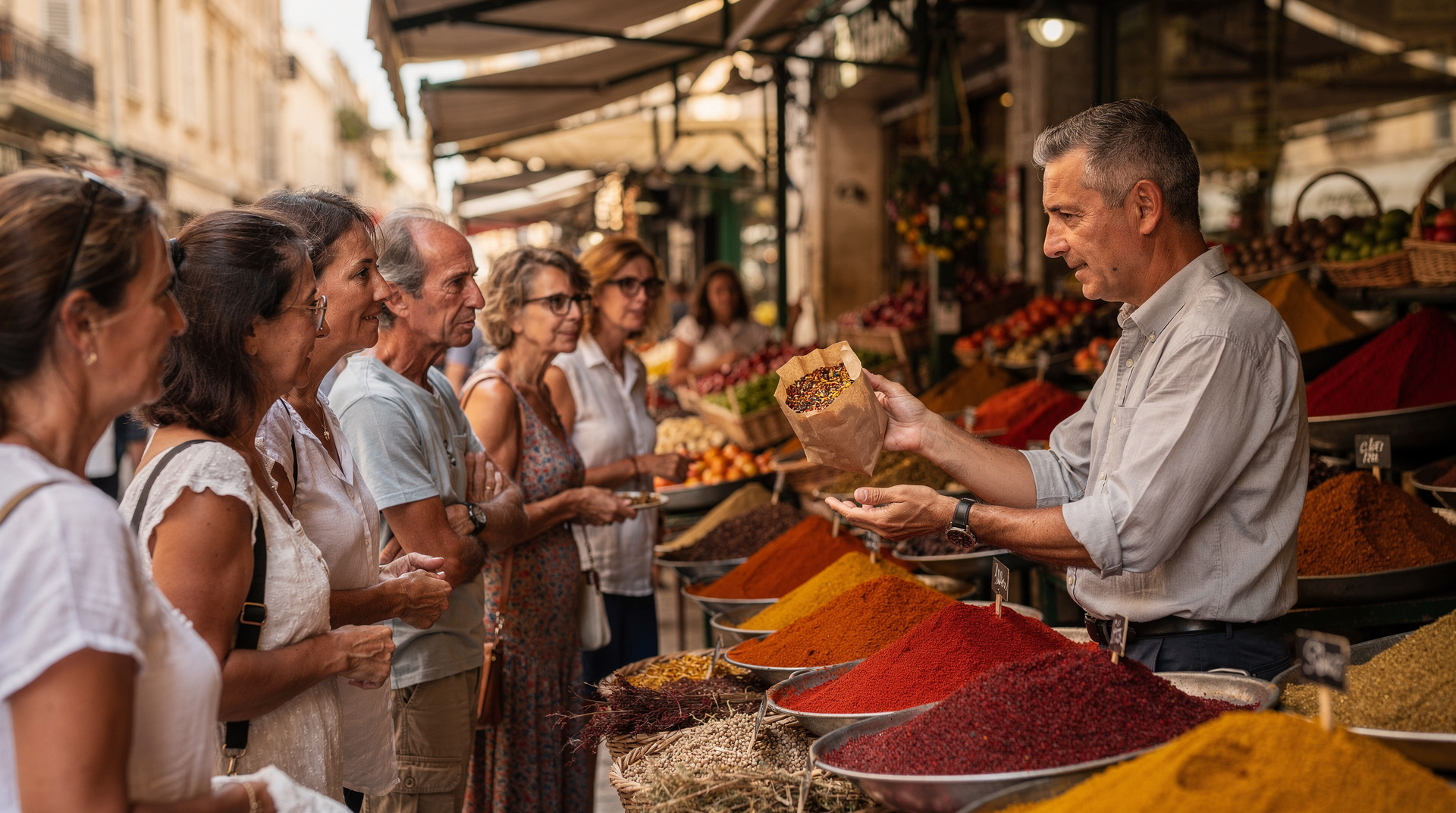
It is genuinely multicultural. Marseille has the largest North African community in France, a significant Armenian population, Corsican and Italian roots in Le Panier, and a more recent sub-Saharan African community in the northern arrondissements. This is most visible in the food — the market around Noailles sells ingredients you will not find in any other French city — and in the cultural character. Marseille feels like a Mediterranean city more than a French one.
It is not gentrified clean. Parts of the city look rough by the standards of comparable European tourist destinations. Graffiti coexists with street art. The streets around the Noailles market and Cours Belsunce are chaotic and busy. The peripheral northern arrondissements are visibly deprived. This is not a performance or a quirk — it is the real social geography of a French city with genuine inequality. Visitors who want a sanitised Mediterranean experience should go to Aix-en-Provence or Cassis; visitors who want a city with actual life should come to Marseille.
The Calanques are ten minutes from the city. This is extraordinary and often underweighted. Twenty kilometres of limestone fjords and turquoise water begin at the southern edge of the city. No other major European city has anything comparable on its doorstep.
The must-sees: what to prioritise
The Vieux-Port
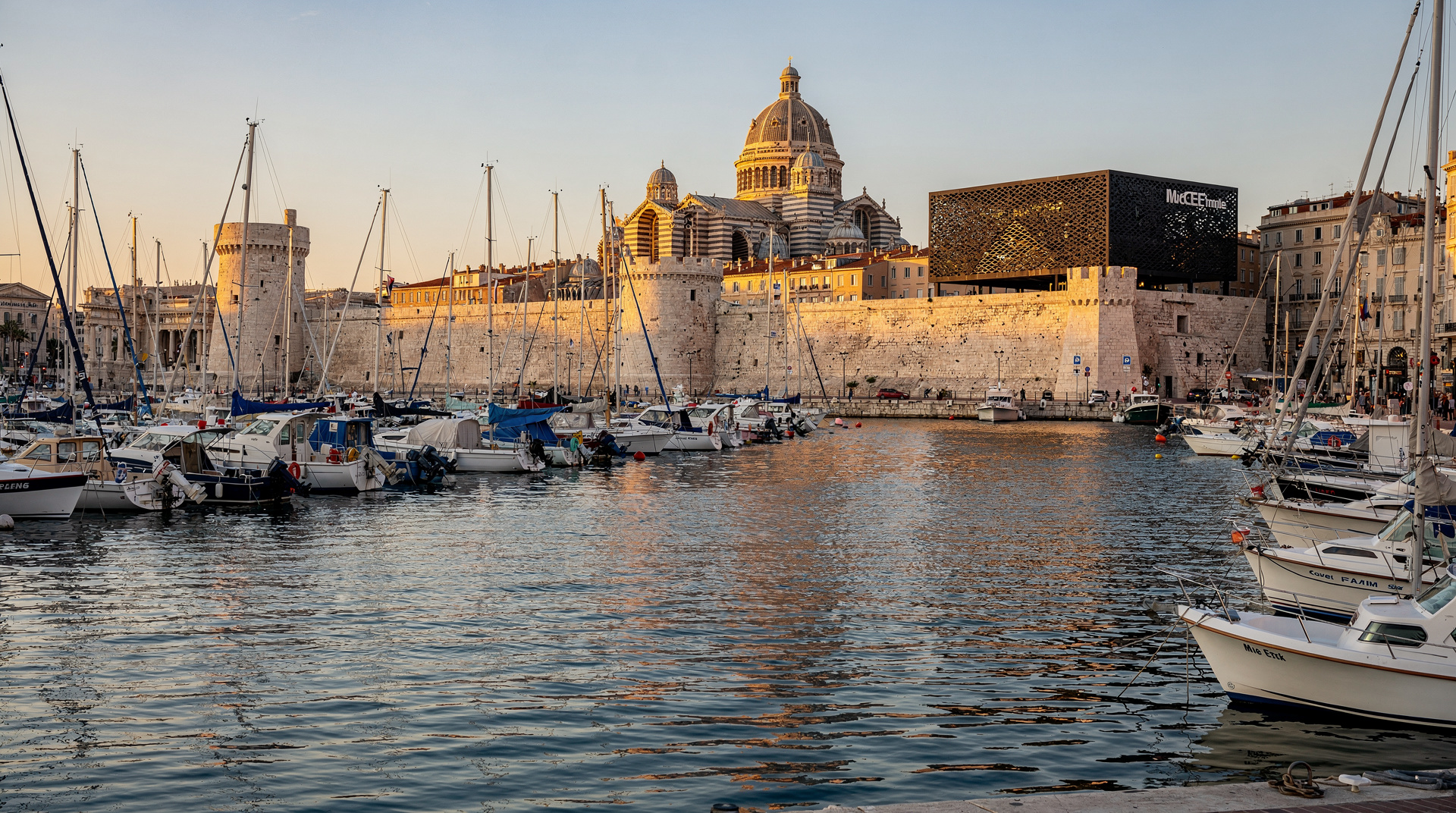
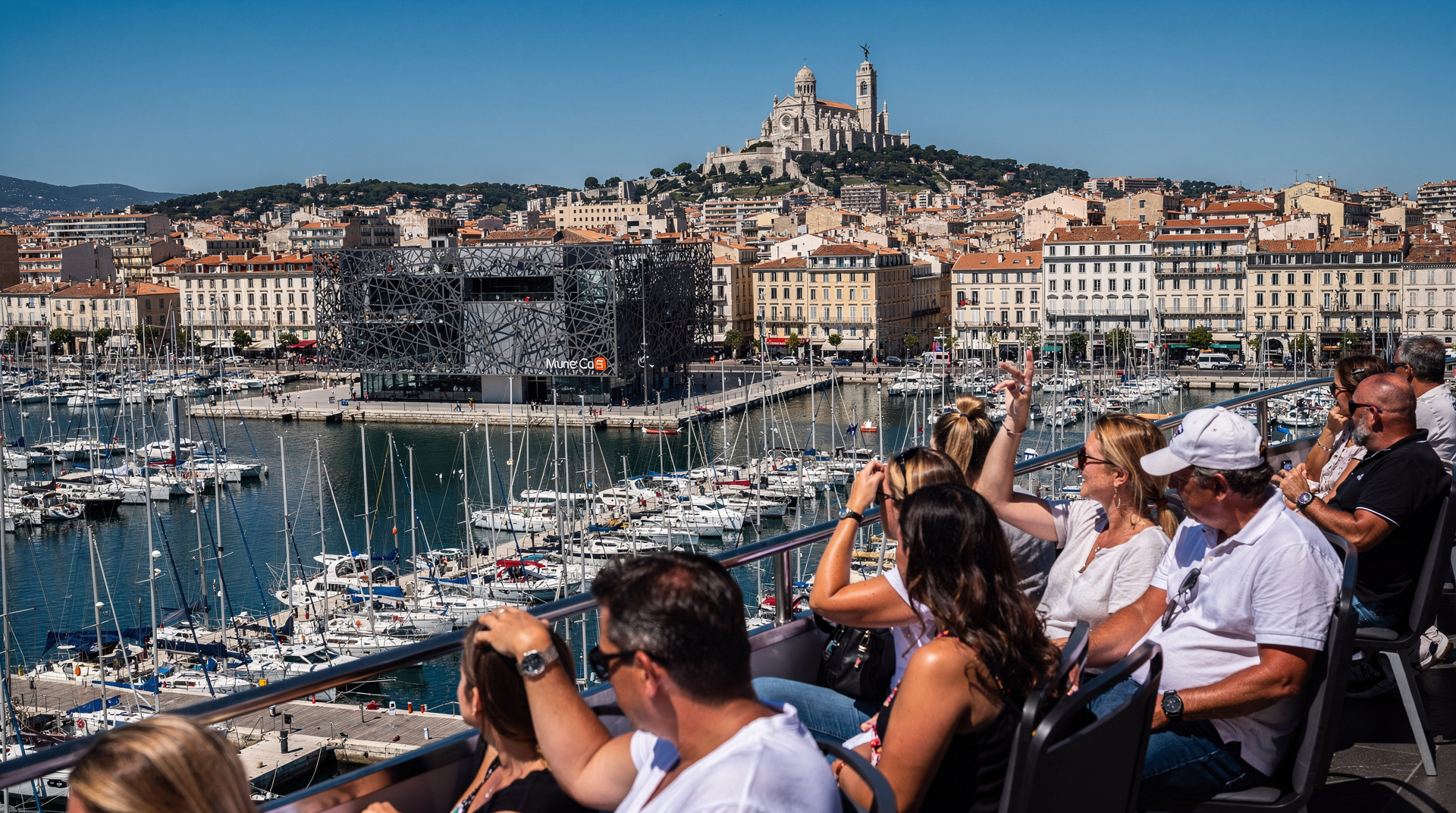
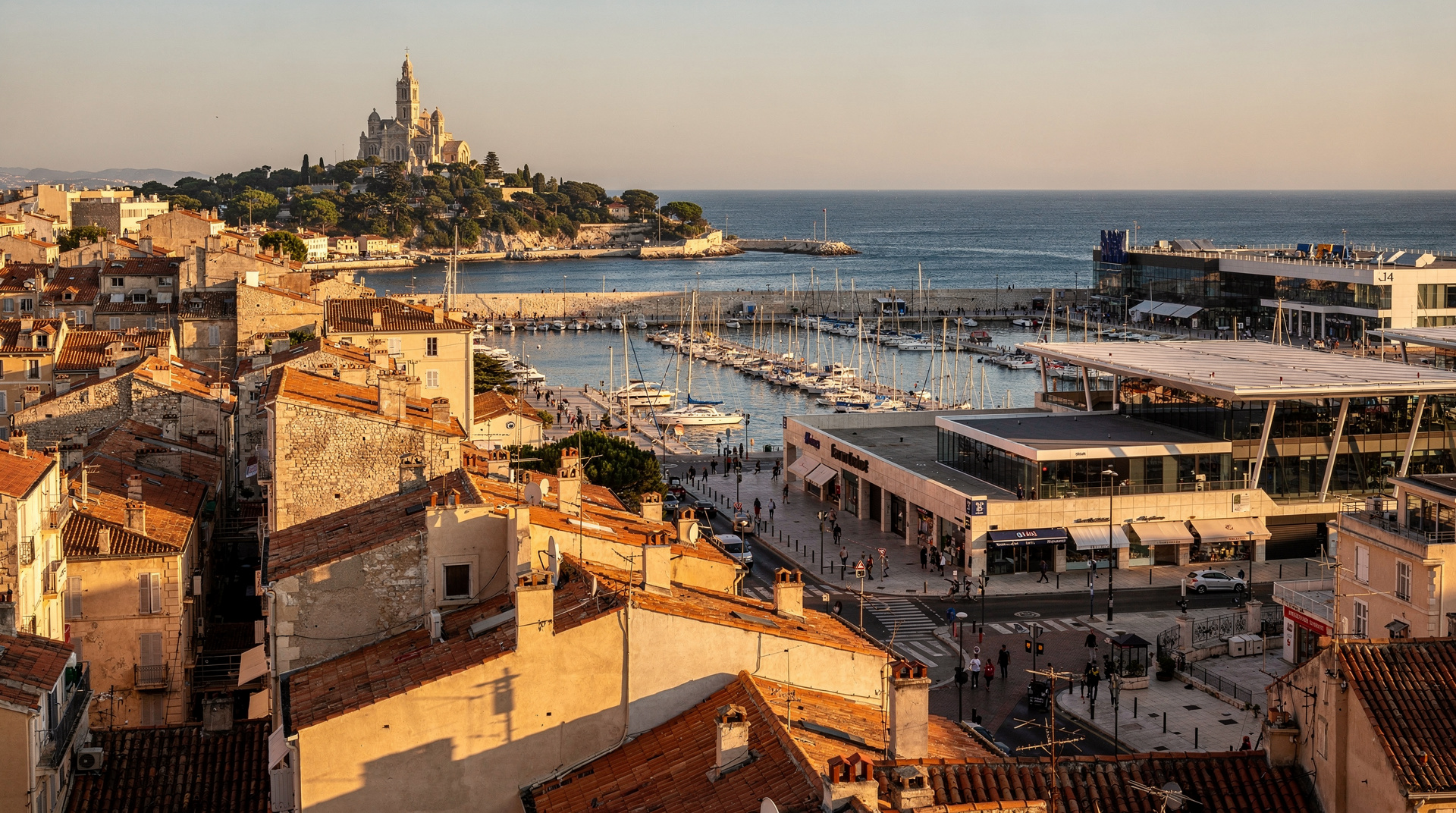
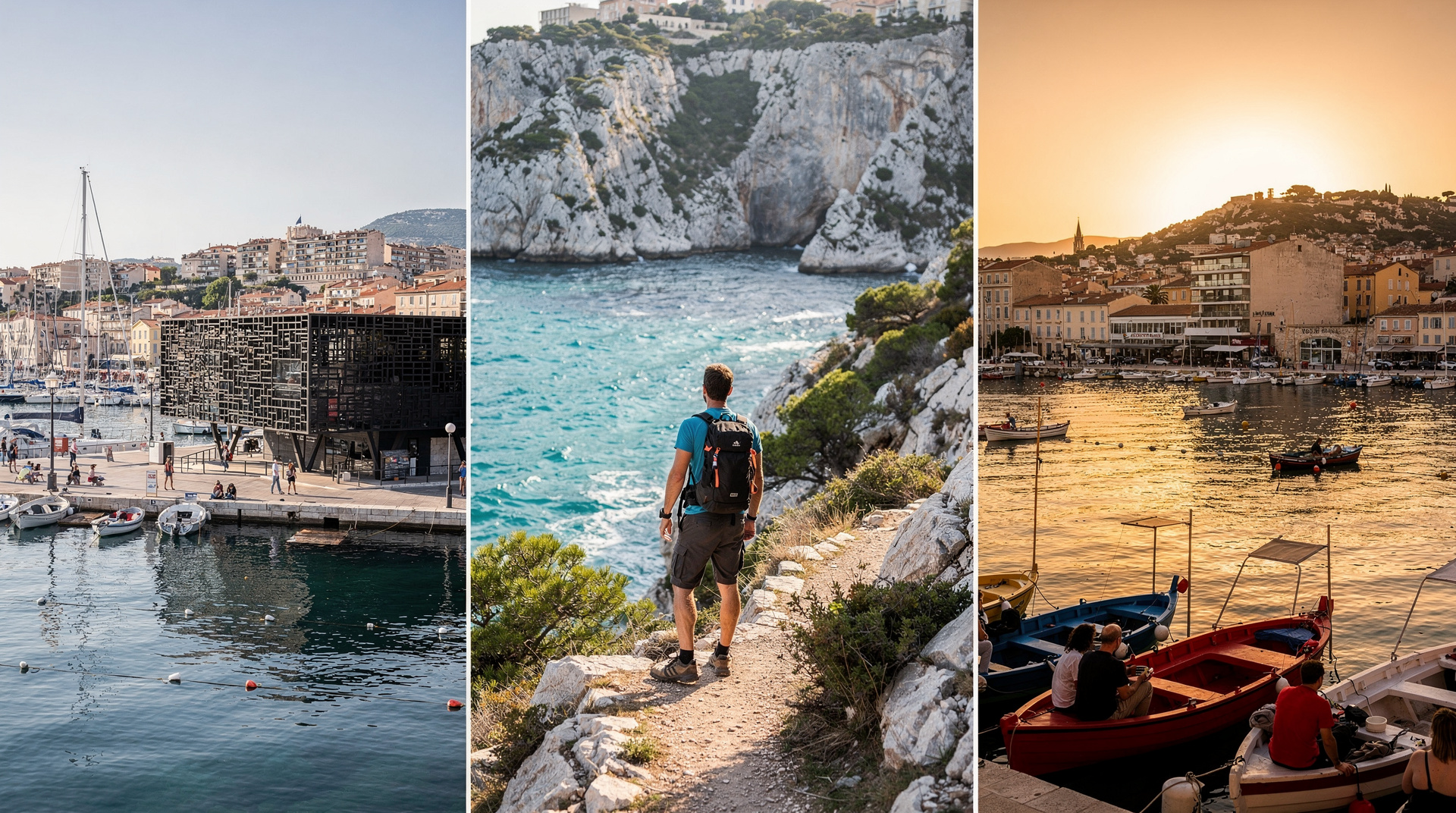
The old harbour is where you start and often where you end up. The fish market on the Quai des Belges runs every morning until around noon — arrive before 9:00 to see it at full activity. The two harbour forts (Fort Saint-Jean to the north, Fort Saint-Nicolas to the south) frame the entrance to the port and have been guarding it since the 17th century. The giant reflective steel canopy (the Ombrière, by Norman Foster) at the Quai des Belges end is the most Instagrammed spot in the city and genuinely striking in the morning light.
Walk the full length of both quais — north and south — before you start any other sightseeing. The Vieux-Port is best understood at walking pace, not from a café terrace.
Le Panier
Le Panier is directly above the northern shore of the Vieux-Port, ten minutes uphill on foot. It is the oldest inhabited quarter in Marseille and looks like it: steep lanes, pastel buildings, street art, artisan workshops, outdoor staircases. The Vieille Charité — a 17th-century hospice with a Baroque domed chapel, now a museum — is the neighbourhood’s architectural centrepiece. The neighbourhood is free to wander; the Vieille Charité charges a small admission.
Go in the morning, when the light is better and the lanes are quieter. Le Panier receives more tourists than locals realise; arriving early shifts the experience.
MuCEM and Fort Saint-Jean
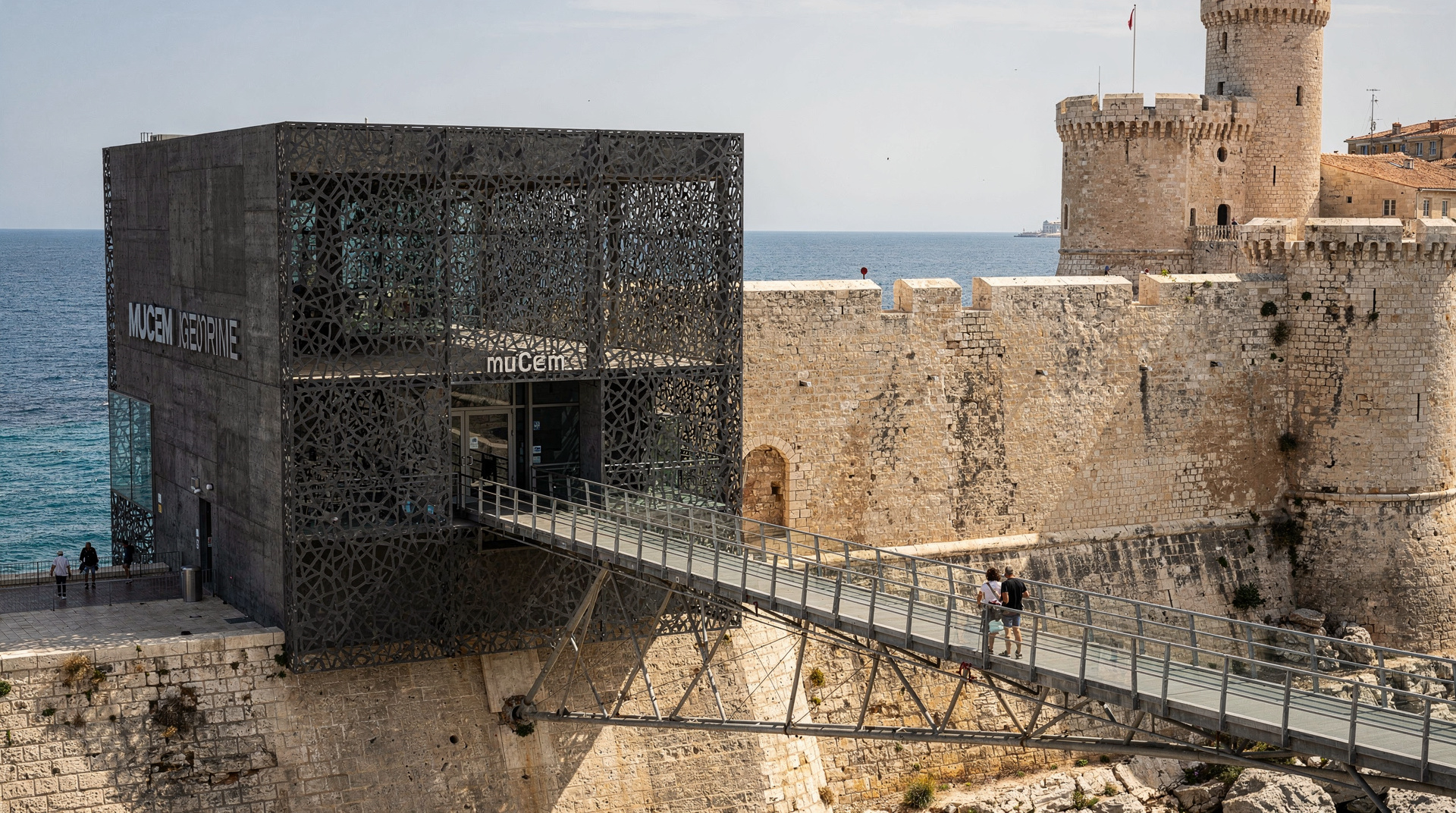
The MuCEM — Musée des Civilisations de l’Europe et de la Méditerranée — opened in 2013 and remains one of the most significant architectural achievements in 21st-century France. The building is wrapped in a laser-cut concrete latticework that casts shifting shadows. A suspended footbridge connects it to the restored Fort Saint-Jean next door. The exterior terraces, gardens, and the footbridge are free to access daily. Museum entry is 9.50 EUR (free first Sunday of each month); skip-the-line tickets are worth booking in summer.
If you visit only one museum in Marseille, this is it — not only for the exhibitions but for the building and the waterfront position.
Notre-Dame de la Garde
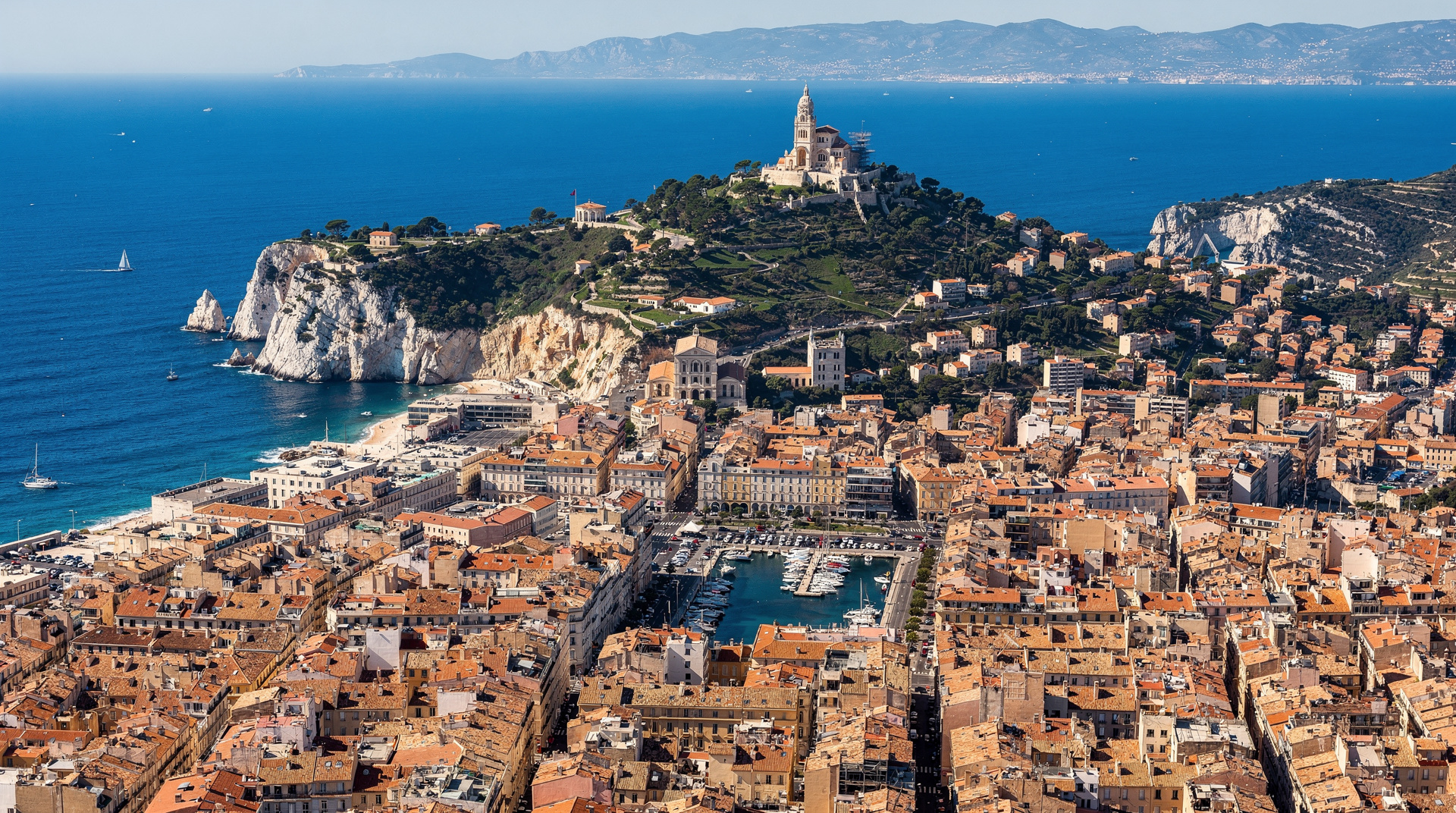
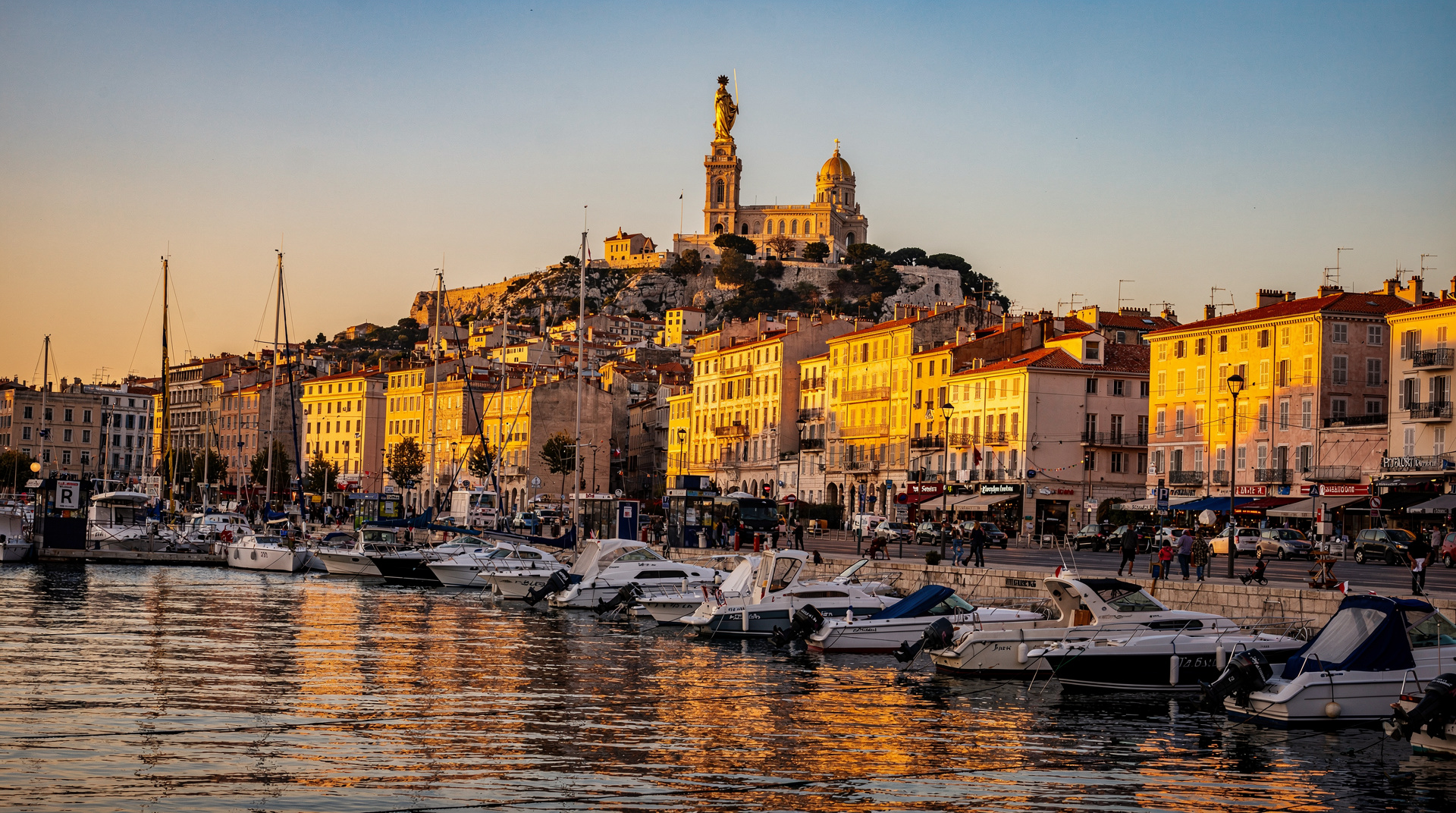
The Romano-Byzantine basilica at Marseille’s highest point (162 metres above sea level) is visible from almost everywhere in the city. The terrace panorama — the entire bay, the Frioul archipelago, and the white ridges of the Calanques — justifies the climb alone. The basilica itself is free and open daily from 7:00. Reach it by bus 60 from the Vieux-Port, the tourist petit train (12–15 EUR), or by foot (40 minutes uphill, rewarding descent through the Endoume neighbourhood).
The Calanques
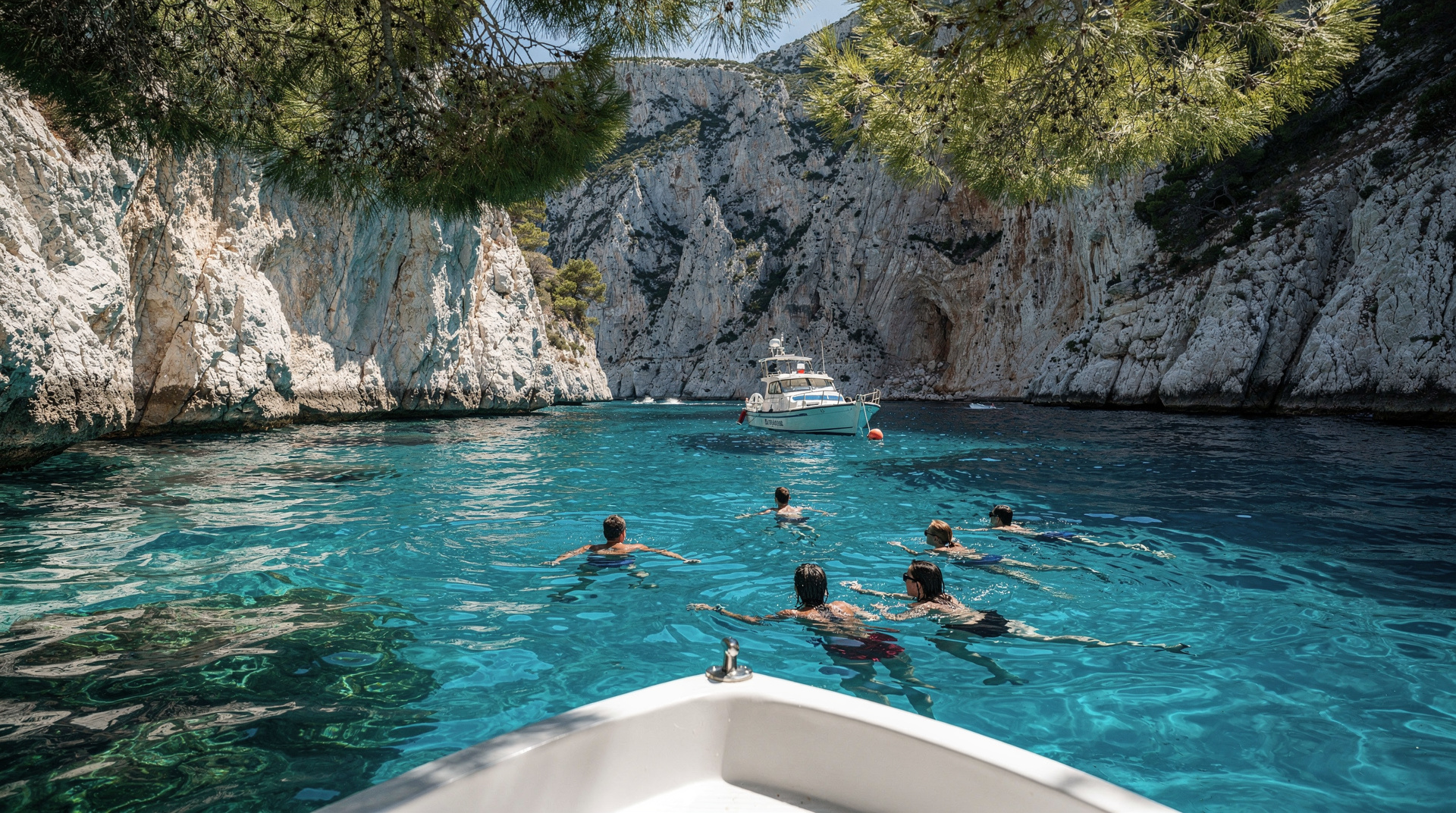
This is the reason many people come. The Calanques National Park — limestone fjords with turquoise water — begins at the southern edge of the city and runs 20 kilometres east to Cassis. First-time visitors should plan at minimum half a day; a full day dedicated to the Calanques is better. In summer (July–August), hiking trails are closed for fire risk, and boat access is the standard approach — boats depart the Vieux-Port. In spring and autumn, hiking is possible and more rewarding.
See our how many days guide for how to integrate the Calanques into a first-visit timeline.
Cours Julien
Cours Julien is where Marseille’s creative life concentrates — street murals covering entire building facades, independent music venues, natural wine bars, and the most interesting restaurant scene in the city. It is 20 minutes on foot from the Vieux-Port or two metro stops. Evenings here are genuinely local in character, which is unusual in a tourist city. Save this for a dinner evening, not a rushed afternoon visit.
The honest must-skips
The tourist bouillabaisse trap
Marseille’s most famous dish is also its most exploited. The restaurants lining the tourist strip on the Quai de Rive Neuve often serve bowls labelled “bouillabaisse” at 20–35 EUR that bear no relation to the real dish. The genuine article — a saffron-scented fisherman’s stew served in a two-course ritual with rouille, gruyère, and toasted bread — costs 55–80 EUR at the handful of restaurants holding the Charte de la Bouillabaisse. See our bouillabaisse guide before spending money on the wrong version.
If budget is the concern, the fish market on the Quai des Belges is the honest alternative — the chowder sold by fishermen from morning stalls is real, cheap, and as close to the source as it gets.
The petit train to Notre-Dame as a substitute for walking
The tourist petit train from the Vieux-Port to Notre-Dame de la Garde is useful if you have limited mobility or are short on time. For everyone else: walking up and descending through Endoume is more interesting, free, and shows you the actual city. The train is efficient but it is a tourist vehicle, and you see less for more money.
Day trips that are too ambitious
Marseille is well-positioned for day trips, but distance is honest here. Avignon (1 hour by TGV) is manageable but benefits from staying overnight. The Gorges du Verdon is two hours by car — a round trip of four hours driving for three or four hours at the gorge is exhausting and unsatisfying as a day trip. See our planning guide for which day trips actually work and which do not. Cassis (35 minutes by TER) is the one that is genuinely excellent and easy.
Spending too much time near the Vieux-Port without exploring beyond it
The Vieux-Port is the start, not the destination. First-time visitors who limit themselves to the waterfront zone — tourist restaurants, the Ombrière selfie, a short walk to MuCEM — often leave thinking Marseille was fine but unremarkable. The city reveals itself when you walk uphill into Le Panier, or east into Cours Julien, or south along the Corniche to the fishing harbour at Vallon des Auffes.
Sequencing a 3-day first visit
Day 1: The city on foot
Start at the Vieux-Port at 8:00–8:30 to catch the fish market in operation. Walk the full north quai to MuCEM and Fort Saint-Jean (30 minutes). Spend 45–60 minutes at MuCEM — at minimum the exterior, footbridge, and terrace; inside if you have time and interest.
Walk back to Le Panier via the north quai (the streets just above the waterfront lead naturally uphill). Spend 1.5–2 hours in Le Panier: Vieille Charité courtyard, the main lanes, a coffee at one of the small café-bars in the neighbourhood.
Lunch near Le Panier or back on the Vieux-Port — budget 14–22 EUR for a decent set lunch with wine.
Afternoon: head south by bus 60 or on foot toward Notre-Dame de la Garde (allow 45 minutes at the basilica and terrace). Walk back downhill through Endoume toward the Vallon des Auffes fishing harbour — a 20-minute descent through quiet residential streets that most tourists never see.
Evening: take the metro or walk to Cours Julien for dinner. Budget 25–40 EUR for a proper dinner with wine; the natural wine bars and smaller restaurants here generally give better value than the tourist strip near the harbour.
Day 2: The Calanques
Dedicate this day entirely to the Calanques. A morning departure on a boat tour from the Vieux-Port (typically 9:00 or 10:00) gives you 3–4.5 hours on the water, visiting 2–4 calanques with swimming. Return by early afternoon.
Summer (July–August): boat tour only — trails are closed. Spring/autumn: consider a guided hike instead (or in addition to an afternoon boat). The hike from Luminy to Sugiton takes 45 minutes each way; reserve the free Sugiton slot in advance if travelling June–September.
The afternoon after a boat tour is ideally spent slowly: a late lunch somewhere, the Cosquer Cave replica at the Villa Méditerranée near MuCEM (book ahead in summer), or simply a walk along the Corniche toward the Prado beaches.
Day 3: Choose your depth
By Day 3, you know which layer of Marseille you want more of. Options:
Food and market Marseille: Morning at the Noailles market and Capucins market (best between 8:00 and 12:00). A walking food tour is excellent if you want context. Lunch on the traditional end — a pastis and a plate of sea urchins or grilled fish somewhere unpretentious. Afternoon at Cours Julien.
Culture and architecture Marseille: Morning at Musée d’Histoire de Marseille in the Bourse (Roman-era excavations visible through glass floors; around 6 EUR). Afternoon at the Cité Radieuse — Le Corbusier’s Unité d’Habitation on Boulevard Michelet, a 1952 residential block that is also a UNESCO World Heritage Site and one of the most influential buildings of the 20th century. Reach it by tram T1 to Michelet-Corbusier. The rooftop terrace offers views and architectural interest in equal measure.
Beach and coast Marseille: Full morning on the Prado beaches (a 20-minute bus ride south of the Vieux-Port). Afternoon return north via the Corniche and Vallon des Auffes. This is the most local-feeling way to spend a day in Marseille in summer.
What first-time visitors consistently get wrong
Underestimating distances. Marseille is a large city. The Vieux-Port to Cours Julien looks close on a map but takes 25 minutes on foot, uphill most of the way. Notre-Dame is 40 minutes on foot. Factor walking time into plans.
Overplanning. The city rewards wandering. Too many pre-booked restaurant reservations and timed museum visits leave no room for the accidental good coffee, the unplanned street scene, the conversation with a fisherman at the quai. Leave half a day unplanned on a 3-day trip.
Skipping the Calanques. Some visitors spend 2–3 days in the city and never reach the Calanques. This is a genuine mistake. The Calanques are what makes Marseille extraordinary — no European city of this size has anything like them. Even a 3-hour boat tour is transformative.
Eating where the restaurant has a photograph on the menu and a man standing outside inviting you in. This is a reliable indicator of tourist-trap quality. The best restaurants in Marseille do not need to recruit customers from the pavement.
Arriving without checking the Calanques access rules for their season. In July and August, hiking trails are closed. In June–September, Sugiton requires a free advance reservation. Check the park website (calanques-parcnational.fr) before you arrive. See our summer guide and winter guide for seasonal specifics.
Safety: the first-timer’s realistic picture
The violence that gives Marseille its national reputation is concentrated in the outer northern arrondissements (13th, 14th, 15th) — areas tourists have no reason to visit. The risk to visitors in the tourist zone is overwhelmingly pickpocketing, not violence.
Pickpocket hotspots for first-timers: Vieux-Port fish market (morning crowds), Gare Saint-Charles and the connecting métro platforms, the M2 métro line at Noailles, and the Cours Belsunce market area. Standard precautions — zipped bag carried across the body, phone in a front pocket — are sufficient.
Le Panier, MuCEM, Notre-Dame, Cours Julien, and the Corniche are all safe. The Noailles market area requires the same awareness as any busy market in any southern European city.
Marseille residents are, on the whole, more direct and less formal than Parisians. Brief French phrases — “bonjour”, “merci”, “s’il vous plaît” — go a long way and are appreciated. English is workable in restaurants, hotels, and tourist sites.
Frequently asked questions about visiting Marseille for the first time
Is Marseille safe for tourists?
Yes. The violence in Marseille’s northern districts that generates national headlines does not affect tourist areas. The real risk in tourist zones is pickpocketing. Apply standard precautions at the Vieux-Port fish market, Gare Saint-Charles, and on the metro. See our pickpocket zones guide for specific hotspots.
Do I need to speak French to visit Marseille?
English works well in hotels, tourist restaurants, and major sites. In markets, neighbourhood restaurants, and the Noailles area, basic French phrases help significantly. Marseillais are generally less frosty about language than the Parisian stereotype suggests — any attempt at French is received well.
When is the best time to visit Marseille for a first trip?
April to June and mid-September to October. These windows give you open hiking trails in the Calanques, warm but not brutal temperatures, and manageable crowds. If you must go in July or August, the boat tours to the Calanques work well and summer evenings in Cours Julien are excellent — just do not count on hiking. See our summer guide and winter guide.
What is the single best thing to do in Marseille?
Take a boat tour to the Calanques on a clear morning. The experience of approaching white limestone cliffs from the sea, watching the colour of the water shift from grey to turquoise as you enter a calanque, and swimming in water with 10-metre visibility — that is what Marseille offers that no other city does.
How is Marseille different from Nice or Lyon?
Marseille is rougher, more multicultural, and more port-focused than Nice or Lyon. Nice is a polished resort city on the Riviera; Marseille is a working Mediterranean port with a complicated history and genuine character. Lyon is France’s second city by gastronomic reputation; Marseille is its equal in ambition but very different in style — more sea than vineyard, more bouillabaisse than quenelles. The three cities are genuinely different experiences.
Can I see Marseille in one day?
A day gives you the monuments without the city. You can see the Vieux-Port, Le Panier, and MuCEM in 6–7 hours. You cannot see the Calanques, Cours Julien properly, or any of the residential city. See our cruise port guide for the best one-day sequence, and our how many days guide for why three days is the honest minimum.
Should first-time visitors take an organised tour or explore independently?
Both work, and combining them works best. A food tour or a Vieux-Port and Le Panier walking tour on day one gives useful orientation and cultural context before independent exploring. The Calanques are the one place where a boat tour genuinely earns its cost in summer, since hiking trails close for fire risk in July and August. See our best Calanques boat tours guide for how to choose one.
What time of year has the best events for a first visit?
Early July is the single busiest and most eventful window — the Jazz des Cinq Continents festival, the Mondial pétanque, and Bastille Day all overlap. It is a strong choice if you want Marseille at its most alive, but it also means higher prices and bigger crowds. See our events calendar for the full year.
Top experiences
Bookable activities with verified prices and instant confirmation on GetYourGuide.