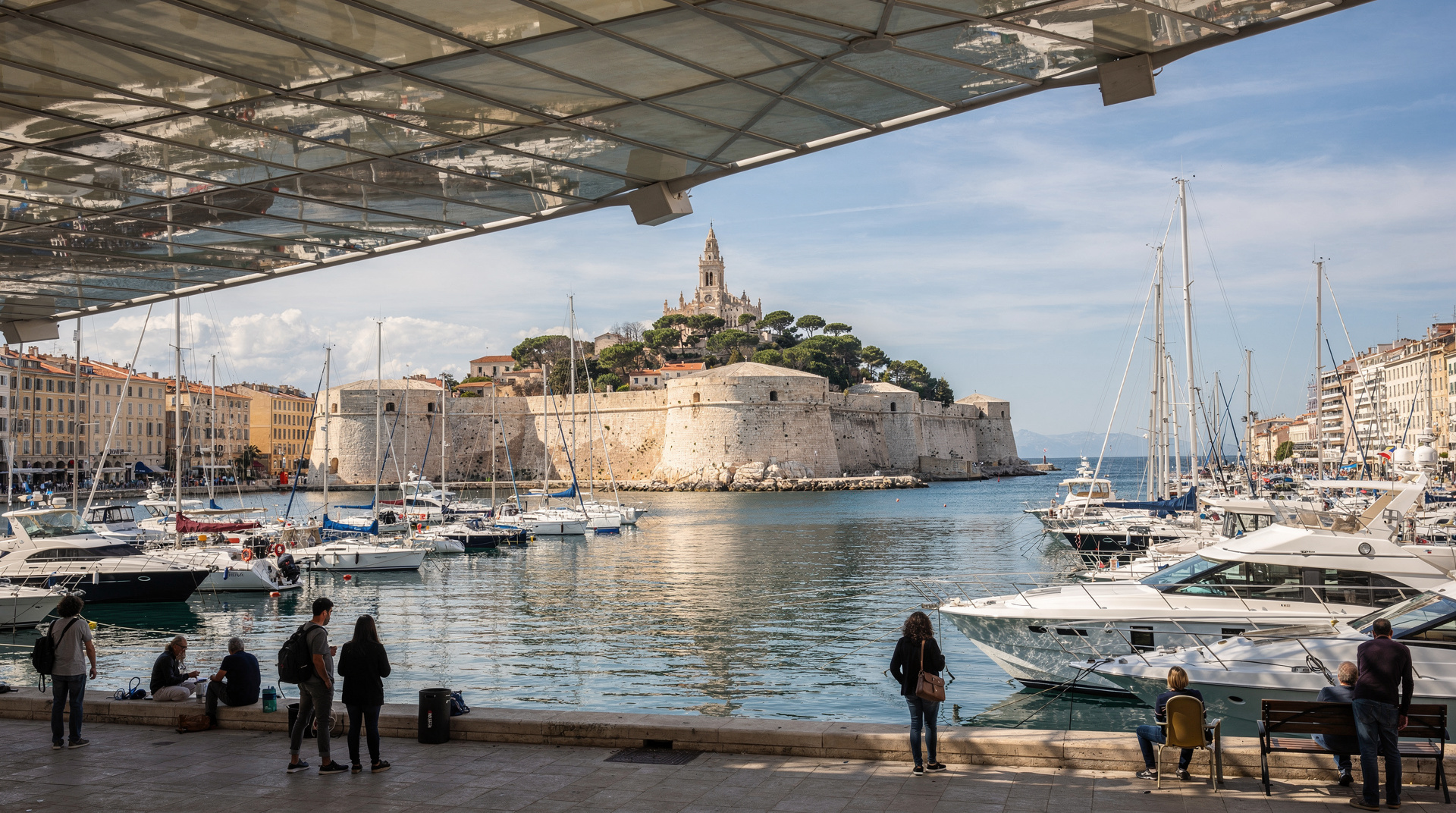
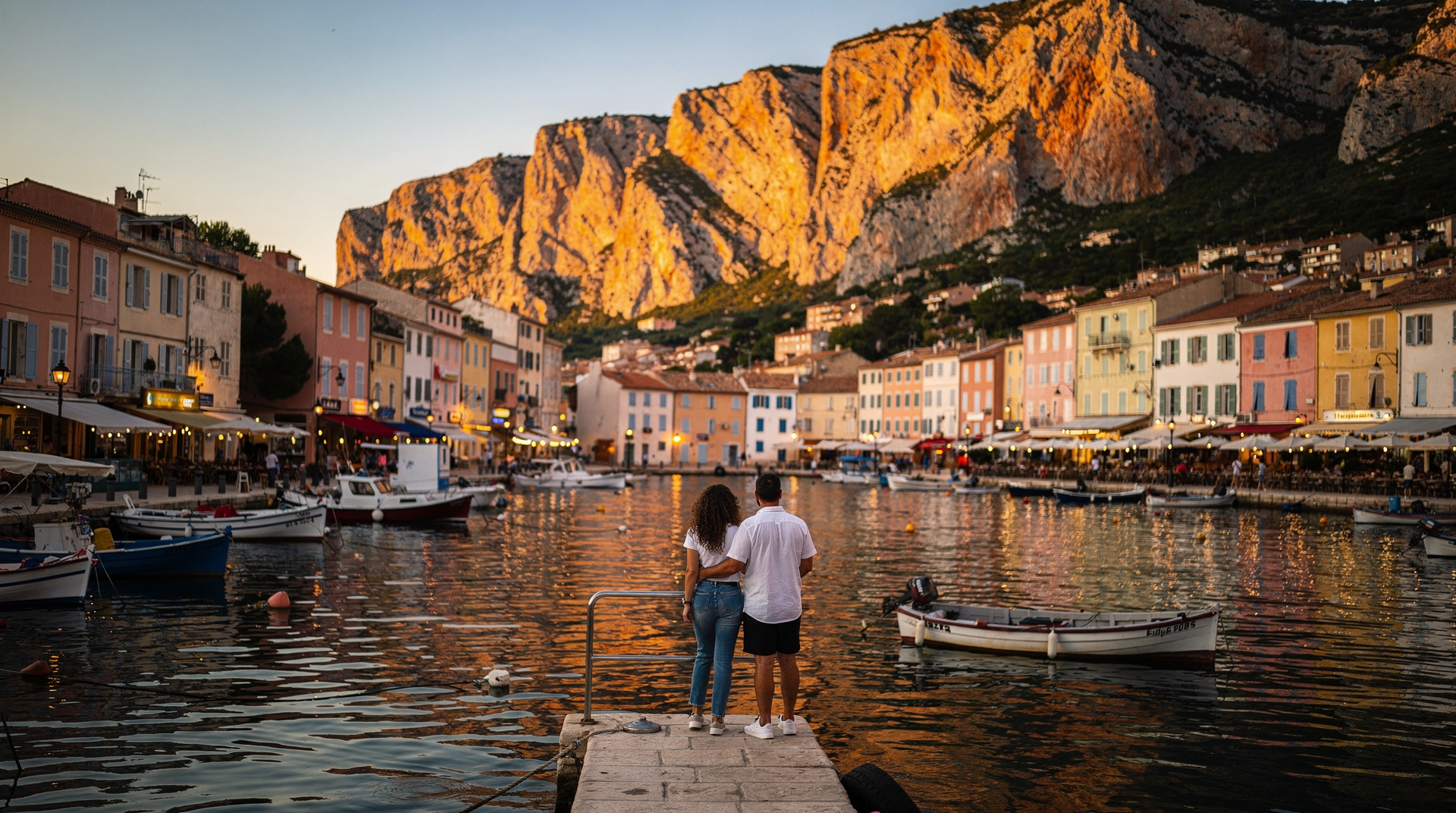
Marseille Calanques weekend: 2-day adventure itinerary
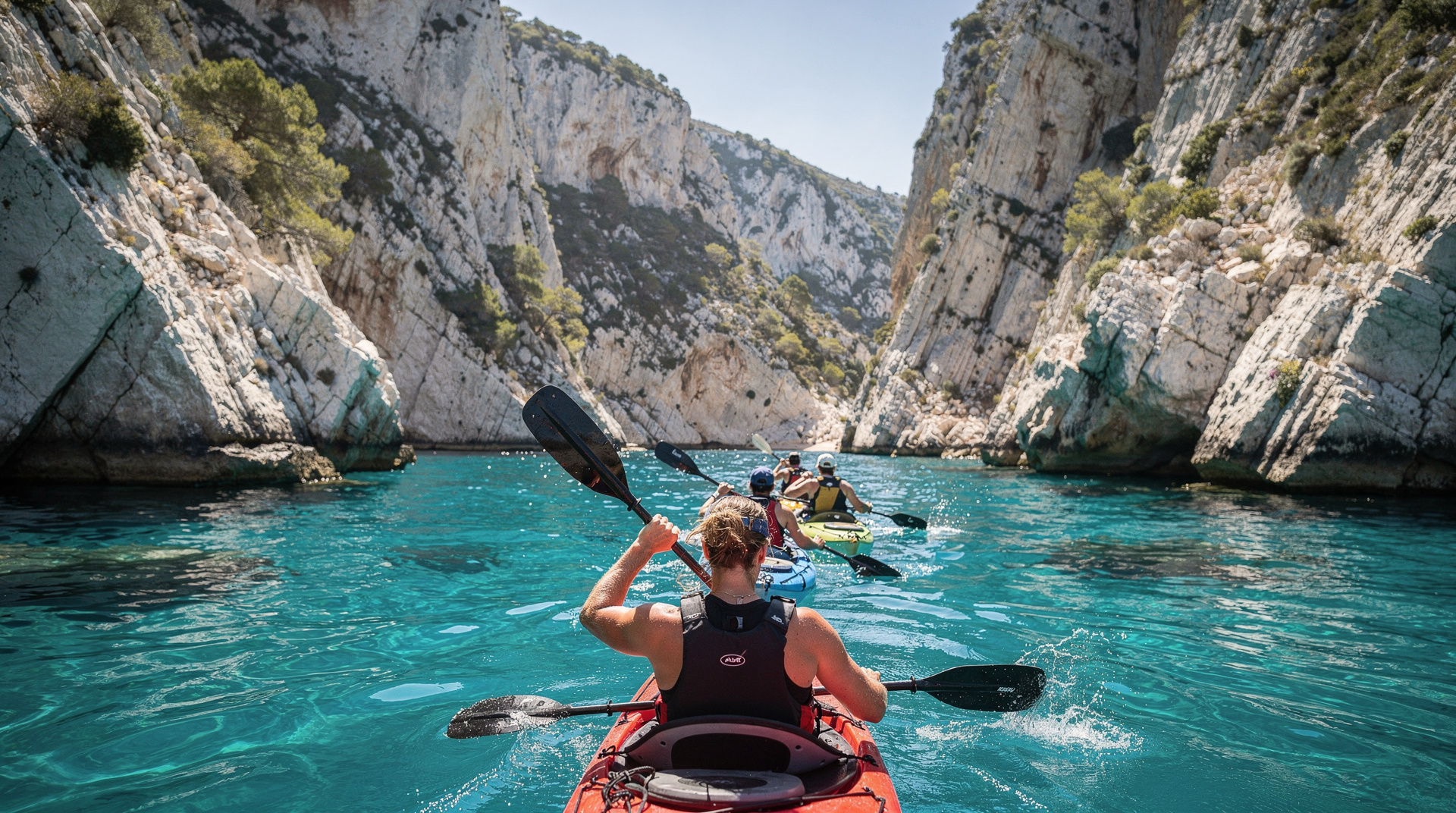
Marseille: Calanques sea-kayaking guided tour
This itinerary is for active couples who want to experience the Calanques seriously — not from a tourist boat as passive observers, but in the water, on foot, or in a kayak. The limestone wilderness between Marseille and Cassis is one of the finest coastal landscapes in Europe, and the best way to understand it is to move through it rather than past it.
Two days gives you enough time to approach the Calanques from two directions: from the Marseille side (wilder, less visited) and from the Cassis side (more accessible, with the most spectacular inlets). No car is needed — the combination of bus, TER train, and boat handles all logistics.
Important: This itinerary is highly season-dependent. In summer (June 1–September 30), hiking trail access depends on the daily fire risk colour code. Orange and red days close the trails; boat and kayak access remains open. Check calanques-parcnational.fr after 18:00 the evening before each day’s activity. See the Calanques summer access guide for the full system.
| At a glance | |
|---|---|
| Where | Marseille (Vieux-Port / Les Goudes) on Day 1, Cassis on Day 2 — 22 km apart, linked by TER train |
| Cost (2 people, mid-range) | around 250–400 EUR for the two days, including kayak or boat tours, TER, and meals |
| Time needed | a full 2 days; not compressible without dropping the water activity |
| Getting there / around | no car — bus 23/22 to Sormiou/Morgiou, TER Marseille–Cassis (22 min, around 7 EUR each way), on foot for both Calanques circuits |
| Best time | May–June or September–October for reliable trail access and warm-enough water; peak summer risks fire-code trail closures (see below) |
Day 1: Marseille side — kayaking the Calanques
Preparation: 7:30–9:00
An active day on the water requires preparation the night before: book your kayak tour in advance, check the fire risk code, pack sunscreen (minimum SPF 50 — the reflected light on limestone and water is intense), a hat, water (minimum 2 litres per person), and water shoes or sturdy reef sandals. Bring a dry bag for electronics.
Book breakfast near your accommodation or at a café on the Vieux-Port quai before 8:30.
Morning: sea kayak tour (9:00–13:00)
A guided sea kayaking tour from the Vieux-Port or from Les Goudes heads east along the Marseille coast into the Calanques National Park. The guided tours run 3–4 hours and cover 3–5 calanques depending on sea conditions and group pace. This is not a gentle paddle — the open water sections require sustained paddling effort, and the guides adjust the route based on wind and swell.
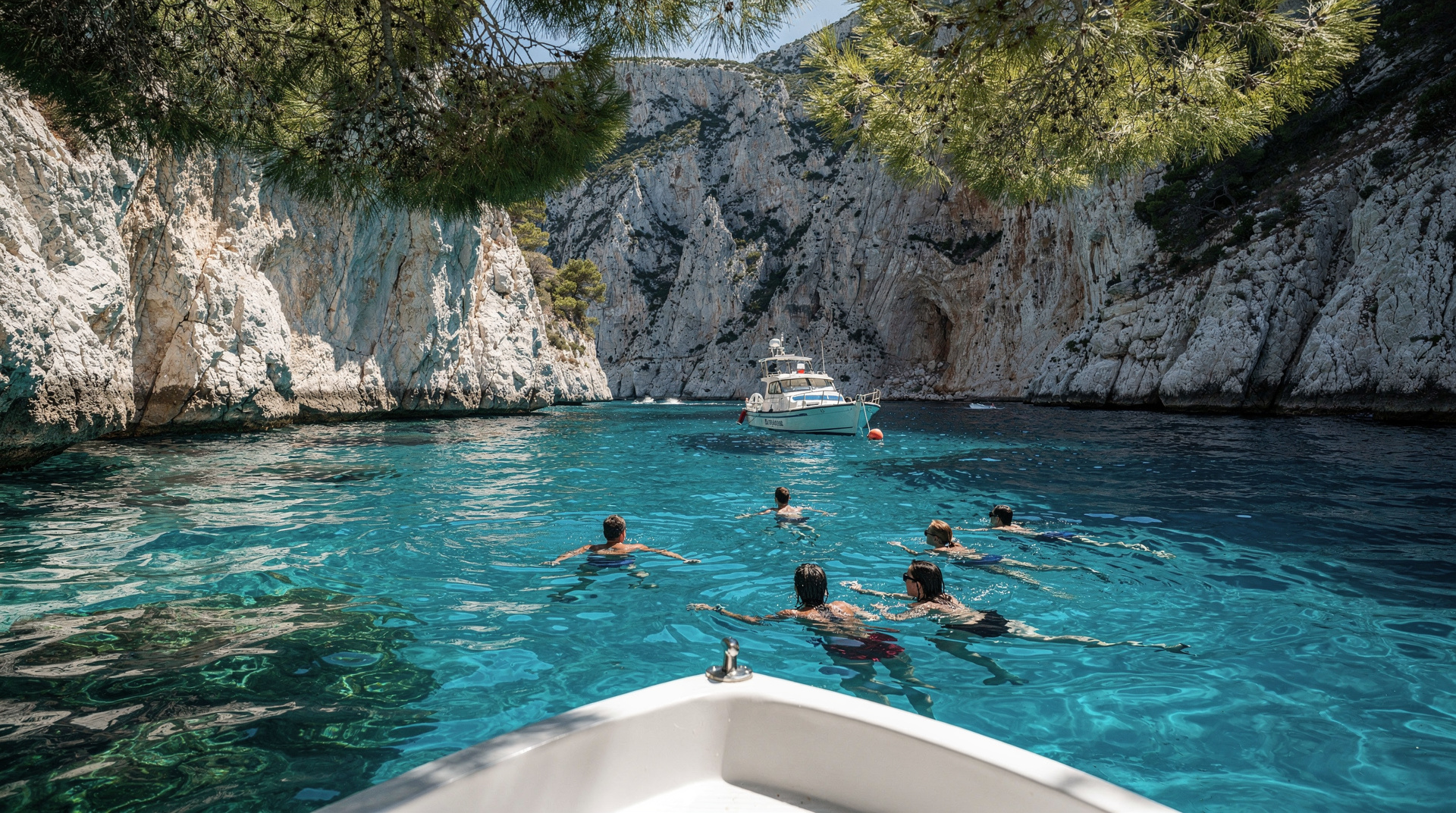
What the kayak experience delivers that a boat tour does not: access to the smallest calanques where motorboats cannot go, the physical sensation of arriving at a turquoise inlet under your own power, and the perspective of the cliffs from water level rather than from a deck. Swimming stops are built into the route — the water in June–September averages 22–26°C.
For those who prefer a boat tour today: A morning Calanques boat tour (3–4.5 hours, departing 8:30–9:00) is an excellent alternative if the sea conditions for kayaking are poor (swells over 1 metre make kayaking uncomfortable for non-experts). The boat tour from Marseille covers the Sormiou and Morgiou calanques plus several smaller inlets.
Return to the Vieux-Port by approximately 13:00.
Afternoon: Sormiou or Morgiou on foot (14:30–18:30)
After lunch near the Vieux-Port, take the afternoon to explore the Calanques on foot — if the fire risk code permits.
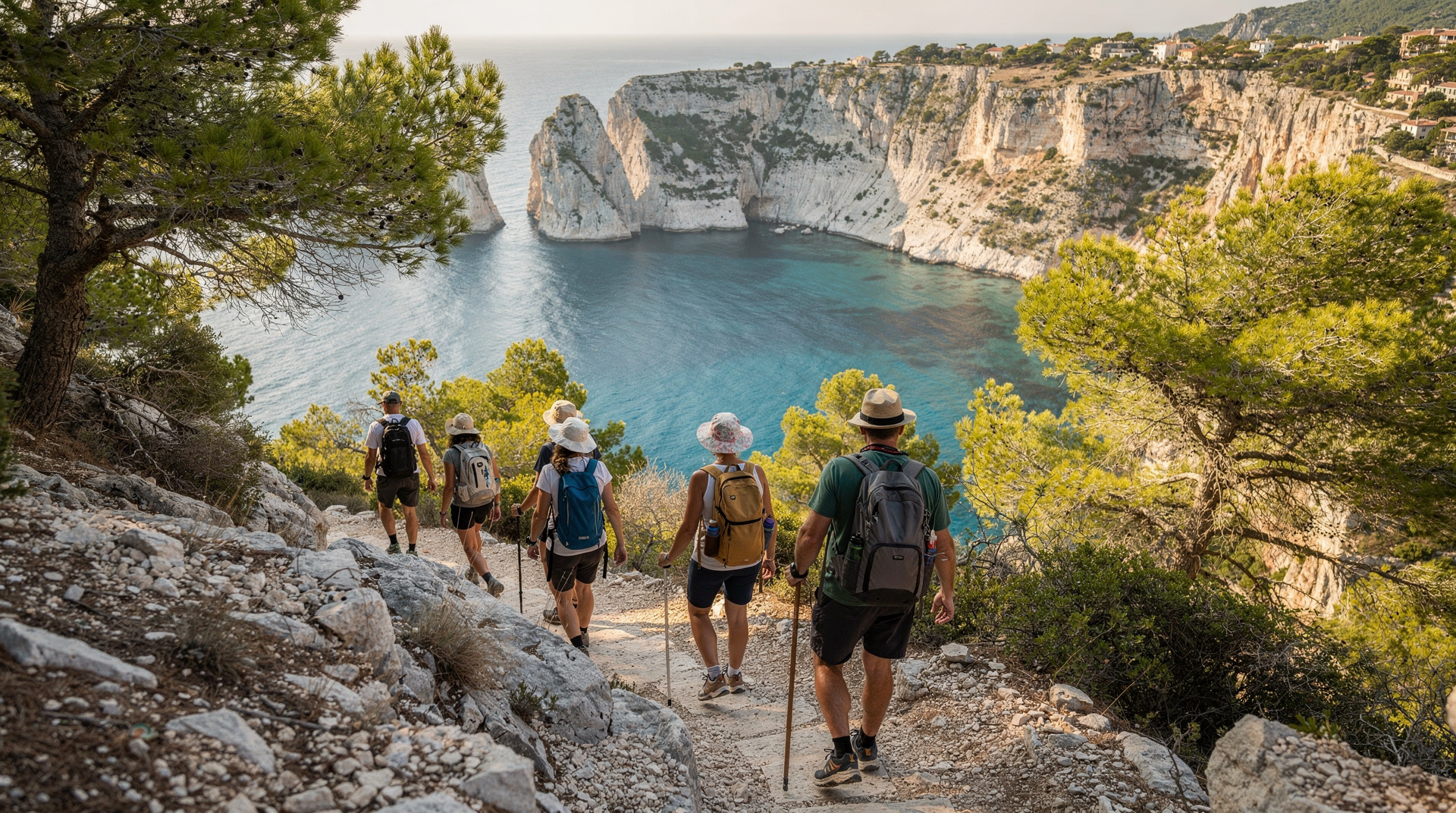
Sormiou: Bus 23 from Castellane metro (about 40 minutes) reaches the Sormiou parking area. From there, the path descends to the calanque — 2 km, about 40 minutes down (and back up). The car access road is closed to non-resident traffic in summer (May–September), so the walk from the bus is unavoidable. Sormiou has a small seasonal restaurant at the calanque — a beer or pastis on arrival is well-earned.
Morgiou: A more serious alternative. Bus 22 from Castellane reaches the Morgiou road (less direct than Sormiou). The trail is 5 km each way from the road end to the calanque, with 200 m of altitude gain — 2 hours each way. Morgiou is quieter and wilder than Sormiou; the calanque itself has a small port of fishing boats and very clear water. Only for those with genuine hiking fitness.
If trails are closed (orange or red fire risk day): Spend the afternoon exploring the Goudes — the fishing village at the far south of Marseille accessible by bus 20 from Castellane. The coastal atmosphere and views of the Calanques massif from the road are compensation enough. Add a snorkelling session at one of the rocky coves around Les Goudes.
Evening: dinner in Cours Julien (19:30–22:00)
After a physically demanding day, Cours Julien delivers what the body requests: good food at honest prices, natural wine, and a terrace atmosphere that is genuinely Marseillais rather than tourist-facing. The streets around Cours Julien have enough variety for different moods — pizza, North African, modern bistro, wine bar. Budget 30–40 EUR per person with wine.
Day 2: Cassis side — hiking the three calanques
Getting there: TER from Gare Saint-Charles (8:30 departure)
Cassis by TER takes 22 minutes and costs approximately 7 EUR each way. The 8:30 departure from Saint-Charles arrives in Cassis at approximately 8:55. Take the Marcouline shuttle bus (Ligne M1, 10 minutes) to the port, or walk the 3 km downhill in 30 minutes.
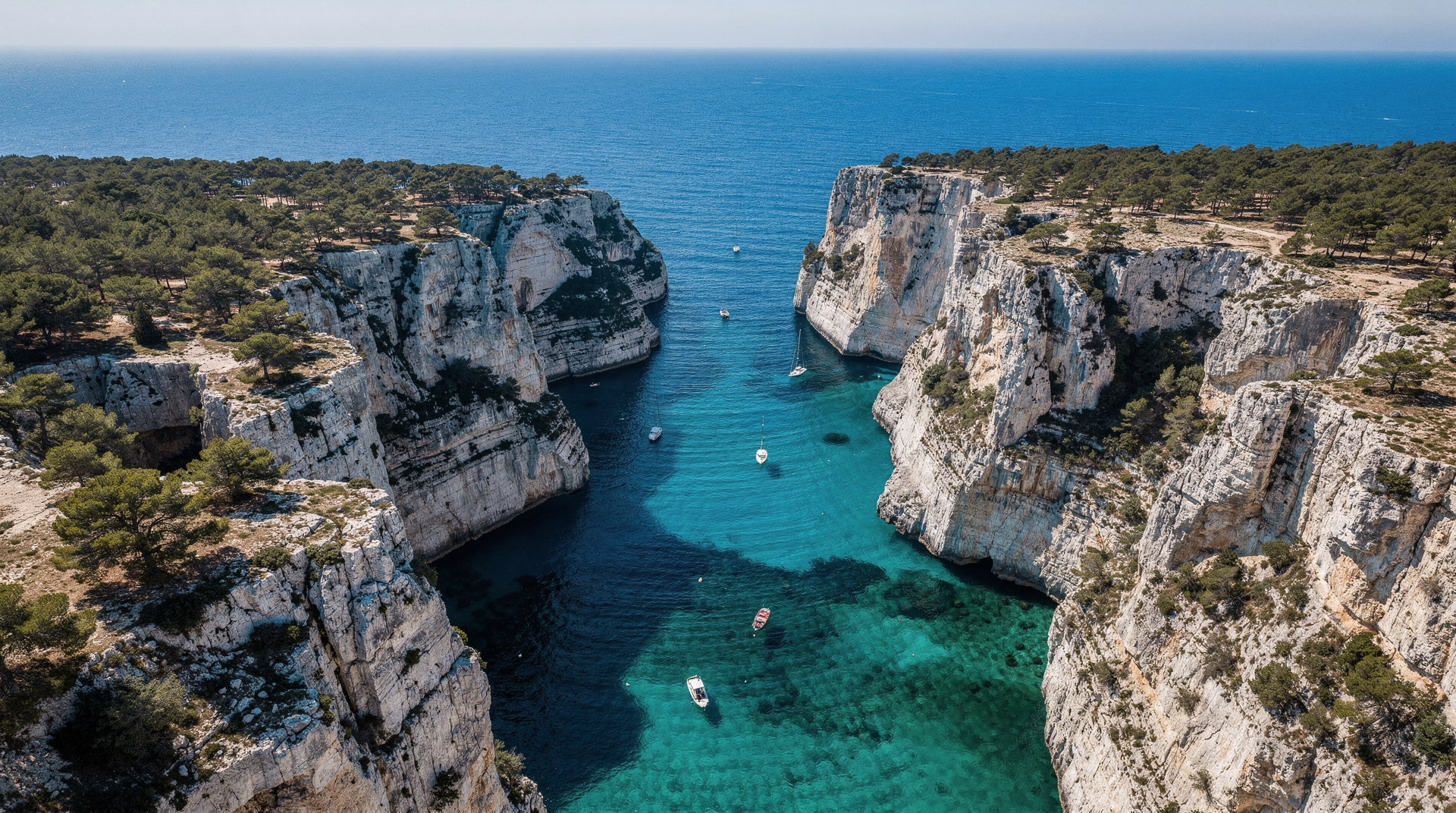
The objective for Day 2 is different from Day 1: where the Marseille-side calanques are wild and hard to reach, the Cassis-side calanques (En-Vau, Port-Pin, Port-Miou) are more spectacular and more accessible from land — the trails are shorter and the inlets more dramatic.
Morning: the Cassis Calanques trail (9:30–14:00)
From Cassis port, the GR 98 coastal trail leads west into the national park toward the calanques. The route:
- Port-Miou: 1.5 km from the port, 20 minutes. A long, narrow inlet used as a marina — blue water between white cliffs. The path continues.
- Port-Pin: 3 km from Port-Miou, 45–60 minutes. A wild, isolated cove with clear water and a small beach. Fewer visitors than En-Vau.
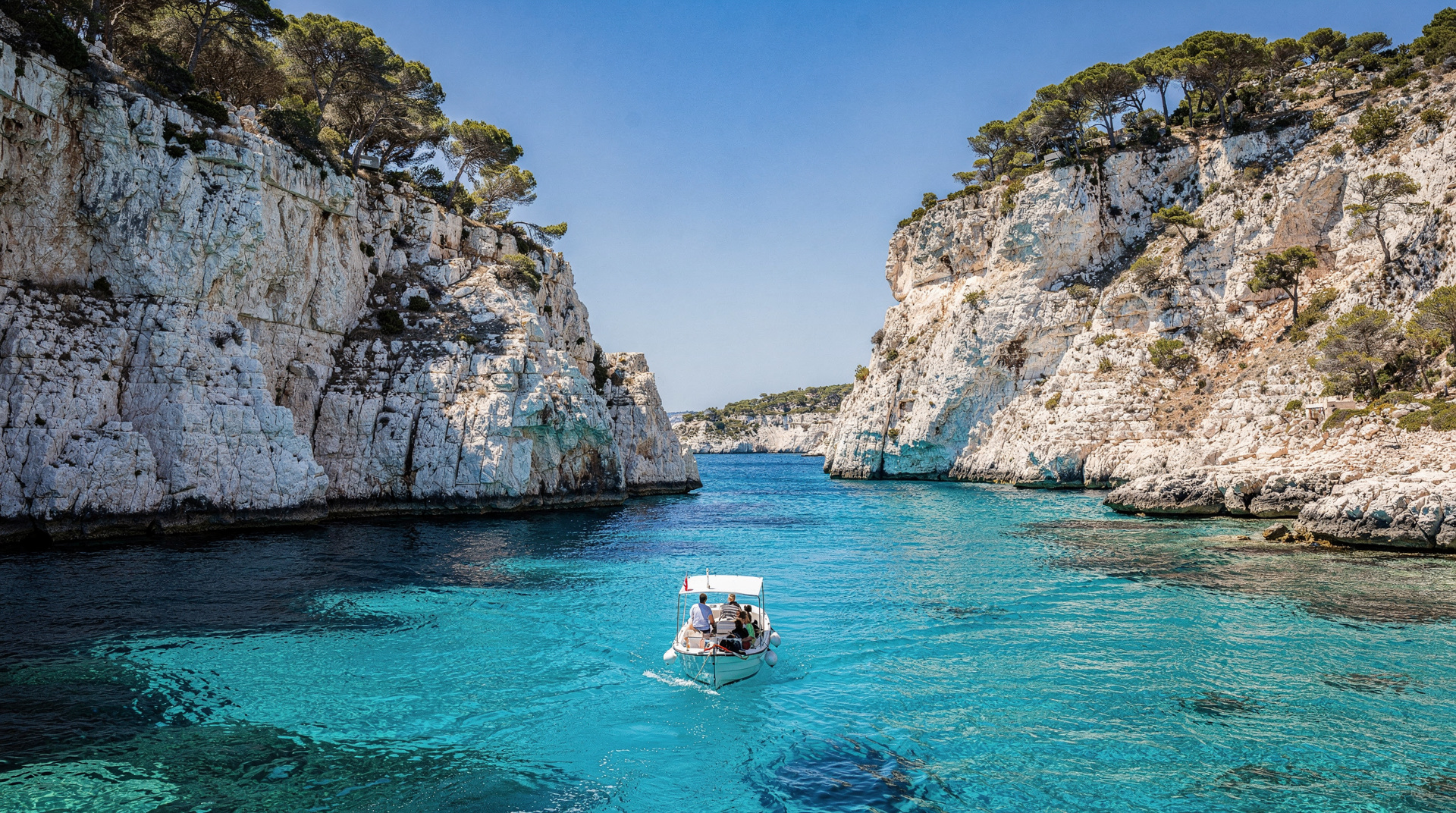
- En-Vau: 2.5 km from Port-Pin, 45–60 minutes. The most dramatic calanque in the park — a narrow slot in the cliffs with water of extraordinary clarity and a small beach at its head. The descent into En-Vau is steep and requires care on loose limestone.
Full circuit Port-Miou → Port-Pin → En-Vau and back: approximately 15 km, 5–6 hours, 400 m of altitude gain. Bring 2.5+ litres of water per person — there is no water on the trail. Wear shoes with ankle support.
If the full circuit is too much: Turn back at En-Vau (10 km round trip from the port, approximately 3.5–4 hours) and take a boat back to Cassis. Cassis boat operators do one-way pick-up from En-Vau beach in calm conditions — ask at the port the morning of your hike.
Fire risk: Check calanques-parcnational.fr the evening before. If the code is orange or red, the trails are closed. Replace the hike with a guided sea kayak tour from Cassis instead — the kayak tour from Cassis covers the same three calanques from the water.
Afternoon: Cassis port and AOC wine (14:30–17:30)
After the hike, lunch at the Cassis port is the right reward — a table facing the water, a cold rosé or a glass of the local AOC white, and the simplest plate of grilled fish or shellfish. Budget 25–35 EUR per person.
The afternoon requires minimal effort. Options:
Wine: Cassis AOC wineries are reachable on foot or by bicycle from the port. The electric buggy winery tour (see tour listings) covers 2–3 domaines in 1–2 hours without the walk. The AOC Cassis white wine — Marsanne, Clairette, Ugni Blanc — is one of the most honest Provençal whites and available in most restaurants and shops in the village.
Via ferrata: If energy permits and the party includes experienced climbers, the Cap Canaille via ferrata above Cassis is one of the finest in France — approximately 400 m of coast views from a vertical route. Requires via ferrata equipment (available for hire from local operators). Not suitable after a full hiking day for most people.
Swim: The beaches west of the Cassis port (Grande Mer, Bestouan) are sandy and calm — straightforward afternoon swimming if the sea has calmed from morning winds.
Return to Marseille: 17:30–18:00
TER from Cassis to Gare Saint-Charles, 22 minutes. Trains approximately hourly. Check sncf-connect.com for the last convenient departure for your evening plans.
Evening: earned dinner (19:30–22:00)
After two active days, the evening is about eating properly. The Vieux-Port waterfront has a few excellent seafood restaurants that do grilled fish and plateau de fruits de mer well. For bouillabaisse, this is the right moment — a 40–60 EUR per person Charte bouillabaisse dinner after two days of Calanques effort is genuinely earned. Alternatively, a sunset drink at Vallon des Auffes followed by dinner in the surrounding streets is a quieter, more local option.
What to book in advance
- Kayak tour (Day 1) — book 3–7 days ahead in shoulder season, 1–2 weeks ahead in July–August. Choose a reputable operator from the Vieux-Port or with a Calanques access permit.
- Sugiton reservation — if planning to hike to Sugiton on Day 1 afternoon rather than Sormiou/Morgiou, reserve via calanques-parcnational.fr (free, opens 3 days before visit at 09:00). Required June 20–21, June 27–August 30, September 5–6, and September 12–13 in 2026.
- Fire risk check — check calanques-parcnational.fr after 18:00 the evening before both hiking days.
- Cassis hiking gear — bring proper shoes (not sandals) for Day 2. The En-Vau descent is on loose limestone. Poles helpful but not essential.
- For the Cassis via ferrata, book through a local guide or hire equipment from a Cassis outdoor sports shop.
Variations
Boat-heavy version: Replace both hiking days with boat experiences. Day 1: full-day Calanques eco boat cruise with lunch and wine from Marseille. Day 2: morning sea kayak from Cassis, afternoon boat trip back. Less physically demanding but equally spectacular.
Solo adventure version: Both days work well for solo active travellers. Group kayak tours and group hiking tours exist for those who prefer not to go alone — the guides also add context about the geology, ecology, and history of the park.
Extended to 3 days: Add a third day for the city — Vieux-Port, Le Panier, Notre-Dame de la Garde. See the three-day first-timer itinerary for the city sequence that pairs naturally with this adventure base.
Winter version (November–April): The Calanques are reliably open year-round outside fire season. Winter hiking in the park — clear skies, empty trails, extraordinary light — is arguably the best time for serious hikers. Sea temperature drops to 14–16°C, making kayaking cold without a wetsuit. Check operator seasons before booking.
Understanding the Calanques National Park
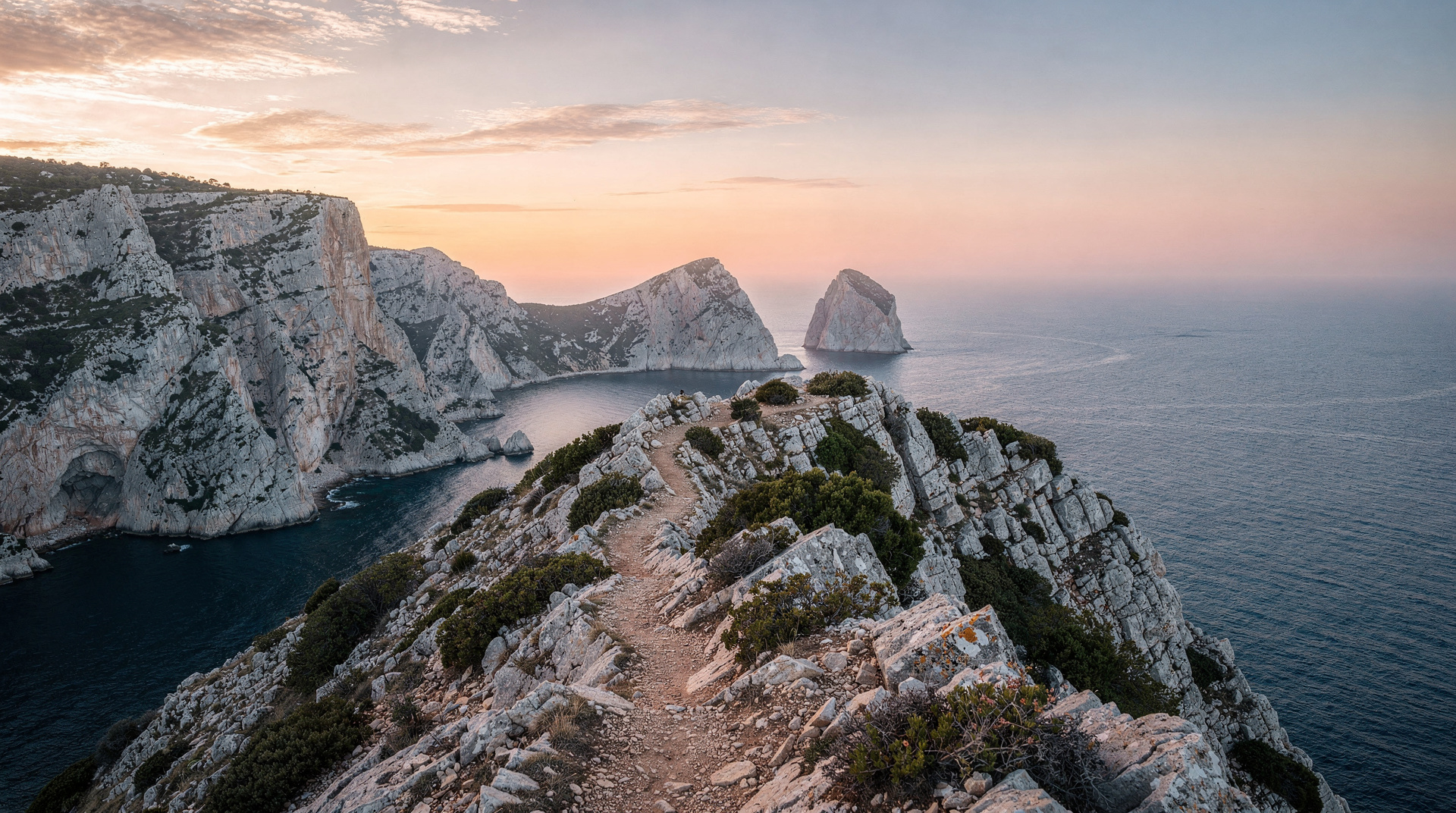
The Calanques National Park was created in 2012 and covers approximately 520 km² — an unusually dense mix of land and sea, with the coastline from Marseille’s southern edge to the town of La Ciotat forming the park’s boundary. The park contains 20 named calanques (from the Provençal word for the narrow inlets carved into the limestone) and is one of the few European national parks that begins at the edge of a major city.
The geology
The Calanques’ character comes directly from its geology: a Jurassic-era limestone massif that dips steeply into the sea. The calcium carbonate rock is porous — rainwater percolates through it rather than running off the surface, which is why the garrigue vegetation on the plateau is scrubby and drought-tolerant (the water is gone immediately). The stone bleaches white in the Mediterranean sun, giving the cliffs their characteristic colour. The sea at the base of the cliffs is turquoise because it is very clear (low particle content) and relatively shallow over a white sandy or limestone seafloor — the blue-turquoise-emerald gradation visible in photographs is real, not enhanced.
The ecology
The garrigue scrub on the Calanques plateau — dominated by kermes oak, rosemary, cistus, and phrygane grasses — is among the driest and most fire-prone vegetation in France. This is why the summer fire closure system exists. The plants are genuinely tinder-dry by late June, and a single spark in the wrong conditions can start a fire that spreads across the limestone at extraordinary speed.
The sea within the park is a Marine Protected Area — no fishing is permitted within the inner boundaries, which makes the underwater environment unusually rich for the Mediterranean. Snorkelling in the Calanques reveals posidonia seagrass meadows (a protected endemic Mediterranean plant), octopus, grouper, and in the deeper channels, occasionally monk seals (though sightings are rare). The water clarity is excellent — 10–15 m visibility on calm days.
Responsible access in the Calanques
The park receives approximately 2 million visitors per year — an extraordinary number for a wilderness area. The fire closure system and the Sugiton reservation requirement are not bureaucratic obstacles; they are the minimum necessary to prevent the park’s ecology from being overwhelmed. Practical rules for responsible visitors:
- No fires or smoking anywhere in the park — this applies year-round, not only in fire season.
- Stay on marked paths — the limestone soils are fragile and erosion from off-trail walking is a documented problem.
- Take all waste with you — the park has no waste collection, and litter left at calanques takes years to degrade in the dry environment.
- No camping or overnight stays within the park.
- No picking of plants — the garrigue species are slow-growing and protected.
- On the sea side: no anchoring on posidonia meadows (highly illegal, heavy fines), and respect the 5-knot speed limit within 300 m of the coast.
These rules sound obvious but are regularly ignored by high-season visitors. The summer access guide has the complete system for summer visitors who need to check daily codes.
Day-by-day summary
| Day | Morning | Afternoon | Evening |
|---|---|---|---|
| Day 1 | Sea kayak or boat tour from Marseille (9:00–13:00) | Sormiou or Morgiou hike, or Les Goudes if trails closed | Dinner in Cours Julien |
| Day 2 | TER to Cassis, GR 98 trail to Port-Miou/Port-Pin/En-Vau (9:30–14:00) | Cassis port lunch, then wine, via ferrata, or a swim | Return TER, dinner at the Vieux-Port or Vallon des Auffes |
Fitness and who this itinerary suits
This is the most physically demanding itinerary on the site, and it is worth being honest about that before booking. Day 1’s kayak tour involves 3–4 hours of sustained paddling; the afternoon hike to Morgiou is a genuine 4-hour round trip with real altitude gain. Day 2’s full Cassis circuit is 15 km with 400 m of elevation gain over loose limestone — closer to a mountain day than a coastal stroll. Neither day has an easy “just watch” option built in, unlike a standard boat-tour day.
If one member of a couple is not comfortable with sustained hiking or open-water paddling, the itinerary still works using the boat-tour alternatives noted for both days — the difference in experience is real (you see the Calanques rather than move through them), but the logistics and pacing stay identical, which matters for couples who want to travel together rather than split up.
Packing for two active days
Beyond the sunscreen, hat, and 2 litres of water per person already mentioned for Day 1, plan for: a change of dry clothes for after the kayak swim stops (left at accommodation, not carried), a lightweight buff or long-sleeve top for sun protection on the exposed limestone trails, and cash for the seasonal restaurants at Sormiou and Morgiou (many do not take cards reliably). A basic first-aid kit with blister plasters is worth the negligible extra weight — the descent into En-Vau on Day 2 is hard on unaccustomed feet.
Frequently asked questions about Marseille Calanques weekend
Can beginners do the sea kayaking on Day 1?
Guided tours are usually suitable for reasonably fit beginners — the guides set the pace and route to match the group. That said, this is sustained paddling over 3–4 hours, not a gentle float; anyone with no paddling experience and limited upper-body fitness may find it tiring rather than enjoyable, and should consider the boat-tour alternative instead.
Is this itinerary doable without hiking either day?
Yes, using the boat-tour and kayak-only variations built into both days — see the “boat-heavy version” above. The itinerary still requires water fitness (swimming comfort, boat balance) but removes the sustained walking.
Top experiences
Bookable activities with verified prices and instant confirmation on GetYourGuide.