Marseille street food guide: panisses, pizza, and late-night eats
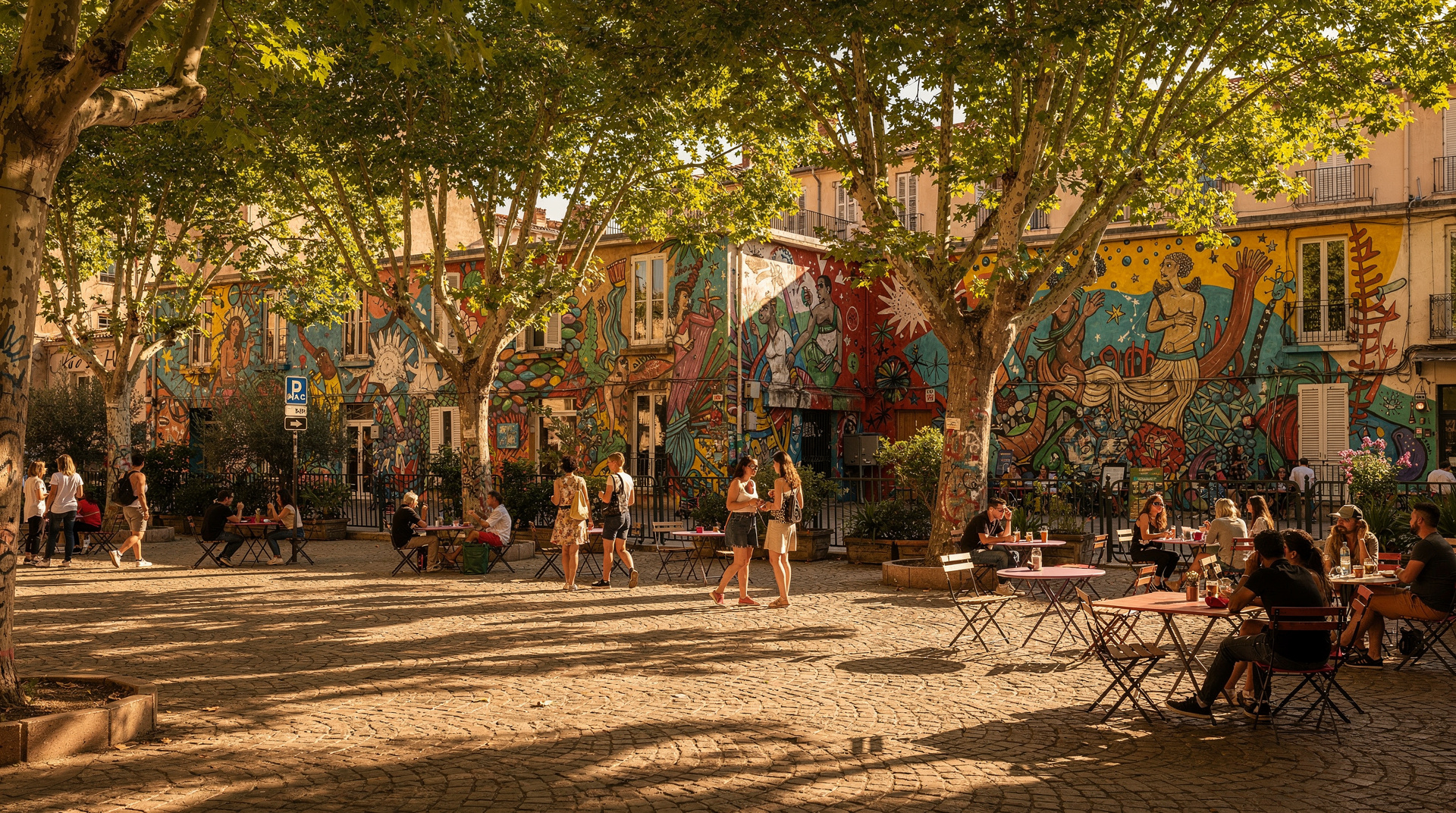
Marseille: sunset street-food tour
What is the best street food in Marseille?
Panisses (chickpea fritters) near the Vieux-Port, the Noailles market for North African sandwiches and pastries, pizza marseillaise for a quick slice, and chichi frégis (fried dough spirals) at L'Estaque harbour. EUR 2–8 for most items.
Street food as a city map
In Marseille, street food is a map of the city’s migrations. The panisse (chickpea fritter) arrived with Italian immigrants in the 19th century. The socca tradition of the Côte d’Azur is its close cousin. The kebab-and-merguez sandwich culture of Noailles reflects decades of North African immigration. Pizza Marseillaise — the local flat-bread style — is neither Naples nor New York but its own thing, shaped by geography and poverty and available at almost any hour. Each item points to a layer of the city’s history.
This guide covers what to eat on the street, where to find it, and what you will pay. All items under EUR 12; most under EUR 6.
| At a glance | |
|---|---|
| Where | Noailles market, Vieux-Port fringes, Cours Julien, L’Estaque harbour |
| Cost | Most items EUR 2–8; a full grazing lunch around EUR 10–15 |
| Time needed | 2–3 hours for a proper Noailles-to-Vieux-Port crawl |
| Getting there | Noailles is on M1/M2; L’Estaque needs bus 35 (~20 min) from Vieux-Port |
| Best time | Weekday late morning to early afternoon for the freshest fry; late evening in Noailles for the sandwich counters |
Best time to eat what: a rough seasonal note
| Season | What’s best | Why |
|---|---|---|
| Spring/autumn | Panisses, pizza slices, tapenade and bread | Mild weather, comfortable to eat walking |
| Summer | Chichi frégis at L’Estaque, cold fish soup by the bowl | L’Estaque harbour is a proper half-day out in good weather |
| Winter (Oct–Mar) | Pieds-paquets at a traiteur | This slow-cooked dish is a cold-weather tradition, rarely stocked in summer |
| Ramadan period | Noailles pastry shops and evening food stalls extend hours | Worth checking dates before a Noailles-focused evening visit |
Panisses: the essential Marseille snack
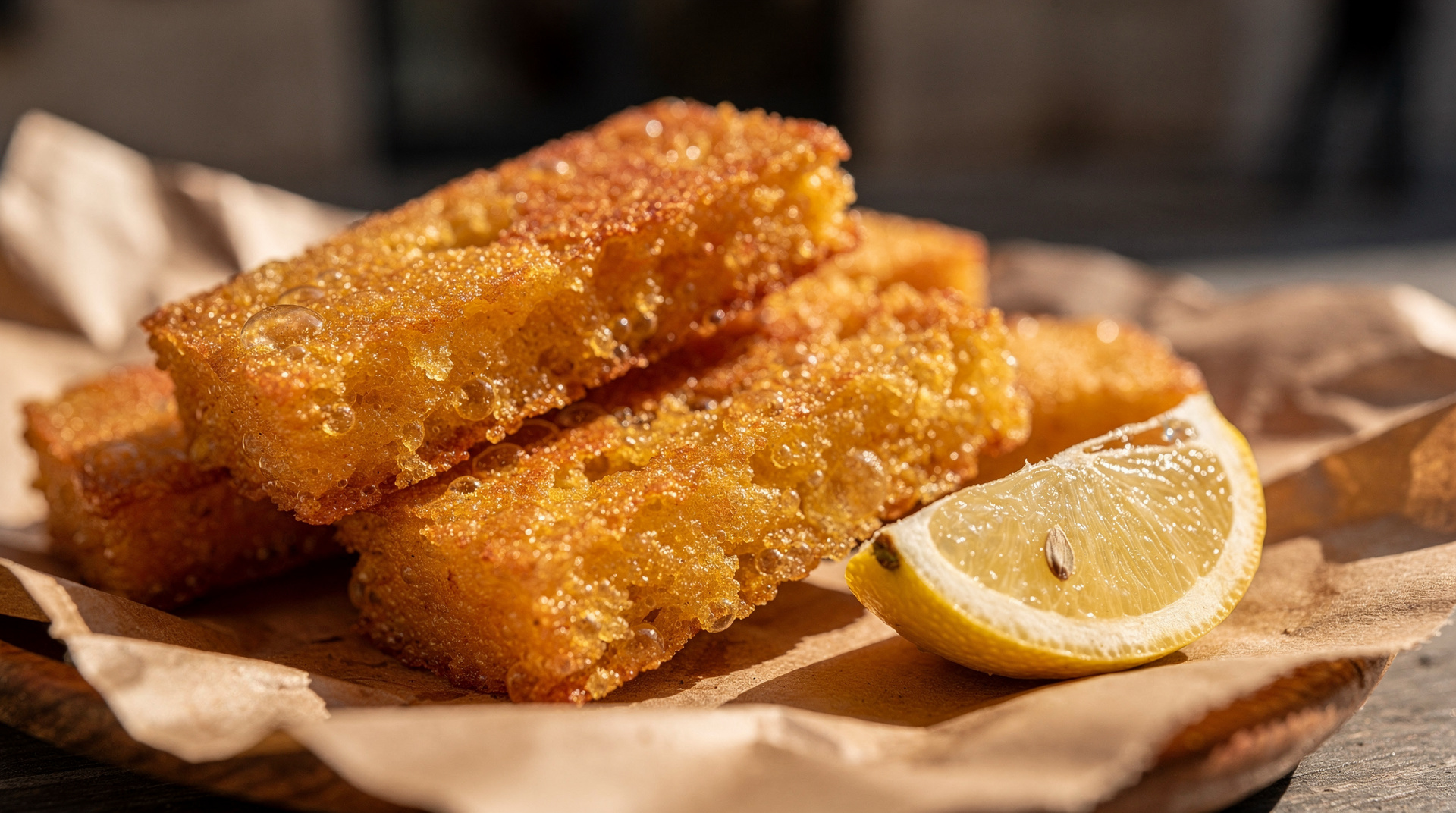
Panisses are made from chickpea flour — the same base as Italian panelle (Palermo’s street snack) and a culinary tradition shared across the Mediterranean coast. In Marseille, the mixture is cooked into rounds or sticks, left to set, then sliced and fried until the exterior is crispy and the interior remains creamy. The result is golden, slightly greasy in the best sense, and deeply satisfying.
Where to find them: Near the Vieux-Port and around the Noailles quarter. Several small traiteurs and snack stalls near the fish market sell panisses fresh from the fryer, typically starting mid-morning and running through lunch. The best are served immediately — panisses that have been sitting in a warming drawer for an hour lose the textural contrast that makes them worth eating.
Price: EUR 2–5 for a portion (4–6 pieces). Some vendors sell them by weight.
How to eat: With salt, sometimes with a wedge of lemon. No elaborate condiment needed. Eat while walking; they are not improved by patience.
A note on authenticity: Some restaurants list panisses as a starter or amuse-bouche. These are sometimes excellent, sometimes a reinvented version that prioritises presentation over the original simplicity. The street version is the reference point.
Pizza Marseillaise
Marseille has its own pizza culture distinct from both Naples and the American style. The local version — sometimes called pizza marseillaise or pizza provençale — tends toward a thinner base than neapolitan but not as thin as a cracker style, with a slightly olive-oil-enriched dough, and toppings that lean on the Provençal pantry: tapenade, anchovies, tomato, and a restrained use of cheese.
Where to find it: Pizza by the slice is available across the city, with concentrations around Cours Julien, Noailles, and the areas around the Canebière. The slice format (pizza à la coupe) is the street version — order a tranche, pay EUR 2–4, eat standing.
What to order: The anchovy-and-olive version is most local in character. The version with tomato, tapenade, and a few capers is close behind. Avoid anything described as “complete” or loaded with industrial mozzarella — this is the tourist approximation rather than the local article.
Best time: Mid-afternoon, when the lunch rush has cleared and the slices are freshly replenished. Late night (after 22:00 around Cours Julien and Noailles) there are several places that sell pizza until 1:00 or later.
Noailles: the kebab corridor and its surrounding options
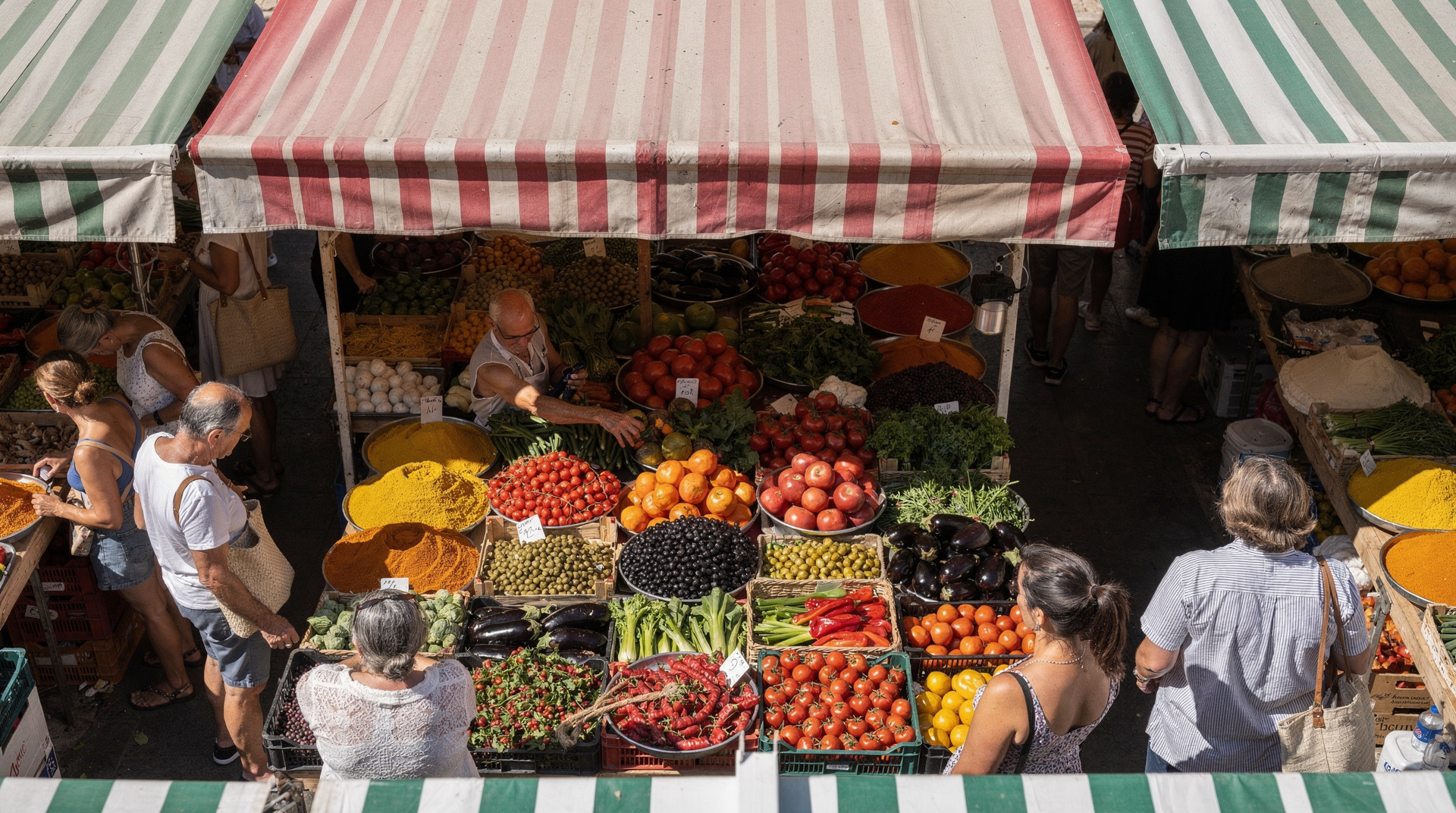
The Noailles quarter (1st arrondissement, around the métro stop of the same name) is the best concentration of cheap, substantial street eating in Marseille. The streets around Rue de la Longue, Cours Belsunce, and the market stalls run a continuous lunch counter culture.
Merguez and kebab sandwiches: EUR 4–8, served in flatbread or baguette with harissa, salad, and sauces. The merguez (spiced lamb and beef sausage) version is distinctly Marseillais — the spice level and the quality of the sausage reflect a genuine North African supply chain rather than the approximations found in other French cities.
Msemen and batbout: Freshly made flatbreads from Algerian and Moroccan bakers, served warm with honey and butter (sweet version) or with harissa and kefta (savoury version). EUR 1–3.
North African pastries: The pastry shops around Noailles sell baklava, makroud, and corne de gazelle from EUR 1 per piece — better quality and more representative of the tradition than the versions sold in tourist areas.
Late-night options: Noailles has the most reliable late-night food scene in central Marseille. Several sandwich shops and shawarma counters stay open until 1:00–2:00 on weekends. This is the practical solution for post-concert or post-bar hunger in a city where restaurant kitchens close at 22:00.
Panini provençal and variations
The panini provençal is Marseille’s contribution to the Italian-influenced sandwich tradition — a pressed flatbread or ciabatta filled with local ingredients rather than the generic salami-and-mozzarella combination. Common fillings: tapenade and goat cheese, anchovies and roasted pepper, grilled courgette with pesto, or merguez with harissa.
Where to find them: Sandwich shops and traiteurs around Cours Julien and in the Le Panier area. Several boulangeries in the 1st and 2nd arrondissements offer provençal variations alongside standard French sandwiches.
Price: EUR 4–8 depending on filling and format. The Cours Julien versions tend toward more adventurous ingredient combinations and slightly higher prices (EUR 6–8).
Pieds-paquets: the slow-food street version
Pieds-paquets (literally “feet and parcels”) is Marseille’s most challenging traditional dish for visitors unfamiliar with offal cooking. It consists of lamb tripe stuffed with garlic, parsley, and pork belly fat, rolled into parcels, and simmered for 7 hours or more in white wine and tomato alongside lamb trotters. The origin is attributed to 19th-century Marseille, specifically the Pomme district.
While pieds-paquets is most commonly a restaurant dish (served at traditional Provençal tables in the colder months, October through March), it occasionally appears as a street-food format — sold from traiteurs as a prepared dish to take away, reheated at home. In the market areas and around Noailles, some traiteurs stock it in winter.
Who it is for: The genuinely curious eater who wants the deepest possible cut of Marseille’s food tradition. The texture is gelatinous, the flavour is intense, and the slow-cooking creates something that is either revelatory or overwhelming depending on your tolerance for offal. It is worth trying once at minimum if you encounter it.
Price at a traiteur: EUR 8–15 for a portion.
Food trucks at Quai d’Arenc
The Quai d’Arenc, in the regenerated port area near the Joliette in the 2nd arrondissement, has developed a food truck culture in recent years — particularly around the lunchtime hours when the nearby office district generates foot traffic. The trucks rotate, but the area typically offers a range of cuisines: burgers, Asian street food, pizza, and occasionally more adventurous options.
When to go: Weekday lunchtimes, approximately 12:00–14:00. The weekend food truck presence is less consistent.
The honest verdict: This is convenient rather than essential eating — a functional lunch zone for people in the area rather than a destination. The fish market and Noailles are more interesting food destinations for visitors with limited time. That said, if you are visiting the MuCEM or walking the J4 waterfront and need lunch without a sit-down, the Quai d’Arenc food truck area is the honest option.
Chichi frégis: the L’Estaque tradition
L’Estaque is a small neighbourhood and former fishing village at the northwest edge of Marseille — known to art historians because Cézanne and Braque both painted it (the Braque series painted here in 1908 is considered the beginning of Cubism). To Marseille residents, it is known for chichi frégis.
Chichi frégis are fried dough spirals — a beignet-style street food with a slight orange-blossom flavour, dusted with sugar, sold hot from the fryer at a handful of stalls at the L’Estaque harbour. They are Marseille’s specific contribution to the broader Mediterranean fried-dough tradition and have been sold at L’Estaque for at least 150 years.
How to get there: Bus 35 from Vieux-Port to L’Estaque (approximately 20 minutes), or by car (15 minutes northwest of the centre). The harbour is at the bottom of the hill from the main road — walk downhill from the bus stop.
Where to buy: The chichi stalls are on or near the harbour front, clustered around the small beach and the terrace cafés. You will smell them before you see them.
Price: EUR 2–5 for a portion. Eat immediately.
When to go: Chichi frégis are available year-round but most associated with summer weekend afternoons and evenings when L’Estaque attracts Marseille families on a half-day out. A weekday morning visit to the harbour is quieter and the stalls still operate.
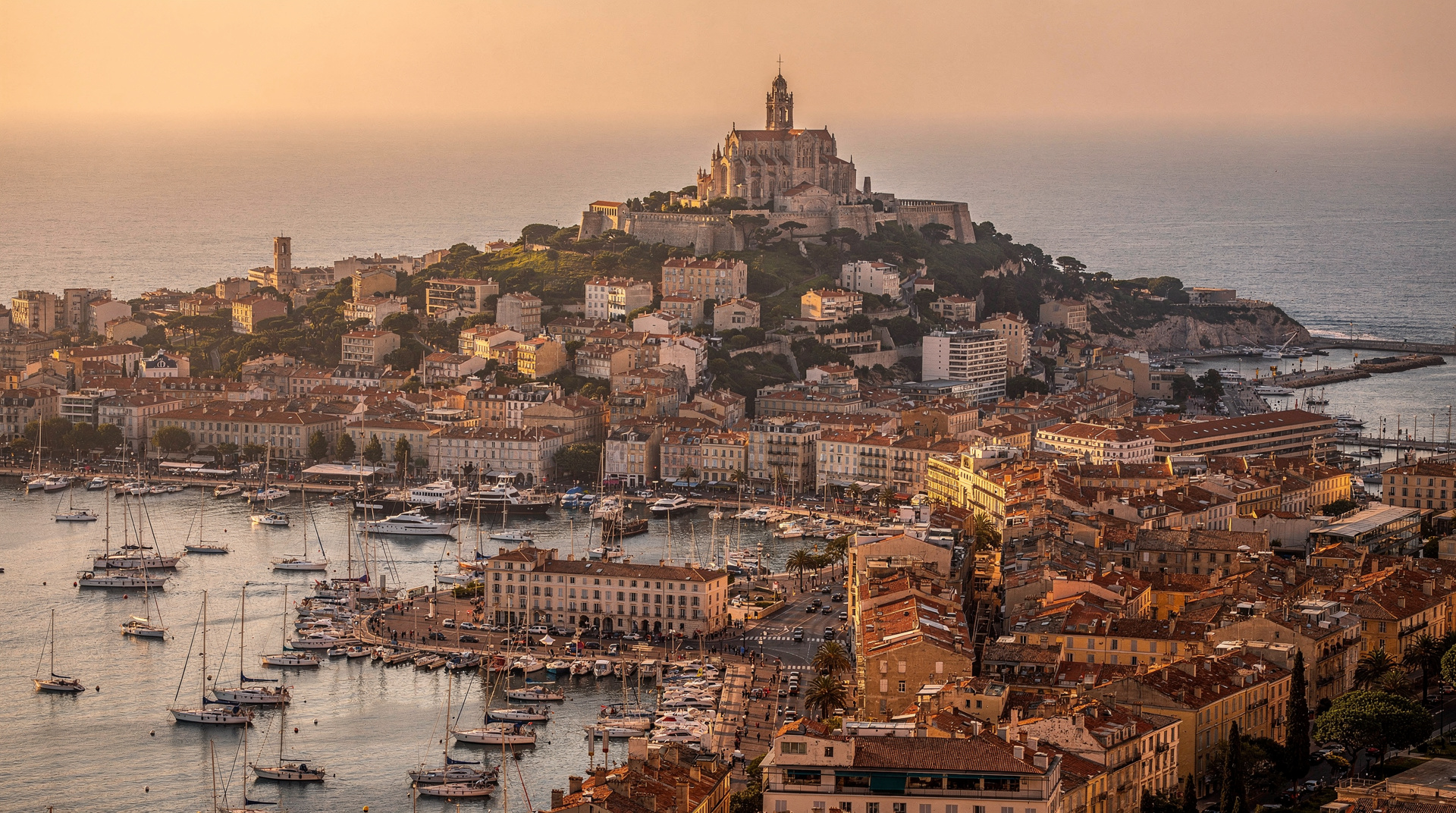
The L’Estaque bonus: The view from the L’Estaque harbour back across the Bay of Marseille — Notre-Dame de la Garde visible on its hilltop, the Frioul islands in the foreground — is one of the better perspectives on the city from outside. This is worth the bus journey independently of the chichi frégis, though the two together make a compelling reason to go.
Bouillabaisse-adjacent: fish soup at a counter
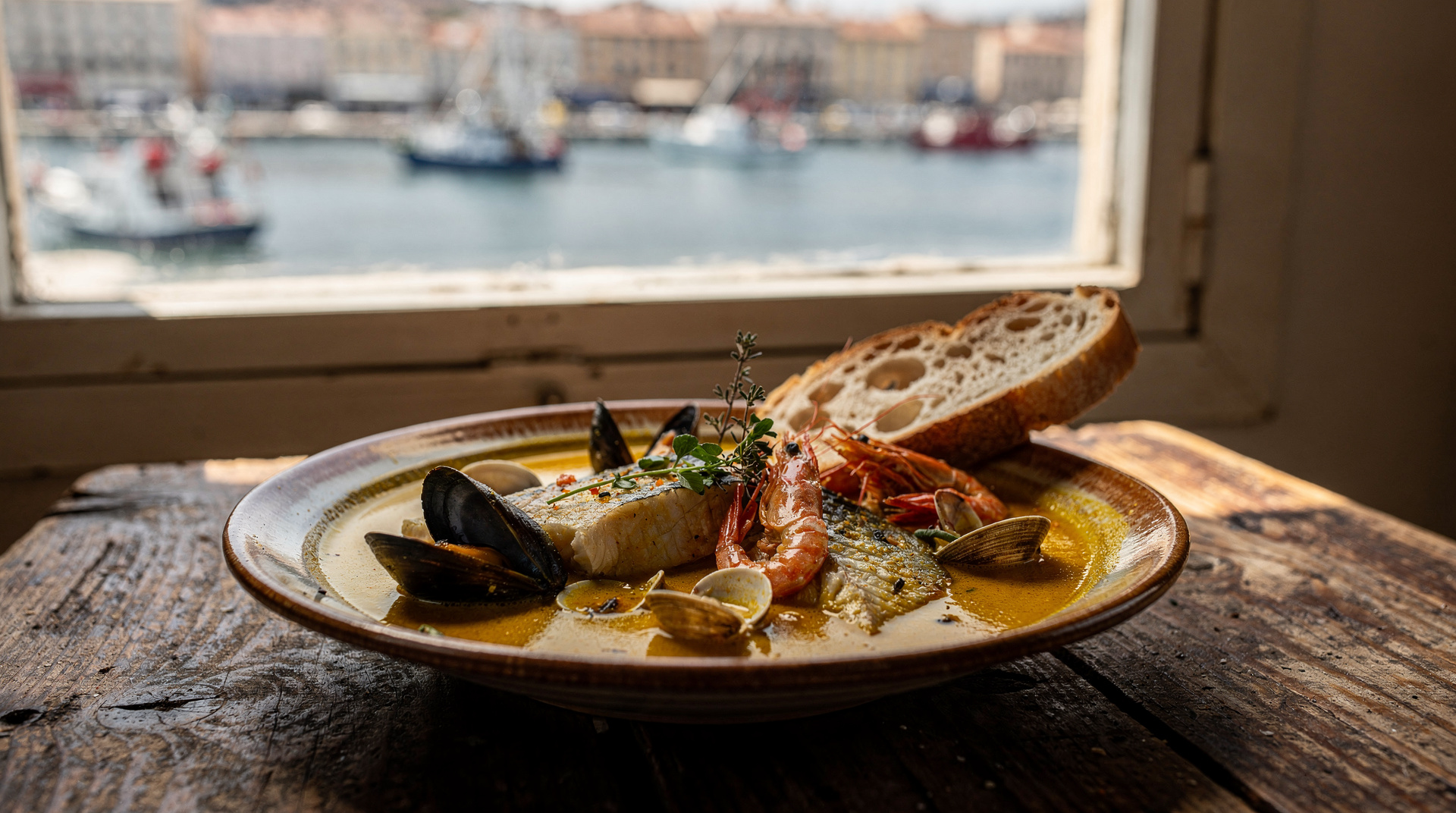
For visitors who want the flavour of Marseille’s most famous dish without the EUR 55–85 per-person restaurant commitment, some Noailles and Vieux-Port traiteurs and small counters sell fish soup (soupe de poisson) by the bowl — a rich, saffron-orange broth with rouille and croutons, minus the whole fish presentation. EUR 5–10 for a bowl at a counter.
This is not bouillabaisse in the traditional sense — the Charte de la Bouillabaisse specifies a minimum list of fish and a two-service presentation that cannot be replicated at a counter. What you get from a traiteur is a fish soup in the same flavour family: satisfying, genuine in its use of Mediterranean fish, and a completely legitimate option for a lunch that tastes like the sea.
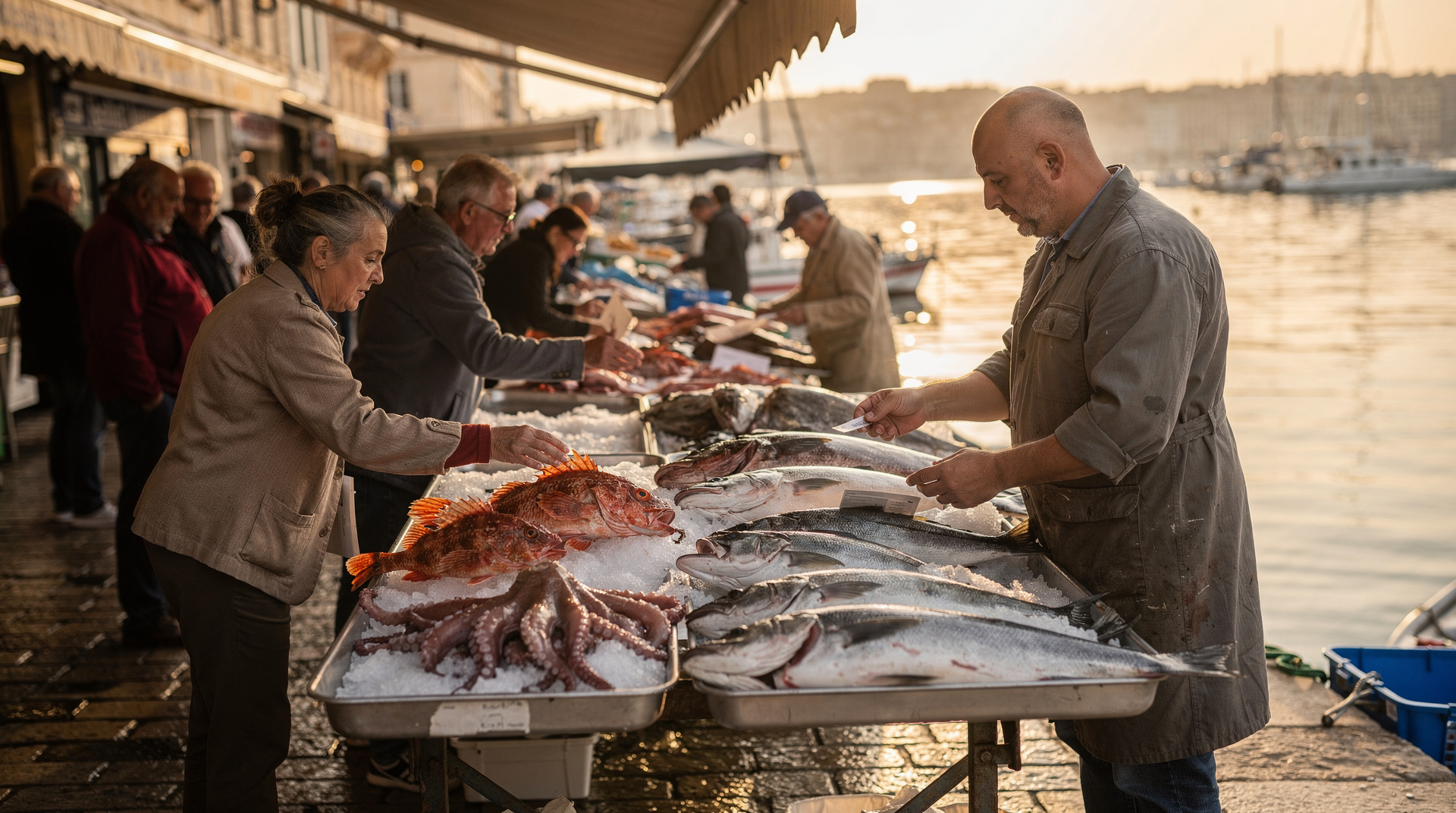
The fish market at Quai des Belges sells fish from the morning catch, and some fishwives at the market also sell small containers of fish soup made from the day’s unsold product — this is the closest thing to an artisan fish soup you will find outside a restaurant.
Olive tapenade and bread: the simplest street meal
Not every street food experience involves a fryer or a grill. One of the most genuinely Provençal eating experiences in Marseille costs EUR 3–6 and requires nothing more than a good boulangerie and a market olive stall.
The assembly: A baguette or a round of Provençal fougasse (olive oil flatbread) from a boulangerie, plus a 100g pot of black olive tapenade from a Noailles market stall or an artisan olive vendor at the Cours Julien market. Eat on a bench at the Vieux-Port or on the steps of a Le Panier staircase.
The ingredients: Tapenade is made from black olives, capers, anchovy (or not, for the anchovy-free version), olive oil, and sometimes garlic — everything that grows or is fished from the Mediterranean coast. A quality tapenade from a market vendor is categorically different from the paste in a supermarket jar.
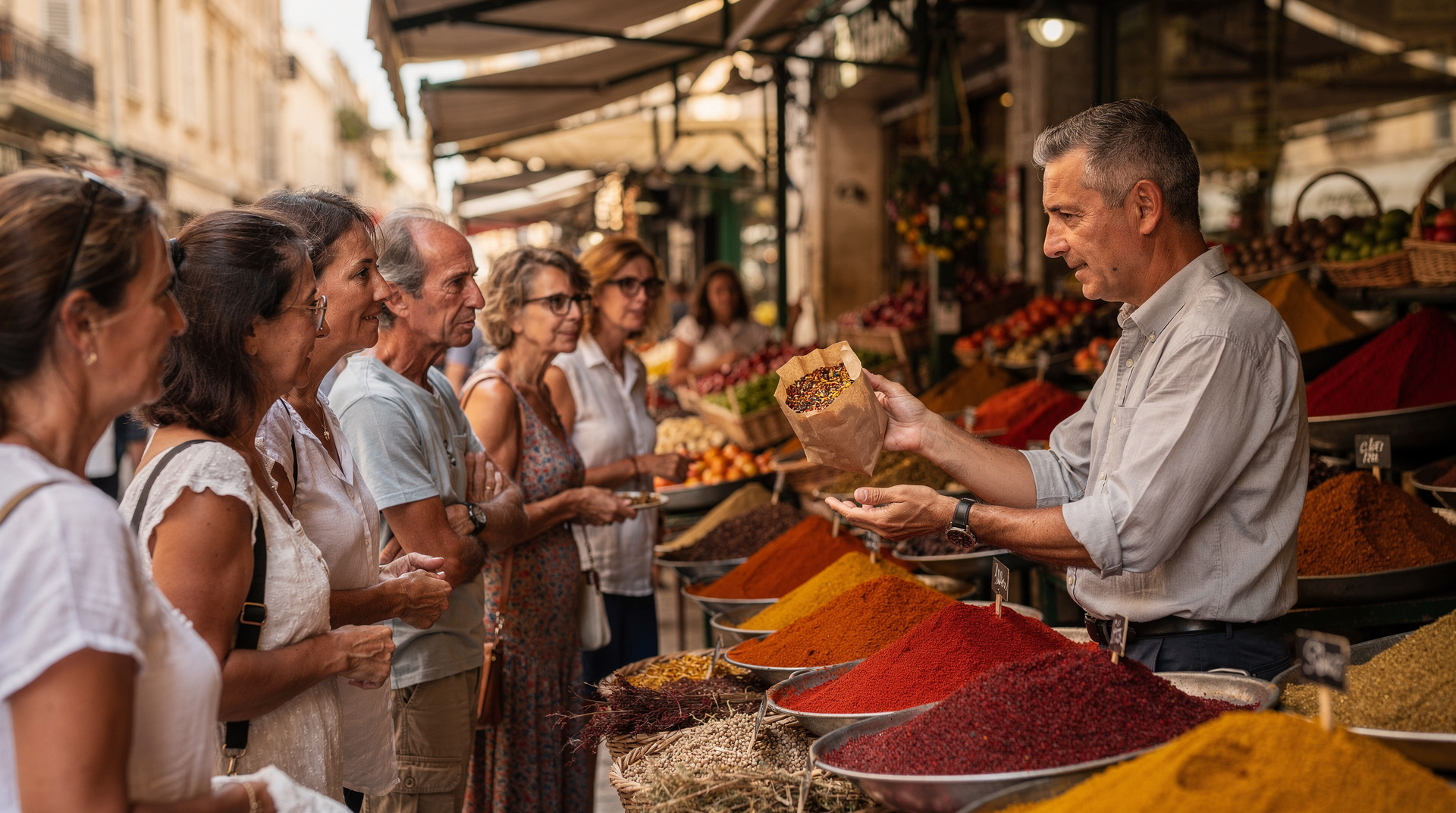
Where to buy tapenade: The Noailles market stalls that sell olives in bulk also typically sell fresh-made tapenade alongside marinated olives and harissa. The Cours Julien organic market (Wednesday) has one or two artisan producers selling single-variety tapenade at EUR 6–12 per jar. Both are excellent.
The socca question: available in Marseille?
Socca — the Niçoise chickpea flour crêpe cooked in a wood-fired pan — is strictly speaking a Nice specialty. Marseille has its own chickpea dish (panisses), and the two cities maintain a friendly rivalry over whose version of the chickpea street snack is superior.
In practice, socca appears occasionally at Marseille markets (the Cours Julien organic market sometimes has a vendor, particularly in cooler months when the outdoor cooking is practical) and at some festival food stands. It is not a reliable daily item in Marseille.
The comparison: Panisses are sliced and fried to order — crispy outside, creamy inside. Socca is cooked as a flat crêpe and served immediately — smoky, slightly charred at the edges, with a more crumbly texture. Both are made from chickpea flour and water; both are seasoned with olive oil and pepper. The experience is different enough that having both during a Marseille + Nice trip makes comparative sense.
What the street food scene is not
Marseille’s street food scene is not Instagram-optimised in the way of Barcelona’s food markets or Paris’s covered passages. It is messier, less curated, and more genuinely embedded in the city’s daily functioning. Some of the best experiences — a paper cone of panisses eaten leaning against a wall near the fish market, a merguez sandwich from a Noailles counter — have no particular atmosphere beyond the street itself.
This is part of what makes Marseille interesting. The food culture here was not built for visitors. It was built for a port city’s working population, and visitors who approach it with that understanding tend to find more to enjoy than those expecting curated food halls.
For the evening and late-night version of this street food culture, the sunset street food tour via GetYourGuide covers the Noailles and Cours Julien circuit from a guided perspective. See also the markets guide for morning market context and the restaurant guide for sit-down options when the street food circuit has been covered.
Building a street food route
A logical route follows the geography rather than a checklist. Start at the Vieux-Port for panisses and a coffee, walk up through Noailles for the kebab corridor and North African pastries, continue to Cours Julien for a pizza slice and the organic market’s tapenade stalls, and if you have a full afternoon, take bus 35 out to L’Estaque for chichi frégis and the harbour view. This mirrors the route many visitors already walk for the street art guide’s Cours Julien section, so the two combine naturally into one day.
Pairing street food with the rest of your day
Street food works best as connective tissue between other plans rather than a day in itself. A Vieux-Port snack fits naturally into the Vieux-Port area guide walk, and the climb through Le Panier is a good place to eat a tapenade-and-bread lunch on a staircase before exploring its lanes with the Le Panier guide. If you are building a longer stay, the Marseille in one day itinerary leaves room for a grazing lunch, and the food and wine weekend stretches the same appetite across two days.
For the sweeter side of the city, finish a crawl with the navettes and local sweets guide, and if the fish soup at a counter whets your curiosity, the seafood guide explains what else the port puts on a plate. Travelling on a tight budget? The Marseille on a budget guide shows how a street food lunch fits into a cheap but satisfying day.
Dietary notes
Vegetarians will find panisses, most pizza slice toppings (ask to confirm no anchovy paste in the base), msemen with honey, and the olive tapenade-and-bread combination all reliably meat-free. Vegans should check pizza cheese and confirm tapenade recipes (some include anchovy). Halal options are widespread in Noailles, where much of the merguez and kebab supply chain serves the neighbourhood’s own community. Gluten-free options are limited on the street — panisses (pure chickpea flour) are the safest bet, though cross-contamination in a shared fryer is possible; ask directly if this matters to you.
Frequently asked questions about Marseille street food guide
Is Marseille street food safe to eat? Yes — stick to stalls and counters with visible turnover (a queue, food being cooked fresh in front of you) rather than pre-made items sitting out, and you’ll be fine. This is standard advice for any city’s street food scene, not a Marseille-specific concern.
What’s the cheapest way to eat well in Marseille? A combination of panisses (EUR 2–5), a pizza slice (EUR 2–4), and tapenade with bread (EUR 3–6) gets you a full, varied meal for under EUR 15, all without sitting down anywhere.
Top experiences
Bookable activities with verified prices and instant confirmation on GetYourGuide.