Marseille, Aix-en-Provence and Cassis: 3-day discovery itinerary
From Marseille: Cassis & Aix-en-Provence full-day tour
| At a glance | |
|---|---|
| Where | Marseille, Aix-en-Provence, Cassis — coastal Provence triangle |
| Cost | Mid-range; trains under EUR 10 each way, main added costs are the Aix Cézanne studio, wine tastings, and the Cassis boat tour |
| Time needed | 3 days, one per destination |
| Getting there | TER trains from Marseille Gare Saint-Charles — no car needed |
| Best time | April–June and September–October for comfortable walking and lighter crowds; avoid peak August heat if hiking or driving is planned |
Marseille, Aix-en-Provence, and Cassis form a natural triangle in coastal Provence — and crucially, all three are reachable from each other by TER train without a car. This itinerary covers the port city, the elegant inland city, and the small limestone coast town in three days: one day each, all connected by rail, with a different character for each day.
This is not the most intensive itinerary — it does not squeeze in boat tours, long hikes, and multiple wine tastings. It is the right approach for travellers who want to feel each place properly rather than tick boxes. The bus and train connections here are among the best in Provence, which makes this triangle genuinely car-free in a way that most Provençal itineraries are not.
Travel basis: stay all three nights in Marseille (the best base: cheapest accommodation, best rail connections, most dynamic evenings). Day-trip to Aix on Day 2, day-trip to Cassis on Day 3.
Day 1: Marseille
Morning: Vieux-Port, Le Panier, MuCEM (8:30–12:30)
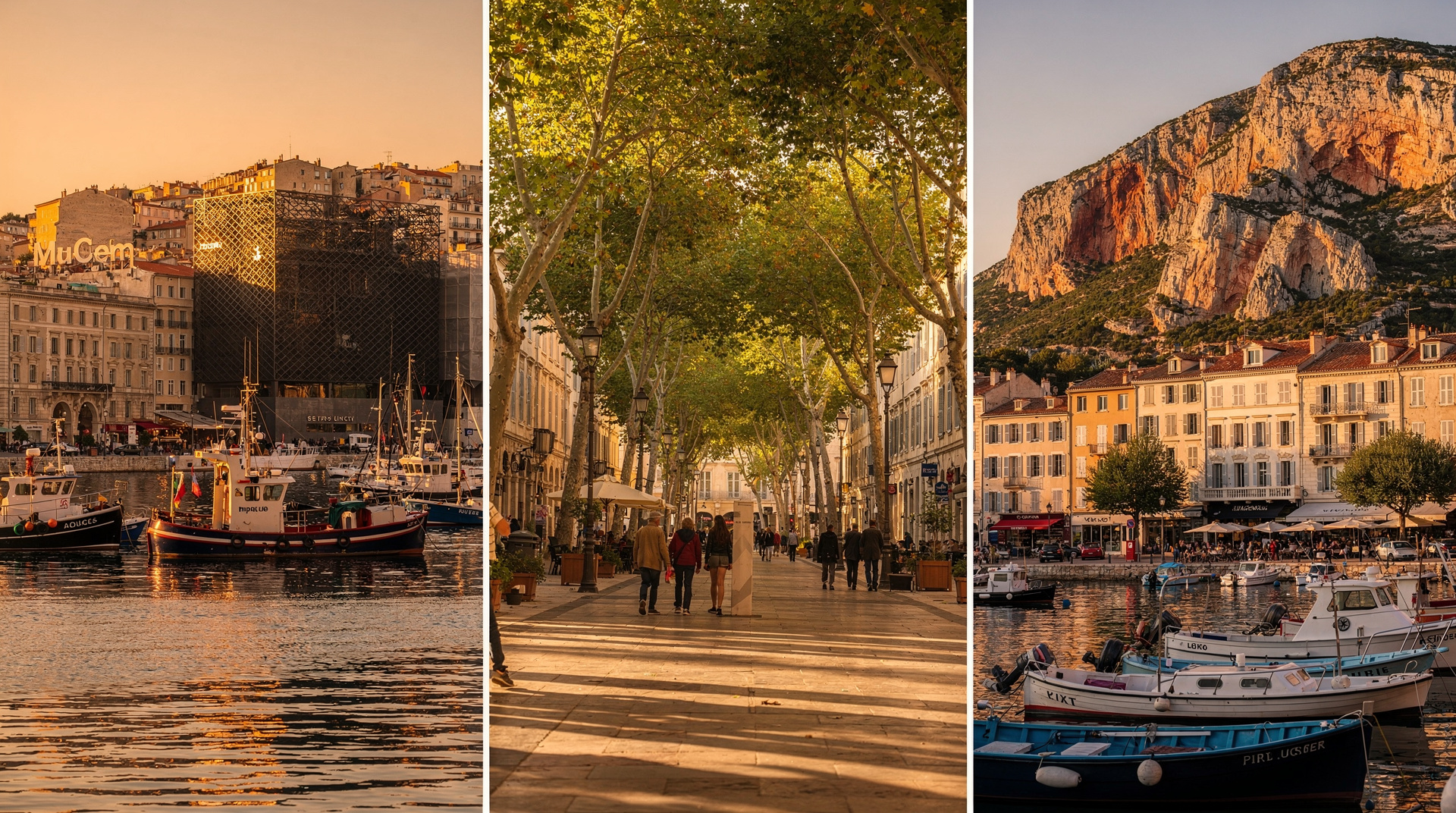
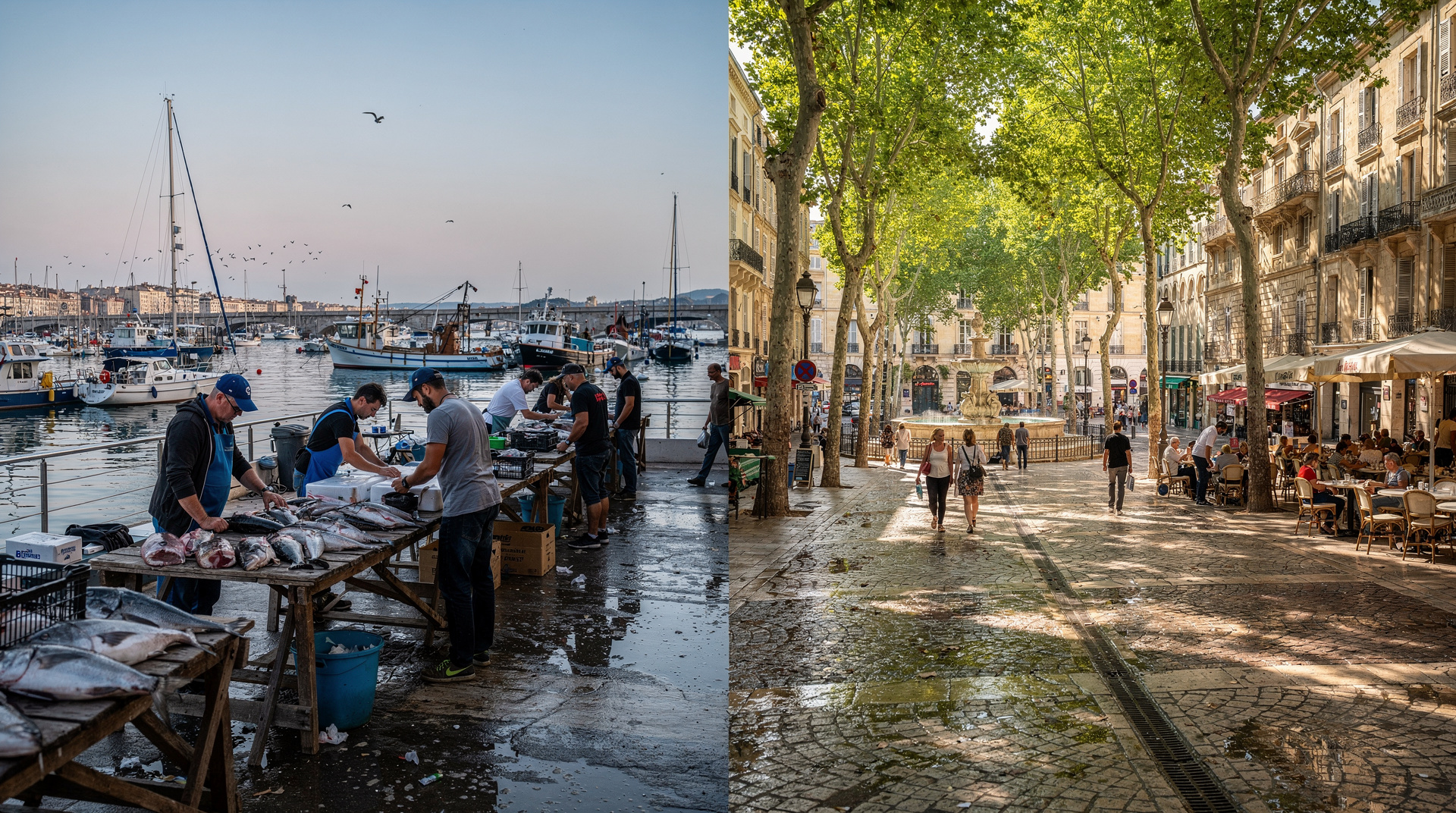
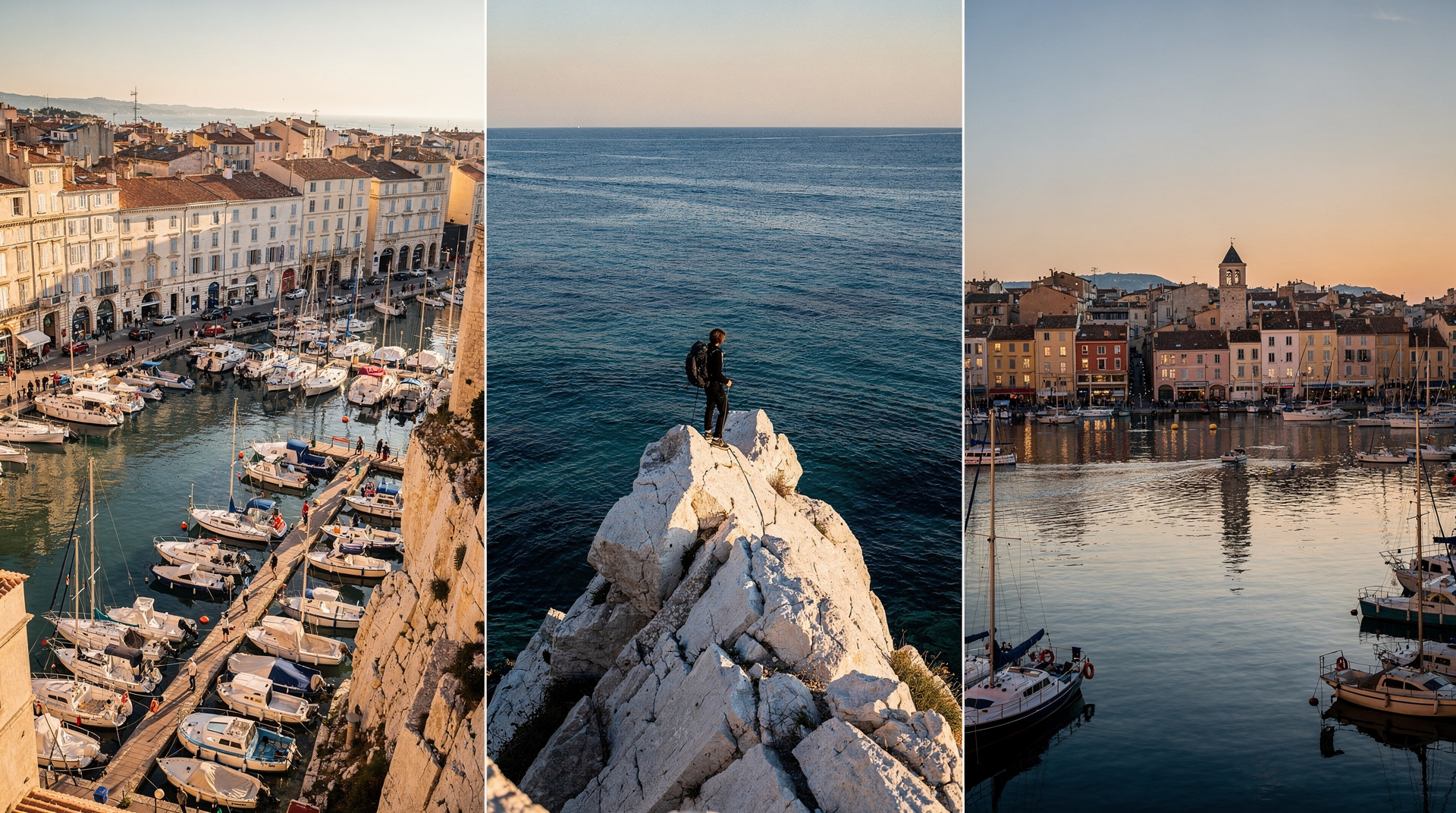
Begin at the Vieux-Port fish market (best before 9:30, free). Walk the north quai toward Fort Saint-Jean and MuCEM. Spend 45 minutes on the fort terraces and footbridge — this is the best free view in Marseille. Consider MuCEM interior if cultural exhibitions are your interest (11 EUR, 1.5 hours).
Le Panier from 10:00: the Vieille Charité courtyard, the narrow lanes with street art, the high point at Place des Moulins. Allow 90 minutes. Descend back toward the Vieux-Port by noon.
Afternoon and evening (13:00–22:00)
Lunch near the south quai (Cours Estienne d’Orves for value). In the afternoon, take the petit train to Notre-Dame de la Garde (12–15 EUR, round trip, panoramic views from 154 m). Return to the Vieux-Port and walk south along the Corniche Kennedy to Vallon des Auffes — the tiny fishing cove that is one of Marseille’s best-kept secrets from those who stay only on the tourist quai.
Evening in Cours Julien — Marseille’s most authentic neighbourhood for dinner, street art, and a pre-dinner aperitif. Expect 25–40 EUR per person for dinner.
Day 2: Aix-en-Provence
Getting there: TER from Gare Saint-Charles (8:45 departure)
The TER to Aix-en-Provence Centre takes approximately 35–45 minutes; trains run approximately every 30 minutes from Gare Saint-Charles. Fare approximately 7–8 EUR. Note: Aix-en-Provence TGV station (4 km outside the city) is not useful for day trips from Marseille — always take the TER to Aix Centre, which is in the heart of the city.
Morning: markets and old town (9:30–13:00)
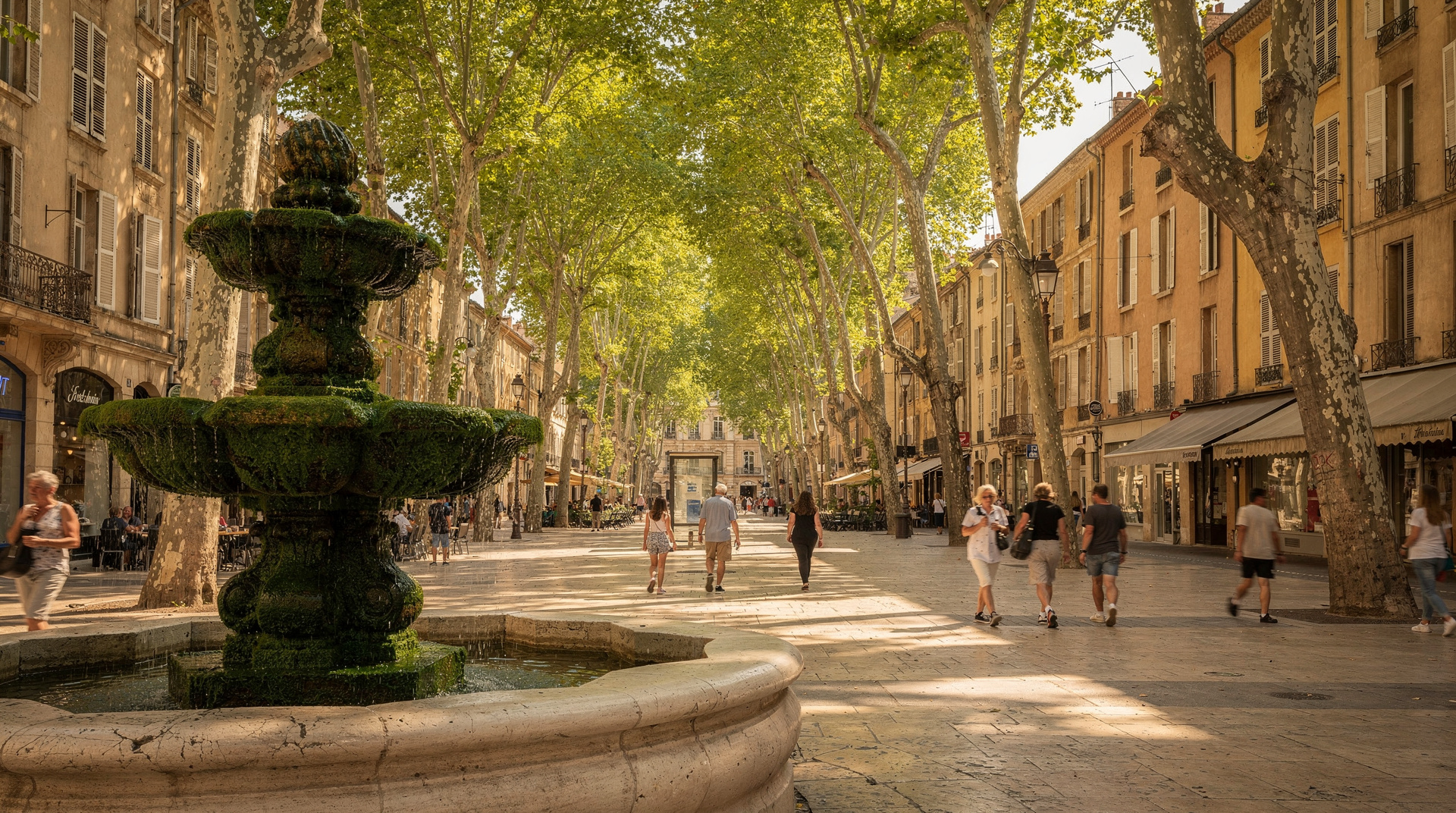
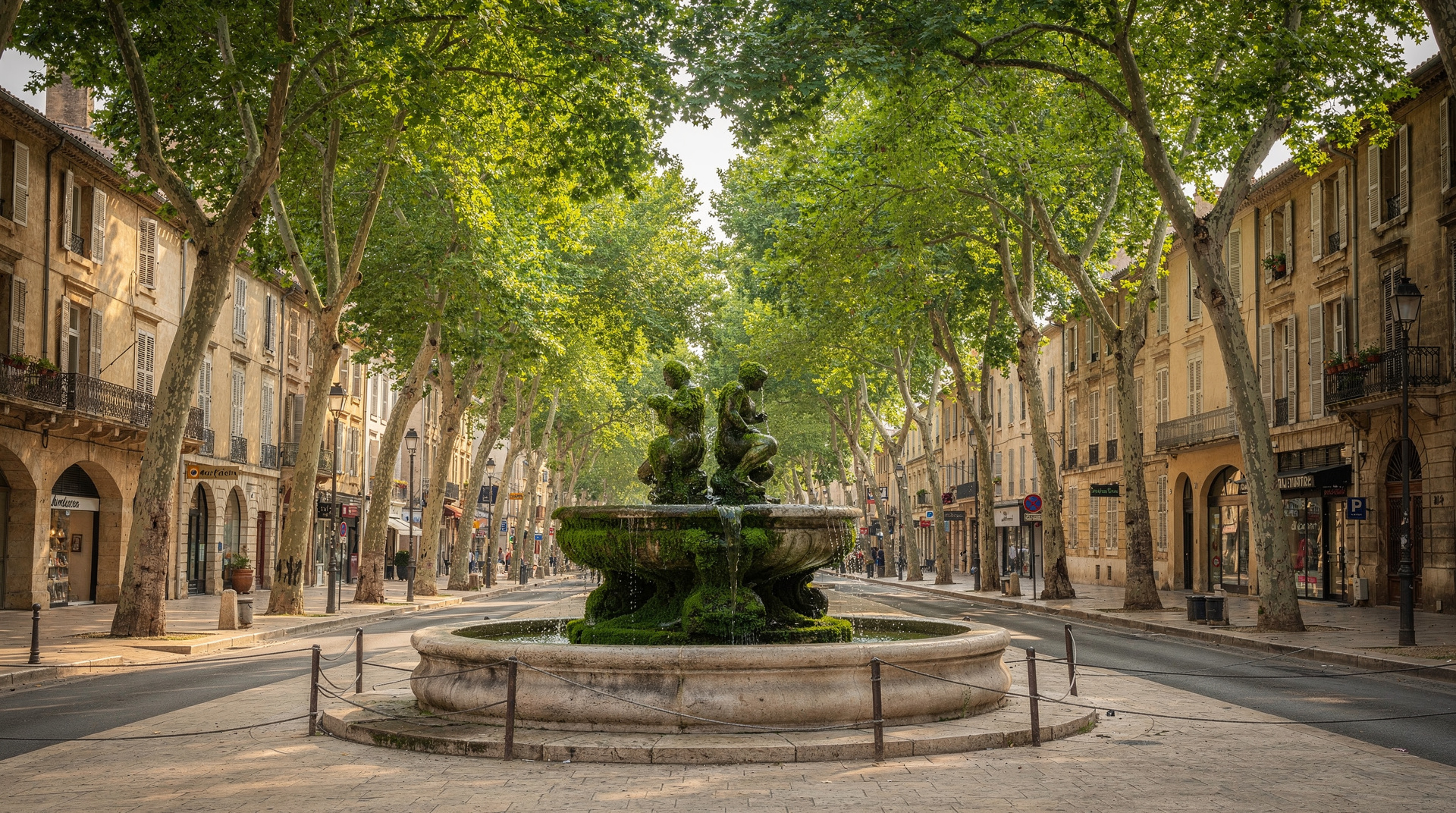
Aix-en-Provence receives visitors well. The old town is compact, elegant, and built on a human scale — tree-lined Cours Mirabeau with its café terraces and 17th-century mansions, the network of market squares just north of it, the hôtels particuliers (private mansions now used as shops and institutions) along every street.
Market days: Tuesday, Thursday, and Saturday are the main market days at Place de la Madeleine and Place des Prêcheurs — fresh produce, flowers, lavender sachets, local cheese and charcuterie. If your Day 2 falls on one of these days, arriving by 9:30 and spending 45 minutes in the market before walking Cours Mirabeau sets the right morning rhythm. The market wraps up by noon.
Cézanne: Aix is Cézanne country. The Atelier Cézanne (studio preserved since his death in 1906, on the hill north of the town centre, 20 minutes on foot from the station) is worth 45 minutes for anyone with serious interest — the studio is exactly as he left it, tools laid out, paintings propped against the wall. Entry approximately 7.50 EUR. From the street behind the studio, the view toward Mont Sainte-Victoire — the mountain Cézanne painted over 60 times — is clearly visible. The mountain is 15 km east and only accessible by car or bike, but seeing it from the city is sufficient context.
Old town exploration: The Quartier Mazarin (south of Cours Mirabeau) is the 17th-century planned grid of the city — quieter than the old town north of the cours, with the Musée Granet (fine arts collection, important for Cézanne works, 5–8 EUR) and the Fontaine des Quatre Dauphins. Allow 2 hours for the Quartier Mazarin and the Cours Mirabeau together.
Lunch: 12:30–14:30
Aix has excellent food. The market area north of Cours Mirabeau has cheese shops, bakeries, and terrasse restaurants at good value. The city also has a strong tradition of calissons — the almond-and-melon confection that originated here — available in every confiserie. Try them: they are genuinely delicious and unlike anything made elsewhere.
For sit-down lunch, the restaurants on and just off Place des Prêcheurs or Rue Espariat (north of Cours Mirabeau) are typically good value and more local-facing than the Cours Mirabeau terraces.
Afternoon: wine, fountains, and a slow pace (14:30–18:00)
The afternoon in Aix is about deceleration. Options by interest:
Wine: Aix-en-Provence is surrounded by Coteaux d’Aix-en-Provence AOC vineyards. Several wine bars in the old town offer tastings of the local appellation — rosé, but also serious reds from the area. A 30-minute Provence wine tasting in a shop on Cours Mirabeau or Rue d’Italie costs approximately 15–20 EUR per person and is a pleasant afternoon break.
Fontaines: Aix is the city of a thousand fountains — an exaggeration, but there are dozens, scattered throughout the old town. The Fontaine de la Rotonde (the grand roundabout fountain east of the station), the Fontaine des Quatre Dauphins, the mossy Fontaine d’Eau Chaude on Cours Mirabeau (fed by a natural thermal spring). Map them and walk between them.
Spa: Aix sits above thermal springs. The Thermes Sextius — a modern spa built above the original Roman thermal establishment — offers afternoon sessions for 25–35 EUR per person. A good option after a morning of cultural walking.
Return and evening (18:30–22:00)
TER back to Marseille Gare Saint-Charles — 35–45 minutes. Dinner in Marseille; after a day of Aix’s elegance, something rougher and more Marseillais feels right — North African food in Noailles or a bouillabaisse if budget allows.
Day 3: Cassis
Getting there: TER from Gare Saint-Charles (9:30 departure)
TER to Cassis: 22 minutes, approximately 7 EUR. The Marcouline shuttle (Ligne M1, 10 minutes) connects the station to the port, or walk 3 km downhill.
Morning: port and Calanques boat tour (10:00–13:00)
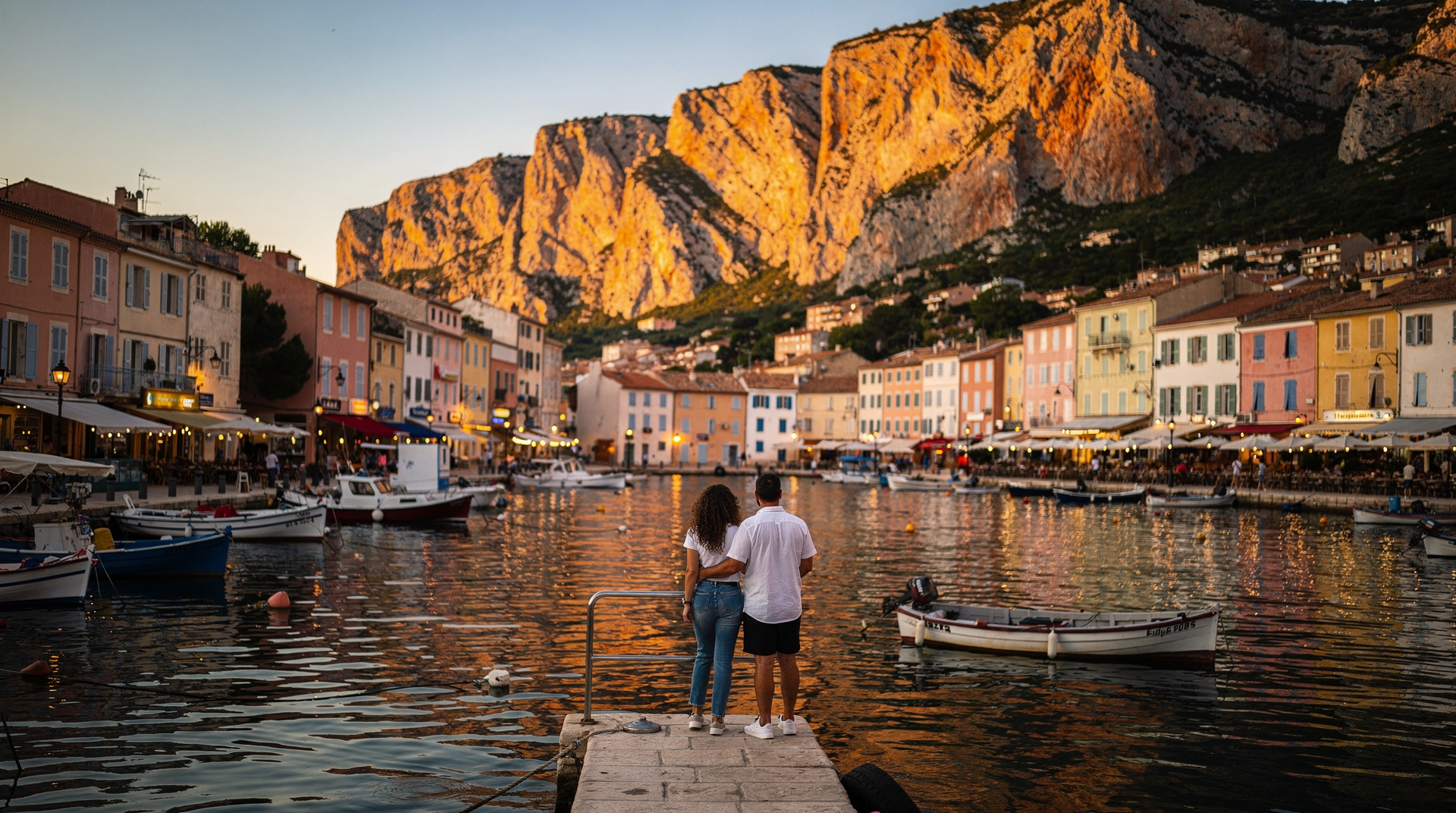
Cassis on a relaxed morning: walk the port quai, note the 15th-century château on the cliff above (private), observe Cap Canaille rising steeply to the east.
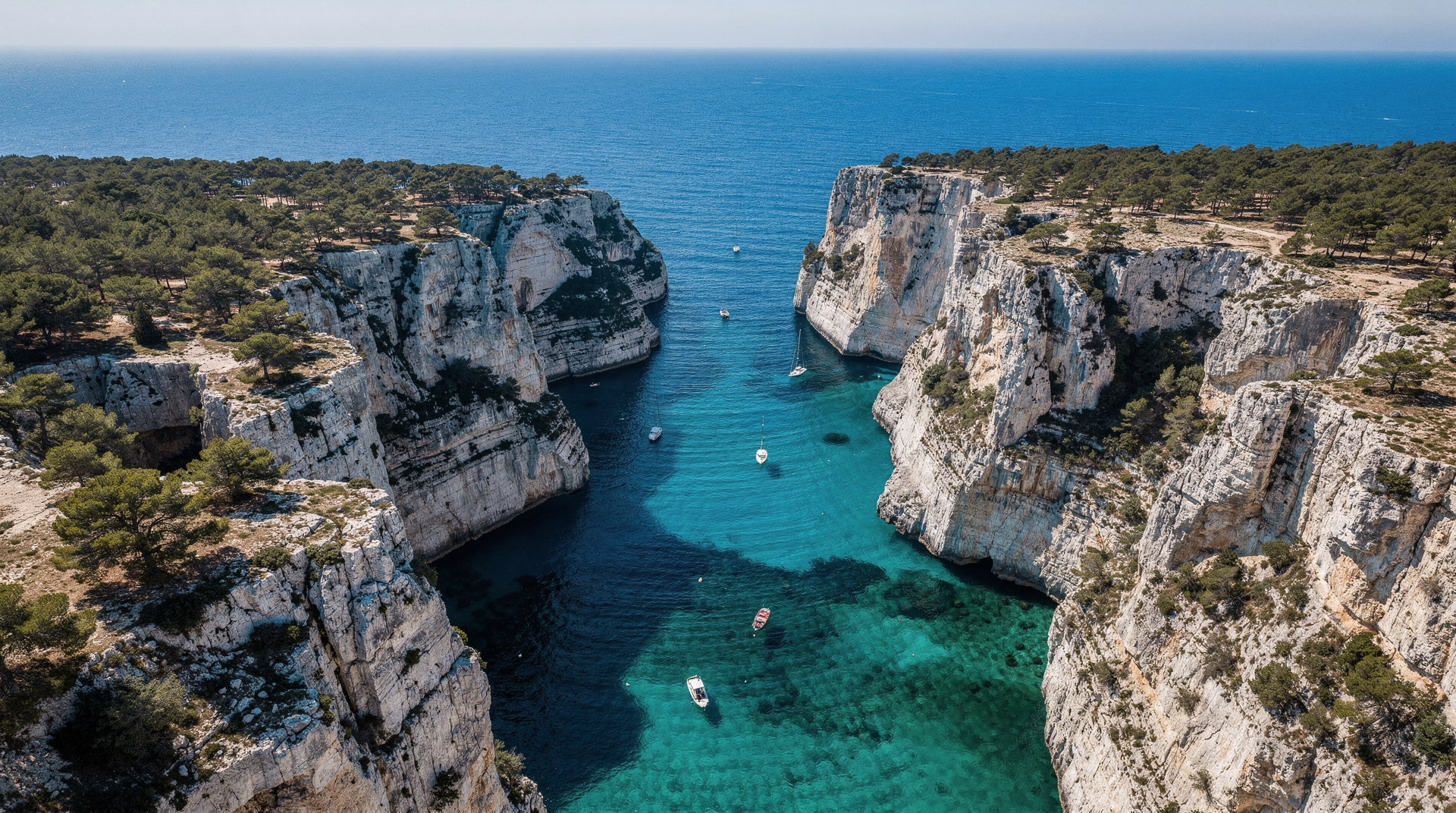
Take the Calanques boat tour from Cassis port — the 1-hour circuit covers Port-Miou, Port-Pin, and En-Vau from the water; the 2-hour version includes a swim stop at En-Vau. The visual contrast between the emerald inlet of En-Vau and the white vertical cliffs above is memorable. This is one of the finest short boat experiences in the Mediterranean.
If trails are accessible (check fire risk code), the flat path from the port to Port-Miou (1.5 km, 20 minutes) is easy and accessible — the first calanque, a long narrow harbour inlet.
Afternoon: AOC Cassis wine and a slow lunch (13:00–17:30)
Lunch at the port — this is a meal worth taking time over. A bottle of AOC Cassis white wine shared between two people (around 25–35 EUR) alongside grilled fish or a plateau of local shellfish is one of the better lunches Provence offers.
After lunch: The afternoon in Cassis belongs to the wine. The AOC Cassis appellation is one of the smallest in France — only around 9 wineries — all on the limestone slopes behind the village. Walk toward the Domaine de Clos Sainte-Madeleine (on the eastern edge of the village, 15 minutes on foot) — its terraced vines above the sea are among the most picturesque in Provence. For a structured visit with tastings at multiple domaines, the electric buggy winery tour (1–2 hours) is the convenient option.
Beach: The beach west of the port (Plage de la Grande Mer) is a 5-minute walk for an afternoon swim. Sandy and calm.
Return to Marseille: 17:30
TER from Cassis, 22 minutes. Evening: final dinner in Marseille, perhaps at Vallon des Auffes (the cove below the Corniche, a 20-minute bus 83 ride from the Vieux-Port).
Day-by-day summary
| Day | Base activity | Pace |
|---|---|---|
| Day 1 — Marseille | Vieux-Port, Le Panier, Notre-Dame de la Garde, Vallon des Auffes | Full, mostly on foot |
| Day 2 — Aix-en-Provence | Old town, market (if Tue/Thu/Sat), Cézanne studio, wine tasting | Relaxed, city-centred |
| Day 3 — Cassis | Port, Calanques boat tour, AOC wine, coastal walk | Full, mix of boat and foot |
For travellers who want to add a dedicated Calanques hiking or kayaking day rather than folding it into the Cassis boat tour, the Calanques weekend itinerary covers trail options by difficulty, and our Calanques hikes by difficulty guide is a useful companion for planning that extra day.
What to book in advance
- Cassis boat tour (Day 3) — book 2–3 days ahead in shoulder season, 1 week ahead in July–August.
- Aix Cézanne Atelier (Day 2) — entry is timed but walk-in is usually possible; booking at atelier-cezanne.com avoids queues in peak season.
- Aix wine tasting (Day 2) — wine bars in the old town accept walk-ins; for a private Cézanne countryside half-day wine tour by car, advance booking is essential.
- TER trains — no reservation required; check sncf-connect.com.
- Fire risk check for Cassis Day 3 hiking via calanques-parcnational.fr.
Variations
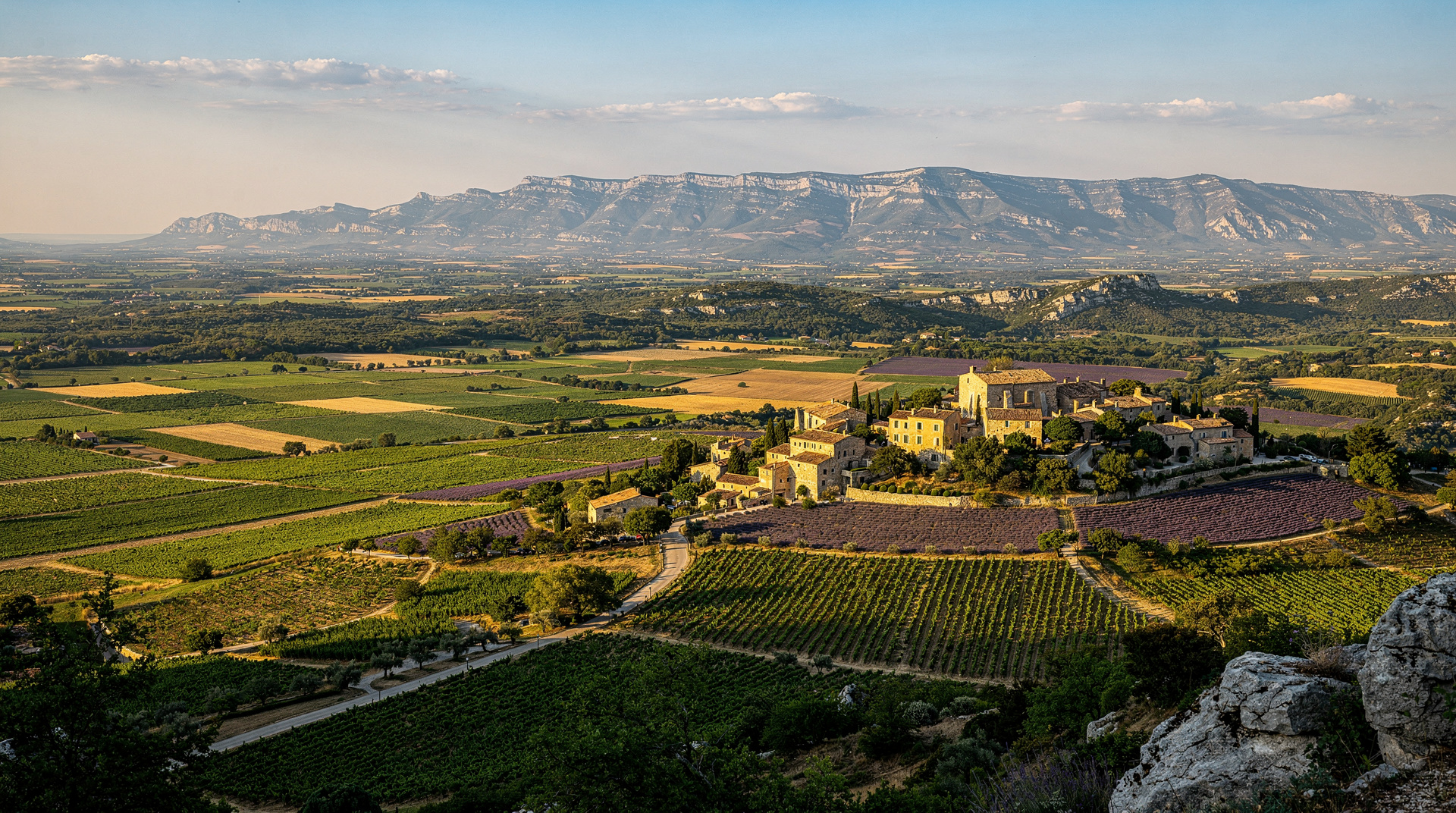
Car option for Day 2: If you have a car for Day 2, Aix becomes a base for the Luberon — Gordes, Roussillon, and the perched villages are 1–1.5 hours from Aix by car. The public transport option covers the city; the car option opens the surrounding countryside. See the 5-day Provence itinerary for the Luberon addition.
Market timing: Try to arrange Day 2 (Aix) for a Tuesday, Thursday, or Saturday to catch the morning market. This is the single most impactful planning choice for the Aix day.
Add a Marseille Calanques day: If staying four nights, add a Day 4 dedicated to the Calanques by boat or on foot from Marseille, using the three-day itinerary’s Day 2 plan. Marseille, Aix, Calanques, Cassis — four destinations, four very different experiences.
Understanding the three destinations together
The value of this itinerary over spending three days in a single place is contrast. Marseille, Aix-en-Provence, and Cassis are each genuinely distinct — not versions of the same thing.
Marseille is the city that surprises. Most visitors arrive with assumptions — shaped by reputation and old clichés — that the city quickly dismantles. The Vieux-Port is working and alive, not polished for tourists. Le Panier is genuinely old and genuinely inhabited, not preserved in aspic. The food in Noailles is the food of a Mediterranean city with deep North African and Comorian communities, not a tourist reconstruction of Provençal cuisine. Marseille is a city you experience on its own terms, which is either exhilarating or uncomfortable depending on temperament.
Aix-en-Provence is what Marseille is not: elegant, planned, preserved. The 17th-century hôtels particuliers along Cours Mirabeau were built by the Provençal aristocracy and legal class; the university has been here since 1409; the market squares are in the same locations they have been for centuries. Aix is a city that knows what it is and has been doing it for a long time. The fountains, the calissons, the Cézanne studios, the Tuesday market — these are not tourist inventions. They are the genuine life of a city that happens also to receive visitors well.
Cassis is different again: small, coastal, with a single industry (tourism and fishing, now largely tourism) and a single great product (AOC white wine). The village is beautiful in an immediately obvious way — the port, the cliffs, the coloured buildings — and does not need to be explained or discovered. It is exactly what it looks like. The depth comes from the Calanques behind it: that the village sits at the edge of the finest coastal wilderness in France, and that you can walk or boat directly from the port into that landscape, is what gives Cassis its real distinction.
Together, the three destinations tell a coherent story about a part of France where the Mediterranean meets the European mainland — the urban, the cultural, and the coastal in one compact triangle connected by train.
Food and drink across the three days
Day 1 — Marseille: The fish market is the starting context. If you eat near the Vieux-Port, seafood is the right choice. If you venture to Noailles, the food is North African — merguez, couscous, brik pastry — genuinely different from anything in Aix or Cassis. Pastis before dinner is the Marseille ritual. Do it at least once.
Day 2 — Aix: Market produce is the morning experience (especially on Tue/Thu/Sat). Lunch should lean local: a plat du jour in the Quartier Mazarin, or a terrace lunch with a glass of Côtes-du-Rhône on Cours Mirabeau. The calisson — the local almond confection — is mandatory from one of the established confiseries on Cours Mirabeau or Rue Espariat. Aix has excellent restaurants at higher price points than Marseille if you want to budget for one proper dinner here.
Day 3 — Cassis: Lunch on the port with AOC Cassis white wine is the non-negotiable experience. Fresh fish, shellfish, or moules marinières. A bottle of Cassis white wine between two people (approximately 25–35 EUR on a restaurant wine list) is fair. Avoid anything described as rosé de Provence from Cassis — the appellation produces very little rosé and almost none of it appears on local restaurant lists. If you are offered Provence rosé in Cassis, you are being served something generic. Ask specifically for an AOC Cassis white.
Top experiences
Bookable activities with verified prices and instant confirmation on GetYourGuide.