Is Marseille worth visiting? An honest case for and against
Marseille: guided tour in the heart of the city
Is Marseille worth visiting?
Yes — for the Calanques alone, and for a food and port culture that is unique in France. It rewards engagement and punishes passivity. Not every traveller's ideal, but one of Europe's most alive cities.
The question is fair, and deserves a real answer
At a glance
| Minimum to “get it” | Around 3 days |
| The one non-negotiable | A Calanques boat, hike, or kayak day |
| Best base | Vieux-Port / Le Panier area for a first visit |
| Best time to go | Spring (April–June) or autumn (September–October) |
| Who it suits least | Under-2-day visits, travellers who prioritise polish over character |
| Typical trip cost | See our trip cost guide for a full daily budget breakdown |
Marseille has a reputation problem. France’s second-largest city and its oldest has spent decades being dismissed by Parisian commentators, portrayed as dangerous by sensationalist journalism, and skipped by tourists on the way to Nice or Aix-en-Provence. You are right to ask the question. Many people who have never been to Marseille have strong opinions about whether it is worth your time.
This guide is an attempt at an honest answer — what the city actually offers, where it genuinely falls short, and which kind of traveller it rewards.
The case for: why Marseille is worth visiting
The Calanques are genuinely extraordinary
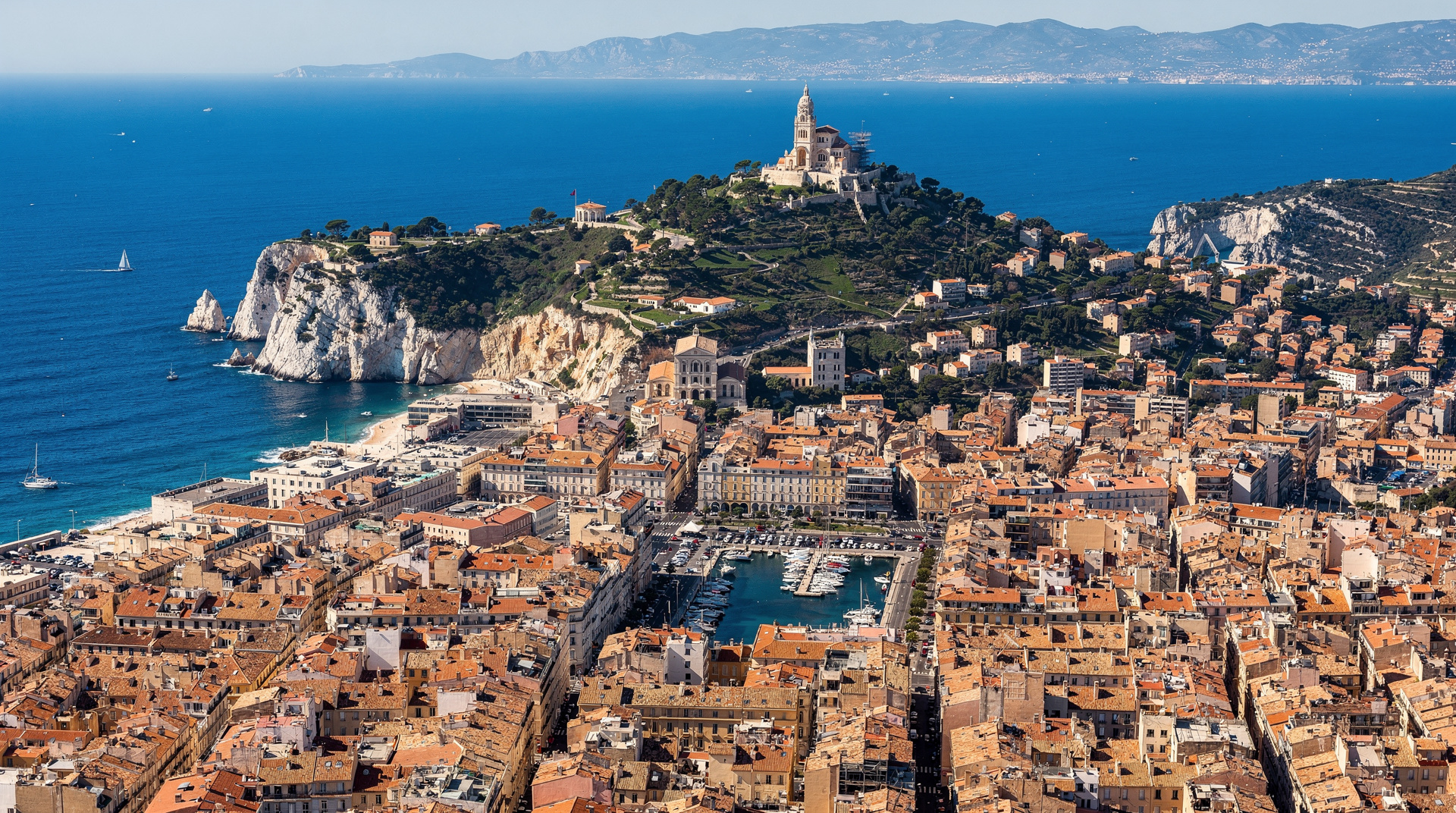
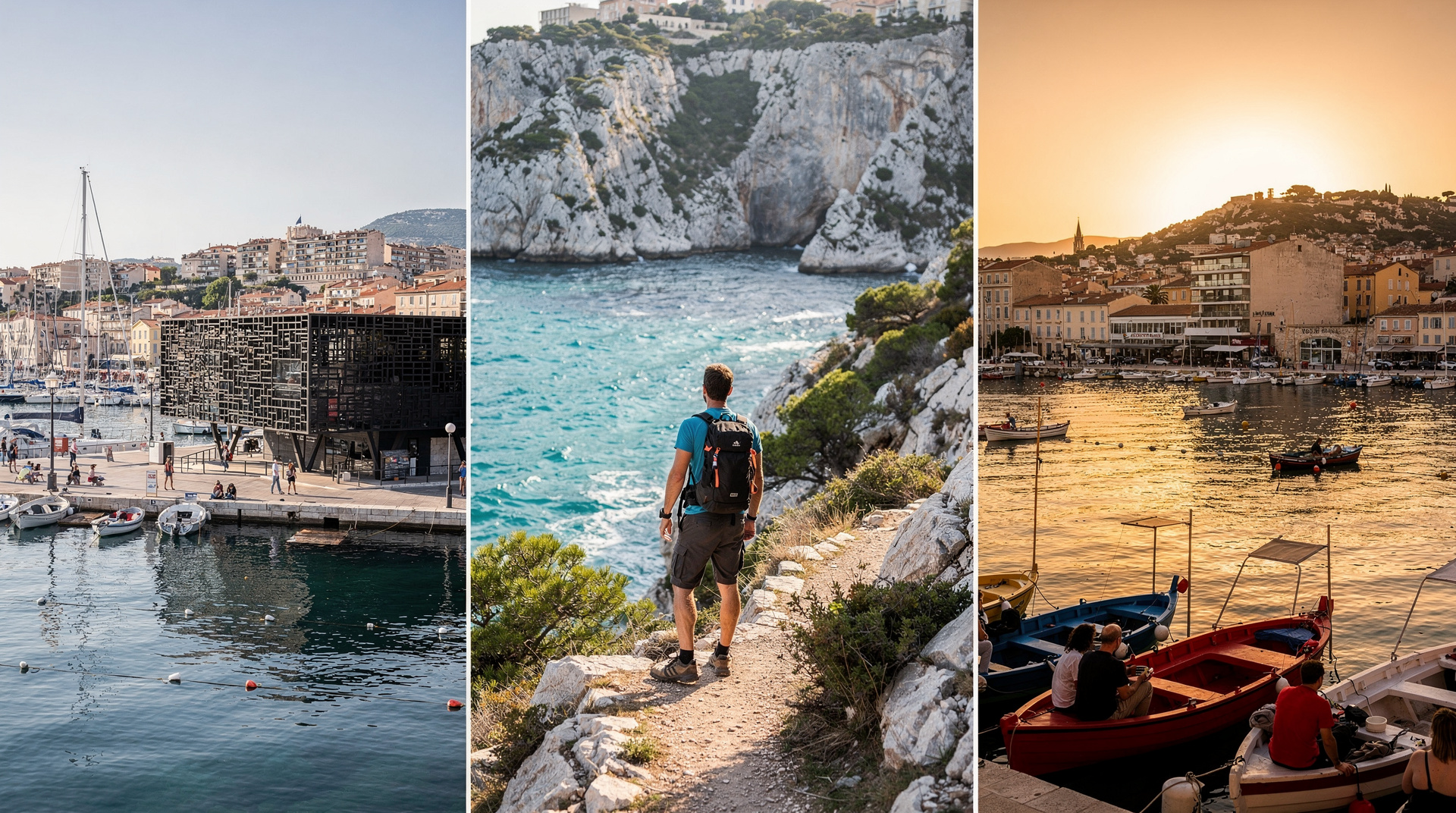
No other major city in Europe has a national park on its doorstep that looks like this. The Calanques National Park starts at the southern edge of the city and runs 20 kilometres east to Cassis — twenty kilometres of white limestone fjords, Mediterranean scrub, and water that shifts from grey to improbable turquoise as you enter the narrow inlets. The closest calanque is accessible by bus and a 45-minute walk. The furthest are reachable by kayak or a full-day hike.
Visiting Marseille without the Calanques is like visiting Barcelona without the coast. The Calanques alone justify the trip for many people, and they are the one thing Marseille has that no other city does.
The food culture is serious and distinctive
Marseille’s food scene is not the same as Provence’s food scene — it is a Mediterranean port city with North African, Corsican, Italian, and Greek influences layered on top of a Provençal base. The result is something genuinely specific.
Bouillabaisse is the obvious starting point: the genuine charte version — saffron-scented fisherman’s stew with rouille and toasted bread, served in a two-course ritual — is one of the great dishes of French cuisine when made properly. See our bouillabaisse guide for where to find the real thing and how to avoid the tourist-trap version.
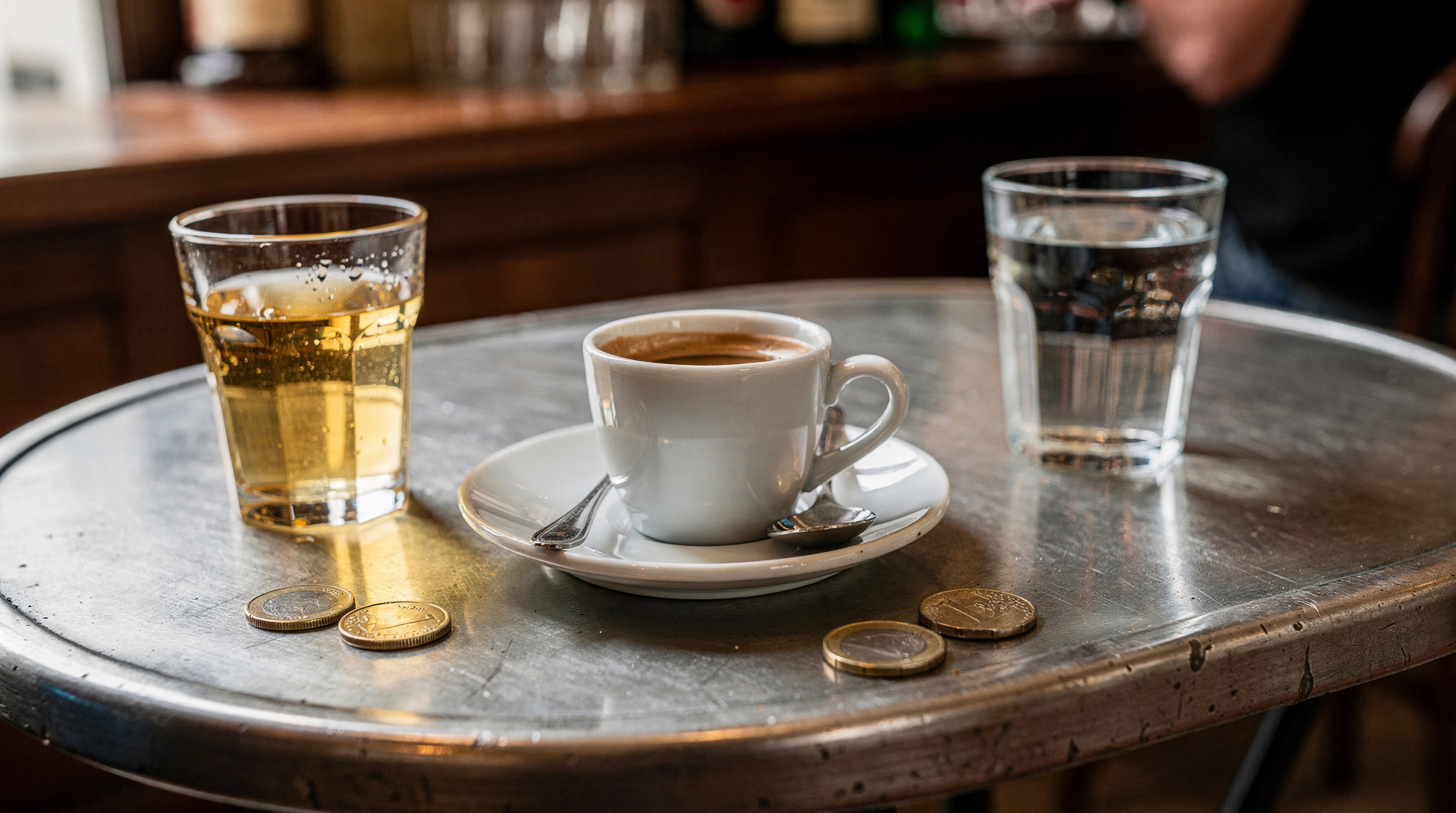
Beyond bouillabaisse: the Noailles market is the most diverse food market in France. The lunch counters along Rue Longue-des-Capucins serve North African and Maghrebi food at 6–10 EUR that is genuinely excellent, not a cheap consolation. The restaurants of Cours Julien represent a serious, owner-operated dining scene that would hold its own in any European city. Pastis and the anise-herb food culture it accompanies are impossible to separate from the city.
The MuCEM and the 2013 transformation are real
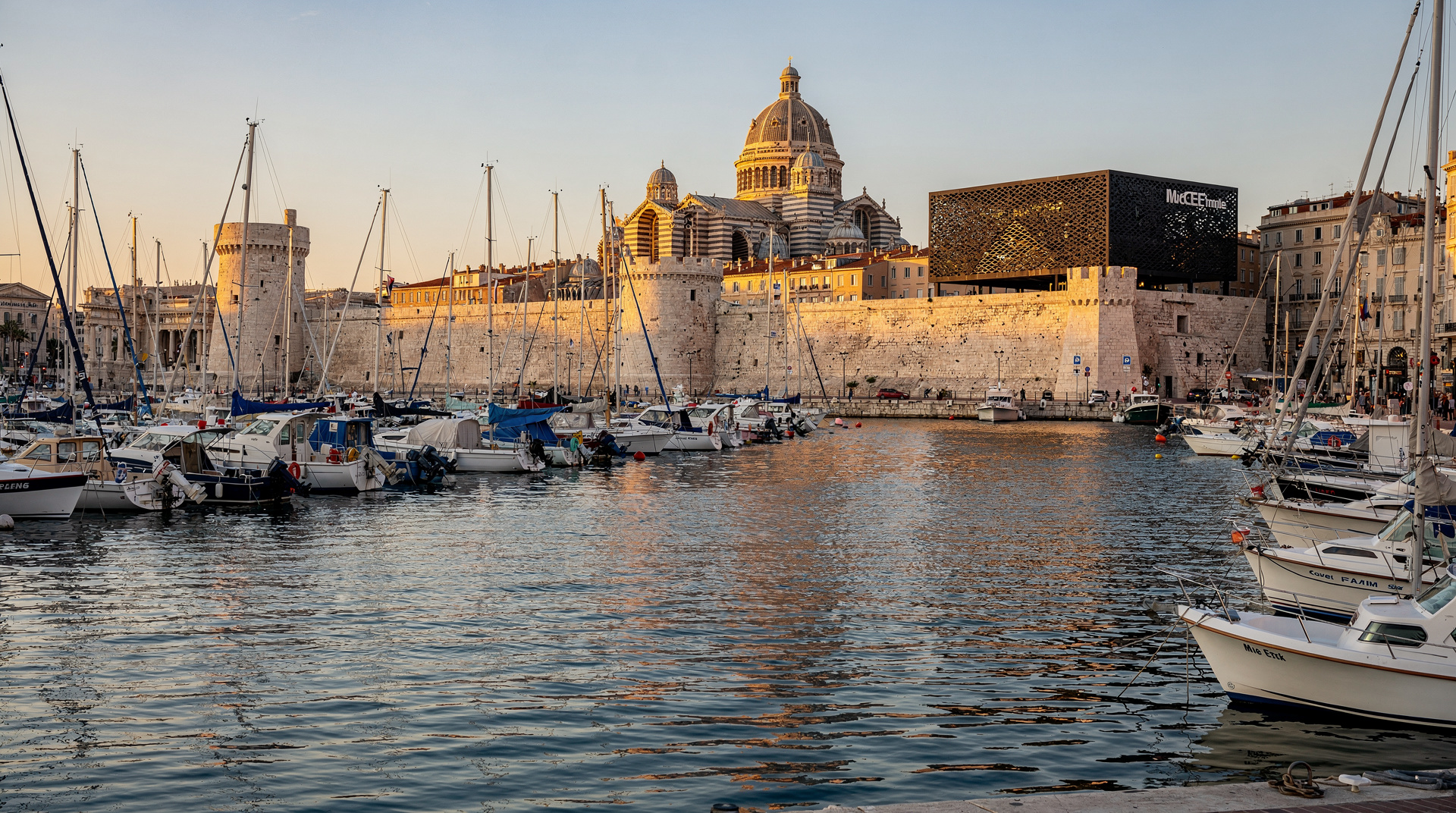
People who dismissed Marseille 15 years ago may not have updated their information. The 2013 European Capital of Culture year produced the MuCEM — one of the most architecturally significant buildings opened in France in the 21st century — and regenerated the J4 waterfront that connects the Vieux-Port to Fort Saint-Jean. The effect was real and permanent. Marseille’s cultural infrastructure is now genuinely interesting: the MuCEM, the Cosquer Cave replica, the Cité Radieuse (Le Corbusier’s Unité d’Habitation, now a UNESCO World Heritage Site), the Musée d’Histoire with its Roman-era excavations, and the street art scene in Cours Julien.
This is not a city preserved in amber. It has changed, and in places changed well.
It is France without the French tourist bubble
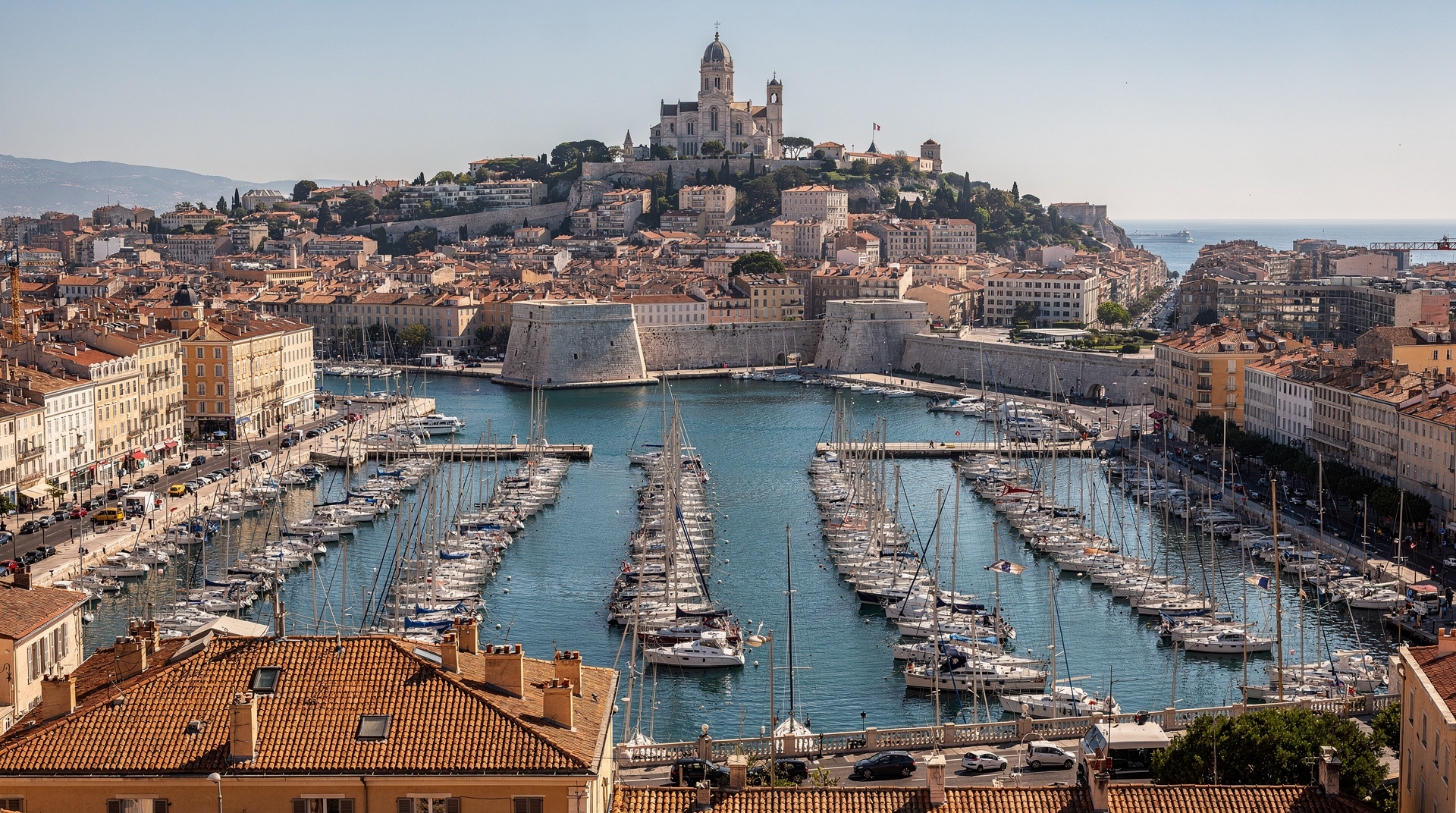
Marseille is the most un-Parisian city in France and, because of its working-class and multicultural character, one of the least artificial. The Vieux-Port fish market is a genuine daily commercial institution, not a heritage display. The Noailles market is where people actually shop for food, not where tourists buy paprika to take home. Cours Julien has gentrified somewhat but retained its functional life — real musicians, real bars, real neighbourhood restaurants.
For travellers who find the more polished tourist cities of France slightly exhausting — the performance of authenticity — Marseille’s directness is a genuine quality.
The position in Provence is unbeatable
Marseille is 35 minutes by TER train from Cassis, 40 minutes from Aix-en-Provence, and an hour from Arles and Avignon. The TGV network takes you to Nice in 2.5 hours and Paris in 3 hours. As a base for exploring southern France, Marseille is arguably better positioned than anywhere except Avignon — and Marseille has a beach, the Calanques, and a food scene that Avignon does not.
The honest case against: Marseille’s genuine rough edges
It is not a polished tourist experience
Marseille does not manage its tourist experience the way Lyon, Aix-en-Provence, or the Riviera cities do. Some streets near the Vieux-Port are shabby. The approach to Gare Saint-Charles from the brasserie side is not attractive. The northern arrondissements are visibly deprived. Graffiti that is not street art exists. For travellers who want a seamless, curated experience, Marseille will feel uncomfortable in places.
This is not an excuse — it is a genuine trade-off. The city’s character comes partly from the fact that it has not been sanitised for tourist consumption. But if visual roughness bothers you, know in advance that it is present.
The pickpocket reality is real
The safety story in Marseille is more nuanced than either “it’s dangerous” or “it’s totally fine.” The violence that generates national headlines is concentrated in areas tourists never visit. But petty theft — pickpocketing — is genuinely more prevalent here than in Nice, Lyon, or Aix-en-Provence. The Vieux-Port fish market (morning crowds), Gare Saint-Charles, the metro at Noailles, and the Cours Belsunce market area are specific hotspots. A front-pocket or money belt approach to cash and phone is sensible rather than paranoid.
This does not make Marseille a bad destination — it makes it one where standard urban caution is actively warranted. See our pickpocket zones guide for specifics.
Transport friction is real without a car
Marseille’s public transport is functional but not excellent. The two metro lines (M1 and M2) cover the main tourist corridor, but many useful destinations require bus connections that are slower and less frequent than tourists expect. The Calanques by hiking trail require a bus to Luminy that takes 30–40 minutes from the city centre, then a 45-minute walk. The hop-on hop-off bus helps, but it is a tourist vehicle, not a local transport solution.
Aix-en-Provence and the Luberon villages require a car or a guided tour from Marseille to be done comfortably. If your trip plan includes extensive Provence exploration, factor in either car rental costs or the limitations of public transport connections.
Peak summer is genuinely uncomfortable
July and August in Marseille bring heat (30–36°C regularly), large crowds at the Vieux-Port and tourist sites, and the Calanques hiking trail closures. Accommodation prices are at their highest. The city does not shut down in summer — the boat tours run, the beaches are active, the evenings are pleasant — but it is the most demanding time to visit. See our summer guide for how to navigate it.
Who Marseille rewards most
Curious, engaged travellers who want to understand a place rather than collect it. Marseille does not reveal itself quickly. The visitors who get the most from it are those who wander without a tight checklist, eat where locals eat, and allow themselves to be interested in the city’s complexity rather than frustrated by its roughness.
Food-lovers for whom the bouillabaisse ritual, the market culture, and the multicultural food scene are as much the point as the sights.
Nature-focused travellers for whom the Calanques — boat, hike, or kayak — are the primary draw. The Calanques are the objective reason Marseille is a world-class destination.
Couples who want genuine atmosphere and a food scene without the sanitised resort experience.
Repeat France visitors who have already done Paris, Lyon, and Nice and want something genuinely different. Marseille is France at its most non-Parisian.
Marseille vs the alternatives, at a glance
| Destination | Best for | Trade-off vs Marseille |
|---|---|---|
| Marseille | Calanques, food culture, port energy | Rougher edges, more pickpocket awareness needed |
| Nice | Polished Riviera resort, art museums | No Calanques-scale nature, pricier, less distinctive food |
| Aix-en-Provence | Elegant streets, easy logistics | No coastline, no Calanques, quieter at night |
| Cassis | Calanques access without city grit | Tiny, limited beyond the Calanques and wine |
| Annecy | Seamless tourist polish, alpine lake | Different region entirely, no Mediterranean or Calanques |
Who might be better served elsewhere
Travellers who strongly prioritise visual polish and seamless tourist infrastructure: Aix-en-Provence, Cassis, or Annecy are better choices.
Families with very young children who need flat streets and easy logistics: Marseille works but requires more planning than many Provence alternatives. See our Marseille with kids guide.
Travellers with very limited time (under 2 days): Marseille shows its worst face to people rushing through. A day trip from Nice or a 6-hour stop is possible but gives you a skewed picture of the city.
The verdict
Marseille is worth visiting if you engage with it on its own terms. It is one of the most alive cities in France — complex, multicultural, physically extraordinary, with a food culture and a coastal landscape that are genuinely world-class. It is also genuinely rough in places, imperfect in its tourist infrastructure, and more demanding than a polished resort experience.
The best version of a Marseille trip looks like this: three or four days, mornings at the market and the Vieux-Port, one full day in the Calanques, evenings in Cours Julien, the MuCEM and Le Panier at your own pace. That version of Marseille is extraordinary. The version reduced to 6 hours and a selfie at the Ombrière is not the same city.
Frequently asked questions about visiting Marseille
Is Marseille better than Nice?
They are different experiences rather than comparable ones. Nice is a polished Riviera resort city with a beach promenade, excellent art museums, and straightforward tourist infrastructure. Marseille is rougher, more multicultural, with a working port culture, extraordinary Calanques access, and a food scene that is less pretty but often more interesting. Neither is objectively “better” — choose based on what kind of experience you want.
Is Marseille worth visiting for just a day?
A day — whether as a cruise stop or a day trip from elsewhere in Provence — gives you the monuments without the city. You will see the Vieux-Port, Le Panier, and possibly MuCEM. You will not experience the Calanques, Cours Julien properly, or the city’s residential character. For a cruise stop, see our cruise port guide for how to make the most of limited time.
Why does Marseille have a bad reputation?
A combination of concentrated media coverage of violence in peripheral districts (which tourists never visit), historical neglect by national French institutions that preferred Paris as a priority, and genuine social deprivation in some northern arrondissements. The reputation significantly overstates the risk to visitors and significantly understates the city’s actual qualities. The 2013 European Capital of Culture year started to shift this narrative nationally; the reality on the ground has been improving for over a decade.
Is Marseille worth visiting in winter?
Yes — and it is underrated in winter. See our winter guide for the full case. The short version: mild temperatures (10–15°C), half the tourist crowds, much lower accommodation prices, open hiking trails, and uncrowded museums. The only real winter limitation is that some boat tour operators reduce frequency.
Should I visit Marseille or Aix-en-Provence?
Both if you have 4–5 days. They are 40 minutes apart by TER train and genuinely different experiences — Marseille is the working port city, Aix is the elegant university town with a covered market and Cézanne heritage. If you can only do one: Marseille for the Calanques and the living port energy; Aix for visual elegance and a more relaxed pace.
Is Marseille worth it if I don’t like crowds or grit?
It can still be, if you plan around it. Visit in spring or autumn rather than peak summer, base yourself near Le Panier rather than the busiest Vieux-Port strip, and prioritise the Calanques by boat or kayak over the most crowded viewpoints. But if urban grit is a hard dealbreaker for you regardless of season, Aix-en-Provence or Cassis will suit you better than forcing a Marseille trip.
How many days do I actually need in Marseille?
Three days is the realistic minimum to see the Vieux-Port, Le Panier, MuCEM, and one full Calanques day without rushing. See our how many days guide for a breakdown by trip length, and our 3-day planning guide for a specific itinerary.
The side of Marseille that most guides miss
Most travel writing about Marseille focuses on the same five elements: the Vieux-Port, Le Panier, the bouillabaisse, the Calanques, and the safety caveat. These are all correct and important. But there are aspects of the city that are genuinely worth knowing about that rarely make the first paragraph.
The soap culture. Savon de Marseille — the 72% olive-oil soap that has been made in the city since the 17th century — is one of France’s oldest industrial traditions. The genuine article (look for the 72% huile stamp and “Fabriqué à Marseille” origin) is sold throughout the city but most authentically at dedicated soap shops and at the Savonnerie du Midi, one of the last remaining traditional producers. The MuSaMa soap museum (MuSaMa, near the Vieux-Port) is a small, specific, and surprisingly interesting institution if you want the cultural context.
The pétanque culture. Marseille’s relationship with pétanque — the boules game played on compacted earth — is more than a tourist attraction. The courts near the Vieux-Port, in the square at Notre-Dame du Mont near Cours Julien, and in parks throughout the city see daily games with real stakes. Watching a game between older Marseillais men is a social institution. Joining a guided pétanque session with a local aperitif is one of the more charming structured experiences on offer.
The OM obsession. Olympique de Marseille — the city’s football club — is not a sports team in the normal sense. It is a civic identity. The Orange Vélodrome (the stadium) holds 67,000 people and regularly sells out for major matches. On match days, the Vieux-Port turns blue and white. The stadium tour is available on non-match days for those curious about the architecture and history. OM’s relationship with the city — celebrated, complicated, deeply emotionally embedded — is impossible to understand Marseille without acknowledging.
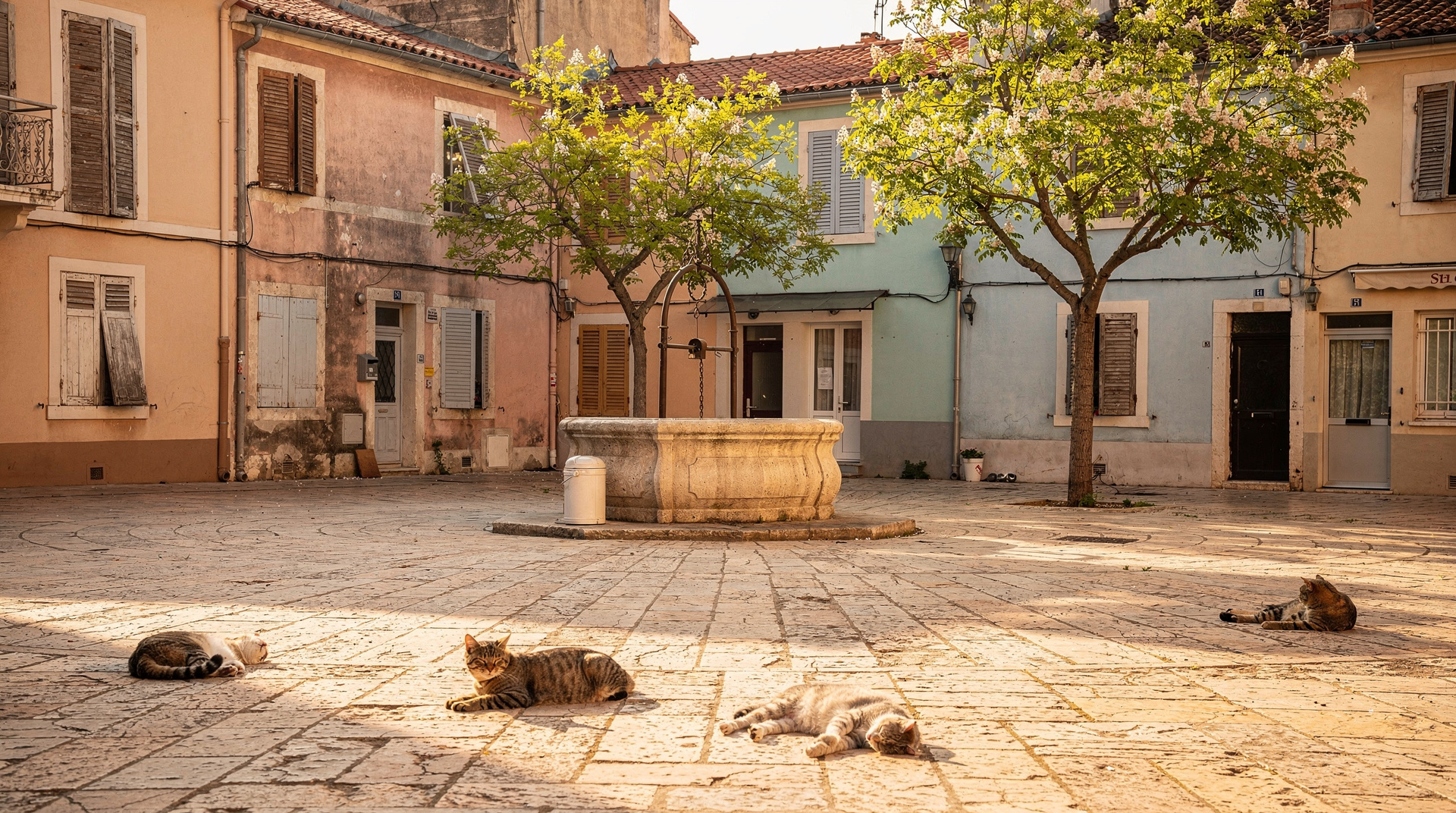
The Provençal and Italian heritage in Le Panier. The tangle of Le Panier’s streets carries the architectural remnants of waves of immigration: Italian workers who came in the 19th century to build the city’s expansion, Corsican communities with their own distinct food culture (figatellu, lonzu, charcuterie in general), and the echoes of the Greek and Roman settlements underneath everything else. Walking Le Panier slowly — looking at the building facades, the doorways, the inscriptions — reveals a sedimentary history that a fast tourist walk misses entirely.
The view from the north. Most visitors see Marseille from the south — the Vieux-Port to the Calanques. The view from the north of the city — from Notre-Dame de la Garde looking back at the cruise terminal and the industrial port, or from the Côte Bleue marine park stretching west of the city — is a different and equally interesting perspective. The industrial port is one of the largest in the Mediterranean; seen from above, its scale is striking.
Making the decision
If the question is “should I go to Marseille instead of somewhere safer?”, the honest answer is that Marseille is safer for tourists than its reputation suggests, and the experiences it offers — particularly the Calanques and the food culture — are not available anywhere else in France.
If the question is “is Marseille better than Paris or Lyon or Nice?”, that is not the right comparison. Marseille is not comparable to those cities in the tourist-experience sense. It is a port city that happens to also be one of the most beautiful coastlines in Europe. It rewards a different kind of traveller with a different kind of patience.
Start with three days. Book the Calanques boat tour before anything else. Arrive at the fish market by 8:30 on your first morning. Eat dinner in Cours Julien at 20:30. By the end of the second day, you will know whether this city is one you want to return to. Most people who engage with it do.
See our 3-day planning guide for the specific sequence, and our how many days guide for how to extend beyond three days into Provence.
Top experiences
Bookable activities with verified prices and instant confirmation on GetYourGuide.
Marseille: guided tour in the heart of the city
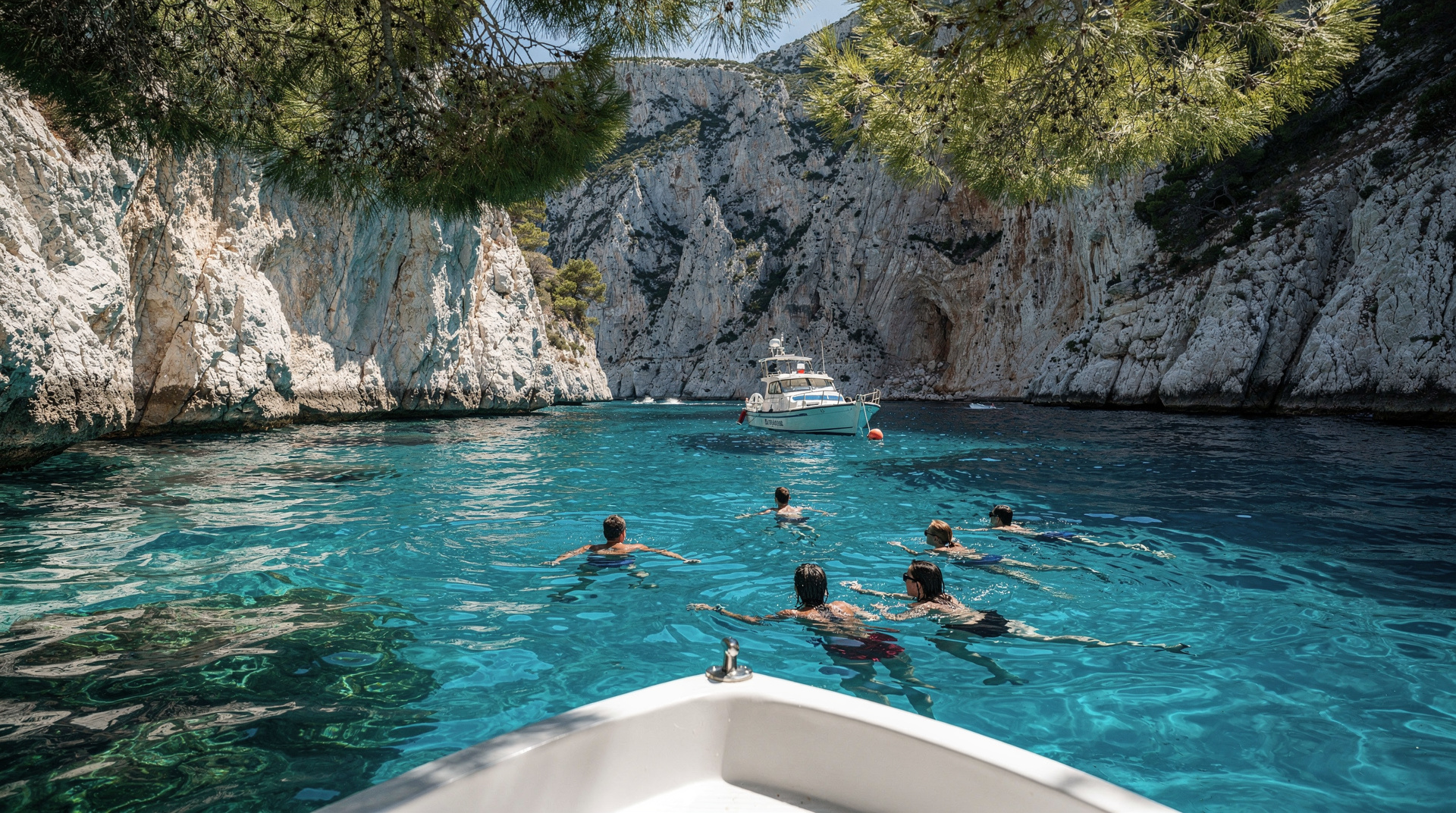
Marseille: iconic Calanques boat tour with swimming
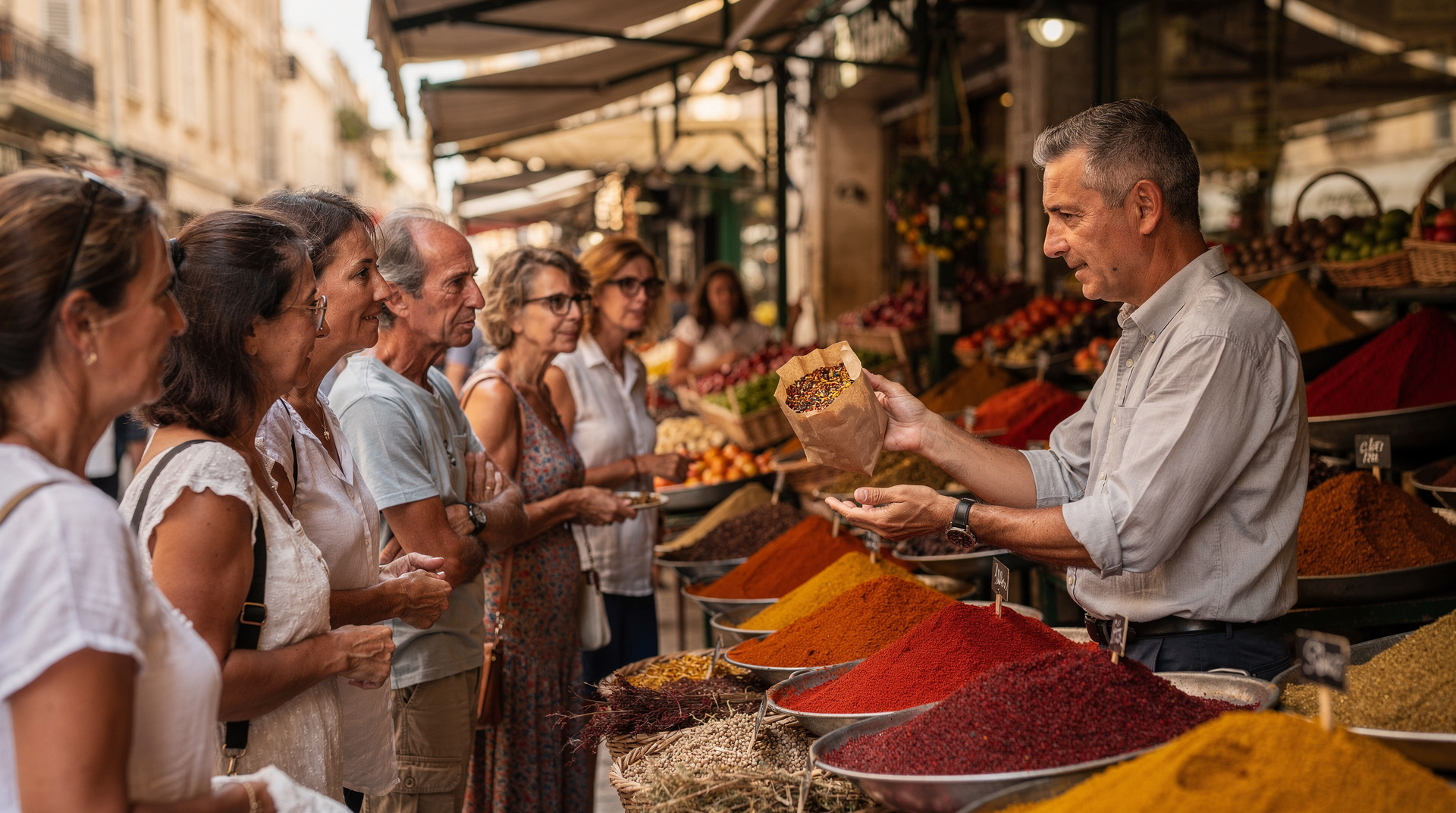
Marseille: walking food tour with tastings
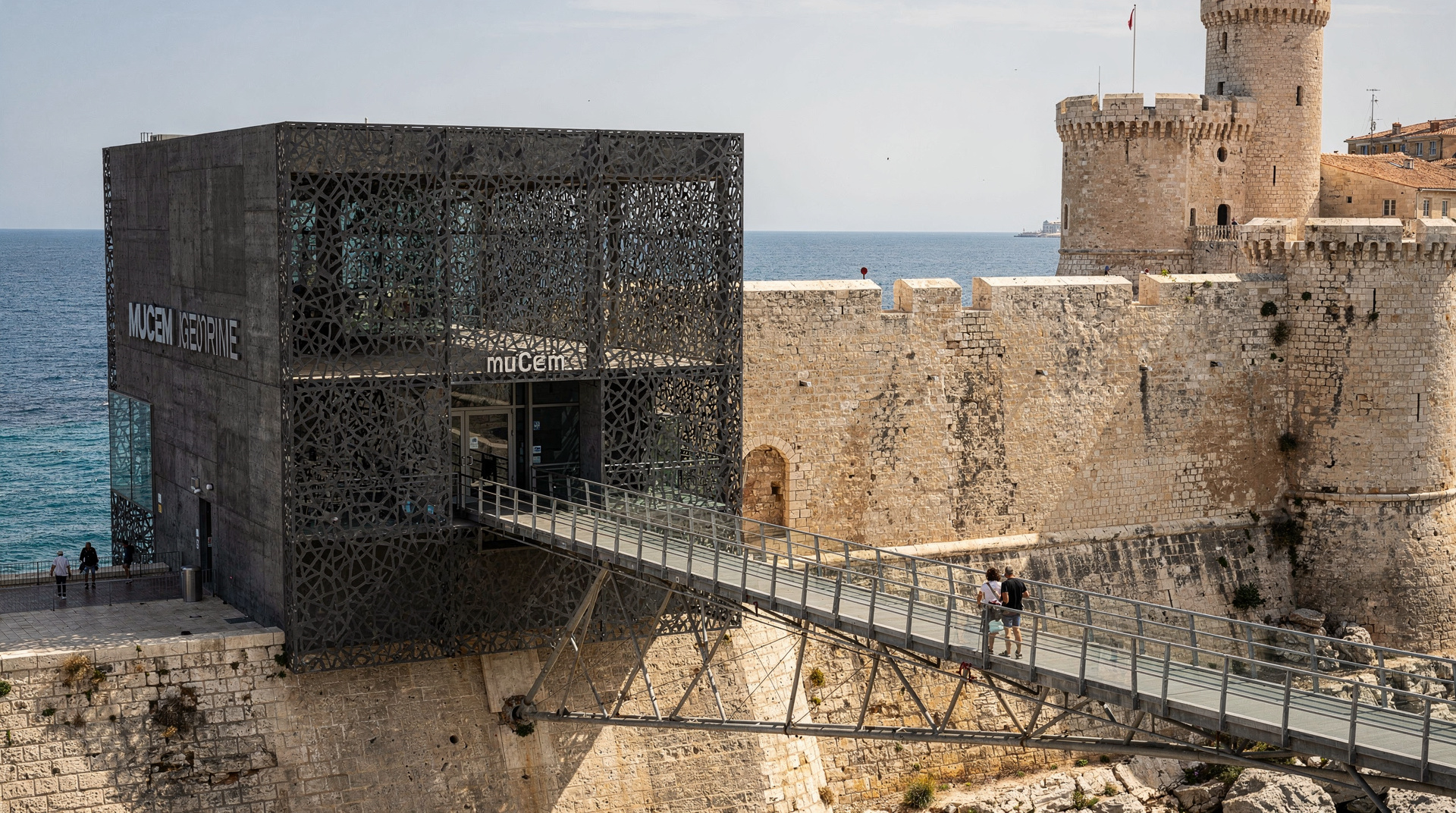
Marseille: MuCEM skip-the-line entry ticket
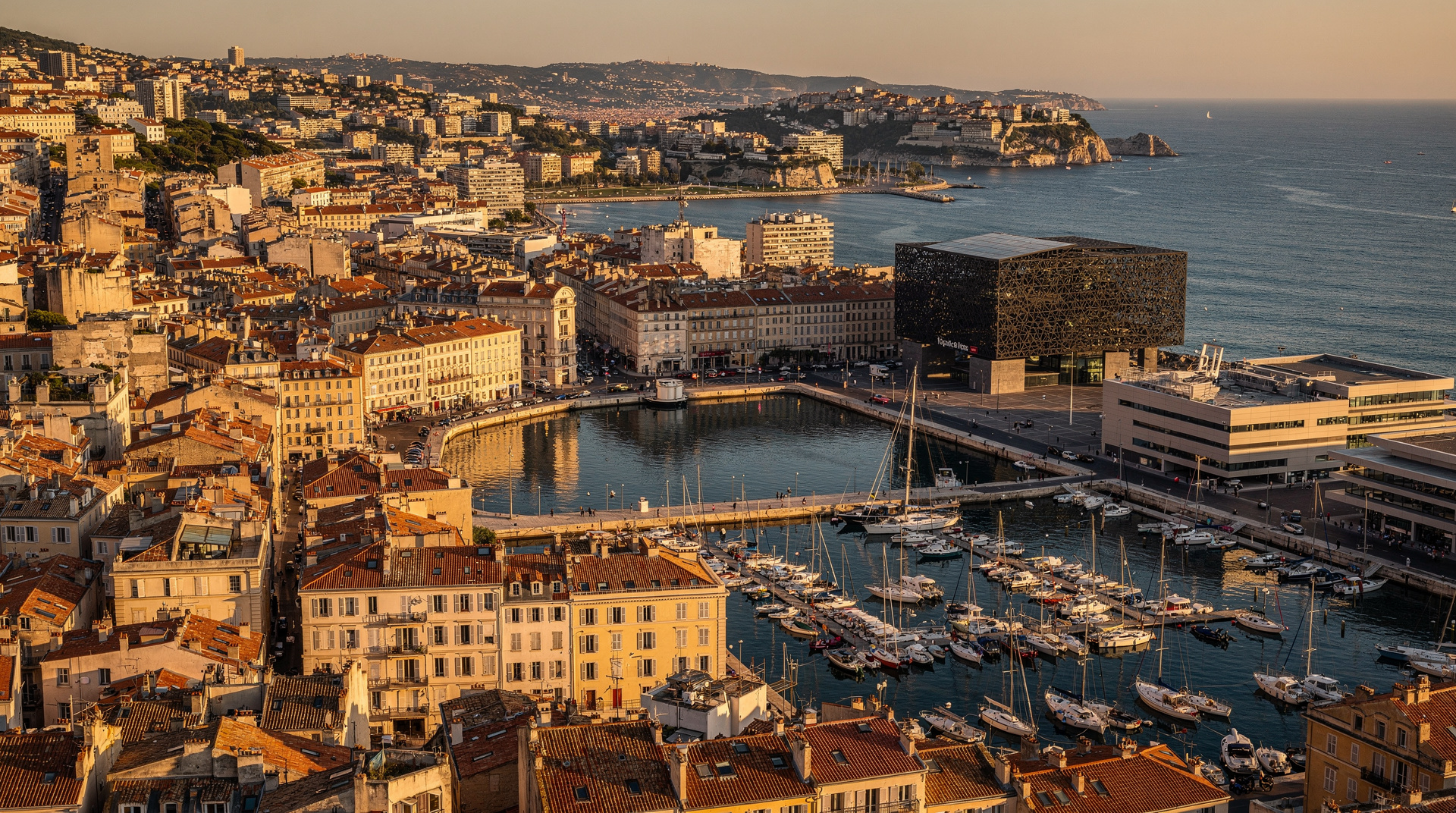
Marseille: guided walk in beautiful and hidden neighborhoods