Marseille on a budget: realistic 2026 costs and money-saving tips
Marseille: CityPass (24, 48 or 72 hours) with public transport
How much does Marseille cost per day on a budget?
A genuine budget day in Marseille runs 50–70 EUR per person: hostel dorm or budget room, market lunch, picnic dinner, metro day pass. Mid-range is 100–140 EUR per person.
Why Marseille is cheaper than you expect
Marseille is not a budget destination by design, but it is cheaper than most comparable French cities. Lyon and Nice run higher for accommodation and dining; Paris is in a different league entirely. The city’s working-class character and competitive restaurant market mean that eating well at a reasonable price is genuinely possible here — not as a compromise, but as a feature.
The catch: accommodation near the Vieux-Port in peak summer (July–August) is expensive. Transport options are limited without a pass. And the Calanques boat tours — the city’s defining experience — cost real money. Budget planning needs to account for all of this honestly.
At a glance
| Where | City-wide, but the Vieux-Port and Cours Julien areas carry the biggest accommodation premium |
| Cost | Around 50–70 EUR/day budget; 100–150 EUR/day mid-range |
| Time needed | No minimum — budget habits apply to a single day or a full week |
| Getting there | RTM day pass (metro/tram/bus) around EUR 5.20; walking covers most central sights |
| Best time | November–March for the lowest accommodation rates and thinnest crowds |
Daily budget breakdown by profile (2026)
Backpacker / budget traveller (40–65 EUR/day per person)
Accommodation: 15–30 EUR in a hostel dorm. Marseille has a small but decent hostel scene, mostly in the Cours Julien / Noailles area and near Gare Saint-Charles. Private hostel rooms start around 60–80 EUR.
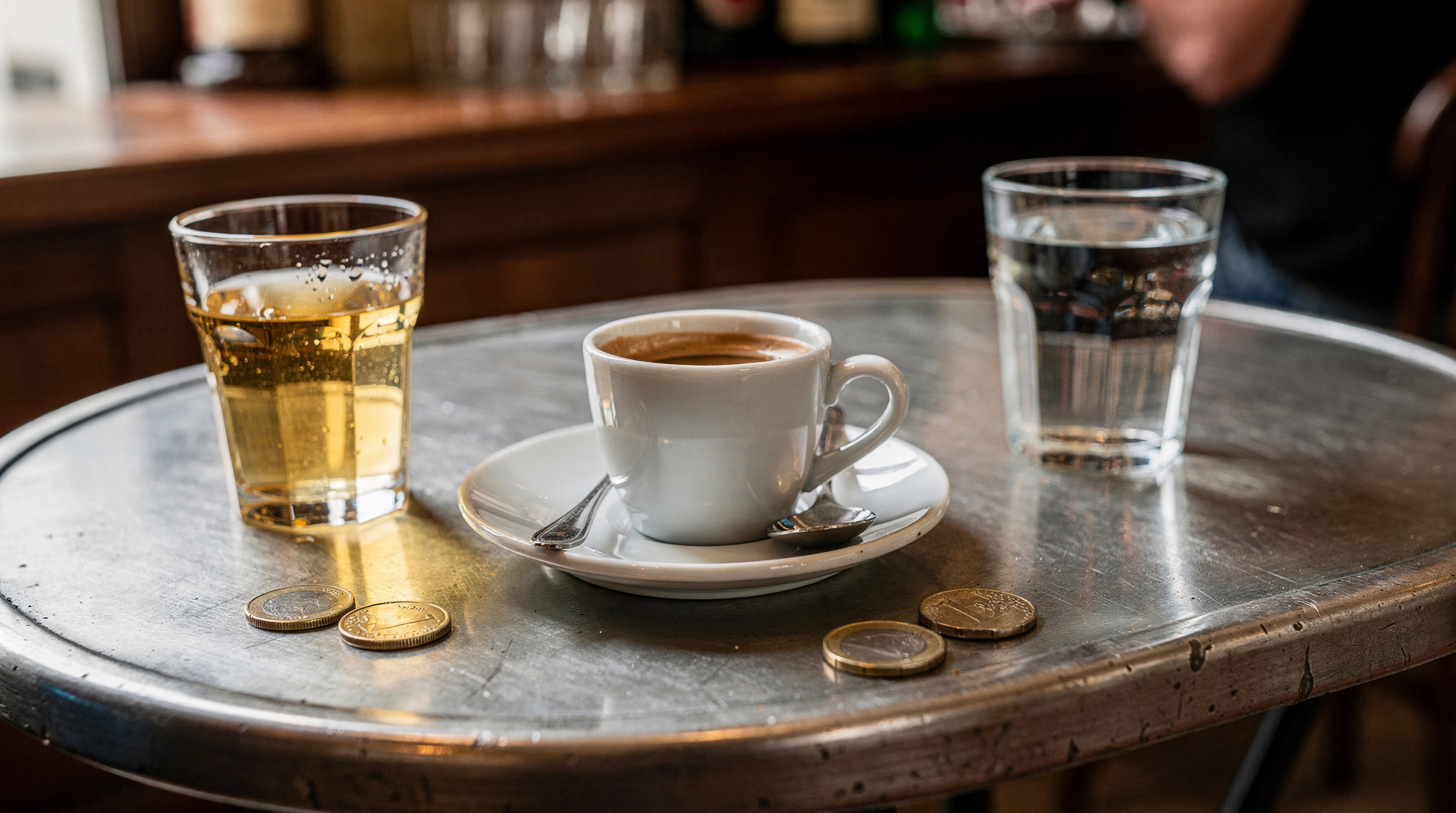
Food: 8–14 EUR for lunch (set menu at a neighbourhood bistro, or a lunch counter in Noailles for 5–8 EUR). 5–10 EUR for a market picnic dinner (bread, cheese, charcuterie, fruit from the Noailles market). Morning coffee 2–3 EUR. Total food: 20–30 EUR.
Transport: RTM day pass 5.20 EUR; or monthly/week pass if staying longer. Walking covers the Vieux-Port, Le Panier, and MuCEM without needing any transport.
Activities: Most of the city’s best experiences are free or cheap (see below). Budget 10–15 EUR for one paid activity per day.
Daily total: 50–70 EUR (with one paid museum or activity; a boat tour day pushes this up significantly).
Mid-range traveller (90–140 EUR/day per person)
Accommodation: 45–80 EUR per person in a 3-star hotel or well-rated guesthouse. Two people sharing a double room halves the effective per-person cost.
Food: 18–25 EUR for a set lunch with wine at a proper restaurant. 30–45 EUR for dinner with wine in Cours Julien. Coffees, snacks: 10 EUR. Total food: 60–80 EUR.
Transport: Day pass or City Pass (see below).
Activities: One major paid activity (boat tour, museum, guided tour): 20–50 EUR per person.
Daily total: 100–150 EUR per person (lower for two sharing accommodation).
What changes the budget most
The Calanques boat tour is the single biggest variable. A 3–4.5-hour boat tour from the Vieux-Port costs around 60–95 EUR per person depending on the operator and duration. This is unavoidable if you want the defining Marseille experience in summer. Budget for it, then plan other days more lightly.
The City Pass (see below) changes the maths significantly if you want to see multiple paid attractions.
What is free in Marseille
The city has a genuinely long list of free experiences:
Always free:
- Vieux-Port fish market (morning until noon)
- Le Panier neighbourhood wandering
- MuCEM exterior, terraces, Fort Saint-Jean gardens, and the suspended footbridge
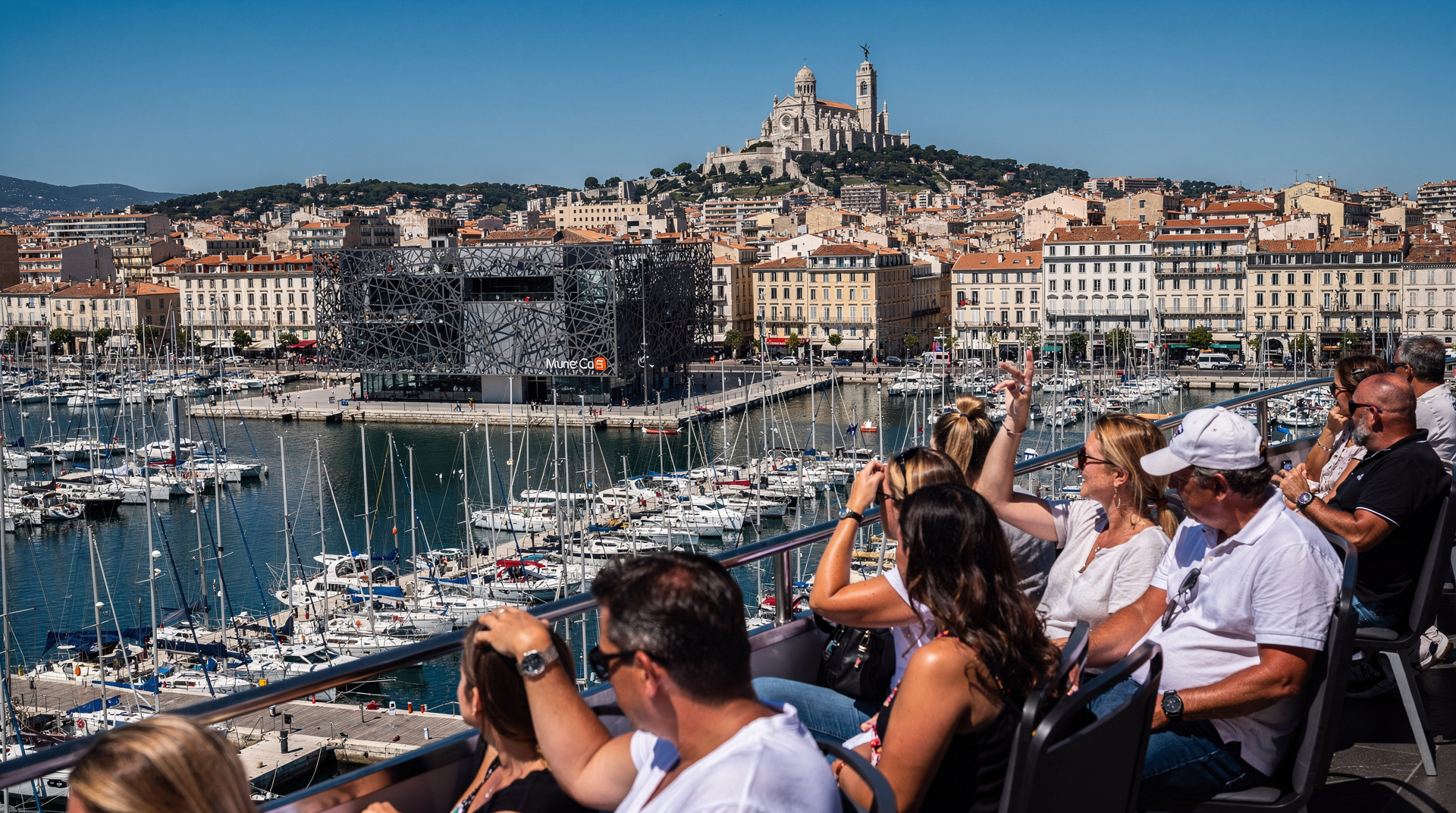
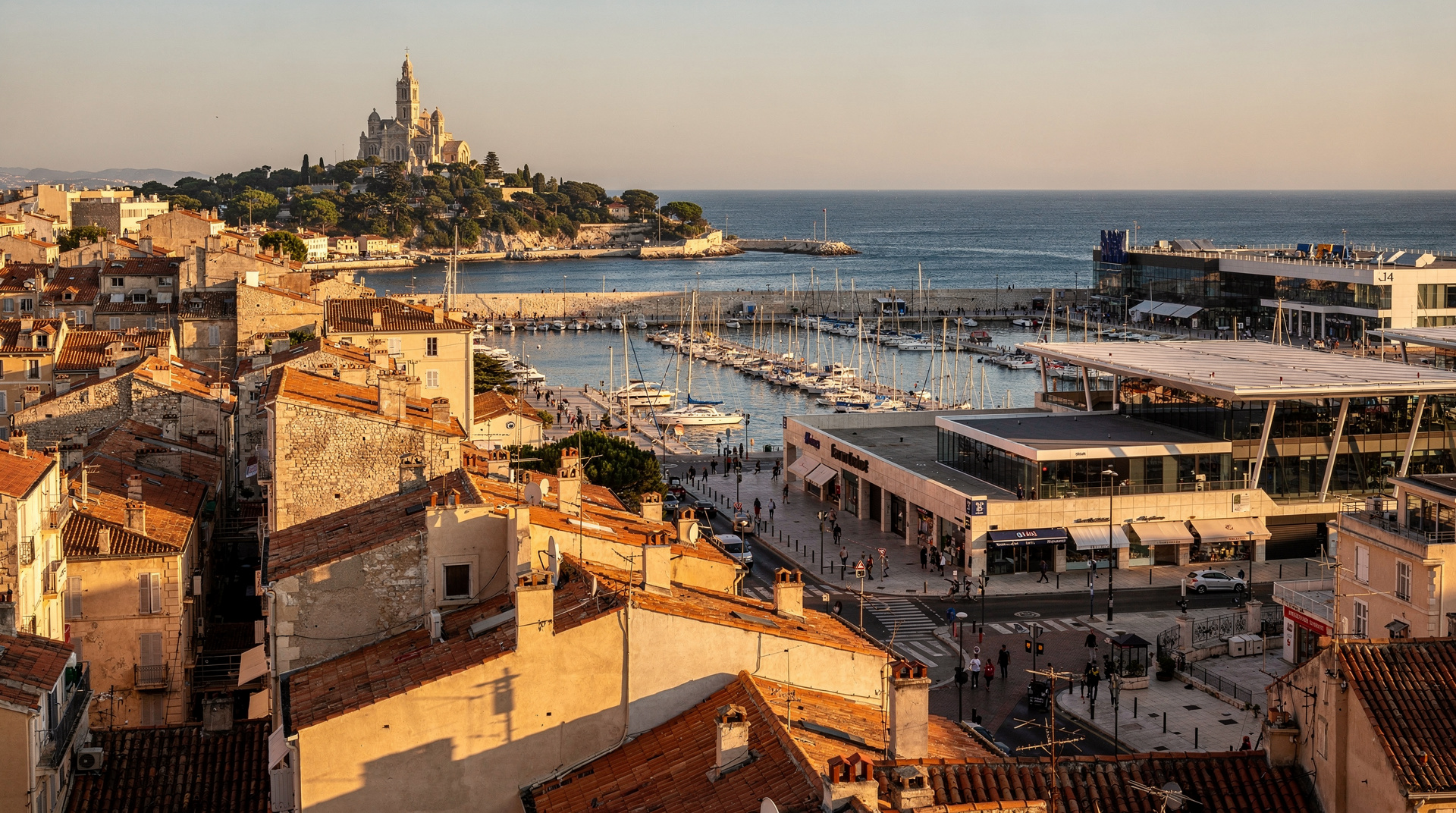
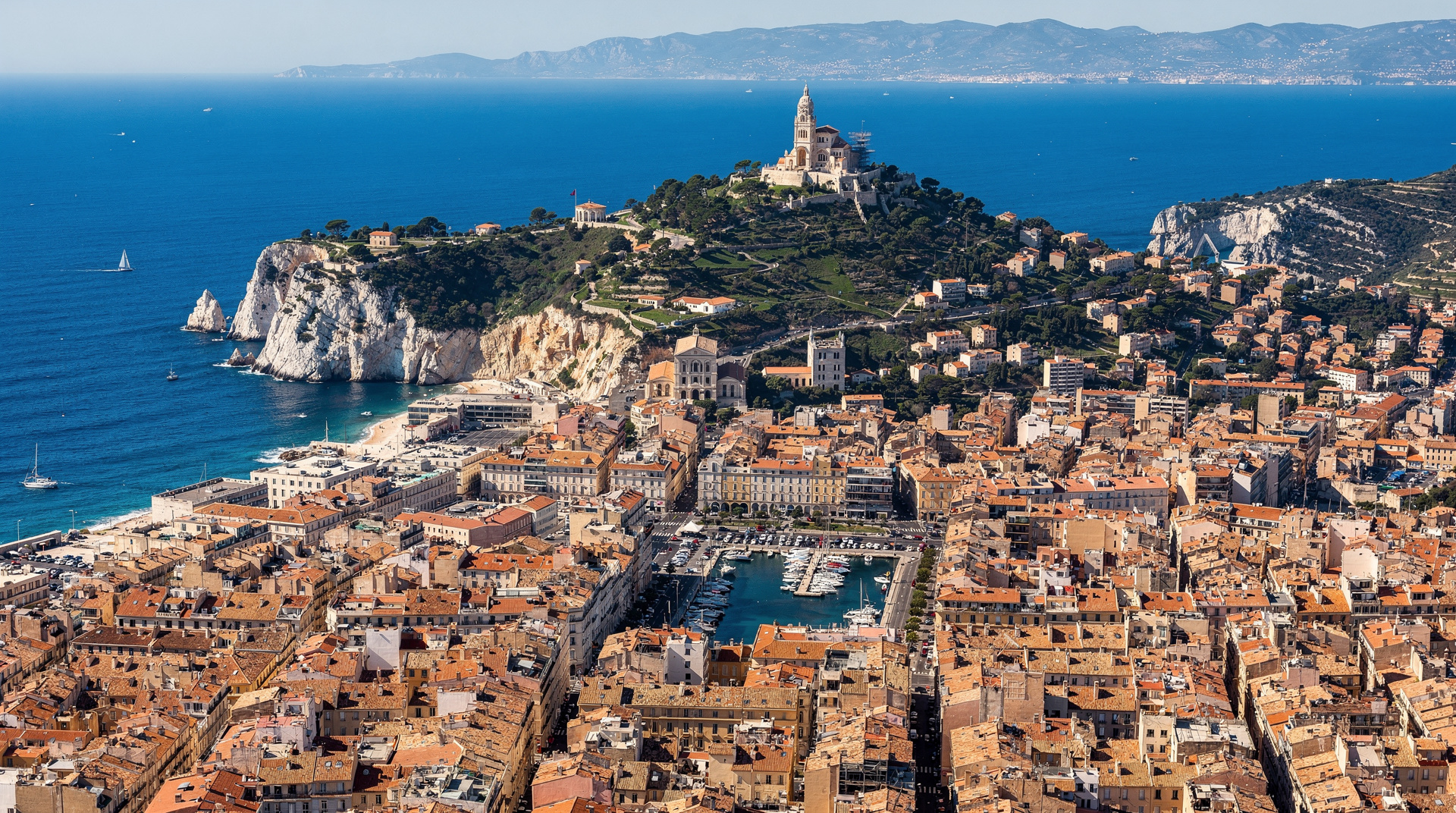
- Notre-Dame de la Garde basilica (interior and terrace)
- The Ombrière (Norman Foster reflective steel canopy at Quai des Belges)
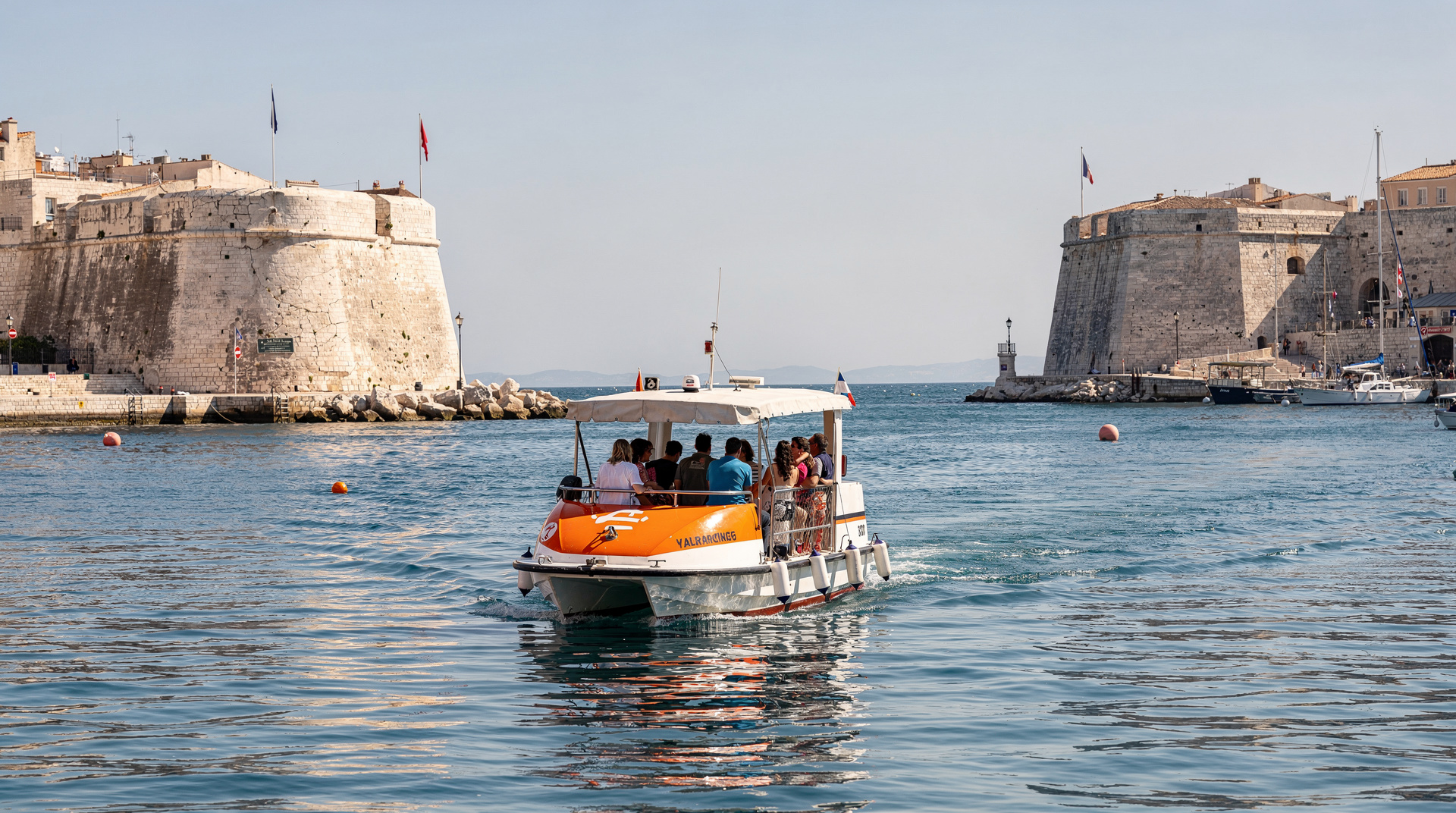
- The Vieux-Port cross-harbour ferry (the petit ferry between north and south quais is free and runs regularly — useful for reaching Le Panier from the Corniche side)
- Corniche walk from Vallon des Auffes to Prado
- Vallon des Auffes fishing harbour
- Cours Julien street art (some of the largest murals in France are painted on the building facades here — the walk between the cours and the Noailles area is a free outdoor gallery)
- All public beaches (Prado, Catalans, and the Calanques themselves — access is free, boat tours are not)
Free on specific days:
- MuCEM entry: free first Sunday of every month
- Musée des Beaux-Arts (Palais Longchamp): free first Sunday of the month
- Musée d’Histoire de Marseille: check for free periods
The City Pass: honest maths
The Marseille City Pass costs 24 EUR (24h), 31 EUR (48h), or 39 EUR (72h). It includes:
- Unlimited RTM public transport (metro, bus, tram, Vieux-Port ferry)
- Free entry to MuCEM and several other museums
- One circuit on the tourist petit train
- One hop-on hop-off bus circuit
- Entry to Château d’If OR the Cosquer Cave replica
- Various discounts
When it makes sense: If you plan to use public transport multiple times per day (5.20 EUR for a day pass without the City Pass), visit MuCEM (9.50 EUR), take the tourist petit train to Notre-Dame (12–15 EUR), and visit Château d’If or the Cosquer Cave (15–20 EUR), the 24h pass at 24 EUR is clearly worthwhile.
When it does not: If your main plan is the Calanques by boat (not included in City Pass), walking, and free sights, the pass adds little value. The Calanques boat tour is your biggest expenditure and the pass does not cover it.
The verdict: For a classic Marseille city day — MuCEM, petit train, metro, one attraction — the 24h City Pass pays for itself comfortably. For a Calanques-focused trip, buy individual tickets.
Eating cheaply without eating badly
Marseille’s street food and market food scene is excellent and cheap. This is not a consolation-prize budget option — eating at the Noailles market or the Cours Julien lunch spots is the authentic local experience, not a downgrade from the tourist restaurants.
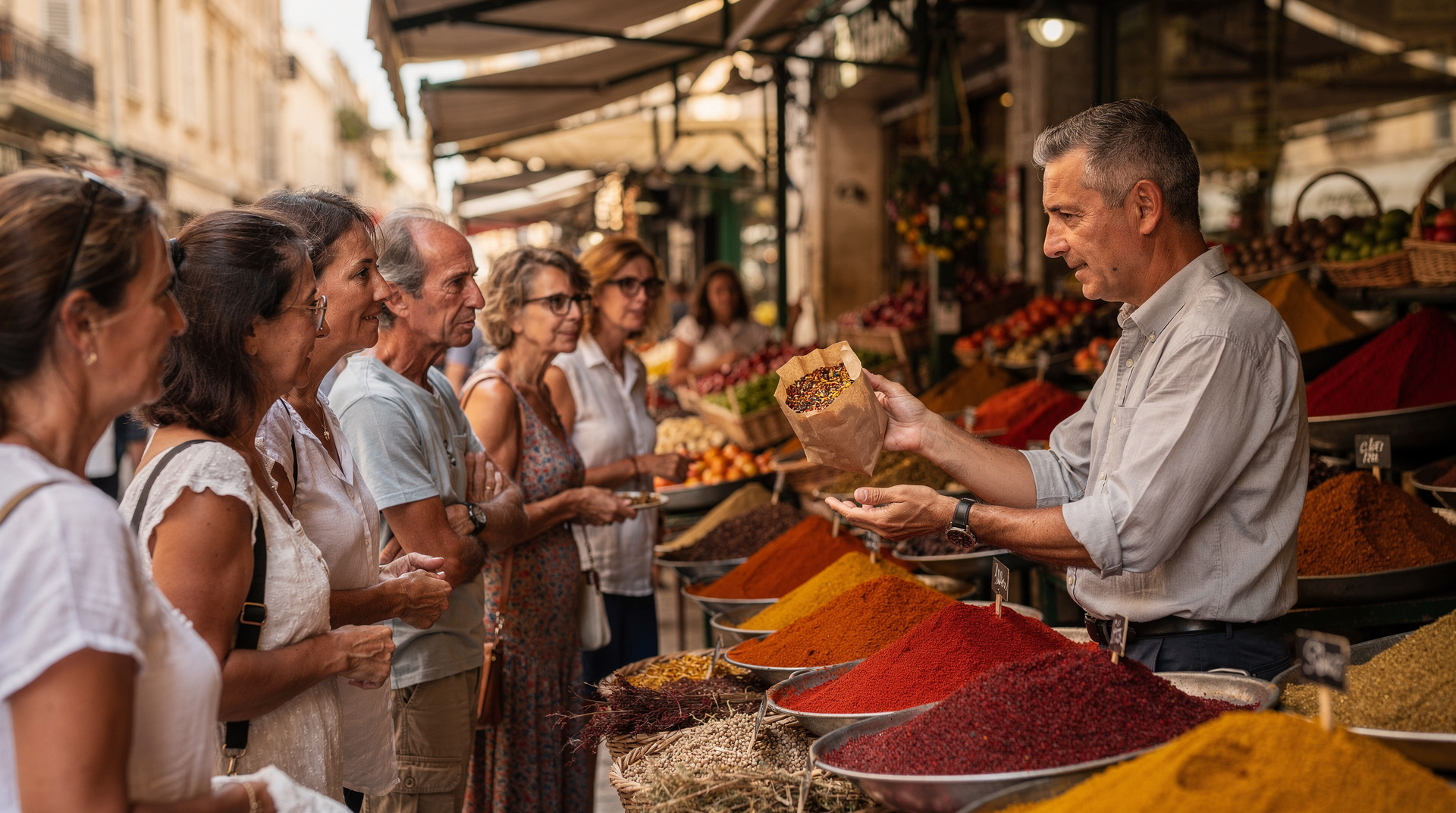
The Noailles market area (Rue Longue-des-Capucins area): Lunch counters serving tagines, couscous, grilled meats, and pastries for 5–10 EUR. Fresh produce for picnics at a fraction of supermarket prices. The best-value food experience in the city.
Boulangeries and bakeries: A good jambon-beurre baguette costs 3–4 EUR and is a legitimately excellent lunch option. Most boulangeries open from 7:00 and are busiest at lunchtime — arrive before noon.
Supermarkets for picnics: Monoprix, Carrefour, and Lidl all have central locations. Assembling a picnic — baguette, local cheese, olives, a small rosé — for two people costs 12–18 EUR. Eaten on the south quai of the Vieux-Port or on the Corniche rocks with a sea view, this beats a tourist restaurant at twice the price.
Tap water: Marseille tap water is safe and perfectly drinkable. Carry a refillable bottle — the savings over 3–7 days are significant, and you will not be buying 2 EUR bottles constantly.
Set lunch menus (formules): Virtually every proper restaurant in Marseille offers a set lunch menu at 13–22 EUR that includes two or three courses. This is the most cost-effective way to eat well. The same dishes at dinner cost 40–60% more. Reverse the typical tourist pattern: have the big meal at lunch and a lighter dinner.
Transport on a budget
The RTM network (metro, tram, bus) is functional and cheap:
- Single ticket: 1.70 EUR
- Day pass (24h): 5.20 EUR
- 3-day pass (72h): 10.80 EUR
- 7-day pass: 15.50 EUR
For a 3-day visit, the 72h pass at 10.80 EUR is excellent value — it covers all metro, tram, and bus travel from first validation.
The Vieux-Port cross-harbour ferry: Free. This tiny boat crosses between the north and south quais of the Vieux-Port in 5 minutes. Use it regularly — it saves walking the full length of the harbour.
Walking: The city centre is walkable for most purposes. Vieux-Port to Le Panier: 10 minutes. Vieux-Port to MuCEM: 20 minutes. Vieux-Port to Cours Julien: 25 minutes (uphill). Notre-Dame: 40 minutes from the Vieux-Port.
Avoiding taxi costs: Taxis from the airport to the city centre run 50–60 EUR. The Navette 91 airport bus costs 10 EUR and takes 25–30 minutes to Gare Saint-Charles. For arrival on a budget, the bus is the obvious choice. See our airport-to-city guide for full options.
The Calanques without breaking the budget
The main boat tours cost 60–95 EUR per person. This is genuinely the most expensive single activity in Marseille, and there is no meaningful cheaper alternative if you want the boat experience.
The honest budget alternative: In spring (April–June) and autumn (September–October), hiking to Sugiton from the Luminy campus is free. Bus 21 from Castellane metro to Luminy: 1.70 EUR (or covered by your day pass). The hike is 45 minutes each way. The Sugiton reservation is free (book via calanques-parcnational.fr). Total cost: essentially zero, for one of the most beautiful places in France.
Important: This option does not work in July–August when trails are closed for fire risk. In summer, the boat tour is the only real Calanques access — budget for it.
Seasonal price differences
| Season | Accommodation | Activities | Crowds |
|---|---|---|---|
| July–August | Peak (+40–60% above base) | Normal | Very high |
| June, September | High (+20–30%) | Normal | High |
| April–May, October | Mid-range | Normal | Moderate |
| November–March | Low (–30–50% below peak) | Some boat tours reduced | Low |
The cheapest Marseille trip is November to February. Accommodation runs 30–50% below summer rates. Museums are uncrowded. The city is mild (10–15°C) and fully functional. The Calanques hiking trails are generally open (check fire risk status, though winter risk is minimal). The main limitation is that some boat tour operators reduce frequency or suspend routes in winter.
See our winter guide for a full assessment of what works and what does not in the off-season.
Budget summary: what actually costs money
| Expense | Budget range | Money-saving option |
|---|---|---|
| Accommodation (per person) | 15–80 EUR/night | Hostel dorm; shoulder season |
| Calanques boat tour | 60–95 EUR | Hike for free in spring/autumn |
| MuCEM entry | 9.50 EUR | Free first Sunday; included in City Pass |
| Transport (day pass) | 5.20 EUR | Walk; use City Pass if visiting multiple paid sites |
| Lunch | 5–25 EUR | Noailles market, boulangerie, set menu |
| Dinner | 20–50 EUR | Cook in hostel, Cours Julien mid-range |
| Airport transfer | 10–60 EUR | Navette 91 bus: 10 EUR |
| Calanques hiking | Free | Bus 21 to Luminy + free Sugiton reservation |
For a full trip cost breakdown by traveller profile and duration, see our Marseille trip cost guide. For accommodation options by neighbourhood and budget, see our where to stay guide.
Free Marseille: a curated list that actually works
Many “free things to do” lists pad with obvious fillers. This one is deliberately specific.
The Vieux-Port fish market (daily until noon): Not a tourist display — a genuine wholesale operation where fishermen sell their overnight catch directly. The varieties of fish and shellfish visible here in one morning are extraordinary. Completely free to observe.
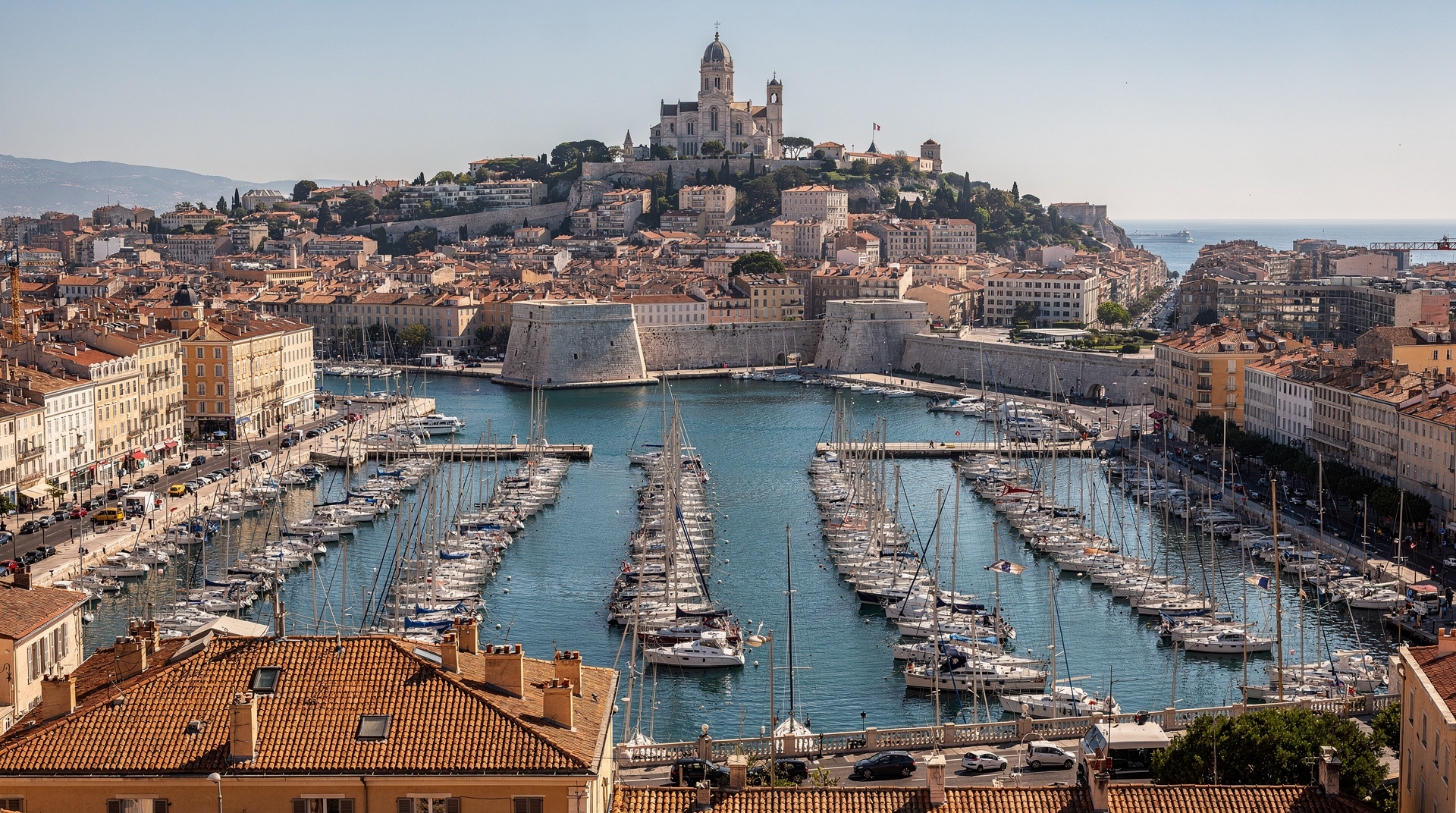
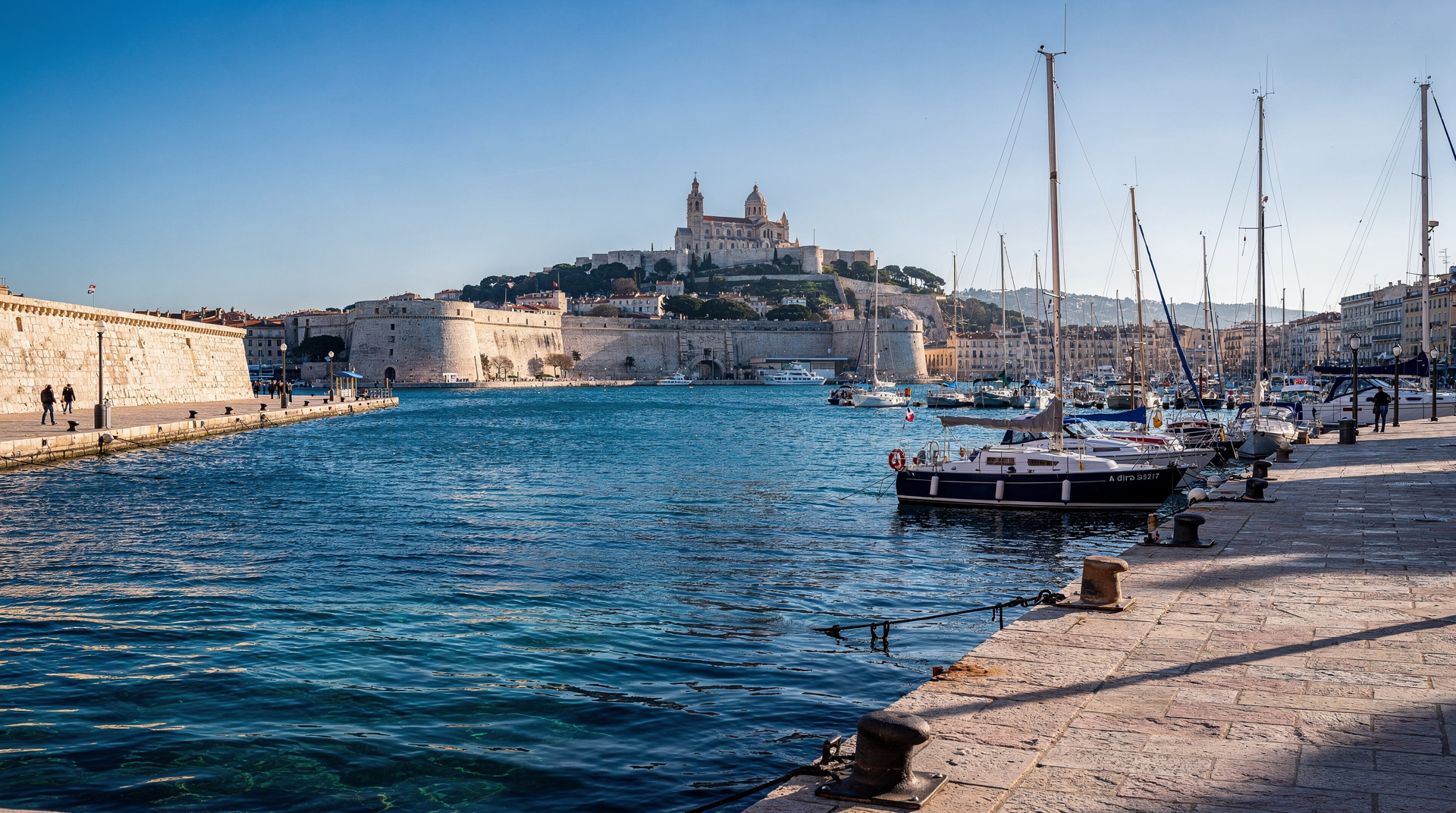
The Vieux-Port cross-harbour ferry: The tiny ferry crossing between the north and south quais takes 5 minutes and costs nothing. It has been operating in some form since the 17th century. Riding it feels appropriately Marseillais.
MuCEM exterior and Fort Saint-Jean gardens: One of the most striking architectural experiences in modern France, free to access. The suspended footbridge between the MuCEM and Fort Saint-Jean bounces slightly as you cross it. The Fort Saint-Jean gardens have been restored and are genuinely beautiful. No ticket required for any of this.
Notre-Dame de la Garde: The basilica is free, open daily from 7:00, and offers the best panoramic view in the city. The walk up through Endoume is also free and shows you a residential neighbourhood most tourists never see.
Cours Julien street art: The building facades along and around Cours Julien carry some of the largest and most technically accomplished street murals in France. A slow walk through the cours and the connecting streets to the Noailles area requires no ticket, no guide, and no reservation. Best on a weekday morning when the light is clean and the delivery trucks have cleared out.
The Corniche walk: The Corniche President Kennedy runs 4 km along the coast from the Pharo gardens (near the Vieux-Port) south past the Vallon des Auffes fishing harbour, the Malmousque rocky beach, and the Catalan beaches toward the Prado. It is flat, spectacular, and entirely free. On Sunday mornings, half of Marseille jogs and cycles it.
Vallon des Auffes: The tiny fishing harbour tucked under the Corniche viaduct — 20 boats, fishing gear, a cluster of houses, and an atmosphere that feels genuinely disconnected from the tourist city 10 minutes above. Free to wander; the pleasure is simply sitting on the quai and watching the boats.
The Noailles market (Marché des Capucins): Free to walk through, fascinating as a sensory experience, and the cheapest place in the city to buy food. The market runs most mornings on and around Rue Longue-des-Capucins and the surrounding streets.
Palais Longchamp park: The grounds of the 19th-century palace at the end of the former Roman aqueduct are free to enter. The ornamental waterfall-fountain complex is impressive. The park is a 15-minute tram ride from the Vieux-Port.
Budget mistakes that are easy to avoid
Booking a hotel directly on the Vieux-Port quai without checking the back streets. The premium for a harbour view room is real; hotels one or two streets back from the water are often 30–40 EUR per night cheaper for similar quality.
Eating at the first restaurant you see near the Vieux-Port. The tourist strip charges premium prices for mediocre food. A five-minute walk in any direction — toward Cours Estienne-d’Orves, or uphill toward Le Panier — consistently improves value.
Taking a taxi from the airport when the Navette 91 is running. The taxi costs 50–60 EUR; the Navette costs 10 EUR. The time saving is 10–15 minutes at most. For the 40–50 EUR difference, this is the single most common unnecessary budget waste in Marseille.
Buying water in tourist shops and café bars. At 2–3 EUR per bottle, the daily cost adds up over a multi-day trip. Marseille tap water is safe and good. A refillable bottle costs 8–15 EUR once and saves money from day one.
Visiting the Calanques without planning the access method in advance. In summer, arriving at the Vieux-Port without a pre-booked boat tour often means finding the morning departures sold out, or paying a premium for a less-reputable operator with remaining slots. Book the main Calanques day tour 1–2 weeks ahead in peak season.
A sample budget day, hour by hour
Rather than abstract daily totals, here is what a genuine 50–70 EUR budget day looks like in practice: morning at the Vieux-Port fish market (free), a boulangerie breakfast (around EUR 3–4), the walk through Le Panier and the MuCEM exterior and Fort Saint-Jean gardens (free), a Noailles market lunch (around EUR 8), an afternoon on the Corniche or a free public beach, and a picnic dinner with a small rosé (around EUR 12–18 for two) watched from the Vieux-Port quai at sunset.
Add a RTM day pass (around EUR 5.20) and the day comes in comfortably under 70 EUR without feeling like a compromise. For a longer stay, see our how many days in Marseille guide to plan which days carry the bigger expenses (a Calanques boat tour, a proper restaurant dinner) and which stay closer to free.
Stretching a longer trip
For stays of 4 days or more, the maths shifts in your favour: multi-day RTM passes get cheaper per day, and you can afford one splurge day (the Calanques boat tour, a proper Cours Julien dinner) balanced against several near-free days built around walking, markets, and free sights. See our 3-day planning guide or the car-free 4-day itinerary for a structure that keeps transport costs down while covering the essentials.
A couple more questions
Is Marseille cheaper than Nice or Aix-en-Provence? Generally yes for accommodation and everyday dining — Marseille’s larger size and working-class character keep prices more competitive than Nice’s Riviera premium or Aix’s boutique-town pricing; see our Marseille vs Aix comparison for specifics.
Can I do Marseille as a day trip on a tight budget? Yes — with no accommodation cost, a single day built around free sights, a market lunch, and a RTM day pass can come in well under 30 EUR; see our one-day itinerary for a route that keeps it efficient.
Top experiences
Bookable activities with verified prices and instant confirmation on GetYourGuide.