Is Marseille worth it? A first impression that became a love
Marseille: iconic Calanques boat tour with swimming
Duration: 3-4.5 hours
The arrival that almost put us off
| At a glance | |
|---|---|
| Where | Marseille, first visit in September |
| Cost | A three-day trip with a boat tour and a museum entry or two runs to a modest daily budget by French city standards |
| Time needed | It took about four hours for our impression to turn; a full three days to be convinced |
| Getting there | Airport taxi or shuttle to the Canebière/Vieux-Port area; TGV from Paris is the other main option |
| Best time | September, for warm water in the Calanques without peak-August crowds |
The taxi from the airport dropped us at the top of the Canebière at eleven on a Tuesday morning, and the first thing we noticed was the noise. Not tourist noise — working city noise. Buses grinding uphill, a market vendor on a phone call, the compressed air of a delivery truck, someone arguing at volume two floors above us. This was not the sunlit Provence we had been assembling in our heads.
The second thing we noticed was the smell: salt air and diesel and something frying, all mixed together in a way that was distinctly not bad but was distinctly not what you expected. Marseille smells like a port city. That sounds obvious. Most port cities have been cleaned up enough that they do not smell like port cities anymore. Marseille has not, or perhaps more precisely, has not felt the need to.
We dragged our bags toward the Vieux-Port and felt, briefly, that we had made a mistake.
What changed by the end of the first afternoon
It took about four hours.
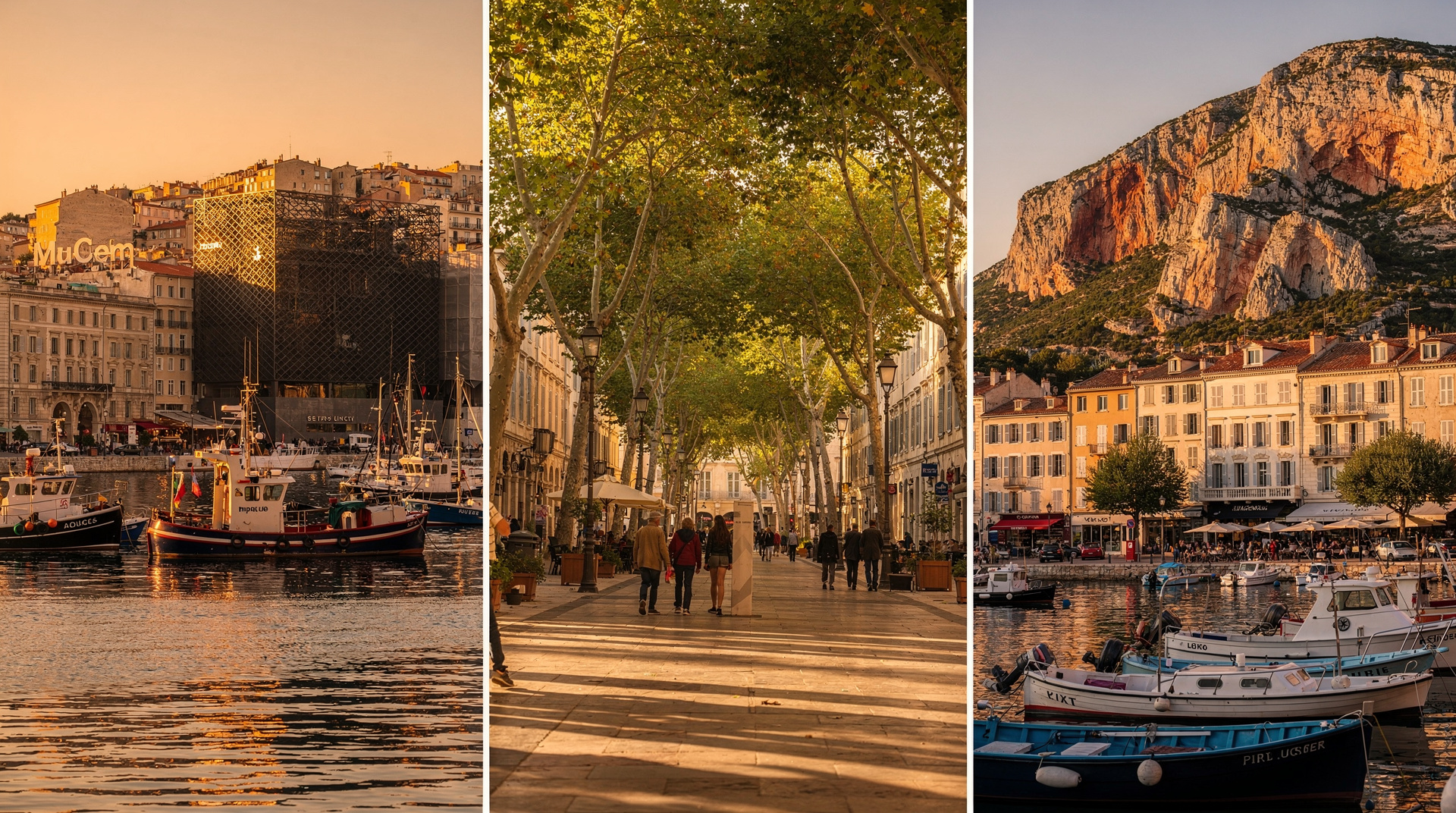
The fish market at the Quai des Belges was still going when we arrived, winding down toward noon. A woman in waders was filleting something with a knife she had clearly used ten thousand times. A cat watched from a safe distance. Nobody was performing anything for tourists. This was a market that would have looked identical in 1985 and will probably look identical in 2035, and the city’s indifference to modernising it for visitors is the reason it still works.
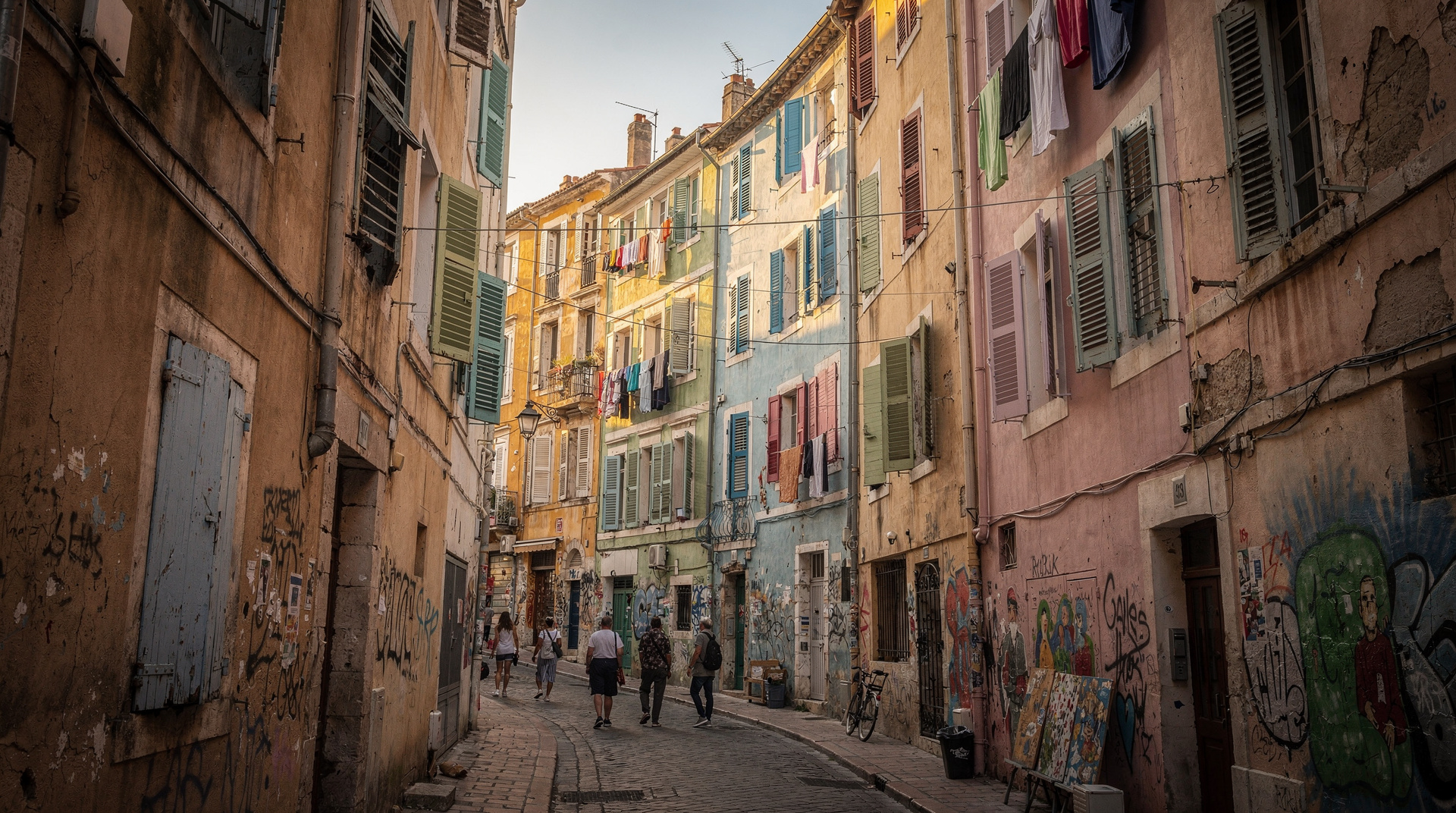
We walked uphill into Le Panier because the guidebook said we should, and then we kept walking because the lanes kept offering the next corner. This is the oldest quarter in Marseille — a city founded by Greek traders from Phocaea around 600 BCE, which makes this neighbourhood older than most things in France. Laundry hung between windows. A woman leaned out of hers to water a plant. A man sold vegetables from a crate parked against a yellow wall.
The Vieille Charité, the 17th-century hospice with its baroque oval chapel, was showing a photography exhibition. We went in largely because it was cool inside. The exhibition was better than expected, which turned out to be a theme for the rest of the trip.
By the time we sat down somewhere in the afternoon with a pastis — the Marseille ritual, the anise spirit turning milky white as cold water fell through it — we had started to revise our assessment.
The thing about Marseille that takes time to arrive at
The city does not perform for you. This is the central fact, and it cuts both ways.
On the negative side: Marseille is not immediately legible. Its pleasures are not laid out in obvious sequence. The ugly parts (and there are genuinely ugly parts — post-war rebuilding, the damaged northern waterfront, some of the peripheral housing) are visible rather than hidden. When you arrive from Paris or Lyon or anywhere that has been groomed into tourist palatability, Marseille’s refusal to do that is initially confusing.
On the positive side: what you eventually find is a city with genuine substance. The Vieux-Port is a working harbour that has been in continuous use since antiquity, not a theme park recreation of one. The food market at Noailles is a real food market, not a curated food hall. The Cours Julien neighbourhood is actually bohemian, not in the way that word usually applies to gentrified European city quarters.
The MuCEM moment
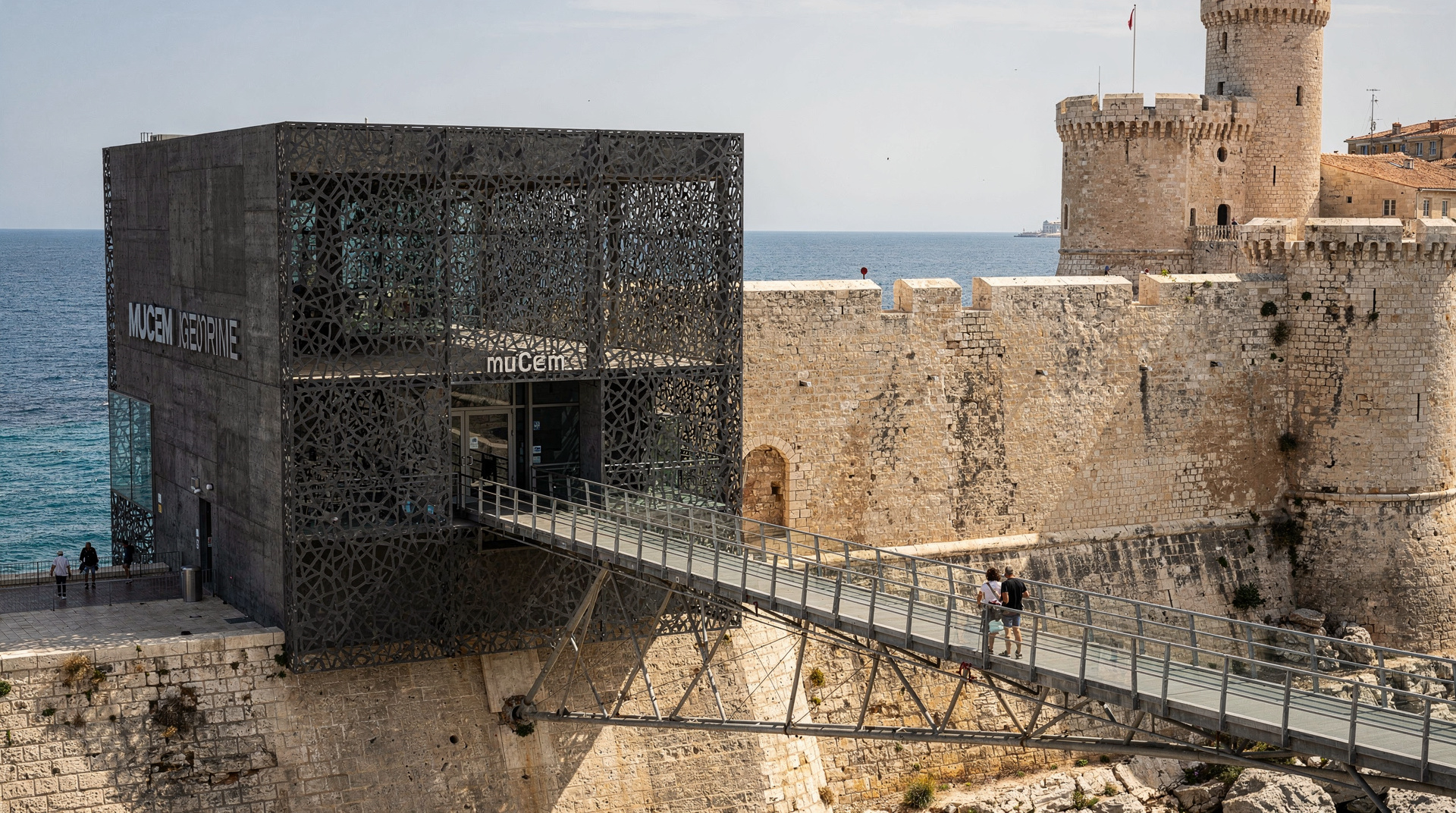
On the second morning we walked to the MuCEM. This is the museum that opened in 2013 when Marseille was European Capital of Culture, and it has been the subject of the kind of architectural enthusiasm that is sometimes excessive but in this case is warranted.
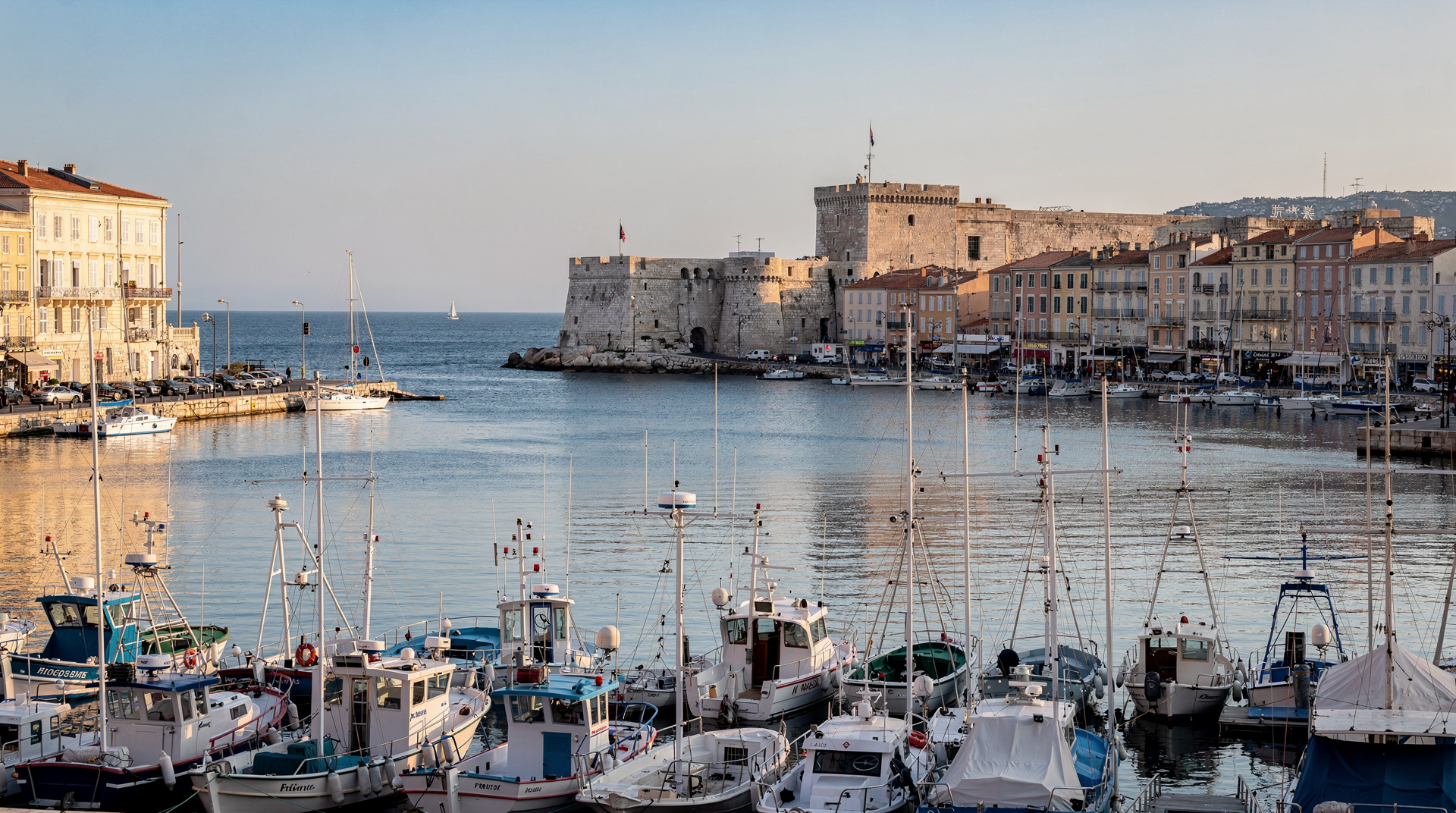
The building is wrapped in a laser-cut concrete lattice — the résille — that casts a shifting pattern of shadows across its own surface as the light moves. A suspended footbridge connects it to the restored Fort Saint-Jean across the water. Standing on that footbridge with the port opening out behind you and the white of the Calanques visible to the southeast on a clear day, you understand something about what this city is sitting on top of. It is not a second-rank French city. It is one of the oldest continuously inhabited ports in western Europe, and it has the bay to prove it.
We spent three hours inside and on the terraces. The terraces are free.
Notre-Dame changes your sense of the city
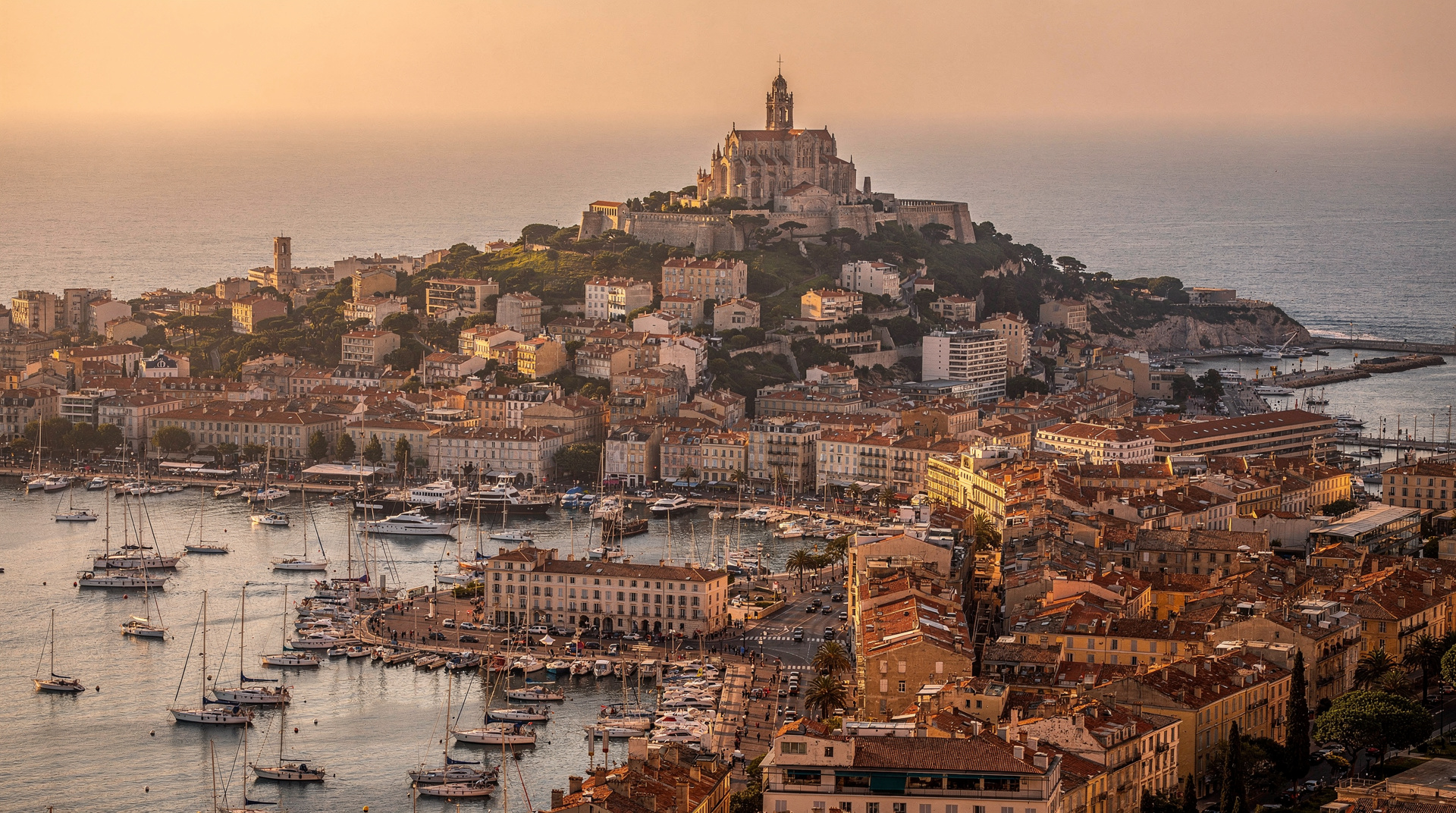
That afternoon we climbed to Notre-Dame de la Garde — the Romano-Byzantine basilica on the highest point of Marseille, 162 metres above sea level, visible from almost everywhere in the city. The golden Madonna on the bell tower watches the ships in the bay, and if you have ever wondered why a city would put its most important church on the most exposed hilltop in the area, the view from the terrace is the answer.
From up there, Marseille makes complete sense. The bowl of the bay, the white islands of the Frioul archipelago, the tanker traffic on the horizon, the limestone ridges of the Calanques to the east, the spread of the city below — all of it resolves into a coherent geography. Marseille is a city built around a bay, organised around a port, with its back to a national park. Every neighbourhood you walk through is an expression of that fundamental geography.
The calanques settled it
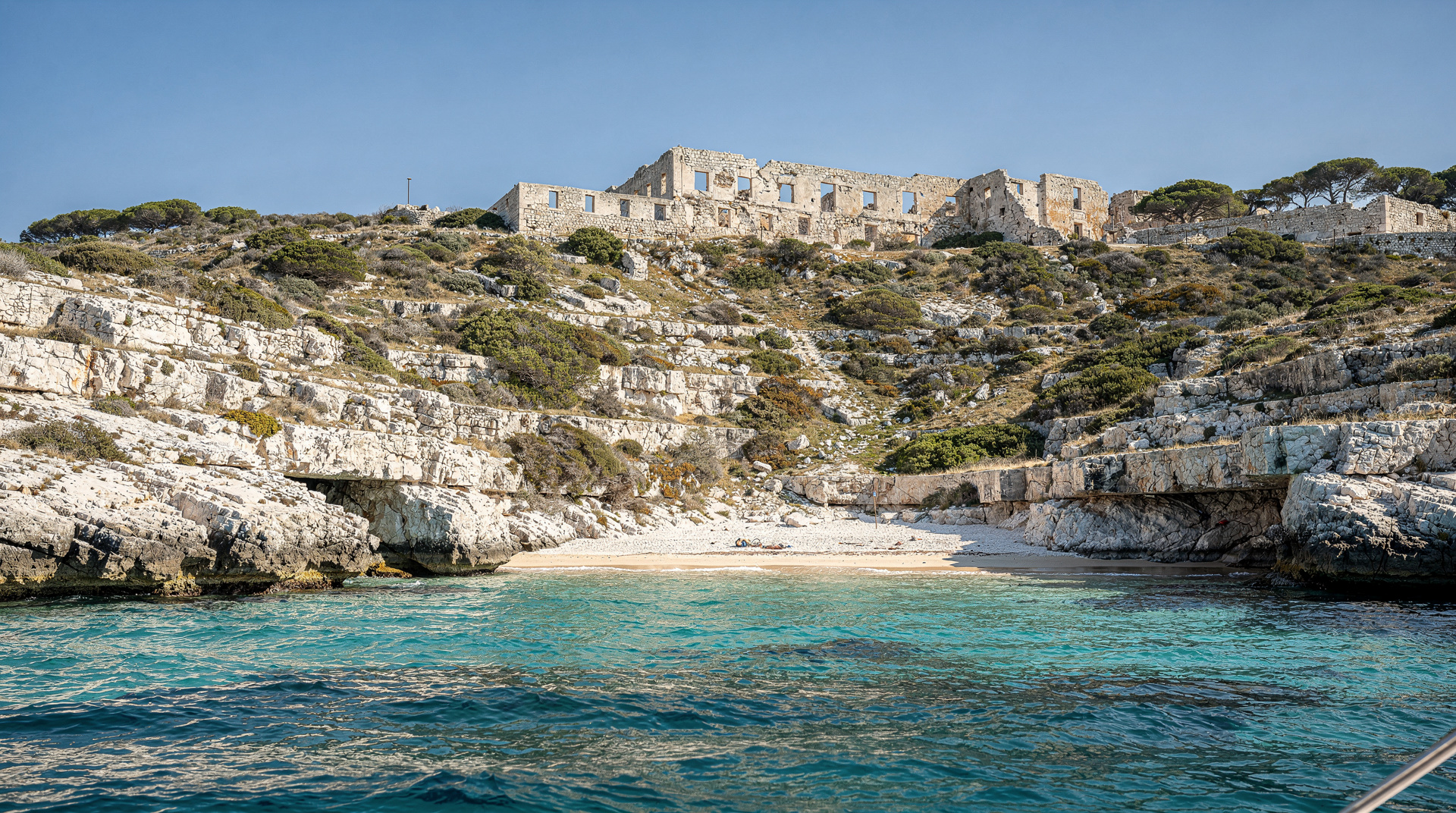
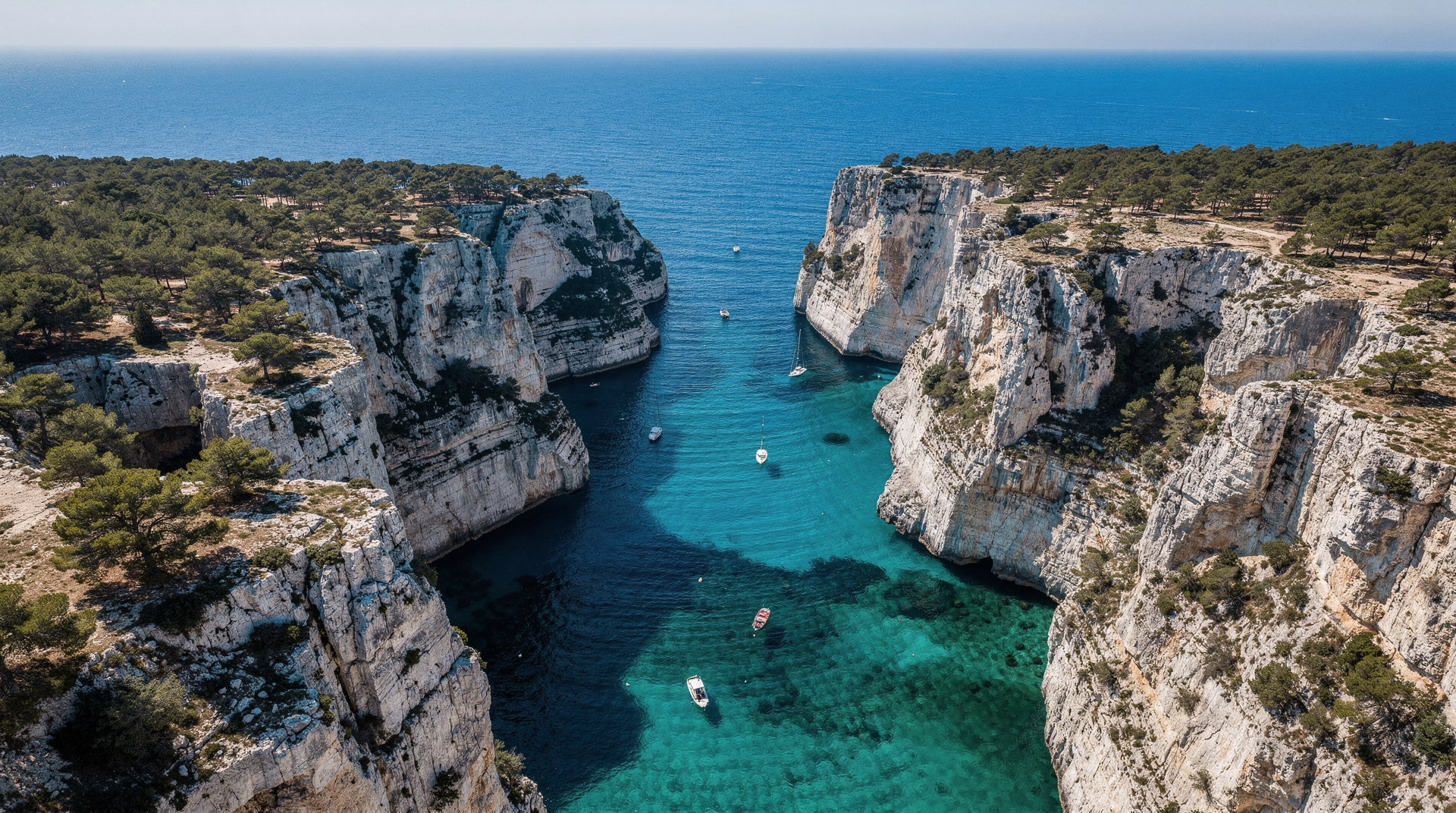
On the third day we took a boat from the Vieux-Port. This is the easy option for the Calanques — the boat tour that covers the main inlets in three to four hours, with swimming stops in the turquoise water. In September, the water temperature is still excellent. The limestone walls rise straight from the sea, the colour of old bone in full sun, the water below them a shade of blue-green that looks chemically engineered but is simply physics.
We had been to the Cinque Terre and the Amalfi coast and various other blue-water European destinations before this. None of them had this combination of wild scale and proximity to a major city. The calanques are not a day trip away from Marseille. They begin at the southern edge of the city. They are part of what Marseille is.
Is Marseille worth it?
The question is slightly wrong, because “worth it” implies a cost-benefit calculation — as if Marseille is something you endure to get to the prize. The Calanques are not the prize and Marseille the necessary inconvenience to reach them. They are the same destination.
Marseille is worth it in the specific sense that it has something most European cities have lost: genuine character that has not been smoothed over for tourism. That character is sometimes abrasive, often surprising, occasionally spectacular, and occasionally disappointing. It is never boring.
What we said to each other at the end of the trip was: we need to come back. That verdict has held up. We have come back twice since. The city keeps offering something we did not see the previous time. That is a reasonably good working definition of a destination worth visiting.
What would have changed our first impression faster
Looking back, the four hours it took us to turn around could probably have been two, if we had known a few things going in. Knowing that the Canebière is a normal working street and not a warning sign would have helped. Knowing that the fish market at the Quai des Belges is meant to look unpolished — that its lack of curation is the point — would have helped too. And knowing to head straight into Le Panier rather than lingering near the port, where the first, roughest impression of the city concentrates, would have shortened the adjustment considerably.
Where our doubts resurfaced, and where they didn’t
Not every part of the trip converted us at the same speed. The MuCEM and Notre-Dame de la Garde won us over almost immediately — both give you a view or a context that makes the city’s shape make sense. The Calanques boat tour on day three settled any remaining doubt. What never fully resolved, even by the end, was our sense of the more damaged northern parts of the city we glimpsed from the train and never explored properly — a reminder that Marseille’s “worth it” verdict applies most confidently to the areas covered in guides like this one, and less confidently to parts of the city few visitors ever see.
Frequently asked questions about Is Marseille worth it? A first impression that became a love
Is Marseille worth visiting if you only have one full day? It can be, especially if you focus on the Vieux-Port, Le Panier, and Notre-Dame de la Garde, but one day will not include the Calanques, which this piece argues are central to the city’s appeal. Two to three days gives a fuller and fairer verdict.
Why do first impressions of Marseille tend to be negative? The arrival areas — the Canebière, the station approach — read as working-city noise rather than curated tourist charm, and that can read as rough before the city’s more rewarding neighbourhoods and views change the picture.
Read our full Marseille guide for practical planning, neighbourhood breakdown, and transport options. For timing, our best time to visit guide covers the seasonal trade-offs honestly. And our 25 things to know checklist fills in everything we wish someone had told us before the first trip.
Top experiences
Bookable activities with verified prices and instant confirmation on GetYourGuide.