Provence lavender route: 3-day summer itinerary (mid-June to mid-July)
From Marseille: Valensole lavender full-day tour
Duration: 9 hours
This itinerary has a single, specific purpose: to see Provence lavender at its best. It is designed for the window of mid-June to mid-July when the lavender fields of the Plateau de Valensole, the Luberon, and the Sault plateau are in bloom — and it should not be attempted outside that window. If you are visiting Provence before mid-June or after mid-July, the fields will be either green (too early) or harvested (too late). See the seasonal guide for accurate bloom timing.
Honest expectations:
- Peak lavender bloom is the first two weeks of July. The precise date varies by 1–2 weeks depending on the year and altitude. The higher altitude Sault plateau (at approximately 750 m) blooms 2–3 weeks later than Valensole.
- Summer 2026: Valensole peak is expected around July 1–15; Sault around July 15–August 5. These are projections — weather drives the exact timing.
- Crowds are serious in July. Gordes and Sénanque in the first two weeks of July are extremely crowded. Start every day early (on site before 8:30 if possible).
- Heat: daytime temperatures in the Luberon and Valensole in July regularly reach 35–38°C. Plan early starts and midday shade.
A car is required for all three days. There is no viable public transport to the Valensole plateau, the Luberon villages, or the Sault plateau.
Start point: Aix-en-Provence or Marseille. The itinerary works from either base, with slightly different drives.
| Where | Valensole plateau, Moustiers-Sainte-Marie, Gordes, Sénanque Abbey, Roussillon, Sault |
| Cost | Around 400–600 EUR for 2 people over 3 days: car rental, 2 nights’ accommodation, meals, minor entries |
| Time needed | 3 days, car required throughout — mid-June to mid-July only |
| Getting there | Self-drive from Aix-en-Provence or Marseille; no public transport option |
| Best time | First two weeks of July for Valensole peak; mid-July to early August for Sault |
Day 0: is this the right trip for your dates?
Because this itinerary is season-locked, the single most important planning decision happens before you leave home: confirming the bloom is actually on. Outside the mid-June to mid-July window, redirect this same route into the 7-day Provence road trip, which covers Valensole, Gordes, and Roussillon without depending on lavender timing. If you are unsure which week to book, err toward the first half of July — Valensole’s peak is more reliable than Sault’s, and a slightly early Sault visit still shows a beautiful transitional bloom.
For more on how the season unfolds, the lavender season in Provence guide and the lavender fields day trip cover bloom and logistics in more depth, and the lavender season diary gives a first-hand account of a summer on the plateau. If you are weighing whether to drive at all, read do you need a car in Provence first.
Day 1: Valensole plateau
Getting there (from Aix-en-Provence or Marseille)
- From Aix-en-Provence: A51 north to Manosque, then D4/D96 east to Valensole. Approximately 1 hour 15 minutes.
- From Marseille: A51 north to Manosque, then D6 to Valensole. Approximately 1 hour 30 minutes.
Morning: Valensole plateau (7:30–12:00)
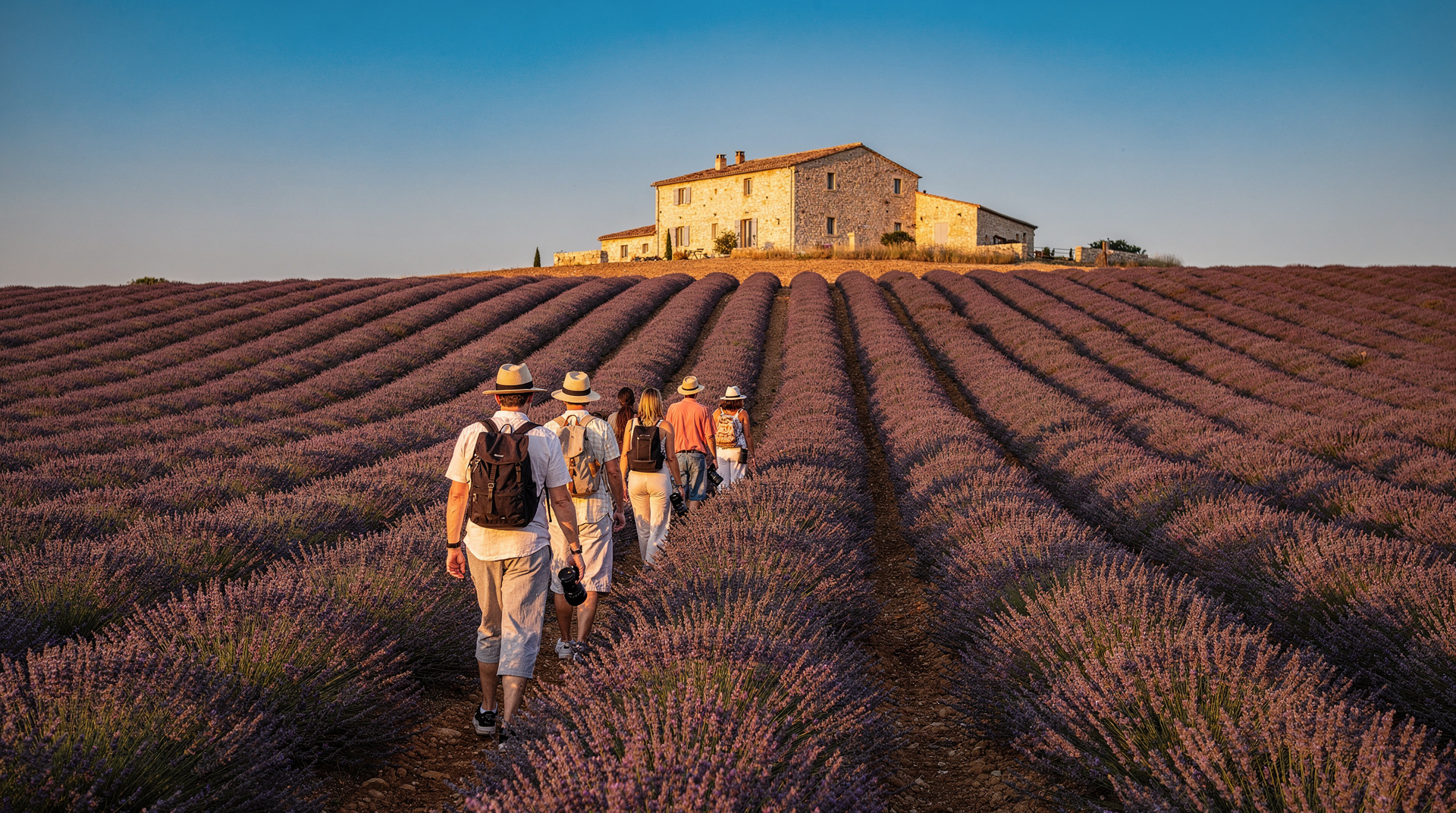
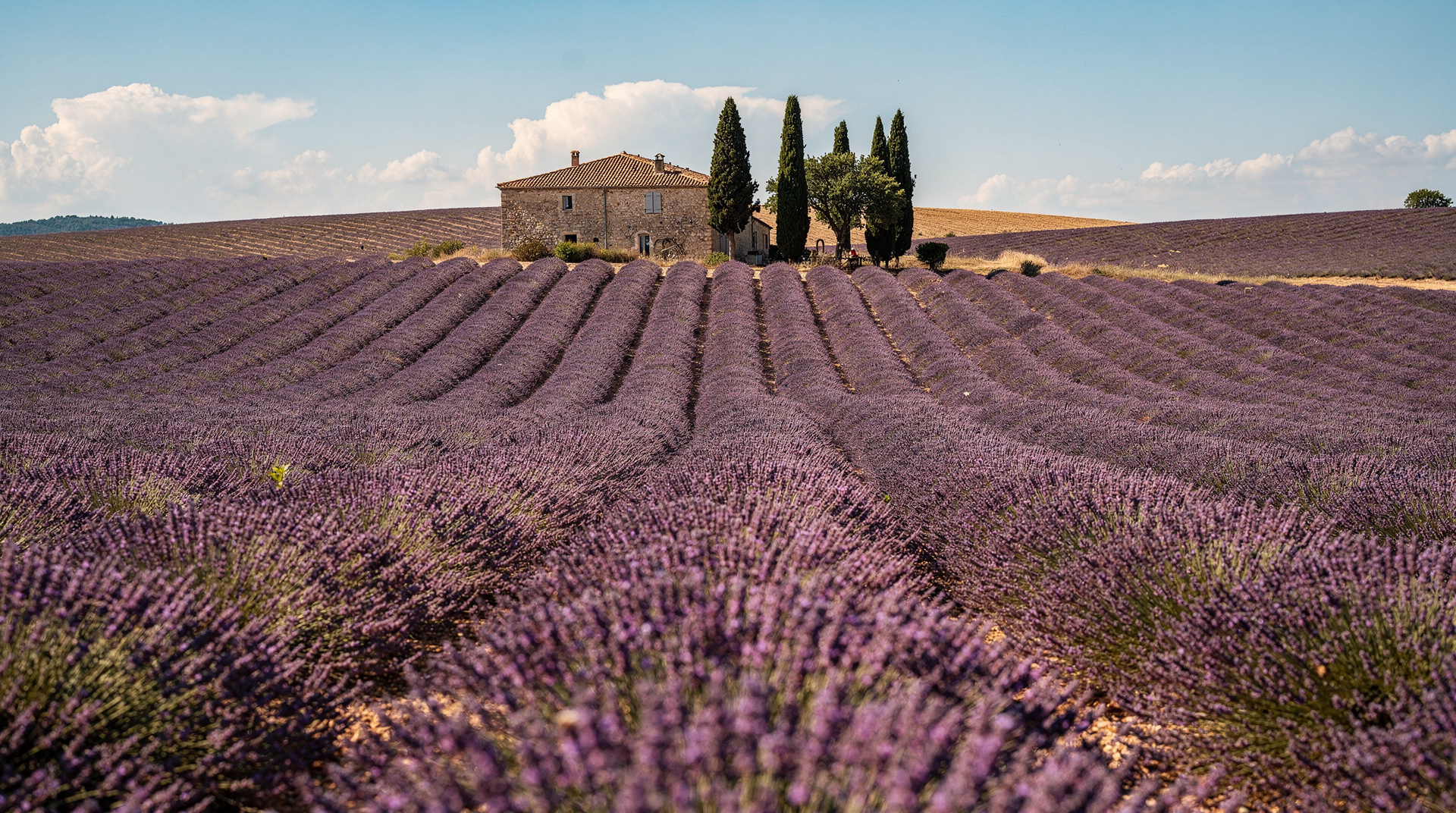
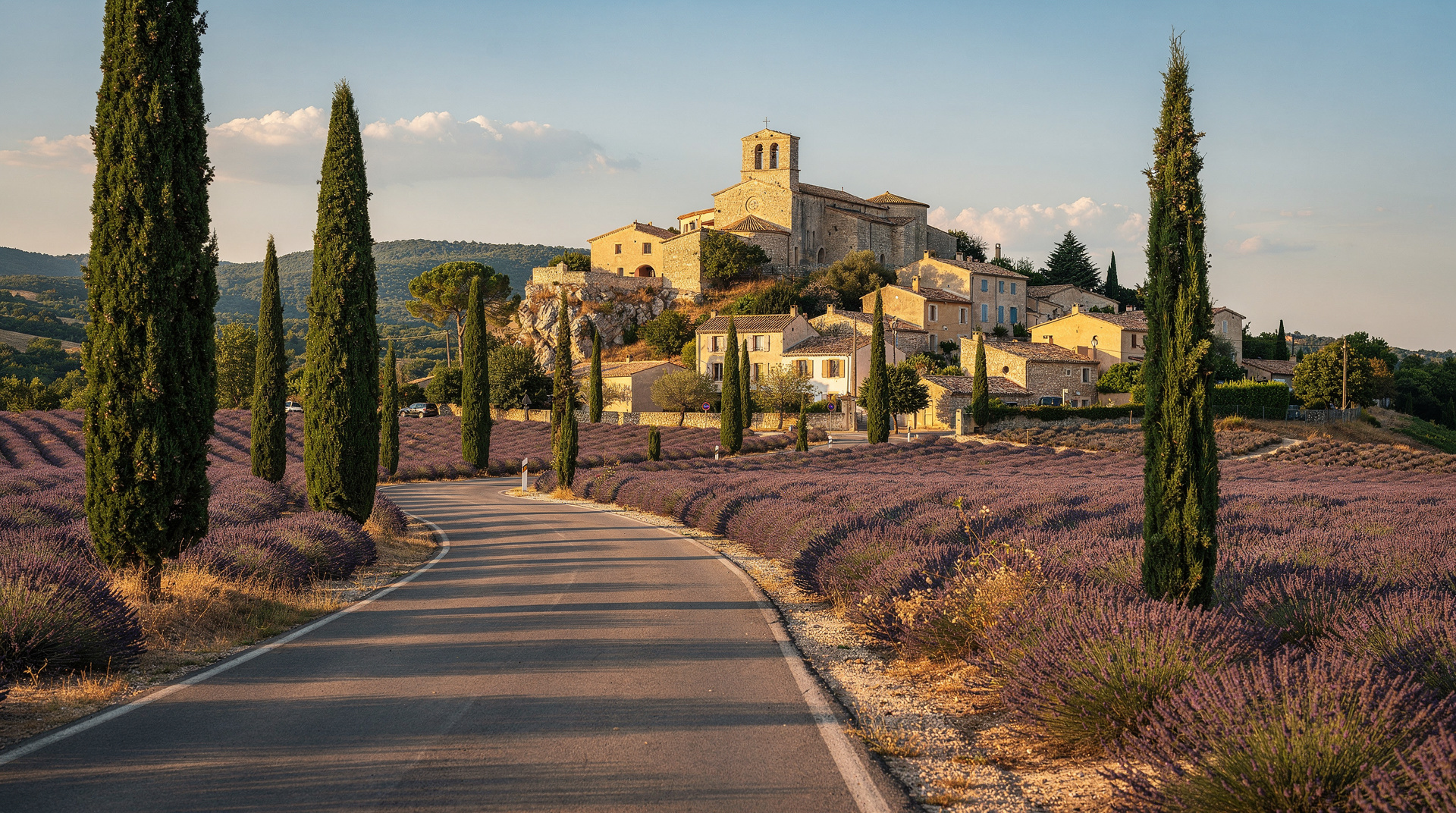
Arrive on the Valensole plateau before 8:30. The plateau is the largest lavender-growing area in France — gently rolling terrain at approximately 500 m altitude, with rows of lavender visible to the horizon in every direction. The scale is genuinely impressive and unlike any other landscape in Provence.
Where to go: The D6 running east from Valensole village toward Riez is the central axis of the plateau, with the densest concentration of fields. Pull off at roadside viewpoints and between rows — walking between lavender rows at bloom is the experience, not any specific monument.
Photography: The best light on the plateau is the first hour after sunrise (6:30–7:30 in July) and the last hour before sunset (20:00–21:00 in July). Midday light is harsh and flat. Overcast mornings in the first half of July are excellent for colour saturation.
The village of Valensole: The village itself (population approximately 3,000) is an unremarkable Provençal town. The agricultural cooperative shop at the village edge sells lavender products (honey, soap, essential oil) at good prices. More interesting: ask at the shop about farms currently in peak bloom — locals know which fields are cutting this week versus next, and can direct you to the best current colour.
Farms: Many lavender farms offer direct visits and tastings of lavender-derived products (honey, essential oil, soap). Look for signs reading “producteur” (grower) rather than “commercant” (seller) for the genuine farm experience. Entry is usually free or at nominal cost.
Lunch and afternoon: Moustiers-Sainte-Marie (12:30–18:00)
Drive east from Valensole to Moustiers-Sainte-Marie (30 minutes via D953). Moustiers is one of the most beautiful villages in Provence: built at the foot of a sheer limestone cliff, with a waterfall cascading from the rock face and the famous golden star hanging on a chain stretched between the two cliff sections above.
Lunch in Moustiers: the village has several good restaurants, particularly in the square at the foot of the cliff path. Budget 20–35 EUR per person.
The village is known for its faïence (tin-glazed earthenware pottery) — a tradition since the 17th century. The main street has working ateliers and shops where you can watch the painting process and buy pieces directly from makers. Moustiers faïence is a genuine regional craft, not a tourist trinket.
Optional: The cliff path above Moustiers leads to a small Romanesque chapel at the top (30 minutes each way, moderate climb, good views). The Gorges du Verdon are 10 km east of Moustiers — a viewpoint excursion if you have time, otherwise save for the road trip version.
Overnight in Moustiers: accommodation options range from a chambre d’hôtes in a village house (70–120 EUR) to small design hotels. Book 3–4 weeks ahead in July.
Day 2: Gordes, Sénanque, and Roussillon
Morning: Gordes and Sénanque Abbey (8:00–11:30)
Drive from Moustiers west to Gordes (1 hour 20 minutes via D952/D4/D973). Arrive before 8:30 — this is not optional advice in July. By 10:00, the village is packed with coach tourists and the narrow lanes are uncomfortable to walk. Before 9:00, you have the village largely to yourself.
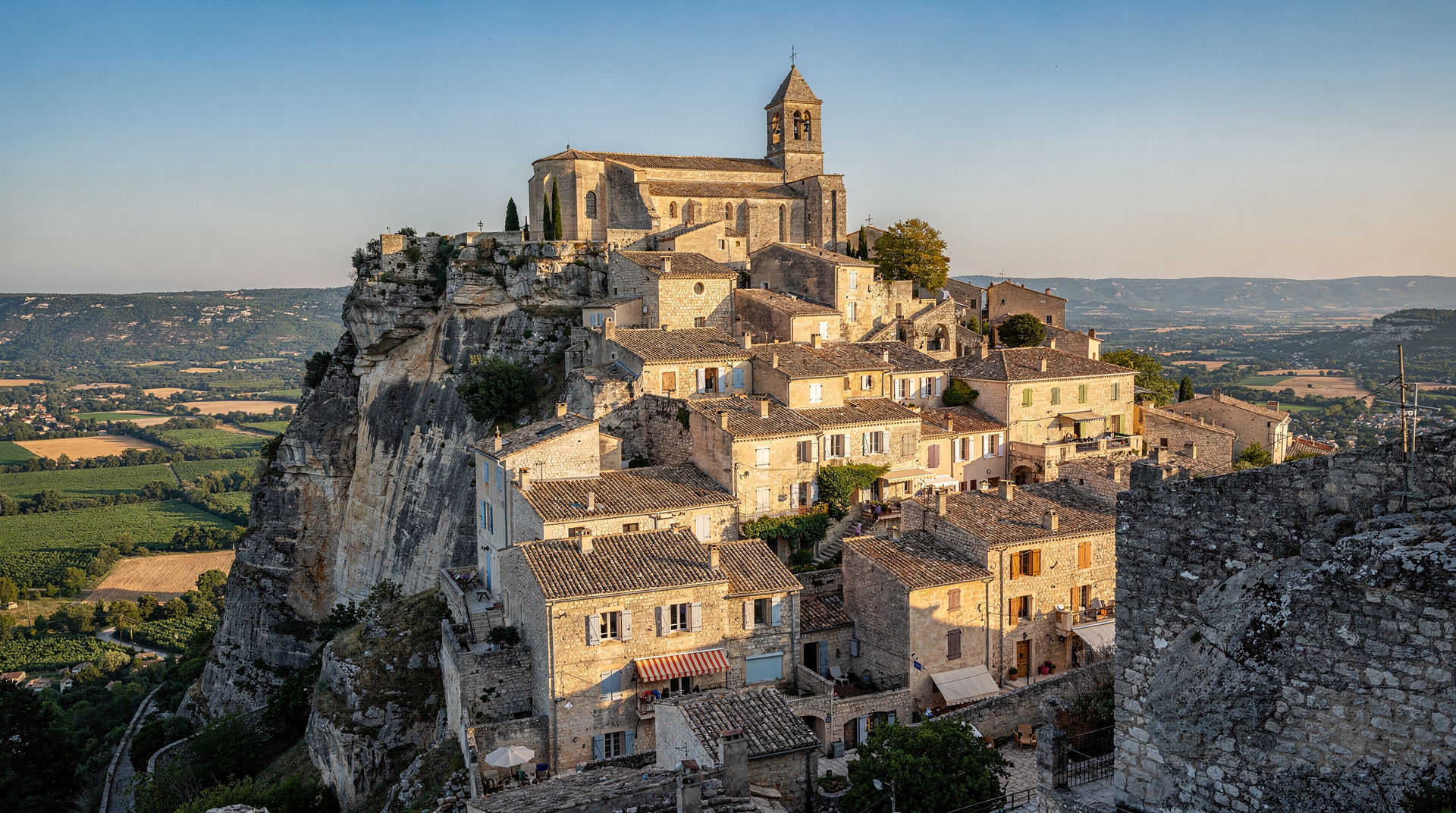
Gordes: The view from the D15 approach road (from Cavaillon) — the village rising on a limestone rock face — is the archetypal Provence image. Walk the lane network at the top of the village before the village crowds. The château (7 EUR) has a contemporary art collection and the best terrace view in the village.
Abbaye de Sénanque (4 km north of Gordes, D177): In July, the lavender rows surrounding the 12th-century Cistercian abbey are the most photographed image in Provence. The scene — purple lavender in the valley, the golden stone of the medieval abbey, the blue sky above — is the postcard made real. Guided visits start from 10:00 (book in advance at senanque.fr, approximately 7.50 EUR); the lavender and exterior can be photographed from the roadside without entry. In peak season (first two weeks of July), arrive before 9:00 or expect crowds at the viewpoint.
Mid-morning to afternoon: Roussillon and ochre (11:30–17:00)
Drive from Gordes to Roussillon (20 minutes east, D2). The ochre village is most striking in midday sun — the orange and red mineral colours are intensified by direct light, unlike photography situations elsewhere. Noon in Roussillon is actually good timing.
Sentier des Ocres (8 EUR, 30–45 minutes): the walking circuit through the ochre quarry landscape. The mineral formations — vertical striped cliffs in deep red, orange, and yellow — are extraordinary and entirely natural. No two other places in Provence look like this.
Lunch in Roussillon: terrace restaurants in the village square with views over the ochre valley. 20–30 EUR per person.
After Roussillon: The area between Roussillon and Apt (D4 corridor) has several lavender fields at lower altitude than Valensole — less dramatic than the plateau but beautiful in the Luberon context, with the stone villages and ochre rock faces adding visual complexity to the fields.
Afternoon: drive south toward overnight stop (17:00–19:00)
Drive from Roussillon south toward the Aix-en-Provence axis (D4/A51) or back toward Marseille. Alternatively, overnight in the Luberon — Bonnieux or Lourmarin (30–40 minutes south of Roussillon) for a final Luberon evening in the perched villages.
For a slower Luberon evening, the Luberon destination page, the Lourmarin page and the Luberon villages day trip guide help you choose which perched village suits you.
Overnight option: Bonnieux or Lourmarin. The villages have small hotels and chambres d’hôtes at 80–180 EUR per room. Book 4–6 weeks ahead in July.
Day 3: Sault plateau and return
Sault plateau — for the serious lavender seeker (mid-July peak)
Note on timing: The Sault plateau (at approximately 750 m altitude, 40 km northeast of Apt) blooms 2–3 weeks later than Valensole. It is the right destination if you are visiting after July 15, when Valensole is partially harvested. If visiting in early July, Sault may still be pre-peak; Valensole and Sénanque will be better.
Drive from Bonnieux to Sault (45 minutes via D943): a plateau village with lavender as far as visible in every direction and a much less touristy atmosphere than the Valensole or Luberon plateau areas. The Sault market on Wednesday mornings is one of the finest rural Provence markets in the region.
From Sault: the views north toward Mont Ventoux (1,909 m, snow-capped even in June) across lavender fields are outstanding. The D164 north from Sault toward Aurel and Monieux follows a ridge above the Nesque gorge with continuous lavender views.
Return to Marseille or Aix (lunch–18:00)
Route from Sault: D943 south → Apt → D900/N100 → A51 south → Aix or Marseille. Journey time from Sault: approximately 2 hours to Marseille.
Alternatively, route through the Luberon for a final village stop (Bonnieux or Lourmarin if you did not overnight there), then south to Aix/Marseille.
Return rental car and depart. If you have extra days, the Verdon Gorge near Moustiers and the Marseille and Provence 5-day itinerary are natural follow-ons, and the Marseille in summer guide helps you plan the coastal part of a July trip.
What to book in advance
- Car rental — essential for all three days. Book from Marseille or Aix. Any standard compact car works; 4WD not required.
- Moustiers accommodation — book 3–4 weeks ahead in July.
- Luberon overnight (Night 2, optional) — book 4–6 weeks ahead in July.
- Sénanque Abbey guided visit — book at senanque.fr. The lavender exterior is visible without booking, but the interior visit requires a timed slot.
- Valensole bloom timing — check lavender farm association updates at lavande-aop.fr (in French) or search “Valensole lavande 2026 floraison” in the weeks before your trip. Locals and tourism offices update bloom status in real time.
Variations
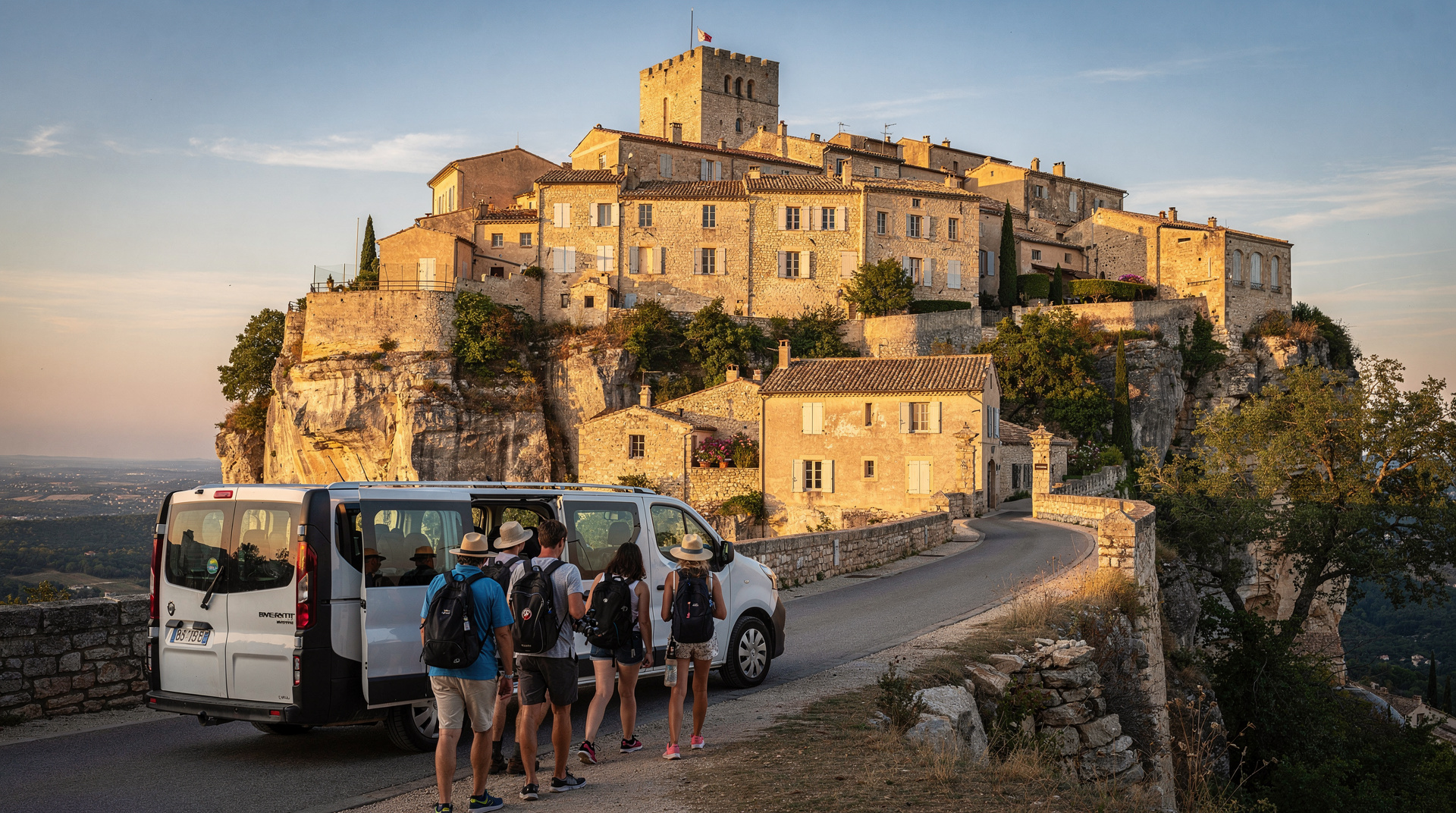
Without a car: Guided day tours from Marseille or Aix to the Valensole plateau exist (see tour listings) and run June–July only. They cover Valensole and sometimes Gordes and Roussillon in a single full day. You sacrifice flexibility and multiple stops but see the essential landscape without the driving logistics. This is the only viable car-free option — there is no public transport to any of these lavender destinations.
Photography focus: Add a dawn session on the Valensole plateau (pre-6:30 AM, D6 corridor east of Valensole village) on Day 1. Late afternoon/sunset at Sénanque (after 18:00 when buses have left) on Day 2. Sault ridge at dawn on Day 3. The light windows make the difference between good and exceptional lavender photographs.
Combining with Marseille: The full lavender route works as a 3-day extension of any Marseille-based itinerary. Add these three days after the Marseille three-day itinerary for a 6-day trip covering coast, city, and inland Provence.
Understanding Provence lavender: what you need to know before you go
The different lavender varieties
Not all “lavender” in Provence is the same plant. The two main commercial species produce very different landscapes:
Lavandula angustifolia (true lavender): The fine lavender grown above approximately 400 m altitude. Produces narrow, elegant flower heads in a deep purple-blue colour. Slower growing and lower yield than lavandin. Grown at Sault (750 m altitude) and the higher Luberon areas. The essential oil from true lavender commands a premium price and has the finest scent.
Lavandin (Lavandula x intermedia): A hybrid that dominates the Valensole plateau. Grows faster, yields more oil, and produces the massive landscape-scale rows that make Valensole famous. The colour is slightly more purple-grey than true lavender. Lavandin is what you are photographing on the Valensole plateau — commercially dominant, visually dramatic, and what most visitors associate with Provence lavender.
For visitors: The distinction matters because it explains why Valensole and Sault look and feel different. Valensole is the dramatic scale of lavandin in rows across an agricultural plateau. Sault is the finer colour of true lavender at altitude with mountain views. Both are genuinely beautiful; they are not competing.
How lavender is harvested
The mechanical harvest on the Valensole plateau happens fast — a field goes from full bloom to stubble in a morning when the harvesting machine passes. In the first two weeks of July, you may see harvested fields beside blooming ones in the same direction of view. This is normal and not a failure of planning on your part.
Hand harvesting still occurs at smaller true lavender farms, particularly in the Sault area. If you see a farm doing hand harvesting (usually early morning), it is worth stopping to watch — it is genuinely skilled and unusual to see in the modern agricultural landscape.
The smell after harvest is extraordinary — the cut lavender releases concentrated essential oil and the air on the plateau smells intensely of lavender for days after each field is cut. If you arrive after the main Valensole harvest, this compensation is real.
The lavender cooperative system
Much of the commercial lavender on the Valensole plateau is grown by farmers who sell to cooperatives rather than operating their own distilleries. The Simiane-la-Rotonde cooperative (Alpes de Haute-Provence, northeast of the plateau) is one of the largest — it processes the majority of the region’s lavandin harvest and operates a visitor centre with explanations of the distillation process (free entry, no booking required). Worth 45 minutes if lavender production interests you beyond the visual.
Individual farm distilleries — “distilleries artisanales” — operate on a smaller scale and welcome visitors during harvest season. Look for signs on the D6 corridor east of Valensole village. The smell inside a functioning distillation shed is one of the most intense olfactory experiences in Provence.
What the fields look like by date
The following is an approximate guide for 2026 — bloom dates vary by 1–2 weeks depending on the specific year’s spring weather and temperatures:
| Date | Valensole | Sault |
|---|---|---|
| Late May | Green shoots, no bloom | Too early |
| June 1–15 | Early purple, first rows opening | Green |
| June 15–30 | 30–60% in bloom, beautiful | Early opening |
| July 1–15 | PEAK bloom | 30–60% in bloom |
| July 15–25 | Harvest beginning, mixed | PEAK bloom |
| August 1–15 | Mostly harvested, some fields remain | Post-peak |
Check current status at lavande-aop.fr or the Valensole tourism office website before your trip. The 2026 bloom timing will be updated in real time from early June.
The crowd reality in July
Peak lavender season is peak tourism season throughout Provence. In the first two weeks of July:
- Gordes has coachloads of tourists from 9:00 to 17:00. The village is genuinely difficult to appreciate between those hours. Arrive before 8:30 or after 18:00.
- Sénanque Abbey has a queue for parking from 9:30 onwards. The road to the abbey is narrow; traffic management systems are sometimes in place in July. Again: arrive before 9:00 or after 18:30 when the worst of the tourist volume passes.
- The Valensole plateau itself is less crowded than the villages — it is a wide agricultural landscape and the fields are spread across many kilometres. Even in peak July, the plateau has room to breathe. Most visitors stop at the first photogenic spot they encounter; moving 5–10 km further along the D6 dramatically reduces the number of other photographers in frame.
The 3 AM alarm for Sénanque sunrise photography is not exaggerated advice — it is what serious photographers do in July. For everyone else, an early start (on-site before 8:00) is sufficient to enjoy the landscape without the crowd overlay.
Frequently asked questions about Provence lavender route
What if I can only travel in late July or August — is the trip still worth it? Valensole will be mostly harvested by late July, but Sault (which peaks 2–3 weeks later) may still be in bloom into early August. If your dates are fixed outside the ideal window, prioritize Sault over Valensole and check current bloom status at lavande-aop.fr before committing.
Do I need a 4WD or can any rental car handle these roads? A standard compact car is sufficient for all three days — the plateau roads, Luberon village approaches, and D-roads around Gordes and Roussillon are all paved and suitable for ordinary rental cars.
Top experiences
Bookable activities with verified prices and instant confirmation on GetYourGuide.