Ferry to the Frioul Islands and Château d'If
Marseille: Frioul Islands boat tour with swim stop
Duration: 2 hours
How do I get to the Frioul Islands and Château d'If from Marseille?
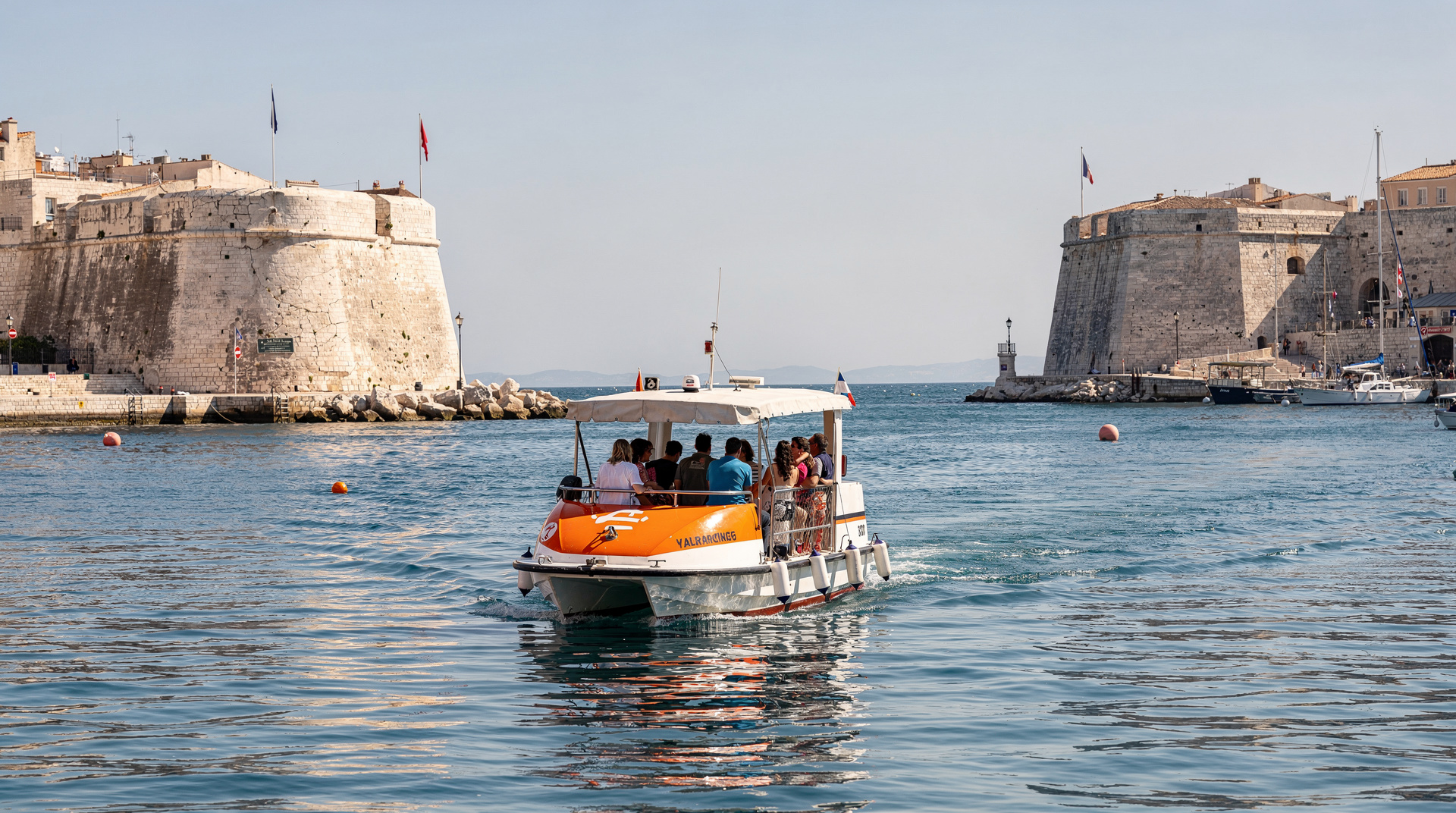
Ferries depart from Quai des Belges at the Vieux-Port, operated by lebateau-frioul-if. Return ferry to Frioul or Château d'If is 11.10 EUR; both islands combined is 16.70 EUR. Journey time: 20 minutes to Château d'If, 30 minutes to Frioul.
The archipelago off Marseille’s front door
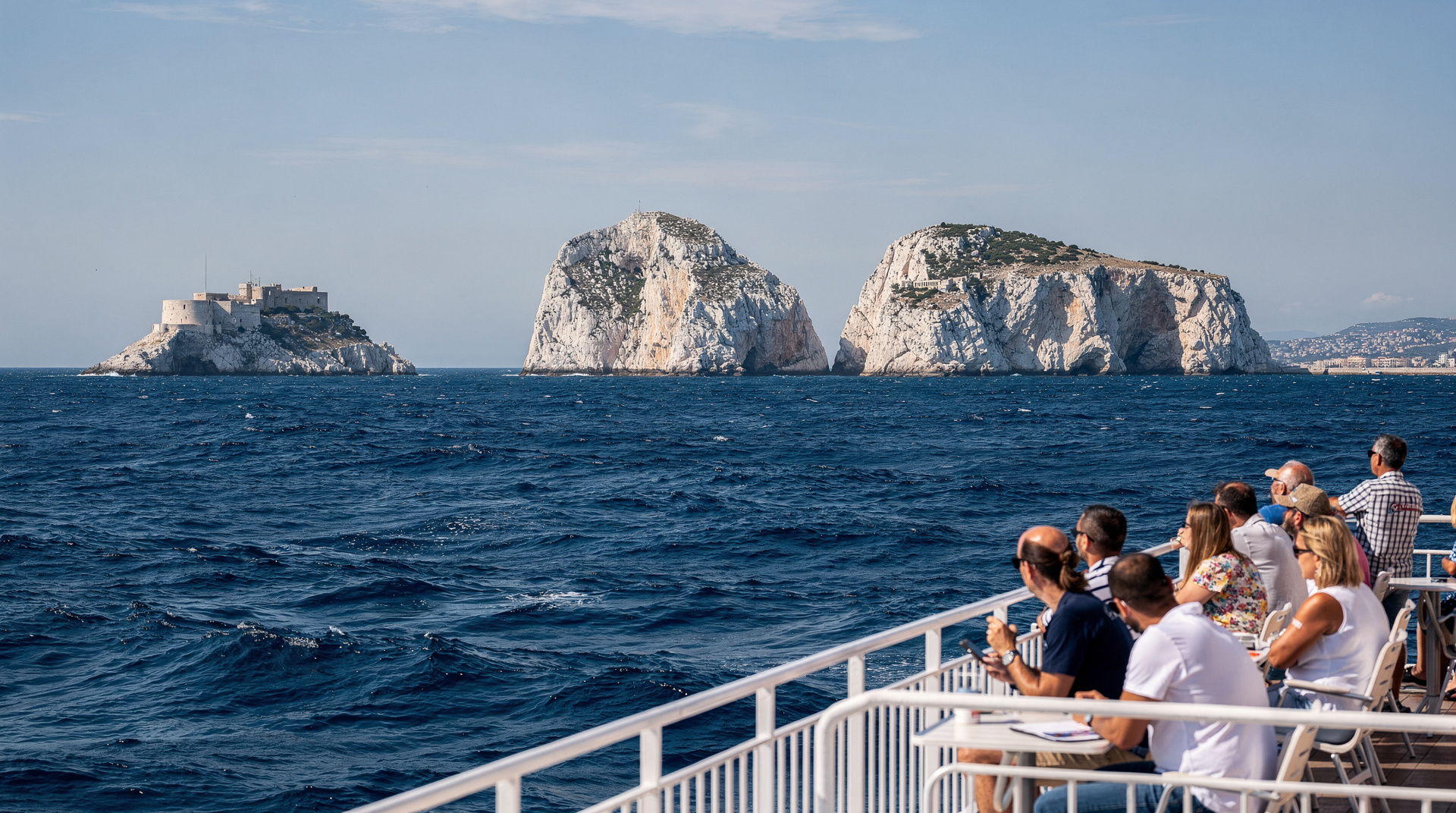
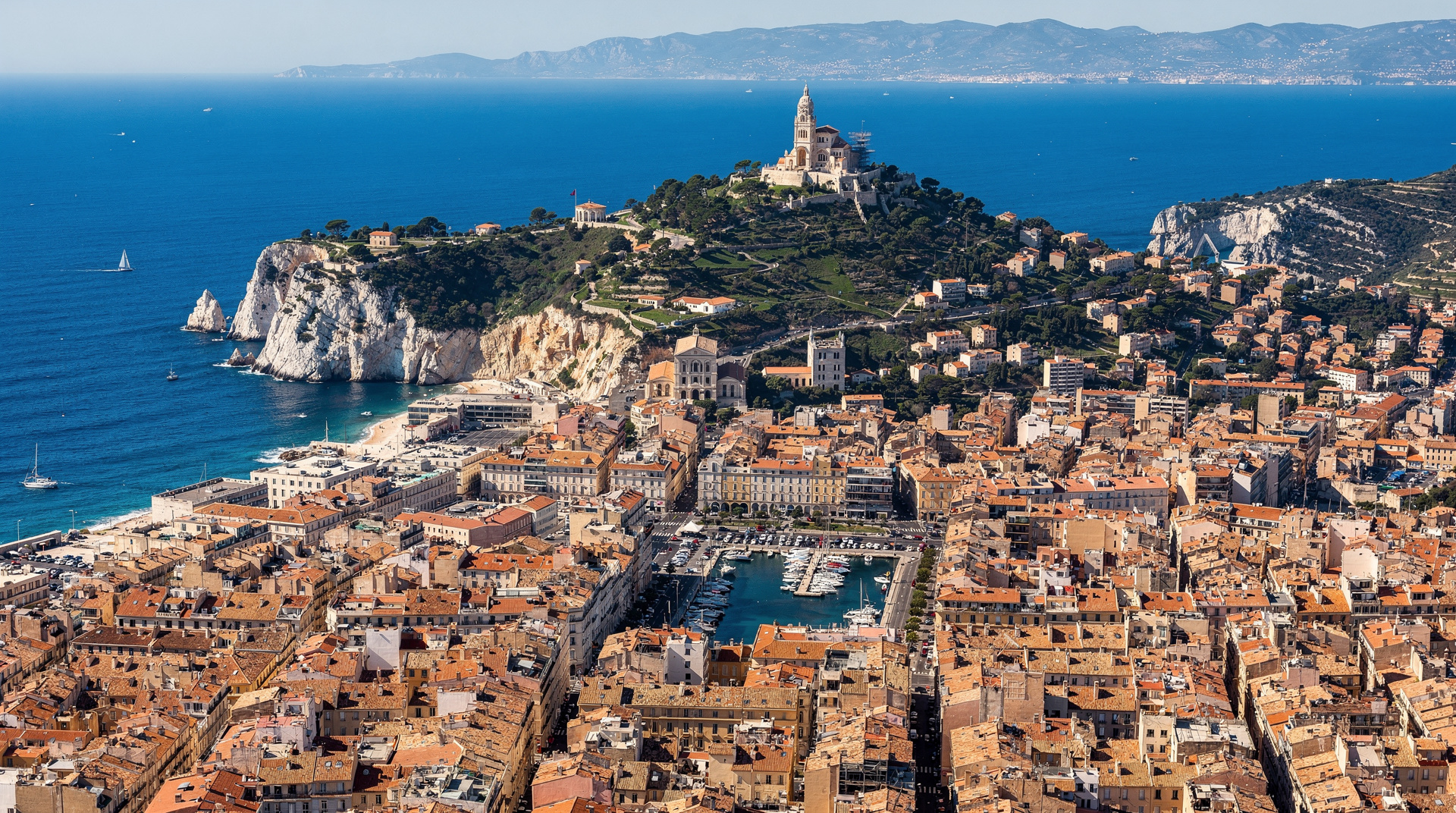
Four kilometres off the Vieux-Port, the Frioul archipelago and the isolated island of If sit in the Bay of Marseille like an afterthought to the city — close enough to see from the harbour on any clear day, far enough to feel genuinely separate from the urban mass behind you. Together, they are the most popular half-day excursion from the city centre, accessible without a car, a guide, or any advance planning beyond buying a ferry ticket.
The trip serves two entirely different interests. Château d’If — the 16th-century island fortress made legendary by Alexandre Dumas as the prison in The Count of Monte Cristo — is a piece of history you can walk through, with views over the bay that justify the journey on their own terms. The Frioul Islands (Pomègues and Ratonneau, joined by a causeway since 1820) offer something more elemental: swimming in clear shallow coves, walking deserted coastal paths, and a few hours of quiet that the city cannot provide.
Most visitors do one or both in the same day trip, taking the morning ferry out, exploring by mid-afternoon, and returning on an early-evening boat.
If you are still deciding how this fits into your stay, the Frioul Islands destination page and the Château d’If destination page give the context for each island, while our Château d’If by boat guide and Château d’If guide go deeper on the fortress itself. For the wider picture of the city, start with the Marseille destination page.
At a glance
| Where | Quai des Belges, Vieux-Port (main operator lebateau-frioul-if) |
| Cost | Around EUR 11.10 return to one destination; EUR 16.70 combined Frioul + Château d’If |
| Time needed | 3–4 hours for Château d’If only; 4–6 hours for Frioul; a full day for both |
| Getting there | One métro stop (M1) to Vieux-Port, then a short walk to Quai des Belges |
| Best time | Early morning departure (before 10:00) for lighter crowds and cooler walking |
The ferry operator and where to board
The ferry service is operated by lebateau-frioul-if (the commercial name of La Métropole le Bateau), with departures from Quai des Belges at the eastern end of the Vieux-Port — the same quai as the daily fish market. The ferry landing is clearly signposted, and there is a ticket kiosk and waiting area at the water’s edge.
A second operator, Icard Maritime, provides additional departures during peak season (roughly Easter through November), supplementing lebateau-frioul-if with additional capacity on summer days when demand is highest.
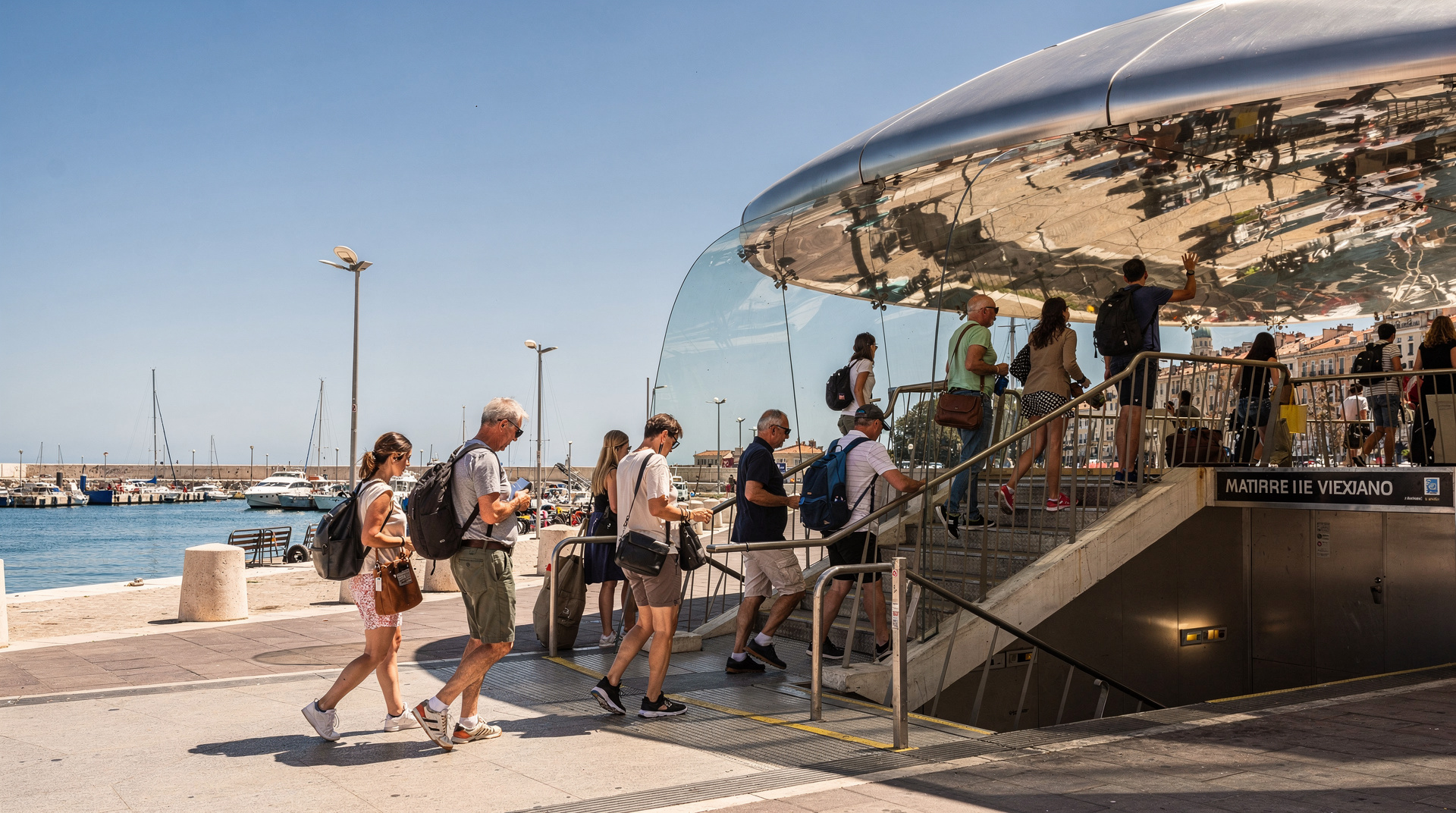
Reaching the Quai des Belges: exit the Vieux-Port métro station (M1) and walk 200 metres toward the waterfront. The ferry landing is at the far eastern end of the quai, past the Ombrière canopy. It is unmistakable — there will be queues in summer.
Since you are already at the harbour, it is worth knowing the surroundings: our Vieux-Port area guide and the Vieux-Port destination page explain what is within easy reach of the quai, and the Marseille métro guide covers how to get there from elsewhere in the city.
2026 fares
| Ticket | Adult fare |
|---|---|
| Round trip to Frioul Islands only | 11.10 EUR |
| Round trip to Château d’If only | 11.10 EUR |
| Combined round trip (Frioul + Château d’If) | 16.70 EUR |
| Château d’If entry (on the island) | 7.00 EUR |
Marseille City Pass holders: One ferry trip (to either Frioul or Château d’If) is included in the pass. The combined trip to both requires paying the difference.
Children’s fares and reductions for EU citizens under 26 are available at the kiosk and online.
Buy tickets in advance: In July and August, the queue for same-day ferry tickets can be very long — especially on weekends when Marseille residents combine with tourists at the landing. Book online at lebateau-frioul-if.fr up to 24 hours in advance (note: advance online booking is available for Frioul; the Château d’If leg may require purchase at the kiosk — check the website for current booking policy). Arriving 20–30 minutes before departure, even with a ticket, is advised in summer.
Ferry schedule overview
Ferries run year-round with frequency varying by season.
Year-round: Service begins with a 6:30 departure. Returns from the Frioul archipelago run until approximately 21:00 in winter months.
From April: Last return extended to approximately 22:00.
In summer (June–August), Fridays, Saturdays, and days before public holidays: Last returns as late as 23:00.
During peak summer: Departures are more frequent — roughly every 30–60 minutes rather than the sparser winter schedule. In the busy July–August period, expect departures approximately every hour or more frequently from the Vieux-Port.
Always check the current timetable at lebateau-frioul-if.fr before your visit, as schedules adjust seasonally and can change for weather or maintenance.
What to see at Château d’If
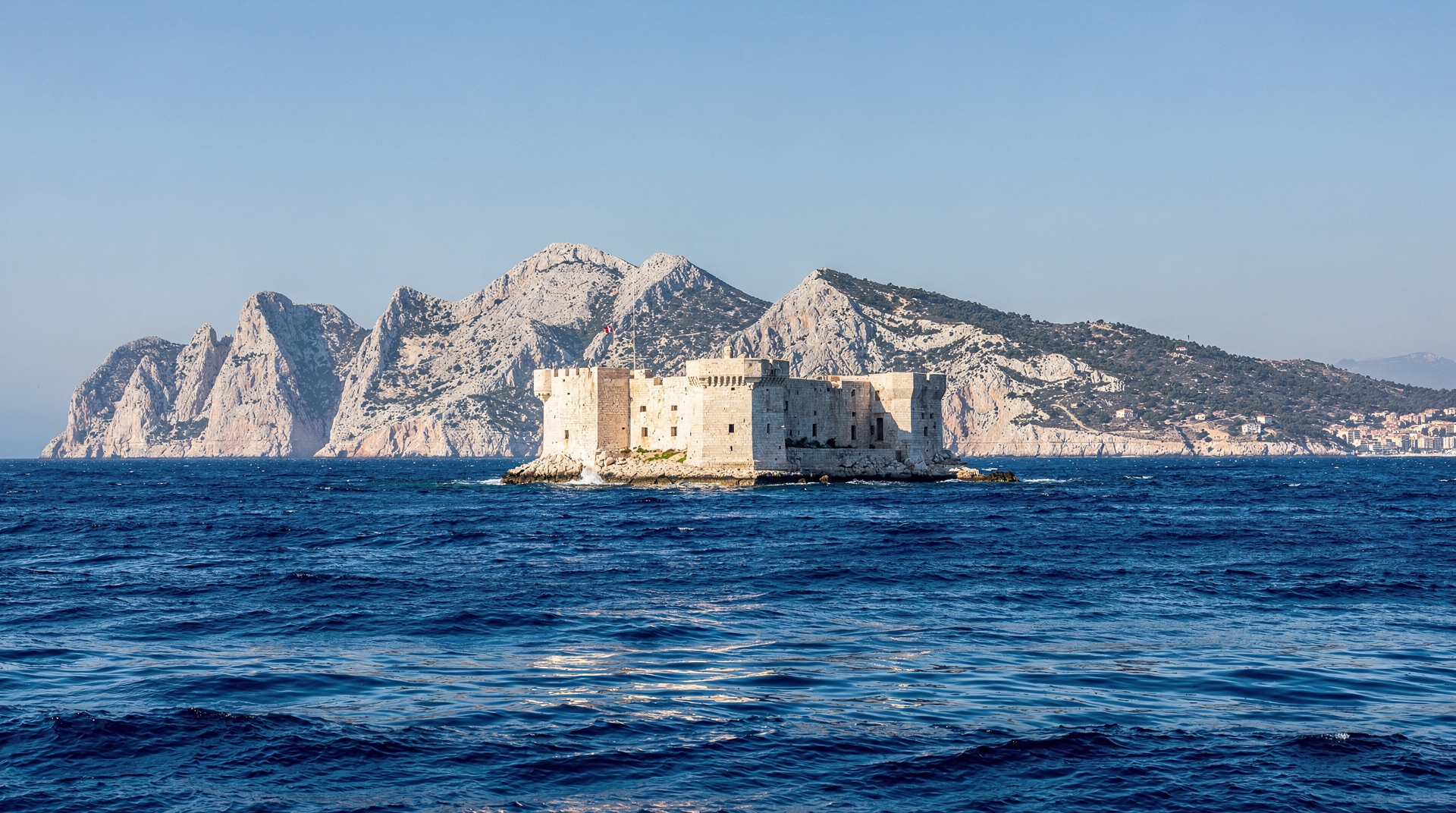
The Château d’If sits on the smallest of the three islands, Île d’If, a 3-hectare limestone outcrop rising steeply from the water. The fortress was built between 1524 and 1531 on the orders of François I, intended as a coastal defence. Within decades it was repurposed as a prison — a function it served until 1890.
Its real-world prisoners were largely political and religious — most famously the Man in the Iron Mask (one of several claimed sites), various Protestant prisoners following the revocation of the Edict of Nantes, and in the 19th century, over 3,500 insurgents from the 1848 uprising. Alexandre Dumas’s fictional Edmond Dantès made the prison globally famous, and you can find the cells marked as Dantès’s and the Abbé Faria’s, complete with the hole between them through which Dumas had Faria tunnel.
Entry: 7 EUR per adult at the island. The Château is free for EU citizens under 26 and on national heritage days (Journées du Patrimoine, typically mid-September).
What you can see: The courtyard, the ground-floor and upper-floor cells (some with original iron rings), the chapel (now exhibition space), and the roof terrace with 360-degree views of the bay, the Frioul islands, the Marseille coastline, and on clear days the limestone ridges of the Calanques to the east.
Time needed: 1 to 1.5 hours to explore properly, including the terrace. There is a small café on the island (basic snacks and drinks).
Important: The island is small. There are steep steps throughout, and no accessibility provisions for wheelchairs. There is no shade in the courtyard or on the terrace — bring water and sun protection in summer.
What to do on the Frioul Islands
The Frioul archipelago consists of two main islands — Pomègues in the south and Ratonneau in the north — connected by a causeway built in 1820 and home to the small marina settlement of Port-Frioul. The combined landmass is about 200 hectares, covered in limestone scrub, maritime pine, and rosemary.
Port-Frioul: The ferry from Marseille docks here. There are several restaurants and cafés around the port — mostly basic crêperies and fish plates — and a small shop for provisions. Do not expect sophisticated dining; stock up in Marseille if you are particular about food.
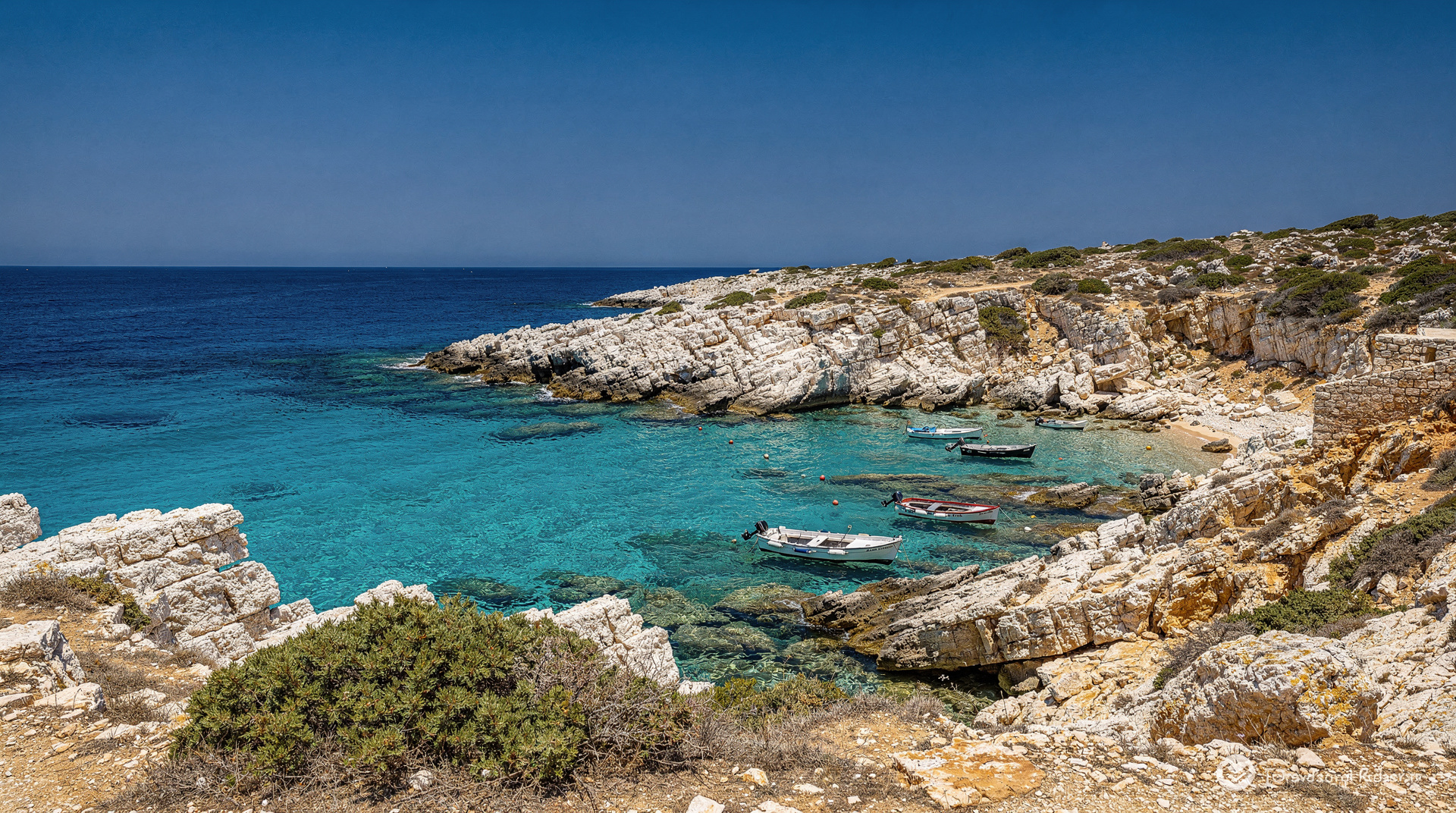
Swimming: The islands have several sandy and pebble coves with clear water. The best-known beaches are Plage de Morgiret (Ratonneau) and Plage Saint-Estève (Pomègues). Water visibility is high — you can see the bottom in the shallow zones. The coves are unorganised (no sunbeds, no lifeguards in most areas), so bring everything you need. Snorkelling is worthwhile with a mask and snorkel you bring yourself.
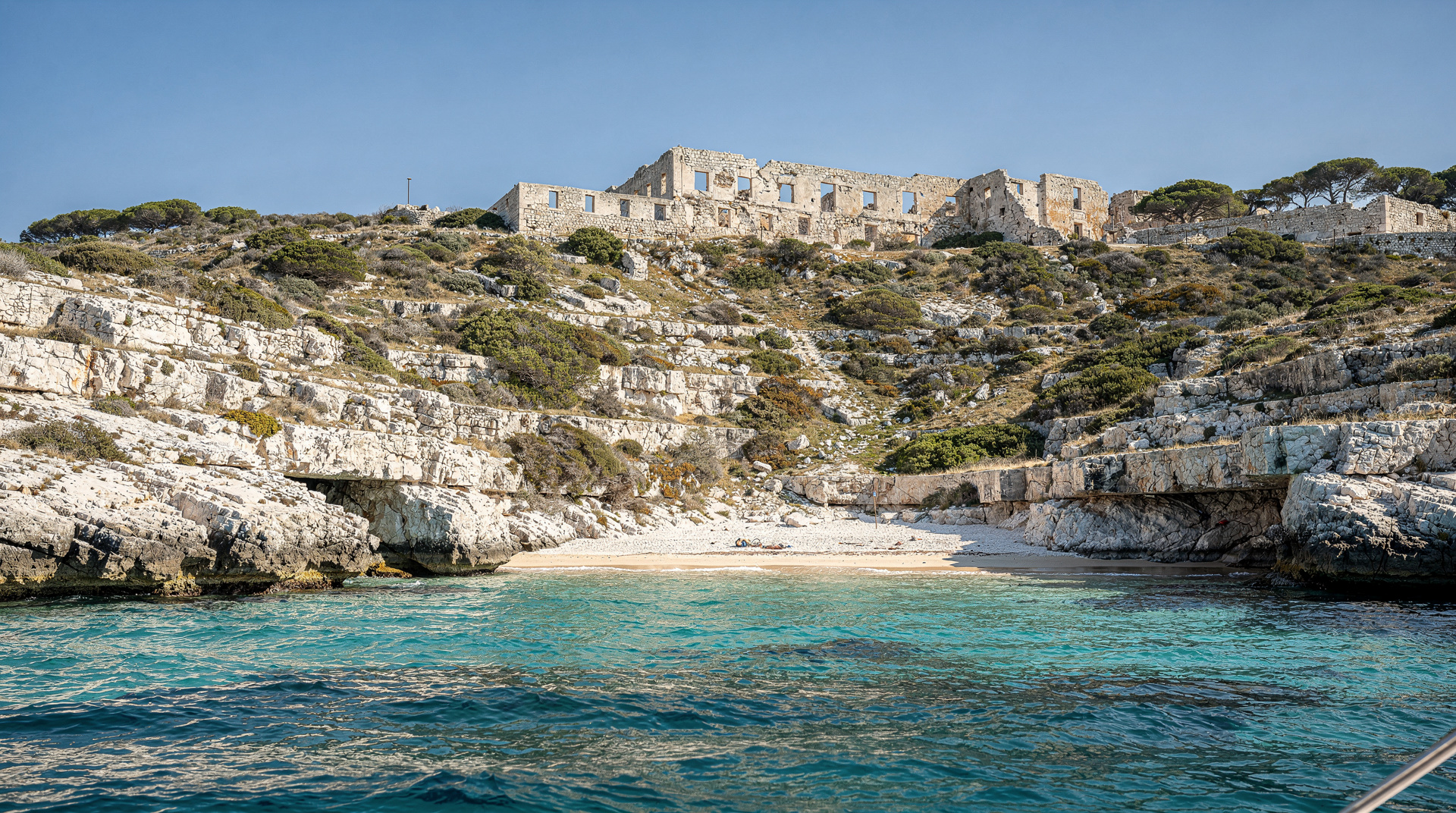
Walking: The islands have well-marked footpaths covering most of the coastline. A complete circuit of Ratonneau takes about 2 hours at a moderate pace. The southern tip of Pomègues features the ruins of the 19th-century Fort de Pomègues (Fort du Cap Cavau) — old military structures abandoned on a cliff edge, with good views. Pack footwear with grip; the limestone paths can be slippery when dry.
Birdwatching: The Frioul is a recognised ornithological site with sea-cliff nesting birds. Bring binoculars if birds are a priority.
What is not there: No shops beyond the port area, no ATMs, no pharmacy. No car or bicycle rental. The islands are quiet by design — that is their appeal.
Planning the combined visit
Most visitors who want both Château d’If and Frioul tackle them in a single day. The standard approach:
- Take an early morning ferry (9:00–10:00 departure) to Château d’If first — crowds are lighter before noon.
- Explore the Château for 1 to 1.5 hours.
- Return ferry to the Frioul (the combined ferry service calls at both islands — confirm the specific routing with the operator for your departure).
- Lunch at Port-Frioul or (better) from provisions you brought.
- Afternoon swimming, walking the coastal paths, or simply sitting.
- Return ferry to the Vieux-Port in late afternoon (16:00–17:00 gives you time to shower and have dinner in Marseille).
Watch the last ferry: This is the critical planning point. Missing the last return ferry from the islands is not a minor inconvenience — there is no other way off except a private boat. In summer, last returns can be as late as 22:00–23:00, which is comfortable. In winter, the last return may be earlier. Check your specific departure day’s schedule before leaving Marseille.
Summer queue reality: In July and August, the Quai des Belges ferry landing at peak times (10:00–13:00) can have queues of 30 minutes or more. Weekend mornings are worst. Strategies: buy tickets online in advance, arrive early, or take a later departure and plan your Château d’If visit in the early afternoon instead.
If the day on the water is only one part of a longer stay, the one-day Marseille itinerary and the two-day Marseille itinerary show where an island excursion can sit, and our guide to how many days to spend in Marseille helps you decide whether it earns a place at all. Travelling with children? The Marseille with kids guide puts the crossing alongside other family-friendly options.
How long to allow
- Château d’If only: Half day. Ferry out, 1.5 hours on the island, ferry back. Allow 3–4 hours total.
- Frioul Islands only: Half to full day. Depending on how much you walk and swim, 4–6 hours is a comfortable Frioul visit.
- Both: A full day. Leave Marseille before 10:00 and plan your return ferry for 16:00–18:00.
What to bring
- Water (no reliable water sources on Île d’If; limited at Port-Frioul)
- Sunscreen and a hat — both islands are exposed, with limited shade
- Snorkelling gear if desired (not available for hire on the islands)
- Sturdy footwear for the Château steps and island paths
- Provisions if you want more than basic port-side food
Getting there from your hotel
The ferry terminal at Quai des Belges is the anchor point. From Gare Saint-Charles by métro (M1), it is one stop. From most central hotels, it is a short walk or a direct métro connection. See our getting around Marseille guide for the full transport picture.
For guided boat alternatives — sailing cruises that stop at Château d’If as part of a wider Calanques excursion — see our Calanques boat tour guide. These trips offer a different experience: less time at the Château but more time on open water and often access to swimming spots not reachable by the public ferry.
If you would rather swim than ride a scheduled ferry, our guides to boat tours with swimming, snorkelling near Marseille and private boat charter in Marseille cover the alternatives. For the mainland coast, the Calanques national park destination page, the Calanques boat versus hike comparison and the best time to visit Marseille are the natural next reads. A personal account of the crossing is in our blog post the ferry to Frioul.
Ferry operators compared
| lebateau-frioul-if | Icard Maritime | |
|---|---|---|
| Season | Year-round | Roughly Easter–November |
| Role | Main operator, most departures | Extra capacity on peak summer days |
| Booking | Online in advance recommended for summer | Check at the kiosk or operator site |
Planning for families
If you’re bringing children, the ferry crossing itself tends to be the highlight rather than a logistical hurdle — a real open-deck boat with sea spray and a shrinking skyline. See our dedicated family day out on the Frioul guide for age-by-age advice, picnic strategy, and a full-day schedule that works with children. For the swimming coves and island walking routes in more depth once you’ve arrived, see the Frioul Islands boat guide.
Frequently asked questions about Ferry to the Frioul Islands and Château d’If
Do I need to book the ferry to Château d’If and the Frioul in advance? Not strictly outside peak season, but in July and August booking online at lebateau-frioul-if.fr up to 24 hours ahead avoids the worst of the kiosk queues, which can run 30 minutes or more on summer weekends.
Can I visit Château d’If and the Frioul Islands on foot from each other? No — they are separate islands with no walking connection; you move between them only by ferry, and not every departure calls at both, so confirm the routing for your chosen crossing.
Top experiences
Bookable activities with verified prices and instant confirmation on GetYourGuide.