Provence markets we love — our market crawl through Noailles, Aix, and Lourmarin
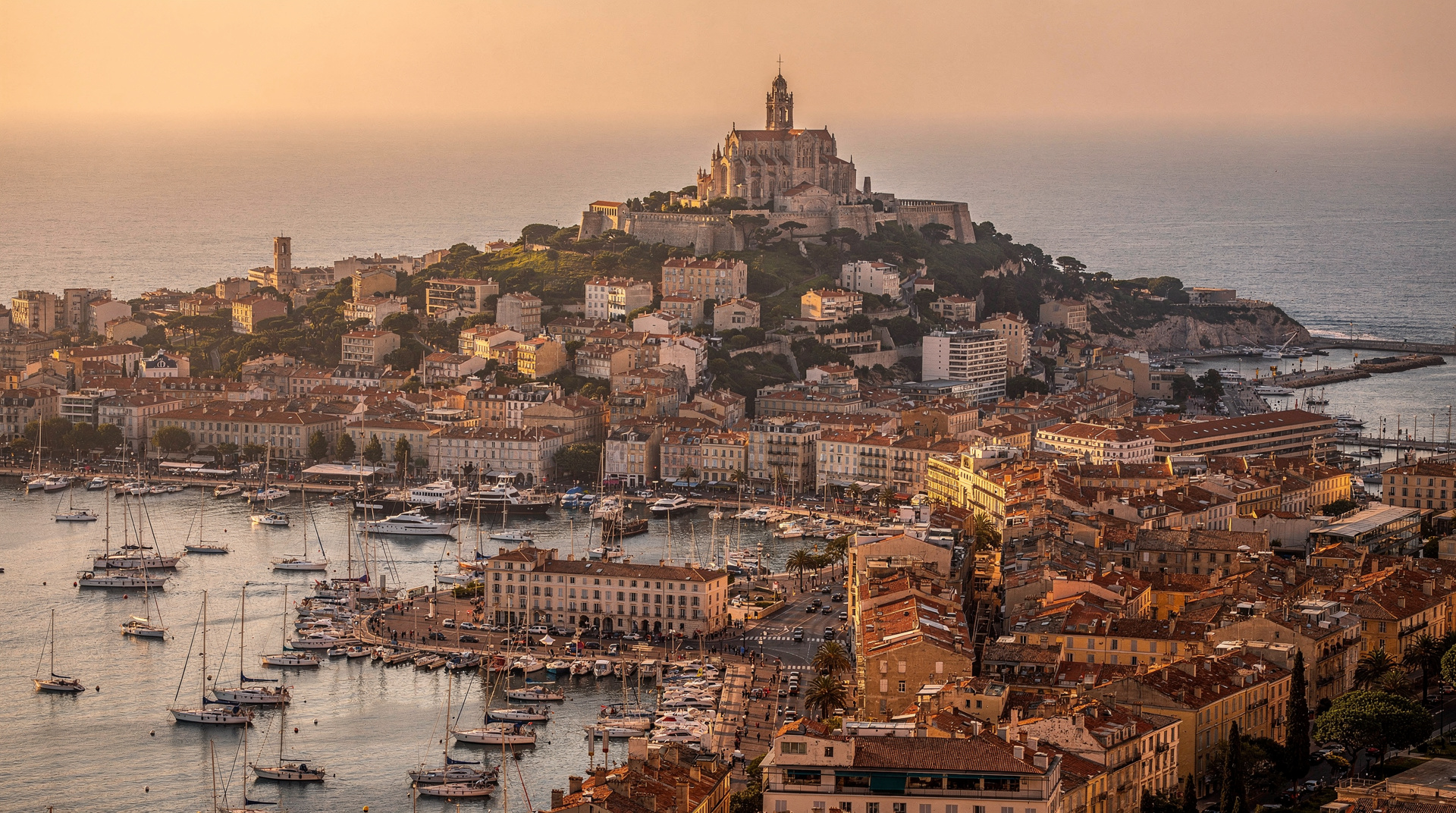
Marseille: Noailles district and market guided walk
The market as the real guide to Provence
You can tell more about a place from its market than from most museums. The market is where the actual production of the region is offered, where the social life of the community is expressed, where the gap between tourist presentation and resident reality is most visible. Provence has exceptional markets — some genuinely extraordinary, some performed for the tourist gaze, and a few that operate in the interesting space between the two.
We have done this particular crawl — Noailles in Marseille, the old town market in Aix, the Lourmarin Saturday market — in September, which is the correct month. The summer crowds have retreated, the autumn produce has arrived (tomatoes at their peak, figs, the first walnuts), and the September light makes everything look better than it is.
| At a glance | |
|---|---|
| Where | Noailles (Marseille), Place Richelme (Aix-en-Provence), Lourmarin village centre |
| Cost | Free to browse; a market picnic runs around EUR 15–25 per person for cheese, fruit, and bread |
| Time needed | Half a day per market; a full day for the two-market combination |
| Getting there | Noailles is walkable from the Vieux-Port; Aix and Lourmarin need a car or train from Marseille |
| Best time | September mornings, before 11:00, for produce and light |
Noailles, Marseille: the market that doesn’t care if you’re there
The Noailles market — centred on the Place du Marché des Capucins and spreading through the surrounding streets — is the Marseille market you find when you stop looking for the Marseille market. It is not in the guidebook itinerary in the way that the Vieux-Port fish market is. It is rougher, louder, and more satisfying.
The market primarily serves the North African and Maghrebi communities of the surrounding Noailles quarter, which means the produce is different from the lavender and goat’s cheese version of Provence. There are enormous quantities of cumin, ras el hanout, preserved lemons, harissa in jars and pots, chickpeas in multiple states of preparation, bunches of coriander and flat-leaf parsley at prices that make even the most budget-conscious cook feel rich. There are dates stacked in wooden crates with Arabic lettering on the side and several varieties of fig from local production that are better than anything labelled and sold in a covered market further north.
The fish section, toward the back, is a separate universe. The catch comes directly from the Marseille boats and the prices are what fish should cost rather than what the Vieux-Port tourist stalls charge. We buy here whenever we are cooking: sar (white bream), rouget (red mullet), sometimes a slice of sword when the catch has been good.
Pickpocket awareness applies in this market — the Noailles area is one of the highlighted hotspots in any safety guide to Marseille, and the crowded market conditions are the precise context where bag-awareness matters. Front pocket for valuables, bag across the body. This is not a reason to avoid the market. It is a reason to engage with it attentively.
Get there before 10:00. By 11:30 the best produce is gone.
What we actually cook with a Noailles haul
A morning at Noailles usually becomes that evening’s dinner. The rouget goes straight to a pan with olive oil and thyme; the preserved lemons go into a tagine base with the chickpeas; the fresh coriander and flat-leaf parsley get chopped over almost everything else we buy that week. This is the market’s real value beyond atmosphere — it is genuinely cheaper and better than supermarket produce for anyone self-catering in Marseille, which is one more reason the family-friendly neighbourhoods near Noailles are worth considering if you want a kitchen within walking distance.
Aix-en-Provence: the market that knows it is beautiful
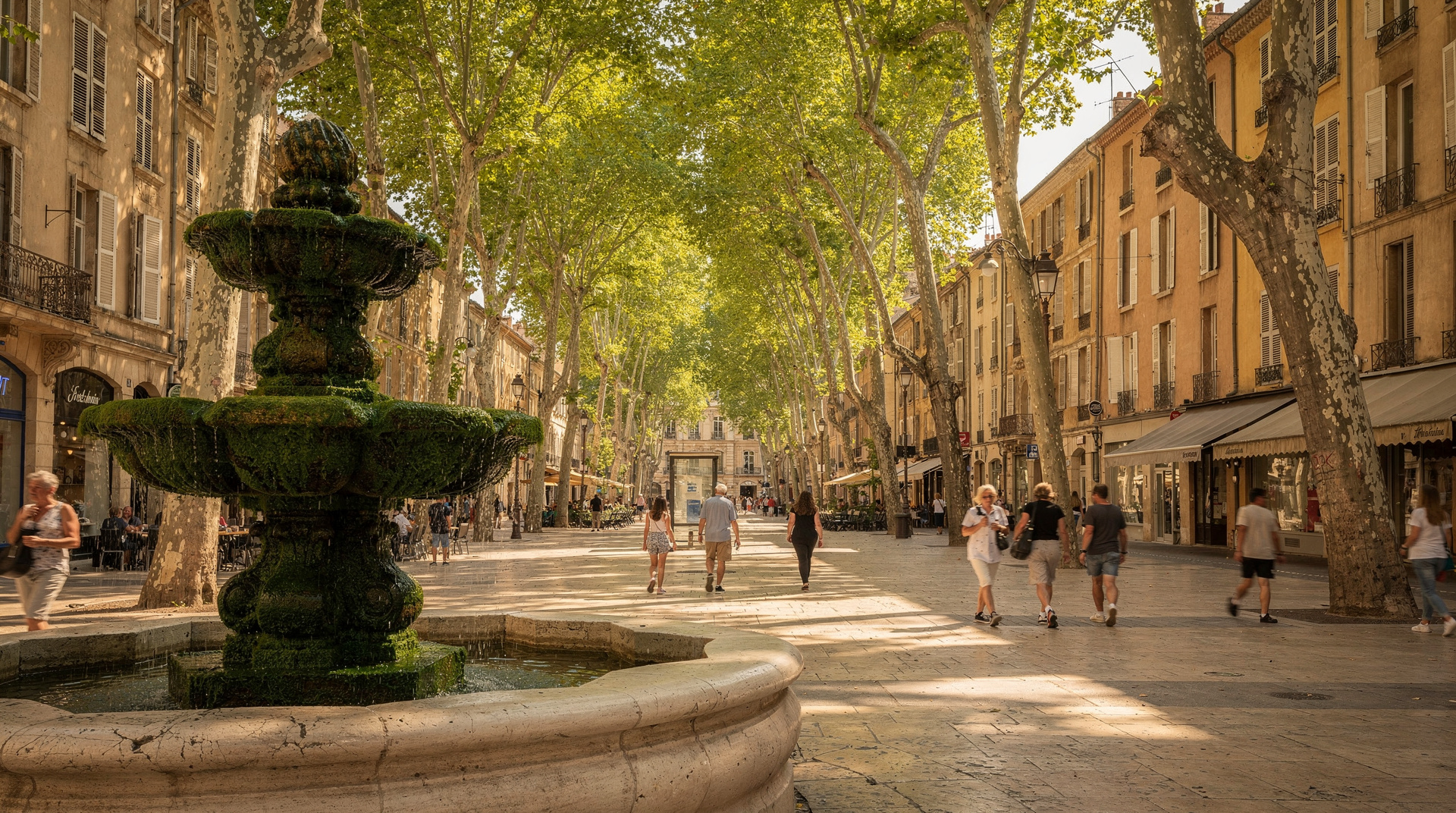
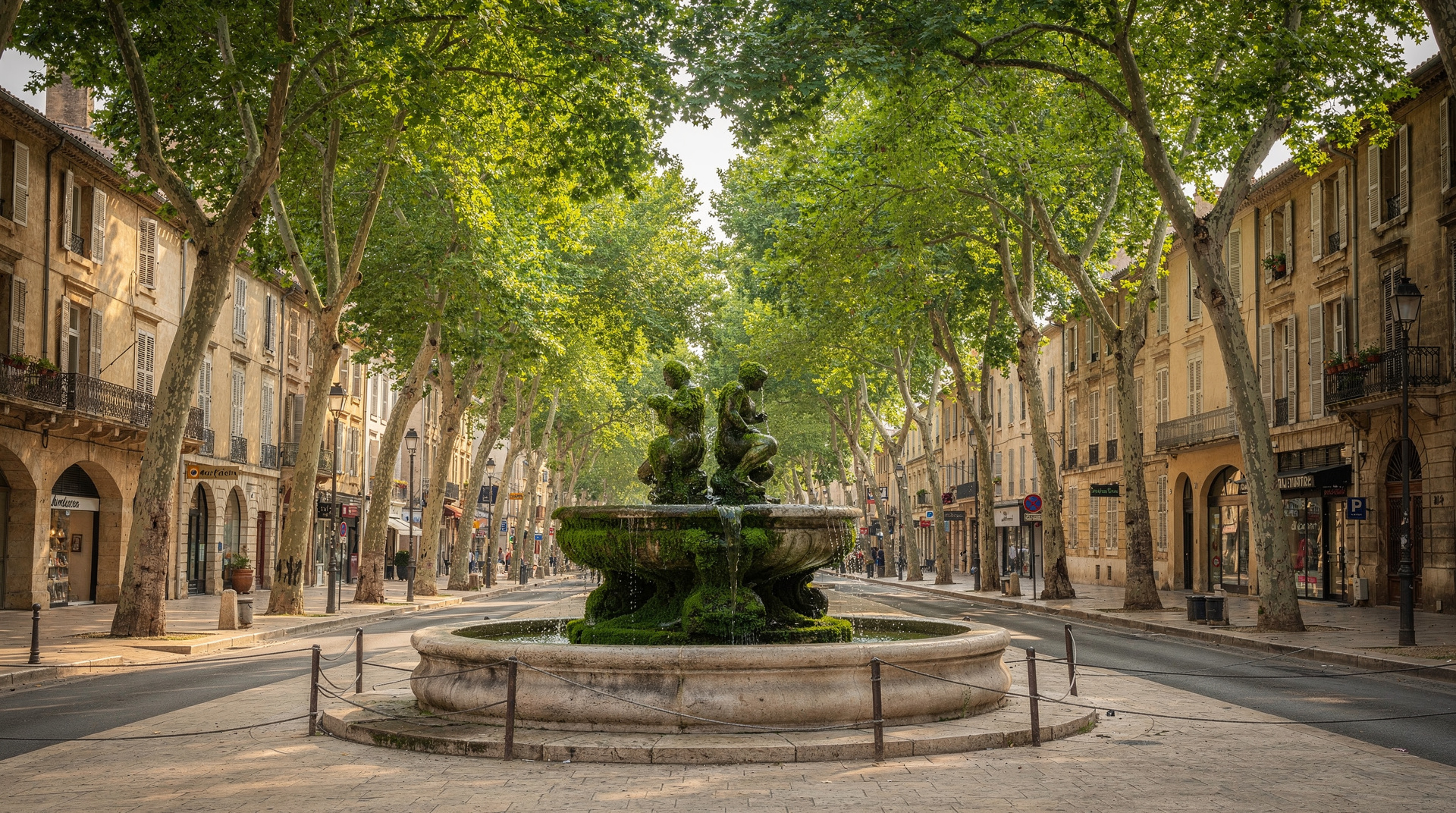
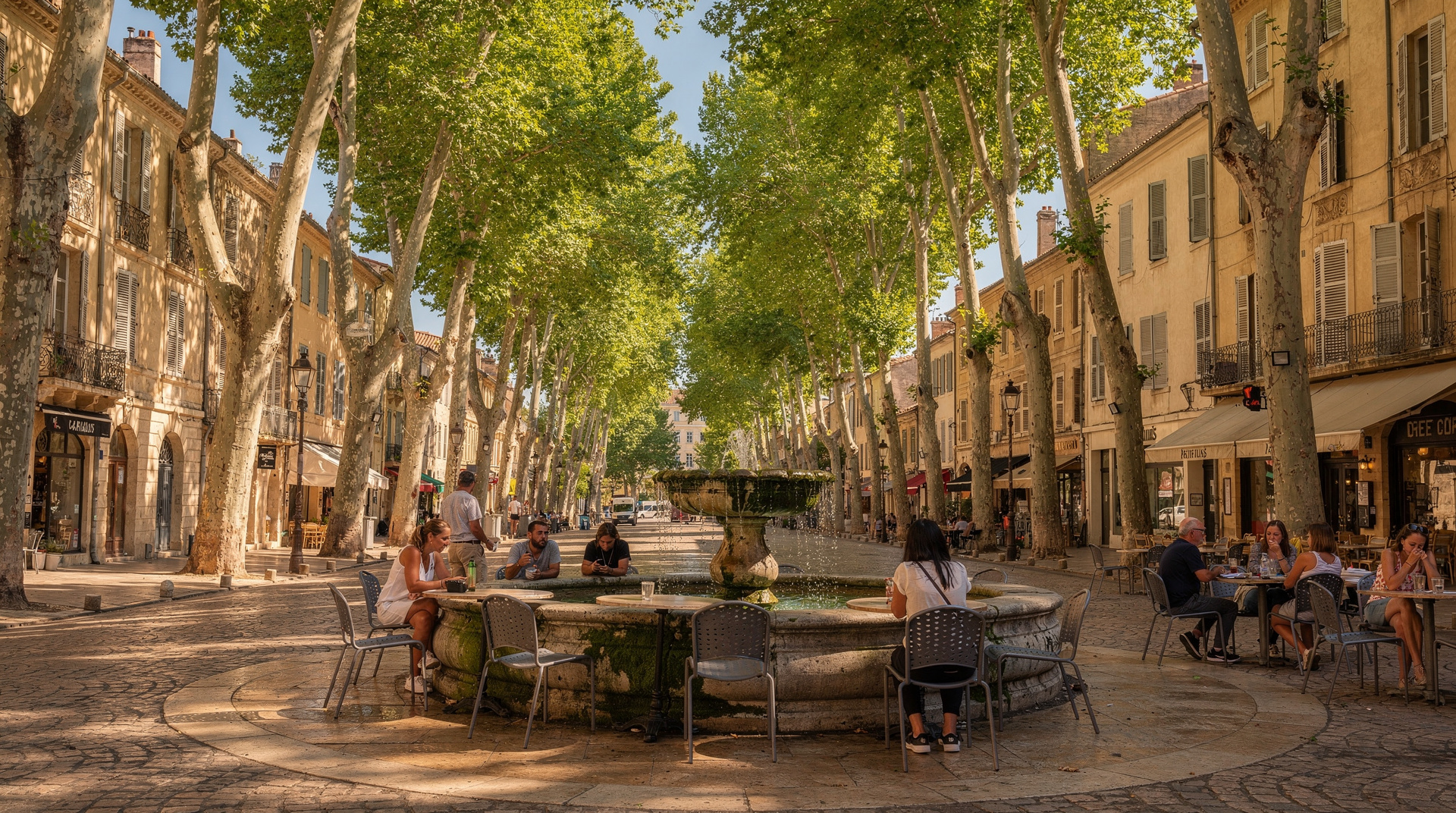
The Aix market, centred on the Place Richelme and spreading down the Cours Mirabeau, is well-aware of its own attractiveness. The plane trees, the 17th-century facades, the fountain, the particular quality of light that Cézanne kept painting — all of this makes it one of the most photographed market settings in France, and the stall holders have responded accordingly.
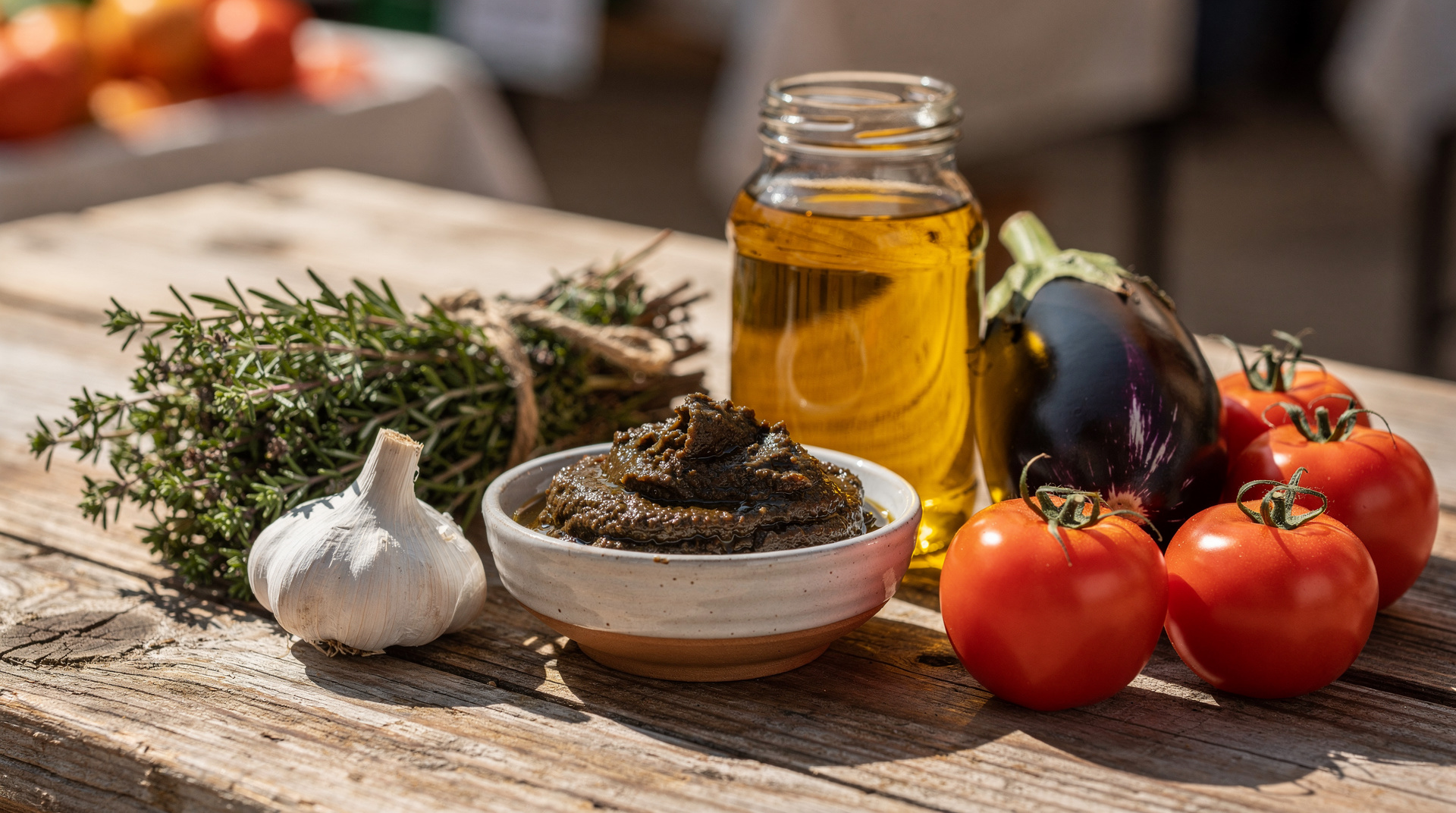
This is not a criticism. The produce is genuinely good. The goat’s cheeses from the Luberon, the tapenade from local producers, the honey from highland hives, the olive oil from the groves of the Alpilles — these are real things grown or made in the region. The market is not fake. It has simply found a way to be authentic and presentational at the same time, which is a Provençal tradition stretching back longer than the tourist industry.
We use the Aix market differently from Noailles. At Noailles we buy. At Aix we taste and compose. The cheese stalls offer generous tastings; the olive stall allows you to try three or four varieties before committing; the honey producer has a flight of regional honeys that is genuinely educational about the range that exists between lavender and chestnut and the uncategorisable wildflower varieties from the higher plateau.
The market runs Tuesday, Thursday, and Saturday mornings. Saturday is fullest and most photogenic. Tuesday is quieter and more practical. We prefer Thursday if possible — quieter than Saturday, more stalls than Tuesday.
After the market: a coffee at one of the Cours Mirabeau cafés, then a walk through the old town lanes. The smaller Saturday antique market near the Palais de Justice adds a layer if you have time.
If Aix is the only market stop you can make, pair it with the rest of the old town — our full Aix-en-Provence guide and the dedicated Aix day trip guide both cover the market alongside the Cézanne sites and the Cours Mirabeau.
The three markets compared
| Market | Day(s) | Character | Best for |
|---|---|---|---|
| Noailles (Marseille) | Daily, mornings | Rough, working, North African produce | Buying to cook, real fish prices |
| Aix-en-Provence | Tue / Thu / Sat mornings | Elegant, photogenic, tasting-friendly | Tasting, gifts, a slower morning |
| Lourmarin | Saturday mornings | Village market, craft-leaning, figs and cheese | A Luberon morning with a rosé lunch after |
Lourmarin: the Luberon market on its best day
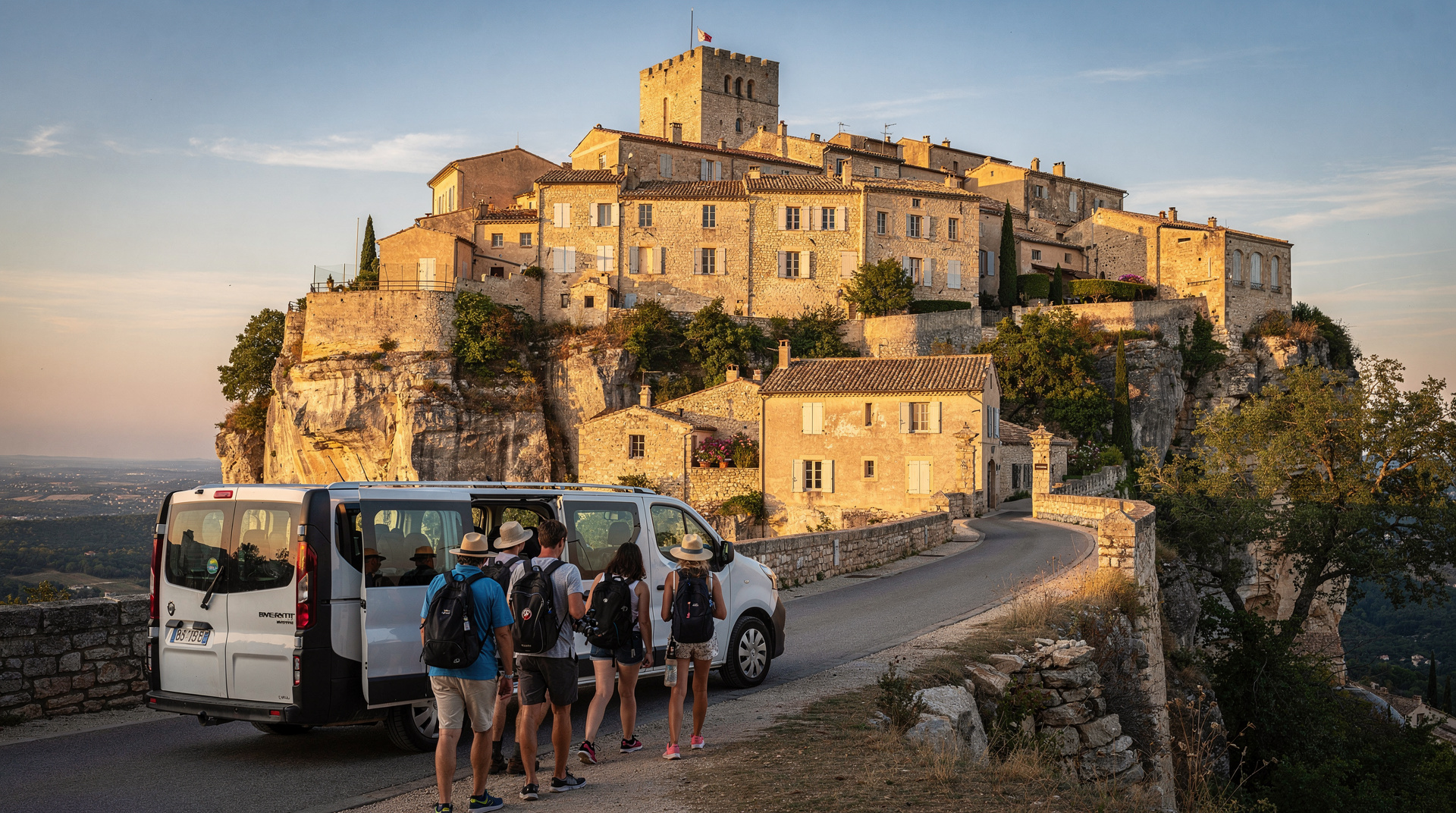
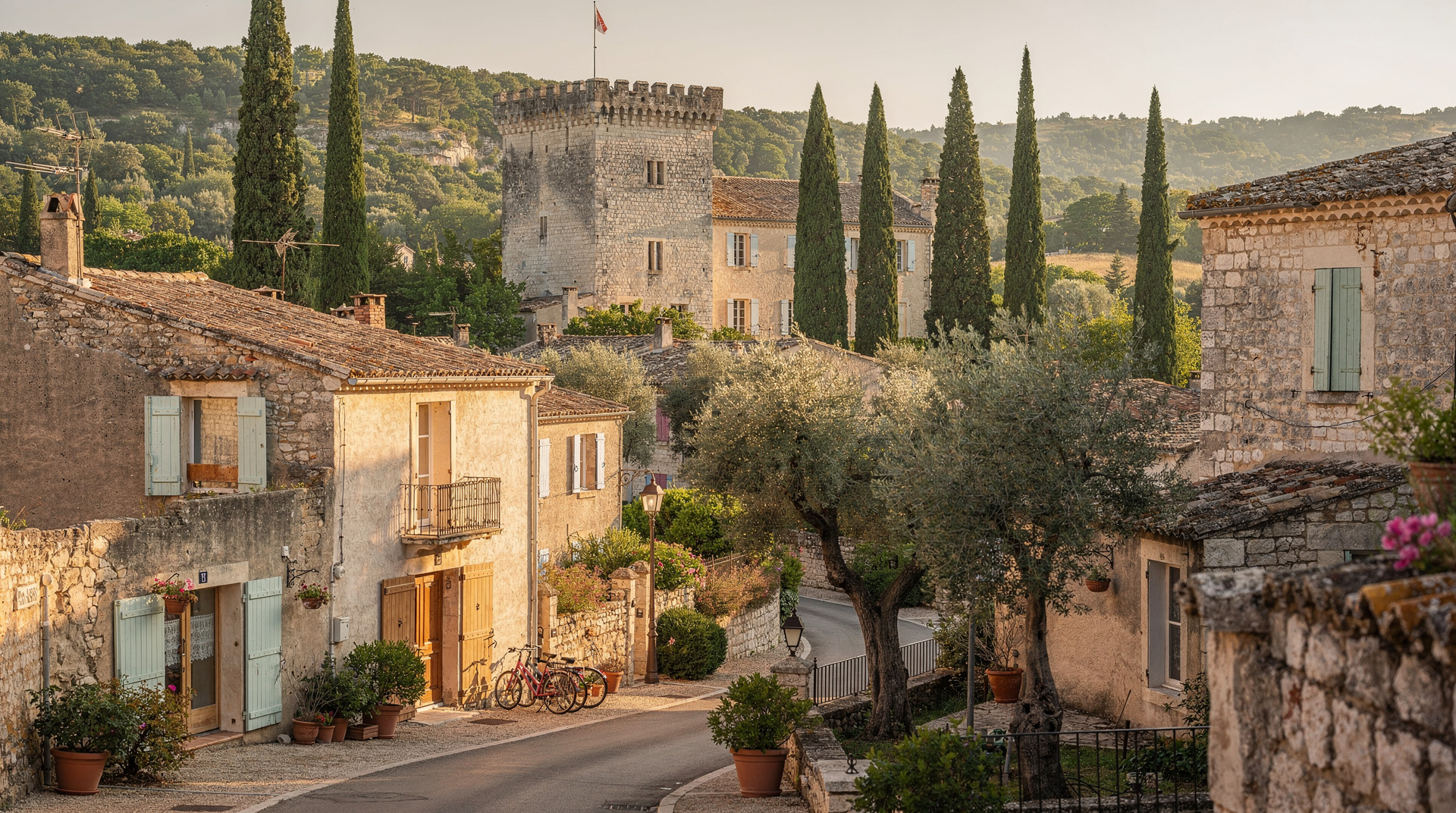
The Saturday market at Lourmarin takes place in a village that knows exactly what it is — the most visited of the Luberon villages, with a château, a Luberon hill location, and a literary history (Albert Camus is buried in the village cemetery). The market fills the main street and the surrounding squares on Saturday mornings and is a combination of local produce and craft stalls that tilts more toward the latter than the Aix market but retains enough genuine food to reward visiting.
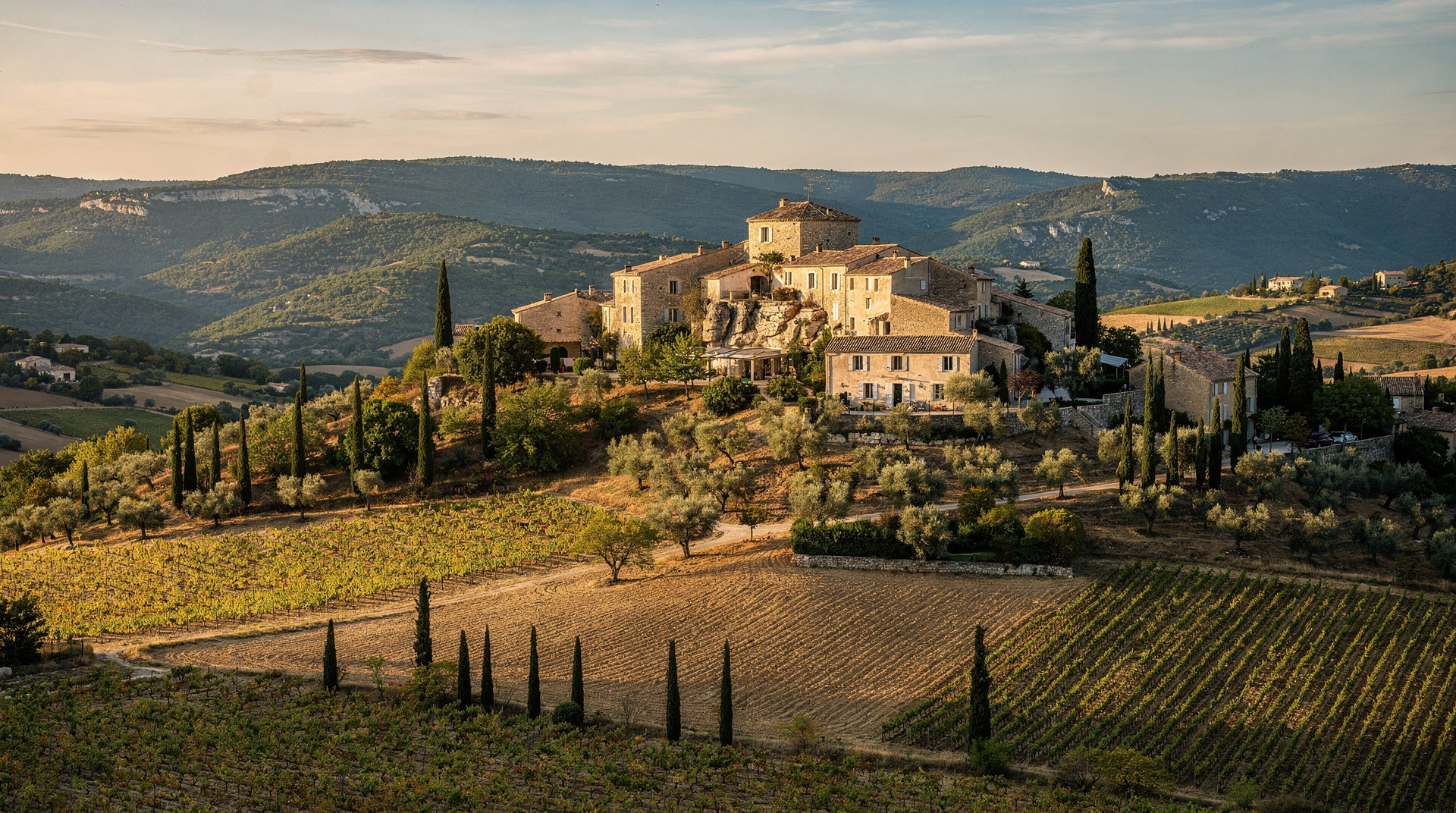
The goat’s cheese from local farms is the starting point. Lourmarin and the surrounding Luberon plateau have a dense concentration of chèvreries (goat’s cheese producers) and the fresh rounds, the dry-aged varieties, and the varieties rolled in herbs or ash from these operations are among the best in Provence. The producers at the Saturday market sell their own product directly, which is different from the regional cooperative cheeses available at supermarkets.
The fig situation in September is notable. The fig trees of the Luberon produce at a scale in late summer and early autumn that means the market is temporarily surrounded by extraordinary figs at prices that feel almost fictional. Black figs, green figs, honey figs — the September market is the best single argument for visiting Lourmarin in that specific month.
After the market, the wine from the local Luberon AOC producers at the caves around the village makes sense as the next stop. Lourmarin has several domaines within a short walk of the village centre offering tastings. The Luberon rosé is less celebrated than the Provence AOC rosé from the coast but at its best is excellent and significantly less expensive.
A rosé with a terrace lunch in the village square after the morning market is the correct conclusion to the Lourmarin Saturday programme. Book in advance for September Saturdays — the village fills.
The market crawl in practice
One-day version (September Saturday): Drive to Lourmarin from Marseille (approximately 1 hour 15 minutes). Arrive at 9:00 for the market. Leave at 12:30 for lunch in the village. Drive to Aix (approximately 45 minutes) for the early afternoon. Stop at the Cours Mirabeau for coffee. Return to Marseille by early evening.
The Noailles market is for a Marseille morning, not a day-trip day. Saturday in Noailles is actually slightly quieter than Thursday because the market schedule varies. Best combined with a morning walk through the Panier and lunch somewhere in the Cours Julien neighbourhood.
Multi-day version: Saturday morning at Lourmarin, overnight in the Luberon (Gordes, Bonnieux, or a gîte in the hills), Sunday morning drive to Aix for the market, afternoon train back to Marseille. This adds a Luberon dimension that makes the market crawl into a proper Provence circuit.
Practical notes on the drive: The Marseille to Luberon drive is done entirely on the A51 autoroute until Pertuis, then departmental roads through the hills. Allow extra time for the Pertuis-to-Lourmarin stretch in summer and on Saturday mornings when the Luberon market traffic backs up.
For the full picture of markets and food in the region, our Aix guide covers the market schedule and food culture in detail. The Luberon guide is the starting point for the villages. Day trip options from Marseille are covered in the day trips guide. If you want the Marseille market experience without the crawl, our hidden gems piece covers a few other unpolished corners of the city in the same spirit.
Frequently asked questions about Provence markets we love — our market crawl through Noailles, Aix, and Lourmarin
Are the Provence markets open every day?
Noailles in Marseille runs daily in the morning. The Aix market runs Tuesday, Thursday, and Saturday mornings, with Saturday being the largest. The Lourmarin market is Saturday mornings only. Plan around these fixed days if you want to catch more than one.
Is it safe to carry cash and shop at Noailles?
Yes, with ordinary care. The Noailles area is a known pickpocket hotspot in Marseille safety guides, so keep valuables in a front pocket and your bag across your body in the crowded lanes — the same precautions worth taking in any busy market, not a reason to skip it.
Top experiences
Bookable activities with verified prices and instant confirmation on GetYourGuide.