Marseille neighbourhoods guide
Marseille: guided walk in beautiful and hidden neighborhoods
Which Marseille neighbourhood is right for me?
First-timers and couples: Vieux-Port area (walkable, central). Street art and charm: Le Panier. Beaches and families: Prado/Corniche. Bars and bohemian vibe: Cours Julien. Business travel: La Joliette. Views and solitude: Notre-Dame de la Garde area.
Marseille is not one city
The mistake most first-time visitors make is treating Marseille as a single homogeneous place. It is not. Each of the major neighbourhoods has a distinct character, a different relationship to tourism, and a different daily life. The tourist-facing Vieux-Port and the bohemian Cours Julien are 15 minutes apart on foot but feel like different cities. Le Panier and La Joliette share a peninsula but have almost nothing else in common.
Choosing where to base yourself — or simply understanding what each part of the city offers — shapes your entire experience of Marseille. This guide matches each main neighbourhood to the type of traveller who will get the most from it, with an honest assessment of what each area lacks and what the safety picture looks like after dark.
| At a glance | |
|---|---|
| Where | Six core areas: Vieux-Port, Le Panier, La Joliette, Prado/Corniche, Cours Julien, Notre-Dame de la Garde |
| Cost | No entry cost — this is about choosing a base, not a paid attraction |
| Time needed | Each neighbourhood rewards at least half a day on foot |
| Getting there | Métro M1/M2 links most areas; see our metro guide |
| Best time | Daytime for exploring; evening character varies sharply by area (see below) |
Comparing Marseille’s neighbourhoods
| Neighbourhood | Best for | Evening vibe | Walkable to |
|---|---|---|---|
| Vieux-Port | First-timers, couples, cruise layovers | Lively, busy until late | Le Panier, MuCEM |
| Le Panier | Photographers, solo travellers, atmosphere | Quiet after 21:00 | Vieux-Port, Joliette |
| La Joliette | Business, cruise arrivals, architecture | Quiet, business-district feel | MuCEM, Fort Saint-Jean |
| Prado/Corniche | Families, beach-first visitors | Quiet, residential | Vallon des Auffes, Calanques access |
| Cours Julien | Nightlife, street art, food | Busy bar scene, alert after midnight | Noailles, Notre-Dame du Mont |
| Notre-Dame de la Garde | Views, quiet pace | Very quiet, closes at dusk | Endoume, Vieux-Port on foot |
Combining neighbourhoods into a route
Most visitors don’t need to choose just one area — the value is in sequencing them sensibly. A classic day links the Vieux-Port in the morning, an uphill walk through Le Panier around midday, and a wind-down in Cours Julien for dinner and drinks.
If your trip includes a day trip, several neighbourhoods also serve as jump-off points — Prado/Corniche toward the Calanques, or the Vieux-Port toward Cassis. Our two-day Marseille itinerary and three-day itinerary both build directly on this neighbourhood logic.
Vieux-Port and the immediate centre: the default choice
Best for: First-time visitors, couples, cruise layovers, convenience-first travellers
Métro: Vieux-Port (M1)
Radius: The area bounded by Quai des Belges, Rue Paradis, and La Canebière
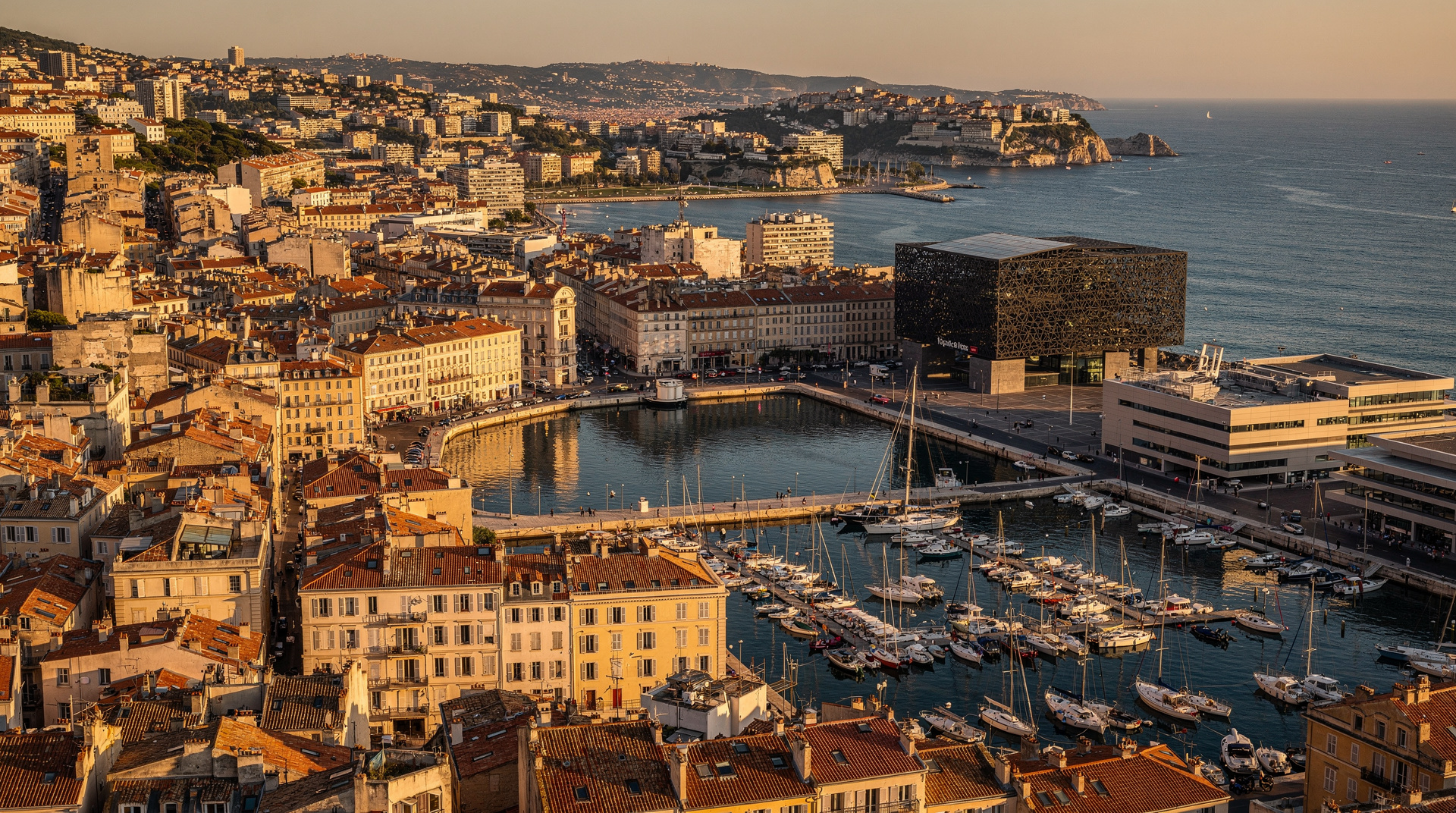
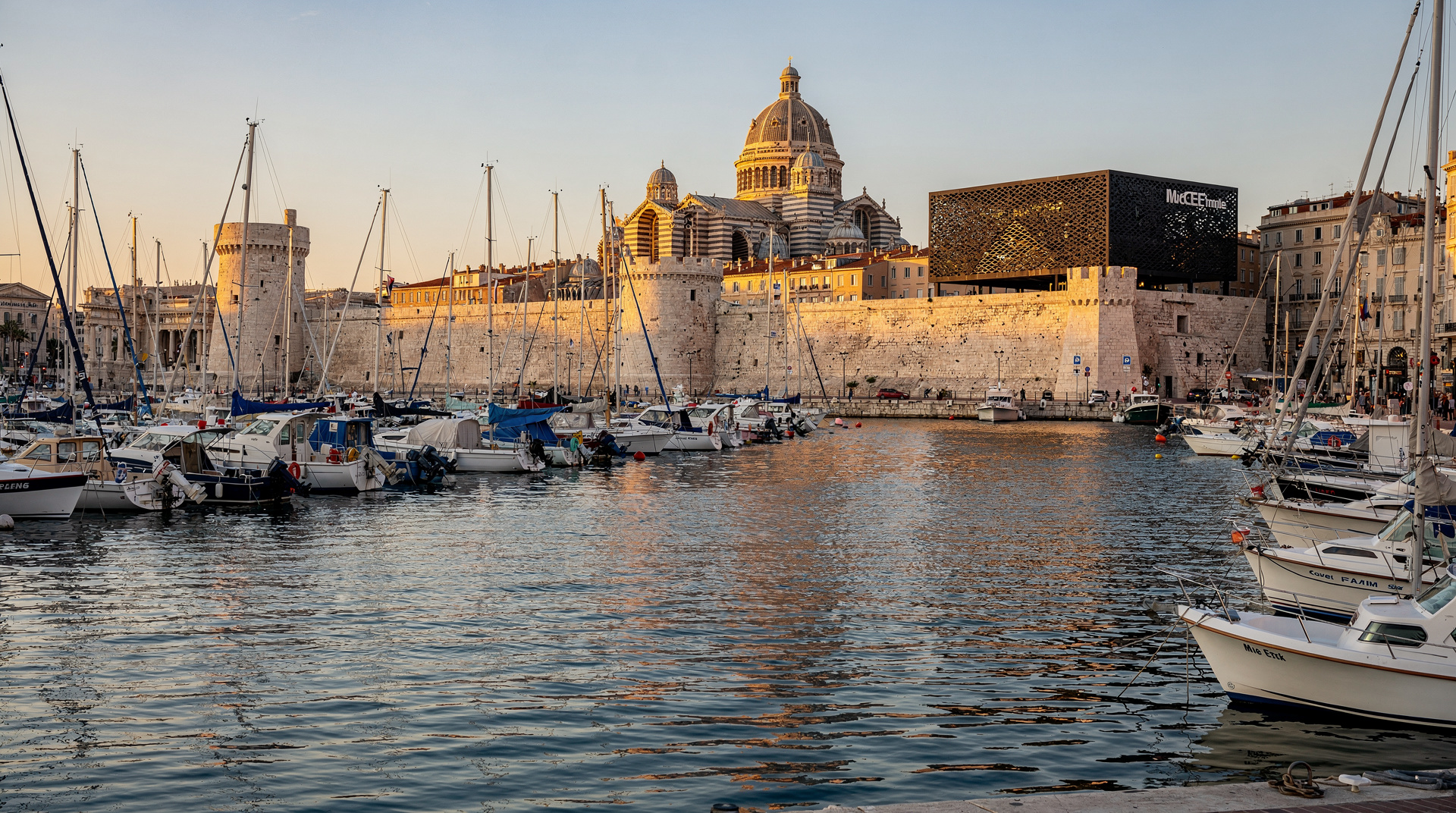
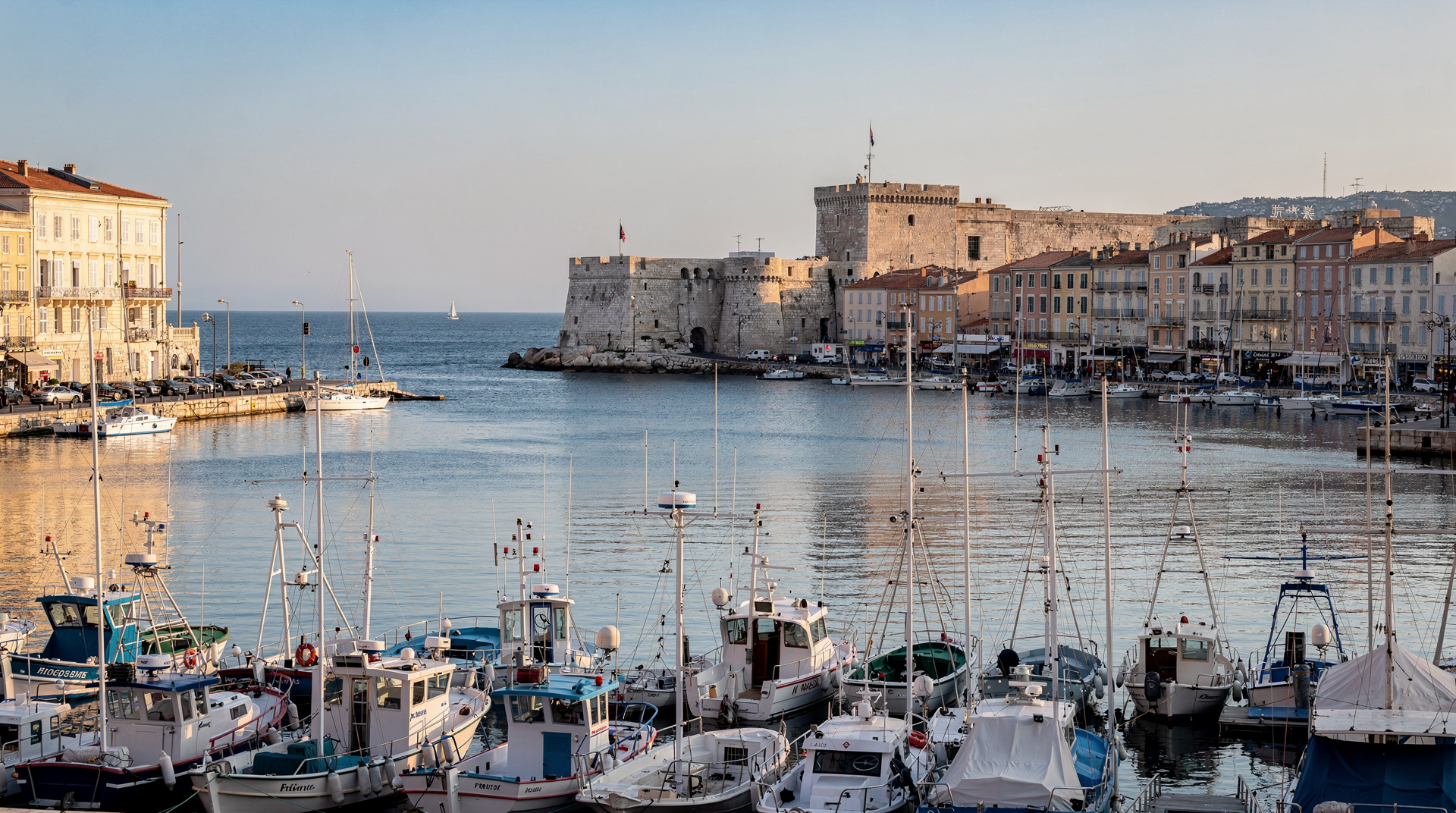
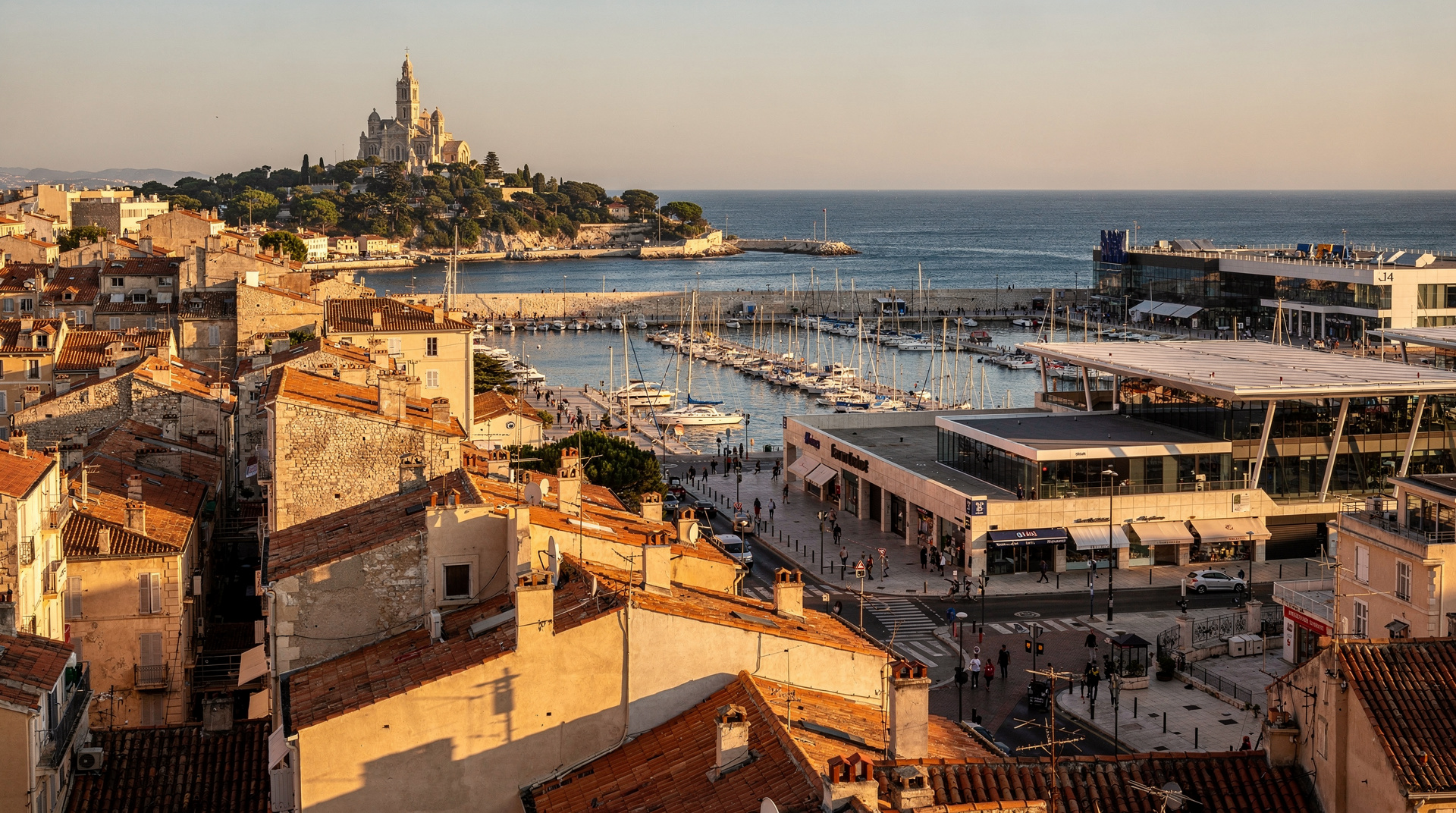
The Vieux-Port itself — the long rectangular harbour framed by Fort Saint-Jean and Fort Saint-Nicolas — is where Marseille begins for most visitors and where first impressions are formed. The fish market runs every morning until around noon at Quai des Belges. Norman Foster’s reflective steel Ombrière canopy marks the spot. Cafés and restaurants line both quais, with boat-tour operators departing for the Calanques, Frioul, and Château d’If from the north quai.
Why it works for first-timers: Everything fans outward from here. Le Panier is 10 minutes uphill on foot. MuCEM is 15 minutes along the waterfront. Notre-Dame de la Garde is visible from the harbour and reachable by bus 60 or the petit train. The Vieux-Port métro station puts you one stop from Gare Saint-Charles. You are never more than 15 minutes from anything essential.
The honest downsides: The tourist-facing restaurants on the north quai are overpriced and mediocre. The area is loud at night — the bars around Cours Estienne-d’Orves and the quai itself are busy until midnight or later, which suits some visitors and disrupts others. Hotel prices immediately on the waterfront are elevated; one or two streets back from the water, quality improves and prices drop. The fish market area at peak morning hours is a known pickpocket concentration point.
Evening safety: The Vieux-Port area is safe at night for groups and couples. Normal urban caution applies — secure your bag, be aware in crowded bar zones. No specific concerns for most visitors.
Le Panier: oldest quarter, authentic character
Best for: Photographers, solo travellers, those wanting to feel the city rather than just see it
Métro: Joliette (M2) — then a 10-minute walk, or walk uphill from Vieux-Port
Radius: The hill north of the Vieux-Port, roughly bounded by Rue de la République and the coast
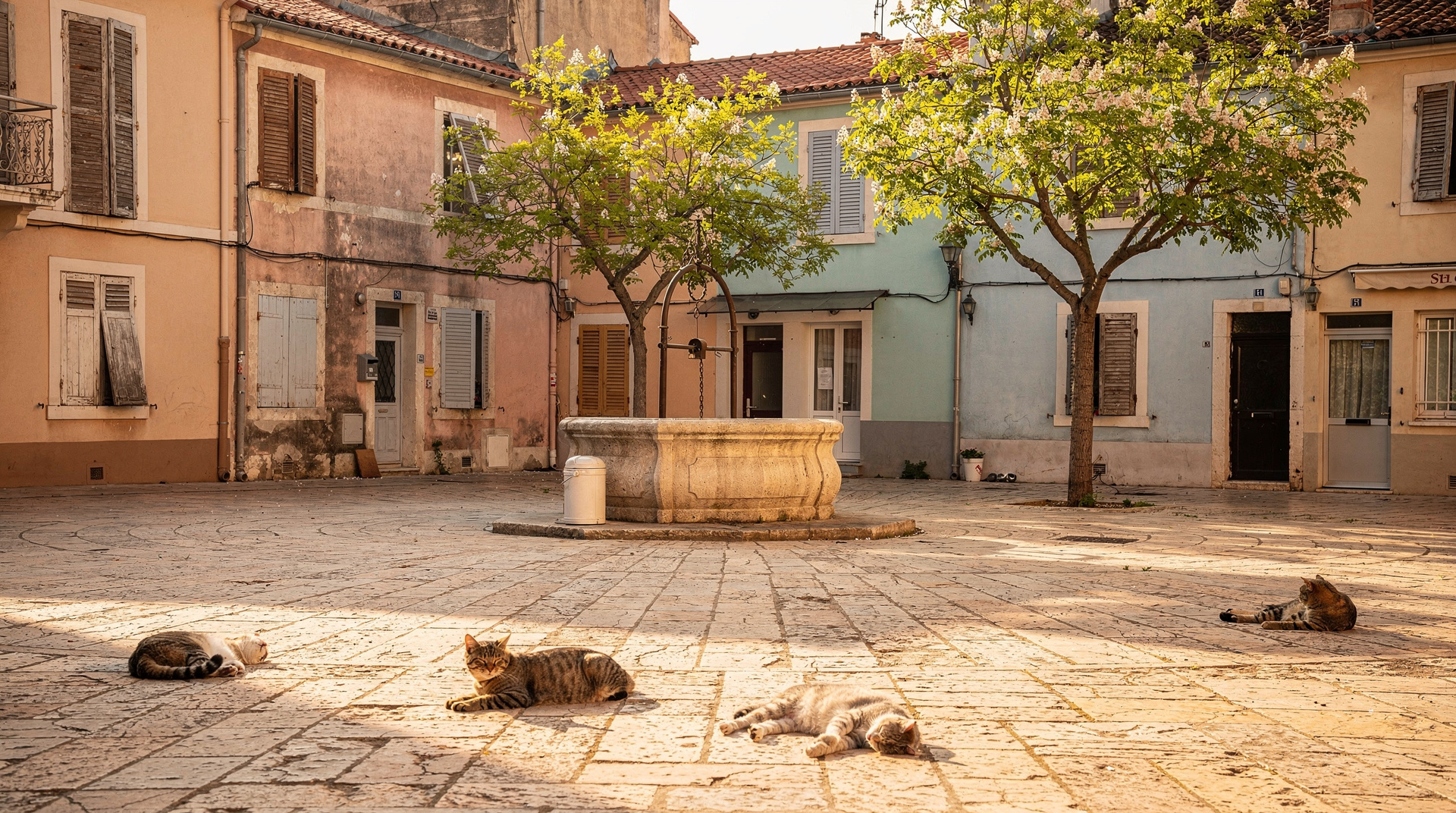
Le Panier is the hill where Marseille was first settled by Greek traders in 600 BCE. Today it is the city’s oldest quarter — a tangle of narrow lanes, pastel-coloured buildings at improbable angles, courtyard workshops, soap shops, street art, and the 17th-century hospice Vieille Charité at its centre.
Why it works for certain travellers: Le Panier is genuinely residential. Laundry hangs between windows. Old men play cards in small squares. Cats appear from nowhere. The quarter is not a preserved heritage zone — people live and work here, and the artisan economy (ceramics, perfume, textiles, soap) exists alongside the actual daily life of the neighbourhood. Photographers find Le Panier endlessly productive: the light in the narrow lanes at different times of day, the colour contrasts, the layers of history in the architecture.
The Vieille Charité — a 17th-century hospice built around a baroque chapel — is the architectural centrepiece. It now houses temporary exhibitions and is free to enter the courtyard. Place des Moulins, the highest point of Le Panier, gives views over the harbour from a quiet square that most tourists never reach.
What it lacks: Hotel options in Le Panier are limited — a few boutique places in converted buildings, but not a large selection. Evening dining is quieter than the Vieux-Port or Cours Julien. Public transport access requires a walk up from the Vieux-Port or down from the Joliette station.
Evening safety: Le Panier is pleasant in the early evening. The streets are quieter after 21:00, which is either an advantage (quiet atmosphere) or a disadvantage (not a nightlife destination). Not an area of specific safety concerns in the tourist zone.
La Joliette and the Euroméditerranée quarter: the new waterfront
Best for: Business travellers, visitors arriving by cruise ship, those interested in contemporary architecture
Métro: Joliette (M2) or Arenc (T2 tram)
Radius: The regenerated northern waterfront, centred on the MPCT cruise terminal and the Euroméditerranée district
La Joliette was Marseille’s main commercial port district for 150 years. The 2013 European Capital of Culture regeneration converted the old dock warehouses (the J4 esplanade) into cultural infrastructure: MuCEM and its concrete lattice-work shell, the Villa Méditerranée (now housing the Cosquer Cave replica), and the FRAC contemporary art space. The Fort Saint-Jean was integrated into the MuCEM complex.
Why it matters: MuCEM is the city’s most architecturally significant new building and one of the best reasons to visit the Joliette quarter. The footbridge between Fort Saint-Jean (17th century) and MuCEM (2013) is visually extraordinary. The esplanade below the museum is free to access and popular for evening walking.
The cruise terminal (MPCT) is approximately 15 minutes from the Vieux-Port by taxi and directly served by the M2 metro at Joliette station. Cruise visitors disembarking here can reach the main tourist sites in minutes.
What it lacks: The Joliette quarter itself — the Rue de la République commercial boulevard and the immediate streets — is functional rather than atmospheric. There are hotels here (business-oriented, modern) but not much culinary or social character. You are in Marseille, not of Marseille.
Evening safety: The Euroméditerranée zone is safe and well-lit at night. It is, however, quiet in the evenings once the workers have left — this is primarily a business and cultural district, not a residential or nightlife quarter.
Prado and the Corniche: beach city living
Best for: Families with children, beach-first visitors, those who want local residential life
Métro: Rond-Point du Prado (M2), then bus 83 or Castellane
Radius: The coastal strip from Catalans beach south to Pointe Rouge, anchored by the Prado beaches complex
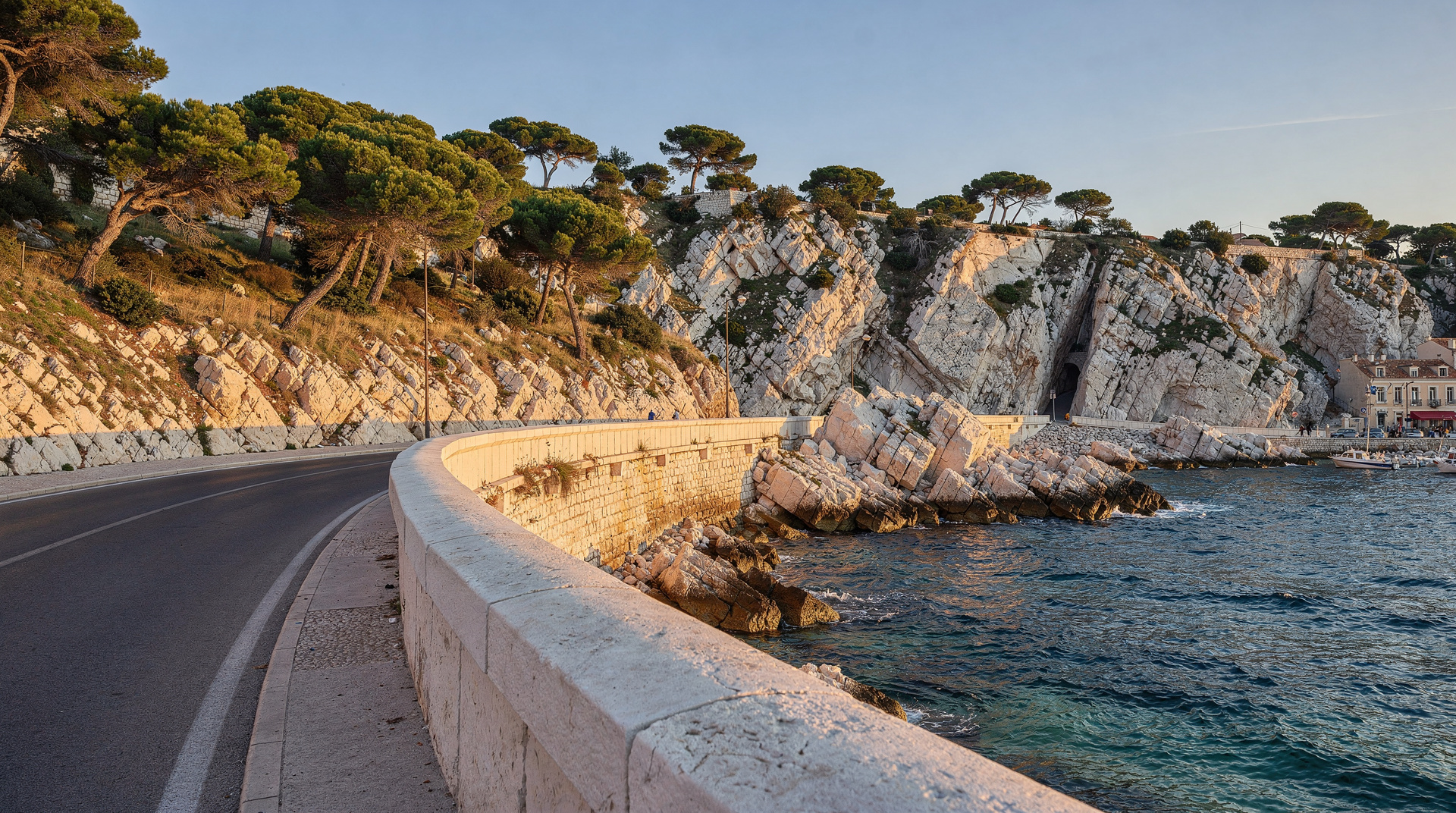
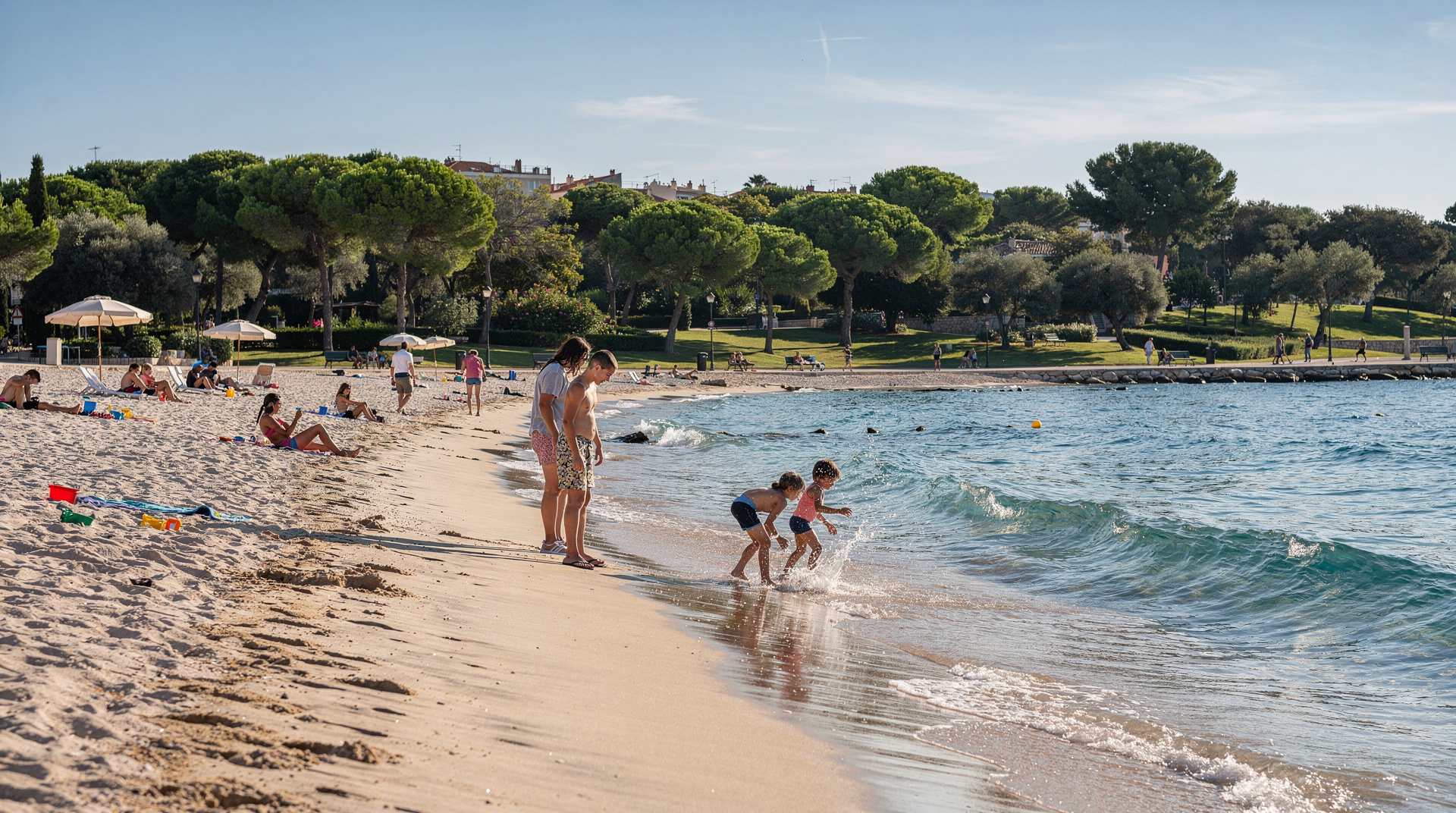
This is where Marseille actually goes to the beach. The Plage du Prado — a stretch of artificial beach created from rubble from the Grand Louvre excavation in Paris in the 1970s — is the city’s main urban beach. Catalans cove (Plage des Catalans) sits closer to the Vieux-Port, tucked below a small cliff near the Corniche road.
The Corniche President John Fitzgerald Kennedy is the coastal road that connects the Vieux-Port area to the Prado and beyond. It runs past the Vallon des Auffes fishing harbour (one of Marseille’s most charming spots, practically unchanged for a century), the Catalans beach, and the Prado beaches, all the way to the Pointe Rouge marina and the Calanques access point at Les Goudes.
Why it works for families: The Prado beach complex has organised beach areas with lifeguards, toilets, and rental equipment. The water is generally clean. The Parc Balthazar behind the beaches has grassy areas, a skate park, and space for children to run. The entire Corniche route is good for cycling (e-bike hire recommended given the distance and occasional hills).
The neighbourhood immediately behind the Prado beaches is residential Marseille — less touristy than the Vieux-Port, with local supermarkets, non-tourist restaurants, and a sense of the city’s actual daily life.
What it lacks: The Prado/Corniche area requires transport connections to reach the Vieux-Port and the main cultural sites — roughly 15–20 minutes by bus or metro. There is no walkable “city centre” atmosphere here. For first-timers wanting convenience, it is further from everything. For those prioritising beach access and quiet, it is better.
Evening safety: The Prado and Corniche area is quiet at night — this is primarily a residential zone. The Catalans beach area near the Vieux-Port has some evening bar activity in summer; the Prado beaches themselves are quiet after dark. No specific safety concerns in this area.
Cours Julien: the bohemian quarter
Best for: Younger travellers, nightlife-seekers, those interested in street art and music, food-forward visitors
Métro: Notre-Dame du Mont – Cours Julien (M2)
Radius: The elongated square and surrounding streets in the 6th arrondissement, north of Noailles
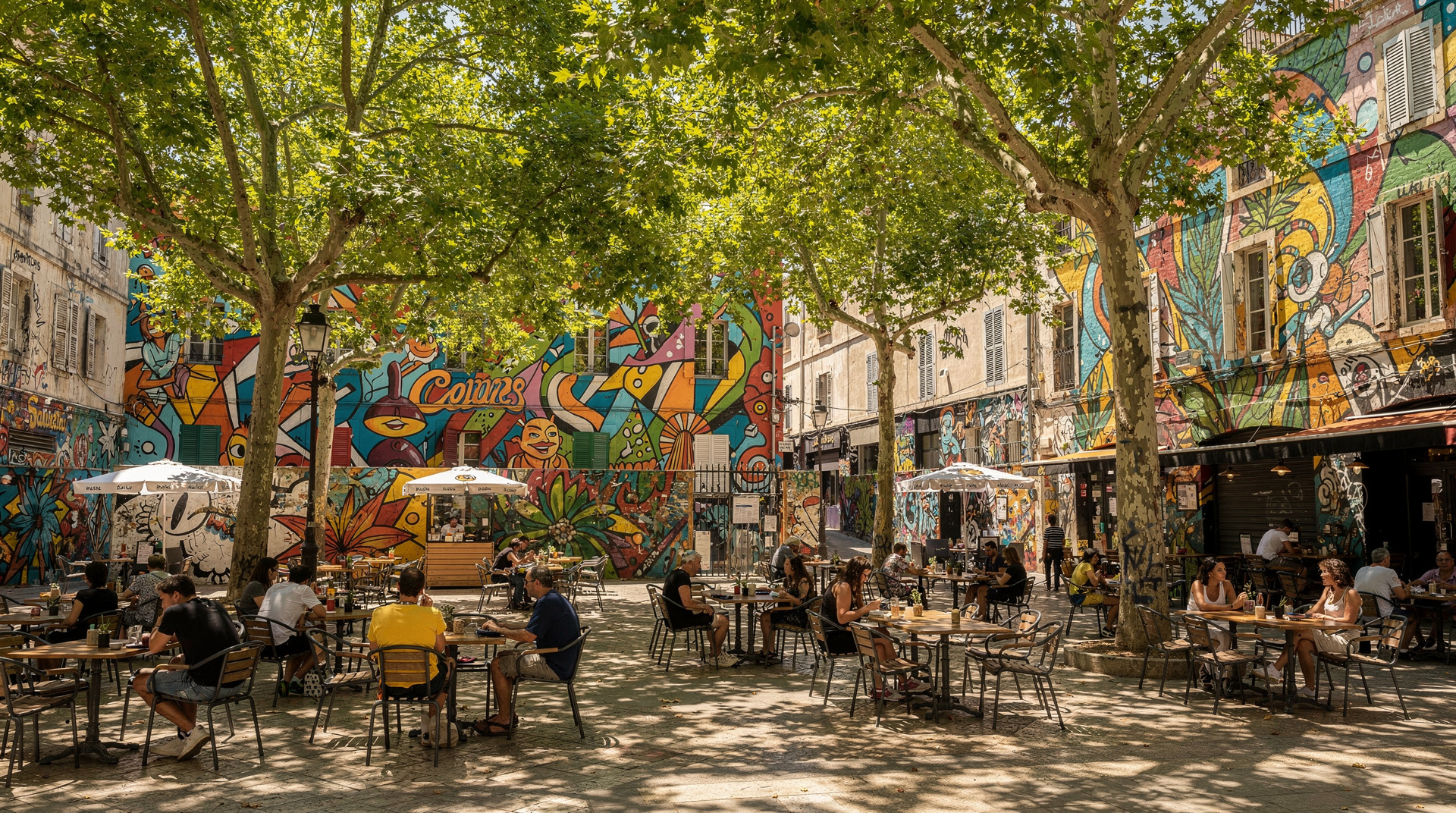
Cours Julien is where Marseille goes out. The quarter developed from the 1980s onward when artists and musicians moved into spaces vacated by the old wholesale market. Today it concentrates the highest density of interesting restaurants per square metre in the city: market-driven menus, natural wine bars, vegetarian and vegan cooking, and owner-operated places that would be fashionable in any major European city.
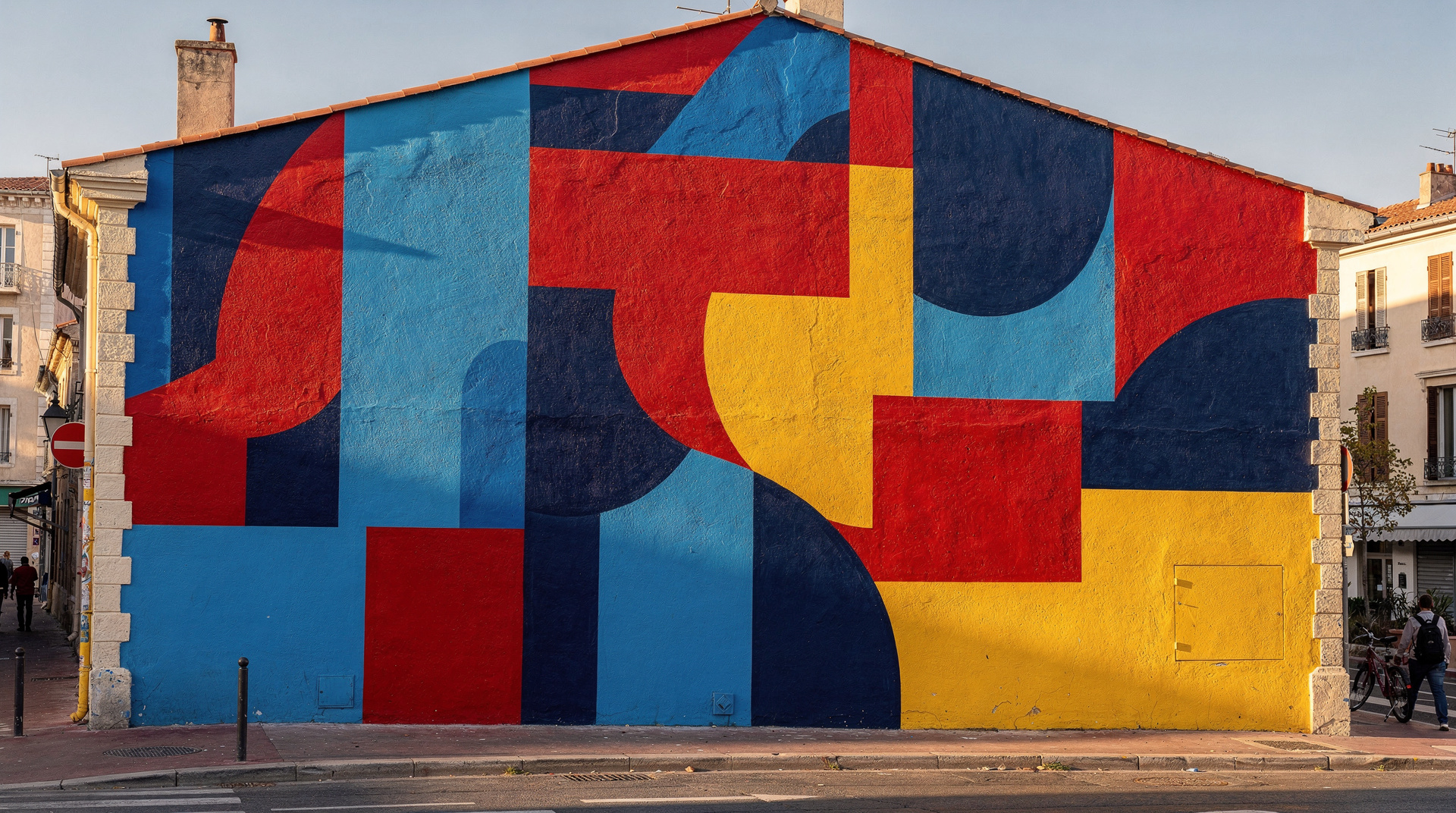
The street art here goes beyond murals — entire 8-storey building facades carry commissioned works by international and local artists. The neighbourhood’s visual identity is defined by this ongoing, changing exhibition of public art.
The Wednesday and Saturday morning market on the square itself is excellent — produce, antiques, vinyl, vintage clothing.
Why it works: For those interested in Marseille as a living city rather than a heritage destination, Cours Julien is the most honest neighbourhood. You find where locals actually eat (not bouillabaisse for 70 EUR, but 15 EUR lunch menus that are genuinely good), where they go for drinks (wine bars that stock producers from across the south), and what the city’s culture actually looks and sounds like.
What it lacks: Tourist infrastructure is minimal — few hotels in the square itself, no major museums nearby, less orientation support than the Vieux-Port area. It can feel disorienting for first-time visitors who want clear signposts to major sites.
Evening safety: Cours Julien and the adjacent Notre-Dame du Mont area are safe in the early and middle evening. Later at night (after midnight), as with any bar-dense urban quarter in any city, awareness of your surroundings is sensible. The area is not dangerous — it is simply an active urban nightlife zone. Keep standard precautions and you will have no problems.
The honest note on Noailles: Directly south of Cours Julien, the Noailles market neighbourhood (the Belsunce area around Cours Belsunce) has a rough reputation among some visitors. In reality it is a working-class North African immigrant neighbourhood that is perfectly safe during the day, with excellent food and market culture. After dark, Belsunce itself is less inviting than Cours Julien. The distinction matters: Cours Julien is fine; Belsunce requires the same alertness you’d apply to any dense urban market district at night.
Notre-Dame de la Garde area: the high city
Best for: Those who want views, a quieter pace, and the symbolic Marseille
Métro: None direct — bus 60 from Vieux-Port, or taxi
Radius: The hill south of the Vieux-Port, dominated by the basilica
Notre-Dame de la Garde — the Romano-Byzantine basilica perched at 162 metres above sea level — is the most recognisable landmark in Marseille and a pilgrimage site for the city’s Catholic community. From its terrace, the panorama takes in the entire bay, both forts at the Vieux-Port entrance, the Frioul archipelago, and the limestone ridges of the Calanques to the east.
The area immediately around the basilica — the Endoume neighbourhood on the southern slopes — is residential and quiet. Climbing here (the hill approaches from Rue Breteuil or through the Endoume streets) takes 30–40 minutes from the Vieux-Port and gives a very different perspective on the city: views expanding as you rise, street-level details of residential Marseille, and the gradual revelation of the basilica’s bulk as you approach.
What it lacks: There are no hotels immediately at the basilica. This is not a neighbourhood for basing yourself; it is a destination within a larger Marseille visit. Stay at the Vieux-Port and come up here for the view.
Evening safety: The Endoume neighbourhood and the basilica approach are safe. The basilica closes at 19:00 (20:00 in summer), after which the terrace is not accessible.
Frequently asked questions about Marseille neighbourhoods
Which neighbourhood is safest in Marseille?
For tourists, all six areas described above are safe, with the nuances noted. The genuinely unsafe parts of Marseille — the outer northern arrondissements (13th, 14th, 15th) where drug-related violence has historically concentrated — are not places tourists visit or have any reason to visit. Within the tourist-accessible city, pickpocketing is the realistic risk, not violence. See our honest safety guide.
Where should first-time visitors to Marseille stay?
The Vieux-Port area (1st arrondissement) gives the easiest start — maximum walkability, the métro one stop from the train station, and orientation built in. Le Panier offers more atmosphere but fewer hotel options. Cours Julien is best for those who already know they want the bar and restaurant scene. See our where to stay guide for hotel-level recommendations.
Is Cours Julien safe for solo female travellers?
Yes. Cours Julien in the evenings is a lively but normal urban bar zone. The same common sense that applies in any busy European nightlife area applies here. The street art neighbourhood itself, during daylight hours and early evening, is as safe as any neighbourhood in the city.
What is the best neighbourhood for street art?
Cours Julien and the surrounding streets in the 6th arrondissement have the highest concentration. Le Panier has significant street art but of a different scale — smaller pieces woven into the alley walls rather than whole-building murals. Our street art guide covers both areas in detail.
Is La Joliette worth visiting just for MuCEM?
Yes. MuCEM is one of the most architecturally striking buildings in France, and the Fort Saint-Jean connection makes the waterfront walk genuinely worthwhile even without entering the museum. The esplanade and external terraces are free. Allow 30 minutes for the exterior alone, longer if you enter the museum. See our MuCEM guide for entry details.
How do I get from the Vieux-Port to Cours Julien?
On foot: 15 minutes uphill via Rue d’Aubagne or Rue Paradis. By métro: Vieux-Port (M1) to Noailles, then a short walk or change to M2 for Notre-Dame du Mont. Walking is the pleasant option if the heat is not extreme.
Which neighbourhood has the best restaurants?
Cours Julien has the highest density of interesting, owner-operated restaurants per square metre, but Noailles (just south) has the best-value North African food, and the Vieux-Port has the widest range at the highest average prices. See our best restaurants guide for specific picks in each area.
Top experiences
Bookable activities with verified prices and instant confirmation on GetYourGuide.