Prado and Corniche guide
Marseille: city & seaside highlights e-bike tour
What is on the Prado and Corniche in Marseille?
The Prado beaches are Marseille's main urban swimming zone, free and accessible by bus 83 or metro M2. The Corniche road is a scenic coastal drive/walk connecting Catalans beach to Les Goudes — one of France's most dramatic urban coastlines.
Where the city meets the sea
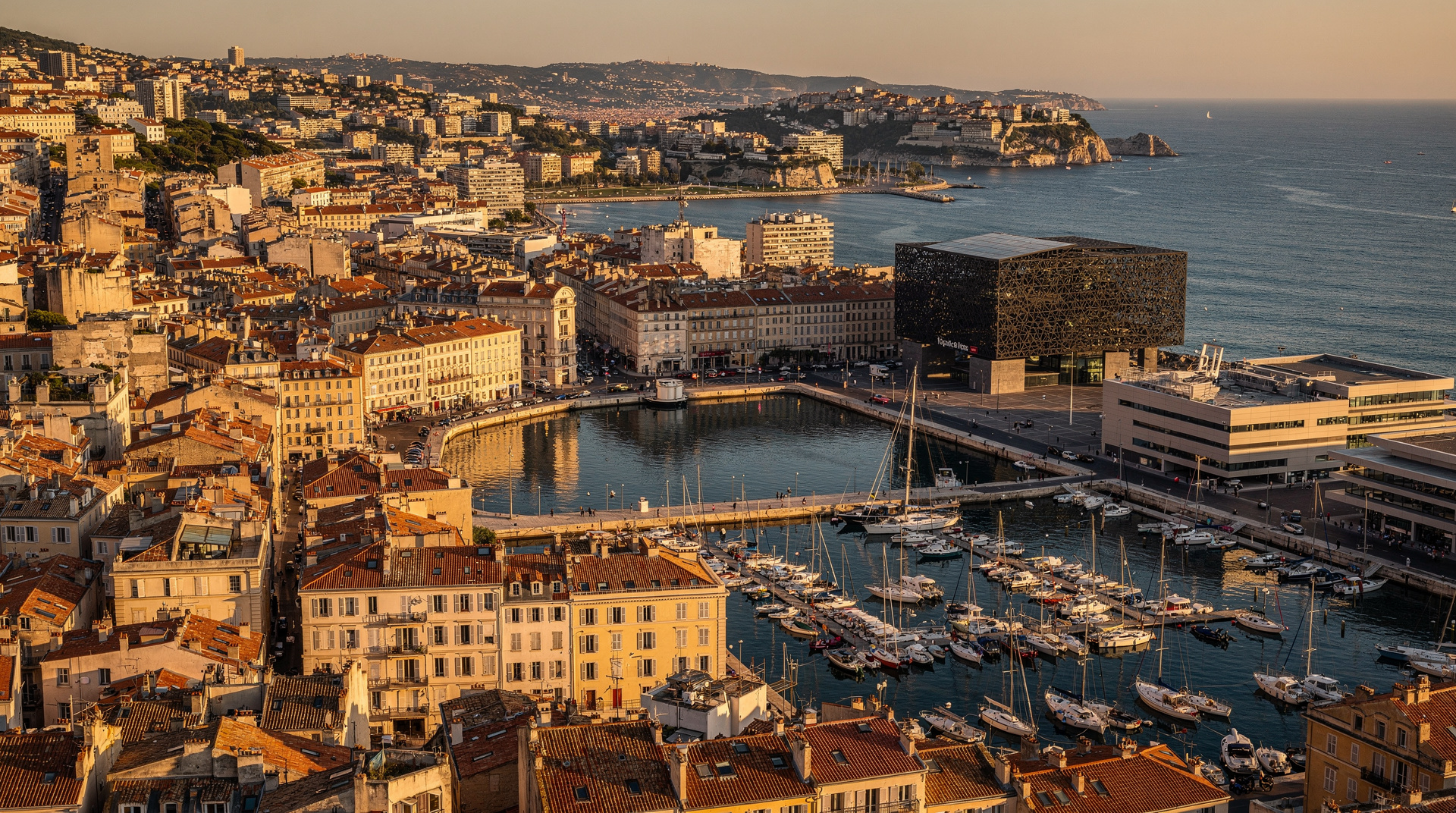
South of the Vieux-Port, Marseille stops being a city in the conventional sense and becomes something harder to classify: an unbroken urban coastline stretching for kilometres along limestone cliffs and artificial beaches, with apartment blocks on one side and the open Mediterranean on the other. The Corniche President John Fitzgerald Kennedy — the coastal road that runs from the Endoume point to the Prado beaches and beyond — is one of the most scenic urban drives in France.
For visitors, this part of Marseille is where the city actually lives in summer. The Prado beaches are free, well-organised, and accessible by public transport. The Catalans beach near the Vieux-Port end of the Corniche is the historic swimmers’ cove. And for those willing to push further south, the route eventually reaches the Calanques — the limestone fjords that define the eastern edge of Marseille’s coastline.
| At a glance | |
|---|---|
| Where | South of the Vieux-Port, 7th/8th arrondissements, Endoume to Pointe Rouge |
| Cost | Free — swimming, walking, and the road itself cost nothing |
| Time needed | Around 2-3 hours for a walk or e-bike pass; a half-day with beach stops |
| Getting there | Bus 83 the full length, or e-bike from the Vieux-Port |
| Best time | Late afternoon for sunset light, or morning before summer heat |
If you want more detail on a single stop before you go, the Prado beaches guide goes deeper on the sand, and the Catalans beach guide covers the historic cove on its own. For the wider picture of the area, the La Corniche and Prado beaches destination page puts the whole stretch in context.
The Corniche road: the scenic sequence
The Corniche road covers approximately 5 kilometres of coastline between the Endoume headland (near Notre-Dame de la Garde) and the Pointe Rouge marina. Walking it is long but entirely possible on a mild day. Cycling it on an e-bike (levélo or a rental) is ideal. Bus 83 runs the full length for those who do not want to walk.
Vallon des Auffes: About 1 kilometre south of the Vieux-Port along the Corniche, the Vallon des Auffes is a small fishing harbour concealed beneath the road — you pass directly over it on the viaduct. A staircase descends to the port level. This is among the most charming spots in Marseille: a tiny inlet with fishing boats, terrace restaurants serving seafood at honest prices, and a scale that feels entirely human. The contrast with the busy Corniche road above is surreal. Allow 30–45 minutes here.
Plage des Catalans: The oldest of Marseille’s urban beaches, Catalans beach is a small, sandy cove near the Endoume headland, used by the city’s residents since the 19th century. It is relatively small and fills quickly in summer — arrive before 10:00 for a comfortable experience. The beach has toilets and a lifeguard in season. This is the closest swimming beach to the Vieux-Port (about 20 minutes on foot from the south quai).
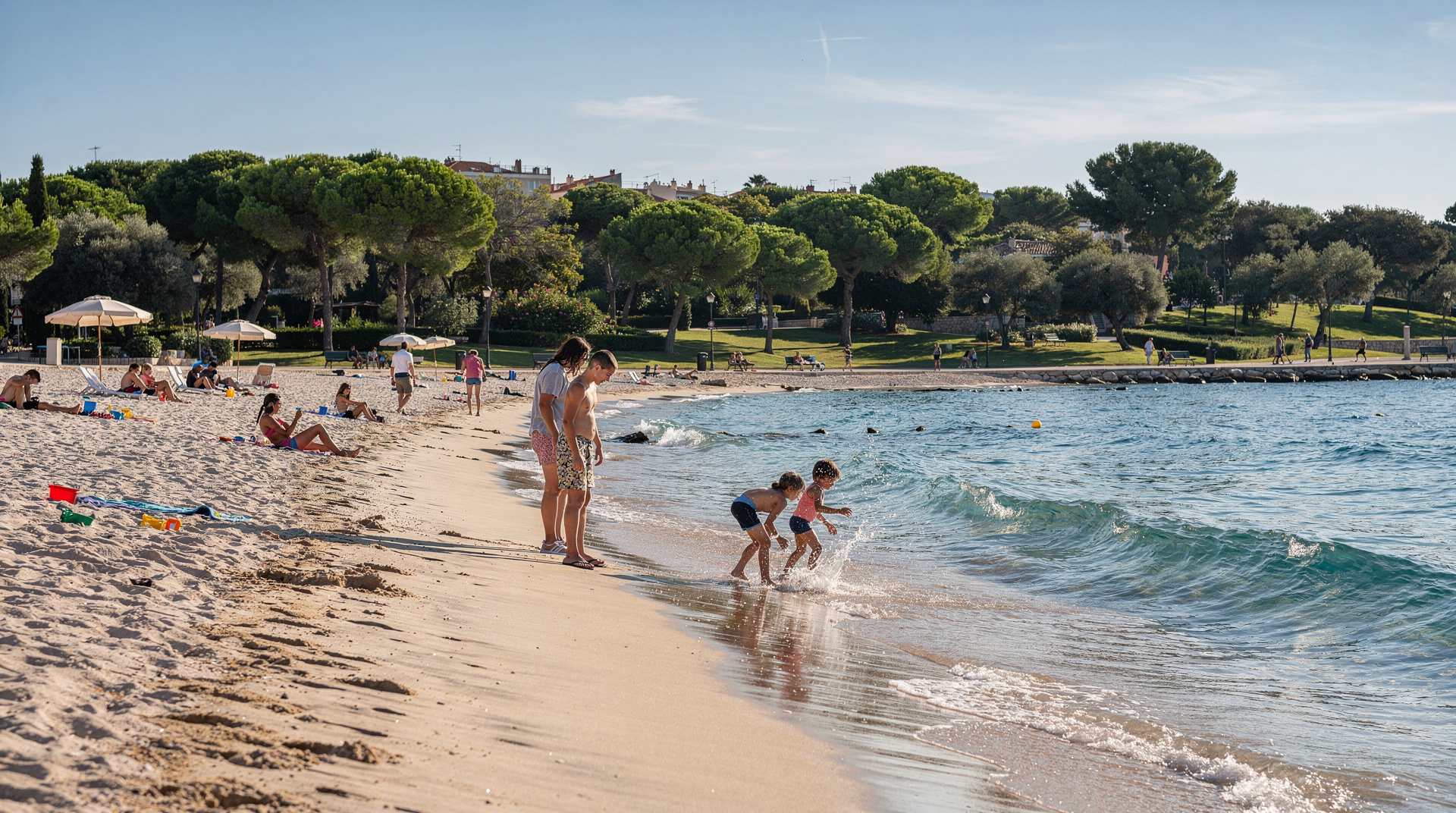
The Prado beaches complex: Several kilometres south of Catalans, the Prado beaches are the main urban beach zone. Created in the early 1970s using excavation rubble from the Grand Louvre project in Paris, the Prado beaches are artificial — built on reclaimed land — but entirely functional and popular. The complex includes:
- Plage du Prado (the main beach, largest, organised with lifeguards in season)
- Plage Borély (adjacent, slightly more family-oriented)
- Plage de la Pointe Rouge (further south, with a marina)
The beaches are free and have toilets, changing facilities, and seasonal snack bars. Sunbeds and parasols can be rented. The water quality is generally good — monitored by regular testing, and the Mediterranean here is clear in most conditions.
Parc Balthazar: Directly behind the Prado beaches, this large park has grassed areas, sports facilities, a skate park, and shade — useful for families who need a break from direct sun without leaving the beach zone.
Statues on the Corniche: Two copies of Michelangelo’s David stand at the Prado beach entry roundabout — unexplained, monumental, and somehow perfect for Marseille’s relationship with grandeur and absurdity simultaneously.
Getting to the Prado and Corniche without a car
The beaches are accessible by public transport from the city centre:
Bus 83: Departs from the Vieux-Port area (stop near the south quai), runs the length of the Corniche to the Prado beaches and Pointe Rouge. Journey time from Vieux-Port to Prado beaches: approximately 20–25 minutes.
Métro M2 to Rond-Point du Prado: Take the M2 to the Rond-Point du Prado stop, then bus 83 continues along the Corniche toward the beaches. This saves some bus time from central Marseille.
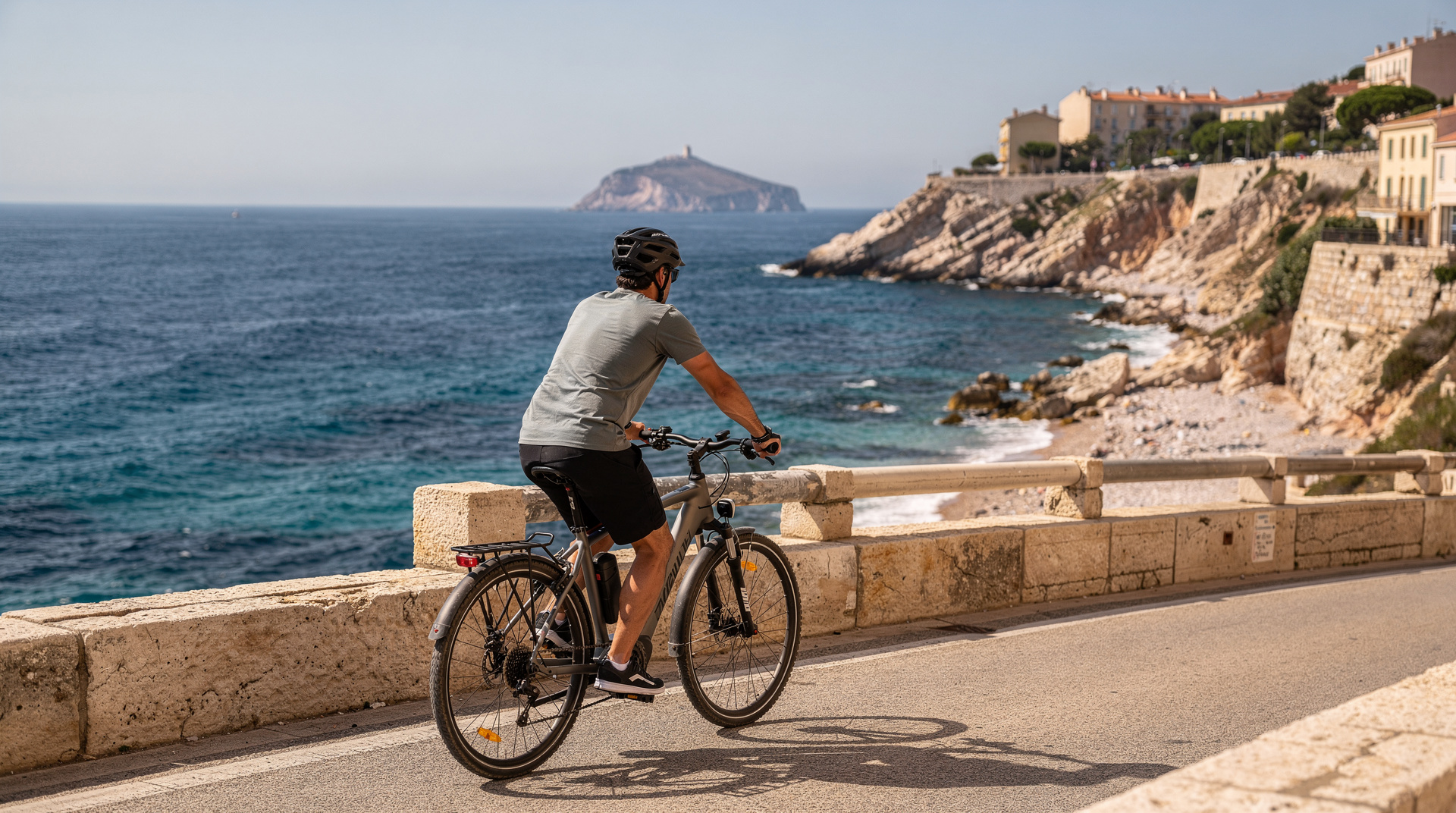
LeVélo e-bike: The e-bike hire system has stations along the Corniche route. The Corniche itself has a dedicated bike lane in sections, and the e-assist is helpful for the occasional elevation change. The full Corniche by e-bike, stopping at Vallon des Auffes and Catalans, is one of the better half-day activities in Marseille.
On foot from the Vieux-Port to Catalans: 20–25 minutes along the south side of the harbour and then along the coastal path. This walk passes the Palais du Pharo terrace (free, excellent view of the harbour entrance) and the Endoume headland before reaching Catalans beach.
Parking: Paid street parking exists along the Corniche but fills quickly in summer. The Prado beaches have a large car park (paid) that is generally accessible outside peak hours. In July and August, public transport is definitively easier than driving.
Eating with a sea view
The restaurants along the Corniche range from the genuinely excellent to the tourist-trap adjacent. The tourist-facing establishments near Catalans beach charge premium prices for the view. One street back from the water, quality and price both normalize.
Vallon des Auffes: The best food options in this coastal zone are at the restaurants tucked into the Vallon des Auffes fishing harbour. Prices are honest by Marseille seafood standards. Arrive for lunch before noon to get a table during summer.
Prado beach snack bars: Functional rather than gastronomic — good for a cold drink, ice cream, or a quick panini. Not destination dining.
The Corniche strip itself: Several brasseries and fish restaurants face the sea along the Corniche. Quality varies. For bouillabaisse in a sea-view setting, check whether the restaurant holds the Charte de la Bouillabaisse before sitting down — see our bouillabaisse guide.
Pointe Rouge area: The marina at Pointe Rouge has a cluster of more relaxed, neighbourhood-priced restaurants catering to local residents and sailors. Less tourist-facing, better value, further from the main sights.
Water activities at the Prado and Corniche
The Prado beaches zone is the primary base for water sports in central Marseille.
Swimming: Free at all Prado beaches and Catalans cove. Lifeguards on duty in July and August at the main Prado beach. Water temperature at the Prado: 18–20°C in June, 22–25°C in August–September. The sea is cleanest at the Prado beaches in terms of urban proximity — further south toward Les Goudes and the Calanques, water quality improves further.
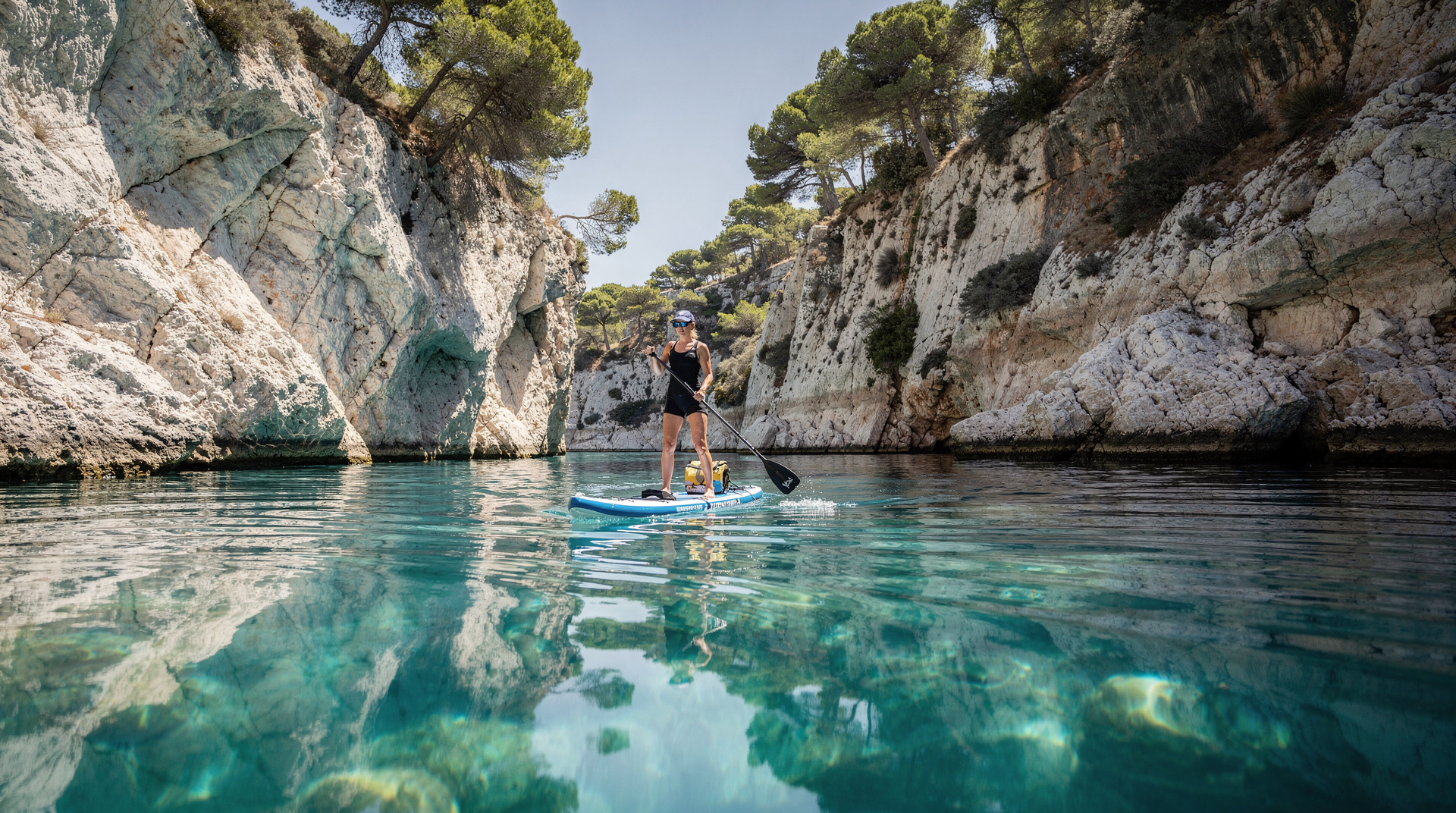
Stand-up paddleboarding and kayak: Rental operations on the Prado beaches offer SUP boards and kayaks by the hour or half-day in summer season (typically May–September). The Prado is calm enough for beginners in most conditions; in the occasional mistral wind, conditions become more challenging.
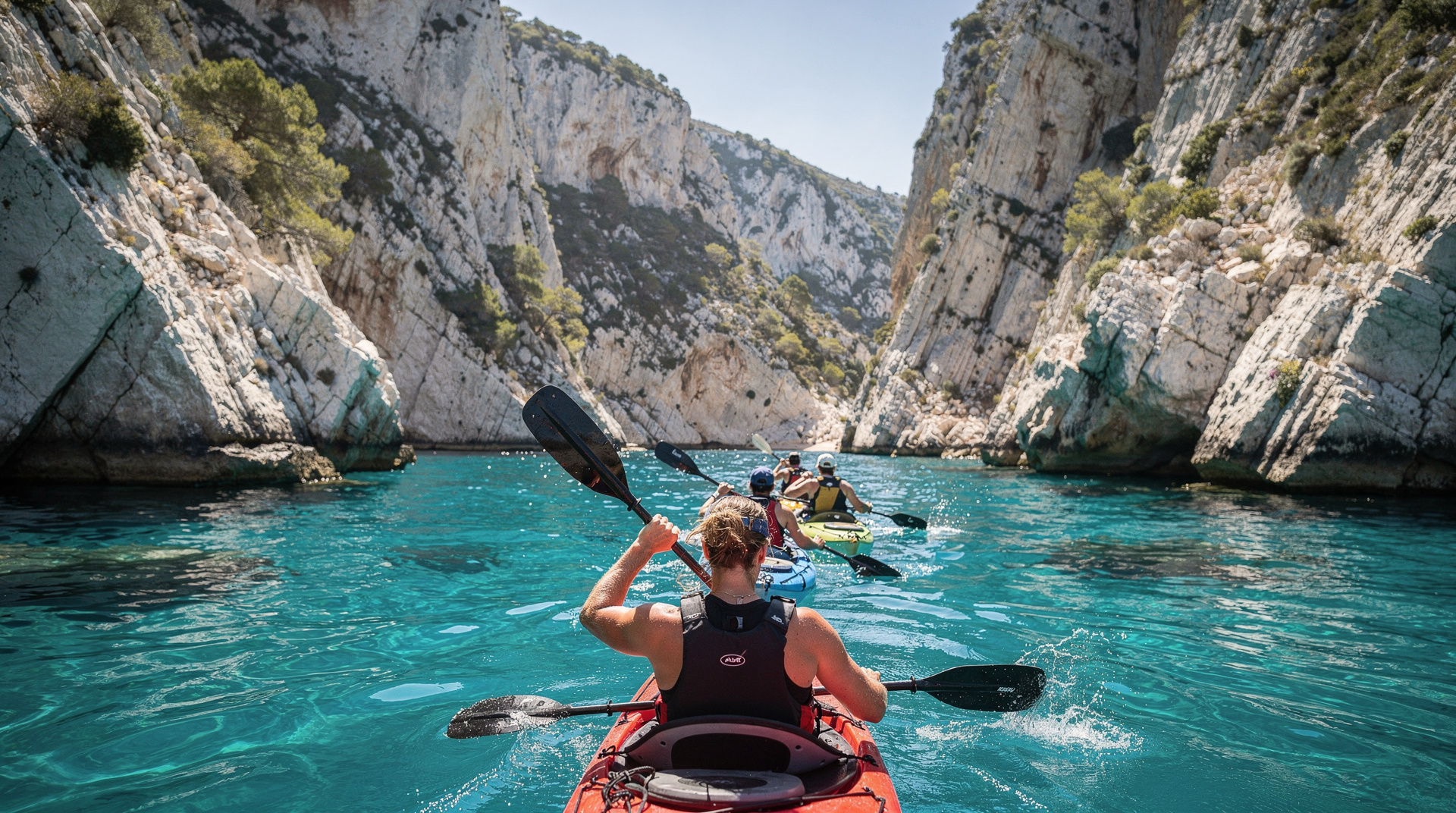
Guided kayak and SUP tours: Guided sea kayak tours departing from Les Goudes — the small fishing village at the southern end of the Corniche — reach the beginning of the Calanques. These are one of the best ways to access the Calanques without a boat tour. See our kayaking the Calanques guide.
E-bike coast and Calanques tours: Several operators run guided e-bike tours from the city along the Corniche to the Calanques edges. These cover the full scenic sequence — Vieux-Port, Corniche, Prado beaches, and the beginning of the Calanques road — in a half-day or full-day format.
The route south: from Prado to the Calanques
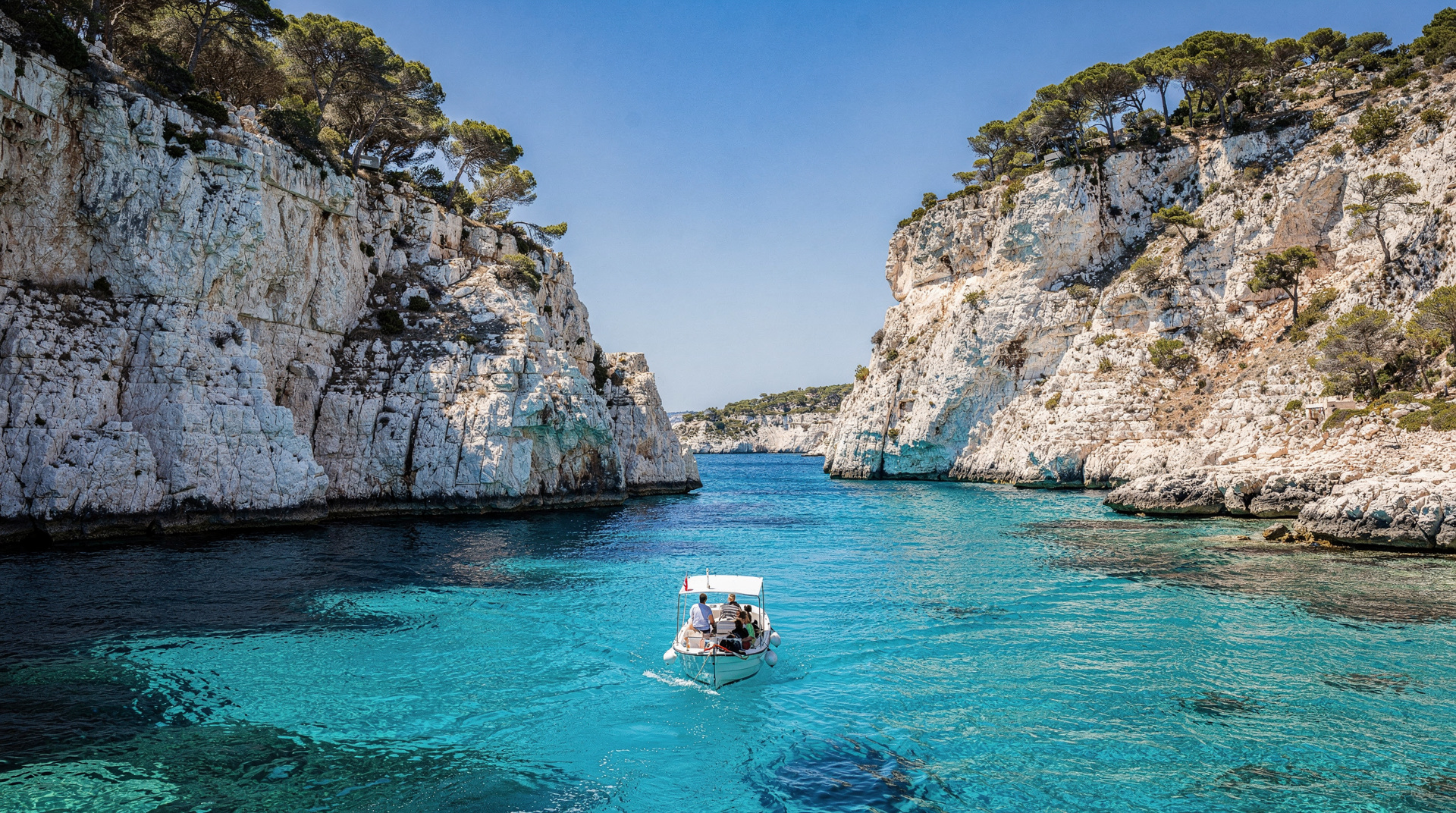
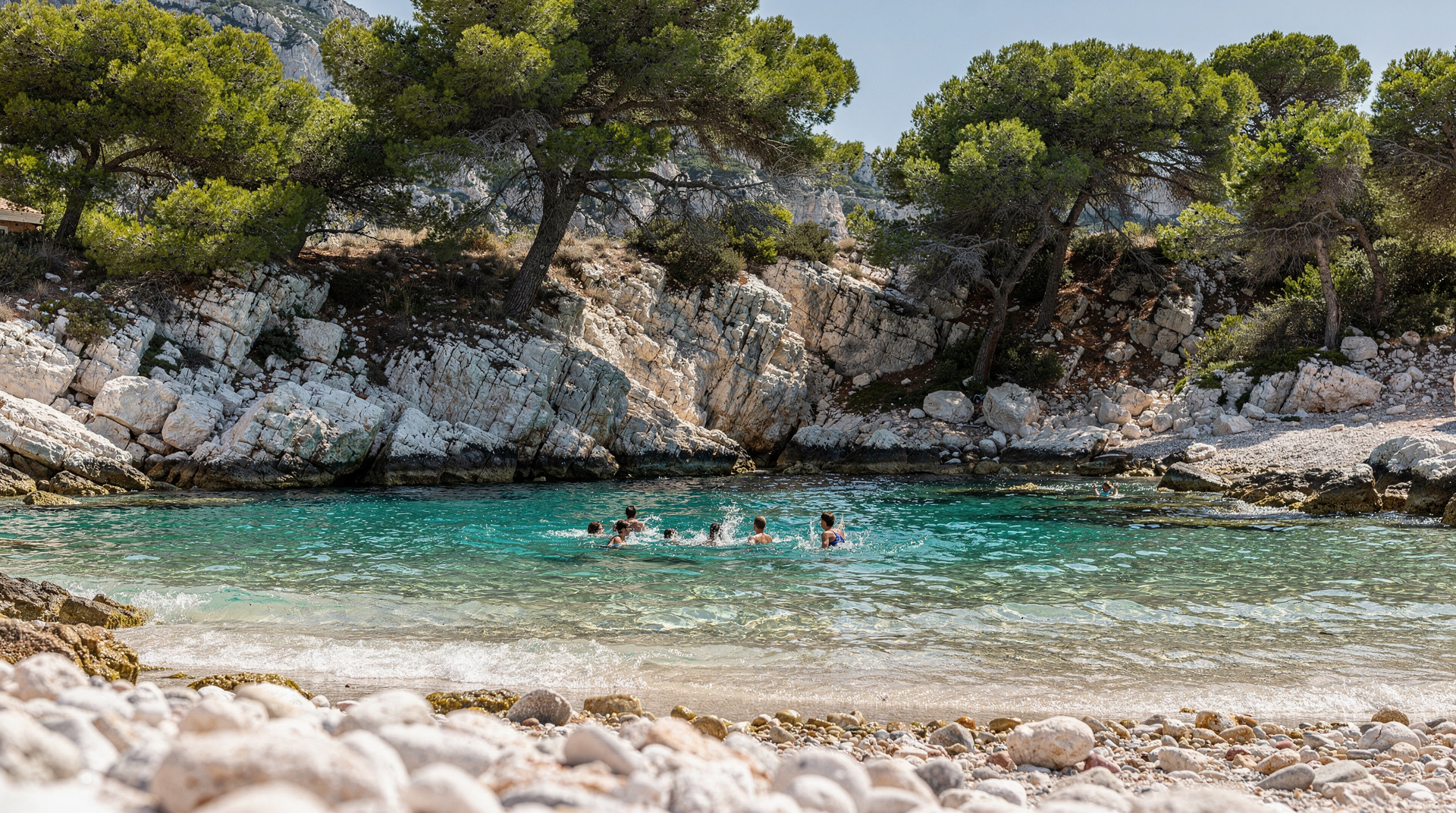
Beyond the Pointe Rouge marina, the road continues south through the village of Les Goudes and into the Calanques National Park. This is where urban Marseille ends and raw limestone coast begins.
Les Goudes is a tiny fishing village — a cluster of coloured houses on a small harbour — that functions as the gateway to the Calanques from the Marseille side. Stand-up paddle tours, kayak rentals, and guided sea-kayak excursions depart from here. The road beyond Les Goudes eventually reaches the Calanque de Callelongue — the westernmost calanque — and the beginning of the GR98 coastal path.
Getting to Les Goudes without a car: Bus 20 from Castellane métro runs to Les Goudes (approximately 30–40 minutes). Outside summer peak, buses are infrequent — check the RTM schedule before relying on this option. An e-bike from the Vieux-Port to Les Goudes (via the Corniche) is approximately 45–60 minutes and entirely manageable with the e-assist.
Les Goudes has its own destination page, and if you plan to swim or paddle once you get there, the best beaches in Marseille guide helps you compare this coast with the other options. Anyone weighing up a longer day on the water can also read the Calanques boat tour guide.
Notre-Dame de la Garde from the Corniche
The hilltop basilica deserves a visit of its own, and our Notre-Dame de la Garde guide explains how to fit it around a day on the coast.
From any point on the Corniche, Notre-Dame de la Garde is visible on its hilltop to the north — the golden statue of the Virgin at the top of the basilica tower catches the light at any time of day. The basilica is open daily from 7:00 to 19:00 (20:00 in summer) and is free to enter. From the Corniche, the approach by foot goes uphill through the Endoume neighbourhood (30–40 minutes from Catalans beach), or by bus 60 from the Vieux-Port area (15 minutes).
The Corniche by e-bike: the recommended approach
Of all the ways to experience the Corniche, the electric bike is the most satisfying. The Corniche is 5 kilometres long — too far to walk comfortably in both directions in summer heat, and too short to justify a full car rental for the day. An e-bike from the levélo system (available at stations near the Vieux-Port) covers the full length in 20–25 minutes in each direction, allows stops at every point of interest, and costs around 1 EUR for the first 30 minutes.
The sequence by e-bike:
- Pick up an e-bike at the Vieux-Port
- Follow the coastal path south toward Endoume
- Descend the steps to Vallon des Auffes (lock the bike at the top)
- Return to the bike, continue south along the Corniche
- Catalans beach (brief stop, or swim if you have time)
- Continue south along the Corniche road, bike lane separates you from traffic in sections
- Prado beaches (main stop, swim, lunch)
- Continue to Parc Balthazar and Pointe Rouge if desired
- Return north by the same route, or put the bike in dock and take bus 83 back
Total cycling time for the full route (one way): approximately 35–40 minutes, not counting stops. The round trip with stops and a swim at the Prado takes a comfortable half-day.
The sea and swimming conditions
Marseille’s Mediterranean coastline has the reputation of being cleaner than it deserves at times — and also dirtier than it deserves at others. The reality in 2026:
Water quality: The Prado beaches and Catalans cove are monitored regularly by the city and the Agence Régionale de Santé. Water quality is generally good (classified “excellent” or “good” in most recent seasons), with occasional closures after heavy rain events that flush urban runoff into the sea. Check the latest monitoring results at the beach information boards.
Jellyfish: In late summer (August–September), jellyfish (meduses) can appear in the bays in varying densities. Most species in the Mediterranean are mildly stinging at worst. Pelagia noctiluca (the mauve stinger, a small luminescent jellyfish) can cause more significant stings — if these are reported at your beach, swim with caution or avoid.
Undertow: The Mediterranean at the Prado beaches is generally calm, without Atlantic-style surf or strong undertow. In the mistral wind (a cold northwest wind that can blow for 3 to several days, particularly in spring and autumn), conditions on open beaches become choppy quickly. Catalans cove, being slightly sheltered, is more protected.
The best swimming windows: June before the summer peak, and September after. Water temperature is 22–25°C, beach crowds are manageable, and the light is exceptional. July–August is perfectly swimmable but the beach footprint is at maximum.
Vallon des Auffes: don’t skip this
The Vallon des Auffes deserves its own extended mention because it is one of the most distinctive spots in Marseille and is regularly bypassed by visitors who do not know the descent exists.
The calanque — a miniature inlet, really, perhaps 80 metres across — sits directly beneath the Corniche road bridge. The road passes overhead; you descend a staircase to reach the fishing port level. The scale shift is dramatic: above is a 4-lane coastal road with city noise; below is a tiny world of coloured fishing boats, net-mending, and terrace restaurants so close to the water that their tables hang over the sea edge.
The Vallon des Auffes has been a fishing community since the early 19th century. The traboucayres — the fishermen who worked the small boats with the distinctive grappling nets — gave the inlet its character. Today, a handful of restaurants occupy the ground floors of the old fishing cottages, and the fishing boats still moor here, though the fleet has shrunk considerably.
The Vallon des Auffes destination page gives the short version of the place, and our blog post on sunset at Vallon des Auffes shows why so many people return in the evening light.
For lunch or dinner, arrive early or reserve in advance. Tables with water-level views fill first. The menu at any of the Vallon restaurants typically focuses on local fish (prepared simply — grilled, baked en papillote, or in a bouillabaisse variant). Prices are mid-range by Marseille seafood standards: honest rather than cheap, good rather than tourist-trap.
The residential neighbourhood context
The streets immediately behind the Corniche and the Prado beaches — the 7th and 8th arrondissements — contain residential Marseille that most tourists never see. Wide boulevards lined with plane trees, local bakeries, neighbourhood brasseries where the prix-fixe at noon costs 14 EUR, pharmacies, schools, sports clubs. The Prado/Endoume/Saint-Victor zone is where the middle-class professional Marseille of government workers, teachers, and doctors actually lives.
Staying in this area (particularly for families or those on longer visits) gives access to a different Marseille rhythm: morning coffee at the neighbourhood café rather than the tourist-facing Vieux-Port espresso bars, shopping at the local market rather than the tourist souvenir stalls. The city feels more normal here — less photogenic but more real.
Walking vs cycling vs bus: which suits your day
| Option | Time (full Corniche) | Best for |
|---|---|---|
| Walking | 1h15-1h30 one way | Those who want to linger, no rush |
| E-bike | 35-40 minutes one way | Covering the whole sequence with stops, the recommended approach |
| Bus 83 | 20-30 minutes one way | Heat, fatigue, or a specific single stop |
Frequently asked questions about Prado and Corniche guide
Can you walk the whole Corniche in one go? Yes, in around 1h15-1h30 one way, but it’s exposed with little shade — most visitors prefer to cycle it or use bus 83 for part of the route and walk the scenic sections like Vallon des Auffes and Catalans.
Is the Corniche safe and pleasant to cycle for a family with kids? The Corniche has a dedicated cycle path for much of its length, separated from traffic in sections, making it manageable for confident young cyclists with adult supervision; less confident riders may prefer the bus for busier stretches.
For the full picture of Marseille’s coastal zone in relation to the rest of the city, see our neighbourhoods guide. For families specifically, see our best area to stay for families guide.
Top experiences
Bookable activities with verified prices and instant confirmation on GetYourGuide.