Vieux-Port area guide
Marseille: Old Port walking tour with boat ride and local tasting
What is there to do in and around the Vieux-Port in Marseille?
The morning fish market (8:00–noon), Fort Saint-Jean (free), MuCEM (15-min walk, 11 EUR entry), the free cross-harbour ferry, evening sunset aperitif, and boat-tour departures for the Calanques, Frioul and Château d'If — all within 20 minutes' walk.
The harbour that made Marseille
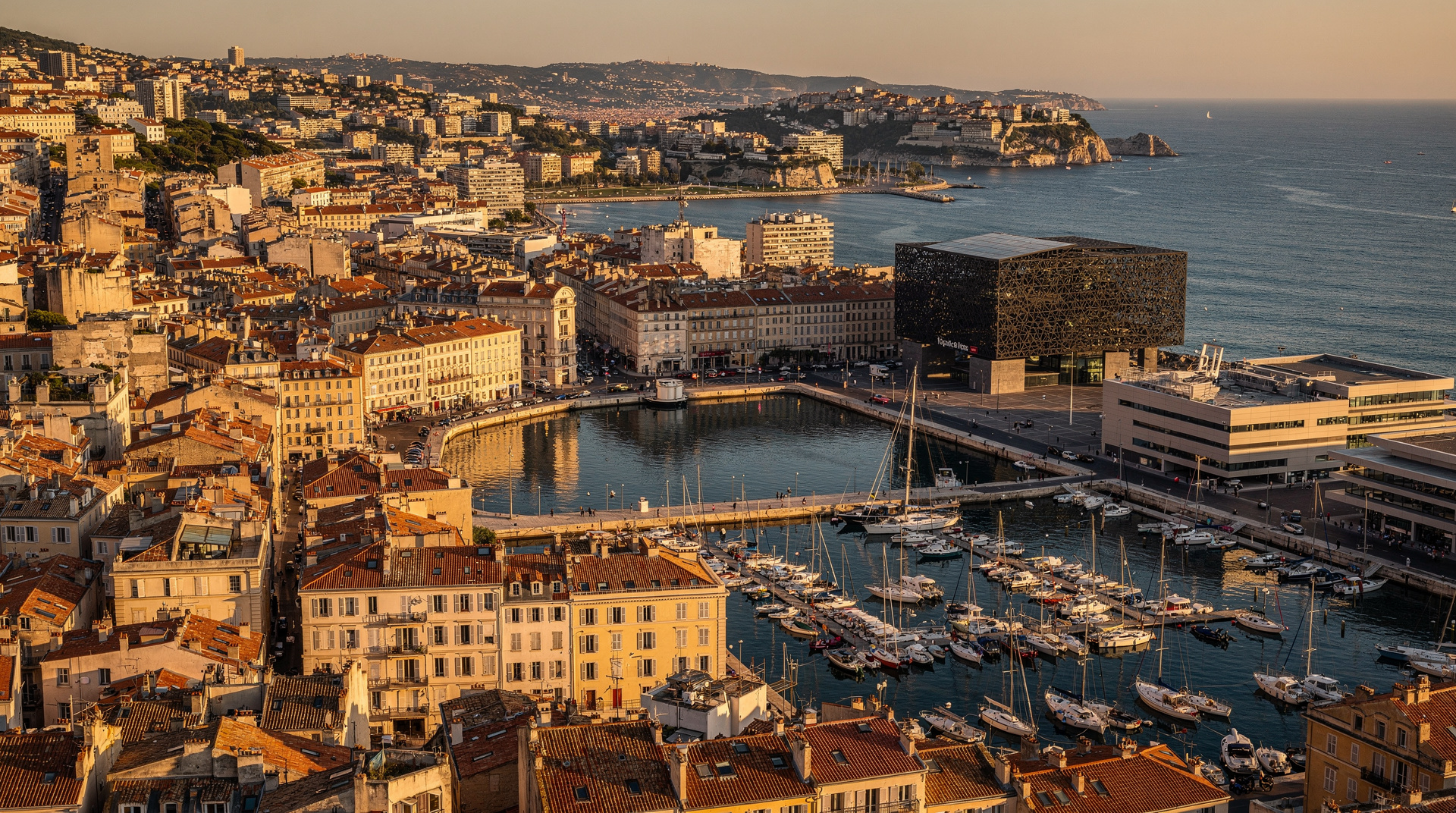
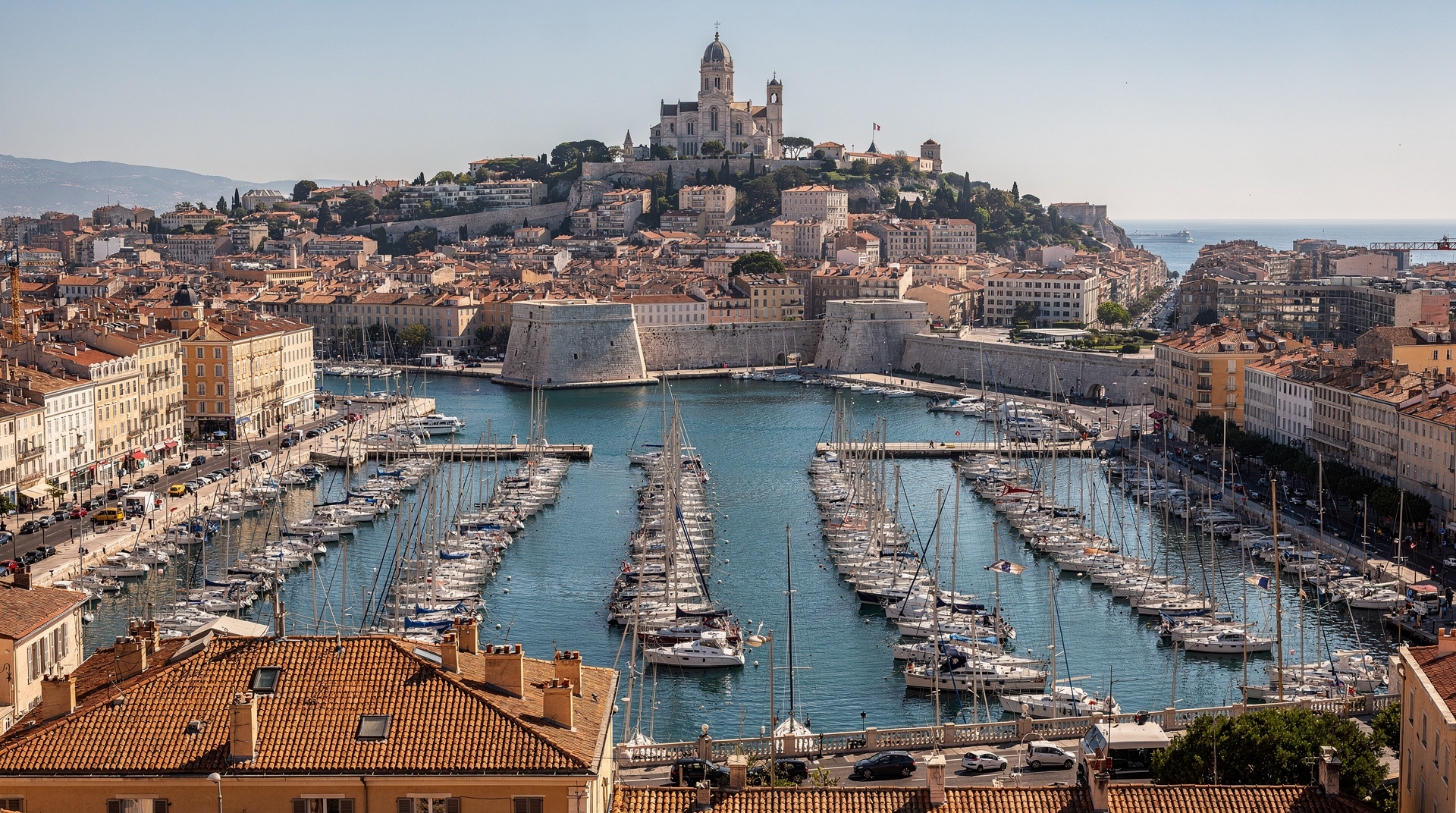
The Vieux-Port is not a monument you visit — it is the working core of a city that happens to look extraordinary. The rectangular harbour basin, stretching roughly a kilometre from the open Mediterranean to the Quai des Belges at the eastern end, has been the reason for Marseille’s existence since Greek traders from Phocaea moored here around 600 BCE and called the settlement Massalia.
The Romans deepened the harbour and built walls around it. The medieval city grew on the hills behind it. Louis XIV fortified its entrance in 1660 with two forts facing each other across 300 metres of open water. The MuCEM arrived in 2013. The fish market has been running, in roughly the same spot, for centuries. All of this makes the Vieux-Port the densest accumulation of Marseille’s timeline in a single walkable area.
This guide covers what to do in the area in detail: the morning, the afternoon, the evening, and the specific decisions (like which restaurants are worth it) that determine whether you spend money wisely or feed a tourist trap.
| At a glance | |
|---|---|
| Where | Around the harbour basin from Quai des Belges to Fort Saint-Jean and MuCEM, 1st arrondissement |
| Cost | Free to walk, visit both forts and the ferry; MuCEM entry around 11 EUR; bouillabaisse around 55–80 EUR per person |
| Time needed | A relaxed half-day, or the full 90-minute perimeter walk plus a meal |
| Getting there | Metro Vieux-Port (M1), walkable from Gare Saint-Charles in 15 minutes |
| Best time | Morning for the fish market, late afternoon to sunset for the apéritif hour |
The morning: fish market and the quai at dawn
The fish market at Quai des Belges operates every morning from around 8:00 to noon. The fishermen — who have been out since before dawn on the Mediterranean — sell directly from their boats and from tables set up along the eastern quai. The range changes entirely with the season and the overnight catch: rouget (red mullet), loup de mer (sea bass), daurade (sea bream), poulpe (octopus), sea urchins in winter and spring, and the bony rockfish (chapon, rascasse) used in proper bouillabaisse.
What to know before you arrive:
- Before 9:00 is the best time. After 10:00, the best fish is gone and only the slower-selling items remain
- You do not need to buy to enjoy this. Standing at the edge of the market for 20 minutes, watching the negotiations between fishermen and local restaurant buyers, is a legitimate morning activity that costs nothing
- The fish market is the primary pickpocket hotspot in Marseille — the crowd focuses on the fish, bags are forgotten. Hold your bag across the body, front pocket for the phone
The Ombrière canopy — the large stainless steel reflective shelter designed by Norman Foster, installed in 2013 — stands at the Quai des Belges end of the port. Its underside mirrors the quai and the city upside-down in a startling way. It functions as both meeting point and photography destination. The old fish auction hall (criée) once stood on the same spot.
The forts: Saint-Jean and Saint-Nicolas
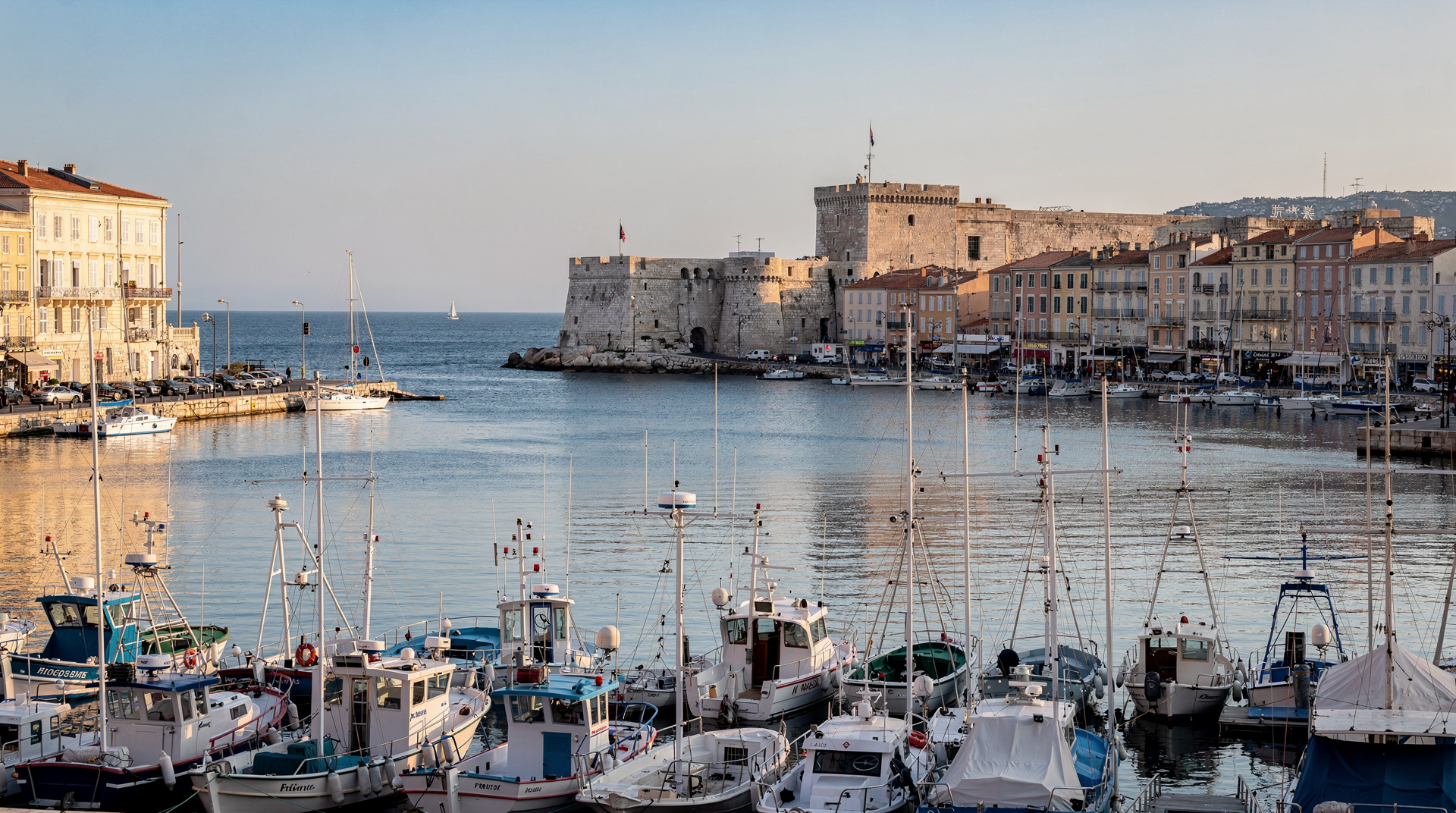
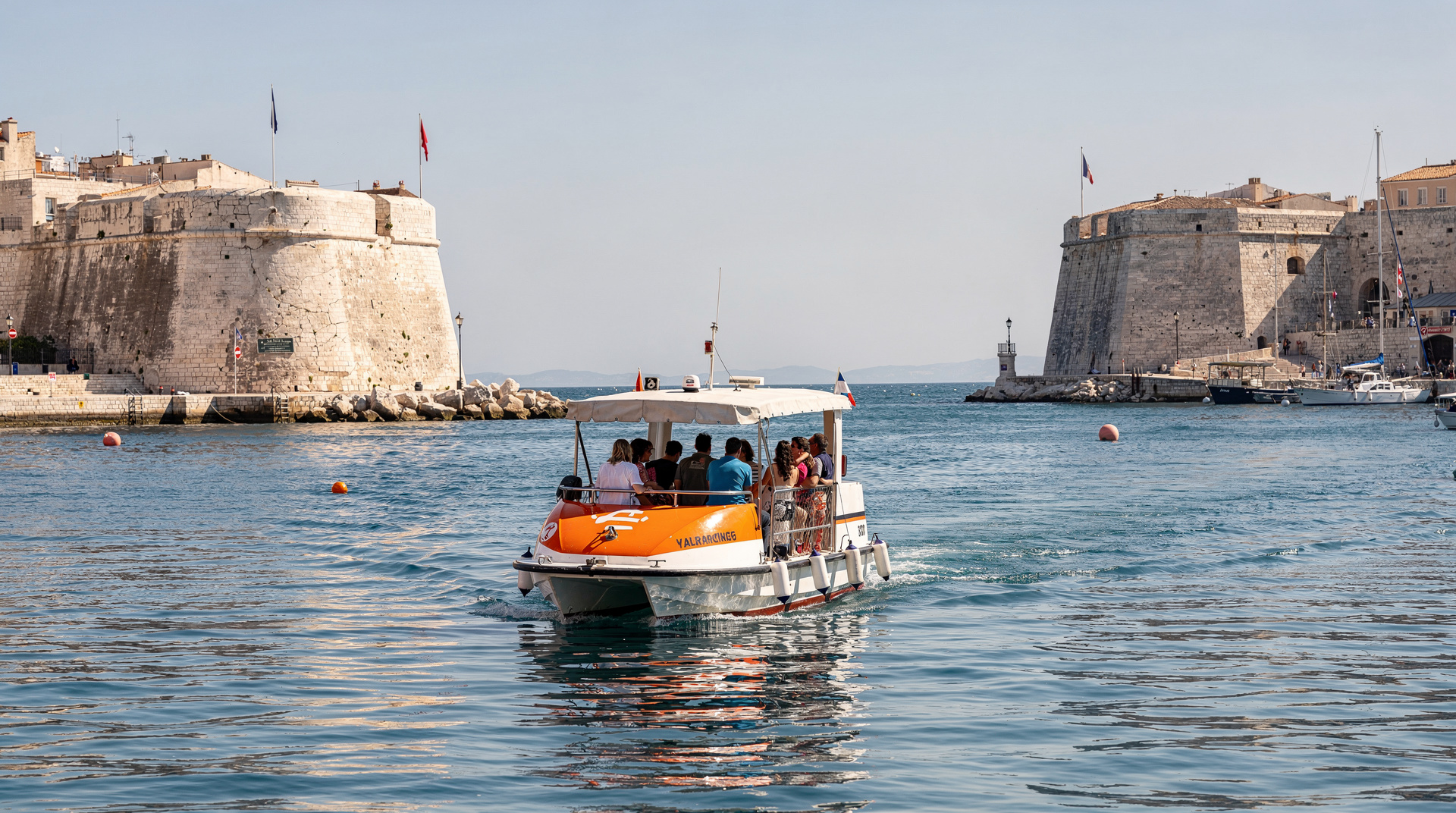
The two fortifications at the harbour entrance are among the most striking pieces of military architecture in France — not because they are grand (they are functional rather than ornamental) but because of their position: facing each other across the port mouth with the open sea between them.
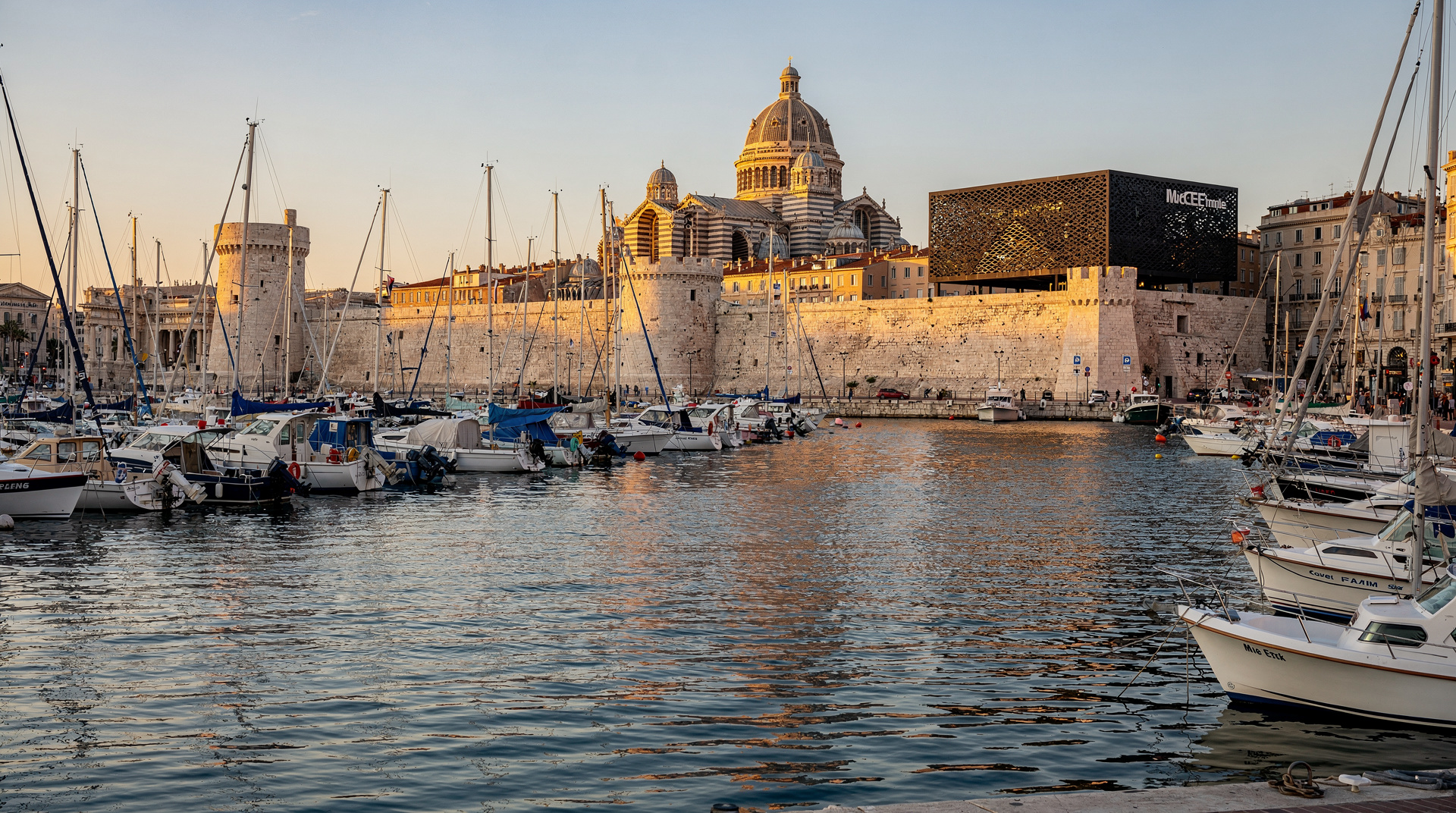
Fort Saint-Jean (north headland): Built on the orders of Louis XIV in 1660, both to control the harbour and to keep the rebellious Marseillais under royal authority — an early form of urban surveillance architecture. In 2013, Fort Saint-Jean was integrated into the MuCEM complex, with a suspended footbridge connecting the fort’s ramparts to the museum’s roof terrace. The fort itself is free to enter during MuCEM opening hours (Wednesday to Monday, 10:00–18:00). The view from the ramparts looking back across the harbour — Notre-Dame de la Garde on the hill to the left, the city centre to the right, the two quais stretching east — is one of the best urban views in the south of France.
Fort Saint-Nicolas (south headland): Under ongoing restoration and not fully open to visitors. Its silhouette from the water — and from the opposite fort’s ramparts — is striking at golden hour. The Palais du Pharo, behind Fort Saint-Nicolas on the Endoume promontory, is now a congress centre (built by Napoleon III for his wife Empress Eugénie). Its terrace gives another panoramic view over the harbour mouth, though access depends on conferences scheduled there.
The free cross-harbour ferry
The navette du Vieux-Port is free, runs throughout the day and into the evening, and crosses the harbour in 5 minutes. It connects Quai des Belges (north side, fish market) to Quai de Rive Neuve (south side, theatre and restaurants). Most tourists miss it; locals use it constantly.
Why it matters practically: Walking around the perimeter of the Vieux-Port takes 20–25 minutes and requires navigating traffic. The ferry does the same journey in 5 minutes for free. If you are on the south quai and need to reach Le Panier, MuCEM, or the fish market — or vice versa — the ferry is faster than any other option.
Since 2025, the ferry is free for all passengers with no ticket required. Simply board and cross.
The walk to MuCEM
From the Quai des Belges, the walk to MuCEM takes approximately 15 minutes along the north quai. The route:
- Walk west along Quai du Port (north side of the harbour)
- Continue to the harbour entrance — Fort Saint-Jean is ahead of you on the left
- Enter Fort Saint-Jean via the main gate (free, during MuCEM hours)
- Walk through the fort’s internal gardens and rampart walkways
- Cross the suspended footbridge directly into the MuCEM building
The exterior of MuCEM — the “résille” (concrete latticework) that wraps the entire structure, casting shifting geometric shadows — is worth seeing even if you do not enter the museum. The esplanade below the museum, the vertical garden on the exterior face, and the views from the MuCEM roof terrace (accessible with entry or from Fort Saint-Jean’s connecting walkway) are all free during opening hours.
Entry to the museum itself is 11 EUR (reduced 7.50 EUR). Free on the first Sunday of each month. The exhibitions cover Mediterranean civilisations across Europe, North Africa, and the Middle East — appropriate for a museum at the historic gateway between France and the sea.
Where to eat around the Vieux-Port
The honest assessment: Most restaurants on the north quai (Quai du Port) and the immediate waterfront are expensive and mediocre. They operate on footfall and tourist pricing. The exceptions exist but are not identifiable by location alone.
Where to eat well:
- The streets immediately behind Quai de Rive Neuve (south side), one or two blocks back from the water, have several good restaurants at normal prices
- Cours Estienne-d’Orves, the square 200 metres south of the south quai, is pleasant for breakfast and has solid brasserie options for lunch
- The streets around Rue Saint-Saëns and Rue Sainte (behind the south quai) hold several reliable addresses
Bouillabaisse: The genuine bouillabaisse — saffron-scented fisherman’s stew served in a two-course ritual with rouille, gruyère, and toasted bread — costs 55–80 EUR per person at restaurants holding the Charte de la Bouillabaisse. Several of these restaurants are near the Vieux-Port. The tourist-facing versions at 25–35 EUR near the market are not the same dish and not worth ordering. See our bouillabaisse guide for the named addresses worth visiting.
Quick lunch near the fish market: The morning fishermen occasionally sell ready-to-eat sea urchins and small portions of cooked shellfish at the market. This is the most direct and honest version of Marseille seafood — no restaurant markup, eaten standing at the quai.
Hotels in and around the Vieux-Port
The Vieux-Port area — particularly the 1st and 7th arrondissements — has the highest hotel density in Marseille for tourists. Prices vary widely:
On the waterfront (Quai du Port, Quai de Rive Neuve): The most expensive positioning. Views directly over the harbour, noise from the quai in summer. Worth it for first nights or special occasions if the harbour view is the priority.
One to three streets back from the water: Better value, quieter rooms, similar walking distance to everything. The streets around Rue Sainte-Victoire and Rue Paradis have several mid-range boutique options.
Le Panier edge (near Rue de la République): Slightly more budget-oriented, older buildings, more residential feel. The Joliette-adjacent hotels on Rue de la République itself are functional rather than atmospheric.
What to avoid: Hotels described as “Vieux-Port adjacent” that are actually near Cours Belsunce (south of Noailles market) are in a significantly different location — convenient for the metro but not for the harbour. Read the map carefully when booking.
The evening: aperitif and sunset
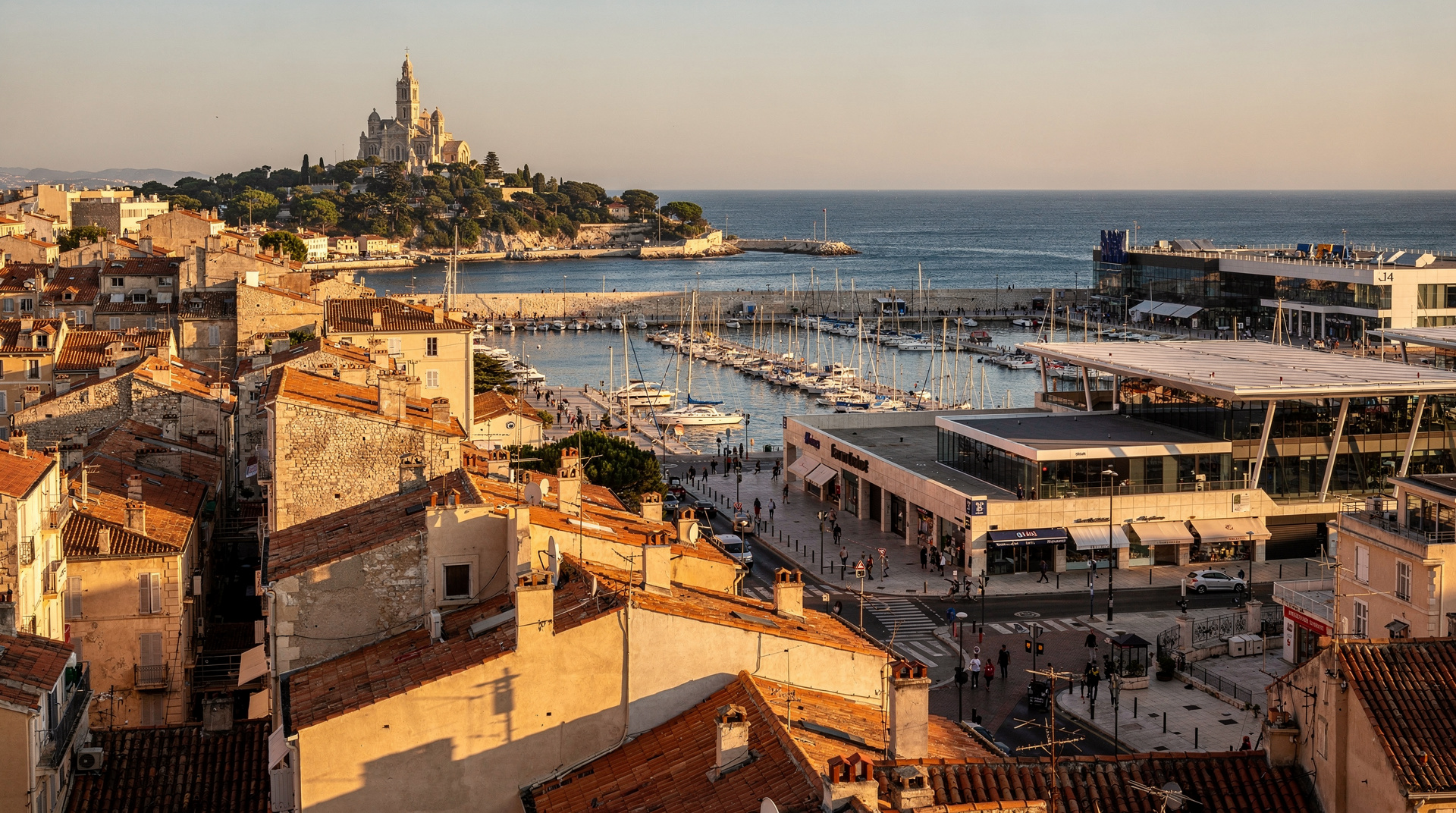
The Vieux-Port in late afternoon and early evening — from roughly 17:00 until 20:00 in summer — is genuinely beautiful. The western-facing harbour entrance catches the setting sun from May through October. The light on the water, on the white stone of the two forts, and on the rigging of the moored pleasure boats is exceptional.
The south quai (Quai de Rive Neuve) fills with Marseille residents for the apéritif hour. A glass of pastis or local rosé at a terrace facing west toward the harbour entrance, watching the sun drop behind the sea line between the forts, is the canonical Marseille evening moment.
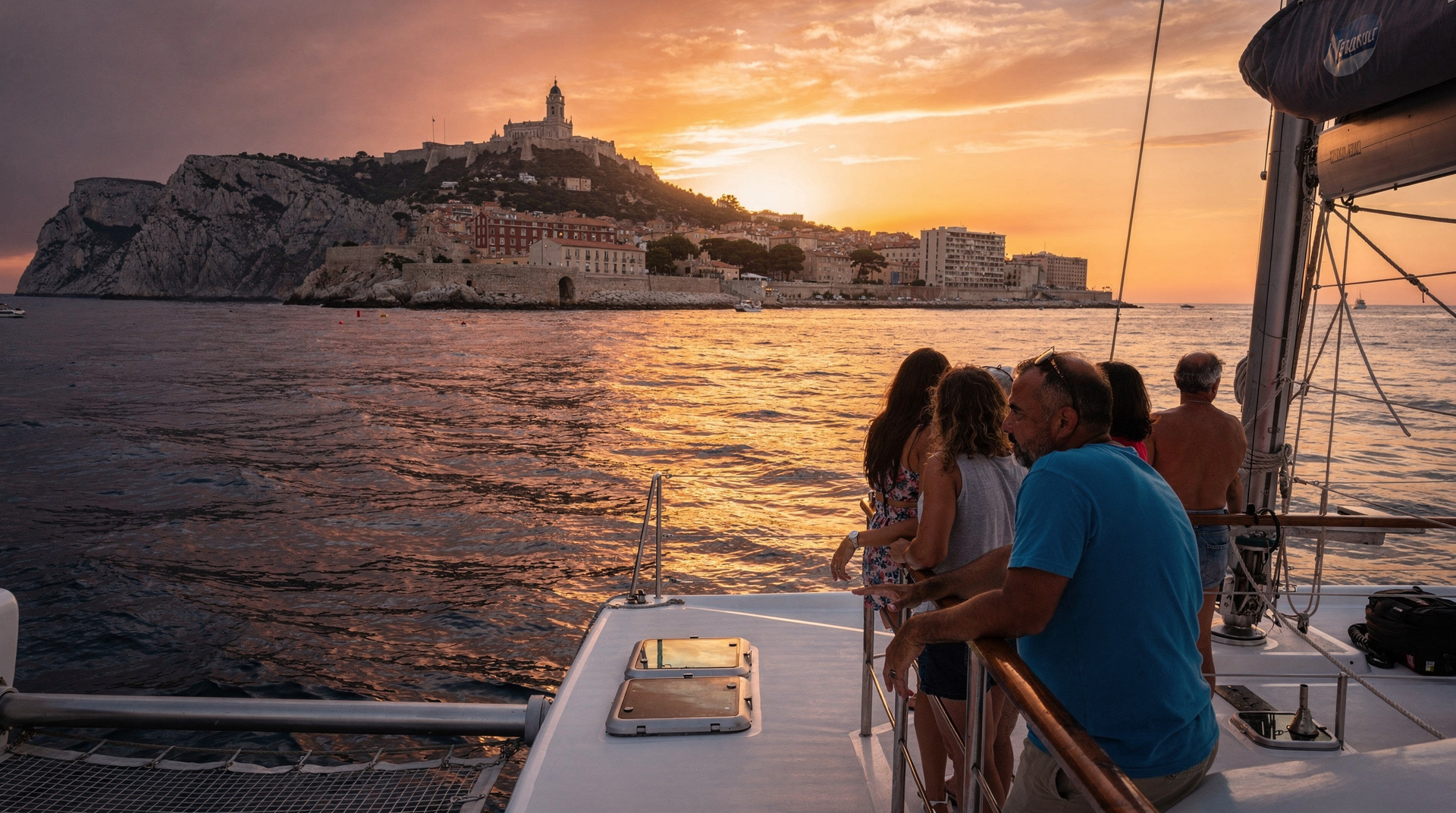
Sunset catamaran cruises: Several operators depart the Vieux-Port in the late afternoon for 1.5–2 hour bay cruises as the light changes. These give an unusual perspective on the city: the two forts from the water, the Corniche coastline, and Notre-Dame de la Garde catching the last light on its hilltop. A good option for first evenings in Marseille.
Boat tours departing the Vieux-Port
The Vieux-Port is the departure point for all major boat activity in the region:
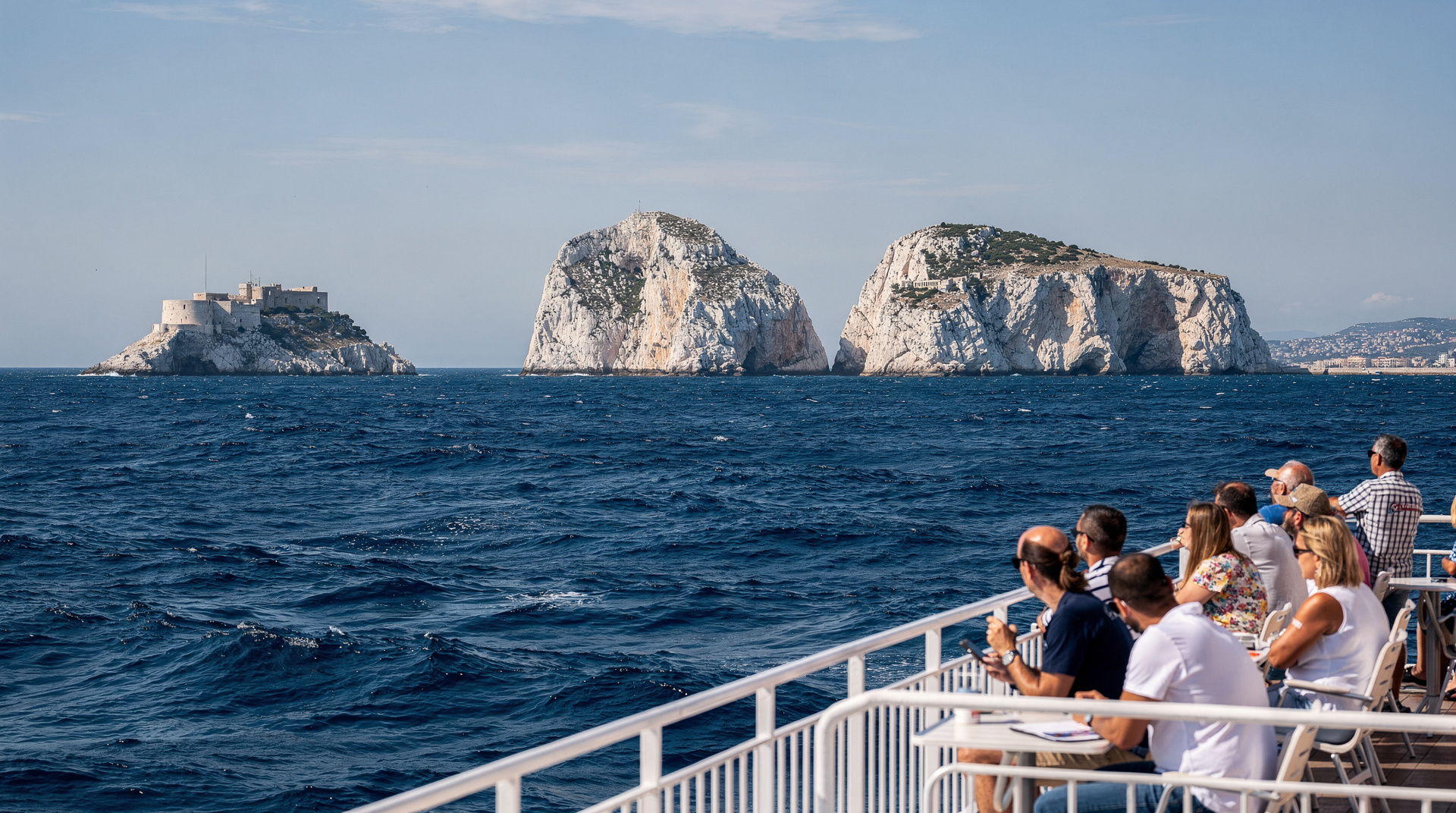
- Frioul Islands — ferry from Quai du Port, 30 minutes, 11.10 EUR return (see our full ferry guide)
- Château d’If — ferry from Quai du Port, 20 minutes, 11.10 EUR return (plus 7 EUR entry on the island)
- Calanques boat tours — half-day or full-day excursions from Quai du Port, multiple operators
- Sunset cruises — various formats and durations, 1.5–3 hours
Where the Vieux-Port leads next
Because the harbour is the hub of the city, it makes a convenient base for what comes after. The Vieux-Port destination page gives the short version of the quarter, while the Marseille destination overview shows how it fits into the wider city. Uphill to the north, Le Panier is the obvious next stop once you have seen the fish market, and on the hill above the south quai, Notre-Dame de la Garde rewards the climb with the view back over the harbour you have just walked. For the museum side of the walk, our MuCEM guide explains what the building offers beyond its exterior.
If you plan to leave the harbour by water, the Frioul Islands and Château d’If are the closest escapes, and our Calanques boat tour guide helps you choose among the operators that depart from the same quai. Moving around the rest of the city is covered in the getting around Marseille guide.
Walking the full circuit
A complete walk of the Vieux-Port perimeter — from Quai des Belges along the north quai to Fort Saint-Jean, through the fort and across the MuCEM footbridge to the esplanade, back along the south quai and across on the cross-harbour ferry — takes approximately 90 minutes at a relaxed pace, including pauses for the fort and the MuCEM exterior.
This is one of the better short urban walks in France: it traces the full history of the port from the fish market through the medieval defensive architecture through the 21st-century cultural regeneration, all at water level with the sea in view throughout.
Shopping and savon de Marseille near the port
Several genuine soap workshops and shops sit within a few streets of the Vieux-Port, alongside plenty of imitation product aimed at cruise-day tourists. Reading a label matters here — the real savon de Marseille is made with a small, fixed list of ingredients and stamped accordingly. See our savon de Marseille shopping guide for which addresses near the port are the genuine article.
Pairing the Vieux-Port with a short Marseille visit
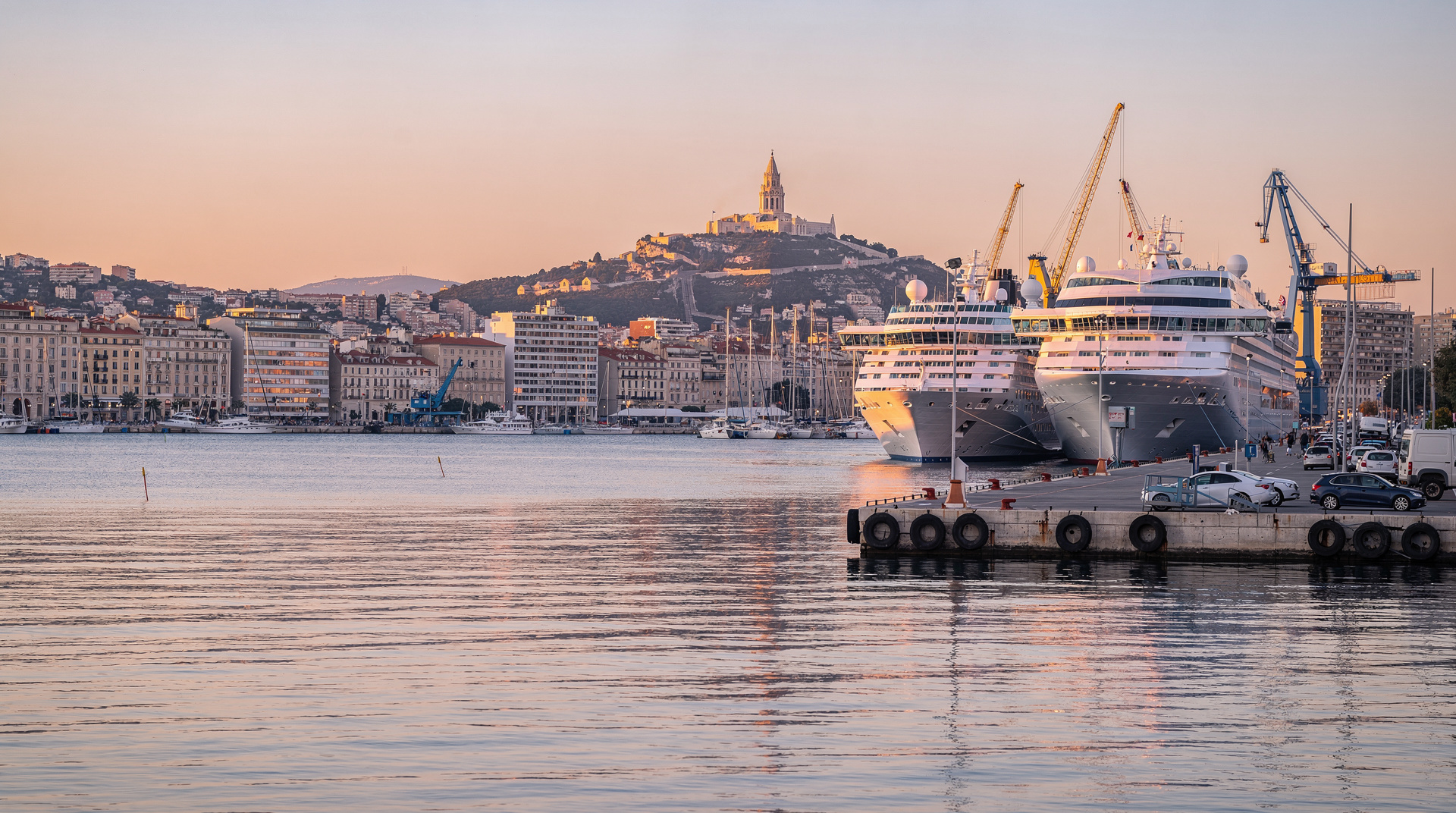
For cruise passengers or anyone with a single day, the Vieux-Port area is the natural spine of a short visit — fish market, forts, MuCEM walk, and an evening apéritif cover the essentials in one loop without needing transport. If you have longer, our one-day itinerary and how many days in Marseille guide show how the Vieux-Port slots into a fuller plan alongside Le Panier, the Corniche, and a Calanques half-day.
Frequently asked questions about Vieux-Port area guide
Is one day enough to see the Vieux-Port properly?
Yes for the highlights — the fish market, both forts, the walk to MuCEM, and an evening apéritif fit comfortably into a single day. Add a bouillabaisse lunch or a boat departure and it becomes a full day rather than a half-day.
Is the Vieux-Port safe at night?
The quais themselves stay busy and well-lit into the evening, particularly the south quai during the apéritif hours. Standard city caution applies — the same pickpocket awareness needed at the morning fish market is worth keeping after dark near crowded terraces.
For the full neighbourhood context — where the Vieux-Port sits in a Marseille visit, and how it connects to Le Panier, Cours Julien, and the Corniche — see our Marseille neighbourhoods guide.
Top experiences
Bookable activities with verified prices and instant confirmation on GetYourGuide.