The ferry to Frioul — a summer afternoon on the islands
Marseille: sailing cruise to Château d'If and the Calanques du Frioul
The view from the Vieux-Port
On a clear summer morning in Marseille, the Frioul Islands are visible from the Vieux-Port like a promise — the low grey-white limestone shapes sitting in the bay, the Château d’If tower visible against the blue. They are close enough to see but far enough to feel like a destination. The ferry takes about fifteen minutes.
| At a glance | |
|---|---|
| Where | Frioul Islands, 15 minutes by ferry from the Vieux-Port |
| Cost | Around EUR 20–25 return, including a Château d’If stop |
| Time needed | Half a day minimum; a full day if you want real swimming time |
| Getting there | GTM ferry from the Vieux-Port quai (advance booking recommended in summer) |
| Best time | Morning departure (9:00–10:00) in July–August for swimming before the crowds |
We had been to Marseille several times before we actually made the crossing. There was always something else to do in the city, another neighbourhood, another reason to defer the islands. In July 2021, the post-pandemic summer was creating its own logic — cities felt more saturated than usual, people were outdoors in a way they had not been for eighteen months, and the idea of a boat and an island and the sea was more compelling than usual.
We bought the ferry tickets at the Vieux-Port quai (they sell in advance, which is advisable in summer) and joined the queue.
The approach
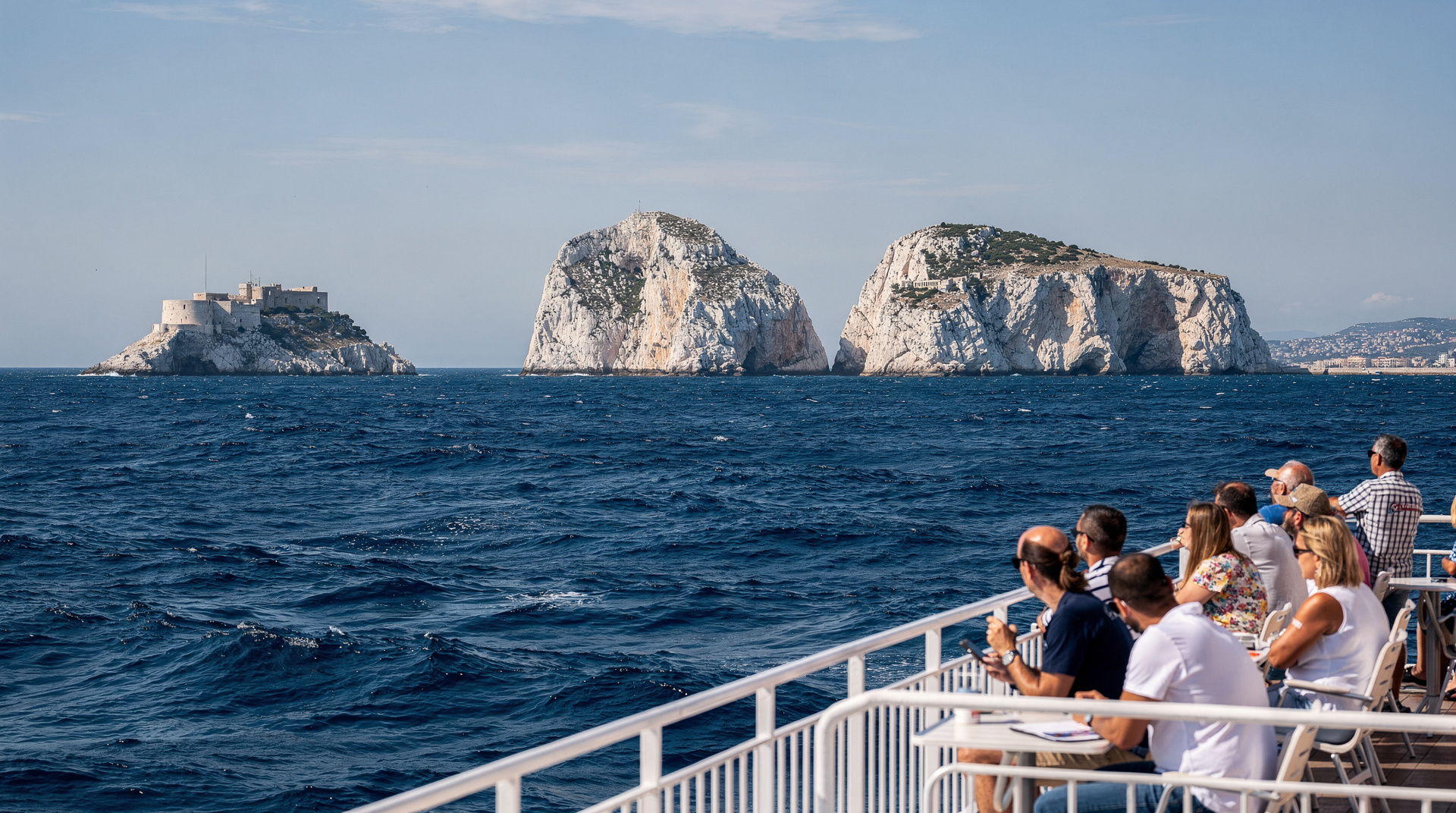
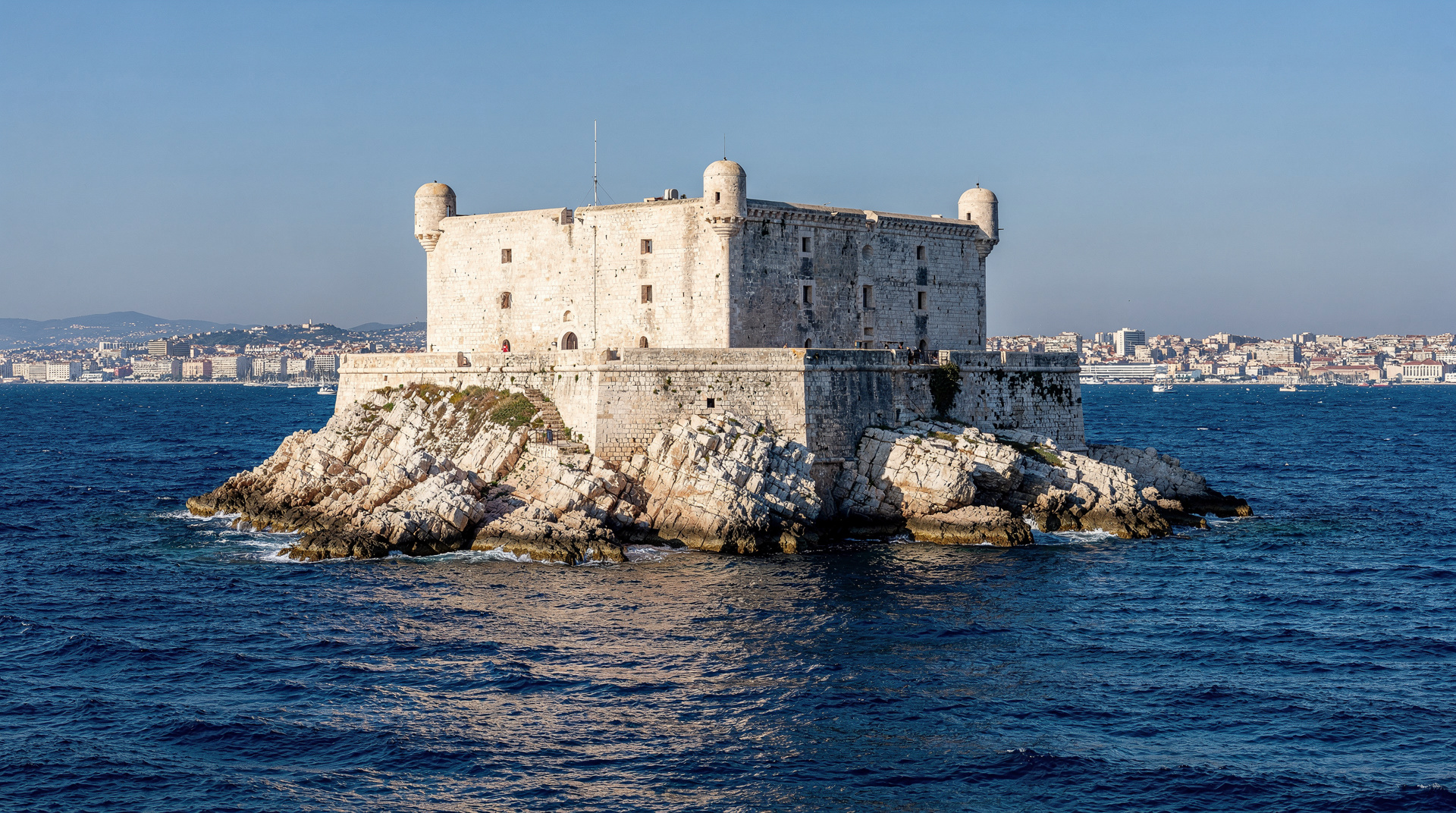
The ferry passes the Château d’If on the way to the main islands. From the water, the fortress is more legible than it is in photographs — a small, almost perfectly square island with a tower rising from a thick base of fortified walls. It was built by Francis I in the 16th century as a coastal defense, converted to a prison almost immediately, and remained one until 1890. Alexandre Dumas used it as the setting for The Count of Monte-Cristo, which has been its main function ever since in the popular imagination.
On a July day, there are multiple boats clustered around the Château d’If landing — the day-tripper ferries, the private boats from the Vieux-Port. We did not stop here. The Château is worth a half-hour if the history interests you, but in summer heat the exposed fortifications are unshaded and the visit is better in April or October. The ferry connection that allows you to stop at the Château and then continue to Frioul runs regularly; you do not need to combine both in one trip.
What Frioul is
The main Frioul Islands — Ratonneau and Pomègues — are connected by an artificial dike and together form the main destination. The ferry lands at the Port de Frioul, a small harbour with a cluster of painted houses, a restaurant or two, and a general atmosphere of an island community that has chosen to remain island-scaled. The population is permanent and small; the houses around the port are inhabited year-round by people who commute to Marseille by the morning ferry.
The islands are largely protected as a nature reserve. Most of the terrain above the port is scrub and limestone — garrigue with the same wild herbs as the Calanques, broom and rosemary and thyme. Several paths cross the islands, and the views back toward Marseille from the higher points are substantial: the city laid out against its hills, Notre-Dame de la Garde visible on its summit, the MuCEM and Fort Saint-Jean at the port mouth.
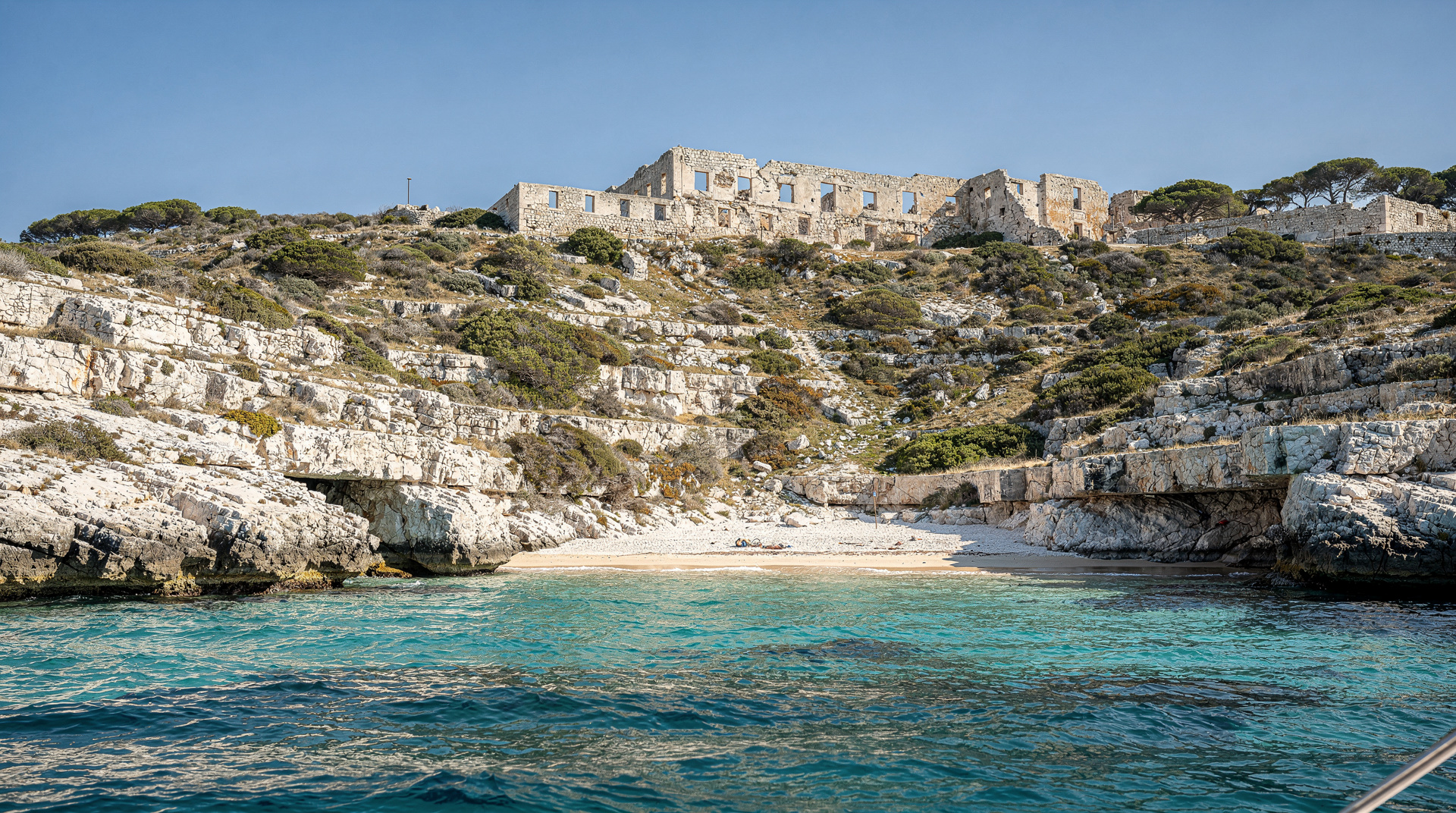
The Caroline Hospital ruins occupy the northeast section of Ratonneau — an enormous complex of neoclassical quarantine buildings from the 19th century, constructed to isolate incoming ships suspected of carrying disease. They are abandoned and partially ruined, open to wander through (unofficially), and in the specific combination of Mediterranean sun and crumbling architecture extremely atmospheric.
Swimming
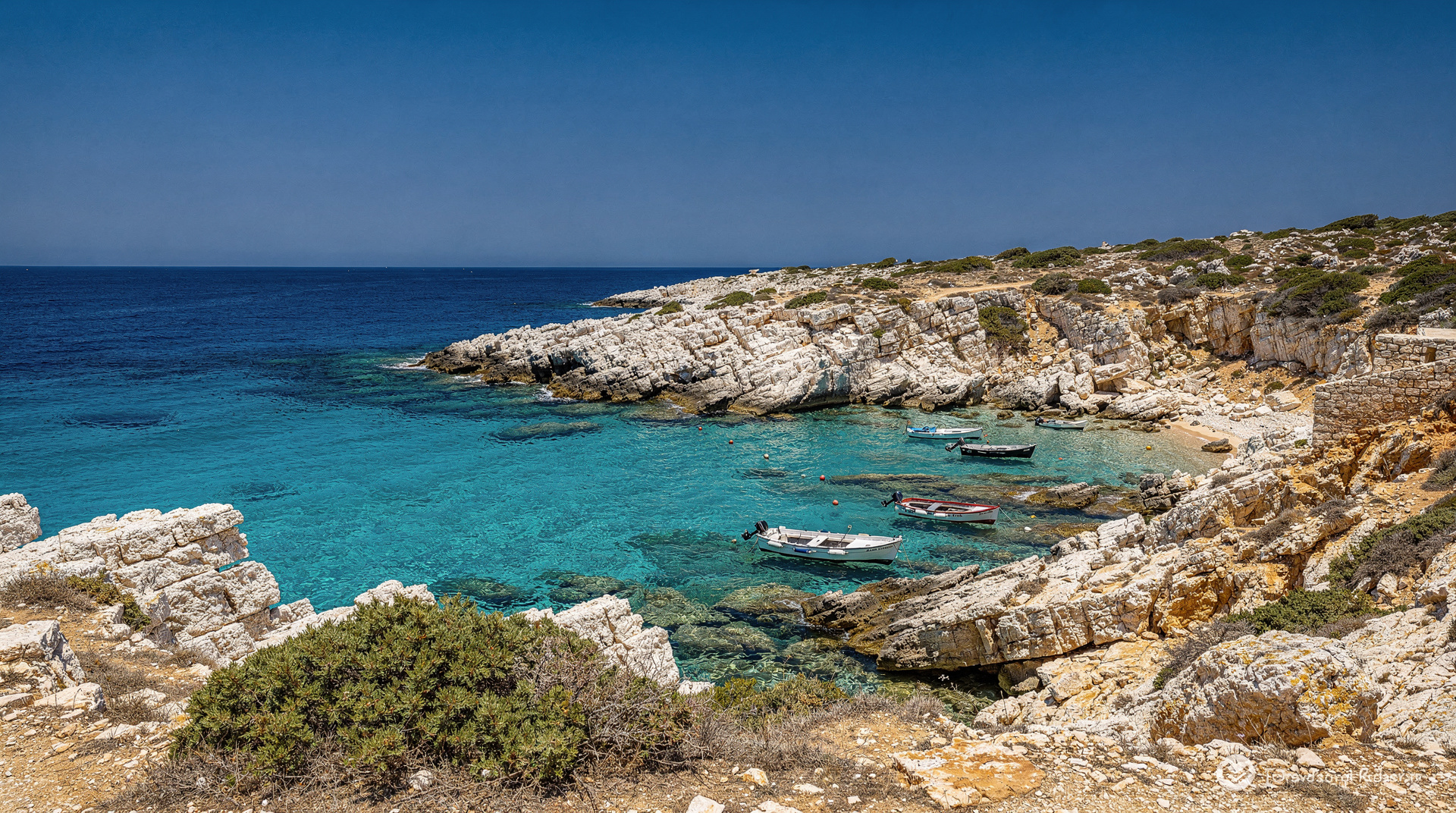
The swimming at Frioul is the most consistently recommended thing about the islands, and it deserves its reputation. There are several coves on the south side of Ratonneau — rocky, clear, deep, with water that has the transparency of water far from any river mouth. In summer the water temperature is 23–25°C. The coves are reached by walking fifteen to twenty minutes from the port.
The most accessible cove is the Plage de la Maison Diamantée, a short walk from the port. The more rewarding ones require more walking. We went south from the port, followed the path toward the lighthouse, and found a cove that had perhaps fifteen people in it on a July afternoon — not empty, but spacious by summer standards. The water was the specific colour that exists only in the western Mediterranean: not tropical turquoise, not the grey-green of northern seas, but an intermediate deep blue-green that is impossible to reproduce in a photograph and only slightly less impossible to describe.
We stayed in the water for a long time.
Frioul versus the Calanques for a swimming day
Visitors weighing Frioul against the Calanques for a swimming day are choosing between two different logistics, not two different qualities of water.
| Frioul Islands | Calanques (e.g. Sormiou, En-Vau) | |
|---|---|---|
| Access | 15-minute ferry, no hiking required | Boat tour, hike, or restricted summer shuttle |
| Crowds | Busy at the port, quieter at the coves | Can be very crowded at the accessible calanques in summer |
| Water | Clear, deep, 23–25°C in summer | Equally clear, often more dramatically framed by cliffs |
| Effort | Low — a flat 15–20 minute walk to the coves | Moderate to high, depending on the calanque chosen |
| Best for | A relaxed half-day, families, limited mobility | Hikers and anyone chasing the classic postcard view |
If the walk to the Calanques sounds like too much for the day, Frioul is the easier win. Our boat versus hike guide goes deeper into that specific trade-off.
The return crossing
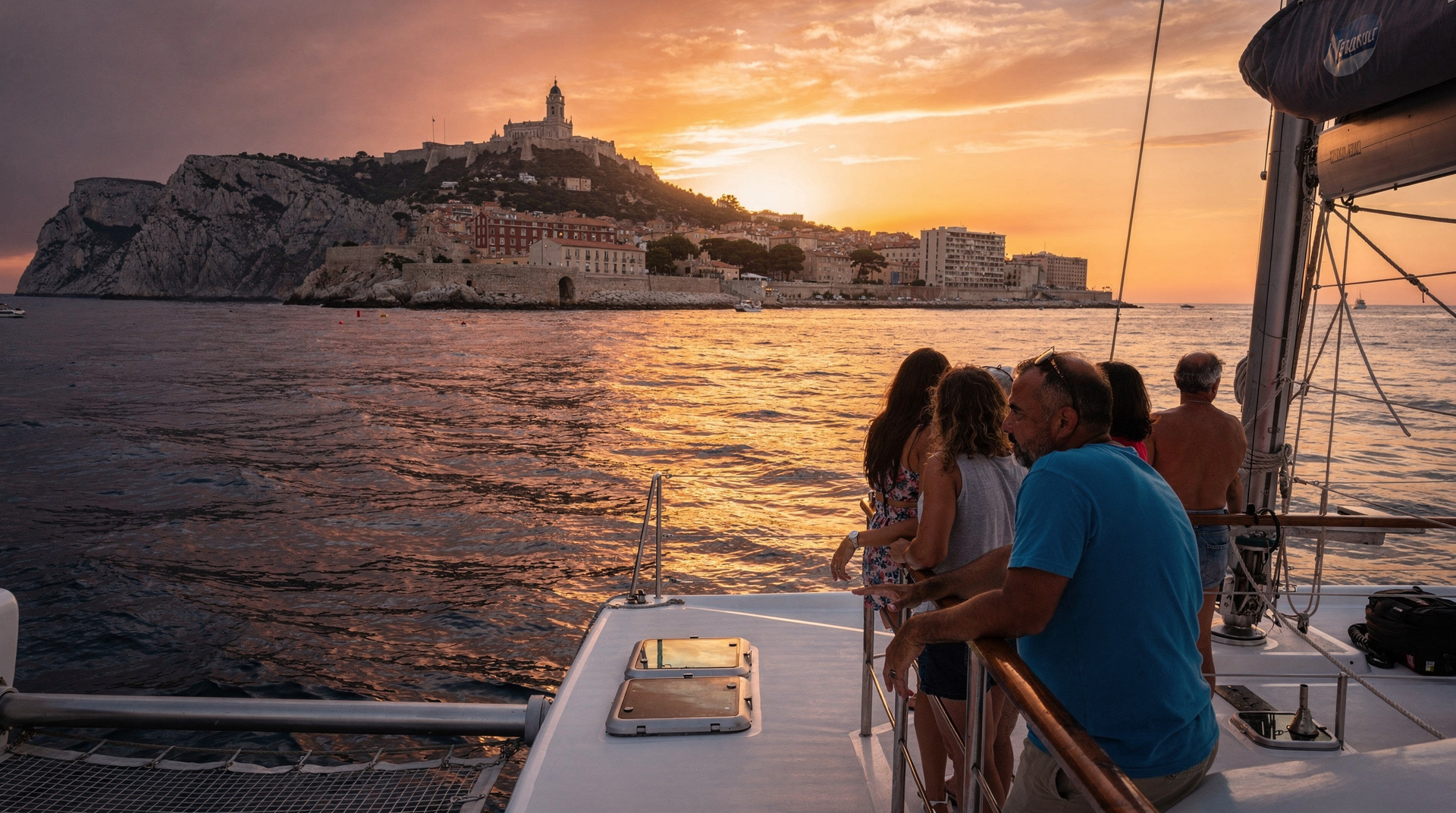
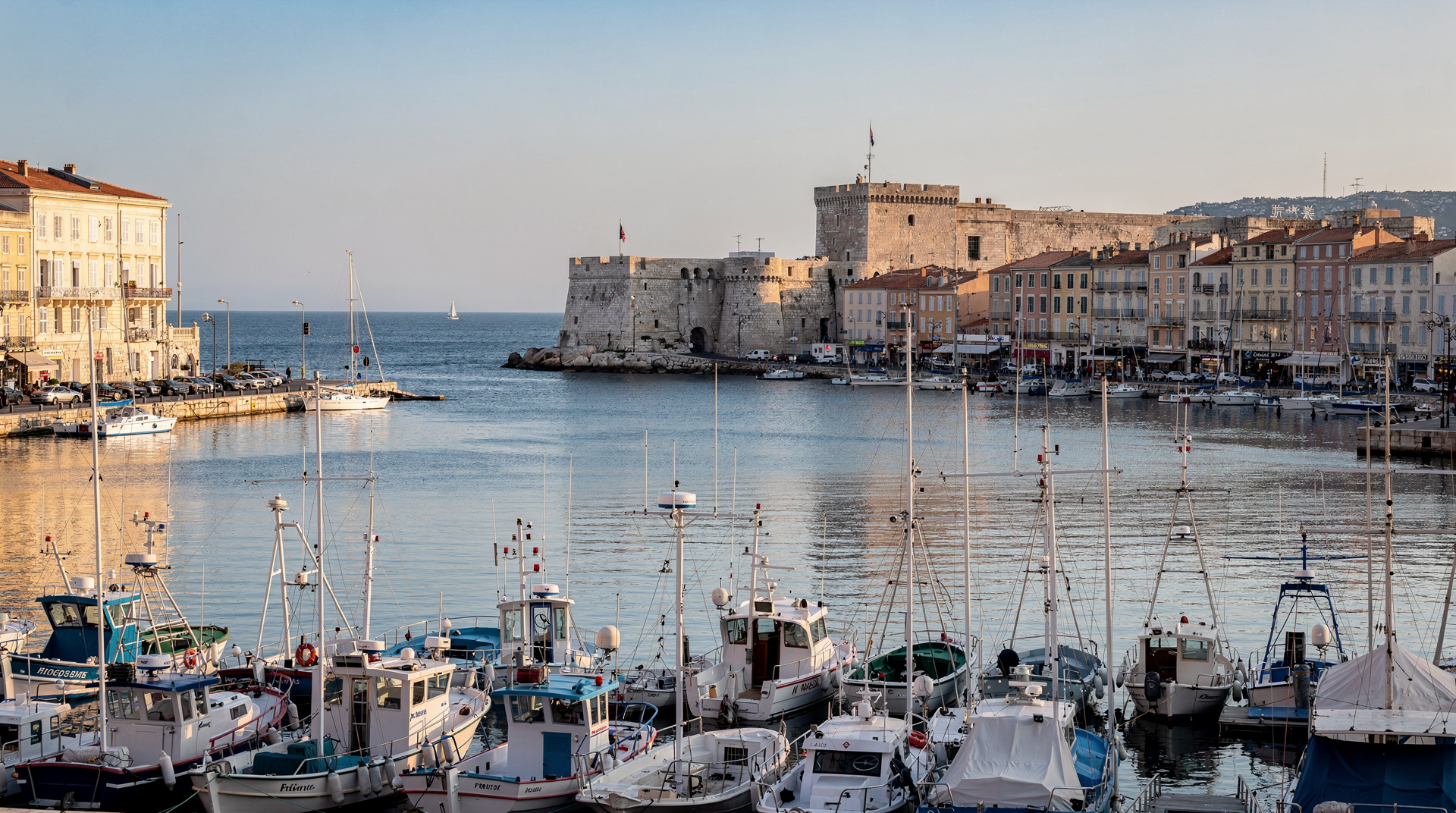
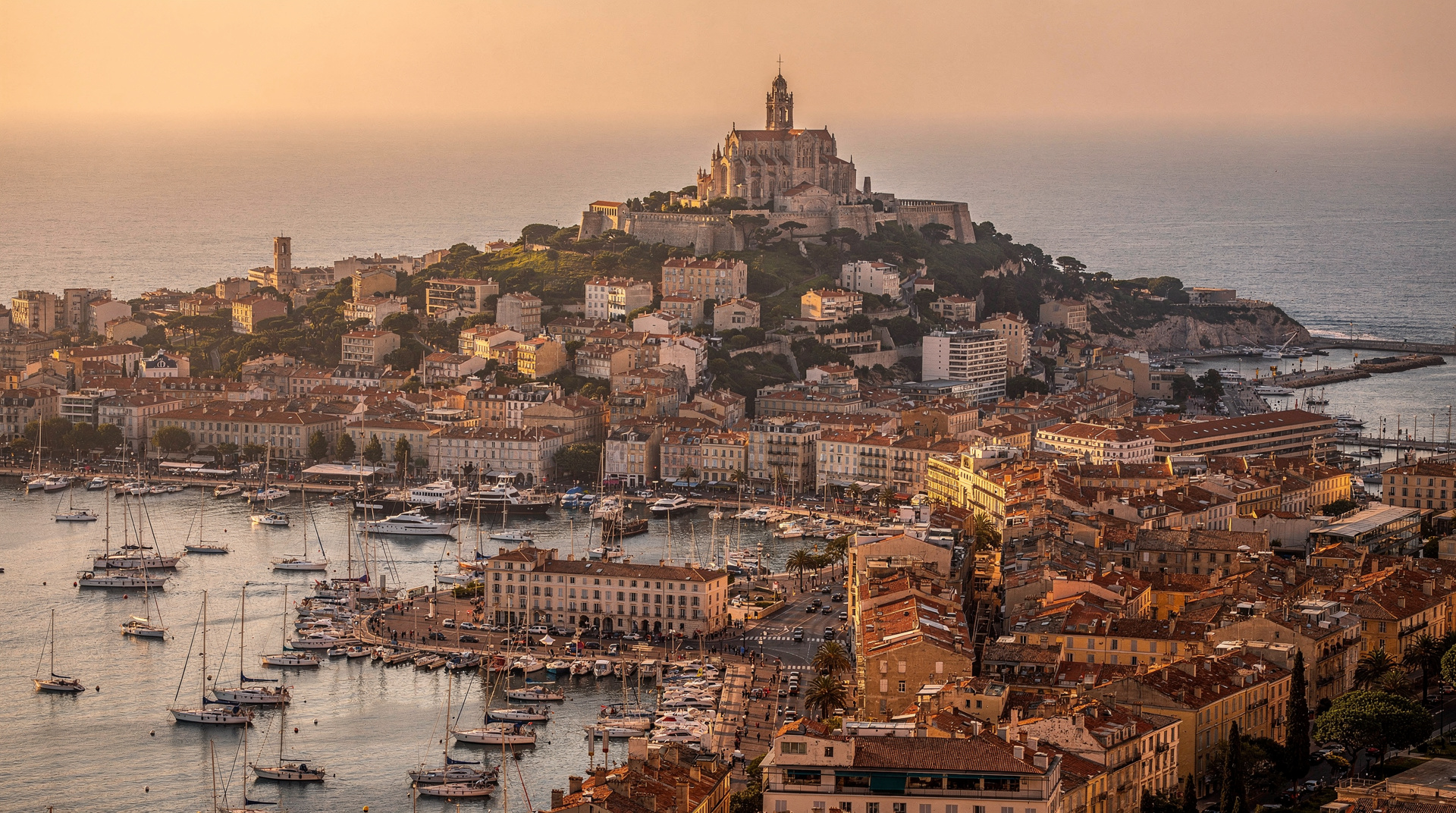
The return ferry in the evening (buy your return ticket when you buy the outward; the last ferries are the most crowded) has a different quality from the morning crossing. Marseille is lit from behind in the late afternoon, and the approach to the Vieux-Port from the sea gives you the city’s historical face: the two forts at the harbour mouth, the hill of Notre-Dame, the cranes of the industrial port to the north, the city rising on its limestone ridge behind.
From the water, you understand why Marseille was founded here. The bay is sheltered, the fresh water of the rivers is accessible, the hilltops are defensible, the fishing grounds are productive. This is not an accident of geography. This is the most logical place on this stretch of coast to build a city.
Fitting the islands into a longer stay
Frioul works best as a slow half-day set against the busier days of a trip. If you are still shaping your plan, our guide to the Frioul ferry covers the crossing itself, while the Frioul Islands boat guide compares the ferry with other ways of reaching the water. Travelling with children, the family day out on Frioul suggests a gentler rhythm for the day.
The islands also slot neatly into a short visit. In our Marseille in one day plan they are a stretch, but the Marseille in two days and Marseille in three days routes leave room for a proper swim. If you would rather balance sea and city, the Marseille Calanques weekend pairs coastal days with time in town.
Because the crossing starts at the old harbour, it pairs naturally with a wander through the Vieux-Port area guide before you board, and a stroll around Le Panier once you are back on land. On a hot day, the best beaches in Marseille offer a city-side alternative if the ferry queue puts you off.
Practical notes for the Frioul trip
Ferry tickets: The ferry from the Vieux-Port is operated by Groupement de Transport Maritime (GTM). In summer, book in advance, especially for weekend departures. Return tickets available at the quai or online. Budget around EUR 20–25 for the return crossing including Château d’If stop.
What to bring: The islands are largely unsheltered. Sun hat, factor 50, more water than you think you need, and food — the restaurant at the port charges accordingly. We bring a picnic from the Noailles market and eat at the cove.
Timing: The 9:00 or 10:00 ferry arrives before the main crowds. If you are going for swimming, arrive before noon. The afternoon ferries bring larger numbers. The late afternoon crossing back (around 17:00–18:00) is scenic and not usually as packed as the lunchtime return.
With children: The islands are good for families provided the children can manage a 20-minute walk on uneven paths. The swimming coves close to the port are calm and suitable for families. The ruins are interesting to older children in a fairly unsupervised way, which is either a feature or a concern depending on the child.
For the full Frioul guide, including Château d’If details and seasonal information, see our Frioul Islands destination page and the Château d’If guide. For boat tour options from the Vieux-Port, our boat tour guide covers the range of options including Calanques, Frioul, and sunset cruises. If you decide to stop at the fortress on the way, our Château d’If by boat guide covers tickets and timing in detail.
If this story made you curious about the rest of the coast, our story of a quieter calanque and the sunset at Vallon des Auffes make good companions to a day on the water.
Frequently asked questions about ferry to Frioul — a summer afternoon on the islands
How long does the ferry to Frioul take?
About fifteen minutes from the Vieux-Port to the Port de Frioul, operated by GTM. Some sailings stop at the Château d’If on the way, which adds time if you choose to disembark there.
Do I need to book Frioul ferry tickets in advance?
In summer, yes — especially for weekend departures and the return crossing in the late afternoon, which is the most crowded sailing of the day. Tickets are available at the quai or online.
Top experiences
Bookable activities with verified prices and instant confirmation on GetYourGuide.