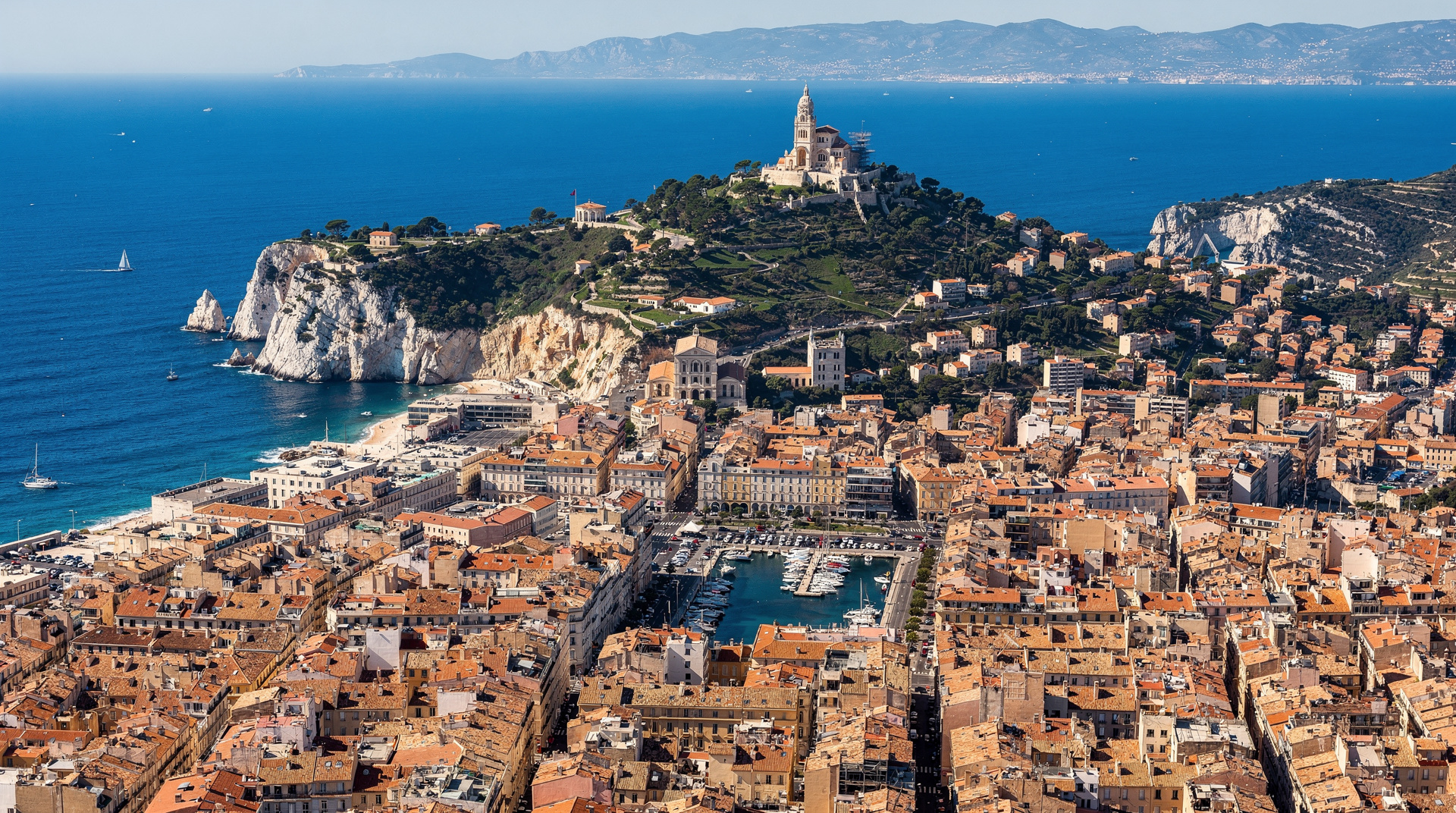
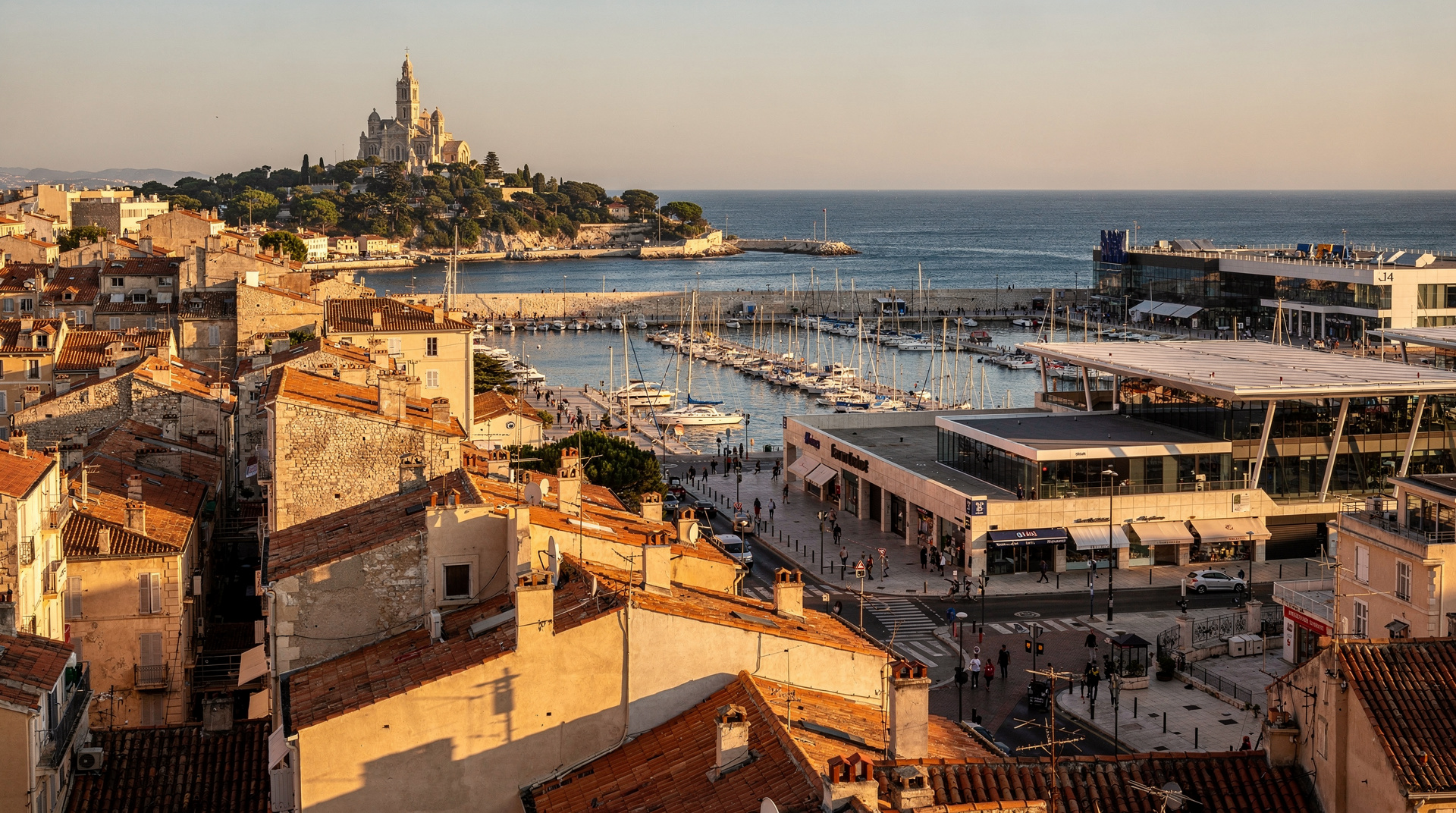
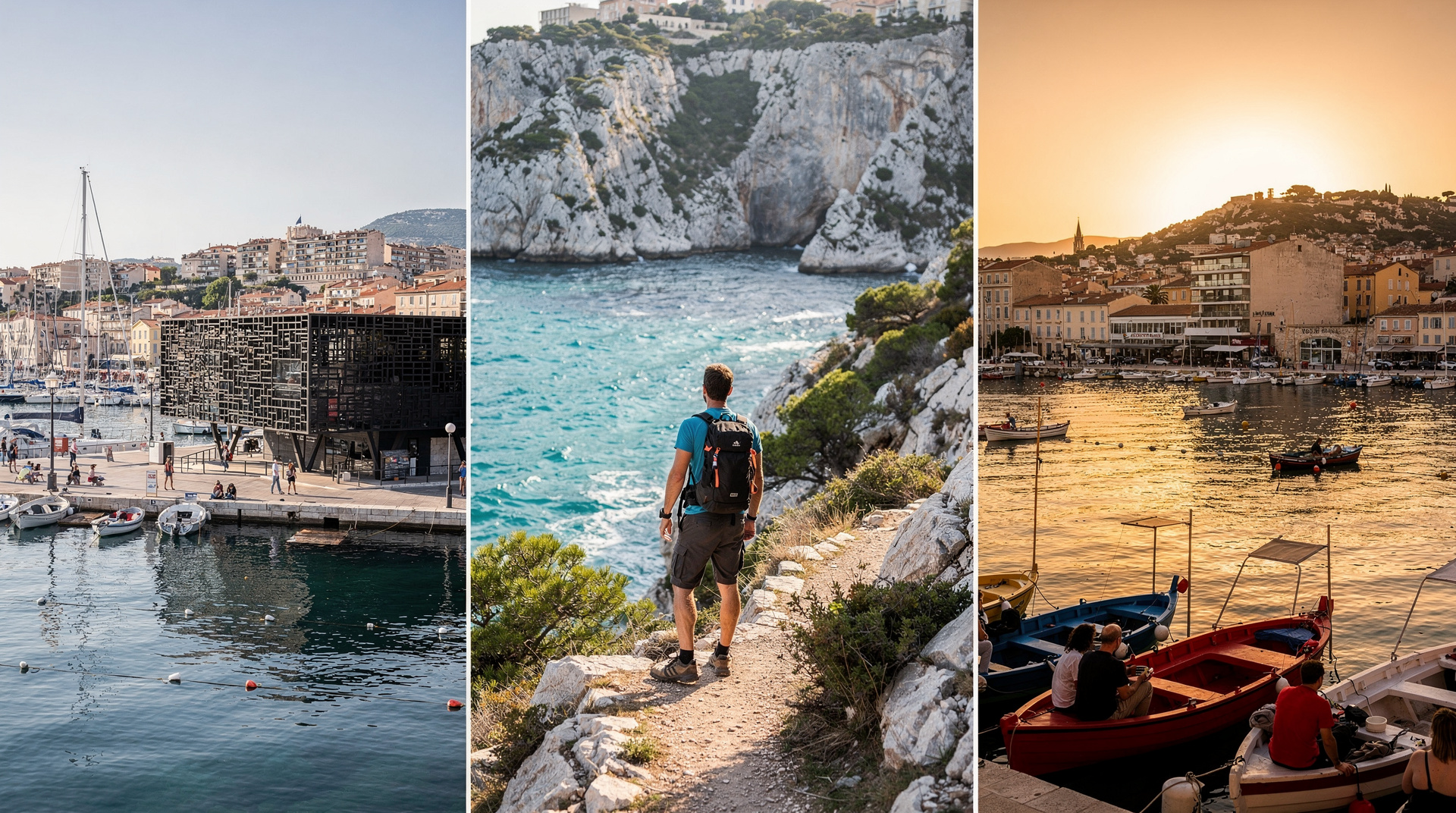
Marseille with kids: what works, what doesn't, honest family advice
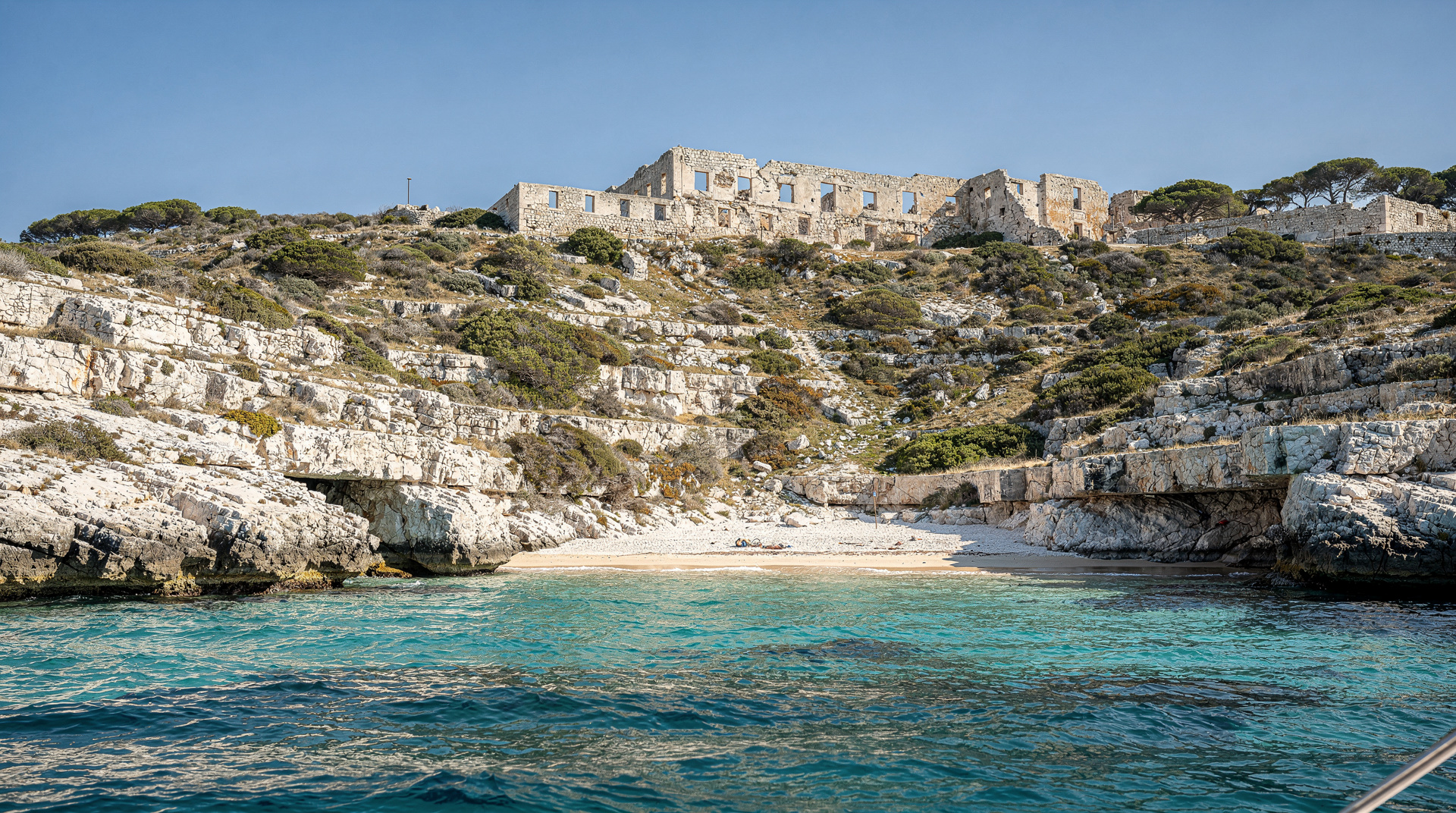
Marseille: Frioul Islands boat tour with swim stop
Duration: 2 hours
Is Marseille good for families with children?
Yes, with planning. The Frioul ferry, Calanques boat tours, and Prado beaches work well for kids. Long Calanques hikes and intense summer heat are not family-friendly. Three days is the right length.
Marseille and families: the honest starting point
| At a glance | Details |
|---|---|
| Trip length | 3 days is the right length for most families |
| Best base | Prado / Corniche (flat, near beaches); see our where to stay guide |
| Best season | Spring or autumn for outdoor comfort; summer for swimming (expect heat) |
| Transport | RTM metro/tram/bus day pass around EUR 5.20/adult; under-11s free with an adult |
| Flagship activity | Calanques boat tour with swimming, around EUR 35–55/adult |
Marseille is not a city designed for children the way a theme park or a beach resort is. It is a dense, loud, Mediterranean port with complicated street geography, variable pavements, and a reputation that can make parents nervous before they arrive.
The good news: most of what makes Marseille genuinely interesting for adults — the boat rides, the ferry novelty, the beaches, the swimming in clear water — translates exceptionally well to children. The Frioul ferry, a Calanques boat tour, and a morning at the Prado beaches can produce a family day that children will actually remember.
The challenge: Marseille’s hills, its peak summer heat, and its genuinely long Calanques hiking trails are not family-friendly in the conventional sense. Understanding what works and what does not is the most useful thing this guide can offer.
What works very well for families
The Frioul Islands ferry
The Frioul Islands — an archipelago 15 minutes by boat from the Vieux-Port — are reachable by a regular public ferry run by the Frioul If Express operator. Children find this inherently exciting: a real boat, departing from the harbour, arriving at an island. The islands themselves have rocky beaches for swimming, walking paths with views back toward the city, and a calm that feels genuinely separate from Marseille.
Round trip to the Frioul Islands: 10.80 EUR per adult, with family rates available. Children under 4 travel free. The crossing takes 30 minutes each way. Bring water, sun protection, and food — the island has limited facilities in shoulder season.
The Château d’If — the famous island prison from the Count of Monte Cristo — is reachable on the same boat route (combined ticket 16.20 EUR). For children who know the story, the island is atmospheric. For younger children, it is mainly interesting as a boat ride with a ruin at the end.
Calanques by boat (not by hiking trail)
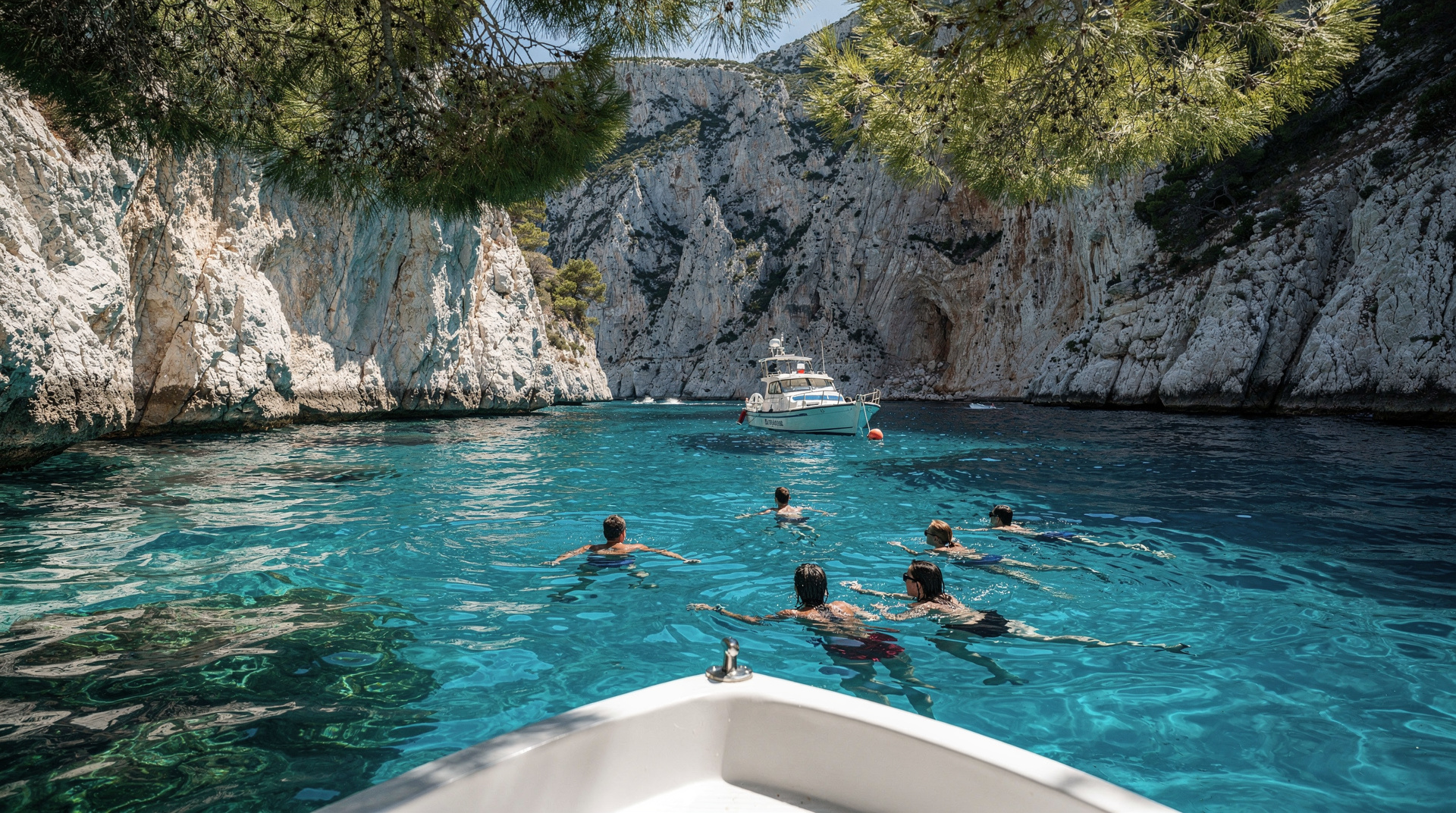
A Calanques boat tour from the Vieux-Port is the single best family activity in Marseille. The boat does all the work; children experience the visual drama of entering a calanque without anyone needing to hike for five hours. Swimming in clear, sheltered water is the natural outcome. Most boat tours are 3–4.5 hours — long enough to be a real adventure, short enough not to exhaust young children.
Practical family notes:
- Confirm with the operator that children are welcome and whether life jackets are provided
- Bring snacks, water, sun protection, and a hat — the boat deck is exposed
- The swimming stops are at the Calanques: the water is clear but can be cold before June and after October
- Book in advance in summer; tours fill early and family groups need to coordinate numbers
Important: In July and August, hiking trails in the Calanques are closed for fire risk — the boat tour is the only practical Calanques access. This makes it not optional for summer family trips; plan accordingly and budget for it.
The Prado beaches
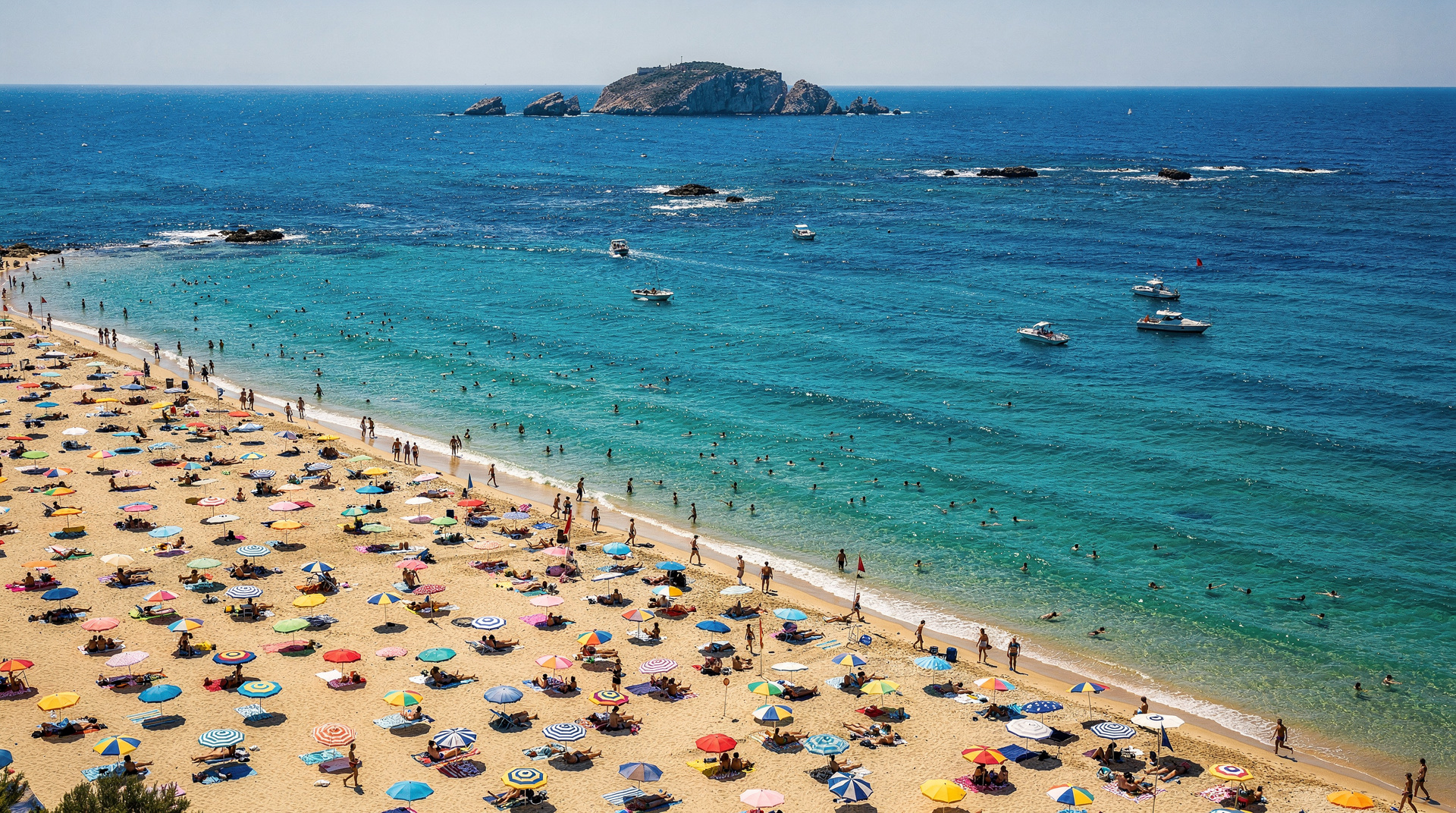
The Prado beaches, 20 minutes by bus south of the Vieux-Port, are Marseille’s main city beaches — sandy stretches (partially on reclaimed land) with calm Mediterranean water, public toilets, and food vendors. In summer the sea is genuinely warm and calm enough for younger children. The beaches are public and free.
Further south, the rocky Calanques beaches (accessible without hiking in some cases) are clearer and more dramatic. The beach at Sormiou has a seasonal restaurant at the waterline — one of very few proper beach restaurants in the Calanques — but road access is restricted in high summer.
MuCEM and Fort Saint-Jean
The MuCEM’s exterior — the concrete latticework building, the suspended footbridge to Fort Saint-Jean, the restored gardens — is genuinely interesting for children of all ages. The gardens within Fort Saint-Jean have open space for movement and fortress walls to explore. The footbridge itself delights young children (it bounces slightly). All of this is free.
The interior museum collections are more adult-oriented — Mediterranean history and culture, changing exhibitions. For families with children under 10, the exterior is sufficient and more rewarding.
The Cosquer Cave replica
For children aged 7 and above, the Cosquer Cave replica at the Villa Méditerranée near MuCEM is excellent. The original Cosquer Cave — accessible only through a 175-metre underwater passage — contains Paleolithic paintings made 27,000 years ago. The full-scale replica recreates the cave and its art in a theatrical, immersive format. It is genuinely impressive. Tickets around 15–20 EUR; book well in advance in summer.
The tourist petit train to Notre-Dame de la Garde
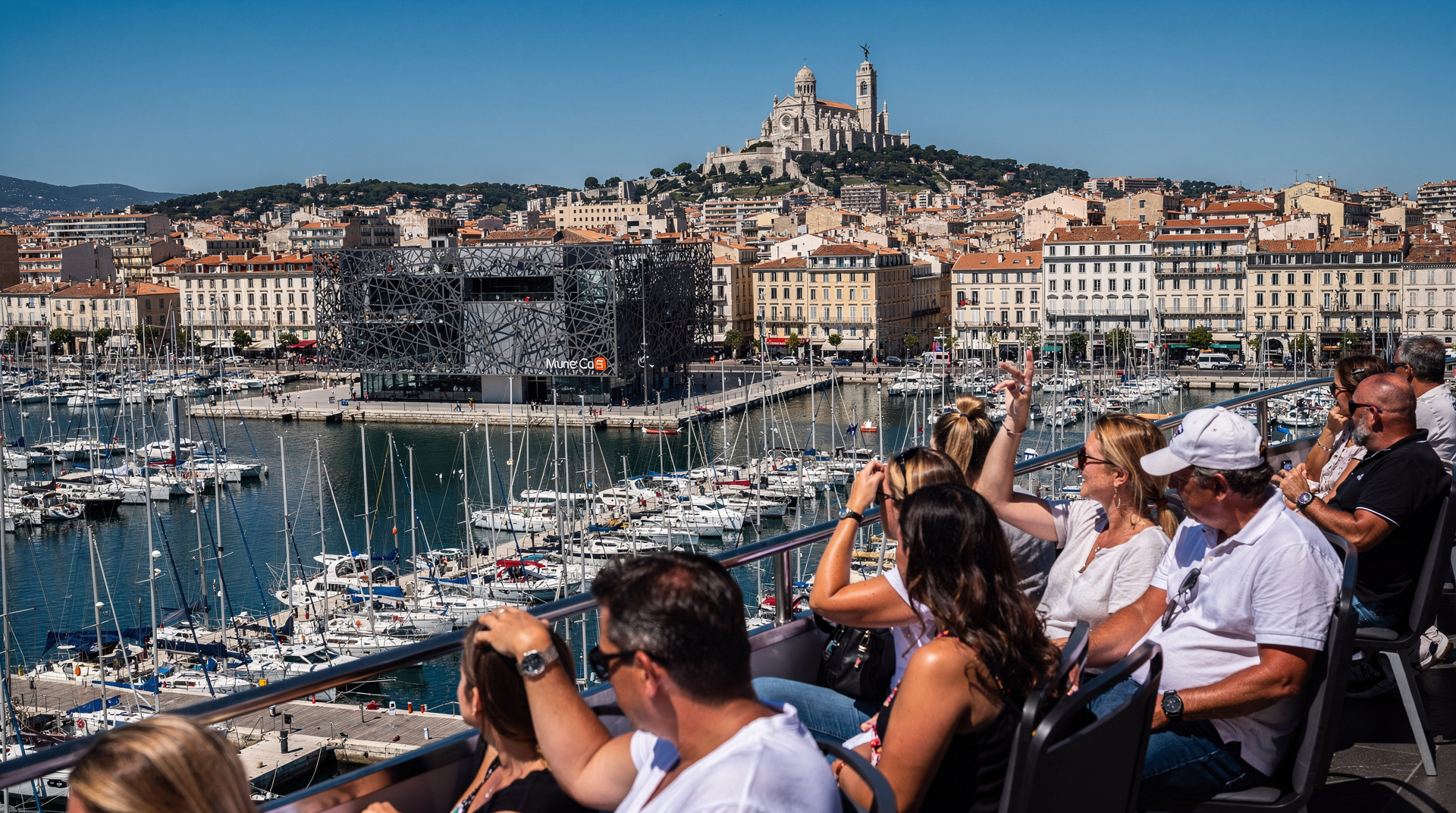
The tourist petit train from the Vieux-Port to Notre-Dame de la Garde is often dismissed as a tourist gimmick — and for adults, it is. For children, it is a perfectly good vehicle: small, noisy, and it climbs through the city streets to a basilica with a panoramic view of the bay. The round-trip circuit to Notre-Dame takes around 1.5 hours including time at the top. Cost: around 12–15 EUR per adult, children cheaper.
Outdoor escape game in the old town
A smartphone-guided outdoor puzzle trail through the old town (Le Panier and surrounding streets) is an engaging 1.5–2-hour activity for families with children aged 8–12. No guide required — the app provides clues and navigation. It introduces the city while keeping older children actively engaged.
What does not work well for families
Long Calanques hiking trails in summer
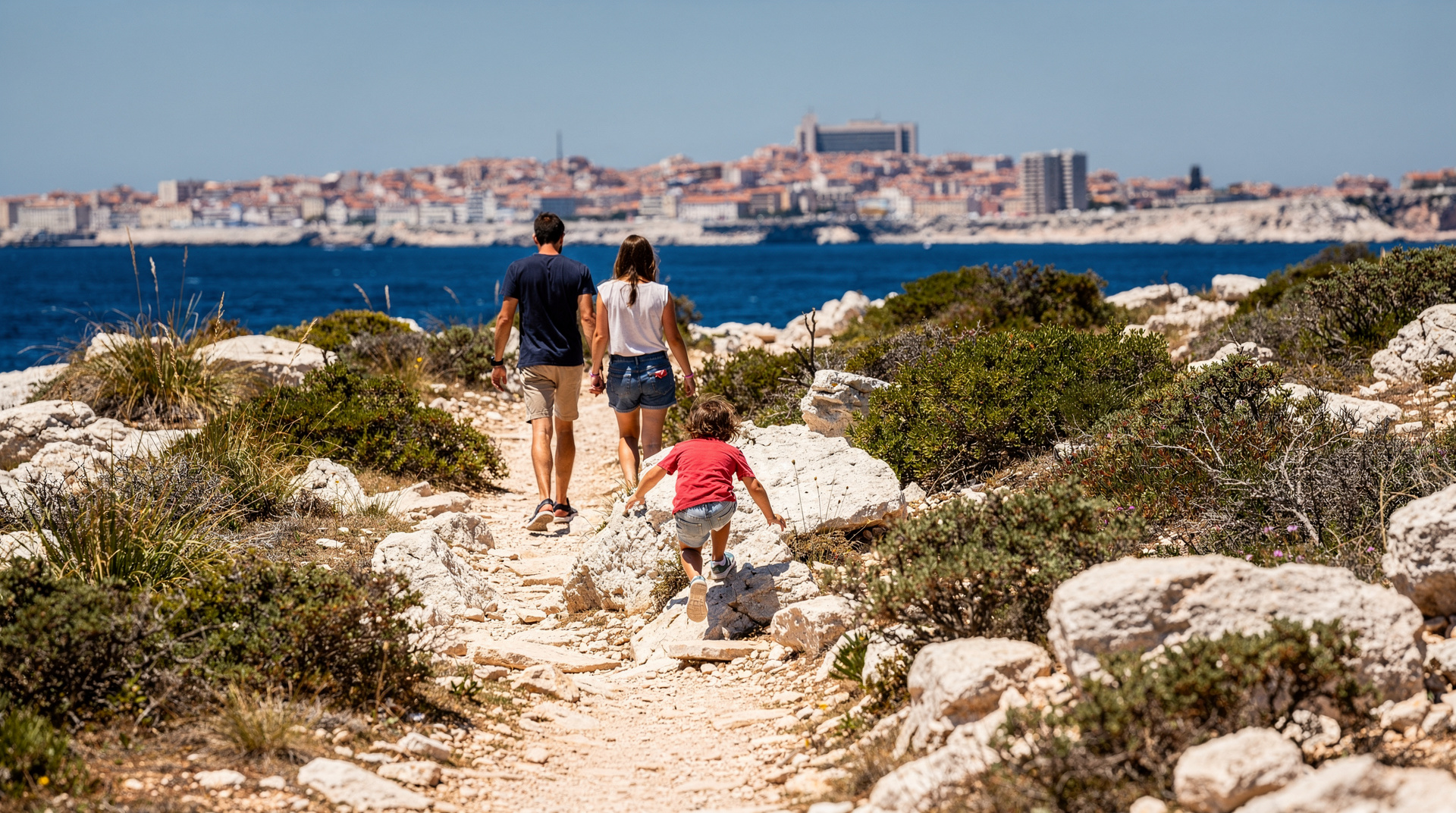
The hike from Luminy to Sugiton (45 minutes each way) is manageable for children aged 10 and above with proper footwear and water. But attempting it in July or August heat (30°C+ with no shade on the exposed limestone) with children is genuinely inadvisable. The trails are not shaded, the terrain is rocky, and there are no rescue facilities. Children get tired faster than expected; heat exhaustion risk is real.
If hiking with children: stick to spring (April–May) or autumn (September–October), use the early morning (start by 8:00–9:00 before the heat peaks), bring at least 1.5 litres of water per child, and choose the shorter routes.
Very young children in Le Panier
Le Panier is charming but hilly. Pushchairs are theoretically possible on some routes but practically painful on the narrow, uneven cobbled lanes. A baby carrier is significantly more practical for young children who cannot walk the terrain. The neighbourhood rewards flexibility of movement, which pushchairs do not provide.
Midday sightseeing in July and August
Between 12:00 and 16:00 in peak summer, Marseille is hot — 30–35°C, exposed to sun, with little shade in tourist areas. Planning active outdoor sightseeing during these hours with young children is a reliable route to a bad afternoon. Structure family days around early mornings (Vieux-Port fish market at 8:00, boat departure at 9:00–10:00) and late afternoons, with a long lunch and rest period in the middle.
The bouillabaisse ritual for children under 10
The genuine charte bouillabaisse experience — a two-course ritual with the broth served first, then the fish — costs 55–80 EUR per person and runs 1.5–2 hours. This is genuinely excellent for the right adult audience. For a family with young children, the format does not work. Seek out the more flexible neighbourhood restaurants in Cours Julien or near the Noailles market for family lunches.
Pushchair reality in Marseille
Manageable pushchair zones: The south quai of the Vieux-Port (Quai de Rive Neuve) is largely flat. The area around MuCEM and the Fort Saint-Jean waterfront is accessible. The Prado beach area has paved promenades. The Corniche running south is cycle-pathed and flat.
Difficult pushchair zones: Le Panier (cobbled, steep, narrow lanes). The northern quai (Quai du Port) has uneven surfaces. Most of the interior of Cours Julien is manageable; the surrounding streets vary.
The practical advice: If your trip includes young children who cannot walk 2–3 km, invest in a carrier for Le Panier and similar terrain, and use the pushchair for the flat Vieux-Port / Corniche zones.
Indoor rainy-day options for families
Marseille’s weather is generally reliable in summer, but rain and mistral wind days do occur. Indoor alternatives:
Musée d’Histoire de Marseille: Roman-era excavations visible through glass floors in the basement level — genuinely interesting for children aged 8 and above. Entry around 6 EUR. Located in the Bourse shopping centre, which is useful for a meal or shelter.
Cosquer Cave replica: Already covered above — bookable in advance and works well on a rainy day (completely indoor, theatrical).
Les Terrasses du Port: The large shopping centre in La Joliette, connected to the Frioul ferry terminal. Nothing culturally interesting, but dry, air-conditioned, and has food options. Useful as shelter, not as a destination.
The MuCEM exhibition galleries: The permanent and temporary exhibitions are adult-oriented but spacious and air-conditioned. Children may be engaged by specific exhibitions depending on age and interest.
Age-specific tips
Toddlers and under-5s: Focus on the Frioul ferry (boat novelty), beaches, and the Vieux-Port waterfront. Keep itineraries short (half days) and build in midday rest. Avoid hot midday hours in summer entirely.
Children aged 6–10: A Calanques boat tour is the highlight. Add the Cosquer Cave, the outdoor escape game, and the Prado beaches. The tourist petit train to Notre-Dame is a hit at this age.
Children aged 10–14: The Calanques boat tour remains excellent. Add the Frioul Islands as a half-day adventure. Consider an easy Calanques hike in spring or autumn (Sugiton from Luminy). The MuCEM exterior and Fort Saint-Jean are worth exploring. Cours Julien is interesting to walk through for older children interested in street art.
Eating out with children: what actually works
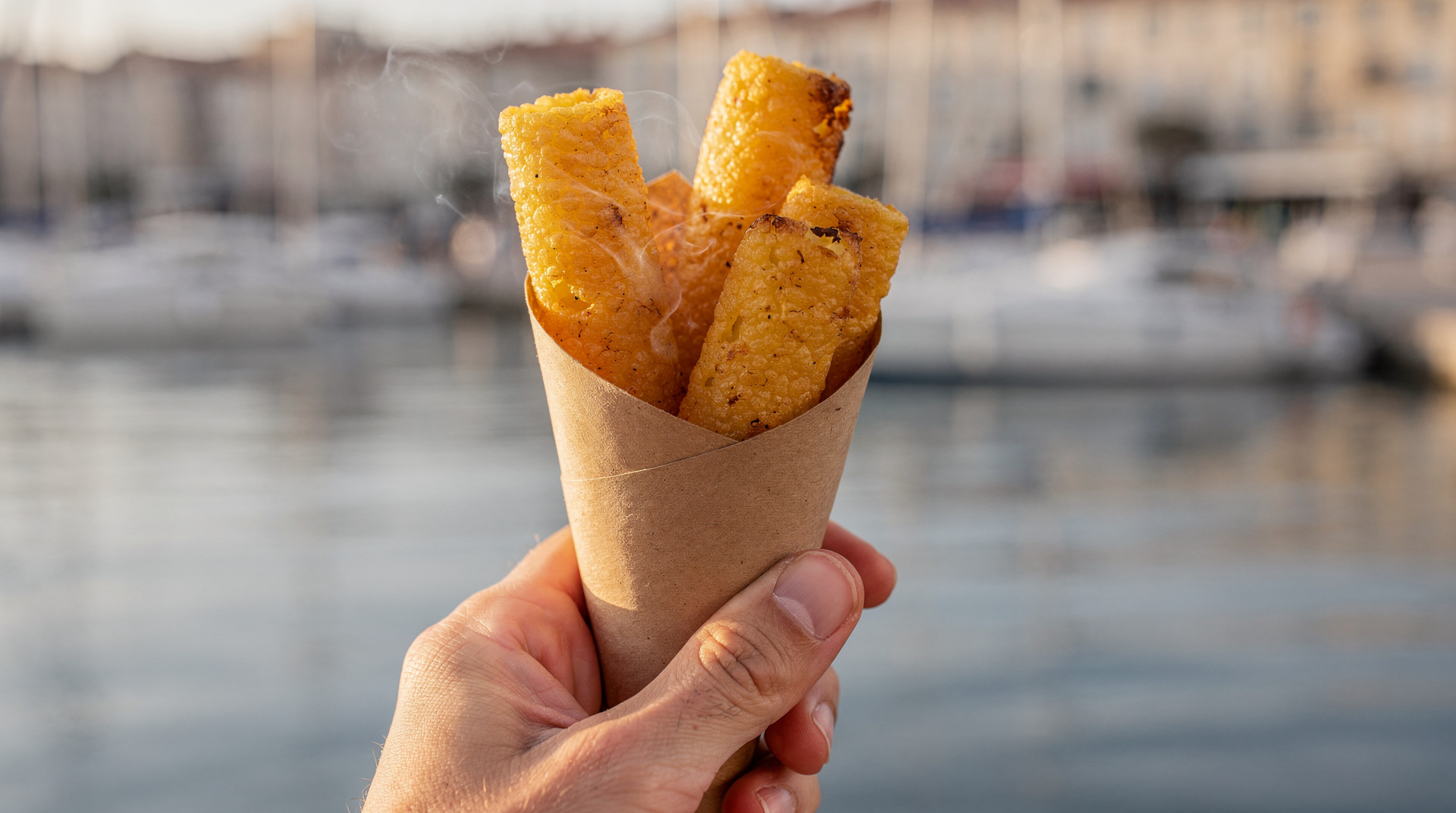
Marseille’s restaurant culture is not built around children’s menus in the way some countries are, but it is far more flexible than the formal bouillabaisse ritual suggests. Neighbourhood pizzerias and simple Provençal restaurants in Cours Julien and around the Vieux-Port’s side streets (away from the tourist-strip quai) will generally accommodate a plate of pasta or a simple grilled fish for a child without objection. Panisse (fried chickpea sticks) and socca-style snacks from market stalls are cheap, fast, and reliably popular with children who are wary of unfamiliar food.
For a packed-lunch day (Frioul Islands, a Calanques hike, or the fort gardens), the boulangeries near the Vieux-Port and Noailles market sell sandwiches, quiches, and pastries that travel well and avoid the need to find a sit-down restaurant mid-activity. Bottled water is worth buying in bulk from a supermarket rather than kiosks, which charge a premium near tourist sites.
Packing checklist for a Marseille family day
Regardless of the specific activity, a few items make every family day in Marseille noticeably smoother: high-SPF sun cream (Mediterranean sun is stronger than it feels, even in shoulder season), a refillable water bottle per child (public fountains exist around the Vieux-Port and in several parks, but are not universal), a light hat for boat days, comfortable closed shoes for any hiking or fort-garden walking, and a small first-aid kit with plasters for inevitable scraped knees on cobbled streets. For beach or Calanques swimming days, water shoes make a genuine difference on the rocky calanque entries, which are not sandy like the Prado.
Marseille with a baby or toddler under 2
For the youngest children, the calculus is different from the rest of this guide. Boat trips (Frioul ferry, Calanques tours) work well because babies can be held or carried and the motion is often soothing; check that the operator allows infants and that shade is available on deck. Hiking, the petit train’s steeper turns, and long museum visits are less rewarding at this age. The Prado beach promenade and the Vieux-Port waterfront, both flat and pushchair-friendly, are the most realistic half-day outings. Expect to structure the day almost entirely around nap times rather than sightseeing logic.
Where to stay with children
The Prado and Corniche area is the most practical family accommodation zone — flatter streets, direct beach access, more residential calm, and good supermarkets nearby. The Vieux-Port zone works well for families who want central convenience over beach proximity.
Le Panier is beautiful but impractical with pushchairs and young children who need flat, easy walking terrain. See our where to stay guide for a full neighbourhood comparison.
For a 3-day family itinerary with timing and specific activity notes, see our 3-day planning guide.
Sample 3-day family itinerary
Day 1: City exploration at family pace
Morning (8:30–12:00): Start at the Vieux-Port for the fish market — young children are often captivated by the spectacle of real fishermen selling live shellfish and large fish. Walk to MuCEM and Fort Saint-Jean: the fort gardens have open space for children to move freely, and the suspended footbridge between the buildings is genuinely exciting for children of all ages. Keep MuCEM to the exterior and footbridge unless you have teenagers with specific cultural interest.
Midday: Lunch in Le Panier at a neighbourhood restaurant. Allow extra time for the uphill walk with young children (10 minutes but feels longer with tired legs).
Afternoon (14:00–17:30): The tourist petit train to Notre-Dame de la Garde. The train circuit from the Vieux-Port is 1.5 hours including time at the top — a genuine hit for children aged 5–12 who enjoy the ride and the panoramic view. The basilica terrace view over the city and the archipelago is spectacular.
Evening: Return to the accommodation area; a family dinner at a Cours Julien restaurant (less formal than tourist zone restaurants, more child-friendly atmosphere). Many restaurants here have simple dishes alongside the creative menu.
Day 2: The water day
Morning: Calanques boat tour departing 9:00–9:30 from the Vieux-Port. Book in advance, confirming that the operator welcomes families and provides life jackets for children. The 3-hour standard tour is the right duration for young children — long enough for 2–3 calanques with swimming, not so long that smaller children become difficult.
Important for summer families: Bring high-SPF sun cream applied before boarding, hats for all children, and substantial water. The boat deck is exposed, and children’s sun sensitivity is higher than adults often remember until too late.
Afternoon: After returning from the boat tour, the afternoon is best spent gently. The Prado beaches — 20 minutes by bus south of the Vieux-Port — allow another swim in shallower, calmer, more child-supervised conditions than the calanques. Bring snacks; beach vendor food at the Prado is expensive.
Day 3: Frioul Islands adventure
Morning: Take the Frioul If Express ferry from the Vieux-Port to the Frioul Islands (10.80 EUR round trip per adult; children under 4 free). The 30-minute crossing is itself part of the experience for younger children. On the islands, rocky beaches with clear water, a natural landscape with walking paths, and the stripped-down island atmosphere make this feel like a proper adventure.
Important: The Frioul Islands have limited facilities — bring a full picnic lunch, plenty of water, sun protection, and appropriate footwear for rocky terrain.
Afternoon: Return ferry to Vieux-Port by early afternoon; a final slow walk along the Corniche toward Vallon des Auffes for a late coffee or ice cream.
Booking ahead vs staying flexible
Book ahead in summer: the Calanques boat tour (fills fastest of any family activity), the Cosquer Cave replica (sells out days ahead in July–August). See our roundup of the best Calanques boat tours for comparing operators.
Stay flexible: the Frioul ferry runs frequently and rarely sells out, the Prado beaches need no booking, and the petit train has frequent departures in season.
For a longer list of specific age-tagged activities beyond this overview, see our companion guide to the best Marseille activities for kids, and for family-specific beach options beyond the Prado, see family beaches near Marseille.
Practical family logistics
Transport for families: The RTM day pass (5.20 EUR per adult) covers the metro, trams, and buses. Children under 11 travel free on RTM public transport with an accompanying adult. This makes the metro genuinely economical for families.
Feeding children: The Noailles market area is the most affordable and flexible option for lunch with children — street food, fresh bread, fruit, and prepared foods at prices that do not require ordering a full restaurant meal for a toddler who will eat three bites. Boulangeries throughout the city centre provide quick child-friendly options (pain au chocolat, quiche, sandwiches).
Medical and practical: Standard pharmacies (pharmacies, identifiable by the green cross sign) are common throughout the Vieux-Port, Le Panier, and main shopping streets. The nearest hospital with emergency paediatric care is Hôpital de la Timone (Boulevard Jean-Moulin, 5th arrondissement), reachable by metro.
Heat management with children: In summer, plan all active outdoor time before 11:30 and after 17:00. The midday heat (12:00–16:00) is most punishing for young children. Build a genuine rest period into every summer day — not just a “maybe” but a real stop at the accommodation or a long, slow, air-conditioned lunch.
For budget considerations for family travel, see our trip cost guide. For the overall best season for families, see our comparison of summer and winter conditions.
Top experiences
Bookable activities with verified prices and instant confirmation on GetYourGuide.