Lourmarin
Lourmarin is the south Luberon's most liveable village — Renaissance château, Friday market, Albert Camus's grave, and better restaurants than Gordes.
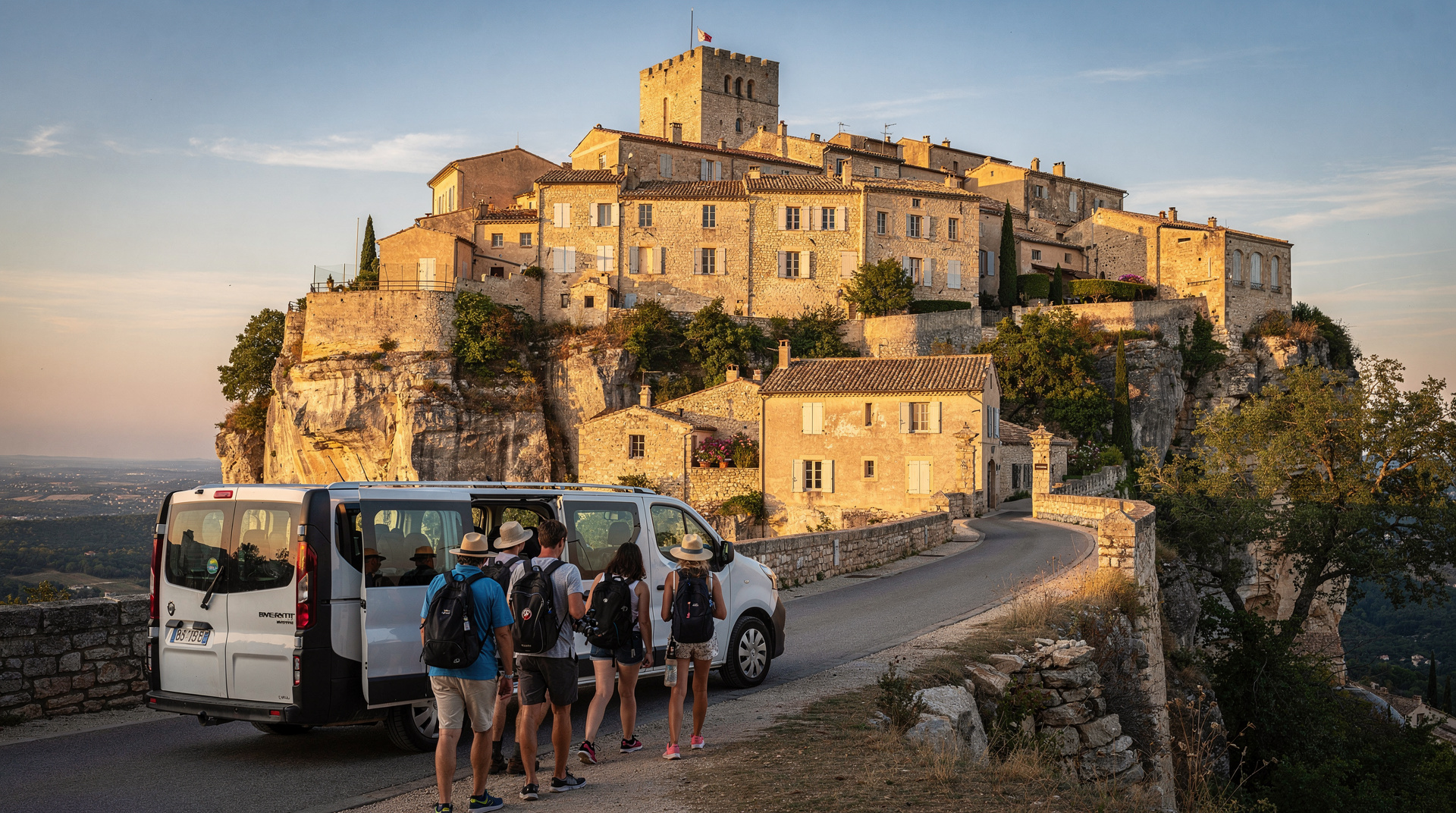
Luberon villages full-day tour from Aix-en-Provence
Duration: Full day
Quick facts
- From Marseille
- ~1 h by car via A51 toward Pertuis and D973
- From Aix-en-Provence
- ~40 min by car
- Market
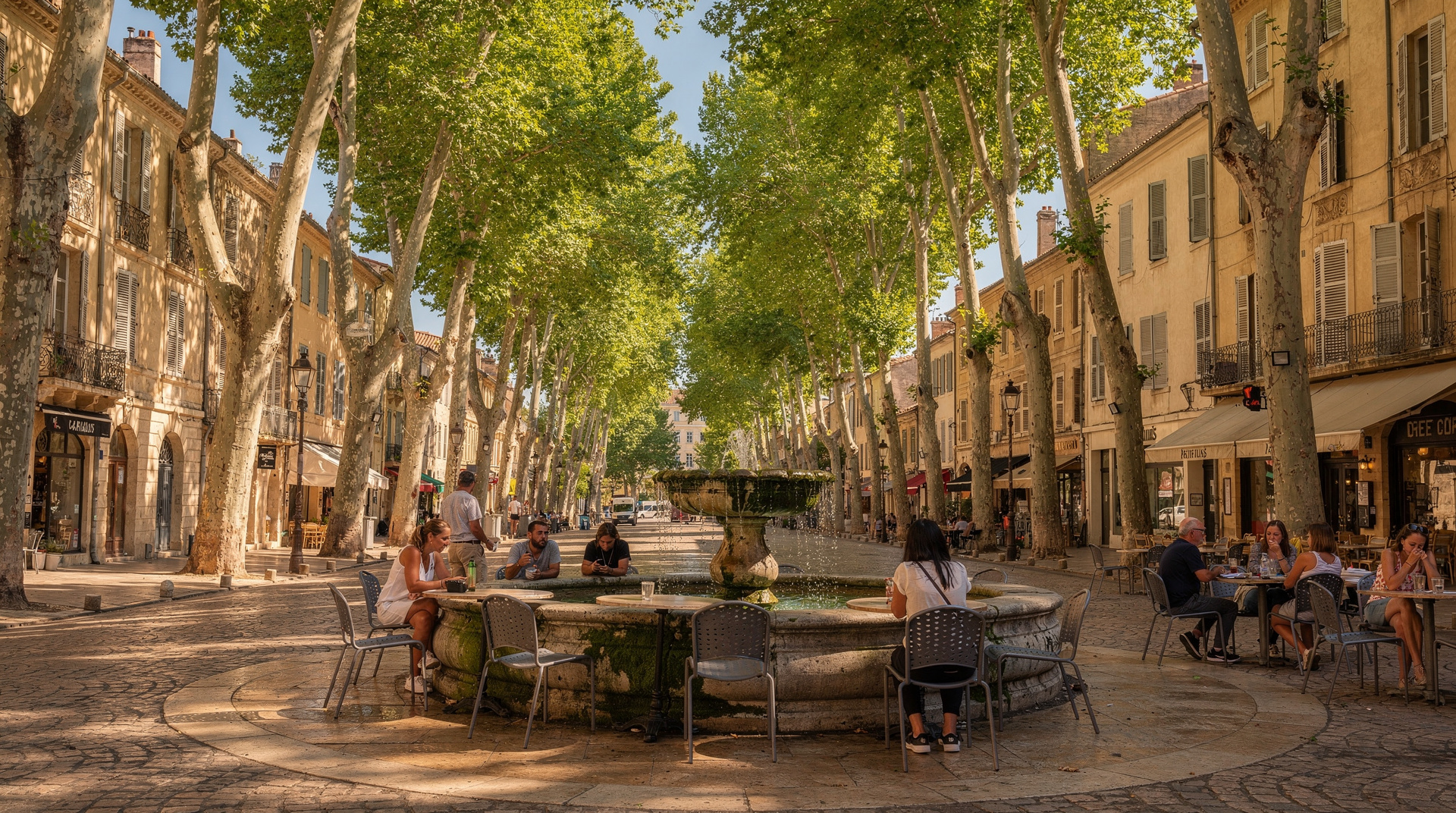
- Friday morning, 8:00–13:00, under the plane trees
- Château de Lourmarin
- Oldest Renaissance château in Provence; guided visits year-round
- Albert Camus connection
- Camus lived and is buried here; grave in the village cemetery
The south Luberon’s most complete village
| At a glance | |
|---|---|
| Where | South Luberon, ~1 h from Marseille, ~40 min from Aix |
| Cost | Château around EUR 10; market and village are free to visit |
| Time needed | Half a day; a full day if staying for a long lunch |
| Getting there | Car essential — no regular bus or train to the village |
| Best time | Friday morning for the market; April–June and September–October overall |
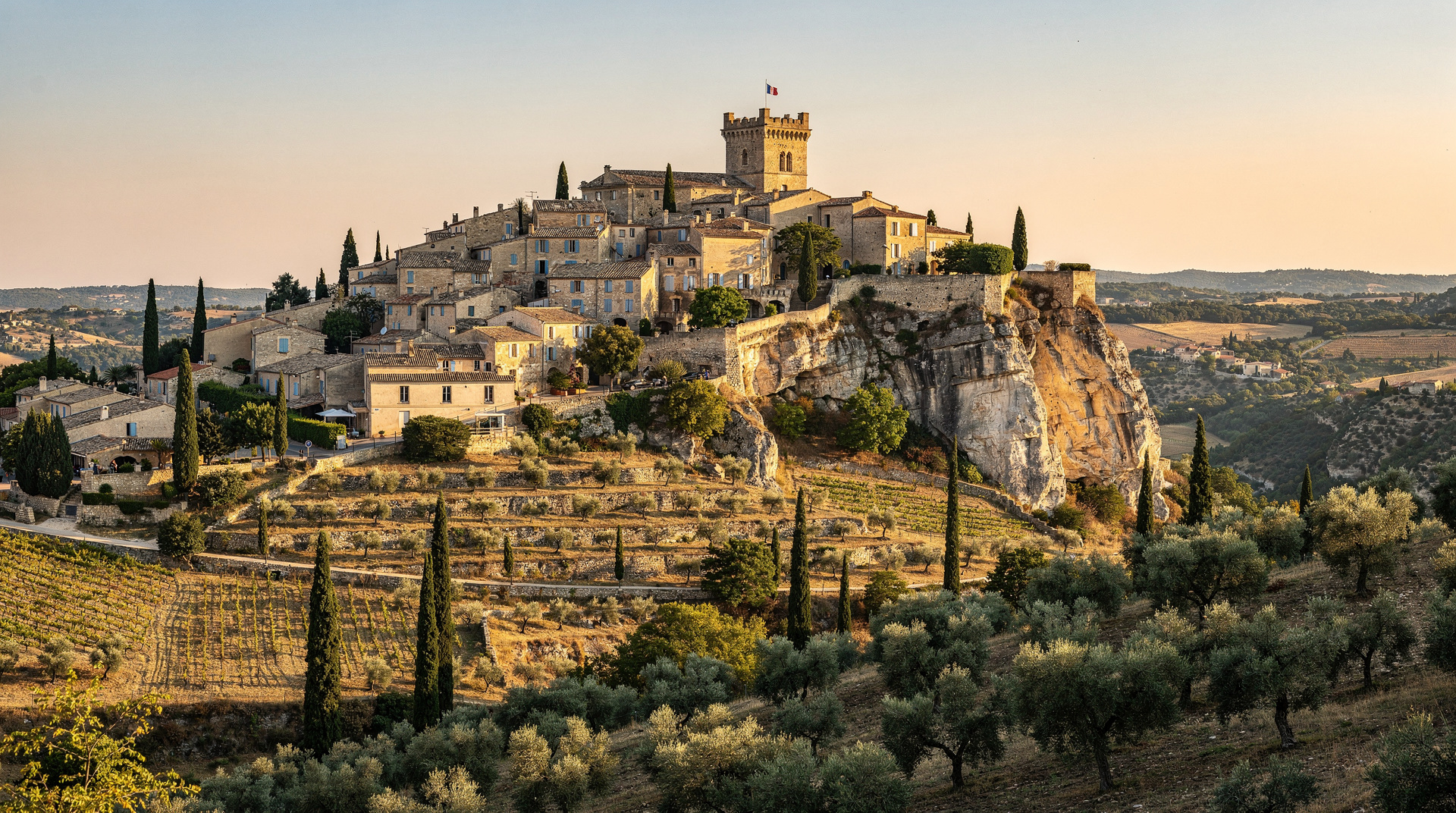
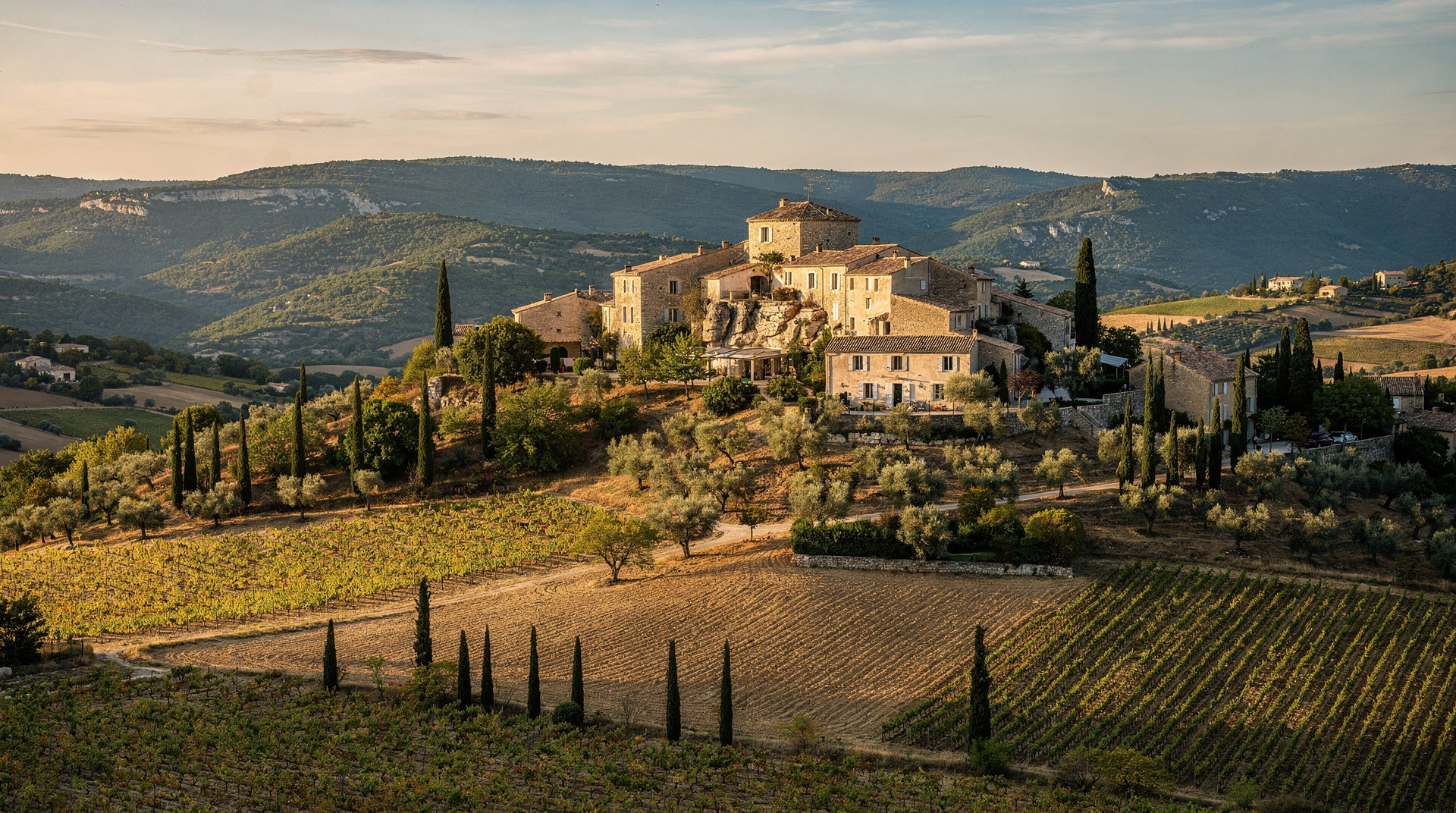
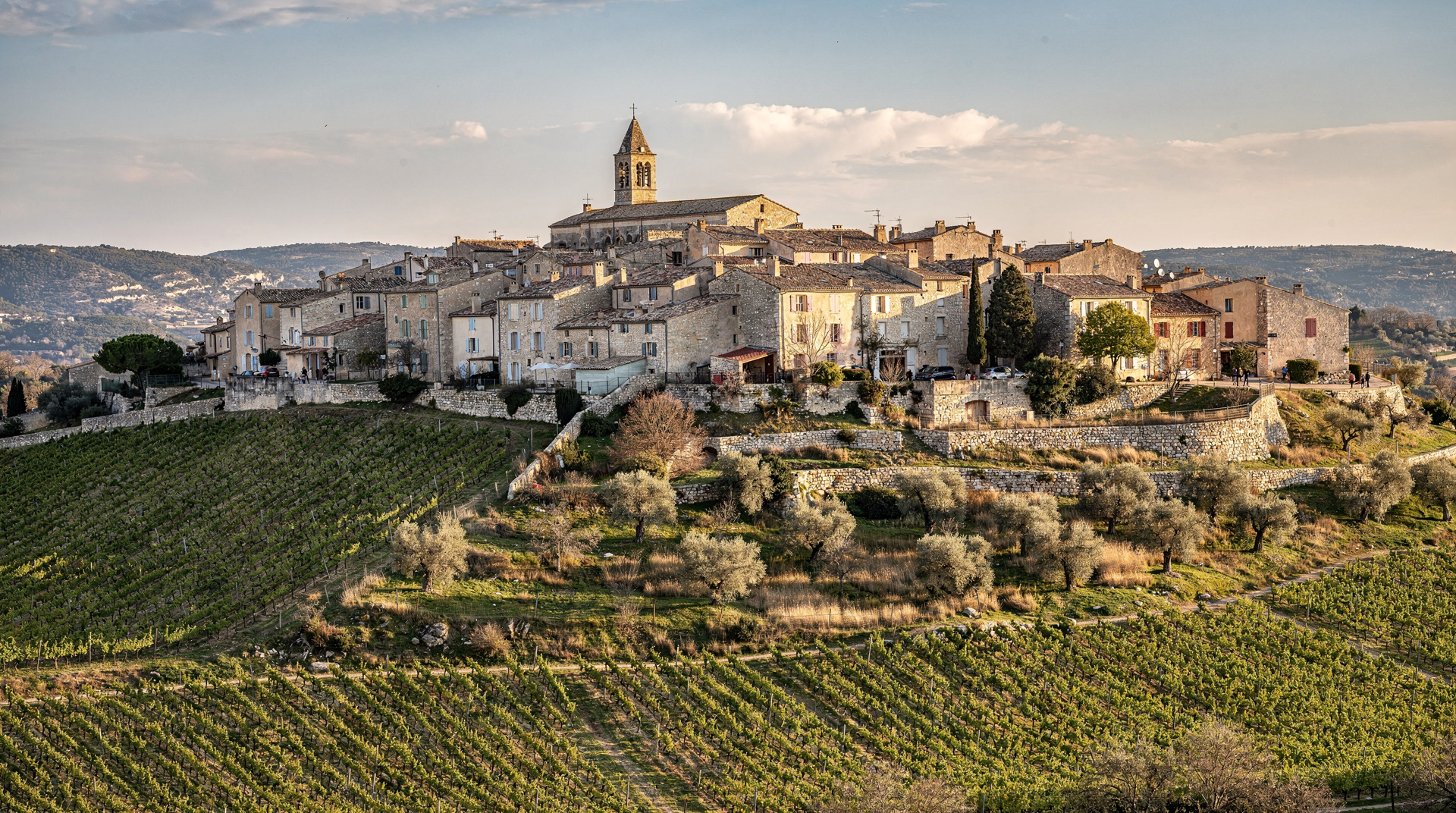
Lourmarin sits at the foot of the Luberon massif on the south side, in the valley between the limestone ridge and the agricultural plain of the Durance. Classified as one of France’s Most Beautiful Villages, it earns that status with less noise than Gordes or Roussillon — a working village rather than a panoramic attraction, with residents who use the Friday market for actual shopping and restaurants that serve locals as well as visitors.
The combination of attributes is unusual: a Renaissance château of genuine architectural quality, a market with real producers rather than souvenir stalls, one of the better concentrations of good restaurants in the Luberon, and a Camus connection that draws a steady literary pilgrimage. No single element is world-class; the combination is consistently satisfying.
The Friday market
Friday mornings transform Lourmarin. The market occupies the streets under the plane trees and runs from 8:00 to 13:00, covering the full range of Provençal produce: vegetables from the Durance plain, goat cheeses from the surrounding hills, olives, honey, herbs, and fruit across the appropriate season.
This is a functional market as much as a tourist one — the stalls serve the village’s residential population and the farms of the south Luberon, which is why the quality is consistently higher than at markets oriented primarily toward visitors. Arrive before 10:00 for the best selection and the most animated atmosphere. After 11:30, the stalls begin packing up.
For cooking-class participants and those interested in Provençal food culture, the market pairs naturally with the guided food tour experience available through organised Aix-Luberon day trips. The route from Aix to Lourmarin (40 minutes) specifically on Friday morning is one of the better structured day-trip choices for food-focused visitors.
The château
The Château de Lourmarin is the oldest Renaissance château in Provence, with construction beginning in the late 15th century. Unlike the hilltop defensive architecture of Gordes or Les Baux, Lourmarin’s château shows the transition toward the Italian Renaissance style that was entering France in this period — taller windows, lighter stone, more elaborate interior spaces.
The building was semi-ruined by the early 20th century and purchased by a Lyonnais industrialist, Robert Laurent-Vibert, who restored it extensively in the 1920s and bequeathed it to the Académie des Beaux-Arts in 1925. That bequest is why the château remains intact and open — it functions as a cultural foundation that supports artists in residence and maintains the building.
Guided visits run year-round, typically at 11:00, 14:30, 15:30, and 16:30 in low season, with more frequent times in summer. Entry around 10 EUR for adults. The interior retains period furniture, tapestries, and the original Renaissance fireplace installations. Worth an hour.
Albert Camus in Lourmarin
Albert Camus bought a house in Lourmarin in 1958, the year after he received the Nobel Prize for Literature. He had visited the village earlier and described Provence as one of the places where he felt able to work — the climate, the light, and the relative quiet suited him. He was working on a novel (Le Premier Homme, published posthumously) when he died in a car accident in January 1960 at the age of 46. He is buried in the Lourmarin cemetery, a 5-minute walk from the village centre in the direction of Lauris.
The grave is simple — a flat stone with his name and dates, planted with rosemary. Visitors leave pens, flowers, and small notes. It has become a genuine pilgrimage site for readers of L’Étranger and La Peste worldwide, which gives Lourmarin an intellectual atmosphere that most Luberon villages lack.
The house Camus owned is now private property and not open to visitors, but the cemetery is publicly accessible year-round.
Where to eat in Lourmarin
Lourmarin has a notably better restaurant concentration than Gordes or Roussillon — partly because it has more actual residents, partly because it attracts a slightly different visitor: fewer day-trippers, more people spending two or three nights in the south Luberon. The result is restaurants that need to be good rather than merely busy.
Several kitchens in Lourmarin focus on Provençal produce from the surrounding area — olive oil from the valley, lamb from the Luberon hills, vegetables from the Friday market suppliers. Wine selections lean toward Luberon AOC and Côtes-du-Ventoux, both of which produce decent value relative to Châteauneuf-du-Pape or Bandol.
Practical guidance: Avoid naming specific restaurants here as turnover in small villages is real — instead, arrive on a Friday morning, walk the streets between 11:30 and 12:30, and read the menus posted outside. Avoid places with laminated photograph menus. The village is small enough that this reconnaissance takes 20 minutes and is reliable.
Reservations are advisable for Friday lunch in season (May through September) and essential for weekend dinner.
Lourmarin as a base for the south Luberon
If you have a car and two nights in the Luberon, Lourmarin is one of the better places to base from. The south Luberon villages — Ménerbes, Bonnieux, Lacoste, Ansouis, Cucuron — are all within 15–30 minutes’ drive. The north Luberon (Gordes, Roussillon) is 45 minutes to an hour. The Luberon ridge trail begins just above the village.
The village has several small hotels and chambres d’hôtes ranging from simple to comfortable-upscale. Prices are lower than comparable accommodation in Gordes (which commands a premium for the view and the brand). Weekend availability from May through September needs advance booking of at least 4–6 weeks.
Getting there
From Marseille: Take the A51 north toward Aix-en-Provence, then continue north on the A51 toward Pertuis and exit at Pertuis/Luberon (D973). Lourmarin is about 15 km north of Pertuis on the D27. Total around 1 hour.
From Aix-en-Provence: About 40 minutes via the D96, D543, and D27 through Pertuis. The drive through the agricultural plain north of Pertuis is pleasant in spring when the fruit trees are in blossom.
No public transport: Lourmarin is not served by regular bus from any major city. Taxi from Pertuis train station is possible but should be pre-booked.
For the full south Luberon circuit by car, combining Lourmarin with Ménerbes, Bonnieux, and Lacoste, see the Luberon guide. For the context of the south Luberon compared to the north Luberon, see the overview. For Aix-en-Provence as a transit point, see the Aix guide.
Planning the day around the market
The simplest structure is to treat the market as the opening act and everything else as a bonus. Park, walk the stalls while the selection is at its best, buy what you want to carry home, then let the rest of the day follow the pace of the village. The château and the cemetery walk fit naturally after lunch, when the light softens and the lanes empty a little.
If you are building a wider trip, the village slots well into the Luberon villages day trip, where it works as the south Luberon stop alongside Ménerbes. For a longer loop that links several hill villages, the Provence road trip itinerary and the five-day Marseille and Provence itinerary both leave room for a Friday here.
Travellers who like to understand what they are buying will enjoy pairing the market with some background reading on Provençal cuisine. Knowing what belongs on a Provençal table makes the stalls far easier to read, and it helps you choose between the many versions of olives, honey, and goat cheese on offer. For something to drink with the lunch you assemble, Provence rosé explained is a good primer, and the Provence wine routes guide shows how the Luberon fits into the wider picture.
Do you really need a car?
Yes, for Lourmarin itself, and the reasons are structural rather than a matter of preference: the village has no regular bus or train link, and the surrounding villages are spread across the massif. Our guide on whether you need a car in Provence goes through the trade-offs in more detail. If you are starting from Aix, the Aix-en-Provence day trip guide and the train from Marseille to Aix page explain how to reach the city before you pick up a car or join an organised excursion.
Driving yourself also changes how the day feels. You decide when to leave the market, when to stop for a view, and whether the afternoon belongs to the château or to a slow drive through the neighbouring villages. Organised trips remove the parking and navigation questions, but they come with a fixed schedule, which matters on a market morning when the best hour is the early one.
Combining Lourmarin with other stops
Lourmarin sits comfortably between the Aix side of Provence and the more famous hill villages. A few combinations work well:
- With Aix-en-Provence: start or end the day in Aix-en-Provence, and compare the two bases in staying in Marseille vs Aix if you are still deciding where to sleep.
- With the north Luberon: pair the village with Roussillon for a day that contrasts a working market town with the ochre landscape.
- With the lavender season: in early summer the surrounding countryside draws visitors for the flowers, and lavender season in Provence explains how to plan around it. The lavender fields day trip is the organised alternative, and Valensole is the best-known field area.
- With a longer stay: if one day clearly will not be enough, why Provence needs more than a day makes the case for slowing down, and Provence markets we love is a good companion for planning other market mornings.
None of these require you to rush. The honest approach to the south Luberon is to choose one anchor, here the Friday market, and let a second stop fill the afternoon only if the first one has not already filled it.
Lourmarin vs Gordes: which suits your trip
Both are classified among France’s Most Beautiful Villages, but they reward different kinds of visitors.
| Lourmarin | Gordes | |
|---|---|---|
| Character | Lived-in market town | Dramatic hilltop showpiece |
| Best day | Friday (market) | Tuesday (market), early morning |
| Restaurants | Notably stronger, more variety | Fewer options, priced for the view |
| Summer crowds | Manageable even in August | Overwhelmed by 10:00 in peak season |
| From Marseille | ~1 hour | ~1 h 15 |
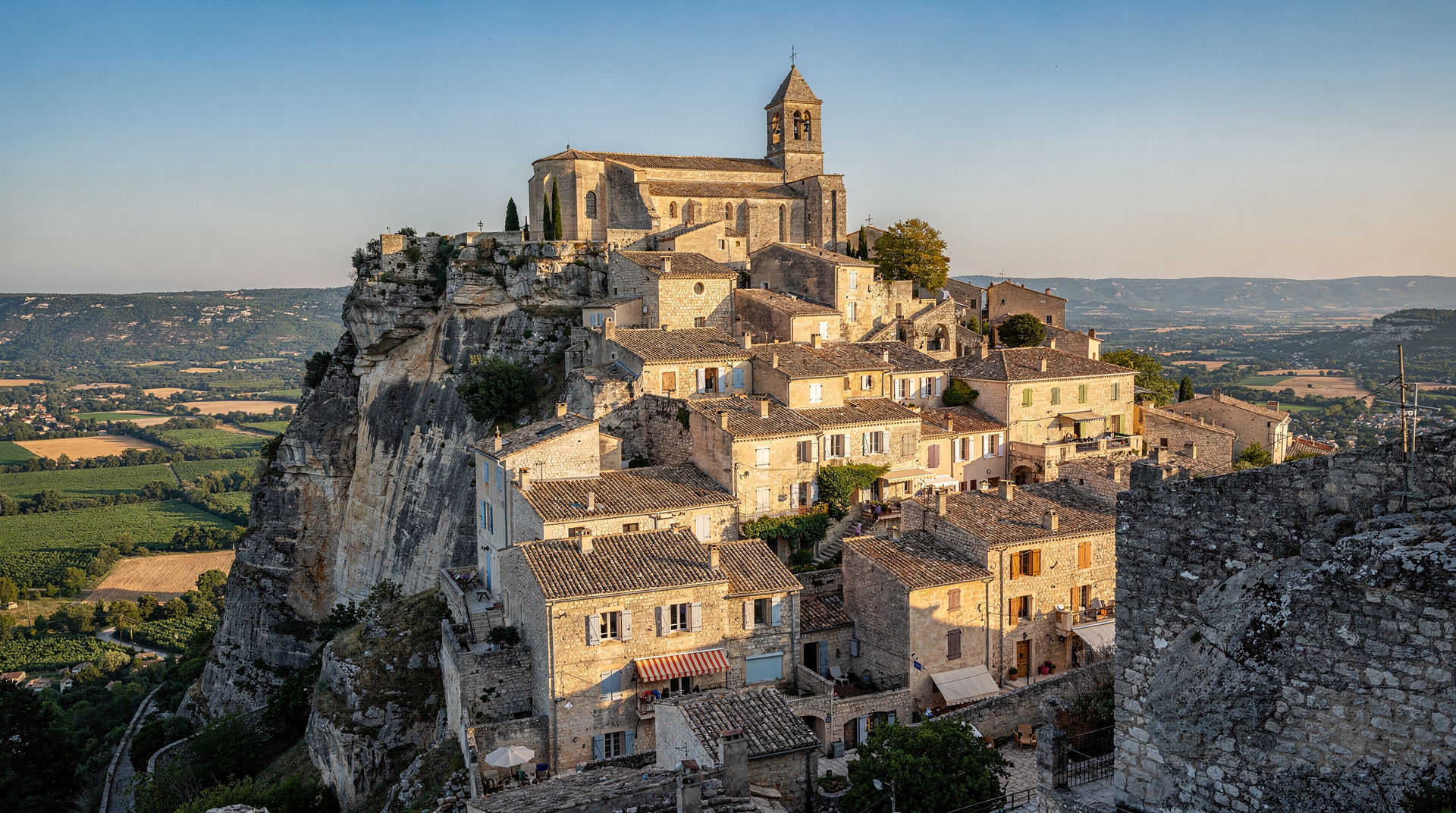
If you can only fit one village and value good food and a working atmosphere over the single most photogenic silhouette, Lourmarin wins. For the classic postcard view, see the Gordes guide.
Beyond the château: a short walk worth taking
Past the château and the main lanes, Lourmarin has a quieter side that most day-trippers skip: the lane leading toward the cemetery and Camus’s grave continues past vineyards and into open countryside with views back toward the village and the Luberon ridge. It is a genuinely peaceful 20–30 minute loop, best in the late afternoon when the château-visiting crowd has thinned. This kind of unhurried half-hour is exactly what distinguishes Lourmarin from villages built primarily around a single viewpoint, and it is worth building into your schedule alongside the market and château.
Frequently asked questions about Lourmarin
What day is the Lourmarin market?
Friday morning, 8:00 to 13:00, under the plane trees in the village centre. Arrive before 10:00 for the best selection.
Is Lourmarin better than Gordes?
It depends on what you want. Lourmarin has better restaurants, a genuine working-town atmosphere, and more manageable summer crowds. Gordes has the more dramatic hilltop architecture and view. See the comparison table above for a fuller picture.
Top experiences
Bookable activities with verified prices and instant confirmation on GetYourGuide.