First impressions of Marseille — the origin of this site
Marseille: iconic Calanques boat tour with swimming
Duration: 3-4.5 hours
We came with the wrong expectations
It was May 2018, and we had been meaning to go to Marseille for years. Not with any particular plan, and with a set of expectations assembled from unreliable sources: a French colleague who said it was rough, a guidebook that spent three pages on safety warnings, a travel magazine piece about the 2013 Capital of Culture renovation that made it sound like the city had been transformed into something sleek and new.
None of these sources had given us an accurate picture. The French colleague was repeating received wisdom. The guidebook was cautious to the point of paranoia. The magazine piece — we understood later — had described the renovation of the J4 waterfront and the MuCEM district and extrapolated it across the entire city, which was like describing the renovation of the South Bank and concluding that all of London was now modern and glamorous.
What we found was different. Not worse — different.
| At a glance | |
|---|---|
| Where | Marseille, southern France, arriving via Gare Saint-Charles |
| Cost | A TGV from Paris runs roughly 50-100 EUR one way depending on how far ahead you book |
| Time needed | We planned two nights and stayed three — a common pattern, per this piece |
| Getting there | TGV from Paris, around 3-3.5 hours to Gare Saint-Charles |
| Best time | Spring (May) for warmth without the August crowds and heat |
The first hour
We took the TGV from Paris. In 2018 the journey was a little under three and a half hours to Gare Saint-Charles, and the arrival into the station — which sits high on a hill with a grand staircase descending toward the city — was immediately theatrical. Marseille announces itself from the train station in a way that Paris, approached underground, cannot.
The smell on the stairs was the first thing: Mediterranean warmth and something cooking and the specific quality of light that hits you as you emerge from the cool of the station concourse. May in Marseille is already summer in the southern European sense — not the brutal heat of August, but warm enough that the city opens itself outward, tables on every terrace, the café awnings rolled back.
We walked down the stairs and down the Canebière, the old main artery of the city that the tourist literature was already treating as a cautionary example of urban decline, and found it was simply a busy city street full of people doing city things. Not glamorous, not dangerous. Just a street.
The Vieux-Port at midday
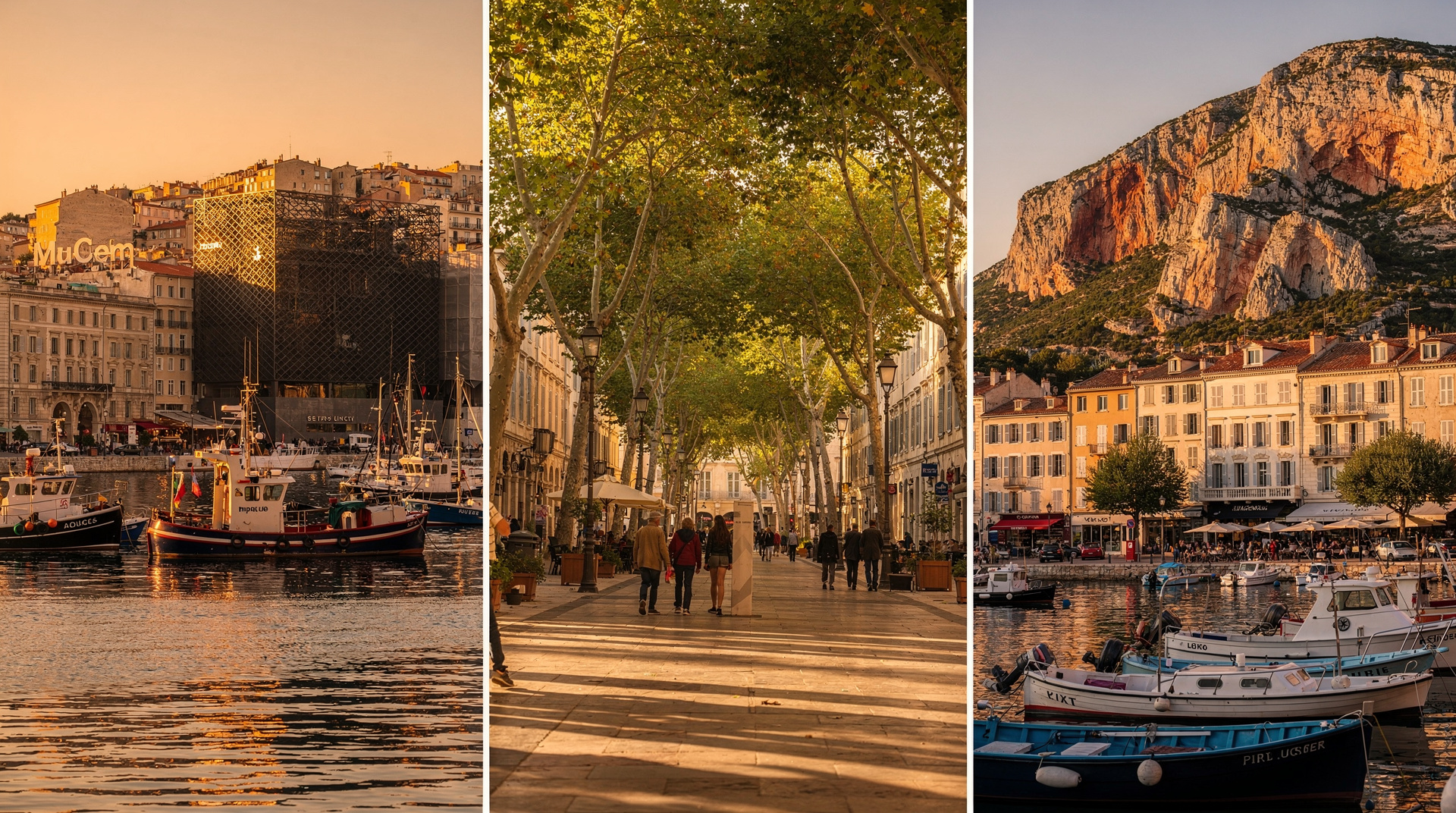
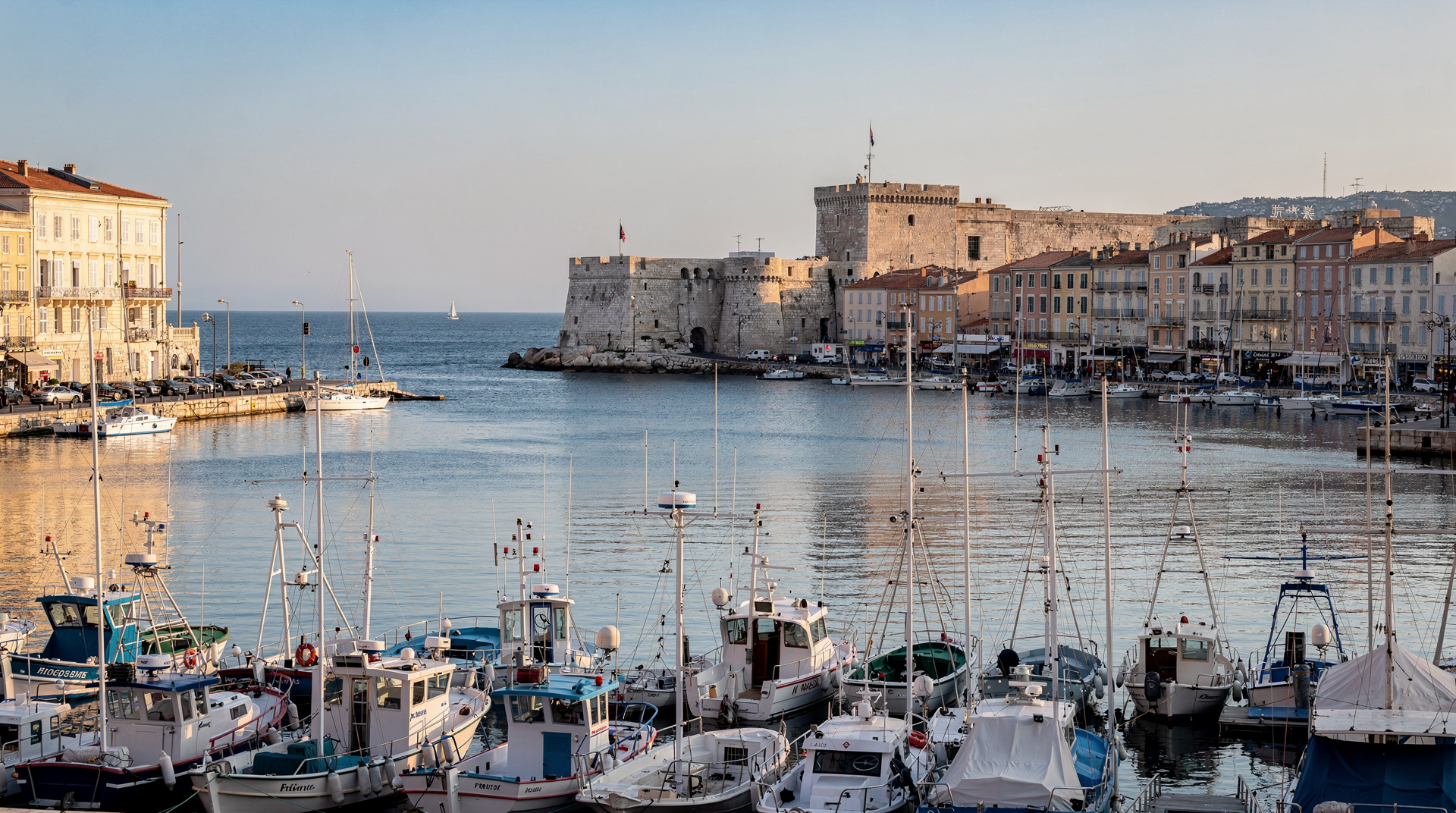
We arrived at the Vieux-Port at the tail end of the morning fish market. By noon the stalls were being cleared, the ice was melting under the remains of the catch, and a group of fishermen were having an argument about something with the unconstrained volume that city fishermen everywhere seem to consider appropriate. We watched from a reasonable distance and tried to understand what was being argued about. We failed.
The port itself was longer than we expected — a narrow rectangular harbour with boats all the way to the eastern end, the two old forts at the mouth framing the blue of the bay beyond. Fort Saint-Jean on the north side, Fort Saint-Nicolas on the south. Both 17th-century, both built by Louis XIV to control access to the port — and, less charitably noted in the history books, to point their guns back toward the city as much as toward the sea.
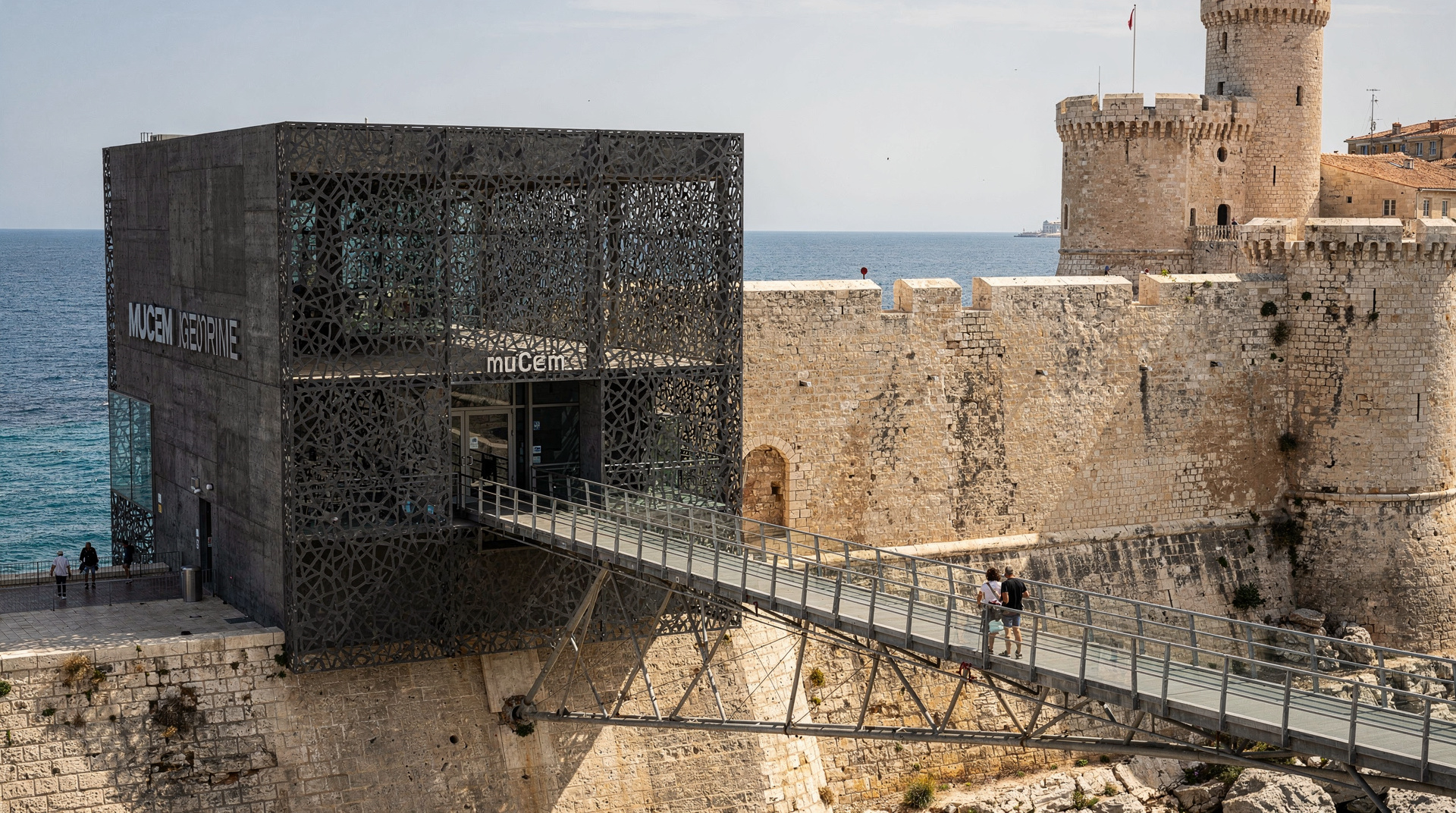
The MuCEM was four years old in May 2018. It had opened in 2013 with the Capital of Culture events, and the concrete latticework of the building had already acquired a certain weathered character, a softening of the initial architectural sharpness. We walked across the suspended footbridge to the Fort Saint-Jean and spent an hour on the terraces, looking back at the city, looking out at the islands.
Le Panier on the first evening
We had read enough to know to go to Le Panier. What we had not read — or not internalised — was that the quarter required a different pace. We arrived with too much intention, following a route marked on a phone screen, hitting the noted points (the Vieille Charité, the Place des Moulins, the belvedere with the view) in succession. It was good, but it was the tourist version of good.
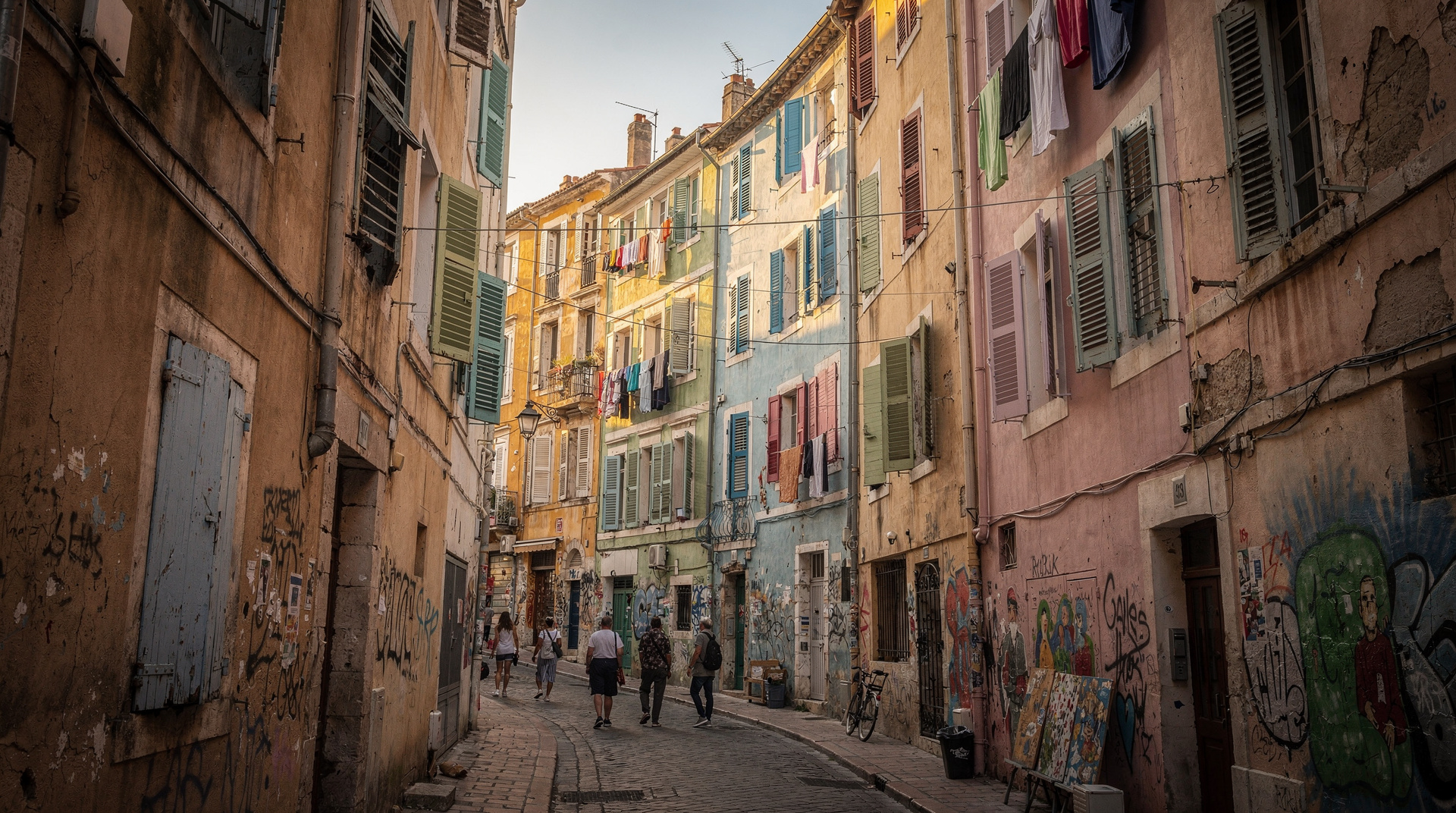
The better version happened accidentally, when we went back the next morning without a plan. The lanes at 8:30, with the day not yet started, with the bread being delivered and the bar on the corner setting out its tables, with a cat crossing the Montée des Accoules at a diagonal that communicated supreme indifference to our presence — that was the Le Panier we kept.
What we thought by the end of three days
We had planned two nights. We extended to three. This is, we have since learned, a common Marseille pattern.
By the end of the third day, we had: visited the MuCEM properly (not just the terraces, but the exhibitions on Mediterranean civilisations that placed Marseille in a context far older than its French identity), walked the Corniche to the Vallon des Auffes and sat watching the boats until the sun was low, eaten a proper fish lunch near the Vieux-Port (good, not spectacular — we had not yet learned to navigate the restaurant scene), and been baffled and then entranced by Cours Julien in the evening, where the natural wine bars and the street murals and the general sense of a city that takes its cultural life seriously were arriving as a surprise.
We had not yet visited the Calanques. This was a failure of planning that we corrected on the next visit. But even without the Calanques, Marseille had earned three days and was suggesting it could earn more.
The thing that sent us back
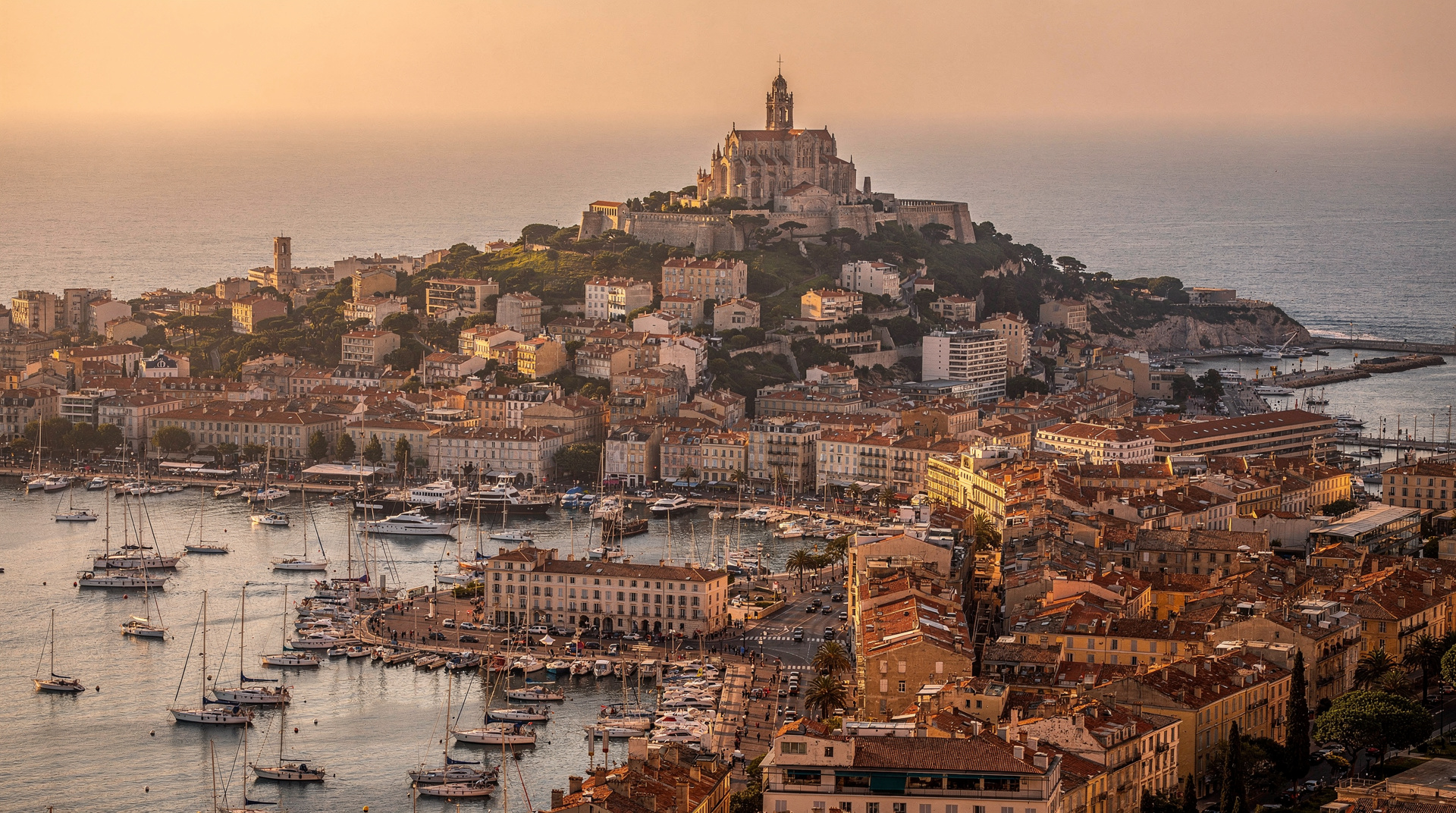
The thing that sent us back was not a specific sight or a specific meal. It was the feeling — familiar from very few other cities — that we had grazed the surface and that the surface was different from what lay under it. That the city was more layered than its reputation allowed, more complex than its surface presentation suggested, and more interesting than almost anything we had been told to expect.
In 2018, Marseille was five years past the Capital of Culture, which had been both a genuine transformation and a kind of starting pistol — the point at which the city’s long period of post-industrial difficulty intersected with a genuine investment in its cultural and architectural identity. The MuCEM was new. The J4 waterfront was new. The sense of a city that had decided to take itself seriously as a destination was new, or at least newly visible.
Whether the transformation had fully arrived or was still in process was a question we found genuinely interesting. We kept going back, partly to answer it, and partly because Marseille in spring — the light, the sea, the markets, the noise — turned out to be one of our favourite things in France.
What we would tell that first-trip version of ourselves
If we could send one note back to the two people getting off the TGV in May 2018, it would be this: budget one extra day beyond whatever feels reasonable. We extended from two nights to three almost by accident, and it was still not enough — we missed the Calanques entirely on that trip, which in hindsight is close to missing half of what makes Marseille worth the journey. We would also tell ourselves to slow down in Le Panier from the start rather than discovering, on the second morning, that the neighbourhood only gives up its best version once you stop following a route on a phone screen.
We would also say: trust the fish market noise, the working port smell, the unglamorous stretch of the Canebière. None of it is a warning sign. It is just what a real Mediterranean port city sounds and smells like before anyone has smoothed it over for visitors, and it is a large part of why Marseille rewards a longer look than the guidebooks suggest.
Where that first trip did not go
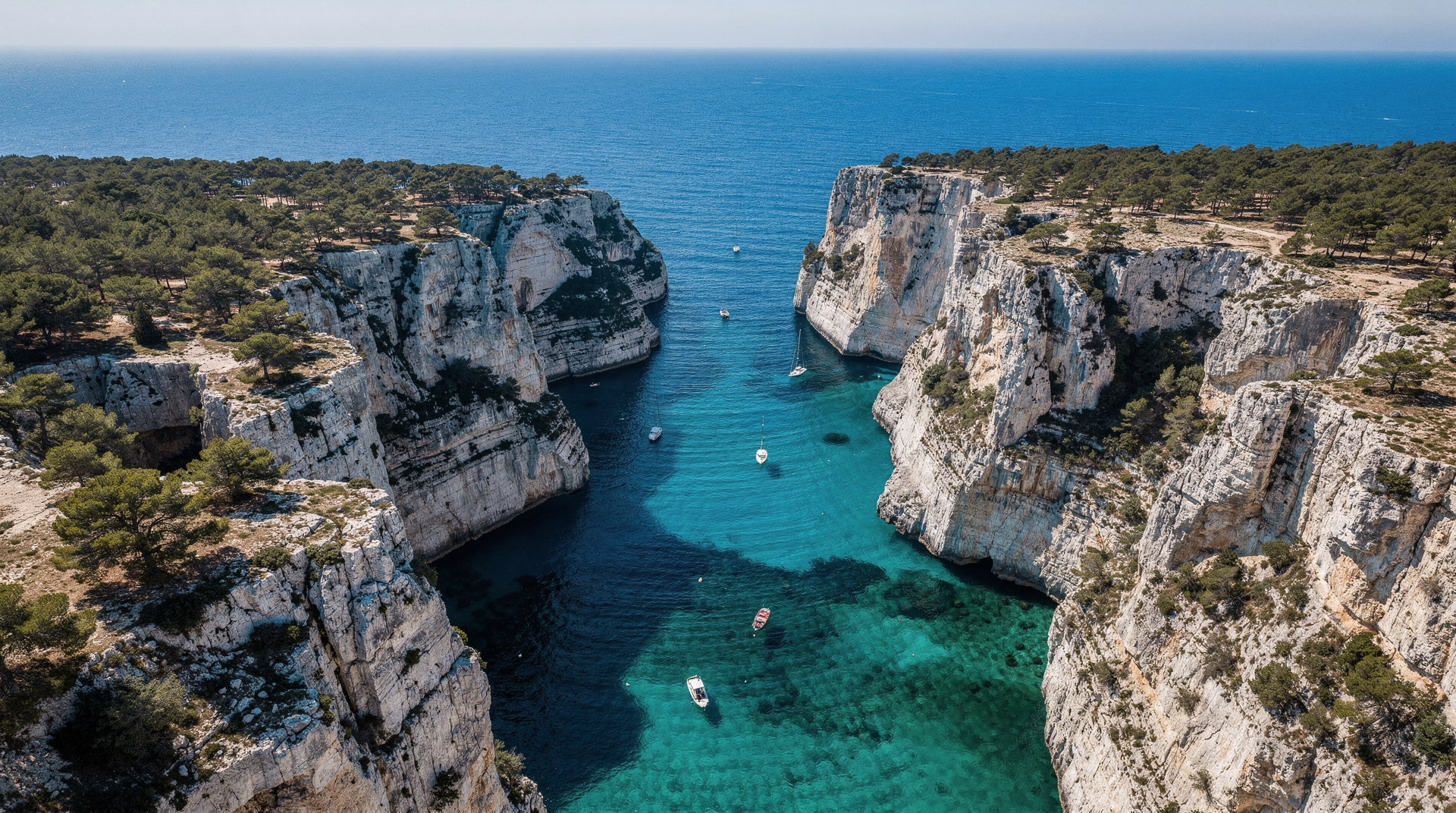
Three days is not enough to see the range of the city, and we knew it even at the time. We did not make it to Notre-Dame de la Garde, the hilltop basilica that gives the single best orientation view of the bay, and we did not get south to the Calanques at all. Both are now, on every return trip, close to non-negotiable. If you are planning your own first visit and have more than three days, building in the basilica and at least a half-day in the Calanques from the outset will save you the same regret we carried home.
Where we would send you next
If our story makes you curious, the rest of this site picks up where that first trip stopped. For a plan that fits a first visit, the Marseille for first-timers guide and the Marseille in three days itinerary lay out an order that avoids the checklist trap we fell into. If you are still weighing the city up, is Marseille worth visiting answers the question we asked ourselves before booking, and is Marseille safe deals calmly with the reputation we arrived carrying.
For the places we missed or only skimmed, the Le Panier guide goes deeper into the lanes we first walked with a phone in hand, the Notre-Dame de la Garde guide covers the basilica we skipped, and which Calanque to visit helps you choose once you decide, as we did on the next trip, that the coast cannot be left out. The MuCEM guide is worth a look if the exhibitions on Mediterranean civilisations caught your interest as they did ours, and Cours Julien is the neighbourhood that surprised us most on those first evenings.
Frequently asked questions about First impressions of Marseille — the origin of this site
Is three days enough for a first visit to Marseille? It is enough to get past the initial unglamorous impression and see the Vieux-Port, Le Panier, and MuCEM properly, but it will not stretch to the Calanques as well. Four days lets you add a half-day there without rushing everything else.
What surprised first-time visitors most about Marseille? Mostly that the city does not perform for tourists the way many polished European destinations do — the fish market, the port noise, the unrenovated stretches are simply how the city works, not a sign anything is wrong.
This site is the accumulated product of that question and those visits. We hope it is useful. For the first-time visitor’s practical guide, start with the Marseille guide. For the honest longer view, the how Marseille changed us piece is the place.
Top experiences
Bookable activities with verified prices and instant confirmation on GetYourGuide.