Sormiou and Morgiou
Sormiou and Morgiou are the two closest calanques to Marseille — cabanons, turquoise water.
Marseille: guided e-bike tour to Calanque de Sormiou
Quick facts
- Distance from city centre
- ~10–12 km south; the closest calanques to Marseille
- Car access restriction
- June 15–Aug 31: road closed to visitors 7:00–19:00 every day
- Spring/weekend restriction
- Apr 3–Jun 14: closed Fri, Sat, Sun and public holidays 7:00–19:00
- Hike from Luminy bus terminus
- ~45–60 min to Sormiou; 60–75 min to Morgiou, route via Belvédère
- Permitted access
- Residents, cabanon permit holders, restaurant patrons (reservation required)
The calanques closest to the city
Of the eight major calanques that make up the Marseille-side section of the national park, Sormiou and Morgiou are the two that most people visit first — and the two where the access reality comes as the biggest surprise.
Both sit roughly 10–12 km south of the Vieux-Port, which sounds close on a map. The roads that lead to them are single-lane and narrow, the parking capacity is approximately zero by peak-season standards, and the municipality has responded to decades of summer saturation by making those roads legally inaccessible to non-residents during the months when everyone wants to go. If you arrive by car on a summer morning at 9:30 expecting to park near the water, you will be turned around at a barrier and spend the day confused.
Understanding the access system before you go is not optional. It is the difference between a successful visit and a wasted journey.
| At a glance | |
|---|---|
| Where | 10–12 km south of Marseille’s Vieux-Port, within the Calanques National Park |
| Cost | Free access on foot or e-bike; boat/hiking tours around €40–90 per person; via corda sessions typically €50–70 |
| Time needed | Half a day for Sormiou alone; a full day to add Morgiou or the via corda |
| Getting there | On foot from Luminy (~45–75 min hike), by guided e-bike, or by organised hiking tour — driving is restricted most of the season |
| Best time | Late May to mid-June, or mid-September to October, for open trails and thinner crowds |
Access rules — 2026 season
The road restrictions for Sormiou, Morgiou, and Callelongue are set by prefectural order and renewed each year. The 2026 rules are:
April 3 to June 14: Road closed to non-authorised motorised vehicles on Fridays, Saturdays, Sundays, and public holidays from 7:00 to 19:00.
June 15 to August 31: Road closed to non-authorised motorised vehicles every day from 7:00 to 19:00.
Who is authorised: Residents, cabanon permit holders, restaurant patrons with a reservation, and boat owners. Everyone else — including most visitors — is in the non-authorised category.
September and beyond: Restrictions typically lift, though fire-risk closures of the hiking trails can continue separately through September. Always check the Calanques National Park website before any summer or early autumn visit.
The reason for the rules is twofold: road saturation (a single narrow lane cannot handle tourist volumes without gridlock) and fire risk (the massif is classified as extreme fire-risk terrain in summer, and vehicle access increases ignition risk).
The cabanons of Sormiou
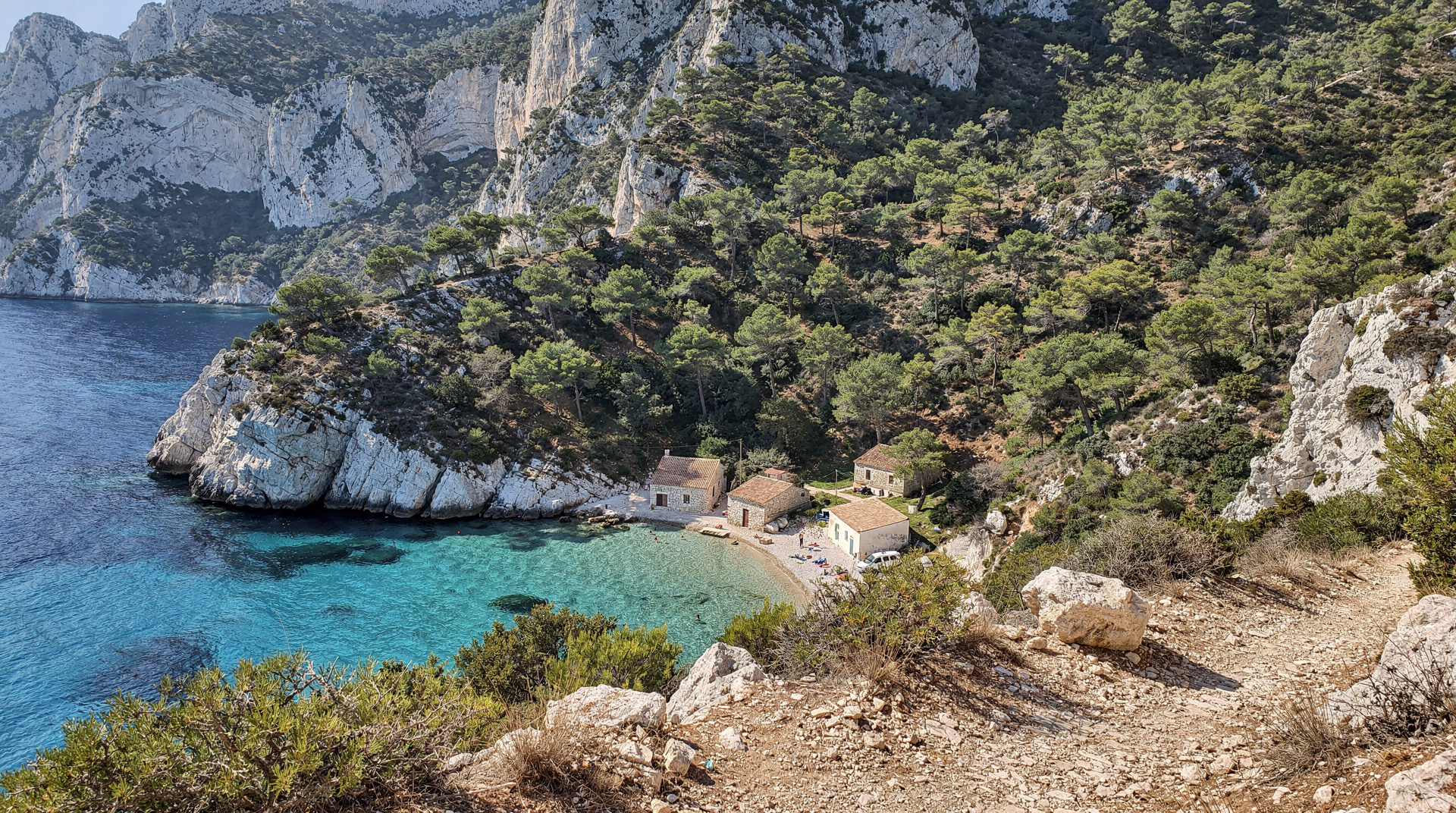
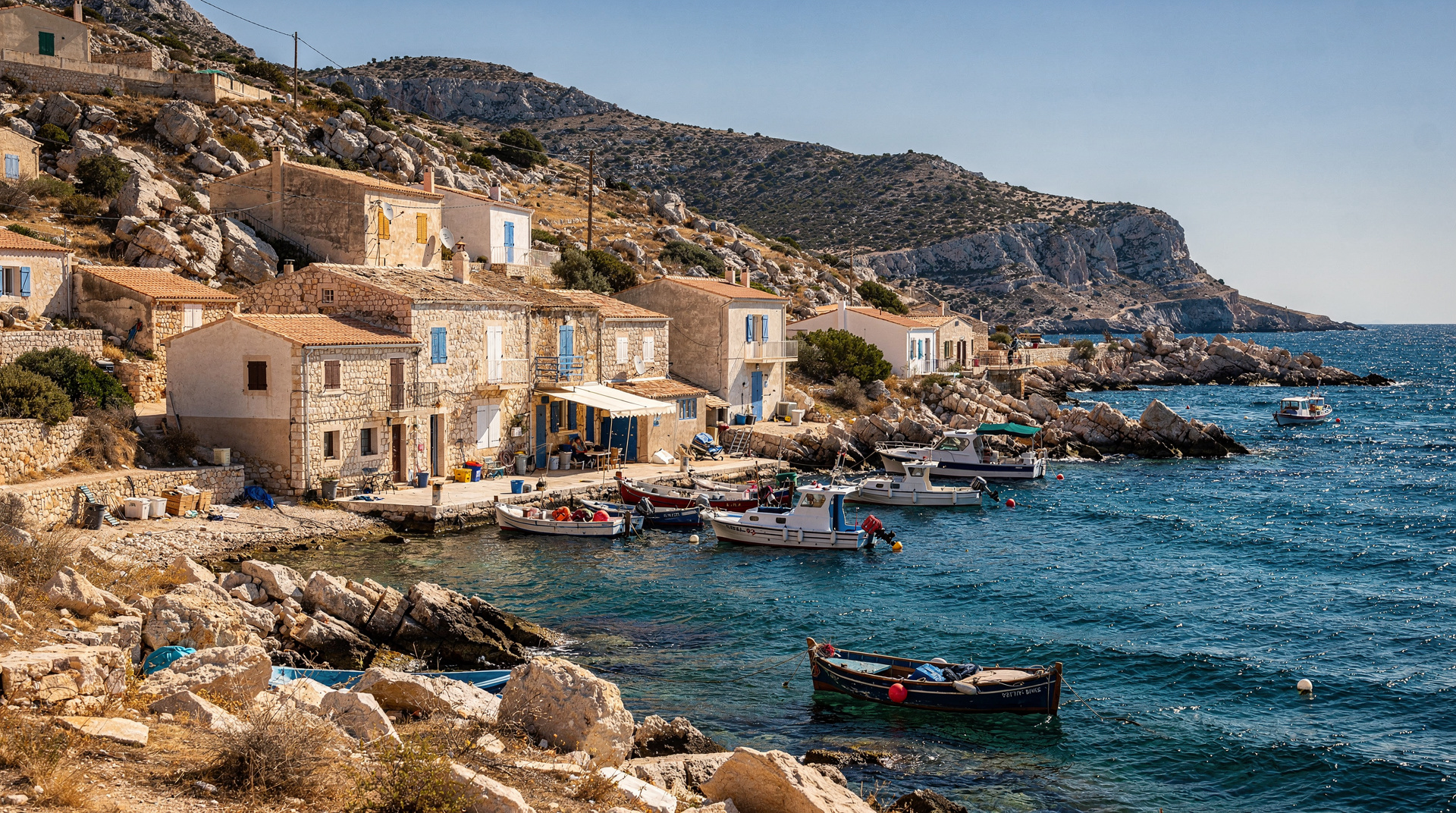
Sormiou is the larger and more famous of the two calanques. Its most distinctive feature is its community of cabanons — traditional stone fishing huts built along the waterfront by working-class Marseille families over the 19th and early 20th centuries. These are not decorative: they are private, functional, often passed down through generations, and remain inhabited on weekends and in summer by families who hold the permits allowing road access.
The cabanons give Sormiou a lived-in quality that most Calanques lack. Coming down into the cove on foot, you pass between these low stone structures with their fishing tackle, small boats, and vegetable patches, and arrive at a beach that is simultaneously a natural spectacle and a working waterfront community. There is even a small restaurant (Les Tamaris) that has operated in the calanque for decades — accessible by reservation for permit holders and boat arrivals.
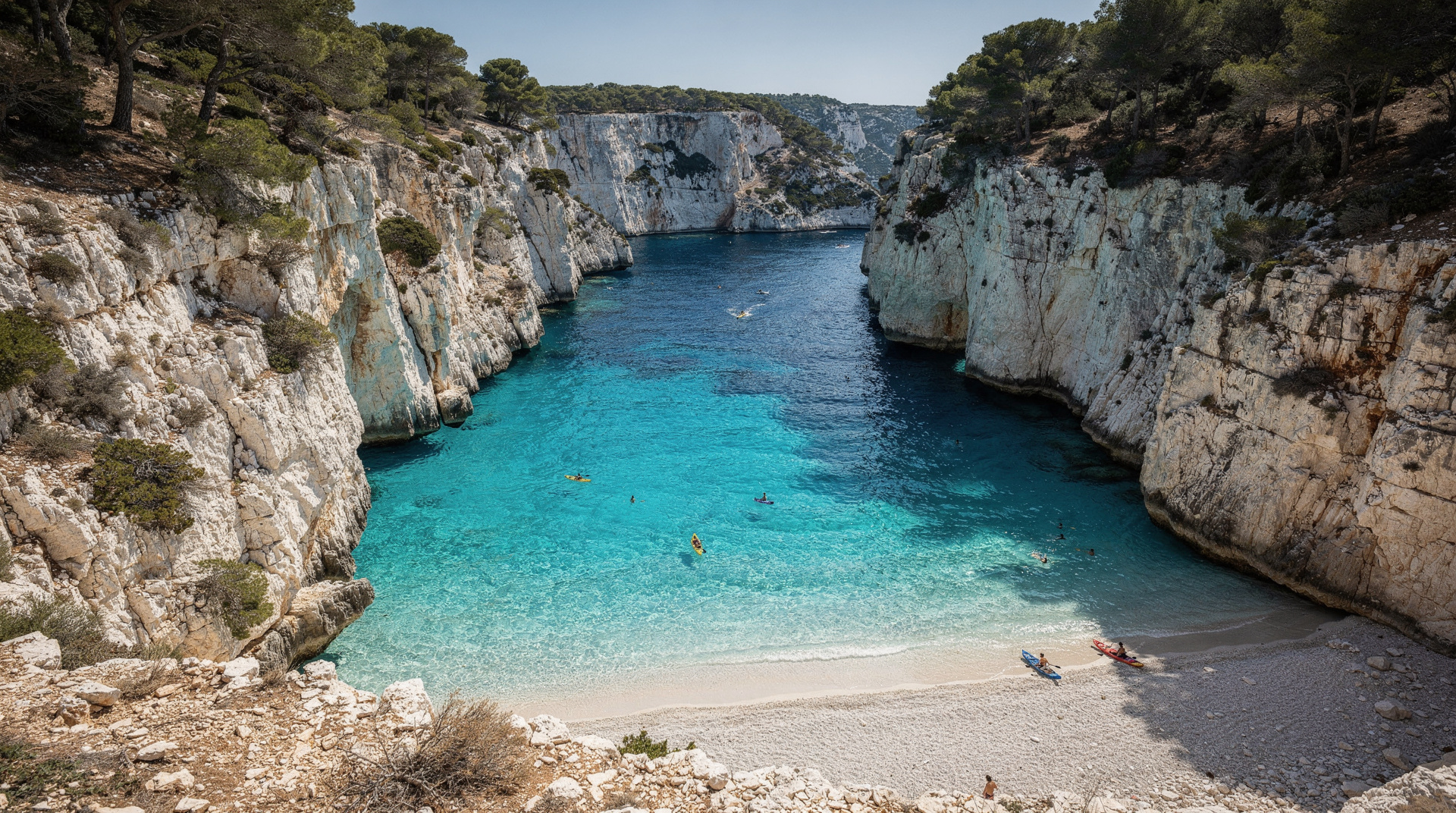
The beach itself is a crescent of pale sand and pebbles fronting a bay of exceptional clarity. The limestone walls rise on three sides. The water is shallow near the beach and drops off steeply toward the open sea.
Morgiou: the wilder sibling
Morgiou lies about 2 km east of Sormiou along the coastal massif. It is smaller, quieter, and has fewer cabanons — the fishing community here is more intimate, and the cove itself is accessed via a narrower road that makes Sormiou’s access seem straightforward.
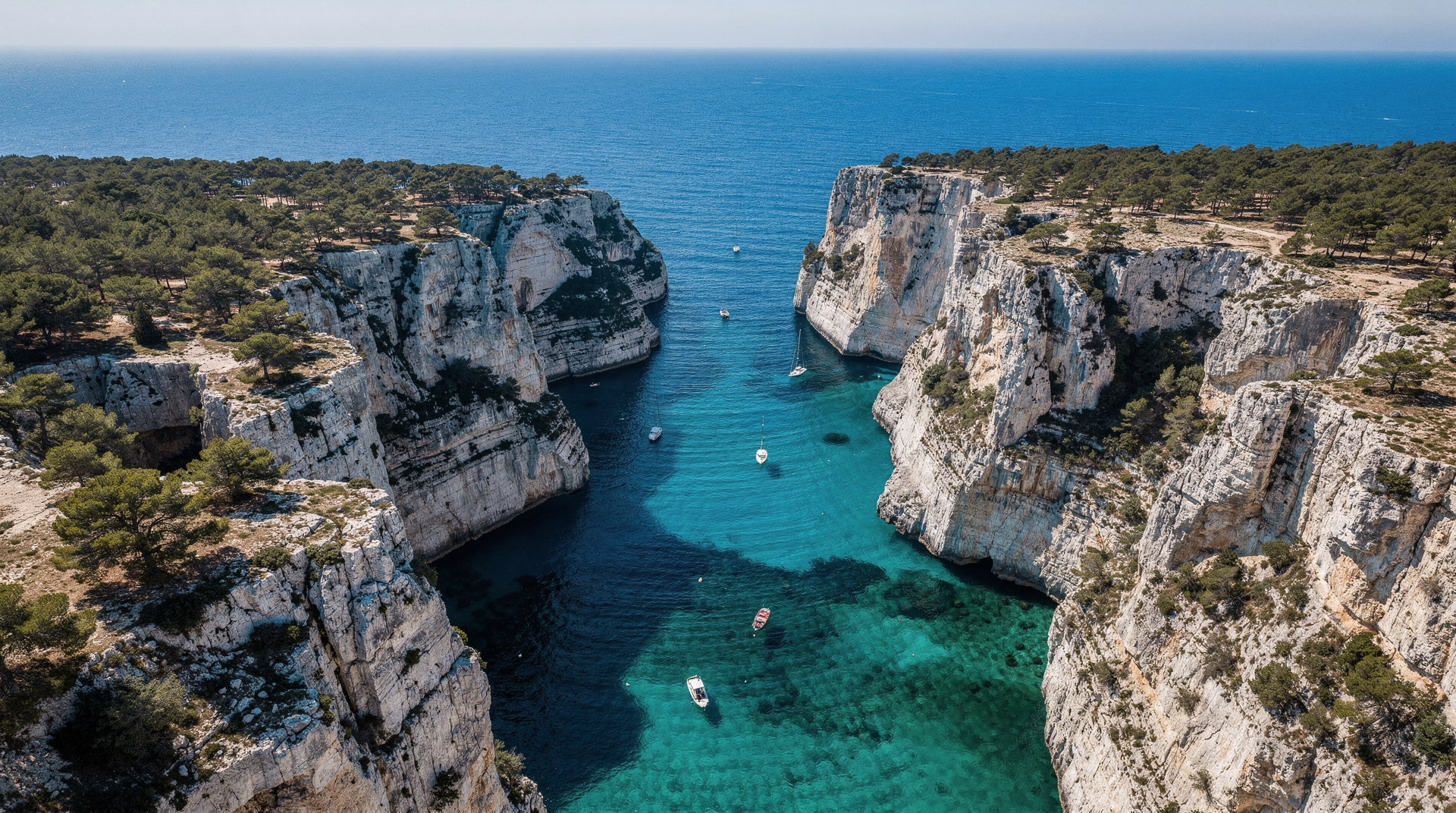
The visual character of Morgiou is slightly different: the cliff walls are more vertical, the cove more enclosed, and the sense of being at the end of something remote is stronger despite the actual distance from the city. A small harbour with fishing boats and a restaurant (Le Lunch, also reservation-only for vehicle access) sits at the water’s edge.
Morgiou is also the departure point for underwater divers heading to the Cosquer Cave — the Paleolithic painted cave discovered in 1985, accessible only through an underwater passage 175 metres long and reachable from the sea at about 36 metres depth. The cave itself is not open to visitors; the replica near MuCEM at the Villa Méditerranée is the accessible alternative.
Getting there without a car
On foot from Luminy
The most practical car-free approach is via bus to the Luminy campus (Bus 21 from Castellane métro station) and hiking in on foot. The trail from Luminy through the national park reaches Sormiou in approximately 45–60 minutes along a marked but rocky path. Morgiou adds another 20–30 minutes from Sormiou.
This is real hiking — limestone terrain, minimal shade, significant sun exposure in summer. Bring at least 1.5 litres of water per person, sunscreen, and proper footwear (not sandals). The descent into Sormiou has sections of loose rock.
Important: Trail access from Luminy is subject to fire-risk closures from June through August. Check the Calanques National Park website or call the park information line the evening before your planned visit. Trails can close with 24-hour notice if conditions warrant it.
By guided e-bike
A guided e-bike tour from Marseille to Sormiou is one of the more satisfying ways to solve the access problem. The route from the city takes riders through the coastal roads and into the national park territory using paths accessible to e-bikes, arriving at Sormiou without the car-access restriction that applies to motorised vehicles. The electric assist makes the significant climb manageable. Tours typically include time at the calanque for swimming.
By guided hike
Organised hiking tours from Marseille handle the logistics — transport to the trailhead, a guide who knows the terrain, and management of the fire-risk regulations. These tours typically cover Sormiou or both Sormiou and Morgiou depending on the group’s pace. They are the lowest-effort option for those who want the hiking experience without the planning burden.
Via corda at Sormiou
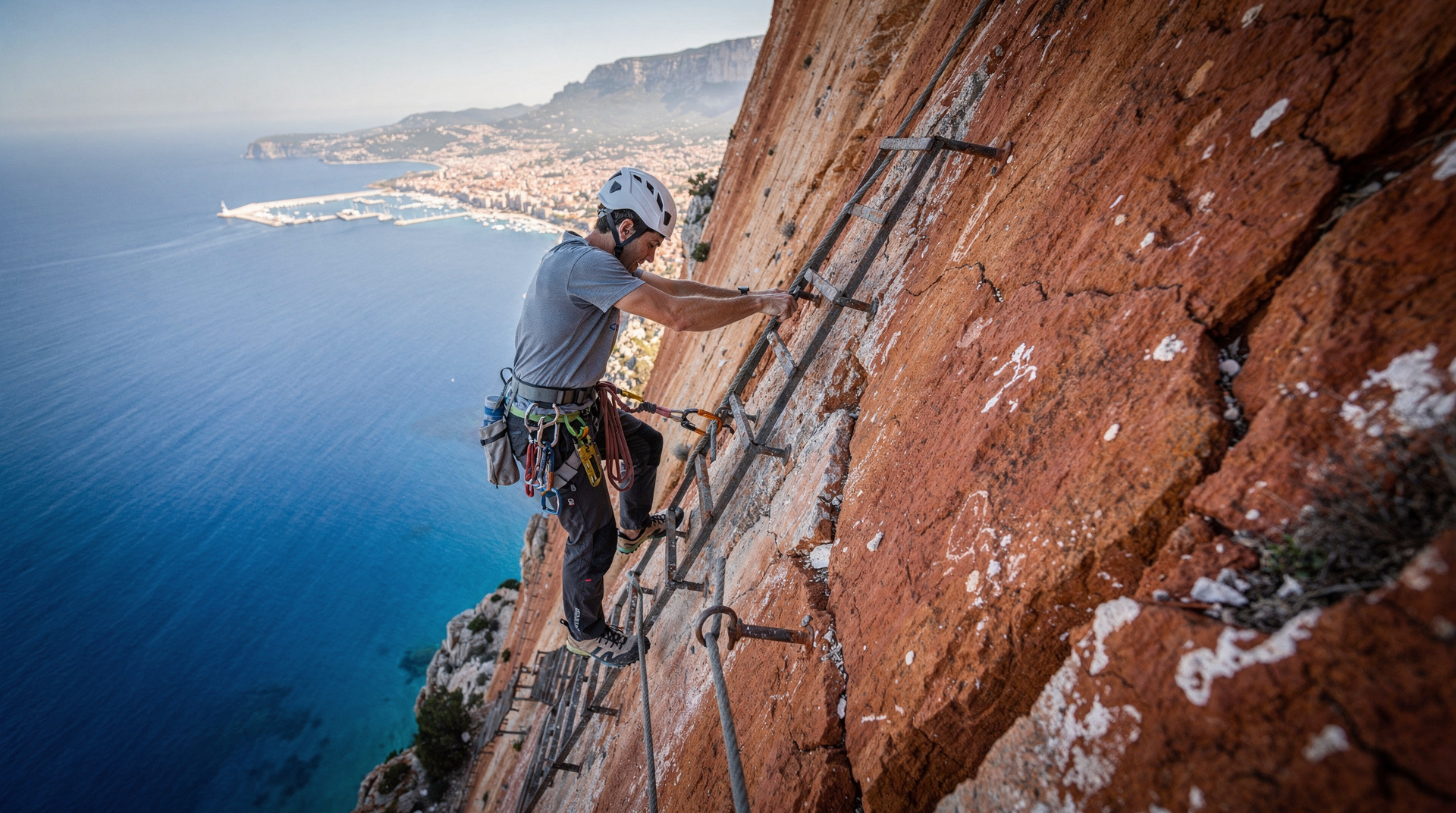
The Sormiou via corda is a fixed-rope route along the limestone cliff face above the calanque — a level 1 via ferrata experience that is genuinely accessible to visitors without climbing experience while delivering the sensation of moving across vertical rock above turquoise water. Sessions run for about 4 hours and include all equipment. The experience requires reasonable physical fitness and no serious fear of heights, but no technical knowledge.
This is one of the better adventure experiences accessible from Marseille for those who want something more active than a boat trip. See the rock climbing and via ferrata guide for more context on the Calanques climbing options.
Sormiou vs Morgiou: which to choose?
| Sormiou | Morgiou | |
|---|---|---|
| Beach size | Larger, more comfortable | Small, intimate |
| Cabanon community | Extensive | Smaller |
| Crowds | Higher | Lower |
| Hiking time from Luminy | 45–60 min | 60–80 min |
| Restaurant in the calanque | Yes (reservation required) | Yes (reservation required) |
| Via corda | Yes | No |
First visit: Sormiou. Return with more time: Morgiou.
Swimming and water conditions
Both coves offer genuine swimming, not just a photo stop. Sormiou’s beach shelves gently near the sand before dropping off, making it the more comfortable entry point for families or weaker swimmers; Morgiou’s rocky edges favour confident swimmers who can enter from ladders or flat rock rather than sand. Water temperature typically reaches swimmable levels (around 20–22°C) from June and peaks in August at 24–26°C, cooling again through September. Snorkelling is worthwhile in both coves — the clarity is consistently among the best of the Marseille-side calanques, and the rocky margins hold small fish, sea urchins, and occasional octopus if you look carefully near the edges.
There is no lifeguard service at either cove outside the busiest weeks of summer, and the open sea beyond the entrance can produce a swell that makes the mouth of the calanque choppier than the sheltered interior. Stay within the visibly calm water unless you are a strong swimmer.
Bringing lunch or eating on site
Because vehicle access is restricted for most of the season, most visitors either bring a picnic or eat at one of the two calanque restaurants (Les Tamaris at Sormiou, Le Lunch at Morgiou), both of which require advance reservation and are generally reserved for permit holders, boat arrivals, or diners who book specifically to secure vehicle access for the day. Hikers arriving on foot should assume they will not get a table without having called ahead — pack water and food for a self-sufficient half-day instead. There are no shops or fountains at either cove; carry everything you need in.
When to go
May and early June: The optimal window. Car-access restrictions are weekend-only at this point, so weekday visits by car are possible. The massif is green, the water is warming, and the trails are fully open. Crowds are manageable.
September from mid-month: Car-access restrictions lift around September 1 (check the exact date each year). Trails may still be partially closed for fire risk in early September — check before going. By mid-September, the situation normalises and the combination of warm water and emptier trails is excellent.
July–August: The most challenging period. Go by foot from Luminy or via organised e-bike/hiking tour. Arrive at the trailhead as early as possible (before 8:00 ideally). Do not plan to park.
For the wider Calanques context — including how Sormiou and Morgiou compare to the Cassis-side calanques, Sugiton, and the full boat-tour options — see the Calanques National Park guide and the which calanque guide. For a base overview and transport connections, see Marseille.
Planning around Sormiou and Morgiou
Sormiou and Morgiou work best as one piece of a wider stay rather than a stand-alone trip. The Sormiou calanque hike guide walks through the trail in more detail, and calanques from Luminy covers the starting point most car-free visitors use. If you are still deciding between coves, which calanque to visit and calanques boat vs hike lay out the trade-offs, and calanques summer access rules explains the restrictions in plain terms.
Before you commit to a date, visiting the Calanques by season and calanques hiking safety are worth a read, especially for the fire-risk closures and the heat on exposed limestone. To keep the day quiet, see avoiding crowds in the Calanques.
Neighbouring coves make natural companions. Les Goudes sits along the same stretch of coast, and Sugiton is another of the nearer calanques reached on foot. For a longer stay, Marseille in two days and the Marseille Calanques weekend show how a calanque day can slot between city sightseeing.
Frequently asked questions about Sormiou and Morgiou
Can I drive to Sormiou in summer?
Only if you have authorisation (resident, cabanon permit holder, or restaurant reservation). From June 15 to August 31, the road is closed to non-authorised vehicles from 7:00 to 19:00 every day. Outside those hours, access is technically possible, but parking is essentially non-existent. Go by foot from Luminy, by e-bike, or via an organised tour.
How long is the hike from Luminy to Sormiou?
Allow 45–60 minutes one way at a moderate pace on rocky trail with approximately 150 metres of descent into the calanque. The return is the same distance but the climb feels harder in the afternoon heat. Total visit time including swimming and return: 3–4 hours minimum.
Is Morgiou worth visiting if I’ve already seen Sormiou?
Yes, if you have the time and fitness. Morgiou is smaller, quieter, and has a distinctly different atmosphere — less of a beach scene, more of a genuine fishing community. The cove itself is arguably more dramatically enclosed. Budget an additional 1.5–2 hours from Sormiou for the trail to Morgiou and return.
What is a cabanon and can I rent one?
A cabanon is a traditional Provençal fishermen’s stone hut built along the waterfront. Those at Sormiou and Morgiou are private property, often family-owned for generations, and are not available for rental through any normal channel. The culture around them is distinctively Marseillais — a weekend refuge from the city, maintained with considerable personal pride.
Is Sormiou or Morgiou better for swimming with kids?
Sormiou, without much hesitation. Its beach shelves gradually into the water and gives young children a sandy, shallow entry point, whereas Morgiou’s rockier edges require more confident footing and swimming ability. Factor in the hike itself, though — neither cove is a stroller-friendly destination, and the descent from Luminy involves loose rock that is genuinely tiring for small legs.
Top experiences
Bookable activities with verified prices and instant confirmation on GetYourGuide.