Marseille nightlife guide: bars, live music, and late nights
Marseille: sunset street-food tour
Where is the best nightlife in Marseille?
Cours Julien is the neighbourhood with the most consistent bar and live music scene for all tastes. The Vieux-Port terraces are good for aperitivo hour. Beach clubs at Pointe Rouge and Catalans operate from late June. The gay scene is concentrated around Cours Julien. Late-night food is available in Noailles and around the station.
Marseille after dark: the honest picture
Marseille is not a city that pretends its nightlife is something it is not. It is not Ibiza, it is not Barcelona at peak tourist-season mode, and it is not Paris with its well-trodden late-night circuit. What Marseille has is authentic: neighbourhood bars that have regulars, a music scene that grows from the city’s multicultural character, a beach club culture that is genuinely local, and a Vieux-Port aperitivo hour that is one of the more pleasant ways to spend a Mediterranean evening.
The nightlife is concentrated in a few zones. Outside of these zones — and particularly outside of Cours Julien — Marseille’s nights are quieter than you might expect for a city of its size.
At a glance
| Where | Cours Julien (bars/live music), Vieux-Port quais (aperitivo), Pointe Rouge & Catalans (beach clubs, summer only) |
| Typical spend | Around EUR 4–6 a pastis; EUR 8–12 a cocktail; EUR 15–20 taxi from Pointe Rouge back to the centre |
| Time needed | A full evening (aperitivo from around 18:30 through bars past midnight) |
| Getting there | Metro M1 to Cours Julien or Estrangin Préfecture; bus/taxi for the beach clubs |
| Best time | Year-round for Cours Julien bars; beach clubs run roughly late June to early September |
Cours Julien: the centre of Marseille’s night scene
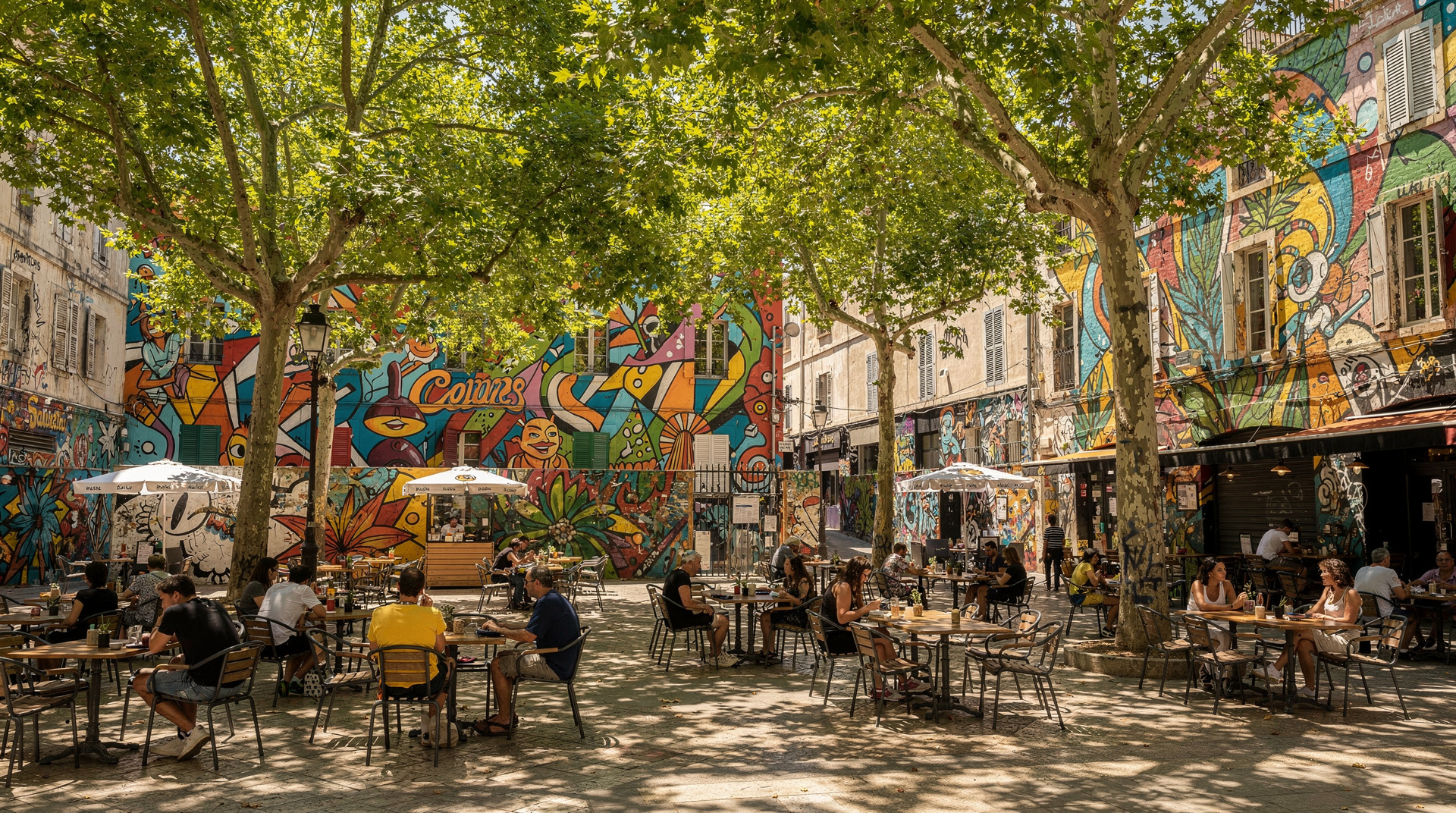
Cours Julien is the most important neighbourhood for nightlife in Marseille, full stop. The pedestrian square itself is surrounded by café terraces that stay open late; the streets radiating from it — Rue Crudère, Rue de Breteuil, Rue Saint-Pierre — have a density of bars, restaurants, live music venues, and late-night spots that is unique in the city.
The character is eclectic and authentically mixed: regulars alongside tourists, students alongside working people, an unpretentious aesthetic that reflects the neighbourhood’s gradual gentrification without losing its working-class roots. The street art that covers most wall surfaces (Cours Julien is the heart of Marseille’s street art scene) is visible even at night, lit by the bar terraces.
What you will find on and around Cours Julien:
- Long-running neighbourhood bars with outdoor terraces and reasonable prices
- Live music venues hosting local bands, jazz acts, and occasional international artists
- The beginning of the gay scene (primarily around the northern end of Cours Julien and the streets toward Castellane)
- Late-night kebab and pizza options when restaurants close
- A pétanque court that attracts informal games into the evening on summer nights
Opening hours: Most terraces start filling around 19:00 for aperitivo. The main bar hours are 21:00–02:00. Some specific venues have licences until 04:00 on weekends.
Getting there: Metro Cours Julien or Estrangin Préfecture (M1), then a 5–10 minute walk. Well-lit and pedestrianised for the central area. The surrounding streets vary in character by direction; the north-east toward the Noailles area is more animated late; the south toward Baille is quieter.
Vieux-Port terraces: aperitivo hour
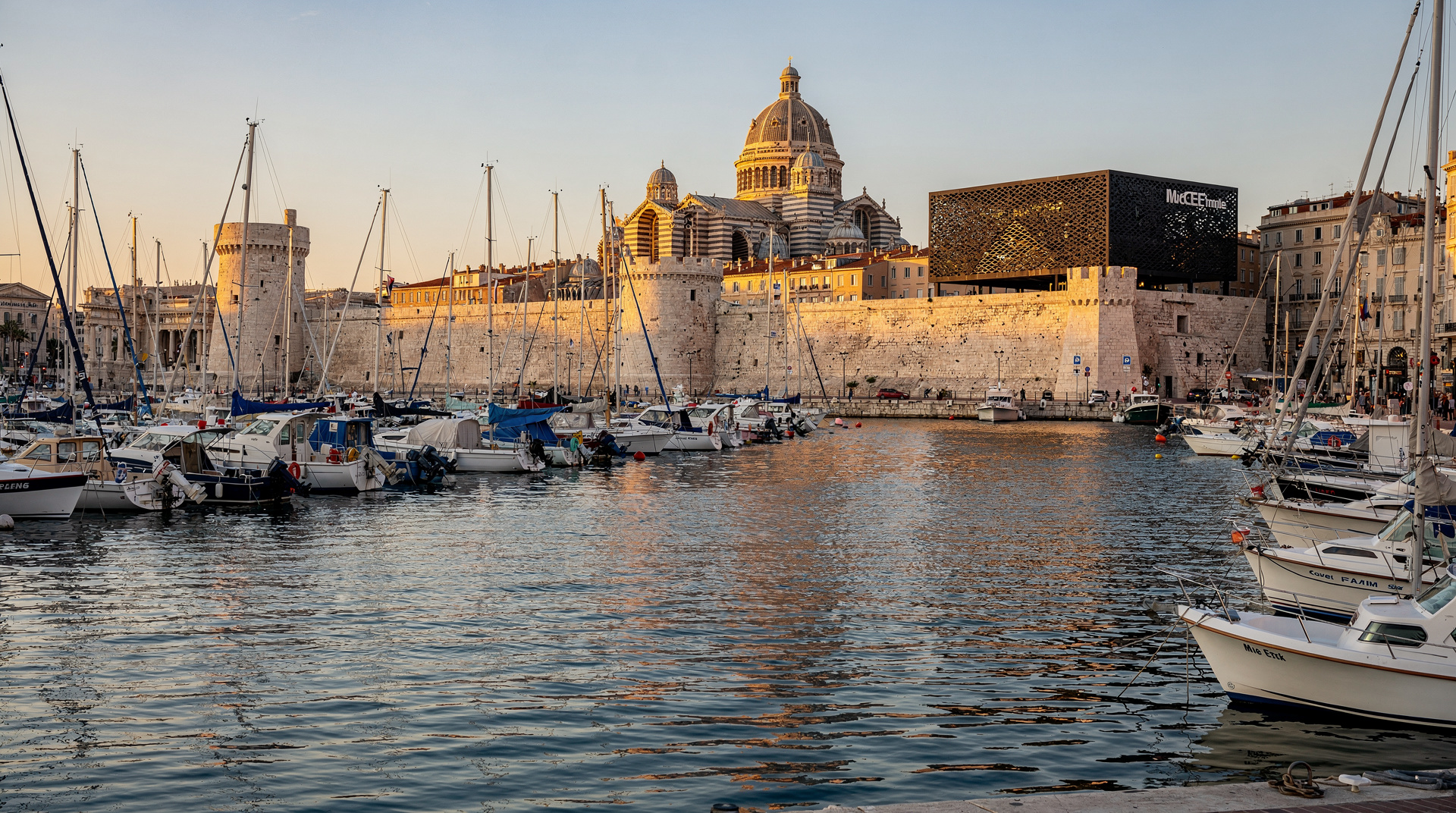
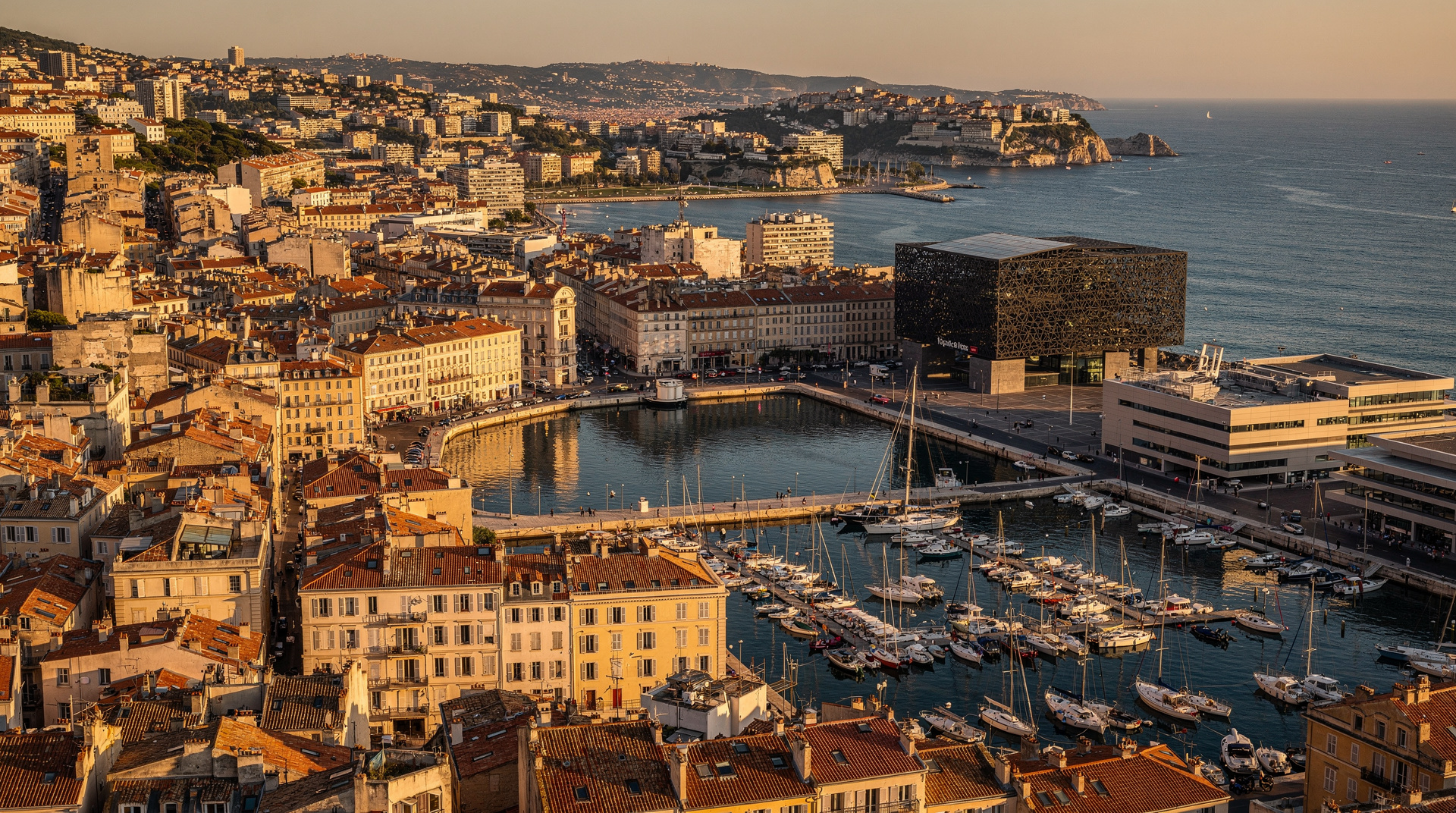
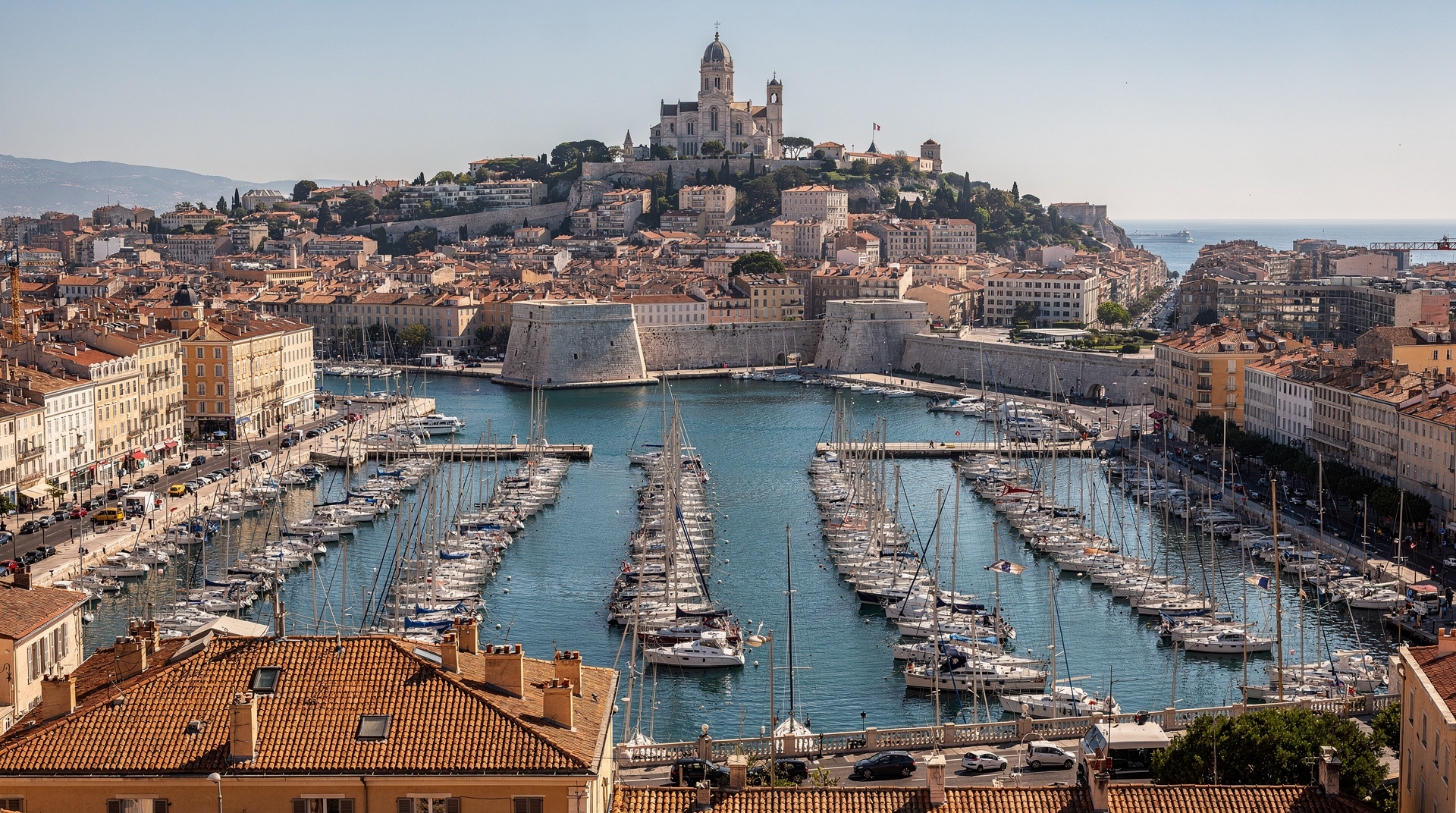
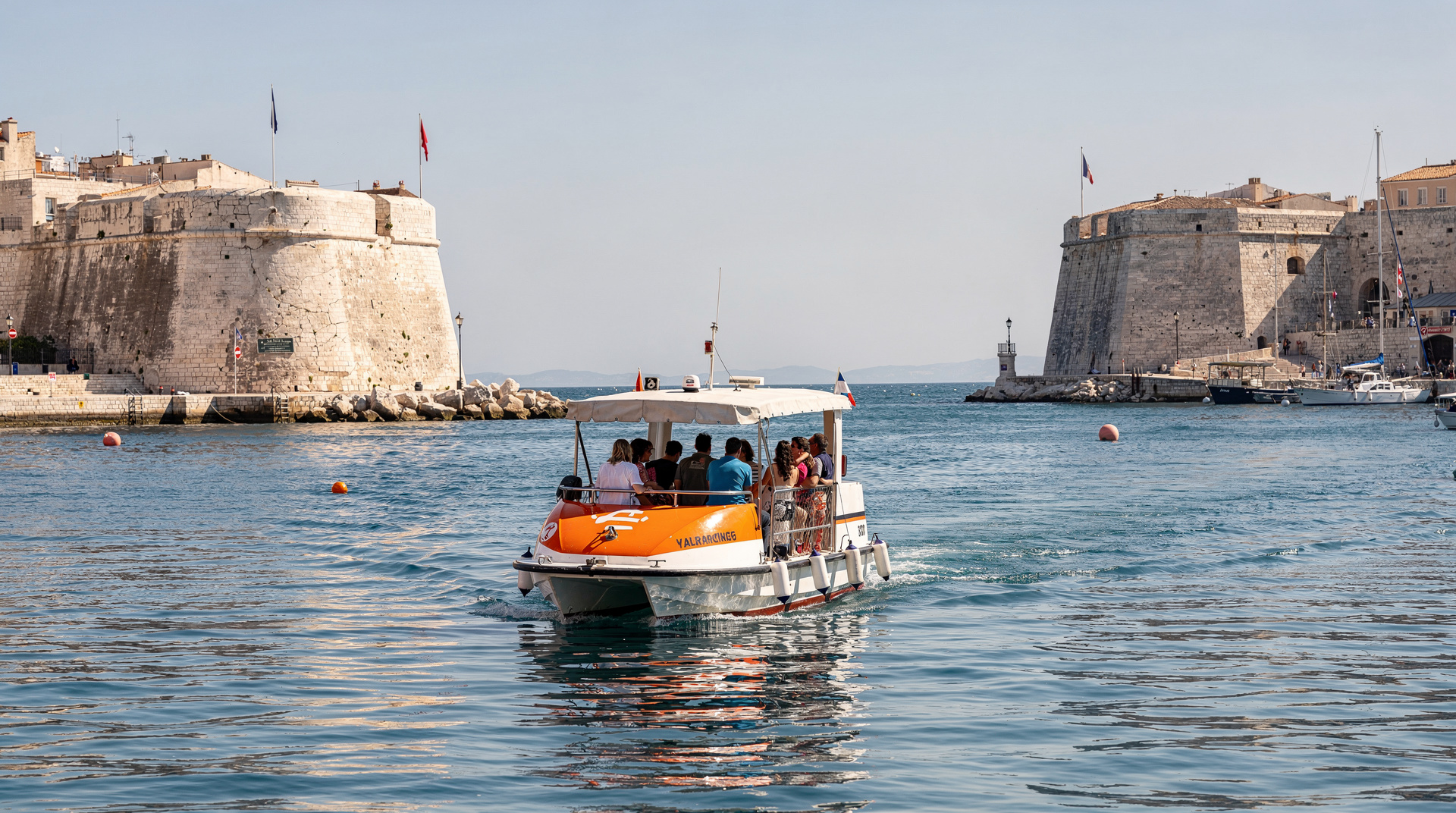
The Vieux-Port is at its best between 18:00 and 21:00 on a summer evening. The restaurants along the south quai (Quai de Rive Neuve) and the north quai (Quai du Port) have outdoor terraces with views over the harbour, the Fort Saint-Nicolas and Fort Saint-Jean at the entrance, and the sun setting over the bay to the west.
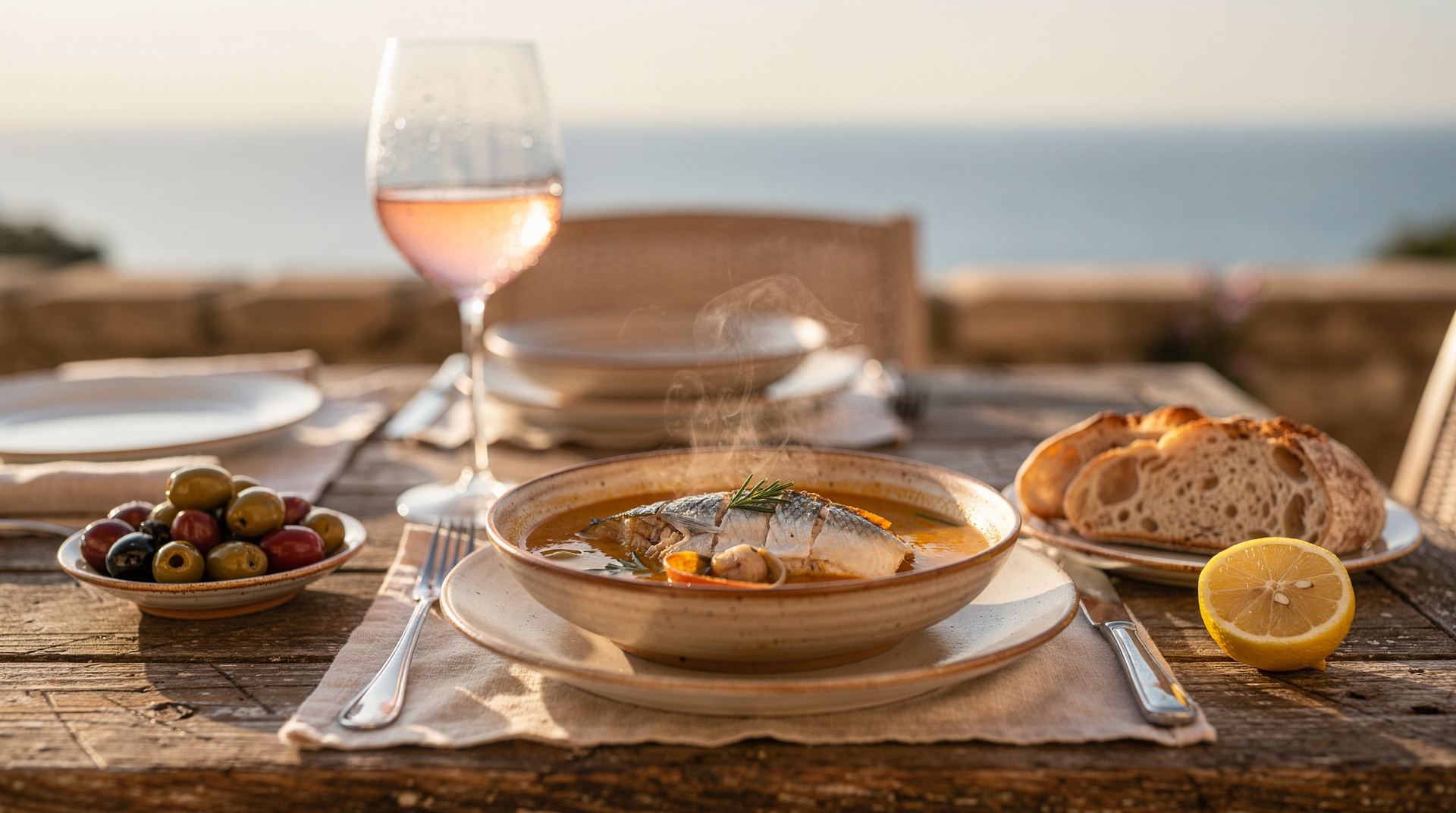
This is aperitivo culture in its Mediterranean form: a glass of pastis or rosé, olives, and an hour watching the harbour before dinner. It is genuinely pleasant and one of the best ways to feel the city’s pace. The restaurants themselves are variable (see our tourist traps guide for the food caveats), but as a place to drink and watch the water at dusk, the Vieux-Port is consistently good.
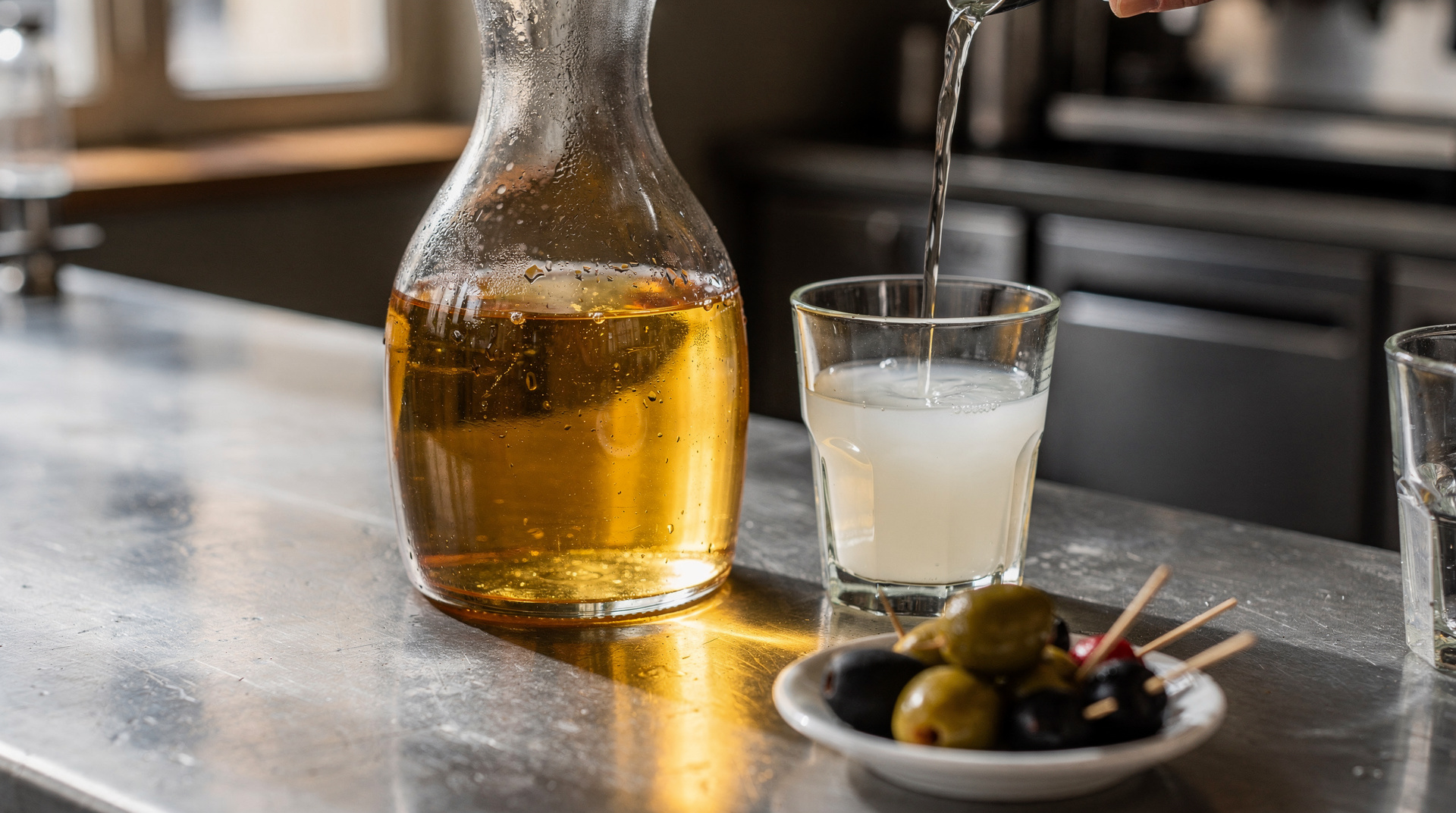
Pastis primer: Pastis is the Marseille aperitif — an anise liqueur served cold with water (5 parts water to 1 part pastis is standard) and always with ice. It is the social drink of the south. A pastis on a Vieux-Port terrace at 19:00 is one of the more iconic Marseille experiences, and unlike some iconic experiences, it is entirely affordable (EUR 4–6).
Beach clubs: Pointe Rouge and Catalans
From late June to early September, Marseille’s beach clubs operate along the southern coast. The format: sun loungers and parasols during the day, DJs and parties transitioning from late afternoon. The quality and character vary considerably.
Plage des Catalans (closest to the Vieux-Port, near the Corniche entrance) has several private beach clubs along the pebble-and-sand beach. These operate a day-to-evening format — tables are hired for the afternoon and transition to evening dining and drinks with music.
Pointe Rouge (further south, 30–40 minutes by bus from the Vieux-Port, near the marina) has a more club-oriented beach atmosphere. The venues here are larger, the music louder, and the evening goes later. This is where Marseille’s beach night scene most resembles the beach-club culture of the Mediterranean resort cities. The audience tends to be younger and more local than the Vieux-Port tourist zone.
Getting to beach clubs: Bus or taxi — private vehicles are difficult and parking is expensive or unavailable at Pointe Rouge in summer. A taxi from the Vieux-Port to Pointe Rouge costs around EUR 15–20.
The gay scene
Marseille has a gay scene centred around Cours Julien and its immediate surroundings. The neighbourhood has been a liberal, alternative zone for decades, and the gay bars and venues are integrated into the general nightlife rather than separated into a specific district. The scene is not as large as Paris’s Marais or as visible as Nice’s, but it is genuine and welcoming.
Marseille Pride takes place annually, typically in June — check the current year’s dates as they vary. The event uses the Vieux-Port and surrounding streets and is one of the more festive events in the city’s annual calendar.
Live music in Marseille
Marseille has a genuine live music culture, particularly in world music, jazz, and electronic. The city’s multicultural character produces a music scene that reflects it: North African influenced sounds, rai, reggae, hip-hop (Marseille has significant hip-hop history — IAM, the founding group, were from here), and jazz.
Key venues:
- Friche la Belle de Mai (in the Friche arts centre in the 3rd arrondissement) hosts concerts, festivals, and club nights in an industrial space. It is the most culturally significant live music venue in the city and worth checking the programme before your visit.
- L’Espace Julien (near Cours Julien, on Cours Julien itself) is the main medium-capacity concert venue for touring acts and local headliners.
- Cours Julien bars — smaller, irregular live music most nights of the week in the summer months.
Marseille Jazz des Cinq Continents: The 26th edition of this acclaimed jazz festival takes place 1–12 July 2026, dedicated to the centenary of Miles Davis. Venues include the Palais Longchamp gardens, the Centre de la Vieille Charité, the Friche la Belle de Mai, and the Conservatoire Pierre Barbizet. Headliners for 2026 include Marcus Miller and Ezra Collective. Tickets are required for headliner events; many shows at the Palais Longchamp are free. One of the best reasons to visit Marseille specifically in early July.
Late-night food
Marseille’s late-night food options are functional rather than gastronomic. The Noailles area — the streets around the Marché des Capucins — has North African and Lebanese food options operating late (kebab, falafel, chawarma). The area around Cours Julien has pizza and fast food. The neighbourhood around Gare Saint-Charles has 24-hour options for arriving visitors.
For a proper late meal in a restaurant: the Vieux-Port restaurants close early (22:00–23:00 kitchen close); Cours Julien restaurants go slightly later but are also limited after midnight. Plan dinner for 20:00–21:00 if you want a proper meal before the bar portion of the evening.
Getting home
Marseille’s metro stops running at approximately 00:30 on weekdays and 01:30 on Fridays and Saturdays. After this, taxis and rideshare (Uber and Bolt are both active in Marseille) are the reliable option. From Cours Julien to the Vieux-Port: EUR 8–12. From Pointe Rouge beach to the Vieux-Port: EUR 15–20.
The RTM night bus service (Fluobus) operates on some routes but is infrequent and not reliably suited to tourist areas. Rely on rideshare after the metro stops.
Safety note: The streets around the station and toward Belsunce are less comfortable late at night (see our safety guide). Use rideshare rather than walking in unfamiliar territory after midnight. Cours Julien itself is generally fine; the streets immediately around it are well-populated with bar-goers until closing time.
The pastis ritual in detail
Pastis is worth understanding before you order it. It is an anise-flavoured liqueur, typically around 45% alcohol, produced commercially by a handful of major brands (Ricard, Pernod, Henri Bardouin) and a number of artisan producers. In Marseille, ordering a pastis is a social act — you are adopting the register of the city’s oldest café tradition.
How to order and drink it: In a bar or café, “un pastis, s’il vous plaît” will get you 4–5 cl of the spirit in a tall glass with a separate small jug (pichet) of cold water and a bowl of ice. The ritual: add the water slowly, watching the liquid turn from golden to milky white (this is called the louche — the cloudiness caused by anethole precipitating out of solution). Add ice after the water. Do not reverse the order. Drink slowly. Pastis is an aperitivo drink; it slows down rather than accelerates the evening.
Brands to look for: Henri Bardouin is the artisanal producer with the most complex botanicals — made in Forcalquier, north of Aix, with 65 plants. It is more expensive than Ricard or Pernod and noticeably more interesting. Available at good bars throughout the city.
The aperitivo hour architecture
Marseille’s best evening hour is between 18:30 and 20:30 — the aperitivo window that the city shares with the rest of the Mediterranean. The light changes dramatically during this period: the Vieux-Port gold, Notre-Dame de la Garde catching the last sun, the limestone of the city’s southern hills in orange relief.
During this hour, the bar terraces of Cours Julien are typically more pleasant than the Vieux-Port ones — the prices are lower, the crowd is more mixed (locals and tourists at roughly equal proportions rather than predominantly tourist), and the atmosphere is more genuinely local. A pastis and a bowl of olives or tapenade on a Cours Julien terrace at 19:00 is one of the more honestly Marseillais experiences available to a visitor.
The pétanque aperitif: In the parks and squares of residential neighbourhoods — Place Jean-Jaurès near Cours Julien, the gardens near Castellane — informal pétanque games run through the early evening, typically starting around 18:00 and continuing until the light fails or dinner calls. Watching from a nearby terrace is a perfectly natural thing to do. The guided pétanque-and-aperitif experience (bookable through GetYourGuide) provides a more structured introduction to the game with a local pastis tasting included — recommended for those who want to try the game rather than just observe.
Marseille’s music scene beyond jazz
The Jazz des Cinq Continents gets most of the headline coverage, but Marseille has a year-round music scene that reflects the city’s character more broadly.
Hip-hop: Marseille is one of the founding cities of French hip-hop. IAM, the group formed in the 1980s from the north Marseille suburbs, put the city on the French rap map; their 1993 album “L’École du micro d’argent” is one of the canonical French hip-hop records. The hip-hop influence is visible throughout the street art of Cours Julien, and live hip-hop events appear in Marseille venues year-round.
Rai and North African music: Given the city’s large Algerian and Moroccan communities, rai and North African popular music appear in live settings — particularly around the neighbourhood venues of the 3rd arrondissement. These are not generally tourist-facing events but are accessible to anyone interested enough to look for them.
Electronic music: The Friche la Belle de Mai hosts club nights and outdoor electronic music events, particularly in summer. The format is industrial-space club culture with a local underground edge rather than a tourist-oriented commercial experience.
Food-first vs drink-first evenings
A note on the Marseille evening sequence: unlike Spanish or Italian cities where a late dinner is the anchor of the evening, Marseille tends toward an earlier dinner (20:00–21:00 table) followed by bar visits, rather than drinks until midnight before eating. Most restaurant kitchens close around 22:00–22:30.
If you want to experience both a genuine Marseille dinner and the Cours Julien bar scene, plan: aperitivo at 19:00, dinner at 20:00–20:30, bars from 22:00 onward. This is manageable and produces a full evening without the compromise of eating too late or drinking without food.
For more on the Cours Julien neighbourhood, see our Cours Julien guide. For getting around the city in general, see the transport guide.
Which nightlife zone fits your evening
| Zone | Best for | Price level | When it’s busiest |
|---|---|---|---|
| Cours Julien | Bars, live music, mixed local/tourist crowd | EUR–EUR EUR | Every night, peaks Thu–Sat |
| Vieux-Port quais | Aperitivo, harbour views, easing into an evening | EUR EUR–EUR EUR EUR | Golden hour, 18:00–21:00 |
| Pointe Rouge / Catalans | Beach-club atmosphere, DJs, younger local crowd | EUR EUR–EUR EUR EUR | Summer only, weekends |
| Friche la Belle de Mai / L’Espace Julien | Concerts and club nights | Varies by event | Whenever a show is booked — check the programme |
Neighbourhoods to skip for a night out
Not every part of Marseille has evening life worth planning around. The area near Gare Saint-Charles is functional rather than fun after dark, and quieter residential arrondissements away from Cours Julien and the Vieux-Port largely shut down early. If you’re staying outside the centre, check our where to stay guide before assuming a short walk will land you near any of the above.
Fitting a night out into the rest of your trip
An evening out works best when the day before it is not overloaded. If you are building a short stay, the Marseille in one day and Marseille in two days itineraries leave room for an aperitivo at the end of the afternoon, and the romantic weekend plan is a natural fit for a slow harbour terrace followed by dinner.
The same logic applies to the Vieux-Port itself: the Vieux-Port area guide and the Vieux-Port destination page explain how the quays are laid out, which helps when you are choosing a terrace at dusk. For the drink at the centre of the aperitivo hour, the pastis guide goes further than the primer above.
If you would rather start the evening with something to eat, the Marseille street food guide covers the kind of quick bites that pair well with a late walk, and the Cours Julien destination page gives the neighbourhood’s wider context beyond its bars. Anyone sleeping far from the centre should also read the Marseille metro guide before the last train becomes a problem.
A couple more questions
Is Marseille’s nightlife safe for solo travellers? Cours Julien and the Vieux-Port aperitivo zone are generally comfortable for solo visitors, including women, provided you use the same common-sense precautions as any city: stick to well-populated streets, use rideshare rather than walking alone late, and see our safety guide for the specific areas to treat with more caution after dark.
Do I need to book bars or clubs in advance? No — Cours Julien bars and most Vieux-Port terraces are walk-in. The exception is a table for dinner in peak summer, and tickets for a specific concert at Friche la Belle de Mai or L’Espace Julien, which can sell out for popular acts.
Top experiences
Bookable activities with verified prices and instant confirmation on GetYourGuide.